Anglican Yoga?

A story about yoga and the use of Church facilities broke today in the media. It seems as though much of the public are as confused about the issue as people are about the meaning of the cobalt blue rooster! There is however good reason behind the decision among Sydney Anglicans.IMG_2455

The Bishop of South Sydney, Michael Stead, has explained that yoga is incompatible with Christian belief and practice, and therefore should classes should not be offered within Church precincts. I tend to agree with my friends from the north.

Here’s a post from a few years ago, which although not touching on yoga classes on Church property,  does highlight relevant points to the discussion:

“There are many Churches that organise yoga classes and many more Christians who use yoga at home. Even to ask this question may seem rather banal to many Christians today, but let me begin by explaining something that happened yesterday.

One of my sons came home after school and told us that they had taken a yoga class that day. Apart from the issue that parents were not made aware that this was happening (a mistake I’m sure that school won’t repeat[1]), I suspect the school was not aware of what took place during this session. The children were taught a number of different postures and to speak aloud various names. It is difficult to ascertain whether the children were simply being encouraged to learn the names of the different postures or whether they were being taught particular chants that can accompany the postures. My concerns were heightened when my 6 year old son produced a ‘magic stone’, given to him and one to every student by the instructor. Two pamphlets came home with him, one asking him to sign up to an after school yoga program, and the other explaining the value of the ‘magic stone’, to quote, “ask your magical stone to take away any of your worries, so you can sleep better at night. Or ask your magical stone to give you special powers”.

Yes, that’s right, without parental permission a stranger handed out little idols to the class (that’s what they are) and is encouraging them to pray to these stones for help and special power’!

Thankfully my son thought the whole exercise was, to use his word, ‘ridiculous’. But nonetheless he came home confused about what he had heard and been taught.

I hear some friends saying, ‘Murray that’s terrible but yoga doesn’t have to taught that way. It’s okay to do yoga’.

Can Christians practice yoga? I know some Christians who believe that yoga is demonic and should never be touched, and I know Christians who believe that yoga is fine and can be easily practiced without any pagan connotations.

I would like to offer these thoughts:

1. Yoga comes from ancient Indian religions.

Yoga’s precise origins are ambiguous. What we know is that it comes from India and has been practiced for centuries, and is intimately tied to paganism, Hinduism and Buddhism.

2. Yoga is not simply physical exercise.

The purpose of yoga is to attain union with the soul and therefore peace. It involves physical, mental and spiritual dimensions.

As Christians we do not want to delve into practices that are idolatrous and could introduce us to ideas/practices that undermine the beauty, sufficiency and truthfulness of Jesus Christ. But I know some Christians who will practice yoga and believe that they can adopt the physical exercises while keeping out the spiritual aspects that regularly accompanies yoga. I don’t use yoga, but I can appreciate how relaxation exercises can be useful, and perhaps it is possible to redeem these exercises from yoga’s pagan roots. But let’s be aware of the following:

It is often said that the yoga is practiced in ways that are divorced from Hinduism. One local yoga instructor in Mentone offers ‘Hatha yoga’. ‘Hatha yoga’ deals with, to quote, focuses mainly on the physical body as opposed to more spiritual yoga styles.’ Sounds ok. But further on the same web site says this,

‘Yoga develops all aspects of one’s being – body, mind and spirit. The body becomes stronger, more flexible, more relaxed and generally much healthier. See each class as an opportunity to nurture yourself physically, emotionally and spiritually.

And this,

‘Turn your mind inwards and focus on your own practice.’

‘Be kind and loving to yourself by accepting where you are. Remember to practise with a sense of ‘honouring and exploring’. Honour yourself and what you are capable of and explore where your body can take you. It is important to listen to your body and recognise your limits so that you do not injure yourself.’

So, spiritual free yoga is nonetheless designed to help you spiritually!

The Yoga Australia website explains.

‘Today, the most popular of these more recent approaches is generally known as a form of Hatha Yoga, and is considered to be the beginning or early stages of the process towards fullness of what Yoga offers.’

In other words, ordinary yoga is designed to be an initiation into real yoga.

3. Yoga is bad theology. Even when we leave out all religious connotations, yoga teaches us to look inside ourselves for peace, whereas the Bible clearly teaches us that we need to  look away from ourselves and to Christ. Peace doesn’t come to us from meditation and looking inward, but it comes from God and is given to us freely through the cross of Christ. Yoga simply repeats the same old problem, but with hip pseudo-spiritual language. The Gospel of Jesus Christ exposes the folly of seeking peace from within and points us to the only true God who is able and willing to forgive and restore and bring peace.

Something that yoga gets right is that we are not purely physical beings, but the physical, mental and spiritual interrelate. But it calls us to seek peace from within and it calls us to pay homage to nature and to false gods in order to empower us to achieve this self-seeking harmony.

We are physical beings, and therefore physical exercise, even relaxation exercise, can be useful. While it is theoretically possible to empty these exercises of all their religious content and replace it with godliness, the dangers are many and often subtle. When there are so many great alternatives available to us, why bother at all? Take up a sport, go swimming, go for a walk, get a massage!


We still need the Reformation

Whoever follows me on twitter will win absolutely nothing, and to prove it, why not try it out today! My account is @MurrayJCampbell

In 2013, the Vatican announced that it would offer indulgences to those who followed Pope Francis on his twitter account. According to the CBS report, the Vatican Council was recognising how many young Catholics would be unable to attend the World Youth Conference in Brazil, and so Vatican kindly arranged for people to access the events on social media.

KNG-IkT9

Other indulgences have since been offered by the Vatican in an attempt to quicken the faithfuls time in purgatory and fast track the route to heaven. In 2015, Pope Francis announced that a Jubilee year of mercy would be accompanied with special plenary indulgences.

Purgatory is not a concept that is found in nor taught by the Bible, but has its origins in Medieval Catholicism. It is believed that once a person dies, instead of direct entry into heaven, they spend a period of time in an intermediate realm known as purgatory. The purpose of this place is to purify sinners and to punish all those sins that have not been forgiven in this life. Anyone caught committing a mortal sin will find themselves going directly to hell, but others have opportunity to pay for their sins by a duration in purgatory, a timeframe which depends on the number of and seriousness of those sins.

The practice of indulgences, another teaching which is not taught in the Bible, slowly came into being from the 16th Century, and became a catalyst for the Reformation. Roman Catholicism teaches that indulgences are a means by which people can receive remission for sins, and therefore reduce the time they would otherwise spend in purgatory. Indulgences take on multifarious forms, from saying a prayer, to completing a sacred pilgrimage, to helping the poor and now, by following Pope Francis on twitter. Specifically, you needed to follow the live feed of the Youth Conference via his twitter account, and doing so will alter your personal account before God and aid you to enter heaven more quickly.

Speaking to the offer of indulgences via twitter, Patrick Hornbeck (chair of the department of Theology at the University of Fordham in New York) suggested,

“This Pope has done a remarkable job of demonstrating how well aware he is of the way in which his younger audience, his younger followers, follow things and I think it totally makes sense that young Catholics would be much more likely to participate via social networking and social media rather than through traditional ways”.

While Protestants may readily repudiate these dangerous and untrue doctrines on indulgences and purgatory, we have our own ways of slipping into similar pathways. Anytime we emphasise an experience or ritual or activity as a means of convening assurance before God or of acquiring God’s favour, we have turned our backs on the only gift that justifies and reconciles.

The Bible is clear, no works, whether religious in nature or not, can aid in any way a person’s standing before God.In contrast to depending on misleading religious works to release of jail time in a place that does not exist, the good news of Jesus Christ is this,

“all have sinned and fall short of the glory of God, and all are justified freely by his grace through the redemption that came by Christ Jesus.” (Romans 3:23-24)

“For we maintain that a person is justified by faith apart from the works of the law” (Romans 3:28)

“If, in fact, Abraham was justified by works, he had something to boast about—but not before God. What does Scripture say? “Abraham believed God, and it was credited to him as righteousness. Now to the one who works, wages are not credited as a gift but as an obligation. However, to the one who does not work but trusts God who justifies the ungodly, their faith is credited as righteousness. Therefore, since we have been justified through faith, we have peace with God through our Lord Jesus Christ.” (Romans 4:2-5)

The rise of Pope Francis has been taken as a positive sign by many Catholics, Protestants, and by many irreligious Westerners; his camaraderie with the common person is appealing, and his commentary on social issues at times suggests ground is slowly shifting in  the Vatican. Even I would agree with Pope Francis on some points of theology and ethics, and yet on this most crucial matter he is in error and by reinforcing the errors of Trent, he is directing millions of twitter followers not out of purgatory but into hell.

This isn’t rocket science, does anyone truly believe that saying a prayer or throwing a few dollars to a charity or listening to a Papal sermon can really wipe away years of transgressions and persuade God to change his posture toward us? What volume of ‘good deeds’ is suffice and of what duration should they be? This is chasing after the wind. There is no assurance and it requires the adherer to trust the words of priests who have invented these supposed means of grace. Instead, we ought to accept what God has spoken and what Jesus Christ has accomplished.

At a gathering of the Victorian Chapter of the Gospel Coalition today, Peter Jensen reminded those present that “faith is the instrumental means of salvation… faith can never be boasted of because faith always points to its object…Faith is the antithesis of all good works…Don’t turn faith into a work.”

So long as ecclesial authorities play games with the grace of God in Christ Jesus (whatever their denomination affiliation), and so deny people the sweetness and joy of knowing peace with God, the principle of semper reformanda remains a pressing agenda. My encouragement to my Catholic friends is, bypass this nonsense of indulgences  and return to the source, read the Bible for yourself and see what not only the Reformers discovered in the 16th Century but what Christians have understood and believed since the very beginnings of the Church, 

“For it is by grace you have been saved, through faith—and this is not from yourselves, it is the gift of God— not by works, so that no one can boast” (Ephesians 2:8-9).


2 Musical Experiences from the USA

During a recent visit to the United States I managed to get a seat at the MET in New York for a performance of Mozart’s Don Giovanni.  In case you’re unfamiliar with the MET, the Metropolitan Opera is one of the most famous opera companies in the world, and conducting the performance was Placido Domingo, one of the finest classical musicians of the past 50 years. One reviewer wrote that this particular cast was one of the best ever assembled for a performance of Don Giovanni. On top of all that, no one has ever composed more exquisite and sonorous music than Wolfgang Amadeus Mozart.

Leaving aside the fact the Opera singers have the acting talent of an Australian soap opera, the music did not disappoint. There were a few stylistic and technical quibbles, but none to write home about. This was a rare opportunity to hear one the great musicians lead a superb cast in singing some of most sublime music ever heard on earth.

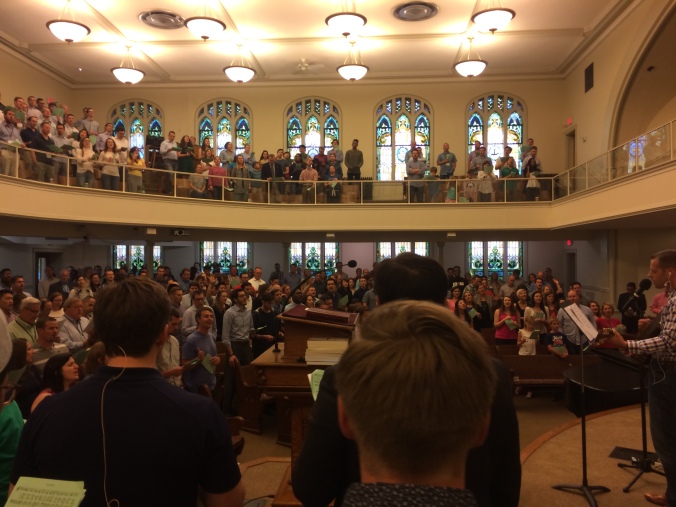
A few days later I was in Washington DC, and it was during this stay in DC that I heard music that made the Metropolitan Opera almost sound trifle. I spent 3 weeks hiding away in an apartment on Capitol Hill, working on a writing project. I occasionally slipped outside to buy food and to visit an art gallery or museum, and folk at Capitol Hill Baptist Church (CHBC) were kind and generous, and constantly inviting me to various church events throughout the week (an offer very hard to refuse!). On Sundays though I wanted to be with God’s people, and at Capitol Hill Baptist everyone spends most of the day together; it was a great joy and time of personal refreshment.

IMG_2644

They love to sing at CHBC, as many as 10 hymns in the morning service and several more during the evening service. As someone who was once a professional musician, and once given an invitation to sing with the Melbourne Symphony, I have a particularly high view of what can and ought to be with music, and yet I can say that at over my time at CHBC I have rarely heard musical sounds that have given me more joy and encouragement, such that 10 hymns was not enough; a 1000 voices singing to God and each other with heart felt joy and delight.

The musical accompaniment was simple and bare –  an acoustic guitar and piano, and with 2-3 vocalists who were mic’d but only just enough so that they could lead the congregation through any unfamiliar passages and to keep time. The music is deliberately restrained, in order to elevate the role of the congregation sing, and hearing the people sing only encourages everyone to sing more.

I am not suggesting that this is how other churches should orchestrate music for church; I appreciate other genres of music in church and I have been part of congregations where the musical style is more contemporary, scored for a more full band, and musically more garnished, like a Mozart recitativo; such playing can encourage congregations to sing and be heard. However, in practice, the band and the way music is led from the front can inhibit and detract from congregational singing. Louder music isn’t always better. More professional music doesn’t equal improvement. More energetic (and charismatic) music leaders isn’t evidence of more godly or ‘successful’ music ministry. Not that such things are necessarily wrong, and I am proposing a false dichotomy between faithful music and professionalism, or congregational music and contemporary music, but if we cannot hear each other singing to praise God and to encourage each other with the truths of God, perhaps we should reconsider how we are doing music in church.

More important than how the music was arranged, it was clear that people believed what they were singing, and it was this belief in the words being sung that spawned such wonderful singing. Choose songs with superficial or bland lyrics, and we shouldn’t be surprised if the results follow suit. The words of every song were theologically rich and deep, and Gospel-centred, and chosen with care in order to assist the congregation prepare for and respond to God’s word. Unlike most churches today, there is no screen up front displaying the lyrics. Instead, everyone is given copies of the words and music in the bulletin on the way into church. Perhaps because I’m not used to paper anymore or maybe there is some didactic phenomena that I’m unaware of, but I found that in reading the word in front of me I was considering their meaning more carefully than when I follow words projected on a white screen.

The reason for sharing this experience is mostly because I loved the CHBC’s singing so much, and we should share stories and experiences that have encouraged us. At a time when so many negative and troubling news stories are coming out of Washington DC and Capitol Hill, just around the corner, in view of that famous dome, is a 1000 people, mostly 25 years old, whose voices are reaching heaven.

How are we encouraging our congregations to sing, not the band but the people to sing and be heard and encouraging one another with the truths of God and his Gospel?

“Let the message of Christ dwell among you richly as you teach and admonish one another with all wisdom through psalms, hymns, and songs from the Spirit, singing to God with gratitude in your hearts.” (Colossians 3:16)

Matthew Merker is one of the Pastoral Assistants at CHBC and over the weeks we sang one of his hymns, ‘He will hold me fast’. I’m looking forward to introducing it to Mentone Baptist in the near future:

“When I fear my faith will fail

Christ will hold me fast

When the tempter would prevail

He will hold me fast

I could never keep my hold

Through life’s fearful path

For my love is often cold

He must hold me fast

Chorus:

He will hold me fast

He will hold me fast

For my Savior loves me so

He will hold me fast

Those He saves are His delight

Christ will hold me fast

Precious in His holy sight

He will hold me fast

He’ll not let my soul be lost

His promises shall last

Bought by Him at such a cost

He will hold me fast

CHORUS

For my life He bled and died

Christ will hold me fast

Justice has been satisfied

He will hold me fast

Raised with Him to endless life

He will hold me fast

Till our faith is turned to sight

When he comes at last

(Getty Music)

The Composition that is Manhattan

Manhattan overwhelms the visitor; there is so much to see, taste, and do, that it is impossible to gather up all the possible experiences in a short space of time.

The first time I visited Manhattan was with my  family and we spent 5 weeks here, living in an apartment on Greenwich St, in the Financial District. My current stay was a rapid 3 days, although I’ve managed to walk over 70kms through New York’s streets, avenues, and parks.

There is of course much more to New York City than the Borough of Manhattan, but this 21km Island is suffice to enthral a lifetime of imagination.

IMG_2241

Street where I’m staying

How might one describe this metropolis?

There is no singular way to describe Manhattan, with all of its tones and expressive pluralities. As I walk through this city different music seems to harmonise with its buildings and people, and I would find myself swapping from one composer to another, depending the mood in that neighbourhood.

For example, on the Upper West Side (where I was staying) the sounds is Verdi, on account of the Metropolitan Opera being a close walk down the street. In addition, my closest subway station opens out at Verdi Square on 72nd Street

Harlem: Prokofiev, because Harlem is vibrant, dynamic, and complex.

The Upper East Side is all elegance, class, and intellect, requiring nothing less J.S. Bach and Mozart.

Midtown resonates with the call of Gershwin – bold and brash. The opening cry of the clarinet in Rhapsody in Blue reminds me of sirens rushing through 42nd second.

Gramercy is Haydn, because Gramercy is respectable but particularly memorable, but with one exception, the beautiful Flat Iron building.

Hell’s Kitchen: John Cage’s aleotorism may sounds like a freeing concept, but in practice it’s hell.

Chelsea: Tchaikovsky, for his swirling romanticism on a grand scale and yet carrying persistent longing for fulfilment.

Greenwich Village: Schumann’s playfulness.

Tribeca: The extravagance of Mahler; although bigger and grander isn’t always better.

The Lower East Side carries with it the plot of Puccini’s La Boheme, filled with optimism and poverty, and the eagerness of young artists.

The Financial District is definitely Stravinsky, because the drubbing pace is constant and hectic.

Battery Park: Handel, because one can’t walk through this southern most region of Manhattan and not imagine the world of Great Britain in the mid 18th Century, just prior to the American Revolution.

Turkey, Anzac Day, and Disappearing Religious Freedom

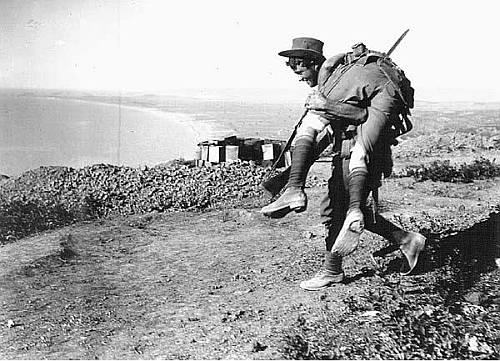
While Australia prepares to once again remember the Gallipoli landings, the very same day, April 25th 1915, brought Mustafa Kemal Atatürk to national prominence in Turkey. As the Australians troops waded ashore and clambered up the bluffs overlooking what would become Anzac Cove, the few Turkish defenders were gradually pushed inland, until reinforcements arrived led by Mustafa Kemal.

“I am not ordering you to attack. I am ordering you to die.”

With this extraordinary command, Kemal prevented the Australians from advancing further, and the two sides began digging into the ancient soil for what would become 9 months of death and horror.

1361173126_anzac_gallipoli

Mustafa Kemal survived the war, entered politics, and in 1923 he closed the final chapter on the 600 year old Ottoman Empire, giving birth to a new and secular democracy.  It would be a misjudgment of history to ignore the social and religious tensions that Turkey has balanced over that century, especially when it comes to minority ethnic groups in the Eastern regions of the country, and yet Turkey has avoided much of the turmoil and bloodshed that almost every other Middle Eastern nation has experienced over the same period.

As Australia commemorates Anzac Day, Turkey is on the edge of democratic suicide, as her people vote on a referendum that will introduce sweeping changes to their constitution.

Since the failed coup d’état in July last year, President Recep Tayyip Erdogan has tightened his control over the country. Many thousands of people have been imprisoned, journalists arrested, and Christian missionaries deported. Five months following the attempted coup, President Erdogan announced a referendum, proposing 18 changes to the nation’s constitution. In short, a yes vote (which appears to have won the day) will give the President new powers over judicial appointments, cabinet appointments, calling and dissolving Parliament, setting the nation’s budget, and all without need of Parliamentary approval. Opponents are concerned that genuine democratic freedoms are already slipping from the populace and should these constitutional amendments become law, Turkey will in effect become an autocratic state. Many people also fear that Turkey is transitioning from being a secular state with a Muslim majority, to an Islamic State with a non Muslim minority.

Prior to 1915, most Australians thought of Turkey as a far away land, filled with ancient history and splendour. From April 25th our history became enmeshed with theirs, and our blood mingled with their blood. Today, Turkey doesn’t feel so remote, and yet we may not automatically see the relevance of this week’s decision.

We would do well to remember that the tide of history has often set its course from this land where East and West intertwine. For six centuries prior to the Dardenelles campaign of 1915, the Ottoman Empire ruled over much of the Middle East and North Africa, serving as both a thorn and flower to Europe. For nearly a thousand years before the Ottomans, the grand Byzantine Empire flourished, a child of the Christianised Roman Empire. This clash between East and West is an ancient one, with Alexander the Great defeating Darius across Turkey, first at Grancius and then at Issus. A thousand years earlier, the shores of Turkey were the setting of Homeric poems and the tales of Troy.

As the sun sets over the Bospherus, we would be mistaken to think that Turkey’s situation is an isolated one, for all over the world we are seeing the expulsion of pluralist societies in favour of authoritarian secularism and religious monocronism. Both are absolutist and exclusivist, with the latter however showing transparency about their religious commitments and the former hiding them behind thin sheets of quasi intellectual and moral neutrality.

Jonathan Leeman is right when he asserts, “secular liberalism isn’t neutral, it steps into the public space with a ‘covert religion’, perhaps even as liberal authoritarianism. it depends on beliefs without conclusive evidence.”

At the beginning of the year I began using the phrase authoritarian secularism, as a way of making distinction between true secularism and what we now see being practiced in Australia.  When our nation adopted the language of secular, as in Section 116 of the Constitution, the intent was that the State would not create or be controlled by any given religious persuasion. Today, the language has been hijacked by popularists who allege religion has no place in the public square, whether in politics or education and even in the workplace. Such a position is not derivative of constitutional law or of reason, but the sheer and persistent belief in unbelief.

My own state of Victoria is the sharp edge of progressive politics in Australia, and it is so because authoritarian secularism has substantial sway culturally.

What is happening is this: society has begun limiting free speech in order to push out beliefs that don’t fit the current cultural milieu, and the intent is to fill that space with the agenda of the sexual revolution. What is true of Victoria is true for most other parts of Australia, and is happening across much of the Western world. The tensions are not ours alone, but with no greater zeal in Australia than what we are witnessing in Victoria.

Christians are among those feeling these cultural shifts acutely because the movement is away from cultural Christian. This is not to be confused with Gospel Christianity for the two are not synonymous. Neither, however are they impervious of the other.

It is not as though the current Victorian Government is entirely anti-religion; rather, it wants a sanitised religion and for it remain outside public discourse. In other words, progressive politics wants religion controlled. There is clear evidence of this intent, as demonstrated, for example, by the proposed amendment to the Equal Opportunity Act last year. The ‘inherent requirement test’ would have required all religious organisations, including churches, to justify before a Government organised tribunal, reasons why it is necessary for employees to subscribe to the particular religious beliefs of the organisation. In other words, a Church could be held to account for refusing employment to a Hindu, and a Mosque find itself on the wrong side should they refuse employment to a Christian. Thankfully, the Bill was unsuccessful in the Legislative Council, being defeated by a single vote!

A pluralist society, which Australia is, only continues so long as those in authority allow alternative views to be expressed publicly. The fact is that a State Government, and a number of mainstream political parties across the nation, are not only questioning freedom of religious practice, but have begun issuing policies to quell views and practices that don’t conform to the new morality.

To the surprise of many, the global movement in the early 21st Century is not away from religion to irreligion or from faith to reason, but away from philosophical pluralism to both religious and secular authoritarianism.  We are a long way from where things could lead, but we are no longer standing from the sideline and pontificating the possibilities. As Sherlock Holmes would say, ‘the game is afoot’. This should be of concern to global communities, not because pluralism is god, and not because we are moral and spiritual relativists, but because we believe that the State should not dictate religious belief.

As a Christian, I believe in persuasion not coercion. I believe in religious freedom for all, for if not for all it is not freedom at all. It is true though, Christianity can function and flourish in the midst of even ignominious regimes, because the Christian hope does not ultimately depend upon particular political structures, constitutions, and dictates. Our hope rests in the resurrection of Jesus Christ from the dead. This victory-over-death hope gives us freedom to submit to a harsh Government, and freedom to dissent when they do wrong to a neighbour.

The people of Turkey are in my prayers this week. As we take note of this history turning land, we should not be ignorant of our own proclivities. Religious freedom is being contained and controlled from Canada to Cairo, and from Russia to Riyadh, and similar intent is now being verbalised politically and socially on our own shores.  I am not arguing for freedom of religion as some ultimate axiom, but as scaffolding on which a healthy society may grow, by enabling debate and disagreement, and the contest of ideas.

NSW is removing Safe Schools. Could Victoria follow?

It was announced today that the NSW Government is scrapping the controversial school curriculum, Safe Schools. From July, not only is the Federal Government stopping its funding of Safe Schools, but the NSW Education Department will introduce an alternative program. The content of this new program is yet to be released, but early indications suggest that it will be a broader and more inclusive program, and one that does not depend on the now debunked gender theory.

Safe Schools is presented as an anti-bullying curriculum, and is designed to teach children acceptance of other children who are different to them. The emphasis however is on sexuality, and teaching a flawed view of sexuality and encouraging young children to explore these alternative sexualities for themselves.

Safe schools was originally an opt-in program, but it is now compulsory in all secondary schools across Victoria. Many primary schools have also signed up.

One of the chief authors of Safe Schools, Roz Ward, defined the curriculum’s intent as follows: 

“Programs like the Safe Schools Coalition are making some difference but we’re still a long way from liberation,’’ she said. “Marxism offers the hope and the strategy needed to create a world where human sexuality, gender and how we relate to our bodies can blossom in extraordinarily new and amazing ways that we can only try to imagine today.”

It would be wrong to suggest everyone who supports the program views Safe Schools as does Roz Ward, but it is telling that one of the chief architects has admitted that Safe Schools is less about anti-bullying, and is designed to educate and influence a new generation of children to the values of marxism and to its accompanying sexual ideology.

img_9452

One year ago, the Federal Government made numerous changes to the curriculum, following widespread concerns regarding the appropriateness of material and the promotion of third party websites whose content could not be approved.

The Victorian Education Minister responded by saying,  Canberra was caving in to the bigots, and announced Victoria would not implement any of the amendments.

At the start of this year, the NSW Government introduced even more overhauls, including that gender fluid theory could no longer be taught in schools.

Only Victoria has made Safe Schools compulsory for schools. Each school can decide how much of the curriculum they wish to use, but the material to be used must be that which is set by the education department. This makes sense, except that Safe Schools is, to quote Professor Patrick Parkinson from the University of Sydney, ‘dubious’, ‘misleading’, and ‘containing exaggerated claims’.

Concerns over Safe Schools has received some bipartisan support in NSW, with Labour MP, Greg Donnolly saying,

“Politicians in one state do not generally take kindly to colleagues in another state giving them advice. There can be exceptions but the unwritten rule is that if you stick your head out and give advice across the border, you are likely to get it knocked-off. With that said, let me now give some advice to my Labor colleagues in Victoria.

The Safe Schools program that the Victorian Government is imposing on public schools in that state is political poison. While it may be just starting to show up in focus groups and other polling activities undertaken by the Labor Party, do not underestimate its malignancy. When it fully manifests, it will be like a fully laden freight train that you will not be able to stop.

The problem for the Premier and the Minister for Education is that the Safe Schools program from the get-go was never about anti-bullying. It was about inculcating into school children hard edged sexuality and gender ideologies. The same ideologies that are examined and debated when undertaking Gender Studies units at university. The same units that such students elect to do by choice; no compulsion or requirement. Not only are these ideologies being presented to school children as a matter of fact i.e. sexuality and gender are not to be understood in any other way, but parents are being kept completely in the dark about what is being presented to their children and by who.”

As it stands, there are children in Victorian schools currently transitioning on account of what is being taught, despite best medical practice stating that most children with gender dysphoria will grow out of it by adulthood and will happily conform to their birth gender. Many Victorian families are being pressured because they cannot subscribe to the curriculum, and feeling  pushed out of the public system. Children who believe heterosexuality is normative are labelled  as sexist, and the program is built to reframe their thinking until they believe that all sexual preferences and practices are legitimate human expression, and perhaps they might wish to explore these for themselves.

Being a Victorian, I understand our reluctance to listen to our northern neighbours. After all, has anything good ever come out of Sydney? I totally get why Victorians build rhetorical walls to keep out this colony of convicts. Listening to a New South Welshman may sound like a Banshee singing Justin Bieber, but on this occasion we Victorians are fools to ignore such sage advice.

Mr Andrews and Mr Merlino, as a Victorian and parent of 3 children, I strongly urge you to re-examine your position on Safe Schools, and the unscientific and harmful gender theories now being forced upon our children. It’s ok to once in a while  redress mistakes and poor policy; humility is in fact a virtue that we value in our political leaders.  In winding back ‘Safe Schools’ and aspects of the ‘Respectful Relationships’ program, we do not have to wind back the clock on caring for children who may be working through issues of their own sexuality. We want to see them safe and flourishing, and this is achievable without having to promote ideology that is demonstrably skewed and unsuitable for the classroom.

Should Victoria introduce laws permitting doctor assisted suicide?

Who can live and not see death,  or who can escape the power of the grave? (Psalm 89)

Pastoral ministry is one of the few professions where you get to  travel with people from birth through to death. It is a privilege to minister to people who are facing their final weeks and days. Sometimes it is a brief period of illness, other times it is an elongated time of suffering. I have known people in their final days who were keen, not to die, but to see their suffering come to an end and to see their hope in Jesus Christ realised. It is an extraordinary privilege to sit beside a person who in approaching death is joyful and at peace. I have also witnessed people wrestling with their own mortality and doubts of what lies beyond death. A pastor’s care in such circumstances also extends to a spouse, to children and friends. Indeed, for many pastors, these relationships are not merely ‘professional’, for those whom we serve are much loved, and they are our friends and family.

Several members of my family work in the medical field, including my wife who worked as a nurse for 10 years, spending much of that time caring for patients with terminal and chronic illnesses. On more than a few occasions she would come home after a shift in tears, having witnessed a patient die.

I wanted to begin by mentioning the above contexts because it would be wrong to assume I am writing from a distance. Indeed, I appreciate that there are many personal stories, from people who hold to various views on euthanasia, and while these stories are all important, stories alone are not suffice for creating law.

OLYMPUS DIGITAL CAMERA

If there is common ground to be found in the debate on euthanasia, albeit a rather morbid commonality, it is agreement that death is a terrible reality in the human experience.

It is no small thing for the State to legalise killing another human being

It is of paramount importance that we recognise that the State exists not only to protect life but to enable human flourishing. Similarly, our health system exists to save human life and to bring healing of body and mind. Introducing a law that permits taking a human life is no small thing.

Physician assisted suicide not only contravenes the very purpose of our health system, it would require medical professionals to discard both the Hippocratic oath and the Declaration of Geneva.  Such a law would introduce to society the morality of taking human life, legislating that our society condones the killing of another human being. Again, this is no small and insignificant line in the sand.

Dr Michael Bird recently made the astute observation that Victoria could potentially have two hotlines: one for suicide prevention, and the other, suicide permission. The conflict is clear for everyone to see.

Palliative Care as a better option

I am not unsympathetic toward those who wish to end their lives; I hate human suffering and long for the day when it will desist forever.  I do not, however, believe that euthanasia is either morally right nor is it the only option available for terminally ill Victorians. We have been led to believe that the only choices available are either ongoing treatment or euthanasia, but there is a third option, and one that avoids unnecessarily prolonging a patient’s life and avoids actively killing them, palliative care.

Palliative care is designed to provide the greatest possible comfort for patients, without undue intervention and causing protracted suffering.

Dr Megan Best is a senior lecturer at the University of Sydney Medical Faculty and works as a palliative care physician in Sydney. In a recent article, Dr Best has argued that a better way forward is to provide adequate resources for palliative care. She says,

“While services such as palliative care and hospice can do much to relieve the distress dying people experience, many still do not have access to it. We must do better.”

It is a travesty that many Victorians cannot currently access proper care that they deserve and need at such an urgent time.

Similarly, Dr. Ian Haines is a medical oncologist, and he believes, 

“Like Andrew Denton and others who have observed unbearable suffering in loved ones and the terrible failures of modern medicine in the past, I had once believed that euthanasia was the only humane solution.

I no longer believe that.

The experiences of countless patients and families should be the inspiration for continuing to improve palliative care, for general introduction of advanced care plans and not for euthanasia with its openness to misuse.”

In other words, our Government would do better to invest properly into palliative care, providing the kind of support patients and their families need at such a time.

Unsafe safeguards

The model of euthanasia being considered in Victoria is that which is currently practiced in Oregon, USA. The process involves a Doctor prescribing a lethal capsule to a patient who has been diagnosed with a terminal illness that will lead to death within six months.

In a report recently published by the Health Department in Oregon, are a series of startling revelations regarding doctor assisted suicide in Oregon: First, 49% of patients state as a major reason for taking their own life, the belief that they are being a burden to their family. Second, once the doctor has prescribed the capsule containing secobarbital or pentobarbital, there is no guaranteed follow up in patient’s home where most are said to take their life, with no safeguards to ensure only the patient can consume the lethal dose. Third, patients with non-terminal illnesses have been given access to these lethal drugs and taken their own life.

Both Dr Megan Best and Dr Ian Haines, are among numerous medical professionals who believe the introduction of euthanasia will lead to abuses and even to amendments and extensions down the track.

Dr Best explains,

‘It upsets healthcare providers when their patients are distressed. Don’t tempt them. You can’t rely on the rules. It is not possible to write a law that can’t be abused. That’s why euthanasia bills get defeated in parliament. Because, even though we ache for those who are suffering and desire to die, we feel responsible to protect the vulnerable who would be at risk of dying under the legislation if it were to pass. Surely the worth of a society lies in how it treats those who can’t care for themselves.’

Does this not at least raise questions in our minds, if not grave concern? If medical professionals working in palliative care are already communicating that the rules will be broken, we ought to take notice.

And for to those who allege slippery slopes are mythical, have they not looked to Northern Europe, and seen how euthanasia laws are now regularly broken and expanded, to include killing children, killing people with mental illness and dementia and even gender dysphoria?

Behind the debates on many ethical issues including euthanasia, is what is known as utilitarian thinking, most notably advocated by Professor Peter Singer. Utilitarian ethics ditches belief in the inherent value of every human life, and instead determines moral good by what the greater number of persons believe will maximise their happiness. In other words, for example, killing unborn children is a moral good when the mother believes the child will not add to her own happiness. This is one of the chief reasons why the number of children with Downs Syndrome has decreased significantly in Western societies because the vast majority are now killed in the womb.

There are Parliamentary members across the spectrum who are expressing support of a Bill legalising assisted suicide, and similarly, across the parties are members who disagree and are concerned. We have all heard heartfelt stories being told from different viewpoints, but we must judge what is right. There is an overarching principle with which the State of Victoria must decide, is it the role and right of Government to introduce law that permits the killing of human life? If so, what promises will be given that no further legislative changes will be made in the future?

When society cuts our humanity away from the imago dei, we always slide down a path toward dehumanisation. Bringing the two together again requires humility and more. It requires the loving actions of God to restore and heal this broken image. Is this not the wonder of the Easter event?

If the moral compass of our State is utilitarian ethics, which certainly appears to be the case, then further expansion of euthanasia laws is almost inevitable, as is happening across many countries who’ve already taken the pledge to kill. Indeed, I have already been informed, on sound advice, that the Bill shortly to be presented to the Victorian Parliament will be in the first place be a conservative pro-euthanasia Bill, but the intent will be to extend it 3 to 5 years down the track.

When we begin defining the value of human life by the kind of utilitarianism pursued by Peter Singer and others, we should not be surprised to find ourselves in a few short years permitting and even pressuring the expungement of all manner of people whom society deems a burden. I realise all this sounds rather Stalinesque and outrageously impossible; we would never traverse such dreadful ground. But look to Belgium and the Netherlands, and consider how our own society has already deemed moral, killing unborn children, and possibly now, those who are at the end of their days.

Have you journeyed to the springs of the sea

    or walked in the recesses of the deep?

 Have the gates of death been shown to you?

    Have you seen the gates of the deepest darkness?

 Have you comprehended the vast expanses of the earth?

    Tell me, if you know all this.” (Job 38:16-18)

Are we prepared to cross the line, or instead, can we do better by providing improved and greater resources in palliative care?

The Coptic Church bombings, the Aussie Easter, and the Christian Hope

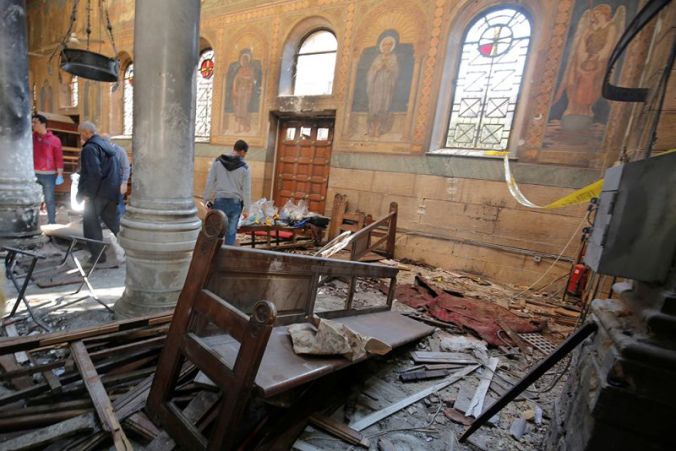
Yesterday morning we awoke to news of two Coptic Churches in Egypt that had been attacked by members of Islamic State, leaving more than 40 people including children dead, and many dozens injured.

There are groups prepared to take the lives of innocent people, self-acclaimed martyrs. They are of course nothing more than nefarious murderers following their view distorted of God. Martyrdom however is not an abhorrent idea in every circumstance. Martyrdom is the giving of one’s life to the idea that most captivates our hearts, usually with a religious connotation. There are, for examples martyrs who die for their faith in God, not through committing violence but for living in response to the love of God. In this case, the Coptic Churches in Tanta and Alexandria are now stained with the blood of 47 dead who had gathered to worship and praise the Son of God. It was Palm Sunday, the day Christians remember the Lord Jesus entering Jerusalem, his own city, where he would in a few short days be put on trial and crucified. It was the 26th attack of Coptic Christians this year.

egypt-coptic-church-bombing

Christian Post

These stories are no longer unusual occurrences, and only very few of these attacks make the news in Australia. From Turkey to Pakistan, from Egypt to North Korea, and Nigeria to Burma, literally millions of Christians face the prospect of social exclusion, imprisonment, and sometimes death.

Killing Christians is an act of evil futility because God’s love for his people cannot be broken. Death is not to be scoffed at, for it separates us from family and friends. Death is the great divider, and yet God has overcome it by the events of that first Easter.

In an extraordinary moment recorded in the Scriptures, John the disciple is given a glimpse of the reality of heaven, and there he is shown those who have suffered and died in their love for Christ:

These are they who have come out of the great tribulation; they have washed their robes and made them white in the blood of the Lamb.  Therefore,

“they are before the throne of God

    and serve him day and night in his temple;

and he who sits on the throne

    will shelter them with his presence.

‘Never again will they hunger;

    never again will they thirst.

The sun will not beat down on them,’

    nor any scorching heat.

For the Lamb at the center of the throne

    will be their shepherd;

‘he will lead them to springs of living water.’

    ‘And God will wipe away every tear from their eyes.’” (Revelation 7)

My prayer this week for my Coptic brothers and sisters is that they, in the midst of unspeakable grief, might know this promise of the certainty of God’s love in Christ.

Christ Jesus who died—more than that, who was raised to life—is at the right hand of God and is also interceding for us. Who shall separate us from the love of Christ? Shall trouble or hardship or persecution or famine or nakedness or danger or sword?  As it is written:

“For your sake we face death all day long;

    we are considered as sheep to be slaughtered.”

No, in all these things we are more than conquerors through him who loved us. For I am convinced that neither death nor life, neither angels nor demons, neither the present nor the future, nor any powers, neither height nor depth, nor anything else in all creation, will be able to separate us from the love of God that is in Christ Jesus our Lord.” (Romans 8:34-39)

The Apostle Paul who wrote these words was not immune to religious zealots chasing after him and wanting his death. Tradition has it that Paul, following an imprisonment in Rome, was one of the multitude of Christians who were put to death during Nero’s reign of terror.

While Egypt, Syria, and a hundred other places are scrubbing the blood from their floors, Aussie homes are vacuuming little scraps of metallic paper used to wrap easter eggs. To the majority of Australians Easter is now little more than a festival of chocolate and a 4 day long-weekend. It is an excuse for a camping trip, perhaps with a little religion sprinkled into the mix. Of course, both the chocolate and the weekend are pretty irrelevant (enjoyable but inconsequential), but the historic events that formed Good Friday to Easter Sunday are not.

Many Western societies are turning our backs on Christianity, to our spiritual, moral, and intellectual detriment. After centuries of economic, political, technological and military progress we have gained the world, but lost our souls.

It is true that Christians like we in Australia, are sometimes known for beating up the persecution drum. We mustn’t overstate the case of our own experiences: it’s not a broken leg, it’s a mild sprain. It’s not a heart attack, it’s indigestion. It’s not nothing, but neither is it what many Christians around the world are experiencing. The absence of physical violence doesn’t mean however that we are not witnessing significant cultural and theological shifts; it may be not Islamic terrorism, it is post-Christian authoritarian secularism, and these changes are not inconsequential for those who are and will be affected. For example,

  • we no longer have free speech, but costly speech. If you speak up in the public square it will come at a cost
  • Many Christian families are feeling pressured to take their children out of public schools.
  • In the work place employees may be forced to subscribe to particular views on marriage and sexuality.
  • workers may be forced to choose between employment or association with the Christian organisation of which they are members.
  • Businesses that support a biblical view of marriage will suffer financial loss, and be targeted for abuse.

It is not only the mass killing of Christians that has captured international attention this the past week, a few days earlier almost 100 Syrians were killed in a chemical attack, by their own Government. The New York Times reported the story of a Father who buried his wife and two young children, whose had their lives suffocated. There are no words to describe the distressing photographs which show this man embracing his dead children.

The world needs Divine retribution and Divine forgiveness. But how can we have both? Justice and mercy, judgement and grace? In all the history of the world, and among all the ideas and actions of this world, it is the event of Easter that promises the impossible.

To understand the world in which we live, we need a hermeneutic grid that is trustworthy and good; the cross of Jesus Christ is that interpretation. The cross reveals human depravation and hope more than any event in history, and the cross also reveals the character and purpose of God like no other.

Easter has become many things to many different people, but one thing it is not, and that is, trivial. While we in the West play games with fluffy bunnies, egg hunts, and another long weekend, the world is bleeding. The real Easter does not offer banal or token offerings to confirm of individualistic pursuits, but instead reveals God who ‘so loved the world that he gave his one and only son that whoever believes in him will not perish but have everlasting life’ (John 3:16).

God showed love not by changing a few coloured light bulbs on a national monument or by trending a hashtag on twitter; the depth of this love of God was the substitutionary death of his only Son. God came into his own, the incarnation. He paid the penalty for human insurrection, the cross. He triumphed over the grave, thus vindicating his claim of Divinity and the efficacy of his salvific power, the resurrection.

The extent of this love of God is for the world. John 3:16 does not suggest a universal salvation, for the text makes clear that faith in Jesus is necessary and rejecting Jesus Christ results in judgement. Nonetheless, in Christ, God has expressed extraordinary love for the world. He is not of or for the West, he is not English speaking or the God of the middle class, his concern is global. The Bible describes this God in ways unparalleled in any religion and in ways more tangible, and with a good news message that is changing hearts and lives in every nation on earth.

Penal Substitution is the heart of the Gospel

 “In Christ alone, Who took on flesh,

Fullness of God in helpless babe!

This gift of love and righteousness,

Scorned by the ones He came to save.

Till on that cross as Jesus died,

The wrath of God was satisfied;

For ev’ry sin on Him was laid—

Here in the death of Christ I live.”

As we approach Easter there is always someone stirring the theological pot and throwing doubts over Jesus’ death on the cross and his resurrection from the dead. On this occasion, the thesis isn’t penned by an atheist, agnostic, or nominal Christian, but a pastor of a church.

Over the last few days, an article has been appearing on Facebook feeds, and one concerned colleague brought it to my attention.

Chuck Queen is Senior Pastor of Immanuel Baptist Church, Frankfort, Kentucky, and he has written a piece denouncing the ‘heretical’ doctrine of penal substitution, It’s time to end the hands-off attitude to substitutionary atonement.

He is not the first person to cast aspersions over penal substitution and he will not be the last. In every generation, there are ‘Christian’ leaders who explain away core teachings of the faith.

In what is one of the most important volumes on the atonement written in our generation, Steve Jeffery, Mike Ovey, and Andrew Sach open Pierced for our Transgressions with this summary of penal substitutionary atonement,

“The doctrine of penal substitution states that God gave himself in the person of his Son to suffer instead of us the death, punishment and curse due to fallen humanity as the penalty for sin.

This understanding of the cross of Christ stands at the very heart of the gospel. There is a captivating beauty in the sacrificial love of a God who gave himself for his people. It is this that first draws many believers to the Lord Jesus Christ and this that will draw us to him when he returns on the last day to vindicate his name and welcome his people into his eternal kingdom. That the Lord Jesus Christ died for us – a shameful death, bearing our curse, enduring our pain, suffering the wrath of his own Father in our place – has been the wellspring of the hope of countless Christians throughout the ages.”

It is this doctrine that Chuck Queen wants to be repudiated and removed from Christian pulpits. This will take some doing, for PSA is deeply held by hundreds of millions of Christians world-wide, and one can’t ignore the fact that many of history’s most notable Christian thinkers affirmed PSA with love and wonder, including Justin Martyr, Athanasius, Augustine, Thomas Aquinas, John Calvin, John Bunyan, John Owen, John Stott, John Piper, Tim Keller, and on and on. Ultimately though, truth is not a popularity contest, but it is determined by God who reveals truth in his word.
lamb

I don’t intend to speak to every argument in It’s time to end the hands-off attitude to substitutionary atonement, for many words can be written, however, something needs saying given the popularity of his piece.

Queens comments,

“In the church I pastor we omit certain verses of hymns because of allusions and references to Jesus’ death as a substitution.”

“Bad Christian theology leads to bad Christian living. If one has any doubt about that just consider the voting record of evangelicals in the last election. Eighty per cent voted for Trump.”

“Perhaps the first step in dethroning such a terrible doctrine”

We are left in no doubt that Chuck Queen believes penal substitution is heretical, immoral and to be expunged from Christian Churches. Notice also, Queen’s not so subtle slight of hand in associating Donald Trump with the Evangelical teaching on PSA! Such ad hominem attacks are plainly silly and achieve nothing to help us understand the atonement.

Does Jesus believe in penal substitution?

Queen claims that the presence of substitutionary atonement as deriving from ‘an ancient, primitive view of God than the view taught and embodied by Jesus of Nazareth.’

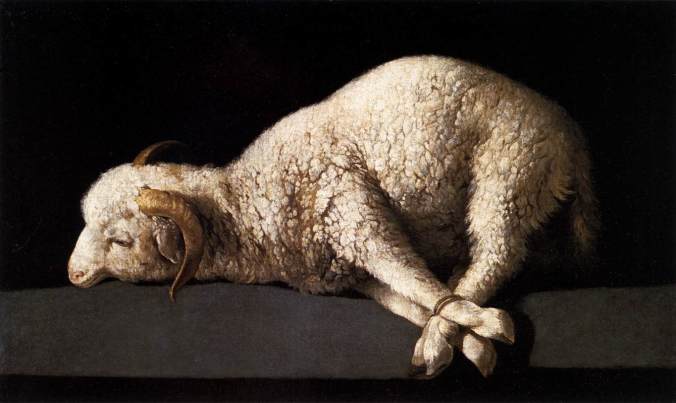
This revisionism is simply appalling. While he does not explicitly equate this ‘primitive view of God’ with the God of the Old Testament, it is difficult to see who else he is directing this remark. The Bible, however, does not make such a distinction between Jesus and the God of Abraham, Isaac, and Jacob. The God of the Old Testament is the same as the God of the New Testament, having the same being, character and purpose. Jesus Christ is the fulfilment of all the Old promises, he is word incarnate, he is the I Am, he is the paschal lamb.

PSA is a central concept to the atonement in both OT and NT. To cite 3 examples:

First, the temple was central in Israel’s life and key to ministry of the temple was the sacrificial system, and at the heart of the sacrificial system was the blood of an animal taking the place of the sinner to avert the wrath of God. Indeed, the most sacred day in the calendar was Yom Kippur. Kippur (or atonement), carries connotations of forgiveness, ransom, cleansing and averting God’s wrath, and this final aspect is clearly on view in the teaching about the day of atonement in Leviticus 16.

A second example is the Servant Song of Isaiah 53; it may only constitute a small part of this prophetic book and an even tinier part of the OT, but its significance is rarely overestimated. The Servant Song delivers more than a penal substitutionary view of the atonement, but PSA lays at the heart of its presentation of the work of God’s servant.

The four Gospels either explicitly quote or implicitly reference the Servant Song more often than any other OT passage. R.T France is correct when he talks about Jesus‘ repeated self-identification with the servant of Isaiah 53. Thus, the entire trajectory of Jesus’ earthly ministry as recorded in Scripture is an embodiment of the suffering servant whose life culminated in a cross and death, before climaxing in a resurrection:

“But he was pierced for our transgressions,

he was crushed for our iniquities;

the punishment that brought us peace was on him,

and by his wounds we are healed.

We all, like sheep, have gone astray,

each of us has turned to our own way;

and the Lord has laid on him

the iniquity of us all.”

A third example is Paul’s tome, the letter to the Romans. Paul explains that the primary human condition is sinful rebellion against a righteous God who is now revealing his wrath against us. No human effort can save us from this judgment, only the substitutionary death of Christ. The great turning point of Romans is that masterful exegesis of the gospel in 3:21-26, which spells out God’s gift of righteousness that comes through faith in Jesus Christ and by his propitiatory death on the cross. Throughout Romans Paul explores the full gamut of the atonement, in all its facets and with many of its wonderful implications, but laying at its heart is PSA.

“With the other New Testament writers, Paul always points to the death of Jesus as the atoning event, and explains the atonement in terms of representative substitution – the innocent taking the place of the guilty, in the name and for the sake of the guilty, under the axe of God’s judicial retribution” (J.I Packer, Knowing God)

God didn’t need a sacrifice?

In contrast to Queen who believes, ‘Jesus didn’t die because God needed a sacrifice. Jesus died because the powers that be had him killed,’ Scripture offers a different testimony.

Both prior to and following the events of Easter, Jesus himself said, he had to die.

‘The Son of Man must suffer many things and be rejected by the elders, the chief priests and the teachers of the law, and he must be killed and on the third day be raised to life’ (Luke 9:22).

The verb, ‘must’, functions as a Divine imperative, reinforcing the notion that in God’s wisdom he ordained for his Son to enter the world and to die on the cross.

On the day Pentecost Peter explained that while human beings plotted Jesus’ death, it was also of God’s design and plan. Not only this, Peter makes explicit links between Jesus’ death and resurrection with Old Testament promises.

“Fellow Israelites, listen to this: Jesus of Nazareth was a man accredited by God to you by miracles, wonders and signs, which God did among you through him, as you yourselves know. This man was handed over to you by God’s deliberate plan and foreknowledge; and you, with the help of wicked men, put him to death by nailing him to the cross. But God raised him from the dead, freeing him from the agony of death, because it was impossible for death to keep its hold on him…Therefore let all Israel be assured of this: God has made this Jesus, whom you crucified, both Lord and Messiah.”

To an audience in Jerusalem who had only weeks earlier witnessed the crucifixion of Jesus, Peter both affirms human culpability and Divine intent.

Is Penal Substitution language merely metaphoric?

In another attempt to explain away PSA, Queen asserts that it is being used in a non-literal way, “Perhaps the first step in dethroning such a terrible doctrine is to help Christians realize that the  sacrificial language utilized in the New Testament are symbols and metaphor, not to be taken in any literal sense.”

In one of the rare examples where he uses the Bible, Queen cites Matthew 20:28  in order to prove his case, “Just as the Son of Man did not come to be served, but to serve, and to give his life as a ransom for many.”

It is important to understand how Queen is arguing his point. He begins by asking us to doubt that these words were ever spoken by Jesus. But just in case they are genuine (although now we’re told to believe they’re probably not), he then adds another layer of doubt by suggesting scholars no longer believe ransom means ‘ransom’. (However, see Leon Morris’ seminal work, The Apostolic preaching of the Cross, for a clear explanation of ransom).

I agree with Queen, in that Jesus is presenting his disciples with a model of servanthood, but there is more at stake here.

For Queen, the phrase, ‘ransom for many’ is metaphoric, but the accompanying infinitive phrase, ‘to serve’ is not a metaphor. Grammatically, it is implausible that of two co-joining infinitival phrases, one is literal and the other metaphoric. Jesus is not speaking of himself as metaphorically serving, but actual serving and he is not speaking of dying as a ransom metaphorically, but literally.

Queen carefully chooses a Scriptural example that can be used in part to highlight the exemplar model of the atonement, but what of the multitude of other references to penal substitution that are scattered throughout the entire Bible? How does he exegete Roman 3:21-16, Romans 4:25, Galatians 3:10-13, 1 Peter 2:21-25 and 3:18, and many other passages?

Is atonement language merely metaphorical? The answer is, no. “Facet” or “aspect” are better ways to describe such language, for in speaking of the atonement we are dealing with historical events which are given Divine interpretation in Scripture. The cross carries more than symbolism, but effects actual judicious judgment, brought upon the Son in the place of sinful human beings. We can no more speak of the cross as metaphor and symbol, as we would of the Federal Court of Australia sentencing a guilty person to prison. There may be symbolism and metaphor to be found, but the atonement cannot be reduced to those categories; it is an actuality.

Did Constantine change the Christian message?

Queen offers a strange rewrite of history when suggesting that PSA was given prominence post-Constantine, while other and more important idea such as Jesus’ life and teaching, found a diminished role in Churches catechisms. While it is possible to site examples on both sides Constantine’s rule where Christians play various doctrines over others, the historical record demonstrates the penal substitution was treated as foundational prior to Constantine, not only by the New Testament authors, but among the Early Church Fathers.

For example, Justin Martyr who lived almost two centuries before Constantine wrote,

“If, the, the Father of all wished His Christ for the whole human family to take upon Him the curses of all, knowing that, after He has been crucified and was dead, He would raise him up, why do you argue about Him, who submitted to suffer these things according to the Father’s will, as if he were accursed, and do not rather bewail yourselves?”

Penal Substitution and Christian living

Another contention for Chuck Queen is the apparent powerlessness of PSA to cultivate Christian living. He says,

“Another problem with substitutionary atonement is that it reduces salvation to a legal transaction that has nothing to do with the actual transformation of the individual…In such a Christian system the actual life and teachings of Jesus have little bearing on what it means to be a Christian.”

To bushwhack both history and contemporary Christianity in this way is simply disgraceful.

Flowing from the preaching of Charles Spurgeon, who taught  the centrality of penal substitution, were many organisations caring for the poorest of Londoners, including orphanages.

Tim Keller has been used of God to plant and grow Churches across New York City, and accompanying Redeemer Presbyterian Church is Hope for New York, a mercy and justice outreach to the city providing volunteer and financial resources to more than 40 nonprofit organizations serving poor or marginalized populations in New York City.

The man who wrote perhaps the most famous defence of penal substitution in the 20th Century was John Stott. Stott was responsible for the global Lausanne movement and was known for calling Christians to engage in social justice ministries. John Stott famously did not serve in the armed forces during the Second World War, largely due to his convictions about violence, and yet he defended and articulated the case for penal substitutionary atonement. Belief in a righteous God who is angry against sinful people and who judges rightly does not lead to angry judgemental Christians (well, it ought not) but rather it produces men and women who are loving and passionate and keen to see their neighbours also know this righteous God who saves.

In short, it appears as though any time Queen doesn’t approve of way the Bible speaks of God, sin, and humanity, he explains it away by arguing, “this isn’t the god I believe in”, or “it’s a metaphor”, or “we can explain it away because culture of Rome isn’t ours”.

We are left wondering, how does Chuck Queen view the significance of Jesus’ death on the cross? He suggests,

Jesus bore our sins on the cross in the sense that he, as the Son of Man, as the representative human being, bore the hate and animosity of the world in his service to God. He became a scapegoat to end scapegoating, to expose the folly and evil of scapegoating any human being. He became the lightning rod where the pent up oppositional energy of the powers that be (the world) became focused. In bearing the sin — the hate, evil and animosity of the world — he exposed it and exhausted it, thus overcoming it. The resurrection served as God’s vindication, God’s “yes” to Jesus’ sacrificial life and death.

No need for a sacrificial victim.”

Does Chuck Queen realise that the scape goat of Leviticus ch.16 was in fact a substitute for the sins of Israel?

According to Queen’s view, God absorbs the world’s hate, like a lightning rod. There is no punishment for sin, no one will account for their own sins before a righteous God for he simply sucked it all in. For clergy who rape children, for totalitarian regimes who oppress and murder their own people, for the 10,000s of victims of Islamic State, there is no day of reckoning, no God who is angry and punishes with hell.

The biggest problem with Queen’s thesis

At the end of the day, as Queen admits, penal substitution doesn’t reflect his view of God, and that is precisely his problem.

“The major problem with substitutionary atonement is the way it imagines God. This interpretation of Jesus’ death makes God the source of redemptive violence. God required/demanded a violent death for atonement to be made. God required the death of an innocent victim in order to satisfy God’s offended sense of honor or pay off a penalty that God imposed. What kind of justice or God is this? Would a loving parent make forgiveness for the child conditioned upon a violent act?”

The nonviolent God of Jesus, however, is incompatible with a God who makes a horrendous act of violence a divinely required act of atonement.

Queen doesn’t begin with Scripture and allow God’s self-revelation to inform, shape, correct our own understanding of God; he begins with a pre-conceived view of God, that (s)he is a non-violent god, and from that belief he then attempts to bend, re-shape and even remove any part of the Bible that doesn’t conform to his portrait. In the end Queen is left with an image of his own making whom he worships and calls God. His nonviolent god does not account for Jesus’ actions in the temple where he physically drove out local businessmen and bankers. His nonviolent god ignores the God of war in the Old Testament. His nonviolent god does not permit Paul to write to Christians, ‘Do not take revenge, my dear friends, but leave room for God’s wrath, for it is written: “It is mine to avenge; I will repay,” says the Lord.’

The world needs a powerful and good God who punishes wrong and who can show mercy to wrongdoers.

4 basic positions on Penal Substitution

Two years ago I wrote a post in which I outlined 4 basic positions on the penal substitutionary atonement (PSA). I appreciate that these are generalisations, and the accusation of straw men might be apt, apart from the fact that I know people who fit into each of these groups. For all the dangers when making generalisations, they nonetheless have warrant and therefore they offer some clarity to the discourse.

First, those who deny PSA. There are two basic groups of people who fall under this category: those who reject the idea that PSA is affirmed in the New Testament, and those who believe it is taught but have decided to reject that part of the Bible. There are of course further subgroups, those who have issue with the concept of substitution and those who only discredit the adjective penal.

Second, Those who accept the Bible’s teaching on PSA, and believe it is necessary but not the centre. They understand it to be one aspect of the atonement they dismiss the notion that it is the necessary central concept of the atonement.

Third, those who accept the Bible’s teaching on PSA and who believe it is central, but who believe that other aspects of the atonement have been downplayed and need to rediscovered and given proper emphasis. To explore other dimensions of the atonement at length is not too deny PSA, but it is restoring the beauty of these facets that are sometimes hidden. Of course, there is also more to the ministry of Christ than the atonement: there is his pre-incarnate work, his incarnation, life, resurrection, ascension, reign, intercession, return and Kingly judgement.

Fourth, those who accept the Bible’s teaching on PSA but downplay other aspects of the atonement.

It is difficult to see how the first position is tenable within Christian orthodoxy, for PSA is intricately tied to too many Christian doctrines. Chuck Queen is an example in point, his view of the god whom he worships would not and cannot permit penal substitution. Rejection PSA follows adherence to an imaged God who is not that God and Father of the Lord Jesus Christ.

The second position is problematic because the Bible does view PSA as critical and foundational. There are many Gospel presentations found in Scripture that do not explicitly speak of either substitution or penal, but of course, no Gospel outline ever says everything. And yet, there is a clear weightedness given to substitutionary nature of Jesus’ death which appeases the righteous wrath of a righteous God.

When it comes to things like apologetics and evangelism, we would rarely begin with PSA, although there may be conversations where this is possible. When eating an apple you don’t begin with the core, but with the skin and flesh, and eventually, you reach the core. Depending on ones’ context different aspects of the Gospel will connect with our engagers more readily than others. For example, reconciliation may make more sense to people in our community than ransom or Christus Victor, and yet, regardless of where we begin, we will need at some stage to unpack this thunderous doctrine of PSA.

I wonder whether the problem lies not with PSA but with Christian thinkers not working hard enough to demonstrate how it connects to all the facets of life and society and the world (I’m thinking of my own ministry as much as anything).

The fourth position is understandable when ministering in a context where PSA is being attacked, however in defending the truth of one doctrine we must be careful not to neglect other important biblical notions of the cross.

The fourth position can end up becoming a reduced gospel. If we only ever preach on the penal aspect of the cross, we will be missing out on the full wonder of the atonement, and we will also be guilty of executing Scripture poorly. If we never speak about PSA then we are guilty of misrepresenting God’s message, and if we neglect those other facets then we are starving our churches and cutting bridges with people where we should be building them. If Chuck Queen’s criticism was of those who represent this fourth view, there would be some validity to his concerns, however he is reaching well beyond, and steadfastly places himself in the first category.

The third position is where we ought to find ourselves. Penal Substitution is at the heart of the atonement, and therefore the Gospel of Jesus Christ, and yet there are other aspects that are beautifully and powerfully affirmed in Scripture and need to be presented at length so that we can properly engage with people and encourage our churches. I want to argue that preaching all the aspects of the atonement, as they arise in Scripture, we will make us better preachers. This requires substantive thinking, both in the text and in our culture, and while some parts of our theology are more easily communicable to our culture than others, we will begin where we begin and we will endeavour to take people into the wonders of God in Christ who died for us, in our place, that we might have our sins forgiven, reconciled to God, and adopted as his children.

Conclusion

The question is quite simple, does the Bible teach and affirm penal substitutionary atonement? The answer, in both Old Testament and New Testament is, yes. Penal substitution language, imagery, and actions are found at key junctions in both Testaments, and especially in the death of Jesus Christ on the cross. The second question is also simple, do we believe and trust God’s explanation of salvation?

Chuck Queen’s theological cut-and-paste job characterises the stench of death that is theological liberalism, which continues to plague and destroy churches across the Western world. He is committing violence on the word of God and stripping the good news of Jesus Christ of its power. It is unsurprising to learn that elsewhere Queen describes himself a ‘universalist’. Those who reject penal substitutionary atonement do so against the face of the Biblical testimony, and so it is inevitable that other Christian teachings are also thrown into the bin.

At the end, Christianity becomes another moralist religion, where we must do. Rather, the good news that is Christ’s death for us is that God has done.

This Easter at Mentone Baptist Church, we will be singing all the verses of ‘In Christ Alone’, and with joy, we’ll be thanking God for the incarnation, life, atoning death, resurrection, and the promised return of the Lord Jesus.

“For Christ also suffered once for sins, the righteous for the unrighteous, to bring you to God.” (1 Peter 3:18)

Tim Keller, Princeton Seminary, and a Christian example

‘We are fools for Christ, but you are so wise in Christ! We are weak, but you are strong! You are honored, we are dishonored!’ (1 Corinthians 4:10)

Friend of the Gospel Coalition Australia and City to City Australia, Tim Keller, was due to receive the Kuyper Prize for Excellence in Reformed Theology and Public Witness, on April 6. It is an annual prize awarded by Princeton Seminary.

tim-keller

Princeton is one of America’s oldest and most prestigious theological training institutions, and Abraham Kuyper was one of the 20th Century’s leading practitioners of Calvinism.

Anyone who has met, listened to, or read Tim Keller will know he is gracious and perspicacious, winsome and biblically rigorous. It is this God given combination that has enabled his books and preaching to reach such a wide audience, even here in Australia.

In a scene replicating this year’s Acadamy awards, ‘the academy award for best picture…’, Princeton Seminary has changed its mind.

After numerous complaints, the Princeton leadership has taken the unprecedented step of withdrawing this year’s prize. When Abraham Kuyper said, ‘There is not a square inch in the whole domain of our human existence over which Christ, who is Sovereign over all, does not cry: ‘Mine!’, I don’t think he meant the square inch that is Princeton was exempt.

President of Princeton Seminary, Rev. Craig Barnes, has written an open letter in which he says, giving Keller this annual price might be seen as an endorsement of his views on women’s ordination and LGBTQ people.

Rev Barnes adds that he remains committed to academic freedom and “the critical inquiry and theological diversity of our community.” Hmmm. To be fair, while they have rescinded the award, Princeton has kept their invitation for Keller to give a lecture at the Seminary, which he has graciously accepted.

In the case of Princeton Seminary, we are not talking about a secular education institution, or a brewery (Aussies readers will understand), but a Bible College. One critic wrote, ‘we are honoring and celebrating a man who has championed toxic theology for decades.’  I am saddened by those words, that the Bible’s teaching on marriage, church, and gender should be viewed as toxic, and calling it toxic should be described as Christian.

Barnes admitted this had been “a hard conversation” but one “that a theologically diverse community can handle.” Clearly, they couldn’t handle it. No one is suggesting Princeton or any theologically egalitarian institution ought to invite complementarians to speak, teach, or be given awards. I’m pretty sure Tim Keller wasn’t petitioning for this or any prize. The lesson for institutions is simple, don’t stuff up by saying you’ll do something and then not doing it. I’m pretty sure there’s a Christian principle behind that one: “let your word ‘yes’ be ‘yes,’ and your ‘no’ be ‘no’” (Matt 5:37).

Sadly, this is not a first. Several years ago another respected American Christian thinker was visiting Australia for a series of missiology lectures, and one denomination (who were also sponsors) withdrew their support and invitation to speak, on account of his complementarian theology.

My Australian Christian friends who still believe avoiding these topics is the best policy, are living a fools paradise. We don’t make sexuality the issue, but society has, and it has determined that sexuality is the plumb line of moral truth in the Western world. Silence is not going to cut it, and defensive and angry responses miss the mark. Tim Keller has given us a wonderful model for responding; he has agreed to address a community who have publicly shunned him; that’s an example to us all.

‘when we are slandered, we answer kindly. We have become the scum of the earth, the garbage of the world—right up to this moment.’ (1 Cor 4:13)

We live in this world, seeking to serve Christ and to imitate him in order to show the world his glory, truth and grace, and we do so with a sure and certain hope. As the Apostle Paul expressed to Timothy, ‘Now there is in store for me the crown of righteousness, which the Lord, the righteous Judge, will award to me on that day—and not only to me, but also to all who have longed for his appearing.’ If God has secured this ‘prize’ for us, we can afford to show grace to those who might identify us with toxicity. 

Two quick words about egalitarians:

It is important to distinguish between evangelical egalitarians and the kind of egalitarianism being proffered by Princeton and the PCUSA which includes affirming LGBT lifestyles and same-sex marriage. I disagree with the former, but the latter lies outside Christian orthodoxy.

This post is not a criticism of ‘evangelical’ egalitarian theology. I love my egalitarian friends and joyfully work alongside them for the advance of the Gospel. Obviously, we disagree on some matters, and we agree that these subjects matter and for that reason we don’t partner on some projects. I suspect though that even they would be disappointed by Princeton’s actions.


photo from The Gospel Coalition