This is not education

In explaining the Victorian Education Department’s own position on secular education, they state,

“The legislation clearly states that the government school system is secular, and open to the adherents of any philosophy, religion, or faith.”

This is clearly no longer the case. As a supporter of secular education I am concerned to see these principles eroded by programs designed to reconfigure how children think and behave; Safe Schools is one such program.

When Corey Bernadi first suggested a connection between Safe Schools and Marxism, I laughed and thought his comment unhelpful. However, he appears closer to the mark than many first believed.

The Australian newspaper today published a piece where Roz Ward  links Safe Schools with a political and social agenda, namely that of Marxism and same-sex marriage  (Roz Ward oversees the Safe Schools program in Victoria, and she co-authored its content).

bc746f6db7830d414dbc50bc94f0b0e4.jpeg

courtesy of The Australian

In two speeches (one in May 2013 and another in 2015), Roz Ward has explained (quoting from The Australian),

“It is a total contradiction to say we want (the) Safe Schools ­Coalition but you can’t get married to the person that you love,” Ms Ward told a rally in Melbourne. “(Teachers) have to work in this context where we have this state-sponsored homophobia in this discriminatory law and still fight against homophobia.

“The question of equal marriage is important in every single school that I go to, because I talk to teachers and they say to me: ‘How can we continue to fight against homophobia when the students will say to us that same-sex couples or transgender people cannot get married to the people they love? The law says it’s not equal and then we need to turn around as teachers and say: well it should be but it’s not’.”

Railing against a “push to fit people into gender constructs that promote heterosexuality’’ at a Marxist conference in Melbourne last year, she alluded that Safe Schools was part of a broader strategy to change society.

“Programs like the Safe Schools Coalition are making some difference but we’re still a long way from liberation,’’ she said. “Marxism offers the hope and the strategy needed to create a world where human sexuality, gender and how we relate to our bodies can blossom in extraordin­arily new and amazing ways that we can only try to imagine today.”

According to the chief author and organiser of Safe Schools in Victoria, this program has a political and social agenda. It does not exist simply to combat bullying in schools, but is designed to instruct and influence children according to a socialist ideology, which includes strengthening the case for same-sex marriage.

In his time, Karl Marx identified a societal problem with capitalism, but his solution was flawed, and those who have followed in his footsteps have too often faulted. Marxism may advertise equality, but achieving it requires others to be silenced and marginalised. Indeed, history reveals how open-minded and constructive Marxist led societies have been: amidst all the gulags, red-book education, blood-shed and oppression, all the love and acceptance simply radiates from Karl Marx’s legacy.

In the case of Safe Schools, singling out children who may not affirm the new ‘normal’ is not only a sure path to discrimination, but the material itself expressively calls these children by derogatory terms, including ‘sexist’. Labelling children who don’t subscribe to all the values of Safe Schools is somewhat ironic and hypocritical given how the course instructs children to avoid tags; even the use of ‘boy’ and ‘girl’ is discouraged.

In contrast to this latest epiphany of Uncle Karl, Michael Jensen this week suggested a view to humanity that is far deeper and attractive. He writes,

“The Christian faith has bequeathed to our culture a great gift: the teaching that we are all made in the image of God. That concept permeates even apparently secular documents like the US Declaration of Independence. It coaches us to see humanity in the face of the other. It was this conviction that held good against the social Darwinians of the late nineteenth century, who would rather have placed people of different races on the lesser rungs of the human ladder.

Add to that the experience of Jesus Christ: rejected by his own, abandoned by his friends, convicted by a corrupt and lazy government, tortured, tormented, and killed. At the heart of the Christian faith is the sign of the cross, which calls us to remember what we human beings are capable of as well as to recall what God offers us.”

In other words, as Christians we are troubled by the fact children are bullied, including homophobic behaviour in schools. All parents drop their children at school each day hoping and expecting they won’t be mistreated. We want our schools to be safe for all children.

Can we not have in our schools a program that encourages respect and kindness, without all the add-ons that are so controversial and unnecessary?

The Victorian Education Minister, James Merlino, has this week confirmed that the program will be compulsory in all Victorian Schools by the end of 2018. But why? This is not education. This is not anti-bullying. By her own admission, Roz Ward has explained how Safe Schools is part of a broader strategy to rail against heteronormacy and to slam-dunk same-sex marriage. Again, I understand that some people will have no issue with this, but many others are concerned and are asking for a more reasonable and less politically motivated alternative.

A Christian response to bullying

Michael Jensen (Rector of St Mark’s Darling Point, Sydney) has written this helpful piece about bullying and what a Christian response should include. I have published it with his permission:

P1017915.JPG

That people are bullied, victimised, and even assaulted because of their sexuality in contemporary Australia is completely unacceptable.

For me, this is a simple corollary of the teaching of Jesus Christ. And as a Christian, and particularly as a Christian minister, I am compelled to stand against those who would advocate or participate in such treatment of GLBTIQ people, or anyone else for that matter.

It has to begin at school. The school playground can be a tough and even brutal place.

I had a great experience at the private boys’ school I went to. I was tall for my age, played sport, I was white, I didn’t have anything foreign on my sandwiches, and I wasn’t gay.

But even then, I do remember episodes when my mettle was tested by the crowd. I was teased for being a minister’s son, or for having ideas beyond my station, or for having pimples – ‘Pizza Face!’ being the taunt.

This was nothing. I brushed it off, because I had all the advantages.

The bullying was noisiest for the Asians, who of course couldn’t pretend they weren’t who they were. Their difference was obvious, and they were teased because they inspired envy – many of them took the top spots on the merit list each year.

But there was one boy, smaller than the others, who was always at sea. From the beginning of Year 7, he was singled out as the ‘poofter’. It was determined that he was gay, and that too great an interest in him or too deep a friendship with him, would render one’s own sexuality suspect.

I don’t recall the victimizing of him ever becoming physical (though of course he might tell a different story). But I can only imagine that school was as isolating and lonely for him as it was exciting and encouraging for me – and I shudder at the imbalance of it.
Recently I met his father at a reunion. Without betraying confidences, all I can say is that my classmate’s life has not turned out well.

Later when I became a teacher, I often heard students call each ‘gay’ as a term of abuse. To be gay was, in teen-speak, to be despised. I knew that there were students who would identify as gay, or who were at least questioning their orientation. The menace to them of this language was obvious. And it seemed obvious that this language, and the attitude that generated it, needed to be challenged. It was simply unchristian.

The Christian faith has bequeathed to our culture a great gift: the teaching that we are all made in the image of God. That concept permeates even apparently secular documents like the US Declaration of Independence. It coaches us to see humanity in the face of the other. It was this conviction that held good against the social Darwinians of the late nineteenth century, who would rather have placed people of different races on the lesser rungs of the human ladder.

Add to that the experience of Jesus Christ: rejected by his own, abandoned by his friends, convicted by a corrupt and lazy government, tortured, tormented, and killed. At the heart of the Christian faith is the sign of the cross, which calls us to remember what we human beings are capable of as well as to recall what God offers us.

How could a person who worships a victim of bullying turn away from those who are being victimized and bullied?

Observations and Questions about ‘Safe Schools’

I have read some of the stories being recounted in the media of teenagers being bullied and abused because of their sexuality. I would not wish such experiences upon anyone. It is because bullying is so detrimental to children (and adults too) that it is vital for schools to have in place effective and fair programs. In my view, Safe Schools is neither.

Despite what Bill Shorten and some others are claiming, it is possible to be concerned for these children and believe that Safe Schools is not the answer. It is possible to want these children supported and to see them flourishing, and have reason for believing that Safe Schools may cause more harm than good.

1. Bullying is real. Children are bullied in schools for all kinds of reasons, including race, religion, weight, social status, mental ability, and sexuality. Safe Schools doesn’t address any of these other forms of bullying and focuses solely on sexuality. This is not to ignore bullying on the basis of gender, but would it not be sensible to provide an overarching program that teaches children to respect and care for other people in all these areas? Indeed, many of our schools already run such programs, and to great success.

2. Session 2 of the program for year 7 and 8 students asks the question, ‘Imagine you are attracted to someone of the same sex…’ and students are then encouraged to pursue this path of possibility. Is this suitable for 11-13 year old children?

3. Why is an anti-bullying program providing links to websites where students can buy ‘sex equipment’, attend masochist training, and watch pornography? I understand that some of these links have been taken down, but why were they ever there in the first place, and who is to guarantee that they won’t reappear at a future date? These things may not be part of the formal curriculum, but they have nonetheless been added for students who wish to investigate further.

4. What materials and support is offered to students who experience same-sex attraction and do not wish to encourage or live out these desires? I am yet to find anything in all their website that will help these children.

5. Safe Schools teaches the false dichotomous view about peoples attitudes to gender differences: either you support and encourage all sexual variants, or you are a bigot and homophobe. This is simply not true, and to insist of such simplistic and erroneous positioning is intellectually and morally dishonest.

6. Heteronormativity is dismissed and alternative sexual expressions are encouraged. A child who believes  heterosexuality is normal or desirable is labelled with heterosexism.

7. The material makes use of the Blooms Taxonomy, which is designed to make learning more than merely impartation of information and ideas, but to change behaviour and attitudes. In other words, Safe Schools is no mere anti-bullying program, it is carefully constructed to re-engineer how children think about gender and sex.

8. Why does the Safe Schools Coalition website cite statistics that lack scientific credibility?

Safe Schools

These statistics are offered as assumed facts, however according to recent studies, the numbers are significantly lower than those suggested on the website.

I understand that gauging accurate numbers for sexuality and gender is near impossible given difficulties over definitions and categories, as well as social and cultural stigmas, and other reasons that may prevent some people from aligning with LGBTIQ. On top of that, other people find that with age and experience their self-understanding and lifestyle may change. Keeping all those variables in mind, the statistics presented by Safe Schools differs significantly to the major studies conducted around the world.

Safe Schools want us to believe that 10% of the population have same-sex attraction, whereas most scientific studies put the figure under 4% (and that includes bisexual people), and other research suggests even lower.

While the Safe Schools material states with confidence that 1.7% of people are intersex.

The American Psychological Association suggests the figure to be about 1 in 1,500, not the 1 in 60 which Safe Schools would have us accept as scientific fact.

And this research directly contests the 1.7% figure:

“Anne Fausto‐Sterling’s suggestion that the prevalence of intersex might be as high as 1.7% has attracted wide attention in both the scholarly press and the popular media…If the term intersex is to retain any meaning, the term should be restricted to those conditions in which chromosomal sex is inconsistent with phenotypic sex, or in which the phenotype is not classifiable as either male or female. Applying this more precise definition, the true prevalence of intersex is seen to be about 0.018%, almost 100 times lower than Fausto‐Sterling’s estimate of 1.7%.”

This kind of misrepresentation of facts and science straight away raises questions about the legitimacy of this program. It is analogous to a political party taking 10 polls, publishing the one that is favourable and deleting the 9 which are less supportive. Or it’s like coming home after a cricket match and telling everyone I scored 185 runs, when in fact it was 42.

Smaller numbers does not of course reduce the value of people who find themselves in these categories, nor does it excuse us from providing care and support for children struggling with identity questions.

9. Is it the role of the Government and schools to teach sexual ethics to children? It’s a question worth asking.

For a course designed to remove ‘stereotypes’, Safe Schools successfully stereotypes many people including some LBGTI people, by not giving legitimacy to people who for personal and sometimes religious reasons, do not believe in living out same-sex thoughts and feelings.

Surely there is a better way forward where we can encourage children to show respect and kindness, and to support children wrestling with identity issues, without pushing a course with questionable science, material, and that has already begun estranging children in our schools.

‘Safe Schools’ and the Danger of Polemical Rhetoric

Just days after writing a piece on how to speak and engage in public, today the Australian public has witnessed further examples of immature and dishonest debate.

Earlier today in the halls of Parliament there was a brief and unpleasant exchange between Bill Shorten and Cory Bernadi. Mr Bernadi called Mr Shorten a ‘fraud’, while Mr Shorten yelled out, ‘At least I’m not a homophobe, mate’.

bill_shorten_worried

SBS News

In today’s The Age, Jill Stark has presented what is now an all to  common false-antithesis: either we are progressive, enlightened and support gender theory, or we are conservative, culturally regressive bigots.

She writes,

“We cannot let the march of equality be held to ransom by a powerful minority of religious zealots who dress up their bigotry as concern for children.”

“These are desperate acts from ideological crusaders who refuse to accept that the inequality they have built their privilege on is in its death throes.

But fear is a powerful emotion. If you can scare conservative voters into thinking the by-product of equality is a world in which their children will be forced into some sort of state-sanctioned gay induction camp, facts are no longer necessary.”

Is Stark right? Are our only options, be caring citizens who support Safe Schools or hate-filled degenerates who wish children harm? Of course not.

  • There are many Australians who don’t identify with conservative politics and who reject current gender theory.
  • There are many Australian Christians not aligning with the Australian Christian Lobby (ACL), and who affirm the historic Biblical understanding of gender and sexuality.
  • It is possible to be appalled and saddened by bullying in schools, and not support the Safe Schools program.
  • It is possible to actively care for and support families who have children identifying as LGBTQIA, without introducing Safe Schools.
  • It is possible for our schools to teach values such as respect and kindness amidst diversity without pushing specific and questionable gender theory. Many schools are doing an excellent job discouraging bullying without needing Safe Schools.
  • It is possible to have legitimate concerns over Safe Schools and not be homophobic and all the other insidious and untrue name calling that Jill Stark and others are resorting too. There is a sad note of irony in how  these anti-bullying advocates are among the most quick to disparage and heckle those who don’t support their social engineering project.
  • It is possible parents don’t want their 11 and 12 year old children  children being encouraged to explore sexuality in school.
  • It is possible many parents would be concerned if our schools permitted male students to use female toilets and change rooms.

I know many many people in the community who fit all the above statements, although most remain quiet and anonymous because they fear retribution from the kind of journalism Jill Stark is scripting.

Finally,  Jill Stark tries to reassure readers with this concluding remark,

“For the record, Safe Schools does not teach children how to be gay. It encourages young people to be themselves without fear of persecution or judgment, and fosters empathy for those who are different to them.

There is no “gay manual” because sexuality is not something that can be learned. Any suggestion to the contrary is a deliberate attempt to deny the very existence of LGBTI people.”

While I understand her logic, I can only assume Jill Stark hasn’t read all the material and that she has ignored the links on the Safe Schools website. Also, as a parent I am all to aware how what my children read and what they watch influences how they think and behave. It is simply benighted, or least naive, to conclude that Safe Schools will not impact the behaviour and thinking of children.

I am not interested in the politics of this debate, but I am speaking as a concerned parent, and as a person who is concerned by the continued untrue rhetoric certain journalists and politicians would have us believe about Australians who dare question current gender ideology.

A letter for the community of Mentone

OLYMPUS DIGITAL CAMERA

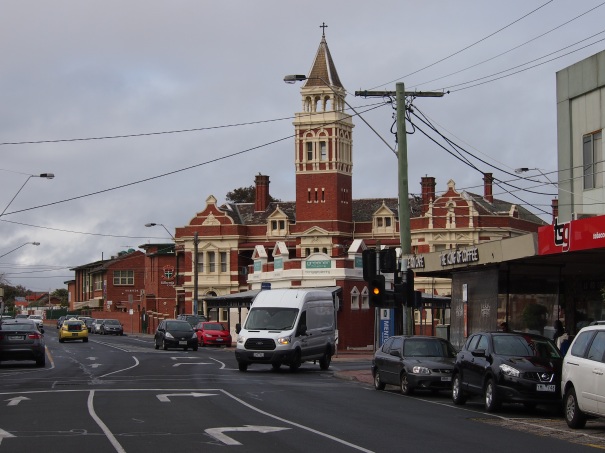
Como Parade, Mentone

Dear community of Mentone,

I am writing to address an issue that is impacting our local community.

Last week a member of the community spoke to me about a story regarding a local Catholic priest in Mentone, which is being reported in the media. Both the Herald Sun and The Age have run update stories today (Feb 10).

As many people will be aware, I live in the local area of Mentone/Parkdale, and I am a father of 3 children who attend a Mentone school (not the two schools mentioned in the media), and I Pastor a Church in Mentone. To hear any story of abuse in the community concerns me because I am a parent, and because I am a Pastor, and because Mentone is my home.

I ought to preface the statement with these two points:

i. Apart from media reports, I am not privy to the particulars of what has taken place with the accusations levelled against John Walshe.

ii. Even though I am a Minister in Mentone, I don’t know John Walshe (Priest at St Patrick’s, Mentone), and have only spoken to him once, about 9 years ago, albeit briefly on the phone in relation to a school Christmas event.

The issue concerns an incident that took place in 1982, when Walshe allegedly abused a seminarian, shortly after Walshe had been ordained. News of this incident has caused concern and outrage amongst many parents at the two schools under the jurisdiction of St Patrick’s parish, St Patrick’s School in Mentone and St John Vianney’s School in Parkdale. It should be added, there are other parents expressing support for John Walshe, and both school councils have indicated ‘unanimous support’ according to The Age.

In reading the media’s report, parental concerns become clearer because of a contradiction between what John Walshe says took place, and what the ArchDiocese of Melbourne determined.

According to an ABC report, John Walshe, said “while his conduct was contrary to his religious beliefs, the encounter with X was completely consensual.”

The Catholic ArchDiocese of Melbourne however concluded that the victim was sexually abused and gave him compensation. Given that this is the case, it does appear incongruous that Walshe is permitted to remain in the ministry.

First of all, I want to ensure Mentone (Baptist) that we hold extremely highly the qualifications set out in Scripture for church leaders.

As I said before, I am not privy to all the information regarding the alleged abuse case, however I know that at Mentone Baptist Church, should a pastor (or any one at the church for that matter) sexually abuse anyone, their tenure would be terminated, and the authorities contacted. And should any of the Church’s leaders engage in sexual immorality (having sex with a person to whom they are not married), they would also be required to step down.

Sadly, I understand how many people have become suspicious of ecclesial organisations,  given the lack of transparency that exists among some. Many are not like this, an example of humble transparency and honesty is that of Peter Jensen, the Former Anglican Archbishop of Sydney, who gave testimony at the Royal Commission last week. But the offering of silence, as seems to be the case here, when there are legitimate concerns, is as helpful as clanging cymbals being hit half a beat behind rest of the band (1 Corinthians 13:1-2).

Second, I have lots of empathy for the concerned families of these schools. After all, this is my community where my family and I live, and it grieves me to see this situation unfolding over the neighbours fence, so to speak.

I am happy to meet with concerned parents, should they think it helpful (email is pastor@mentonebaptist.com.au)

Finally, we are praying for all concerned. As we pray, we do so trusting that godly resolution will come soon.

I don’t know John Walshe’s heart, and it is not for me to doubt the sincerity of his apology. I understand that the event took place over 30 years ago, and following the incident he sought counselling. But I also know that time doesn’t equal repentance, and time doesn’t heal all wounds.

I am reminded of the words of Jesus, who said,

“Come to me, all you who are weary and burdened, and I will give you rest. Take my yoke upon you and learn from me, for I am gentle and humble in heart, and you will find rest for your souls.”

And

“Do not be afraid of those who kill the body but cannot kill the soul. Rather, be afraid of the One who can destroy both soul and body in hell.”

In other words, Jesus both judges and comforts, he brings justice and he exercises mercy. Jesus Christ does not offer cheap formulaic remedies like we find in the self-help section of a book-store, but these are words of the God who became man and took onto himself all the pain and sin of the world in order to bring healing and peace. The cross is a picture of ugliness and suffering, and for that very reason it is also a story of forgiveness and hope.

Moral failure in leaders disappoints, hurts and can lead to a hundred questions and doubts. It is not wrong to set the bar high for those who would oversee a church or ministry, but even with that justified high standard we must rest our hope in Jesus, not in people, for only in Him will we find what we most need.

‘Respectful Relationships’ & ‘Safe Schools’

“Respectful Relationships”

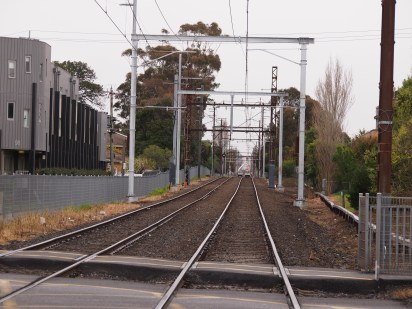
It has been positive seeing media report this week on the Safe Schools program. No matter what one thinks of the program, it is important for parents to be informed about what their children are learning in school. We want to know what direction our children are being led as they grow and learn in our schools. Indeed, where is the train going?
OLYMPUS DIGITAL CAMERA

Last week I wrote a piece about the Victorian Government’s plan to introduce compulsory General Religious Studies into our schools from 2017 (prep-10). While this content coincides with the removal of SRI from normal school hours, the program replacing SRI is in fact Respectful Relationships (as Premier Daniel Andrews announced in August 2015). The program was piloted in some schools last year, and is this year being implemented across Victoria.

Here is a useful and succinct summary of the program, supplied by a Government source,

“Respectful relationships education is located within the health and physical education and personal and social areas of the Victorian curriculum.

Students will develop knowledge, understanding and skills to enable them respectfully relate to, and interact with, others, as well as learn strategies for dealing with relationships when there is an imbalance of power caused by bullying, harassment, discrimination and violence (including discrimination based on race, gender and sexuality). This includes a focus on students protecting their own safety and the safety of others.”

At face value it sounds promising, until one reads the curriculum.

It is unclear what the connection is between Safe Schools and Respectful Relationships (I’m sure someone can clarify this for us). Apart from having different names, and one being a Federally funded program while the latter has been introduced by the Victorian Government, there appears to be significant overlap in the general ethos of the programs and in the material being taught. The most notable difference is this, Safe Schools is optional, whereas ‘Respectful Relationships is now compulsory (from prep-10).

I imagine (and trust) that parents would strongly support our schools teaching students about the harms of bullying and violence. Through the work of Rosie Batty and many others, the dreadful realities of domestic abuse have been exposed and spoken too, including the staggering statistics that reveal how commonplace violence against women and children is in our communities. We rightly want our homes, and our schools, to be safe places for our children.

It is somewhat ironic and disappointing to learn of parents who’ve been subjected to verbal abuse and bullying because they have publicly raised concerns about these programs. Sadly, it has become an all to common, but effective method to keep dissenting voices quiet.

It needs pointing out that our schools already have in place effective and well designed programs to teach our children common values, including respect, care and resilience. Anti-bullying programs have existed and worked in our schools prior to Respectful Relationships.

The issue with Respectful Relationships, as with Safe Schools, is that it extends well beyond anti-bullying education, to teach and encourage children to doubt their sexuality and to explore alternatives.

Here is a contents page for the first part of the course:

contents page

Here is a sample activity for students:

sample activity.png

In Unit One there is a session designed to:

“This session enables young people to explore the impact of particular understandings of gender on expectations about being male or female. It provides a background for the other activities in this resource. The session has been designed to enable students to explore the concept of gender and the associated notions and expectations that have an impact on sexuality. It also provides them with the opportunity to connect issues of gender to different positions of power central to adolescent sexual behaviour. The activity also aims to extend their understanding of gender by exploring traditional notions of gender in a case study that examines the experience of a young transsexual person.”

One of two learning goals for this session is to ‘identify implications of narrow understandings of gender’. In other words, it is encouraging children to explore and perhaps even identify with a view of sexuality that is not just boy and girl, or that biology and gender and necessarily connected.

The Principal of Scots school Adelaide, said of Safe Schools, ‘It feels like a ham-fisted attempt to change a culture.’ The same can be said of Respectful Relationships, only that in Victoria it is compulsory.

If parents are concerned about these programs, you may wish to your local member of Parliament. It may be helpful to talk to your school principal, and to learn what your school is doing.

I would also encourage parents to read the program materials for themselves. Finally, it is important to read this piece in todays, The Australian (Feb 10):

Eleven-year-old children are being taught about sexual orientation and transgender issues at school in a taxpayer-funded program written by gay activists.

The Safe Schools Coalition teaching manual says that asking parents if their baby is a boy or a girl reinforces a “heteronormative world view’’.

Religious groups yesterday criticised the “age-inappropriate’’ manual, which suggests that sexuality be raised in every subject area. “Whatever the subject, try to work out ways to integrate gender diversity and sexual diversity across your curriculum,’’ the manual says.

The All of Us teaching manual, designed for Years 7 and 8, says that children often realise they are lesbian, gay or bisexual between the ages of 11 and 14, while the ­average age for “coming out’’ is 16.

A lesson plan on “bisexual ­experiences’’ requires students to imagine they live in a world “where having teeth is considered really unpleasant’’. Students take turns telling a classmate about their weekend, without showing their teeth.

“How did it feel to have to hide part of yourself?’’ the students are asked. “Do you think that some lesbian, gay or bisexual young people feel that they need to hide part of themselves? How might this make them feel?’’

Children are shown short films about the personal stories of young lesbian, gay, bisexual, transgender and intersex (LGBTI) people.

In a lesson on same-sex attraction, students as young as 11 are told to imagine they are 16-year-olds who are “going out with someone they are really into’’. The class is divided into students pretending to be going out with someone of the same sex, and classmates pretending to like someone of the opposite sex.

The children have to answer 10 questions, including whether they could “easily talk to your parents about your sexuality”, and to name four famous Australians of the same sexuality.

The teacher then instructs the children to stand, and slowly counts backwards from 10. Each child can sit down when the number called out by the teacher corresponds with the number of times they answered “yes’’ in the quiz — meaning that a student who answers “no’’ could be left standing in front of the class.

The Safe Schools manual ­appears to reach beyond promoting tolerance, to advocating activism by students. It tells students to defy teachers who refuse to let them put up LGBTI posters.

“If you can, it’s a good idea to get permission to put your posters up, so you avoid getting in ­trouble,’’ the manual says. “If your school or teachers say no, ask for reasons and see if they make sense. If they don’t seem reasonable, you may have to be creative about where you place them.’’

Safe Schools also advises ­students to “use your assignments to start conversations’’.

“For example, some students have chosen to do their English oral presentations on equal marriage rights or their music or art assignments on how artists express their sexuality, gender or intersex status through their work,’’ it says.

The Safe Schools Coalition suggests that schools paint a rainbow crossing, provide unisex toilets and hand out stickers to supportive teachers.

The federal government has provided $8 million in funding for the program, which has won support from the Australian Secondary Principals Association, beyondblue, headspace and the Australian Education Union. The Victorian government will require all state schools to join the Safe Schools network by 2018, but the program is voluntary in other states and territories.

So far 490 primary and high schools nationally have signed up, although the list of 24 schools in Queensland is secret.

Federal Education Minister Simon Birmingham said the Safe Schools program was an “opt-in’’ for schools and run at arm’s length from government.

“Homophobia should be no more tolerated than racism, especially in the school environment,’’ Senator Birmingham said. “The resource is intended to support the right of all students, staff and families to feel safe at school.’’

A La Trobe University study of more than 3000 same-sex-attracted young people in 2010 found that 75 per cent had experienced some form of homophobic bullying or abuse — with 80 per cent of those occurring at school.

Australian Christian Lobby spokeswoman Wendy Francis said the Safe Schools material pressured kids into accepting LGBTI concepts and “confuses them about their own identity’’.

She said forcing students to imagine themselves in a same-sex relationship was a “form of cultural bullying’’.

Ms Francis said the material was not age-appropriate, as 11-year-old children were too young to be taught about sexual orientation and transgender issues. “A lot of children are still pretty innocent about this stuff — these are adult concepts,’’ she said.

Ms Francis agreed that bullying against LGBTI students “absolutely has to be stopped’’.

“Every child should be safe at school,’’ she said.

Safe Schools Coalition national director Sally Richardson said students at safe and supportive schools did better academically and were less likely to suffer poor mental health. “Our resources are designed to provide teachers with tools to help them have conversations with students around inclusion and diversity in the community,’’ Ms Richardson said. “We provide schools with practical ways to foster a positive school culture where students, staff and families of all sexualities and gender identities feel safe, included and valued.’’

Ms Richardson said all the Safe Schools materials — including the All of Us teaching guide — were used at the discretion of individual schools.

The principal of Scotch College in Adelaide, John Newton, said his students had “embraced’’ the Safe Schools message of support and tolerance.

But he did not approve of the lesson plan that required children to imagine themselves in a same-sex relationship.

“That wouldn’t be a method we’d use,’’ Dr Newton said.

“It feels like a ham-fisted attempt to change a culture.

“Our children are well ahead of the issue and happy to talk about it — they seem to have a very mature approach.’’

Safe Schools is also used in Shenton College, an independent public school in Perth. “We strive to be a welcoming, progressive and inclusive public school,’’ said principal Christopher Hill.

“We can’t turn away from the fact that schools need to deal with these sorts of issues.’’

The Safe Schools guide cites statistics that 10 per cent of people are same-sex attracted, 1.7 per cent are intersex — born with both male and female features — and 4 per cent are transgender.


Super Bowl Doritos Advert turns people off corn!

I ate a packet of Doritos last week, and enjoyed it. Cheese Supreme and Cool Ranch are my two preferred flavours, although with a rich tomato relish dip, plain is always better. Today, I discovered that is there is more to my Doritos than I realised.

Of the big headlines coming out of today’s Super Bowl, is not the Broncos winning or the game itself, nor is it the half time performance by Coldplay et al, or even Lady Gaga’s pretty sensational singing of the American national anthem; it is the Doritos ad.

IMG_6664

What kind of controversy could a corn chip possibly incite? Obesity? Cholesterol? Close…well, not near close. Pro-abortionists are up in arms because the ad, “ humanises foetuses”. That’s right. They are offended because the advertisement shows an unborn child in the womb, in such a way that suggests that it is human.

Here is the exact tweet sent by NARAL (National Abortion Rights Action League):

“#NotBuyingIt – that @Doritos ad using #antichoice tactic of humanizing fetuses & sexist tropes of dads as clueless & moms as uptight. #SB50”

First of all, when one sees an ultrasound of a pregnant woman, one is in fact seeing a human being in the womb. He or she is not an inanimate object, nor plant life or four-legged creature; the fetus is a human being.

Leaving that simple fact aside for a moment, there are no religious connotations in the advert, and there is no subversive social engineering occurring, to my knowledge. As far as I can tell,  there is no intent, whether deliberate or subconscious, to promote a pro-life agenda.

This is a simple and humorous promotion of a corn chip.

In fact, if NARAL hadn’t begun this surge of twitter outrage, I doubt if I would have thought about a connection between Doritos and abortion. Now, everyone does, and we all seeing how wonderfully made an unborn child is, even if CGI has helped out a little.

This irrational and over-the-top response by NARAL exemplifies however, a growing trend in western societies. ‘Freedom of Speech’ is fast becoming a phrase devoid of its intended meaning. Dissenting views are tolerable so long as they keep quiet. Diversity is society’s clarion call, unless of course you are a Christian who trying to present a view in the public realm (or a chip company).

In case you think that this Doritos’ advertisement is a one off example:

Before Christmas an advertisement featuring the Lord’s Prayer, was produced for the Church of England, and was quickly banned from British cinemas.

Here in Australia, in August last year, a paid advertisement by the Marriage Alliance was banned by several radio stations and by Channels 7 and 10, despite the fact that the ad did nothing more than affirm the current law in Australia regarding marriage.

This is the bizarre world in which we now live, and we shouldn’t be surprised to find this happening more and more.

What is a Christian response? I am reminded of the words of the Apostle Paul in 2 Corinthians 4, words we need to take to heart as we prepare for an increasingly hostile culture in Victoria, Australia and beyond.

“Therefore, since through God’s mercy we have this ministry, we do not lose heart. 2 Rather, we have renounced secret and shameful ways; we do not use deception, nor do we distort the word of God. On the contrary, by setting forth the truth plainly we commend ourselves to everyone’s conscience in the sight of God. 3 And even if our gospel is veiled, it is veiled to those who are perishing. 4 The god of this age has blinded the minds of unbelievers, so that they cannot see the light of the gospel that displays the glory of Christ, who is the image of God. 5 For what we preach is not ourselves, but Jesus Christ as Lord, and ourselves as your servants for Jesus’ sake. 6 For God, who said, “Let light shine out of darkness,” made his light shine in our hearts to give us the light of the knowledge of God’s glory displayed in the face of Christ.

7 But we have this treasure in jars of clay to show that this all-surpassing power is from God and not from us. 8 We are hard pressed on every side, but not crushed; perplexed, but not in despair; 9 persecuted, but not abandoned; struck down, but not destroyed. 10 We always carry around in our body the death of Jesus, so that the life of Jesus may also be revealed in our body. 11 For we who are alive are always being given over to death for Jesus’ sake, so that his life may also be revealed in our mortal body. 12 So then, death is at work in us, but life is at work in you.”


Finally, back to this non-religious pro-corn chip eating ad. I need to be transparent and make a confession, it is true, I am biased toward this ad, and it’s not because of baby – apparently the creator is an Australian filmmaker! So naturally, I think it’s greatest advert of all for SuperBowl 2016.

Should Churches offer their buildings as sanctuaries to asylum seekers?

Here are 3 articles that I have found helpful in considering the right/wrong of claiming our buildings to be places of sanctuary for people from the law:

Stephen Mcalpine’s,  ‘no sanctuary from the secular state’

Neil Foster’s (associate professor of law at Newcastle University),   ‘churches offering sanctuary to asylum seekers’

Archbishop Glenn Davies’ statement, ‘Anglican church offers to help’ 

Introduction of ‘General Religious Studies’ in Victorian Schools

When I first became a parent someone gave Susan and me this wise advice, ‘whenever you offer a criticism or correction to your children, make sure you also give them 10 encouragements.’  I’m pretty sure we haven’t made it to 10 every time, but we try.

logo_vic

The logo presence does not represent a Govt endorsement of this article

When it comes to the education of children in Victoria, I could easily mention 100 things that are fantastic about our schools and teachers. As a parent with 3 children in school, I am very thankful for the education they are receiving, and for the care and expertise of their teachers.

Having said that, I do not support everything that is being implemented by the Education Department, especially  issues relating to directives from the Education Minister, Mr James Merlino.  In 2015 the current Victorian Government made several drastic and unnecessary changes to our education system in regard to SRI (and other related issues); these have been discussed at length on other occasions. In 2016 the changes will continue, and it is important for parents to be made aware.

Our State Government is introducing material on General Religious Studies (prep-year 10). This is one of two curriculums* that is replacing SRI (which can now only take place outside of normal class hours, along with an extensive list of new measures). The other program is Building Respectful Relationships.

In this post I wish to raise 4 concerns regarding the General Religious Studies.

First, the freedom to choose religious education has been taken away from students and parents. Whereas families once had choice and could opt-in for religious classes (whether it be Christian, Jewish, Muslim or Buddhist classes), they are no longer given the option.

The material has been made available for this year, but due to certain issues (relating to training, I believe) the course will become compulsory in both State and Catholic schools from January 2017.

Second, can the Education Department guarantee that the General Religious Studies material will be accurate and taught impartially?

Learning about other religions is important and useful, and at home we ensure our children can learn about what different people believe. 

About teaching religion in schools, there is a significant ideological issue at stake, is it the role of Government to teach religion? Apart from that, my concern is, will educators ensure that each religion is explained and taught with fairness and veracity?

Neutral education is a fairy tale, and this is clearly demonstrated by the Department’s own summaries of the 5 major religions. I am not an expert in Hinduism, Islam or Judaism, although I can (in my view) find fault in these representations, but as a Christian with an honours degree in theology I am in some way, able to speak to the published presentation of Christianity

According to the Education Department these are the ‘key premises’ of Christianity:

“There is one God, consisting of the Father, the Son (Jesus Christ) and the Holy Spirit. God is the creator and sustainer of the universe. God became human in the person of Jesus, the Son.

People have one life and its purpose is to live in a loving relationship with God, with others and with the world. The life and teachings of Jesus show how this is done and make possible the life-giving changes needed in individuals and society. Christians are empowered by the Holy Spirit and are called to demonstrate God’s love, compassion and justice in all their relationships and interactions. Most Christians believe in an afterlife; that after their physical death, they will live forever with God.

The Bible is the sacred text for Christians. The Bible has two parts, known as the Old and New Testaments. The Old Testament contains Jewish books and teachings, before the time of Jesus. The New Testament records the teachings of Jesus as well as the history and teaching of the early

Church which is based on the teaching and example of Jesus.”

There are certainly statements here that align with Christianity, but others are blatantly wrong, and some of the most central tenets are altogether missing.

Here is one example of a basic error, ‘Most Christians believe in an afterlife; that after their physical death, they will live forever with God”. No, all Christians believe in an afterlife, and this life beyond death will be physical.

Notice how there is no mention of sin, Jesus’ death on the cross and his resurrection, and of salvation on account of God’s grace. There is no mention of hell. Without these things there is no Christianity. It is not enough to make the excuse, we can’t say everything in a few paragraphs, the core of Christianity has been ripped out and in so doing it is presenting a Christianity that is inauthentic and inaccurate.

To quote the Bible, Christianity is about ‘Christ and him crucified’.

My point is this, if the Education Department is unable to fairly and accurately summarise the Christian faith, how can we trust what they want taught about any and all religion?

One of the stated aims is that it ‘should include…opportunities for critical thinking.’ That’s a fine intention, but if my children are to be taught any religious studies, I want them learning the facts, not an erroneous and sloppy version that looks more like a fake painted by a liberal secular humanist on a bad hair day.

Thirdly, one of the concerns aimed at SRI was that instructors were not only explaining what their religion believes but were encouraging students to practise and participate, in a variety of ways.

The Facts Sheet given to school Principals by the Victorian Education Department (November 2015) makes it clear that as part of General Religious Studies, teachers may organise for students to celebrate festivals belonging to the different religions. They cite examples including dressing up for Diwali (a Hindu festival celebrating their understanding of spiritual victory), making Christmas decorations, and sharing sweets for Eid (a Muslim festival).

In other words, not only is this new religious content compulsory and fails at a basic academic level, it is encouraging students (regardless of their own religious convictions) to participate in activities of other religions. I have no doubt that this will be deeply troubling for many thousands of Victorian parents, from different religions.

Fourthly, class room teachers will be required to teach the material, although under very strict guidelines a visitor may be invited to teach certain aspects.

I have a very high regard for the teachers at my children’s school, but I suspect that very few if any have qualifications in theology or philosophy. I imagine it is difficult enough for them to teach the many different subjects they are already putting together each year, let alone teaching theology, something which would normally require a four year university degree!

I understand that teachers will be presenting overviews, not deep theological treatises. However, even a simple grasp of the 5 major religions requires significant learning, and what of students when they ask teachers questions about these religions? Will they be equipped to answer? I certainly hope they won’t be relying on the current information that the Department are providing, given its flawed representations

I have been informed by the education department that the content must be taught (from 2017), but it will be up to each individual school as to how it will be taught.

What can parents do?

Speak to your school principal (and council) and graciously explain your concerns to them.

Write to your local member of Parliament, and kindly and succinctly express your concerns.

———————–

Technically, the General Religious Studies is not a curriculum, but content which can be fitted into various areas of learning at school, for example it may appear under ‘Civics and Citizenship’ or ‘Ethical Capability’

A Hard Day’s Work: why we work

a-hard-days-night

In the words of the little known group, The Beatles,

“It’s been a hard day’s night, and I’d been working like a dog

It’s been a hard day’s night, I should be sleeping like a log”

Why do we work?

Some people have an altruistic view of work, motivated by the belief that they are contributing to the benefit of society. Others see working as a necessary evil; it’s what we have to do in order to provide for my family. Many Christians have been taught that the value of work doesn’t extend much beyond earning an income to support family and church, and giving opportunities for evangelism. While both these reasons are true (and incredibly important), in the Bible we find a far richer and broader picture of work.

Here are 11 reasons why our work matters

1. We are made to work

“God blessed them and said to them, “Be fruitful and increase in number; fill the earth and subdue it. Rule over the fish in the sea and the birds in the sky and over every living creature that moves on the ground.” (Genesis 1:26)

In the beginning work was not considered a curse, but God’s blessing. Work is tied to God’s purpose for humanity. This creation mandate has been assuaged with trouble ever since the fall, but it has not been overturned.

In fact the Bible has a negative view of people who don’t work:

“As a door turns on its hinges, so a sluggard turns on his bed.” (Proverbs 26:14)

The lazy are selfish, unproductive, and are exemplars of foolish living.

By work, I am not thinking only of paid vocations (neither does the Bible), but any and all work, including home duties, volunteer work, and study. The shape of work will change as life’s circumstances alter, but we must be careful not to denigrate another person’s work (or our own). Having said that, some work ought to be avoided, any work that is considered sinful or that is done in a sinful manner is unfitting for a Christian (and anyone for that matter).

2. Creation matters:  We don’t dismiss this world as unimportant, or just a highway to heaven. Why? First of all, God made this world, therefore it has intrinsic value. Second, the incarnation affirms the significance of this world. Third, the resurrection of Jesus confirms the redemption of the physical, the the promise of a new creation.

3. Caring: Work enables us to care for and love our neighbour by providing services, produce, ideas, things that are useful to people and that improve the quality of life.

Work also enables us to care for animals, the oceans, mountains, and everything in between.

Parenting is held with incredible esteem in Scripture. To have and raise children is a joy and privilege, and an enormous responsibility. Parenting is hard work, and probably the most important work one will ever do.

4. Providing: Much work is not accompanied with income, and for that we must not negate its importance, but earning an income is considered important in Scripture so that we can avoid depending on others’ generosity, so that we provide for our family, to pay taxes, to aid the poor, and to give generously to Gospel ministry.

5. Constructing: Our work ought to be part of building a society that is safe, healthy, advancing, and improving.

6. Creating: Music, architecture, and poetry are among the many activities that are esteemed in Scripture. These are God given gifts for our enjoyment, pleasure, value, and amelioration.

7. Confronting: Police, law, medicine, armed forces, medical science, psychologists are among the many who work to confront those things that would do us harm.

8. Our work displays the character of God. We have opportunity to show people what God is like when we work by in truth, with grace, kindness, uprightness, generosity, and so on. What a wonderful way to think of our work. By the way a teacher instructs their students they can show what God is like. An electrician wiring a house can by their work ethic show people what God is like.

9. Our work testifies to the Gospel. In our work opportunities arise where we can explain the Gospel. Of course, our whole lives ought to reflect the Gospel, and speaking the Gospel remains vital today. We should avoid doing evangelism when we are supposed to be pulling teeth or auditing a company’s accounts, but opportunities to speak the good news of Christ will arise if by our lives we are walking with Christ.

Work is good but it is not enough; speaking the Gospel of Christ is God’s way of bringing redemption and reconciliation to all who believe Him.

10. Our work anticipates the new creation.

I don’t know what kind of jobs there will be in the new heavens and new earth, but when we work in love  and with integrity, and serving for the good of others, we are showing people what heaven will be like.

11. Our work glorifies God.

“And whatever you do, whether in word or deed, do it all in the name of the Lord Jesus, giving thanks to God the Father through him.” (Colossians 3:17)

“Whatever you do, work at it with all your heart, as working for the Lord, not for human masters” (Colossians 3:23)

As we return to work for a new year I want to encourage our workers at Mentone Baptist (and anyone else reading the blog) to consider prayerfully, joyfully, and expectantly, the opportunities we have in our work to honour God and to love those whom we interact with in any and all of our work.