Should Victoria introduce laws permitting doctor assisted suicide?

Who can live and not see death,  or who can escape the power of the grave? (Psalm 89)

Pastoral ministry is one of the few professions where you get to  travel with people from birth through to death. It is a privilege to minister to people who are facing their final weeks and days. Sometimes it is a brief period of illness, other times it is an elongated time of suffering. I have known people in their final days who were keen, not to die, but to see their suffering come to an end and to see their hope in Jesus Christ realised. It is an extraordinary privilege to sit beside a person who in approaching death is joyful and at peace. I have also witnessed people wrestling with their own mortality and doubts of what lies beyond death. A pastor’s care in such circumstances also extends to a spouse, to children and friends. Indeed, for many pastors, these relationships are not merely ‘professional’, for those whom we serve are much loved, and they are our friends and family.

Several members of my family work in the medical field, including my wife who worked as a nurse for 10 years, spending much of that time caring for patients with terminal and chronic illnesses. On more than a few occasions she would come home after a shift in tears, having witnessed a patient die.

I wanted to begin by mentioning the above contexts because it would be wrong to assume I am writing from a distance. Indeed, I appreciate that there are many personal stories, from people who hold to various views on euthanasia, and while these stories are all important, stories alone are not suffice for creating law.

OLYMPUS DIGITAL CAMERA

If there is common ground to be found in the debate on euthanasia, albeit a rather morbid commonality, it is agreement that death is a terrible reality in the human experience.

It is no small thing for the State to legalise killing another human being

It is of paramount importance that we recognise that the State exists not only to protect life but to enable human flourishing. Similarly, our health system exists to save human life and to bring healing of body and mind. Introducing a law that permits taking a human life is no small thing.

Physician assisted suicide not only contravenes the very purpose of our health system, it would require medical professionals to discard both the Hippocratic oath and the Declaration of Geneva.  Such a law would introduce to society the morality of taking human life, legislating that our society condones the killing of another human being. Again, this is no small and insignificant line in the sand.

Dr Michael Bird recently made the astute observation that Victoria could potentially have two hotlines: one for suicide prevention, and the other, suicide permission. The conflict is clear for everyone to see.

Palliative Care as a better option

I am not unsympathetic toward those who wish to end their lives; I hate human suffering and long for the day when it will desist forever.  I do not, however, believe that euthanasia is either morally right nor is it the only option available for terminally ill Victorians. We have been led to believe that the only choices available are either ongoing treatment or euthanasia, but there is a third option, and one that avoids unnecessarily prolonging a patient’s life and avoids actively killing them, palliative care.

Palliative care is designed to provide the greatest possible comfort for patients, without undue intervention and causing protracted suffering.

Dr Megan Best is a senior lecturer at the University of Sydney Medical Faculty and works as a palliative care physician in Sydney. In a recent article, Dr Best has argued that a better way forward is to provide adequate resources for palliative care. She says,

“While services such as palliative care and hospice can do much to relieve the distress dying people experience, many still do not have access to it. We must do better.”

It is a travesty that many Victorians cannot currently access proper care that they deserve and need at such an urgent time.

Similarly, Dr. Ian Haines is a medical oncologist, and he believes, 

“Like Andrew Denton and others who have observed unbearable suffering in loved ones and the terrible failures of modern medicine in the past, I had once believed that euthanasia was the only humane solution.

I no longer believe that.

The experiences of countless patients and families should be the inspiration for continuing to improve palliative care, for general introduction of advanced care plans and not for euthanasia with its openness to misuse.”

In other words, our Government would do better to invest properly into palliative care, providing the kind of support patients and their families need at such a time.

Unsafe safeguards

The model of euthanasia being considered in Victoria is that which is currently practiced in Oregon, USA. The process involves a Doctor prescribing a lethal capsule to a patient who has been diagnosed with a terminal illness that will lead to death within six months.

In a report recently published by the Health Department in Oregon, are a series of startling revelations regarding doctor assisted suicide in Oregon: First, 49% of patients state as a major reason for taking their own life, the belief that they are being a burden to their family. Second, once the doctor has prescribed the capsule containing secobarbital or pentobarbital, there is no guaranteed follow up in patient’s home where most are said to take their life, with no safeguards to ensure only the patient can consume the lethal dose. Third, patients with non-terminal illnesses have been given access to these lethal drugs and taken their own life.

Both Dr Megan Best and Dr Ian Haines, are among numerous medical professionals who believe the introduction of euthanasia will lead to abuses and even to amendments and extensions down the track.

Dr Best explains,

‘It upsets healthcare providers when their patients are distressed. Don’t tempt them. You can’t rely on the rules. It is not possible to write a law that can’t be abused. That’s why euthanasia bills get defeated in parliament. Because, even though we ache for those who are suffering and desire to die, we feel responsible to protect the vulnerable who would be at risk of dying under the legislation if it were to pass. Surely the worth of a society lies in how it treats those who can’t care for themselves.’

Does this not at least raise questions in our minds, if not grave concern? If medical professionals working in palliative care are already communicating that the rules will be broken, we ought to take notice.

And for to those who allege slippery slopes are mythical, have they not looked to Northern Europe, and seen how euthanasia laws are now regularly broken and expanded, to include killing children, killing people with mental illness and dementia and even gender dysphoria?

Behind the debates on many ethical issues including euthanasia, is what is known as utilitarian thinking, most notably advocated by Professor Peter Singer. Utilitarian ethics ditches belief in the inherent value of every human life, and instead determines moral good by what the greater number of persons believe will maximise their happiness. In other words, for example, killing unborn children is a moral good when the mother believes the child will not add to her own happiness. This is one of the chief reasons why the number of children with Downs Syndrome has decreased significantly in Western societies because the vast majority are now killed in the womb.

There are Parliamentary members across the spectrum who are expressing support of a Bill legalising assisted suicide, and similarly, across the parties are members who disagree and are concerned. We have all heard heartfelt stories being told from different viewpoints, but we must judge what is right. There is an overarching principle with which the State of Victoria must decide, is it the role and right of Government to introduce law that permits the killing of human life? If so, what promises will be given that no further legislative changes will be made in the future?

When society cuts our humanity away from the imago dei, we always slide down a path toward dehumanisation. Bringing the two together again requires humility and more. It requires the loving actions of God to restore and heal this broken image. Is this not the wonder of the Easter event?

If the moral compass of our State is utilitarian ethics, which certainly appears to be the case, then further expansion of euthanasia laws is almost inevitable, as is happening across many countries who’ve already taken the pledge to kill. Indeed, I have already been informed, on sound advice, that the Bill shortly to be presented to the Victorian Parliament will be in the first place be a conservative pro-euthanasia Bill, but the intent will be to extend it 3 to 5 years down the track.

When we begin defining the value of human life by the kind of utilitarianism pursued by Peter Singer and others, we should not be surprised to find ourselves in a few short years permitting and even pressuring the expungement of all manner of people whom society deems a burden. I realise all this sounds rather Stalinesque and outrageously impossible; we would never traverse such dreadful ground. But look to Belgium and the Netherlands, and consider how our own society has already deemed moral, killing unborn children, and possibly now, those who are at the end of their days.

Have you journeyed to the springs of the sea

    or walked in the recesses of the deep?

 Have the gates of death been shown to you?

    Have you seen the gates of the deepest darkness?

 Have you comprehended the vast expanses of the earth?

    Tell me, if you know all this.” (Job 38:16-18)

Are we prepared to cross the line, or instead, can we do better by providing improved and greater resources in palliative care?
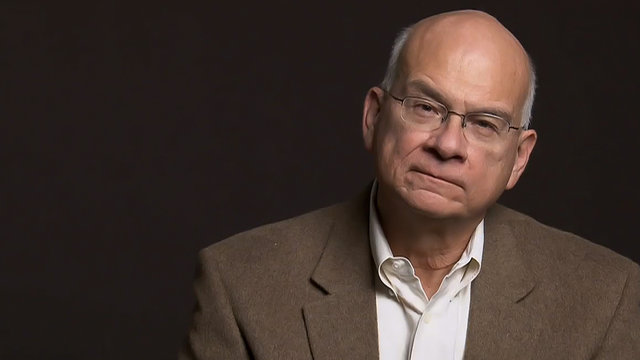
Tim Keller, Princeton Seminary, and a Christian example

‘We are fools for Christ, but you are so wise in Christ! We are weak, but you are strong! You are honored, we are dishonored!’ (1 Corinthians 4:10)

Friend of the Gospel Coalition Australia and City to City Australia, Tim Keller, was due to receive the Kuyper Prize for Excellence in Reformed Theology and Public Witness, on April 6. It is an annual prize awarded by Princeton Seminary.

tim-keller

Princeton is one of America’s oldest and most prestigious theological training institutions, and Abraham Kuyper was one of the 20th Century’s leading practitioners of Calvinism.

Anyone who has met, listened to, or read Tim Keller will know he is gracious and perspicacious, winsome and biblically rigorous. It is this God given combination that has enabled his books and preaching to reach such a wide audience, even here in Australia.

In a scene replicating this year’s Acadamy awards, ‘the academy award for best picture…’, Princeton Seminary has changed its mind.

After numerous complaints, the Princeton leadership has taken the unprecedented step of withdrawing this year’s prize. When Abraham Kuyper said, ‘There is not a square inch in the whole domain of our human existence over which Christ, who is Sovereign over all, does not cry: ‘Mine!’, I don’t think he meant the square inch that is Princeton was exempt.

President of Princeton Seminary, Rev. Craig Barnes, has written an open letter in which he says, giving Keller this annual price might be seen as an endorsement of his views on women’s ordination and LGBTQ people.

Rev Barnes adds that he remains committed to academic freedom and “the critical inquiry and theological diversity of our community.” Hmmm. To be fair, while they have rescinded the award, Princeton has kept their invitation for Keller to give a lecture at the Seminary, which he has graciously accepted.

In the case of Princeton Seminary, we are not talking about a secular education institution, or a brewery (Aussies readers will understand), but a Bible College. One critic wrote, ‘we are honoring and celebrating a man who has championed toxic theology for decades.’  I am saddened by those words, that the Bible’s teaching on marriage, church, and gender should be viewed as toxic, and calling it toxic should be described as Christian.

Barnes admitted this had been “a hard conversation” but one “that a theologically diverse community can handle.” Clearly, they couldn’t handle it. No one is suggesting Princeton or any theologically egalitarian institution ought to invite complementarians to speak, teach, or be given awards. I’m pretty sure Tim Keller wasn’t petitioning for this or any prize. The lesson for institutions is simple, don’t stuff up by saying you’ll do something and then not doing it. I’m pretty sure there’s a Christian principle behind that one: “let your word ‘yes’ be ‘yes,’ and your ‘no’ be ‘no’” (Matt 5:37).

Sadly, this is not a first. Several years ago another respected American Christian thinker was visiting Australia for a series of missiology lectures, and one denomination (who were also sponsors) withdrew their support and invitation to speak, on account of his complementarian theology.

My Australian Christian friends who still believe avoiding these topics is the best policy, are living a fools paradise. We don’t make sexuality the issue, but society has, and it has determined that sexuality is the plumb line of moral truth in the Western world. Silence is not going to cut it, and defensive and angry responses miss the mark. Tim Keller has given us a wonderful model for responding; he has agreed to address a community who have publicly shunned him; that’s an example to us all.

‘when we are slandered, we answer kindly. We have become the scum of the earth, the garbage of the world—right up to this moment.’ (1 Cor 4:13)

We live in this world, seeking to serve Christ and to imitate him in order to show the world his glory, truth and grace, and we do so with a sure and certain hope. As the Apostle Paul expressed to Timothy, ‘Now there is in store for me the crown of righteousness, which the Lord, the righteous Judge, will award to me on that day—and not only to me, but also to all who have longed for his appearing.’ If God has secured this ‘prize’ for us, we can afford to show grace to those who might identify us with toxicity. 

Two quick words about egalitarians:

It is important to distinguish between evangelical egalitarians and the kind of egalitarianism being proffered by Princeton and the PCUSA which includes affirming LGBT lifestyles and same-sex marriage. I disagree with the former, but the latter lies outside Christian orthodoxy.

This post is not a criticism of ‘evangelical’ egalitarian theology. I love my egalitarian friends and joyfully work alongside them for the advance of the Gospel. Obviously, we disagree on some matters, and we agree that these subjects matter and for that reason we don’t partner on some projects. I suspect though that even they would be disappointed by Princeton’s actions.


photo from The Gospel Coalition

Two Misnomers about Free Speech, Coopers, Qantas, and Gay Marriage

After a day or two, most news items have disappeared into Google’s search engine, which is telling, because the furore over the Bible Society and Coopers Brewery is still being reported, 1 week on. For anyone still thinking this story is a bit of froth, think again.

As with any contentious issue, emotions are high, misinformation is blended with facts, and various sides argue against caricatures, create straw men, and second guess peoples’ motives.

I have already offered an analysis of these events, and how Christians can respond, but two misnomers abound and need correcting. The first concerns the way some Christians are reading the situation, and the second relate to society more generally.

The first mistake concerns conflating a shift in the nature of public speech with progress of the Gospel or the future of Christianity. The two are not the same, and latter does not depend on the former, although they can work well together.

If Australians wish to be a pluralist society, which we are, then it is important that Australians pursue keeping this space open and available. Sadly, the events of the past week have demonstrated that this is no longer the case. There is free speech for some, but if you don’t fall into line with particular secularist agendas, watch out, because speaking up comes with a cost. The cost is nothing like it is for citizens in many other nations (think North Korea, Russia, Saudi Arabia, etc), but neither is it diminutive, and this week have shown that the stakes are increasing. How many people feel comfortable to share their belief in heterosexual only marriage in the workplace? How many Australian companies will sense the liberty next week to publicly align with classical marriage? The pressure to say nothing or to conform with the self-determined moral elite has increased several degrees over the past 7 days.

Let’s be clear, a pluralist society is not the be all and end all, and neither is free speech. It does however offer a societal paradigm for respecting not only those with whom you agree but also those with whom you disagree. Christians have an interest in upholding this privilege, in part because we have somethin to say, but also because one cannot force a person to become of follower of Jesus Christ. We persuade and urge people by articulating, teaching, and reasoning with the words of God. Freedom of speech makes sense to us because honest conversation matters, truth matters, life matters, and we want people to believe for themselves, not because of compulsion.

History however demonstrates that the Gospel can advance regardless of the contemporary socio-politico milieu. Did not the Gospel grow rapidly in the first centuries when Christianity was held with suspicion and even banned for seasons? And where does the Bible ever promise that Christianity will be perennially embraced by a society? The hope of the world is not liberal democracy and our own Areopaguses, but Jesus Christ.

OLYMPUS DIGITAL CAMERA

A second misnomer has appeared over the last 48 hours, and while it is not immediately connected to the Bible Society video, its relevance is clear enough.

The Australian newspaper has detailed a letter that is being prepared for the Prime Minister, Malcolm Turnbull. 20 CEOs of some of Australia’s largest businesses have written a letter to the Prime Minister. They are trying to pressure the Prime Minister into breaking his election promise, which is to hold a plebiscite on marriage.

The issue is not that these 20 CEOs have expressed a view, or that they have written this letter to Mr Turnbull. Should they not be free to do so, despite the protestations of some? Indeed, it could be seen as hypocritical for one to defend the Bible Society and Coopers, and not these corporate leaders.

There are two qualifications worth considering first of all:

First, the CEOs letter is trying to accomplish a different goal to that  set out in the Bible Society video. The videoed dialogue between Tim Wilson and Andrew Hastie was demonstrating how Australians can speak civilly about same sex marriage while disagreeing, whereas this letter is pushing a specific position on marriage, namely advocating for the law to change.

The Australian reports, “The same-sex marriage lobby hit back, saying all Australians should be free to voice their views and lobby politicians, including business leaders.

National campaigner for just.equal, Ivan Hinton-Teoh said many CEOs recognised the importance of equality for their employees and customers and had a right to represent that to law-makers.

“It’s not appropriate for a government minister to attempt to shut down views he doesn’t agree with,” he said.

In other words, it would be immoral for anyone to shut down these business people as they agitate for same-sex marriage.

Second, notice the irony. Unintended I’m sure, but these words drip with more irony than an upside down jar of honey oozing all over the floor, “Australians should be free to voice their views and lobby politicians, including business leaders”? Clearly someone has been flying in transit all week, because one Australian company, Coopers Brewery, were subject to a torrent of abuse, and so was the Bible Society, not because they were arguing the classic definition of marriage but because they were seen to sponsor a conversation where two politicians civilly disagreed with each other about marriage. Where were these executives defending Coopers Brewery? Did any speak up for them?

It was soon clarified that the brewery was not sponsoring the video, but that was not enough to end the abuse. Only when they completely distanced themselves from the Bible Society and break their agreement with them,  and signed on the dotted line to the same sex-marriage campaign, was all forgiven and people once again happy to drink Coopers beer.

I haven’t heard anyone calling to boycott Qantas, CBA, or ANZ, nor have I read any bitter herbs being tossed around on social media. There is a Government minister making some unusual comments (it appears as though there is politics at play between the Government and these organisations which I am not across. Nonetheless, I did find Mr Dutton’s comments odd).

There is an ethical question relating to the role of a company CEO speaking to moral issues when their name is attached to a company. For each of the signatories, does the coinciding Board affirm their view? Do their shareholders share and support the position with which the company name is now attached? Are employees permitted to dissent with this view? The same questions can of course be asked of Coopers.

These are questions, not answers, and none points to these CEOs keeping their views on marriage quiet; Except in the case where speaking directly contradicts the values of the company, I  would have thought executives can speak publicly as with any citizen of the country. The trouble is, one company did speak out (well, everyone thought that had for a few hours) and they were condemned in the strongest language, obscene language, and with smashed bottles and pubs boycotting.  Before the dust has settled 20 corporate executives have publicly aligned themselves with same-sex marriage, and the same vitriolic public are now applauding with tremendous approval.

Let’s be clear, I am not criticising these executives for speaking out, but our social hypocrisy reeks.

A Qantas spokesman today said on the ABC,

“The freedom to discuss issues of public concern is a freedom we all hold dear.”

This is true…so long as one doesn’t subscribe to the heresy of believing marriage is only between a man and woman. So yes, the nature of public speech has changed in Australia. It’s ok to be saddened by this, because our nation is losing a cherished ideal, but we do not despair for as the Apostle Paul wrote,

‘We do not lose heart. 2 Rather, we have renounced secret and shameful ways; we do not use deception, nor do we distort the word of God. On the contrary, by setting forth the truth plainly we commend ourselves to everyone’s conscience in the sight of God. 3 And even if our gospel is veiled, it is veiled to those who are perishing. 4 The god of this age has blinded the minds of unbelievers, so that they cannot see the light of the gospel that displays the glory of Christ, who is the image of God. 5 For what we preach is not ourselves, but Jesus Christ as Lord, and ourselves as your servants for Jesus’ sake. 6 For God, who said, “Let light shine out of darkness,” made his light shine in our hearts to give us the light of the knowledge of God’s glory displayed in the face of Christ.

7 But we have this treasure in jars of clay to show that this all-surpassing power is from God and not from us. 8 We are hard pressed on every side, but not crushed; perplexed, but not in despair; 9 persecuted, but not abandoned; struck down, but not destroyed. 10 We always carry around in our body the death of Jesus, so that the life of Jesus may also be revealed in our body. 11 For we who are alive are always being given over to death for Jesus’ sake, so that his life may also be revealed in our mortal body. 12 So then, death is at work in us, but life is at work in you.’ (2 Corinthians 4:1-12)

The Phoney War is Over

The days of free speech in Australia have come to an end. From today, public speech comes with a cost.

For several decades Australia has experienced a pseudo-peace. Since the 1960s the sexual revolution has been gaining momentum and slowly dynamiting deeply held views about God, humanity, sex, and family. We have noted these changes, and sometimes with protest, but mostly we just get on with life and pretend that things are not so bad. The last 3 years has seen an acceleration in social and moral change, and just maybe we are rubbing the sleep from our eyes and beginning to wonder, what’s going on? Gender is fluid, and it’s compulsory for my kids to be taught this in school? Marriage can be for 2 people of the same gender?

For several years I have tried to speak to all kind of issues in the public square, with a measure of success and also with some mistakes. Today, I’m calling it, the days of free speech have come to an end. The end though won’t be the end because the appetite of the sexual revolution is insatiable, and we are fools if we think that the conquest will end should Australia adopt same-sex marriage. Changing the law will simply escalate the efforts of those who would love to see Christianity pushed into Southern Ocean.

The catalyst for this cultural epitaph was a video produced by the Bible Society. Understand what people are so angrily protesting about:

The video does not present a hate filled preacher spitting out vitriol.

The video does not present a Christian leader carefully and winsomely articulating the Bible’s view on marriage.

The video shows a gay man who supports same-sex marriage and a heterosexual man who does not, and they are engaging in a respectful conversation about marriage while enjoying a beer.

What is so reprehensible about this video? Nothing, of course, but in the eyes of the self-determined moral judges of our age, this video debunks the myth they have spun, that civil speech and questioning same sex marriage cannot go together. From Canberra to Spring St, from SBS to The Age, we have been told that unless we support same sex marriage without qualification, we are bigots and homophobes. The problem is, this video dismantles that myth. But instead of engaging with it, there has been outrage because there is no forgiveness for those who dare denude the same-sex marriage narrative. 

The Hastie/Wilson conversation (and there are many other examples that could be mentioned) reminds us that there are still people of good will, Australians of different persuasions who believe in giving everyone a say on these important topics. What we are seeing however, are vocal and powerful people overreaching and drowning out these discussions.

To be fair, some people have also argued that the same-sex marriage is a human right, and to even question marriage change is therefore undermining their rights. I can see the point of view, but this is also a myth and needs challenging: marriage is not a human right…for anyone. It is a gift and a privilege but not a right. More than that, the onus lays with marriage change advocates to demonstrate the logic of their definition for marriage. How can any reasonable society redefine its societal foundation without first having reasoned, rigorous, and respectful discourse?

Let the reader understand, anyone, any organisation or person who allies themselves with civil discourse will not be immune for public shaming. Add God or the Bible to the mix, and the response will be even stronger.

OLYMPUS DIGITAL CAMERA

It’s also important for us to realise from today that opponents to free speech are not prepared to end with name calling. Despite not being a sponsor of the video, Cooper’s Brewery has been branded homophobic and could well suffer financial loss as a result. The lesson is, if you associate too closely with Christians and they happen to say anything about marriage, be prepared to take a financial hit.

It is somewhat ironic, and indeed Biblical, that this watershed day centres on an organisation that exists to bring the word of God to Australians. It’s not totally unlike when Hamlet mistakingly kills Polonius with his sword.

Waving his sword around, Hamlet shouts, ‘How now, a rat? Dead for a ducat, dead!’ He then plunges his sword into a wall carpet and kills Polonius who is hiding behind.His mother cries, ‘what hast thou done?’ , to which Hamlet responds, ‘dunno’.

I wonder, have we understood our actions and the consequences that will flow from them?

I’ve had Christian friends suggest to me today, if only the Bible Society had stayed away from same-sex marriage, as though that would keep everybody happy. Respectfully, do we not realise that that is in itself a concession, and is simply buying into the rhetoric of those who wish to outlaw dissenting speech and belief from society?

In some formal sense, free speech will exist tomorrow morning, but  in practice, a cacophonous minority have succeeded in shouting down reasoned and respectful speech. I remember one year ago referring to freedom of speech as the gordian knot of our time; well, today the sword has been taken out of its sheath and cut right through the ropes.

Free speech is gone and what we have left is costly speech. To speak truth will cost. To suggest an alternative narrative, will have you branded as bigot, and more.

Again understand, this is not about what is right and fair, or about what is reasonable and respectful, it is about conforming to the program of what Stephen McAlpine has termed, the sexual fundamentalists.

What now?

For many Australians life will go on as usual, until the shrapnel finally crashes through their own lounge-room window.

The self-determined moral elite will celebrate with a pint  of anything-but-Coopers-Beer. 

Today may well mark the end of cost-free speech in this country, but it doesn’t mark the end of the Gospel and the relevance of the Church. The reality is, we could lose all our political and civic freedoms, and yet we will not cease to love Christ and to love and serve our neighbours.

What I am praying is that sleepy Christians will wake up, alert Christians will be humble, and compromising Christians will repent.

“Wake up! Strengthen what remains and is about to die, for I have found your deeds unfinished in the sight of my God. Remember, therefore, what you have received and heard; hold it fast, and repent. But if you do not wake up, I will come like a thief, and you will not know at what time I will come to you.” (Revelation 3:2-3)

Christians in this country have to often and wrongly believed that we can have our Christianity and  it won’t cost us anything. Sure, we recite those verses that talk about talking up our cross, and we nod in agreement, but our lives betray this flimsy assent to Jesus. We have believed the prophets of our time who calmly reassure us that there is peace, when in fact there is no peace. We work and play and make love, and believe the world is ok. We have turned to our false prophets who keep scratching where we itch and assuring us that all is well. But the phoney war has ended, and too many of us have been caught unprepared. We love our hedonistic lifestyle, and I fear many will be unable to let it go in order to follow Christ into this new Australia.

We need to wake up.

This is no time to leave behind Biblical convictions and godly character. We must resist any temptation to run away or to change teams. The one thing we can no longer afford to do is keep pretending everything is ok: I’ve got my family, and my job, and Church is there when I need it. She’ll be right, ain’t right!

If we (I’m speaking to Christians here) are serious about staying true to that which we have become persuaded of, namely the Gospel of Jesus Christ, then we can no longer afford to live in isolation from other Christians. Christians without a Church don’t survive. We need one another for encouragement, support, care, correction, and courage. Roll out of bed and commit to a local church. Forget about the materialist and ultimately self-centred Aussie dream, drop the beach days every other weekend, and instead commit  to learning from and supporting your brothers and sisters in Christ.

We also need to listen to the Bible more closely than we have ever done before. Take for example, the Beatitudes. The Beatitudes have been misrepresented a fair bit lately. They are not cushy and likeable sentiments, they are vital words teaching us how to live in a fallen world.

Indeed the Beatitudes give us perhaps the greatest template for speaking and living in an environment that is eager for us to disappear. It is worth every moment to read and consider the Beatitudes. Be encouraged, be challenged, be rebuked, be changed:

“Blessed are the poor in spirit,

    for theirs is the kingdom of heaven.

4 Blessed are those who mourn,

    for they will be comforted.

5 Blessed are the meek,

    for they will inherit the earth.

6 Blessed are those who hunger and thirst for righteousness,

    for they will be filled.

7 Blessed are the merciful,

    for they will be shown mercy.

8 Blessed are the pure in heart,

    for they will see God.

9 Blessed are the peacemakers,

    for they will be called children of God.

10 Blessed are those who are persecuted because of righteousness,

    for theirs is the kingdom of heaven.

11 “Blessed are you when people insult you, persecute you and falsely say all kinds of evil against you because of me. 12 Rejoice and be glad, because great is your reward in heaven, for in the same way they persecuted the prophets who were before you.


If you have read this article, I’d also encourage you to read this follow up piece (published March 15th) – https://murraycampbell.net/2017/03/15/in-the-coopers-wash-up-lets-revisit-the-beatitudes/

The ethics of Peter Singer: he believes what?

Does a pig have greater value than a child with Down Syndrome? Is a dog worth more than a severely disabled child?

According Peter Singer the answer is, yes.

Peter Singer is the Ira W. DeCamp Professor of Bioethics at Princeton University. Australian born, he is one of our country’s best known academic figures, and tonight he was invited to return to be part of the panel on ABC’s QandA. 

c5oga3zuwae1loo

In 2007 Singer wrote a piece in the New York Times, where he discussed ethical questions surrounding  a severely disabled 9 year old girl by the name of Ashley. He wrote,

“Here’s where things get philosophically interesting. We are always ready to find dignity in human beings, including those whose mental age will never exceed that of an infant, but we don’t attribute dignity to dogs or cats, though they clearly operate at a more advanced mental level than human infants. Just making that comparison provokes outrage in some quarters. But why should dignity always go together with species membership, no matter what the characteristics of the individual may be?

What matters in Ashley’s life is that she should not suffer, and that she should be able to enjoy whatever she is capable of enjoying. Beyond that, she is precious not so much for what she is, but because her parents and siblings love her and care about her. Lofty talk about human dignity should not stand in the way of children like her getting the treatment that is best both for them and their families.”

Notice the comparison he makes? He suggests that the life of a dog or cat has more value and ‘dignity’ than a human being with limited cognitive faculties. Not only that, in true utilitarian style he denies Ashley’s intrinsic worth as a human being, suggesting that she has worth only insofar as she is loved by her family.

In a recent article in the Journal of Practical Ethics, Peter Singer tried to justify killing children with Down Syndrome.

“For me, the knowledge that my [hypothetical Down] child would not be likely to develop into a person whom I could treat as an equal, in every sense of the word, who would never be able to have children of his or her own, who I could not expect to grow up to be a fully independent adult, and with whom I could expect to have conversations about only a limited range of topics would greatly reduce my joy in raising my child and watching him or her develop.

“Disability” is a very broad term, and I would not say that, in general, “a life with disability” is of less value than one without disability. Much will depend on the nature of the disability.

But let’s turn the question around, and ask why someone would deny that the life of a profoundly intellectually disabled human being is of less value than the life of a normal human being. Most people think that the life of a dog or a pig is of less value than the life of a normal human being. On what basis, then, could they hold that the life of a profoundly intellectually disabled human being with intellectual capacities inferior to those of a dog or a pig is of equal value to the life of a normal human being? This sounds like speciesism to me, and as I said earlier, I have yet to see a plausible defence of speciesism. After looking for more than forty years, I doubt that there is one.”

That’s right, according to Peter Singer, a pig has more right to live than some human beings, should the person have intellectual and mental disability.

In 1999, Michael Specter of the New Yorker, wrote that, “Singer believes, for example, that a humans life is not necessarily more sacred than a dogs and that it might be more compassionate to carry out medical experiments on hopelessly disabled unconscious orphans than on perfectly healthy rats.”

The worldview driving Peter Singer’s beliefs is atheism, and his ethic of choice is utilitarianism, which holds that the most horrid actions can be justified should the outcome bring benefit to another person or group of people. It is therefore unsurprising that he openly advocates bestiality, infanticide, euthanasia, abortion, and that he dehumanises those whom he declares less fit for life in this world.

We need to appreciate that these ideas are not being whispered on the dark web or behind closed doors, but openly in one of America’s Ivy League Universities, and in some of the United States’ and Australia’s most respected news and journalistic outlets. Indeed, he retains a teaching position at the University of Melbourne, where I am a graduate.

I have no doubt that it’s not only Christians who will be appalled by Peter Singer’s ideas; many atheists will also be disgusted.  And yet, Peter Singer is in some sense a victim of his own atheistic ideology, for he is chasing his worldview through to its logical conclusion. If this world is it, and there is no God who made and oversee all things, why should we pretend that people have inherent worth and equal dignity? Why should we attribute greater moral value to a sick person than a healthy animal? Why shouldn’t we kill the weak in order to help the strong?

We can be prone to hyperbole for all kinds of things, but it would not be an exaggeration to suggest that some of Peter Singer’s ideas are akin to ideologies pronounced by some of the most dangerous regimes the world has ever known. Before we yell out condemnation from across a chasm, we should  recognise that our own society has already adopted aspects of this ethical framework: in the way we understand some of society’s most vulnerable people, including the unborn because they may carry an ‘abnormality’. The fact that most of us resist and want to push back on many of Singer’s ideas, tells us something about how unsatisfactory and unnatural atheism truly is.

So where should we turn our attention? How different is the answer that we find with the God of the Bible. The Bible insists that every human being, from the moment of conception, is precious and made in the image of God. Gender, age, health, mental faculties, physical appearance, do not detract from a person’s inestimable worth.

Throughout his three years of ministry Jesus was known for befriending and caring for those whom society thought little, and had often neglected. No one was too insignificant for him to take interest in and show love.

On one occasion we are told,

“A man with leprosy came and knelt before him and said, “Lord, if you are willing, you can make me clean.”

Jesus reached out his hand and touched the man. “I am willing,” he said. “Be clean!” Immediately he was cleansed of his leprosy.” (Matthew 8:2-3)

Jesus didn’t stop there, the extent of love that God demonstrated was found on a roman cross, where the Son of God sacrificed his life for the salvation of others.

“Surely he took up our pain

    and bore our suffering,

yet we considered him punished by God,

    stricken by him, and afflicted.

But he was pierced for our transgressions,

    he was crushed for our iniquities;

the punishment that brought us peace was on him,

    and by his wounds we are healed.” (Isaiah 53:4-5)

How would you define marriage?

Last week a Senate report was released, following the Inquiry: the Select Committee on the Exposure Draft of the Marriage Amendment (Same-Sex Marriage) Bill.

The scope of the inquiry was deliberately narrow, limiting discussion to consequences for law and society, should the Marriage Act change and include non-heterosexual marriage. The Senate Inquiry was not asking for arguments for and against same-sex marriage; indeed the committee outlined that such submissions would not be published. Unfortunately though, this important fact has been overlooked by some journalists who have painted the report as an argument for the inevitability of marriage change.

Deliberations concerning the fall-out from redefining marriage are important, and concerns are warranted given what is happening in some countries who have adopted same sex marriage. There are real consequences relating to freedom of religion and freedom of speech, and there are genuine questions relating to the rights of children having a mum and dad, and to the issue of surrogacy and assisted reproduction. It is simply naive for us Australians to assume that nothing will change.

OLYMPUS DIGITAL CAMERA

As important as those conversations are, there is the preceding question, the question not tackled by the Senate Inquiry and is now assumed by many as a given: what is marriage?

According to the report, the new definition will involve deleting the phrase, ’man and woman’, and substituting it with ‘2 people’. Thus marriage would become in Australian law, ‘the union of 2 people to the exclusion of all others, voluntarily entered into for life’.

Increasingly, Australians have been led to believe that same-sex marriage is the great inevitable. The legal definition of marriage may well change in 2017, but the case for change has been less about cogent reasoning, and much to do with emotive stories and slick slogans. One should not ignore peoples personal experiences, but if we are to be fair, we will also listen to the equally powerful stories of same-sex attracted people who are asking us not to change the marriage definition. Yet, stories alone should not dictate Australian law.

Disappointingly, many people have been driven to silence, following a constant tirade of abuse from numerous politicians and media personalities. To even question the validity of same sex marriage is paramount to a new social heresy according to some. But it is possible, indeed desirable to speak for the dignity of LGBTI persons, and to seek their well being, without making the logical misstep of calling for marriage redefinition.

The question remains, what is marriage?

What is it about the nature of marriage that requires us to remove man and woman from its definition?

Is it love?

Love is of course a wonderful thing, and there are many kinds of love, but is this argument sufficient? Surely, not every loving relationship should be called marriage. The reality is, there must be more to marriage than love, otherwise even the proposed redefinition is discriminatory and inadequate.

Another argument that has been put forward is the view that marriage morphed throughout history, therefore it’s okay to once again institute change. This thesis however is nothing more than an example of historical revisionism. The 2004 amendment to the 1961 Marriage Act did not change the nature of marriage, it simply spelled out what was already established belief and practice. And when the Marriage Act was enacted in 1961, it was not reinventing the definition of marriage, but delineating what was known to be true about marriage. Similarly, the Family Law Act 1975 which established the principle of no-fault divorce, did not alter the meaning of marriage, but wholly depended upon it.

What about the argument of equality?

The phrase ‘marriage equality’ is often cited, and it’s a clever piece of marketing, but it is also self-defeating and potentially disingenuous.  First of all, all sides in the marriage debate believe in marriage equality, but equality depends on how one defines marriage. Second, if the current debate is really about honouring equality, for whom is it attaining equality? The draft definition will continue to discriminate against polygamists and polyamorists, and it will also discriminate against those who believe marriage should have fixed term rather than ‘being for life’. If proponents of ‘marriage equality’ are in fact wanting equality for all, it makes sense to ask, why do they insist marriage should remain between 2 persons and be intended for life?

Such questions are not difficult to answer for those holding to the traditional and historical understanding of marriage, but I am yet to hear a persuasive argument from those advocating change, and I am keen to hear one.

As far as I can see, pretty much everyone in the marriage debate discerns a level of discrimination, but the question is at what point? What is it about marriage that requires 2 persons and life long commitment?

After an interesting dialogue last year, one interlocutor wrote to me saying, “marriage is about what people want it to be, whether it’s about love, convenience, social acceptance, children, getting a visa or whatever.”

I appreciated his honesty, and it demonstrated that when nudged, the reasoning for marriage change frequently ends in this same place of vagueness and imprecision. But arguing that the meaning of marriage is malleable is a fast track to making marriage meaningless. Conversations such as this one revealed the argument boils down to individualism, and to the belief that I am free to determine meaning as I like. As appealing as that may at first sound, it’s ultimately fallacious and counter-productive for a healthy society.

If I walked along the Monash freeway, I would soon find myself in trouble because the Monash freeway is not designed for pedestrians.

Similarly, marriage is and has always been designed for a particular type of relationship: a loving consensual relationship between a man and a woman, intended for life, for personal relationship, for procreation, and for the building of society. There is something inherently unique about this covenantal relationship that we call marriage, and which can only be fulfilled by a man and a woman. As an example, biologically, the act of procreation requires 2 persons: a man and a woman. And such is the intimacy of this sexual union, that it requires the kind of loving commitment that marriage provides. We all know  children who grow up without a father or without a mother, but I don’t know of anyone who believes that this is a good thing. It is sometimes necessary given the awful reality of domestic violence, or the tragic death of a parent, but does anyone truly believe that the ideal context for raising children is without a mum and dad?

If our Australian Parliament is to change the Marriage Act, we need better reasoning than what we have heard thus far. And last year’s argument, ‘well, the Americans have done it’, probably doesn’t hold so much weight anymore!

I trust people won’t confuse my frankness here with glibness or insensitivity, for I do not wish to cause hurt to any for whom this is a personal issue. I genuinely desire for you to have life to the full, as Jesus spoke about (John 10:10). It is also possible that there will be a few ‘religious’ people who will read my words and use them to agitate views about homosexuality that I do not share; they will not find an ally here because the God whom I know and serve has made every human being in his image and they are deserving of love and dignity. That marriage is for a man and a woman is a good thing,  which even many gay and lesbian people recognise and affirm*.

Is it wise to redefine marriage? Which ever way you respond to that question, we need to also answer these questions: what is marriage, and with what reason(s) do you define at such?

————————————————————-

*Sam Allberry is an English Anglican Minister who recently spoke to this issue, albeit in the British context,

“I am same-sex attracted and have been my entire life. By that, I mean that I have sexual, romantic and deep emotional attractions to people of the same sex. I choose to describe myself this way because sexuality is not a matter of identity for me, and that has become good news,”

“My primary sense of worth and fulfillment as a human being is not contingent on being romantically or sexually fulfilled, and this is liberating,”

“The most fully human and compete person was Jesus Christ. He never married, was never in a romantic relationship, and never had sex. If we say these things are intrinsic to human fulfilment, we are calling our saviour subhuman. “

“I have met literally hundreds of Christians in my situation, and know of thousands more, who are same-sex attracted, and who joyfully affirm the traditional understanding of marriage being between a man and a woman, and the only Godly context for sex. If you do not hear from more of us, it is because it is really hard to stand up and describe ourselves in this way…”

(https://www.thegospelcoalition.org/article/two-minute-clip-homosexuality-every-christian-should-watch)


Respectful Relationships now compulsory across Victoria

The Respectful Relationships curriculum is now compulsory across Victorian schools and early childhood learning centres. Children will be first introduced to material in kindergarten.

With all the attention on the now unravelling Safe Schools program, its cousin, Respectful Relationships has received little attention, despite it targeting not only teenagers but also our young children, and it being made mandatory throughout the State. It has however received some attention this morning in The Australian,with reporter Rebecca Urban, revealing that Safe Schools co-author, Joel Radcliffe,  has been appointed to the Victorian Education and Training Department to assist in rolling out the program across the schools.

It is important for parents to have knowledge of Respectful Relationships and to ask questions where they are unsure of its content or have concerns. One may well discover that their school shares similar concerns over the material.

I want to make it clear that there are positive aspects to this new program as well as  significant concerns, and it would be a shame for the program’s aim to be hijacked by the unscientific theories and morally dubious suggestions that currently run throughout. It would be certainly irresponsible to teach some of the content without parental awareness. 

IMG_0214

If you are unfamiliar with the program, here is an overview that I wrote last year:

I agree with Daniel Andrews’ recent comments about the evils of domestic violence in our society, and I laud the Victorian Government for adopting strong measures to support victims and convict perpetrators. Domestic violence is a dreadful, dreadful thing: Sexual, physical, emotional, and material abuse is never justified.

In August 2015, Daniel Andrews announced that the program replacing SRI in schools would be Respectful Relationships, which has been introduced into secondary schools, and will be compulsory from kindergarten to year 10 in 2017.

There are many things to like in the curriculum, but oddly, a significant portion of the material has little to do with domestic violence, but is teaching children how to find partners and have sex.

For example, year 8 students are asked to write an ad, describing what qualities they would like to find in a partner. Is it appropriate to ask 12 and 13 year old children what kind of sexual relationship that would like to have?  Is it healthy for children to be directed to online dating sites, and given examples, such as these found in the curriculum?:

‘hot gay gal 19 yo seeks outgoing fem 18-25 into nature, sport and nightlife for friendship and relationship’

‘lustful, sexually generous funny and (sometimes shy) Tiger1962 seeking sexy freak out with similar intentioned woman.’

Not only are young teenagers taught about what to look for in a partner, they are taught what to seek in sex, and they are taught what to believe about sexuality, even to explore and affirm alternative sexual orientations.

As one of the year 8 sessions explains, it is designed to,

“enable students to explore the concept of gender and the associated notions and expectations that have an impact on sexuality. It also provides them with the opportunity to connect issues of gender to different positions of power central to adolescent sexual behaviour. The activity also aims to extend their understanding of gender by exploring traditional notions of gender in a case study that examines the experience of a young transsexual person.”

Much of the ensuing material explores broadening the horizons of sexual relationships, with the determination of deconstructing the “narrow” view of gender.

It may surprise some people to learn that children can legally have sex in Victoria from the age of 12 (younger in some States), so long as it is consensual and the other person(s) is within the legal age bracket. This may be lawful, but I suspect many parents would be shocked to learn that schools teach our children it is okay for them to engage in sexual intercourse at such a young age.

We are fooling ourselves if we think that exposing children to these ideas will not result in influencing sexual and social behaviour. The fact that Respectful Relationships makes consent unequivocal (a vital point) does not mean the activity is therefore good and okay for the child.

Also astonishing is what is missing. In a curriculum teaching relationships and sex, marriage receives almost no mention. Why is that? Marriage is mentioned on a ‘character card’ where Stephen, a 16 year old Christian attending a Christian college, believes sex should only take place within marriage between a man and woman (got to love the pastiche Christian example!). And there is Maria, a 15 year old girl who doesn’t want to wait for marriage before experiencing sex. Otherwise, marriage is only mentioned as a power structure behind which domestic violence occurs. What a sad and miserable view of marriage. I understand there are marriages where appalling abuse happens, and in my work I have ministered to victims from such circumstances. But marriage is designed to be, and often is, a beautiful thing, and it remains the best model for loving and caring intimate relationships in society.

Is it not a wonderful thing when a couple covenant together for life, ‘for better, for worse, for richer, for poorer, in sickness and health, to love and to cherish’?

There is much sensible and good advice offered in Respectful Relationships, which could be easily taught without the intrusion of particular views on sexuality and without exposing young children to ideas that blemish their innocence. It is a travesty that the issue of domestic violence has been taken captive by sexual libertarian ideology.

Is it the role of Government to absolutise onto children a theory about gender that is disputable and widely contentious? James Merlino has made it clear that this curriculum is to be compulsory in Victorian schools; I wonder, is forcing explicit sexual language and ideas onto children, moral or even legal?

Far from solving the unspeakable horrors of domestic violence, it is ultimately presenting a different version of the me-centric vision of the world. Author, Tim Keller writes, ‘It is possible to feel you are “madly in love” with someone, when it is really just an attraction to someone who can meet your needs and address the insecurities and doubts you have about yourself. In that kind of relationship, you will demand and control rather than serve and give.’

Instead of leaning on a failed sexual revolution in order to find a way forward on domestic violence, would we not serve our children better  if we considered a paradigm of sacrifice and service, and where living for the good of others is esteemed more highly than our own gratification?

We can learn from NSW…sometimes

I know we like to dislike our northern neighbours in NSW, but sometimes we really ought to take notice and learn from their example. No, I don’t mean playing football with an oversized egg or drinking their faux coffee. Yesterday, The Australian  reported that students in NSW schools will no longer be permitted to learn gender theory,

Students will no longer be taught that gender is a “social construct”, or that sexuality is “non-binary”, occurring on a ­continuum and “constantly changing”.

An edict encouraging teachers to “de-gender” their language will also likely be scrapped, along with sexually explicit case studies and teaching aids such as the “Genderbread Person”, which promotes the idea that there are “infinite possibilities” of gender identity.

The decision follows an independent inquiry that reported in September last year. The review was headed by Professor Bill Louden (of the University of Western Australia) and examined sex and health education resources for NSW schools. It appears as though changes are being implemented not only with Safe Schools, but any part of the State curriculum where a de-gender and gender-continuum message has been integrated.

img_9452

Of particular relevance for Victoria is  that Professor Loudan’s review is finding bi-partisan support in NSW. In fact,  NSW Labour MP Greg Donnelly has taken the unusual step of writing an open letter to the Victorian Premier, imploring him to give this report due consideration,

“Politicians in one state do not generally take kindly to colleagues in another state giving them advice. There can be exceptions but the unwritten rule is that if you stick your head out and give advice across the border, you are likely to get it knocked-off. With that said, let me now give some advice to my Labor colleagues in Victoria.

The Safe Schools program that the Victorian Government is imposing on public schools in that state is political poison. While it may be just starting to show up in focus groups and other polling activities undertaken by the Labor Party, do not underestimate its malignancy. When it fully manifests, it will be like a fully laden freight train that you will not be able to stop.

The problem for the Premier and the Minister for Education is that the Safe Schools program from the get-go was never about anti-bullying. It was about inculcating into school children hard edged sexuality and gender ideologies. The same ideologies that are examined and debated when undertaking Gender Studies units at university. The same units that such students elect to do by choice; no compulsion or requirement. Not only are these ideologies being presented to school children as a matter of fact i.e. sexuality and gender are not to be understood in any other way, but parents are being kept completely in the dark about what is being presented to their children and by who.”

Mr Donnelly continues, “Premier Andrews and Education Minister Merlino have been both doctrinaire and obstinate about the Safe Schools program. As a case in point, in March last year following a review of the resource material located on the Safe Schools Coalition Australia website it was recommended by the reviewer, Professor William Louden, that certain content was not fit for purpose. It was subsequently removed from the Safe Schools Coalition Australia website. In Victoria though the material that was removed from the website was immediately uploaded onto the state’s Department of Education and Training website, presumable under instruction from the Premier and/or Minister for Education. That material still sits on the Department’s website and is being actively promoted. In other words instead of taking into account what were rather modest recommendations by Professor Louden, the Victorian Premier and Education Minister got all hairy chested and gave the whole review exercise the middle finger.”

I totally get why Victorians build rhetorical walls to keep out this colony of convicts. Listening to a New South Welshman may sound like a Banshee singing Justin Bieber, but on this occasion we Victorians are fools to ignore such sage advice.

Mr Andrews and Mr Merlino, as a Victorian and parent of 3 children, I strongly urge you to re-examine your position on Safe Schools, and the unscientific and harmful gender theories now being forced upon our children. It’s ok to once in a while to redress mistakes and poor policy; humility is in fact a virtue that we value in our political leaders.  In winding back ‘Safe Schools’ and aspects of the ‘Respectful Relationships’ program, we do not have to wind back the clock on caring for children who may be working through issues of their own sexuality. We want to see them safe and flourishing, and this is achievable without having to promote ideology that is demonstrably skewed and unsuitable for the classroom.

Time for Repentance

“For certain people have crept in unnoticed who long ago were designated for this condemnation, ungodly people, who pervert the grace of our God into sensuality and deny our only Master and Lord, Jesus Christ.” (Jude 4)

We are appalled and shocked, although sadly not completely unsurprised. The Royal Commission yesterday released statistics relating to child sexual abuse in the Roman Catholic Church of Australia, and the read is sickening.

The Royal Commission disclosed that a survey conducted by the Australian Catholic Church found 4,500 alleged cases of child abuse within their organisations. This number reflects claims made between January 1, 1980 and February 28, 2015, and it also excludes cases that were not investigated.

OLYMPUS DIGITAL CAMERA

There are few significant organisations in the country that have not discovered someone who has abused a child; my own Baptist denomination is not without known cases. Jesus warns us about the log in our own eye, and the Scriptures also call Church leaders not to treat gross sin lightly. We anticipate people will try to infiltrate all kinds of organisations in order to scope and prey on innocence; this is not to excuse due organisational diligence, but this world holds insidious individuals who will attempt to circumvent the highest standards. Having said all that, this new data communicates what we perhaps already knew, and that there is a major flaw in Roman Catholic attitudes, brought about in part by flawed theological belief and practice. While any instance of child abuse is repugnant, there is a difference between isolated cases of abuse and a culture of abuse.

7% of catholic priests serving between 1950-2009 have been identified as alleged perpetrators. The current known number is 1,880 men. Among some Catholic organisations the percentage is considerably higher: 22% of ‘Christian Brothers’, and 40.4% of those belonging to the order of ‘the Brother of St John of God’ are known to be sex offenders.

The issue extends beyond the fact that thousands of children have been abused by priests, but that Catholic Dioceses (and other denominations) have also failed to properly address allegations and the clergy in question.

This is a national catastrophe.

Abusing children is unacceptable for any person belonging to any community group or society, and sadly it is occurring even now in many family homes across our suburbs and towns; it should not be. The Royal Commission has disclosed child abuse in schools, sporting clubs, Government organisations, and across religious groups. There is however something particularly evil about the presence of such sin among communities who profess Jesus Christ.

It would be unwise for me to speak to many of the points that are being made at the Royal Commission, not because one doesn’t have strong reactions, but one needs to recognise that there are complexities being addressed, for example, issues relating to reporting processes and investigations. Without reading all the material and having due knowledge of many legal affairs, it would be imprudent to comment on many particulars. The last thing one wants to do is add confusion or cause further pain for people involved in the Royal Commission, especially to the victims.

And yet, something needs to be said. Is this not one of the cries being levelled at institutions, that for too long they have remained silent and ignored the extent of the issue?

As a parent with three children I can imagine what many Aussie parents are thinking about these revelations, and these thoughts are not cordial. There are feelings of disgust toward the perpetrators and toward ecclesial authorities who have repeatedly failed to investigate and protect. There are feelings of sorrow for those whose childhood was snatched from them.

As a Christian and as a Church minister, I am angered that men would betray children under their care and that they would so disdain the name of Jesus by their gross sin. It is beyond reprehensible.

“For certain people have crept in unnoticed who long ago were designated for this condemnation, ungodly people, who pervert the grace of our God into sensuality and deny our only Master and Lord, Jesus Christ.” (Jude 4)

As much as we may point out that these priestly behaviours are irreconcilable with authentic Christianity, for they certainly contravene the person and teaching of Jesus Christ in every way, and yet we must appreciate that this issue has understandably tainted peoples trust in Churches. I can also see how many Australians don’t differentiate between Roman Catholicism and Christian Churches, for their are correlations, but there are also stark differences, which pertain to deeply held theological views that are proving to be unbiblical and untenable, such as Rome’s view of the priesthood.

Christians mustn’t give up being like Jesus, we need to become more like him. In the same short New Testament letter of Jude, where Christians are urged to look out for potential abusers in our churches, a few verses later we are also encouraged to ‘be merciful to those who doubt’.  This is not a time for defensiveness, but repentance, public repentance. 


Kids Helpline 1800 55 1800

Lifeline 13 11 14

Post-truth hits NSW

At a time when many people are rightly questioning facts and figures, and rolling our eyes at the concept of ‘alternative facts’, surely it is incumbent upon us to tread with great care before casting allegations into the public sphere.

In the space of 4 days, the same newspaper, Newcastle Herald, has published an astonishing 5 articles by the one journalist, talking to the same topic, Scripture Classes in NSW schools. There is little development of the story across these pieces, they are mostly repeating the same negative rhetoric toward SRE.

Given the nature of the accusations being made, it is important that the public is given balanced reporting, with opportunity for alternate views to be expressed. Sadly, such balance is absent in these articles. We read of a string of protagonists who are  quoted at length, but with no SRE supporters quoted at all (with one exception being a Youthworks statement from their website). Is this story so obvious and one-sided? It is one thing to find a couple of dissenting priests, one who is known for his dislike of orthodox Christianity and therefore is hardly representative of mainstream Christians in NSW. Why not ask the many clergy who support SRE? The one-sidedness of these stories is enough to sink a battleship!

A poll was attached to one of the articles, conducted by Fairfax and asking the question, ‘Should scripture in state schools be suspended until the NSW government releases its scripture review?’ Over 73% of the 5000+ respondents answered no. The cynical side of me suspects that this poll was placed in the middle of the article in order to garner wide public support for suspending SRE, except it fell flat.

Some of the allegations are relatively minor, but others are most serious. Of gravest note is the implication that Youthworks’ Connect material has been involved in the Royal Commission into child abuse, and that the material is creating space for ‘grooming. This is fallacious and slanderous. Child abuse is a national moral issue and allegations cannot be treated lightly or flippantly. The media, and any person for that matter, should refrain from drawing ties to abuse when there is no evidence, and should there be evidence, surely the authorities including police must be informed.

One of the two articles published this morning begins by stating,

“SCRIPTURE in public schools is not an issue about religious views or what you believe about the historical accuracy of the Bible, which is where a lot of the argument seems to settle these days given the heavy involvement of evangelical Christian churches.

The scripture debate is about a more basic issue than that – child protection.

For more than three years the Royal Commission into Institutional Responses to Child Sexual Abuse has considered how institutions – churches, schools, sporting organisations, welfare providers, government departments, police, the justice system – have responded to child sexual abuse.

What can be said today, without any doubt, is that an institution with responsibility for children that fails to make child protection the top priority, is an institution where children are potentially at risk.” (Newcastle Herald, Feb 2nd)

It is astonishing to see a newspaper publishing not just sensationalism, but defamatory and slanderous claims. If I wrote an article linking an atheist group to child abuse, without clear evidence, I should expect to find myself in trouble.

Truth telling works both ways. SRE providers have a responsibility to work within the parameters set by Education Departments, and to ensure their material is age appropriate. When we make mistakes we must be eager to correct them. Evidence shows us that SRE providers continue to  work well with Education Departments in fulfilling all righteousness. The Queensland review is a clear example that the system is working well, with Youthworks taking ownership of poorly worded material and being quick to amend it.

I understand that not everyone likes the Bible and Christianity, and that some Australians have a view that such things don’t have place in a secular education. It is one thing for people to disprove of Scripture classes, but it is quite another to engineer false claims in order to have these classes suspended altogether. As it became apparent in Victoria, the agenda was not to suspend classes, but to remove Christian ideas and thinking out of schools completely, and the NSW public should not be tricked into thinking that those orchestrating the campaign are intending anything less.

We should also remember that no child is compelled to take SRE classes. Families have freedom to participate or not. That many thousands are choosing to enrol their children into the classes (I believe these numbers are growing in some schools), signals that not only SRE’s popularity but also the public wanting this curriculum for their children.

Perhaps leaders of the anti-SRE groups might consider arranging a face to face meeting with SRE providers? Would that not be more constructive rather than using newspapers to throw around out-dated and misinformation?

If we truly care for our children’s well being (and I’m sure that this is the case for people across the different perspectives on SRE), surely it is in our best interest to avoid false facts and stick close to what is true. 

This morning, as I read the Newcastle Herald, I remembered how a group of agitators conspired against Jesus. He did not retaliate or compromise integrity, he stood firm but not arrogantly, but with conviction and love, even for those who were accusing him. It is disingenuous to create an air of suspicion and fear by misrepresenting the facts and not publishing  balanced views. We should expect a higher standard of our media, but regardless of how Christians are portrayed, we must continue to graciously pursue what is good and right and noble.

“If I said something wrong,” Jesus replied, “testify as to what is wrong. But if I spoke the truth, why did you strike me?” (John 18:23)


Below is a copy of the corrections that Youthworks released yesterday:

“We also submitted a correction request to the Newcastle Herald this morning, asking them to address serious inaccuracies and misleading statements regarding Connect and SRE more broadly. We are still yet the hear back from their editors.

Here are the changes we’ve asked for:

1. The Connect material never encourages students to have secrets with their SRE teachers or other adults.

2. The use of the term “Special friends” was used in the context of describing someone who is a follower of Jesus – “Jesus was asking Matthew to be one of his special friends” and “Jesus calls us to become one of his special friends”. Education Queensland acknowledged that while they understood the context – a child-friendly translation for Jesus’ disciples – the term was unsuitable in context of child protection, and asked CEP to use an alternative (p. 11 of the Education Queensland Review). There is no suggestion in the material that students should have special friendships with adults. The term has taken on a particularly insidious connotation since the Royal Commission into Institutional Abuse and will be removed from future SRE material.

3. The Education Queensland Review never accuses or suggests that Connect encourages grooming behaviour, but provides recommendations where language and terminology has been unhelpful in this context.

4. The insinuation in the story that SRE has been a feature of the Royal Commission is untrue and intentionally misleading.

5. The articles contain a decontextualized quote asking about a man born blind: “Was it a punishment from God because his parents or someone else had done something wrong?” which is used to imply that the curriculum links disability (in this instance, a man’s blindness) with sin. The quote in its actual context is a question asked of Jesus in a Bible passage, to which he immediately responds “No”. At no point are students asked this question, nor are they asked to evaluate disability in this context. Joanne McCarthy’s use of it is intentionally misleading and sensationalist.

6. The February 1 article makes no mention of the fact that the Education Queensland review found the “vast majority of Connect materials are consistent with legislation and policy concerning religious instruction”, nor that changes have already been made to the material which were reviewed by Education Queensland.

We eagerly await their reply.”

Here is the link to a statement published by Youthworks, also dated February 2nd: https://www.youthworks.net/press_centre/response-to-connect-articles-1-2-17


Update February 4th. The Herald today published another article by the same journalist, also speaking to the topic of the Royal Commission but this time there is no mention of Scripture Classes and their providers. I am only mentioning this update because in sharp contrast to the previous days articles, this one was well written and substantive.

http://www.theherald.com.au/story/4445757/church-prospects-grim-while-abuse-culture-remains/