“I’m a cultural Christian”, says Richard Dawkins

“When you give up Christian faith, you pull the rug out from under your right to Christian morality as well. This is anything but obvious: you have to keep driving this point home, English idiots to the contrary.” (Nietzsche)

Richard Dawkins is now a self professing, “cultural Christian”.

Richard Dawkins is probably the most famous atheist of my lifetime. He is a noted scientist, author of the best-selling book, The God Delusion, and fanboy for many an ardent God nonbeliever. For more than 20 years, Richard Dawkins has provided millions with reason not to believe, and with an ammunition dump of rhetorical flares for dismissing theism, and especially Christianity.

“You know I love hymns and Christmas Carols. I feel at home in the Christian ethos. I feel that we are a Christian country in that sense”.

The new atheism, like earlier thought movements and ones yet to come, arrived on the scene, peaked, and is now crumbling. There will be devotees who will hold onto splintered rocks as they come hurtling down. Dawkins, however, seems to have jumped.

Okay, ‘jumped’ is an overstatement, but Dawkins’ version of atheism seems to have changed tack, and in a positive way (or at least in this interview). He has left behind the stinging attacks and is gently embracing the world that Christianity has provided.

To some, Dawkins must have suffered a brain aneurysm. 

Aaron Bastoni tweeted,

“Bizarre from Dawkins, who wrote a book called ‘The God Delusion’ claiming religion was a deeply malevolent, dividing force in the world. 

Now he’s calling himself a ‘cultural Christian’? Find it odd to use religion to extend your secular political points.”

In comes Tom Holland, the super historian to the scene of the crime. 

“Not really, because secularism & Dawkins’ own brand of evangelical atheism are both expressions of a specifically Christian culture – as Dawkins himself, sitting on the branch he’s been sawing through and gazing nervously at the ground far below, seems to have begun to realise.”

Holland is spot on. My initial response was this,

“Richard Dawkins wants to keep the fruit of Christianity while rejecting the beliefs of Christianity. 

Of course that’s not logical or desirable. Nonetheless, is Richard Dawkins moving away from his past rhetoric and a priori assumptions?”

The fruit of Christianity, the ethics and architecture, the music and its role in shaping political theory and the marketplace, all have an origin story in the Bible and especially in the God-Man Jesus Christ. The fruit comes from somewhere and that somewhere is more audacious and stunning than 21st Century observers realise.

The claim of Christianity is that there is a God behind all the fruit we taste and eat and enjoy. He is not an error or grumpy old jack-in-the-box who loves to surprise us with horrible things. 

Dawkins admits that the social good has an origins story and it is integrally tied to the Christian faith, although he is still unwilling to believe in the Divine.

“There is a difference between being a believing Christian and a cultural Christian”.

Yes,  there is one who enjoys the fruit and gives thanks to the giver, and those who eat and have their fill while not giving thanks to the provider.

Dawkin’s admission is an intellectually and morally honest one. Read Holland’s, ‘Dominion’; or Glen Scrivener’s ‘The Air We Breathe’.  For those who wish to press more eagerly into the bedrock that gives our culture form and substance, read Dr Christopher Watkin’s masterpiece, ‘Biblical Critical Theory’. 

The beautiful and the good, the necessary and the true, haven’t altogether disappeared from our culture. And while these depend upon a God of such quality, excising God has not yet fully removed them from the scene. Chris Watkin notes, 

“religious and theological ideas have not been threshed away from society, nor have they been abandoned in a general disenchantment. They have merely migrated within society, moving away from God and attaching themselves to other ideas and institutions (primarily the nation state) where their influence is still profound. “

Watkin develops what he calls, the ‘migration thesis’, 

“For the migration thesis, secular late modernity relates to Christianity neither as an antithesis nor as a carbon copy but as a parody: “The city is a poor imitation of heavenly community; the modern state, a deformed version of the ecclesia; the market, a distortion of consummation; modern entertainment, a caricature of joy; schooling, a misrepresentation of true formation; liberalism, a crass simulacrum of freedom; and the sovereignty we accord to the self, a parody of God himself.

What all these instances of migration share is a desire to appropriate the goods and benefits of God while ignoring and excluding God himself, a move I have elsewhere called “imitative atheism.””

In other words, Richard Dawkins is admiring and eating the fruit of Christianity. He is happily tasting the sweetness and embracing the aromas and feeling the textures of the fruit, but he still denies the reality of the living tree from which the fruit has grown. The tree is no more dead or invisible than is the fruit we eat.

If you are looking for a ‘right now’ example of where both the root and the fruit of Christianity have been severed, look no further than Matthew Parris and his Easter edict in The Times. In ‘We can’t afford a taboo on assisted dying’, Parris says the unspeakable, euthanasia should not be limited to those with terminal and imminent death, but open to all who are a ‘burden’ on society. 

“Let’s acknowledge and confront the strongest argument against assisted dying. As (objectors say) the practice spreads, social and cultural pressure will grow on the terminally ill to hasten their own deaths so as “not to be a burden” on others or themselves.I believe this will indeed come to pass. And I would welcome it.”

The elderly, the mentally unwell, the sick, and the poor, should all have death presented to them as a viable option, to stop their lives from being a burden to others.

“Often not for the final years of these extended retirements, often characterised by immobility, ill-health and dementia: and typically wildly expensive, cornering resources to fund our health and social care sectors. This imbalance helps explain governments’ desperate reliance on immigration — to the rage of electorates who won’t face the fundamental question: how are our economies going to pay for the ruinously expensive overhang that dare not speak its name: old age and infirmity?”

Parris is willing to throw away both the fruit and the tree. What remains? It’s every man for themselves. It is self-interest and self-preservation. He isn’t utilising the more carefully constructed argument of how euthanasia is an act of love for the sufferer. No, he preaches that those who weigh down society with cost and time and energy, are a problem to him and his own flourishing.

For all the double-speak about equality and human rights, the logical endpoint of secular humanism is mass selective death: death of the vulnerable, the aged and infirmed, for the sake of the fit and strong. 

Australia’s Peter Singer has been singing this tune for decades, following his mate Nietzsche. He has been lauded in the halls of our ABC and presented as a voice to listen to. Universities pine for opportunities to hear him espouse his liberation to death sequence of ethics. And now, voices like Matthew Harris are deemed important enough to have their vision of death published in the United Kingdom’s most famed newspaper. 

The irony of the timing. Easter has been and gone, but the reality of the Easter event remains constant and ever relevant. 

God hates death and so should we. His Son endured death on our behalf. The resurrection of Jesus says that every human life has value. Death is a great enemy. How different is the Apostolic testimony to Matthew Parris. Which resonates more? You are a burden, so die! Or the words of the Apostle Paul,

“I declare to you, brothers and sisters, that flesh and blood cannot inherit the kingdom of God, nor does the perishable inherit the imperishable. Listen, I tell you a mystery: We will not all sleep, but we will all be changed— in a flash, in the twinkling of an eye, at the last trumpet. For the trumpet will sound, the dead will be raised imperishable, and we will be changed. For the perishable must clothe itself with the imperishable, and the mortal with immortality.  When the perishable has been clothed with the imperishable, and the mortal with immortality, then the saying that is written will come true: “Death has been swallowed up in victory.”

 “Where, O death, is your victory?
    Where, O death, is your sting?

 The sting of death is sin, and the power of sin is the law.  But thanks be to God! He gives us the victory through our Lord Jesus Christ”. (1 Corinthians 15:50-57)

Going back to Dr Dawkins, perhaps we have entered a ‘watch this space’ moment. 

We can only eat the fruit of Christianity for so long before the season runs out. Then, we will either go hungry and starve, or we will repent and return to the source and cry out to God for food to eat and enjoy.
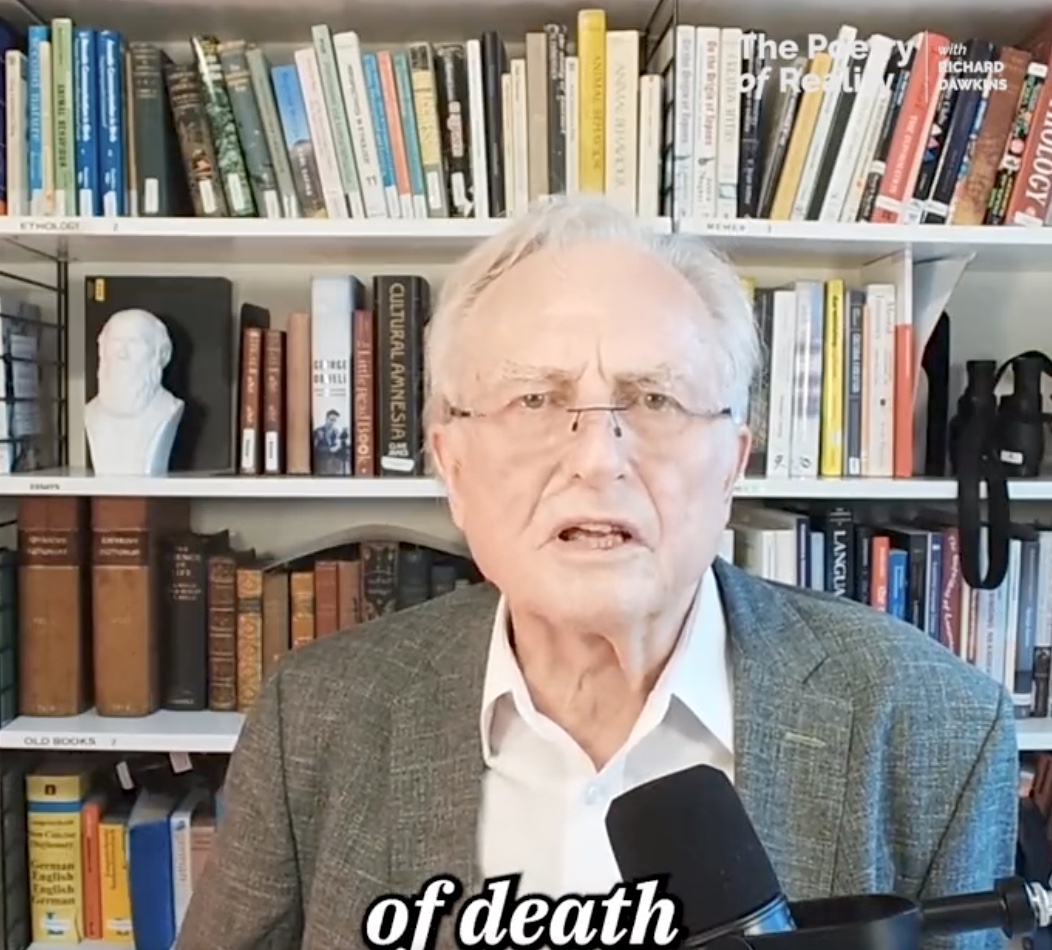
Richard Dawkins asks an important question and here is my answer

I can imagine Richard Dawkins sitting in the back row at the Areopagus, stern-faced and shaking head, and leading a small chorus of sceptics.

Richard Dawkins is continuing his mission to evangelise people out of Christianity (and religion altogether) and to secure his message of a world without hope. 

Today in a video message, he asks, ‘Do you want to be comforted by a falsehood?’

It’s a good question and an important one. Does anyone want to find consolation in a fabrication? Does anyone want to pour all their hopes into a dead end? For Professor Dawkins death is of course the dead end, with nothing beyond and no light to give hope to either the dead or those who are left behind. 

“When your brain decays there is absolutely no reason to suppose your consciousness will continue, so the grounds of plausibility, the balance of plausibility is heavily in favour or there been no survival after death and that is something and that is something we need to live with. It’s not all that horrifying a prospect when you think about it because we think as Mark Twain said, ‘I’ve been dead for billions of years before I was born and never suffered the smallest inconvenience.” 

I suspect that Dawkins’ answer will arouse applause and retweets from fans and devotees, and with a satisfied Amen. Leaving aside for a moment the question of whether he’s right or not, his answer isn’t particularly consoling. Dawkins says that he finds solace in the finality of being no more, but I suspect most people including a lot of atheists are not so convinced. Our intellectual commitments (whether theistic or atheistic) come under a sudden assault when death approaches and when a loved one is lowered into the grave. There is a longing for death not to win. There is palpable hope that life may continue and love to beat any final breath. 

Why divorce cognitive processes from heart filled yearnings? Of course, the two can be in conflict and they can also partner together as a harmonious duet, as we find in Christian theism.

Dawkins (and fellow atheists) believes that once our final breath expires and we are buried, the totality of what we were begins to rot and we cease to be. All that is left is the box in the ground holding our biological material and the memories that people have of you. Again, some readers may find that a satisfying end of the story, but most of us don’t. Whether we find it satisfying or not isn’t evidence of what is ultimately true.

The thing about the Christian view of resurrection is not one of lacking commitment to the intellectual process but appreciating that there is more going on. It is not wrong to appeal to deep heart filled longings, for those emotional impulses are part of who we are as human beings. We are more than those heart desires, not less.

I believe, along with Oxford and Cambridge Dons, scientists, poets, plumbers and children, that the Christian explanation of resurrection is both intellectually satisfying and emotionally, psychologically, spiritually liberating and consoling.

Something happened that day just outside Jerusalem that changed the world. Women and men saw something that didn’t compute. The evidence defied their prior assumptions and challenged their emotional state. They saw and heard and touched Jesus raised from the dead. 

Before we line up the Biblical accounts with ancient mythology, we mustn’t assume that resurrection was a commonly held view in the ancient world, for that is not the case. Many ancient religions believed in some kind of life after death, although not all (including many Athenians in the First Century AD).  The Christian notion of resurrection is altogether different 

As Dr Chrisopher Watkin summarises in his new volume, Biblical Critical Theory

“The nature of the resurrection is very different to the ancient notion of rising gods known as apotheosis. The bodily nature of resurrection sets the Christian claim apart from other superficially similar narrative patterns in the ancient world. The Romans, for example, were familiar with the idea that a mortal person could undergo an apotheosis to become a god, but apotheoses were spiritual, not bodily, and the deified mortal would not be expected to tread the streets of Jerusalem for forty days before ascending to heaven. Apotheosis was also a privilege reserved for the rich and mighty, not for the common artisan and certainly not for the crucified criminal. Christ’s resurrection was also different from the myths of dying and rising agricultural gods in other pagan religions. N. T. Wright, author of the 740-page The Resurrection of the Son of God insists that “even supposing Jesus’s very Jewish followers knew any traditions like those pagan ones—nobody in those religions ever supposed it actually happened to individual humans.”

Richard Dawkins talks about plausibility, as does the Apostle Paul at the Areopagus. He insists, let’s examine the evidence. At that centre of Athenian learning and thought, Paul argues for the resurrection of Jesus Christ from the dead. He began, 

“He  [God] has given proof of this to everyone by raising him from the dead.”

Proof? I can hear Dawkins of Athens reproving! What proof? Dead people stay dead. Their brains, blood, muscles and organs decay and become a manure in a box. 

Of course, Paul, like Jesus and like Christians everywhere, knew that dead people don’t rise. That’s the point and the resurrection testifies to our wrong assumptions about God and life and death. 

What I found interesting in Dawkins’s tweet is how he relies heavily on Bible reasoning in order to muster an argument against God and the notion of life beyond death.  Take, for example, this paragraph from Paul’s First Letter to the Corinthians, 

But if it is preached that Christ has been raised from the dead, how can some of you say that there is no resurrection of the dead? 13 If there is no resurrection of the dead, then not even Christ has been raised. 14 And if Christ has not been raised, our preaching is useless and so is your faith. 15 More than that, we are then found to be false witnesses about God, for we have testified about God that he raised Christ from the dead. But he did not raise him if in fact the dead are not raised. 16 For if the dead are not raised, then Christ has not been raised either. 17 And if Christ has not been raised, your faith is futile; you are still in your sins. 18 Then those also who have fallen asleep in Christ are lost. 19 If only for this life we have hope in Christ, we are of all people most to be pitied.

20 But Christ has indeed been raised from the dead, the firstfruits of those who have fallen asleep. ” (1 Corinthians 15:12-18)

The Apostle, and subsequently Christian theologians, scientists, and believers in general, all understand the implausibility of resurrection and understand that single event of history that dumbfounds the Sadducees and Epicureans of every age. 

It is worth noting that Paul’s words were written within 20 years of the events that surrounded Jesus’ death in Jerusalem. He even says to his readers, that many eyewitnesses are still alive so go and talk to them. His are not the words of someone covering up evidence and trying to commit fraud on the public. The resurrection is a public event that is open to investigation. 

For Dawkins, as brilliant a scientist as he is, he believes in a closed universe and so it’s unlikely that he’ll accept any compelling evidence that punctures his system. Even Jesus was aware of how our a priori commitments block us. He famously said, “‘If they do not listen to Moses and the Prophets, they will not be convinced even if someone rises from the dead.’”

Why? Because there is more going on in our minds and hearts than just intellectual questions and the pursuit of what happened.

Richard Dawkins may have made up his mind, but death will continue to haunt us. The grave is the one appointment we hope to avoid and yet will come. To take consolation in Christ is not fake or feeble, but reason finding hope. 

If you are interested, below is a short summary of the evidence outlined in the New Testament as well as a summary of some of the more popular objections to the resurrection.

The facts:

1. Weeks out from his death on the cross Jesus predicted with startling accuracy what would happen.

 “Jesus began to explain to his disciples that he must go to Jerusalem and suffer many things at the hands of the elders, the chief priests and the teachers of the law, and that he must be killed and on the third day be raised to life”. (Matt 16:21)

2. Jesus genuinely died and his death was verified by the executing authorities (Matt 27:50-54)

3. After Jesus’ death had been verified, Pilate released the body to Joseph of Arimathea who buried it in his own new tomb, carved out of rock in a garden near the place of the crucifixion (Matt 27:57-60).

4. The tomb was sealed and was guarded by Roman soldiers (Matt 27:62-66).

5. A number of women witnessed the burial and presumably the posting of the guard (Matt 27:61)

6. On the Sunday following the crucifixion the body was no longer in the tomb (Matt 28:1-7).

7. That same day, and over the next 40 days, Jesus met with his original disciples and others (later Saul). During this period the commission to be his witnesses, first to the Jews and then to the nations, was given by Jesus himself (Matt 28:1-20)

8. After 40 days Jesus was taken up into heaven, a cloud hiding him from sight (Acts 1:9-11)

Some arguments against the resurrection:

TheoryChief exponentsSome suggested responses
Intentional fraud by the disciplesJewish High Priests; H.S Reimarus (1787)How could it be done despite the guard and the suspicion of the authorities? How could the lie be sustained for the rest of their lives and in the face of fierce persecution?
Swoon TheoryPaulus (1833) Huxley (1896) Thiering (1992)His death was verified by experts when Pilate raised questions. If he did revive in the cool of the tomb, how did he roll away the stone, get past the guard, and walk all the way to Emmaus with those wounds?
The women went to the wrong tombLake (1907)The women were nearby as Jesus was buried. Joseph of Arimathea would certainly know which tomb was his. The guards and the seal would have made the tomb rather conspicuous. The authorities could have just gone to the right tomb and produced the body.
Jesus was never actually crucified (someone was)The KoranIt is inconceivable that the Jewish authorities would have stood by whilst the Romans crucified the wrong man. Surely this argument would have been used by the Jews to combat the apostle’s preaching if it was true (and even if it wasn’t but was credible)
The resurrection is an allegory not a factWoolston (1728)There is no evidence in the Gospels that this part of the narrative is allegorical as opposed to the rest.
HallucinationStrauss (1835) Spong (1993)The number and variety of people, times, and types of appearances tell against this theory. This attitude of the disciples was either fearful or aggressively opposed (Saul) at the time of the appearances. Fear and aggression are not the usual preconditions for a hallucination of an unprecedented event.
Spiritual resurrection and/ or divine vision evoking faith in the disciplesKeim (1883) Lampe (1966) Carnley (1987)Jesus himself goes to great lengths to demonstrate he is not a ghost or a vision. The empty tomb is unnecessary and the arguments of Paul do not make sense if the resurrection does not involve the crucified body of Jesus. What happened to the body?

A Royal Funeral with a message for everyone

Kings, Queens and Princes, the great and the small, the young and old, will all meet death and face the judge of the earth. As the writer to the Hebrews explains, “people are destined to die once, and after that to face judgment” (Hebrews 9:27).

The grave is a great divider for it tears people apart and it separates the living from the dead, and the soul from the body. 

Shakespeare’s Calpurnia was wrong when she assumed before Caesar, “When beggars die, there are no comets seen; The heavens themselves blaze forth the death of princes.”

It is Ecclesiastes which faithfully records our own foreordained end,  “For the wise, like the fool, will not be long remembered; the days have already come when both have been forgotten. Like the fool, the wise too must die! (2:16)

Susan and I stayed up to watch the funeral service for His Royal Highness, Prince Philip. It was midnight here in Melbourne but one should not overlook momentous occasions such as this. The funeral was orchestrated with solemnity, with military procession and precision, marching in step to Beethoven’s funeral march. It was also obviously deeply personal, to reflect Prince Philip’s life and the devotion of a grieving wife.

The constraints of a global pandemic were evident, with only 30 guests permitted to attend the service inside St George’s Chapel, compulsory mask wearing for Princes and Princesses. Much of the Chapel was deserted as a choir of 4 sang in an empty space. The simplicity and scarcity did not however detract from the dignity and import of the event. If anything, the sight of Her Majesty sitting alone during the service brought to bear the awful reality of grief.

The television presenters spoke of Prince Philip’s ‘faith’. For a moment, one commemorator referred to Duke of Edinburgh’s ‘Christian faith’, but quickly corrected his social faux pas by returning to the vague universal category of ‘faith’. 

As we viewed the royal funeral from our sofa, absorbing the sight of the ceremonial and the personal, the figure of a Queen in mourning and the sound of stunningly beautiful music, the common face death struck a note.

Yes, the world lost a remarkable man, but a woman lost her husband and children their father.

We are divided by death and united in death: Duke, accountant, teacher and boilermaker alike. Behind the awe inspiring grandeur of this yet simple royal funeral, probably overlooked by many and yet very present, a word of hope was offered. It is a wonderful hope and it is offered to those mourning in St George’s Chapel and to the 100s millions like Susan and I who were watching from our homes.  

The word spoken promises a breakthrough from the grave and the undoing of death. I have no idea whether Prince Philip personally believed this good news and entrusted his life to the Sovereign care of his Redeemer, but the message resounded throughout the service for all to hear: for royals and commoners alike, from the cook to the chorister, the private soldier to the Field Marshall: One who is greater than all Queens and Princes has conquered death and he gives certain hope of resurrection to all who receive him. 

This is the portion of Scripture that was read,

 “Lord,” Martha said to Jesus, “if you had been here, my brother would not have died. But I know that even now God will give you whatever you ask.”

Jesus said to her, “Your brother will rise again.”

 Martha answered, “I know he will rise again in the resurrection at the last day.”

Jesus said to her, “I am the resurrection and the life. The one who believes in me will live, even though they die; and whoever lives by believing in me will never die. Do you believe this?”

“Yes, Lord,” she replied, “I believe that you are the Messiah, the Son of God, who is to come into the world.” (John 11:21-27)

The leveller of life is not only death, it is our critical need for a God who forgives sinners and who can gift eternal life. No matter our status or reputation, even Princes need a saviour. 

Christians don’t believe in an afterlife, Jesus holds that there will be an event of far greater consequence and reality: resurrection. Our physical remains share the maggots and soil for a time, only to be resurrected on the last day and to participate in a new creation where there will be no disruption or ending of joy and happiness and life. Jesus identifies the one through whom this gift is made possible: He is the resurrection and the life. 

As Jesus asked Martha we may ask ourselves, ‘Do we believe this?’

We will all walk through the shadow of death. Our bodies grow weak and sick and tired. They will all exhaust, beaten down by transgressions and life in a corrupted world. Death will result for those we love and those we despise, and it will also swallow us. This great defeater has itself been defeated.  The Messiah came and announced the very news that last night rang true, as it is true for every funeral I have conducted over the years, “I am the resurrection and the life. The one who believes in me will live, even though they die.” 

Jesus’ words are no hollow gesture. Following his conversation with Martha Jesus approached the tomb where his friend Lazarus lay. In what is the shortest verse in all the Bible we read, “Jesus wept”. This God is not unmoved by the awfulness of death. Even more, to prove the worth of his word this same Jesus who was crucified, rose from the dead on the third day. He was physically and really alive, and never to die again. It is this resurrection that is the guarantee of our resurrection. As the Apostle Paul explains, 

“And if Christ has not been raised, your faith is futile; you are still in your sins.Then those also who have fallen asleep in Christ are lost.If only for this life we have hope in Christ, we are of all people most to be pitied.

But Christ has indeed been raised from the dead, the firstfruits of those who have fallen asleep” (1 Corinthians 15:17-20)

Whether it is a royal funeral or the deaths of 3 million people to COVID-19 or our own eventual dying, we need hope that holds fast beyond grief and surpasses our own strength. Thank God for his Son and for the hope of resurrection that is ours in Him. 

Resurrection Sunday Sermon

“Don’t be afraid”, said the angel to the women who were first to visit the tomb that early Sunday morning. “For He is risen…”


Check out our Resurrection Sunday sermon for Mentone Baptist Church


Bethel causing greater grief

In 2018, Bethel Church (Redding California), sponsored and organised a revival rally in Melbourne. At the time, Stephen Tan of Regeneration Church, myself, and others expressed concerns about the event because of Bethel’s reputation for teaching and practicing ideas that are at odds with orthodox Christian faith. The backlash to these criticisms was sizeable, and yet since then many of the original concerns have remained and been reaffirmed.

One year later, there is a new and disturbing story coming out of Bethel. The two year old daughter of one of Bethel’s music leaders, Kalley Heiligenthal, died over the weekend.

The grief of losing a child is a grief no parent ever wishes to know. I am truly sorry that this family are experiencing such a trauma. We can pray that Kalley, her husband, and family are surrounded by friends at this dreadful time.

A photo of their daughter is being shared on social media through Bethel, but I will not show it on this post as I believe it is inappropriate. The reason for writing now is because Bethel is making an assertion that is incredibly harmful,  and because of their widespread influence around the world including Australia, it is appropriate to respond.


UNADJUSTEDNONRAW_thumb_dd36

Grief is hard enough in the best of circumstances. Grief is compounded by bad theology and misplaced hope. Bethel Church have posted a request on their facebook page, including a statement from Heiligenthal, asking for prayer that God would raise their daughter from the dead.

“Our God is the God of miracles, and nothing is impossible for Him! We are asking you, our global church family, to join with us in prayer and in declaring life and resurrection over @kalleyheili and @apheiligenthal’s daughter, Olive Alayne! Kalley, Andrew, and Elise, we stand with you in faith and in agreement for Olive’s life!

Read Kalley’s Post:
We’re asking for prayer. We believe in a Jesus who died and conclusively defeated every grave, holding the keys to resurrection power. We need it for our little Olive Alayne, who stopped breathing yesterday and has been pronounced dead by doctors. We are asking for bold, unified prayers from the global church to stand with us in belief that He will raise this little girl back to life. Her time here is not done, and it is our time to believe boldly, and with confidence wield what King Jesus paid for. It’s time for her to come to life.”

If it wasn’t already established back in 2018, the signs are clear that Bethel is producing strange and errant teachings, ones that create false hopes for grieving families.

To quote the Apostles Creed,

“I believe in the resurrection of the dead.”

I believe along with all Christians that Jesus Christ was raised from the dead on the third day. It was a bodily resurrection, not a spiritual awakening or temporary resuscitation. Indeed, the credibility and efficacy of the Christian Gospel depends upon this resurrection of Jesus Christ from the grave.

“if Christ has not been raised, our preaching is useless and so is your faith… 17 And if Christ has not been raised, your faith is futile; you are still in your sins. 18 Then those also who have fallen asleep in Christ are lost. 19 If only for this life we have hope in Christ, we are of all people most to be pitied.” (1 Corinthians 15)

The Bible explains that the resurrection of the dead is tied to the return of Christ and the unveiling of the new creation. In the mean time, the Bible speaks of suffering and patience, death and hope. For example in Romans chapter 8,

I consider that our present sufferings are not worth comparing with the glory that will be revealed in us. 19 For the creation waits in eager expectation for the children of God to be revealed. 20 For the creation was subjected to frustration, not by its own choice, but by the will of the one who subjected it, in hope 21 that[h] the creation itself will be liberated from its bondage to decay and brought into the freedom and glory of the children of God.

22 We know that the whole creation has been groaning as in the pains of childbirth right up to the present time. 23 Not only so, but we ourselves, who have the firstfruits of the Spirit, groan inwardly as we wait eagerly for our adoption to sonship, the redemption of our bodies. 24 For in this hope we were saved. But hope that is seen is no hope at all. Who hopes for what they already have? 25 But if we hope for what we do not yet have, we wait for it patiently.”

Since posting the prayer request two days ago, thousands of people have shared it on social media and thousands have posted prayers in which they ‘claim’ the power of God to bring this little girl back to life. There’s the problem. That’s the reason for saying something today. Errant theology produces false hopes and misleads people into believing and expecting wrong things from God. It also gives unbelievers reason to dismiss Christianity as a load of nonsense. If you are not yet convinced of the ongoing and dangerous influence of the ‘Signs of Wonders’ movement, surely this persuade you? 

The Scriptures themselves warn us about teachers who allege an early resurrection.

“Their teaching will spread like gangrene. Among them are Hymenaeus and Philetus, who have departed from the truth. They say that the resurrection has already taken place, and they destroy the faith of some.” (2 Timothy 2)

Losing a child is horrible beyond imagination. A Church has responsibility to love and comfort people in their grief, not to entertain, encourage, or promote unbiblical and false hopes. It is one thing for parents to wish for an alternate outcome, but for a Church to affirm this request is pastorally irresponsible and biblically aberrant.


Postscript

I believe that the parents have now asked for the prayers to cease.

Again, this is an awful situation that no parents wish ever to experience. I feel for them. May they turn to the God of grace in this time and know the comfort of family around them

(December 22 2019)


Facing our mortality

When beggars die, there are no comets seen; The heavens themselves blaze forth the death of princes.  (Shakespeare, Julius Caesar, Act 2, Scene 2)

In any given population there will be a few individuals whose death will be reported by media and mourned by grieving masses. Some people make the news, not because of their life but because of the tragic circumstances in which they died. Many more will people die without even a footnote in the local obituary, and yet their death is as a real and the grief from loved ones as profound.

More celebrities will depart this world in 2017, and countless thousands of anonymous people will join them in the grave. This isn’t being facetious or morbid, but stating what is inevitable

As we have been assailed with stories of people dying we respond to death with revulsion, and rightly so, for it is a destroyer of life and friendship; death is our enemy. When we have witnessed someone suffer for an extended season, there can be relief in their passing, but it is not their life that wish to see ending but their suffering.

img_4335

Their mortality reminds us of our own, and it is wise for us to give due consideration to our beliefs and hopes over the grave.

It is not uncommon for people to sentimentalise and even trivialise death. Perhaps we do so in the hope of defying this great adversary.

Death is nothing at all.

It does not count.

I have only slipped away into the next room.

Nothing has happened.

(Henry Scott-Holland)

Another approach, and one that is probably more common, is that of rage and anger, as Dylan Thomas famously cried,

Do not go gentle into that good night,

Old age should burn and rave at close of day;

Rage, rage against the dying of the light.

Though wise men at their end know dark is right,

Because their words had forked no lightning they

Do not go gentle into that good night.

Good men, the last wave by, crying how bright

Their frail deeds might have danced in a green bay,

Rage, rage against the dying of the light.

Wild men who caught and sang the sun in flight,

And learn, too late, they grieved it on its way,

Do not go gentle into that good night.

Grave men, near death, who see with blinding sight

Blind eyes could blaze like meteors and be gay,

Rage, rage against the dying of the light.

And you, my father, there on the sad height,

Curse, bless, me now with your fierce tears, I pray.

Do not go gentle into that good night.

Rage, rage against the dying of the light.

There is however an alternative to uncertain optimism and despair, and it is spelled out in the good news of Jesus Christ,

“Listen, I tell you a mystery: We will not all sleep, but we will all be changed— in a flash, in the twinkling of an eye, at the last trumpet. For the trumpet will sound, the dead will be raised imperishable, and we will be changed. For the perishable must clothe itself with the imperishable, and the mortal with immortality. When the perishable has been clothed with the imperishable, and the mortal with immortality, then the saying that is written will come true: “Death has been swallowed up in victory.

“Where, O death, is your victory?

    Where, O death, is your sting?” The sting of death is sin, and the power of sin is the law. But thanks be to God! He gives us the victory through our Lord Jesus Christ.”

(1 Corinthians 15:51-57)

Throughout the life and ministry of Jesus Christ we see God who empathises with those who grieve. John ch.11 records the story of one of Jesus’ close friend, Lazarus, falling ill and dying. When Jesus reached the town where Lazarus lived and died, he mourned with the family and outside the tomb “he wept”.

Jesus not only sat alongside those in the midst of grief, but he has walked the path of death. He endured its full horrors, not because of sickness or tragic circumstances, but he chose to enter into death out of love for humanity and to face hell for us. Indeed, in the hours before his crucifixion he told his disciples, “My soul is overwhelmed with sorrow to the point of death.” (Matt 26:38)

We are all approaching death, faster than we imagine; it is the great wall that cannot be avoided. But it does not have to be journeyed alone, and it does not have to endured without certain hope of resurrection. Imprinted into the fabric of the deathly world is the resurrection of Jesus Christ from the dead; real, historic, physical, and forever resurrection.

We can choose to pin our hopes on imagined sleep-like permanence, or fight off all thoughts of death until the moment arrives and we explode with fearful rage, or we can place our confidence in the one who has defeated death and who promises eternal resurrection to all who accept him, to the celebrity and the unknown, the beggar and the prince.

I am Pakistan?


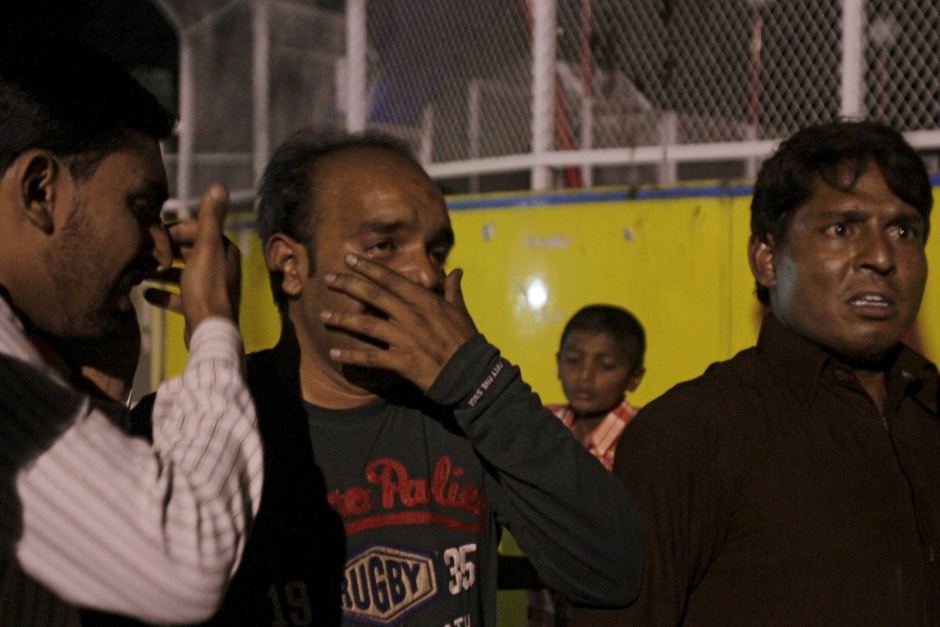
7278816-3x2-940x627

Today, 70 people in Lahore Pakistan were murdered as they celebrated Easter. The majority of the dead are children and women. Hundreds more people have been injured by the suicide bombing, which has been claimed by the Taliban.

The Taliban chose their time and place carefully, deliberately targeting Christians. This is a far too common story in the Middle East and subsaharan Africa. Persecution against Christians and other minority groups has persisted in many of these countries for decades, and sporadically over centuries. But they are not the only victims; as we have seen in Syria, Iraq and Turkey, Muslim people are readily targeted, and in Brussels and Paris the attacks were levelled at secular societies.

Yesterday in Baghdad while people gathered to enjoy a soccer match, a man blew himself up killing 41 people, mostly children.

Last week, 31 people were blown up in Brussels, with Islamic State taking responsibility.

The week before, at least 37 people were killed in one of Ankara’s busiest streets, when a car packed with explosives was detonated;  a Kurdish group has claimed to be behind the bombing.

As with Paris last year, following the dreadful carnage in Belgium social media was taken captive to hashtag Belgium, and people overlaid their Facebook profiles with the colours of the Belgian flag. National leaders took to their pulpits to cry solidarity with our friends and allies. Perhaps somewhat symbolic of Western ignorance, the One World Trade Centre lit up the Manhattan skyline in the Belgian colours: red, white and blue? But where was the public support for the Turkish people last week? Where was the twitter outrage and the clarion calls from our politicians when a Baghdadi soccer field turned red with the blood of children? In light of the Lahore massacre will we tomorrow light  the spiral of the Victorian Arts Centre in Pakistan’s green and white?

Our humanity has constraints; limitation is after all a characteristic common to all people. We do not therefore have the emotional capacity to mourn all who die in this world and to scream at all the wickedness that weaves so deeply through every culture. But while  our tears are reserved for Western nations, the rest of the world is right to be suspicious of us

There is an episode of The West Wing where President Bartlett is troubled by a genocide unfolding in a African nation. During a conversation with a staffer he asks, “Why is a Kuhndunese life worth less to me than an American life?” To which the advisor answered, ‘I don’t know, Sir, but it is.’

Why is it, we feel the grief and anger from Paris and Brussels, and not of Africa, Pakistan, and Turkey?

Until we can say ‘I am Turkey’ and ‘I am Pakistan’, we again prove the prejudice of our humanity. And  yet can we even dare to speak such seemingly supercilious words to those who have suffered so much?

Last year I made the observation that where the cultural and historical links are closer, there is often a greater outpouring of responses. Perhaps we should not be surprised therefore that more attention is given to our European friends than to others. Then again, perhaps our compassion stems from a vulnerability which emerges from seeing in those Western cities a mirror into our own way of life.

In other words, we empathise with those who are most like us. In contrast, consider the way Easter defines God’s condescension toward humanity. The explosion that has killed so many people in Lahore will one day be silenced by the Easter message which those people had gathered to celebrate. Easter reminds us of God who ‘so loved the world that he gave his one and only son that whoever believes in him will not perish but have everlasting life’ (John 3:16)

God showed love not by changing a few coloured light bulbs or by trending a hashtag on twitter; the depth of this love of God was the substitutionary death of his only Son. God came into his own, the incarnation. He paid the penalty for human insurrection, the cross. He triumphed over the grave, thus vindicating his claim of Divinity and the efficacy of his salvific power, the resurrection.

The extent of this love of God is for the world. John 3:16 does not suggest a universal salvation, for the text makes clear that faith in Jesus is necessary and rejecting Jesus Christ results in judgement. Nonetheless, in Christ, God has expressed extraordinary love for the world. He is not of or for the West, he is not English speaking or the God of the middle class, his concern is global. The Bible describes this God in ways unparalleled in any religion and in ways more tangible, and with a good news message that is changing hearts and lives in every nation on earth:

In that day you will say: “Give praise to the Lord, proclaim his name; make known among the nations what he has done, and proclaim that his name is exalted. (Isaiah 12:4)

“He will judge between the nations and will settle disputes for many peoples. They will beat their swords into plowshares and their spears into pruning hooks. Nation will not take up sword against nation, nor will they train for war anymore.” (Isaiah 2:4)

Many Western societies, including our own, are turning our backs on Christianity; to our spiritual, moral, and intellectual detriment. After centuries of economic, political, technological and military progress we have gained the world, but lost our souls. But in many of these very nations who are witnessing such horrific slaughter, Christianity is growing. In these lands the reality of Easter resonates louder and more true than the wimpish silence of the West who either do not share the desire or have the capacity to be one with them and for them.

’16 For God so loved the world that he gave his one and only Son, that whoever believes in him shall not perish but have eternal life. 17 For God did not send his Son into the world to condemn the world, but to save the world through him. 18 Whoever believes in him is not condemned, but whoever does not believe stands condemned already because they have not believed in the name of God’s one and only Son. 19 This is the verdict: Light has come into the world, but people loved darkness instead of light because their deeds were evil. 20 Everyone who does evil hates the light, and will not come into the light for fear that their deeds will be exposed. 21 But whoever lives by the truth comes into the light, so that it may be seen plainly that what they have done has been done in the sight of God.’ (John 3:16-21)

Earth Hour and Resurrection Sunday

This year, Earth Hour shares the same day as Easter Sunday. Coincidence? Yes. Timely? Perhaps so.

Earth Hour began in 2007 in one of Australia’s colloquial towns, Sydney. A year later Melbourne joined with hundreds of global cities to participate in Earth Hour. According to the Earth Hour website, there are now over 7000 cities and towns participating worldwide.

It is hard for my wife and I to forget Earth Hour, given it coincides with our wedding anniversary. Nothing makes for a romantic dinner than having the power turned off for an hour!

OLYMPUS DIGITAL CAMERA

Earth hour is a one hour ‘lights off’ event. Between 7:30-8:30pm homes, businesses, and public places are encouraged to switch off their lights as a way of communicating the threat of global warming and showing consensus that we need to do more to limit its consequences.

To quote, we “show their support a low pollution, clean energy future, one in which we can continue to enjoy the best of nature and our great Aussie outdoor lifestyle.”

Earth hour is symbolic, a gesture indicating a concern and call for responsible living in this world.

This year, Earth Hour synchronises with Easter Sunday, or Resurrection Sunday as it is also known. This is a day when Christians celebrate the resurrection of Jesus Christ from the dead.

Far from being symbolic, Jesus’ death and resurrection is historic, literal, and real. We may turn the lights off for an hour, Jesus experienced the darkness of death.

His work changed the world. While the resurrection of Jesus certainly has a future looking fulfilment, it is has the power to change the human heart even in the present. And far from ditching this current world, the physical nature of Jesus’ resurrection affirms the value of creation. We are not left disregarding the world and neither are we left pinning the hopes of the world on ourselves.

Earth Hour reminds us of the fallenness of this world, and indeed how complicit we are in this; the resurrection of Jesus proclaims the redemption. We need a God-sized solution to our world’s problems, whether it is global warming or a thousand of other insurmountable issues that weigh down humanity and stifle life, truth and love.

As the Apostle Paul wrote,

’We know that the whole creation has been groaning as in the pains of childbirth right up to the present time. Not only so, but we ourselves, who have the firstfruits of the Spirit, groan inwardly as we wait eagerly for our adoption to sonship, the redemption of our bodies. For in this hope we were saved. But hope that is seen is no hope at all. Who hopes for what they already have?  But if we hope for what we do not yet have, we wait for it patiently. (Romans 8:22-25)

The ultimate answer to Earth hour is Resurrection Sunday.

As we turn off our lights for one hour and commiserate the global sized problems before us, why not also reflect on the tangible hope offered us in the person and work of Jesus Christ?