This week Christian ministers around the world are gearing up for annual Christmas services. Sermons are being written, with words chosen carefully to proclaim the wonders of the incarnation. Choirs and musicians are rehearsing, and local people are deciding whether to attend church or not.
As a preacher, I want the words I speak to convey the meaning of the biblical text as faithfully and clearly as possible. I don’t want anyone leaving afterwards with the wrong impression of Jesus, a wrong view of God, a misunderstanding of the gospel, or a skewed view of themselves. Clarity doesn’t ignore complexity or rough ride of paradox or explain away mystery but communicates truth in love. As the Apostle Paul writes,
“Rather, we have renounced secret and shameful ways; we do not use deception, nor do we distort the word of God. On the contrary, by setting forth the truth plainly we commend ourselves to everyone’s conscience in the sight of God.” (2 Corinthians 4:2)
In the lead-up to Christmas this year, multiple Church leaders and groups are deciding on a very different approach. In their wisdom (or lack thereof) they are blasting rhetorical fog machines and passing around confusing messages.

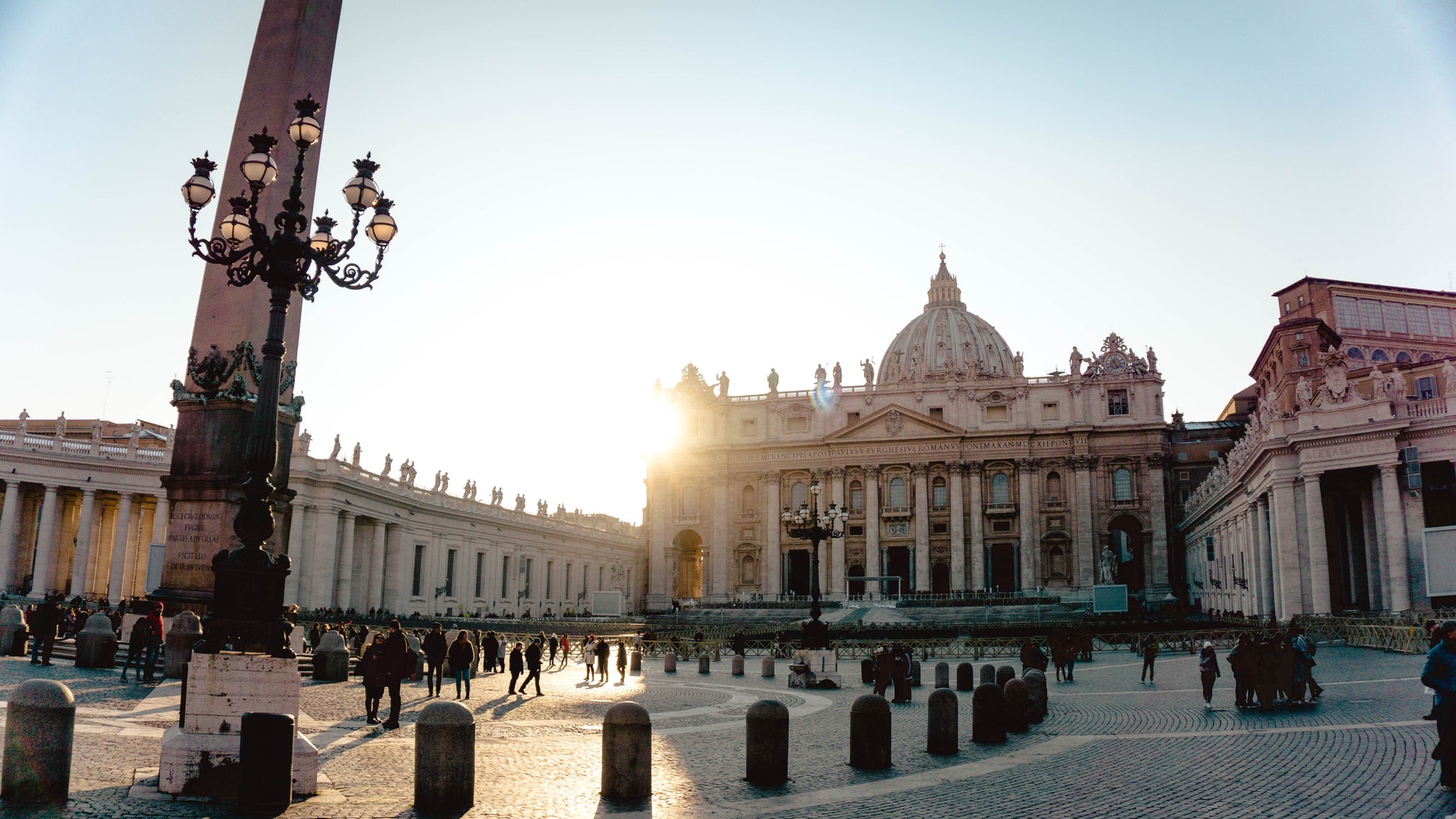
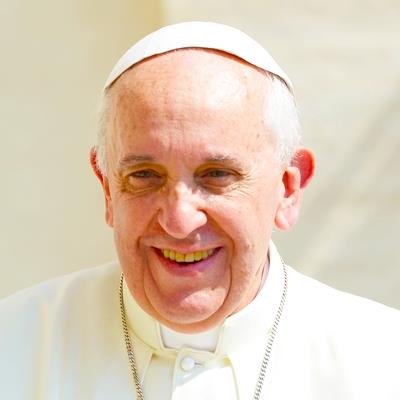
Pope Francis for example, has just issued Fiducia Supplicans, a document which gives Papal reasoning for the blessing of same-sex couples.
While the blessing is not to be used in conjunction with a marriage or civil ceremony, and the blessing mustn’t reproduce language that is reserved for the ‘sacrament’ of marriage, it is nonetheless applied to those who “do not claim a legitimation of their own status, but who beg that all that is true, good, and humanly valid in their lives and their relationships be enriched, healed, and elevated by the presence of the Holy Spirit…Ultimately, a blessing offers people a means to increase their trust in God”.
In other words, we’re not sanctifying same-sex marriage but we’re giving God’s blessing on same-sex relations.
Despite efforts from the Vatican to downplay the significance of this change, (only 2 years ago the Vatican insisted that Rome would not bless same-sex unions), media outlets across the world are interpreting Fiducia Supplican as a significant move toward from Rome to accepting gay and lesbian relationships.
James Martin, Jesuit priest and vocal advocate for progressive theology represents this sentiment,
“The Vatican’s new declaration “Fiducia supplicans” is major step forward in the church’s ministry to LGBTQ people and recognizes the deep desire in many Catholic same-sex couples for God’s presence in their loving relationships. It is also a marked shift from the conclusion “God does not and cannot bless sin” from just two years ago. The declaration opens the door to non-liturgical blessings for same-sex couples, something that had been previously off limits for bishops, priests and deacons. Along with many priests, I will now be delighted to bless my friends in same-sex unions.”
The Pope isn’t alone in this use of doublespeak, the Church of England beat him to the slippery slide with their ‘Prayers of Love and Faith’.
“On 12 December, the House of Bishops commended the Prayers of Love and Faith and associated pastoral guidance for use in regular public worship services with effect from Sunday, 17 December 2023.
The Prayers of Love and Faith are offered as resources in praying with and for a same-sex couple who love one another and who wish to give thanks for and mark that love in faith before God. To celebrate in God’s presence the commitment two people have made to each other is an occasion for rejoicing. The texts are offered to express thanksgiving and hope, with prayer that those who are dedicating their life together to God may grow in faith, love and service as God’s blessing rests upon them.”
Baptists in Great Britain, assuming the posture of protest are considering joining the free fall with this announcement,
“‘Sexual Misconduct which brings the church and ministry into disrepute. NB This specifically includes sexual intercourse and other genital sexual activity outside of marriage (as defined exclusively as between a man and a woman).’
The request is that the last section in brackets is removed, which would mean that a minister who is in a same-sex marriage would no longer be committing gross misconduct and lose their accreditation. This request was received in a letter signed by 70 people who are part of Baptists Together, the majority of whom are ministers.””
The BUOGB website sites this letter from one pastor,,
“CLT are unanimous in our absolute commitment to our unity in Christ and to holding together with the pain in the presence of the Lord. We are also in agreement that we must not rush ahead as we seek a way forward.
‘We believe that any decision that is ultimately made must be prayerfully and carefully discerned, involving significant consultation. Much thought needs to be given to the implications of various possible options. We are acutely aware that the ‘stakes are high’.’
She asked that we ‘bear with one another in love’.
‘I am trusting that Christlike humility, gentleness, patience, love and faith will enable us to hold fast together. As a CLT we have a deep trust in the Lord; that as we keep Jesus at the centre, and keep our eyes fixed on him, we will be led forward even if we may not be able to imagine how that will happen.”
I’m reminded of this timely quote by Mark Dever, “It is not humble to be hesitant where God has been clear and plain.”
Brisbane’s new Anglican Archbishop Jeremy Greaves is playing similar word games. In The Australian over the weekend, Greaves was interviewed,
“If asked, he will allow Anglican priests in the sprawling Brisbane Diocese to perform same-sex marriage blessings and he’s in favour of ordaining gay priests. The teachings of the scriptures – including the virgin birth – are best read for their deeper meaning, not as a literal rendition of God’s word, he believes.”
“He’s adamant that he has never questioned the resurrection, as some critics claim. The cornerstone of Christian belief that Jesus rose from the grave on the third day after the crucifixion undoubtedly happened – but possibly not as described in the gospels.
“I would say it wasn’t resuscitation … so if it’s not resuscitation, what is it?” he asks. “It’s an event that is so far outside human experience that for 2000 years people have struggled to put language around it.
“And so what you find in the creeds and so many founding documents of the church is an attempt to give language to something that doesn’t have language.”
In other words, I believe in the resurrection but I don’t believe what Christians for 2000 years have believed about resurrection…or about the virgin birth…or human sexuality!
Would you trust a judge who doesn’t uphold the law? Would you entrust your children to a maths teacher who doesn’t understand basic algebra or a physics teacher who’s convinced the earth is flat? Would you visit a GP who doesn’t believe heart disease is a real illness and who suggests a warm glass of milk to cure your symptoms?
The Son of God was not born in a manger, became incarnate, suffered, and died on a cross to affirm our sins, but to save us from our sins. The cross doesn’t obscurate human proclivity to redefine sexuality (or anything for that matter), but names every sin and every sinner with the weight of a righteous God. That in itself is an act of Divine love, for God takes us seriously. When life is examined in light of the crucified Christ, we all fall short and no Papal (or Anglican or Baptist) confidence trick can undo that fact.
What we’re seeing are ecclesial leaders playing Russian roulette with people’s lives. It is a charade that has eternal implications for those who are drawn in by this misdirection by clergy who know better.
It’s all the more ironic and damnable because the Bible warns about teachers who compose words that deceive or mislead,
“Do your best to present yourself to God as one approved, a worker who does not need to be ashamed and who correctly handles the word of truth.15 Do your best to present yourself to God as one approved, a worker who does not need to be ashamed and who correctly handles the word of truth. 16 Avoid godless chatter, because those who indulge in it will become more and more ungodly. 17 Their teaching will spread like gangrene. Among them are Hymenaeus and Philetus, 18 who have departed from the truth. They say that the resurrection has already taken place, and they destroy the faith of some.” (2 Timothy 2:14-18)
People need Gospel clarity, not religious camouflage. Subterfuge doesn’t help those wrestling with life and identity. Christian ministers are designated to bring God’s truths to bear on a confused world, not adding to the disorientation.
Jesus warns those who claim to be teachers,
“But I tell you that everyone will have to give account on the day of judgment for every empty word they have spoken.” (Matt 12:36)
And the Scriptures warn us about exposing ourselves to teachers who offer vague, contradictory, and unorthodox views of God, Christ and humanity,
“Let no one deceive you with empty words, for because of such things God’s wrath comes on those who are disobedient. 7 Therefore do not be partners with them.”
17 These people are springs without water and mists driven by a storm. Blackest darkness is reserved for them. 18 For they mouth empty, boastful words and, by appealing to the lustful desires of the flesh, they entice people who are just escaping from those who live in error. 19 They promise them freedom, while they themselves are slaves of depravity—for “people are slaves to whatever has mastered them.” (2 Peter 2:17-19)
I hope and pray lots of Aussies will celebrate Christmas by attending church services. But think again before listening to men (or women) and their God speech that sounds strangely un-Bible-like. Jesus really is good news, not because he says we’re all okay and that every inclination and decision is okay, but because we are not okay and that is when God loved us and sent his only Son as the perfect sacrifice for us.




 MurrayCampbell.net