Earth Hour and Resurrection Sunday

This year, Earth Hour shares the same day as Easter Sunday. Coincidence? Yes. Timely? Perhaps so.

Earth Hour began in 2007 in one of Australia’s colloquial towns, Sydney. A year later Melbourne joined with hundreds of global cities to participate in Earth Hour. According to the Earth Hour website, there are now over 7000 cities and towns participating worldwide.

It is hard for my wife and I to forget Earth Hour, given it coincides with our wedding anniversary. Nothing makes for a romantic dinner than having the power turned off for an hour!

OLYMPUS DIGITAL CAMERA

Earth hour is a one hour ‘lights off’ event. Between 7:30-8:30pm homes, businesses, and public places are encouraged to switch off their lights as a way of communicating the threat of global warming and showing consensus that we need to do more to limit its consequences.

To quote, we “show their support a low pollution, clean energy future, one in which we can continue to enjoy the best of nature and our great Aussie outdoor lifestyle.”

Earth hour is symbolic, a gesture indicating a concern and call for responsible living in this world.

This year, Earth Hour synchronises with Easter Sunday, or Resurrection Sunday as it is also known. This is a day when Christians celebrate the resurrection of Jesus Christ from the dead.

Far from being symbolic, Jesus’ death and resurrection is historic, literal, and real. We may turn the lights off for an hour, Jesus experienced the darkness of death.

His work changed the world. While the resurrection of Jesus certainly has a future looking fulfilment, it is has the power to change the human heart even in the present. And far from ditching this current world, the physical nature of Jesus’ resurrection affirms the value of creation. We are not left disregarding the world and neither are we left pinning the hopes of the world on ourselves.

Earth Hour reminds us of the fallenness of this world, and indeed how complicit we are in this; the resurrection of Jesus proclaims the redemption. We need a God-sized solution to our world’s problems, whether it is global warming or a thousand of other insurmountable issues that weigh down humanity and stifle life, truth and love.

As the Apostle Paul wrote,

’We know that the whole creation has been groaning as in the pains of childbirth right up to the present time. Not only so, but we ourselves, who have the firstfruits of the Spirit, groan inwardly as we wait eagerly for our adoption to sonship, the redemption of our bodies. For in this hope we were saved. But hope that is seen is no hope at all. Who hopes for what they already have?  But if we hope for what we do not yet have, we wait for it patiently. (Romans 8:22-25)

The ultimate answer to Earth hour is Resurrection Sunday.

As we turn off our lights for one hour and commiserate the global sized problems before us, why not also reflect on the tangible hope offered us in the person and work of Jesus Christ?

The Autumn of Tolerance

The weeks leading up to Easter have witnessed some of the worst mud slinging Australians have thrown at each other for quite some time. Just a few short years ago tolerance was lauded as a national virtue. Showing respect to another person with whom there was disagreement was part of the course of conversation. There was space not only to express an opinion, but freedom to persuade others of that view. After all, is this not a basic tenet of a democratic society?

Recently however, it appears as though tolerance has been given the flick, and a neo-Orwellian temperament has come to the fore, especially in Victoria.

Education Minister, James Merlino, is among a number of politicians labelling people ‘bigots’, simply for raising concerns about Safe Schools. And despite proven flaws with the Safe Schools material and agenda, the Victorian Government insist that it will be mandatory for schools. There has even been backlash at the Federal Government’s decision to give parents information about the program, and the right to opt-out their children should they choose. When the State wishes to take from parents their responsibility to make decisions for the good of their children there is a fundamental problem in Spring Street.

The message being communicated by the Government is that Victorians must adhere to the current social milieu or be branded as haters; agree with us or shut up.

This however is counter productive. Changing a culture of fear cannot be achieved by the State bullying its own citizens and stifling disagreement, indeed it only further polarise people. No one wants children self-harming. No one wants children bullied. And many believe with fair reason that Safe Schools is not the answer. It is one thing for a Government to disagree with these concerns, it is quite another for them to call the same public bigoted and insist their children attend these classes against parental permission. Have they not become guilty of the very hostility they are alleging needs stamping out?

Perhaps all of us need to look afresh at Easter,  and be reminded of that most radical idea which continues to turn inside out haters from all sides.

There is a story in John’s Gospel where Jesus broke with the cultural expectations of his day to speak with a Samaritan woman. At that time Samaritans were considered social outcasts, and they were often discriminated against. Jesus’ conversation was all the more outrageous because the person before him was a woman, and a woman was then living with a man to whom she was not married.  In our minds this may not sound particularly shocking, but at that time this woman was guilty of triple-headed social evil. However, it didn’t stop Jesus.

John tells the reader how Jesus understood her heart and her past, and yet he struck up a conversation with her. He showed her kindness, and even offered this astonishing word, “whoever drinks the water I give them will never thirst. Indeed, the water I give them will become in them a spring of water welling up to eternal life.”

In other words, Jesus did not agree with her lifestyle and yet he loved her and he dismantled cultural barriers to express kindness to her.

This account is one of many that preempt the supreme act of love that Jesus would express, that which we remember at Easter; the cross and resurrection.

Both the religious and political establishment were convinced that Jesus’ views could not be tolerated, and therefore must be silenced. And yet without his volition they could not have enacted their plan. It is one of the extraordinary juxtapositions we see in the cross: people conspired Jesus’ death and he himself chose that path. He responded to hate not with hate but laying down his life for the good of those who ridiculed and mocked him.

We are losing the art of disagreement and because of this, true respect and reconciliation becomes evasive. Indeed it appears as though we are entering the Autumn of tolerance, and winter is on the horizon. It is only fair to ask, is this a sign of how dissent will be treated in the future?

EasterforWeb

The message of Easter is one all of us need to hear afresh. At its heart, Easter is God reconciling to himself those who disagree with him and he with them. The cross demonstrates disagreement and love, grace and truth. Jesus did not choose the path of the self-acclaimed intelligentsia, or the self-righteous. He sided with the oppressed and unpopular, not because he agreed with their values but because he loved them

Miroslav Volf put it like this, “I don’t think we need to agree with anyone in order to love the person. The command for Christians to love the other person, to be benevolent and beneficent toward them, is independent of what the other believes.”

The good & not so good from the Safe Schools Review

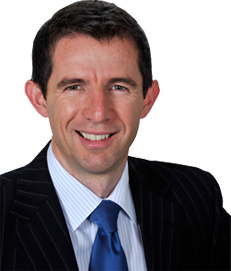
First of all, I want to thank Prime Minister Malcolm Turnbull for calling the review of Safe Schools, and Education Minister, Simon Birmingham for his role in overseeing the process.

I know many people are grateful to these and other members of Parliament who have listened to the concerns expressed by the public.

The proposed changes are indeed positive and welcomed, however there remain a number of serious concerns, especially for Victorians.

The positives:

I have copied the Minister’s report below, but to summarise the more significant amendments.

  1. Parents will now have more access to the program, be included in the process if and when a school considers using Safe Schools, and be given the right to have their children opt-out of the program.
  2. Third-party websites will removed except for “organisations funded by state, territory or Commonwealth governments for the provision of mental health or counselling services.”
  3. The content from some lessons will be either removed or reconfigured to be less affronting and to be more age appropriate.
  4. There will be tighter controls on what materials can be used and distributed in classes and in schools.

The negatives:

1. The Network Provider in Victoria is La Trobe University, the very group who authored the program. According to the findings of the review, the La Trobe university team have been found to have written material unsuitable for young teens, and using the program to promote political ideologies.

It is therefore surely untenable to have La Trobe university acting as Network Provider for the State of Victoria. Their reputation has been diminished, and trust significantly eroded, if not altogether.

What guarantees do we have that Roz Ward and her colleagues will desist from using school children as a means to further their ideological agenda? If this were any other education program, they would surely be removed from such an influential position of power over schools and children.

2. What guarantee is there for Victorian families that children will be given permission to opt-out of the program?

While the Federal Government are making this guarantee, the Victorian Government have repeated their policy that the program will be mandatory.

What are Victorian families to expect when our Education Minister, James Merlino, refers to the Federal Government as “caving into bigots”?  Where does that leave 100,000s of Victorians who are against bullying but do not support Safe Schools? The possibility of any genuine dialogue with the Andrews’ Government is doubtful, and no wonder there are people using social media to lash out at concerned persons, when we are hearing Government ministers resorting to such malicious rhetoric.

3. The fact remains that Safe Schools teaches gender fluidity (as though it is the new norm), and it encourages children to question their own sexual orientation and practices. It is ironic that this imbedded doctrine of gender fluidity remains so  intolerant towards anyone who doesn’t fit within its parameters. Teaching children to doubt or ignore biology, and to create their sense of sexuality will inevitably lead to confusion, experimentation and harm.

At this stage, children who believe in heteronormacy will still be labelled as ‘sexists’, and children with unwanted same-sex attraction are given little choice other than to believe that it is inevitable, permanent, and to be embraced.

P1013305.JPG

Like with Autumn the leaves fall from their branches so Safe Schools has been pruned, but its roots remain unchanged. The revisions are a good start, but they do not go far enough. Safe Schools remains a social engineering program that is wired to change the way children view themselves and each other. With the revisions announced today it is certainly a more sensible program, but the wisest course would have been to put Safe Schools to rest and introduce a new and better program which teaches respect, kindness and resilience.

Guercino_-_Jesus_and_the_Samaritan_Woman_at_the_Well_-_WGA10946

There is a story in John’s Gospel where Jesus broke the cultural expectations of his day by speaking to a Samaritan woman. At that time Samaritans were considered social outcasts, and often discriminated against. Jesus’ conversation is all the more outrageous because the person before him was a woman and she was then living with a man to whom she was not married.  To our culture of anything goes this may not sound particularly shocking, but at that time this woman was guilty of  triple-headed social evil. However, it didn’t stop Jesus.

The text tells us how Jesus understood her heart and her past, and yet he struck up a conversation with her, showed her kindness, and even offered this astonishing word, “whoever drinks the water I give them will never thirst. Indeed, the water I give them will become in them a spring of water welling up to eternal life.” In other words, Jesus did not agree with her lifestyle and yet he loved her and broke down cultural barriers to express kindness to her.

In contrast, many advocates for Safe Schools are repeatedly slandering, and throwing around derogatory names toward anyone getting in the way of this program.

Which of the two examples demonstrates greater tolerance? Which of these two illustrations is more attractive?

Augustine once wrote,

“I have read in Plato and Cicero sayings that are wise and very beautiful; but I have never read in either of them: Come to me all who are weary and burdened and I will give you rest.”

Safe Schools may get a few things rights, but its blind commitment to a particular gender theory is setting the stage for a generation of confused children and a society that will grow less tolerant by the day. We need better. We must do better. We can do better.

——————————————————————

Here are the stated changed announced by Simon Birmingham:

1. Fix the content of the programme resources by:

a. Having the lesson plans for Lessons 2, 6 and 7 of the All of Us resource amended to remove those activities identified by the review as potentially unsuitable for some students.

b. Having the content of Lesson 5 of the All of Us resource redesigned to ensure that the content aligns with the curriculum content for biology appropriate for the target age group.

c. Requiring that the amended resources and any further resources be peer reviewed and approved by a panel of qualified educators appointed by the Department of Education and Training.

2. Address concerns about third party links, advocacy and materials in resources by:

a. Having all third party organisation branding removed from all official resources.

b. Having reference to any third parties limited to organisations funded by state, territory or Commonwealth governments for the provision of mental health or counselling services.

c. Requiring that national and local programme managers not bring the programme into disrepute, or engage in political advocacy in a way that represents their views as being endorsed by the programme.

d. Requiring that the resources for the programme not be used for political advocacy.

3. Limit the distribution of certain materials by:

a. Requiring local programme managers to ensure the distribution and promotion of Safe Schools Coalition Australia programme materials is restricted to secondary school settings only.

b. Restricting the use and distribution of the OMG I’m Queer, OMG My Friend’s Queer and Stand Out resources, which were not developed as classroom resources, to one-on-one discussions between students and key qualified staff.

4. Align the location of resources with other inclusion, support, tolerance and anti-bullying measures by housing official resources only on the official Australian Government Safe Schools Hub website, which contains other inclusion and anti-bullying resources for schools, teachers, parents and students in areas such as racism, domestic violence and disabilities. The Safe Schools Coalition Australia website will not have any resources, advice or links and will limit operations to programme coordination and direct users to the Safe Schools Hub for access to official programme resources only.

5. Ensure parents are appropriately empowered and engaged by:

a. Requiring agreement of relevant parent bodies for schools to participate in the Safe Schools Coalition Australia programme, including the extent of participation and any associated changes to school policies.

b. Requiring parental consent for student participation in programme lessons or activities, while maintaining the rights of all students to seek counselling services.

c. Having an official fact sheet for the Safe Schools Coalition Australia programme for parents about the programme developed so they have access to full and consistent information of its content and the resources that may be used in schools.

d. Having an official resource for parents of students dealing with questions of sexual identity developed, and distributed only by key qualified staff.

A Letter to Education Minister, Simon Birmingham

mast-headshot

Dear Minister,

I am foremost writing to you as a father of 3 children who all attend school, and only secondarily as a local community leader.

I am supportive of schools educating children about bullying and making a stand against all manner of bullying, including because of sexuality, but I am convinced that the Safe Schools program is not the answer.

Roz Ward, one of the chief authors and overseers of the program has herself explained that Safe Schools is designed not merely to be an anti-bullying program but it is a tool to promote same-sex marriage and to work against heterosexuality. This reasoning ought to be given due consideration by the Government as they review the material.

I have published many of my questions and concerns on a blog and in The Age, but to summarise some of the more pertinent points for you:

  • What materials and support is offered to students who experience same-sex attraction and do not wish to encourage or live out these desires? I am yet to find anything in all their website that will help these children.
  • For a course designed to remove ‘stereotypes’, Safe Schools successfully stereotypes many people including some LBGTI people, by not giving legitimacy to individuals who for personal and sometimes religious reasons, do not believe in living out same-sex thoughts and feelings.
  • Safe Schools teaches the false dichotomous view about peoples attitudes to gender differences: either you support and encourage all sexual variants, or you are a bigot and homophobe. This is simply not true, and to insist of such simplistic and erroneous positioning is intellectually and morally dishonest.
  • The teaching material expressively dismisses heteronormativity and alternative sexual expressions are encouraged. A child who believes  heterosexuality is normal or desirable is given label ‘heterosexism.’ Far from educating against bullying, this is bringing bullying into the classroom and giving it legitimacy.
  • As a parent I am all to aware how my children are influenced by what they read and watch, and are taught in the classroom. It is simply  naive to pretend that Safe Schools will not impact the behaviour and thinking of children in regard to sexual thinking and behaviour. After all, Roz Ward has indicated that this is one of her goals in writing the curriculum.
  • As other people have rightly asked, why is an anti-bullying program providing links to websites where students can buy ‘sex equipment’, attend masochist training, and watch pornography? I understand that some of these links have been taken down, but why were they ever there in the first place, and who is to guarantee that they won’t reappear at a future date? These things may not be part of the formal curriculum, but they have nonetheless been added for students who wish to investigate further.
  • Finally, the Victorian Government are making Safe Schools compulsory by the end of 2018.  What steps will the Federal Government be taking to ensure students will have freedom to opt-out of these classes, should parents believe the program unsafe and unsuitable?

Surely there is a better way forward where we can encourage children to show respect and kindness, and to support children wrestling with identity issues, without pushing a course with questionable science, material, and that has already begun estranging children in our schools.

I am happy to speak further with you should you wish.

Yours Sincerely

Murray Campbell

What price should we attach to marriage?

The media has been abuzz with the announcement made by accounting firm Price Waterhouse Coopers (PwC), that the proposed marriage plebiscite will cost Australians $525 million.

P1017924.JPG

The cost attached to the plebiscite itself is $158 million. Another $30 million has been estimated to deal with mental health issues that may arise for LGBTI people from potential hate-speech and acts, $66 million set aside for the yes/no campaigns, and it is estimated that while we duck off to the polling venue on a Saturday afternoon to vote, there will be productivity loss around the nation to the sum of $280 million.

It needs to be said that despite how some media outlets are reporting the PwC modelling, this figure is not factual, but is an educated opinion, and one which is already being disputed. It is also important to note PwC is not acting as an impartial third party, but they are a strong supporter of same-sex marriage and of the group Australian Marriage Equality.

Despite these qualifications, let’s assume the sum is accurate. Given all those factors I would call myself a reluctant supporter of the plebiscite.

Bill Shorten has said of the plebiscite, “what a waste”. I sympathise with this view, for I can see how the money could be used to assist any number of important social concerns: mental health, housing for indigenous Australians, addressing domestic violence, and refugee assistance are just a few of a hundred issues requiring attention and support. Having said that, the notion of changing the definition of marriage is no small thing, and it is naive for anyone to suggest so.

The proposal is not a tiny amendment to the law, but the radical and complete alteration of society’s most basic building block: from marriage comes the family unit, and from family communities are formed, and with communities a society and nation is shaped. Marriage is not everything, but it is an important thing and it is one which has held an almost universally accepted definition since history began. Until recently very few societies would even consider the question, and today the vast majority of nations remain opposed to same-sex marriage. Let us understand that no one is quibbling over a few words, at stake is rebooting the very notion of marriage. There are already community voices arguing that this rewrite is simply a steppingstone to further changes and even the eradication of marriage altogether:

Last year, Simon Copland, a columnist with the Sydney Star Observer, argued that equal marriage might unfortunately limit expressions of sexuality, saying that ‘while monogamous marriage still works for many, our society is increasingly questioning whether it should remain as the only option’.

At the 2012 Sydney Writers’ festival, Dennis Altman, was among a number of speakers who declared their hope that the Marriage Act would be eventually repealed altogether.

The point is, it is not hyperbole to suggest that should marriage redefinition take place, it will be considered a watershed event in Australia’s history, one which will have inevitable and enormous repercussions for society.

Australians are not choosing whether to adopt a new tax or funding more schools or creating the NBN, as important as such things may be; we are deciding how Australia will view what is the most essential and basic unit of every society on earth, marriage.

Yes, $525 million is a lot of money, but when one breaks down the cost per capita, it comes to $21.88 for each Australian. For the cost of little more than a movie ticket, I can have a say in deciding the direction Australia will take on the most fundamental social unit

A separate concern surrounding the plebiscite has been raised by various advocates for marriage change, including Rodney Croome who said,

“The damage an ugly and divisive campaign will do to vulnerable members of the LGBTI community, their families, and youth will have far-reaching consequences that cannot be quantified,”

As someone who has a voice in the community, albeit a small one, should the plebiscite be presented to the nation, I want to state publicly that hateful speech and actions against LGBTI people are unacceptable. A marriage plebiscite does not justify spite or slander toward those who wish to change the Marriage Act. Throwing bile at another human being is detestable, whether it is done in person or on twitter.

“A marriage plebiscite does not justify spite or slander toward those who wish to change the Marriage Act”

As important as this plebiscite is, there is something of greater consequence, and that is the good of others. I have no desire to sacrifice people for the sake of a vote. I do not wish harm on any homosexual and lesbian Aussies, and will gladly speak against such behaviour. But please do not erroneously fuse disagreement with hate as though there is an inextricable link between the two, for this is not the case. To disagree civilly is not to hate, and to think that it is risks undermining the foundation of democracy.

The logical terminus of Croome’s argument is a prohibition on disagreement; that is not healthy for democracy and would set a bind on the conscience of those who disagree with the change to the marriage law. A society that forbids the public articulation of civilly expressed views that come out of a long, thoughtful and widespread tradition is on the road to becoming the very thing it claims to stand against.

It is possible, indeed desirable, to show kindness in disagreement. I realise that kindness like marriage is a disappearing norm in Australia today, but showing gentleness and respect toward those with whom there is a different view ought to be basic to our humanity. Is this not one of the reasons why Donald Trump leaves us shuddering?

Indeed, the essence of Christianity is Jesus Christ showing kindness to a world that had no room for his beliefs,

“You see, at just the right time, when we were still powerless, Christ died for the ungodly. Very rarely will anyone die for a righteous person, though for a good person someone might possibly dare to die. But God demonstrates his own love for us in this: While we were still sinners, Christ died for us.”

While bullish and malicious behaviour toward same-sex marriage advocates is rightly called out, I wonder whether those leading the charge for marriage change insist that their supporters don’t resort to hate speech toward those who believe marriage can only be between a man and a woman?

Will they pledge to publicly denounce individuals who disparage the millions of Australians who do not support same sex marriage?

Will they call out public figures who time and time again call people homophobes and bigots for believing only in heterosexual marriage?

Australians are increasingly recognising that this decision is of major consequence, not only for the way we build society, but this may have enormous implications for ‘freedom of speech’ and ‘freedom of religion’. We only have to look at Canada, the United States, and the United Kingdom to see how same-sex marriage introduces a wave of intellectual and moral oppression on those who cannot for reason of conscience affirm it.

The Labor Party have made it abundantly clear that they will not allow their members to vote against same-sex marriage. This is hardly the stuff of a dynamic democracy. Only two weeks ago, Labor Senator Joe Bullock was forced to retire because of his Party’s unwillingness to allow a conscience vote on this issue. Such political censorship has given cause for the public to doubt that a fair vote can take place in Parliament.

I share concerns over the cost of a plebiscite, but given what is at stake the Australian public ought to have their voice. If John Howard believed in taking the GST to an election, how much more should the question of marriage, which is insurmountably more important, be given a say by the people.

This is not education

In explaining the Victorian Education Department’s own position on secular education, they state,

“The legislation clearly states that the government school system is secular, and open to the adherents of any philosophy, religion, or faith.”

This is clearly no longer the case. As a supporter of secular education I am concerned to see these principles eroded by programs designed to reconfigure how children think and behave; Safe Schools is one such program.

When Corey Bernadi first suggested a connection between Safe Schools and Marxism, I laughed and thought his comment unhelpful. However, he appears closer to the mark than many first believed.

The Australian newspaper today published a piece where Roz Ward  links Safe Schools with a political and social agenda, namely that of Marxism and same-sex marriage  (Roz Ward oversees the Safe Schools program in Victoria, and she co-authored its content).

bc746f6db7830d414dbc50bc94f0b0e4.jpeg

courtesy of The Australian

In two speeches (one in May 2013 and another in 2015), Roz Ward has explained (quoting from The Australian),

“It is a total contradiction to say we want (the) Safe Schools ­Coalition but you can’t get married to the person that you love,” Ms Ward told a rally in Melbourne. “(Teachers) have to work in this context where we have this state-sponsored homophobia in this discriminatory law and still fight against homophobia.

“The question of equal marriage is important in every single school that I go to, because I talk to teachers and they say to me: ‘How can we continue to fight against homophobia when the students will say to us that same-sex couples or transgender people cannot get married to the people they love? The law says it’s not equal and then we need to turn around as teachers and say: well it should be but it’s not’.”

Railing against a “push to fit people into gender constructs that promote heterosexuality’’ at a Marxist conference in Melbourne last year, she alluded that Safe Schools was part of a broader strategy to change society.

“Programs like the Safe Schools Coalition are making some difference but we’re still a long way from liberation,’’ she said. “Marxism offers the hope and the strategy needed to create a world where human sexuality, gender and how we relate to our bodies can blossom in extraordin­arily new and amazing ways that we can only try to imagine today.”

According to the chief author and organiser of Safe Schools in Victoria, this program has a political and social agenda. It does not exist simply to combat bullying in schools, but is designed to instruct and influence children according to a socialist ideology, which includes strengthening the case for same-sex marriage.

In his time, Karl Marx identified a societal problem with capitalism, but his solution was flawed, and those who have followed in his footsteps have too often faulted. Marxism may advertise equality, but achieving it requires others to be silenced and marginalised. Indeed, history reveals how open-minded and constructive Marxist led societies have been: amidst all the gulags, red-book education, blood-shed and oppression, all the love and acceptance simply radiates from Karl Marx’s legacy.

In the case of Safe Schools, singling out children who may not affirm the new ‘normal’ is not only a sure path to discrimination, but the material itself expressively calls these children by derogatory terms, including ‘sexist’. Labelling children who don’t subscribe to all the values of Safe Schools is somewhat ironic and hypocritical given how the course instructs children to avoid tags; even the use of ‘boy’ and ‘girl’ is discouraged.

In contrast to this latest epiphany of Uncle Karl, Michael Jensen this week suggested a view to humanity that is far deeper and attractive. He writes,

“The Christian faith has bequeathed to our culture a great gift: the teaching that we are all made in the image of God. That concept permeates even apparently secular documents like the US Declaration of Independence. It coaches us to see humanity in the face of the other. It was this conviction that held good against the social Darwinians of the late nineteenth century, who would rather have placed people of different races on the lesser rungs of the human ladder.

Add to that the experience of Jesus Christ: rejected by his own, abandoned by his friends, convicted by a corrupt and lazy government, tortured, tormented, and killed. At the heart of the Christian faith is the sign of the cross, which calls us to remember what we human beings are capable of as well as to recall what God offers us.”

In other words, as Christians we are troubled by the fact children are bullied, including homophobic behaviour in schools. All parents drop their children at school each day hoping and expecting they won’t be mistreated. We want our schools to be safe for all children.

Can we not have in our schools a program that encourages respect and kindness, without all the add-ons that are so controversial and unnecessary?

The Victorian Education Minister, James Merlino, has this week confirmed that the program will be compulsory in all Victorian Schools by the end of 2018. But why? This is not education. This is not anti-bullying. By her own admission, Roz Ward has explained how Safe Schools is part of a broader strategy to rail against heteronormacy and to slam-dunk same-sex marriage. Again, I understand that some people will have no issue with this, but many others are concerned and are asking for a more reasonable and less politically motivated alternative.

A Christian response to bullying

Michael Jensen (Rector of St Mark’s Darling Point, Sydney) has written this helpful piece about bullying and what a Christian response should include. I have published it with his permission:

P1017915.JPG

That people are bullied, victimised, and even assaulted because of their sexuality in contemporary Australia is completely unacceptable.

For me, this is a simple corollary of the teaching of Jesus Christ. And as a Christian, and particularly as a Christian minister, I am compelled to stand against those who would advocate or participate in such treatment of GLBTIQ people, or anyone else for that matter.

It has to begin at school. The school playground can be a tough and even brutal place.

I had a great experience at the private boys’ school I went to. I was tall for my age, played sport, I was white, I didn’t have anything foreign on my sandwiches, and I wasn’t gay.

But even then, I do remember episodes when my mettle was tested by the crowd. I was teased for being a minister’s son, or for having ideas beyond my station, or for having pimples – ‘Pizza Face!’ being the taunt.

This was nothing. I brushed it off, because I had all the advantages.

The bullying was noisiest for the Asians, who of course couldn’t pretend they weren’t who they were. Their difference was obvious, and they were teased because they inspired envy – many of them took the top spots on the merit list each year.

But there was one boy, smaller than the others, who was always at sea. From the beginning of Year 7, he was singled out as the ‘poofter’. It was determined that he was gay, and that too great an interest in him or too deep a friendship with him, would render one’s own sexuality suspect.

I don’t recall the victimizing of him ever becoming physical (though of course he might tell a different story). But I can only imagine that school was as isolating and lonely for him as it was exciting and encouraging for me – and I shudder at the imbalance of it.
Recently I met his father at a reunion. Without betraying confidences, all I can say is that my classmate’s life has not turned out well.

Later when I became a teacher, I often heard students call each ‘gay’ as a term of abuse. To be gay was, in teen-speak, to be despised. I knew that there were students who would identify as gay, or who were at least questioning their orientation. The menace to them of this language was obvious. And it seemed obvious that this language, and the attitude that generated it, needed to be challenged. It was simply unchristian.

The Christian faith has bequeathed to our culture a great gift: the teaching that we are all made in the image of God. That concept permeates even apparently secular documents like the US Declaration of Independence. It coaches us to see humanity in the face of the other. It was this conviction that held good against the social Darwinians of the late nineteenth century, who would rather have placed people of different races on the lesser rungs of the human ladder.

Add to that the experience of Jesus Christ: rejected by his own, abandoned by his friends, convicted by a corrupt and lazy government, tortured, tormented, and killed. At the heart of the Christian faith is the sign of the cross, which calls us to remember what we human beings are capable of as well as to recall what God offers us.

How could a person who worships a victim of bullying turn away from those who are being victimized and bullied?

Observations and Questions about ‘Safe Schools’

I have read some of the stories being recounted in the media of teenagers being bullied and abused because of their sexuality. I would not wish such experiences upon anyone. It is because bullying is so detrimental to children (and adults too) that it is vital for schools to have in place effective and fair programs. In my view, Safe Schools is neither.

Despite what Bill Shorten and some others are claiming, it is possible to be concerned for these children and believe that Safe Schools is not the answer. It is possible to want these children supported and to see them flourishing, and have reason for believing that Safe Schools may cause more harm than good.

1. Bullying is real. Children are bullied in schools for all kinds of reasons, including race, religion, weight, social status, mental ability, and sexuality. Safe Schools doesn’t address any of these other forms of bullying and focuses solely on sexuality. This is not to ignore bullying on the basis of gender, but would it not be sensible to provide an overarching program that teaches children to respect and care for other people in all these areas? Indeed, many of our schools already run such programs, and to great success.

2. Session 2 of the program for year 7 and 8 students asks the question, ‘Imagine you are attracted to someone of the same sex…’ and students are then encouraged to pursue this path of possibility. Is this suitable for 11-13 year old children?

3. Why is an anti-bullying program providing links to websites where students can buy ‘sex equipment’, attend masochist training, and watch pornography? I understand that some of these links have been taken down, but why were they ever there in the first place, and who is to guarantee that they won’t reappear at a future date? These things may not be part of the formal curriculum, but they have nonetheless been added for students who wish to investigate further.

4. What materials and support is offered to students who experience same-sex attraction and do not wish to encourage or live out these desires? I am yet to find anything in all their website that will help these children.

5. Safe Schools teaches the false dichotomous view about peoples attitudes to gender differences: either you support and encourage all sexual variants, or you are a bigot and homophobe. This is simply not true, and to insist of such simplistic and erroneous positioning is intellectually and morally dishonest.

6. Heteronormativity is dismissed and alternative sexual expressions are encouraged. A child who believes  heterosexuality is normal or desirable is labelled with heterosexism.

7. The material makes use of the Blooms Taxonomy, which is designed to make learning more than merely impartation of information and ideas, but to change behaviour and attitudes. In other words, Safe Schools is no mere anti-bullying program, it is carefully constructed to re-engineer how children think about gender and sex.

8. Why does the Safe Schools Coalition website cite statistics that lack scientific credibility?

Safe Schools

These statistics are offered as assumed facts, however according to recent studies, the numbers are significantly lower than those suggested on the website.

I understand that gauging accurate numbers for sexuality and gender is near impossible given difficulties over definitions and categories, as well as social and cultural stigmas, and other reasons that may prevent some people from aligning with LGBTIQ. On top of that, other people find that with age and experience their self-understanding and lifestyle may change. Keeping all those variables in mind, the statistics presented by Safe Schools differs significantly to the major studies conducted around the world.

Safe Schools want us to believe that 10% of the population have same-sex attraction, whereas most scientific studies put the figure under 4% (and that includes bisexual people), and other research suggests even lower.

While the Safe Schools material states with confidence that 1.7% of people are intersex.

The American Psychological Association suggests the figure to be about 1 in 1,500, not the 1 in 60 which Safe Schools would have us accept as scientific fact.

And this research directly contests the 1.7% figure:

“Anne Fausto‐Sterling’s suggestion that the prevalence of intersex might be as high as 1.7% has attracted wide attention in both the scholarly press and the popular media…If the term intersex is to retain any meaning, the term should be restricted to those conditions in which chromosomal sex is inconsistent with phenotypic sex, or in which the phenotype is not classifiable as either male or female. Applying this more precise definition, the true prevalence of intersex is seen to be about 0.018%, almost 100 times lower than Fausto‐Sterling’s estimate of 1.7%.”

This kind of misrepresentation of facts and science straight away raises questions about the legitimacy of this program. It is analogous to a political party taking 10 polls, publishing the one that is favourable and deleting the 9 which are less supportive. Or it’s like coming home after a cricket match and telling everyone I scored 185 runs, when in fact it was 42.

Smaller numbers does not of course reduce the value of people who find themselves in these categories, nor does it excuse us from providing care and support for children struggling with identity questions.

9. Is it the role of the Government and schools to teach sexual ethics to children? It’s a question worth asking.

For a course designed to remove ‘stereotypes’, Safe Schools successfully stereotypes many people including some LBGTI people, by not giving legitimacy to people who for personal and sometimes religious reasons, do not believe in living out same-sex thoughts and feelings.

Surely there is a better way forward where we can encourage children to show respect and kindness, and to support children wrestling with identity issues, without pushing a course with questionable science, material, and that has already begun estranging children in our schools.

‘Safe Schools’ and the Danger of Polemical Rhetoric

Just days after writing a piece on how to speak and engage in public, today the Australian public has witnessed further examples of immature and dishonest debate.

Earlier today in the halls of Parliament there was a brief and unpleasant exchange between Bill Shorten and Cory Bernadi. Mr Bernadi called Mr Shorten a ‘fraud’, while Mr Shorten yelled out, ‘At least I’m not a homophobe, mate’.

bill_shorten_worried

SBS News

In today’s The Age, Jill Stark has presented what is now an all to  common false-antithesis: either we are progressive, enlightened and support gender theory, or we are conservative, culturally regressive bigots.

She writes,

“We cannot let the march of equality be held to ransom by a powerful minority of religious zealots who dress up their bigotry as concern for children.”

“These are desperate acts from ideological crusaders who refuse to accept that the inequality they have built their privilege on is in its death throes.

But fear is a powerful emotion. If you can scare conservative voters into thinking the by-product of equality is a world in which their children will be forced into some sort of state-sanctioned gay induction camp, facts are no longer necessary.”

Is Stark right? Are our only options, be caring citizens who support Safe Schools or hate-filled degenerates who wish children harm? Of course not.

  • There are many Australians who don’t identify with conservative politics and who reject current gender theory.
  • There are many Australian Christians not aligning with the Australian Christian Lobby (ACL), and who affirm the historic Biblical understanding of gender and sexuality.
  • It is possible to be appalled and saddened by bullying in schools, and not support the Safe Schools program.
  • It is possible to actively care for and support families who have children identifying as LGBTQIA, without introducing Safe Schools.
  • It is possible for our schools to teach values such as respect and kindness amidst diversity without pushing specific and questionable gender theory. Many schools are doing an excellent job discouraging bullying without needing Safe Schools.
  • It is possible to have legitimate concerns over Safe Schools and not be homophobic and all the other insidious and untrue name calling that Jill Stark and others are resorting too. There is a sad note of irony in how  these anti-bullying advocates are among the most quick to disparage and heckle those who don’t support their social engineering project.
  • It is possible parents don’t want their 11 and 12 year old children  children being encouraged to explore sexuality in school.
  • It is possible many parents would be concerned if our schools permitted male students to use female toilets and change rooms.

I know many many people in the community who fit all the above statements, although most remain quiet and anonymous because they fear retribution from the kind of journalism Jill Stark is scripting.

Finally,  Jill Stark tries to reassure readers with this concluding remark,

“For the record, Safe Schools does not teach children how to be gay. It encourages young people to be themselves without fear of persecution or judgment, and fosters empathy for those who are different to them.

There is no “gay manual” because sexuality is not something that can be learned. Any suggestion to the contrary is a deliberate attempt to deny the very existence of LGBTI people.”

While I understand her logic, I can only assume Jill Stark hasn’t read all the material and that she has ignored the links on the Safe Schools website. Also, as a parent I am all to aware how what my children read and what they watch influences how they think and behave. It is simply benighted, or least naive, to conclude that Safe Schools will not impact the behaviour and thinking of children.

I am not interested in the politics of this debate, but I am speaking as a concerned parent, and as a person who is concerned by the continued untrue rhetoric certain journalists and politicians would have us believe about Australians who dare question current gender ideology.