Don’t substitute Church for a Podcast

I’ve noticed a new trend emerging among Christians: substituting regular church attendance for listening to podcasts online. To be clear, I’m not talking about podcasts about music or gardening, holidays or politics, or the utterly meaningless meanderings of self-appointed life gurus. I’m talking about replacing Sunday Church with a sermon podcast or the Christian version of an Ellen Degeneres show, which is sometimes but more often than not, originating in a church located thousands of kms away.

Before anyone hears me suggesting that we flush our podcast subscriptions down the virtual toilet, I enjoy listening to a range of talks and discussions of ideas. I’m currently subscribing to 8 or 9 podcasts on my phone, mostly about history or politics. As someone who is preaching most Sundays, I also appreciate listening to other preachers, partly to help keep myself sharp and growing as a preacher. I might listen to 2 sermons a month.

I’m not knocking Christian podcasts; they can be of some value. Needless to say, it depends on which podcasts you’re listening to. If it’s Joyce Meyer or Rob Bell, you’re better off joining Vincent Van Gogh and enter God’s Kingdom without any ears, than listening to those offerings from hell. There are also many great preaching podcasts available and there are thoughtful conversations with Christian theologians and pastors that we can download and appreciate while travelling into work each day. Like a good book, podcasts can teach us and broaden our horizons to useful ideas. My issue is not podcast per se, but a misplaced emphasis Christians are now placing on these ministries.

1200x630bb.jpg


Here are 3 concerns I have about Christians relying on podcasts instead of regular attendance at their home church.

First, except in the case when you were sick or on vacation and have caught up on your Church’s sermons online,  the obvious needs saying: other sermons were not preached for you or for me, but for another congregation who live a different context. The preacher has not spent the week praying for you and preparing a sermon for your instruction and encouragement. He does not share pastoral oversight for you and your family. It’s a bit like eating someone else’s dinner – tastes good but it wasn’t prepared for you.   

Second, listening to someone on your iPhone is not equivalent to meeting up with brothers and sisters face to face, praying together, singing together, sharing and serving one another.

Relying on our phones for spiritual nourishment suggests an individualistic pietism. Individualism may be a prominent value in our culture, but it’s not how the Bible describes God’s purpose for us. The very nature of salvation is that God is redeeming a people for himself.

19 Consequently, you are no longer foreigners and strangers, but fellow citizens with God’s people and also members of his household, 20 built on the foundation of the apostles and prophets, with Christ Jesus himself as the chief cornerstone.21 In him the whole building is joined together and rises to become a holy temple in the Lord. 22 And in him you too are being built together to become a dwelling in which God lives by his Spirit.” (Ephesians 2:19-22)

Third, enjoying Christian podcasts should not be confused with spiritual growth. Like I’ve already said, they can be helpful, instructive and encouraging, but it’s important that we follow the Bible’s view of spiritual maturity. Christians grow in Christ, as we grow together in Him. Whether it’s growth in knowledge or love or godliness, the Bible pictures this happening in the context of community, where we have covenanted with other Christians. Paul makes the argument clear and attractive in Ephesians ch.4

11 So Christ himself gave the apostles, the prophets, the evangelists, the pastors and teachers, 12 to equip his people for works of service, so that the body of Christ may be built up 13 until we all reach unity in the faith and in the knowledge of the Son of God and become mature, attaining to the whole measure of the fullness of Christ.

14 Then we will no longer be infants, tossed back and forth by the waves, and blown here and there by every wind of teaching and by the cunning and craftiness of people in their deceitful scheming. 15 Instead, speaking the truth in love, we will grow to become in every respect the mature body of him who is the head, that is, Christ. 16 From him the whole body, joined and held together by every supporting ligament, grows and builds itself up in love, as each part does its work.”

Convincing ourselves that we are doing well spiritually, despite being irregular at church or not attending at all, is a grave misstep. Christians grow and mature in community with other Christians, not by cutting ourselves from the body of Christ.

If you’re feeling the need to listen to sermons online because the preaching at your church is (in your estimation) so poor, either you need to find another church or humble yourself to the preaching in your church. Might I suggest, the best thing to do is speak to your Pastor about it.

A previous generation watched ‘Songs of Praise’ on the ABC or a Foxtel preacher hiding his Devil’s tail behind the pulpit. Today we have free access too an endless supply of faithful and faithless material online, to good, ordinary, and the demonic. My urge is, use them wisely, use them occasionally, and don’t ever let them take the place of your local church.  We must learn to eat from our own table.

Billy Graham and Melbourne’s record

The Melbourne Cricket Ground (MCG) is one of the great sporting stadiums of the world. First built in 1853, it is the home of Australian Rules Football. For 6 months of the year, 10,000s of football fans descend onto the G each weekend, to watch their teams play. The MCG has also been the scene of many memorable Cricket Tests, where on Boxing Day, 90,000 Melbournians take their seats to watch 590 balls bowled to terrified or dumbfounded batsmen.

During the Second World War, thousands of American Marines and GIs camped under the stands. In 1956, Ron Clarke lit the Olympic cauldron at the top of MCG, during opening ceremony of the Melbourne Olympics Games.

Every Australian knows the MCG, and almost every Melbourne family has taken a seat to watch the cricket or footy. It has become a family tradition of ours, to enjoy Carlton beating Essendon on a winters day, and in the summer heat, to cheer on the Aussie cricket team. We still talk about the times when our eldest son was given the opportunity to train at the G (and ran out on the pitch when no one was looking!)

The Melbourne Cricket Ground is symbolic of Australians favourite past-time, sport. We idolise anything that involves running, and kicking or hitting a ball. It’s how we spend our weekends, playing and watching sport.


MCG.JPG

This temple of Melbourne once bore witness to a very different stage. There were no footballs or cricket bats present, no athletes running around, and no one paying for admission. Instead, 140,000 men and women crammed the stands and spilled onto that famous turf, to hear Billy Graham preach the Gospel of Jesus Christ.

The 1959, the Billy Graham crusade had already run several meetings at another stunning venue, the Myer Music Bowl. But because of the large crowds, it was decided to move the final crusade to the MCG. Even then, no one would have predicted how many people would come, and the mark it would leave on Melbourne’s history.

I love this surprising fact about my city: Melbourne who is so proud of its prosperity, Melbourne who worships sport, Melbourne who is clambering to make herself one of the world’s most progressive and secular cities. In our most loved place, the record highest attendance is for an evangelistic sermon.

Our MCG has witnessed many celebrated moments, but the one which has left a mark for eternity was that day in 1959, when  Billy Graham came and opened the Bible, and preached the good news of Jesus Christ. In the kindness of God, and perhaps with a degree of irony, God replaced the idols of Melbourne with the crucified and risen Lord Jesus Christ, and lives were transformed.

Melbourne in the 1950s could be described as conservative, and having a strong Christian culture. It was not however Christian. For hundreds of people that day though, Christian influenced habits became a living faith. Today, our society may still hold onto many strands of Christianity but it has long forgotten their significance, and with moral certainty we are one by one cutting these ties. Perhaps in His mercy and love, God might again reveal his grace and power in Melbourne. Not that we are looking for a repeat of a Billy Graham crusade, but rather we look to the one whom Billy Graham preached and lived.

 For God so loved the world that he gave his one and only Son, that whoever believes in him shall not perish but have eternal life. For God did not send his Son into the world to condemn the world, but to save the world through him. Whoever believes in him is not condemned, but whoever does not believe stands condemned already because they have not believed in the name of God’s one and only Son.” (John 3:16-18)

The Imploding Sexual Revolution

While our society hears more about the dangers of pornography, at 6:30pm while my children were watching the Winter Olympics, Channel 7 promoted pornographic scenes from the new film,  ‘Fifty Shades Freed’.

While more allegations of Hollywood’s sexual harassment culture came to light in December, in France, there was public outcry because 15 minutes of sex scenes were deleted during televising ‘Fifty Shades of Grey’.

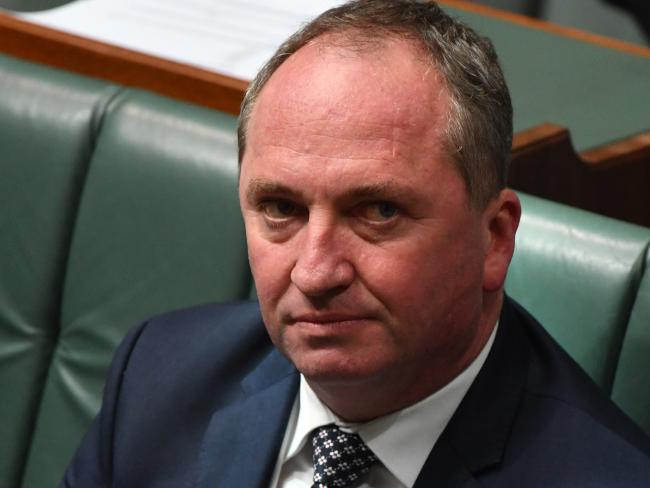
Persons send out rage tweets about Barnaby Joyce’s adultery while waiting in line to buy tickets for ‘Fifty Shades Freed

Prime Minister Malcom Turnbull bans Government Ministers from having sex with their staff, to the shrugs and disapproval of Senior members of Parliament including, Deputy Labor leader Tanya Plibersek.

“Does anybody genuinely believe that writing a clause into the Prime Minister’s code of conduct – which the Prime Minister has shown he’s completely unable to enforce already – is going to make a difference to people’s behaviour in private?…Honestly, are we really the country that starts sticking long lens cameras in people’s bedrooms?” [1]

Princess Kate wore a dark green gown to the BAFTA’s last night, and was savaged by the #timesup movement because near black is not black enough. Nothing like an anti-sexual abuse movement ripping into a woman for the colour of her dress! [2]

The sexual revolution has not given us the freedom and life it promised, but has instead delivered confusion and harm to millions of Australians. Of course there was sexual abuse and harassment before 1962. Yes, the last 50 years has seen some positive progress and good accomplished, in terms of fighting against misogyny and various stereotypes. However, the liberation of women and of sexuality in the 1960s has not resulted in the elimination of sexual harms, but its escalation.

The difference between before and after 1962 is that the former defined certain sexual behaviour as immoral and unacceptable, whereas in the post 1962 world, much of it became a moral possibility and even a celebration. Hollywood, the music industry, and magazines racks have modelled and enticed new generations of men and women to leave behind the shackles of marriage only sex.

We know that marriage is not always the safe and loving relationship it ought to be. We also know how sexual intimacy can be difficult, even in the most loving of marriages. But the very nature of sex requires the profound trust, kindness, and patience of two who have committed for better or for worse, in sickness and in health.

When the measure of sexual right and wrong is one’s hormonal levels, it is no wonder we experience disaster.

When our culture, and even our schools, teaches that the boys and girls are no longer boys and girls, and that sex among children is morally acceptable so long as they say “yes” and use a condom, what do we expect to happen?

If ‘consent’ is the only precondition for sex, do we really believe that all will end well?

As universities across the country kick off O-Week, we all know the kinds of parties and initiation ceremonies 17 and 18 year olds will be participating in.

The thing is, you can’t strip sex of its natural and best boundary markers, anymore than you can remove the brakes from a car and then expect no one to get hurt.

d5478ff7cd8ae3de33045bcda0421f4c

Proverbs Ch.4 presents us a very different paradigm for living. The author suggests that the best way to live is not to ignore wisdom and to dismantle sensible parameters, but to remain within their direction.

“My son, pay attention to what I say;
turn your ear to my words.

Do not let them out of your sight,
keep them within your heart;
 

for they are life to those who find them
and health to one’s whole body.

Above all else, guard your heart,
for everything you do flows from it.

Keep your mouth free of perversity;
keep corrupt talk far from your lips.

Let your eyes look straight ahead;
fix your gaze directly before you.

Give careful thought to the paths for your feet
and be steadfast in all your ways.

Do not turn to the right or the left;
keep your foot from evil.” (Proverbs 4:20-27)

Whereas the Bible urges us not to turn to the right or to the left, our culture has declared, ‘don’t turn to the right but turn to the left. Today, we are told not to guard our hearts but to follow our hearts. Our society prefers immediacy and temporary gratification, rather than patience and self control. The narrative is, try first and commit later, as though the man or woman we’re sleeping with is a piece of fruit in the supermarket.

The sexual revolution has been an overwhelming failure, and the harm is everywhere around to see. Since when was no fault divorce ever a good idea? Since when is adultery ever something to be lauded on the screen? Has the death of millions of unborn children been worth with the experiment?

Sex may be private and no one’s business, and we should not be obliged to keep it to marriage, and yet the story of Barnaby Joyce is telling us otherwise.

Prime Minister Malcolm Turnbull has said,

“I’m saying that from today, this change is being made in a way that is very, very clear …

In ministers offices ministers must behave accordingly, they must not, I don’t care whether they are married or single. I don’t care. They must not have sexual relations with their staff, that’s it.”

Sex is deeply personal and even private, but our Prime Minister has made it abundantly clear that there are also public, social, and even political ramifications. Consider this, imagine if Barnaby Joyce had honoured his marriage covenant and fought against the values of the sexual liberation movement?

I am not suggesting a return to the 1950s, but  a return to something far older and far more enriching and freeing: modesty and fidelity, self control and giving in love, in that mutually covenanting and exclusive relationship known as marriage.

No doubt there will be some who read this article and will congratulate themselves because of their own perceived righteousness

There will be others who are only too conscious of poor choices they have made in life.

Others have been crushed and left scared because of another person’s disgusting sexual appetite.

The truest resolution is not going to be found in ourselves, no matter our disposition and history, but in the one who promises fullness of life. I love how the Lord Jesus would both affirm marriage, speak against sex outside marriage, and also minister alongside those who were sexually broken. Jesus could explode the self-righteousness of those who pretend they are without sin., and without diminishing God’s design for sexuality, he would also befriend and love those whom society had deemed sexual outcasts. Jesus believed, taught, and practiced an uncompromising truth and unconditional love.

In his book, The Meaning of Marriage, Tim Keller helpfully summarises this point,

“Love without truth is sentimentality; it supports and affirms us but keeps us in denial about our flaws. Truth without love is harshness; it gives us information but in such a way that we cannot really hear it. God’s saving love in Christ, however, is marked by both radical truthfulness about who we are and yet also radical, unconditional commitment to us. The merciful commitment strengthens us to see the truth about ourselves and repent. The conviction and repentance moves us to cling to and rest in God’s mercy and grace.” 


[1] https://www.theage.com.au/politics/federal/cameras-in-people-s-bedrooms-labor-blasts-turnbull-sex-ban-20180216-p4z0ls.html

[2] https://www.theage.com.au/lifestyle/fashion/should-kate-have-worn-black-to-the-baftas-20180219-p4z0sp.html

Cheers for North Korea and Condemnation for Barnaby Joyce

Let love and faithfulness never leave you; bind them around your neck, write them on the tablet of your heart. (Proverbs 3:3)


We live in strange and disturbing times.

Many in the  media are drooling over the North Korean women’s cheer squad and fawning over Kim Jong-un’s sister, and they are also salivating at Barnaby’s Joyce’s affair.

The first is insane: young women who have perfected synchronised smiles, cheering, and songs, while their families back home probably have a gun to their heads. Kim Yo-jong is being touted as the next saviour of the world. Forget the fact that she represents one of the most evil and oppressive regimes in the world, suppressing and murdering staggering numbers of people. Instead, The Age has painted her as the enlightened diplomat who outshone those dreadful Americans,

“When the North Korean leader, Kim Jong-un, decided to send a large delegation to the Winter Olympics in South Korea this month, the world feared he might steal the show.

If that was indeed his intention, he could not have chosen a better emissary than the one he sent: his only sister, Kim Yo-jong, whom news outlets in the South instantly dubbed “North Korea’s Ivanka,” likening her influence to that of Ivanka Trump on her father, President Donald Trump.

Flashing a sphinx like smile and without ever speaking in public, Kim managed to outflank Trump’s envoy to the Olympics, Vice-President Mike Pence, in the game of diplomatic image-making.

While Pence came with an old message – that the United States would continue to ratchet up “maximum sanctions” until the North dismantled its nuclear arsenal – Kim delivered messages of reconciliation as well as an unexpected invitation from her brother to the South Korean President, Moon Jae-in, to visit Pyongyang, the North Korean capital.”

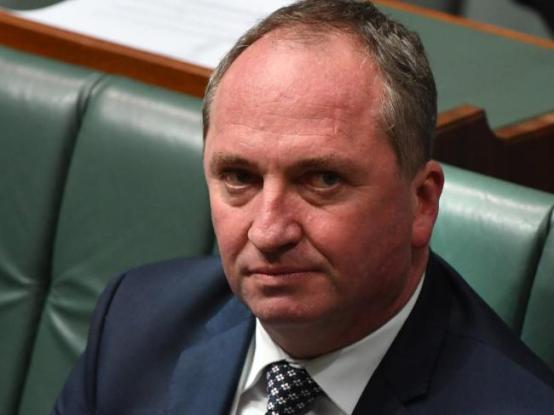
While the media are mesmerised by the not so mythical Sirens of North Korea, they also can’t get enough of Barnaby Joyce’s sex life. No doubt there is barn full of political hay making at work behind the scenes, but I also think that there is warrant for reporting this story. First of all, there are legitimate questions surrounding Mr Joyce’s new partner’s employment in his ministerial office and concerning his use of tax-payer funded trips to Canberra when Parliament was not sitting. Second, there are moral questions relating to Barnaby Joyce’s character and thus his ability to serve as Australia’s Deputy Prime Minister.


d5478ff7cd8ae3de33045bcda0421f4c.jpeg

As Australians consider this latest political story, here are three thoughts that I think are worth mentioning:

Firstly, marriage is both private and public

One can try to imagine the pressures associated with public life: extraordinarily long working weeks, considerable time away from home, constant political and media scrutiny.  A few moments tiredness while sitting in the chamber and snap, tomorrow’s headline photo with caption, “Prime Minister growing weary in the top job”. 

The end of Bill Shorten’s first marriage and his ensuing relationship with Chloe Bryce (whom he married one year later) received media attention at the time. In 2012,  Mr Shorten spoke out, saying, “personal lives and families should be off limits.”

Marriage is incredibly personal and private, and yet it is also a public institution. Marriage is a way in which society self-defines and divides according to family units. Governments involve themselves in marriage because of children—to safeguard children so that they may be raised by their biological parents, except in unfortunate and extreme circumstances. The question is, to what extent should the personal life of our politicians remain private?

I err on the side of Mr Shorten and believe that we should respect their privacy, as we expect others to respect our privacy. Too often, salacious news and gossip about public figures dominates the news, and as the public we are responsible, because we are the ones who are intoxicated by the fountain of scandal. Having said that, there are circumstances where knowledge of personal circumstances is relevant. For example, their private life exhibits significant character and moral failing, such that it would cause people to distrust them or that it would impede their ability to do their job properly.

Second, love is not always love

At an event in 2016, Shadow Attorney General Mark Dreyfus, suggested while speaking to the topic of same sex marriage that “it is not right to judge another person’s love”.

And yet the Canberra gallery is choked with opinion, judging Barnaby Joyce’s love, and the corridors of Parliament carry the whispers of others who are using the revelations to plot his political down fall.

Don’t mishear me, I think adultery is a terrible sin. It destroys marriages and families, and even careers and friendships. Adultery and casual relationships may be given kudos in television sitcoms and in Rom Coms, but in the real world, it hurts. Adultery isn’t wrong because of the potential consequences, there are consequences because it is wrong. Barnaby Joyce has acted immorally and repugnantly toward his wife, children, and toward his new partner. What is absurd however, are some of the voices who are calling Joyce a hypocrite, not because the charge is baseless, but because in making the accusation they are betraying their own standards.

For the last two years the nation has been marched into line by the drumming of those slogans, ‘love is love’ and ‘love equality’. I have been told that a person’s love is no one else’s business, no one has a right to judge someone else’s relationships. The suggestion has even been given that religion should stay out of marriage.

It’s been less than two months, but it appears as though someone has already dumped those placards into the recycling bin. Boy oh boy, how quick the media and leftist advocates have been to challenge and rip apart Joyce’s new found love.

Clementine Ford wrote in The Age,

“And so it turns out that not only is Barnaby Joyce a shocking hypocrite, he’s also a repulsive cliche.

The Deputy Prime Minister may have spent years defending the institution of “traditional marriage” from same-sex couples, but he’s carefully avoided applying his moral code to his own marriage of 24 years…This is where the cliche comes in. Because really, a 50-year-old man leaving his wife to start again with a 33-year-old isn’t a love story. It’s a midlife crisis.”

I happen to think that Clementine Ford could be right; Joyce may have caught that potentially deadly disease, known as the mid-life crisis. Ford calling Joyce out for hypocrisy is also fair, given his recent defence of marriage. 

However, you can’t have it both ways: either ‘love is love’ or it’s not. Either the only qualification for a sexual relationship is consent or there is more to it. You can’t work to liberate love from the supposed narrow parameters of heterosexual marriage, and then denounce a man for beginning a relationship with a woman who isn’t his wife. Are we going to let others enjoy their version of love, or are we going to own up to the fact that the insistent sloganeering of recent times was false advertising? Perhaps adultery is always wrong. Perhaps having sex with someone outside marriage is wrong. Perhaps casual sex isn’t such a good idea.

Third, Fidelity matters

If there is one lesson we can relearn from the past week, it is, faithfulness matters. Infidelity hurts. I can’t imagine what Barnaby Joyce’s wife and children must be going through at this time, especially due to the very public nature of Joyce’s betrayal. I trust they are being embraced by loving family and friends through all this.

Moral failings among leaders are far too common. Should we be so surprised? They are just like us. And yet we expect so much more of them, and indeed such expectations are important. Leaders ought to set an example for the rest of us. They should lead lives that demonstrate the values that we as a people wish to cultivate and be measured against. This is certainly true of Churches. While a Pastor is no more Christian than any other, having no greater access to God than the least in his congregation, and yet the Scriptures make it clear that character matters. Intellect and skills are important, but character is of greater worth. Should we follow a leader whom we cannot trust? Is it prudent for us to hold political representatives in office when their families have been betrayed? 

“Many claim to have unfailing love, but a faithful person who can find?” (Proverbs 20:6)


As I rummage about the street to pick up a stone, I am reminded of the words of Jesus, words that dismantle our hypocrisy, words that don’t minimise the weight of wrongdoing, and words that offer grace, and it is with this message that I want to finish.

On one occasion with a crowd gathered, a group of men brought a woman to Jesus who had been caught in adultery. Jesus first spoke a word to the crowd,

“Let any one of you who is without sin be the first to throw a stone at her”

With no one coming forward, Jesus turned to the woman and said

“Woman, where are they? Has no one condemned you?”

 “No one, sir,” she said.

“Then neither do I condemn you,” Jesus declared. “Go now and leave your life of sin.”

RELIGIOUS FREEDOM REVIEW SUBMISSION

The Religious Freedom Review was commissioned by Prime Minister Malcolm Turnbull in November 2017. Below is a copy of my submission.

———————————————–

I am writing this submission as a father of 3 children, as a Minister of a Church, and as one who has the privilege to regularly counsel people in the broader community, including members of both State and Federal Parliaments. I wish to communicate not only my personal observations, but also some of the concerns that are being shared with me in relation cultural shifts in Australia that are leading to reduced religious freedom.

Intent to curb religious freedoms

These concerns are not ethereal and without warrant.  There is a growing sway of social commentators, politicians, and civic leaders who are demonstrating intent to reduce religious freedoms in our nation.

For example,

Auberry Perry, in The Age (Sept. 3, 2017),

“This survey offers us a conscious opportunity to make a firm stand in support of a secular government and to reject discrimination or favouritism based on religion. It’s our opportunity to say that religion has no part in the shaping of our laws. A vote against same-sex marriage is a vote for religious bias and discrimination in our legislation, our public schools, our healthcare, and ultimately, in the foundation of our social structure.”

Mauvre Marsden wrote in the Sydney Morning Herald (Oct 4, 2017),

“Yes, marriage is not the final frontier. Yes, we want safe schools. Yes, gay conversion therapy is child abuse. Yes, we want transgender kids’ agency to be respected and supported – regardless of what their parents want. Yes.”

Jane Caro recently published an article for The Saturday Paper (December 23, 2017), in which she argued a case for defunding religious schools.

“We believe that if publicly subsidised schools – and other religious organisations – wish to discriminate against others, they should have to advertise both whom they discriminate against and why – prominently – in all promotional material, prospectuses, websites and job ads. One of the costs of discrimination is that it narrows the field of available talent and anyone considering using the services of such a school ought to be fully informed about that.

Another way of making the statutory right to discriminate fairer for everyone is to remove the blanket exemption and require authorities wishing to discriminate to appeal for an exemption in specific cases. As private school providers claim they rarely resort to exercising their freedom to discriminate, this would seem the most sensible way forward. It might be reasonable to seek to apply religious selection criteria to those who will be giving religious instruction, but why would a mathematics or physics teacher, or a rowing master, or a cleaner or groundskeeper need to be selected on such a basis?

Why should public funds be provided for those staffing positions that require religious discrimination? Surely it would be reasonable for the costs of these positions to be met by the faith community itself, specifically the church and the parents?”

Recently, a group of notable Australian academics and journalists launched the National Secular Lobby, a group whose purpose is to remove religious beliefs from playing any role in Australian political life. While they refer to, “not allowing religious doctrine to influence our national laws”, their agenda is clearly broader.

Their list of ambitions includes,

• remove tax exemptions to “for-profit” Church businesses, their non-charitable properties, investments, and assets.

• remove prayers, religious icons and rituals from all “secular” public institutions, including all tiers of governments.

• remove single-faith religious instruction from schools; promote and teach “philosophical ethics” and “critical thinking”.

• abolish the National School Chaplaincy Program and replace chaplains with experienced professional counsellors.

• select Rationalists for boards/panels, based on “ethics”, not Church leaders who claim to be society’s “moral voice”.

The National Secular Lobby has posited a definition of secularism that is historically incorrect. The secularism which shaped Australian history and is expressed in our constitution never meant that politics and public life should be free of religious ideas, but rather it ensured that the State is not controlled by any single religious denomination. As Dr Michael Bird notes in the 2016 article, Whose Religion? Which Secularism? Australia Has a Serious Religious Literacy Problem, the parameters of secularism have been redefined, “no longer as the freedom of the individual in religion, but as the scrubbing of religion from all public spheres.”

The intent of this new version of secularism is clear: it is not ideologically neutral, but is driven to control religious and public life and policy, and to remove those religious beliefs that won’t conform to their socialist leaning and atheistic worldview.

Examples of hampering religious expression and freedom in Australia

There is clear intent to reduce and even remove religious freedom from Australia. The problem is not limited to vocalised intent, but there are already substantive examples showing up across our society, especially in the State of Victoria. I wish to highlight examples that I have been personally involved with and/or have addressed elsewhere in a public forum.

In the area of public education:

Over the last three years many Victorian families have been forced to reconsider public education, and indeed, have felt obliged to remove their children because of a swathe of anti-religious policies introduced by the Daniel Andrews Government. Many families have come to me for counsel, and as a parent with 3 children I am sympathetic to their concerns

In 2015, the Daniel Andrews Government issued a ban on religious education classes in schools, except under very strict conditions which most schools are not in a position to provide. These weekly opt-in classes have been valued by hundreds of schools and thousands of families, for generations now. My children’s local primary school had a consistent high intake and enthusiastically encouraged the program to continue every year. They are no longer able to offer these classes. The Government then issued a curriculum to replace SRI classes: Respectful Relationships. This new curriculum is compulsory and does not teach religion, but is designed to teach gender fluid theory to children, and to encourage them to explore sexuality. [1]

Not only has the State Government removed a once cherished option to study religion in school, children are forced to participate in (and indeed to affirm) programs that at times contradict deeply held religious convictions and morality. This is resulting in many families believing that they can no longer send their children to public schools. This often comes at a tremendous cost to families, and sometimes parents don’t have the option of enrolling their children into a Christian or private school.

In the area of employment:

One of the more ardent attempts to remove religious freedoms came in 2016, when the Victorian Government proposed an amendment to the Equal Opportunity Act. This shift would have given the Government greater authority over religious organisations, including churches, schools, and charities. In effect, religious organisations would have had to demonstrate to a Government appointed tribunal, why their employees must adhere to the religious values of their Church or school. While this Bill failed at the final hurdle (by a single vote in the Victorian Legislative Council), it is revealing that a Government in our nation had the audacity and believed it had sufficient public support, to act against religious freedom.

Diversity, freedom of association, and freedom of religion, are key characteristics of our liberal democracy. Throughout our history Governments have valued the contributions of religious organisations, indeed society would be the lesser without them, and yet Governments have also understood a demarcation between the State and religious institutions. The proposed Equal Opportunity Amendment (Religious Exceptions) Bill 2016 crossed that line.

Firstly, why did the legislation target religious groups? The amendment to the Equal Opportunity Act would not have impacted any social or political groups, only religious ones. As it stands, political parties, sporting clubs, and other interest groups have freedom to appoint persons who subscribe to the views and goals of those organisations. This is only common sense. It is therefore reasonable to ask, what was the motivation behind the Government focusing on religious organisations, and not others?

The scope of the legislation was not limited to discrimination on the basis of sexual orientation, but extended to “differing religious beliefs”. In other words, the Government would have had the power to stop a church or religious organisation from rejecting applicants on the basis of them adhering to a different religion.

Secondly, the inherent requirement test assumed that Government has the right to intrude on religious organisations, and influence whom they employ. This test was a clear abrogation of one of Australia’s most basic ideals, that the State will not interfere with the beliefs and practices of religious organisations.

Premier Daniel Andrews stated at the time, “Religious bodies or schools will be required to demonstrate a necessary connection between their religious beliefs and the requirements of a specific role.” This move however counters the very notion of a pluralist society, and would have set up the situation whereby a Government could impose its narrow secularist agenda onto groups who did not share their ethical and religious viewpoint.

Thirdly, the test assumed that the Government, and any tribunal set up by the Government, would have had the expertise and knowledge to interpret the theological framework underpinning these organisations.

Again, Mr Andrews has said,

“The defence will be limited to circumstances where religious beliefs are an inherent requirement of a job, and an employee or job applicant does not meet the requirement because of a specific personal attribute.”

But who is to say when and where religious beliefs are an inherent requirement of a job?

The legislation assumed that some jobs in a church (or mosque or religious school) can be considered religious and others not. This may be the case in some instances, but is the Government really in a position to decide what is inherent and what is not?

It is important to understand that this assumption is not ethically or theologically neutral; it requires a body, set up by the Government, to interpret and impose their understanding of Islam, Judaism, or Christianity onto these various organisations. For example, in Christian thinking, the roles of gardener, administrator, and teacher are not separated into religious and non-religious work, for all are expressions of service to God. 

As it happens, many of these organisations do employ persons who don’t subscribe to the particular religious principles of the institution; that is their freedom to do so. Surely though, school boards, charities, and churches are in the best position to understand the values and needs of their organisation?

In the end, it comes down to these questions:

Is it the role of Government to interfere with the beliefs and practices of religious organisations?

Is it wise or fair to force religious organisations to employ persons who do not share their values and beliefs?

In the area of societal conversation:

In my view, the Coopers Beer saga symbolises the shift against religious toleration in Australia.The initial scene looked innocent enough; the Bible Society sponsored a video conversation between two Government MPs, Tim Wilson and Andrew Hastie. The two men sat down over a Coopers beer and enjoyed a civil conversation about marriage. Within minutes pubs across the nation were boycotting Coopers, and tirades of abuse hit social media. So incensed were non-beer drinkers and craft-beer drinkers across the nation, that they bought bottles of Coopers beer only to smash them in alleys across the nation until Cooper’s management fell obliged to jump and join the fight for same-sex marriage.

Another iconic Australian brand, the Carlton Football Club, recognised that among football supporters there are diverse views and so they decided not to take sides during the marriage campaign. They were vilified in the media and by social media for not publicly taking a stand in support of marriage change.

The implications are clear: There is public backlash, and even financial loss for those who will not openly affirm the current and popular philosophic views of sexuality.

Concluding Reflections

The law, as well as restraining behaviour, operates also to change public attitudes. With the revised Marriage Act, future laws and interpretations of these laws, and future social norms will all be defined by this wording. The two examples that I cited above are not exceptional but are becoming the norm.  It is important to note that these examples took place before changing the Marriage Act. What are we to expect now that the law has altered? While clergy have been given an exemption in relation to the weddings the choose to conduct, student clubs on university campuses, and employees in companies are nervous and are already being bullied into abandoning religious beliefs that have been long held.

At the time when the Federal Parliament was deliberating the Dean Smith Marriage Bill, Former Deputy Prime Minister, John Anderson, wrote,

“West Australian Liberal senator Dean Smith’s bill guarantees only “the right of clergy and religious institutions” to decline participation in same-sex marriage services and celebrations. There is by omission no recognition of the likelihood of damage to the freedom of conscience for ordinary citizens and their businesses. Smith and many of his colleagues seem unmoved by the encroachments on freedom of speech and conscience already demonstrated in Australia.

Smith’s exemptions approach arguably does more harm than good, for it assumes freedom of conscience is of worth only to professional religionists and not to all Australians. This weakens even further the standing of this important democratic right and makes it an easy target for those who would lobby to erase this exemption and similar exemptions that may remain in state legislation.”

Why is this a problem? Because 4.83 million Australians have said that they do not support same sex marriage. Millions of Australians potentially face loss of income, employment, and facing tribunals for adhering to a view that will no longer be supported by the law.

Along with many fellow Australians, I am asking:

Will Australians be guaranteed freedom to continue teaching and explaining the classical view of marriage and sexuality, not only in a Church but also in public places including universities?

Will religious schools maintain freedom to teach and affirm the classical view of marriage?

Will our children in State schools have liberty to express, without bullying, a Christian view of marriage? Will parents have freedom to opt-out children from lessons that advocate views of marriage and sexuality that contravene their religious convictions?

The concept of a free exchange of ideas, and the notion of respecting others whilst disagreeing with them has helped cultivate the freedoms and prosperity we enjoy today as a nation. This successful pluralism relies upon a Christian worldview. It is not irreligion that brought religious pluralism to our shores, but the Christian view that we ought to love our neighbours, and that authentic belief in God comes about through persuasion not coercion. It is a sad reality that influential elements of society are deliberately turning us from these ideals. It is because of this fractured pluralism that we need to now carefully consider how we might encourage and make certain that freedom of religious expression, speech, and practice may continue, and remain a hallmark of Australian society.


OLYMPUS DIGITAL CAMERA


[1] – It is worth noting that this theory of sexuality can no longer be taught in NSW schools. Another program, Safe Schools, continues to be taught in Victoria and is compulsory, with the Government  ignoring the recommended changes introduced by the Federal Government. This curriculum is being abandoned altogether in some other States due to its extreme ideological and unscientific content.

Rachael Denhollander and her extraordinary speech

“blessed are the merciful for they will be shown mercy” (Jesus Christ)


Today I had the privilege, along with millions around the world, to watch one of the most extraordinary speeches I have ever heard.

Child sexual abuse is one of the great sins of this age. It is an ancient evil, as well as modern one, but until recent times so much was covered up and victims were so often not believed. Today, the former USA Gymnastics team doctor, Larry Nassar, was jailed for 175 years, having sexually abused countless number of girls under his care.


Screen Shot 2018-01-25 at 3.14.48 pm.png

These stories are far too common, as we also know here in Australia, and we should not be surprised to hear of many more similar cases coming to the fore in days and years to come. The crime is now sadly a familiar one, but in the midst of harrowing testimonies there came a message of purity, goodness, and astonishment.

Rachael Denhollander was the first victim to publicly come forward with allegations against Nassar, and she was final of 156 survivors to speak in court. 24 hours ago I had never heard of Rachael Denhollander, but today I encourage people to listen to her voice and to hear her message.

We live in a world filled with the stench of evil, and that evil resides in the hearts of humankind. It was not so long ago that we all had friends who doubted the existence of evil, certainly in an intellectual or objective sense. At yet, as doors open and as people find courage to speak, we discover that evil abounds and it is more prevalent and real and darker than we believed.

In her address, Rachael Denhollander speaks candidly of the pernicious and devastating behaviour of Larry Nassar upon so many girls, including herself.

“Larry is a hardened and determined sexual predator. I know this first-hand. At age 15, when I suffered from chronic back pain, Larry sexually assaulted me repeatedly under the guise of medical treatment for nearly a year. He did this with my own mother in the room, carefully and perfectly obstructing her view so she would not know what he was doing. His ability to gain my trust and the trust of my parents, his grooming and carefully calculated brazen sexual assault was the result of deliberate, premeditated, intentional and methodological patterns of abuse — patterns that were rehearsed long before I walked through Larry’s exam room door and which continue to be perpetrated I believe on a daily basis for 16 more years, until I filed the police report.”

She spoke of why justice must be meted out.

“Who is going to tell these little girls that what was done to them matters? That they are seen and valued, that they are not alone and they are not unprotected? And I could not do that ,but we are here now and today that message can be sent with the sentence you hand down you can communicate to all these little girls and to every predator to every little girl or young woman who is watching how much a little girl is worth.

I am asking that we leave this courtroom we leave knowing that when Larry was sexually aroused and gratified by our violation, when he enjoyed our suffering and took pleasure in our abuse, that it was evil and wrong.

I ask that you hand down a sentence that tells us that what was done to us matters, that we are known, we are worth everything, worth the greatest protection the law can offer, the greatest measure of justice available.”

She also spoke of an idea, a message and desire that is shared less often in Western societies today, less believed and more rarely practiced. Rachael Denhollander spoke of Divine judgment and mercy. She affirmed her belief in the God of the Bible as one who rightly punishes evil, and yet who lovingly offers mercy.

While addressing Larry Nassar, Rachael Denhollander said,

“In our early hearings. you brought your Bible into the courtroom and you have spoken of praying for forgiveness. And so it is on that basis that I appeal to you. If you have read the Bible you carry, you know the definition of sacrificial love portrayed is of God himself loving so sacrificially that he gave up everything to pay a penalty for the sin he did not commit. By his grace, I, too, choose to love this way.

You spoke of praying for forgiveness. But Larry, if you have read the Bible you carry, you know forgiveness does not come from doing good things, as if good deeds can erase what you have done. It comes from repentance which requires facing and acknowledging the truth about what you have done in all of its utter depravity and horror without mitigation, without excuse, without acting as if good deeds can erase what you have seen this courtroom today.

If the Bible you carry says it is better for a stone to be thrown around your neck and you throw into a lake than for you to make even one child stumble. And you have damaged hundreds.

The Bible you speak carries a final judgment where all of God’s wrath and eternal terror is poured out on men like you. Should you ever reach the point of truly facing what you have done, the guilt will be crushing. And that is what makes the gospel of Christ so sweet. Because it extends grace and hope and mercy where none should be found. And it will be there for you.

I pray you experience the soul crushing weight of guilt so you may someday experience true repentance and true forgiveness from God, which you need far more than forgiveness from me — though I extend that to you as well.”

Rachel Denholander’s words are the Christian message. The God whom she spoke about is not ignorant of, or complicit with, or powerless to judge sin; he hates it more than us. She is right, no supply of good works can erase the evil Nassar perpetrated and which arose from a heart that is more putrid than his actions. But Rachel Denhollander did not end with a message of condemnation, but she pointed her abuser to God’s mercy and forgiveness.

Should you ever reach the point of truly facing what you have done, the guilt will be crushing. And that is what makes the gospel of Christ so sweet. Because it extends grace and hope and mercy where none should be found. And it will be there for you.

I pray you experience the soul crushing weight of guilt so you may someday experience true repentance and true forgiveness from God, which you need far more than forgiveness from me — though I extend that to you as well.”

The cross of Jesus Christ highlights our sins more vividly than we wish, and it reveals the justice of God more holy and fierce than we imagine, and the cross is God pouring out his love and grace more wonderfully and abundantly than any could ever conceive.

 We should not be so quick to dismiss the efficacy and goodness of the Gospel of Jesus Christ today. In a court of law, and in circumstances addressing the ugliest of human affairs, a woman spoke with quiet dignity, sharing her pain, calling for justice on behalf of countless girls, and speaking grace to a man who deserves none. Rare? possibly. Contrary to human wisdom? Yes. Attractive and causes us to ponder? Absolutely.

Abortion, Canada, and the relentless wave of Authoritarian Secularism

I love taking Claude (family greyhound) for an early morning walk through the streets of Parkdale and Mentone, and to listen to the Bible as we go. Today in the Psalms, I was struck by Psalm 8:2, which says,

“Through the praise of children and infants

    you have established a stronghold against your enemies,

    to silence the foe and the avenger.”

Afterward, I was catching up on the news and heard a report about a recent announcement by Canadian Prime Minister, Justin Trudeau. Organisations applying for Government funding for the Canadian Summer Jobs program, must now sign an attestation that they support abortion. The Government had tried previously to prevent funding to pro-life groups but there were legal hurdles that couldn’t be jumped. Instead, they have now built a wall to keep out organisations they won’t subscribe to the extreme social secularism that is being enforced on Canadians by the Trudeau Government.


Screen Shot 2018-01-19 at 10.07.38 am.png

The form states,

“CSJ applicants will be required to attest that both the job and the organization’s core mandate respect individual human rights in Canada, including the values underlying the Canadian Charter of Rights and Freedoms as well as other rights. These include reproductive rights and the right to be free from discrimination on the basis of sex, religion, race, national or ethnic origin, colour, mental or physical disability, sexual orientation or gender identity or expression.

The employer attestation for CSJ 2018 is consistent with individual human rights in Canada, Charter rights and case law, and the Government of Canada’s commitment to human rights, which include women’s rights and women’s reproductive rights, and the rights of gender-diverse and transgender Canadians. Canada Summer Jobs 2018 4 The government recognizes that women’s rights are human rights. This includes sexual and reproductive rights — and the right to access safe and legal abortions. These rights are at the core of the Government of Canada’s foreign and domestic policies. The government recognizes that everyone should have the right to live according to their gender identity and express their gender as they choose, free from discrimination. The government is committed to protecting the dignity, security, and rights of gender-diverse and transgender Canadians.”

According to information stated on the application form, the rationale for this change is twofold:

-to prevent the Canadian Government from funding projects that don’t endorse abortion and LGBTQI rights,

-and to protect minors being “exposed” to these anti-social views.

Among the organisations that are unable to sign the attestation are Christian groups, many who previously were part of the program and providing work for Canadian youth.

Attention to this new policy came to fore last week when Justin Trudeau was asked a question about free speech during a Town hall meeting at McMaster University, Hamilton. He answered,

“In this country, we defend each other’s rights, even when they’re unpopular, as we’ve seen a couple of times. At the same time, we need to know that there is a difference between freedom of expression and acting on those expressions and beliefs. A great example that I was wondering whether you’d bring up is the current kerfuffle around the Canada Summer Jobs program, and expecting that any organization that gets funding to bring young people through the Summer Jobs program – which hundreds of thousands of young people go through – will respect the Charter of Rights and Freedoms.

Now, that doesn’t mean that religious groups and faith groups can’t apply for that. On the contrary, so many of the great community organizations that we have working incredibly hard are faith-based across this country and it’s an important and wonderful part of our society. It does, however, mean – and this is where we get to the crux of the matter – that an organization that has the explicit purpose of restricting women’s rights by removing rights to abortion, the right for women to control their own bodies, is not in line with where we are as a government, and quite frankly where we are as a society.”

The fact the Mr Trudeau felt liberty to use the Summer Jobs Program as his example in answering a question on free speech, says something about his confidence for advancing his social agenda.

Trudeau’s comments are sadly not unusual, but are indicative of much western civilisation today. He is saying to Canadian Christians, ‘we’ll let you hold your believes in private, and perhaps within the confide of your association, but these views are no longer permitted publicly’. This means that organisations will either have to bury their convictions, hide their conscience, and sign the document, or accept that they are no longer Canadians of equal footing and thus lose their funding.

Of course, this is Canada, not Australia. However, we are not so different. Our culture, our history, and our system of Government, is more closely aligned to Canada than it is the United States. The same authoritarian secularism that is sweeping the the land of the maple leaf is also at work here in the south.

It is a perfect illustration of where Western secularism is moving; the gods of the sexual revolution don’t take prisoners. Indeed they will sacrifice the unborn and will trample on the living dissidents. We have already seen a similar move undertaken in Australia. In 2016, the Victorian State Government attempted to legislate that all religious groups must conform to a proposed ‘inherent requirements test”. In short, this would removed freedom from churches and organisations to employ persons based on the theological convictions of the group. The legislation was finally defeated in the Upper House by a single vote. The point is, a State Government in Australia felt as though the sway of society had moved such that they could put forward such Erastian law.

It should also be noted that in addition to the new restriction, Canadian groups are calling for  “anti-abortion” agencies to lose their charitable status altogether.

Joyce Arthur, executive director of the Abortion Rights Coalition of Canada, 

“No anti-abortion agency should be registered as a charity…The mission and activities of anti-choice groups are inherently political and biased, which should disqualify them from charitable status. They work to stigmatize abortion, constrain individuals’ access to it, and ultimately to re-criminalize it.”

In light of the recent introduction of same sex marriage in Australia, the hot issue has become religious freedom and freedom of conscience. These issues have been highlighted by some in the Federal Parliament, and mocked by others. In response to what is probably a combination of reasoned argument and political pressure, a panel has been established to review Australia’s religious freedoms.

As Australians talk about religious freedoms and submit reports to the Ruddock Inquiry, we shouldn’t be surprised to find some who look to this latest Canadian example and use it as ammunition to further squeeze religious freedoms here in Australia.

Jane Caro is a representative of the vanguard of socio-politico thinking in Australia. Two days before Christmas she wrote an article for The Saturday Paper, in which she argued a case for defunding religious schools. In the wake of same sex marriage, Caro has strong views about schools and other organisations whose views differ to the newly redefined Marriage Act.

“We believe that if publicly subsidised schools – and other religious organisations – wish to discriminate against others, they should have to advertise both whom they discriminate against and why – prominently – in all promotional material, prospectuses, websites and job ads. One of the costs of discrimination is that it narrows the field of available talent and anyone considering using the services of such a school ought to be fully informed about that.

Another way of making the statutory right to discriminate fairer for everyone is to remove the blanket exemption and require authorities wishing to discriminate to appeal for an exemption in specific cases. As private school providers claim they rarely resort to exercising their freedom to discriminate, this would seem the most sensible way forward. It might be reasonable to seek to apply religious selection criteria to those who will be giving religious instruction, but why would a mathematics or physics teacher, or a rowing master, or a cleaner or groundskeeper need to be selected on such a basis?

Why should public funds be provided for those staffing positions that require religious discrimination? Surely it would be reasonable for the costs of these positions to be met by the faith community itself, specifically the church and the parents?”


It is easy for people to say, “the answer is straightforward, stop applying for Government funding.” The issue is less about the money, but the attack of religious freedom and freedom of speech. This is yet another example of a western nation shedding principles of a liberal democracy. Where citizens lose the freedom to express a point of view (indeed, a viewpoint that was until recent times morally accepted and valued) and are threatened with defunding for holding that position, we are witnessing societies letting go of principles that made possible the creation of the modern democratic State.

Authoritarian secularism may employ the language of progress, equality and fairness, but the reality is very different to their sloganeering. This is about changing how people think and live, this is about redefining truth and morality, and forcing everyone to worship at the feet of our modern manifestations of Moloch and Venus. Aussie Christians need to get used to the fact that the country has changed. We are no longer nominally Christian, and that means that many of the structures and moral frames which built this wonderful nation are being removed. There will be social stigma, there will be financial cost.

How different was my morning reading from Psalm 8. The God of the Bible reveals his glory in his creation, and most wonderfully in humanity. He affirms the praises and song of children and of infants; they are wonderfully made. How different is the view of children that Canada now promotes.

The Lord is majestic in all the earth, both in his stunning acts of creation and in his wondrous act of redemption.

The Psalmist asks,

“what is mankind that you are mindful of them,

    human beings that you care for them?”

The answer given is that God give human kind unique glory and honour, and has placed them uniquely in all the universe to rule. God’s image bearers all fall, failing to rule with care, justice, and kindness.  In love God’s only Son descended to the grave, having being killed in the place of sinners. He was raised to life on the third day, to defeat not only death, but to prove the efficacy of his death for sin.

“Lord, our Lord,
how majestic is your name in all the earth!”

Volunteering makes the world a better place

2018 may only be 5 days old, but we already have a contender for the most stupid article of year award.

For a moment, I thought all Fairfax Editors had vacated the building for summer holidays and had given the keys to an 18 year old work experience student who’s started the campaign to elect Bernie Sanders as the next Prime Minister of Australia.

Fairfax has published a piece with the title, Volunteering doesn’t make the world a better place.

As the headline suggests, the article is an attack on the indispensable practice of voluntary work in Australia.

Catherine Walsh is calling on Australians to “stop volunteering”.

Why? She sees volunteering as a faux help, not resolving societal issues but aggravating them. Walsh arrives at her conclusion by arguing that voluntarism is inefficient, is unvalued, and is exploited by organisations who are disinterested in solving problems.

Walsh’s solution seems to be, get rid of voluntarism and instead let’s create a bigger government and remunerate people for all their work. Sounds great, doesn’t it? Let’s handball even more communal opportunity and responsibility over to Government, and let’s suck out the tiny bit of oxygen that keeps Australian philanthropy alive. Instead of donating time and money to causes that we think highly of, let’s give Government permission to charge even higher taxes to pay for the programs that it subscribes as morally relevant.


UNADJUSTEDNONRAW_thumb_dd71.jpg

Apart from her less than satisfactory alternative to voluntarism, there are several important flaws in Walsh’s presentation of volunteering that require response.

Firstly, Walsh largely equates volunteering with virtual signalling. She says,

“Being a volunteer, or fundraising, or working for a charity, signals that you are a good person.”

“If volunteering was valued we would have a separate resume for it, at parties people would ask each other about their volunteering, and hours worked would contribute to superannuation.”

I have no doubt that there are persons involved in voluntary work because it gives them a drug free high. They feel good about themselves, and they enjoy the praise they receive from people around them. That is certainly not the Christian motivation for doing good. We give because we know the joy of what it is to receive. Those who have been loved, want to love others.

According to Walsh, if Australians truly value volunteering, we would be congratulating one another. But why should people boast about their volunteering and donating? Doing so undercuts the very nature of the work, that is, it is being done for the good of others, not for oneself. Is it not possible that Australians happily give time and effort to serve others without demanding compensation, let alone, superannuation? Where is the ideal of sacrificial giving? Indeed, as soon as we strip these Christian foundations for society, we fast become bereft of moral structures that we need for building a healthy society.

And BTW, people can and do include volunteer work on their resumes!

Not only does Catherine Walsh paint volunteerism as egotism, she secondly alleges that voluntary work is inefficient.

“A lot of the volunteering we do is inefficient. Schools ask that parents bake cakes to be sold to the children of other parents who have baked cakes. Most school events involve sausages on white bread and fizzy drinks, which is not recommended as a healthy diet. Chocolates are sold in staffrooms to raise money for the children’s hospital. Rubber wristbands are sold by charities to raise awareness of illnesses. A fundraiser for the environment can sell unhealthy food one week, and a fundraiser for health can damage the environment the next. This is inefficient. Any effort to help one system should not be feeding into the brokenness of another. In order to be helpful we need to factor in all systems at once.”

I do agree with one small point here  – her examples about about cake stalls and chocolate drives; these are often self-defeating exercises given that the very people designed help are the ones buying the sugary treats. We shouldn’t need incentive in order to give generously to a cause that we value. Volunteering though is not donating: voluntarism isn’t donating $5 at a school fete and receiving a chocolate bar in return.  Voluntarism is work without pay; it is giving time, energy, skills, and productivity for a cause without expecting any reimbursement.

Is voluntary work always efficient? No. But then, is paid work always more efficient? Is Government the very epitome of efficiency? And why is efficiency the only measure worthwhile considering?

Much of life is not efficient. Relationships are often complex and messy, and they require time and patience and perseverance. The reality is, not all of life’s brokenness can be fixed with a signed policy statement and a grant dispersed by Government bureaucrats.

Matt Perman explores this myth about work in the book, What’s Best Next?. He writes,

“While efficiency is important, it is secondary. More important than efficiency is effectiveness — getting the right things done. Efficiency doesn’t matter if you are doing the wrong things in the first place.”

It is also important to broaden the view of worthwhile work which is suggested by Walsh. For example, Tim Keller defines work as, ‘rearranging the raw material of God’s creation in such a way that it helps the world in general, and people in particular, thrive and flourish.”

Dorothy L. Sayers asks the poignant question, “We should ask of an enterprise, not “will it pay?” but “is it good?” She argues, “the habit of thinking about work as something one does to make money is so ingrained in us that we can scarcely imagine what a revolution change it would be to think about it instead in terms of the work done. To do so would mean taking the attitudes of mind we reserve for our unpaid work – our hobbies, our leisure interests, the things we make and do for pleasure – and making that the standard of all our judgements about things and people”

In other words, while we shouldn’t ignore inefficiency, there are bigger and more important questions that need asking about our work, and indeed why we should value unpaid work. At its root, Walsh advocates a consumerist and individualist paradigm which inevitably squashes the greater love, which requires selfless giving for another’s good.

Thirdly, Walsh presents a narrow understanding of voluntarism.

In her article, Catherine Walsh is targeting organisational volunteerism, however much voluntary work and giving in our local communities is informal.

I think of my local cricket club which depends upon the generosity of volunteers who love the game and who want to encourage children in the game. I think of the local athletics club where my daughter runs, and how they depend on the voluntary time giving by families.  

Thinking of my own local church, where people lovingly pour 1000s of hours into giving, serving, caring, and organising. What they achieve is more than running a few programs, they are building and belonging to community, and including others in this endeavour. Societal cohesion and growth cannot be left to Government, but requires spontaneous and informal contributions from the grassroots up. It’s about loving our neighbour as ourself.

Walsh soon enlightens us as to where her real criticism lays – it is with religious organisations and churches. She says, 

“Many government services are now outsourced to church-run charities, which win contracts due to their tax concessions and tax donation status – and rely on the work of volunteers. They are exempt from anti-discrimination laws. It is not in their interest to solve problems.”

“It is not in their interest to solve problems”?

Wow. One can only assume Walsh has never visited a church, nor observed religious charities at work, nor considered the data which elucidates the extraordinary work being achieved by religious groups in this country. Of course there are always going to be a few bad eggs in any system, but is she being serious? Is this a moment of hyperbole? I know of countless people who have found financial restitution through the generosity of others, of mums who can go back to work because friends are helping to baby sit, of marriages being healed because of counselling provided, of people offering beds for those without, of finding hope and forgiveness where society offered none.

A healthy society can only exist where the people contribute to the wellbeing of others without seeking personal benefit. Do we want to be taking away further personal responsibility and opportunity, and therefore assume that big Government will take care of it? If anything, this will produce more cracks and more people going without.

Imagine Australian society with Surf Life Savers, the CFA and SES, without locally run sporting clubs and playgroups. Consider the billions of dollars that we would be required to pay to Government, should churches and religious organisations (yes, primarily Christian) were abandoned of free serving and giving volunteers?

I’m reminded of the words by the Apostle Paul, who said of Christians,

“Therefore, as we have opportunity, let us do good to all people.”

The Apostle doesn’t call us to dump everything on Government, or to assume someone else will do it, or to demand reimbursement for services completed. He writes in the context of Christian freedom, for we work in light of an eternal future that has been made secure by a God who worked by grace for our good.

25 of the Greatest Music Compositions

I thought I would kick off 2018 with a very different blog to what readers are used to here at murraycampbell.net. For fun, I wish to offer a definitive (yes, I said definitive!) list of the finest musical works ever written (perhaps not definitive…but close).

Music is one of God’s greatest gifts to the world, and these are some of the most extraordinary examples of this Divine endowment.

Narrowing the possibilities to only 25 is sufficiently impossible, let alone settling on a sequential order with some silly countdown.  For how can one compare Bach to Mozart, or Debussy with Rachmaninov? Can’t one appreciate both apples and oranges? Nonetheless, not all compositions are created equal.

Lists often reveal more about the compiler than they do about the items being collated; this is probably no exception. That withstanding, in my view these are 25 of the greatest compositions ever written. Some of these works I learned and performed when I was younger, and others I first discovered others at an even younger age, while others grabbed hold of me as an adult. Many of them have a back story which I won’t bore you with, but one thing each of these works have in common, and that is, I regularly listen to them. While some of these works are notable for their influence on music history, and all for their musical genius, they each offer to send listeners  traveling through the chromatic scale of human experience, whether it is by their sheer beauty or wonderment or sorrow or haunting qualities.

No doubt others will have alternate suggestions. It’s probably safe to say that among 1000 or even 100,000 readers, no two lists will be alike. And yes, I’m sure the philistines among us will be tempted to include a song that utilises the creative genius of  I – vi – IV – V and the compulsory drum kit! 

So what would you include?

If you have never listened to these works, go ahead and enjoy, be moved, be delighted, be challenged, be intrigued.


UNADJUSTEDNONRAW_thumb_dece.jpg

Blurry photo of Maurizio Pollini taken by me at the Lincoln Centre 2017


J.S  Bach

“Jesu meine freude” Motet BWV 227

Well Tempered Clavier

Goldberg Variations BWV 988

Violin Sonata in G Minor BWV 1001

Mass in B Minor BWV 232

St Matthew’s Passion BWV 244


George F Handel

Messiah


Mozart

Don Giovanni

The Magic Flute

Piano Concerti nos. 20 and 21

Clarinet Quintet in A Major

Requiem Mass


Beethoven

Piano Sonata No.8 in C Minor “Pathetique” (or no.29 “Hammerklavier”)


Chopin

The Ballades


Tchaikovsky

Symphony 5 in E Minor Op.64


Puccini

La Boheme


Debussy

Prélude à l’après-midi d’un faune

Preludes for Piano (books 1 and 2)

La Mer

String quartet in G Minor


Rachmaninov

Piano Concerto no.2  in C Minor Op.18

Piano Concerto no.3 in D Minor Op.30

Symphony no.2 in E Minor  Op.27


Elgar

Cello Concerto in E Minor Op. 85


Dmitri Shostakovich

Piano Concerto no.2 Op.102

Australian Generosity at Christmas

Caitlin Fitzsimmons has called for Australians to be more generous, and to give to charity outside the Christmas period. She offer some sage advice for all of us, and her points about generosity also got me thinking.

She writes,

“Before we dive into the prolonged festival of consumerism that is the summer sales or turn our thoughts to the new year, let’s pause to reflect on the season of giving.

December is the third-biggest month for charitable giving behind May and June, the two months before the end of the financial year when people are trying to maximise their tax deductions, according to Commonwealth Bank figures.”

Fitzsimmons helpfully points out,

“The lead-up to Christmas is when many charities give a big marketing push to drum up donations. It’s also a time of greater need, especially for organisations that help disadvantaged families in Australia or rescue abandoned pets, for example. But no matter the cause, the need doesn’t disappear in January.”

Fitzsimmons doesn’t want us thinking that we’re a nation of Scrooge’s. She proclaims that,

“The good news is that Aussies are generous year-round”.

So how generous are we?

According to research cited in the article, 2/3rds of Australians give to charity, totalling $4.2 billion. That’s not an insignificant sum, although it in fact equates to approximately $300 per Aussie. Hmmm. Generous? I’m beginning to wonder if Scrooge was an Australian.

Fitzsimmons goes on to offer some helpful practical advice about how to give to charity, and why it’s important for organisations to have knowledge of regular giving rather than one off guilt driven contributions.

It would be interesting to know what the average regular Church attender gives per annum. Based on many years of experience, working for and being a member of several Churches, I reckon that a conservative estimation would place Christian giving at 10 times the national average, and Christians often give without any tax benefits.

According to NCLS research (a national survey across Christian denominations, which involved 10,000s of participants), 66% give regularly, with 20% of attendees regularly giving over 10% of their income. It is important to note that these figures only include financial contributions to the local church, and does not include all the charitable giving beyond. Again, this is consistent with my experience of Christians and Churches.

Screen Shot 2017-12-27 at 10.21.35 am


The question is, why is the gap between general Australia and Christian Australia so great? I’m sure that some Christians give out of a sense of obligation (although they should not), and others give because of a dubious understanding of Divine blessing (ie the prosperity Gospel). But those two reasons cannot explain the giving that continues in evangelical Churches across the country.

So what is the reason?

My hypothesis is a simple one, and it comes from the Bible: Grace changes peoples’ hearts.

“Each of you should give what you have decided in your heart to give, not reluctantly or under compulsion, for God loves a cheerful giver.” (2 Corinthians 9:7)

“For you know the grace of our Lord Jesus Christ, that though he was rich, yet for your sake he became poor, so that you through his poverty might become rich.” (2 Corinthians 8:9)

When you have come to experience the sacrificial love of God in Christ Jesus, and how the Lord of the universe gave up everything, even his life on the cross, this good news changes you inside and it reorients the way you view your income and the way you look at other people. I’m not suggesting that Christians are better people; Christians are ordinary citizens who face the same financial responsibilities as other Aussies. I am however proposing that there is a difference, and that difference turns on belief in the Gospel of Jesus Christ. The extraordinary gift of forgiveness that is found in Jesus, not only frees people to give generously but installs a joy in giving to others.

I happily join Caitlin Fitzsimmons in encouraging Australians to think about generosity in 2018, and we do so, I also encourage us to consider the greatest act of compassion and sacrifice the world has ever known.