Last night our church building was packed with people, gathered to celebrate the birth of Jesus. While our evening was filled with laughter and joy and praise, what we didn’t know at the time was that a massacre was unfolding at Bondi Beach in Sydney.
Thousands of Jewish Sydneysiders gathered at Bondi Beach to celebrate the first night of Hanukkah. As they welcomed the festival of light, darkness descended as two men dressed in black opened fire.
15 people are now dead, with dozens injured, including 2 police. One of the gunmen is also dead, and his accomplice is critically injured. Police and the NSW Government were quick to announce this as an attack on Jewish people and an act of terrorism.
I am shaken. I am profoundly saddened. What has become of this nation?
I am angry, really angry. Damn those men to hell. Damn those who cultivate and stir hatred toward Jewish people, and those who excuse growing anti-Semitism in Australia.
Can we say that Australia is safe for Jewish people? If the answer wasn’t already tenuous, after last night’s terror, it is difficult to say yes.
Melbourne this year has borne witness to Neo-Nazis leading marches through our city streets. A prominent Neo-Nazi has addressed crowds in public. Arson at Melbourne’s Addas Israel Synagogue saw the building severely damaged 12 months ago. Jewish Aussies are regularly subjected to anti-semitic graffiti and verbal attacks on the streets.
To suggest Australia is safe for Jews rings hollow. It is too our shame.
Stories of heroics are slowly emerging. It needs to be said, given the likely identity of the gunmen, that one hero who emerged last night was a Muslim man who ran and tackled one of the gunmen, almost certainly preventing further loss of life. He in turn was shot twice and is now in hospital.
As hundreds of people came together at Mentone Baptist Church last night, we focused on the God who came. I talked about how hurt and harm naturally produce friction and distance. God knows how deeply divided our cities and suburbs have become. Something counterintuitive happened with Jesus; God determined to come closer. When God saw all the evil in this world and all odious motives and words and deeds, instead of walking away as he had every right to do, he came to us. He came in the most miraculous and vulnerable of ways. The Son of God didn’t come to take away life, but to lay down his own life so that we might gain eternal life.
The birth of Jesus was accompanied by such bright light, and the scene was also interrupted by a wave of evil and darkness. The Gospel of Matthew records the massacre of the innocents, when Herod chose violence and murdered the young of Bethlehem in his hunt to rid the world of the prophesied one.
Matthew turned to these Scriptures to echo the horror,
“A voice is heard in Ramah,
weeping and great mourning,
Rachel weeping for her children
and refusing to be comforted,
because they are no more.”
Today, there is weeping and great mourning in Sydney. This should not be. Why are we not surprised? We are shocked, and yet who is surprised by the blood soaking into the sands of Bondi Beach? Perhaps the location took us by surprise, but our fractured society is losing coherence as we struggle to find something that keeps us together.
Politicians, stop pandering to groups who advocate this bile.
Religious groups, expose and expel religious preachers who teach this evil.
How long must we watch city streets clogged with protesters shouting obscenities and anti-semitic slurs, all in the name of ‘freedom’.
This isn’t a left or right issue, for the hatred has its horns on both ends. It is a religious issue. It is an ideological issue. It is a heart issue, and evidence suggests we are not equipped to respond. Violence isn’t the solution. Vile social media posts won’t bring about peace and healing.
The Gospel of John records Jesus attending Hanukkah. While not one of the Festivals instituted in the Bible, this commemoration of the Second Temple’s restoration in the 2nd Century BC, had quickly found a home in the Jewish calendar. It is unsurprising that Jesus, a Jewish man, participated in this Festival of Light (John 10:22).
A light was snuffed out last night at Bondi Beach, and the light has grown dim around Australia.
Where will we find light to overcome the darkness? Political muscle and social goodwill have some but limited influence. Who can gaze into the soul? Who can outdo evil?
“I am the light of the world. Whoever follows me will never walk in darkness, but will have the light of life.”
Pray for the injured. Pray for the hundreds of victims who were present and witnessed last night’s evil. Pray for our emergency services who today continue to work and protect our streets, investigating last night, and attending to the wounded, both the physically and mentally hurt. Pray for our Jewish friends and neighbours. Check in on them. Assure them of our friendship. Pray for them.
As Hanukkah continues and Christmas approaches, my hope rests in the One about whom it is written,
“The light shines in the darkness, and the darkness has not overcome it.”
The ABC is reporting that new Guidelines for NSW Health will crack down on hospital management who try to prevent abortions.
“Hospital managers and executives would be barred from blocking abortions because of personal beliefs, under new guidelines proposed for public health services across New South Wales.
A draft copy of the “termination of pregnancy policy directive”, obtained by the ABC, includes a new section that specifically deals with conscientious objection among those managing and administering health and hospital services.
The policy has been under review for more than a year and lays out requirements for individuals and institutions providing or assisting with abortion care.”
The ABCs language of choice is ‘abortion care’. While ‘care’ is also used in the Government Guidelines, the reporter can’t help but repeat ‘care’ more than 20 times in the article, as though saying it over and over again must make it true. But the hypnosis doesn’t work.
It doesn’t take a genius to see that ‘abortion care’ is an oxymoron of epic proportions. Care means to provide love and kindness, whereas abortion by definition requires the taking of human life.
Of course, ‘abortion care’, like its sister slogan ‘reproductive health care’, has become difficult to keep together as science reveals more about the little ones whose lives are removed during the early weeks and months of pregnancy.
The old argument, ‘it’s a clump of cells and not a human being’, is rarely used nowadays. The proof is in the womb. The more science reveals about life in the womb, the more we have to admit that the Biblical testimony is spot on,
‘For you created my inmost being;
you knit me together in my mother’s womb.
I praise you because I am fearfully and wonderfully made;
your works are wonderful,
I know that full well.
My frame was not hidden from you
when I was made in the secret place,
when I was woven together in the depths of the earth.
Your eyes saw my unformed body;
all the days ordained for me were written in your book
before one of them came to be’
(Psalm 139:13-17)
And yet, the commitment to uncreating this wonderful frame persists to this day. So much so that NSW Health want to force hospital employees to act against their good conscience. Can you imagine the State forcing organisations to take a life against their conscience?
The ABC goes on to quote NSW Greens MP Amanda Cohn. Listen to the dishonest rhetoric.
“I’ve heard about instances of conscientious objection provisions being weaponised by department managers or hospital executives to then cause a whole department or a whole hospital not to provide a service,” Dr Cohn explained.
Weaponised? Let’s get this straight. According to Amanda Cohn, those who seek to save lives are ‘weaponising’ while those who wish to take a life are offering a service? It’s as though we’re now living in the Upside Down. It’s less George Orwell and more Aldruous Huxley. We’ve swallowed the soma. Of course my career and dreams, and lifestyle are more valuable than an unexpected baby! And we thought Molech was a demanding god!
Are we okay with the State forcing individuals to sanction the taking of human life under their care?
Meanwhile, in Victoria, pressure is mounting to expand the laws surrounding euthanasia. Sorry, ‘voluntary assisted dying’! What a surprise. Once the scent of death is caught, the bloodhounds and sharks won’t relent. In October of this year, the Victorian Parliament removed the ‘gag clause’, now giving Doctors permission to initiate conversations with patients about using euthanasia as an option for them.
From life at its beginning and at its end, our society has snatched the key of death and now claim the right to lock and unlock.
Stranger Things may have its Vecna, who appears as kind Henry to steal the children away. We have our own Henrys, and strangely, we not only protect but praise them.
Thank God the story doesn’t end here. The way to overcome the Upside Down is staggering and the perfect salve. I’m not looking to Houses of Parliament and to street marches. Christmas, of all thing,s points us in the right direction.
Christmas is less than 2 weeks away, the most poignant celebratory day in our Calendar. On Christmas, we celebrate the birth of a child, the child, the Son of God. We know that he was an unwanted child, so much so that the State interfered and try to have him disposed of.
God kept this little one alive. His mum and earthly dad also cared for him. Before his birth, while Mary was heavily pregnant, a Divine announcement came that shook the world and echoes with clarion goodness even today,
“Joseph son of David, do not be afraid to take Mary home as your wife, because what is conceived in her is from the Holy Spirit.She will give birth to a son, and you are to give him the name Jesus, because he will save his people from their sins.”
People tried to take Jesus’ life. In the end, he laid down his life for the sins of the world. That not only means the God calls out insidious laws for what they are, it means the God of grace and truth can do what our society cannot. Whatever our modern Henrys allege about life and death, the reality is, the scarring and guilt stick. Bad choices remain bad, and no dose of soma pills can change what the heart ultimately knows. But Jesus can.
Many a church will read John’s Prologue over Christmas, as will we at Mentone Baptist Church. The word has not lost its necessity and grace, no matter how much our culture may wish to have God dead and buried. Think it over,
“The light shines in the darkness, and the darkness has not overcome.
The true light that gives light to everyone was coming into the world.He was in the world, and though the world was made through him, the world did not recognize him.He came to that which was his own, but his own did not receive him. Yet to all who did receive him, to those who believed in his name, he gave the right to become children of God— children born not of natural descent, nor of human decision or a husband’s will, but born of God.”
How many Reformed Evangelicals does it take to change a light bulb?
I’ll let others decide on the answer, but in June this year, a relatively rare (although becoming less rare) sight was spotted in Newtown, Sydney. Reformed Evangelical leaders from across Australia gathered to talk, listen, dream and pray.
Under an invitation from The Gospel Coalition Australia, a coalition of Gospel minded leaders met for a Summit. That winter’s day was the second year we met, with hearts burdened and captivated.
So what, you might ask? What’s so unusual about that? Well, anyone who has tried will appreciate how hard it is to convince busy Christian leaders to give up time and travel to a strange place for a meeting where finding any tangible outcome is far from certain. It is also tricky to get Christian leaders in the same room where there is trust, theological clarity, and gospel generosity and grace.
The Gospel Coalition Australia is providing such a ballast, not so heavy and not so light. Not for a second, however, did the leaders who gathered think that other Christian groups are not doing essential Gospel ministry and mission. We recognise and praise God for the many different churches and organisations that are built on the Gospel of the Lord Jesus Christ and proclaiming Christ, and seeing people becoming Christians and joining His Church.
Gospel Unity
At the same time, folk like Rory Shiner and Andrew Heard are noting a peculiar season for Reformed Evangelicals, and making the most of every opportunity is surely wise and good.
Such a Summit probably wouldn’t have taken off 20 years ago. The day in June reflects a beautiful shift among evangelicalism where some of the old tribalism and differences are being replaced with greater Gospel charity and desire to work together. Sure, we disagree on some matters, and there were certainly robust conversations. And yet, what is an Anglican or Baptist, or Turramurra and Townsville? We are not playing golf or tennis. This is cricket, and in this team we aim to play, work, and serve together.
This kind of visible unity is now found in numerous places. I think of the Reach Australia Conference, where 1400 pastors, planters, and ministry workers converge on the NSW Central Coast from around the nation. Or the growing number of TGCA local chapters that are becoming hubs where Gospel workers across denominations meet, pray and are nourished. And there are para-church groups like AFES that are Gospel centred hubs of mission on university campuses.
From my small corner of the country, I am seeing there is greater Gospel solidarity across the country, and what’s extraordinary is that it’s happening at a time where our society is becoming increasingly fractured, and where Christian denominations are also splintering.
The Summit resolved to create a statement that reflects what the 40+ women and men in attendance affirmed. After an initial drafting, the statement was sharpened by a small group, returned to the larger group, and is now finally released.
A prayer for Australia
Here is the statement. Rory Shiner rightly refers to it as a prayer. This is our prayer, that under Almighty God, he will do wonderful things through his gospel for the salvation of many Australians.
“We acknowledge God works out all things according to the counsel of his will and in his mercy saves his people through the faithful preaching of the gospel of our Lord Jesus Christ.
For the glory of God, as a movement of Reformed Evangelicals in Australia, we commit to pray for and work toward a doubling (at least) of the number of gospel-centred Christians in our country over the next fifteen years.
We will pray for and work toward:
seeing 5% conversions (as a percentage of annual attendance in our churches and ministries)
the gospel going to every socioeconomic, ethnic, and community group within our nation—especially those currently under-reached.
a doubling of the number of men and women with the necessary conviction, character and competency in full-time Christian ministry and missionary service.“
What do you think?
Politicians are well known for leaking. Sometimes, news is so exciting and audacious that it can’t be contained. I reckon this TGCA prayer has become one of the worst-kept not-so-secret secrets of 2025!
The 5% vision and its accompanying points have been the subject of at least 2 episodes on the Pastor’s Heart podcast, REACH Australia is already beating the drum, and both FIEC and the Sydney Anglican Diocese have adopted the goals. All this before we announced the final statement!
People have been talking about the 5% vision for several months now. Some have come out in strong support, while others are criticising. But now we can all read it for ourselves.
One of the positives coming from these pre-emptive discussions and announcements, and no doubt, all the conversations that are yet to take place, is that people are talking about reaching Australians with the Gospel. What a great thing to talk about! Even better, what can be more important for our prayers and hearts and imaginations and ministries than wanting people to come to know the Lord Jesus?
This prayer isn’t a one-size-fits-all approach. It comes from an awareness of growing gospel collegiability about reformed evangelicals and a conviction that we need to press on to reach Australians with the Gospel.
Archbishop Kanishka Raffel said in his recent address to the Sydney Anglican Synod,
“The 5% number arises from a national conversation that has been initiated by The Gospel Coalition Australia across like-minded denominations. It is not a way of telling God what to do, it is a way of making every local church ask, what may we do?”
Gospel Urgency
Amen Kanishka! Evangelism and the Great Commission is surely what we are about as churches. Everyone’s an evangelist. We live in an age of conversion: competing ideas and passions are trying to win over people all the time. We are not living in a neutral space where there is no convictions and calls to repentance and faith. Whether it is prominent religions, sects or cults, or one of the various iterations of secular humanism, we live in a marketplace of ideas where groups sell their vision for the good life. Is it a market or a temple? Is it the Agora in Ephesus or Artemis? all the above!
There are signs that in Australia, we are witnessing a rise in neopaganism and exotic spiritualities, Islam and Hinduism are growing (mostly through immigration), and there is a quiet opening of the door toward Christianity. As much as secular humanism us promised utopia without God, reality struck a blow; we can’t live without God. We need God. We are desperately praying there is a God.
The prayerful goal for 5% annual conversion growth in our churches may feel overwhelming for some; I get it. To others, it may appear modest, but even modest goals will buck the trend in Australia. Over 15 years, 5% growth will mean a doubling in the size of our churches. That’s exciting.
This prayer, with its Gospel goals, is as much about reminding us of the urgency of mission. Without faith in the risen Lord Jesus, God’s image bearers remain dead in their sin and facing a wrathful God. The vision sets our priorities and does so in a way that reminds us we’re not doing this alone. There may be meaningful ways in which we can support and encourage one another.
In the New Testament, we find early glimpses of how churches may serve the broader body of Christ:
Providing financial gifts and support
Praying
Sharing trained Gospel workers
Sharing theological writings (Paul expected his letters to be shared among churches. Peter refers to Paul’s writings and affirmed their divine origin and usefulness)
There is something thoroughly Christian about Christians recognising one another and seeing each other as fellow workers rather than competitors at either end of a tennis court.
During the Summit, there was recognition of our reformed evangelical shortcomings, and there was a desire to do better. Overall, the tone of the day, which is reflected in the prayer, is one of humble confidence in God and his Gospel and stimulating conversations together.
Gospel Confidence
We’d love to encourage others to pray this prayer. Maybe your church or group would like adopt it. We are praying this prayer because we know God is Sovereign, we are convinced Jesus loves his church and we know the Gospel is powerful to save everyone who believes.
Jesus promised, ‘I will build my church and the gates of Hades will not overcome it’. We believe him. No single local church or denomination or ministry or preacher can reach every part of the Great Southland. Maybe there are ways we spur one another on in evangelism.
There are always dangers and challenges facing our churches, and most of these come from within, not outside. We probably can’t control or influence what a State Government might do and decide around religious freedom, but we can work to ensure our churches remain true to sound doctrine and focused on the Great Commission. We will need to teach and push against strands like Christian nationalism and old school deathly liberalism. We also need to guard our hearts against materialism and gnosticism. And be enthralled by the Gospel, and hearts captured to see our church doubling over the next 15 years. Many won’t and many will, and some will grow much more. But let’s not aim for nothing and pray for nothing.
There may not be a quiet revival in Australia, but the spiritual temperature has changed a little bit. More people are asking questions, and more people are no longer satisfied with the hopelessness offered up by life without God. People are remembering that God has placed eternity in the heart.
What are we waiting for? Would you like to join us in this prayer? Let’s get on with the Lord’s work and see what great things he can do.
The heading comes from a survey conducted by TGCA earlier this year, where we invited Christians from around the country to share their ideas and dreams.
It was a momentous day at Sydney’s St Andrews Cathedral as celebrities and politicians gathered…for a funeral service.
John Laws’ State Funeral was televised live around Australia this afternoon on Channel 7.
The funeral is, of course, significant for family and friends, for those who knew and loved him. His passing is also emblematic of an older Australia that has become less familiar. Listening to John Laws on 2UE Radio was a regular ritual during my 4-year hiatus in Sydney. He was entertaining and a great interviewer, one whose golden voice softened many a brittle caller. John Laws was one of a dying breed: old school dink di Aussie. He exuded Australia, much like Sydney Harbour, Bondi Beach and the Akrubra. He was an everyman Aussie, who could chat with celebrities and common folk alike with equal measure and interest.
St Andrews Cathedral was filled with the rich and famous, with media personalities and politicians. Russell Crowe gave a moving eulogy, and John Williams echoed the Aussie larrikin spirit with a rendition of ‘True Blue’.
Speaking into the service, woven from beginning to end, were the words of one who was far less popular than John Laws in the day. His words didn’t give him a golden microphone; he instead wore a crown made of thorns. His words will, however, outlast every rhetorical flourish we will ever utter.
And so Kanishka Raffel, Archbishop of Sydney, opened the service with these words,
“We come to together to mourn John Laws, to honour him and to lay to rest his mortal body and to support one another in grief.
We face the certainty of our own death nd judgment. But those who die in Christ share eternal life with him. Therefore in faith and hope we turn to God. “
“In grief we turn to the word made flesh, Jesus, who speak to us grace and truth.”
How much we need men and women who speak with grace and truth. But the reality is, we all fall short in our words and lives. Whether it is with a smooth baritone sound or Estelle Costanza, we’ll all drop like a mic before the throne of God, except for the exceeding grace and kindness of God in Jesus.
‘be kind to each other’
“Be kind to each other” was John Law’s famous sign-off at the end of each show. Boy, we need more kindness, don’t we? More kindness in our homes and schools, more kindness in our cities and offices, more kindness toward friends and those whom we struggle to tolerate.
That is why we’ll do well to return to Jesus. We need the kind of kindness he displayed. Our communities need the kind of truth-telling and grace Jesus was able to speak and show. For his kindness cuts deeper and goes to the very soul of man; indeed, as the Bible explains, it was because of kindness of love that he volunteered to enter the grave.
“when the kindness and love of God our Savior appeared, 5 he saved us, not because of righteous things we had done, but because of his mercy.” (Titus 3:4-5)
Here is the link to the State Funeral and watch, listen (including Michael Jensen’s excellent homily) and enjoy
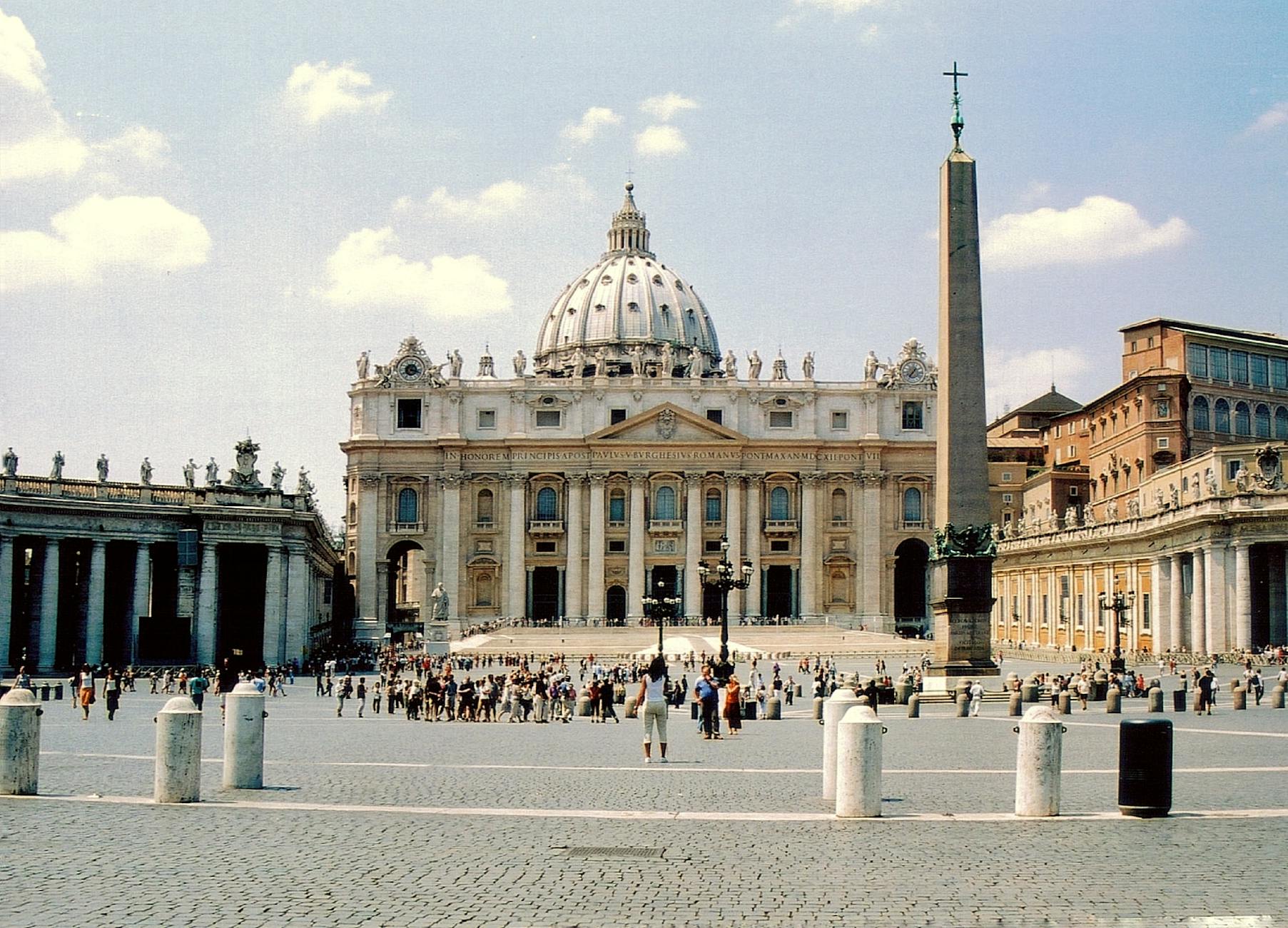
King Charles flew to Rome to pray with Pope Leo. As reporters are headlining, this is big news.
The BBC is making a splash,
“King and Pope make history by praying side by side
King Charles and Pope Leo made history in the Sistine Chapel by praying side by side – a first for the leaders of the Church of England and the Catholic Church.
Under the scrutinising eyes of Michelangelo’s Last Judgment, when Pope Leo said “let us pray”, it meant everyone, including the King, closing a gap that stretched back to the Reformation in the 16th Century.”
SBS,
‘Healing of history’: King Charles and Pope Leo pray together in 500-year first’.
This is the first occasion in 500 years that an English monarch has so publicly aligned with a Pope. The public prayer meeting hasn’t been lost on the media or by Christians worldwide. Despite the historic nature of this meeting, it’s unsurprising, given that the ecumenical King is married to Queen Camilla (who has strong familial links with Roman Catholicism), a step that itself moves history a little closer to its medieval past.
You may be wondering, why is a Baptist interested in this affair? Fair enough. Good question. We live in a global community, and I belong to a Christian denomination and am a child of the Reformation. No doubt many readers are pondering the significance of this public display by the King and Pope, and so sometimes the ‘outside’ voice has more liberty to make observations than those close to the crown and zucchetto. The King of England praying with the Pope is news, even if it has zero impact on what happens this Sunday at church. It may do little to change what happens on Sunday, but the step has symbolic power. Symbols have a habit of punching the air and giving credence to ideas. Should the Church of England one day return to Rome? Will the divorce be followed by a wedding?
Whatever this union symbolises, the King and the Pope praying is paradoxical for 2 obvious reasons: the historical theological divide and the new theological divide.
A history of irreconcilable difference.
The very doctrines and spiritual abuses that led to the Reformation, from Germany to England, haven’t been relinquished by Rome. Indulgences remain widely practised. Rome continues to believe in 7 sacraments. The view that salvation and forgiveness of sins require effort and merit on behalf of the sinner is a hamstring injury that persists to this day.
Over the 500 years since the reformers sought to purify the church in teaching and life, the Roman Catholic Church has doubled down and expanded in its theologising. For example, 1964’s Second Vatican Council, Lumen Gentium 16, states that salvation is given to the anonymous Christian, the person who doesn’t believe in Jesus the Son of God and yet is redeemed. This teaching was upheld by Pope Francis.
It would be a wonderful sight to one day see Rome throwing off the magisterium and for genuine spiritual unity to be found in the one Lord of the church and by his Spirit. After all, the Apostle Paul spells it out for us in Ephesians ch.4,
‘There is one body and one Spirit, just as you were called to one hope when you were called; one Lord, one faith, one baptism; one God and Father of all, who is over all and through all and in all’.
And yet, this is not the situation before us today. The differences between Rome and Canterbury are substantial and primary. Sure, there is also common ground, but does this denude the division over how sinful human beings can be redeemed and given assurance of right standing before God?
So what is the King of England trying to achieve by visiting the Vatican and coming together with the Pope in prayer?
What political statement is being made?
What kind of theological statement are the two heads suggesting?
It is a strange sight.
I imagine Thomas Cranmer rolling in his grave in search of a flame to thrust in his right hand, if he were there, and Ridley sighing with frustration. Hugh Latimer’s dream became a reality, and we can dream again, ‘Be of good comfort, and play the man, Master Ridley; we shall this day light such a candle, by God’s grace, in England, as I trust shall never be put out.’
Maybe this is the point, albeit unbeknownst to the orchestrators of the King’s visit. The candle has not gone out: the UK is witnessing a resurgence of Christian interest and London churches are growing…except where the Church of England who with decision and pageantry, blew out the candle in Canterbury.
The timing of King Charles’ visit to the Vatican to pray with Pope Leo is perhaps perfect. Within weeks of the Church of England giving up on the Christian faith (thanks to the appointment of the new Archbishop of Canterbury), the head of the Church of England flies to Rome.
Old divisions remain formally and substantially, and there is a new divide.
A new divide
Before I point out the enormous elephant standing next to the King and the Pope in the Cistine Chapel, let me clarify, I love my Roman Catholic friends. There are many Roman Catholic brothers and sisters around the world who believe the Gospel and love Jesus, and with whom we may pray and share in common. Rome in the 16th Century may have designated the Reformers as heretics, but the likes of Martin Luther and Jean Calvin saw Rome as a genuine but very sick church.
Also this, when it comes to the Church of England, there are many faithful and amazing Parishes across the UK, and many, many faithful Anglican churches around the globe, including Australia and here in Melbourne; praise God. The Anglican Communion has, however, shifted. The seat of Canterbury is broken thanks to the ‘Living in Love and Faith’ offering and appointing one of its chief architects, Sarah Mullally, to be the new Archbishop.
It is with this issue that a new chasm between Rome and the CHurch of England has opened up. On this matter of human sexuality and marriage, there is a fundamental disagreement between Rome and the Church of England. Canterbury has bent the knee to the cultural zeitgeist. Indeed, on this and many ethical subjects, Rome has proven more resilient than those Protestant denominations that continue to perform to the crowds, hoping for appeal and applause. Let the lesson be learned: if our theological preferences change according to seasonal cultural winds, it is only a matter of time before your church blows down!
I suspect this is one reason why young people in the West are as likely to be drawn to finding a home with Rome as they are in the local Church factory or Saint Bob Anglican.
In the last 5 years, the tissue-thin screen veiling the new atheism has been removed, and the Wizard of Oz is nothing more than a scrawny man holding a megaphone and shouting, ‘There is no God’. 50-year-old middle-class Melbourne may be stuck on this Spotify playlist, but younger generations know better. People know instinctively that there is something real and important beyond this material world. We need it to be, because God knows, life gets pretty miserable without Divine forgiveness and hope. Take away God, and we have 8 billion people pretending there is commonality and trying to figure out a reason why brute power shouldn’t win the day.
Of course, in the search for God, one of the mistakes we can make is to think that if it looks and smells old, it must be the real thing. I say, don’t judge a church by its smell! The Reformers were right. Does a church believe, read and teach the Bible? Do they worship the Triune God? Do they believe in the sufficiency of Christ’s substitutionary atonement death? Do they affirm the physical resurrection of Jesus? Are they denying or adding to the One Gospel? If we can tick these boxes, then they are the real church where God dwell by His Spirit.
Part of the search for God is the persistent and right need for security and substance. We see an aged wineskin and assume its contents are priceless. As a Christian minister, I want to argue that true security and substance is found in Christ and his sufficient Gospel. This idea isn’t new and novel; the Reformation rediscovered these precious truths: justification by grace alone through faith alone in Christ alone. It is, in fact, a Bible idea. If you’re looking for new old, go to the Scriptures!
Two great errors can be committed by a Church. One is to take away from the gospel in the search for relevance, and the other is to add to the gospel. In my view, the Church of England has chosen the former, and Rome, for too long, is persisting with the latter.
Religion can be bewitching. When we catch a whiff of permission giving, we feel liberated to mould God into our own image. At the other spectrum, rules and traditions provide a temporary ballast, and yet both miss the point of Jesus. That makes this meeting between King Charles and Pope Leo both fascinating and superfluous. The power of the Gospel is found in towns throughout Nigeria and in house churches across China, and in the cities of Brazil and the suburbs of Sydney and Melbourne.
Our Bible text this Sunday is a really helpful explainer. It’s not a short read, but if you’re interested in what the Apostolic testimony has to say, it’s worth following the Apostles’ logic from beginning to end. Have a read,
“Who has bewitched you? Before your very eyes Jesus Christ was clearly portrayed as crucified. 2 I would like to learn just one thing from you: Did you receive the Spirit by the works of the law, or by believing what you heard? 3 Are you so foolish? After beginning by means of the Spirit, are you now trying to finish by means of the flesh? 4 Have you experienced so much in vain—if it really was in vain? 5 So again I ask, does God give you his Spirit and work miracles among you by the works of the law, or by your believing what you heard? 6 So also Abraham “believed God, and it was credited to him as righteousness.”
7 Understand, then, that those who have faith are children of Abraham. 8 Scripture foresaw that God would justify the Gentiles by faith, and announced the gospel in advance to Abraham: “All nations will be blessed through you.”9 So those who rely on faith are blessed along with Abraham, the man of faith.
10 For all who rely on the works of the law are under a curse, as it is written: “Cursed is everyone who does not continue to do everything written in the Book of the Law.” 11 Clearly no one who relies on the law is justified before God, because “the righteous will live by faith.”12 The law is not based on faith; on the contrary, it says, “The person who does these things will live by them.” 13 Christ redeemed us from the curse of the law by becoming a curse for us, for it is written: “Cursed is everyone who is hung on a pole.” 14 He redeemed us in order that the blessing given to Abraham might come to the Gentiles through Christ Jesus, so that by faith we might receive the promise of the Spirit.”
Correction: The original suggested that Queen Camilla is Roman Catholic. That is not the case. What is the case is that Her Majesty’s first marriage was to a Roman Catholic, and her children are Roman Catholic.
The Baptist Union of Victoria (BUV) and Whitley College are going to the Supreme Court.
It is a sad state of affairs. This isn’t anything to gloat about or take joy in. After all, the Scriptures warn us about taking fellow Christians to court.
“If any of you has a dispute with another, do you dare to take it before the ungodly for judgment instead of before the Lord’s people? 2 Or do you not know that the Lord’s people will judge the world? And if you are to judge the world, are you not competent to judge trivial cases? 3 Do you not know that we will judge angels? How much more the things of this life! 4 Therefore, if you have disputes about such matters, do you ask for a ruling from those whose way of life is scorned in the church? 5 I say this to shame you. Is it possible that there is nobody among you wise enough to judge a dispute between believers? 6 But instead, one brother takes another to court—and this in front of unbelievers!
The very fact that you have lawsuits among you means you have been completely defeated already.” (1 Corinthians 6:1-7)
The fact that the parties are heading to the Supreme Court after a 9-year process signals the nature of the breakdown.
from the Whitley Residential College FB group
The issue relates to the sale of property used by Whitley College. The College Council sold the residential college (known as the Doughnut) and subsequently held the proceeds of the sale (and began using?). The BUV Council challenged both the sale and requested that the proceeds be turned over to the BUV in line with trust arrangements.
Questions were raised as early as 2016 when, to people’s surprise, the property was sold without informing the BUV. For the most part, discussions have taken place quietly in meetings and privately in boardrooms (which is appropriate for initial resolution seeking). When Union delegates have raised questions at various junctions, answers have either been missing or vague. When a report was given to the Baptist Gathering last year, the matter was addressed in such convoluted legal fashion that few had any idea what was being said.
But now, several years down the track since the property sale, the closed doors have been opened. The issue has been on the public record in the courts for some time, and more so now, through recent correspondence issued by the BUV Council and then from Whitley College Council. It is only a matter of time before the story is circulated even further.
On Wednesday, 24 September, the BUV Council sent a letter explaining that the matter is now going before the Supreme Court of Victoria. In the letter, they state,
“Although the property was held in the name of the Baptist Union of Victoria at the time it was sold, the charitable purposes for which the property was held were unclear, as no Trust Deed had been written setting out the terms. Being the named owner of the property, the BUV operated in good faith assuming charitable trustee responsibilities.
When the property was sold in 2016, the funds remained part of a charitable trust that the BUV must oversee. However, upon settlement of the $24.1 million, funds were directed away from the BUV as owner of the property and were not returned when requested.”
A few days (2nd October), Whitley College Chair and Principal issued a statement disputing the BUV Council’s interpretation of the situation,
“Whitley College has considered its position diligently, and has concluded that Whitley College has and continues to be the steward of these trust funds, faithfully applying them to the purposes of theological education and ministerial formation in line with the intent of those who contributed to the properties and its legacy.
While the BUV has presented a different interpretation, we are confident that the documentation demonstrates Whitley’s consistent and proper role as the steward of these resources. We believe that active involvement in the proceedings, including putting to the court an alternative position to the BUV, is the appropriate way to preserve Whitley’s access to funds, vital to its continued operations.”
I’m not here to take sides, but rather hoping to find answers. While murmurings about the dispute have been dripping in the background for years, the fact is, most BUV members have been left in the dark, and even now, remain unaware of the issues and processes that have led to Supreme Court proceedings. We have woken to learn that we are (essentially) suing ourselves. To say that many Victorian Baptists are stunned, angered, and perplexed this week is putting it mildly; most remain unaware. Hopefully they will become aware before some journalist reports the story. Indeed, we pray that it is resolved before this happens.
I appreciate that there are legal complexities here that require lawyers and legal process. However, the parties have reached the Supreme Court stage, while the churches and delegates have had near-zero prior knowledge of the situation. That’s a problem. The Churches aren’t a third party in this dispute, but very much involved. We (the churches) are the BUV (not the Council or the College), so how can it be that things have progressed to this stage (or rather, degressed) without thorough consultation, prayer, and conversation with the churches?
Earlier this year, I learned that the BUV has already paid more than $1 million in legal fees. I now believe the figure is $2 million. In addition, Whitley College has paid a vast sum for its own legal fees. Both amounts matter because the money belongs to the Baptist family. Indeed, the land, the sale proceeds and the legal costs belong to us.
I have no doubt that all sides involved are troubled by what has transpired, but the lack of transparency is significant; the BUV is taking itself to court and only informing the family at the 11th hour.
The presenting issue is a legal one, but it is also a spiritual and moral one. Both parties are expressing concern; however, this doesn’t mitigate the situation before us. Who will be held to account? Think of what our churches could do with $2.5+ million for mission and ministry?
This is just one of many issues that need resolution.
Last year, the BUV caught attention amongst the major Victorian Christian denominations with its controversial ‘Guide for the Baptist Union of Victoria’, a document produced by the Victorian Government to inform our churches how to deal with questions of sexuality and gender in our churches. On top of that, a breakaway Baptist group calling themselves the ‘Open Baptists’ are setting up an alternative association in NSW and ACT (who formed as a response to Baptists holding a biblical view on marriage and human sexuality). In Victoria, a small group of churches wanting to remain within the BUV are also joining the progressive ‘Open Baptists’.
Whitley College has been a bone of contention among BUV churches for decades. While the College receives students from some quarters, many churches prefer to send students to evangelical colleges for training. Of note, as of this year, NSW’s Morling College has begun teaching units in Melbourne.
Is it time to clarify the role and place of the college?
Should questions be raised about Whitley’s association with the University of Divinity?
How is the Whitley Council accountable to the BUV (the churches) for its financial management?
Is it time to rethink property trust arrangements?
Many of these questions are not new, but are rooted in historical and theological disagreements that go back decades. In attempting to exist as an association with a theological tent as broad as the Pacific Ocean, it is a case about money and property that has taken us to court against ourselves.
Again, such a thing brings sadness. As someone who loves being a Baptist in Victoria and who longs for our churches faithful and growing in the gospel, something has gone seriously wrong, and now it’s out in the open. We rejoice in good things God is doing but the churches require full transparency and accountability from our agencies and councils.
One thing I am confident about is that our BUV needs and appreciates the prayers of God’s people.
It was an incredible day when, on Thursday, 9th October, it was announced that peace negotiations had been agreed between Israel and Gaza (Hamas). A 20-point peace plan proposed by President Donald Trump has started to come into effect, including the return of all hostages, both alive and dead, the withdrawal of Israeli troops to an agreed position, and the cessation of armed conflict.
‘Blessed are the peacemakers’.
These famous words started to trend on social media last Thursday. The trending media has continued into the new week as the final 20 surviving Israeli hostages were released back home yesterday.
Scenes across Israel’s streets and cities are being shown around the world, and the joy filling the Knesset from across political divides is palpable to see.
They must also be ongoing grief and trauma for many people. One can imagine this day has brought also tremendous relief, rejoicing, and hopefulness.
Even celebratory speeches by Benjamin Netanyahu and Donald Trump contained notes of caution and qualification. The past 80 years have spoken: peace in the Middle East is hard fought and regularly disrupted by violence. Indeed, the pattern of peace and war is an ancient theme in the Promised Land.
‘Blessed are the peacemakers’.
As news broke of Hamas and Israel agreeing to peace, pockets of people in cities around the world stuck their fists in the air defiantly to protest the peace plan. It is telling when Hamas comes to the table and signs, and yet voices in Melbourne and London protest against peace. The rage and antisemitism now stifles the city streets of Melbourne to our shame. Over the weekend, a sitting Federal Senator stood in the middle of our CBD and threatened to burn down Parliament House in support of Palestine.
‘Massacre of the Innocents’ by Ruben
Drowning out that rhetoric were cries and prayers of gladness and thankfulness in many homes, synagogues, churches, and Parliamentary buildings.
I don’t wish to predict or guess what I think may or may not transpire in weeks and years to come in that ancient land. Such things are beyond my pay grade, and yours. The thought that I wish to convey here is observational and catechismal.
As people speak and share these words, ‘blessed are the peacemakers’, I wonder how many realise where these words originate? I wonder if we are conscious of the man who first uttered this beautiful and weighty phrase?
It is Jesus.
In what remains one of the most astonishing addresses ever given, the ‘Sermon of the Mount’, Jesus opened with the 8 Beatitudes, of which peacemakers is the 6th.
All eight beatitudes belong together and work together like an eight-note tonic scale. Each sounds a different pitch and yet every note relates to and belongs with the others.
“Blessed are the poor in spirit, for theirs is the kingdom of heaven.
Blessed are those who mourn, for they will be comforted.
Blessed are the meek, for they will inherit the earth.
Blessed are those who hunger and thirst for righteousness, for they will be filled.
Blessed are the merciful, for they will be shown mercy.
Blessed are the pure in heart, for they will see God.
Blessed are the peacemakers, for they will be called children of God.
Blessed are those who are persecuted because of righteousness, for theirs is the kingdom of heaven.
“Blessed are you when people insult you, persecute you and falsely say all kinds of evil against you because of me. Rejoice and be glad, because great is your reward in heaven, for in the same way they persecuted the prophets who were before you’
In trying to capture the near miraculous breakthrough in Israel and Gaza, people have turned to the words of Jesus, ‘Blessed are the peacemakers’.
Here is a thought experiment: If this wondrous phrase has captivated people’s hearts and imaginations, imagine knowing the man who first spoke these words? What was it in Jesus’ mind and heart that caused him to say, ‘Blessed are the peacemakers’?
What must this Jesus be like who can compose such heart-rendering and hope-bringing words?
As we read about Jesus’ life, he did more than preach fine words; he modelled them throughout his life, and went far further.
One of the names given to Jesus is the ‘Prince of peace’. The name mirrors his life mission to bring peace, to re-establish relations between God and sinful human beings. Perhaps what is most astonishing is the means by which Jesus established peace, through sacrificing his own life.
Peace is rarely free of charge. Peace is costly. Then grasp the biblical revelation that God himself was prepared to pay the cost for human iniquity and transgression.
The same Jesus, on another occasion, while preaching a sermon in Jerusalem, warned the world,
“You will hear of wars and rumors of wars, but see to it that you are not alarmed. Such things must happen, but the end is still to come. Nation will rise against nation, and kingdom against kingdom. There will be famines and earthquakes in various places.”
The problem of evil in this world goes far deeper than social circumstances and economic opportunity; there is something that is most disturbing in the human soul. This Jesus, God the Son, went as deep as can be to reconcile and bring about peace through his atoning sacrifice.
As tenuous as the situation remains in Israel and Gaza, there is much to be thankful for today. And pray for peace for the people of Gaza and peace for the people of Israel.
My suggestion today, or challenge as it may be construed, is, if you like the phrase, blessed are the peacemakers, and you long for that to be a reality, even in your own heart, take a look at the one who’s next created the phrase. Take a look at the peace plan he has instituted.
I was catching up with one of the young guys from church this afternoon. We have been reading through Philippians together. Today, we looked at chapter 4, and as we were reading and then discussing it together, it dawned on us how striking Paul’s directives are, and how much they contrast the kind of words and ideas that we see dominating the media and online discussions every day.
Rejoice in the Lord always. I will say it again: Rejoice! 5 Let your gentleness be evident to all. The Lord is near. 6 Do not be anxious about anything, but in every situation, by prayer and petition, with thanksgiving, present your requests to God. 7 And the peace of God, which transcends all understanding, will guard your hearts and your minds in Christ Jesus.
Finally, brothers and sisters, whatever is true, whatever is noble, whatever is right, whatever is pure, whatever is lovely, whatever is admirable—if anything is excellent or praiseworthy—think about such things. 9 Whatever you have learned or received or heard from me, or seen in me—put it into practice. And the God of peace will be with you.”
What an antidote! What an alternative to 98% of what Christians and non-Christians alike share on their socials these days.
Doom scrolling is a thing. Doom sharing is also a thing. And algorithms are only too happy to feed these negative appetites and drag us further into the vortex of polarisation.
I follow loads of people online, Christians and atheists, left and right, and everyone in between. I have to say, it’s not pleasant out there in the cyber world (and neither is it in general life as well sometimes). There is this unhealthy, although understandable, negative undertone that is taking people hostage. Like a self-fulfilling prophecy, it is the critical spirit and judgmental tone that attracts the most attention.
Sometimes I’m reading yet another comment and I’m thinking, does this person ever think anything good, noble and encouraging? Sometimes you leave wondering, is there t nothing good happening in the world? Some Christians would have us think it’s all bad and evil, and the church is worse today than it was yesterday, and yesterday the Church was the biggest problem of all! (All these weak insipid feminised men not expressing anger with the same degree that I am feeling!…you know the posts). If your impression of Christianity is these kinds of public verbiage, I don’t blame you. Some religious voices are a constant negative tune, like an irritating cat screeching through the night. Why would we think Jesus is good when Christians are always so angry and unkind.
The thing is, there are real and really dangerous and serious issues facing our world and our country. I don’t think it’s hyperbole to suggest that we are moving toward one of the most dangerous periods in all history, and playing cricket while people go to hell is a little bit sadistic. However, and it is a BIG however, at the same time, this isn’t just the worst of times, it is always the best of times. The Gospel of Jesus remains good and true. God is changing lives and growing churches all over the world. There seems to be a growing interest in Christianity among young Aussie guys and girls. I suspect the interest is greater today than it has been for generations: this is a profound encouragement.
If I may suggest a word to Christians who find themselves online a lot, and unable to control yet another word of complaint or rage or criticism, what if we change the song list? Could you share something different for a change?
Instead of everything being triple forte and with dissonant chords, find a melody in F major where there is lyricism, beauty and goodness.
Goodness and beauty are interesting. They are complex. They are intriguing and stimulating and attractive. Can anyone deny the nobility of Bach’s Preludes and Fugues? Or the wondrous sounds of a Chopin Ballade? Or even the captivating story of many a pop ballad.
There is occasion for a requiem to be sung and there is a time for hardcore punk anger and listening to Shostakovich’s C Minor String Quartet. But they should not and must not be our constant melodic line.
Is the gospel of Jesus good news or not?
So instead of doom scrolling, remember the Lord’s goodness and rejoice and share that joy.
Instead of topping up rage with the latest daily outrage, follow Paul’s advice and focus on what is noble and beautiful and useful. Not only will this do your own soul much good, it will paint a more accurate portrait of Christ and that is surely what we want to do above everything; to show people the compelling good news of the God who saves.
Notice where Paul lands at the end of his encouragement: “the God of peace will be with you.”
How much our tumultuous world needs peace. How much our cities and streets need this Divine peace. If peace is our aim, to be at peace with God through Christ, start practising Philippians 4:4-9
I’m someone who is wary of the ‘prophetic voice’. I’m a huge believer in believing the word of the prophets, but not so much of those who attribute ‘prophetic’ to their own messaging.
A social media post this morning used the phrase as they promoted a social agenda. Yesterday, a Facebook friend did something similar. The phrase ‘prophetic voice’ has joined the pantheon of overused and misused religious phrases.
It’s troubled me for years how the language of ‘prophetic’ is used by Christians.
Maybe it’s the theological window from which I see the world, but for most of the time, the ‘prophetic voice was a phrase connected with progressive theology, as various thinkers and writers advocated for their views. The term ‘prophetic’ became a way of trying to authenticate a point of view, saying that God is behind this teaching.
ABC’s religious program, God Forbid, ran a segment in 2017 that captures the classic liberal understanding of the ‘prophetic voice’. The synopsis reads,
‘Religion and politics are supposed to be separate, but some strange magnetic force keeps pulling them back together. The “prophetic voice” in Christian tradition is supposed to speak out against the abuses of the powerful, even when they’re political leaders. But does this mean the pulpit should be a platform for political views?’
“Theological educators must be prepared to stand on the sidelines of the church and call it to account. Like those pesky prophets of old, courageous theologians call the church to be different than what it is, a challenge to a radical transformation and a critique of the status quo.”
Once one understood this pastor’s own convictions, for him, the prophetic voice stands against the mainstream evangelical faith and is either subverting or trying to win over Christians to a new way of thinking (usually a heterodox one).
Which is why I replied at the time,
‘I guess Hananiah was a prophet of sorts! Should not prophets contend for the faith, rather than contravene the faith? In fact, professionalising prophecy was the error of the kings of Israel and Judah. While God may use a voice from the college in a ‘prophetic’ way, assuming the mantle of prophet is dangerous’.
However, over more recent years, the phrase ‘prophetic voice’ (again from my window view), has been increasingly co-opted by conservative Christians to advocate a particular posture, as well as message. It’s become one of these phrases that are thrown into the mix every second day. For example, a Facebook friend yesterday suggested Canon Press speaks with a prophetic voice on today’s issues in contrast (he believes) with TGC, that doesn’t.
There are a number of problems here (not least Canon Press).
Prophetic voice has fast become a rhetorical device, employed to legitimise or bolster the view they’re trying to prove. After all, if it’s prophetic, how can we dare oppose?
Whereas theological liberals often postulated ‘prophetic’ with their progressive message, conservatives often use ‘prophetic’ in line with a certain style of voice. It’s equating the ‘prophetic’ with a particular public posturing.
It’s also reducing the role of prophet. Prophets may challenge. Prophets might also condemn. And prophets could also give a word to console and comfort. At the very least, the ‘prophetic voice’ crowd are rather narrow in what they consider prophetic.
In short, the ‘prophetic voice’, turns out to be a power play, as though the battering ram approach to public conversation is more godly and faithful than the one who knocks on the gate and asks to come inside and share? Or it’s like, if you don’t play the game my way, then you’re obviously not playing the game at all (which any sports coach and player will know is nonsense).
It’s confusing style, strategy and substance.
Tim Keller famously and so helpfully explores the space known as ‘theological vision’. Between our theological foundations and our ministry practice is this in-between hermeneutical and wisdom space where we develop strategy and approach.
In his super helpful book on Eldership, Murray Capill explains this way,
“As Keller notes, people with the same theology can have very different ministry practice. Not all churches with reformed theology, for example, worship in the same way or do youth ministry in the same way. They can have enormously differing practice, not because of a different theology but a different vision for ministry”
This is also true when it comes to Churches and Christians doing evangelism and thinking through how to communicate Christian ethics. Some Christians are quick to judge our brothers and sisters for not adopting ‘our’ particular approach to social issues. If you’re not signing petitions and making public statements, you’re viewed with suspicion. Or perhaps public silence isn’t complicity or cowardice; it may be that a local church is doing effective gospel ministry to people in their community without making a noise about it.
For example, on the topic of abortion, the Bible is clear that killing the unborn is sin, and so the moral injunction is always clear. Christians arguing otherwise are representing God as much as Hananiah. However, is there only one way to speak about affirming life and value of unborn children? Is the only approach loud condemnatory retorts? Are churches complicit in evil if they are not actively making statements in the public square? What if a group of Christians are going about loving their neighbours and supporting pregnant mums in ways that encourage them to keep their child? That’s going well beyond virtue signalling and actually doing something.
There is another question: what does ‘prophetic voice’ actually mean? How does one define a legitimate ‘prophetic voice’ and do we find biblical warrant for such a category today? What do the Scriptures teach? Does the office of Prophet even exist today? Is it big P Prophet or can there be little p prophets? That’s a whole other conversation.
I think it’s problematic when people employ the phrase to add authority to their methodology for doing public theology. We may well agree with the desired outcome and with the message, but disagree with how best to approach societal sins and problems. What ends up happening when we attach loaded language like ‘prophetic’ is that we aggravate division among gospel centred people who are otherwise dealing with and living godly lives in their particular place.
If one’s ‘prophetic’ speech creates ungospel-like division and plants seeds of suspicion in fellow Christians, it is near certain that you need to stop playing prophet.
At the very least, I’m nervous when people start attributing ‘prophetic’ to public speech because it suggests Divine authority and weight. Yes, 1 John tells us to test the spirits. And yes, as I read the Scriptures, there are clear warnings attached to those who profess to be prophets or speaking ‘prophetically’.
Returning to Canon Press as I wrap up, Jeremy Sexton wrote an excellent piece last week, ‘Doug Wilson is not a prophet’. It’s worth a read as a corollary to what I’ve just shared.
One of the largest memorial services in American history has just concluded.
Whether we approve or not, whether we are invested in the story or not, the assassination of Charlie Kirk has dominated the news cycle and continues to do so today, with his memorial service taking place in Glendale, Arizona.
The papers and social media are speaking about very little else. It’s not that this is the only thing that matters today, but there are moments in history that capture the public imagination in ways that coinciding events do not.
It’s clear that there were two narratives running through the memorial service, and we mustn’t confuse them as being the same or necessarily belonging together. I want to pull apart the politics that were present and the gospel that was also present.
Several members of the Trump administration spoke, including the President. Donald Trump gave a speech in which this line has already gone viral,
“He [Charlie Kirk] didn’t hate his opponents. He wanted the best for them – that’s where I disagreed with Charlie. I HATE my opponent and I DON’T want the best for them.
I suspect the President said these words with a certain tongue in cheek. He was bringing a moment’s levity to what was a very sombre occasion. At the same time, that does seem to be his modus operandi. But of course, Trump’s words are not his alone; this is the norm and assumed posture across religions and ideologies and politics. Whether it is fascist or anti-fascists or left or right, and most of the middle, we think ill of those who disagree with us. That the President is saying so with knowledge of the truth isn’t laughable, it’s woeful. Doubling down on hate doesn’t resolve the growing friction and factions that are disintegrating our societies. That leaves us with a game of power where the loudest, fastest and strongest aim to take charge and impose their will on the rest of us.
Trump, the ever populist and pragmatist, may well use whatever movement that helps maintain momentum. That’s a problem, as it was when previous American presidents co-opted Christian language and concepts to promote their own ethics and agendas.
On Saturday, I gave a lecture at the Reformed Theological College, where I outlined 3 principles for doing public theology:
Don’t conflate Church and state.
Don’t confuse common grace with particular grace.
Understand both the common good and the eternal good.
Christian pundits, commentators and pastors would do well and serve our congregations and the unbelieving public by recognising and practising those distinctions. Of course, the differences are not always perfectly clear and it is true that the gospel of Jesus changes every part of us, but nonetheless, we will do well to avoid those trappings. Why? In part, because the gospel is too important to be confused or co-opted by red or blue or green.
Merging the Christian faith with politics is fraught with dangers, and that’s true across the political spectrum. If you think that your particular position is exempt from that rule, that only exemplifies the very problem. It doesn’t mean every political ideology is equally true or good or respectable. Of course not. How we value the unborn really does matter. How we view migrants and the poor matters. And many other topics.
As I said earlier, two narratives were present in the memorial service, and it is the second one that I hope shines the most.
Charlie Kirk’s pastor, Rob McCoy, gave a clear presentation of the good news of Jesus. He said.
“Charlie knew … at an early age … he entrusted his life to the Savior of the World. . Jesus came to this earth, was tempted in all ways, yet was without sin, was crucified upon the cross…”
“His blood was poured out because blood must be shed for the remission of sins…And His death upon that cross was sufficient for all the world’s sins, but only efficient for those who, like Charlie, would receive Him as their Savior.”
Can we say an Amen to those words?
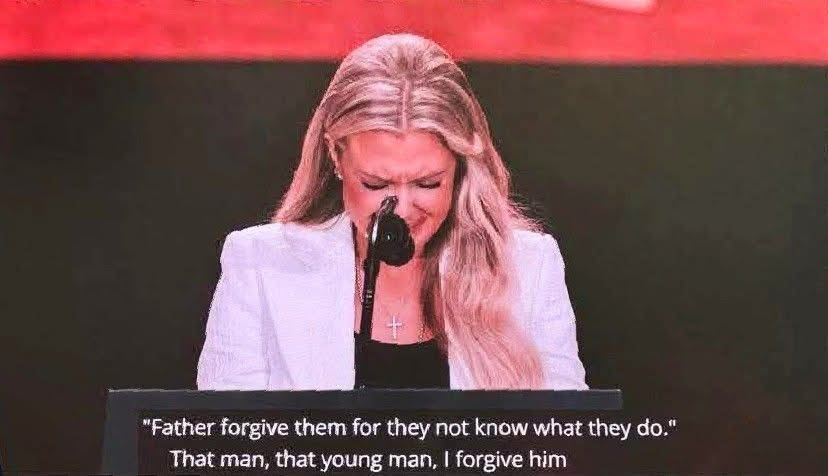
Erika Kirk then addressed the crowds and uttered the impossible word,
“I forgive him…I forgive him because it was what Christ did, and it is what Charlie would do.”
“The answer to hate is not hate,” she said. “The answer we know from the gospel is love and always love – love for our enemies and love for those who persecute us.”
This is the message our polarised world needs to hear. I thank God that God has not judged me according to every word I have said and every thought I have entertained. I am eternally thankful to God that he forgives sinners such as me. And grasping this gospel does something to us, where Trump’s words disappear and where love and forgiveness take shape.
What is so sad and troubling is that I know our culture well enough to see how this is going to play out in the media and social media: most people will simply double down on their prior commitments and attitudes. People are so entrenched in their ideological preferences that we will read the room as our glasses are glued onto our faces, and we are unable to see any other perspective. MAGA supporting Aussie conservatives will criticise me for my posture here and progressive Aussies will criticise me for not damning Charlie Kirk to hell alongside the President.
Reality is almost always more complicated and nuanced. One does not need to elevate Charlie Kirk to the status of Stephen (Acts 6) or label him ‘ult right’. The Christian truth is that sinners are saved by grace alone on account of the perfect sacrifice of Jesus alone. Anything else is hubris.
Here is a thought: regardless of our political leanings, if God uses the gospel preached at Charlie Kirk’s funeral to convince some people of God’s saving news through Jesus, will we rejoice or will we resent & grumble like Jonah in Ninevah?







 MurrayCampbell.net