It was an incredible day when, on Thursday, 9th October, it was announced that peace negotiations had been agreed between Israel and Gaza (Hamas). A 20-point peace plan proposed by President Donald Trump has started to come into effect, including the return of all hostages, both alive and dead, the withdrawal of Israeli troops to an agreed position, and the cessation of armed conflict.
‘Blessed are the peacemakers’.
These famous words started to trend on social media last Thursday. The trending media has continued into the new week as the final 20 surviving Israeli hostages were released back home yesterday.
Scenes across Israel’s streets and cities are being shown around the world, and the joy filling the Knesset from across political divides is palpable to see.
They must also be ongoing grief and trauma for many people. One can imagine this day has brought also tremendous relief, rejoicing, and hopefulness.
Even celebratory speeches by Benjamin Netanyahu and Donald Trump contained notes of caution and qualification. The past 80 years have spoken: peace in the Middle East is hard fought and regularly disrupted by violence. Indeed, the pattern of peace and war is an ancient theme in the Promised Land.
‘Blessed are the peacemakers’.
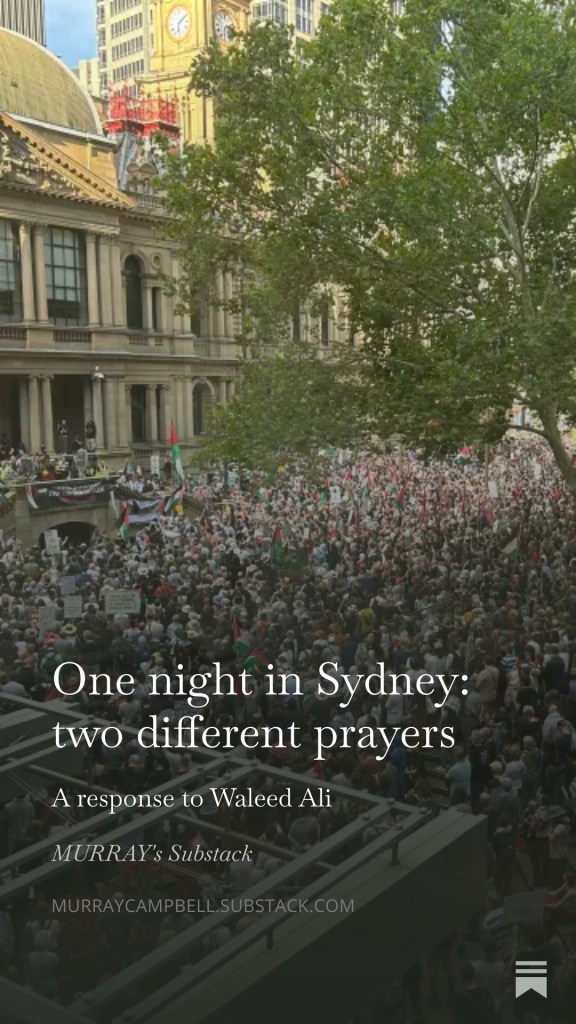
As news broke of Hamas and Israel agreeing to peace, pockets of people in cities around the world stuck their fists in the air defiantly to protest the peace plan. It is telling when Hamas comes to the table and signs, and yet voices in Melbourne and London protest against peace. The rage and antisemitism now stifles the city streets of Melbourne to our shame. Over the weekend, a sitting Federal Senator stood in the middle of our CBD and threatened to burn down Parliament House in support of Palestine.
‘Massacre of the Innocents’ by Ruben
Drowning out that rhetoric were cries and prayers of gladness and thankfulness in many homes, synagogues, churches, and Parliamentary buildings.
I don’t wish to predict or guess what I think may or may not transpire in weeks and years to come in that ancient land. Such things are beyond my pay grade, and yours. The thought that I wish to convey here is observational and catechismal.
As people speak and share these words, ‘blessed are the peacemakers’, I wonder how many realise where these words originate? I wonder if we are conscious of the man who first uttered this beautiful and weighty phrase?
It is Jesus.
In what remains one of the most astonishing addresses ever given, the ‘Sermon of the Mount’, Jesus opened with the 8 Beatitudes, of which peacemakers is the 6th.
All eight beatitudes belong together and work together like an eight-note tonic scale. Each sounds a different pitch and yet every note relates to and belongs with the others.
“Blessed are the poor in spirit, for theirs is the kingdom of heaven.
Blessed are those who mourn, for they will be comforted.
Blessed are the meek, for they will inherit the earth.
Blessed are those who hunger and thirst for righteousness, for they will be filled.
Blessed are the merciful, for they will be shown mercy.
Blessed are the pure in heart, for they will see God.
Blessed are the peacemakers, for they will be called children of God.
Blessed are those who are persecuted because of righteousness, for theirs is the kingdom of heaven.
“Blessed are you when people insult you, persecute you and falsely say all kinds of evil against you because of me. Rejoice and be glad, because great is your reward in heaven, for in the same way they persecuted the prophets who were before you’
In trying to capture the near miraculous breakthrough in Israel and Gaza, people have turned to the words of Jesus, ‘Blessed are the peacemakers’.
Here is a thought experiment: If this wondrous phrase has captivated people’s hearts and imaginations, imagine knowing the man who first spoke these words? What was it in Jesus’ mind and heart that caused him to say, ‘Blessed are the peacemakers’?
What must this Jesus be like who can compose such heart-rendering and hope-bringing words?
As we read about Jesus’ life, he did more than preach fine words; he modelled them throughout his life, and went far further.
One of the names given to Jesus is the ‘Prince of peace’. The name mirrors his life mission to bring peace, to re-establish relations between God and sinful human beings. Perhaps what is most astonishing is the means by which Jesus established peace, through sacrificing his own life.
Peace is rarely free of charge. Peace is costly. Then grasp the biblical revelation that God himself was prepared to pay the cost for human iniquity and transgression.
The same Jesus, on another occasion, while preaching a sermon in Jerusalem, warned the world,
“You will hear of wars and rumors of wars, but see to it that you are not alarmed. Such things must happen, but the end is still to come. Nation will rise against nation, and kingdom against kingdom. There will be famines and earthquakes in various places.”
The problem of evil in this world goes far deeper than social circumstances and economic opportunity; there is something that is most disturbing in the human soul. This Jesus, God the Son, went as deep as can be to reconcile and bring about peace through his atoning sacrifice.
As tenuous as the situation remains in Israel and Gaza, there is much to be thankful for today. And pray for peace for the people of Gaza and peace for the people of Israel.
My suggestion today, or challenge as it may be construed, is, if you like the phrase, blessed are the peacemakers, and you long for that to be a reality, even in your own heart, take a look at the one who’s next created the phrase. Take a look at the peace plan he has instituted.
I walked past the Department of Education building 2 weeks ago. The stroll from the city through Treasury Gardens is typical of beautiful Melbourne. The sun was shining, adding a touch of warmth to what was otherwise a wintry day in Melbourne. Then the shadows loomed large, and the temperature dropped as we hurried by the imposing building that is the Department of Education.
Someone with me remarked, ‘This is a grand and imposing building’. I nodded in agreement and added, ‘but go inside and smell the musty carpet, and look at the bowed floorboards and notice the cracks along the walls’. The interior of these Government buildings is not always what they appear to be from the outside.
Google Maps Image
As much of the world is reverse engineering a decade of damaging medical interventions and psychological harms created by queer theory, my State of Victoria is stubbornly resisting and is doubling down.
Rachel Baxendale is reporting in today’s The Australian that the Education Department of Victoria has updated its Respectful Relationships Curriculum, to include material for children as young as 5 and 6, encouraging them to explore, and yes, to doubt their physical body: “Five-year-olds taught their body parts may not match their gender”.
I need to qualify what I am about to say and laud people who wish to work against Domestic Family Violence (which was the original impetus for Respectful Relationships). There will be material in the Curriculum that is helpful and useful. However, the RR that exists often reads more like a Only Fans quiz than anything appropriate for children.
According to The Oz, the revised material offers scenarios suggesting that young boys may, in fact, be girls and vice versa.
“The revised curriculum for “foundation level” – children in the first year of primary school – includes a case study of a transgender girl called “Stacey”.
“She dresses like the other girls, plays with them and everything seems fine,” the sample lesson plan states. “But one day, Lara says Stacey should be in the boys’ team at sports, not the girls’ team.”
They are advised to tell their students that “Stacey” could respond by saying: “Yes I can play with the girls’ team because I am a girl!”, or “Go and ask the teacher if you don’t believe me. Our teacher says I belong in the girls team.”
The curriculum also seeks to educate the five and six-year-old students about the notion of being transgender, by telling them that “some people feel they did not get a good match for their body parts, and they do not want to be called a boy or a girl, but rather something that is right for them”.
On what planet can it be deemed virtuous to teach little children that they may be born into the wrong body? Does anyone want to hazard a guess at what kind of troubles this creates?
As world sporting governing authorities succumb to the pressure of reality, and therefore ban men from playing women’s sports, Victoria’s educators, with the wisdom of a goldfish swimming in hemlock soup, have produced material that teaches sporting equality means letting boys beat girls. Well, the AFLW season is kicking off this weekend. Why bother? Let’s drag in the future and have just the one footy competition, where the best men and women compete together!
Teachers dare not speak up. And many parents are understandably afraid to raise concerns because they know the backlash can be tangible. If the school learns or indeed if your workplace becomes aware that you question what is essentially a totalitarian approach to gender education in our schools, you might as well jump into quicksand. Who knows what conversations teachers might have with your children? Parents are not always permitted to know. What we are witnessing, however, is a quiet dissent as large numbers of families remove their children from the state education system and pay the cost of sending them to independent schools. But not everyone can afford such.
Professor Patrick Parkinson is among the growing number of voices who are trying to bring common sense to the discussion. One need not agree with everything he says, but he is rightly pointing out that we need a better way to discuss what is happening to our young people. In 2023, he wrote ,
“The transgender movement has been based on one truth and a thousand lies.”
“the notion that there are not just two sexes, or that it is actually possible to change sex or be “non-binary”, or the idea that every child has an innate gender identity that awaits discovery. Most people know these things to be nonsense, but in polite society we have been asked to pretend otherwise….activists aren’t able to agree on whether gender identity is fixed and innate, fluid or socially constructed. Fashionable ideas about sex and gender do not matter too much if no harm is done, but the medicalisation of vulnerable children and adolescents, with lifelong adverse consequences, deserves the most careful scrutiny”
The Australian of the Year in 2023 was Taryn Brumfitt, a woman who is fighting to help children accept their bodies. Brumfiit highlights a massive societal issue where children’s mental state is conflicting with their physical bodies.
”We really need to help our kids across Australia and the world because the rates of suicide, eating disorders, anxiety, depression, steroid use, all on the increase related to body dissatisfaction.”
Brumfitt argues that this relationship with our bodies results from ‘learned behaviour’. Key to her message is that “we weren’t born into the world hating our body”. In other words, our society is teaching and influencing our children to have negative thoughts about their bodies, which of course can lead to serious consequences.
Australia has an uncomfortable relationship with the human body. There exists a sizeable disjunction between the message Brumfitt is advocating and what is now mainstream thinking about the human body.
I don’t know Brumfitt’s views about transgenderism and how she makes sense of this new and sudden wave of bodily denial, but one thing is for certain, her calls to embrace our physical body is at odds with the ideology that is now sweeping our society and being forcibly taught and embraced from GP rooms to school classrooms and TikTok ‘programs’.
Our culture has adopted a modern-day gnosticism, where the ‘truest’ self is divorced from the physical. We are taught that the real you isn’t the physical body you inhabit but the immaterial desires and feelings that one experiences in the mind. Gender has been divorced from sex, and personal identity cut away from physicality. We shouldn’t reduce our humanness to physicality, for we are spiritual and social beings and thinking and feeling beings. We are more than flesh and blood and DNA, but we are not less than those things.
We are witnessing a generation of young people who no longer feel comfortable in their own skin, but are now taught from school to TikTok that their physical bodies betray them, and they may well be living in denial of their true selves.
The result is that a significant percentage of 18-24s (some studies suggest it’s as high as 30%) no longer believe they are heterosexual (embodied beings attracted to the opposite sex), but rather they are spread across an imprecise and growing spectrum of self-defining and often bodily denying sexuality and gender.
Many girls and boys now undertake psychological and medical pathways to transition away from their physical sex. Once school hears even the tiniest doubt from a child, they are put onto the conveyor belt of transition. The number of young people beginning hormonal medications, psychological treatments, and eventual surgical mutilation of the body is skyrocketing. We are talking about an increase in gender dysphoria by 1000% in just the space of a few years. Call me, William of Ockham, but this drastic and sudden increase cannot be explained by natural selection. There is something else in the water. Indeed, the iceberg that looms beneath the surface is rightly scary, and we are ill equipped to do little more than chip away at it.
Do we see the confusion? Here I say confusion because one wants to think the best of people‘s intentions. Parents who see their children in torment will do anything to find relief. And so if a doctor or counsellor says transition, then I understand them trusting the advice of the professionals. But surely there is also an ear of hypocrisy as well. How can we preach on the one hand, ‘be comfortable in your body’, and then insist on the other, ‘you can reject your body and have it mutilated and permanently altered’ in the name of this gnosticism?
In her book Irreversible Damage: The Transgender Craze Seducing Our Daughters, journalist Abigail Shreier explores the transgender phenomenon. She blames an ideology that has captured the heart of Western cultures. It’s what Carl Trueman refers to as ‘expressive individualism. Gender expression has become the trend, and because it’s now described in terms of human rights, no one is allowed to question, doubt or help adjust a child’s sense of identity.
Those living with discomfort and disconnection with their bodies need our care, not hatred, our kindness, not our complicity with a dehumanising project. As much as awareness of these issues helps and as much as positive thinking and imaging may benefit youth as they learn to live in their body, I think Christianity has something to add. The Bible gives us what I believe is an even better message, one that is more secure. The ultimate resolution doesn’t lay in the self, for the self is existentially unstable. If the best of me can fail and disappoint, what about the rest of me? If this was not the case, we wouldn’t have a generation of Australians journeying down this dangerous and harmful pathway to physical destruction and mental anx. The Bible gives us a better story and greater hope.
Psalm 139 exclaims,
“For you created my inmost being;
you knit me together in my mother’s womb.
I praise you because I am fearfully and wonderfully made;
your works are wonderful,
I know that full well.
My frame was not hidden from you
when I was made in the secret place,
when I was woven together in the depths of the earth.
Your eyes saw my unformed body;
all the days ordained for me were written in your book
before one of them came to be.”
Grounding our personhood in the knowledge that we are wonderfully made by God, is liberating and securing. But the Bible’s story doesn’t end there. The Scriptures also acknowledge ways we often hide from ourselves (and from God). The Bible points out the realities of the darkness in the world and in our own hearts. The story, however, doesn’t end with darkness and despair, for the Scriptures move us to the culmination of the story,
“Since the children have flesh and blood, he too shared in their humanity so that by his death he might break the power of him who holds the power of death—that is, the devil— and free those who all their lives were held in slavery by their fear of death. For surely it is not angels he helps, but Abraham’s descendants. For this reason, he had to be made like them, fully human in every way, in order that he might become a merciful and faithful high priest in service to God, and that he might make atonement for the sins of the people. Because he himself suffered when he was tempted, he is able to help those who are being tempted.” (Hebrews 2:14-18)
I don’t expect Victoria to change its tune any time soon. The pied piper pays too well. One day, however, the cost of victims demanding compensation from the State will force change. For now, parents are right to ask questions and to know what our children are being taught. But, instead of trying to drown out the classroom Spotify playlist with loud and vitriolic noise, I want to point to a better song, a more beautiful melody that can bring solace and healing and hope to the human condition.
There is a constancy in a world of body image flaws and troubles. There is an anchor for all the spiritual and material wants and shortcomings. This Jesus, the eternal Son of God, didn’t abandon the body; he became human for us. He entered the physical and spiritual turmoil that fills the world, taking its sins and shame in order to bring redemption and life. He understands. He makes atonement. He helps. That is a good news message for Australians today.
For most people, 8th May 2025, will be little more than another ordinary day like yesterday and tomorrow. However, there was nothing normal about 8th May 1945.
8th May 1945 was VE Day: Victory in Europe. On that day, the Second World War in Europe came to an end. Hitler had killed himself several days earlier, and Nazism had fallen. The reign of terror that was the Third Reich had been smashed, as will all evil either in this life or at the Judgment.
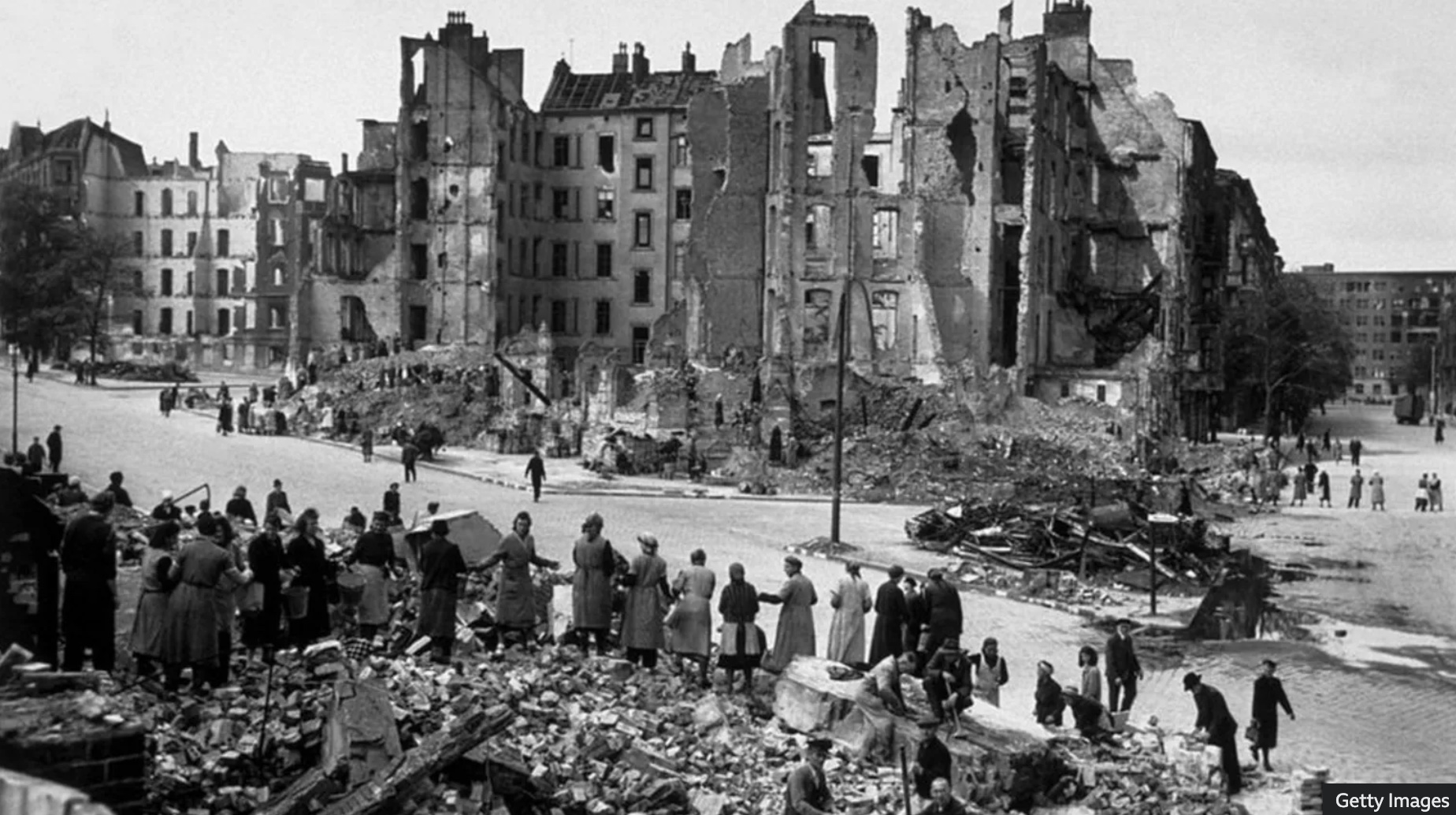
The streets of Berlin were covered in rubble and the blood had not yet time to congealed. In London, Paris, and New York and in towns and villages across Europe millions experienced euphoria as the six of the most violent years in history came to a close. 60 million human beings dead; in fact, no one knows the final count. As the biggest party burst into life, many other civilians and soldiers sighed with exhausted relief. Others were caught in a state of numbness, for how can we cheer when news of the dead continued to be announced. And what of the war in the East? Japan was fighting the most bloody of retreats, island by island, and with the most costly battle yet to be fought. And no one yet knew of the atomic bomb that would dropped, not once but twice on Japanese cities. Even as the champagne flowed at Trafalgar Square and the dust settled on the road to Berlin, there was anxiety and uncertainty as Soviet Forces met their Allies.
Dr Sarah Irving-Stonebraker argues in her 2024 book, ‘Priests Of History: Stewarding The Past In An Ahistoric Age, we are unclear about tomorrow because we don’t read history. Few people are reading history and interested in the past, and few look to history in order to understand where we are today. This is to our detriment because mistakes forgotten are ones we are likely to repeat.
This week as the news reports on elections, youth crime and the footy results, the 80th anniversary of VE Day barely makes a passing remark. In parts of the United Kingdom, Europe, and elsewhere, commemoration services are being held. It is a day worth marking. No doubt speeches will be delivered and words uttered, praying that we will never see such days ever again. Few are alive today to remind us of those years and most of us already have enough stresses and dreams in life without giving recourse to what sent the world hurtling into global war. And why stare down human nature when popping another ‘soma’ does the trick!
Oppenheimer is just a movie; isn’t it?
There is once again war in Europe. Nations like Poland and Finland moving quickly to protect themselves. Peace in South East and East Asia is fragile. India and Pakistan are exchanging missiles at the moment, and Gaza remains a hellscape. The new administration in the United States is pushing buttons and creating geological earth tremors as though Dr Strange Love is decent foreign policy. Nazism is no longer silent.
Remember Thucydides.
History classes should be filling up, and schools and universities eager to learn. Read Thucydides, Caesar and Churchill. More essential, read what remains the world’s most important history book, namely the Bible. This book of history and theology and psychology and sociology provides us with a solid framework for understanding both conflict and peace, the human condition and where ultimately hope for peace is located. Perhaps the Bible is too raw in its truth-telling and too humbling for us to take it seriously.
C.S Lewis was a student. Take this quotation, for example. It shocks. It doesn’t fit the storyline we so often feed on, and yet he is closer to the truth,
“War creates no absolutely new situation: it simply aggravates the permanent human situation so that we can no longer ignore it. Human life has always been lived on the edge of a precipice.”
Rather than spilling new words to get my point across, allow me to repeat this reflection from 2021. The words are about the First World War and of my Great GrandFather who fought in France, but I suggest there are salient for what took place in 1939-45 and toward the future.
“The paradox of the human condition bewilders such inexplicable worth and wonder and yet constant and repeated reproach. The height of creative prodigy with the ability to love and show kindness, and yet in our DNA are traits that stick like the mud of Flanders, and which no degree of education or scientific treatment can excise. At the best of times, we contain and suppress such things, and in others, they explode into a public and violent confrontation. The First World War wasn’t human madness, it was calculated depravity. It was genius used in the employment of destruction. This was a betrayal of Divine duty. I am not suggesting that this war was fought without any degree of moral integrity, for should we not defend the vulnerable?
When an emerging global war sends signals of intent to its neighbours, to what point must we remain on the sideline and permit bullying and harassment? At what juncture do allies speak up as a buttress for justice but do not support words with deeds? How much politicising is mere virtual signalling?
As I consider the events surrounding William Campbell’s war, the temptation is to conclude that lessons have been learned and today we move forward with inevitable evolution. While the superficial has progressed enormously, that is with scientific, medical, and technological breakthroughs, and with cultures building bridges and better understanding differences. And yet, we mustn’t make the error in thinking that today we are somehow better suited to the task of humanity. This is an anthropological fallacy of cosmic repercussions. The bloodletting has not subsided, it’s just that we exercise our barbarity with clinical precision or behind closed doors. We continue to postulate and protect all manner of ignominious attitudes and actions, but these are often sanctioned by popular demand and therefore excused.
The world sees the doctrine of total depravity but cannot accept the veracity of this diagnosis because doing so would be leaving our children destitute, without hope for a better tomorrow. Surely wisdom causes us to look outside ourselves and beyond our institutions and authorities to find a cure that ails every past and future generation?
It does not take a prophet to understand that the world will once again serve as the canvas for a gigantic bloodstain. There will be wars and rumours of war. There will be small localised conflicts and globalisation will inevitably produce further large scale violence, perhaps outweighing the experiences of the first two world wars. We may see and even learn from the past, but we project a fools’ paradise when we envision the human capacity to finally overcome evil. Religion is often no better a repose than the honest diatribes of Nietzsche and his philosophical descendants. Religion, “in the name of God”, is often complicit with death making and at times it missing from the task of peacemaking, while other efforts are much like stacking sandbags against a flash flood.
Theologian Oliver O’ Donovan refers to the “nascent warrior culture” in the days of Israel, some fourteen Centuries before the coming of the Christ. This culture is no longer emerging but is now long tried and tested among the nations. Does war intrude upon peace? Perhaps it is more accurate to say that war is interrupted by periods of relative peace and at times by ugly appeasement. Soon enough another ideologue and another authority tests the socio-political temperature and attempts to scale the ethereal stairs of Babel.
The human predicament is perhaps a grotesque complement to the rising philosophical concerns of the late 19th Century. Karl Marx and Friedrich Nietzsche began dismantling the imago dei with new and devastating honesty. Far from discovering superior freedoms, they justified authoritarian systems of Government and the mass sterilisation of ‘lesser’ human beings. To strip humanity of its origins is to leave us destitute and blind, but admitting this truth demands an epistemic and moral humility that few are willing to accept. Nietzsche was right, at least as far as his logic is concerned, that “the masses blink and say ‘We are all equal – Man is but man, before God – we are equal.’ Before God! But now this God has died.” A contemporary of Nietsche, Anatole France retorted without regret,
“It is almost impossible systematically to constitute a natural moral law. Nature has no principles. She furnishes us with no reason to believe that human life is to be respected. Nature, in her indifference, makes no distinction between good and evil.”
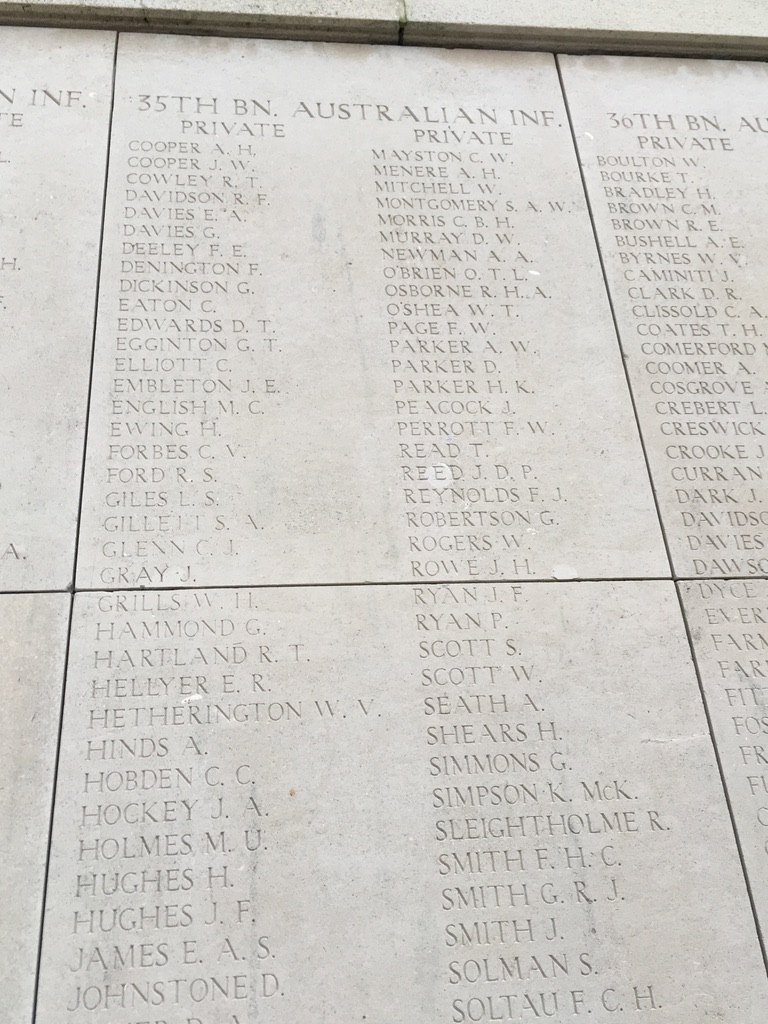
If optimism seems out of place and if pessimism is a crushing and untenable alternative, where does the future lie? The lush green cemeteries of the Western Front with their gleaming white headstones convey a respectful and yet somewhat misleading definition of war. This halcyon scene covers over a land that was torn open and exposed the capacity of man to destroy. Perhaps, as a concession, the dead have received a quiet bed until the end of time, but the serenity of this sight mustn’t be misconstrued in any way to deify war or to minimise the sheer horror that befell so many. In part, we want to learn and so avoid repeating history, and yet history shouts to us a message that we don’t wish to accept.
There is an ancient wisdom that stands tall amid time. These words demand closer inspection by those seeking to exegete the past and consider an alternate tomorrow. Every step removed signals further hubris that we can ill afford, but epistemic humility and confession may well reorient toward the compass that offers peace instead of war, life instead of death, and love instead of hate.”
“Why do the nations conspire and the peoples plot in vain?
The kings of the earth rise up and the rulers band together against the Lord and against his anointed, saying,
“Let us break their chains and throw off their shackles.”
The One enthroned in heaven laughs; the Lord scoffs at them.
He rebukes them in his anger and terrifies them in his wrath, saying,
“I have installed my king on Zion, my holy mountain.”
I will proclaim the Lord’s decree:
He said to me, “You are my son; today I have become your father.
Ask me, and I will make the nations your inheritance, the ends of the earth your possession.
You will break them with a rod of iron; you will dash them to pieces like pottery.”
Therefore, you kings, be wise; be warned, you rulers of the earth.
Serve the Lord with fear and celebrate his rule with trembling.
Kiss his son, or he will be angry and your way will lead to your destruction, for his wrath can flare up in a moment. Blessed are all who take refuge in him.” (Psalm 2)
Imagine there is no ultimate meaning, purpose or goal toward which our lives are headed.
Imagine there is no overarching design and no inherent significance.
Imagine if our lives were reduced to the pot luck outcome of billions of years of impersonal atoms and molecules running around hitting and missing, making and destroying.
Imagine a world where the reality of conscience and moral choice has no grounding in a purpose beyond that of group survival in the evolutionary race to the top.
Imagine human affections are ultimately an illusion, a cruel joke orchestrated by the impersonal rules pf physics.
Imagine all the people living for today, for tomorrow is the end.
Welcome to the world offered by John Lennon’s song, Imagine.
Jimmy Carter was buried yesterday, following a State memorial service in Washington DC. Attention on the former American President and Statesman was somewhat overshadowed by the media’s obsession with Donald Trump. Cameras fixated on Trump’s every facial expression and movement of his lips. To the frustration of some, Former Presidents Trump and Obama were caught not only speaking to each other, but laughing and sharing whim as the service began.
The truly strange moment occured when Trisha Yearwood Garth Brooks performed John Lennon’s ‘Imagine’. I don’t know whether ‘Imagine’ was selected by Carter himself, or by his family or by the ecclesial folk at Washington’s national Cathedral. Whatever the case, ‘Imagine’ is a strange and indeed hopeless song for any funeral, let alone one that is meant to be Christian in nature.
I’ve noted over the past decade thanks to several Olympic Games Ceremonies and a COVID celebrity rendition, John Lennon’s ‘apotheosis’ has become an international anthem. To rouse people and provide solace, ‘Imagine’ has become to go to song. And yet, ‘Imagine’ is void of meaning and hope. Lennon’s words strips away ultimate meaning and concrete hope, and instead offers a materialistic world where everything is up for grabs and where death is the ultimate winner. In doing so, ‘Imagine’ provides the very philosophical groundwork for authoritarian and thuggish autocratism. Imagine excuses political aspiration and ideological illiberalism, for who is to judge and hold us to account? What Divine Being establishes truth and justice?
In contrast to Lennon’s nihilist proclamation, people want to know that there is hope beyond a crisis and that there is hope when faced with mortality.
Imagine gives little consolation to a gravely ill person that not only is death imminent, but that it is ultimately meaningless. This atheistic ethic doesn’t do much to help grieving families who have just witnessed a loved one being ripped from their lives.
We want there to be a heaven; a better world with a better life. We want the cessation of sorrow and suffering, but Imagine cannot offer any such promise.
At the same time, hell is also a necessity, for we do not want to live in a world where evil wins or where injustice prevails. While we should be thankful for our judicial system, it is not full proof and many terrible deeds are never prosecuted. People need to know that in death the wicked do not escape justice. Imagining there is no hell would be a form of hell its self.
John Lennon’s song collapses in on its own irrationality. He imagines ‘living life in peace’, and there being no “greed or hunger”, but such talk demands a form and purpose, but atheism and naturalism cannot provide such a definition.
Every funeral is a voracious reminder of the fragility of life and the uncertainty of building society on credit. Hedonism is vanity. Pushing against greed and social disharmony suggests meaning, but meaning is disqualified in a God-absent universe. As Solomon the wise wrote in the book of Ecclesiastes,
“Meaningless! Meaningless!”
says the Teacher.
“Utterly meaningless!
Everything is meaningless.”
Nietzsche was right, at least as far his logic is concerned, that “the masses blink and say ‘We are all equal – Man is but man, before God – we are equal.’ Before God! But now this God has died.” A contemporary of Nietsche, Anatole France retorted without regret,
“It is almost impossible systematically to constitute a natural moral law. Nature has no principles. She furnishes us with no reason to believe that human life is to be respected. Nature, in her indifference, makes no distinction between good and evil.”
What if there is heaven and hell? What if God exists? Everything must change. What we think and say has greater import. How we live and how we treat others has far more consequence.
What if the God who exists is the God of the Bible: who is Sovereign, and altogether righteous and loving, just and kind? What if Jesus Christ is the perfect image of God, the One who as John testifies,
“In the beginning was the Word, and the Word was with God, and the Word was God. He was with God in the beginning. Through him all things were made; without him nothing was made that has been made. In him was life, and that life was the light of all mankind. The light shines in the darkness, and the darkness has not overcome it…The Word became flesh and made his dwelling among us. We have seen his glory, the glory of the one and only Son, who came from the Father, full of grace and truth.”
These words are far more sustainable and substantial than the sentiment of living in a world without Divine structure. A Biblical view of the world both assesses its beauty and its horror, the worth and the uncertainty. This is not only the Baptist view of reality, but the Christian one, and one that is closer to message (that I believe) that guided Jimmy Carter’s life.
These Scriptures bring us to the most astonishing words, ones that counter John Lennon’s pipe dream with concrete hope,
“For God so loved the world that he gave his one and only Son, that whoever believes in him shall not perish but have eternal life.” (John 3:16)
Adventure summoned like a morning trumpet, The clarion sound sang brilliant and brittle, Commanding snap attention, With vibrato that bent uncertain.
Flying away, To pursue the future. Pushing away the cloud and smoke, As though swimming freestyle through the pool.
The disappearing dot, Motions eagerly across the horizon, And beyond both eye and ear. He has gone.
A camouflaged uniform deceives, Like the wallaby hiding among the rocks. In that assumption found and grasping hope, A long wait begins and motions without sound.
Believing and wondering, Drowning anticipation of tomorrow’s sky, Screaming at the Ecclesiastes dot that is no longer there, And inhaling the nightmare prayer.
The drone of technology is a vicious servant, Punching holes in the earth and exposing all who claim safety, Calculated and precise, sniffing out its prey, Those found are obliterated into an early grave.
Never found, Nothing to hold or see, Absent, Missing.
Terror insists control, Only to dump the soul in Hades anger, Who but Orpheus can enter that realm, And row my son home?
The willow leans upon the corridor wall, Lonely and observing passers by. His cap protrudes from on top the stand, Without a head to shape its home.
Grabbing at the thinning air, And wielding a deadened heart, Throw it at the Ypres salient, To where his body somewhere lays.
The blue sky mocks those who are fallen, And those who remain glare at its endless cheerful derision. It is forever stained with red, A graffiti fit for a missing tomb.
Can mortal men be consoled by immortal God? A Father to the lost and missing? Our hands emptied, no grasp is felt, Might a gracious Father welcome them home?
‘For this son of mine was dead and is alive again; he was lost and is found.’
Ashes to Ashes,
Dust to dust,
Step out of the crease,
The Aussie eye says yes please.
But fairness the English cry.
‘It’s not cricket’, they sigh.
Piers Morgan short circuits.
The MCC turn to outrage,
And Rishi Sunak jumps on the diplomatic stage.
Bairstow is still standing at Lord’s,
Stunned that the Aussies know his tricks.
Broad screams rude words at this wicket,
As Stokes looks to Woakes for a speeding ticket.
What more can the Aussies do?
Other than look away from this English zoo.
We helped as much as we could,
Smith dropped a catch
And Starc tried he best too.
Maybe draw a bigger line?
What about putting up a sign?
“Here’s the crease,
Don’t leave if you want your innings to decease?”
But I get it, I really do.
If the English wore our shoe,
Their keeper wouldn’t throw the ball,
And stump us out to enthral,
The barmy army in their latest pub crawl.
So much blood and spilled tea,
Over that single delivery.
Carey, Cummins, and Albanese,
May be we should turn down the rivalry.
At Headingly,
Let us ask the English team,
When they’d like to stay or leave.
Did they like this ball or that shot?
We can replay that for you, Sir Lancelot.
If there's a moral to this sorry tale,
It’s hide your hypocrisy,
Under veils of angry memes and sad faces,
Or trip over at Borough Market your shoelaces.
There is still time dear England,
You have 3 more tests to contest,
The burning coals on the headrest.
Just maybe, letting this go through to the keeper is best!
The plunge into the world of sexual fantasy and the normalisation of all manner of sexual proclivities continues, and probably will so for time to come. There is little left that remains a no-go zone, so long it’s prefaced by the word ‘consent’. I’m glad we are now having a national conversation around consent. It’s 50 years too late, but at least society and schools are now talking about it. Hopefully, consent becomes one of several essential components that are required for building a healthy sexual ethic. Indeed, consent is a Bible idea, showing us both the evil of when it’s not given and the beauty of biblically framed consent.
Like most people, I don’t enjoy dipping my feet into these conversations, because they are less conversant and more spitting anger, insult, and worse. It’s always easier to let things be. We’re damned if we do and if we don’t.
The latest episode of ‘what happens in America Comes to Australia’, is Drag Queens performing for children.
Councils across Melbourne are deciding that what children really need is exposure to men dressing up as hyper-sexualised parodic women. While this seems to be relatively new, like previous iterations of our sexular age, what is possible soon becomes normal and then it’s defined as a moral imperative and any dissenters are deemed to be the worst of bigots. It’s not that men dressing in drag is new to society, but hosting such events for young children is new.
Let’s be clear, there are people in the community who are responding in inappropriate and even dreadful ways. One doesn’t correct one wrong by making another. There is no place for making threats against individuals or organisations, or screaming and shouting obscenities and slanderous name calling. If that is you, please shut up, stay home and take this Proverb’s warning to heart, “An angry person stirs up conflict, and a hot-tempered person commits many sins.” (Proverbs 29:22)
Having said that, is the only alternative to that kind of unsociable behaviour, acceptance and affirmation? Of course not.
University of Melbourne Theatre teachers, Sarah Austin and Jonathan Graffam O’Meara, have written a defence of Drag Story Time for The Conversation. In ‘Won’t somebody please think of the children? Their agency is ignored in the moral panic around drag storytime’, they rightly call out uncouth protestors, although they also suggest that anyone concerned by sex performers must be phobic and bigoted. The trope, while now common usage, is both lazy and false.
Their main thesis is that parents should let their children decide. They argue that children have moral agency and therefore the best thing to do is expose them to queer theory. There is of course a tiny little flaw in their contention: Parents have both a moral and legal responsibility to their children, which includes raising them according to what they believe is right and best. Should we let a 5-year-old look at porn, just because they ask? Should we invite our children to watch Game of Thrones or other highly sexed-up shows because we’re giving them agency?
Leaving aside this weird and yes, dangerous, proposition, the authors admit the very thing that’s not meant to be said about children’s drag story time: there is an agenda.
“Drag pokes fun at the gender binary and, in doing so, it aims to blur the boundaries and expose the artificiality of gender roles.”
Austin and Graffam O’Meara have confessed that these drag performers have an agenda and it is to dismantle and even destroy male/female distinctions.
The admission continues,
“the way drag asks us to question the socially constructed nature of gender offers children a vision of self-determination. You can do what you want to do, you can be who you want to be.”
By this self-determination, the authors mean ‘queerness’.
This is nothing short of education for young children, teaching them to reject biological realities about sex and rejecting gender differences (as though these are inherently bad for you) and instead adopt a queer view of the self.
It is somewhat ironic that Premier Daniel Andrews, among others, will defend Drag story times for kids as though this is a moral good. And yet, if a religious person prays with or talks to another individual about sex or gender, they can face criminal charges and imprisonment. Alice has jumped down the rabbit hole and we haven’t hit rock bottom yet!
Indeed, Victoria’s sex agenda may have more to offer. Victorian Legislative Council member, David Limbrick, today tweeted,
“In Victoria, we will soon have new censorship legislation. We already suspect that the Greens will happily support criminalising the expression of the definition of a woman as “adult human female”. The real question is, will the Labor Government go this far? Will the Opposition even resist?”
The legislation hasn’t been released yet and so we don’t know what it will contain, but at least one MP is asking the question.
This isn’t about hating on anyone, this is about loving our kids and believing that young children shouldn’t be exposed to sexualised behaviour and agendas.
If there was ever a sexual revolutionary that we should be following, it’s the one started by Jesus. Jesus didn’t accept the sexual norms of First Century Judea and Rome. He stood up against men who treated women as property and objects of sexual gratification. He affirmed the Biblical pattern for marriage: 1 man and 1 woman for life. He also showed great compassion toward those who were sexually broken and struggling, and he loved and forgave those whose sexual lifestyle transgressed God’s good ways.
The problem today is that just about every issue is hijacked by the loud and mean and crude and the most militant of adherents. This is true for opposing sides in many of these debates. The ability to partner disagreement with love is anathema to many today, although as people we are in desperate need of this combination. A parent who only ever agrees or affirms their children is travelling down a very unsettling and selfish path. How much more should this be said of God, if he only ever affirms every whim and thought and desire we want.
When the next Melbourne Council proposed a children’s drag queen story time, let’s not pretend there are no sexual connotations attached. Also, don’t follow the lead of the hyper right and reach for the boiling point of outrage. If we’re serious about navigating a better way for having important conversations and to present a better sexual ethic, we need to return to one man who can truly claim to be a Saviour.
I’ve decided to dive into the conversation surrounding FINA’s decision on gender. I’m not jumping in because of some ‘culture war’, but I’m a dad with 3 children who each play sport. They have all played sport at a high level, including my daughter, and speaking up for girls in sport is the right thing to do.
I want to begin by saying what should be obvious, transgender people deserve our compassion. While many ideologues and activists require critique and even our condemnation. Learning to distinguish between these two groups isn’t always straightforward but is important.
FINA’s decision to ban biological men from competing in international swimming has caused a wave of criticism in some circles. One can get the impression that the divide is spread evenly across the lanes; I however suspect that is not the case, but as with many issues it is often the case that vociferous voices give the impression of greater numbers.
It wasn’t so long ago that everyone knew men were men and women were women. It didn’t require a university degree or a catalogue of carefully asked questions. Seeing and knowing the differences between men and women formed part of basic human knowledge. Apart from approximately 0.018%of people who are intersex (a properly defined medical condition), everyone falls neatly into either male or female. But of course, as the sexual revolution shifted from arguing for gender equality to removing distinctions between the genders, it is becoming near impossible to define what is a man and a woman. Indeed, school children are berated for suggesting this natural binary and one can find themselves hauled before the HR Department at at work for believing so.
Dr Carl Trueman is correct when he writes, “The expressive individual is now the sexually expressive individual. And education and socialization are to be marked not by the cultivation of traditional sexual interdicts and taboos but rather by the abolition of such and the enabling of pansexual expression even among children.”
Chip Le Grand has written what I think is a very interesting piece for Saturday’s The Age.
“FINA has also answered a thornier question that all sports bodies, in one way or another, must grapple with; can the biological advantage that comes from going through male puberty be entirely surrendered by someone who no longer identifies as male? The FINA position is that, in swimming, it can’t.”
Rugby League has quickly followed FINA and other sporting authorities may well follow. While the decisions are pretty definitive, they are unlikely to be the final and forever position. For anyone engaged in reading gender theory and watching their HR department and school curriculum, it’s pretty obvious that FINA’s decision will be overturned at some point. We are regularly reminded by gender theorists and political activists that they are rarely satisfied with the status quo . The pursuit to obliterate social structures and gender norms is their incessant agenda. It’s obvious by the fact that even the pedestrian Aussie is either unable or too scared to define men and women any longer. There is now an inbuilt nervousness and fear of backlash should we say what a woman is.
“Just give it time. With the explosion of gender identity issues, and the railroading of our culture towards affirm and celebrate “or else” there’s going to be a storm in a World Cup not just a tea cup at some stage. Someone’s rights are going to trump someone’s rights. That’s what you get in this zero-sum game Sexular Age.”
I wish to make a few comments here in light of Chip Le Grand’s article and some conversations I’ve had over the past week.
First, FINA’s decision is fair for women.
Le Grand explains how “the FINA guidelines are based on the cumulative research and wisdom of some of the world’s leading authorities on physiology, sports law and anti-discrimination.”
He cites Doriane Coleman, professor of law at Duke University,
“replacing biological sex with the more subjective, social construct of gender – something the Obama administration had already done in anti-discrimination law – would have potentially dire, unintended consequences for women’s sport…It doesn’t take a sea of them to obliterate the females’ competitive chances at every level of competition,” she warned. “If only a very small subset turn out to identify as women, we will be overwhelmed.””
Le Grand goes on to point out,
“There is no longer any serious argument about the sporting advantage derived from testosterone, which biological males produce from the onset of puberty at about 15 times the rate of women. As Joyner explained to the FINA extraordinary congress in Budapest, it is the reason that the current US national records for 50m, 100m and 200m freestyle events for 13 and 14-year-old boys are faster than the women’s open world records for the same events.
Hunter told the congress: “As a result of testosterone and possessing the Y chromosome, males build larger, stronger and faster muscles, they have larger lungs and airways, they have bigger hearts to pump more blood, and they have more oxygen carrying capacity within that blood. Males are taller. They have longer limbs – arms and legs – they have bigger feet to kick water, they have bigger hands to pull that water.”
While attention this week is focusing on elite sport, the disparity between boys and girls is apparent in community sport and even clear at junior sporting levels.
I think of a netball competition where a talented boy outshone even the best female players. I think of a football (AFL) competition where a boy was allowed to play in a girls competition and girls feared for their safety. They didn’t want to play against this muscular dude who is significantly stronger and more powerful than any girl playing the game. I think of my daughter who plays at a high level of cricket. While she enjoys playing in both girls and boys cricket, in the higher grades of boys cricket the fast bowlers are discouraged from sending down thunder claps at her. Both players and coaches and parents understand the obvious. This isn’t a case of boys needing to change the way they view girls, but rather one where boys are rightly observing reality.
As a dad who with three children who all plays sport at a fairly high level and as a parent to what is a lot of community sport and knows numerous coaches and clubs and how they are trying to navigate these issues, The answer is not as simple as those who identify with the other gender let them play. That inevitably means girls missing out on team selection or winning competitions and it often puts them in a place where they are in physical danger. Now I have heard some non-sporty types tried to argue against this but I tell you this is simply reality. Go stick your head out of your iPhone and go down to local footy games and watch what actually happens.
I’m not arguing against boys and girls playing competitive sport with each other. There are some sports where this is workable and at some levels, but there is a difference between mix gendered competition and a girls/women’s competition.
Second, women’s sport forces transgender women to undergo changes.
While this isn’t Le Grand’s argument, his evaluation of the issues show us how transgender athletes are disadvantaged. Transgender women are are forced to medically alter their testosterone levels and therefore reduce their physical strength and biological character in order to compete.
Third, be concerned for young children.
One concern coming further from FINA’s ruling is that it doesn’t rule out children who transition before the age of 12. This may lead to increased pressure upon pre-pubescent boys and girls to medically altar their hormones and bodies at an even younger age.
Fourth, men ought to be speaking up.
Susan and I have raised our boys to show respect to girls and to protect them. Any time they fall short they know dad and mum will be having a conversation with them. I find it quite extraordinary that on this issue, too often it is women who are left to defend women’s sport, while the men cower behind the ifs and buts and I don’t knows.
This isn’t hard. Allowing biological men to compete in women’s sport will mean women missing out on team selection and missing out on competition medals, and in some sports this is dangerous to their physical well-being. If you don’t believe me, just watch a 15 year old boy tackle a girl in AFL. The argument, ‘but this isn’t happening very often’ is simply naive. It is true that it’s not happening everywhere, but examples are not hard to find, and as we continue to the smoke from the pot of expressive individualism and gender theory we will likely see the exceptions become a new norm.
Annabelle Bennett is a member of the FINA legal and human rights panel who framed its eligibility guidelines. She admits,
“this case involves a collision of scientific, ethical and legal conundrums. It also involves incompatible, competing rights.”
Bennet has hit the issue on the head. What do we do when science disagrees with an ethical position? What do we do when reality clashes with personal preference? Too often, our culture will choose against science. Instead of creating fairness and equity, it will create a bigger splash and eventually wash out women’s sport altogether.
For those who are smart enough and bold enough to know that ignoring biology isn’t the way forward and yet also have empathy for those who struggle to fit with their sex, how should we think about FINA’s decision? First of all, they made the right decision, and believing so is good for women. Supporting FINA is advocating for women. Second, FINA is now considering a transgender class-action for elite swimming meets. I have reservations about this move, but I nonetheless recognise that it is a possible way forward. Third, we ought to show compassion on men and women who are either struggling with their gender identity or who simply cannot reconcile sex and gender. Compassion doesn’t require us to agree with or support every feeling or every decision made. That’s the misstep some people make in their understanding of compassion; they assume kindness must lead to agreement and compromise. If that were the case, God’s compassion toward us in Jesus Christ would be shallow and ineffectual. In following His example, we are not required to ignore male and female distinctiveness, but as Jesus did, we honour these as an anthropological good. As a Christian I also mustn’t lose sight of how Jesus welcomes and loves those who sit outside and who experience marginalisation.
PS. Apologies for any typos. I’ve written this while watching my children at sport this morning
Over the past 10 years, I have noticed a significant and growing volume of books, articles and posts talking about men and women. The broader culture is not only debating questions that relate to the equality of the sexes but even the most basic of questions: what is a man and what is a woman? Sadly, many people no longer know the answer, or at least, out of fear they no longer feel safe to give an answer.
Churches have something positive and wonderful to contribute to this conversation. For example, the book of Genesis takes us back to the very beginning and to humanity’s essential nature.
“So God created mankind in his own image,
in the image of God he created them;
male and female he created them”.
While Genesis sets the foundations, it is Jesus Christ who redeems sinful men and women and does so not by eradicating sex and gender but through restoration. This redemption does more than return us to Eden, but points us to the ultimate realisation of humanity, to be known by Christ and found in him. For the Christian, our truest and deepest identity lies in our adoption to sonship,
“In love he predestined us for adoption to sonship through Jesus Christ, in accordance with his pleasure and will— to the praise of his glorious grace, which he has freely given us in the One he loves” (Ephesians 1:4-6).
These concepts are unique to Christianity and for centuries they have provided essential ingredients for societal understanding of and valuing people. It is no wonder that as our culture distances itself from these truths we find growing confusion about the nature of manhood and womanhood. We have not only removed the theological underpinning for human nature but also biology and scientific fact. Trying to speak of men and women is becoming like a game of pin the tail of the donkey, except that not only are we disallowed from using our eyes, they’ve taken away the donkey altogether!
As much as passages like Genesis ch.1 and Ephesians ch.5 deserve repeated study, in this post I want to draw attention to Romans ch.16. My purpose isn’t to dig in and exegete every detail and name mentioned in this grand kaleidoscope, but hopefully, I can present a portrait that is faithful to the Apostle’s telling that is helpful for churches as we consider the roles of men and women in our churches, and therefore how our churches can faithfully execute God’s intention for the church to be “a pillar and foundation of the truth”.
As with all Christian doctrine, we are required to take in all of the Bible and to observe the Bible’s internal story line and logic ( ie, creation, fall, redemption, and consummation). I’m preaching through 1 Timothy this term at church, and so there will be a few weeks where we look at men and women and their roles in the church and home. As I prepare I have also revisited Romans chapter 16 and it is on this passage of Scripture, that I wish to make a few observations here.
Romans chapter 16 provides us with a different sort of explanation to what we find in some other parts of the New Testament. It’s not different in that it contradicts other NT passages, but rather, the contrast is one of style. Romans ch.16 is not one of the didactic passages which directly outline a theology of men and women. It is not a narrative like John’s retelling of Jesus engaging with the Samaritan woman. Romans chapter 16 is a list of names. It is a series of greetings that form the closing part of Paul’s letter to the church in Rome. This isn’t the only occasion where Paul’s letters contain such lists, it is however the longest.
Romans 16 isn’t foremost about men and women, it’s about the Apostle Paul commending his ministry team to the church in Rome. It is a team that consists of many people from all kinds of walks of life. Among the number are many men and many women. In other words, the inclusion of women is a beautiful albeit secondary consideration in Paul’s mind. Perhaps for that reason, this natural spilling out of affection for his coworkers reveals the internal workings of the Apostle’s team dynamics.
Romans 16 does a stunning job in describing the rich layers of contributors in Gospel work that was headed up by Paul. It is a snapshot taken in time that depicts the dynamic advance of the Gospel across the Mediterranean.
There is Phoebe,
“a deacon of the church in Cenchreae. I ask you to receive her in the Lord in a way worthy of his people and to give her any help she may need from you, for she has been the benefactor of many people, including me.”
Priscilla and Aquila are a married couple who’ve partnered with Paul for years and in various places.
There is Epenetus, a close friend of Paul’s and the first Christian convert in Asia.
Some people are named without any mention of what their ministry role is, but they are known to Paul with affection.
One of the lessons this surely presses home for churches (and for para-church organisations) is an Apostolic appreciation for the breadth of Christian service and which involves men and women. It is however a misstep to conclude from this chapter that there is no delineation in the church between how men and women serve. To be sure, there is much overlap and there is also some distinction.
My friend and brother in Christ, Mike Bird, recently posted some thoughts on Romans 16. Michael is a considered theologian armed with a writing style akin to a firecracker ignited indoors. Mike created a little stir when he commented on how Romans 16 led him to an egalitarian view of men and women in the church.
“For me, it was reading Romans 16, noting all the women that Paul mentions, seeing what he describes them doing, that brought me to the egalitarian position’.
I remain unconvinced. Romans 16 is an exciting and encouraging passage that shows us the size of Paul’s ministry team and the affection he has for each of them. Far from contravening instructions regarding Pastor/Elders and the task of preaching/teaching to the Sunday assembly, it fit perfectly within those boundaries.
Phoebe is a Deacon. in the New Testament, Deacons are faithful servants set aside by the local church to oversee the practical administration of needs. Deacons are distinct from Elders/Pastors (cf Philippians 1:1l 1 Timothy 3), the latter who are set aside to oversee the local church, primarily through the task of preaching and teaching.
Priscilla and Aquila are a couple renowned for their hospitality. They opened their home to Paul when he visited Corinth. They later accompanied Paul on his missionary journey to Ephesus. While living in Ephesus they welcomed Apollos to stay with them and they “explained to him the way of God more adequately”. In Romans 16 they are again mentioned for their hospitality, they are hosting a church in their home.
Junia (who is coupled with Andronicus in v.7) is a somewhat enigmatic figure. There is some debate as to whether the name represents a man or a woman for it can refer to either. Most scholars lean toward the view that Junia is a woman (for various reasons that I won’t delve into here, but I concur). The next question is whether the Greek phrase should be read as ‘known by the Apostles” or “known among the Apostles”. The grammar works both ways. In other words, are Andronicus and Junia two people with a good reputation among the Apostles or are they two Apostles? New Testament scholars are divided and where they land often depends on what prior commitment they hold regarding gender roles in the church. There is one further piece of information that is important in Junia’s profile: the word Apostle has more than one meaning in the New Testament. There are the 12 Apostles, who hold a unique office in the early church. Their authority is unique and non replicable, and so it is only right to discount that possibility from Junia. Sometimes apostle is used as a small ‘a’ apostle and denotes a messenger (2 Cor. 8:23; Phil. 2:25), and this is a plausible reading of Andronicus and Junia. Messengers are vital players in advancing the Gospel but to assume compatibility with the office of Apostle and or with Church Elders is requiring more than the text provides.
Romans 16 is a tapestry that sits comfortably within a classical understanding of men and women in the church. One might even say, Romans 16 is precisely what an authentic complementarian should expect to find: men and women serving alongside each other in a variety of ways, and none of which overturn patterns of leadership and gender roles that are taught throughout the New Testament.
Returning to a bigger picture. Here are some takeaways from reading Roman 16:
Paul is thankful for his ministry team. How can we express thanksgiving for many people who serve in the multitude of ways that together glorify God and see the Gospel advancing?
Gospel coworkers are doing many different works. Let’s honour not only public and formal ministry, but also the informal and personal that occurs in homes and lives every day.
Paul‘s team consists of many men and women. Solo leadership is a disaster area. If Paul needed a big team, so do we all. We are working together and every member of the church is an essential worker.
Romans 16 fits precisely with what we expect to find with a classical understanding of men and women and their roles.
A challenge for complementarian churches is to see that women, and men, are being encouraged and equipped for ministry. Invite men and women to training programs. At Mentone, we have had and are open to women doing a full-time apprenticeships. At our lay leader training events about 50% of attendees are women.
If women are not pastors or doing the Sunday preaching, ensure they are fully immersed into other areas of church life and are rightly visible and honoured in the Sunday gathering.
Pastors need to find ways for listening to and engaging with the ideas and concerns of those who are not part of the Eldership (women, other men, youth, elderly, etc).
We live at a time where the world at large is struggling to know how to identify and relate to one another and to understand the most basic of existential and ontological questions. By no means am I saying this is the final answer, I am simply offering a small contribution here by pointing to a great Bible text. I do believe the Bible gives us the answer. The Bible paints a magnificent picture and it is one that is to be displayed in and by the local church. That’s why we mustn’t give up on difficult conversations about men and women and it’s why we must also pursue these conversations with grace and kindness. Too often churches have fallen and failed, either by understating gender or by overstating gender. It is not only gender confusion that is creating issues in every sphere of life, but the wicked issue of abuse has all too readily appeared among the people of God. It must not be. If your church is harbouring misogyny then it needs to be repented of before Christ snuffs out the candle.
We all can and must learn from the example given to us throughout Scripture including the exciting and attractive panorama that is Romans 16. As Tom Schreiner reminded us recently,
“Every argument for every perspective should send us back to the biblical witness. The word of God still pierces our darkness and can reshape how we think and live. The Bible can and should still be heard, believed, and followed—even though we are all fallible and culturally situated.”