Study shows huge flaws with Safe Schools

Where are we leading our children?

The Safe Schools Program made the front page of my local newspaper this week. One of the local councillors, Paul Peulich, raised concerns over the program at a recent Council meeting. He proposed a motion to bring attention to the issues with Safe Schools, but it was met with ‘silence’ from his fellow councillors.

Following the failed motion, another Councillor,  Steve Staikos, referred to Mr Peulich’s comments as ‘disgraceful’, and Kingston Mayor, Tamsin Bearsley, said no local resident had raised Safe Schools with her as an issue.

img_9128

The lack of letters and phone calls to the Mayor’s office is probably due to the fact that Safe Schools is a State and Federal issue, rather than one for local Council, but we are  mistaken if we believe that Kingston City residents are not profoundly concerned with Safe Schools.

While the Federal Government has proposed revisions to the program, parental concerns have been repeatedly ignored by the Victorian Government. Disappointingly, rather than responding to questions with reasoned argument, Government members persist with name calling and accusations of phobia and bigotry.

It is one thing to discount the views of opposition politicians, and even to spurn the concerns of families; but it will be interesting to see what will happen in light of an academic  paper that was published last week, The Controversy over the Safe Schools Program – Finding the Sensible Centre.

Professor Patrick Parkinson AM is one of the nation’s most respected legal academics. He has been researching Safe Schools and has deemed it ‘dubious’, ‘misleading’, and ‘containing exaggerated claims’. 

To be begin with, I fully affirm Professor Parkinson’s words, “it is axiomatic that children and young people should be protected from bullying.” As a parent (and as a Pastor), I do not wish to see any child suffering from bullying. Our schools, churches, and communities ought to be safe places for children.

Throughout the 32 page paper, Professor Parkinson gives detail of the research used by La Trobe University to form the basis of Safe Schools, and what he reveals is shocking.

First of all, the numbers don’t add up. Safe Schools material claims that 10% of the population is same-sex attracted, 4% are transgender or gender diverse, and 1.7% are intersex. None of these statistics are true, in fact all these numbers of wild exaggerations.

For example, when it comes to transgenderism, if 4% was true, it would mean that 1 in every 25 students (approximately one child per classroom) would be transgender. We know anecdotally this is not the case. Where does this number come from? The only citation offered by Safe Schools is from a New Zealand study, which, when read, does not purport that 4% of people are transgender.

Professor Parkinson then quotes the actual report, which says,

“About 1% of students reported that they were transgender (a girl who feels like she should have been a boy, or a boy who feels like he should have been a girl…). Ninety-six percent were not transgender and approximately 3% were not sure.”

Parkinson then states, ‘To count the 3% who answer ‘not sure’ as being ‘gender diverse’ is academically irresponsible. People who answer ‘not sure’ in surveys do so for a variety of reasons, one of which is that they don’t understand what the questioner is asking.’

He then follows to summarise a series of notable studies, none which found more than 0.52% of people are to some extent transgender.

He concludes the section with this damning assessment:

“A likely explanation for the exaggeration of transgender and intersex conditions is that it is regarded as necessary to support the authors’ belief system to show that gender is “fluid” and can even be chosen.”

This is not science, this is uncontrolled ideology, and one that is aimed at our children.

Professor Parkinson also demonstrates how Safe School’s depends on theories of sexuality that counter best knowledge and practice in psychology and medicine, how it offers flawed legal advice, and how it is creating unsafe environments for children and families who don’t adhere to the program’s contentious views. He even argues that Safe Schools poses genuine risk to students who are struggling with aspects of their psychosexual development.

Safe Schools must be challenged, because our children matter and because truth matters. No doubt a reader will inevitably mis-hear and accuse me of hating LGBTI people; for their good and the sake of all children, should not our education programs be grounded in proven research? Should we not frame school curricula with the best available research, rather than ‘erroneous information’?

Mr Peulich’s concerns have been substantiated, and rather than being met with silence, we must speak and address this, and we must resolve these issues before we abuse a whole generation of children with unscientific pop-psychology. We want effective anti-bullying programs in our schools, but Safe Schools is not it.

More Christian leaders weighing in on the plebiscite issue

Two thoughtful articles were published today by two Australian Christian leaders, critiquing the pros and cons of the marriage plebiscite.

While they are addressing different points, they could be read as complementary pieces.

img_9108

Mike Frost asks the question, ‘is Australia really mature enough for a plebiscite on this matter?’ His answer? No. His reason?  ‘Are Australians capable of debating this matter without descending into a cruel and divisive fight about intensely personal matters like people’s religious views and their sexuality? I very much doubt it.’ Sadly, it is not difficult to find examples, many from people supporting SSM, but deplorable comments have also been made toward LGBTI Australians.

Ray Galea is also concerned with the rhetoric plebiscite; he is concerned for the well being of gay and lesbian Australians, and he is also conscious of how Christianity may be presented to the public during this debate.

This Pastor from Western Sydney offers sage advice for Christians, that we must not let this issue confuse, lessen, or hide the good news of Jesus Christ. He is also right to point out that personal testimony is a powerful tool to persuade people of Christian theology and ethics:

“Our ongoing focus should be on where the battle is really fought. Its in our homes. It’s when we get to present to our family and friends spouses who are loved and respected.”

Whatever the outcome on the plebiscite the real battle for marriage is first and last on the ground, as the world sees husbands and wives under the Lordship of Christ living out order and equality, love and respect (Eph 5:33).

The better our marriages the more powerful is our argument that God’s way is indeed the best way.”

Without taking away anything they have said, the fact remains, someone needs to decide whether the Marriage Act will change to include same-sex marriage or not. If not the people, then the Parliament, but of course  many of the malicious and slanderous comments have come from the lips of our political representatives. If we can’t trust the Australian people with a plebiscite, we certainly can’t trust the Parliament.

The question then is, where can serious discussion take place on this issue?

There are of course many positive examples, although few come to public attention because calm, intelligent, and respectful conversation doesn’t send the news cameras racing to the scene.

I don’t think we should give up on highlighting attractive examples of public debate on marriage, and to encourage Australians emulate these. Sadly, there will always be some who insist on fighting dirty, and we trust that these dreadful tactics will be exposed and seen for what they are. Perhaps some of the vitriol stems from fear, certainly much of it is hate, but most disgraceful of all are those who are using hate and insult as a weapon to silence other points of view. Such methods are unChristian. Indeed, we must go further and not only set an example of gracious dissent, we must be prepared to call out that mud when ‘Christians’ are throwing it, and we should be ready to take those hits for our gay and lesbian neighbours.

Always remember the Lord Jesus. Jesus Christ remains the most true and compelling example of how to engage in conversation where there is significant disagreement. He would never compromise the righteousness of God; the New Testament records many events where Jesus disagrees with the views of 1st Century Jewish society. But Jesus didn’t stop with disagreement; he went much further: he volunteered to lay down his life for the very people with whom he disagreed. His death and resurrection provides us not only with the example par excellence, but it works, it brings about forgiveness of sins and reconciliation with God.

It is encouraging to see more Christian leaders expressing views on this issue of marriage. I share the concerns that my brothers Mike and Ray have raised, but I do not think any of the alternatives will prove to be more reasonable and civil. However, whether there is a plebiscite, a Parliamentary vote, or no vote at all, the Gospel doesn’t change, the way we view our fellow Australians shouldn’t change,  and the partnership of love and truth must remain in our mouths, hearts and lives.

Two Campbells and a Bird sat down to chat

Nathan Campbell has responded to recent articles written by Mike Bird and myself, criticising the tone and contour of what we said.

94ab1aeadf838faa2f9a9b8e786c1a67

First up, I want to say that I’d be happy to play the bagpipes and swap stories about the MacDonalds with my fellow Campbell any day of the week. More than that, I love my brother Nathan’s passion for the Gospel of Jesus Christ; his faith in the power of God’s good news is an example for Christians across the country.

I agree with so much of what Nathan has written: Yes, the laws are dumb, yes Christ is triumphant, yes Daniel Andrews’ policies are small fish in comparison with what many believers are suffering in the world. His reminders of the Christian hope are wonderfully important and refreshing in an age where we can get bogged down in some of the daily mud of life.

At the same time, Nathan has profoundly misunderstood our tone, and his critique of our alleged lack of Gospel-centredness is disappointing and off the mark.

First, he conflates voicing concern with fear and panic. I don’t feel afraid or panicked, and neither am I suggesting that we should feel as such. On the other hand, it is not unreasonable to express legitimate concerns over legislation that will impact religious freedom in Victoria. 

Second, I sense as though Nathan doesn’t appreciate the role of rhetorical devices when illustrating points for readers. Of course Daniel Andrews is not Henry VIII or Julius Caesar; but his disdain for opposing viewpoints and his desire to squash religious liberties is real enough, and that’s the point.

Third, and this one troubles me the most, Nathan has confused us expressing concern over a current issue with having a myopic view of God’s Kingdom, and of diminishing Christ’s victory over the grave.

I am happy to concede that if my latest blog piece was the only thing people ever read of mine, readers might misconstrue the reality which drives me; as they say, context is everything. But of course, this is only one of many articles dealing with multiple theological, social, and political matters. For the most part, the Gospel is front and centre, and when it is not, the Gospel is nonetheless serving in the background as the framework in which I express my views. Must every article contain an explicit ‘this is the Gospel’ clause?

Indeed, it is our confidence in the Gospel that give us courage to respond to current issues. We are not afraid to speak and even to lose these battles, because we know who has ultimately won.

Nathan wrote, “I capitalise this because we’re worried about a piddling little thing like the Premier of the State of Victoria; not exactly a global superpower”. 

That is easy to say if you’re not one of the 5 million piddling Victorians living in this State. To be honest, I think our friend from Queensland has on this occasion  denuded the situation in Victoria in a way that is a little unhelpful. Evangelicals should never put too much emphasis on our present circumstances, but neither should we make it altogether redundant.

As a way of outlining some Gospel perspective to the matters Nathan has raised, let me reiterate portions of a piece that I wrote for TGCA in June this year,

“We must concede that Churches no longer occupy a position in the middle, but we don’t want to evacuate the public space altogether. I want to argue that it is worth fighting for a voice in public discourse, but we do so with the belief that the Gospel does not depend upon it. So why should we defend notions of ‘freedom of speech’.

First of all, we have something to say. We have good news to speak and show our neighbours, and so why would we walk away from secular principles that give us freedom for speaking and contributing?

Secondly, we should defend the right to speak for the sake of those who speak against us. Is this not a way in which we love our neighbour?  Is it also not a sign of a mature society, one that is big enough to allow a plurality of voices, and to say ‘I disagree with you, but let’s hear you out and then talk it through’.

Thirdly, we are members of a democratic society, which in principle gives permission for Christians and atheists alike to speak and offer their opinion.

Our democratic liberties give Christians a platform and context for doing public ministry, and we are thankful for this, but the Gospel is not curtailed by the limitations or freedoms of liberal democracy. Indeed, history demonstrates that Churches have often flourished where they have been most resented. More importantly, Jesus Christ taught a theology of the world which lives in opposition to God and which hates those who follow Jesus. Why should we assume Australia is any different?

Are, as Greg Sheridan suggests, ‘churches in crisis now on all fronts’? It depends on how one defines the mission and role of the church.

Our aim is to love others, whether our convictions are affirmed by others or not.

Our goal is not relevance, for the Gospel we believe is not defined by a popularist epistemological current, but by the word of the cross, which is foolishness to the wise and powerful of this world. Instead, our purpose is to preach this foolishness for through it God works to redeem and heal.

Our mission is not to set up power structures at the centre of society, but to speak the Gospel and to love others no matter where we find ourselves situated in relation to broader society.

Freedom of speech has become the gordian knot of our day. Politicians, lawyers, and academics will ponder and debate and try to find a way to navigate through the many layers of twisted and knotted rope, and while their answers will have implications for Christian speech and life in public, our hope does not lay with them, but in the Gospel, a word that is sharper than a two edged sword. Our hope rests in the Christ who has promised that he will build his church and not even Hades can stand against it.

Sadly many Christians have sold their soul in order to buy a place at the centre of public life, and they are now being marshalled into following the lead of the social progressives, and others are instead holding tight to their conservative neuroses. There are however exceptions; across the land there are churches growing and people are becoming Christians, and there are Bible colleges in Australian cites who are training more men and women than in the previous generation. There are Christians serving in Parliament, teaching in universities, and working in a thousand different jobs. And to these men and women, keep preaching and living the Gospel, loudly from the centre or whispering it from the edge, and through it God will keep working his grace and growing his Kingdom.”

Victoria about to Pull the Plug on Religious Freedom

“Now let it work. Mischief, thou art afoot. Take thou what course thou wilt.”

img_9452

Victoria has moved one step closer to undoing one of Australia’s most basic doctrines, that the State will not interfere with or control religious organisations. In a series political moves that may well remind us of a Henry VIII or Vladimir Putin, Daniel Andrews has decided to pull the plug on religious freedom.

Yesterday, a Bill was presented to the Legislative Assembly for debate: an amendment to the Equal Opportunity Act, making it unlawful for religious organisations to not employ persons on account of them holding to different religious views to those believed by the organisation.

Mr Andrews has said, “Religious bodies or schools will be required to demonstrate a necessary connection between their religious beliefs and the requirements of a specific role.”

Should the State force Churches and religious organisations to employ persons who don’t subscribe to their values and vision? Of course not, but then again, Henry VIII shouldn’t have pronounced himself the head of the English Church and Julius Caesar probably shouldn’t stuck his nose into Gaul, but they did.

Schools, Churches, Synagogues, Temples, and hundreds of organisations, will be required to pass a test, demonstrating to the Government that advertised positions inherently require an employee to affirm the beliefs and practices of that institution. The tribunal will then have authority to decide what is religious and what is not, and which roles require a person to hold to the beliefs of the organisation and not; a pontifex maximus for Victoria!

Soon there will be all manner of religious organisations lining up outside a brick Government building, waiting to prove that their employees ought to be on the same page as their school or charity.

Yes, I know, all this sounds like one crazy dream built on an evening of Roquefort and Sauternes, or perhaps the plot line for a whacky comedy. But no, this is real and it is serious.

Victorians who conform to Labor’s strict interpretation of religion and sexuality have nothing to fear, but for 100,000s of Victorians who send their children to religious schools, attend churches, and who support religious organisations, there is genuine reason for concern.

The Bill will be voted on this afternoon (15/9) and is guaranteed to pass the Lower House, given that the Government has the numbers. The final outcome will then depend on the Legislative Council. Common sense ought to prevail, but then common sense would have ensured this Bill had never left cabinet room.

Concerned Victorians should contact their local members of Parliament. We can also pray that common sense will be followed and this Bill rejected.


For further details read:

https://murraycampbell.net/2016/09/06/letters-for-members-of-the-victorian-parliament-re-inherent-requirement-test/

https://murraycampbell.net/2016/09/04/petition-to-uphold-freedom-of-association-and-freedom-of-belief-in-victoria/

The Secularized Erastianism of the Daniel Andrews Government in Victoria

The Primate is right, but don’t twist his meaning

Like many Australians I appreciated Philip Freier’s letter, and there is much to like about his message and the tone in which it was written. There is little with which I disagree.

In relation to the potential fallout from altering the Marriage Act , I suspect Freier’s optimism is misplaced; not that I want to dampen his hope, but there is substantial evidence pointing to the likelihood of decreased religious freedoms in event of the law changing. One only has to look at Canada and the UK to see the growing mountain of legal, political, and social disarray created by legalising same-sex marriage. Indeed, look at the State of Victoria, my own home state, to see a Government using sexuality issues to restrict public conscience and religious freedom.

5723704-3x4-340x453

My attention here, however, is to point out the way this letter is being interpreted by some folk. For example, the headline for the Sydney Morning Herald and The Age reads, “Religious shift on same-sex marriage.” The underpinning logic is, Archbishop says follow your conscience, rather than the Bible.

The Archbishop is following a long tradition in esteeming the human conscience. *Evangelical Christians have long held that the conscience is an important part of the human psyche, and it should not be easily ignored and contravened.

Perhaps the most famous example from history is that of Martin Luther. As he stood before the council at the Diet of Worms in 1521, Luther is reputed to have said,

“Unless I am convinced by the testimony of the Scriptures or by clear reason (for I do not trust either in the pope or in councils alone, since it is well known that they have often erred and contradicted themselves), I am bound by the Scriptures I have quoted and my conscience is captive to the Word of God. I cannot and will not recant anything, since it is neither safe nor right to go against conscience. May God help me. Amen”

This conviction about the importance of the conscience goes back to the Scriptures itself:

Speaking of people who had not been raised with the Mosaic Law, the Apostle Paul writes,

‘They show that the requirements of the law are written on their hearts, their consciences also bearing witness, and their thoughts sometimes accusing them and at other times even defending them.’ (Romans 2:5)

Elsewhere Paul says, ‘My conscience is clear, but that does not make me innocent. It is the Lord who judges me.’ (1 Corinthians 4:4)

‘One of the requirements for Church leaders is that they, ‘must keep hold of the deep truths of the faith with a clear conscience.’ (Titus 3:9)

It can be sinful and dishonest to act against the conscience, but this doesn’t mean that the conscience is morally neutral or always right. The conscience is corruptible as is every part of the human being:

“let us draw near to God with a sincere heart and with the full assurance that faith brings, having our hearts sprinkled to cleanse us from a guilty conscience” (Hebrews 10:22)

In the volume, Conscience in the New Testament, C.A Pierce notes that the conscience does not provide a set of moral norms for the person, as much as it functions as an alarm, alerting a person to their moral oversteps.

All this together means that the conscience is a subjective guide but not the ultimate guide for determining moral and spiritual truth. Of course I don’t expect my non Christian friends to agree with this point, but rather I am explaining a Christian perspective of the conscience. This is important, because while Christians affirm the the role of the conscience, we do not place it above or on par with the Scriptures.

To place the conscience on par with Scripture is to subvert the authority of the Bible and inevitably place the human mind over the Bible. Throughout life there are decisions to make where one must decide, do I accept what the Bible says or what my conscience is saying? Neither is it the case of having two equal but different axiomatic authorities, but when the conscience contradicts Scripture, it ought to be corrected and reshaped according to those words of God.

Philip Freier is right to encourage people not to act against their conscience, but it would be misleading to therefore conclude there are  multiple valid Christian positions on the issue of same-sex marriage. The Archbishop’s words are being celebrated today as a shift in Christian thinking about homosexuality. That is not the case, even as Philip Freier indicated, the Anglican Church is holding to its understanding of marriage; this is true of all major Christian denominations in Australia.

In other words, no Australian should ignore their conscience when deciding their view on marriage, but as far as Christians are concerned, it is the Bible not our subjective consciences, that defines the Christian view of marriage.

Finally, I agree with the Archbishop in that Australian Christians ought to respect the decision made by the Australian public. It may well be that the majority decide to retain the current definition of marriage, but in the event of change, we should respect the democratic process. One question remains, however, will dissenters be permitted freedom of conscience to continue teaching, officiating, and practicing the Christian view of marriage, without fear of litigation?

————————————

* Evangelicalism has nothing to do with right wing American politics. That is a recent sociological phemenemon, which has stripped the word of its theological and historical roots. The word means, euangelion, the Gospel. Evangelicals are Christians who believe & live out the Gospel of Jesus Christ (which of course, by definition is foundational for all genuine Christianity)

Labor Party Proposal Deserves Attention

This afternoon news broke that the Federal Labor Party are considering agreeing to the marriage plebiscite, so long as this set of conditions are applied:

1473244246402

Photo from The Age

  • plebiscite is self executing or binding
  • No public funding for either side
  • Voting is compulsory
  • question is fair and reasonable

In my opinion these are reasonable requests and deserve due consideration from Malcolm Turnbull and the Cabinet. The Age is reporting that ‘Christian groups’ will be angered by list, but I don’t see any reason for objecting.

Of course, the big question is, what will the question be, and it is understandable that people will wait for this announcement before making a final call on support for the plebiscite; I don’t envy those who are responsible for framing the question.

My only qualification to Labor’s suggestion is that it is unreasonable to expect MPs to vote against their conscience, that is, should the Australian public vote to change the law. If the majority of Australians vote to change the Marriage Act, I don’t think MPs should vote otherwise, but should their conscience not permit them to support same sex marriage they should have freedom to abstain from voting. Therefore, a self executing  plebiscite is preferable (I’m not a lawyer, and so I don’t know whether this is possible and how this would work).

There is one vital  matter that has not arisen, either today or in most public discussions on the issue, and that is how redefining marriage will impact many other aspects of Australian law and life. Changing the Marriage Act is not so simple,  as though all we are doing is removing a couple of words. Rather there will be a significant ripple effect throughout  many areas of law, including discrimination laws, family law, and property and finance laws. For example, when the U.K introduced same-sex marriage, they produced a 62 page document outlining many of the laws that would require reworking in light of the change. The point is a simple one, we mustn’t think that should we vote to change marriage, the discussions are over. It is only fair that in the lead up to the plebiscite, the Government outline to Australians, details of the many implications that will arise from altering marriage.

Letters for Members of the Victorian Parliament: RE ‘inherent requirement’ test

If you are interested in writing to your local State MP to express concerns about the amendment to the Equal Opportunity Act, here are some salient points that you might include when drafting a letter of your own


OLYMPUS DIGITAL CAMERA


Dear Sir/Madam,

I am writing to express concerns over the proposed ‘inherent requirement’ test, that is being re-introduced by the Andrews Government.

Diversity, freedom of association, and freedom of religion, are key characteristics of our liberal democracy that are esteemed by Australians. Throughout our history Governments have valued the contributions of religious organisations, indeed society would be the lesser without them, and yet Governments have also understood a demarcation between the State and religious institutions.

The proposed Equal Opportunity Amendment (Religious Exceptions) Bill 2016 will cross that line, with the Victorian Government taking a role in supervising whom religious organisations may employ.

First of all, why is this legislation targeting religious groups?

The amendment to the Equal Opportunity Act will not impact any social or political groups, only religious ones.

As it stands, political parties, sporting clubs, and other interest groups have freedom to appoint persons who subscribe to the views and goals of those organisations. This is only common sense. For example, it would be unfair to force the Greens to employ a climate-change skeptic, or to expect the local Football Club to appoint a groundsman who was intent on converting the oval into a swimming pool.

It is therefore reasonable to ask, what is the motivation behind the Government focusing on religious organisations, and not others?

Indeed, this amendment to the Equal Opportunity Act is but the latest of a growing list of anti-religious measures that have been introduced by the Government over the last 2 years. I appreciate that some policy changes are being presented as fighting equality for LBGTI people, and some of this is laudable. However other policies are completely unrelated to sexuality issues, and are simply attacks on religious freedoms: removing SRI lessons from schools is one such example. And the legislation itself says its scope is not limited to discrimination on the basis of sexual orientation, but extends to ‘differing religious beliefs’. In other words, it is no longer permissible for a church or school to reject an applicant on the basis of them adhering to a different religion. Such an idea would be laughable, except it may soon become law.

Secondly, the inherent requirement test assumes that the Government has the right to intrude on religious organisations, and influence whom they employ.

This test is a clear abrogation of one of Australia’s most basic ideals, that the State will not interfere with the beliefs and practices of religious organisations.

Mr Andrews has stated, “Religious bodies or schools will be required to demonstrate a necessary connection between their religious beliefs and the requirements of a specific role.”

This move counters the very notion of a pluralist society, and is setting up the situation whereby  a Government impose impose its narrow secularist agenda onto groups who do not share their ethical and religious viewpoint.

Thirdly, the test assumes that the Government, and any tribunal set up by the Government, has the expertise and knowledge to interpret the theological framework underpinning these organisations.

Again, Mr Andrews has said,

“The defence will be limited to circumstances where religious beliefs are an inherent requirement of a job, and an employee or job applicant does not meet the requirement because of a specific personal attribute.”

But who is to say when and where religious beliefs are an inherent requirement of a job?

The legislation assumes that some jobs in a church,  or mosque, or religious school can be considered ‘religious’ and others not. This may be the case in some instances, but is the Government really in a position to decide what is inherent and what is not?

It is important to understand that this assumption is not ethically or  theologically neutral; it requires a body, set up by the Government, to interpret and impose their understanding of Islam, Judaism, or Christianity onto these various organisations. For example, in Christian thinking, the roles of gardener, administrator, and teacher are not separated into religious and non-religious work, for all are expressions of service to God. 

As it happens, many of these organisations do employ persons who don’t subscribe to the particular religious principles of the institution; that is their freedom to do so. Surely though, school boards, charities, and churches are in the best position to understand the values and needs of their organisation?

In the end, it comes down to these questions:

Is it the role of Government to interfere with the beliefs and practices of religious organisations?

Is it wise or fair to force religious organisations to employ persons who do not share their values and beliefs?

I believe this legislation is unnecessary, and will set a dangerous precedent for our future as Victorians.

I am asking that you consider voting against this legislation. I am very happy to answer any questions you may have.

Thank you for taking the time to hear my concerns

Yours Kindly,

Murray Campbell

Petition to Uphold Freedom of Association and Freedom of Belief in Victoria

I’m not usually one for signing petitions, but if you are concerned for religious freedoms in Victoria, please consider signing this petition


“The petition of citizens of the State of Victoria and Australia draws to the attention of the Victorian Parliament our objection to the moves by the Victorian Government under the Equal Opportunity Amendment (Religious Exceptions) Bill 2016 to remove or restrict the freedom of faith-based schools and other organisations to employ staff who uphold the values of the organisation and to force faith-based organisations to hire staff who are fundamentally opposed to what the organisation stands for, thereby:-

(i) denying those organisations the freedom to operate in accordance with their beliefs and principles;

(ii) denying parents the ability to choose to send their children to schools that are able to give them the values based education their parents are looking for; and

(iii) undermining Victoria’s diverse, pluralist, multicultural society, which supports the right of people of many different faiths to establish institutions in accordance with their faith.”

Click on the link to sign the petition:

https://www.gopetition.com/petitions/petition-to-uphold-freedom-of-association-and-freedom-of-belief-in-victoria.html

Anglican Minister asks Bill Shorten a question

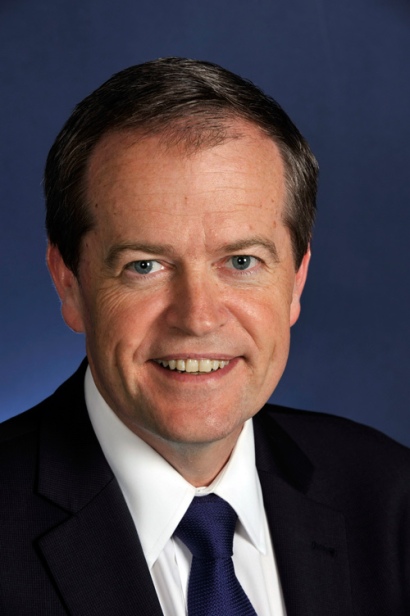
Following a Church service in Canberra this morning, as part of the commencement of the new Parliament, Anglican Minister, Ian Powell, asked Bill Shorten a question about his use of language in describing opponents of same-sex marriage.

Mr Shorten was clearly not prepared for this conversation, and to be honest, I felt some sympathy toward Mr Shorten as I know I’d feel taken back by a surprise question.  The scene looked a little awkward for both men, with Mr Shorten being curt in his responses, and Ian Powell sounding nervous. Then again, politicians are used to street QandA, and an opportunity presented itself for a member of the public to ask a valid question to one of our nation’s leading political figures.

Bill-Shorten1

It should be said,  the man who  approached the Opposition Leader isn’t a right wing liberal leaning conservative, but someone  who likes Bill Shorten and the Labor Party. He was respectful of Mr Shorten and gently spoken in his tone.

Rev Powell said, “You described people who weren’t in favour of changing the definition of marriage as ‘haters who come out from under rock’. Can I ask you not to speak like that?”

Mr Shorten has made such remarks. Following the horrific massacre in Orlando, he said,

“We’ve seen two terrible events in the last week have shown that hate and terrorism does exist in modern societies.”

“I don’t want to give haters a chance to come out from under the rock and make life harder for LGBTI people or their families, to somehow question the legitimacy of their relationship.”

Bill Shorten initially responded by suggesting he was being taken out of context, and then he qualified himself again by saying,

“People of faith can be opposed to marriage equality, but some people who object to marriage equality do have homophobic attitudes,” he said.

I think it is only fair to take Mr Shorten’s comment at face value, and assume he genuinely believes that not everyone who opposes SSM is hateful. That is pleasing to hear, mainly because it’s true; indeed, probably the overwhelming majority are not phobic. Unfortunately, however, and Ian Powell is picking up on this theme, the rhetoric that the Australian public is hearing from Mr Shorten (and others) overwhelming insinuates that any and all discussion about marriage will lead to hate and bigotry.

Mr Shorten has previously used lines including,

“When I see people hiding behind the bible to insult and demonise people on the basis of who they love, I cannot stay silent. I do not agree.”

And of the plebiscite, ‘it will just be “a taxpayer-funded platform for homophobia”.

I don’t think Ian Powell’s request is so outrageous. Is it too much to ask our national leaders to tone down their rhetoric on the marriage debate? Bill Shorten has been mild compared to some other politicians and public figures, but nonetheless, it is simply counter productive to continually insert the words ‘hate’ and ‘phobia’ into every public statement about marriage.

Leaders have not only an opportunity, but a responsibility to set the tone of public discourse, demonstrating that Australians are capable of debating even the most sensitive issues and yet remain friends. Instead of jumping into the mud with those who are truly derogatory, could we not instead aspire to that line from The West Wing, spoken by the President’s Chief of Staff, Leo McGarry?

“We’re gonna raise the level of public debate in this country, and let that be our legacy.”

Safe Schools unravelling

The Safe Schools program has always had more than a few lose threads, and more than a few people have pointed them out and suggested we start again. We are not against an anti-bullying program in our schools, after all, programs already exist and are doing an excellent job. But there is always room for improvement.

One of the main issues with Safe Schools is that it is less about bullying and more about educating children to adhere to a very set paradigm of human sexuality, a perspective that is not held by millions of Australians.  In addition, there is growing consensus in the medical and scientific community that some of the theories presented in Safe Schools (as fact) are in fact wrong and dangerous to children’s health (cf. sexual orientation and gender identity).

While it shouldn’t need to be said again, but because certain politicians have chosen to ignore it, the chief architect of Safe Schools, Roz Ward, has explained the agenda behind the program,

“Programs like the Safe Schools Coalition are making some difference but we’re still a long way from liberation…Marxism offers the hope and the strategy needed to create a world where human sexuality, gender and how we relate to our bodies can blossom in extraordin­arily new and amazing ways that we can only try to imagine today.”

Up until now it has been easy to pretend Roz Ward misspoke, and even easier to dismiss community concerns, especially from those who acknowledge a Christian faith: just call them bigots and homophobes, and it’s game over. Why would the public consider the views of a bigot? I certainly wouldn’t be inclined to do so.

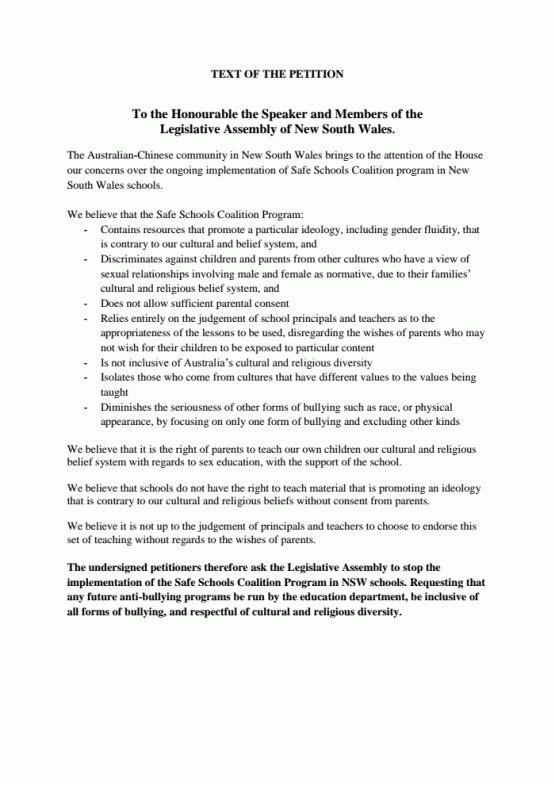
However, the game isn’t over. The Safe Schools agenda has this week been further exposed. A petition of more than 17,000 signatures from the NSW Chinese community has been tabled in the News South Wales Parliament, asking for the program to be removed from schools. And today, The Australian newspaper is reporting that the Indian community in Melbourne share these concerns.

Anti-Safe-Schools-Petition-p1-normal

letter from the Australian Chinese community of NSW

How will the Victorian Government and certain lobby groups respond to these ethnic groups? I sincerely hope they don’t resort to  the kinds of ad hominem attacks that they haven been relying on for quietening  other groups.

Let’s be honest, in the name of religion there are some crazies out there, and there are bigots and homophobic individuals. But for the most part, the concerns we have heard articulated are reasoned and genuine, expressing concerns for children who have questions over their sexual identity. No body wants to see any children being bullied for any reason, and it is good for our schools to provide tools to assist students in understanding and caring for one another.

It is time for Governments across Australia to give ear to the concerns of the public over Safe Schools. We can do better for our children.