No Sean Winter, you are wrong about the Bible and abortion

Do you believe the Bible supports abortion? I’m not asking whether you support abortion or not, and to what extent. My interest here is more narrow. As you read the Bible, is your impression that the Scriptures advocate abortion or speak against abortion?

Photo by Melike Benli on Pexels.com

Sean Winter, from the University of Divinity, argues in The Conversation, that Christian support for legislation prohibiting abortion is a cultural and political stance. It has nothing to do with the Bible.

I’ll admit, I was taken back when I read Winter’s argument. Even now as I write, I am stunned by his colander approach to the Bible. Winter makes some effort to quote many of the Bible verses that Christians refer to, but for the most part, he simply throws them away as irrelevant to any discussion on abortion. For someone who repeatedly states with imperial determination, ‘the Bible says nothing’, he offers virtually no interaction with the body of teaching in Scripture that speaks to the issue. Quoting and then dismissing Bible verses isn’t an argument. 

Winter’s (mis)use of the Bible deserves a response, not because I think there is any weight in his argument but because the issue of abortion matters, women matter, children matter, and what the Bible teaches matters.

His central thesis is, “Christian support for legislation prohibiting abortion is a cultural and political stance. It has nothing to do with the Bible.”

The article reads like a classic example of, I know what my conclusion is, therefore I’m going to do my utmost to squeeze Christian theology into my preconceived preferences.

Does the Bible use the word abortion? No.  Does this mean that the Bible is silent on the issue? Absolutely not. There are many words not found in the Bible and yet the Bible speaks clearly and wonderfully into these situations.  For example, the word ‘Trinity’ doesn’t appear and yet the Triune God is the most foundational of all Christian beliefs. Christian theology is rarely built on a single word or sentence from the Bible but properly takes into account the entire counsel of God and rightly attributes words and teachings according to their context in God’s schema that is salvation history. 

Let’s take a few examples, 

Of Psalm 139 Winter suggests, 

“What the Bible does contain are some verses which seem to refer to the status of the unborn fetus. The most famous and commonly cited is Psalm 139:13–16, a poem in which the Psalmist expresses the view that God created them in the womb.”

Winter offers virtually no argument, he simply discounts this famous Psalm as offering no contribution to the subject of abortion.  Let’s examine the verses in question,

The Psalmist is adoring God and recognising God’s exquisite craftmanship, and he shouts what is true of all children, 

“For you created my inmost being;

    you knit me together in my mother’s womb.

I praise you because I am fearfully and wonderfully made;

    your works are wonderful,

    I know that full well.

My frame was not hidden from you

    when I was made in the secret place,

    when I was woven together in the depths of the earth.” (Psalm 139:13-16)

The child inside the womb is a child. This child is God’s creation and known to God, they are not a mere clump of cells and nonperson. There is no point at which the embryo is not human life and worthy of living. There is no artificial date set, as though they became a person at 12 weeks or at birth. The beauty and wonder of personhood is observed and considered from conception, ‘when I was made in the secret place’.

When it comes Jeremiah 1:5, Winter again wants us to think ‘there is nothing to see here’.

“Before I formed you in the womb I knew you,

    before you were born I set you apart;

    I appointed you as a prophet to the nations.”

At the very least, this verse attributes Divine value and purpose to Jeremiah, which exists even before the point of his conception. Far from adding nothing to the conversation on abortion, Jeremiah 1:5 heightens the importance and dignity of the child carried in his mother’s womb.  

Winter then resurrects the worn-out trope, ‘Jesus said nothing’. This line of thought is sometimes brought out of the cupboard when someone wants to argue that Christianity supports homosexual relations: Jesus never said anything, therefore the act is morally good and Christians should support it. It doesn’t take much scrutiny to realise how tenuous is this argument. For example, when it comes to marriage, Jesus affirmed the Genesis paradigm, that marriage is for a man and a woman and all other sexual relations is porneia.

Winter asserts, 

“Jesus isn’t remembered as saying anything about the unborn. Paul is silent on the issue.

Attempts to claim otherwise are ideologically informed cases of special pleading.”

On the question of Jesus and abortion, Winter’s logic can as easily be reversed. Jesus never spoke in support of killing unborn children, and so “attempts to claim otherwise are ideologically informed cases of special pleading.”

As we read the Gospels in the New Testament what we find with Jesus is that he repeatedly and consistently affirmed the value of human life, from the youngest to the oldest. Jesus was known for his welcoming of and love of little children. Jesus loved the vulnerable in society and taught his disciples to do likewise. Who is more vulnerable than a little baby not yet born?

Perhaps the Bible’s clearest word on the topic of abortion is the 6th Commandment, 

“You shall not murder”.

In the Sermon on the Mount Jesus reaffirmed God’s law, including this prohibition, do not murder. If Jesus upholds the commandment on murder and murder is killing innocent human life, then it’s not ‘special pleading’ in believing Jesus disproves of abortion. That is the natural and right way to read the Bible. The only way for Winter to get around this teaching is if he believes the child in the womb isn’t a person. On this point, Winter seems unwilling to tell his readers. He is quite absolute about some things, but for some reason, he’s not able to tell us whether the embryo is a person or not. 

Although, at one point he makes this rather odd statement, 

“The Christian rejection of abortion seems to have been predicated on assumptions the fetus is a person”

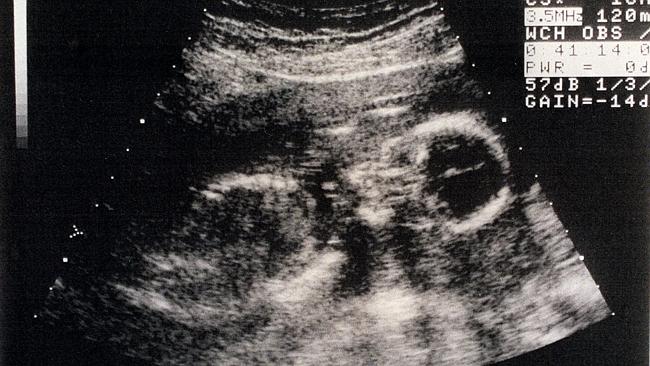
Ummm…yeah, and it’s not an assumption, it is a biological fact. Is Sean Winter seriously suggesting that the foetus is not a person? Before ultrasounds, some abortion proponents could trot out that view, but we can now see with our own eyes how false that myth is. It just happens that the Bible was already right in what it describes about the unborn. 

The Bible is clear on these two factors: the unborn is a person and murder is wrong. Combining these two teachings of the Bible which is the logical thing to do, it’s apparent that Sean Winter is not even close to finding support for his thesis. Again, he may find a little traction amongst those who are searching for religious support for abortion, but even a half-measured reading of the Bible demonstrates that he falls shorter than teeing off a 5 par hole with a breadstick.

Once Winter has finished dismantling nothing from the Bible, he then proceeds to whitewash the known views of early Christians who consistently saw abortion and infanticide as sin. 

Early Christians were renowned for saving newborns who were unwanted and left to die from exposure and starvation. Abortion was an acceptable practice in many ancient civilisations but not among Jewish and Christian communities. In the ancient world, abortion was not always successful and doctors couldn’t discern the sex of the baby until birth. Hence, at birth, many little girls were left to die. Christians took them in and loved and raised them. Why? Because it was a political maneuver? Or perhaps they were convinced from the Christian faith that saving the lives of the littlest children was right.

The first century Jewish text, Sentences of Pseudo-Phocylides 184–186 (c. 50 B.C.–A.D. 50) says that “a woman should not destroy the unborn in her belly, nor after its birth throw it before the dogs and vultures as a prey.” Christians adopted the Jewish view of the unborn, as they did with many ethical principles from the Old Testament. 

The Didache 2.2 (c. A.D. 85–110) commands, “thou shalt not murder a child by abortion nor kill them when born.”

The Letter of Barnabas 19.5 (c. A.D. 130), said: “You shall not abort a child nor, again, commit infanticide.”

500 years before the invention of the ultrasound, John Calvin said this of Exodus 21:22

“The fetus, though enclosed in the womb of its mother, is already a human being, and it is almost a monstrous crime to rob it of the life which it has not yet begun to enjoy…if it seems more horrible to kill a man in his own house than in a field, because a man’s house is his place of most secure refuge, it ought surely to be deemed more atrocious to destroy a fetus in the womb before it has come to light,”

The position Calvin spells out from Scripture is today demonstrably proven through scientific technology. The living mass growing in the mother’s womb is indeed a human being.

One doesn’t need to be a gynaecologist or obstetrician or theologian to realise that the Bible is big on life and takes a very dim view of killing innocence. Winter is so far off the mark. “Christian support for legislation prohibiting abortion is a cultural and political stance. It has nothing to do with the Bible”? Not even close. The Christian view of life has everything to do with the Bible and everything to do with Jesus. Yes, this has political implications, as does every worldview. Winter’s claims are big and will no doubt be taken up as truth for some readers, but they are as false as the yeti and bunyip. 

Winter’s most significant transgression is how he snuffs out hope. By stripping the Bible of its meaning about life and killing, Winter rips the hope of Christ who offers forgiveness and new life. In recasting abortion as no longer an issue for God, Winter’s position leaves women without the hope that someone is able and willing to remove the guilt and pain they carry. I understand that it is currently popular to boast about abortion, but I also know the profound scars that are left behind. The Gospel is good news because Jesus sees our sins and he loves to forgive and restore. For Sean Winter to take away the need for forgiveness and restoration, is simply cruel and unbiblical. 
What should we think of overturning Roe v Wade?

On June 24th 2022 the Supreme Court of the United States overruled Roe V Wade, and thus returning the question of abortion to the States. The below piece was written almost two months prior to the decision in light of the leaking of the draft majority opinion. The observations made and the points argued remain unchanged in light of the decision.

———————————————-

There are quite literally millions of strong opinions and emotions being expressed right now about the future of Roe v Wade. By no means am I attempting to say everything or even to offer the final word, but as an outsider, there is a message that I wish to convey to my American friends and even to Aussies, for the issue of abortion is also present here in Australia. But before I comment on the leak coming from the Supreme Court, I want to draw attention to an ancient, yet famous and important story.

Last Sunday our church started a new sermon series on the book of Exodus. I gave the series the title ‘Journeying Home’, as I think it captures the meaning of Exodus and the language used in Hebrews ch.11 that summarises the story’s theme and trajectory. 

Exodus begins with a violent and discordant juxtaposition: on the one hand, the LORD blesses his people and they multiply. From the 70 men and women who entered Egypt at the time of Joseph, generations later they now number more than a million, even more. At the same time, Pharaoh is threatened by the Israelites. He deems them a threat to social cohesion and cultural prosperity, and so he enslaves them. This strategy, while brutal, proves inadequate for God continues to bless the Israelites and their numbers increase. Pharaoh then sanctions the deaths of all newborn male infants. 

Two Hebrew women, Shiphrah and Puah, become heroes as they ignore Pharaoh’s decree and refuse to end the lives of these children. Frustrated that his ‘health plan’ was failing, he pushes further.  The river Nile may be the source of life for Egypt but Pharaoh turned it into a graveyard as thousands of babies were disposed of in the waters. 

I begin with the Exodus story, partly because it’s fresh in my mind and because we are rightly appalled by what we read. To hear of the mass destruction of the young should create outrage and tremendous grief. How can a civil authority feel so threatened by a people group that he gives licence for infant boys to be disposed of?  At the same time, Pharaoh was trying to protect a way of life; his autonomy, position and future. 

Of course, there are significant differences between Exodus and the United States and how the removal of the unborn or newborn is considered. However there is also an uncomfortable parallel, and that is, that the life of the young is conditional and the State can justify taking life when these little ones are deemed unwanted or a threat to personal progress and way of life. The evil perpetrated by Pharaoh does not stop at the fact that he sought to control an ethnic group, but that as an ethnic group these baby boys are human beings and therefore should never be treated as a commodity or considered as having less value or with fewer rights to live. 

United States Supreme Court Building. Original image from Carol M. Highsmith’s America, Library of Congress collection. Digitally enhanced by rawpixel. by Carol M Highsmith is licensed under CC-CC0 1.0

Today, the news story dominating the United States is the future of abortion. Yesterday a draft majority opinion was leaked to Politico. Written by Justice Samuel Alito, the paper outlines the argument to overturn Roe v Wade. This is the first time in American history that a document of this nature has been leaked. Many people are interpreting this leak as a last-ditch attempt to pressure the Supreme Court Justices to change their minds and uphold Roe v Wade.

Overturning Roe v Wade does not mean abortion will become illegal throughout all of the USA. It does, however (and in my mind correctly) determine that the United States Constitution nowhere presents or protects abortion as a right. If it turns out that the draft opinion accurately reflects the final decision of the court, it means that the issue of abortion will return to the states and therefore will become the responsibility of the people to decide what laws will govern the unborn. In practice this will probably mean some states will restrict abortion (limiting it to pregnancies under 24 weeks or 15 weeks), others may prohibit abortion altogether,  while other states will continue to commit abortions even up to the point of birth.

Any decision made by the Supreme Court of the United States has no legal bearing on my part of the world, but the cultural influence of America eventually washes across the Pacific Ocean. My own home here in the State of Victoria is more akin to New York State where abortion is lauded, even for infants who reach 40 weeks. While I am thankful for any public and legal decision that weakens the abortion position, I am reminded of how far my own context has regressed from upholding the sanctity of human life.

In the 50 years since Roe v Wade, 60 million children in the United States have been taken from the womb. In Australia, 10,000s children are aborted every year, many because they are diagnosed as carrying a disability or disease, and many because the child is felt to be an impediment to the dreams and life preferences of the mother (and sometimes the father).  Over the weekend, a famous (now retired) Australian swimmer revealed how her coach once pressured her into having an abortion. These stories are far more common than we dare acknowledge. 

As news broke about Justice Samuel Alito’s draft statement, one could hear the palpable joy and thanksgiving among many Americans. One could also hear the anger of others. From President Biden to Alexandria Ocasio-Cortez and Elizabeth Warren, and even to politicians and commentators across the globe, including the Mayor of London, there is an anxious and loud demand to keep what they crudely describe as a ‘woman’s health care’. 

Should Roe v Wade be overturned, and I pray that it is, I also pray that pro-life Americans will not gloat or pride themselves and disdain others. Instead, give humble thanks and continue to give due love and care to women who are grappling with unwanted or difficult pregnancies. Justified anger at the destruction of life can be coupled with compassion and commitment to helping those who struggle.

When the Supreme Court decision is finally announced and comes into effect, may the final word not be one of triumphalism or anger. The story of Exodus doesn’t end in chapter 1 and with a river of death. There is much grace and mercy to be found in the story of Exodus. There is atonement for sin and freedom found for those who cry out to God.  

The blood of 60 million babies cries out for justice; God hears.  There are also countless women who to this day grieve over their dead children and the decision they once made.  The wonderful news to which Exodus points and which is found in Jesus Christ, is a word of forgiveness and hope and restoration. The final word isn’t judgement. Forever guilt isn’t the only option. The God of the Passover, the God who rescued Israel from Egypt, is the same God whose only Son gave his life to remove every stain.

As Jesus himself said, during that most famous of Passover meals, on the night he was betrayed, 

“This is my blood of the covenant, which is poured out for many for the forgiveness of sins.”

Christians, encourage and support the removal of Roe v Wade, and let us not lose sight of the Gospel of grace and forgiveness, which is our ultimate and only hope.

All children are a blessing

During last night’s debate between Scott Morrison and Anthony Albanese, a mother of a young autistic boy asked a question about funding,

“I have a four-year-old autistic son, we are grateful to receive funding under the NDIS. I have heard many stories from people having their funding cut under the current government, including my own. 

‘I’ve been told that to give my son the best future, I should vote Labor. Can you tell me what the future of the NDIS looks like under your government?”

Mr Morrison replied, “Jenny and I have been blessed. We’ve got two children who haven’t had to go through that.” 

Within a nanosecond, social media filled up with anger, and fair enough. Did Australia’s Prime Minister really say what we heard him say about children with disabilities?

I’m pretty sure Scott Morrison misspoke. I don’t think Scott Morrison believes that children with disabilities are not a blessing. There is in some Pentecostal circles some pretty awful theology when it comes to understanding suffering but I suspect Morrison wasn’t mimicking those terrible and wrongful beliefs. Rather, I suspect he was trying to convey thankfulness for healthy children. Are parents not thankful for when our children are healthy and doing well? I assume this is the kind of thing Scott Morrison was thinking and meant to say. Nonetheless, his actual words were wrong and parents are understandably offended by them. 

As one Labor Senator said last night, 

“I found it really offending and quite shocking, and it is something that people who have a disability, children with autism, it is a kind of response they get all the time,” she said.

“That people are blessed not to have what they have when, in actual fact, every child is a blessing.

“Certainly my daughter enriches my life and my partner’s life every day”

I am reminded of how Jesus welcomed young children, despite his irritated disciples trying to move them away,

 “People were bringing little children to Jesus for him to place his hands on them, but the disciples rebuked them. When Jesus saw this, he was indignant. He said to them, “Let the little children come to me, and do not hinder them, for the kingdom of God belongs to such as these.  Truly I tell you, anyone who will not receive the kingdom of God like a little child will never enter it.” And he took the children in his arms, placed his hands on them and blessed them.”

There is something profoundly good and human about a society that welcomes, protects, and provides for children. There is something beautiful about recognising the imago dei in others, especially in those who are different to ourselves in some way.

There is also an air of hypocrisy amidst today’s public outcry. Some of the very voices calling out Scott Morrison also support the killing of unborn children. Some who are angrily tweeting have actively legislated to legalise abortion, even up to birth. 

Thousands of children are aborted in Australia every year on account of them being diagnosed with a condition of some kind. Indeed, in some countries, certain disabilities are becoming rare because they are being wiped out in the womb. The shocking reality in Australia is that all children are a blessing, apart from those who are deemed unworthy of living. 

This is the grotesque outworking of the utilitarian ethics of Peter Singer and others. Professor Singer is renowned for his support of killing the disabled. In 2007, writing for the New York Times,  Peter Singer suggests that the life of a dog or cat has more value and ‘dignity’ than a human being with limited cognitive faculties. He even argued that an unborn child only has value insofar as they are wanted by their parents. In other words, the baby does not hold inherent worth but holds importance because of the value attached by others.

she is precious not so much for what she is, but because her parents and siblings love her and care about her“.

I hope this logic sounds abhorrent to you, but understand, that this is the ethical framework supported by our culture and by the law. 

I am still horrified by what a doctor once said to Susan and me. During the pregnancy of one of our children, we were having a checkup and the doctor informed us that our child might potentially carry an illness (and not a particularly serious one), and in light of that possibility did we want to continue with the pregnancy? 

If all children are a blessing, and indeed they are, why does our society legalise and even celebrate the destruction of so many of these little ones? 

The Psalmist shouts out what is true of all children, 

“For you created my inmost being;

    you knit me together in my mother’s womb.

I praise you because I am fearfully and wonderfully made;

    your works are wonderful,

    I know that full well.

My frame was not hidden from you

    when I was made in the secret place,

    when I was woven together in the depths of the earth.” (Psalm 139)

It shouldn’t need saying, but all children are a blessing: the youngest and the oldest, those who are healthy and those who are ill, those who are strong and those needing special help. We thank God for them and we ask God for grace, strength, patience, and wisdom as we care for and nurture our children.

It is refreshing to see how a poorly expressed sentence by our Prime Minister has been turned into many words of affirmation toward children with disabilities and difficulties.  Love and reality press against the utilitarian and selfish individualism that so often captures sex and relationships and family today. Let us remember that all “children are a blessing and a gift from the Lord.” (Psalm 127:3 CEV)

Private prayers in Victoria a legal ‘grey area’

I’ve written about The Change or Suppression (Conversion) Practices Prohibition Act numerous times given the extraordinary nature of this Government intrusion into the lives of religious Victorians.  In this post, I want to inform people of one further way these laws will encroach on religious and civil freedoms and commonsense.

The laws will come into effect in February 2022. Churches are supportive of some measures contained in these laws, but the Act goes well beyond what is reasonable or right.

Among the more extraordinary measures found in the Act is banning people from having conversations with individuals about sexuality and gender, and prohibiting praying with them in line with a Christian view of sexuality (even with their express consent). 

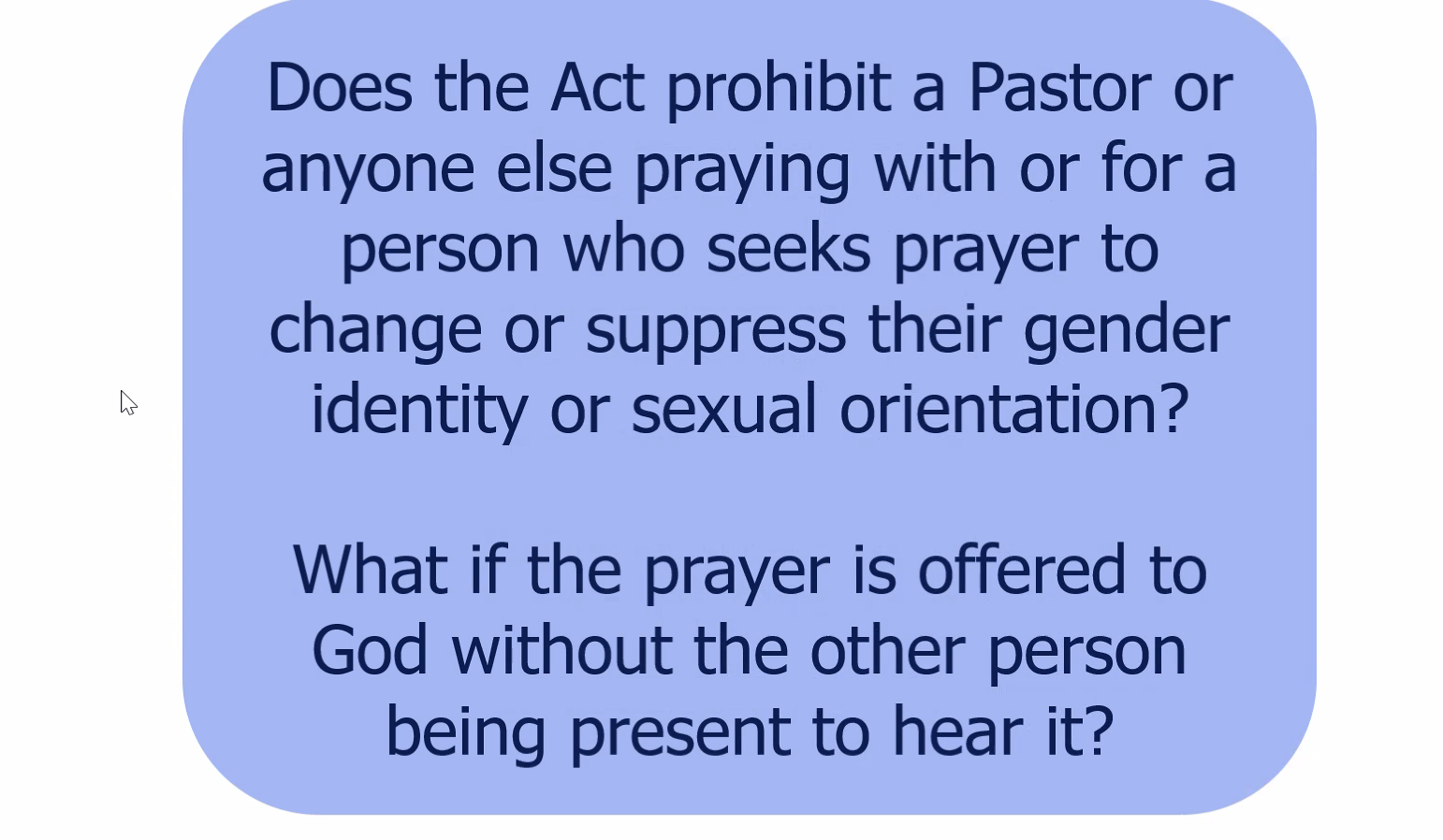
Slide is from a VEOHRC forum

The new laws may well extend even beyond consensual prayer.  In a letter sent to church leaders from my own denomination we read, 

“There is some uncertainty about the application of the Act to praying for or with people regarding their sexual orientation or gender identity. The Act specifically includes “a prayer based practice, a deliverance practice or an exorcism” in the unlawful practices, even if the person seeks or consents to such prayer. However, the VEOHRC has advised that it is a “grey area” if the person is not present when they are being prayed for. It may be unlawful if the person is aware of such prayer, in that this would be understood to be directed at them with the intention of change or suppression.”

Private prayers are considered a ‘grey area’ by the VEOHRC (Victoria Equal Opportunity Human Rights Commission). If that doesn’t make your eyes pop out of your head and roll down the hallway, what will?

For example, a believer prays for a friend, it’s just them and God. Or perhaps  2 or 3 friends pray together, as Christians do all the time, and they bring a request to God about another friend for whom they are concerned. This prayer, even if the person never knows about it, is potentially a breaking of the law. And depending on how police treat the crime, it could potentially lead to a term of imprisonment. More likely, the guilty prayers will be investigated by a civil tribunal and have their lives turned upside down and be forced to attend a reeducation camp where they must learn how to pray and believe in line with the religious views acceptable to the government.

Part of the problem with the VEOHRC coming out with what they call a ‘grey area’ is that it likely means a test case. Some poor woman or man will have their life dragged through the mud, legal system and courts, to see if a vexatious complaint can push the limits of the law.

What business is it of the Government to interfere with my prayers to God, or the prayers offered by anyone? 

For those who are not already convinced, can we not see the massive overreach and the insanity that a Christian’s personal prayers are treated as a violation of State law? 

What is it about prayer that the Government is so concerned about? Are they worried that God might answer prayer? As a Christian, I follow the Bible’s exhortation to regularly pray for our Governments, regardless of who is in power. I pray they might have wisdom and discernment, to act rightly, fairly, and mercifully. 

What is it about prayer that is so egregious? The answer is, activists are not content to ban what were a few rare and abhorrent practices. The intention is to delete any belief and practice that does not fully embrace their own worldview.

One group behind the laws explained,

“A similarly insidious development in conservative religious communities is the ‘welcoming but not affirming’ pastoral posture.”

Ro Allen (the VEOHRC Commissioner) said in an interview,

“The proposed law is quite clear in countering any teaching that says that homosexual sex is wrong, so this may well be part of their education”

I thank God that Jesus welcomes us while not affirming every attitude and behaviour I might have. The very crux of Christianity is that God mercifully welcomes those who contravene his good design in many different ways. I will say again, for those who haven’t read before, the Gospel aim isn’t to change a person’s orientation but it is that they might live a godly life (the distinction is important). There are many same sex attracted Christians who uphold and want to live in light of the Bible’s sexual ethic. The very nature of Christianity is that it welcomes and includes everyone who doesn’t belong by nature and choice. That’s good news worth thinking about. 

 But understanding the very notion of sin and conversion, transgression and forgiveness cuts against what some groups will tolerate in our society. They are not prepared to live in a civil society where a plurality of thought is encouraged or permissible. Banning certain behaviours isn’t sufficient; the aim is to change and control what we believe and even think. Yes, even our prayers.

Orwell’s 1984 has been done to death in recent years. The next latest 1984 analogy is getting rather tiresome and predictable, but sometimes Mr Orwell had a knack of looking into the hearts of men and seeing something disturbing, 

The aim of the Party in 1984 was power and they would orchestrate mind games in order to gain control over even the thoughts of the citizens,

“The thought police would get him just the same. He had committed–would have committed, even if he had never set pen to paper–the essential crime that contained all others in itself. Thoughtcrime, they called it. Thoughtcrime was not a thing that could be concealed forever. You might dodge successfully for a while, even for years, but sooner or later they were bound to get you.”

There is one who understands the mind and who hears our prayers, and it is beyond the purview of any Government.

“Search me, God, and know my heart; test me and know my anxious thoughts.”  (Psalm 139:23)

“For the word of God is alive and active. Sharper than any double-edged sword, it penetrates even to dividing soul and spirit, joints and marrow; it judges the thoughts and attitudes of the heart.”(Hebrews 4:12)

Let God judge our prayers and our minds. And perhaps with time, reasonable minds will appreciate the misstep taken by the Victorian Government and seek to amend this set of laws.

Another Australian Cricket Captain is out: Our problem with sex

Another Australian cricket captain has been sent to the pavilion. Sandgate has been replaced with a sexting scandal. News reported this week that in 2017 Tim Paine sent lewd text messages to a female colleague. The following year Tim Paine took over Australia’s second most important job, following Steve Smith’s disgrace. 

The reactions have been revealing. Almost everyone agrees that Tim Paine’s messages were wrong (in some sense), and certainly foolish.  No doubt, this near-universal pronouncement is being made while many quietly put on an innocent face.  The various criticisms of Paine and even the decision to stand down tell us something about sex and our culture: we no longer know what to think about sex. 

One of the big questions concerns whether these text messages were mutually consensual or not. Some people are suggesting they were not, and it appears that the woman did make a complaint to Cricket Australia regarding what she says was an “unwelcome and unsolicited” photo of Paine’s genitalia. 

Cricket Australia investigated the incidents back in 2018 and they exonerated Paine of any wrongdoing. Cricket Tasmania yesterday released a statement in which they state. 

“The Cricket Tasmania Board reaffirmed its view that Paine should not have been put in a position where he felt the need to resign over an incident that was determined by an independent inquiry at the time to not be a breach of the code of conduct and was a consensual and private exchange that occurred between two mature adults and was not repeated.”

Obviously, I’m not privy to what really went on, and so I want to tread very carefully here and not allege what hasn’t been proven. Even if the messaging was consensual (as Cricket Tasmania have stated), we live at a time where women have found a voice and told us blokes that they are sick and tired of being used as sexual pawns rather than as human beings. Fair enough! Interestingly, what this tells us is that sex is more than consent. Mutual agreement isn’t adequate grounds for engaging in a sexual act, even where there is no physical contact. Tim Paine has stood down from the Captain’s role, not because he sent a woman (non) consensual pics of his privates, but for not treating a woman with the respect she deserves.

It’ll be no surprise that I think Tim Paine has done the wrong thing. Not only is there a question of consent, but why on earth did a married man think it was okay to send sexually explicit messages to a woman who is not his wife and who is also married? Paine’s wife is now having to relive the hurt caused by her husband. I suspect we all feel for her and instinctively know that she has been wronged by her husband. 

But here lies the problem, these feelings of moral disgust and disappointment cut against the grain of our culture’s view of sex. Tim Paine isn’t guilty of breaking the rules of sex, he is guilty of following them. 

It’s difficult enough to know all the rules for cricket, we certainly no longer understand the rules for sex. Indeed, the sexual revolution aimed at erasing all the rules, and so it shouldn’t us surprise that we find ourselves in this sea of ambiguity. We know there are boundaries. Even our instincts tell us that there is a moral line when it comes to sex but the problem is, for the last 60 years, that line has been repeatedly erased and redrawn, and even today the lines are only drawn in pencil.

Since the 1960s the culture has consciously derided traditional sexual ethics and has intentionally revised what we might describe as normative patterns for sexual behaviour. By law and belief, we decided that marriage is no longer intended for life. By inclination, medicine, and law, we determined that sex without babies is a moral right. 

By way of an analogy, think of sex as a 4 legged chair. What we have done is effectively cut off 3 of the legs: covenant (marriage), telos/purpose (making babies), and fidelity. The only leg left standing is consent but that isn’t enough. As essential and nonnegotiable as consent is, it is not enough to sustain a healthy view of sex. To be sure, ethicists, activists and lawmakers are trying to fix the problem but the new sexual virtues are like match sticks; they can’t bear the weight that sex demands. 

In his important book, The Rise and Triumph of the Modern Self: Cultural Amnesia, Expressive Individualism, and the Road to Sexual Revolution, Carl Trueman traces the rise of the expressive individual.

“The expressive individual is now the sexually expressive individual. And education and socialization are to be marked not by the cultivation of traditional sexual interdicts and taboos but rather by the abolition of such and the enabling of pansexual expression even among children. One might regard this change as obnoxious, but it reflects the logic of expressive individualism in the sexualized world that is the progeny of the consummation of the Marx-Freud nuptials. . .”

“While sex may be presented today as little more than a recreational activity, sexuality is presented as that which lies at the very heart of what it means to be an authentic person.”

Along with consent, the new pillars for sexuality today are expressive individualism, celebration, and affirmation. Not only is someone free to determine their own sexual preferences and practices, we are to celebrate their choices and we are to affirm their choices. Disproval and disagreement with another person’s sexuality and practice is paramount to the greatest sin we can commit. Celebration and affirmation are now so incumbent on sexual ethics that school children are required to wear purply ribbons and rainbow ribbons, and to write essays agreeing with all manner of queer theory. Workers are forced to become ‘allies’, that is, if they wish to keep their job. And even Churches can no longer hold conversations with people about sex and gender, for it is illegal (as of February 2022) and offences may result in a hefty fine and even imprisonment. 

In today’s Australia, infidelity is praised. If a man decides to divorce his wife because he now feels that he is a woman, he (or she) will be lauded for courage. Consideration for the wife and children is lost in the praise for this self-discovery. Casual sex remains a moral good, affirmed by every second Netflix show and let’s not get started with all those hotted-up dating shows on television. Running parallel are ‘serious’ articles explaining the benefits of ‘open relationships’, as did the ABC recently. Then take a look at what our kids are learning with sex-ed curriculums in our schools, where experimentation and living out your inner desires are validated signs of authenticity. It was only two months ago that I attend a meeting where three officials from the Victorian Government explained without equivocation that no person’s sexuality was broken, and suggesting so is morally unacceptable. I wonder, what they would call sending graphic messages to someone who isn’t your spouse?

We’ve been told a lie about sex. All the promises of sexual liberation and the breaking of norms isn’t producing safer and better sex. It’s breeding confusion, hurt, and shame. Even if Cricket Australia absolved Tim Paine of wrongdoing, even Tim Paine knew that his actions were wrong, as his own messages to the woman indicated. What is it about sex that demands more than consent and notions of being true to oneself? Ironically, in the pursuit for self realisation, rather than finding freedom, we are slowly turning society into some neo-puritan culture, where signed consent forms must be filled out and where we must undergo strict training to learn how to use a pronoun, and where Governments see an increasing need for new laws to protect us around sex.

The story around Tim Paine not only concerns his moral failing, but also the sentence he has received. He has been forced to resign from the most prestigious job in Australia. But you see,  how does this public shaming and judgment square with what is continually lauded on tv and taught in our HR programs?

In what was an inane attack on the Federal Government’s proposed Religious Discrimination Bill, David Marr (who without reading the Bill) wrote a piece where he suggested society is improving and freer because of the diminishing influence of Christianity. 

With great confidence, Marr drew his caricature,

“Shame is the business of these churches. Shame and forgiveness. But first there has to be shame….The problem for the business model of the churches isn’t freedom of belief but the dwindling of shame. Not so long ago, shame was everywhere and so were the churches.”

But of course, the testimony of recent years suggests that the opposite is true. Tim Paine is but one example of an extended list of people who face execution in the secular space because of their sexual actions. In our sexular age, guilt, shame, and humiliation for wrongful deeds or perceived wrongful deeds, often leads to the loss of reputation and work and the church has nothing to do with it. I can’t remember a time where our society has been so enraged and unforgiving. 

The new sexual zeitgeist can’t deliver on what it promises. On the one hand, our culture is demanding the celebration of all manner of sexual ‘idiosyncrasies’ let’s call them (or ‘sin’ as the Bible describes them), and yet there is an expectation that our leaders and respectables will adhere to norms that longer exist according to our cultural preachers. The situation is as farcical as the French revolutionaries crying ‘equality’ while bloodying the guillotine on all who oppose them.

Not only does a Christian view of sex hold more common sense than we are probably prepared to acknowledge,  but churches are fast becoming the few places left in society where forgiveness can be found. I understand that churches have lost their voice partly because of our own wrongdoing. We all know the horrendous stories of priests and parishioners who’ve perpetrated or hidden incalculable evil. They are guilty, not of living out Christian teaching on sex, but of breaking it in the most horrific ways. They are not most churches. 

The very core of Christianity is not a message of moral virtue, but one of Divine mercy for sinners. At the heart of Christianity is God’s message of undeserved forgiveness and reconciliation.  The Gospel of Mark records an incident where the nation’s leaders were appalled by Jesus’ interactions with people who had been cancelled,

“ When the teachers of the law who were Pharisees saw him eating with the sinners and tax collectors, they asked his disciples: “Why does he eat with tax collectors and sinners?”

 On hearing this, Jesus said to them, “It is not the healthy who need a doctor, but the sick. I have not come to call the righteous, but sinners.”

Jesus’ words angered the cultural adjudicators of his day, and no doubt they will spiral people into fits of rage today. But the thing is, expressive individualism isn’t a road to freedom and happiness. Just like free-falling from a plane, it’s an amazing feeling for a while but at some point, you’re going to hit the ground. 

After a 3 year DRS Review, Tim Paine has been given out. Even Tim Paine knew at the time he was doing the wrong, maybe not for breaking some code of conduct, but he failed to love his wife and he failed to respect the woman he was messaging. In a moment of honest evaluation, I suspect most of us know that we too should be given out. Whether that day comes sooner or later, our cancelling culture has little appetite for forgiveness and it’s hungry for shaming. Please remember, when that day comes for you, there is still one person where we turn, and his name is Jesus.

Who’s the Fundamentalist?

“fundamentalist is most often an epithet for those whose whose views on politics, theology, or church life seem more rigid than yours.” Thomas Kidd

In today’s Australia reasoned argument is optional. Presenting a point of view with gentleness and grace is seen as a liability. If you want to win over the public gallery, the key is to include as many trigger words as possible. Create a swell of anger or fear among your audience; that’s the choice pathway for getting your opinion heard today. 

This was the approach taken by Reverend Dr Stephanie Dowrick in yesterday’s opinion piece for the Sydney Morning Herald, ‘NSW must do better than Dominic Perrottet as premier’.

To be build a case that the current Treasurer of NSW, Dominic Perrottet, is unfit to serve as Premier, Dowrick throws out one of today’s shibboleths that’s used to identity the baddies in society: fundamentalist. 

Not content to call out one fundie in Australian politics, Dowrick names Australia’s Prime Minister, Scott Morrison, as another example of religious fundamentalism.

What is Perrottet’s sin? According to Rev Dr. Dowrick, he is “a highly conservative Catholic with views that represent the most extreme end of a rigidly male-dominated institutional church.”

Notice the plethora of descriptive words employed in just this one sentence: ‘highly’, ‘conservative’, ‘most extreme’, ‘rigid’.  This approach becomes the hallmark of Dowrick argument; use as much emotionally charged language as possible to win over readers. 

At one point Dowrick offers an explanation of what she means by fundamentalism, 

“Fundamentalisms vary greatly. What they have in common, though, is a narrowness of conviction that cannot be challenged by logic, evidence or appeals to reason.”

“in its righteousness and self-righteousness around central questions of identity, sexuality, gender politics, minority rights and an unwavering conviction that this is the “one, true faith”, it is also far from mainstream 21st-century Christianity. And far from the progressive, vibrant Catholicism that flourishes in many parishes and among numerous laypeople active in social and environmental justice.”

If that’s the case, I assume Dowrick also believes Jesus is a fundamentalist. After all, Jesus defines all sexual activity outside of marriage between a man and a woman as immoral.

In summary, Dowrick’s fundamentalists are anyone who disagrees with her version of religion. 

Dowrick admits that neither Perrottet or Morrison would describe themselves as ‘fundamentalists’, but that’s not going to stop her using the label. She even insists that fundamentalists have a “total lack of self-awareness”. It’s a classic example of a fallacious circular argument: You are what I say you are, regardless of whether you agree with me or not. Indeed, some might suggest that this is a version of fundamentalism! 

When it comes down to it, Dowrick is simply using fundamentalist in a pejorative sense to describe Christians with whom she disagrees. It’s an insult. It’s a disparaging comment designed to undermine another person. As the theologian Thomas Kidd points out, “fundamentalist is most often an epithet for those whose whose views on politics, theology, or church life seem more rigid than yours.”

The word fundamentalist once referred to someone who upheld the fundamentals of a belief system. To be a fundamentalist was neither good or bad, it was a description of faithful adherence to one’s said belief system. For example, a fundamentalist was someone who consistently upholds believing the doctrines  of the Christian faith, as opposed to a progressive who no longer believes but still wants to keep the name Christian for various cultural reasons.

In a recent article, Andrew Prideaux notes how in the 1950s English bishops referred to Billy Graham as a fundamentalist. They called out Graham’s version of Christianity as elevating “‘the penal doctrine of the atonement,’ ‘the call for conversion after evangelistic sermons,’ and ‘an individualistic doctrine of the Holy Spirit’s work which makes churchmanship and sacraments practically superfluous.”

This bishopric description of Graham’s beliefs is not extreme, it simply biblical Christianity, the same Christianity that has existed for 2,000 years and continues to be true today. It is this now popular reinvention of the word fundamental that Dowrick is implying.

It’s at this point that Dowrick tells a fib. She claims that progressive churches are the ones ‘flourishing’ in Australia today. That is simply untrue. Progressive churches, which is code for, we no longer believe the historic faith, are emptying. They may be popular among a segment of unbelieving Aussies and they may have clout at some institutional levels, but their churches were empty pre-Covid and will continue to be so afterward. The Christianity that is growing today are churches who hold to traditional beliefs (or what should be called biblical beliefs and practices) and are living them out with clarity, conviction, and love.

Thankfully others are calling out the article for what it is, a political hit piece. A number of journalists are also slamming it.

Chief reporter for The Age newspaper, Chip le Grand, said,

“The drips will lap it up but it is dispiriting to read this snide sectarianism. Imagine if we ridiculed Jewish or Muslim MPs like this?”

Another journalist tweeted,

“Let’s try this headline with a couple of other politicians.

“Meet Julia Gillard – the avowed atheist and childless woman about to take Australia’s top job.”

“Meet Josh Frydenberg – the Jew about to be Australia’s treasurer.”

Can’t see those headlines getting a run.”

From beginning to end there is no fire in Dowrick’s argument, just a very big smoke machine hired from Bunnings. The smoke is spread thick and is designed to cause readers to believe there is also a fire. Instead, lurking behind is little more than the classic authoritarian secularist argument wanting a religious test for public office. 

According to Dowrick, both Dominic Perrottet and Scott Morrison are unfit for public office because their religious beliefs differ to hers. Since when is a person’s religious affiliation a qualification for public office? 

There is no religious test for assuming public life Australia, and neither should there be. One of the virtues of a pluralistic and democratic society is that citizens from different backgrounds and holding various beliefs can be nominated for office, and should they be elected, they can stand in Parliament and even lead a Government. It’s called democracy.

Let’s not play the erroneous game that  secular means ‘without religion’. Australian political and public life is not designed by law or ethos to limit religious ideas inside of church buildings. Australian secularism encourages a plurality of thought and conviction. True secularism simply means that the State is not controlled by any single religious group. Parliament is not a neutral space where only non religious views can be expressed. 

As Jonathan Leeman observes in his book on political theology, 

“secular liberalism isn’t neutral, it steps into the public space with a ‘covert religion’, perhaps as liberal authoritarianism…the public realm is nothing less than the battle ground of gods, each vying to push the levers of power in its favour’.

I don’t have any skin in the game when it comes to NSW politics. I don’t know Dominic Perrottet from a bar of soap. Neither am I here to defend Roman Catholicism or Pentecostalism. I disagree with both of these theological positions on a number of significant points. But we are not talking about a church appointment here or calling a lecturer to a theological college, where such distinctions are important.  Does Australia really want to exclude from  political life Aussies who hold to traditional forms of Christianity? 

No doubt many would say yes. Today’s letters to the Editor are praising Dowrick. But let us understand, this is not a sign of a maturing and tolerant society, but one that is losing its moorings. 

Dowrick writes,

“Fundamentalist thinking is also highly divisive. The world consists of “us” – and the rest of you. High levels of conformity are demanded; to doubt, self-question, is unwelcome or forbidden.”

It sounds as though Dorwick may be guilty of the very thing she is accusing others of representing.

Given how Dowrick is attacking Christianity, I am again reminded of how Jesus was committed to his beliefs. His understanding of the world contradicted the prevailing mood of society at that time. With love and truth he served a people who didn’t tolerate him. It was Jesus’ convictions that led him to the cross. If there is a characteristic that defines  fundamentalism (as commonly understood today) it is this, a lack of love.

I cannot comment on Perrottet’s and Morrison’s Christianity, for I don’t know these men. But throwing verbal insults at someone isn’t much of a way to progress serious conversation. And advocating for a religious means test for public office is a road Australia would do well to avoid. 

A Victorian Church’s Plan for returning to Church

I’ve been asked by a number of pastors what Mentone‘s plan is for returning to church later this year. Our church elders recently put together a document and  they’ve given me permission to share it here, in the hope that it may be of some value to others.  I stress, it is important to read the entire document and not remove one statement from the context of others.

 We have tried to convey the complexity of issues that lay before churches in Victoria. We are not suggesting that this is the only path forward for churches. We appreciate that churches will land on these issues in slightly different ways. This is Mentone Baptist’s direction and the theological framework that is underpinning our decisions. In light of the fact that the COVID-19 situation is fluid (and as we state in the document), some aspects of the plan may change in the event of new information and updates. We pray that the Lord grants ongoing wisdom and patience to the churches across our State as we navigate this difficult season.

Statement by the Elders of Mentone Baptist Church regarding the return to church and vaccines

We realise that the topic of vaccine mandates and church is a contentious issue, with strongly held opinions in the community and including among Christians. The Elders have sought advice, discussed at length, and prayed over our position. Here is what we think. 

We outline 5 principles in this document which together serve to frame the position we are taking in relation to church and vaccines. As you will see, forming a view is not a matter of using one Bible verse or singling out one issue. Rather, there are multiple issues and many theological strands that together help us formulate the conclusions we have arrived at. Also, it is not the case that we prioritise one of these convictions over the others, but that we hold all 5 together. 

We appreciate that each church will be required to carefully consider these issues and some may arrive at slightly different conclusions. We are not pretending that the subject is easy and neither are we claiming to have infallible insight. We are nonetheless persuaded that the direction we have settled on is wise and godly. We also understand that if the rules change we may need to reassess the decisions we have made.  As men who love the Lord Jesus and uphold the authority of Scripture and are committed to the health and future of Mentone Baptist Church, we commit this plan to you.

1. We believe the in-person gathering of the church is essential

We believe that Church is an essential service, both for the spiritual and social wellbeing of Christians and for the spiritual and social health of society.

People are not disembodied beings. We are physical creatures who require physical presence and social interaction. We are also more than flesh and blood. We are mental and spiritual beings, who depend on more than food and sleep for life. It was Jesus who famously said in the Sermon on the Mount, “Is not life more than food, and the body more than clothes?”

Churches provide one of the few remaining places where people can meet and share the joys and sorrows of life, and where supportive relationships are created. Zoom, Youtube, and social media are a blessing but they are no substitute for real and personal meeting. Indeed, church by definition is the physical gathering of Christians, meeting to worship God and to encourage one another. 

The Scriptures exhort believers to meet regularly and not to give up this practice,

“And let us consider how we may spur one another on toward love and good deeds, 25 not giving up meeting together, as some are in the habit of doing, but encouraging one another—and all the more as you see the Day approaching.” (Hebrews 10:24-25).

Without diminishing the Biblical principle of in-person gathering, it is worth pointing out lessons from history. In times of plague and emergency, Churches were adaptable and took reasonable measures for the common good. For example, when the Spanish Flu struck North America in 1918, churches closed for several months. In the 16th Century, while there was little understanding about the way disease spread, Christian leaders including Martin Luther and John Calvin adapted their ministry practices during outbreaks of the plague.

In a letter Martin Luther wrote, 

“Others sin on the right hand. They are much too rash and reckless, tempting God and disregarding everything which might counteract death and the plague. They disdain the use of medicines; they do not avoid places and persons infected by the plague, but lightheartedly make sport of it and wish to prove how independent they are. They say that it is God’s punishment; if he wants to protect them he can do so without medicines or our carefulness. This is not trusting God but tempting him. God has created medicines and provided us with intelligence to guard and take good care of the body so that we can live in good health.”

If in the Old Testament God himself ordered lepers to be banished from the community and compelled to live outside the city to prevent contamination (Leviticus 13–14), we must do the same with this dangerous pestilence so that anyone who becomes infected will stay away from other persons, or allow himself to be taken away and given speedy help with medicine.” 

Restraints on freedom to gather for public worship must be reasonable and temporary. We believe that current limitations on church gatherings qualify as reasonable and short term, although we are concerned about the increasing toll this is taking on peoples’ mental, social, and spiritual wellbeing. Subsequently, we accept there is an argument for reevaluating the current restrictions imposed on Melbournians. When we believe the Government is acting unfairly and unreasonably toward Churches, we will ask for correction. 

2. We believe we have a duty of care toward others

“Do nothing out of selfish ambition or vain conceit. Rather, in humility value others above yourselves, not looking to your own interests but each of you to the interests of the others.” (Philippians 2:3-4)

“Be careful, however, that the exercise of your rights does not become a stumbling block to the weak.” (1 Corinthians 8:9)

We want church to be safe for everyone and we want everyone to have opportunity to hear the Gospel and for all God’s people to gather as Church. Among these goals are competing tensions and we need wisdom for navigating these. 

The Elders accept the broad consensus in the medical community that the COVID-19 vaccines are overwhelmingly safe and effective and we encourage people to be vaccinated. This is a way we can show consideration toward others. While we encourage people to be vaccinated, we also understand that a few cannot for medical reasons and others may express concerns. It is important for us to love those who have come to different conclusions. 

We also don’t want to do anything that will discredit the Gospel and unnecessarily cause anyone to think ill of Christ and his Church. At a time where Christianity has lost social credibility through important issues such as abuse, are our actions adorning the Gospel or confusing the Gospel or conflating the Gospel with other worldviews and political agendas? Serving the wellbeing of our community and city is an important way of demonstrating the love of Christ.

3. We believe obeying the Government is a matter of godliness

“Let everyone be subject to the governing authorities, for there is no authority except that which God has established. The authorities that exist have been established by God. Consequently, whoever rebels against the authority is rebelling against what God has instituted, and those who do so will bring judgment on themselves. For rulers hold no terror for those who do right, but for those who do wrong. Do you want to be free from fear of the one in authority? Then do what is right and you will be commended. For the one in authority is God’s servant for your good. But if you do wrong, be afraid, for rulers do not bear the sword for no reason. They are God’s servants, agents of wrath to bring punishment on the wrongdoer. Therefore, it is necessary to submit to the authorities, not only because of possible punishment but also as a matter of conscience.” (Romans 13:1-5)

Remind the people to be subject to rulers and authorities, to be obedient, to be ready to do whatever is good, to slander no one, to be peaceable and considerate, and always to be gentle toward everyone.” (Titus 3:1-2)

The two exceptions to this principle of obedience are 1. where Government policy directly violates Holy Scripture, and 2. where a Government mandate is manifestly unjust.

4. We believe the conscience has an important although not supreme role in determining what is right and good

We are mindful of the conscience and believe we should tread cautiously before acting against ones conscience. However, the conscience is not infallible. We mustn’t assume that strong feelings equal right feelings. We mustn’t assume that an issue must be primary or essential because people hold strong views or feel strongly about it. As Jonathan Leeman says (Political Church: The Local Assembly as Embassy of Christ’s Rule: 2016),  

“Christians no doubt possess a duty to be faithful to their consciences, yet I would argue that they possess a higher duty to be right. After all, consciences in the Bible can be misguided and must be instructed.”

There is a mistaken view of the conscience that has taken hold in some quarters, and that is, the conscience should never be violated and thus whatever I think about public health measures should only be enforceable where I agree with those measures. Jonathan Leeman is once again helpful,

“First, government is very much in the business of binding whole persons, including their consciences. […] God established governments in Genesis 9 precisely because humanity’s consciences had become unbound. A person might be conscientiously convicted that a nation’s immigration laws are unfair, but he or she is still obligated to obey them, even while simultaneously working to change them. His or her conscientious objection is no measure of the law’s legitimacy. An act of disobedience by the Christian can only be justified by demonstrating that the law is not just or right, not simply that one has a conscientious objection to it.”

“Luther’s celebrated parry against usurpatious princes and priests, “To go against conscience is neither right nor safe,” makes for good Protestant sermon fodder, but a theology of authority and submission is a bit more complex. God does in fact authorize various individuals and institutions to place burdens on the conscience. When a parent instructs a child to go to bed, the child should feel conscience bound to obey. So with a prince and subject or an elder and church member in their areas of jurisdiction.”

Professor Patrick Parkinson (Academic Law Dean at the University of Queensland and Chair of Freedom for Faith) explains why the argument from conscience is not always legitimate,

If I object to taking a vaccine because I am worried about side-effects, or because I am concerned that it is insufficiently tested, I am not objecting on moral or conscientious grounds. I am making a decision based upon my assessment of the risks versus the benefits to myself on medical grounds. We should not fool ourselves into thinking that such a judgment is a religious one. The Bible gives us no guidance whatsoever on the medical efficacy or benefit of a new vaccine. A religious person who has an objection to a vaccine does not have a religious objection by reason only of the fact that he or she happens to be religious.

‘A religious person who has a non-religious objection to vaccination is absolutely entitled to refuse a violation of his or her bodily integrity; but this does not mean that governments and employers are not justified in imposing restrictions to protect others, so long as the restrictions are reasonable.”

In other words, we believe that coercing the conscience is fraught with problems, however not every argument against taking the COVID-19 vaccines can be attributed to the conscience.

5. We believe keeping the unity of the body of Christ is of paramount importance

“Make every effort to keep the unity of the Spirit through the bond of peace.” (Ephesians 4:3)

“I appeal to you, brothers and sisters, in the name of our Lord Jesus Christ, that all of you agree with one another in what you say and that there be no divisions among you, but that you be perfectly united in mind and thought.”  (1 Corinthians 1:10)

“My goal is that they may be encouraged in heart and united in love, so that they may have the full riches of complete understanding, in order that they may know the mystery of God, namely, Christ” (Colossians 2:2).

At Mentone Baptist Church we will not divide the church with endless controversies (Titus 3:9-11) and/or over disputable matters. Christians who repeatedly introduce topics to the Christian community which are both divisive and of tertiary importance (such as the debates around covid), and refuse to stop doing so are guilty of dividing the church. People are free to have these discussions in their own time with others who wish to participate. But it is inappropriate to hash these discussions out in Bible study chat groups or church zoom meetings. 

We will not treat with antipathy those who cannot be vaccinated or those who hold reasonable grounds for not getting vaccinated. We want to show grace and peace toward all.

We will affirm the Gospel together and that we are one in Christ Jesus. We will encourage each other with this Gospel and not allow other matters to distract or destroy the fellowship we enjoy together in Christ. 

We encourage anyone who has concerns to speak with one of the Elders. We encourage anyone who has concerns about vaccines to speak with their GP.

Mentone’s roadmap for returning to Church:

The Victorian Government has announced the roadmap to recovery. We understand that the pathway is subject to unforeseen changing circumstances, but nonetheless it is useful to have this clarity. 

Our 5 governing principles are each important but as the Victorian plan indicates, putting these into practice is not always straightforward. We maintain the essential nature of the public gathering of church, our duty of care toward others (both inside and outside the church), the need to obey Government, the role of conscience, and God’s command to maintain the unity of the Church. 

In light of these 5 principles, our goal is to return to a single service and with everyone meeting in the same room (auditorium) as soon as possible. We recognise that this aim will come about in stages over a period of time. For the sake of public witness and public health we should exercise patience and grace.

Below are key dates and the Church activities that can recommence as per Government guidelines:

DateOur decisionVictorian Government Roadmap” ‘Place of worship’
From October 26Growth Groups and prayer meetings can recommence outdoors (on church property).  If there are persons in a Growth Group who are unvaccinated, we encourage the entire group to continue meeting online rather than divide the group.  Youth Group may restart, with the discretion of leaders.If fully vaccinated, with medical exemption, and u16: Meetings must be outside, DQ4, 50 cap. 
 Unknown vaccination status: any meeting is capped at 20, is outdoors, DQ4.
From November 5thIn addition to the above, and depending on latest health advice, we intend to return to in-person gatherings on Nov. 7th. If meeting indoors we will need to meet over 2 services. For those unable to attend we will provide online access.Fully vaccinated: Indoors DQ4 and 150 cap, outdoors DQ2 500 cap. 
Or,
Unknown vaccination status: any meeting is capped at 20, is outdoors, DQ4.

From November 19tbd
  • Note: all dates are indicative and may change

The Government rules currently require proof of vaccination for entry into a place of worship to operate with appropriate numbers. As such, those who are unvaccinated (apart from those with a medical exemption and underage children) will be excluded from indoor and main gatherings in the short term.

We have concerns about this. As Sydney’s Anglican Archbishop Kanishka Raffel has said, 

“Churches have a responsibility to minister to all, regardless of immunisation status…We want everybody to be safe at church, but we also want to make sure we minister to everybody.” 

Hence, we will comply with Government restrictions so long as they are reasonable, fair and temporary. For both stages of reopening (October 26th and November 5th), the Victorian Government is mandating double vaccination for people wanting to attend any events, restaurants, and churches. Therefore, this is not discrimination against Churches. In fact, whereas other public events and spaces are not permitted to include unvaccinated people at all, the Government have made provision for unvaccinated people to gather for a religious service, so long as it is outdoors and with a maximum of 20 persons. We are not comfortable in keeping anyone from our main gatherings, even for a limited period of time, but the rules do indicate that the Government is accommodating religious Victorians. 

Many of us may disagree with aspects of the Government’s plan or share concerns, but that is not sufficient reason to disobey.  Once the vaccination rates hits the required target on or around November 19th, we anticipate that Australia’s National Plan will remove the barriers between vaccinated and unvaccinated people. If this is the situation, we are prepared to endure 2 weeks of this less than ideal situation. To signal our unity in Christ, for Sundays Nov 7 and 14, we will refrain from the Lord’s Supper. In addition, rather than speaking of church we will use the language of ‘public gathering’.

We believe it is incumbent upon both the Federal and State Governments to confirm with adequate time the date when unvaccinated Victorians can mingle unhindered with vaccinated Victorians. If it becomes clear that these arrangements are going to extend beyond November 19th, we will appeal to the proper authorities and we will discuss with the church what the wise and godly course of action will be.

We recognise that these arrangements are less than ideal; it is the nature of a pandemic. We are very conscious of the fact that while the majority of people agree to being vaccinated, we understand that others have concerns. We are also aware that we have a duty of care toward those who are unable to be vaccinated for medical reasons and we want to be able to confirm with visitors that we are a safe space for them. Each member is important to the whole body and we do not want to live in an environment where some are excluded. Again, we encourage people to be vaccinated if not for their own wellbeing, then doing so out of love for others. The Elders are happy to address any moral or theological concerns, but we ask that you speak to your GP for any medically related issues.

Brothers and sisters, let’s “make every effort to keep the unity of the Spirit through the bond of peace”. (Ephesians 4:3)

Victoria’s Conversion Practices Act is a genuine assault on religious freedom

I just got off the phone with a friend and fellow baptist pastor from Melbourne. He has resigned himself to the likelihood that he will face imprisonment over the next few years. This isn’t because he’s done anything wrong or immoral. He’s a faithful follower of Jesus and lovingly serves a local church. He shared how he has been made to feel that he is a criminal. Again, this is not because he is behaving in any egregious manner. It is because he is a faithful follower of Jesus and a loving pastor that he expects to face jail time.

My friend had just attended an information session for baptist pastors regarding Victoria’s new conversion practices laws. I attended the same forum but on a different day. 

The Government representatives provided a thorough briefing on the intent and details of The Change or Suppression (Conversion) Practices Prohibition Act. No assurance was given that the laws are only targeting extreme practices. Instead, the Government representatives made it clear that numerous Christian beliefs and practices are now on the wrong side of the law.

I won’t repeat everything that was said in the forum, nor will I cover all the ground that I’ve written about previously and that others have well documented.  The aim here is to remind Victorians of the serious threats posed by The Change or Suppression (Conversion) Practices Prohibition Act. The Bill was adopted by the Victorian Parliament in February this year,  and it comes into effect in February 2022. 

At the moment, churches are understandably focused on issues relating to COVID-19 and what church may look like once we can return in November. At the same time, this Act looms large and will have real consequences for faithful Christians and also for Victorians who seek solace and a new identity in Jesus Christ. 

Government Doctrine

The forum speakers were at pains to say that their role was to explain the law and not enter discussions about religious doctrines. However, their commentary was interspersed with judgements on various Christian beliefs and practices.  One Government official referred to the Christian view of sexuality as ‘insidious’. The law itself is designed to stop certain beliefs and practices inherent to the Christian faith.  Indeed, the Change or Suppression (Conversion) Practices Prohibition Act is a religious manifesto wrapped in the guise of politics and law. Lest we were left in any doubt, the government presenters offered ‘Christian’ resources for us to read. None of the sources reflect Christian views, but the teachings of certain LGBT activist groups. 

For example, we were informed that no person’s sexuality or gender identity is broken or sinful, and to suggest so contravenes the intent of the new laws. While this may be a popular view in our cultural moment, it is logically incoherent and experientially false. 

We were told that,

“It’s deceptive to say there’s a problem when there isn’t one.”

And

“It wrong to suggest that “you cannot have faith unless you change”.

However, by definition, Christianity is a conversion religion. God requires us to repent of sin and to turn to him for forgiveness, new life, and reconciliation. There is no Christian without change. People are persuaded by the message of Jesus Christ and are changed by it. I am not suggesting that a person’s sexual orientation changes, nor do we minister for that goal. Contrary to the views presented at the forum which repeatedly stated that people cannot change, the fact is,  some people do find their sexual orientation changes, while many do not. What does change however is an individual’s desire to live in conformity with God’s righteousness. It is normal for people to share this newly found desire in Christ and to seek counsel and prayer to live in light of the beliefs that they are now persuaded to be good and right.

We were informed by a lawyer representing the Government that, 

“We are to affirm peoples sexual orientation and preferences and ‘the love of God’ in that!”

The love of God as described by God in the Bible is given to people, not on account of moral aptitude and adherence to his laws. The beautiful account of God in the person of Jesus Christ is that God loves ‘sinners’. It is not a love that condones human sexual behaviour and preferences, but a love that is offered despite our behaviour and desires. To affirm certain preferences is not ‘the love of God’, that is a betrayal of his love, and it is beyond the scope of a government lawyer to suggest so.

The following questions were asked during the forum:

Christians believe that sexual practices should only take place within marriage between a man and a woman. This belief comes from the Bible, affirmed by Jesus, and has been the norm for thousands of years. 

Say, for example, someone approaches a Christian and shares that they are same sex attracted. They ask for prayer because they don’t want to live out those desires but instead live according to Christian principles. I am acting unlawfully by praying this with/for them?

If the same person also asks me for assistance on how to live according to Christian beliefs and so refrain from sexual relations outside heterosexual marriage, am I acting unlawfully?

The answer in both cases is, yes, this would be a breach of the law.

Here’s another example, a home group may conduct a Bible study on Romans chapter 1. However, if during the study someone shares that they are homosexual, the study cannot continue, because doing so may be interpreted as an attempt to change or suppress the individual’s sexual orientation. 

There is one point where confusion remains; it relates to church positions (whether staff, volunteer or membership). While a church can appoint persons in line with expressed doctrinal values, it seems to be the case that once a person reveals their sexual orientation or gender identity, you cannot remove them from their role. This will have real repercussions for issues of employment, freedom of association, and the Christian practice of church discipline.

To be clear, it is not only religious leaders who are subject to the Act, everyone Victorian is subject to these laws.

Government Overreach

Since governmental discussions on conversion practices started 4-5 years ago, the direction was pretty clear, and today’s forum has reinforced this simple fact: in Victoria only one view of humanity is permitted, and the Christian view is not it.

No doubt, some Victorians will be very pleased with this news. However, for all the pop-talk about the separation of church and state, and of government commissions not getting involved in church doctrine, this law is all about doctrine and forcing a hardline (and at times anti-scientific) humanistic view onto religion.  It appears that extremely rare practices that belonged among a few fringe religious groups is being used as a trojan horse to push the most progressive of ideologies onto society and churches. As another pastor expressed to me, for a law that’s designed to ban ‘conversion’, he feels that he is being forcibly converted away from Christianity and into some new fangled civil religion.

It is extraordinary for a government to assume such authority and tell its citizens how to pray and who to pray for. It is beyond reason and fairness that a government should threaten religious people for loving others as Christ has loved us. To wield the law in order to bully churches into changing their beliefs is beyond the pale.

Through reading and hearing stories I am aware that a few religious groups have taught and practiced things that are wrong and harmful. I don’t know of anyone who disagrees with every element of the Act. I’ve been on the record since I first heard about ‘conversion practices’ and publicly repudiated such activities. However, this law goes well beyond banning a few practices that belonged on the fringes of a small number of religious organisations. It’s like the Government noticed an ingrown toenail on the left foot and their answer is to cut off the entire leg, and then threaten to cut off the other leg should we offer any resistance! Let me repeat, this law makes it illegal to speak with someone and pray with someone about human sexuality in line with the Christian faith. Worse still, it threatens to silence the most precious good news the world can ever know.

The Bible is clear and good

“Or do you not know that wrongdoers will not inherit the kingdom of God? Do not be deceived: Neither the sexually immoral nor idolaters nor adulterers nor men who have sex with men[a10 nor thieves nor the greedy nor drunkards nor slanderers nor swindlers will inherit the kingdom of God. 11 And that is what some of you were. But you were washed, you were sanctified, you were justified in the name of the Lord Jesus Christ and by the Spirit of our God.” (1Corinthians 6:9-11)

Becoming a Christian doesn’t remove every issue or struggle, but it does give us a new standing and status before God, and by his Spirit, he gives us a new set of desires and purpose. I am not saying that a person’s sexual orientation will change. I don’t think the aim is to change a person’s orientation, nor have I ever suggested so. The Christian goal is to persuade people with the Gospel of Jesus Christ and to encourage believers to live godly lives that reflect God’s good purposes as revealed in the Bible.

Again, the Bible is clear. You may not agree with it, but that’s part of living in a healthy and pluralistic society. People share and exchange ideas, and people do their best to love and care, and people can choose to engage or not. When the Government deems it necessary to clamp down on historic mainstream Christianity, all Victorians need to be aware and consider what is becoming of our society. 

What can Churches do? Write a letter to their local MP expressing concerns. Speak with your organisational/denominational leaders and them to provide adequate protection and advice for churches. Don’t give up on the goodness of the Gospel. 

Why We Can’t Sign the Ezekiel Declaration. An Evangelical Response.

This post is co-published with David Ould.

Over the past week a letter has been promoted and circulated around many churches and religious organisations. The Ezekiel Declaration (“the Declaration”) is addressed to Prime Minister Scott Morrison and outlines concerns over a potential “vaccine passport” that would be required for church attendance. The letter has now received 2000+ signatures of religious leaders from across Australia, and for that reason alone it is gaining much attention receiving quite a splash. For every signatory there are certainly many more Christian leaders who have not signed their names. Still, 2000+ names and the organisations that they represent is a significant number.

In some respects there are a number of clear core statements in the Declaration that we (David Ould and Murray Campbell) would want to support. We strongly agree that there is a serious question to be asked about “vaccine passports”, particularly when they impact upon church attendance. We are also in robust agreement with the authors of the Declaration that “conscience should never be coerced”.  

Nevertheless, we have declined from adding our names and support to this manifesto. While we share some of the concerns raised in the Ezekiel Declaration, we are unable in good conscience to align ourselves with other aspects and the overall tone and content. 

Our purpose here is to explain the reasons why we have not signed the Ezekiel Declaration and to also caution others from doing so. While we respect how some religious leaders have and will wish to affirm this document and continue to respect those leaders as individuals, we encourage people to think through the issues that we raise here before adding their endorsement to what we consider to be a confused and ultimately unhelpful document.


First, the tone of the letter is combative rather than cooperative.

Both the title and subtitle suggests a posture of hubris and even spiritual smugness: “The Ezekiel Declaration” and  “Watchmen, it’s time to speak”.

Really? Are the authors claiming a prophetic word or preaching Divine judgment upon those who are drafting COVID policies?  This level of rhetoric continues throughout the letter. For example, the authors refer to “medical apartheid” and “the dangerous precipice of a therapeutic totalitarianism”. This seems to be inflammatory language that does not accurately represent the current situation.

Straight away the letter therefore signals an ‘us versus them’ position; we the churches against a bullish and autocratic Government. At this point in time in Australia the situation is more akin to Daniel ch.1 than Daniel ch.6. We are appealing for a fair hearing before the Government, not open defiance with our lives being threatened for any dissent. We are seeking to persuade, not calling for civil disobedience.

We understand the issues at stake and we share concerns about any proposed vaccine passport, but from the outset the tone of the letter communicates an angry sermon rather than bridge building.

We will further address the theological implications of this title below but, for now, simply note that the Declaration takes on a combative approach.

We are also concerned that the Declaration is unnecessarily political. We are entirely convinced that there is a place for responsible engagement with political parties (at times working with them and at times challenging them) but a genuine danger in being seen to be overly partisan. The Declaration has already been leveraged by one political party for political purposes and this does nothing to allay fears that the Declaration is first and foremost a political document, and one that comes from a particular political position.


Second, the letter nowhere encourages people to be vaccinated and it fails to affirm the safety and efficacy of the available COVID-19 vaccines. 

There is a single word that is accepting but not positive ofin favour of vaccinations, and even then it is partnered with a word of dissent,

While some individuals will receive the vaccination with thanks, others may have good and informed reasons for declining. 

The Declaration does not define what these ‘good and informed reasons’ are. It then proceeds to misuse the words of the Federal Health Minister in February 2021 in support of refraining from being vaccinated. 

One such reason [for declining vaccination] is highlighted in the statement of the health minister Greg Hunt: 

“The world is engaged in the largest clinical trial, the largest global vaccination trial ever, and we will have enormous amounts of data.”

When we read the linked transcript of the interview we see the Minister endorsing the vaccination process, not casting aspersions upon it. He states, 

One of the things that is absolutely fundamental to confidence is the belief in safety. And the essence of safety is a full and thorough assessment…that’s ultimately about making sure we have the maximum take-up in Australia, and above all else, safety, safety, safety. That’s our duty. But it also leads to confidence and take-up.

Hunt’s argument is not that the vaccine is unsafe. On the contrary, he is stating that the approval process for the vaccine is there to provide confidence in it; confidence in the face of the uncertainty that some feel – the same uncertainty that the Declaration promotes.

We see a similar failure to handle sources responsibly in the reference to a CDC study when discussing the efficacy of vaccines. The Declaration states, having referenced the study, “it is evident that vaccines do not prevent infection”. This is, at best, misguided language. Nobody claims that the vaccines prevent infection, simply that they greatly reduce the rate of infection and the negative outcomes from those infections. Further, the report that is linked in the Declaration to support this claim closes with these words,

While numerous studies have shown that the vaccines don’t work as well against the delta variant as they did against other strains, health officials say they are still highly effective, especially in protecting against severe illness and death. Roughly 97% of new hospitalizations and 99.5% of deaths in the U.S. are among unvaccinated individuals, U.S. health officials repeated this week.

The CDC also said the data has limitations. The agency noted that as population-level vaccination coverage increases, vaccinated persons are likely to represent a larger proportion of Covid cases. Additionally, asymptomatic breakthrough infections might be underrepresented because of detection bias, the agency said.

The CDC also said the report is “insufficient” to draw conclusions about the effectiveness of the authorized vaccines against Covid, including the delta variant, during this outbreak.

In recent months, data coming from overseas and now locally is demonstrating the substantial effectiveness of these vaccines in lowering the risk of people being seriously ill and dying with COVID-19, a benefit that far outweighs the very small recorded risk of vaccine side-effects.

Christian leaders have an obligation to quote people in context and to represent their position with fairness. Christian leaders also have a duty of care to listen to experts,  convey accurate information, and to refer people to their local GP, rather than publicly undermine health advice. We have documented how at two critical points in its argument the Declaration does not do this.

We appreciate how some Australians are hesitant to take the vaccine at this point in time and are sympathetic towards them. Our intention isn’t to ‘force’ the conscience. We also understand and affirm that there are valid medical reasons why a limited number of Australians cannot use these vaccines. We also understand that as time progresses our understanding of COVID-19 and the best ways to fight against it will improve and at times perhaps change tack. Our concern here is how the Ezekiel Declaration offers no encouragement and no positive information about COVID-19 vaccines. At best this is disappointing, at worst this is knowingly misleading and may undercut people’s confidence in being vaccinated when it is actually the best decision for most of our population when the relative risks are properly assessed.

Finally, we note that it is now well-established that widespread vaccination is the single greatest accelerator for achieving an opening up of our communities and a more “normal” life, the very thing that the Declaration strives for.


Third, the arguments are a kaleidoscope of confusion, conflation, and misrepresentations. 

We have already noted above some serious errors in the way the Declaration handles other material. More generally it seems to us that there is an unhelpful and unclear mixture of different arguments being made. Had the Declaration not contained much of this it would be more useful. Instead the authors have chosen to roll in additional arguments that do little to support their case, especially when (as we have shown) their arguments are based on poor use of external material.

One more example is helpful.

The authors spend much time addressing the issue of mental health. While this is pertinent to discussions surrounding the pandemic, including ongoing lockdowns, it isn’t directly relevant to the question of mandatory vaccine passports for churches. Our hearts ache for those who are overwhelmed and exhausted mentally and emotionally. As pastors we tend to congregation members who are suffering and struggling because of the pandemic. The growing strain is palpable and we too are concerned at the emotional, social, economic, and spiritual toll this is taking on millions of lives. We are pleased to see that politicians, doctors and the media are beginning to address these issues with increasing urgency. These factors, however, are separate from the question of vaccine passports and whether the government should introduce them and even mandate them for public worship services. To conflate them as the Declaration does is to confuse the argument.

The Declaration presents itself as a call against mandated vaccination for attendance at worship service. In reality it also attempts to argue against lockdowns and repeats discredited anti-vaccination arguments and does so with questionable use of source. By rolling in these two extra divisive issues in the manner that it does it presents a far less cohesive argument, let alone fails to garner comprehensive support amongst a wider Christian cohort.


Fourth, the list of signatories raises some concerns in a number of ways. We are uncomfortable signing our names to an alliance of ‘Christian leaders’ where the list includes members of a non-Christian sect and numerous ‘churches’ and other organisations that are considered fringe if not heterodox any other day of the week.

One notable example is the endorsement of Reignite Democracy Australia, an anti-masking anti-lockdown and anti-vax group whose founder was recently charged with incitement following on from illegal anti-lockdown demonstrations.

In addition we have been personally contacted by those who tell us their names have appeared as signatories on the Declaration without their action or consent. We have also had correspondence with those whose professional background includes the investigation of data integrity and they have raised concerns with some elements of the data as it is presented. None of this is to suggest in any way that the writers and promoters of the Declaration have deliberately falsified the signatories, yet there remain concerns about how some of the signatories have been recorded.


Fifth, instead of offering clear Gospel hope to our country, this letter creates suspicion and suggests that Christians are more interested in their own freedom rather than the common good.

At a time when Australia desperately needs to hear and see the beauty of God’s good news, this letter fails to deliver. Despite the closing language affirming the gospel, the message given is not one filled with grace and hope, but rather one of frustration, unbelief, and defiance which obscures and even contradicts the final gospel call. 

Gospel and Biblical fidelity will always be a concern with any declaration made by Christian leaders but particularly one styling itself after the “watchman” of Ezekiel. In Ezekiel 33 we learn what the watchman’s role is:

Ezek. 33:1-6   The word of the LORD came to me: 2 “Son of man, speak to your people and say to them: ‘When I bring the sword against a land, and the people of the land choose one of their men and make him their watchman, 3 and he sees the sword coming against the land and blows the trumpet to warn the people, 4 then if anyone hears the trumpet but does not heed the warning and the sword comes and takes their life, their blood will be on their own head. 5 Since they heard the sound of the trumpet but did not heed the warning, their blood will be on their own head. If they had heeded the warning, they would have saved themselves. 6 But if the watchman sees the sword coming and does not blow the trumpet to warn the people and the sword comes and takes someone’s life, that person’s life will be taken because of their sin, but I will hold the watchman accountable for their blood.’

EZEKIEL 33:1-6

In the context of the writing of Ezekiel (the impending judgment of Judah under God’s hand by the means of Babylon) the watchman’s role is clear; he calls the people to repentance for their sin in the face of judgment (a judgement signalled as imminent by the blowing of a trumpet). In other words, it is the role of any gospel minister to warn of the coming judgement and urge people to find their refuge in Christ. This document does not do that. By using the title of “Ezekiel Declaration” it confuses that great eternal moment of decision with a lesser, albeit significant, matter before the churches. It frames the question of vaccine mandates in the churches (and more general questions around vaccination and lockdowns) as on a scale with the Babylonian invasion and destruction of God’s people. The immediate remedy it suggests is not the gospel of Jesus. The Declaration communicates a defiance of God-ordained authority rather than trusting submission of the Lord as we engage with a difficult moment in our common life. By using the language of the “watchman” it also labels those who do not agree as failed watchmen who have neglected their solemn duties as stewards of the gospel. We are firmly convinced there is a much higher threshold for this charge of abandoning the gospel than disagreement over the matters raised in the Declaration. It is deeply divisive.

Why We Can’t Sign the Ezekiel Declaration

There is a genuine issue relating to vaccine passports, both in general and specifically when tied to church attendance. We will be extremely concerned if Governments decide that religious organisations must mandate vaccination for attendees and participants in public worship services and other religious meetings. There may yet be a need to respectfully make our case and even courageously refuse to place a limit on who may gather together with the people of God. But we are not at the moment yet, nor has any such potential restriction even been announced. Our concern is that the Ezekiel Declaration neither provides a productive pattern by which opposition should happen if required nor increases the opportunity for productive engagement with Governments before then.

Finally a personal word. The two authors have come to publish this position with some hesitancy. We are both known, perhaps even notorious, for standing for gospel purity within our own denominations. That has sometimes come at personal cost. Nor have we been shy when it comes to public engagement with the authorities, be they media, governmental or other. Where necessary we have taken the opportunity to speak of Jesus in the public sphere especially when his word is not well-received. We respectfully do not believe that the charge of “selling out” or cowardice can be levelled against us. We are also acutely aware that many of those that we are effectively criticising here are our natural allies in many of these struggles, not to mention those that we are at times more comfortable with when it comes to political expression. One of us has spoken on your platforms and been featured in your websites. We have spoken plainly about “culture wars” and the like and will continue to do so. We are fellow evangelicals.

Despite this we felt the need to write. We ask that the above be received as it was intended, “wounds from a friend that can be trusted” (Prov. 27:6). We long for gospel unity with all our brethren and offer this letter in that spirit.

To the rest of our readers we ask you to consider whether adding your endorsement to the “Ezekiel Declaration” is the wisest choice at this moment in time or even if you ought to now ask for it to be removed. We believe that the Ezekiel Declaration is an unhelpful move, unnecessarily political, confused in its argumentation and ultimately divisive at a time when the church should be known for its united loyalty to Jesus and his gospel, expressed in an appropriate engagement with the world.

Ps. Murray Campbell, Lead Pastor Mentone Baptist Church, Melbourne.

Rev. David Ould, Senior Associate Minister St John’s Anglican Cathedral Parramatta.

Men, Anger, and Gender Differences

One of the few heresies today is to suggest that there are many if any differences between men and women. We are even at the point where some are arguing gender is so fluid that categories like men and women are becoming superfluous. I suspect however that few will find offence with a hypothesis that submits that anger is a more aggressive issue among men than for women.

The reason for mentioning this is because I’ve come across research that supports a biblical proposition. The Bible presents many positive differences between men and women but on this occasion I’m thinking of a negative example.

Photo by Pixabay on Pexels.com

I’m about to start preaching through Paul’s first letter to Timothy at Mentone Baptist. The Epistle is filled with encouragements and instruction for churches, which together provide directives for how a church is to conduct herself. As Paul says to Timothy, this conduct matters because God’s household is “church of the living God, the pillar and foundation of the truth”. 

Despite the positive and constructive way the Apostle outlines life for a local church, some parts of the letter have created significant controversy; not least are the sections that discuss  the roles of men and women in the church. I’ll preaching through the entire letter, including ch.2, but for now I want to share an interesting article that I recently came across which may help us further understand what Paul means in 2:8, 

“Therefore I want the men everywhere to pray, lifting up holy hands without anger or disputing”

Verse 8 is an instruction given by God to men in the church. What follows in vv.9-15 are  instructions given to women in the church.

Paul introduces verse 8 (and the following verses, 9-15, for they form a coherent section) with the strong conjunction, ‘therefore’. Paul is tying this application with what he has written previously in verses 1-7.  The connection  between vv.1-7 and v.8 is not only the subject of prayer, it is also ‘godliness and holiness’. Similarly, godliness and holiness is the concern of vv.9-15.  The Apostle is concerned with godly behaviour in the church as it pleases God and because it functions as a Gospel witness to outsiders. That godliness is on view in v.8 is confirmed by the way Paul contrasts hands used in prayer and hands used in anger. 

Why does Paul’s teaching on men here focus on ‘anger’? Surely anger isn’t a male only attribute?

1 Timothy 2:8 seems to support the idea that anger is a greater issue among men than it is for women. In a paragraph where Paul is making distinctions between men and women in the church, it is observable to Paul that a proclivity toward anger is one characteristic that sufficiently differentiates men from women. It’s not the only distinctive attribute but it is one. 

It’s not that women don’t experience anger. Of course women can be angry, for good reasons as well as for sinful reasons. Is there however something in Paul’s statement that rings true? For example, we know that most cases of domestic violence are perpetrated by men. We also know that most violent crimes are committed by men. Do men and women process anger in different ways? It’s not only such extreme forms of anger.

In 2018, The Conversation published an article on differences between men and women. The focus was on ‘happiness’ and how men and women experience happiness in different ways. The article also speaks of the converse, 

“Gender differences in depression are well established and studies have found that biological, psychological and social factors contribute to the disparity.” 

I note that despite all the talk about how cultural influences inform and determine behaviours research suggests that social factors lack the explanatory power for defining how men and women experience the highs and lows of life in distinctive ways. There is more going on.

I think of 1 Thessalonians where Paul speaks of masculine traits and feminine traits, not because they are mutually exclusive but because there are observable differences between the two genders. The fact that these analogies make sense to us living in 21st Century suggests the meaning is not fixed to those living in Thessaloniki in 50-51AD. It’s also worth highlighting that these metaphors are used positively and with affection.

“But we were gentle among you, like a nursing mother taking care of her own children. So, being affectionately desirous of you, we were ready to share with you not only the gospel of God but also our own selves, because you had become very dear to us.” (1 Thess. 2:7–8).

“For you know how, like a father with his children, we exhorted each one of you and encouraged you and charged you to walk in a manner worthy of God, who calls you into his own kingdom and glory” (1 Thess. 2:11–12).

Back to 1 Timothy. As I read the piece in The Conversation, my eyes were drawn to the section on anger. According to the piece, research demonstrates that men and women express anger differently. 

“Psychologically it seems men and women differ in the way they process and express emotions. With the exception of anger, women experience emotions more intensely and share their emotions more openly with others.”

“However within these studies lies a significant blind spot, which is that women often do feel anger as intensely as men, but do not express it openly as it is not viewed as socially acceptable.

When men feel angry they are more likely to vocalise it and direct it at others, whereas women are more likely to internalise and direct the anger at themselves. Women ruminate rather than speak out. And this is where women’s vulnerability to stress and depression lies.”

This makes sense of Paul’s observation about men raising hands in anger. It’s not that 1 Timothy 2:8 is valid because of what researchers are learning, but rather we shouldn’t be surprised to find that reality matches what Scripture teaches and affirms.

In any discourse about men and women it is unhelpful to overstate differences. What we share, namely our humanity and the imago dei and union with Christ is of staggering beauty and importance. Without losing or diminishing any of those things and more, it is also unwise to downplay or ignore the simple fact that there are also differences. As The Conversation explains, these differences extend beyond social influences, and neither can they fully explained by physiology such as muscle and bone density, and sexual organs. There are psychological and personality differences. 1 Timothy 2:8 seems be to a Scriptural acknowledgment of such differentiation. Indeed, I would argue differences also exist for theological reasons, but that’s a topic for another ocassion.

At a time when we are hearing so many stories about men mistreating women, even within churches, 1 Timothy 2:8 is a timely verse (not that the verse is specifically aimed at men’s behaviour toward women but it surely includes such). It’s also an example of how Paul’s ecclesiastical paradigm in 1 Timothy isn’t limited to First Century Ephesus but how the God’s ways remains poignant and powerful today.

As our society recognises harmful versions of masculinity, it’s good to be reminded that God is also in opposition. God does not condone sinful anger, and neither should the church. The Apostle mentions anger because despite its prevalence among men, it is out of place in God’s household. The answer though isn’t simply to cease a certain behaviour or attitude, it is to replace it with one that is better and is good. It’s a picture of repentance. Paul instructs men, instead of using hands in anger, men ought to lift their hands in prayer. In other words, men should use their bodies for godliness not sinfulness, and they should focus their attention on God who brings peace rather than igniting disputes. 

For men who are aware of anger issues in their life, reach out for help. If you’re part of a church, talk to your pastor. For women who are living with an angry man, please reach out for help.

In addition, here are some further services:


1800 Respect National Helpline: 1800 737 732


Safe Steps Crisis Line (Vic): 1800 015 188


Men’s Referral Service: 1300 766 491


Mensline: 1300 789 978


Lifeline (24-hour Crisis Line): 131 114