Victoria about to Pull the Plug on Religious Freedom

“Now let it work. Mischief, thou art afoot. Take thou what course thou wilt.”

img_9452

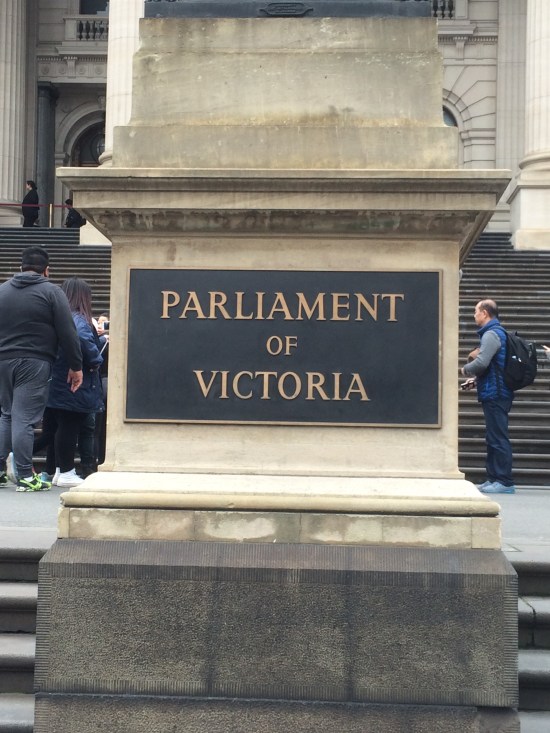
Victoria has moved one step closer to undoing one of Australia’s most basic doctrines, that the State will not interfere with or control religious organisations. In a series political moves that may well remind us of a Henry VIII or Vladimir Putin, Daniel Andrews has decided to pull the plug on religious freedom.

Yesterday, a Bill was presented to the Legislative Assembly for debate: an amendment to the Equal Opportunity Act, making it unlawful for religious organisations to not employ persons on account of them holding to different religious views to those believed by the organisation.

Mr Andrews has said, “Religious bodies or schools will be required to demonstrate a necessary connection between their religious beliefs and the requirements of a specific role.”

Should the State force Churches and religious organisations to employ persons who don’t subscribe to their values and vision? Of course not, but then again, Henry VIII shouldn’t have pronounced himself the head of the English Church and Julius Caesar probably shouldn’t stuck his nose into Gaul, but they did.

Schools, Churches, Synagogues, Temples, and hundreds of organisations, will be required to pass a test, demonstrating to the Government that advertised positions inherently require an employee to affirm the beliefs and practices of that institution. The tribunal will then have authority to decide what is religious and what is not, and which roles require a person to hold to the beliefs of the organisation and not; a pontifex maximus for Victoria!

Soon there will be all manner of religious organisations lining up outside a brick Government building, waiting to prove that their employees ought to be on the same page as their school or charity.

Yes, I know, all this sounds like one crazy dream built on an evening of Roquefort and Sauternes, or perhaps the plot line for a whacky comedy. But no, this is real and it is serious.

Victorians who conform to Labor’s strict interpretation of religion and sexuality have nothing to fear, but for 100,000s of Victorians who send their children to religious schools, attend churches, and who support religious organisations, there is genuine reason for concern.

The Bill will be voted on this afternoon (15/9) and is guaranteed to pass the Lower House, given that the Government has the numbers. The final outcome will then depend on the Legislative Council. Common sense ought to prevail, but then common sense would have ensured this Bill had never left cabinet room.

Concerned Victorians should contact their local members of Parliament. We can also pray that common sense will be followed and this Bill rejected.


For further details read:

https://murraycampbell.net/2016/09/06/letters-for-members-of-the-victorian-parliament-re-inherent-requirement-test/

https://murraycampbell.net/2016/09/04/petition-to-uphold-freedom-of-association-and-freedom-of-belief-in-victoria/

The Secularized Erastianism of the Daniel Andrews Government in Victoria

The Primate is right, but don’t twist his meaning

Like many Australians I appreciated Philip Freier’s letter, and there is much to like about his message and the tone in which it was written. There is little with which I disagree.

In relation to the potential fallout from altering the Marriage Act , I suspect Freier’s optimism is misplaced; not that I want to dampen his hope, but there is substantial evidence pointing to the likelihood of decreased religious freedoms in event of the law changing. One only has to look at Canada and the UK to see the growing mountain of legal, political, and social disarray created by legalising same-sex marriage. Indeed, look at the State of Victoria, my own home state, to see a Government using sexuality issues to restrict public conscience and religious freedom.

5723704-3x4-340x453

My attention here, however, is to point out the way this letter is being interpreted by some folk. For example, the headline for the Sydney Morning Herald and The Age reads, “Religious shift on same-sex marriage.” The underpinning logic is, Archbishop says follow your conscience, rather than the Bible.

The Archbishop is following a long tradition in esteeming the human conscience. *Evangelical Christians have long held that the conscience is an important part of the human psyche, and it should not be easily ignored and contravened.

Perhaps the most famous example from history is that of Martin Luther. As he stood before the council at the Diet of Worms in 1521, Luther is reputed to have said,

“Unless I am convinced by the testimony of the Scriptures or by clear reason (for I do not trust either in the pope or in councils alone, since it is well known that they have often erred and contradicted themselves), I am bound by the Scriptures I have quoted and my conscience is captive to the Word of God. I cannot and will not recant anything, since it is neither safe nor right to go against conscience. May God help me. Amen”

This conviction about the importance of the conscience goes back to the Scriptures itself:

Speaking of people who had not been raised with the Mosaic Law, the Apostle Paul writes,

‘They show that the requirements of the law are written on their hearts, their consciences also bearing witness, and their thoughts sometimes accusing them and at other times even defending them.’ (Romans 2:5)

Elsewhere Paul says, ‘My conscience is clear, but that does not make me innocent. It is the Lord who judges me.’ (1 Corinthians 4:4)

‘One of the requirements for Church leaders is that they, ‘must keep hold of the deep truths of the faith with a clear conscience.’ (Titus 3:9)

It can be sinful and dishonest to act against the conscience, but this doesn’t mean that the conscience is morally neutral or always right. The conscience is corruptible as is every part of the human being:

“let us draw near to God with a sincere heart and with the full assurance that faith brings, having our hearts sprinkled to cleanse us from a guilty conscience” (Hebrews 10:22)

In the volume, Conscience in the New Testament, C.A Pierce notes that the conscience does not provide a set of moral norms for the person, as much as it functions as an alarm, alerting a person to their moral oversteps.

All this together means that the conscience is a subjective guide but not the ultimate guide for determining moral and spiritual truth. Of course I don’t expect my non Christian friends to agree with this point, but rather I am explaining a Christian perspective of the conscience. This is important, because while Christians affirm the the role of the conscience, we do not place it above or on par with the Scriptures.

To place the conscience on par with Scripture is to subvert the authority of the Bible and inevitably place the human mind over the Bible. Throughout life there are decisions to make where one must decide, do I accept what the Bible says or what my conscience is saying? Neither is it the case of having two equal but different axiomatic authorities, but when the conscience contradicts Scripture, it ought to be corrected and reshaped according to those words of God.

Philip Freier is right to encourage people not to act against their conscience, but it would be misleading to therefore conclude there are  multiple valid Christian positions on the issue of same-sex marriage. The Archbishop’s words are being celebrated today as a shift in Christian thinking about homosexuality. That is not the case, even as Philip Freier indicated, the Anglican Church is holding to its understanding of marriage; this is true of all major Christian denominations in Australia.

In other words, no Australian should ignore their conscience when deciding their view on marriage, but as far as Christians are concerned, it is the Bible not our subjective consciences, that defines the Christian view of marriage.

Finally, I agree with the Archbishop in that Australian Christians ought to respect the decision made by the Australian public. It may well be that the majority decide to retain the current definition of marriage, but in the event of change, we should respect the democratic process. One question remains, however, will dissenters be permitted freedom of conscience to continue teaching, officiating, and practicing the Christian view of marriage, without fear of litigation?

————————————

* Evangelicalism has nothing to do with right wing American politics. That is a recent sociological phemenemon, which has stripped the word of its theological and historical roots. The word means, euangelion, the Gospel. Evangelicals are Christians who believe & live out the Gospel of Jesus Christ (which of course, by definition is foundational for all genuine Christianity)

Labor Party Proposal Deserves Attention

This afternoon news broke that the Federal Labor Party are considering agreeing to the marriage plebiscite, so long as this set of conditions are applied:

1473244246402

Photo from The Age

  • plebiscite is self executing or binding
  • No public funding for either side
  • Voting is compulsory
  • question is fair and reasonable

In my opinion these are reasonable requests and deserve due consideration from Malcolm Turnbull and the Cabinet. The Age is reporting that ‘Christian groups’ will be angered by list, but I don’t see any reason for objecting.

Of course, the big question is, what will the question be, and it is understandable that people will wait for this announcement before making a final call on support for the plebiscite; I don’t envy those who are responsible for framing the question.

My only qualification to Labor’s suggestion is that it is unreasonable to expect MPs to vote against their conscience, that is, should the Australian public vote to change the law. If the majority of Australians vote to change the Marriage Act, I don’t think MPs should vote otherwise, but should their conscience not permit them to support same sex marriage they should have freedom to abstain from voting. Therefore, a self executing  plebiscite is preferable (I’m not a lawyer, and so I don’t know whether this is possible and how this would work).

There is one vital  matter that has not arisen, either today or in most public discussions on the issue, and that is how redefining marriage will impact many other aspects of Australian law and life. Changing the Marriage Act is not so simple,  as though all we are doing is removing a couple of words. Rather there will be a significant ripple effect throughout  many areas of law, including discrimination laws, family law, and property and finance laws. For example, when the U.K introduced same-sex marriage, they produced a 62 page document outlining many of the laws that would require reworking in light of the change. The point is a simple one, we mustn’t think that should we vote to change marriage, the discussions are over. It is only fair that in the lead up to the plebiscite, the Government outline to Australians, details of the many implications that will arise from altering marriage.

Letters for Members of the Victorian Parliament: RE ‘inherent requirement’ test

If you are interested in writing to your local State MP to express concerns about the amendment to the Equal Opportunity Act, here are some salient points that you might include when drafting a letter of your own


OLYMPUS DIGITAL CAMERA


Dear Sir/Madam,

I am writing to express concerns over the proposed ‘inherent requirement’ test, that is being re-introduced by the Andrews Government.

Diversity, freedom of association, and freedom of religion, are key characteristics of our liberal democracy that are esteemed by Australians. Throughout our history Governments have valued the contributions of religious organisations, indeed society would be the lesser without them, and yet Governments have also understood a demarcation between the State and religious institutions.

The proposed Equal Opportunity Amendment (Religious Exceptions) Bill 2016 will cross that line, with the Victorian Government taking a role in supervising whom religious organisations may employ.

First of all, why is this legislation targeting religious groups?

The amendment to the Equal Opportunity Act will not impact any social or political groups, only religious ones.

As it stands, political parties, sporting clubs, and other interest groups have freedom to appoint persons who subscribe to the views and goals of those organisations. This is only common sense. For example, it would be unfair to force the Greens to employ a climate-change skeptic, or to expect the local Football Club to appoint a groundsman who was intent on converting the oval into a swimming pool.

It is therefore reasonable to ask, what is the motivation behind the Government focusing on religious organisations, and not others?

Indeed, this amendment to the Equal Opportunity Act is but the latest of a growing list of anti-religious measures that have been introduced by the Government over the last 2 years. I appreciate that some policy changes are being presented as fighting equality for LBGTI people, and some of this is laudable. However other policies are completely unrelated to sexuality issues, and are simply attacks on religious freedoms: removing SRI lessons from schools is one such example. And the legislation itself says its scope is not limited to discrimination on the basis of sexual orientation, but extends to ‘differing religious beliefs’. In other words, it is no longer permissible for a church or school to reject an applicant on the basis of them adhering to a different religion. Such an idea would be laughable, except it may soon become law.

Secondly, the inherent requirement test assumes that the Government has the right to intrude on religious organisations, and influence whom they employ.

This test is a clear abrogation of one of Australia’s most basic ideals, that the State will not interfere with the beliefs and practices of religious organisations.

Mr Andrews has stated, “Religious bodies or schools will be required to demonstrate a necessary connection between their religious beliefs and the requirements of a specific role.”

This move counters the very notion of a pluralist society, and is setting up the situation whereby  a Government impose impose its narrow secularist agenda onto groups who do not share their ethical and religious viewpoint.

Thirdly, the test assumes that the Government, and any tribunal set up by the Government, has the expertise and knowledge to interpret the theological framework underpinning these organisations.

Again, Mr Andrews has said,

“The defence will be limited to circumstances where religious beliefs are an inherent requirement of a job, and an employee or job applicant does not meet the requirement because of a specific personal attribute.”

But who is to say when and where religious beliefs are an inherent requirement of a job?

The legislation assumes that some jobs in a church,  or mosque, or religious school can be considered ‘religious’ and others not. This may be the case in some instances, but is the Government really in a position to decide what is inherent and what is not?

It is important to understand that this assumption is not ethically or  theologically neutral; it requires a body, set up by the Government, to interpret and impose their understanding of Islam, Judaism, or Christianity onto these various organisations. For example, in Christian thinking, the roles of gardener, administrator, and teacher are not separated into religious and non-religious work, for all are expressions of service to God. 

As it happens, many of these organisations do employ persons who don’t subscribe to the particular religious principles of the institution; that is their freedom to do so. Surely though, school boards, charities, and churches are in the best position to understand the values and needs of their organisation?

In the end, it comes down to these questions:

Is it the role of Government to interfere with the beliefs and practices of religious organisations?

Is it wise or fair to force religious organisations to employ persons who do not share their values and beliefs?

I believe this legislation is unnecessary, and will set a dangerous precedent for our future as Victorians.

I am asking that you consider voting against this legislation. I am very happy to answer any questions you may have.

Thank you for taking the time to hear my concerns

Yours Kindly,

Murray Campbell

Incoherent ‘inherent requirement’ test

Two months ago I sat in a packed room where Mr Tim Wilson MP and Rev Dr Michael Bird addressed the topic, ‘Freedom of Speech in Australia today’. During the conversation Mike Bird said that the next issue facing Victorians will be in relation to religious schools and discrimination policies. This week my non-prophetic friend was proven to be right: the Victorian Government announced that it will reintroduce the ‘inherent requirement’ test, impacting whom religious organisations may and may not employ.

The test was originally introduced by the previous Labor Government in 2010, but was removed in 2011 by the Coalition Government.

IMG_9102

This explanation is offered on the Premier’s website:

“The test was scrapped by the former Coalition Government in 2011, which left many Victorians vulnerable to discrimination when seeking employment with religious bodies or schools, particularly because of their sexual orientation or gender identity.

The inherent requirements test will limit the ability of a religious body or school to rely on a religious defence to discriminate in the area of employment because of a person’s sex, sexual orientation, gender identity, marital status or differing religious beliefs.

The defence will be limited to circumstances where religious beliefs are an inherent requirement of a job, and an employee or job applicant does not meet the requirement because of a specific personal attribute.

The test will not force religious bodies or schools to employ people with attributes that conflict with its religious beliefs and principles. However, it will require them to demonstrate a necessary connection between their religious beliefs and the requirements of a specific role.”

This latest move from the Victorian Government is disturbing, although not surprising. I appreciate and at times laud the Government’s move to ensure particular social minority groups are protected, including LGBTI people. But one may be forgiven for concluding that some of the extreme measures have less to do with the principle of inclusion, and more about exclusion.

For example, removing SRI from schools had nothing to do with advocating sexual equality. Indeed, the list of anti-religious of measures is growing, and one can only wonder where and if Mr Andrews’ will draw the line. Over the last two years many Victorian families have come to feel as though they are being pushed away from public schools, and now it appears as though the same Government is set on invading the religious school space also, and that of any religious organisation. It is yet unclear whether Churches will be protected from this test or not.

The inherent requirement test is a deeply flawed concept:

First, the notion of ‘inherent requirement’ depends upon imposing a secularist view of religion. The test presumes a separation between what is considered spiritual work and what is not. It is surmising, for example, that a gardener or an office administrator is not doing specifically Christian work because they are not teaching the Bible, etc. This is a false dichotomy that does not exist in Christian faith, nor in many other religions. Every role is an expression of commitment to God and is a valuable part of the whole which serves a common purpose.

Second, this test wrongly assumes that because a particular role does not have a direct theological or spiritual teaching component, it therefore does not matter whether the employee agrees with the organisation’s ethos, beliefs, and vision. This is purely illogical. Why would any organisation or company employ a person who does not support the basic values and vision of that association?

Equal Opportunity doesn’t mean sameness. I’m not doubting the Victorian Government’s commitment to ‘equal opportunity’, but their paradigm of equal opportunity is flawed, and represents an ethic that is not ultimately about diversity, but about conformity.

During that cold July night when Michael Bird pre-empted Mr Andrews’ announcement this week, Tim Wilson offered an idea which deserves consideration as the Victorian Parliament wrestles with this legislation. Mr Wilson believes that the question of whom religious organisations employ is better dealt with through contracts rather than through law. He said,

“In terms of hiring and firing people, I don’t think it’s best dealt with through law. I fully accept that religious institutions have a right to preserve the environment and the value systems of people who embody those value systems.”

“It is the right of children and parents, to raise their children in the culture, traditions and customs to which they hold dear.”

Finally, the question needs to be asked, is it reasonable for a Government to determine what constitutes required religious adherence or not? Is it the Government’s role to dictate theology and ministry practice? Does the Government have the necessary skills and knowledge required to adequately understand theology and therefore make the right judgement regarding the question of what is inherent?

Anglican Minister asks Bill Shorten a question

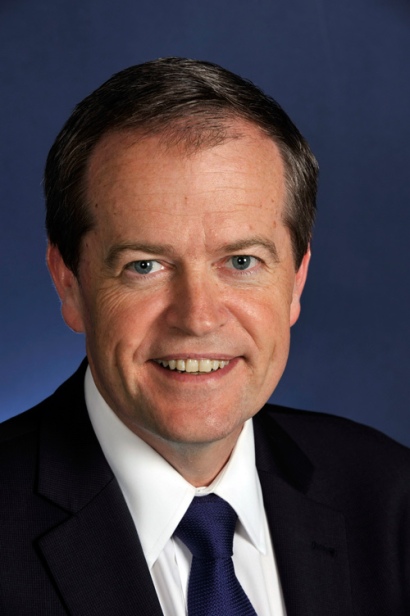
Following a Church service in Canberra this morning, as part of the commencement of the new Parliament, Anglican Minister, Ian Powell, asked Bill Shorten a question about his use of language in describing opponents of same-sex marriage.

Mr Shorten was clearly not prepared for this conversation, and to be honest, I felt some sympathy toward Mr Shorten as I know I’d feel taken back by a surprise question.  The scene looked a little awkward for both men, with Mr Shorten being curt in his responses, and Ian Powell sounding nervous. Then again, politicians are used to street QandA, and an opportunity presented itself for a member of the public to ask a valid question to one of our nation’s leading political figures.

Bill-Shorten1

It should be said,  the man who  approached the Opposition Leader isn’t a right wing liberal leaning conservative, but someone  who likes Bill Shorten and the Labor Party. He was respectful of Mr Shorten and gently spoken in his tone.

Rev Powell said, “You described people who weren’t in favour of changing the definition of marriage as ‘haters who come out from under rock’. Can I ask you not to speak like that?”

Mr Shorten has made such remarks. Following the horrific massacre in Orlando, he said,

“We’ve seen two terrible events in the last week have shown that hate and terrorism does exist in modern societies.”

“I don’t want to give haters a chance to come out from under the rock and make life harder for LGBTI people or their families, to somehow question the legitimacy of their relationship.”

Bill Shorten initially responded by suggesting he was being taken out of context, and then he qualified himself again by saying,

“People of faith can be opposed to marriage equality, but some people who object to marriage equality do have homophobic attitudes,” he said.

I think it is only fair to take Mr Shorten’s comment at face value, and assume he genuinely believes that not everyone who opposes SSM is hateful. That is pleasing to hear, mainly because it’s true; indeed, probably the overwhelming majority are not phobic. Unfortunately, however, and Ian Powell is picking up on this theme, the rhetoric that the Australian public is hearing from Mr Shorten (and others) overwhelming insinuates that any and all discussion about marriage will lead to hate and bigotry.

Mr Shorten has previously used lines including,

“When I see people hiding behind the bible to insult and demonise people on the basis of who they love, I cannot stay silent. I do not agree.”

And of the plebiscite, ‘it will just be “a taxpayer-funded platform for homophobia”.

I don’t think Ian Powell’s request is so outrageous. Is it too much to ask our national leaders to tone down their rhetoric on the marriage debate? Bill Shorten has been mild compared to some other politicians and public figures, but nonetheless, it is simply counter productive to continually insert the words ‘hate’ and ‘phobia’ into every public statement about marriage.

Leaders have not only an opportunity, but a responsibility to set the tone of public discourse, demonstrating that Australians are capable of debating even the most sensitive issues and yet remain friends. Instead of jumping into the mud with those who are truly derogatory, could we not instead aspire to that line from The West Wing, spoken by the President’s Chief of Staff, Leo McGarry?

“We’re gonna raise the level of public debate in this country, and let that be our legacy.”

Safe Schools unravelling

The Safe Schools program has always had more than a few lose threads, and more than a few people have pointed them out and suggested we start again. We are not against an anti-bullying program in our schools, after all, programs already exist and are doing an excellent job. But there is always room for improvement.

One of the main issues with Safe Schools is that it is less about bullying and more about educating children to adhere to a very set paradigm of human sexuality, a perspective that is not held by millions of Australians.  In addition, there is growing consensus in the medical and scientific community that some of the theories presented in Safe Schools (as fact) are in fact wrong and dangerous to children’s health (cf. sexual orientation and gender identity).

While it shouldn’t need to be said again, but because certain politicians have chosen to ignore it, the chief architect of Safe Schools, Roz Ward, has explained the agenda behind the program,

“Programs like the Safe Schools Coalition are making some difference but we’re still a long way from liberation…Marxism offers the hope and the strategy needed to create a world where human sexuality, gender and how we relate to our bodies can blossom in extraordin­arily new and amazing ways that we can only try to imagine today.”

Up until now it has been easy to pretend Roz Ward misspoke, and even easier to dismiss community concerns, especially from those who acknowledge a Christian faith: just call them bigots and homophobes, and it’s game over. Why would the public consider the views of a bigot? I certainly wouldn’t be inclined to do so.

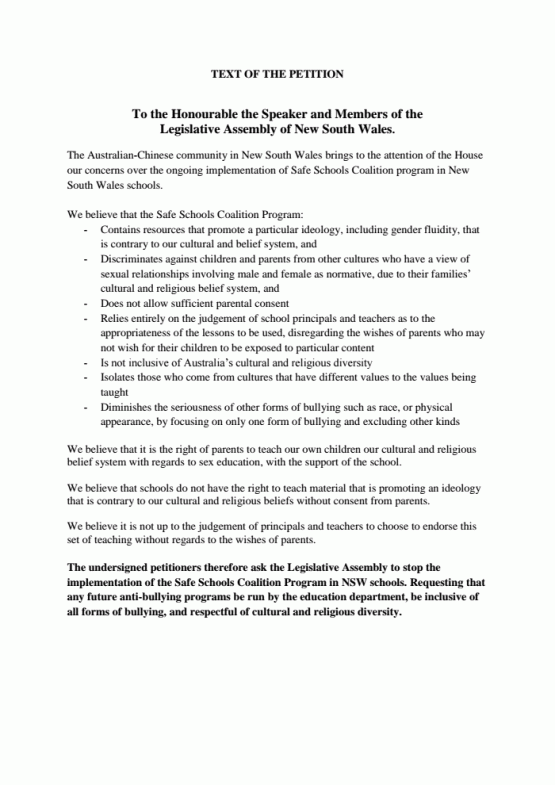
However, the game isn’t over. The Safe Schools agenda has this week been further exposed. A petition of more than 17,000 signatures from the NSW Chinese community has been tabled in the News South Wales Parliament, asking for the program to be removed from schools. And today, The Australian newspaper is reporting that the Indian community in Melbourne share these concerns.

Anti-Safe-Schools-Petition-p1-normal

letter from the Australian Chinese community of NSW

How will the Victorian Government and certain lobby groups respond to these ethnic groups? I sincerely hope they don’t resort to  the kinds of ad hominem attacks that they haven been relying on for quietening  other groups.

Let’s be honest, in the name of religion there are some crazies out there, and there are bigots and homophobic individuals. But for the most part, the concerns we have heard articulated are reasoned and genuine, expressing concerns for children who have questions over their sexual identity. No body wants to see any children being bullied for any reason, and it is good for our schools to provide tools to assist students in understanding and caring for one another.

It is time for Governments across Australia to give ear to the concerns of the public over Safe Schools. We can do better for our children.

‘Vive La Australia’: Freedom of Speech in Australia

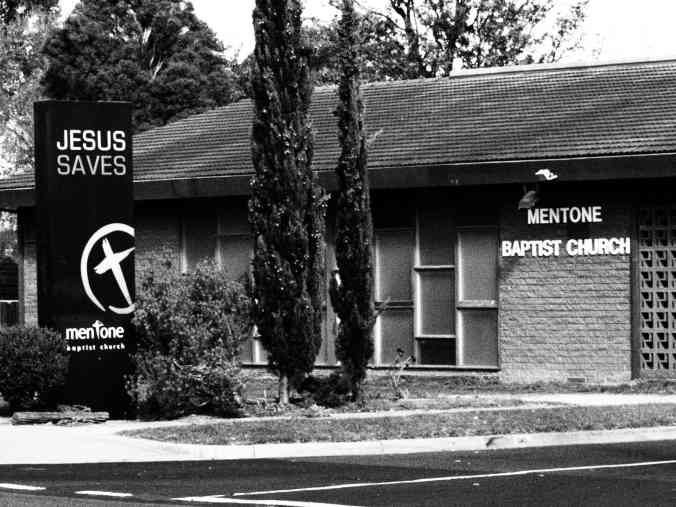
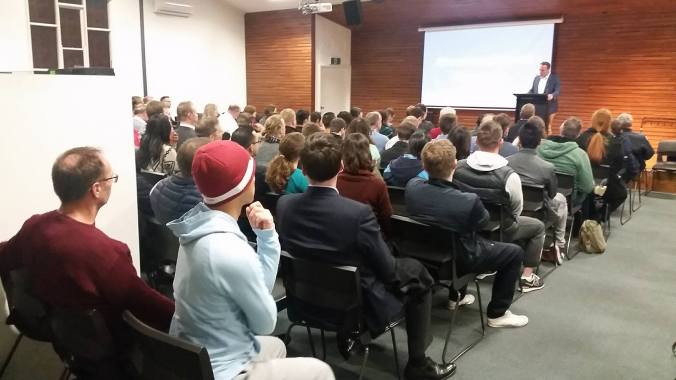
Last night while Melbourne suffered through the Great Snowstorm of 2016 and the rest of the world chased Pokemons, Mentone gathered for quite an extraordinary evening.

FreedomofSpeech

The topic of conversation was ‘Freedom of Speech in Australia’, and we were privileged to have speaking, Mr Tim Wilson MHR, and Rev Dr Michael Bird. Present in the audience were members of various political parties (and of none), and people reflecting a variety of religious and non-religious world views, including of course members from Mentone Baptist Church.

The first thing I learnt last night is that the Federal seat of Goldstein, whom Tim Wilson now represents, is not pronounced Goldstein but rather, Goldstein! In other words, the ein is pronounced as mine, not bean. Apologies to everyone living in Beaumaris, Hampton, Brighton, and so on!

Electoral names aside, both Wilson and Bird presented a case for free speech in Australia that was erudite, thoughtful, and engaging. And this was followed by a time of QandA with the audience.

Tim Wilson spoke first. He offered an historical overview of Australia’s anti-discrimination laws, and articulated how ‘good law’, that which related to work place harassment, has been abused by being applied universally to public speech. A case in point is the now infamous and inexplicable Section 17 of the Tasmanian Anti-Discrimination Act.

In a defence of free speech, Wilson asked, “is it really right, just, that to exercise our most basic right we have to question whether we are going to be held in contempt of the law and then going have to pay significant legal bills to defend ourselves”

While not the topic at hand, it is difficult to speak on Freedom of Speech in 2016 without commenting on the current marriage debate. Wilson shared some of his own experiences growing up as a homosexual and of him favouring changes to the Marriage Act. Most importantly, in light of his views on marriage, Wilson said,

“I don’t think we can have a constructive conversation around the marriage of same-sex couples until both sides can say what they truly think.”

He then pushed further, pointing out, “the hypocritical nature of so many people today, when they don’t want to hear a particular argument, they declare it to be bigoted or hate speech.” Wilson then referred to Bill Shorten and Penny Wong, noting that only a few short years ago they spoke against changes to the Marriage Act, but now they can’t desist from calling opponents of same-sex marriage, bigots and hate filled.

At the other end of the spectrum, Tim Wilson offered a timely admonition to religious organisations, who though themselves call for a higher standard of morality, they have been exposed, especially in the area of sexual abuse.

As a Christian leader I affirm his rebuke, and would add that men (or women) who commit abhorrent acts on children behind clerical vestments and institutions are not representative of the Christ whom they claim to worship, but are the very manifestation of anti-Christ, for the deny him by their deeds. And yet, we need to understand that the public do not also differentiate between authentic Christians and dress-up Christians. Tim Wilson was spot on to call out Christian leaders to work harder on this.

Mike Bird employed his familiar array of jocose analogies and allusions, while driving home some pertinent truths for Australian society, as well as for Churches.

‘The future is French’, Mike asserted, in relation to where Australian religion and politics is heading. Either we will take the path of Vive la différence or that of the less desirable, Laïcité.

“I like to think our Constitution is robust enough to protect basic freedoms, and our political parties will seek to do right by all. However, people of faith can expect to receive a hard time from progressive activists and parties in the forseeable future. Religion may be sanitised from the public square.”

How should Churches respond to this paradigm cultural and political shift? Bird proposed that the future will either be Swedish or Chinese!

The reproach was overlooked by many last night, but Bird was calling out ‘liberal’ churches, suggesting they suffered from Stockholm syndrome. That is, they have lost their identity by tinkering with the tenets of the Christian faith in order to ensure religion is palatable to the powers that be.

Instead, Bird exhorted Christians to learn from Christianity in China, where it exists on the margins of society. Yet despite the oppression of Christians in China for many decades,  it has witnessed exponential growth, and all without the privileges of political and public freedoms, which we currently enjoy in this country.

Michael Bird also lauded Tim Wilson’s work last year in organising the Religious Freedom Roundtable, and he suggested that we need more forums such like that.

If I were to offer any criticisms, they would be minor:

At one point Tim spoke of certain religious groups who have tried to impose their morality onto other minorities. I do not disagree that historically there have been religious groups who’ve behaved as such, but the key word here is ‘impose’. There is an essential difference between imposition and influence, or pressure and persuasion. Mike said it well, when he exhorted Christians to “persuasive and compassionate discourse.”

In a crescendo of rhetoric Mike declared that, ’Christendom is over’. I would push back on this point and argue that Christendom in Australia never was. There is no doubt that Christianity has significantly influenced Australian culture and life, but it has been tolerated rather than happily embraced, sitting there in a position of begrudged prominence.

13682448_10154314182706499_523605627_o

The content of each presentation was winsome and helpful, but for me the highlight of the evening was the manner in which the conversation was conducted, including  participation from the audience. The tone was respectful but not innocuous; certain hypocrisies were called out, and serious challenges were proposed, but all without the immature name-calling and shout downs that are becoming all to common in the public square.

Last night demythologised the rhetoric of some social progressives, that civil dialogue can’t be had on issues relating to sexuality and marriage. Can an heterosexual Evangelical Anglican clergyman discuss issues of national importance with an agnostic gay politician? The answer is, yes. Indeed, despite obvious differences, they shared much in common. And can a room full of people, representing a spectrum of political and religious ideologies, enjoy a robust night of conversation? Yes, and in fact, people stayed and talked so late into the evening I was tempted to begin turning off the lights.

Finally, as a poignant way to close the evening, while answering a question on how to raise children to preserve and properly practice free speech, Mike Bird responded, ‘Love God, love your neighbour.’

Of course, these words comes from the lips of Jesus, who in turn was affirming the Old Testament Scriptures, and they remain the model for how Christians relate to others in society. I cannot speak for those of other world views, but this is how Christians must participate in both public and private. This Golden Rule does not build a staircase to Heaven as is sometimes believed, but rather, it is the life response of a person who has been captivated by the grace and mercy of God in Christ Jesus. It was fitting way to end such a rewarding night, “Love your neighbour as yourself”.

The talks an be downloaded here and the QandA here

I do not hate you

7518580-3x2-700x467

ABC photo of commemoration at Federation Square

Following the terrible mass murder in Orlando, Jason Ball, Greens candidate for the seat of Higgins, has criticised those who offered prayers for the victims and their families,

“This week, media commentators who have previously vilified us, leapt on the unspeakable atrocities in Orlando and used our grief as a battering ram to prosecute their own agenda against another minority.

Then they wring their hands and offer us their ‘prayers and sympathy’ whilst conveniently ignoring the fact that acts of hate and violence are the logical conclusion to a public ‘debate’ that maintains we are abnormal and not worthy of the same rights and respect as our fellow citizens.”

Like many people I gloss over most words that I read online, but Mr Ball’s comments stood out and made me put on the brakes. As a reflected on his words, I found several different threads of thought running through my mind, some conflicting:

Does genuine grief depend upon agreement? The thing is, I do feel great sadness for those who have been personally affected by the Orlando massacre. It was a display of evil for which there is no justification. Am I being hypocritical for thinking this?

On the one hand, the Muslim community has been criticised for their lack of public outrage over the attack, and yet Christians offering prayers for those affected are being told to keep quiet? It feels as though we’re damned if we do and damned if we don’t.

Is it true that the logical outcome of not supporting same-sex marriage is hate and violence?

Is it right to pray for a group of people if they ask us to desist?

Should we only pray for those with whom we have congruity of thought? Is our common humanity not enough?

What can Christians do to overcome the view that not supporting SSM does not equal hating LGBTI people?

The same article reported how Mr Ball has had campaign material smeared with hateful words, ‘fag’, and so understandably he is skeptical of certain peoples’ words of support for the victims in Orlando. More so, it takes a callous person to dismiss the fears and grief many LGBTI people are experiencing in the wake of Orlando.

A question I am wrestling with is this, as a Christian, how should I respond? Should I remain quiet? Do I ‘repent’ of my understanding of marriage, as one commentator has argued Christians must do? Are our only options, conformity to or exile from the public sphere?

The fact that you are reading these words probably gives away my answer, although I have taken several days to ponder the question before writing. The reason for writing this piece is to try and communicate, albeit somewhat clumsily, that Christians do care and are concerned for the LGBTI community. It is not hate that drives us to speak and pray.

Jason Ball may be right, there are people using Orlando, ‘as a battering ram to prosecute their own agenda against another minority’. In fact, I’m pretty sure he is right. This horrendous event is being utilitarianised by several public figures to silence all manner of minority voices. There are haters in our community, including individuals who detest LGBTI people, and we stand with you against them.

Hate and violence derives from commitment to a worldview that cannot tolerate difference. This worldview may be of a religious orchestration; its shape may be that of secular humanism.

Jesus once said that it’s relatively easy to love those whom you like; it takes grace to love those with whom you disagree. We all fall short of this ideal, which would well leave us hopeless, except there is one who lived the ideal without ever misstepping.

“After this, Jesus went out and saw a tax collector by the name of Levi sitting at his tax booth. “Follow me,” Jesus said to him, and Levi got up, left everything and followed him.

Then Levi held a great banquet for Jesus at his house, and a large crowd of tax collectors and others were eating with them. But the Pharisees and the teachers of the law who belonged to their sect complained to his disciples, “Why do you eat and drink with tax collectors and sinners?”

Jesus answered them, “It is not the healthy who need a doctor, but the sick. I have not come to call the righteous, but sinners to repentance.” (Luke 5:27-31)

Jesus calls those who would follow him, to be like him.

“But to you who are listening I say: Love your enemies, do good to those who hate you, bless those who curse you, pray for those who mistreat you. If someone slaps you on one cheek, turn to them the other also. If someone takes your coat, do not withhold your shirt from them. Give to everyone who asks you, and if anyone takes what belongs to you, do not demand it back. Do to others as you would have them do to you.

“If you love those who love you, what credit is that to you? Even sinners love those who love them. And if you do good to those who are good to you, what credit is that to you? Even sinners do that. And if you lend to those from whom you expect repayment, what credit is that to you? Even sinners lend to sinners, expecting to be repaid in full. But love your enemies, do good to them, and lend to them without expecting to get anything back. Then your reward will be great, and you will be children of the Most High, because he is kind to the ungrateful and wicked. Be merciful, just as your Father is merciful.” (Luke 6:27-36)

A Christian cannot hate because we have been on the other side, we have belonged to the crowd who have hurt others and thrown stones of hate, pride, and greed. Christians, if they are Christian, confess their spiritual and moral destitution, and yet we have come to experience the undeserving and loving grace of God who forgives our trespasses through Jesus. Once the human heart has experienced Divine forgiveness, we can not walk back into old attitudes of disdain for other people, nor hold onto some cold and languid acquiescence toward popular moral thought. When God replaces hate with love, it is a commitment to affirm what is good as defined by God. Can not love lead us to disagree with fellow human beings? Can a desire to see people flourish not include aspects of nonconcurrence, as we find in the life of Jesus Christ?

I do not hate you. I would willingly stand alongside you against those who have insulted you and graffitied your campaign posters. Clearly though, we have much work to do. I don’t know if Jason Ball will read this piece, and if he does, what his response would be. But I hope and pray he and others hear, and not only hear, but come to experience that Christians do not hate them. We must do more to love others as Christ has loved us.

I’ll finish with two examples that I have come across of where a Christian voice is trying to speak into the awfulness of what took place just over a week ago.

The American chain restaurant, Chick-Fil-A, is known for its conservative values and for not opening on Sundays out of observance for the Sabbath. Following the shooting, they broke their rules and opened on the Sunday to serve their community. They gave food to firefighters, police and volunteers, and they handed out sandwiches to those donating blood.

Last week, a service was held at the Anglican Cathedral in Sydney, and in his address Archbishop Glenn Davies said,

“As Australians, we abhor violence in all its forms—domestic violence, street violence, xenophobic violence, religiously motivated violence, and especially violence against members of the LGBTI community. As the leader of the Anglican Church in Sydney I want to affirm my stance against all such outbreaks of violence, and if any members of our churches have participated in such acts of violence against women, against young people, against ethnic minorities, against religious minorities or against those from the LGBTI community I offer my heartfelt apology.” 

“Yet we must all search own hearts, as evil resides in each one of us. We have all fallen short of the glory of God. None of us are without fault. Words of derision, mockery and exclusion so frequently fall from our lips when directed against persons who are different from us. This is especially the case for members of the LGBTI community, who have suffered the verbal abuse that so deeply cuts into a person’s soul. Where we have been guilty of such words, I also offer my apology on behalf of the Anglican Church in Sydney.”

“God’s love knows no bounds. He extends his love to all without distinction and without prejudice. Therefore when one, let alone 49, bearers of the image of God are murdered, God grieves. When a further 53 are injured and hospitalised, God grieves. For our God is a God of compassion and grace, and in the depth of our sorrow and pain, he offers to carry us ‘through the valley of the shadow of death.’”

A sling, an arrow, and the Gospel

“Whether ’tis nobler in the mind to suffer

The slings and arrows of outrageous fortune,

Or to take arms against a sea of troubles,

And, by opposing, end them?”

Cleisthenes

From the Delphic hamlet that is The Australian, Greg Sheridan has given Australian Churches an oracle.

According to Sheridan,

Australia’s Christian churches are in crisis, on the brink of complete strategic irrelevance. It’s not clear they recognise the mortal depth of their problems.

The churches need a new approach to their interaction with politics and the public debate, and to keeping themselves relevant in a post-Christian Australian society.

The churches cannot recognise and come to grips with their strategic circumstances. They behave as though they still represent a living social consensus.

The Christian churches now need to reconceive of themselves as representing a distinct and not all that big minority (of practising Christians). They should conduct themselves as a self-confident minority, seeking to win conversion through example and persuasion and not to defend endlessly legal protections and enforcements that are increasingly untenable or meaningless.

In my opinion Greg Sheridan offers a lucid critique of many Churches who are failing to grapple with the rise of secularism, although I wonder if he adequately understands the nature of the Church’s mission and therefore how success and relevance are defined.

Sheridan is right to point out the gross sins of abuse within the Catholic Church (and other denominations as well), and the way this has greatly damaged community perceptions of Churches.

There is urgent need for Churches to practice repentance. Dressed in clerical collars and reciting liturgy, great evil has been perpetrated, especially in the area of sexual abuse. Joe Smith and Lisa Jones can see it, but there remain clergy in some institutions that still don’t get it. The fact that their deeds expose them to be frauds of faith does not diminish the impact on the community. Real, transparent, and deep repentance is required.

Sheridan is also spot on in observing the naivety of some Christians who believe they still belong to the centre of Australian life. We defer to census figures that prove the majority of Aussies believe in God and who identify as Christian, but surely we know better. The reality is, Churches have never belonged comfortably at the centre of Australian society; they have played a significant role in shaping culture, alongside many other voices, but it is more a case of Churches being tolerated rather than celebrated and embraced.

This tolerance is eroding, rapidly so. This year alone we have seen various groups slamming the foot on the accelerator, such that we are fast approaching an intersection called ‘free speech’, and the direction Australians will take remains unclear.

Several political groups have declared their hand:

The Greens have decided their way forward by calling for religious organisations to lose their exemptions for discrimination laws.

Federal Labor have made clear: “Labor believes that no faith, no religion, no set of beliefs should ever be used as an instrument of division or exclusion, and condemning anyone, discriminating against anyone, vilifying anyone is a violation of the values we all share, a violation which can never be justified by anyone’s faith or belief. Accordingly, Labor will review national anti-discrimination laws to ensure that exemptions do not place Australians in a position where they cannot access essential social services.”

Bill Shorten has since stepped back from this position, but there are no guarantees he won’t step forward again.

And the Victorian Government, singing from their autocratic hymnal, has determined to insult and silence anyone who challenges their hermeneutic of life.

Should churches fight to keep a voice in the public arena?

We must concede that Churches no longer occupy a position in the middle, but we don’t want to evacuate the public space altogether. I want to argue that it is worth fighting for a voice in public discourse, but we do so with the belief that the Gospel does not depend upon it. So why should we defend notions of ‘freedom of speech’.

First of all, we have something to say. We have good news to speak and show our neighbours, and so why would we walk away from secular principles that give us freedom for speaking and contributing?

Secondly, we should defend the right to speak for the sake of those who speak against us. Is this not a way in which we love our neighbour?  Is it also not a sign of a mature society, one that is big enough to allow a plurality of voices, and to say ‘I disagree with you, but let’s hear you out and then talk it through’.

A great example of this happened last week when Christians came to the support of Roz Ward, a professing Marxist and co-founder of the controversial curriculum, Safe Schools. Ward was forced to resign from a Government role and was suspended from La Trobe University after a comment she made in regard to the Australian flag. While her views may be disagreeable to many, she has the right to express them, and to find herself being ousted from an academic institution on account them was extreme. Subsequently, a number of Christian leaders noted this hypocrisy and sided with those who called for her reinstatement.

Thirdly, we are members of a democratic society, which in principle gives permission for Christians and atheists alike to speak and offer their opinion.

As a liberal democracy, Australia is governed by these 4 principles:

“A belief in the individual: since the individual is believed to be both moral and rational;

A belief in reason and progress: based on the belief that growth and development is the natural condition of mankind and politics the art of compromise;

A belief in a society that is consensual: based on a desire for order and co-operation not disorder and conflict;

A belief in shared power: based on a suspicion of concentrated power (whether by individuals, groups or governments).”

If we accept these principles, surely Christians have freedom to articulate their views in public discourse? This doesn’t mean people have to like or affirm these beliefs (nor those of any worldview), but it does mean there is freedom to speak. Unfortunately though, it seems as though these values are becoming museum pieces, relics from a golden age of democracy when the Cleisthenes’ of Australia stood tall. After all, no fair democracy has ever endured the ages. And yet, while Australia formally holds to these democratic convictions, there is a place for Christians to speak without fear of law or litigation.

Our democratic liberties give Christians a platform and context for doing public ministry, and we are thankful for this, but the Gospel is not curtailed by the limitations or freedoms of liberal democracy. Indeed, history demonstrates that Churches have often flourished where they have been most resented. More importantly, Jesus Christ taught a theology of the world which lives in opposition to God and which hates those who follow Jesus. Why should we assume Australia is any different?

How should Churches view ‘success’?

Are, as Greg Sheridan suggests, ‘churches in crisis now on all fronts’? It depends on how one defines the mission and role of the church.

Our aim is to love others, whether our convictions are affirmed by others or not.

Our goal is not relevance, for the Gospel we believe is not defined by a popularist epistemological current, but by the word of the cross, which is foolishness to the wise and powerful of this world. Instead, our purpose is to preach this foolishness for through it God works to redeem and heal.

Our mission is not to set up power structures at the centre of society, but to speak the Gospel and to love others no matter where we find ourselves situated in relation to broader society.

Freedom of speech has become the gordian knot of our day. Politicians, lawyers, and academics will ponder and debate and try to find a way to navigate through the many layers of twisted and knotted rope, and while their answers will have implications for Christian speech and life in public, our hope does not lay with them, but in the Gospel, a word that is sharper than a two edged sword. Our hope rests in the Christ who has promised that he will build his church and not even Hades can stand against it.

Sadly many Christians have sold their soul in order to buy a place at the centre of public life, and they are now being marshalled into following the lead of the social progressives, and others are instead holding tight to their conservative neuroses. There are however exceptions; across the land there are churches growing and people are becoming Christians, and there are Bible colleges in Australian cites who are training more men and women than in the previous generation. There are Christians serving in Parliament, teaching in universities, and working in a thousand different jobs. And to these men and women, keep preaching and living the Gospel, loudly from the centre or whispering it from the edge, and through it God will keep working his grace and growing his Kingdom.