Incoherent ‘inherent requirement’ test

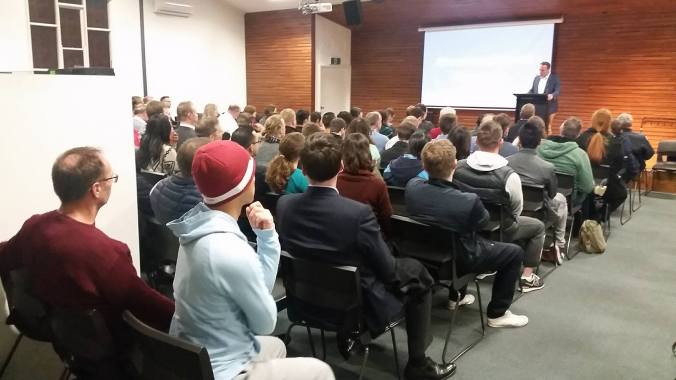
Two months ago I sat in a packed room where Mr Tim Wilson MP and Rev Dr Michael Bird addressed the topic, ‘Freedom of Speech in Australia today’. During the conversation Mike Bird said that the next issue facing Victorians will be in relation to religious schools and discrimination policies. This week my non-prophetic friend was proven to be right: the Victorian Government announced that it will reintroduce the ‘inherent requirement’ test, impacting whom religious organisations may and may not employ.

The test was originally introduced by the previous Labor Government in 2010, but was removed in 2011 by the Coalition Government.

IMG_9102

This explanation is offered on the Premier’s website:

“The test was scrapped by the former Coalition Government in 2011, which left many Victorians vulnerable to discrimination when seeking employment with religious bodies or schools, particularly because of their sexual orientation or gender identity.

The inherent requirements test will limit the ability of a religious body or school to rely on a religious defence to discriminate in the area of employment because of a person’s sex, sexual orientation, gender identity, marital status or differing religious beliefs.

The defence will be limited to circumstances where religious beliefs are an inherent requirement of a job, and an employee or job applicant does not meet the requirement because of a specific personal attribute.

The test will not force religious bodies or schools to employ people with attributes that conflict with its religious beliefs and principles. However, it will require them to demonstrate a necessary connection between their religious beliefs and the requirements of a specific role.”

This latest move from the Victorian Government is disturbing, although not surprising. I appreciate and at times laud the Government’s move to ensure particular social minority groups are protected, including LGBTI people. But one may be forgiven for concluding that some of the extreme measures have less to do with the principle of inclusion, and more about exclusion.

For example, removing SRI from schools had nothing to do with advocating sexual equality. Indeed, the list of anti-religious of measures is growing, and one can only wonder where and if Mr Andrews’ will draw the line. Over the last two years many Victorian families have come to feel as though they are being pushed away from public schools, and now it appears as though the same Government is set on invading the religious school space also, and that of any religious organisation. It is yet unclear whether Churches will be protected from this test or not.

The inherent requirement test is a deeply flawed concept:

First, the notion of ‘inherent requirement’ depends upon imposing a secularist view of religion. The test presumes a separation between what is considered spiritual work and what is not. It is surmising, for example, that a gardener or an office administrator is not doing specifically Christian work because they are not teaching the Bible, etc. This is a false dichotomy that does not exist in Christian faith, nor in many other religions. Every role is an expression of commitment to God and is a valuable part of the whole which serves a common purpose.

Second, this test wrongly assumes that because a particular role does not have a direct theological or spiritual teaching component, it therefore does not matter whether the employee agrees with the organisation’s ethos, beliefs, and vision. This is purely illogical. Why would any organisation or company employ a person who does not support the basic values and vision of that association?

Equal Opportunity doesn’t mean sameness. I’m not doubting the Victorian Government’s commitment to ‘equal opportunity’, but their paradigm of equal opportunity is flawed, and represents an ethic that is not ultimately about diversity, but about conformity.

During that cold July night when Michael Bird pre-empted Mr Andrews’ announcement this week, Tim Wilson offered an idea which deserves consideration as the Victorian Parliament wrestles with this legislation. Mr Wilson believes that the question of whom religious organisations employ is better dealt with through contracts rather than through law. He said,

“In terms of hiring and firing people, I don’t think it’s best dealt with through law. I fully accept that religious institutions have a right to preserve the environment and the value systems of people who embody those value systems.”

“It is the right of children and parents, to raise their children in the culture, traditions and customs to which they hold dear.”

Finally, the question needs to be asked, is it reasonable for a Government to determine what constitutes required religious adherence or not? Is it the Government’s role to dictate theology and ministry practice? Does the Government have the necessary skills and knowledge required to adequately understand theology and therefore make the right judgement regarding the question of what is inherent?

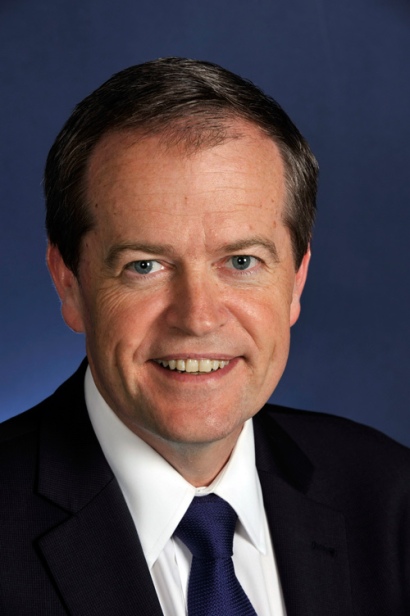
Anglican Minister asks Bill Shorten a question

Following a Church service in Canberra this morning, as part of the commencement of the new Parliament, Anglican Minister, Ian Powell, asked Bill Shorten a question about his use of language in describing opponents of same-sex marriage.

Mr Shorten was clearly not prepared for this conversation, and to be honest, I felt some sympathy toward Mr Shorten as I know I’d feel taken back by a surprise question.  The scene looked a little awkward for both men, with Mr Shorten being curt in his responses, and Ian Powell sounding nervous. Then again, politicians are used to street QandA, and an opportunity presented itself for a member of the public to ask a valid question to one of our nation’s leading political figures.

Bill-Shorten1

It should be said,  the man who  approached the Opposition Leader isn’t a right wing liberal leaning conservative, but someone  who likes Bill Shorten and the Labor Party. He was respectful of Mr Shorten and gently spoken in his tone.

Rev Powell said, “You described people who weren’t in favour of changing the definition of marriage as ‘haters who come out from under rock’. Can I ask you not to speak like that?”

Mr Shorten has made such remarks. Following the horrific massacre in Orlando, he said,

“We’ve seen two terrible events in the last week have shown that hate and terrorism does exist in modern societies.”

“I don’t want to give haters a chance to come out from under the rock and make life harder for LGBTI people or their families, to somehow question the legitimacy of their relationship.”

Bill Shorten initially responded by suggesting he was being taken out of context, and then he qualified himself again by saying,

“People of faith can be opposed to marriage equality, but some people who object to marriage equality do have homophobic attitudes,” he said.

I think it is only fair to take Mr Shorten’s comment at face value, and assume he genuinely believes that not everyone who opposes SSM is hateful. That is pleasing to hear, mainly because it’s true; indeed, probably the overwhelming majority are not phobic. Unfortunately, however, and Ian Powell is picking up on this theme, the rhetoric that the Australian public is hearing from Mr Shorten (and others) overwhelming insinuates that any and all discussion about marriage will lead to hate and bigotry.

Mr Shorten has previously used lines including,

“When I see people hiding behind the bible to insult and demonise people on the basis of who they love, I cannot stay silent. I do not agree.”

And of the plebiscite, ‘it will just be “a taxpayer-funded platform for homophobia”.

I don’t think Ian Powell’s request is so outrageous. Is it too much to ask our national leaders to tone down their rhetoric on the marriage debate? Bill Shorten has been mild compared to some other politicians and public figures, but nonetheless, it is simply counter productive to continually insert the words ‘hate’ and ‘phobia’ into every public statement about marriage.

Leaders have not only an opportunity, but a responsibility to set the tone of public discourse, demonstrating that Australians are capable of debating even the most sensitive issues and yet remain friends. Instead of jumping into the mud with those who are truly derogatory, could we not instead aspire to that line from The West Wing, spoken by the President’s Chief of Staff, Leo McGarry?

“We’re gonna raise the level of public debate in this country, and let that be our legacy.”

‘Vive La Australia’: Freedom of Speech in Australia

Last night while Melbourne suffered through the Great Snowstorm of 2016 and the rest of the world chased Pokemons, Mentone gathered for quite an extraordinary evening.

FreedomofSpeech

The topic of conversation was ‘Freedom of Speech in Australia’, and we were privileged to have speaking, Mr Tim Wilson MHR, and Rev Dr Michael Bird. Present in the audience were members of various political parties (and of none), and people reflecting a variety of religious and non-religious world views, including of course members from Mentone Baptist Church.

The first thing I learnt last night is that the Federal seat of Goldstein, whom Tim Wilson now represents, is not pronounced Goldstein but rather, Goldstein! In other words, the ein is pronounced as mine, not bean. Apologies to everyone living in Beaumaris, Hampton, Brighton, and so on!

Electoral names aside, both Wilson and Bird presented a case for free speech in Australia that was erudite, thoughtful, and engaging. And this was followed by a time of QandA with the audience.

Tim Wilson spoke first. He offered an historical overview of Australia’s anti-discrimination laws, and articulated how ‘good law’, that which related to work place harassment, has been abused by being applied universally to public speech. A case in point is the now infamous and inexplicable Section 17 of the Tasmanian Anti-Discrimination Act.

In a defence of free speech, Wilson asked, “is it really right, just, that to exercise our most basic right we have to question whether we are going to be held in contempt of the law and then going have to pay significant legal bills to defend ourselves”

While not the topic at hand, it is difficult to speak on Freedom of Speech in 2016 without commenting on the current marriage debate. Wilson shared some of his own experiences growing up as a homosexual and of him favouring changes to the Marriage Act. Most importantly, in light of his views on marriage, Wilson said,

“I don’t think we can have a constructive conversation around the marriage of same-sex couples until both sides can say what they truly think.”

He then pushed further, pointing out, “the hypocritical nature of so many people today, when they don’t want to hear a particular argument, they declare it to be bigoted or hate speech.” Wilson then referred to Bill Shorten and Penny Wong, noting that only a few short years ago they spoke against changes to the Marriage Act, but now they can’t desist from calling opponents of same-sex marriage, bigots and hate filled.

At the other end of the spectrum, Tim Wilson offered a timely admonition to religious organisations, who though themselves call for a higher standard of morality, they have been exposed, especially in the area of sexual abuse.

As a Christian leader I affirm his rebuke, and would add that men (or women) who commit abhorrent acts on children behind clerical vestments and institutions are not representative of the Christ whom they claim to worship, but are the very manifestation of anti-Christ, for the deny him by their deeds. And yet, we need to understand that the public do not also differentiate between authentic Christians and dress-up Christians. Tim Wilson was spot on to call out Christian leaders to work harder on this.

Mike Bird employed his familiar array of jocose analogies and allusions, while driving home some pertinent truths for Australian society, as well as for Churches.

‘The future is French’, Mike asserted, in relation to where Australian religion and politics is heading. Either we will take the path of Vive la différence or that of the less desirable, Laïcité.

“I like to think our Constitution is robust enough to protect basic freedoms, and our political parties will seek to do right by all. However, people of faith can expect to receive a hard time from progressive activists and parties in the forseeable future. Religion may be sanitised from the public square.”

How should Churches respond to this paradigm cultural and political shift? Bird proposed that the future will either be Swedish or Chinese!

The reproach was overlooked by many last night, but Bird was calling out ‘liberal’ churches, suggesting they suffered from Stockholm syndrome. That is, they have lost their identity by tinkering with the tenets of the Christian faith in order to ensure religion is palatable to the powers that be.

Instead, Bird exhorted Christians to learn from Christianity in China, where it exists on the margins of society. Yet despite the oppression of Christians in China for many decades,  it has witnessed exponential growth, and all without the privileges of political and public freedoms, which we currently enjoy in this country.

Michael Bird also lauded Tim Wilson’s work last year in organising the Religious Freedom Roundtable, and he suggested that we need more forums such like that.

If I were to offer any criticisms, they would be minor:

At one point Tim spoke of certain religious groups who have tried to impose their morality onto other minorities. I do not disagree that historically there have been religious groups who’ve behaved as such, but the key word here is ‘impose’. There is an essential difference between imposition and influence, or pressure and persuasion. Mike said it well, when he exhorted Christians to “persuasive and compassionate discourse.”

In a crescendo of rhetoric Mike declared that, ’Christendom is over’. I would push back on this point and argue that Christendom in Australia never was. There is no doubt that Christianity has significantly influenced Australian culture and life, but it has been tolerated rather than happily embraced, sitting there in a position of begrudged prominence.

13682448_10154314182706499_523605627_o

The content of each presentation was winsome and helpful, but for me the highlight of the evening was the manner in which the conversation was conducted, including  participation from the audience. The tone was respectful but not innocuous; certain hypocrisies were called out, and serious challenges were proposed, but all without the immature name-calling and shout downs that are becoming all to common in the public square.

Last night demythologised the rhetoric of some social progressives, that civil dialogue can’t be had on issues relating to sexuality and marriage. Can an heterosexual Evangelical Anglican clergyman discuss issues of national importance with an agnostic gay politician? The answer is, yes. Indeed, despite obvious differences, they shared much in common. And can a room full of people, representing a spectrum of political and religious ideologies, enjoy a robust night of conversation? Yes, and in fact, people stayed and talked so late into the evening I was tempted to begin turning off the lights.

Finally, as a poignant way to close the evening, while answering a question on how to raise children to preserve and properly practice free speech, Mike Bird responded, ‘Love God, love your neighbour.’

Of course, these words comes from the lips of Jesus, who in turn was affirming the Old Testament Scriptures, and they remain the model for how Christians relate to others in society. I cannot speak for those of other world views, but this is how Christians must participate in both public and private. This Golden Rule does not build a staircase to Heaven as is sometimes believed, but rather, it is the life response of a person who has been captivated by the grace and mercy of God in Christ Jesus. It was fitting way to end such a rewarding night, “Love your neighbour as yourself”.

The talks an be downloaded here and the QandA here

SBS and the not so inclusive “exclusive”

On the weekend it snowed on the outskirts of Melbourne, and it appears as though some of that snow fell on the Central Coast of NSW and clouded the vision of one SBS reporter.

snow

An article was published on the SBS website late this afternoon, aiming to discredit a group of FIEC churches on the Central Coast. These Churches use facilities in local schools after school hours, especially for Sunday services

Journalist, Robert Burton-Bradley, has accused the Churches of promoting a ‘homophobic’ message, and he then proceeds to prove his case by providing a list of quotes from various sermons. Unfortunately, his evidence looks more like a JFK conspiracy theory than material fit for publication on a respected Australian media website.

To begin with, the headline states, “Claims evangelical Christian churches preach gay hate in public schools” and has the accompanying tag line, “Exclusive: Serious allegations have emerged that gay hate messages are being preached inside public schools by evangelical groups.” It sounds truly outrageous and, these headings are sufficiently vague to lead readers to believe that the following ideas are being taught in these schools, which is not the case. The content of these sermons is for a church, not for children in the classroom.

Secondly, in light of the evil mass murder in Orlando, the media have reported various Muslim leaders who believe homosexuals should be executed. In the midst of these  stories, it appears as though Burton-Bradley is portraying these Christian Churches  as if they are preaching a similar hate message. He writes,

“One recording of a sermon on homosexuality and the Bible’s book of Leviticus from the Lakes Christian Church, based inside the Berkeley Vale Public school on the NSW Central Coast, includes references to the “death penalty” as a punishment for the “sin” of homosexuality.”

Taking words from their intended setting could potentially be seen as slanderous, which leads to a third point,

The article quotes statements from various sermons with no regard for the context in which they were spoken.

Anyone can cut and past a few words from a sermon, and give readers all manner of impressions. I once said in a sermon, ‘sex is good’; I guess one can only assume I’m a member of the sex party. I’ve also declared my dislike of cats, perhaps someone ought to report me to the RSPCA for possible future animal cruelty!

Not only does the article ignore context in which words were spoken, there is no understanding here of biblical theology, by which I mean, how the Old Testament relates to the New Testament, of how God’s holiness and love relate, and of the way the cross of Jesus Christ is the key to understanding Christianity and Christian thought and attitudes toward other people. Nowhere does Robert Burton-Bradley bring his readers to the conclusions that are offered in the sermons.

Christians do not hate homosexuals, and from what I know of the Churches in question, neither do they.  If I may repeat words that I wrote last week in a piece relating to Jason Ball,

“A Christian cannot hate because we have been on the other side, we have belonged to the crowd who have hurt others and thrown stones of hate, pride, and greed. Christians, if they are Christian, confess their spiritual and moral destitution, and yet we have come to experience the undeserving and loving grace of God who forgives our trespasses through Jesus. Once the human heart has experienced Divine forgiveness, we can not walk back into old attitudes of disdain for other people, nor hold onto some cold and languid acquiescence toward popular moral thought. When God replaces hate with love, it is a commitment to affirm what is good as defined by God. Can not love lead us to disagree with fellow human beings? Can a desire to see people flourish not include aspects of nonconcurrence, as we find in the life of Jesus Christ?”

What lessons should Churches be learning from such reporting?

First of all, be mindful that our sermons and websites are available to whoever is interested, including whacky atheists, angry secularists, and agenda driven journalists. In fact, this example is a helpful reminder for preachers and pastors. How do our sermons  come across to unbelieving Australia? Indeed, how is skeptical Australia reading our blogs!?

Secondly, be mindful of the fact that uncritical and biased reporting is a reality, not always, but it is common place. Such impropriety ought to disappoint us but not surprise us.

I’m not a fan of media bashing, and so I’m pleased to be able to say that on most occasions when I have dealt with the media, the experience has been positive. One time, a major newspaper even revised a headline to more accurately reflect my argument, and I remember the time when  Derryn Hinch stepped off his bandwagon to publicly acknowledge he had misunderstood something I’d said. Sadly though,  I think we can expect more fractious reporting in future days, as our society closes the door on fair and civil public discourse.

This is extremely poor journalism; no wonder the schools and churches didn’t feel obliged to speak to SBS. I hope SBS’s editorial team will have the common sense and decency to remove the piece and apologise to the parties involved.


UPDATE: I believe SBS have taken down the article from their website. Thank you to SBS for their wise deliberation and response. (June 30)

I do not hate you

7518580-3x2-700x467

ABC photo of commemoration at Federation Square

Following the terrible mass murder in Orlando, Jason Ball, Greens candidate for the seat of Higgins, has criticised those who offered prayers for the victims and their families,

“This week, media commentators who have previously vilified us, leapt on the unspeakable atrocities in Orlando and used our grief as a battering ram to prosecute their own agenda against another minority.

Then they wring their hands and offer us their ‘prayers and sympathy’ whilst conveniently ignoring the fact that acts of hate and violence are the logical conclusion to a public ‘debate’ that maintains we are abnormal and not worthy of the same rights and respect as our fellow citizens.”

Like many people I gloss over most words that I read online, but Mr Ball’s comments stood out and made me put on the brakes. As a reflected on his words, I found several different threads of thought running through my mind, some conflicting:

Does genuine grief depend upon agreement? The thing is, I do feel great sadness for those who have been personally affected by the Orlando massacre. It was a display of evil for which there is no justification. Am I being hypocritical for thinking this?

On the one hand, the Muslim community has been criticised for their lack of public outrage over the attack, and yet Christians offering prayers for those affected are being told to keep quiet? It feels as though we’re damned if we do and damned if we don’t.

Is it true that the logical outcome of not supporting same-sex marriage is hate and violence?

Is it right to pray for a group of people if they ask us to desist?

Should we only pray for those with whom we have congruity of thought? Is our common humanity not enough?

What can Christians do to overcome the view that not supporting SSM does not equal hating LGBTI people?

The same article reported how Mr Ball has had campaign material smeared with hateful words, ‘fag’, and so understandably he is skeptical of certain peoples’ words of support for the victims in Orlando. More so, it takes a callous person to dismiss the fears and grief many LGBTI people are experiencing in the wake of Orlando.

A question I am wrestling with is this, as a Christian, how should I respond? Should I remain quiet? Do I ‘repent’ of my understanding of marriage, as one commentator has argued Christians must do? Are our only options, conformity to or exile from the public sphere?

The fact that you are reading these words probably gives away my answer, although I have taken several days to ponder the question before writing. The reason for writing this piece is to try and communicate, albeit somewhat clumsily, that Christians do care and are concerned for the LGBTI community. It is not hate that drives us to speak and pray.

Jason Ball may be right, there are people using Orlando, ‘as a battering ram to prosecute their own agenda against another minority’. In fact, I’m pretty sure he is right. This horrendous event is being utilitarianised by several public figures to silence all manner of minority voices. There are haters in our community, including individuals who detest LGBTI people, and we stand with you against them.

Hate and violence derives from commitment to a worldview that cannot tolerate difference. This worldview may be of a religious orchestration; its shape may be that of secular humanism.

Jesus once said that it’s relatively easy to love those whom you like; it takes grace to love those with whom you disagree. We all fall short of this ideal, which would well leave us hopeless, except there is one who lived the ideal without ever misstepping.

“After this, Jesus went out and saw a tax collector by the name of Levi sitting at his tax booth. “Follow me,” Jesus said to him, and Levi got up, left everything and followed him.

Then Levi held a great banquet for Jesus at his house, and a large crowd of tax collectors and others were eating with them. But the Pharisees and the teachers of the law who belonged to their sect complained to his disciples, “Why do you eat and drink with tax collectors and sinners?”

Jesus answered them, “It is not the healthy who need a doctor, but the sick. I have not come to call the righteous, but sinners to repentance.” (Luke 5:27-31)

Jesus calls those who would follow him, to be like him.

“But to you who are listening I say: Love your enemies, do good to those who hate you, bless those who curse you, pray for those who mistreat you. If someone slaps you on one cheek, turn to them the other also. If someone takes your coat, do not withhold your shirt from them. Give to everyone who asks you, and if anyone takes what belongs to you, do not demand it back. Do to others as you would have them do to you.

“If you love those who love you, what credit is that to you? Even sinners love those who love them. And if you do good to those who are good to you, what credit is that to you? Even sinners do that. And if you lend to those from whom you expect repayment, what credit is that to you? Even sinners lend to sinners, expecting to be repaid in full. But love your enemies, do good to them, and lend to them without expecting to get anything back. Then your reward will be great, and you will be children of the Most High, because he is kind to the ungrateful and wicked. Be merciful, just as your Father is merciful.” (Luke 6:27-36)

A Christian cannot hate because we have been on the other side, we have belonged to the crowd who have hurt others and thrown stones of hate, pride, and greed. Christians, if they are Christian, confess their spiritual and moral destitution, and yet we have come to experience the undeserving and loving grace of God who forgives our trespasses through Jesus. Once the human heart has experienced Divine forgiveness, we can not walk back into old attitudes of disdain for other people, nor hold onto some cold and languid acquiescence toward popular moral thought. When God replaces hate with love, it is a commitment to affirm what is good as defined by God. Can not love lead us to disagree with fellow human beings? Can a desire to see people flourish not include aspects of nonconcurrence, as we find in the life of Jesus Christ?

I do not hate you. I would willingly stand alongside you against those who have insulted you and graffitied your campaign posters. Clearly though, we have much work to do. I don’t know if Jason Ball will read this piece, and if he does, what his response would be. But I hope and pray he and others hear, and not only hear, but come to experience that Christians do not hate them. We must do more to love others as Christ has loved us.

I’ll finish with two examples that I have come across of where a Christian voice is trying to speak into the awfulness of what took place just over a week ago.

The American chain restaurant, Chick-Fil-A, is known for its conservative values and for not opening on Sundays out of observance for the Sabbath. Following the shooting, they broke their rules and opened on the Sunday to serve their community. They gave food to firefighters, police and volunteers, and they handed out sandwiches to those donating blood.

Last week, a service was held at the Anglican Cathedral in Sydney, and in his address Archbishop Glenn Davies said,

“As Australians, we abhor violence in all its forms—domestic violence, street violence, xenophobic violence, religiously motivated violence, and especially violence against members of the LGBTI community. As the leader of the Anglican Church in Sydney I want to affirm my stance against all such outbreaks of violence, and if any members of our churches have participated in such acts of violence against women, against young people, against ethnic minorities, against religious minorities or against those from the LGBTI community I offer my heartfelt apology.” 

“Yet we must all search own hearts, as evil resides in each one of us. We have all fallen short of the glory of God. None of us are without fault. Words of derision, mockery and exclusion so frequently fall from our lips when directed against persons who are different from us. This is especially the case for members of the LGBTI community, who have suffered the verbal abuse that so deeply cuts into a person’s soul. Where we have been guilty of such words, I also offer my apology on behalf of the Anglican Church in Sydney.”

“God’s love knows no bounds. He extends his love to all without distinction and without prejudice. Therefore when one, let alone 49, bearers of the image of God are murdered, God grieves. When a further 53 are injured and hospitalised, God grieves. For our God is a God of compassion and grace, and in the depth of our sorrow and pain, he offers to carry us ‘through the valley of the shadow of death.’”

A sling, an arrow, and the Gospel

“Whether ’tis nobler in the mind to suffer

The slings and arrows of outrageous fortune,

Or to take arms against a sea of troubles,

And, by opposing, end them?”

Cleisthenes

From the Delphic hamlet that is The Australian, Greg Sheridan has given Australian Churches an oracle.

According to Sheridan,

Australia’s Christian churches are in crisis, on the brink of complete strategic irrelevance. It’s not clear they recognise the mortal depth of their problems.

The churches need a new approach to their interaction with politics and the public debate, and to keeping themselves relevant in a post-Christian Australian society.

The churches cannot recognise and come to grips with their strategic circumstances. They behave as though they still represent a living social consensus.

The Christian churches now need to reconceive of themselves as representing a distinct and not all that big minority (of practising Christians). They should conduct themselves as a self-confident minority, seeking to win conversion through example and persuasion and not to defend endlessly legal protections and enforcements that are increasingly untenable or meaningless.

In my opinion Greg Sheridan offers a lucid critique of many Churches who are failing to grapple with the rise of secularism, although I wonder if he adequately understands the nature of the Church’s mission and therefore how success and relevance are defined.

Sheridan is right to point out the gross sins of abuse within the Catholic Church (and other denominations as well), and the way this has greatly damaged community perceptions of Churches.

There is urgent need for Churches to practice repentance. Dressed in clerical collars and reciting liturgy, great evil has been perpetrated, especially in the area of sexual abuse. Joe Smith and Lisa Jones can see it, but there remain clergy in some institutions that still don’t get it. The fact that their deeds expose them to be frauds of faith does not diminish the impact on the community. Real, transparent, and deep repentance is required.

Sheridan is also spot on in observing the naivety of some Christians who believe they still belong to the centre of Australian life. We defer to census figures that prove the majority of Aussies believe in God and who identify as Christian, but surely we know better. The reality is, Churches have never belonged comfortably at the centre of Australian society; they have played a significant role in shaping culture, alongside many other voices, but it is more a case of Churches being tolerated rather than celebrated and embraced.

This tolerance is eroding, rapidly so. This year alone we have seen various groups slamming the foot on the accelerator, such that we are fast approaching an intersection called ‘free speech’, and the direction Australians will take remains unclear.

Several political groups have declared their hand:

The Greens have decided their way forward by calling for religious organisations to lose their exemptions for discrimination laws.

Federal Labor have made clear: “Labor believes that no faith, no religion, no set of beliefs should ever be used as an instrument of division or exclusion, and condemning anyone, discriminating against anyone, vilifying anyone is a violation of the values we all share, a violation which can never be justified by anyone’s faith or belief. Accordingly, Labor will review national anti-discrimination laws to ensure that exemptions do not place Australians in a position where they cannot access essential social services.”

Bill Shorten has since stepped back from this position, but there are no guarantees he won’t step forward again.

And the Victorian Government, singing from their autocratic hymnal, has determined to insult and silence anyone who challenges their hermeneutic of life.

Should churches fight to keep a voice in the public arena?

We must concede that Churches no longer occupy a position in the middle, but we don’t want to evacuate the public space altogether. I want to argue that it is worth fighting for a voice in public discourse, but we do so with the belief that the Gospel does not depend upon it. So why should we defend notions of ‘freedom of speech’.

First of all, we have something to say. We have good news to speak and show our neighbours, and so why would we walk away from secular principles that give us freedom for speaking and contributing?

Secondly, we should defend the right to speak for the sake of those who speak against us. Is this not a way in which we love our neighbour?  Is it also not a sign of a mature society, one that is big enough to allow a plurality of voices, and to say ‘I disagree with you, but let’s hear you out and then talk it through’.

A great example of this happened last week when Christians came to the support of Roz Ward, a professing Marxist and co-founder of the controversial curriculum, Safe Schools. Ward was forced to resign from a Government role and was suspended from La Trobe University after a comment she made in regard to the Australian flag. While her views may be disagreeable to many, she has the right to express them, and to find herself being ousted from an academic institution on account them was extreme. Subsequently, a number of Christian leaders noted this hypocrisy and sided with those who called for her reinstatement.

Thirdly, we are members of a democratic society, which in principle gives permission for Christians and atheists alike to speak and offer their opinion.

As a liberal democracy, Australia is governed by these 4 principles:

“A belief in the individual: since the individual is believed to be both moral and rational;

A belief in reason and progress: based on the belief that growth and development is the natural condition of mankind and politics the art of compromise;

A belief in a society that is consensual: based on a desire for order and co-operation not disorder and conflict;

A belief in shared power: based on a suspicion of concentrated power (whether by individuals, groups or governments).”

If we accept these principles, surely Christians have freedom to articulate their views in public discourse? This doesn’t mean people have to like or affirm these beliefs (nor those of any worldview), but it does mean there is freedom to speak. Unfortunately though, it seems as though these values are becoming museum pieces, relics from a golden age of democracy when the Cleisthenes’ of Australia stood tall. After all, no fair democracy has ever endured the ages. And yet, while Australia formally holds to these democratic convictions, there is a place for Christians to speak without fear of law or litigation.

Our democratic liberties give Christians a platform and context for doing public ministry, and we are thankful for this, but the Gospel is not curtailed by the limitations or freedoms of liberal democracy. Indeed, history demonstrates that Churches have often flourished where they have been most resented. More importantly, Jesus Christ taught a theology of the world which lives in opposition to God and which hates those who follow Jesus. Why should we assume Australia is any different?

How should Churches view ‘success’?

Are, as Greg Sheridan suggests, ‘churches in crisis now on all fronts’? It depends on how one defines the mission and role of the church.

Our aim is to love others, whether our convictions are affirmed by others or not.

Our goal is not relevance, for the Gospel we believe is not defined by a popularist epistemological current, but by the word of the cross, which is foolishness to the wise and powerful of this world. Instead, our purpose is to preach this foolishness for through it God works to redeem and heal.

Our mission is not to set up power structures at the centre of society, but to speak the Gospel and to love others no matter where we find ourselves situated in relation to broader society.

Freedom of speech has become the gordian knot of our day. Politicians, lawyers, and academics will ponder and debate and try to find a way to navigate through the many layers of twisted and knotted rope, and while their answers will have implications for Christian speech and life in public, our hope does not lay with them, but in the Gospel, a word that is sharper than a two edged sword. Our hope rests in the Christ who has promised that he will build his church and not even Hades can stand against it.

Sadly many Christians have sold their soul in order to buy a place at the centre of public life, and they are now being marshalled into following the lead of the social progressives, and others are instead holding tight to their conservative neuroses. There are however exceptions; across the land there are churches growing and people are becoming Christians, and there are Bible colleges in Australian cites who are training more men and women than in the previous generation. There are Christians serving in Parliament, teaching in universities, and working in a thousand different jobs. And to these men and women, keep preaching and living the Gospel, loudly from the centre or whispering it from the edge, and through it God will keep working his grace and growing his Kingdom.

An Open Letter for Daniel Andrews and James Merlino

I have a question that I would like to ask of Daniel Andrews and James Merlino.

Any Government will introduce policies with a mixture of success, and with varying responses from the community. On occasions I have affirmed changes implemented by this Government, as well as  highlighting concerns.

The reason for making this letter public is because the question is pertinent to many thousands of Victorian families. Indeed, it is a question many people have raised with me this year.

I appreciate that our members of Government have very busy schedules, with many demands on them, and so it perhaps unlikely Mr Andrews and Mr Merlino will read this letter for themselves, although an acknowledgement would be welcomed and seen by many Victorians as a positive sign from an inclusive Government.

AndrewsDaniel58250

Before asking my question it is important to provide some context.

SRI (Special Religious Instruction) was a ½hr/week  opt-in program in schools. A variety of religions were offered, depending on parental interest. In August 2015, the Government announced that the program would be removed from class time, and only made available under very strict guidelines (such that very few schools now have the resources to run the program). In the place of SRI, a new program was introduced, Building Healthy Relationships. This curriculum is to be compulsory in all primary and secondary Schools. It is presented as an anti-domestic violence program, an issue which Mr Andrews’ has rightly identified as a major community concern.

There is a lot of useful material in this program, but unfortunately it is aggressively and unnecessarily promotes gender theory. It teaches children to explore alternative sexualities, provides information for children as young as 12 for having sex, and speaks of heterosexual marriage almost exclusively as a ‘power structure behind which domestic violence occurs.’

In the mean time, a separate curriculum, Safe Schools, has been investigated by the Federal Government and much of the material deemed inappropriate for school children. This Federally funded but optional program has been taken up by the Victorian Government. They have rejected the decisions made by Education Minister, Simon Birmingham, they have promised to fund the program if needed, and they have announced that Safe Schools will be compulsory in every Victorian Government School.

The main architect of Safe Schools, Roz Ward (from La Trobe University), has made it clear that the program less about anti-bullying and is primarily designed to introduce Marxist ideology into schools, in order to change children’s beliefs:

“Programs like the Safe Schools Coalition are making some difference but we’re still a long way from liberation… Marxism offers the hope and the strategy needed to create a world where human sexuality, gender and how we relate to our bodies can blossom in extraordin­arily new and amazing ways that we can only try to imagine today.”

Safe Schools not only describes heteronormality as wrong, it labels children who believe in heterosexual normality as “sexist”. It is somewhat ironic that an anti-bullying program specifically gives derogatory names to children who do not support its contentious ideas.

On top of these programs and other initiatives, The Age announced yesterday (May 8) that the Government is also considering introducing into Victorian schools another program about LGBTIQ ideology, the Gayby Baby education toolkit, which is being released this week.

The Director of Gayby Baby, Maya Newel, believes the program is a “no brainer”, saying, “It’s 2016 and something like 30 per cent of children are not raised by biological heterosexual parents, so we’re not just talking about children in same-sex families, but also divorced families and kinship families and so on. Not only will this be the first resource to represent same-sex families, it will also be something that can really dive deep into family diversity as a topic.”

While Newel concedes that the 30% is not all made up with same-sex families, she does misleadingly say, “30 per cent of children are not raised by biological heterosexual parents”. She thus gives the impression that same-sex families are indeed common place. However, according to the 2011 Census, 0.1% of all Australian children live in a home with a couple of the same gender. Not only are the majority of children raised in homes with a mum and dad, most of the other 30% lives in homes where the intent was for children to have a mum and dad, but due to divorce, death, and other circumstances the children are unable to live with both parents.

If we are going to use statistics as argument for changing school curriculum, surely we ought to present the numbers accurately. And also, if 0.1% of the population warrants another sexuality program in schools, then surely the 60% who have at least a nominal Christian affiliation, warrants introducing a Christian view of marriage and family into schools! Don’t worry, I am not actually arguing for that, but simply pointing out the irony in Newel’s argument.

According to The Age,

“As part of its lesson plans, students will be encouraged to deconstruct the stories of the four main children featured in the documentary (whose parents are gay); reflect on families that fall outside the “traditional” family unit; and challenge gender stereotypes.”

“Victorian Equality Minister Martin Foley said the state government would be “only too happy” to lend its support to the resource, “because it fits with our notion that to be a successful and equal society then there has to be a place for everyone”

Given this context of our State Government introducing multiple new curriculums on the same topic of sexuality, my question is this, are families who do not subscribe to views on sexuality as prescribed by the current Government, still welcome in Victorian State Schools? If the answer is yes, are these families permitted to express their views? Will children who articulate a Christian, Jewish, or Muslim view of sexuality be protected in our schools from bullying? Will they be encouraged to share their opinions without students and teachers belittling them?

Last Wednesday, The Australian reported a story of a Frankston family who have been forced to leave their local school because their daughter was subject to bullying for holding Christian beliefs. Perhaps this is an isolated incident or should Victorians anticipate this to be common practice? After all, if gender theory is taught as fact, should we not expect alternative views to be rejected and spoken against in our schools?

Mr Andrews and Mr Merlino, we understand the direction you are taking children’s education in Victoria, but what remains unclear is whether Victorian families remain free in our schools to engage in, to question, and to offer alternative ideas to the ones now promoted. 

I appreciate your time in reading and considering these questions.

Kind Regards,

Murray Campbell

Respectful Relationships?

I agree with Daniel Andrews’ recent comments about the evils of domestic violence in our society, and I laud the Victorian Government for adopting strong measures to support victims and convict perpetrators. Domestic violence is a dreadful, dreadful thing: Sexual, physical, emotional, and material abuse is never justified.

In August 2015, Daniel Andrews announced that the program replacing SRI in schools would be Respectful Relationships, which has been introduced into secondary schools, and will be compulsory from kindergarten to year 10 in 2017.

IMG_0214

There are many things to like in the curriculum, but oddly, a significant portion of the material has little to do with domestic violence, but is teaching children how to find partners and have sex.

For example, year 8 students are asked to write an ad, describing what qualities they would like to find in a partner. Is it appropriate to ask 12 and 13 year old children what kind of sexual relationship that would like to have?  Is it healthy for children to be directed to online dating sites, and given examples, such as these found in the curriculum?:

‘hot gay gal 19 yo seeks outgoing fem 18-25 into nature, sport and nightlife for friendship and relationship’

‘lustful, sexually generous funny and (sometimes shy) Tiger1962 seeking sexy freak out with similar intentioned woman.’

Not only are young teenagers taught about what to look for in a partner, they are taught what to seek in sex, and they are taught what to believe about sexuality, even to explore and affirm alternative sexual orientations.

As one of the year 8 sessions explains, it is designed to,

“enable students to explore the concept of gender and the associated notions and expectations that have an impact on sexuality. It also provides them with the opportunity to connect issues of gender to different positions of power central to adolescent sexual behaviour. The activity also aims to extend their understanding of gender by exploring traditional notions of gender in a case study that examines the experience of a young transsexual person.”

Much of the ensuing material explores broadening the horizons of sexual relationships, with the determination of deconstructing the “narrow” view of gender.

It may surprise some people to learn that children can legally have sex in Victoria from the age of 12 (younger in some States), so long as it is consensual and the other person(s) is within the legal age bracket. This may be lawful, but I suspect many parents would be shocked to learn that schools teach our children it is okay for them to engage in sexual intercourse at such a young age.

We are fooling ourselves if we think that exposing children to these ideas will not result in influencing sexual and social behaviour. The fact that Respectful Relationships makes consent unequivocal (a vital point) does not mean the activity is therefore good and okay for the child.

Also astonishing is what is missing. In a curriculum teaching relationships and sex, marriage receives almost no mention. Why is that? Marriage is mentioned on a ‘character card’ where Stephen, a 16 year old Christian attending a Christian college, believes sex should only take place within marriage between a man and woman (got to love the pastiche Christian example!). And there is Maria, a 15 year old girl who doesn’t want to wait for marriage before experiencing sex. Otherwise, marriage is only mentioned as a power structure behind which domestic violence occurs. What a sad and miserable view of marriage. I understand there are marriages where appalling abuse happens, and in my work I have ministered to victims from such circumstances. But marriage is designed to be, and often is, a beautiful thing, and it remains the best model for loving and caring intimate relationships in society.

Is it not a wonderful thing when a couple covenant together for life, ‘for better, for worse, for richer, for poorer, in sickness and health, to love and to cherish’?

There is much sensible and good advice offered in Respectful Relationships, which could be easily taught without the intrusion of particular views on sexuality and without exposing young children to ideas that blemish their innocence. It is a travesty that the issue of domestic violence has been taken captive by sexual libertarian ideology.

Is it the role of Government to absolutise onto children a theory about gender that is disputable and widely contentious? James Merlino has made it clear that this curriculum is to be compulsory in Victorian schools; I wonder, is forcing explicit sexual language and ideas onto children, moral or even legal?

Far from solving the unspeakable horrors of domestic violence, it is ultimately presenting a different version of the me-centric vision of the world. Author, Tim Keller writes, ‘It is possible to feel you are “madly in love” with someone, when it is really just an attraction to someone who can meet your needs and address the insecurities and doubts you have about yourself. In that kind of relationship, you will demand and control rather than serve and give.’ 

Instead of leaning on a failed sexual revolution in order to find a way forward on domestic violence, would we not serve our children better  if we considered a paradigm of sacrifice and service, and where living for the good of others is esteemed more highly than our own gratification?

Answers to Difficult Questions

This Sunday at Mentone Baptist Church we are beginning a 3 week apologetic series, examining 3 hot topics:

1. Should Christians object to same-sex marriage? (April 3rd)

2. What is a Christian response to refugees? (April 10th)

3. Is the a reason for suffering (April 17)

Everyone is welcome to join us. Following each service there will be a QandA session to explore in further detail questions relating to these topics

ApologeticsforWeb


A Christian response to bullying

Michael Jensen (Rector of St Mark’s Darling Point, Sydney) has written this helpful piece about bullying and what a Christian response should include. I have published it with his permission:

P1017915.JPG

That people are bullied, victimised, and even assaulted because of their sexuality in contemporary Australia is completely unacceptable.

For me, this is a simple corollary of the teaching of Jesus Christ. And as a Christian, and particularly as a Christian minister, I am compelled to stand against those who would advocate or participate in such treatment of GLBTIQ people, or anyone else for that matter.

It has to begin at school. The school playground can be a tough and even brutal place.

I had a great experience at the private boys’ school I went to. I was tall for my age, played sport, I was white, I didn’t have anything foreign on my sandwiches, and I wasn’t gay.

But even then, I do remember episodes when my mettle was tested by the crowd. I was teased for being a minister’s son, or for having ideas beyond my station, or for having pimples – ‘Pizza Face!’ being the taunt.

This was nothing. I brushed it off, because I had all the advantages.

The bullying was noisiest for the Asians, who of course couldn’t pretend they weren’t who they were. Their difference was obvious, and they were teased because they inspired envy – many of them took the top spots on the merit list each year.

But there was one boy, smaller than the others, who was always at sea. From the beginning of Year 7, he was singled out as the ‘poofter’. It was determined that he was gay, and that too great an interest in him or too deep a friendship with him, would render one’s own sexuality suspect.

I don’t recall the victimizing of him ever becoming physical (though of course he might tell a different story). But I can only imagine that school was as isolating and lonely for him as it was exciting and encouraging for me – and I shudder at the imbalance of it.
Recently I met his father at a reunion. Without betraying confidences, all I can say is that my classmate’s life has not turned out well.

Later when I became a teacher, I often heard students call each ‘gay’ as a term of abuse. To be gay was, in teen-speak, to be despised. I knew that there were students who would identify as gay, or who were at least questioning their orientation. The menace to them of this language was obvious. And it seemed obvious that this language, and the attitude that generated it, needed to be challenged. It was simply unchristian.

The Christian faith has bequeathed to our culture a great gift: the teaching that we are all made in the image of God. That concept permeates even apparently secular documents like the US Declaration of Independence. It coaches us to see humanity in the face of the other. It was this conviction that held good against the social Darwinians of the late nineteenth century, who would rather have placed people of different races on the lesser rungs of the human ladder.

Add to that the experience of Jesus Christ: rejected by his own, abandoned by his friends, convicted by a corrupt and lazy government, tortured, tormented, and killed. At the heart of the Christian faith is the sign of the cross, which calls us to remember what we human beings are capable of as well as to recall what God offers us.

How could a person who worships a victim of bullying turn away from those who are being victimized and bullied?