Public Speech: the New Code of Conduct

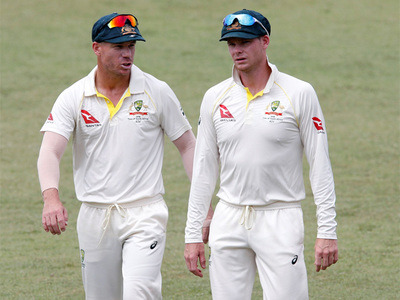
Last week the national crisis was cricket, this week it’s Rugby. The cricket story concerned 3 members of the national side who were caught cheating; the rugby headlines concern an individual player who has made a statement on instagram about his religious convictions.

I don’t follow Rugby Union; I’ve grown up with AFL, the game Israel Folau once tried to play. However, one doesn’t need to understand the rules of Rugby, to grasp that the rules for public speaking have changed in Australia. Governments are yet to determine what laws and codes of conduct will be written to support the recent amendment to the Marriage Act, but sporting codes and iconic companies are making it clear where they want lines to be drawn.


folau.jpg

On his instagram account, Israel Folau responded to a question about “gods plan for gay people” by saying, “Hell…unless they repent of their sins and turn to God”.

First up, did Israel Folau say anything untrue?

Did he suggest anything that is out of sync with the Christian faith? No.

Could he have said it in a better way? I think so. Folau could have said something like, “Homosexual practices are one example of many ways in which we ignore God’s purposes. All of us, including myself, are guilty of living without regard for God and because of that we deserve hell. God  is holy and he also merciful, and that’s why Jesus came and died on the cross. The amazing thing is, by trusting in Jesus we are forgiven and the direction for life changes for the better, and we are promised a future that we don’t deserve but is God’s incredible gift to us.”

Perhaps he could have ignored the questioner who was clearly trying to trigger a response. Sometimes the wise thing to do is to say nothing. However, Israel Folau chose to speak up, and good on him for doing so. I wish he had been more gentle and nuanced with his answer, but his words were not wrong.

Christian beliefs are grounded in the Bible, and the Bible’s message about sexuality is clear and consistent.  As the Bible itself teaches, there is a trajectory within its story line, and so we are meant to read and interpret the Old Testament in light of the New Testament, and to apply meaning through the lens of Jesus Christ. That means there are Bible verses which were spoken for a particular people and time, and no longer directly applicable to us. It also means that parts of the Bible are describing events to us us rather than prescribing specific norms for today. Nonetheless, the Bible’s teaching about human sexuality, including homosexuality and of marriage, retains a moral goodness and integrity from Genesis to Revelation.

Rugby Australia boss Raelene Castle has stated, “Israel’s comment reflects his personal religious beliefs, however it does not represent the view of Rugby Australia or NSW Rugby…We are aligned in our view that rugby is a game for all, regardless of sexuality, race, religion or gender, which is clearly articulated in rugby’s inclusion policy.”

There are two clear problems with Castle’s comments: First, Rugby Australia’s inclusion policy theoretically includes ‘religion’, and yet all the talk is about excluding Folau and his religious convictions, and these are beliefs which are in line with orthodox, historic Christianity and which are believed by thousands of Christian Australian who are playing sport at every level in this country. Second, there is a massive assumption being made here, that is, Folau’s comment is “homophobic”.

The policy states, “There is no place for homophobia or any form of discrimination in our game and our actions and words both on and off the field must reflect this”.

Here lies the problem. It is now taken as fact, certainly by Alan Joyce and others, that affirming the Bible’s view on sexuality is homophobic. If you agree with the Bible, you are a bigot. This is simply untrue. For example, Jesus spoke many words of disagreement to people around him, but was his motivation fear and hatred, or was it love and kindness? Did Jesus insist on calling sin, sin, because he wanted to crush people or because he wanted to save people? Sadly, there are individuals who are hateful toward people in the LGBTI community, and it is awful, and without excuse, and we Christians need to stand with you against any tirade of abuse.

Jesus once said, “the truth will set you free.” He didn’t say, the truth will agree with you, for he goes on to say, “Very truly I tell you, everyone who sins is a slave to sin. Now a slave has no permanent place in the family, but a son belongs to it forever. So if the Son sets you free, you will be free indeed.”

This goes to the very heart of Christianity, which is God who disagrees with us, and yet became incarnate, speaking and living truth, dying and rising from the dead to redeem sinners. This message may not be popular in Australia of 2018, but then again, history shows us that the Gospel has rarely been a social media success, and yet it is too good and too important for silence. There is no other God who is honest with us like Jesus, and there is no one else who loved us to the extent of suffering crucifixion for our eternal joy and good.

It is not homophobic to hold to the Bible’s teaching on sexuality. That’s not to say, people should listen to or accept this message, but calling it hate speech is false. Should Israel Folau be sanctioned for his comment? Is Qantas right to threaten Rugby Australia with their sponsorship?

I don’t agree with Alan Joyce’s views on sexuality, and I don’t like the way he has rebranded QANTAS as a gay pride flag flying company. Have I boycotted Qantas? No, in fact I’m flying with them tomorrow! What we are seeing is a major Australian company pressuring a sport to exclude a player who professes Christian beliefs. I think it would be unwise, but they might. I would ask,  is this the Australia we want to call home?

The Coopers Beer saga of last year served as a watershed (or should that be, beershed?!) moment in Australian social history, indicating that there would be a social and economic cost to anyone who doesn’t subscribe to the new morality. The art of toleration in Australia is being scrubbed out by a vocal priesthood of humanistic secularists who are intent on reframing the Australian identity and conscience. It is not only anti-Christian, it is an anti-freedom movement and is serving to diminish both religious and public non-conformity. Israel Folau is but another inevitable target of what will become many more in months and years to come.

————–

Late this afternoon at a press conference, RA chief executive Raelene Castle has said,

““This is a difficult issue when you think you are trying to combine religious beliefs, freedom of speech and inclusion, respect and the use of social media,” Castle said.

“We’re proud of the fact that he’s a strong believer and he’s prepared to stand up for what he believes in.

“We’re proud of the fact that he’s a strong believer and he’s prepared to stand up for what he believes in.

“We want athletes in our code who are prepared to do that and that’s really important.

“But at the same time, Rugby Australia’s got a policy and position of inclusion and using social media with respect.

“So that’s where we shared stories, shared ideas and shared positions and both of us recognise that what we want is a situation where we use our social media platforms in a respectful and positive way.”

There are some positives here and it’ll be interesting to see how it unfolds over the next few days, especially as to whether Qantas will turn down their rhetoric. Also interesting is Castle’s recognition of a now existing ‘tension’. Perhaps this is an opportunity for good listeners and reasonable minds to sit down and begin talking about how we can regain the art of disagreement in public discourse.

Foreign Aid and Australia’s Disappearing Generosity


“Those who trust in their riches will fall, but the righteous will thrive like a green leaf.” (Proverbs 11:28)

““Surely everyone goes around like a mere phantom;  in vain they rush about, heaping up wealth without knowing whose it will finally be.” (Psalm 39:6)


The Age yesterday reported that not only is Australia’s Foreign Aid on the decline, Australians in general are giving less to charitable causes.

  • In 1994 Australia was ranked 9th on the international league table of overseas aid donors (measured by the share of gross national income devoted to overseas development assistance). In 2018, we have dropped to 17th.
  • In 1994, Australia gave 34 cents for every $100 of national income to foreign aid (0.34%). In 2018, the contribution is now 22 cents for every $100 (0.22%).
  • Foreign Aid spending has decreased in the ministry of 7 of our last 10 Foreign Ministers.
  • “Even on the current budget numbers Australia’s aid spending is expected to slump to just 0.20 per cent of gross national income by 2021.”

According to the research raised by Matt Wade,

“The National Australia Bank’s Charitable Giving Index, which tracks donations made through online channels, shows giving to “humanitarian service” organisations like World Vision, Red Cross and Oxfam has declined as a share of all charitable giving over the past three years. In 2015 the humanitarian services sector received 35 per cent of all donations but that had fallen to 32 per cent by last year. The average donation to the sector was also down.

That fall came despite a plethora of international humanitarian crises…the public response in Australia was strangely muted.”

Depending on which research one uses, somewhere between 65-80% of Australians contribute to charitable causes, both within the country and to NGO’s. Again depending on which study we rely on, per capita contributions equate to between $200-300 per annum, which works out to be approximately 0.25-0.3% of the median household income in Australia.

I have three theories as to why we are seeing this trajectory:

  1. Foreign Aid doesn’t win votes. I’m sure it is a factor for Christians and for some conscientious Australians from other backgrounds, but the reality is, Foreign Aid is not a political game changer.
  2. Most Australians base their charitable giving from their disposable income, rather than regularly setting aside an amount from the total income. We are spontaneous givers, not planned givers.
  3. Uncertain times create caution, and thus a reluctance to give money to various causes. There are certainly many geo-political tensions in the world today, and these may well mute our responses. There are also domestic economic issues that again call into question what we feel able to contribute beyond our own immediate concerns. Then again, is this not always the case? Are there not always socio-economic question marks and pressures? When has there ever been an ideal time to given generously to those without? And as Matt Wade exclaimed, Australia today has never been more rich, and yet we are moving from modest giving to miserly.


It is easy to stand in the public gallery and shout out advice to Governments. But perhaps we should be aiming the megaphone at ourselves. Whether we like it or not, Governments are, at least in liberal democracies, a mirror of the dominant society. Government policies to a very great extent reflect the attitudes and priorities of the general community. Is it of coincidence that the slide in Foreign Aid is tracking at a similar level to the average charitable giving by Australians?

Before we tear down the Government for another moral failing, there are several important caveats and consideration.

First, the social and economic priorities of a Government should depend, at least in part, on what one believes the responsibility of Government to be. I think we make a lot of assumptions about the role of Government. Our list of expectations seems to be growing, and the end result is that we are creating bigger Governments, and I’m not so sure that that is particularly healthy for our society. Have we become too reliant on Governments? For example, once a upon a time, a family would care for their own elderly parents and for their own young children, but now, do we too readily call upon the State to assist?

How Government spends money, largely reflects the values and the priorities of voters. The relationship is even more complex, for there are times when we want Government to do the kinds of things we should be doing ourselves. We wish to alleviate ourselves of responsibility by loading governments with even more.

Second, the priorities of a government should primarily focus on its own people, and yet we also belong to a global community, so surely it is right for us to share some of our bounty with communities across the world who are struggling at this time? If the shoe was on the other foot, would we not hope that someone would see our plight and have compassion on us?

Third, if we want our government to change perhaps we need to start with ourselves. If we are serious about changing Foreign Aid to levels that a more akin to those in 1996, what will we voluntarily give up? Are we willing to ask for a cut in sport or in the arts? What about infrastructure, Defence, social services, and a thousand other areas of expenditure? Does not the very definition of generosity imply a cost and sacrifice? What are we prepared to give up?

What does it mean to love our neighbour as ourselves? This is a principle taught by Jesus Christ, although I realise Christianity has nothing worth saying in the public square and we should never permit Christian values to influence public policy; perish the thought!

Thankfully it was a journalist from a progressive newspaper that reported this story. Can you imagine if a Christian minister had suggested that Australians are becoming less generous and more like Scrooge incarnate? The response would be unsurprising,

“here’s another example of judgmentalism and moral condescension from our Churches.”

Perhaps this 20 year trend is more revealing than we want it to be. Is it because our personal wealth has diminished over the years? No, the opposite is true. Is it because there are greater economic uncertainties today than 20 years ago? Again, the answer is no. Is it because there are fewer global opportunities to assist the poor and disadvantaged? Global poverty is thankfully in decline, but there is never a shortage of need. Is there perhaps a connection between society’s move away from Christianity and our decreasing generosity toward those in need? I don’t know of any research that has examined such a hypothesis,  but I would not be surprised if it were so. Juxtaposed to declining charitable giving across Australia, evidence suggests that Christians continue to give many times more than the national average.


Screen Shot 2017-12-27 at 10.21.35 am

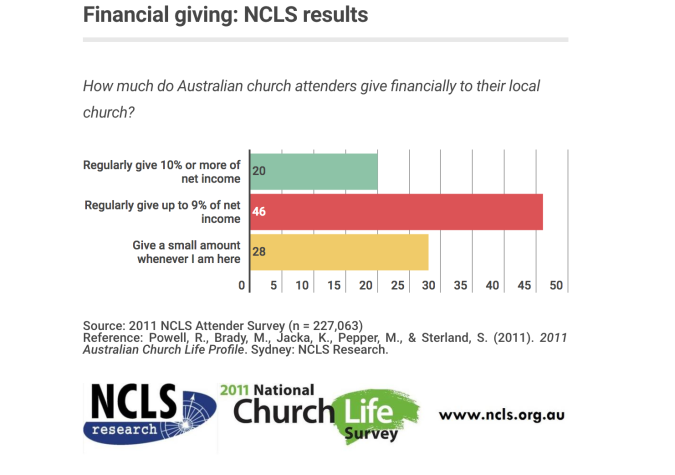
According to NCLS research (a national survey across Christian denominations, which involved 10,000s of participants), 66%  of church attenders give regularly, with 20% of attendees regularly giving over 10% of their income. It is important to note that these figures only include financial contributions to the local church, and does not include all the charitable giving beyond. It should also be pointed out that these financial contributions are not tax deductible.

The question is, why is the gap between general Australia and Christian Australia so great? I’m sure that some Christians give out of a sense of obligation (although they should not), and others give because of a dubious understanding of Divine blessing (ie the prosperity Gospel). But those two reasons cannot explain the giving that continues in evangelical Churches across the country.

So what is the reason?

My hypothesis is a simple one, and it comes from the Bible: Grace changes peoples’ hearts.

“Each of you should give what you have decided in your heart to give, not reluctantly or under compulsion, for God loves a cheerful giver.” (2 Corinthians 9:7)

“For you know the grace of our Lord Jesus Christ, that though he was rich, yet for your sake he became poor, so that you through his poverty might become rich.” (2 Corinthians 8:9)

This is not to say that people from other religions and with no religion cannot also show generosity with their finances, but the difference between the average Australian and the practicing Christian is staggering. Please don’t mistake my point, in no way am I talking up Christians, rather I am talking up Jesus Christ.

When one has come to experience the sacrificial love of God in Christ Jesus, and how the Lord of the universe gave up everything, even his life on the cross, this good news changes you inside and it reorients the way you view your income and the way you look at other people. I’m not suggesting that Christians are better people; Christians are ordinary citizens who face the same financial responsibilities as other Aussies. I am however proposing that there is a difference, and that difference turns on belief in the Gospel of Jesus Christ. The extraordinary gift of forgiveness that is found in Jesus, not only frees people to give generously but installs a joy in giving to others.

If Australians are concerned about Foreign Aid and the downward direction of our generosity, we need to look beyond Government and to our own hearts. What kind of people do we want to be? What type of nation do we wish to be? I am reminded of what Jesus once said, ‘you can try and gain the whole world and yet forfeit your soul. Where is the gain in that?’ (Mark 8:36)

It’s not cricket: “Crucify him”

In the wake of one of the most controversial weeks in Australian sporting history, Shane Warne was out in the press today and bowling this delivery,

“You shouldn’t crucify someone unless they deserve to be crucified.”

By this, Shane Warne is suggesting that the punishment being hand out to the guilty players is excessive.

“We are all so hurt and angry and maybe we weren’t so sure how to react. We’d just never seen it before.

But the jump to hysteria is something that has elevated the offence beyond what they actually did, and maybe we’re at a point where the punishment just might not fit the crime.”

I actually think Warnie has written a thoughtful piece. He doesn’t minimise the actions of Steve Smith, David Warner and Cameron Bancroft, and he is asking for Australians not to over react.

“I am still trying to wrestle with what I think the punishment should be. They have to be harsh, but if they are rubbed out for a year, the punishment does not fit the crime.

Let’s take the emotion out of it. We are all feeling angry and embarrassed. But you need a level head and you shouldn’t destroy someone unless they deserve to be destroyed.

Their actions were indefendable, and they need to be severely punished. But I don’t think a one-year ban is the answer.

My punishment would have been to miss the fourth Test match, a huge fine, and be sacked as captain and vice-captain.”

smith


It seems though that Shane Warne has a thing for the word, ‘crucified’. In the lead up to the 2013 Ashes series he called for English batsman, Joe Root, to be crucified,

“They could be crucifying him”.

I’m pretty sure Joe Root wasn’t guilt of ball tampering. In fact, Warnie was simply doing what Aussie cricketers have a habit of doing, and that is, tossing a googly into the head of an opposition player: If I suggest that Root is vulnerable to our fast bowlers, then he might begin to think it also.

Warnie’s analogy couldn’t be more fitting, because this weekend happens to be Easter. On the very same day, on the Thursday, crowds had gathered at a courtroom in Jerusalem, and there they denounced an innocent man, and called for his crucifixion. The Roman Governor acknowledged the man’s innocence, and he tried to bargain with the mob.

15 Now it was the governor’s custom at the festival to release a prisoner chosen by the crowd. 16 At that time they had a well-known prisoner whose name was Jesus Barabbas. 17 So when the crowd had gathered, Pilate asked them, “Which one do you want me to release to you: Jesus Barabbas, or Jesus who is called the Messiah?” 18 For he knew it was out of self-interest that they had handed Jesus over to him.”

The plan backfired and Pontius Pilate was forced to release Barabbas and instead sentence the innocent man to death on a cross.

21 “Which of the two do you want me to release to you?” asked the governor.

“Barabbas,” they answered.

22 “What shall I do, then, with Jesus who is called the Messiah?” Pilate asked.

They all answered, “Crucify him!”

23 “Why? What crime has he committed?” asked Pilate.

But they shouted all the louder, “Crucify him!”

24 When Pilate saw that he was getting nowhere, but that instead an uproar was starting, he took water and washed his hands in front of the crowd. “I am innocent of this man’s blood,” he said. “It is your responsibility!”

25 All the people answered, “His blood is on us and on our children!”

26 Then he released Barabbas to them. But he had Jesus flogged, and handed him over to be crucified.” (Matthew 27)

When we Australians found out what our nation’s cricketers had done, we were angry and disappointed. They had not only broken the rules of our national game, they had failed us as a country, and made Australian sport a mockery around the globe. I’ve also noticed how this sad affair has driven to the fore of the nation’s consciousness the fact that there is a thing called right and wrong, and that right and wrong matters, and such a distinction exists even on the cricket pitch.

Easter is all about the innocent been crucified in the place of the guilty. What is right? No, and yes. The crowds persuaded Pilate to kill Jesus because they were vindictive and couldn’t tolerate what Jesus stood for. The idea that Jesus claimed to be God gave them an insatiable desire for blood. At the same time, God ordained the cross because he is loving and merciful. For you see, God made the world with purpose and design. There are rules, and everyday we break them. Should there not be consequences?

Easter demonstrated to the world that there is consequence and it is weightier than a 12 month suspension. But the God who exists is not only utterly holy and hates those who bend and break the rules, he also loves the very same people.

For Christ also suffered once for sins, the righteous for the unrighteous, to bring you to God. He was put to death in the body but made alive in the Spirit”. (1 Peter 3:18)

Shane Warne was right, we shouldn’t crucify someone who is undeserving, and yet that is exactly what Jesus volunteered to do.  Next time we talk about crucifying someone, perhaps we should also remember the One who was crucified for us.

Harmony Day

The national diary appears to be heading on a collision course with the Gregorian calendar, as we squeeze more and more special days into the week. It’s like every other day we are being encouraged to wear a ribbon or a coloured item of clothing, to hashtag a slogan and make another speech.

This Wednesday is Harmony Day, not that I would have known except that I read about it in last week’s school newsletter. What is Harmony Day, you ask? According to the official website,

“Our diversity makes Australia a great place to live. Harmony Day is a celebration of our cultural diversity – a day of cultural respect for everyone who calls Australia home.

Held every year on 21 March. The Day coincides with the United Nations International Day for the Elimination of Racial Discrimination.

The message of Harmony Day is ‘everyone belongs’, the Day aims to engage people to participate in their community, respect cultural and religious diversity and foster sense of belonging for everyone.

Since 1999, more than 70,000 Harmony Day events have been held in childcare centres, schools, community groups, churches, businesses and federal, state and local government agencies across Australia.”

As a way of celebrating Harmony Day, people are encouraged to wear the colour orange. Leaving aside the fact that orange also represents a fruit, a cleaning detergent, one of the world’s most exclusive fashion labels, Hermes, and most ironic of all, a sectarian Protestant movement in Northern Ireland…other than these orange icons, apparently the colour “traditionally…signifies social communication and meaningful conversations.” Clearly someone forget to pass on that message to Northern Ireland!


harmony-day-e1462756915237

It’s refreshing to find a ‘day’ that I can happily support, and where I don’t need to sit down and have one of those “this is why we don’t celebrate xyz” conversations with my children.  Perhaps there is some deeper and not so positive agenda behind Harmony Day, but from what I know, it sounds like Wednesday should be orange day (that is, if I had anything orange to wear!).

The cultural experiences in Australia are not the norm across the world. There are few places on earth that have witnessed more positive cultural assimilation and multi-ethnic embracement.Our children’s school has students from many different countries and ethnic backgrounds, and our surrounding suburbs are home to thousands of migrants from all over the world.

This is not to say that racism is only an historical problem in Australia, its ugliness remains with us in 2018, and is probably more prevalent than many would like to admit. Racism is abhorrent. To undermine or deny a person’s humanity and dignity because of their skin colour or language is beyond reprehensible. I do think though that some societal discord is less about racism and is more about the fear of the unknown and the sense of losing cultural norms and habits; the political correctness police can be too quick to judge. It is also important that we can freely note and criticise another culture’s moral sins and shortcomings, so long as we understand the many transgressions marking our own society today.

Harmony Day is a day that I can say to my children, “this is worthwhile celebrating”. It not only reflects an Australian value that is good, it also intimates a significance beyond a nation’s identity.

In 2018, at Mentone Baptist we are preaching through the book of Acts. In this account of Christianity’s growth in the First Century AD, one of the book’s chief concerns is to demonstrate that not only did the Gospel of Jesus Christ penetrate different cultures and people groups, this new born unifying agent was of Divine purpose. Following Jesus’ resurrection from the dead, he commissioned his disciples to be his witnesses to the ends of the earth. God is concerned for the nations, and his good news message is for people from all nations and races and places.

Throughout Acts we read about thousands of Jewish people become followers of Jesus Christ, and also of Samaritans, an Ethiopian, Greeks and Romans, and many others throughout the world. The Gospel not only found home across ethnicities and languages, but it cut across cultural barriers among rich and poor, men and women, leaders and servants, all now worshiping God together and living out of love for each other. The Gospel call is higher than toleration, it even exceeds the idea of friendship; the Gospel unites otherwise disparate people together in Christ, and creates relationships as close as family. 2,000 years on, this story is continuing, even in Australia.

This year Harmony Day falls one week before another public celebratory day, Good Friday. Good Friday is a day when Christians remember the extent of God’s love for the world,

“For God so loved the world that he gave his one and only Son, that whoever believes in him shall not perish but have eternal life.” (John 3:16)

That day Jesus didn’t wear the colour orange, his accusers dressed him in a purple robe and imbedded a crown of thorns into his head. He carried a wooden cross to a place called Golgotha, where nails were driven through his hands and feet, and where he was hung  until death. This was the cost Jesus bore so that God might reconcile the nations to himself.

Good Friday creates Churches and communities of such depth and peace and love that it makes the United Nations’ best attempts seem rickety and faint. At Mentone Baptist we don’t celebrate Harmony Day, because we are living it every day; perhaps not perfectly but certainly with genuine joy and gratitude. Like thousands of Churches all over the country, we are a big family made up of many different nationalities and cultures: from Uganda and the United Kingdom, to Russia and Malaysia, from Brazil and the USA, to China, India and the Middle East.

Federal Court Judge judges marriage

In the space of a few short years, we have created a new narrative in Australia, and it is one that our culture by in large assumes to be true and indisputable: do not judge another person’s sexuality.

When I took my 2 boys to the cinema last week to watch ‘Black Panther’, a new film was previewed, ’Love, Simon’, a story of a teenager who discovers he’s gay and falls in love with a classmate. Following this was Apple’s new advertisement celebrating same sex marriage. The new morality is clear and insistent,

“what you feel is who you are”.

“Don’t change. You cannot change. It is determined from birth.”

The weakness with this logic is that some people do change, as a Federal Court Judge has recently determined. A woman who entered Australia on a student visa, married a Lebanese man who is living here on a protection visa.

From the report in the Sydney Morning Herald,

“According to the AAT, the woman’s husband had been granted a protection visa on the basis of his homosexuality and feared persecution in Lebanon.

The tribunal wrote to the woman in January last year and said it was “difficult to see how the sponsor can have a commitment to his marriage to you when he has not told you about his claimed homosexuality”.

The woman’s lawyers wrote to the tribunal and said it was “not irrational or unreasonable for a former homosexual man to undergo a radical change in his sexual desires and now be fully in love and dedicated to his wife and family”.

The woman’s lawyers urged the AAT to consider the “cogent evidence” before it pointing to a genuine relationship, including the fact that the couple had a baby daughter.

But the tribunal found the couple were not credible witnesses. It said “the gay rights movement has, for decades, fought for the acceptance of homosexuality as a sexual orientation from birth, not something that … is a matter of choice or will or accident”.

The tribunal said it did not accept “the generalised argument that it is not unknown for a previously heterosexual man who has been married and has children, to enter into a homosexual relationship”.

“Without wishing to continue to generalise, it is most likely that such homosexual men have always been homosexual and have married and had children to comply with what were considered societal norms,” the AAT said.

The tribunal said it did not “disagree that it may well be the case that some heterosexual men have homosexual desires, or vice versa, or that some people are genuinely bisexual” but this was not what the husband had claimed.”

Maybe this marriage is legitimate and maybe it’s not; I don’t know the hearts of this couple,  but I certainly wish them the very best in their marriage. It is interesting though, the one thing we have been told incessantly over the past year is that we cannot deny other peoples love, and to deny them marriage is phobic. Indeed, who are we to even define love for them? And yet, here is a case of a marriage that doesn’t fall into line with the new morality’s code of ethics, and because of that it must be bogus. Really?

UNADJUSTEDNONRAW_thumb_16c7.jpg


Federal Court Justice Jayne Jagot was correct to dispute the Tribunal’s conclusions about sexual orientation. The notion that a person’s homosexuality is determined at birth has no scientific support and there is plenty of anecdotal evidence that demonstrated that some people do change. It is quite possible that there are genetic and biological factors which influence a person’s sexual orientation, and that there are also environmental and social reasons. The fact remains, some people do experience change in their sexual orientation.

This is one of the presenting dangers with the transgender issue. Young children are being taught in our schools that if they feel as though they identify with a particular gender they must be that gender and should now start transitioning into that gender. But as the research shows, the overwhelming majority of children who experience some form a gender dysphoria will grow out of it by the time they are adults.

It would be wrong and pastorally irresponsible to ever say to someone that they can or must change their sexual orientation. No doubt there are horrific stories about well-meaning people who have inflicted all kinds of mental scarring on people because they’ve tried to force a change. This is of course, precisely the kind of conversion therapy that is now being practised in Australia, and even within our schools, with impressionable children being led down paths that will create all manner of trauma for them in the future.

It is notable that a Federal Court Judge has exposed a popular narrative, although it’s unlikely to make any serious dent in the public conversation, because facts and non conformist stories are often not taken seriously. While many Australians who identify as LGBTIQ will hold onto that identity throughout their lives, others won’t. Some people do change, and others again will continue to struggle with their gender identity or sexual inclinations, but are convinced that they should live within the sexual framework outlined in the Bible. Sadly, such diversity of personal stories rarely reach our televisions, films, and education curriculum, because they don’t fit into the narrow narrative of the new Australian myth.

There is another story worth hearing, a better story, a more certain and freeing story. It brings clarity to a culture that is becoming increasingly confused, and brings hope to people who discover that the sexual revolution doesn’t deliver on its promises. The Christian message isn’t, ‘be straight and get married’, it is far greater and extends far deeper.

I am reminded of Rosaria Butterfield’s testimony,

“when I came to Christ, I experienced what nineteenth-century Scottish theologian Thomas Chalmers called “the expulsive power of a new affection.” At the time of my conversion, my lesbian identity and feelings did not vanish. As my union with Christ grew, the sanctification that it birthed put a wedge between my old self and my new one. In time, this contradiction exploded, and I was able to claim identity in Christ alone.”

While Butterfield’s sexual orientation did change and she is now married with children, this is not the experience of everyone who has same sex attraction. Indeed, there are many Christian men and women who remain single, same sex attracted, and living fulfilled and celibate lives. This can only mean that there is something more integral and sustaining and satisfying which is found in an identity that becomes ours through faith in Jesus Christ.

Charlotte Elliot says it so well. Her hymn, ‘Just as I am”, was made famous by Billy Graham. Even two centuries after she penned these words, they tell us of a wonderful story that can become our story,

Just as I am – and waiting not

To rid my soul of one dark blot,

To Thee, whose blood can cleanse each spot,

-O Lamb of God, I come!

Just as I am – though toss’d about

With many a conflict, many a doubt,

Fightings and fears within, without,

-O Lamb of God, I come!

Just as I am – poor, wretched, blind;

Sight, riches, healing of the mind,

Yea, all I need, in Thee to find,

-O Lamb of God, I come!

Just as I am – Thou wilt receive,

Wilt welcome, pardon, cleanse, relieve;

Because Thy promise I believe,

-O Lamb of God, I come!

Should a sheep have the same rights as a person?

If you’ve ever felt sheepish, the reason may be more acute than you first thought!

Melbourne is in the middle of a world wide campaign to fight for the rights of animals*. I wasn’t aware of this fact until pictures of sheep started appearing on social media this morning, but apparently “Melbourne is becoming known as one of the world’s most vegan-friendly cities”. Leaving aside what this must mean for another of our most beloved titles, ‘Australia’s food capital’, what are we to make of these posters?

After doing a little research I discovered that I missed out on ‘World Vegan Day’, last November. According to organisers, the goal of World Vegan Day is,

“to promote and expand awareness of the ethical, compassionate, health and environmental benefits of a vegan diet and lifestyle to the general public.

We are an all-inclusive, non-judgemental family event that encourages all people of every age group, gender, race and religion to celebrate World Vegan Day. While it is a great day for all Vegans to celebrate the vegan lifestyle it is also a great opportunity to outreach to the wider non-vegan community and immerse them for a few hours in the vegan lifestyle.”

It all sounds rather nice and tame, until you stop for half a second and realise that ‘non-judgemental’ only counts so long as you accept their philosophy about animals and humans. Last month, dozens of vegan protesters stormed a Melbourne steak restaurant, waving posters and screaming at diners.


28168624_10210661499921183_1828028902592077593_n.jpg

If the point is simply to make the public aware of certain cruel and unnecessary practices, fair enough. But no, they want us to believe that animals share the same rights as human beings.

Do we really believe that a sheep has the same value as a human being? Are you convinced that a person is ultimately no different to or better than an animal? And let’s not stop with sheep, after all are not all animals equal? What about cows, camels and man’s best friend?

It has become socially uncouth to speak up about the mass slaughter of unborn human beings. In my home State, the terminally ill are now only one train stop away from termination. The greatest sin of all is to suggest that there is any difference between the sexes. We are not only equal, we are all the same. Clearly, that must be true because women’s AFL is about to scrapped and instead female footballers will compete with the men in the draft. In fact we are now taking this pursuit to a whole new level, for society has committed itself to the unscientific and unkind endeavour of gender blurring. We can move between genders, and undergo hormone treatment to give the physical impression of change.

Perhaps the dream of Australia’s most infamous ethicist will come true, ‘imagine there’s no heaven or hell, no God, no marked difference between people and animals.’

In 2007, Peter Singer wrote a piece in the New York Times, where he discussed ethical questions surrounding  a severely disabled 9 year old girl by the name of Ashley. He wrote,

“Here’s where things get philosophically interesting. We are always ready to find dignity in human beings, including those whose mental age will never exceed that of an infant, but we don’t attribute dignity to dogs or cats, though they clearly operate at a more advanced mental level than human infants. Just making that comparison provokes outrage in some quarters. But why should dignity always go together with species membership, no matter what the characteristics of the individual may be?

What matters in Ashley’s life is that she should not suffer, and that she should be able to enjoy whatever she is capable of enjoying. Beyond that, she is precious not so much for what she is, but because her parents and siblings love her and care about her. Lofty talk about human dignity should not stand in the way of children like her getting the treatment that is best both for them and their families.”

Notice the comparison he makes? He suggests that the life of a dog or cat has more value and ‘dignity’ than a human being with limited cognitive faculties. Not only that, in true utilitarian style he denies Ashley’s intrinsic worth as a human being, suggesting that she has worth only insofar as she is loved by her family.

This post is not a rant against veganism as such. I don’t get it, and I have no plans to giving up milk, eggs, and especially steak. To be clear, the practice of not eating or using animal products is not inherently wrong. When it comes to some treatment of animals in our abattoirs, they probably have a valid point to make. However, the idea that animals and human beings are of equal worth, is vile and communicates how crazy the culture has become.

I suspect the vegan lifestyle is never going to catch up in mainstream society, but the atheistic utilitarianism of Peter Singer and others has already taken middle Australia captive. The vegan slogan is nothing more than the natural outworking of decades of denying the inherent imago dei.

According to the Bible, we do share one trait with sheep, “we all like sheep have gone astray”. We’ve broken down the fence and wandered off, and are trying to create a world without God and stubbornly refusing his good design.

I have some suggestions for a new poster at Melbourne’s train stations:

“Equal But Different: Dignity for men and women”

“Equal But Different: God’s Image Bearers”

“Equality for the Unborn”

“Behold the lamb of God who takes away the sin of the world”

Does anyone think that any of these slogans would be permitted on platform 8 at Southern Cross Station?


*No vegans were hurt in the publication of this post

Don’t substitute Church for a Podcast

I’ve noticed a new trend emerging among Christians: substituting regular church attendance for listening to podcasts online. To be clear, I’m not talking about podcasts about music or gardening, holidays or politics, or the utterly meaningless meanderings of self-appointed life gurus. I’m talking about replacing Sunday Church with a sermon podcast or the Christian version of an Ellen Degeneres show, which is sometimes but more often than not, originating in a church located thousands of kms away.

Before anyone hears me suggesting that we flush our podcast subscriptions down the virtual toilet, I enjoy listening to a range of talks and discussions of ideas. I’m currently subscribing to 8 or 9 podcasts on my phone, mostly about history or politics. As someone who is preaching most Sundays, I also appreciate listening to other preachers, partly to help keep myself sharp and growing as a preacher. I might listen to 2 sermons a month.

I’m not knocking Christian podcasts; they can be of some value. Needless to say, it depends on which podcasts you’re listening to. If it’s Joyce Meyer or Rob Bell, you’re better off joining Vincent Van Gogh and enter God’s Kingdom without any ears, than listening to those offerings from hell. There are also many great preaching podcasts available and there are thoughtful conversations with Christian theologians and pastors that we can download and appreciate while travelling into work each day. Like a good book, podcasts can teach us and broaden our horizons to useful ideas. My issue is not podcast per se, but a misplaced emphasis Christians are now placing on these ministries.

1200x630bb.jpg


Here are 3 concerns I have about Christians relying on podcasts instead of regular attendance at their home church.

First, except in the case when you were sick or on vacation and have caught up on your Church’s sermons online,  the obvious needs saying: other sermons were not preached for you or for me, but for another congregation who live a different context. The preacher has not spent the week praying for you and preparing a sermon for your instruction and encouragement. He does not share pastoral oversight for you and your family. It’s a bit like eating someone else’s dinner – tastes good but it wasn’t prepared for you.   

Second, listening to someone on your iPhone is not equivalent to meeting up with brothers and sisters face to face, praying together, singing together, sharing and serving one another.

Relying on our phones for spiritual nourishment suggests an individualistic pietism. Individualism may be a prominent value in our culture, but it’s not how the Bible describes God’s purpose for us. The very nature of salvation is that God is redeeming a people for himself.

19 Consequently, you are no longer foreigners and strangers, but fellow citizens with God’s people and also members of his household, 20 built on the foundation of the apostles and prophets, with Christ Jesus himself as the chief cornerstone.21 In him the whole building is joined together and rises to become a holy temple in the Lord. 22 And in him you too are being built together to become a dwelling in which God lives by his Spirit.” (Ephesians 2:19-22)

Third, enjoying Christian podcasts should not be confused with spiritual growth. Like I’ve already said, they can be helpful, instructive and encouraging, but it’s important that we follow the Bible’s view of spiritual maturity. Christians grow in Christ, as we grow together in Him. Whether it’s growth in knowledge or love or godliness, the Bible pictures this happening in the context of community, where we have covenanted with other Christians. Paul makes the argument clear and attractive in Ephesians ch.4

11 So Christ himself gave the apostles, the prophets, the evangelists, the pastors and teachers, 12 to equip his people for works of service, so that the body of Christ may be built up 13 until we all reach unity in the faith and in the knowledge of the Son of God and become mature, attaining to the whole measure of the fullness of Christ.

14 Then we will no longer be infants, tossed back and forth by the waves, and blown here and there by every wind of teaching and by the cunning and craftiness of people in their deceitful scheming. 15 Instead, speaking the truth in love, we will grow to become in every respect the mature body of him who is the head, that is, Christ. 16 From him the whole body, joined and held together by every supporting ligament, grows and builds itself up in love, as each part does its work.”

Convincing ourselves that we are doing well spiritually, despite being irregular at church or not attending at all, is a grave misstep. Christians grow and mature in community with other Christians, not by cutting ourselves from the body of Christ.

If you’re feeling the need to listen to sermons online because the preaching at your church is (in your estimation) so poor, either you need to find another church or humble yourself to the preaching in your church. Might I suggest, the best thing to do is speak to your Pastor about it.

A previous generation watched ‘Songs of Praise’ on the ABC or a Foxtel preacher hiding his Devil’s tail behind the pulpit. Today we have free access too an endless supply of faithful and faithless material online, to good, ordinary, and the demonic. My urge is, use them wisely, use them occasionally, and don’t ever let them take the place of your local church.  We must learn to eat from our own table.

Billy Graham and Melbourne’s record

The Melbourne Cricket Ground (MCG) is one of the great sporting stadiums of the world. First built in 1853, it is the home of Australian Rules Football. For 6 months of the year, 10,000s of football fans descend onto the G each weekend, to watch their teams play. The MCG has also been the scene of many memorable Cricket Tests, where on Boxing Day, 90,000 Melbournians take their seats to watch 590 balls bowled to terrified or dumbfounded batsmen.

During the Second World War, thousands of American Marines and GIs camped under the stands. In 1956, Ron Clarke lit the Olympic cauldron at the top of MCG, during opening ceremony of the Melbourne Olympics Games.

Every Australian knows the MCG, and almost every Melbourne family has taken a seat to watch the cricket or footy. It has become a family tradition of ours, to enjoy Carlton beating Essendon on a winters day, and in the summer heat, to cheer on the Aussie cricket team. We still talk about the times when our eldest son was given the opportunity to train at the G (and ran out on the pitch when no one was looking!)

The Melbourne Cricket Ground is symbolic of Australians favourite past-time, sport. We idolise anything that involves running, and kicking or hitting a ball. It’s how we spend our weekends, playing and watching sport.


MCG.JPG

This temple of Melbourne once bore witness to a very different stage. There were no footballs or cricket bats present, no athletes running around, and no one paying for admission. Instead, 140,000 men and women crammed the stands and spilled onto that famous turf, to hear Billy Graham preach the Gospel of Jesus Christ.

The 1959, the Billy Graham crusade had already run several meetings at another stunning venue, the Myer Music Bowl. But because of the large crowds, it was decided to move the final crusade to the MCG. Even then, no one would have predicted how many people would come, and the mark it would leave on Melbourne’s history.

I love this surprising fact about my city: Melbourne who is so proud of its prosperity, Melbourne who worships sport, Melbourne who is clambering to make herself one of the world’s most progressive and secular cities. In our most loved place, the record highest attendance is for an evangelistic sermon.

Our MCG has witnessed many celebrated moments, but the one which has left a mark for eternity was that day in 1959, when  Billy Graham came and opened the Bible, and preached the good news of Jesus Christ. In the kindness of God, and perhaps with a degree of irony, God replaced the idols of Melbourne with the crucified and risen Lord Jesus Christ, and lives were transformed.

Melbourne in the 1950s could be described as conservative, and having a strong Christian culture. It was not however Christian. For hundreds of people that day though, Christian influenced habits became a living faith. Today, our society may still hold onto many strands of Christianity but it has long forgotten their significance, and with moral certainty we are one by one cutting these ties. Perhaps in His mercy and love, God might again reveal his grace and power in Melbourne. Not that we are looking for a repeat of a Billy Graham crusade, but rather we look to the one whom Billy Graham preached and lived.

 For God so loved the world that he gave his one and only Son, that whoever believes in him shall not perish but have eternal life. For God did not send his Son into the world to condemn the world, but to save the world through him. Whoever believes in him is not condemned, but whoever does not believe stands condemned already because they have not believed in the name of God’s one and only Son.” (John 3:16-18)

RELIGIOUS FREEDOM REVIEW SUBMISSION

The Religious Freedom Review was commissioned by Prime Minister Malcolm Turnbull in November 2017. Below is a copy of my submission.

———————————————–

I am writing this submission as a father of 3 children, as a Minister of a Church, and as one who has the privilege to regularly counsel people in the broader community, including members of both State and Federal Parliaments. I wish to communicate not only my personal observations, but also some of the concerns that are being shared with me in relation cultural shifts in Australia that are leading to reduced religious freedom.

Intent to curb religious freedoms

These concerns are not ethereal and without warrant.  There is a growing sway of social commentators, politicians, and civic leaders who are demonstrating intent to reduce religious freedoms in our nation.

For example,

Auberry Perry, in The Age (Sept. 3, 2017),

“This survey offers us a conscious opportunity to make a firm stand in support of a secular government and to reject discrimination or favouritism based on religion. It’s our opportunity to say that religion has no part in the shaping of our laws. A vote against same-sex marriage is a vote for religious bias and discrimination in our legislation, our public schools, our healthcare, and ultimately, in the foundation of our social structure.”

Mauvre Marsden wrote in the Sydney Morning Herald (Oct 4, 2017),

“Yes, marriage is not the final frontier. Yes, we want safe schools. Yes, gay conversion therapy is child abuse. Yes, we want transgender kids’ agency to be respected and supported – regardless of what their parents want. Yes.”

Jane Caro recently published an article for The Saturday Paper (December 23, 2017), in which she argued a case for defunding religious schools.

“We believe that if publicly subsidised schools – and other religious organisations – wish to discriminate against others, they should have to advertise both whom they discriminate against and why – prominently – in all promotional material, prospectuses, websites and job ads. One of the costs of discrimination is that it narrows the field of available talent and anyone considering using the services of such a school ought to be fully informed about that.

Another way of making the statutory right to discriminate fairer for everyone is to remove the blanket exemption and require authorities wishing to discriminate to appeal for an exemption in specific cases. As private school providers claim they rarely resort to exercising their freedom to discriminate, this would seem the most sensible way forward. It might be reasonable to seek to apply religious selection criteria to those who will be giving religious instruction, but why would a mathematics or physics teacher, or a rowing master, or a cleaner or groundskeeper need to be selected on such a basis?

Why should public funds be provided for those staffing positions that require religious discrimination? Surely it would be reasonable for the costs of these positions to be met by the faith community itself, specifically the church and the parents?”

Recently, a group of notable Australian academics and journalists launched the National Secular Lobby, a group whose purpose is to remove religious beliefs from playing any role in Australian political life. While they refer to, “not allowing religious doctrine to influence our national laws”, their agenda is clearly broader.

Their list of ambitions includes,

• remove tax exemptions to “for-profit” Church businesses, their non-charitable properties, investments, and assets.

• remove prayers, religious icons and rituals from all “secular” public institutions, including all tiers of governments.

• remove single-faith religious instruction from schools; promote and teach “philosophical ethics” and “critical thinking”.

• abolish the National School Chaplaincy Program and replace chaplains with experienced professional counsellors.

• select Rationalists for boards/panels, based on “ethics”, not Church leaders who claim to be society’s “moral voice”.

The National Secular Lobby has posited a definition of secularism that is historically incorrect. The secularism which shaped Australian history and is expressed in our constitution never meant that politics and public life should be free of religious ideas, but rather it ensured that the State is not controlled by any single religious denomination. As Dr Michael Bird notes in the 2016 article, Whose Religion? Which Secularism? Australia Has a Serious Religious Literacy Problem, the parameters of secularism have been redefined, “no longer as the freedom of the individual in religion, but as the scrubbing of religion from all public spheres.”

The intent of this new version of secularism is clear: it is not ideologically neutral, but is driven to control religious and public life and policy, and to remove those religious beliefs that won’t conform to their socialist leaning and atheistic worldview.

Examples of hampering religious expression and freedom in Australia

There is clear intent to reduce and even remove religious freedom from Australia. The problem is not limited to vocalised intent, but there are already substantive examples showing up across our society, especially in the State of Victoria. I wish to highlight examples that I have been personally involved with and/or have addressed elsewhere in a public forum.

In the area of public education:

Over the last three years many Victorian families have been forced to reconsider public education, and indeed, have felt obliged to remove their children because of a swathe of anti-religious policies introduced by the Daniel Andrews Government. Many families have come to me for counsel, and as a parent with 3 children I am sympathetic to their concerns

In 2015, the Daniel Andrews Government issued a ban on religious education classes in schools, except under very strict conditions which most schools are not in a position to provide. These weekly opt-in classes have been valued by hundreds of schools and thousands of families, for generations now. My children’s local primary school had a consistent high intake and enthusiastically encouraged the program to continue every year. They are no longer able to offer these classes. The Government then issued a curriculum to replace SRI classes: Respectful Relationships. This new curriculum is compulsory and does not teach religion, but is designed to teach gender fluid theory to children, and to encourage them to explore sexuality. [1]

Not only has the State Government removed a once cherished option to study religion in school, children are forced to participate in (and indeed to affirm) programs that at times contradict deeply held religious convictions and morality. This is resulting in many families believing that they can no longer send their children to public schools. This often comes at a tremendous cost to families, and sometimes parents don’t have the option of enrolling their children into a Christian or private school.

In the area of employment:

One of the more ardent attempts to remove religious freedoms came in 2016, when the Victorian Government proposed an amendment to the Equal Opportunity Act. This shift would have given the Government greater authority over religious organisations, including churches, schools, and charities. In effect, religious organisations would have had to demonstrate to a Government appointed tribunal, why their employees must adhere to the religious values of their Church or school. While this Bill failed at the final hurdle (by a single vote in the Victorian Legislative Council), it is revealing that a Government in our nation had the audacity and believed it had sufficient public support, to act against religious freedom.

Diversity, freedom of association, and freedom of religion, are key characteristics of our liberal democracy. Throughout our history Governments have valued the contributions of religious organisations, indeed society would be the lesser without them, and yet Governments have also understood a demarcation between the State and religious institutions. The proposed Equal Opportunity Amendment (Religious Exceptions) Bill 2016 crossed that line.

Firstly, why did the legislation target religious groups? The amendment to the Equal Opportunity Act would not have impacted any social or political groups, only religious ones. As it stands, political parties, sporting clubs, and other interest groups have freedom to appoint persons who subscribe to the views and goals of those organisations. This is only common sense. It is therefore reasonable to ask, what was the motivation behind the Government focusing on religious organisations, and not others?

The scope of the legislation was not limited to discrimination on the basis of sexual orientation, but extended to “differing religious beliefs”. In other words, the Government would have had the power to stop a church or religious organisation from rejecting applicants on the basis of them adhering to a different religion.

Secondly, the inherent requirement test assumed that Government has the right to intrude on religious organisations, and influence whom they employ. This test was a clear abrogation of one of Australia’s most basic ideals, that the State will not interfere with the beliefs and practices of religious organisations.

Premier Daniel Andrews stated at the time, “Religious bodies or schools will be required to demonstrate a necessary connection between their religious beliefs and the requirements of a specific role.” This move however counters the very notion of a pluralist society, and would have set up the situation whereby a Government could impose its narrow secularist agenda onto groups who did not share their ethical and religious viewpoint.

Thirdly, the test assumed that the Government, and any tribunal set up by the Government, would have had the expertise and knowledge to interpret the theological framework underpinning these organisations.

Again, Mr Andrews has said,

“The defence will be limited to circumstances where religious beliefs are an inherent requirement of a job, and an employee or job applicant does not meet the requirement because of a specific personal attribute.”

But who is to say when and where religious beliefs are an inherent requirement of a job?

The legislation assumed that some jobs in a church (or mosque or religious school) can be considered religious and others not. This may be the case in some instances, but is the Government really in a position to decide what is inherent and what is not?

It is important to understand that this assumption is not ethically or theologically neutral; it requires a body, set up by the Government, to interpret and impose their understanding of Islam, Judaism, or Christianity onto these various organisations. For example, in Christian thinking, the roles of gardener, administrator, and teacher are not separated into religious and non-religious work, for all are expressions of service to God. 

As it happens, many of these organisations do employ persons who don’t subscribe to the particular religious principles of the institution; that is their freedom to do so. Surely though, school boards, charities, and churches are in the best position to understand the values and needs of their organisation?

In the end, it comes down to these questions:

Is it the role of Government to interfere with the beliefs and practices of religious organisations?

Is it wise or fair to force religious organisations to employ persons who do not share their values and beliefs?

In the area of societal conversation:

In my view, the Coopers Beer saga symbolises the shift against religious toleration in Australia.The initial scene looked innocent enough; the Bible Society sponsored a video conversation between two Government MPs, Tim Wilson and Andrew Hastie. The two men sat down over a Coopers beer and enjoyed a civil conversation about marriage. Within minutes pubs across the nation were boycotting Coopers, and tirades of abuse hit social media. So incensed were non-beer drinkers and craft-beer drinkers across the nation, that they bought bottles of Coopers beer only to smash them in alleys across the nation until Cooper’s management fell obliged to jump and join the fight for same-sex marriage.

Another iconic Australian brand, the Carlton Football Club, recognised that among football supporters there are diverse views and so they decided not to take sides during the marriage campaign. They were vilified in the media and by social media for not publicly taking a stand in support of marriage change.

The implications are clear: There is public backlash, and even financial loss for those who will not openly affirm the current and popular philosophic views of sexuality.

Concluding Reflections

The law, as well as restraining behaviour, operates also to change public attitudes. With the revised Marriage Act, future laws and interpretations of these laws, and future social norms will all be defined by this wording. The two examples that I cited above are not exceptional but are becoming the norm.  It is important to note that these examples took place before changing the Marriage Act. What are we to expect now that the law has altered? While clergy have been given an exemption in relation to the weddings the choose to conduct, student clubs on university campuses, and employees in companies are nervous and are already being bullied into abandoning religious beliefs that have been long held.

At the time when the Federal Parliament was deliberating the Dean Smith Marriage Bill, Former Deputy Prime Minister, John Anderson, wrote,

“West Australian Liberal senator Dean Smith’s bill guarantees only “the right of clergy and religious institutions” to decline participation in same-sex marriage services and celebrations. There is by omission no recognition of the likelihood of damage to the freedom of conscience for ordinary citizens and their businesses. Smith and many of his colleagues seem unmoved by the encroachments on freedom of speech and conscience already demonstrated in Australia.

Smith’s exemptions approach arguably does more harm than good, for it assumes freedom of conscience is of worth only to professional religionists and not to all Australians. This weakens even further the standing of this important democratic right and makes it an easy target for those who would lobby to erase this exemption and similar exemptions that may remain in state legislation.”

Why is this a problem? Because 4.83 million Australians have said that they do not support same sex marriage. Millions of Australians potentially face loss of income, employment, and facing tribunals for adhering to a view that will no longer be supported by the law.

Along with many fellow Australians, I am asking:

Will Australians be guaranteed freedom to continue teaching and explaining the classical view of marriage and sexuality, not only in a Church but also in public places including universities?

Will religious schools maintain freedom to teach and affirm the classical view of marriage?

Will our children in State schools have liberty to express, without bullying, a Christian view of marriage? Will parents have freedom to opt-out children from lessons that advocate views of marriage and sexuality that contravene their religious convictions?

The concept of a free exchange of ideas, and the notion of respecting others whilst disagreeing with them has helped cultivate the freedoms and prosperity we enjoy today as a nation. This successful pluralism relies upon a Christian worldview. It is not irreligion that brought religious pluralism to our shores, but the Christian view that we ought to love our neighbours, and that authentic belief in God comes about through persuasion not coercion. It is a sad reality that influential elements of society are deliberately turning us from these ideals. It is because of this fractured pluralism that we need to now carefully consider how we might encourage and make certain that freedom of religious expression, speech, and practice may continue, and remain a hallmark of Australian society.


OLYMPUS DIGITAL CAMERA


[1] – It is worth noting that this theory of sexuality can no longer be taught in NSW schools. Another program, Safe Schools, continues to be taught in Victoria and is compulsory, with the Government  ignoring the recommended changes introduced by the Federal Government. This curriculum is being abandoned altogether in some other States due to its extreme ideological and unscientific content.

Rachael Denhollander and her extraordinary speech

“blessed are the merciful for they will be shown mercy” (Jesus Christ)


Today I had the privilege, along with millions around the world, to watch one of the most extraordinary speeches I have ever heard.

Child sexual abuse is one of the great sins of this age. It is an ancient evil, as well as modern one, but until recent times so much was covered up and victims were so often not believed. Today, the former USA Gymnastics team doctor, Larry Nassar, was jailed for 175 years, having sexually abused countless number of girls under his care.


Screen Shot 2018-01-25 at 3.14.48 pm.png

These stories are far too common, as we also know here in Australia, and we should not be surprised to hear of many more similar cases coming to the fore in days and years to come. The crime is now sadly a familiar one, but in the midst of harrowing testimonies there came a message of purity, goodness, and astonishment.

Rachael Denhollander was the first victim to publicly come forward with allegations against Nassar, and she was final of 156 survivors to speak in court. 24 hours ago I had never heard of Rachael Denhollander, but today I encourage people to listen to her voice and to hear her message.

We live in a world filled with the stench of evil, and that evil resides in the hearts of humankind. It was not so long ago that we all had friends who doubted the existence of evil, certainly in an intellectual or objective sense. At yet, as doors open and as people find courage to speak, we discover that evil abounds and it is more prevalent and real and darker than we believed.

In her address, Rachael Denhollander speaks candidly of the pernicious and devastating behaviour of Larry Nassar upon so many girls, including herself.

“Larry is a hardened and determined sexual predator. I know this first-hand. At age 15, when I suffered from chronic back pain, Larry sexually assaulted me repeatedly under the guise of medical treatment for nearly a year. He did this with my own mother in the room, carefully and perfectly obstructing her view so she would not know what he was doing. His ability to gain my trust and the trust of my parents, his grooming and carefully calculated brazen sexual assault was the result of deliberate, premeditated, intentional and methodological patterns of abuse — patterns that were rehearsed long before I walked through Larry’s exam room door and which continue to be perpetrated I believe on a daily basis for 16 more years, until I filed the police report.”

She spoke of why justice must be meted out.

“Who is going to tell these little girls that what was done to them matters? That they are seen and valued, that they are not alone and they are not unprotected? And I could not do that ,but we are here now and today that message can be sent with the sentence you hand down you can communicate to all these little girls and to every predator to every little girl or young woman who is watching how much a little girl is worth.

I am asking that we leave this courtroom we leave knowing that when Larry was sexually aroused and gratified by our violation, when he enjoyed our suffering and took pleasure in our abuse, that it was evil and wrong.

I ask that you hand down a sentence that tells us that what was done to us matters, that we are known, we are worth everything, worth the greatest protection the law can offer, the greatest measure of justice available.”

She also spoke of an idea, a message and desire that is shared less often in Western societies today, less believed and more rarely practiced. Rachael Denhollander spoke of Divine judgment and mercy. She affirmed her belief in the God of the Bible as one who rightly punishes evil, and yet who lovingly offers mercy.

While addressing Larry Nassar, Rachael Denhollander said,

“In our early hearings. you brought your Bible into the courtroom and you have spoken of praying for forgiveness. And so it is on that basis that I appeal to you. If you have read the Bible you carry, you know the definition of sacrificial love portrayed is of God himself loving so sacrificially that he gave up everything to pay a penalty for the sin he did not commit. By his grace, I, too, choose to love this way.

You spoke of praying for forgiveness. But Larry, if you have read the Bible you carry, you know forgiveness does not come from doing good things, as if good deeds can erase what you have done. It comes from repentance which requires facing and acknowledging the truth about what you have done in all of its utter depravity and horror without mitigation, without excuse, without acting as if good deeds can erase what you have seen this courtroom today.

If the Bible you carry says it is better for a stone to be thrown around your neck and you throw into a lake than for you to make even one child stumble. And you have damaged hundreds.

The Bible you speak carries a final judgment where all of God’s wrath and eternal terror is poured out on men like you. Should you ever reach the point of truly facing what you have done, the guilt will be crushing. And that is what makes the gospel of Christ so sweet. Because it extends grace and hope and mercy where none should be found. And it will be there for you.

I pray you experience the soul crushing weight of guilt so you may someday experience true repentance and true forgiveness from God, which you need far more than forgiveness from me — though I extend that to you as well.”

Rachel Denholander’s words are the Christian message. The God whom she spoke about is not ignorant of, or complicit with, or powerless to judge sin; he hates it more than us. She is right, no supply of good works can erase the evil Nassar perpetrated and which arose from a heart that is more putrid than his actions. But Rachel Denhollander did not end with a message of condemnation, but she pointed her abuser to God’s mercy and forgiveness.

Should you ever reach the point of truly facing what you have done, the guilt will be crushing. And that is what makes the gospel of Christ so sweet. Because it extends grace and hope and mercy where none should be found. And it will be there for you.

I pray you experience the soul crushing weight of guilt so you may someday experience true repentance and true forgiveness from God, which you need far more than forgiveness from me — though I extend that to you as well.”

The cross of Jesus Christ highlights our sins more vividly than we wish, and it reveals the justice of God more holy and fierce than we imagine, and the cross is God pouring out his love and grace more wonderfully and abundantly than any could ever conceive.

 We should not be so quick to dismiss the efficacy and goodness of the Gospel of Jesus Christ today. In a court of law, and in circumstances addressing the ugliest of human affairs, a woman spoke with quiet dignity, sharing her pain, calling for justice on behalf of countless girls, and speaking grace to a man who deserves none. Rare? possibly. Contrary to human wisdom? Yes. Attractive and causes us to ponder? Absolutely.