Earth Hour and Resurrection Sunday

This year, Earth Hour shares the same day as Easter Sunday. Coincidence? Yes. Timely? Perhaps so.

Earth Hour began in 2007 in one of Australia’s colloquial towns, Sydney. A year later Melbourne joined with hundreds of global cities to participate in Earth Hour. According to the Earth Hour website, there are now over 7000 cities and towns participating worldwide.

It is hard for my wife and I to forget Earth Hour, given it coincides with our wedding anniversary. Nothing makes for a romantic dinner than having the power turned off for an hour!

OLYMPUS DIGITAL CAMERA

Earth hour is a one hour ‘lights off’ event. Between 7:30-8:30pm homes, businesses, and public places are encouraged to switch off their lights as a way of communicating the threat of global warming and showing consensus that we need to do more to limit its consequences.

To quote, we “show their support a low pollution, clean energy future, one in which we can continue to enjoy the best of nature and our great Aussie outdoor lifestyle.”

Earth hour is symbolic, a gesture indicating a concern and call for responsible living in this world.

This year, Earth Hour synchronises with Easter Sunday, or Resurrection Sunday as it is also known. This is a day when Christians celebrate the resurrection of Jesus Christ from the dead.

Far from being symbolic, Jesus’ death and resurrection is historic, literal, and real. We may turn the lights off for an hour, Jesus experienced the darkness of death.

His work changed the world. While the resurrection of Jesus certainly has a future looking fulfilment, it is has the power to change the human heart even in the present. And far from ditching this current world, the physical nature of Jesus’ resurrection affirms the value of creation. We are not left disregarding the world and neither are we left pinning the hopes of the world on ourselves.

Earth Hour reminds us of the fallenness of this world, and indeed how complicit we are in this; the resurrection of Jesus proclaims the redemption. We need a God-sized solution to our world’s problems, whether it is global warming or a thousand of other insurmountable issues that weigh down humanity and stifle life, truth and love.

As the Apostle Paul wrote,

’We know that the whole creation has been groaning as in the pains of childbirth right up to the present time. Not only so, but we ourselves, who have the firstfruits of the Spirit, groan inwardly as we wait eagerly for our adoption to sonship, the redemption of our bodies. For in this hope we were saved. But hope that is seen is no hope at all. Who hopes for what they already have?  But if we hope for what we do not yet have, we wait for it patiently. (Romans 8:22-25)

The ultimate answer to Earth hour is Resurrection Sunday.

As we turn off our lights for one hour and commiserate the global sized problems before us, why not also reflect on the tangible hope offered us in the person and work of Jesus Christ?

The Autumn of Tolerance

The weeks leading up to Easter have witnessed some of the worst mud slinging Australians have thrown at each other for quite some time. Just a few short years ago tolerance was lauded as a national virtue. Showing respect to another person with whom there was disagreement was part of the course of conversation. There was space not only to express an opinion, but freedom to persuade others of that view. After all, is this not a basic tenet of a democratic society?

Recently however, it appears as though tolerance has been given the flick, and a neo-Orwellian temperament has come to the fore, especially in Victoria.

Education Minister, James Merlino, is among a number of politicians labelling people ‘bigots’, simply for raising concerns about Safe Schools. And despite proven flaws with the Safe Schools material and agenda, the Victorian Government insist that it will be mandatory for schools. There has even been backlash at the Federal Government’s decision to give parents information about the program, and the right to opt-out their children should they choose. When the State wishes to take from parents their responsibility to make decisions for the good of their children there is a fundamental problem in Spring Street.

The message being communicated by the Government is that Victorians must adhere to the current social milieu or be branded as haters; agree with us or shut up.

This however is counter productive. Changing a culture of fear cannot be achieved by the State bullying its own citizens and stifling disagreement, indeed it only further polarise people. No one wants children self-harming. No one wants children bullied. And many believe with fair reason that Safe Schools is not the answer. It is one thing for a Government to disagree with these concerns, it is quite another for them to call the same public bigoted and insist their children attend these classes against parental permission. Have they not become guilty of the very hostility they are alleging needs stamping out?

Perhaps all of us need to look afresh at Easter,  and be reminded of that most radical idea which continues to turn inside out haters from all sides.

There is a story in John’s Gospel where Jesus broke with the cultural expectations of his day to speak with a Samaritan woman. At that time Samaritans were considered social outcasts, and they were often discriminated against. Jesus’ conversation was all the more outrageous because the person before him was a woman, and a woman was then living with a man to whom she was not married.  In our minds this may not sound particularly shocking, but at that time this woman was guilty of triple-headed social evil. However, it didn’t stop Jesus.

John tells the reader how Jesus understood her heart and her past, and yet he struck up a conversation with her. He showed her kindness, and even offered this astonishing word, “whoever drinks the water I give them will never thirst. Indeed, the water I give them will become in them a spring of water welling up to eternal life.”

In other words, Jesus did not agree with her lifestyle and yet he loved her and he dismantled cultural barriers to express kindness to her.

This account is one of many that preempt the supreme act of love that Jesus would express, that which we remember at Easter; the cross and resurrection.

Both the religious and political establishment were convinced that Jesus’ views could not be tolerated, and therefore must be silenced. And yet without his volition they could not have enacted their plan. It is one of the extraordinary juxtapositions we see in the cross: people conspired Jesus’ death and he himself chose that path. He responded to hate not with hate but laying down his life for the good of those who ridiculed and mocked him.

We are losing the art of disagreement and because of this, true respect and reconciliation becomes evasive. Indeed it appears as though we are entering the Autumn of tolerance, and winter is on the horizon. It is only fair to ask, is this a sign of how dissent will be treated in the future?

EasterforWeb

The message of Easter is one all of us need to hear afresh. At its heart, Easter is God reconciling to himself those who disagree with him and he with them. The cross demonstrates disagreement and love, grace and truth. Jesus did not choose the path of the self-acclaimed intelligentsia, or the self-righteous. He sided with the oppressed and unpopular, not because he agreed with their values but because he loved them

Miroslav Volf put it like this, “I don’t think we need to agree with anyone in order to love the person. The command for Christians to love the other person, to be benevolent and beneficent toward them, is independent of what the other believes.”

A Christian response to bullying

Michael Jensen (Rector of St Mark’s Darling Point, Sydney) has written this helpful piece about bullying and what a Christian response should include. I have published it with his permission:

P1017915.JPG

That people are bullied, victimised, and even assaulted because of their sexuality in contemporary Australia is completely unacceptable.

For me, this is a simple corollary of the teaching of Jesus Christ. And as a Christian, and particularly as a Christian minister, I am compelled to stand against those who would advocate or participate in such treatment of GLBTIQ people, or anyone else for that matter.

It has to begin at school. The school playground can be a tough and even brutal place.

I had a great experience at the private boys’ school I went to. I was tall for my age, played sport, I was white, I didn’t have anything foreign on my sandwiches, and I wasn’t gay.

But even then, I do remember episodes when my mettle was tested by the crowd. I was teased for being a minister’s son, or for having ideas beyond my station, or for having pimples – ‘Pizza Face!’ being the taunt.

This was nothing. I brushed it off, because I had all the advantages.

The bullying was noisiest for the Asians, who of course couldn’t pretend they weren’t who they were. Their difference was obvious, and they were teased because they inspired envy – many of them took the top spots on the merit list each year.

But there was one boy, smaller than the others, who was always at sea. From the beginning of Year 7, he was singled out as the ‘poofter’. It was determined that he was gay, and that too great an interest in him or too deep a friendship with him, would render one’s own sexuality suspect.

I don’t recall the victimizing of him ever becoming physical (though of course he might tell a different story). But I can only imagine that school was as isolating and lonely for him as it was exciting and encouraging for me – and I shudder at the imbalance of it.
Recently I met his father at a reunion. Without betraying confidences, all I can say is that my classmate’s life has not turned out well.

Later when I became a teacher, I often heard students call each ‘gay’ as a term of abuse. To be gay was, in teen-speak, to be despised. I knew that there were students who would identify as gay, or who were at least questioning their orientation. The menace to them of this language was obvious. And it seemed obvious that this language, and the attitude that generated it, needed to be challenged. It was simply unchristian.

The Christian faith has bequeathed to our culture a great gift: the teaching that we are all made in the image of God. That concept permeates even apparently secular documents like the US Declaration of Independence. It coaches us to see humanity in the face of the other. It was this conviction that held good against the social Darwinians of the late nineteenth century, who would rather have placed people of different races on the lesser rungs of the human ladder.

Add to that the experience of Jesus Christ: rejected by his own, abandoned by his friends, convicted by a corrupt and lazy government, tortured, tormented, and killed. At the heart of the Christian faith is the sign of the cross, which calls us to remember what we human beings are capable of as well as to recall what God offers us.

How could a person who worships a victim of bullying turn away from those who are being victimized and bullied?

Should Churches offer their buildings as sanctuaries to asylum seekers?

Here are 3 articles that I have found helpful in considering the right/wrong of claiming our buildings to be places of sanctuary for people from the law:

Stephen Mcalpine’s,  ‘no sanctuary from the secular state’

Neil Foster’s (associate professor of law at Newcastle University),   ‘churches offering sanctuary to asylum seekers’

Archbishop Glenn Davies’ statement, ‘Anglican church offers to help’ 

Stan Grant’s Speech on Racism, and why we must respond

Over the past week I have been listening to people comment on the speech given by journalist, Stan Grant, on the issue of Indigenous reconciliation and racism.

I watched it today and found Mr Grant’s words compelling, sad, difficult and necessary. I would urge all Australians to take the 8 minutes it requires to listen to the speech in full.

In Mr Grant’s voice there was heart-felt honesty but no self-pity, anger but not rage, truth-telling but not condescension.

7110522-1x1-700x700

As a preacher I am aware of the tenure of peoples’s reactions to words; forgetfulness often quickly follows acknowledgement.  A problem with speeches like Mr Grant’s is that we are moved by them, and for a few days we agree with them and believe that action needs to follow, but soon enough we have forgotten those beliefs and emotions, and words, and nothing changes.

For example, in 2009 Rev Dr Peter Adam gave the John Saunders Lecture. He spoke on the issue of indigenous peoples in Australia, and in particular he addressed the issue of land ownership and recompense:

“No recompense could ever be satisfactory because what was done was so vile, so immense, so universal, so pervasive, so destructive, so devastating and so irreparable.’’

‘We European Australians often claim that one of the strengths of the Australian character is ‘caring for the underdog’. That claim is hypocrisy – we do not act with justice, let alone care.”

At the time, Adam’s lecture gained attention in the media, with it being reported in The Age and Sydney Morning Herald. I remember it well because it was the first time I was convicted to think seriously about reconciliation issues with Indigenous Australians.

Will this be another speech remembered for its oratory or for the change it brought to this country?

The God whom I know and worship is the God who made the heavens and earth, and who made all humanity in his image.

It was out of this theological conviction that Martin Luther King cried,

‘I have a dream that my four little children will one day live in a nation where they will not be judged by the color of their skin but by the content of their character.’

This God sent his only Son, Jesus Christ, into the world because humanity was bent on throwing away the dignity of the imago dei. Humanity’s actions have resulted in the belittling of human life in a thousand different ways, including the abhorrent belief of racial inferiority

We cannot live in the past, but living in the present can remain most hard when our history remains unresolved. To this, I am looking forward to the Day when God will put away forever all that is wrong and evil, but in the present we remain responsible for our words and actions, and to ignore the call for reconciliation when it is given us, is simply iniquitous.

At this time, let us re-issue calls to include in our national constitution a statement recognising the first Australians. Of course, the wording of such an inclusion is incredibly important, and so instead of deferring it because the task is complex, let’s move forward.

Also, January 26th is our national holiday, and on this day I will give thanks for the many blessings we enjoy in our country. It  does seem as though the date has evolved beyond the tall ships in Botany Bay, as it is now cherished by many thousands of immigrants who have no connection to 1788, but who have made their home here from all corners on the globe and who celebrate becoming citizens on this date. But I am still  conscious of the fact that for many Indigenous people, ‘Australia Day’ is not so celebratory.

Are we so tied to this date that we cannot move to another?

I have heard it suggested that  we should make Federation Day our national day. It’s not a bad idea, except that it’s January 1st!

These two changes may be symbolic, but they are also tangible expressions to our fellow Australians that we recognise their pain, we acknowledge past sins, and we are eager to pursue reconciliation.

Christmas Carols with Chill/i

So it’s a stinking hot morning in Melbourne today. 34º degrees by 7:30am. I reckon that must be close to a record for a Melbourne morning.

News is, the cool change is heading our way and will be sweeping across the Bay by 1-2pm. That’s great news for emergency services and home owners out bush and in outlining parts of Melbourne. It’s also great news for everyone who love Christmas Carols.

Even if the heat persists Mentone Baptist can keep make the auditorium as cold as Montreal on Christmas Eve, and we can even add in the snow…maybe not.

ChristmasWeb

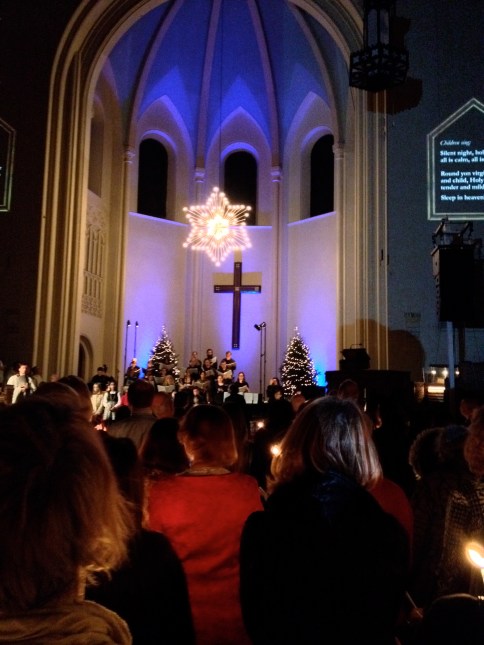
For Christmas singing, lights, something for the kids, fun, BBQ, and a message about the joy God can give, join us for this wonderful  Christmas tradition.


Starts 6pm and will finish around 7pm

Everyone around Mentone, the Bayside and beyond are very welcome

Christmas Carols in Melbourne

ChristmasWeb

I love Christmas and singing Christmas Carols.

At a time when there is much uncertainty and sadness across our world, what better way to spend a Sunday evening in the lead up to Christmas than for people to get together, and to enjoy singing timeless songs that remind us of a God who brings joy and peace.

You don’t have to be a Christian to come along, or religious in the slightest.  Every one is welcome at Mentone Baptist Church on Sunday December 20th at 6pm.

We also have a service on Christmas morning, 9:30-10:15am.

Click on the picture for further details about these events.

Hope to see you there


The American Headline capturing Australia today

kingprayer4n-7-web

This headline has captured attention not only in America, but also the major Australian newspapers, and because the local media are engrossed I am picking up the story.  I don’t like the headline, but I understand it, and I have sympathy for those who had the audacity to write it.

Next week it will have been three years since the Sandy Hook massacre, when 20 children and 6 adults were shot dead in an Elementary School. The act left us shocked and horrified, even in Australia, and I remember thinking, surely this will change the minds of Americans about their guns laws. Three years on, and there is a mass shooting almost every day of the year in the United States, with latest being the appalling shooting murders of 14 people in San Bernadino, California. It is little wonder that gaskets are blowing  and voices screaming for action. In this way, I understand the front page of the New York Daily News.

No one likes platitudes but we all use them. Perhaps a reason for this dependance on blah phrases is because of the politically correct prison that we have erected around society, both in America and in Australia. We fall back to language that is deemed acceptable and palatable. This also partially explains why the New York Daily News headline is so shocking, because they’re torn up book of etiquette.

And then there is the hypocrisy of tweeting about praying. I don’t have access into the hearts of those men and women whose tweets have been published, but I wouldn’t be surprised should much of it be sanctimonious public talk, although some of it genuine and sincere. Apart from the hypocrisy of “praying” to God when you know that for the other 99% of life, you couldn’t care less about God, there is also a hypocrisy when people who are in position to effect change, won’t. I am no expert in American cultural studies, and so I want to resist throwing around more platitudes about guns and violence. What is obvious, is that the gunmen are to blame. From where I stand, it seems to me that having such easy access to firearms, including assault weapons, borders on insanity. Given that, one can understand the frustration and even anger of many Americans: don’t pray, take action.

But can’t we do both?

There are times when the only thing we can do is pray. I’m not suggesting that this  is the case for those in the sights of the Daily News, but for many people it will be. And prayer is not a useless activity, that is, if we are praying to the God who made and continues to oversee this astonishing universe, the God and Father of the Lord Jesus Christ. The way prayer works is less to do with convincing God about what we want and need, as it is about having our hearts so that our lives increasingly conform to God’s heart. That means, prayer is more needed than we realise. If we pray, ‘your kingdom come and your will be done’, then surely we will seek more deeply and intently the things that conform to God’s character. That will have enormous implications for how we ‘love our neighbour’.  Pray more and more will be done, that is, when our prayers are not simply platitudes or hypocrisy, for which Jesus himself warns about repeatedly in the Sermon on the Mount.

“prayer is not a useless activity”

From our distance here in Australia, the picture we are seeing  is one where cultural Christianity is unravelling in the United States, and the public (as in Australia) don’t have the framework for distinguishing between biblical and civic religion. The headline, for example, assumes that God is on the side of particular politicians, or at least that politicians believe that God is on their side!

“God isn’t fixing this”?

There is a problem in the United States but it isn’t God, it’s people and money and politics. If America is anything like Australia, then the issue is our unwillingness to listen to the God of the Bible, and I don’t mean taking out pithy verses and misapplying them to our own ends, but deeply engaging in the teaching and significance of Jesus Christ. What does it mean to ‘love our neighbour’, as Jesus taught? What does it mean to ‘weep with those who are weeping?’ What does it mean to forgive our enemies? What does Jesus mean when he says, ‘blessed are the peacemakers, for they will be called children of God’?


Oprah in Melbourne, Star Wars, and Jesus

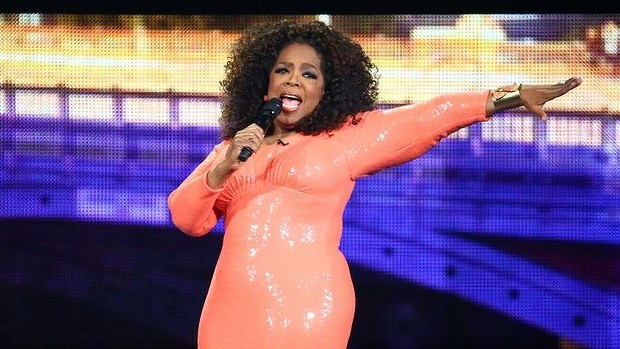
By the sounds of it, Oprah Winfrey’s show in Melbourne last night was even more painful and pointless than anticipated. I simultaneously laughed at and felt sorry for Neil McMahon as I read his review on his evening at Rod Laver Arena with Oprah.

Article Lead - wide1003382845gldz3ximage.related.articleLeadwide.729x410.gldz5p.png1449089378486.jpg-620x349

Getty Images

In his summary McMahon mentioned some highlights from Oprah’s two hour sermon (and who ever said that preachers in church should preach less!):

“My heart is my brand.”

“Anything is possible if you keep your vibrational energy high.”

“The intention is why you’re sitting here tonight.”

 “Many of you here are frustrated and sick and stalled and scared and maybe even just tired … It doesn’t matter because you’re still here. This is your second chance.”

“Take your glory, Melbourne. Take your glory and run!”

I’m not sure if Oprah sounds more like Joel Osteen or the Dalai Lama, but one thing is sure, such empty bravado ain’t going to help anyone.

It ought to stand out to us how outside the Oprah bubble, media are today reporting important and often dreadful stories, including another mass shooting in America, Boko Haram kidnappings, ISIL, Syria, asylum seekers, and violence and tragedy in Melbourne itself.

On stage with lighting,  music pumping, a smiling face and winsome voice, Oprah’s pithy and pseudo-spirituality may enthuse her loyal fans, but in the real world such words are empty.

If I want to be entertained I think I’ll go and watch the new installment of Star Wars. The world needs solutions that have weight to them.

Melbourne, please don’t look to Oprah for life advice, just as I hope people aren’t listening to those blood-sucking, money draining, soul-black hole tele-evangelists who are bizarrely still being shown early Sunday morning television.

Instead, I am reminded of another preacher, and his  words were not greeted with mass cheering, but they have nonetheless stood the test of time. They are words with weight to them; words that don’t offer glib promises or shallow triumph. They are words which have made the most powerful uncomfortable, and the wisest look foolish. And they are words that have given peace to the most vulnerable, and joy to the hurting.

Oprah’s words feed the ego, which is perhaps one reason for her popularity. Jesus’ words, on the other hand, both cut the ego and restore the soul.

“Do not store up for yourselves treasures on earth, where moths and vermin destroy, and where thieves break in and steal. But store up for yourselves treasures in heaven, where moths and vermin do not destroy, and where thieves do not break in and steal.  For where your treasure is, there your heart will be also. (from the Sermon on the Mount, Matthew 6:19-21)

Lord’s Prayer Banned

The Lord’s prayer is more wonderful and more dangerous than you think.

A 60 second advert produced by the Church of England has been banned by some of Britain’s cinema chains.

The advert features various individuals and smalls groups taking turn in reciting lines from the Lord’s prayer, and the advert ends with this call, ‘Prayer is for everyone. #justpray’

IMG_3856

The pray itself doesn’t belong to the Church of England, the words originate with Jesus himself, and they form part of his broader teaching on prayer to his disciples, which one can read in Matthew’s Gospel.

Digital Cinema Media (who own many of the cinemas), have explained that they have a policy of not accepting political or religious advertisements, in the case that they might cause offence. Leave aside the fact that many movies are an insult to art and to our intelligence, if Digital Cinema Media were so concerned about offending people should they not show care in their choice of movies being screened? How many films offend peoples religions (including Muslim people)?

Speaking to the Guardian, outspoken atheist, Richard Dawkins said, “My immediate response was to tweet that it was a violation of freedom of speech. But I deleted it when respondents convinced me that it was a matter of commercial judgment on the part of the cinemas, not so much a free speech issue. I still strongly object to suppressing the ads on the grounds that they might ‘offend’ people. If anybody is ‘offended’ by something so trivial as a prayer, they deserve to be offended.”

Watch the advert and decide for yourself, but I find myself leaning toward Dr Dawkins (and he says miracles can’t happen!).

While I believe Digital Cinema Media’s decision is silly, I also think the advert’s producers have made some errors.

For example,

#justpray is misleading because it could be easily misconstrued as, just pray to whoever; the details don’t really matter. I realise that’s not the intent, which of course makes the hashtag all the more unhelpful.

A more significant concern is the invitation to call God, Father. This is an incredibly wonderful idea, and it is unique to Christianity. To know God as Father suggests that he is not an impersonal being, but he is relational and personal. What a remarkable concept Jesus is teaching.

But he is not everyone’s Father, and therefore it is imprudent to call him such. The Bible shows us that we only have the privilege of knowing God as Father through faith in his Son. It is inappropriate for any child to call me dad, only my children can do that. Similarly, only God’s children can truly address him as Father. One of the great truths of Christianity however is that we can come to know him as Father.

‘In love he predestined us for adoption to sonship through Jesus Christ’ (Ephesians 1:4-5). The Bible teaches us that we can know God as Father, but it is through Jesus. By trusting in his death and resurrection, we are no longer separated from God, but are included into his people and brought into a personal relationship with God.

Finally, when we pray, ‘your kingdom come’, we are asking for God to not only save, but also to judge this sinful world. It is calling for God to rid the world of every evil and injustice, including our own. Should we encourage people to ask God for this, especially if they themselves don’t believe in Jesus Christ?

I would love to hear more people praying the Lord’s prayer, but it is ill-advised to invite people to pray what they do not believe or understand.

My suggestion is, amend the unhelpful hashtag, and perhaps add a warning about praying without understanding.

Having offered the above criticisms, overall, I really liked the advert. The line which particularly struck me this morning was, ‘Forgive us our sins as we forgive those who sin against us.’ What a powerful testimony this could be in light of the dreadful acts that are being enacted around the world. Jesus is pointing us to God who can forgive sins.

Pray with understanding:

Our Father in heaven,

hallowed be your name,

your kingdom come,

your will be done,

on earth as in heaven.

Give us today our daily bread.

Forgive us our sins

as we forgive those who sin against us.

Lead us not into temptation

but deliver us from evil.

For the kingdom, the power,

and the glory are yours

now and for ever.

Amen.