When talking about hell…

When I went to sleep last Thursday I didn’t expect to wake and find that the topic of hell had become a national conversation piece. While we cannot control the public conversation with all its warts, snidery, and well-meaning contributions, we can take responsibility for how we speak about what is a grave issue; the eternal state of people.

With a sense of humour reminiscent of Nero plucking his harp while Rome burned, columnist for The Sydney Morning Herald, Greg Growden, wrote,

“Folau’s version of hell, surrounded by drunks, homosexuals, adulterers, liars, fornicators, thieves, atheists and idolaters, actually sounds like good fun – especially if it excludes narrow-minded sporting identities.”

I don’t know anyone who enjoys talking about hell. It is a truly horrific subject. This doesn’t mean that we avoid or downplay what the Bible teaches, it does, however, necessitate that approach the topic of hell with great care and earnestness.

Unbelievers are poking fun at Israel Folau’s comments on hell with hackneyed jokes and Memes. There are Christians squirming uncomfortably as though a cactus needle were stuck erect in their chair. Hell makes people angry and dismissive, generating a range of negative reactions. So, how should Christians approach the subject of hell?


Screen Shot 2019-04-11 at 9.30.10 am

Here are 4 words of advice for talking about hell

1. Be biblical

Hell is a Christian doctrine. Hell (or Gehenna) is taught and affirmed in the Bible as a real place of eternal judgment. This notion of a final judgment is included in the historical Christian Creeds and Catechisms, as well as in doctrinal statements for Christian churches throughout the ages. Such as …

He will come to judge the living and the dead. (Apostles Creed)

What is the misery of that estate whereinto man fell? A. All mankind by their fall lost communion with God are under his wrath and curse, and so made liable to all the miseries of this life, to death itself, and to the pains of hell forever (Westminster Shorter Catechism, Question 19)

The resurrection of the dead, and the final judgment of all people by the Lord Jesus Christ. (article 8, Baptist Union of Victoria Doctrinal Basis)

Jesus taught about hell frequently, and as others have observed, the topic was on Jesus’ lips more than anyone else in the Bible. In his own words …

“Do not be afraid of those who kill the body but cannot kill the soul. Rather, be afraid of the One who can destroy both soul and body in hell.” (Matt 10:38)

“But the subjects of the kingdom will be thrown outside, into the darkness, where there will be weeping and gnashing of teeth.” (Matt 8:12)

 “‘Depart from me, you who are cursed, into the eternal fire prepared for the devil and his angels…  “Then they will go away to eternal punishment, but the righteous to eternal life.” (Matthew 25:41,46)

While Bible writers, Jesus in particular, use various metaphors and analogies to convey the awfulness of hell, they do so, not to obscure its reality, but to communicate the finality and dreadful realism of what hell signifies. There is no benefit in Christians downplaying the Bible’s teaching on hell or concentrating on speculations and theories of what hell may or may not be: the Christian’s responsibility is to be biblical. By that I mean, read, understand, and communicate what the Bible teaches about hell. In talking about hell, use the range of words and reasoning that is offered to us in the Scriptures—not ignoring the contexts and arguments in which the concept appears. Such diligence will aid us in speaking of hell accurately and helpfully.

Indeed, it is difficult to explain the Christian Gospel without reference to judgment, given that the Gospel is about redemption from Divine judgment. Whereas we tend to view the Gospel through the lens on anthropological needs and problems, the Bible also views salvation in light of Divine categories (justice and the right satisfaction of God’s righteousness). We obscure God’s glory and we diminish the human condition when we ignore or downplay this doctrine, like a Doctor talking of a patient’s terminal cancer as though it was a bruised knee.

2. Be loving and earnest

Speak about hell with soberness and with tears. Talking about hell isn’t judgmental; it is an act of love. Of course, people can speak about hell in a judgmental and unhelpful way, but people can also explain the Bible’s teaching on hell with sincerity and clarity because they love their friends and neighbours.


3. Appeal to notions of ultimate justice

The Bible doesn’t present hell as a Russian gulag; unjust, mean, cruel, and unnecessary. It is, rather, a just outcome and the place where people prefer to be. The natural consequence of life lived for self. While Greg Growden and others might joke about Folau’s list of transgressions and how many they have broken, the reality of such things is far from funny. Marital unfaithfulness destroys lives and families. Lying breaks the bond of friendship. Theft is a betrayal of trust and leaves victims frightened, and at times, financially destitute.

Our nation, for all its blessings, is filled with extraordinary pain and sorrow caused by the greed and hate of its citizens. We are governed by thousands of laws because we don’t trust one another and because we feel the necessity to guard ourselves against each other. Our judicial system, for which we should be thankful, is not beyond making mistakes and many who perpetrate crimes escape justice, and many of the deepest wounds are not the result of criminal activity but moral and personal assault. Where is the justice for such?

Our nation, for all its blessings, is filled with extraordinary pain and sorrow caused by the greed and hate of its citizens. We are governed by thousands of laws because we don’t trust one another and because we feel the necessity to guard ourselves against each other

Do we not long for a justice that is altogether right and comprehensive? Do Australians not hope that no evil will escape the attention of justice? I suspect that there are very few Australians (no matter what their religious beliefs) who do not (at least on some scale) believe or wish they could believe that hell exists for some people. One of the things the Bible does is to show us that the problem is not only external and persistent in society, but it derives from hearts that seek to define life without God: the problem lies within each of us. In other words, we may desire justice when others are guilty, but we long for mercy we realise our own guilt.

The point is, God offers justice, the kind of justice the world is ultimately looking for, and yet paradoxically does not wish to be true.

4. Don’t forget the gospel

Our message isn’t merely hell, our message is the good news of Jesus Christ, which includes salvation from hell, and the forgiveness of sins and the gift of justification, regeneration, adoption, and eternal life. The Gospel is good news because what is deserved is taken from us and what is undeserved is given to us by God as his gracious and loving gift

We will never turn to God and seek his mercy unless we first appreciate our personal culpability and accountability before a holy God. There is no genuine turning to Christ without a manifest awareness of guilt. The gospel tells us both the bad news of our sin and judgment; and the glorious antidote to that judgment in Christ. As the writer of Hebrews summarises things:

Just as people are destined to die once, and after that to face judgment, so Christ was sacrificed once to take away the sins of many; and he will appear a second time, not to bear sin, but to bring salvation to those who are waiting for him. (Hebrews 9:27-28)

Or, as Luther puts it in his earthy and practical way:

When the devil throws your sins in your face and declares that you deserve death and hell, tell him this: “I admit that I deserve death and hell, what of it? For I know One who suffered and made satisfaction on my behalf. His name is Jesus Christ, Son of God, and where He is there I shall be also!” (Martin Luther)

Was Israel Folau guilt of hate speech, as many are arguing? He may be guilty of breaking his word by continuing to post such comments. But are his comments bigoted? If connecting a list of sins with hell is akin to hate speech, it doesn’t take much imagination to work out how our society would view Jesus Christ. Connecting sex outside of heterosexual marriage with the language of sin and hell is not inherently anti-social and anti-people; it comes from the conviction that not every action and not every attitude is good or right. Australia’s problem is that we’re suffering from Judges syndrome, everyone wants to “do what’s right in their own eyes.” Such attitudes have become mainstream platitudes. And now we want to send Izzy into the eternal Rugby exclusion zone for daring to suggest that it might lead to disaster.

The danger for most Christians today isn’t that we make too much of hell, but that we think too little of the Bible’s teaching on hell. We may not have a conversation about hell every week, but if we never talk about it, our friends would be right to wonder, do these Christians even believe what Jesus says?

Israel Folau Charged with Social Blasphemy

Israel Folau is in trouble once again for espousing views that are in line with 2,000 years of orthodox Christianity. This is not the first time that he garnered the fury of the cultural watchdogs and has found himself reported to the governing authorities of Rugby Australia.

Yesterday, Folau posted 2 comments on Instagram which garnered immediate anger and disappointment, such that it is the subject of newspaper articles and television reporting today.


Israel Folau is one of the great rugby players that Australia has produced in the past 20 years. His reputation on the field has excited spectators, and off the field, he has defied cultural messaging and created national consternation: what to do with a national sporting star when he won’t conform to the moral narrative of today’s Australia?

Here are 5 thoughts:

1. Social media is a problematic medium.

I am increasingly convinced that social media is not a particularly constructive medium for conveying important messages. Pithy statements are too often misunderstood and taken out of context. On this occasion, the issue isn’t that people are misreading Folau, but that he hasn’t said enough. A photo on Instagram or a 240 character tweet often doesn’t suffice. I don’t offer an answer for resolving this perpetual problem with social media, but I am observing that it does exist, and it is a problem not only for people we agree with but also among those with whom we disagree.

Perhaps one forward step would be to ask for clarification; what do you mean by that tweet? Can you elaborate and tell me more so that I can understand where you are coming from?

2. Both content and manner matter

“Let your conversation be always full of grace, seasoned with salt, so that you may know how to answer everyone”. (Colossians 4:6)

“in your hearts revere Christ as Lord. Always be prepared to give an answer to everyone who asks you to give the reason for the hope that you have. But do this with gentleness and respect…” (1 Peter 3:15)

I am not about to lambast Israel Folau for not being as irenic as perhaps we might prefer. He certainly has more courage to speak Bible truths than do many of our Bishops and Christian leaders across the country.

What we say matters enormously. The content of our speech either reflects our deeply held beliefs or it betrays them. How we speak also communicates volumes to those who are listening. I don’t know Israel Folau nor his heart and motivation. I appreciate why some people might read his comments as coming from a frustrated or even angry man. Of course, he may well be expressing heartfelt concern and earnestness for his fellow Australians. If Israel reads this blog post, I would gently suggest that his comments could be improved if they reminded his followers of his own need and thankfulness for God’s mercy to him; Christians don’t want to give the impression that we are somehow morally or intellectually superior to anyone else. While quoting Galatians 5:19-21 Folau could also have mentioned some of the wonders and goodness that comes from knowing the transformative power of the Gospel of Jesus Christ, as Paul describes in Galatians 5. For example,

13 You, my brothers and sisters, were called to be free. But do not use your freedom to indulge the flesh; rather, serve one another humbly in love. 14 For the entire law is fulfilled in keeping this one command: “Love your neighbor as yourself.”

The good news of Jesus Christ is salvation from hell and it is salvation to a new and better life. The Gospel is the greatest story ever told and it is one that can become my own as I accept God’s assessment of me and trust God’s answer for me.

FOLAU_PV3_1280x560-1

3. Don’t expect the culture to endorse the Gospel of Jesus Christ.

This shouldn’t surprise because it is, after all, the Bible’s own presentation of humanity. People don’t accept God on God’s terms. Instead, humanity has a very long history of showing intent to redefine and deconstruct God’s righteousness in order to justify their own moral proclivities. The Apostle Paul’s words remain true today,

“To the one we are an aroma that brings death; to the other, an aroma that brings life. And who is equal to such a task?” (2 Corinthians 2:16)

The Christian message is both compelling and repellent, attractive and offensive. We should present the good news of Jesus Christ with clarity and kindness and with unction, and still, there will be people who object and are even angered. Remember the greatest Christian preacher and apologist of all time, Jesus Christ. No one spoke a more compelling story than Jesus and yet the social elite could not tolerate him, not least because he would not abide by the sexual ethics of the day.

The media are particularly upset by Folau including homosexuality in his list of sins. Had he limited his list to adultery, lying, and stealing, people might have laughed but we wouldn’t see the kind of reaction that we’re observing today. Folau’s heresy is that he doesn’t fully and without qualification, affirm LGBTIQ lifestyles. He contravened the moral law of the land and no one, not even a sporting great, is allowed to get away with such blasphemy.

The response in the media and by Rugby Australia’s need to have the matter investigated once again highlights our society’s view of Christianity. Effectively what Israel Folau has done is quote the Bible and summarise part of the Gospel message. Are we really at the stage in Australian society where Australians are to be publicly castigated for quoting the Bible? Are we prepared to enter that ominous space where nations like North Korea, Saudi Arabia, and China, already belong, namely to prohibit Bible verses and Christian messaging? Are beliefs consistent with 2000 years of Christian faith now to be defined as hate speech?

The reality is, the only version of Christianity our society is willing to accept is a Christianity that has all its edges cut and its heart and skeleton removed. The only acceptable Christianity is a dead Christianity, where Jesus is no longer Lord and where he doesn’t need to save because we are without sin. Jesus is nothing more than the candyman, handing out spiritual tips to people who haven’t yet grown up and realised that the world is without ultimate meaning and design.


4. Society wants to control religious speech

The word on the street today is less about Israel Folau holding his beliefs or not everyone is saying that he shouldn’t have freedom to speak his views. The message being proclaimed by commentators including Peter FitzSimons is  that Folau’s contract must be terminated,

“His contract will be suspended or terminated on the grounds of having breached either rugby’s social media policy or his contract.

Rugby Australia simply has no choice.”

In other words, you have the freedom to speak but should your words fail the test of modern secularist orthodoxy, your words will cost you.

The headline in today’s Fairfax newspapers is telling,

“Until Folau repents, Australia has no choice but to let him go”.

This is only the latest of a growing number of examples of Aussie Christians facing job loss and financial cost for choosing Jesus. There is no tolerance, no accepting of religious opinion that deviates from the proscribed agenda. There is only space for the dogmatic preaching of conformity to the storyline of authoritarian secularists.


5. Jesus was serious when he spoke about taking up a cross and following him

Notice the deathly silence from Christian leaders once again, as we squirm with the uncomfortable knowledge that we agree with Izzy even if we would say things a little differently. This is another awkward day for Aussie Christians because one of our own has let the cat out of the bag, and if we’re being honest, we’d prefer if he hadn’t. I wonder, what does this say about us?

At the time when Israel Folau was the subject of similar controversy last year, I wrote

“As a nation we are struggling to cope with societal pluralism. Sexuality has now been defined in such strong terms, that alternative views, as reasonable and loving as they may be expressed, are now perceived as evil and unacceptable. It’s reached the point that sporting codes are now making theological commentary, and assuming a position on hell. Unfolding before us is another test for Australian society. Are we serious about religious freedoms and freedom of speech, or does the rhetoric only apply when beliefs fall into line with the new sexual morality? Do we accept that millions of Australians don’t subscribe to the now popular view on marriage and sexuality, and that these Australians have a right to express their opinions? While politicians and company CEOS and sporting organisations wrangle over a position on religious freedom, it is even more important for Australian Christians to be thinking through these issues. What do we really believe? How can we best communicated what we believe? What are prepared to lose for the sake of knowing Christ Jesus as Lord?”

Even though Folau’s sporting future remains uncertain, his testimony presents a challenge to the rest of us Aussies who profess faith in Jesus Christ. Would we be prepared to walk away from job security? Would we be willing to give up a lucrative income? Are we ready to embrace public abuse?

Our Bible text for this Sunday at Mentone Baptist Church is Matthew 16:13-28. Following Peter’s confession that Jesus is the Christ, Jesus began to explain that he must suffer and die. When Peter rebuffed Jesus for suggesting such a crazy idea, Jesus then explained,

“Whoever wants to be my disciple must deny themselves and take up their cross and follow me. 25 For whoever wants to save their life will lose it, but whoever loses their life for me will find it. 26 What good will it be for someone to gain the whole world, yet forfeit their soul? Or what can anyone give in exchange for their soul? 27 For the Son of Man is going to come in his Father’s glory with his angels, and then he will reward each person according to what they have done.”

Do we love our sport more than we love Jesus? Is our pursuit for social acceptance more important to us than loving our neighbours as Christ has loved us? 

When Jesus spoke about taking up a cross and giving up the world’s offerings, he wasn’t speaking rhetorically. Perhaps it is time for Christians in Australia to begin pondering his words and examine our own hearts and ambitions.


Update: Rugby Australia have announced that they are terminating their contract with Israel Folau (April 11th, 6:30pm)


Update April 14th

It’s important to relay important information when it comes to light so that I’m not misrepresenting the facts

  • Rugby Australia remain intent to sack Folau, however, the argument is being made by legal experts that this may not be possible as RA haven’t followed their own code of conduct when it comes to disciplining players
  • More important, someone has brought to my attention that Folau seems, at the very least, to be confused by the Christian teaching of the Trinity. His comments on the Trinity that have been shared with me are troubling, to say the least. This doesn’t negate the 5 points made in this post, but it may cause us to reevaluate Folau’s understanding of Christianity.  I suspect that many Christians, in explaining God, fall into one Trinitarian heresy or another, simply because they haven’t been taught the Scriptures well. Perhaps he needs a Christian brother to get alongside him and disciple him with a Bible in hand (don’t we all?). The doctrine of the Trinity, however, is too important, too central to the Christian faith, for us to ignore.
  • A few voices are now suggesting that Folau made a verbal agreement with Rugby Australia not to post such comments again on social media (I don’t know whether this is accurate or not). If that is true, then he has acted dishonestly and it is appropriate for Rugby Australia to sanction him. It also remains the case that it is inappropriate for RA to make such religious demands of its players, especially given there are examples where other players have publicly commented on similar issues, albeit for a different point of view to Izzy. 

A Mural and a Sign: Two Messages for Melbourne

A mural has appeared in Melbourne’s famous Hosier Lane. I’m not sure whether it’s commemorating or celebrating the egging of Senator Fraser Anning, but it’s there and no doubt it’ll gain national if not international attention by tomorrow morning.

It was only last night that I realised that this incident took place just up the road from where I live and from where my church is located. Frankly, I felt sickened that in my neighbourhood an event took place which is being described as an extreme right-wing political meeting.


Egg boy mural.jpg

Photograph V.T Rudd

The egging was a 17-year-old boy’s response to Senator Anning’s comments about Friday’s terrorist attack in Christchurch, where 50 Muslims were murdered as they prayed in two separate Mosques. Senator Anning suggested,

“The real cause of bloodshed on New Zealand streets today is the immigration program which allowed Muslim fanatics to migrate to New Zealand… The entire religion of Islam is simply the violent ideology of a sixth century despot masquerading as a religious leader.”

He then had the audacity to misread and misapply the Bible as a proof text. Dr Andrew Moody has written a helpful article which explains what Jesus is saying, as opposed to the message Anning is communicating.

I find Senator Anning’s comments morally repugnant. As an Australian, I wish we would be more welcoming of refugees. I spoke to someone over the weekend who works among some of the poorest and more oppressed peoples in the Middle East. They reminded me of the continued needs that thousands of Christians, Muslims, and Yazidis have, who are looking for a new home, a place that is safe and where they can raise their families without bloodshed.  Also, as a Christian who is serving in a church literally down the road from Moorabbin, I find Anning’s use of Jesus’ words repellent.

Like many Australians, I understand why a 17 year old boy might be tempted to ‘egg’ the Senator when the opportunity arose. If I was 17 years old and the supermarket was close by, I might also be tempted to do likewise, but surely we don’t correct one wrong by making another, even if it a relatively harmless egg.

What has been equally sad in the midst of a grief that so many New Zealanders are experiencing this week, is to see politicians, journalists and social commentators throwing their own rhetorical eggs at each other, lobbing insults from left to right and from right to left. If tragedies like Christchurch are unable to bring communities closer together, we have drifted into an unseemly place in our society. It has reached levels where I prefer not to check my twitter feed, and where reading the opinion pages leaves one feeling more disillusioned and disappointed. I don’t think it’s because we have forgotten how to speak civilly and how to show respect by carefully listening to each other, it’s that we don’t want to, and when people do try they are often shouted down with a torrent of verbal insults. The aim of the day is to win the argument by shouting louder and making oneself appear more morally outraged than others.

A few minutes drive south from Moorabbin along Nepean Hwy and with a left hand turn into Mentone, there is a sign which has been displaying its message for 50 years. Thousands of cars drive past this sign every day, although I suspect most people take little notice; it certainly won’t gain the attention that the mural will receive. I understand why. However, the message does grab the attention of some people. At Church yesterday, a man shared his testimony before the congregation and explained how he was driving past Mentone Baptist Church a few years ago and the message on this sign stood out to him and left him wondering about his own life. He eventually started to attend the Church and he became a Christian, his life turned dramatically, and yesterday he and another young guy at Mentone were baptised down at Parkdale Beach.

The message he saw reads, “Jesus Saves”. It is simple and beautiful, its meaning is ancient and yet also current, it both repels and compels, it creates questions and gives an answer. The message is very different from the mural on Hosier Lane that is imprinting the Moorabbin incident onto the city landscape. In a couple of years time only a few people will remember the egging and by then the mural will have been painted over many times. But the good news message of Jesus Christ will still be here, not because there’s anything special about the sign at Mentone Baptist, but because He is that good. It is a message that not only stands against racism but all manner of thinking and living that deposes goodness and truth and life. It is a message that not only signals fault but speaks of an extraordinary and undeserving redemption.

“For God so loved the world that he gave his one and only Son, that whoever believes in him shall not perish but have eternal life.” (John 3:16)


IMG_6840.jpg

Be more like Jesus: Responding to Christchurch

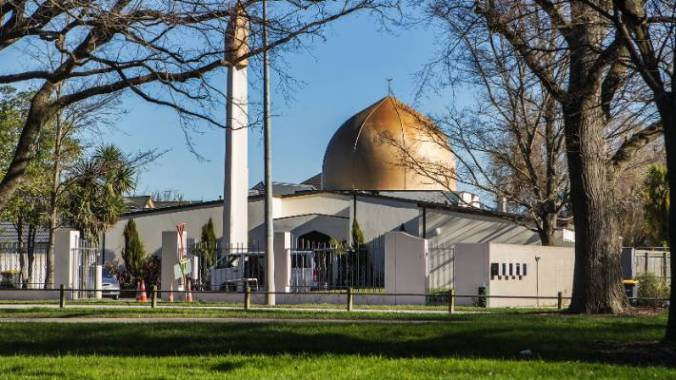
I had just finished writing my sermon for Sunday when I saw the news breaking out of New Zealand. Unfolding during the course of the afternoon, gunmen attacked 2 Mosques in Christchurch, killing at yet unknown number of people and injuring many more. News outlets have confirmed what already seemed obvious, that the intent was to kill Muslims while at their Friday prayers.

1552612481305.jpg

The Bible text that I’m preaching this Sunday is Matthew 15:21-28. It retells an occasion when Jesus was traveling through a region outside Galilee and Judea. As he traversed between Tyre and Sidon, two cities that were populated with followers of various religions (views of God that differed greatly from Judaism), a woman identified as a Canaanite pleads with Jesus for help.

The disciples on this occasion react with disdain and bigotry. The Canaanites were traditional enemies of Israel, and even in the First Century AD, cultural differences existed as well as irreconcilable religious differences. The disciples’ response to the woman wasn’t uncommon. Jesus, however, repudiated their hatred and acted contrary to what the disciples were asking. Instead of pushing her away, Jesus engaged with her, affirmed her cries for help and restored her troubled daughter.

“So his disciples came to him and urged him, “Send her away, for she keeps crying out after us.”

 He answered, “I was sent only to the lost sheep of Israel.”

The woman came and knelt before him. “Lord, help me!” she said.

He replied, “It is not right to take the children’s bread and toss it to the dogs.”

“Yes it is, Lord,” she said. “Even the dogs eat the crumbs that fall from their master’s table.”

 Then Jesus said to her, “Woman, you have great faith! Your request is granted.”And her daughter was healed at that moment.”

Jesus’ first words might appear harsh at first, even with a tone of disdain, almost as though he is mimicking the disciples; which of course he is. Jesus was repeating the disciples’ attitudes back to them while also drawing out the genuineness of the woman’s faith in him.

The lesson Jesus was teaching the disciples remains one that we cannot afford to lose today in our age of outrage and the at times, appalling acts of evil. There is a time for anger. There is a time for hate – to hate evil and those who perpetrate evil. But how does Jesus respond to difference here? What we see in Jesus is him entering a territory where the God of Israel was not worshiped and where the law of God was not esteemed. He doesn’t respond to the woman with bigotry and exclusion, but with compassion and inclusion. She calls out to Jesus to save her daughter, and he did.

Surely Christians must respond to others as did Jesus. Not because we are playing silly theological games of ‘all religions are the same’, but because we all share the imago dei and because we have come to know the beautiful grace of God and desire others to know this freedom and life.

We can love Muslim neighbours by praying for those injured and for the many who are now mourning incredible losses. Prayer is not wasted breath, but the extraordinary invitation of loving God who is Father.

We can love our Muslim neighbours by showing kindness to them. On the street, offer a smile. Take a few minutes to chat and offer some kinds words of encouragement. If we don’t have any Muslims in our circle of friends, why not? What can we do to change this omission?

We can love not only by renouncing the hateful speech of those who oppose Christianity on the left, but also publicly repudiate those on the extreme right who support, urge, and carry out malicious attacks on Muslims, on Jews, and others.

Too many tears are being shed in Christchurch tonight, and they will flow for many days to come. Let us sit down and weep with them.

Christchurch is a city name that evokes the most righteous and good, loving and kind man who has ever walked the earth; yes even God himself. He rebuked hate and he loved. Let us learn to become more like Jesus.

Pink is for Death

Pink has become the colour of death. When a baby girl came into the world, friends gave gifts of pink shoes or a pink outfit. It may be a social convention, but does that matter? Pink was the colour for girls. Like so much else, another insidious social movement has replaced something good with the representation of evil.

Last night in Manhattan, the skyline changed to a pinkish glow, as New York State celebrated the passing of a law which will enable the killing of babies up until birth.

pink new york.jpg

As the vote was counted and announced on the floor of the legislative powers in the State Capital of Albany, exuberant applause and cheers went up from the crowd who present to witness the proceedings. One American news outlet has likened scenes to winning the Super Bowl. It is telling when there is greater public joy over the sanctioning of killing human life than over the birth of a child. Surely society has plummeted to a new moral low.

Such scenes are not unique, they are becoming commonplace as abortion laws are relaxed across the world. There were similar scenes of jubilation in the Australian State of Queensland when abortion was legalised late last year. Brisbane’s night sky turned the colour purple in celebration of the right to take the life of a baby. Much of Ireland became a street party when their national referendum heavily favoured the legalisation of abortion.

The sheer evil of New York State’s law is reviling and should cause us to weep openly. Two of my children were born prematurely; two healthy beautiful little boys. Yet in places like New York and in my own State of Victoria, it is legal and even morally acceptable to have these children put to death. In Victoria, abortions can be legally attained until the pregnancy is 23 weeks and 6 days, after which, two Doctors are then required to sign a permission form. While late-term abortions are still considered ‘rare’ in Victoria, rare has become another malleable term, for in Victoria alone hundreds of unborn babies are subsequently killed every year after 24 weeks of pregnancy, many have no diagnosed medical condition and could be safely delivered alive.

25 years ago Hilary Clinton initiated what became the popular mantra, “abortion should be safe, legal, and rare”. That slogan has been abandoned for there is no longer a need to hide the realities. The new hashtag is “ shout your abortion”. This shift in public rhetoric less reflects a changing ethical system, and more echoes greater confidence to express what many people in society have long believed.

I still remember Jane Caro’s words in 2016,

“Shout out about your abortion any way you see fit — if the subject comes up in conversation, perhaps, or there is a story about it in the news.”

“If you have had an abortion, do not be ashamed of it. You are in good company. Shout it out and help lift the shame for all the other women who have also decided that every child should be a wanted child.”

Like a 21st Century prophetess, Caro’s sermon has been heard and adopted by the culture, as piranhas gathering around the carcass of a dying system of morality.

Long gone are the old excuses, for example, a fetus is not yet a human being.  With growing scientific and medical knowledge such nonsense is no longer sustainable but that does not matter. In full recognition of unborn babies being fully human and with the knowledge that their life can continue outside the womb,  the moral belief is, ‘their deaths are justified’. In other words, human life is not inherently valuable and untouchable but is subject to the worth we attach. A life is worth preserving only because personal interest declares it so.

The sadistic irony amidst the arguments of a woman’s right and health is that the majority of aborted babies are girls. In this age of advocating gender equality, most children who are killed in the womb are female. It is also the case that many other babies are aborted because they have been deemed as having some kind of medical condition, as though a disability or illness gives him less right to live.

In 2018, The Age (a secular Australian newspaper) reported a story concerning new research conducted by a secular Australian University, finding a link between abortion and the mistreatment of women.

“A phenomenon of “missing girls” could be afflicting Victoria, as a study of more than a million births suggests some parents could be aborting unborn female babies or undergoing embryo selection overseas in order to have a son.

If nature was left to take its course, it is expected that for every 100 girls born, about 105 boys will be brought into the world.

But in findings researchers say indicate “systematic discrimination against females starts in the womb”, mothers within some key migrant communities are recording sons at rates of 122 and 125 for every 100 daughters in later pregnancies.

Lead researcher Dr Kristina Edvardsson from Melbourne’s La Trobe University said it showed gender bias persisted in Victoria, despite laws banning people from choosing the sex of their child, other than for medical reasons.

“We believe that some women may be terminating pregnancies after discovering they are expecting a girl and in other cases are travelling overseas to access non-medical sex selection services through assisted reproduction,” she said.

These children have no grave, but they are not forgotten. I believe that one day there will be justice for these little ones, for not one act of injustice will remain unmet and without due consequence. I also remember that the miracle of life can only be equaled by God’s miracle of mercy. Christians ought to grieve over the insane and out of control dehumanisation project that is sweeping Western nations, and there is a righteous anger to be spoken. Our shouts, however, must center on a cross and declare good news of forgiveness. Despite the furor of public cheers and political congratulations, many women do regret their abortion and carry with them guilt and shame for many years to come. We, if we are truly Christian, have come to know and experience the mercy of God in our own lives, and we mustn’t let our anger rob our hearts of God’s mercy.

The story we speak is better than those cries to kill. Appropriately, t is a story about another unwanted child. At his birth, the Government attempted to interfere by sending local authorities to his town in order to find the newborn and have him killed. He was saved by his mum and dad fleeing, leaving the country and finding asylum in another land. Thirty-three years later, the feverish shouts could be heard all over the city, ‘Crucify him, Crucify him’. The public wanted it, and the Government approved. Little did they know that through this one death, God was bringing justice and mercy. The perfect Son of God was heaping on himself the sin of the world so that God might remove our sin and shame.

This is an age of outrage, and at times with some justification. In all the noise, hearing shouts to take the lives of innocence, the Christian message is about One who gave up his life for the guilty. We may not shout, but we can speak His name with love and kindness, with clarity and grace.

Our Summer Vacation wasn’t a time for missing out on Church

“the gospel is bearing fruit and growing throughout the whole world—just as it has been doing among you since the day you heard it and truly understood God’s grace” (Colossians 1:6)

This year we decided to escape one month of the Australian summer by heading for the northern hemisphere. Susan and I had the opportunity to take an overseas holiday with our children, and so we packed our winter coats and gloves, grabbed the passports, made a dash across the equator and didn’t stop for 18000km.

We marched up The Mall to Buckingham Palace. We joined the Tottenham hoards at Wembley Stadium for an EPL game. We toured Lord’s Cricket Ground, wandered the galleries at Tate Modern, drove through Flanders and the First World War battlefields, spent days walking through the beautiful city of Paris, eating a ridiculous amount of tasty French breads and cakes, and finally, a mountain of bbq pork and daily yum cha in the enticing city of Hong Kong. Yes, it was amazing and alluring and many other adjectives beginning with the letter ‘a’.

IMG_1150.JPG

Amidst visiting and enjoying many wonderful sights, foods, and experiences, there was something else even greater and most astonishing, something we didn’t want to miss out on. To non-Christians, this may sound daft, and sadly, even among many Christians. What could possibly outdo the many places and tastes that garnished our holiday? What beats lunch in Paris and shopping at Selfridges? Answer? It was spending time with God’s people each Sunday. That’s right, the highlight of our trip was Church.

I admit it,  I don’t leap out of bed every week for church, let alone when I’m on holidays. It’s not that I don’t want to be with church, but rather, I’m exhausted, in every sense of the word. Nevertheless, I take Hebrews 10:23-24 seriously, and I have a beautiful wife who spurs me on even when I’m lacking motivation. And after all, when Christians in China are facing arrest and imprisonment for gathering together as Church, how can I justify nonattendance because I’m on holiday?

I remind my own congregation that regularly meeting with God’s people is both a command and a comfort, an exhortation and encouragement. Just as eating food is necessary and delicious, so church for the Christian is both vital and pleasing, nourishing the soul and feeding the body. That means, we need time with God, in his word, and with his people, even when I’m on vacation.

We visited several churches during our time away: 3 in London, 1 in Lille (France), and 1 in Hong Kong. We met people for the first time, who were already brothers and sisters on account of Christ. We sat among a French-speaking Church and heard the name of Jesus sung and preached with joyful earnestness. We watched another Church not only accommodate but love special needs children in the most natural and beautiful way; their spasmodic noises and motions were not an interruption to the service but were warmly embraced as part of their worship to God.

On our final Sunday before heading home to Melbourne, we listened to a sermon which captured wonderfully a truth that we experienced throughout our time away.

An old friend, John Percival, serves as the Senior Pastor of Ambassador International Church in Hong Kong. John opened the Scriptures to Colossians 1:1-8.

I was immediately struck by verses 3- 6, which reads,

“We always thank God, the Father of our Lord Jesus Christ, when we pray for you, because we have heard of your faith in Christ Jesus and of the love you have for all God’s people—  the faith and love that spring from the hope stored up for you in heaven and about which you have already heard in the true message of the gospel 6 that has come to you. In the same way, the gospel is bearing fruit and growing throughout the whole world—just as it has been doing among you since the day you heard it and truly understood God’s grace.”

What I noticed is how the churches we visited are an embodiment of Colossians 1:3-6 (at the very least, this was our experience of them, as it is has been our joy and privilege in serving at Mentone Baptist for the past 14 years).

Each of the Churches we visited prayed for the nations and for the Gospel to advance throughout the world. They gave thanks for God’s grace at work in bringing people to Christ. The preachers pointed people to the Lord Jesus and called them to believe in him and put their hope in Christ and not the things of this world. It is always exciting to see these words spoken to a small town church 2000 years ago are still working today in the lives of congregations in different parts of the world, and knowing that it is the same Gospel at work in our own lives. And so, just as Paul thanked God for the Gospel at work among the Colossians, I am thankful to God for evidence of his grace among these churches

Our time away was beneficial for many reasons, and among them was seeing again how the Apostolic word is continuing to bear fruit all over the world, just as God said would happen. The same good news that we believe at Mentone Baptist is held by women and men 17000km away. The same message that is preached at Mentone is being proclaimed to people across continents in other languages. The same message that Paul speaks to the Colossians is, 21 Centuries later, still bearing fruit all over the world.

As in the years that have already past by, 2019 will no doubt provide us will another onslaught of church naysayers and Gospel skeptics. We’ll hear unbelievers knock the message of the cross and laugh at the notion of resurrection, and we’ll read about clergy doing the very same thing. New leadership gurus and theological “pioneers” will give advice about how we need to be more ‘radical’ and more ‘revolutionary’ in our approaches to ministry (as though innovation is the Gospel).

Instead, I have been refreshed by words that speak of a faith, love and hope that is growing among churches, born from hearing and understanding God’s grace, “true message of the gospel”. 

You see, if we had chosen the ‘easier’ path and not bothered to find a Bible-believing local church, if we had instead skipped church so that I could catch up on lost sleep or see more sights and try new things, we would have missed out on this great encouragement from God. I would have given up Divine food for stuffing myself with a few stale chips, such are medieval buildings, fashion houses, and restaurants, in comparison with what God is growing throughout the whole world.

So as I return to Melbourne and to a new year of pastoral ministry at Mentone, having enjoyed a time away and seeing God’s world and taking pleasure in many wonders of human intellectual and creative exercise. More importantly, I am reminded of the one Gospel which in 2019 will give birth to faith, love, and hope, and being reminded how these things grow together in and through the life of the local church.

3 Beautiful Children

Children should be seen and not heard

I don’t know if anyone uses this old English proverb today, but I certainly remember being told this as a child; I have no idea why!  Seeing and hearing young children is one of the wonderful experiences in life. There is an instinctive joy that bubbles up when we watch the unrehearsed and unexpected but most natural interactions of little children. Whether it is the smiles and giggles of a one year old baby, or the unsteady steps of a 15 month old, or contented sleep of a newborn child, such pictures bring us smiles and delight and awe.

Stories about children make us laugh and cry, they give us great joy and excitement, and also tremendous sorrow.

Last month the newly married Duke and Duchess of Sussex visited our shores during an official royal tour. While meeting school children at the NSW town of Dubbo, a young boy ignored protocol, by giving both Royal Highnesses a hug. The boy was transfixed by Prince Harry’s facial hair and he began stroking the ginger beard. This 5 year old boy with Down Syndrome captured the hearts of millions of Aussies as they saw the footage of this beautiful scene of innocence meeting royalty, and of the kindness the Prince showed in return.

It was hard to avoid the jarring juxtaposition that this encounter presented. While we adored this royal exchange, the fact is, fewer children with Down Syndrome are now being born, and in countries like Iceland, the number has been reduced to zero. In many Western nations, Down Syndrome is being eradicated as the overwhelming majority of children with the condition are aborted prior to birth. A recent Western Australia study found that now 93% of babies with Down Syndrome are being killed in the womb.

Last week I read a story of a young Australian couple who have adopted a five year old boy from Taiwan. He has spent his first 5 years of life in an orphanage. Now, he has been adopted into a new family, to be loved and nurtured and raised.


Over the weekend a video was shared across social media. The scene depicts an adorable young baby girl, only a few months old.  The camera gives us a close-up shot of her face and her big blue eyes. One of her tiny arms is outstretched, as though she is trying to touch the camera, and us as we watch through the lens.

These words then appear on the screen,

“She deserves to be loved.”

Who would challenge this indisputable fact?

The camera then returns to the girl who is now laughing with all possible cuteness. A second statement appears, “she deserves to be wanted”.

Everyone is now drawn in with unanimous agreement. And then comes a final statement which represents the punch line,

“She deserves to be a choice”.

This is an advertisement for Planned Parenthood. This little girl who is recognised as deserving love is the new poster child for abortion.  While the video is 3 years old, it has received over 2 million views over the past weekend.

Long gone are the days where people justify abortion on the grounds that the child is not yet human, but is a mere clump of cells. As our scientific knowledge expands, we discover even more beauty and wonder of children inside the womb. Their bodies are forming and their minds interacting earlier than was previously understood, and children as early as 22 weeks have now survived outside the womb. There is no cutoff point whereby a baby is not fully human; from conception, a new life is created. This new promotional video by Planned Parenthood demonstrates this shift in thinking. Here is a child, a real human being, and yet they have no inherent right to live and the mother has the right to take this life away.

Does anyone truly believe that it is morally acceptable and right to kill that little girl, should she have been a little younger and still in her mum’s womb?

The assumed answer in the video is, “yes”.

Instead of believing that every human life has inherent worth and dignity, life is now measured by the opinions of others. What value do I attach to this person or to that group in the community? Is a person’s life now defined by what they can offer me or by the measure of happiness they can bring to my situation? Apparently, so.

The video is sickening, and it exposes the sheer evil behind abortion. Here is a beautiful baby girl who deserves love, and yet we are told that her life only has value so long as the mum determines. This kind of utilitarianism has been the ethic behind many of the most egregious societies in history. It has been (and remains in use) the moral framework used to exterminate different races and tribes, to kill gays and lesbians, the disabled, the elderly, and infants. We are proficient at justifying ending the life of those whom we believe will interfere with our dreams and ambitions in life.

Perhaps the video will become an effective testimony against abortion, for again, how can anyone see this baby girl and conclude that there should be a choice to extinguish her life? The responses will be revealing.


Screen Shot 2018-11-12 at 10.01.37 am.png

With all our sophistry and genius and moral outrage for ‘equality’ and ‘love’, we are bloody and we are responsible for the killing of innocence. The State of Queensland recently legalised abortion of babies up to 22 weeks. Victoria permits abortion up until 36 weeks. A private members bill was introduced by MP Rachel Carling-Jenkins in 2016, to limit abortions to 24 weeks, but this gained little traction in the Parliament. White Ribbon, a nationwide movement that speaks to preventing men’s violence against women, recently removed their support of abortion. The immediate and vicious outcry by Australian feminists bullied the White Ribbon Council into once again ‘fighting’ for women’s reproductive rights.

Of these three stories, which are truly loving and good? Which story disturbs, even if we are in principle supportive of ‘pro-choice’?

The words of the Psalmist resonate because they are true,

“For you created my inmost being;

    you knit me together in my mother’s womb.

I praise you because I am fearfully and wonderfully made;

    your works are wonderful,

    I know that full well.

My frame was not hidden from you

    when I was made in the secret place,

    when I was woven together in the depths of the earth.

 Your eyes saw my unformed body;

    all the days ordained for me were written in your book

    before one of them came to be.

How precious to me are your thoughts, God!

    How vast is the sum of them!

Were I to count them,

    they would outnumber the grains of sand—

   when I awake, I am still with you.” (Psalm 139)

As I think of those 3 children, the boy in Dubbo, the orphan in Taiwan, and the baby girl on the video, I am reminded of another child. He came into the world and was honoured and loved by a few, and he was despised by many. In fact, the local government sent out a detachment of police to find this child, and to have him not only removed from society but to have him killed. He wasn’t the kind of child that the government thought would benefit society. If anything they thought he might create a disturbance, such was the uniqueness of the description given to this boy. The little boy lived, with his family fleeing the country and taking refuge in Egypt. Remaining in their hometown were other young boys, and the State had every single one put to the sword.

“A voice is heard in Ramah,

    weeping and great mourning,

Rachel weeping for her children

    and refusing to be comforted,

    because they are no more.” (Matthew 2:18)

“He was despised and rejected by humankind,
    a man of suffering, and familiar with pain.
Like one from whom people hide their faces
    he was despised, and we held him in low esteem.” (Isaiah 53:3)

This child, the Lord Jesus, came into the world to love those who did not love him, to serve those who did not want him, and to die for those who rejected him. God so loved the world. The creator of life made himself the object of derision, to redeem not moral do-gooders, but those who have denied God and the imago dei.

This is one of great the truths of Christianity which is sometimes blindsided in these moral arguments: Christianity is about life, and it is about new life, but it is a life offered to those who have in a multitude of ways messed up life, for themselves and for others.

As we express anger at those who produced this video, and as we note with sorrow the increasing and ugly dehumanisation project that is sweeping our society, let us keep the good news of Jesus Christ front and centre:

“Surely he took up our pain

    and bore our suffering,

yet we considered him punished by God,

    stricken by him, and afflicted.

But he was pierced for our transgressions,

    he was crushed for our iniquities;

the punishment that brought us peace was on him,

    and by his wounds we are healed.

We all, like sheep, have gone astray,

    each of us has turned to our own way;

and the Lord has laid on him

    the iniquity of us all.”  (Isaiah 53:4-6)

The War Never Ends

William Campbell exchanged a coal mine for a trench, a cap for a soldier’s helmet, one shovel for another and added a rifle with fixed bayonet*.

Born in Wallsend, NSW, my great-grandfather joined the ranks of the 35th Battalion, 3rd Division, known famously as ‘Newcastle’s own’. We don’t know much about William Campbell’s experience of war. No stories have been passed on through the generation, and until a couple of years ago, I didn’t know that he had sought in the Great War.

He was shipped out to England in 1916 where the newly formed Division trained and trained and prepared to fight in France. Their commanding officer was a General who was yet to make his name, John Monash. Prior to Christmas they arrived in France and settled into a ‘quiet’ sector of the front, just east of Ypres.

6075074 (1) copy.jpeg

My great-grandfather is not remembered for any heroics. In fact, almost nothing has been recalled of his service in the First World War. He had a habit of going AWOL, and was even imprisoned at one stage for doing so. He was often sick and sent to a hospital in England. He survived the first weeks of frontline warfare, during the cold of winter and venturing on raiding parties across no man’s land. He fought at Messines, witnessing the tremendous mine explosions made famous in the film, Beneath Hill 60. Hundreds of his fellow soldiers were injured or killed in a gas attack the night before. He and the surviving members of his Battalion went over the top and drove the Germans back. Nine months later he was wounded at Villers Bretonneux, with the official war record stating that he ‘remained at duty’, but was later invalided to the UK.

I don’t know the reasons why William Campbell habitually ran off from his unit and from hospital. Was it fear? Was it an Aussie larrikinism taken to the extreme? Did his first sight and smell of battle push him over the edge? Perhaps so, but he did return to fight another day. By war’s end, he was disgraced and was never allowed to collect his medals.

This Sunday marks the 100th anniversary of the end to the war that was to end all wars. After four years of violent bloodshed, with 12 million dead (including 60,000 Australian dead), the time was set for the final volley of cannon and rifle shot. At 11am on the 11th day of the 11th month, 1918, the guns fell silent on the Western Front.

On that day William Campbell was detained in barracks and so he missed the eery and long forgotten tranquility that reappeared over Flander’s fields. Whatever his actions, both good and wrong, he went home and most of his mates did not.

This Sunday’s commemoration of the end of the First World War is worthy of attention. In part, we remember because it signifies the cessation of awful sacrifice. We must not forget or ignore the past. We should not neglect the blood of Australians that has been offered up for the security and stability of the nation. We also remember, more horrifically, that this date served as a catalyst to even greater and bloodier conflicts throughout the 20th Century: the Russian Revolution and the rise of Communism, the birth of fascism and 70 million dead of the Second World War, the so-called Cold War that piled the dead into untold millions more.

War begets war. Violence encourages violence.

Human beings have colossal value. It is why we fight so vigorously for life and it is why death appalls us so. The First World War revealed to modern man what we are capable of achieving when we are resolute. With the Enlightenment and Nietzsche’s declaration of the ‘death of God’ we did not evolve into better people, rather, we invented ways to more effectively wage war. It is true that the First World War so appalled some nations, including Great Britain, that in the 1930s they did their utmost to blow away the storm clouds of Nazism through diplomacy. War is hell, and damn to hell those who want another war.

We are being naive to believe that the world will not again witness warfare with such brutality. While recent wars may not have resulted in as great a loss of life for Western nations, we are largely ignorant of the huge numbers of casualties suffered over the last 20 years in Central Africa and in the Middle East. And this is only taking into account conflict through war, and not the many other issues that devour humanity.

We need a new paradigm for dealing with human conflict. We need an alternative narrative. The First World War reminds us of the glory and shame of humanity, and of the repeated incredulity of believing that we can be our own Saviour. Surely the First World War ought to cause us to turn from ourselves and to seek one who is greater than us and better than us, and who is loving enough to remove the greed and selfishness that is at the heart of these conflicts, and to change us and fill us with a love for our neighbour as ourselves.

Human warfare ought to provoke in us a desire for peace, and it should at the very least cause us to consider the One who claims to be the Prince of Peace. After all, if the last 100 years teaches us anything, it is that despite all our intelligence and sacrifice and our strength and ingenuity,  we are unable to produce a lasting and true peace for this world.

In the book of Revelation we are told that Jesus Christ redeems, rules and judges through the sword of his mouth, which is the word of God (1:16; 2:12; 19:15). Christians have sometimes forgotten this crucial truth, but more often they have lived by it. The Kingdom of God and the rule of peace comes through the proclamation of this Gospel of Jesus Christ. Men and women are turned from being God’s enemies to enjoying his peace through this Gospel, and as they are united to God in amazing love and joy they are also reconciled together. Jesus spoke of the love demonstrated by laying down one’s life for a friend. The Bible speaks of an even greater love that we would do well to adopt, “God shows his love for us in that while we were still sinners, Christ died for us…if while we were enemies we were reconciled to God by the death of his Son, much more, now that we are reconciled, shall we be saved by his life” (Romans 5:8 and 10).

This is a battle won not by the strong and the wise, but by a good God who redeems the weak and the sinful. In this, the Gospel of Jesus Christ turns the world upside turn in order to make it right. Instead of power corrupting and power destroying, God’s power is saving. Imagine God coming into the world, and laying down his life for his enemies. Imagine, while understanding and condemning all our wrongdoing, he yet offers us lasting peace and reconciliation, bought by blood but not our own, but with the willing once for all sacrifice of Jesus Christ for us.

Australian society, like many Western cultures, is now further entrenched in Nietzsche’s proclamation. We may not all believe God is actually dead, but we certainly think he is irrelevant. Maybe take him out on special occasions, pray a prayer on Remembrance Day, but be quick to close the good book until the next auspicious occasion. What if we’ve been wrong all this time? What if the slaughter of humanity signals not the failure of God but the persistent unbelief of humanity to believe the grace of God?


——————————–

*His stated occupation was in fact ‘fireman’, but the battalion he joined was largely made up of Newcastle coal miners.

Part of this article was first published by the Gospel Coalition Australia as part of the centenary commemorations of Gallipoli in 2015

Concerns with ‘Awakening Australia’ remain

Over the past two months, there have been several articles, many conversations, and 100,000s of people engaging in reading and talking about Christian revival.

The catalyst for this discussion is a revival event that is planned for  Melbourne next month, “Awakening Australia”.  Hundreds of Churches and thousands of Christians across Australia have been energised and excited by the idea of coming together and hearing Christ preached, and praying for many thousands of Aussies to come and to know Christ.

In September, Stephen Tan wrote an article for The Gospel Coalition Australia, in which he offered a critique of Bethel Church and Bill Johnson. Stephen attended a Bethel connected church in Melbourne for several years, and so he has first-hand knowledge of their teaching and practices. The impetus for that article is the upcoming “Awakening Australia’ weekend, which is heavily influenced by, supported by, and promoting Bethel ministries.

I have twice already stated that “Awakening Australia” is more than a Bethel event, but it is not less than. For example, the organiser and one of the keynote speakers, Ben Fitzgerald, is a Bethel missionary, Bill Johnson will be speaking from the platform, and Bethel is supporting the event financially and is sending hundreds of volunteers to serve in Melbourne. In addition, the vision for this event lays in similar events that have been organised in Europe, which again have their origins in Bethel Church, Redding. There is nothing wrong per se with an American Church coming to Australia and bringing other churches together for an event. It is misleading, however, to explain away or to minimise ‘Awakening Australia’s connections with Bethel and with the word of faith movement.

Why am I writing again on this topic? Because, as a Christian and as a pastor and as a Melbournian, I remain very concerned by this event and the potential it has in damaging the physical and spiritual well-being of many people.

One of the concerns that have been raised relates to Bill Johnson’s teaching about the Divinity of Christ, and the ways in which his writings repeatedly minimise and at times seem to deny, that the incarnate Christ is fully Divine. Two weeks ago Bill Johnson issued a statement through text message to Ben Fitzgerald, which I was given permission to make public. The statement clarifies and to some extent corrects Johnson’s own public teaching about the person of Jesus Christ.

If Bill Johnson’s statement reflects a genuine correction, surely he will make further public clarifications and go to great to lengths to correct this teaching in his books. After all, is there any more significant a subject than who is Jesus Christ? To date, Bill Johnson and Bethel have released no such statement on their websites or in any public forum, other than this one casual text message. I find that astonishing.

There have been a number of updates over the past couple of weeks. I wish to bring to attention two of these.

First, a major Christian documentary was released last week. American Gospel: Christ Alone. It is a documentary produced by Americans to warn Christians around the world of what is America’s most dreadful export around the globe, the word of faith movement. The documentary features  American theologians and pastors who are decrying a false Christianity that has gained wide acceptance in the United States and is now being transported globally and is leaving behind millions of shattered people.  There are two hours of interviews, testimonies and biblical explanations of what the word of faith movement is about, and why it is so dangerous and damaging. Of immediate interest are sections in the documentary that explore some of Bill Johnson’s and Todd White’s teaching and ministry, including White’s connections with Kenneth Copeland and the prosperity gospel, their views about healing and the kenosis heresies. If anyone is interested to know why Stephen Tan, myself, and many others are so concerned about ‘Awakening Australia’ and the word of faith movement more generally, it is worth taking the time to view American Gospel: Christ Alone.

Second, ‘Awakening Australia’ has released and promoted a profile of Bill Johnson, ahead of his visit to Melbourne. As part of this bio, we read,

“healing and deliverance must become the common expression of this gospel of power once again”

“Bill teaches that we owe the world an encounter with God, and that a Gospel without power is not the Gospel that Jesus preached.”

By power Gospel, Bill Johnson believes that miracles and deliverance from evil spirits is an essential aspect of the Gospel of Jesus Christ, so much so that “a Gospel without power is not the Gospel that Jesus preached”.


Screen Shot 2018-10-25 at 8.35.11 am.png

First of all, let’s note the implication of these words. These statements work against the very claim that the organisers have been making, namely, these revival meetings are about building unity amongst Aussie Churches.  Hold on, Awakening Australia has just informed thousands of Churches across the nation that they don’t believe the real Gospel. Straight away, evangelical churches and reformed churches are excluded, based on these statements.

Let’s be clear, both Johnson and White believe that the Gospel centers on the manifestation of miracles and healings, and as Johnson loves to say, ‘on earth as it is in heaven’ (as though we can drag heaven into our lives now and overcome sickness and poverty, etc). This differs substantially from the Gospel of Christ that is revealed and taught in the New Testament.

In American Gospel: Christ Alone, one of the interviewees offers this comment on Todd White’ messaging,

“This method of evangelism by blessing, it’s changing the Gospel from you are dead in your sins and this is what you need by God’s grace, repentance, and faith…it’s changing that message to God loves you, he accepts you, here’s some free stuff. He’ll cure you of your ailments, he’ll heal  your back pain”

Screen Shot 2018-10-25 at 10.03.46 am.png


The focus shifts from sin and God’ wrath, to a positive message of, ‘you’re ok and let me give you a blessing today’. What did the Apostle Paul teach?

“As for you, you were dead in your transgressions and sins, in which you used to live when you followed the ways of this world and of the ruler of the kingdom of the air, the spirit who is now at work in those who are disobedient. All of us also lived among them at one time, gratifying the cravings of our flesh and following its desires and thoughts. Like the rest, we were by nature deserving of wrath. But because of his great love for us, God, who is rich in mercy, made us alive with Christ even when we were dead in transgressions—it is by grace you have been saved.” (Ephesians 2:1-5) 

Not only does the New Testament focus on atonement for sin by sufficient death of Christ, New Testament authors specifically repudiate teachers who add to the Gospel of Christ, including those who demand or expect to see signs

For the message of the cross is foolishness to those who are perishing, but to us who are being saved it is the power of God. 19 For it is written:

“I will destroy the wisdom of the wise;
the intelligence of the intelligent I will frustrate.”

20 Where is the wise person? Where is the teacher of the law? Where is the philosopher of this age? Has not God made foolish the wisdom of the world?21 For since in the wisdom of God the world through its wisdom did not know him, God was pleased through the foolishness of what was preached to save those who believe. 22 Jews demand signs and Greeks look for wisdom, 23 but we preach Christ crucified.” (1 Corinthians 1:18-23)

Hymenaeus and Philetus are two blokes who are mentioned in the Bible, not as examples to emulate, but as people to avoid (2 Timothy other 2:17-18). They taught that the “that the resurrection has already taken place.” In other words, they alleged that the promises that will one day be experienced at the resurrection could be enjoyed in the present. Paul says of these two men that their teaching is like ‘gangrene”, they had “departed from the truth” and that they “destroyed the faith of some.”

God does not promise physical or mental healing in this world. If you’re sick, visit your GP. Doctors and medicine are God’s common grace available to us. We can, of course, pray for God’s healing for our Heavenly Father invites us to talk to him about everything, but it is a lie for any preacher to promise such and to suggest that miracles must accompany the Gospel. The power Gospel is not signs and miracles today, it is Christ crucified: “we preach Christ crucified: a stumbling block to Jews and foolishness to Gentiles, but to those whom God has called, both Jews and Greeks, Christ the power of God and the wisdom of God” (1 Corinthians 1).

Sean DeMars rightly points out in the documentary, “bad theology hurts people.”

I am not suggesting that there are not genuine believers involved in Awakening Australia. I am not discouraging Churches from partnering together in the Gospel. I am not dissuading Christians from praying for revival. Praise God for such things. The greatest joys I have witnessed in life are when I have witnessed or heard of someone coming to know Christ through repentance and faith in him. Christian unity is beautiful and precious, but fudging the Gospel or downplaying aspects of the Gospel will not create a greater sense of unity amongst brothers and sisters; it only distorts and fractures.

Over the past month, a number of people have suggested that it is wrong and divisive to question ‘Awakening Australia’, and instead of criticising we should get behind it. Let’s remind ourselves, by their own promotional material,  Awakening has implied that thousands of Australian churches are not preaching the Gospel.  My response to those who have pushed back and raised concerns from what I and others have said is this, pastors of churches have a responsibility under God to be concerned for truth and to teach what is right and good and to warn our churches of ideas that or contravene or muddy the Gospel.

Jude exhorts us to “to contend for the faith that was once for all entrusted”

As Paul shared with Timothy that he was being poured out like a drink offering, he gave him this charge,

“In the presence of God and of Christ Jesus, who will judge the living and the dead, and in view of his appearing and his kingdom, I give you this charge:Preach the word; be prepared in season and out of season; correct, rebuke and encourage—with great patience and careful instruction. For the time will come when people will not put up with sound doctrine. Instead, to suit their own desires, they will gather around them a great number of teachers to say what their itching ears want to hear. They will turn their ears away from the truth and turn aside to myths. But you, keep your head in all situations, endure hardship, do the work of an evangelist, discharge all the duties of your ministry.”

I trust and pray that this is not the case, but if the Gospel presented at ‘Awakening Australia’ reflects the messaging that Bill Johnson and Todd White are widely known for espousing (and remember they are both speaking at the event), the effect will not be greater Gospel unity or genuine Spirit given Christ glorifying revival. The effect will a hyped up pseudo- spirituality which will fade in the weeks to come and which will confuse unbelievers as to what Christianity is really about, and which will cause great pain for the sick who are offered false promises of healing. Until such time that Awakening Australia distances themselves for these speakers and their links with the word of faith movement, concerns will remain.


Encouraging Update (July 29 2020): Todd White has publicly acknowledged that God has convicted him of preaching an errant gospel and that he is repenting. For the story – https://au.thegospelcoalition.org/article/a-real-miracle-in-prosperity-network/

Did Jesus empty himself of his Divine Powers?

“Believe me when I say that I am in the Father and the Father is in me; or at least believe on the evidence of the works themselves.” (John 14:11)

The Word became flesh and made his dwelling among us. We have seen his glory, the glory of the one and only Son, who came from the Father, full of grace and truth. (John 1:14)


No one likes to be misrepresented; it hurts and offends. We don’t appreciate it when people attribute to us characteristics, words or actions that are false. If faithful representation matters to us, how much more important it is when we are speaking about God.

“The study is arduous, for we are dealing with matters too great for us, which we must bow in worship, recognising, our utter inadequacy.” (Calvin)

Bethel Church, Redding, and their Senior Pastor, Bill Johnson, have received significant attention in recent days, with two important articles being published: one by Stephen Tan (who formerly attended a Bethel connected Church) and the other by Joe Carter. Their commentary includes serious charges, and I trust that the leadership of Bethel and ‘Awakening Australia’ will soon offer a considered response. Among the more weighty concerns is Johnson’s view of Jesus’ Divinity.

Throughout the history of the Church, there have been many attempts to explain the Divinity of Christ and the humanity of Christ. Many different formulations have strayed from the Biblical testimony, either undermining the humanity or the Divinity of Christ or fusing the two natures together in compositions that once again err. These errors are sometimes referred to as heresy, for they misrepresent the person who is Jesus Christ, which unavoidably impacts our understanding of God, and which leads to confusing and even denying a corollary of important Christian doctrines.

One of the more modern Christological heresies is known as the kenosis heresy, which speaks of an emptying, and it argues that the incarnate Christ gave up or lessened his Divinity during his earthly ministry. There are variations within this view, from Jesus ceasing to be God while on earth to Jesus laying aside certain Divine attributes, in particular, the omnis (ie. omnipotence, omniscience).  To put it simply, was the Lord Jesus on earth, in any way, less than fully God? It is this issue that is being asked of Bill Johnson and Bethel Church.

The question is being asked (and has been raised for some years now) because Bill Johnson has made several comments in which he appears to deny the Divinity of Christ on earth.


For example, writing for Charisma Magazine Bill Johnson explains,

“While Jesus is eternally God, He emptied Himself of His divine powers and became a man (see Phil. 2:7). It’s vital to note that He did all His miracles as a man, not as God. 

If He did them as God, I would still be impressed. But because He did them as a man yielded to God, I am now unsatisfied with my life, being compelled to follow the example He has given us. Jesus is the only model for us to follow.”

According to Bill Johnson (Tan cites other references where Johnson makes a similar point), we should expect to see and even do miracles because Jesus did so and he performed his miracles not as God, but as a man. Apparently, if Jesus had performed miracles as God, we shouldn’t expect miracles by Christians today. This is problematic for at least two reasons. In the first place, while Jesus’ miracles were loving acts of compassion and mercy, they were designed to point to his Divinity. Second, Johnson has misinterpreted Phil 2:7 in a very significant way.

To begin with, Bill Johnson cites Philippians 2:7 as evidence of Jesus giving up his “divine powers”. Does this verse teach what Johnson is claiming? Let’s take a look,

In Philippians ch.2 the Apostle Paul writes,

“In your relationships with one another, have the same mindset as Christ Jesus:

Who, being in very nature God,
did not consider equality with God something to be used to his own advantage;

rather, he made himself nothing
by taking the very nature of a servant,
being made in human likeness.

And being found in appearance as a man,
he humbled himself
by becoming obedient to death—
even death on a cross!”

A number of important points need to made here:

  • Verse 7, ‘he made himself nothing’, can also read, ‘he emptied himself’ (kenosis). This family of words appears rarely in the New Testament, and when it does, it is most often used metaphorically rather than literally.
  • Far from Jesus losing his Divinity or giving up Divine attributes, in verse 6 Paul indicates that Jesus’ Divinity continues (he uses the present participle, ’being in very nature God’).
  • In verse 7, the emptying is given particular expression: taking the form of a slave and being found in human form. In other words, as Robert Letham explains, “He empties himself by addition, not subtraction, by adding his human nature with all that that entails, not by abandoning his deity.”[1]

Mike Bird concurs, “The emptying occurred not by what he left behind but through what he took on, humanity – humanity in humiliation no less.” [2][3]

This is precisely what we find when reading the Gospel accounts of Jesus’ earthly life and ministry. Jesus repeatedly identifies himself as God and his actions reveal that he is God.

Firstly, the incarnate Christ identified himself as God, not as somehow less than God or partially God, but God. He didn’t deny his humanity nor his Divinity but expressly affirmed both.

“Very truly I tell you,” Jesus answered, “before Abraham was born, I am!” (John 5:58).

Following this statement, Jesus’ opponents pick up stones with the intent of killing him? Why? Because they understood that Jesus was claiming to be God.

“I and the Father are one” (John 10:30). Once again, people understood Jesus’ meaning and attempted to kill the alleged blasphemer.

Following the resurrection, Thomas exclaimed, “my Lord and my God” (John 20:28)

The phrase used by Jesus in John 5:58, “I am” (γώ εμί), is spoken by Jesus many times during his earthly ministry. It is a peculiar phrase that harkens back to Exodus ch.3 where God appeared by Moses and revealed his name, “I am”.  Jesus would repeatedly identify himself as the God who appeared to Moses at the burning bush: “I am the true vine”,  “I am the Good Shepherd”, “I am the bread of life”, and so on.

Not only does Jesus identify himself as God, his deeds also point to this reality.

While many miracles that are recorded in the Bible serve to point people to God, the miracles of Jesus point to the fact that he is God. Jesus’ miracles were acts of compassion and kindness, and they were also identity markers, explaining and revealing both that he is the Christ and is God.

Take, for example, the calming of the storm in Mark ch.4. The question is posed by the disciples, who is this? By a word, Jesus stilled the storm, which for a Jewish reader, would remind them of Genesis 1 and also Psalm 107.

“28 Then they cried out to the Lord in their trouble,
and he brought them out of their distress.

29 He stilled the storm to a whisper;
the waves of the sea were hushed.

30 They were glad when it grew calm,
and he guided them to their desired have” (Psalm 107:28-30)

When Jesus raised Lazarus from the dead, Jesus comforted Martha with words that not only affirmed the promised resurrection but  Jesus signally that he is the great I AM, he is God who raises the dead. As a demonstration of the validity of these words, Jesus moves to the tomb’s entrance, he speaks a word and Lazarus came out of the tomb: living, breathing, walking, no longer dead.

Somewhat ironically, but importantly, far from Johnson’s suggestion that Jesus’ miracles point to him not being Divine, Jesus’ miracles are signs pointing to the fact that he is God.

The testimony of the Gospels don’t support Johnson’s interpretation of Philippians 2:7, and even Philippians ch.2 doesn’t support his thesis.

In no sense should we undermine either the humanity of Christ or the Divinity of Christ. At the incarnation, the eternal Son of God also became man. On earth and at his resurrection and now in heaven, Jesus remains fully man and fully God.

It remains unclear what Bill Johnson and Bethel Church really believe about the Divinity of the incarnate Christ, although what I’ve so far read is concerning. One thing is clear, Bill Johnson’s teaching has been interpreted by some of his followers as advocating the kenosis heresy, and some of Bethel’s critics have also understood Johnson’s words to mean such. Therefore, at the very least, Johnson is communicating unclear and unhelpful words about Jesus and he is using them to build an unbiblical case for miracles today.

It seems as though the crux of the issue for Bill Johnson is that he wants to claim miracles for today and to guarantee the performance of signs and wonder by Christians today. It’s as though Johnson starts with a premise, namely that Christians can and ought to perform miracles today, and in trying to prove his point, he then goes back to the Bible and reconstructs Jesus’ identify in order to fit with his argument. Now, of course, one does not need to do any of this in order to believe that God can perform miracles today. But Johnson wants to push further and to insist that signs and wonder are necessary for authentic Christian experience.

I don’t know Bill Johnson or those organising ‘Awakening Australia’, but I do know people who have been confused by and damaged by the teachings and expectations of Bethel.

As a growing number of stories come to light from past Bethel members, and as more concerns are raised, I trust that Bill Johnson and Bethel’s leadership will take the time to respond and to bring clarity where there is murkiness. The spiritual wellbeing and eternal state of people is too important and the glory of God in Christ Jesus is of such weight that these matters require clarification.


1. Robert Letham, The Holy Trinity, p41.

2. Michael Bird, Evangelical Theology: A Biblical and Systematic Introduction

3. Other theologians have suggested that by ‘emptying’, Jesus was limiting or holding back from revealing his full glory. Where the transfiguration was a moment’s unveiling of God’s glory,  This is a possible interpretation, but it is a far cry from how Johnson has interpreted the verse.