Super Bowl Doritos Advert turns people off corn!

I ate a packet of Doritos last week, and enjoyed it. Cheese Supreme and Cool Ranch are my two preferred flavours, although with a rich tomato relish dip, plain is always better. Today, I discovered that is there is more to my Doritos than I realised.

Of the big headlines coming out of today’s Super Bowl, is not the Broncos winning or the game itself, nor is it the half time performance by Coldplay et al, or even Lady Gaga’s pretty sensational singing of the American national anthem; it is the Doritos ad.

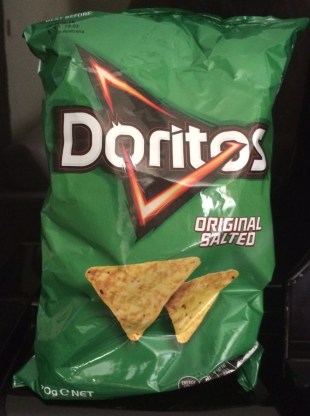
IMG_6664

What kind of controversy could a corn chip possibly incite? Obesity? Cholesterol? Close…well, not near close. Pro-abortionists are up in arms because the ad, “ humanises foetuses”. That’s right. They are offended because the advertisement shows an unborn child in the womb, in such a way that suggests that it is human.

Here is the exact tweet sent by NARAL (National Abortion Rights Action League):

“#NotBuyingIt – that @Doritos ad using #antichoice tactic of humanizing fetuses & sexist tropes of dads as clueless & moms as uptight. #SB50”

First of all, when one sees an ultrasound of a pregnant woman, one is in fact seeing a human being in the womb. He or she is not an inanimate object, nor plant life or four-legged creature; the fetus is a human being.

Leaving that simple fact aside for a moment, there are no religious connotations in the advert, and there is no subversive social engineering occurring, to my knowledge. As far as I can tell,  there is no intent, whether deliberate or subconscious, to promote a pro-life agenda.

This is a simple and humorous promotion of a corn chip.

In fact, if NARAL hadn’t begun this surge of twitter outrage, I doubt if I would have thought about a connection between Doritos and abortion. Now, everyone does, and we all seeing how wonderfully made an unborn child is, even if CGI has helped out a little.

This irrational and over-the-top response by NARAL exemplifies however, a growing trend in western societies. ‘Freedom of Speech’ is fast becoming a phrase devoid of its intended meaning. Dissenting views are tolerable so long as they keep quiet. Diversity is society’s clarion call, unless of course you are a Christian who trying to present a view in the public realm (or a chip company).

In case you think that this Doritos’ advertisement is a one off example:

Before Christmas an advertisement featuring the Lord’s Prayer, was produced for the Church of England, and was quickly banned from British cinemas.

Here in Australia, in August last year, a paid advertisement by the Marriage Alliance was banned by several radio stations and by Channels 7 and 10, despite the fact that the ad did nothing more than affirm the current law in Australia regarding marriage.

This is the bizarre world in which we now live, and we shouldn’t be surprised to find this happening more and more.

What is a Christian response? I am reminded of the words of the Apostle Paul in 2 Corinthians 4, words we need to take to heart as we prepare for an increasingly hostile culture in Victoria, Australia and beyond.

“Therefore, since through God’s mercy we have this ministry, we do not lose heart. 2 Rather, we have renounced secret and shameful ways; we do not use deception, nor do we distort the word of God. On the contrary, by setting forth the truth plainly we commend ourselves to everyone’s conscience in the sight of God. 3 And even if our gospel is veiled, it is veiled to those who are perishing. 4 The god of this age has blinded the minds of unbelievers, so that they cannot see the light of the gospel that displays the glory of Christ, who is the image of God. 5 For what we preach is not ourselves, but Jesus Christ as Lord, and ourselves as your servants for Jesus’ sake. 6 For God, who said, “Let light shine out of darkness,” made his light shine in our hearts to give us the light of the knowledge of God’s glory displayed in the face of Christ.

7 But we have this treasure in jars of clay to show that this all-surpassing power is from God and not from us. 8 We are hard pressed on every side, but not crushed; perplexed, but not in despair; 9 persecuted, but not abandoned; struck down, but not destroyed. 10 We always carry around in our body the death of Jesus, so that the life of Jesus may also be revealed in our body. 11 For we who are alive are always being given over to death for Jesus’ sake, so that his life may also be revealed in our mortal body. 12 So then, death is at work in us, but life is at work in you.”


Finally, back to this non-religious pro-corn chip eating ad. I need to be transparent and make a confession, it is true, I am biased toward this ad, and it’s not because of baby – apparently the creator is an Australian filmmaker! So naturally, I think it’s greatest advert of all for SuperBowl 2016.

Should Churches offer their buildings as sanctuaries to asylum seekers?

Here are 3 articles that I have found helpful in considering the right/wrong of claiming our buildings to be places of sanctuary for people from the law:

Stephen Mcalpine’s,  ‘no sanctuary from the secular state’

Neil Foster’s (associate professor of law at Newcastle University),   ‘churches offering sanctuary to asylum seekers’

Archbishop Glenn Davies’ statement, ‘Anglican church offers to help’ 

Introduction of ‘General Religious Studies’ in Victorian Schools

When I first became a parent someone gave Susan and me this wise advice, ‘whenever you offer a criticism or correction to your children, make sure you also give them 10 encouragements.’  I’m pretty sure we haven’t made it to 10 every time, but we try.

logo_vic

The logo presence does not represent a Govt endorsement of this article

When it comes to the education of children in Victoria, I could easily mention 100 things that are fantastic about our schools and teachers. As a parent with 3 children in school, I am very thankful for the education they are receiving, and for the care and expertise of their teachers.

Having said that, I do not support everything that is being implemented by the Education Department, especially  issues relating to directives from the Education Minister, Mr James Merlino.  In 2015 the current Victorian Government made several drastic and unnecessary changes to our education system in regard to SRI (and other related issues); these have been discussed at length on other occasions. In 2016 the changes will continue, and it is important for parents to be made aware.

Our State Government is introducing material on General Religious Studies (prep-year 10). This is one of two curriculums* that is replacing SRI (which can now only take place outside of normal class hours, along with an extensive list of new measures). The other program is Building Respectful Relationships.

In this post I wish to raise 4 concerns regarding the General Religious Studies.

First, the freedom to choose religious education has been taken away from students and parents. Whereas families once had choice and could opt-in for religious classes (whether it be Christian, Jewish, Muslim or Buddhist classes), they are no longer given the option.

The material has been made available for this year, but due to certain issues (relating to training, I believe) the course will become compulsory in both State and Catholic schools from January 2017.

Second, can the Education Department guarantee that the General Religious Studies material will be accurate and taught impartially?

Learning about other religions is important and useful, and at home we ensure our children can learn about what different people believe. 

About teaching religion in schools, there is a significant ideological issue at stake, is it the role of Government to teach religion? Apart from that, my concern is, will educators ensure that each religion is explained and taught with fairness and veracity?

Neutral education is a fairy tale, and this is clearly demonstrated by the Department’s own summaries of the 5 major religions. I am not an expert in Hinduism, Islam or Judaism, although I can (in my view) find fault in these representations, but as a Christian with an honours degree in theology I am in some way, able to speak to the published presentation of Christianity

According to the Education Department these are the ‘key premises’ of Christianity:

“There is one God, consisting of the Father, the Son (Jesus Christ) and the Holy Spirit. God is the creator and sustainer of the universe. God became human in the person of Jesus, the Son.

People have one life and its purpose is to live in a loving relationship with God, with others and with the world. The life and teachings of Jesus show how this is done and make possible the life-giving changes needed in individuals and society. Christians are empowered by the Holy Spirit and are called to demonstrate God’s love, compassion and justice in all their relationships and interactions. Most Christians believe in an afterlife; that after their physical death, they will live forever with God.

The Bible is the sacred text for Christians. The Bible has two parts, known as the Old and New Testaments. The Old Testament contains Jewish books and teachings, before the time of Jesus. The New Testament records the teachings of Jesus as well as the history and teaching of the early

Church which is based on the teaching and example of Jesus.”

There are certainly statements here that align with Christianity, but others are blatantly wrong, and some of the most central tenets are altogether missing.

Here is one example of a basic error, ‘Most Christians believe in an afterlife; that after their physical death, they will live forever with God”. No, all Christians believe in an afterlife, and this life beyond death will be physical.

Notice how there is no mention of sin, Jesus’ death on the cross and his resurrection, and of salvation on account of God’s grace. There is no mention of hell. Without these things there is no Christianity. It is not enough to make the excuse, we can’t say everything in a few paragraphs, the core of Christianity has been ripped out and in so doing it is presenting a Christianity that is inauthentic and inaccurate.

To quote the Bible, Christianity is about ‘Christ and him crucified’.

My point is this, if the Education Department is unable to fairly and accurately summarise the Christian faith, how can we trust what they want taught about any and all religion?

One of the stated aims is that it ‘should include…opportunities for critical thinking.’ That’s a fine intention, but if my children are to be taught any religious studies, I want them learning the facts, not an erroneous and sloppy version that looks more like a fake painted by a liberal secular humanist on a bad hair day.

Thirdly, one of the concerns aimed at SRI was that instructors were not only explaining what their religion believes but were encouraging students to practise and participate, in a variety of ways.

The Facts Sheet given to school Principals by the Victorian Education Department (November 2015) makes it clear that as part of General Religious Studies, teachers may organise for students to celebrate festivals belonging to the different religions. They cite examples including dressing up for Diwali (a Hindu festival celebrating their understanding of spiritual victory), making Christmas decorations, and sharing sweets for Eid (a Muslim festival).

In other words, not only is this new religious content compulsory and fails at a basic academic level, it is encouraging students (regardless of their own religious convictions) to participate in activities of other religions. I have no doubt that this will be deeply troubling for many thousands of Victorian parents, from different religions.

Fourthly, class room teachers will be required to teach the material, although under very strict guidelines a visitor may be invited to teach certain aspects.

I have a very high regard for the teachers at my children’s school, but I suspect that very few if any have qualifications in theology or philosophy. I imagine it is difficult enough for them to teach the many different subjects they are already putting together each year, let alone teaching theology, something which would normally require a four year university degree!

I understand that teachers will be presenting overviews, not deep theological treatises. However, even a simple grasp of the 5 major religions requires significant learning, and what of students when they ask teachers questions about these religions? Will they be equipped to answer? I certainly hope they won’t be relying on the current information that the Department are providing, given its flawed representations

I have been informed by the education department that the content must be taught (from 2017), but it will be up to each individual school as to how it will be taught.

What can parents do?

Speak to your school principal (and council) and graciously explain your concerns to them.

Write to your local member of Parliament, and kindly and succinctly express your concerns.

———————–

Technically, the General Religious Studies is not a curriculum, but content which can be fitted into various areas of learning at school, for example it may appear under ‘Civics and Citizenship’ or ‘Ethical Capability’

Stan Grant’s Speech on Racism, and why we must respond

Over the past week I have been listening to people comment on the speech given by journalist, Stan Grant, on the issue of Indigenous reconciliation and racism.

I watched it today and found Mr Grant’s words compelling, sad, difficult and necessary. I would urge all Australians to take the 8 minutes it requires to listen to the speech in full.

In Mr Grant’s voice there was heart-felt honesty but no self-pity, anger but not rage, truth-telling but not condescension.

7110522-1x1-700x700

As a preacher I am aware of the tenure of peoples’s reactions to words; forgetfulness often quickly follows acknowledgement.  A problem with speeches like Mr Grant’s is that we are moved by them, and for a few days we agree with them and believe that action needs to follow, but soon enough we have forgotten those beliefs and emotions, and words, and nothing changes.

For example, in 2009 Rev Dr Peter Adam gave the John Saunders Lecture. He spoke on the issue of indigenous peoples in Australia, and in particular he addressed the issue of land ownership and recompense:

“No recompense could ever be satisfactory because what was done was so vile, so immense, so universal, so pervasive, so destructive, so devastating and so irreparable.’’

‘We European Australians often claim that one of the strengths of the Australian character is ‘caring for the underdog’. That claim is hypocrisy – we do not act with justice, let alone care.”

At the time, Adam’s lecture gained attention in the media, with it being reported in The Age and Sydney Morning Herald. I remember it well because it was the first time I was convicted to think seriously about reconciliation issues with Indigenous Australians.

Will this be another speech remembered for its oratory or for the change it brought to this country?

The God whom I know and worship is the God who made the heavens and earth, and who made all humanity in his image.

It was out of this theological conviction that Martin Luther King cried,

‘I have a dream that my four little children will one day live in a nation where they will not be judged by the color of their skin but by the content of their character.’

This God sent his only Son, Jesus Christ, into the world because humanity was bent on throwing away the dignity of the imago dei. Humanity’s actions have resulted in the belittling of human life in a thousand different ways, including the abhorrent belief of racial inferiority

We cannot live in the past, but living in the present can remain most hard when our history remains unresolved. To this, I am looking forward to the Day when God will put away forever all that is wrong and evil, but in the present we remain responsible for our words and actions, and to ignore the call for reconciliation when it is given us, is simply iniquitous.

At this time, let us re-issue calls to include in our national constitution a statement recognising the first Australians. Of course, the wording of such an inclusion is incredibly important, and so instead of deferring it because the task is complex, let’s move forward.

Also, January 26th is our national holiday, and on this day I will give thanks for the many blessings we enjoy in our country. It  does seem as though the date has evolved beyond the tall ships in Botany Bay, as it is now cherished by many thousands of immigrants who have no connection to 1788, but who have made their home here from all corners on the globe and who celebrate becoming citizens on this date. But I am still  conscious of the fact that for many Indigenous people, ‘Australia Day’ is not so celebratory.

Are we so tied to this date that we cannot move to another?

I have heard it suggested that  we should make Federation Day our national day. It’s not a bad idea, except that it’s January 1st!

These two changes may be symbolic, but they are also tangible expressions to our fellow Australians that we recognise their pain, we acknowledge past sins, and we are eager to pursue reconciliation.

A Hard Day’s Work: why we work

a-hard-days-night

In the words of the little known group, The Beatles,

“It’s been a hard day’s night, and I’d been working like a dog

It’s been a hard day’s night, I should be sleeping like a log”

Why do we work?

Some people have an altruistic view of work, motivated by the belief that they are contributing to the benefit of society. Others see working as a necessary evil; it’s what we have to do in order to provide for my family. Many Christians have been taught that the value of work doesn’t extend much beyond earning an income to support family and church, and giving opportunities for evangelism. While both these reasons are true (and incredibly important), in the Bible we find a far richer and broader picture of work.

Here are 11 reasons why our work matters

1. We are made to work

“God blessed them and said to them, “Be fruitful and increase in number; fill the earth and subdue it. Rule over the fish in the sea and the birds in the sky and over every living creature that moves on the ground.” (Genesis 1:26)

In the beginning work was not considered a curse, but God’s blessing. Work is tied to God’s purpose for humanity. This creation mandate has been assuaged with trouble ever since the fall, but it has not been overturned.

In fact the Bible has a negative view of people who don’t work:

“As a door turns on its hinges, so a sluggard turns on his bed.” (Proverbs 26:14)

The lazy are selfish, unproductive, and are exemplars of foolish living.

By work, I am not thinking only of paid vocations (neither does the Bible), but any and all work, including home duties, volunteer work, and study. The shape of work will change as life’s circumstances alter, but we must be careful not to denigrate another person’s work (or our own). Having said that, some work ought to be avoided, any work that is considered sinful or that is done in a sinful manner is unfitting for a Christian (and anyone for that matter).

2. Creation matters:  We don’t dismiss this world as unimportant, or just a highway to heaven. Why? First of all, God made this world, therefore it has intrinsic value. Second, the incarnation affirms the significance of this world. Third, the resurrection of Jesus confirms the redemption of the physical, the the promise of a new creation.

3. Caring: Work enables us to care for and love our neighbour by providing services, produce, ideas, things that are useful to people and that improve the quality of life.

Work also enables us to care for animals, the oceans, mountains, and everything in between.

Parenting is held with incredible esteem in Scripture. To have and raise children is a joy and privilege, and an enormous responsibility. Parenting is hard work, and probably the most important work one will ever do.

4. Providing: Much work is not accompanied with income, and for that we must not negate its importance, but earning an income is considered important in Scripture so that we can avoid depending on others’ generosity, so that we provide for our family, to pay taxes, to aid the poor, and to give generously to Gospel ministry.

5. Constructing: Our work ought to be part of building a society that is safe, healthy, advancing, and improving.

6. Creating: Music, architecture, and poetry are among the many activities that are esteemed in Scripture. These are God given gifts for our enjoyment, pleasure, value, and amelioration.

7. Confronting: Police, law, medicine, armed forces, medical science, psychologists are among the many who work to confront those things that would do us harm.

8. Our work displays the character of God. We have opportunity to show people what God is like when we work by in truth, with grace, kindness, uprightness, generosity, and so on. What a wonderful way to think of our work. By the way a teacher instructs their students they can show what God is like. An electrician wiring a house can by their work ethic show people what God is like.

9. Our work testifies to the Gospel. In our work opportunities arise where we can explain the Gospel. Of course, our whole lives ought to reflect the Gospel, and speaking the Gospel remains vital today. We should avoid doing evangelism when we are supposed to be pulling teeth or auditing a company’s accounts, but opportunities to speak the good news of Christ will arise if by our lives we are walking with Christ.

Work is good but it is not enough; speaking the Gospel of Christ is God’s way of bringing redemption and reconciliation to all who believe Him.

10. Our work anticipates the new creation.

I don’t know what kind of jobs there will be in the new heavens and new earth, but when we work in love  and with integrity, and serving for the good of others, we are showing people what heaven will be like.

11. Our work glorifies God.

“And whatever you do, whether in word or deed, do it all in the name of the Lord Jesus, giving thanks to God the Father through him.” (Colossians 3:17)

“Whatever you do, work at it with all your heart, as working for the Lord, not for human masters” (Colossians 3:23)

As we return to work for a new year I want to encourage our workers at Mentone Baptist (and anyone else reading the blog) to consider prayerfully, joyfully, and expectantly, the opportunities we have in our work to honour God and to love those whom we interact with in any and all of our work.

Christians, Muslims and God: Does it matter?

The Wheaton College controversy regarding Dr. Larycia Hawkins and her comments about Islam is gaining momentum not only in the United States, but also here in Australia, with the ABC publishing two articles on the issue this week.

The controversy relates to this statement made by Dr Hawkins on twitter in December last year,  “I stand in religious solidarity with Muslims because they, like me, a Christian, are people of the book”, and “And as Pope Francis stated last week, we worship the same God.”

16xp-wheaton-facebookJumbo

Dr Hawkins has been suspended by the Council of Wheaton College, and discussions are being held regarding potential dismissal from her teaching position.

There are many issues surrounding this saga, for here, I wish to offer comment on two of the questions: One, does it matter? Does it matter whether Muslims and Christians worship the same God or not?  Second, is Prof. Miroslav Volf right to use a Jewish view of God as a defence for the proposition that Muslims and Christians worship the same God?

First of all, does it matter?

Writing on The Drum, Ruby Hamad has bemoaned Wheaton’s position, referring to the ‘wildly disproportionate reaction from the college’ and  “it’s surprising that such a statement is even considered enough to raise an eyebrow.”

Hamad believes that Muslim and Christians do worship the same God:   

“That the world’s three great monotheistic faiths worship the same god is, or at least has hitherto been, a mainstream position to take. Muslims accept it as a given, the Catholic Church has taught it since the Second Vatican Council, and Pope Francis – who Hawkins referred to her in her statement – reiterated this last November, when he said that “Christians and Muslims are brothers and sisters”.”

As someone raised in the Muslim faith, I find it bewildering that anyone denies that the God of Judaism, Christianity, and Islam are indeed the same deity. Muslims are taught from a very young age that Mohammed is the last in a long line of prophets tracing back to Adam, and that includes Abraham, Moses, and Jesus.”

Leaving aside some fallacious rewriting of history whereby she claims that “three great monotheistic faiths worship the same god is…a mainstream position to take”, and her strange recounting of Islamic teaching whereby young children are taught that the Christian God is identical with the Muslim God, I want to make mention of the Trinity and its place in this debate.

Hamad makes a passing reference to the Trinity and to Christology, but apparently these basic tenants of the Christian faith are no obstacles to someone wanting to insist that Muslims and Christians believe in the same God.

Really?

Now, there are theological arguments at stake that require careful exegesis, and many a tome has been written attempting to consider God. Although there are ideas here that have stretched the greatest minds in history, the essence is simple. One person may be an expert in trigonometry, and another not, but a triangle is a triangle and both can identify it as such. My point is, there are basic theological convictions held by Christians that are irrefutably denied by Islam, and there is no meeting place in the middle.

For example,

Christians hold that that God is triune, one God in three persons. Muslims, on the other hand, insist on God being a monad.

Christians believe that Jesus is fully God and fully human. He is the eternal God, God the Son, the second member of the Trinity. Muslims believe Jesus was a prophet from God, but he is not God (and neither did he die on the cross).

It does not require a scholar to appreciate that Christians and Muslims have a vastly different view of God. Christians love, worship and serve God who is Father, Son, and Holy Spirit. The Quran explicitly rejects this God, and instead speaks of another who is monad. We can caste doubts on this clarity by writing lengthy and complicated essays, using lots of big words that no one understands, or, as Ruby Hamad has done, we can ridicule Wheaton College and suggest they are extreme, bigoted, and naive for holding to their beliefs. After all, none of us want to side with the stupid or the hate-filled! Sometimes, though, differences are self-evident and irreconcilable.

But does it matter? Is it a big deal? It is certainly a significant issue if truth matters. It is a big deal for the many thousands of Christians in the Middle East who are being persecuted and threatened with death if they don’t deny Jesus Christ is God. And it does matter if a person’s identity and being is to be honoured.

Allow me to illustrate by speaking about my wife, Susan. Susan is a particular human being, with a particular personality, history, attributes, likes and dislikes, appearance, and so forth. If I call her Lisa or Stuart, she is unlikely to respond, given that her name is Susan. If someone asks me to describe Susan and I begin talking about a 24 year old 5ft 10” red head who enjoys motocross, eating mexican food, and works in real estate, you may want to question whether I know Susan at all, let alone being married to her.

Manufacturing false allegations about a person in public may make me open to a defamation case. Misrepresenting a person is demeaning and exemplifies either ignorance or incredible rudeness. 

The caricature of Susan that I offer above is so far removed from the real Susan who lives and breathes and whom I love as my wife, it is nothing short of a fabrication; an unreal Susan. If it is respectful and right to represent a human being accurately, how much more if that person is God.

If God is real, it is only proper to describe him truthfully. If this God is holy and light and love and truth and Sovereign and personal (as the Bible teaches), then how much more care must we take before dishing out more relativist offal about religious sameness.

I now wish to turn to a second question, which relates to an analogy used by Miroslav Volf in his defence of Dr Hawkins view, an analogy that has since been repeated by others, including Ruby Hamad:

“This argument, however, is easily dispelled given that Judaism also rejects the trinity and doesn’t even acknowledge, let alone worship, Jesus as God. And yet, no one is proclaiming that Jews and Christians have entirely different gods”.

Is this analogy of Judaism valid? While this argument sounds lucid, it is in fact a logical fallacy, for the relationship between Judaism and Christianity is significantly different to that between Christianity and Islam.

There are not two different Gods in the Bible, one in the Old Testament and a different one revealed in the New Testament. That view is known as Marcionism, and it has always been rightly referred to as a heresy.

The God of the Old Testament is self-identified as the Triune God. The God worshiped by Israel was the Triune God, although it must be said that much more is made of God’s unity in the Old Testament than of his diversity.

Old Testament Judaism did not reject the Trinity, it alludes to it and prepared the people for the full self-disclosure of God who is one God in three persons: Father, Son, and Holy Spirit.

Islam falls outside the parameters of Biblical testimony, and beyond fullness and finality of God’s self-revelation that is in and about Jesus Christ. If Judaism is an artist’s sketch, Christianity is the sketch being painted,  coloured and completed. In other words, Judaism leads to Christianity, whereas Islam rejects Christianity. That Mohammed borrowed some names and ideas from the Bible when writing the Qu’ran does not mean synergy of faith, indeed links are no stronger than those which Mormons have with Christianity.

Dr Al Mohler has offered this critique of Volf’s analogy:

“But this line of argument evades the entire structure of promise and fulfillment that links the Old Testament and the New Testament. Abraham and Moses could not have defined the doctrine of the Trinity while they were on earth, but they believed that God would be faithful to all of his promises, and those promises were fulfilled only and fulfilled perfectly in Christ. And, going back to John 8:56-58, Jesus said: “Your father Abraham rejoiced that he would see my day. He saw it and was glad … Truly, truly, I say to you, before Abraham was, I am.”

Evangelical Christians understand that, theologically, there is a genetic link between Judaism and Christianity. That is why Christians must always be humbled by the fact that we have been grafted onto the promises first made to Israel. In terms of both history and theology, there is no genetic link between Christianity and Islam. The Qur’an claims that to confess Jesus Christ as the divine Son and the second person of the Trinity is to commit blasphemy against Allah.”

It is possible to believe in the true God and yet worship him wrongly, whether by attributing false characteristics and ideas about him, or by creating erroneous criteria for knowing him. But the view of God, as articulated in the Qu’ran and the Hadiths, does not fit into this category.

Volf and Hamad both argue that the real issue at Wheaton is not concern for God’s Being, but has to do with bigotry and anti-Islamic sentiments. I cannot speak for the Council of Wheaton College as I don’t know them personally and I certainly don’t have access into their hearts, but from what I have read, I have not picked up such a distasteful tone.

Given the allegations, it is still wrong to denude the major theological differences that exist. The truth of God matters. The glory of God matters. However, irreconcilable difference does not mean Christians and Muslims cannot be friends, and cannot work together in many areas of society. This does not mean that we cannot support the many Muslims who are suffering terribly in Syria. This does not mean that we cannot welcome Muslim refugees to Australia, and to provide them with a safe and caring community. This does not mean that we outlaw their beliefs, simply because we disagree with them. If Christians believe in freedom of speech, then we hold that conviction for Christian, Muslim, and atheist alike.

A true knowing of God will produce not only clear and robust convictions about God, but growing humility and thankfulness. For we do not own God. God is not our possession or our knowledge that is attained by some pseudo-superiority complexion. The God of the Bible is known only by grace, because of his incredible love toward defiant creatures. Grace produces humble convictions and loving concern for our neighbours, even our Muslim neighbours who matter to God and ought to matter to us.

Sermon on the Mount

sermonontheMount

In this tumultuous world where following Jesus Christ means growing opposition and cost, what better words to meditate on than Jesus’ Sermon on the Mount.

In 2016, at Mentone Baptist,  I will be preaching on Matthew chs. 5-7, starting January 31.

Check out our promo


Christmas Greeting

IMG_3692

Enjoy Christmas Day

Eat Turkey

Eat a prawn

Sip some eggnog

Avoid Christmas pudding…yuck

Smell the Christmas tree

Be patient with excited children

Don’t forget the hurting, the lonely, and the poor

Sing,  ‘I’m dreaming of a white Christmas’, because if you live in Australia that’s as much snow as we’re going to experience

Tonight, watch Carols by Candlight at the Myer Music Bowl. Yes, I know it’s lame but it is our lame Melbourne tradition.

Remember, Christ has been born. The eternal God, God the Son, took on flesh and made his dwelling among us

Remember, Christ died for our sins

Remember, God raised this Jesus to life on the third

Remember, the hope of the world is now seated at the right hand of God the Father

Remind your children, your friends, and your family, that in Christ there is a joy that will outlast everything you may enjoy on December 25th.

Come Boxing Day, remember that every truth about Jesus Christ on Christmas Day, remains true

An opportunity to show grace

UPDATE (Dec 23, 2pm): Peter Dutton has announced that Hassan Asif’s family will now be granted visa to Australia to visit their son/brother.

Good news

A good decision

—————————-

You may have heard the heart wrenching story of Hassan Asif today. A 24 year old student from Pakistan who has terminal cancer. His mother and brother have been refused visas to enter Australia, so that they can be with their son and brother, as he dies.

You can read the story here on ABC news.

7049228-3x2-340x227

This is dreadfully sad, and of course I am not privy to all the story. From the report, it sounds as though the family were denied because it was believed that they might out stay their visa time frame.

Tonight, I wrote this brief letter to our Prime Minister, Malcolm Turnbull,  asking him to reconsider the decision. Perhaps you might like to consider contacting Mr Turnbull or Mr Dutton also.


Dear Prime Minister,

I have heard of the extremely sad situation facing Mr Hassan Asif, and I am asking that we show compassion and grace to him and to his family, by allowing Mr Asif’s family to travel to Australia. No one should have to face death without being surrounded by loved ones. Sometimes this happens, but when the power is in our hands to avoid it, we have the moral imperative to act.

Perhaps there is reason behind declining visas to the family, but I am wondering whether we can show kindness to them, given the circumstances.

I am sure that there will be many Australians who will be willing to assist in bringing the family to Australia, and to caring for them while they are here.

Yours Sincerely

Murray Campbell

Senior Minister, Mentone Baptist Church


Christmas Carols with Chill/i

So it’s a stinking hot morning in Melbourne today. 34º degrees by 7:30am. I reckon that must be close to a record for a Melbourne morning.

News is, the cool change is heading our way and will be sweeping across the Bay by 1-2pm. That’s great news for emergency services and home owners out bush and in outlining parts of Melbourne. It’s also great news for everyone who love Christmas Carols.

Even if the heat persists Mentone Baptist can keep make the auditorium as cold as Montreal on Christmas Eve, and we can even add in the snow…maybe not.

ChristmasWeb

For Christmas singing, lights, something for the kids, fun, BBQ, and a message about the joy God can give, join us for this wonderful  Christmas tradition.


Starts 6pm and will finish around 7pm

Everyone around Mentone, the Bayside and beyond are very welcome