Can’t we just get along?
In the 1970 film ‘Waterloo’, a British soldier’s cries are heard over the din of battle, ‘how can we kill one another…how can we? Why do we? Why? Why?…”
Why can’t Australians all get along?
Hatred and discord are woven into the human condition. The original imago dei didn’t contain such stains, but ever since the Great Fall, humanity has carried and desired personal gain through demeaning the other and yes, even through bloodletting. The history of the world is less peace interrupted by violent moments, as it is, continued iniquity that finds momentary rest by the grace of God.
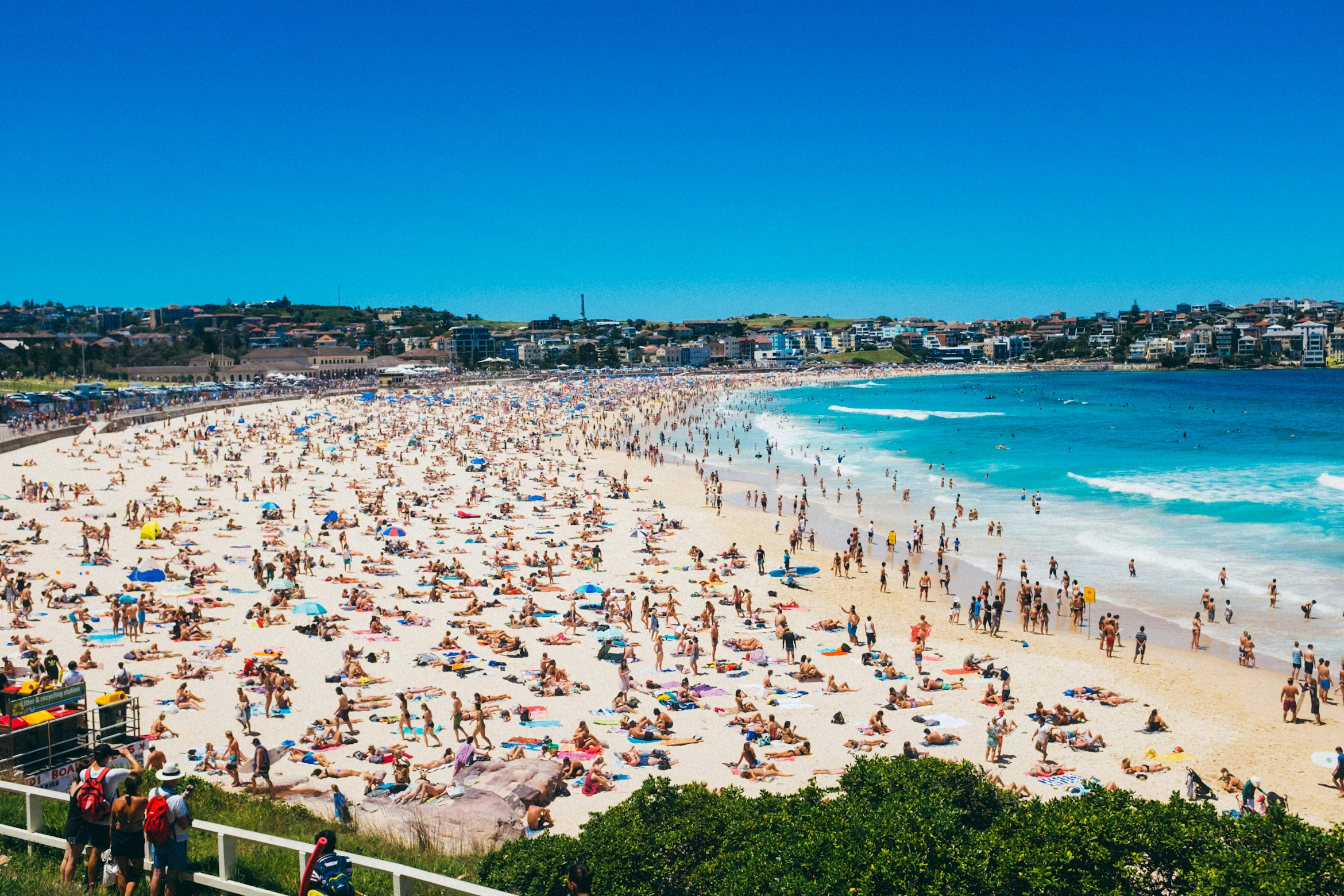
Almost everyone is talking about the State of Australia. The massacre of Jews at Bondi Beach on December 14th has forced us to ask questions that most Aussies are ill equipped to even frame, let alone answer with resolve. There is widespread shock, there is tremendous grief, along with anger, fear and yes, and still with much gaslighting.
Can’t we as a society just get along?
Clearly the answer is no. It should be yes, and I imagine the average Aussie longs for the answer to be yes, but we are falling far short of this thing called, ‘social cohesion.’
There are three simple observations that I wish to make here. They are not new or novel. Others are far better qualified than myself to speak to this topic. And even here, many of my words are ones that I’ve previously offered up in public discourse.
The 3 points that I wish weave together are these:
- Government can’t bear the weight of creating social cohesion.
- Take note of the scholarly work of Christopher Watkin. He has much wisdom to offer on the subject.
- Come home to Christianity.
One year ago and a week before Christmas, the Victorian State Government proposed ‘social cohesion’ laws. A watered down version of the Bill was adopted by Parliament in April 2025. At the time I suggested that ‘social cohesion’ when it’s attached to government and to laws has a touch of the Machiavellian about it. One doesn’t know whether to think it’s more like George Orwell or Monty Python!
No doubt this is a testing time for any government. There are pressures applied from all kinds of directions, and at times this leads to inaction or delayed resolve. As we have seen for more than 2 years now, this has given more oxygen to antisocial, and especially, antisemitic voices and violence. Antisemitism is an indignant on the moral and spiritual state of Australia.
Australia has never been heaven. We have never been ther perfect country, but we have witnessed developments over the past decade that are injurious and bring grief to many. We are less peaceful than we were. We are less inclusive and kind. There is more personal and social distress and with little sign of a turnaround. This is evident across the country, but Melbourne is Australia’s protest capital (not a title to boast about). Ever since 2020, when the government turned a blind eye to certain marches while slamming others, every Jane, Nguyen, and Bob has seen fit to grind city streets to a halt. Not a week goes by without banners and angry faces blocking traffic.
According to the Bible, from which we owe the fundamental notions of civil society, governments have a responsibility to protect its citizens and to punish evil doers (Romans 13:1-6). This requires the careful and just creation of laws and their reasonable enforcement. It’s not a coincidence that the Apostolic framing of Government responsibilities is accompanied with an injunction for citizens to pay taxes. The purpose of taxation is largely tied to enabling government to do this double edged sword duty of protecting and punishing effectively.
Government inaction is no longer an option. Thankfully NSW’s Premier, Chris Minns, seems to realise this and is moving beyond empty rhetoric and thin pieces of legislation. Even a Muslim Mayor in Western Sydney has taken decisive action to close a hate factory where one of the gunmen was fed his lies about Jewish people.
We have too long sacrificed cohesion at the altar of diversity. Diversity, properly defined is a beautiful thing which adorns a healthy society. I thank God for the tapestry of multi-ethnicism that has given strength and flavour and wonder to Australia. But as we have deconstructed big T Truth and other axioms, we have lost the ability to acknowledge that some ideas are counter productive and even dangerous. We can practice pluralism while recognising not every worldview is equally valid or good.
If we think that our society is beyond and above 1928 Germany, we are suffering from a greater dose of egomania than I thought.
How can the Federal Government not call for a Royal Commission to investigate the terrorist attack at Bondi Beach on December 14? This wasn’t an isolated event, but the culmination of more than two years of government sitting on their hands while Jewish Australians were attacked in their synagogues and cafes and homes. And while genuine hatred was proclaimed and promoted on our city streets every week. As Stephen Mcalpine has noted, there is a directed line from the Sydney Opera House to Bondi Beach.
Even the slaughter of 15 Jews at Bondi Beach hasn’t been enough to completely silence the keffiyeh wearing mafia. So much whataboutism and justifying and excusing continues even before the bodies of the slain were laid to rest. Of course, their right handed sibling, neo nazism with men in black, is equally a scourge on our society.
While Governments must taken action against anti-semitism, Government action is not suffice. I’m not suggesting some kind of community vigilanteism; please no. But everyday Aussies are responsibile for their own words and actions and setting an example to others and demonstrating the power of kindness and grace and generosity over hatred and intolerance and selfishness. Of course we must be intolerant towards views that breed hatred toward Jewish people and views that dehumanise the other. That we need laws to demand ‘decent behaviour’ communicates how far our society has strayed. Churches need to take a lead in this, by teaching and practicing what is in accord with the Christian faith. I still cannot fathom how one Melbourne Anglican Minister in 2023 excused Hamas’ slaughter in Israel. Such disgusting commentary should be held to account.
As the Victorian Government proposed their ‘social cohesion’ laws last Christmas, I expressed discomfort at the language of ‘social cohesion’, and I remain uncomfortable. I get it; they are ‘trying’ to address a specific problem without naming the elephant in the room. Why not call it ‘Rules for Safe Protests’ or something like that?
The reason why I’m uncomfortable about the Government’s language of ‘social cohesion’ is because the task of social cohesion doesn’t belong to the government, but to the people. When government sees itself as the answer to every social ill and when the people demand government to fix every crisis, we are obfuscating personal responsibility and creating systems of governance that cannot bear the weight of such responsibility.
This is one area where the work of Dr Christopher Watkin is worthy of consideration. Monash University’s Dr Watkin articulates a positive and important work on contract theory. He says,
“Civil society is sometimes the neglected dimension of the social contract, the “missing middle” as it has been called. We have a tendency to jump straight from government and law to the individual.
These civil society relationships across different visions of the good are a glue that holds our social contract together.”
From his book, Biblical Critical Theory,
‘the vague and sporadic measures taken by contemporary governments to shore up the social contract with well-meaning but half-hearted attempts at “civic edu- cation” have little effect, when all the while billions of advertising dollars and a destructive paradigm of competition in all areas of society expertly catechize individual consumers to be little predisposed to the civic duties a strong social contract requires. No rewriting of the social contract can be complete without giving serious attention to its cultural and liturgical infrastructure.’
We will do well to engage with Dr Watkin’s material closely and carefully. There is much goodness and valuable ideas to be found. Here is one lecture he gave recently on the subject.
No Government is up for the job, and it’s not designed to be. Part of the problem embedded in any Government setting the rules for social cohesion is that this is never a natural space. This is one of the heresies attached to secularism. Secular is certainly preferable to Sharia Law and to Christian Nationalism, but it is no more epistemologically and morally neutral. Secular is the sum of the worldviews present in and controlling the moral impulses of the day.
There are wonderful pockets of social cohesion is found in all kinds of places and communities across our State. There are sporting clubs and men’s sheds, and there are temples and synagogues. It is certainly experienced in local churches.
Churches are frequently more culturally diverse than the communities surrounding them. Where I have the privilege of serving and belonging, we have people from China and Uganda, families from Vietnam and India, Nigeria and Columbia. Young and old mix together, single and married are friends and serve one another. Of course, Churches have their failings and blindspots, (after all, the very point of Christianity is that there is only one perfect saviour and we’re not him!), and yet there is profound togetherness and other person-centredness.
The Victorian Government accompanied its Social Cohesion directives with expanding anti-vilification laws. Religious groups were understandably concerned such new laws will tighten the noose of faith groups from teaching and practising in accordance with their convictions; history is a strong indicator. It’s amazing how often over the last 10 years Victoria has assumed the bishopric role when Christian praxis hasn’t supported their social agendas. There is a mine of irony in Victoria where Government identifies a growing social disorder and yet clamps down on one of the few societal groups who are truly exhibiting positive social health and life. If we are interested in civil society, maybe we ought to return to the worldview that created the ideas and values from which this vision derives: Christianity.
Not every religion is equal. Not every idea is equally valid, and assuming so will only give licence to the kind of behaviour that is all to common now in our city streets. And yet we must delver deeper than legislative reforms. No, I don’t support the idea of a State religion. Religious freedoms and pluralism is a Christian idea for Christianity isn’t something to be gained via Government guidelines and laws. Christianity is grounded grace not law. Without irony however, it is the Christian message that cdreates the space and gives air to the art of persuasion and serving others through disagreement. It is, for example, because Christians believe Jesus is the only way to God that we don’t want Governments legislating religious doctrines. There are however religious and irreligious teachings which contradict basic ideas of social freedom and respect of life and dignity of fellow Australians.
This is one reason why we are losing something precious by running away from the Bible and the God the of the Bible. It’s not something for Government to oversee, this is something the people have largely lost and would do well to come home to. The Scriptures that Jews and Christians alike believe, teach that we must love God with all our being and love our neighbour. Jesus insisted,
“Hear, O Israel: The Lord our God, the Lord is one.Love the Lord your God with all your heart and with all your soul and with all your mind and with all your strength.’The second is this: ‘Love your neighbor as yourself.’There is no commandment greater than these.” (Mark 12:29-31)
We must love our neighbours. We ought respect and reach out to our Jewish neighbours. We should show kindness to our Muslim neighbours. Law and legislation is a necessary weapon, but the bigger antidote to seeing real and heart transformation requires something more.
Two days ago we celebrated Christmas, the ultimate day of truce-making, although that first holy night was filled with peril. Nonetheless, the hope born that night in Bethlehem really is the only hope we have today. Come, check out a local church and see that hope in action. Let me leave you with the great Messianic promise of Isaiah for he is breathtaking,
‘The people walking in darkness
have seen a great light;
on those living in the land of deep darkness
a light has dawned.
You have enlarged the nation
and increased their joy;
they rejoice before you
as people rejoice at the harvest,
as warriors rejoice
when dividing the plunder.
For as in the day of Midian’s defeat,
you have shattered
the yoke that burdens them,
the bar across their shoulders,
the rod of their oppressor.
Every warrior’s boot used in battle
and every garment rolled in blood
will be destined for burning,
will be fuel for the fire.
For to us a child is born,
to us a son is given,
and the government will be on his shoulders.
And he will be called
Wonderful Counselor, Mighty God,
Everlasting Father, Prince of Peace.
Of the greatness of his government and peace
there will be no end.
He will reign on David’s throne
and over his kingdom,
establishing and upholding it
with justice and righteousness
from that time on and forever.
The zeal of the Lord Almighty
will accomplish this.’

 MurrayCampbell.net