What I think about Bishop Mariann Edgar Budde’s sermon to President Trump

President Trump and Bishop Mariann Edgar Budde have run into each other for a second time. The first occasion was outside St John’s church in Washington DC, this time it is inside the National Cathedral.

In 2020, Donald Trump stood outside St John’s building following an arson attack the previous night. He held a Bible aloft. The bishop criticised Trump for standing on church property and organising a photo op. 

I suggested at the time…

“A friend of mine noted the irony of this chosen site for politico-religious vanity. Outside St John’s, the cameras took photos of a President who does not believe the Scriptures nor does he practice what they teach. Inside St John’s Church, there are clergy who also do not believe or practice the Scriptures. St John’s Church and the presiding bishop of Washington are known for their errant views about Christianity. Both inside and out, they treat the Bible with disdain.”

Yesterday, at the Inauguration Prayer Service in Washington DC, the Episcopalian Bishop of Washington delivered a 15 minute sermon in front of and toward President Donald Trump.

Bishop Mariann Edgar Budde spoke of national unity, prayer and action.

The sermon has gone viral and become headline news around the world, as the Bishop no doubt knew would be the case when speaking truth to power. Had the Bishop spoken of support for the President, few would have been interested, but standing up to Donald Trump is global news!

The lines that grabbed attention were the bishop’s call for mercy and compassion toward illegal immigrants and  LGBT children.

Unsurprisingly the reception of her sermon is divided largely between the political divide (which is probably a clue that there is something amiss in the sermon). There are also many Christians lauding her address. Might I suggest that we stop and pause and consider a few things first. 

I don’t have a problem with preachers calling for compassion and mercy. How can we not when we have understood God’s exquisite compassion and mercy toward us in Christ. The problem I have with the sermon is that while Bishop Mariann Edgar Budde uses some Bible language and invokes God’s name, what she means by these words is often quite different from what the Bible is saying. If a pastor’s sermon fits neatly into a political convention (regardless of political side), I want to suggest that there is possibly something skewed.

I have listened to her sermon in its entirety. The bishop communicates well and clearly (and quite differently from the viral videos of her deriding the President on other occasions). Yes, she uses Christian language and some Bible categories. But even within this sermon, there are giveaway signs of the troubling theology that underpins her views. For example, she makes the claim that all religions believe in the inherent dignity and worth of all people (which is not the case) and then suggests these many religions somehow represent and find origin in ‘our one God’.  Really?  And then, where was the Gospel? A bishop chooses to speak ‘truth’ to power and leaves out the Gospel?

As listeners we’ve all done it; we hear a Christian word spoken and our brains translate it in the way we understand the language and therefore we assume they are saying what we believe. That’s not always the case. Let’s not be ignorant and assume that this particular cleric means by these words what the Bible explains. That is not the case. This is made obvious by one example that she gives in her sermon in regard to LGBT people.

Christians ought (indeed, necessarily) to show kindness and love to people regardless of their sexuality and gender. I’m not mocking the idea of mercy, we need more mercy. Railing against contemporary sexual ethics, Christians can sometimes neglect to speak and exhibit Christ-like kindness. But is it compassionate to affirm or call good what God calls sinful? Is it compassionate to reject a creational paradigm and pretend that gender is fluid and that men can be women and vice versa?

A slightly different question, although relevant to the situation at hand, can we separate Donald Trump from the idea that there are only two genders? Yes, we can. His Presidency does not own the definition of gender however it is repudiating an immoral and harmful notion that’s become normalised in the academy and in pop culture, and that is, gender is fluid and cascading with options and possibilities.. Both Bible and biology communicate that we are made male or female. This is a wonderful blessing and common good, and distorting this is producing all kinds of problems, and incredible harm, especially among children. 

It is possible and indeed biblical to both affirm 2 genders and show compassion. Affirming the two genders should not diminish the fact that there are also boys and girls, men and women who find themselves in a distressing place where they are not comfortable within their biological body; they do require compassion.  Is this what the Bishop means? Previous teachings and statements by the bishop points in a different direction, and that what she means is the full affirmation of current sexual ethics, as though current gender theories are moral goods and even Christian-like. That’s a problem.

The heart of the Gospel of compassion and mercy is Christ’s substitutionary death on the cross. The Bishop could have taken the President there, but I note, this is something Bishop Mariann Edgar Budde repudiates. She says of penal substitutionary atonement, that it is “justifiably offensive”. That’s a big problem because God’s rich mercy toward us centres on Christ who bore the punishment for our sins in our place. That’s the good news of the Gospel: God forgives and reconciles and treats us not as our sins deserve because of the atonement. 

Not only this, but God’s mercy toward us in Christ does not leave us in our sins but transforms us in the power of the Holy Spirit.

This story of the Bishop Curry so-called ‘love’ sermon at Prince Harry’s and Meghan Markle’s wedding several years ago. Christians were enthralled by the smiling Bishop who spoke of love. But his message had very little to do with God’s love but preaching a Hollywood version of love and grinning while persecuting churches in his diocese for holding onto the Bible.  It’s probably of no coincidence that Bishop Curry wrote the forward for Bishop Mariann Edgar Budde’s recent book, ‘Receiving Jesus: The Way of Love’!

Christian, please don’t praise this Episcopalian Bishop as though her speech represents the Christian message. She may use Bible language at times but what she means is often quite different to what the Bible means. That doesn’t mean we are siding with Donald Trump or affirming Republican or Democrat. That’s part of the problem that we’re buying into in this fractious age.

The thing is, we don’t have to choose between President Donald Trump or Bishop Mariann Edgar Budde. I sense that sometimes we are choosing sides based more on our political preferences or social leanings rather than being guided by Scripture and the Gospel. This is happening among both left and right leaning Christians, and it’s a problem. We need to recognise that as sojourners and aliens, the Christian will often not sit comfortably at the table of power or public discourse. Sometimes we are going to be left on the bench, not choosing either side but instead taking a less popular and more lonely position. Why? Because both doctrine and life require us to take that harder route.

There is often little gospel advancement when Christians jump into bed with any political party. We may find favour with one group and then leave everyone else the impression that to be Christian is to be left or to be right,  Republican or Democrat, Liberal or Labour. That’s not to suggest that all politicians are equal or that every policy is good for society or that we Christians don’t speak truth to power.

Christians will and can disagree over many Government policies. Read Prof Sarah Irving StoneBraker’s excellent new volume, Priests of History. Even when it comes to immigration (an ideal that I value and thank God for), public safety and social cohesion do matter as do compassion and mercy. It’s one reason why we need to pray for our political leaders, for their task isn’t easy.

My point here though is not to dissect American policies but caution Christians against buying into this political and cultural partisanship that has become normalised in places like America and Australia. President Trump is not the Messiah and the Bishop is not representing God; both such notions are folly. Whether you are an evangelical praising Trump’s ascendancy or an Episcopalian disguising progressive politics behind Christian language, are we presenting the beauty and goodness and power of the gospel or simply adding to the confusion? At stake is not an election cycle or the West Wing, but the judgment seat of God and eternity. 


Additional Note (January 24):

A few people have asked, how do we know that the bishop was using Bible words in non Bible ways. In the article I’ve already cited some examples, but here are more,

The Cathedral service included prayers offered by other religions, including a Muslim call to prayer. Such things are anathema to a Christian Church. 

Lest we think this is a one-off, in 2021 the National Cathedral invited Max Lucado to preach. Washington Episcopalians went into meltdown. Read what the Dean of the Cathedral, Randolph Marshall Hollerith, said, 

“When we only engage with those with whom we agree on every issue, we find ourselves in a dangerous (and lonely) place…That means this cathedral, and this pulpit, are big enough and strong enough to welcome pastors, rabbis, imams, clergy of every faith.”

Hollerith then apologised to angry Anglicans, ‘In my straight privilege I failed to see and fully understand the pain he has caused. I failed to appreciate the depth of injury his words have had on many in the LGBTQ community. I failed to see the pain I was continuing. I was wrong.”

Bishop Mariann Budde also apologised, saying, ‘”I made you feel at risk and unwelcome in your spiritual home.’

There it is, Budde believes that a Bible believing preacher is a danger to her Diocese, while a Muslim Iman in the pulpit is not.

I realise some Christians maintain that Mariann Budde is offering a prophetic voice, but seriously? She is no more prophetic than the prophets of Jeremiah ch6 who were effectively conning God’s people with their ‘Bible’ words, 

“They dress the wound of my people

    as though it were not serious.

‘Peace, peace,’ they say,

    when there is no peace.”

England’s Ban should lead to rethink in Australia

As an Aussie, I’m bound to knock and mock the English, but just occasionally we should pay attention. During the same week as England banned puberty blockers on minors, the NSW Government introduced legislation to ban ‘conversion practices’. The irony isn’t lost.

England’s National Health Service (NHS) has banned prescribing puberty blockers for children and teenagers. A report states, 

“We have concluded that there is not enough evidence to support the safety or clinical effectiveness of [puberty blockers] to make the treatment routinely available at this time.” 

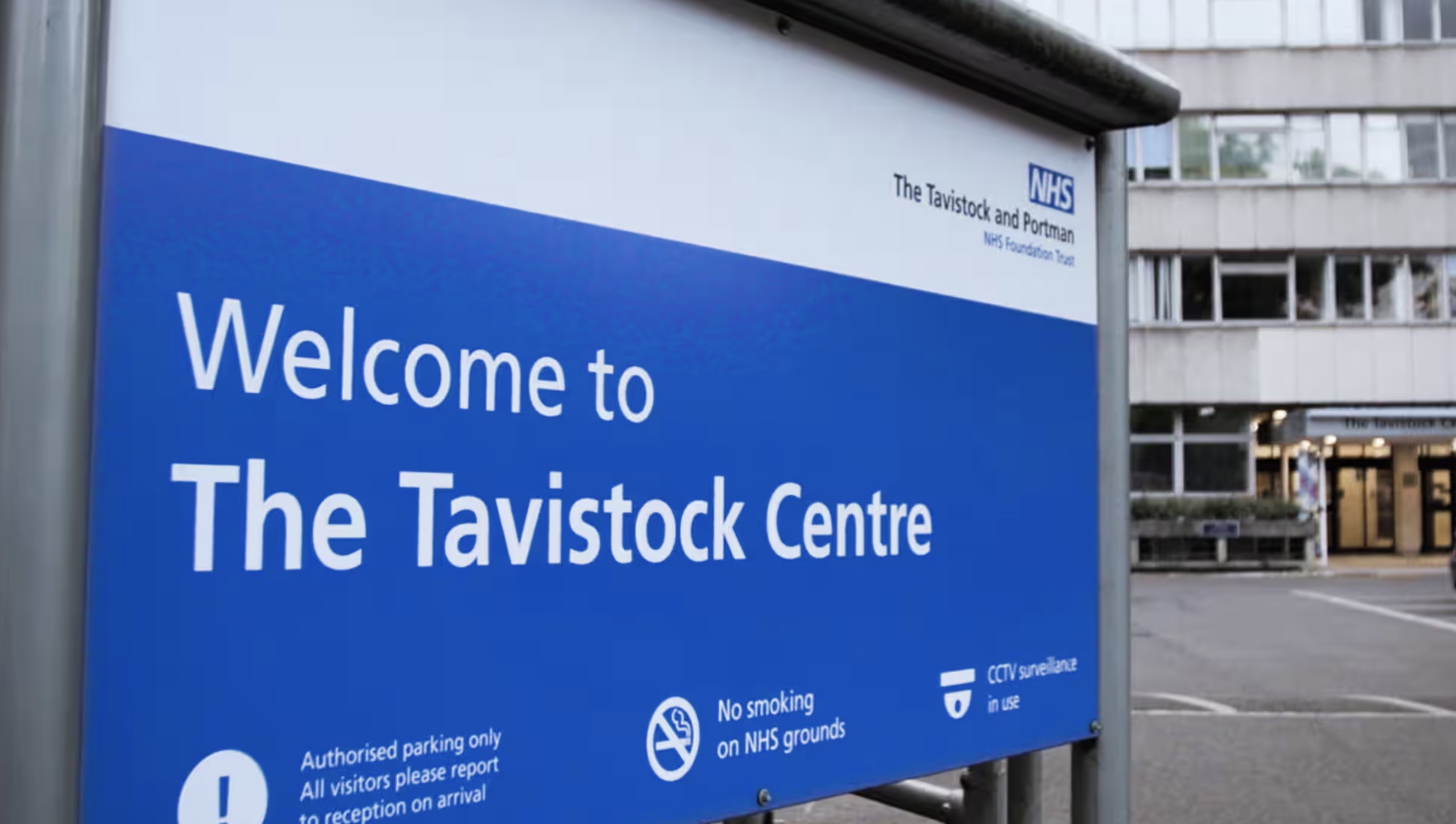
This report came about a pressure mounts from past patients at the Tavistock Clinic. Most notable is the High Court Case of Bell vs Tavistock.

In 2020, Keira Bell won a landmark High Court ruling against Tavistock and Portman NHS Trust, for its dangerous treatment of children who have gender dysphoria. Ms Bell was prescribed puberty blockers at age 16. As an adult Ms Bell sued Tavistock, alleging that young people do not have sufficient awareness to make an informed decision to undergo invasive treatments that will have long-term effects on their physical and mental state. Three judges ruled in her favour

Notice the clear language quoted by the The Times,

“under-18s in gender clinics need “far better mental health services to help them to reconcile themselves to their (sex) — not life-changing physical interventions that might alleviate short-term distress at the price of long-term trauma”.

Tavistock Clinic has since been shut down, and this week the NHS announced that such treatment for children suffering from gender dysphoria is banned. England is following other European countries who’ve recognised the same dangers. This is but the latest red flag signalling a fundamental problem with the way our society views gender and sex and the way we care for the vulnerable. 

Evidence is mounting; the real and dangerous conversion therapy involves pumping children with hormones and chemicals that stall or prevent puberty, alter the physical appearance, that may bring about infertility and often lead to the surgical removal of healthy body parts.  While England and Europe begin to move away from these experimental treatments, Australia is doubling down. 

Enter NSW.  The NSW Government this week released its conversion therapy Bill. The NSW proposal is not as extreme as the Victorian Laws that were introduced in 2021, but they prove that there is both political pressure and capital by submitting to groups of gender theory activists. No one disputes that among a few marginal religious groups, there were some weird and harmful practices. These practices do not have their origins in the Bible but were influenced by secular education taught to psychiatry students in the 1960s. Origins aside, Victorians were led to believe that there was a major and evil problem going on in Churches around Victoria, but when reports were published and evidence presented,  it was clear that almost no one knew of let alone practised these so-called therapies. The real target was mainstream and normal religious activities such as talking and praying. 

What is going on is that the latest self-appointed preachers representing ‘expressive individualism’ have a clear agenda to destroy what it is to be male and what it is to be female, and therefore what it is to be human. Hence, in part, when the Victorian laws were being debated, groups behind the legislation and some of the most vocal proponents, targeted Christian churches, and in effect created laws to prohibit 2000 years of orthodox and classical Christian teaching and practice about gender and human sexuality.  Remember, that it is illegal in Victoria to discuss with an individual the Bible’s presentation of gender and sex, lest the individual is somewhere influenced.

Abigail Shear (who is not a Christian), has highlighted the sociological phenomenon that is fuelling the extraordinary rapid rise of gender dysphoria in Western societies. In her book, Irreversible Damage, she shows that before the 2010s, the number of people with gender dysphoria was incredibly small. The percentage amounted to roughly 0.01% and that group consisted almost entirely of boys. Today, transgenderism has become commonplace, with somewhere between 4-10% of children now identifying with the opposite gender (or identifying with one of the now 70 possible gender identities that apparently exist), and girls, in particular, are being affected by this. Shier notes,

“Between 2016 and 2017, a number of gender surgeries for natal females in the U.S. quadrupled with biological women suddenly accounting for, as we have seen, 70% of all gender surgeries. In 2018, the UK reported 4400% rise over the previous decade in teenage girls seeking gender treatment. In Canada, Sweden, Finland, and the UK, clinicians and gender therapists began reporting a sudden and dramatic shift in the demographics of those presenting with gender dysphoria from predominantly school-aged boys to predominantly adolescent girls.”

This new trend has become trendy. A uni student shared with me how they feel socially lesser and out of touch because they are not experimenting with their sexuality and identity. That is not to say gender incongruence isn’t a real and very difficult thing for some individuals, but there is more going on.

At the time of the ‘conversion practices’ debate, clinics in Melbourne saw a drastic rise in the number of children undergoing the very kinds of treatment that took place at Tavistock.  Instead of reasoned debate and reasonable laws, the Victorian Government under then Premier Daniel Andrews shouted down concerns as belonging to bigots of the worst kind,

“Cruel and bigoted practices that seek to change or suppress a person’s sexual orientation or gender identity will soon be stamped out across Victoria, thanks to new laws introduced to Parliament today.    

The Bill denounces such practices as deceptive and harmful, reinforces that the ideology behind these practices is flawed and wrong.”

Here lies a major obstacle in Australia. We are not permitted to have the necessary conversations and inquiries to examine what is going on in the clinics and what kinds of long-term impact treatments are having on our children.  Last year,  a senior staff psychiatrist was stood down in Queensland after raising concerns about ‘best practice’ for caring with gender dysphoric children. 

In Victoria, anyone challenging the new orthodoxy faces threats of re-education programs and even criminal charges. Even reluctance can be deemed ‘suppression’ and see children taken from the home. Any conversation or prayer with an individual about these issues can result in allegations and a visit to court. 

Progressive activists and politicians have effectively stifled conversation and today the law is a live weapon that’s held over anyone who dares present an alternative. Instead of caution, it’s full steam ahead in Victoria, with school programs designed to encourage children to question their bodies and doubt their biology. We’re yet not witnessing the end of this tragic chapter; in the meantime, real people and children are being used. 

What cost are we willing to pay before we end this horrific abuse of vulnerable children? There have been recent attempts made in both the Victorian and South Australian Parliaments to open an inquiry into the medical treatment of children suffering from gender incongruence; both were blocked.  Shouldn’t England’s decision at the very least validate a real and thorough investigation into the process, practices, and ethics behind what is going on?

In the meantime, The Victorian Premier has backed a public ‘performance’ coming to a Melbourne theatre where a female actor will ingest a cocktail of tranquillisers to fall unconscious and is then sexually assaulted by fellow performers, live on stage. Yes, this a criminal act, but because it’s a performance somehow it is morally acceptable.

May I suggest, that when it comes to sexual ethics, we have a problem.

It’s another reason why I am so convinced by the person and promises of Jesus. He doesn’t manipulate or abuse. He can love without affirming. He can empathise and help. He doesn’t diminish the individual, but came ’to seek and save the lost’. 

This week I have the privilege to explore these amazing words from the book of Hebrews. When we fail to understand each other whether deliberately or ignorance, even parents or friends or teachers or Governments, there is one who does get us, 

 “Therefore, since we have a great high priest who has ascended into heaven, Jesus the Son of God, let us hold firmly to the faith we profess. For we do not have a high priest who is unable to empathize with our weaknesses, but we have one who has been tempted in every way, just as we are—yet he did not sin. Let us then approach God’s throne of grace with confidence, so that we may receive mercy and find grace to help us in our time of need”. (Hebrews 4:14-16)


The NSW Parliament adopted the conversion practices legislation on March 22

Should Victoria introduce laws permitting doctor assisted suicide?

Who can live and not see death,  or who can escape the power of the grave? (Psalm 89)

Pastoral ministry is one of the few professions where you get to  travel with people from birth through to death. It is a privilege to minister to people who are facing their final weeks and days. Sometimes it is a brief period of illness, other times it is an elongated time of suffering. I have known people in their final days who were keen, not to die, but to see their suffering come to an end and to see their hope in Jesus Christ realised. It is an extraordinary privilege to sit beside a person who in approaching death is joyful and at peace. I have also witnessed people wrestling with their own mortality and doubts of what lies beyond death. A pastor’s care in such circumstances also extends to a spouse, to children and friends. Indeed, for many pastors, these relationships are not merely ‘professional’, for those whom we serve are much loved, and they are our friends and family.

Several members of my family work in the medical field, including my wife who worked as a nurse for 10 years, spending much of that time caring for patients with terminal and chronic illnesses. On more than a few occasions she would come home after a shift in tears, having witnessed a patient die.

I wanted to begin by mentioning the above contexts because it would be wrong to assume I am writing from a distance. Indeed, I appreciate that there are many personal stories, from people who hold to various views on euthanasia, and while these stories are all important, stories alone are not suffice for creating law.

OLYMPUS DIGITAL CAMERA

If there is common ground to be found in the debate on euthanasia, albeit a rather morbid commonality, it is agreement that death is a terrible reality in the human experience.

It is no small thing for the State to legalise killing another human being

It is of paramount importance that we recognise that the State exists not only to protect life but to enable human flourishing. Similarly, our health system exists to save human life and to bring healing of body and mind. Introducing a law that permits taking a human life is no small thing.

Physician assisted suicide not only contravenes the very purpose of our health system, it would require medical professionals to discard both the Hippocratic oath and the Declaration of Geneva.  Such a law would introduce to society the morality of taking human life, legislating that our society condones the killing of another human being. Again, this is no small and insignificant line in the sand.

Dr Michael Bird recently made the astute observation that Victoria could potentially have two hotlines: one for suicide prevention, and the other, suicide permission. The conflict is clear for everyone to see.

Palliative Care as a better option

I am not unsympathetic toward those who wish to end their lives; I hate human suffering and long for the day when it will desist forever.  I do not, however, believe that euthanasia is either morally right nor is it the only option available for terminally ill Victorians. We have been led to believe that the only choices available are either ongoing treatment or euthanasia, but there is a third option, and one that avoids unnecessarily prolonging a patient’s life and avoids actively killing them, palliative care.

Palliative care is designed to provide the greatest possible comfort for patients, without undue intervention and causing protracted suffering.

Dr Megan Best is a senior lecturer at the University of Sydney Medical Faculty and works as a palliative care physician in Sydney. In a recent article, Dr Best has argued that a better way forward is to provide adequate resources for palliative care. She says,

“While services such as palliative care and hospice can do much to relieve the distress dying people experience, many still do not have access to it. We must do better.”

It is a travesty that many Victorians cannot currently access proper care that they deserve and need at such an urgent time.

Similarly, Dr. Ian Haines is a medical oncologist, and he believes, 

“Like Andrew Denton and others who have observed unbearable suffering in loved ones and the terrible failures of modern medicine in the past, I had once believed that euthanasia was the only humane solution.

I no longer believe that.

The experiences of countless patients and families should be the inspiration for continuing to improve palliative care, for general introduction of advanced care plans and not for euthanasia with its openness to misuse.”

In other words, our Government would do better to invest properly into palliative care, providing the kind of support patients and their families need at such a time.

Unsafe safeguards

The model of euthanasia being considered in Victoria is that which is currently practiced in Oregon, USA. The process involves a Doctor prescribing a lethal capsule to a patient who has been diagnosed with a terminal illness that will lead to death within six months.

In a report recently published by the Health Department in Oregon, are a series of startling revelations regarding doctor assisted suicide in Oregon: First, 49% of patients state as a major reason for taking their own life, the belief that they are being a burden to their family. Second, once the doctor has prescribed the capsule containing secobarbital or pentobarbital, there is no guaranteed follow up in patient’s home where most are said to take their life, with no safeguards to ensure only the patient can consume the lethal dose. Third, patients with non-terminal illnesses have been given access to these lethal drugs and taken their own life.

Both Dr Megan Best and Dr Ian Haines, are among numerous medical professionals who believe the introduction of euthanasia will lead to abuses and even to amendments and extensions down the track.

Dr Best explains,

‘It upsets healthcare providers when their patients are distressed. Don’t tempt them. You can’t rely on the rules. It is not possible to write a law that can’t be abused. That’s why euthanasia bills get defeated in parliament. Because, even though we ache for those who are suffering and desire to die, we feel responsible to protect the vulnerable who would be at risk of dying under the legislation if it were to pass. Surely the worth of a society lies in how it treats those who can’t care for themselves.’

Does this not at least raise questions in our minds, if not grave concern? If medical professionals working in palliative care are already communicating that the rules will be broken, we ought to take notice.

And for to those who allege slippery slopes are mythical, have they not looked to Northern Europe, and seen how euthanasia laws are now regularly broken and expanded, to include killing children, killing people with mental illness and dementia and even gender dysphoria?

Behind the debates on many ethical issues including euthanasia, is what is known as utilitarian thinking, most notably advocated by Professor Peter Singer. Utilitarian ethics ditches belief in the inherent value of every human life, and instead determines moral good by what the greater number of persons believe will maximise their happiness. In other words, for example, killing unborn children is a moral good when the mother believes the child will not add to her own happiness. This is one of the chief reasons why the number of children with Downs Syndrome has decreased significantly in Western societies because the vast majority are now killed in the womb.

There are Parliamentary members across the spectrum who are expressing support of a Bill legalising assisted suicide, and similarly, across the parties are members who disagree and are concerned. We have all heard heartfelt stories being told from different viewpoints, but we must judge what is right. There is an overarching principle with which the State of Victoria must decide, is it the role and right of Government to introduce law that permits the killing of human life? If so, what promises will be given that no further legislative changes will be made in the future?

When society cuts our humanity away from the imago dei, we always slide down a path toward dehumanisation. Bringing the two together again requires humility and more. It requires the loving actions of God to restore and heal this broken image. Is this not the wonder of the Easter event?

If the moral compass of our State is utilitarian ethics, which certainly appears to be the case, then further expansion of euthanasia laws is almost inevitable, as is happening across many countries who’ve already taken the pledge to kill. Indeed, I have already been informed, on sound advice, that the Bill shortly to be presented to the Victorian Parliament will be in the first place be a conservative pro-euthanasia Bill, but the intent will be to extend it 3 to 5 years down the track.

When we begin defining the value of human life by the kind of utilitarianism pursued by Peter Singer and others, we should not be surprised to find ourselves in a few short years permitting and even pressuring the expungement of all manner of people whom society deems a burden. I realise all this sounds rather Stalinesque and outrageously impossible; we would never traverse such dreadful ground. But look to Belgium and the Netherlands, and consider how our own society has already deemed moral, killing unborn children, and possibly now, those who are at the end of their days.

Have you journeyed to the springs of the sea

    or walked in the recesses of the deep?

 Have the gates of death been shown to you?

    Have you seen the gates of the deepest darkness?

 Have you comprehended the vast expanses of the earth?

    Tell me, if you know all this.” (Job 38:16-18)

Are we prepared to cross the line, or instead, can we do better by providing improved and greater resources in palliative care?

American Evangelicals have harmed Evangelicalism

“Therefore, you kings, be wise; be warned, you rulers of the earth.” (Psalm 2:7)

160128212624-fox-january-gop-debate-trump-rally-780x439

Eleven months ago a good friend sat on the lounge in my home and told me that the Presidential race would be between Hillary Clinton and Donald Trump…and that Trump would win!

I looked at him as though he had had a lobotomy. But over the course of the year my friend’s projection has been rattling in the deep recesses of my mind where I try to leave all the crazy thoughts.

Like the majority of Australians I feel as though I’m floating in a hypnagogic state. How many of us really thought that Trump would trump America?!

According to the latest figures, it appears the main reason for Hillary Clinton’s loss is because Democrats stayed home: 5 million fewer democrats voted yesterday than in 2012; that’s a lot of people. The Republican turn out was also slightly down, which is unsurprising given the candidate.

I have no doubt that there are numerous reasons behind Trump’s win, and I am no expert to decode all these, and neither is it my purpose to explore them here.

After surveying this morning’s twitter sphere, it revealed though how mainstream media, Hollywood, and the self acclaimed intelligentsia still don’t get it; the progressive moral and social agenda is repugnant to many Americans, and also to many Australians.

More concerning, American “evangelicals” don’t get it. I am hearing reports suggesting that as many as 85% of “evangelicals” voted for Donald Trump. Whatever the actual number, it will be a substantial percentage. I appreciate why Christians could not vote for Hillary Clinton; for example, her position toward unborn children is paramount to evil, but so is Trump’s posture toward women and refugees.

I want to reiterate a concern that I have raised in recent weeks, and that is how the evangelical cause will be weakened as a result of a Trump Presidency. The reason is obvious, “evangelicals” have so closely aligned themselves with Donald Trump that in the public eye the two have been aligned.

While there were multiple groups investing in the campaign, “evangelicals” are at least partly responsible for Donald Trump’s ascendancy to the American Presidency. That’s right, without their endorsements, the Republican nominee may well have been a Jed Bush or Marco Rubio.

You will notice my proclivity to use the inverted comma when referring to evangelicals, and that’s because the word has been regularly misappropriated by not only political pundits but also by Americans themselves. True evangelicalism has little to do with the political aspirations of right wing America, and everything to do with the Gospel of the Lord Jesus Christ. Authentic evangelicalism is defined by this Gospel as presented in the Bible, not by the political right or left, not with Democrats or Republicans, and for the Australian context, neither Liberal nor Labor.

While never wishing for a Clinton victory, I do think that scenario would have at least given “evangelicals” an opportunity to break with Donald Trump and start afresh, to repent of foolish associations and  to rethink how Christians should engage in the political space. Unfortunately, “evangelical” America supported the winner, and have been tarnished for doing so. I cannot see how this association will advance the cause of Jesus Christ. If anything, the word may become irretrievably immeshed in a cause that is not the Gospel.

I am thankful for the many evangelicals who have stood up to Donald Trump and have copped flack for doing so: Ed Stetzer, Russell Moore, and Al Mohler among them. In Australia, the general public will not be informed of these voices, and instead Australians will time and time again hear how “evangelicals” assisted Donald Trump to the White House. At least in the Australian public square, the 2016 Presidential election will tarnish Christian witness and further perpetrate myths about Christianity. It is for this reason I am calling on my American friends to return to their evangelical roots and think carefully about political associations.

It is one thing to be part of a Presidential win, but it is quite another to one day stand before the Judge of the earth and give an account for how our lives have adorned or maligned the Gospel of Christ.

This final point is not only true for American Christians but also Australian Christians. When will Christians learn not to place undue hope in Government? The election has exposed a messed up eschatology and misplaced soteriology, which will not only disappoint, but will prevent people from seeing Christ. However Donald Trump decides to build his wall along the Mexican border, it is nothing compared to the wall evangelicals have built in this election which will block out the wonder of the Gospel. How will true evangelicals work to dismantle this false gospel? What will we do publicly and in our Churches to redress the damage caused by this political misalignment?

We need much prayer. We need much repentance.

As the political shape of America turns, may Christians return to our true hope:

“For to us a child is born,

    to us a son is given,

    and the government will be on his shoulders.

And he will be called

    Wonderful Counselor, Mighty God,

    Everlasting Father, Prince of Peace.

 Of the greatness of his government and peace

    there will be no end.

He will reign on David’s throne

    and over his kingdom,

establishing and upholding it

    with justice and righteousness

    from that time on and forever.

The zeal of the Lord Almighty

    will accomplish this.”

(Isaiah 9:5-7)

Two Campbells and a Bird sat down to chat

Nathan Campbell has responded to recent articles written by Mike Bird and myself, criticising the tone and contour of what we said.

94ab1aeadf838faa2f9a9b8e786c1a67

First up, I want to say that I’d be happy to play the bagpipes and swap stories about the MacDonalds with my fellow Campbell any day of the week. More than that, I love my brother Nathan’s passion for the Gospel of Jesus Christ; his faith in the power of God’s good news is an example for Christians across the country.

I agree with so much of what Nathan has written: Yes, the laws are dumb, yes Christ is triumphant, yes Daniel Andrews’ policies are small fish in comparison with what many believers are suffering in the world. His reminders of the Christian hope are wonderfully important and refreshing in an age where we can get bogged down in some of the daily mud of life.

At the same time, Nathan has profoundly misunderstood our tone, and his critique of our alleged lack of Gospel-centredness is disappointing and off the mark.

First, he conflates voicing concern with fear and panic. I don’t feel afraid or panicked, and neither am I suggesting that we should feel as such. On the other hand, it is not unreasonable to express legitimate concerns over legislation that will impact religious freedom in Victoria. 

Second, I sense as though Nathan doesn’t appreciate the role of rhetorical devices when illustrating points for readers. Of course Daniel Andrews is not Henry VIII or Julius Caesar; but his disdain for opposing viewpoints and his desire to squash religious liberties is real enough, and that’s the point.

Third, and this one troubles me the most, Nathan has confused us expressing concern over a current issue with having a myopic view of God’s Kingdom, and of diminishing Christ’s victory over the grave.

I am happy to concede that if my latest blog piece was the only thing people ever read of mine, readers might misconstrue the reality which drives me; as they say, context is everything. But of course, this is only one of many articles dealing with multiple theological, social, and political matters. For the most part, the Gospel is front and centre, and when it is not, the Gospel is nonetheless serving in the background as the framework in which I express my views. Must every article contain an explicit ‘this is the Gospel’ clause?

Indeed, it is our confidence in the Gospel that give us courage to respond to current issues. We are not afraid to speak and even to lose these battles, because we know who has ultimately won.

Nathan wrote, “I capitalise this because we’re worried about a piddling little thing like the Premier of the State of Victoria; not exactly a global superpower”. 

That is easy to say if you’re not one of the 5 million piddling Victorians living in this State. To be honest, I think our friend from Queensland has on this occasion  denuded the situation in Victoria in a way that is a little unhelpful. Evangelicals should never put too much emphasis on our present circumstances, but neither should we make it altogether redundant.

As a way of outlining some Gospel perspective to the matters Nathan has raised, let me reiterate portions of a piece that I wrote for TGCA in June this year,

“We must concede that Churches no longer occupy a position in the middle, but we don’t want to evacuate the public space altogether. I want to argue that it is worth fighting for a voice in public discourse, but we do so with the belief that the Gospel does not depend upon it. So why should we defend notions of ‘freedom of speech’.

First of all, we have something to say. We have good news to speak and show our neighbours, and so why would we walk away from secular principles that give us freedom for speaking and contributing?

Secondly, we should defend the right to speak for the sake of those who speak against us. Is this not a way in which we love our neighbour?  Is it also not a sign of a mature society, one that is big enough to allow a plurality of voices, and to say ‘I disagree with you, but let’s hear you out and then talk it through’.

Thirdly, we are members of a democratic society, which in principle gives permission for Christians and atheists alike to speak and offer their opinion.

Our democratic liberties give Christians a platform and context for doing public ministry, and we are thankful for this, but the Gospel is not curtailed by the limitations or freedoms of liberal democracy. Indeed, history demonstrates that Churches have often flourished where they have been most resented. More importantly, Jesus Christ taught a theology of the world which lives in opposition to God and which hates those who follow Jesus. Why should we assume Australia is any different?

Are, as Greg Sheridan suggests, ‘churches in crisis now on all fronts’? It depends on how one defines the mission and role of the church.

Our aim is to love others, whether our convictions are affirmed by others or not.

Our goal is not relevance, for the Gospel we believe is not defined by a popularist epistemological current, but by the word of the cross, which is foolishness to the wise and powerful of this world. Instead, our purpose is to preach this foolishness for through it God works to redeem and heal.

Our mission is not to set up power structures at the centre of society, but to speak the Gospel and to love others no matter where we find ourselves situated in relation to broader society.

Freedom of speech has become the gordian knot of our day. Politicians, lawyers, and academics will ponder and debate and try to find a way to navigate through the many layers of twisted and knotted rope, and while their answers will have implications for Christian speech and life in public, our hope does not lay with them, but in the Gospel, a word that is sharper than a two edged sword. Our hope rests in the Christ who has promised that he will build his church and not even Hades can stand against it.

Sadly many Christians have sold their soul in order to buy a place at the centre of public life, and they are now being marshalled into following the lead of the social progressives, and others are instead holding tight to their conservative neuroses. There are however exceptions; across the land there are churches growing and people are becoming Christians, and there are Bible colleges in Australian cites who are training more men and women than in the previous generation. There are Christians serving in Parliament, teaching in universities, and working in a thousand different jobs. And to these men and women, keep preaching and living the Gospel, loudly from the centre or whispering it from the edge, and through it God will keep working his grace and growing his Kingdom.”