Today millions of Australians will wake up enthused and celebrating the outcome of yesterday’s Federal election. Many others will be despondent and even angry as the candidates of their preferred party lost. To be honest, I suspect millions more Australians are waking up today with a degree of political indifference as they carry on making breakfast and figuring out how to pay their bills and care for their families and wondering how Carlton’s season ended up this way! A plethora of responses are understandable. For the Christian, who may also empathise with and see themselves at some place along this spectrum, there is one constancy. Psalm 146 famously says,
“Do not put your trust in princes,
in human beings, who cannot save.
When their spirit departs, they return to the ground;
on that very day their plans come to nothing.
Blessed are those whose help is the God of Jacob,
whose hope is in the Lord their God.”
These words remain true, before and after the votes had been cast and counted.
I understand that in quoting Psalm 146, some people might be a little annoyed and perhaps a tad angry, especially among voters disappointed by the election result. I certainly don’t mean to sound unfeeling or facile, as though the election was unimportant. I happen to believe elections do matter because government plays a significant role in the life of society; controlling much power and influence. After all, Government is a legitimate institution that falls under the banner of God’s common grace. It may not be the main game, but government nonetheless plays an important supporting role.
It is also the case that Government has less influence in setting the direction for society as it is about providing the legal, economic, and social mechanisms by which society moves in the direction that it is already preferencing. The old adage about politics being downstream of culture is complicated but still true.
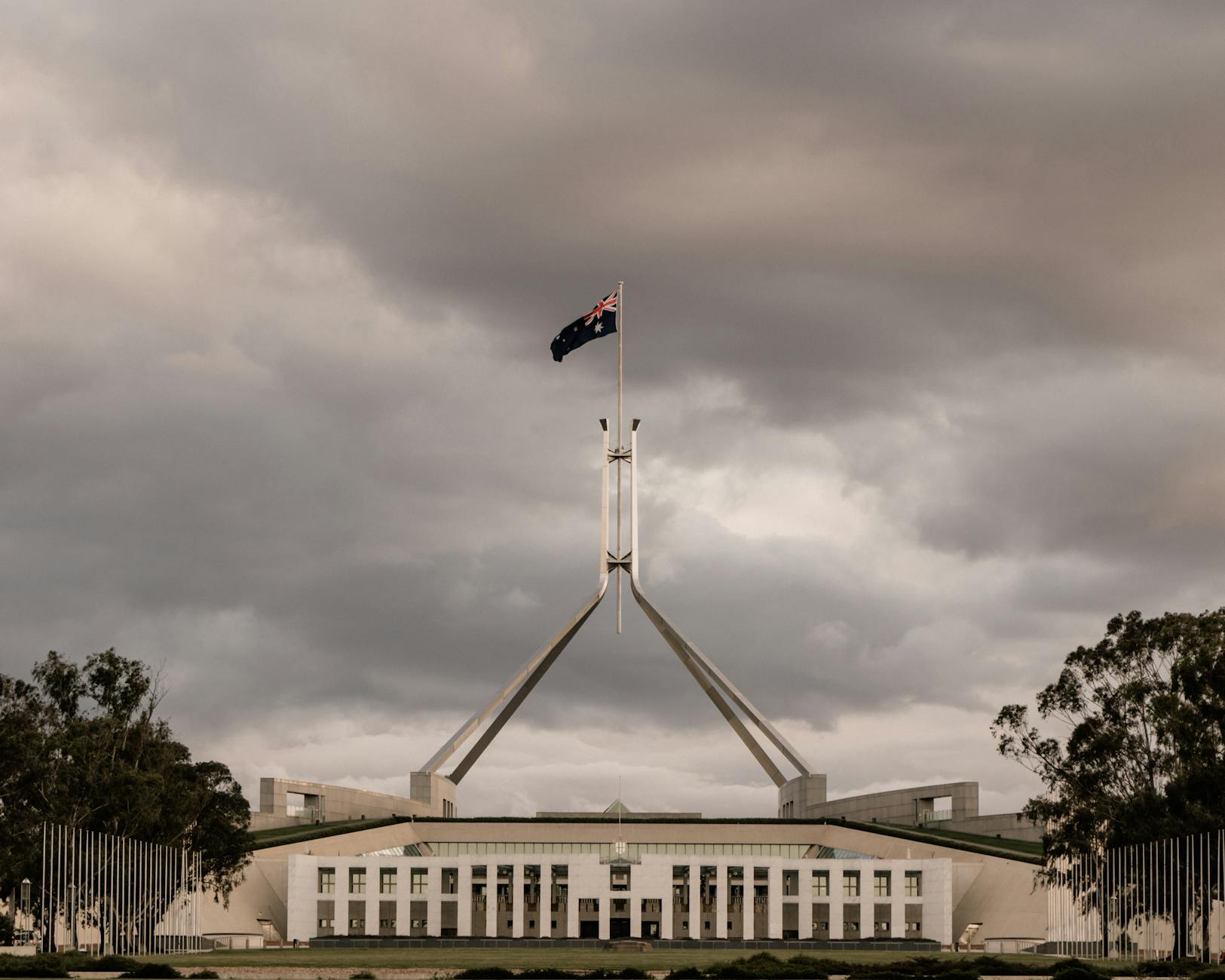
The reason behind sharing the Psalm 146 quotation is that I’m wondering if we are attaching too much responsibility on Government for fixing social ills and rectifying economic currents. This is true for both the left and the right of politics. Have we become too dependent upon Parliaments and MPs for addressing what was once the prevue of churches, synagogues, media, and an array of social organisations? If we have lost trust in those civil and religious institutions (which seems to be the case), faith in our governments is also in sharp decline. There lies perhaps some of our misplaced faith and therefore frustration and despair at the political scene. We are not meant to burden Government with all our hopes and demands and needs. A healthy society needs to spread that load. Indeed, a truly healthy society would not require government to create what we have in Australia: a society wrapped in red tape and wads of laws and rules stickier than gaffer tape.
There are better governments and worse; it’s rarely a zero-sum game. I suspect there is also a deep suspicion of and discontent toward political parties across the spectrum. Sometimes it’s a case of choosing the least bad option available, or at least that’s how many voters are feeling: I don’t like this candidate, but at least they’re not the other candidates!
How did we respond to the election at church today? This morning my church prayed for the new state government, as we do regularly for whoever is in charge at Spring Street and in Canberra. And we also prayed for our local representatives in Parliament. That’s what Christians do. It’s one of the few constancies in the unpredictable world of politics; churches pray for those in authority. To the reluctant among us, let’s consider it this way, if the Apostle Paul could pray for the Roman Emperor, then I think we can pray for our governments.
We should pray for our political representatives because they carry significant responsibility. Given the platform that we build for our leaders (or scaffold as it may be), praying is the right thing to do. Of course, government isn’t the big game in town, but its role impacts life at every level and therefore great wisdom, patience, integrity and compassion are necessary.
Without some kind of cultural reorientation, I suspect Governments will become bigger and bolder. It is interesting to see how Australians, or at least Victorians, have become more comfortable with authoritarian personality and politically styled governing. The myth of the convict, bushranger, and nonchalant Aussie digger may still exist in local sporting clubs, but as a people group, we are quite accepting of big government and monocratic-styled leadership. I’m not arguing a case either way here but simply noting the public trend.
Of course, my eyesight is myopic and so looking at the next 3 years is an imprecise art. There are, after all, no more prophets! My guess is that in the name of freedom, more laws and regulations will be introduced, and in the name of economic prosperity, more debt-inducing spending will occur, and we will remain desperately ill-prepared for the geo-political challenges that lie ahead. If we follow the now predominant current, I anticipate that we’ll see tighter controls on social behaviour, fewer parental rights and a more pronounced religion-socio education drive. In part, we’re recognising a fragmentation in society and so looking for answers is only natural and desirable (depending of course upon the solutions offered).
So I go back to the verse I began with, Christians should not look to government to be the saviour of society. Don’t put your trust in princes and prime ministers. Honour them and pray for them, but let’s not expect government to rescue society from the deepest and darkest of places.
This is one of the flaws present in much of politics today; people believe and expect Government is the answer. Big government has devotees on both the left and the right. Hence it’s no surprise to see legislative agendas enveloping society around a new moral religion. It’s interesting to see how churches have become more visible as politicians vie for attention and votes. ‘Social cohesion’ is one of the buzz words. God is optional in the new religion, and where he is worshipped, he somehow always supports the popular moral zeitgeist!
Among some Christians, there are more strident and public voices. Christians, be careful of voices that speak more about politics than they do the Great Commission and use more words of outrage than they do words of compassion and mercy. By all means, as a commitment to common grace and out of love for your neighbour, keep government accountable. Christians might join a political party and stand for Parliament, but even the most Christian of political leaders and most Christian of political agendas isn’t going to redeem society. That kind of thinking ignores the testimony of Scripture, namely that the gospel is God’s power of salvation and the church is God’s big game in town. Our churches are more likely today to sit on the sideline of culture and be ignored by many, but nonetheless, the church is the centrepiece of God’s work. Therefore, whatever you do in the name of political inspiration, aspiration or disappointment, don’t confuse it with the Gospel, don’t conflate common grace with saving grace, and don’t fuse the church with the state.
The best way we can love our fellow country people is by serving your church and being clear on the gospel. Today at church, pray for government and for those in authority, and give thanks for free and safe elections. And be clear on the gospel. If we love the Lord our God with all our heart, mind, and strength we will also love our neighbours, and that will have real and positive outcomes for our society. That kind of humble constant Christ-like hope hope-filled living may have a greater effect for the good of society than even an election.

 MurrayCampbell.net