King Charles flew to Rome to pray with Pope Leo. As reporters are headlining, this is big news.
The BBC is making a splash,
“King and Pope make history by praying side by side
King Charles and Pope Leo made history in the Sistine Chapel by praying side by side – a first for the leaders of the Church of England and the Catholic Church.
Under the scrutinising eyes of Michelangelo’s Last Judgment, when Pope Leo said “let us pray”, it meant everyone, including the King, closing a gap that stretched back to the Reformation in the 16th Century.”
SBS,
‘Healing of history’: King Charles and Pope Leo pray together in 500-year first’.
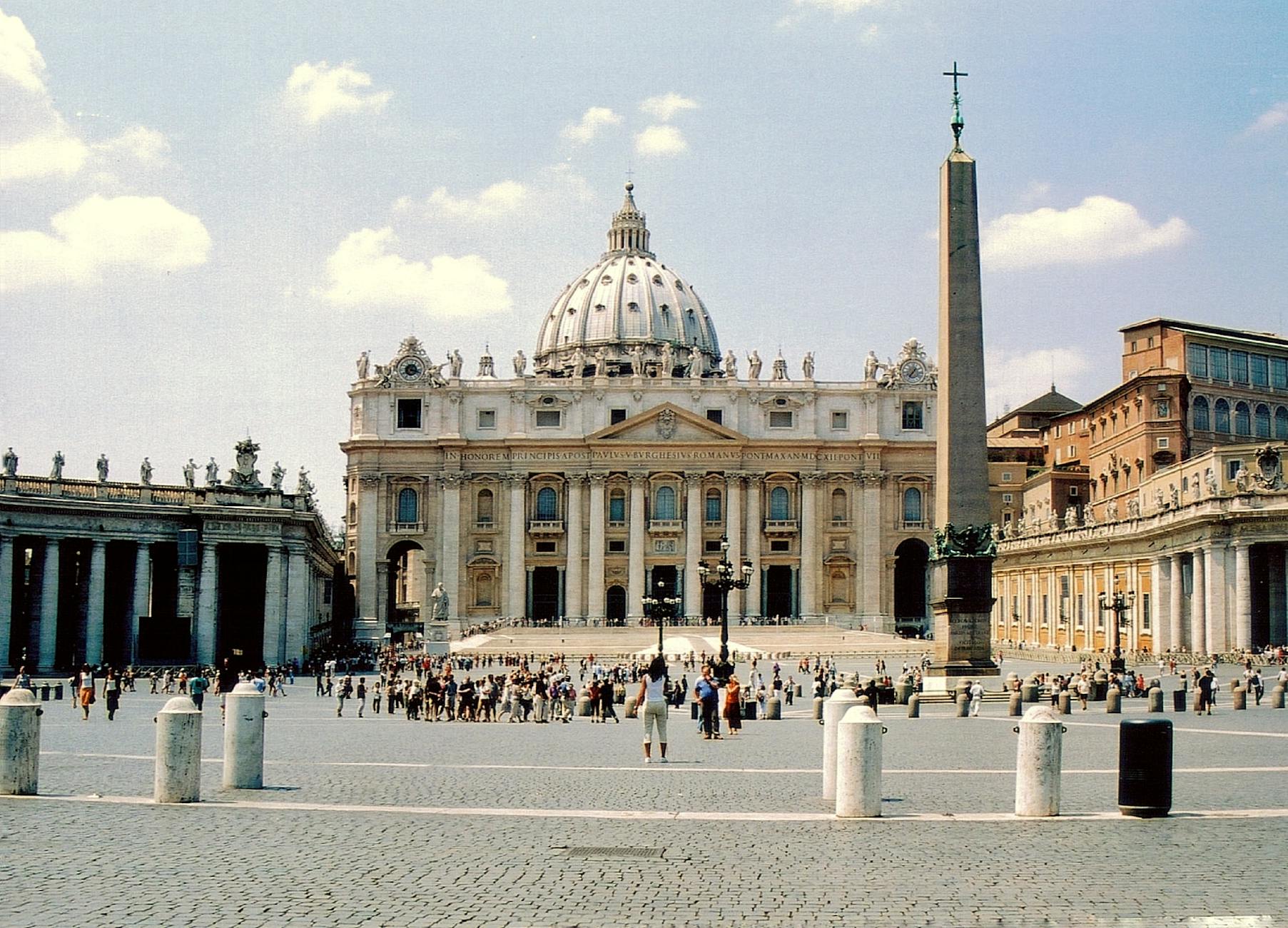
This is the first occasion in 500 years that an English monarch has so publicly aligned with a Pope. The public prayer meeting hasn’t been lost on the media or by Christians worldwide. Despite the historic nature of this meeting, it’s unsurprising, given that the ecumenical King is married to Queen Camilla (who has strong familial links with Roman Catholicism), a step that itself moves history a little closer to its medieval past.
You may be wondering, why is a Baptist interested in this affair? Fair enough. Good question. We live in a global community, and I belong to a Christian denomination and am a child of the Reformation. No doubt many readers are pondering the significance of this public display by the King and Pope, and so sometimes the ‘outside’ voice has more liberty to make observations than those close to the crown and zucchetto. The King of England praying with the Pope is news, even if it has zero impact on what happens this Sunday at church. It may do little to change what happens on Sunday, but the step has symbolic power. Symbols have a habit of punching the air and giving credence to ideas. Should the Church of England one day return to Rome? Will the divorce be followed by a wedding?
Whatever this union symbolises, the King and the Pope praying is paradoxical for 2 obvious reasons: the historical theological divide and the new theological divide.
A history of irreconcilable difference.
The very doctrines and spiritual abuses that led to the Reformation, from Germany to England, haven’t been relinquished by Rome. Indulgences remain widely practised. Rome continues to believe in 7 sacraments. The view that salvation and forgiveness of sins require effort and merit on behalf of the sinner is a hamstring injury that persists to this day.
Over the 500 years since the reformers sought to purify the church in teaching and life, the Roman Catholic Church has doubled down and expanded in its theologising. For example, 1964’s Second Vatican Council, Lumen Gentium 16, states that salvation is given to the anonymous Christian, the person who doesn’t believe in Jesus the Son of God and yet is redeemed. This teaching was upheld by Pope Francis.
It would be a wonderful sight to one day see Rome throwing off the magisterium and for genuine spiritual unity to be found in the one Lord of the church and by his Spirit. After all, the Apostle Paul spells it out for us in Ephesians ch.4,
‘There is one body and one Spirit, just as you were called to one hope when you were called; one Lord, one faith, one baptism; one God and Father of all, who is over all and through all and in all’.
And yet, this is not the situation before us today. The differences between Rome and Canterbury are substantial and primary. Sure, there is also common ground, but does this denude the division over how sinful human beings can be redeemed and given assurance of right standing before God?
So what is the King of England trying to achieve by visiting the Vatican and coming together with the Pope in prayer?
What political statement is being made?
What kind of theological statement are the two heads suggesting?
It is a strange sight.
I imagine Thomas Cranmer rolling in his grave in search of a flame to thrust in his right hand, if he were there, and Ridley sighing with frustration. Hugh Latimer’s dream became a reality, and we can dream again, ‘Be of good comfort, and play the man, Master Ridley; we shall this day light such a candle, by God’s grace, in England, as I trust shall never be put out.’
Maybe this is the point, albeit unbeknownst to the orchestrators of the King’s visit. The candle has not gone out: the UK is witnessing a resurgence of Christian interest and London churches are growing…except where the Church of England who with decision and pageantry, blew out the candle in Canterbury.
The timing of King Charles’ visit to the Vatican to pray with Pope Leo is perhaps perfect. Within weeks of the Church of England giving up on the Christian faith (thanks to the appointment of the new Archbishop of Canterbury), the head of the Church of England flies to Rome.
Old divisions remain formally and substantially, and there is a new divide.
A new divide
Before I point out the enormous elephant standing next to the King and the Pope in the Cistine Chapel, let me clarify, I love my Roman Catholic friends. There are many Roman Catholic brothers and sisters around the world who believe the Gospel and love Jesus, and with whom we may pray and share in common. Rome in the 16th Century may have designated the Reformers as heretics, but the likes of Martin Luther and Jean Calvin saw Rome as a genuine but very sick church.
Also this, when it comes to the Church of England, there are many faithful and amazing Parishes across the UK, and many, many faithful Anglican churches around the globe, including Australia and here in Melbourne; praise God. The Anglican Communion has, however, shifted. The seat of Canterbury is broken thanks to the ‘Living in Love and Faith’ offering and appointing one of its chief architects, Sarah Mullally, to be the new Archbishop.
It is with this issue that a new chasm between Rome and the CHurch of England has opened up. On this matter of human sexuality and marriage, there is a fundamental disagreement between Rome and the Church of England. Canterbury has bent the knee to the cultural zeitgeist. Indeed, on this and many ethical subjects, Rome has proven more resilient than those Protestant denominations that continue to perform to the crowds, hoping for appeal and applause. Let the lesson be learned: if our theological preferences change according to seasonal cultural winds, it is only a matter of time before your church blows down!
I suspect this is one reason why young people in the West are as likely to be drawn to finding a home with Rome as they are in the local Church factory or Saint Bob Anglican.
In the last 5 years, the tissue-thin screen veiling the new atheism has been removed, and the Wizard of Oz is nothing more than a scrawny man holding a megaphone and shouting, ‘There is no God’. 50-year-old middle-class Melbourne may be stuck on this Spotify playlist, but younger generations know better. People know instinctively that there is something real and important beyond this material world. We need it to be, because God knows, life gets pretty miserable without Divine forgiveness and hope. Take away God, and we have 8 billion people pretending there is commonality and trying to figure out a reason why brute power shouldn’t win the day.
Of course, in the search for God, one of the mistakes we can make is to think that if it looks and smells old, it must be the real thing. I say, don’t judge a church by its smell! The Reformers were right. Does a church believe, read and teach the Bible? Do they worship the Triune God? Do they believe in the sufficiency of Christ’s substitutionary atonement death? Do they affirm the physical resurrection of Jesus? Are they denying or adding to the One Gospel? If we can tick these boxes, then they are the real church where God dwell by His Spirit.
Part of the search for God is the persistent and right need for security and substance. We see an aged wineskin and assume its contents are priceless. As a Christian minister, I want to argue that true security and substance is found in Christ and his sufficient Gospel. This idea isn’t new and novel; the Reformation rediscovered these precious truths: justification by grace alone through faith alone in Christ alone. It is, in fact, a Bible idea. If you’re looking for new old, go to the Scriptures!
Two great errors can be committed by a Church. One is to take away from the gospel in the search for relevance, and the other is to add to the gospel. In my view, the Church of England has chosen the former, and Rome, for too long, is persisting with the latter.
Religion can be bewitching. When we catch a whiff of permission giving, we feel liberated to mould God into our own image. At the other spectrum, rules and traditions provide a temporary ballast, and yet both miss the point of Jesus. That makes this meeting between King Charles and Pope Leo both fascinating and superfluous. The power of the Gospel is found in towns throughout Nigeria and in house churches across China, and in the cities of Brazil and the suburbs of Sydney and Melbourne.
Our Bible text this Sunday is a really helpful explainer. It’s not a short read, but if you’re interested in what the Apostolic testimony has to say, it’s worth following the Apostles’ logic from beginning to end. Have a read,
“Who has bewitched you? Before your very eyes Jesus Christ was clearly portrayed as crucified. 2 I would like to learn just one thing from you: Did you receive the Spirit by the works of the law, or by believing what you heard? 3 Are you so foolish? After beginning by means of the Spirit, are you now trying to finish by means of the flesh? 4 Have you experienced so much in vain—if it really was in vain? 5 So again I ask, does God give you his Spirit and work miracles among you by the works of the law, or by your believing what you heard? 6 So also Abraham “believed God, and it was credited to him as righteousness.”
7 Understand, then, that those who have faith are children of Abraham. 8 Scripture foresaw that God would justify the Gentiles by faith, and announced the gospel in advance to Abraham: “All nations will be blessed through you.”9 So those who rely on faith are blessed along with Abraham, the man of faith.
10 For all who rely on the works of the law are under a curse, as it is written: “Cursed is everyone who does not continue to do everything written in the Book of the Law.” 11 Clearly no one who relies on the law is justified before God, because “the righteous will live by faith.”12 The law is not based on faith; on the contrary, it says, “The person who does these things will live by them.” 13 Christ redeemed us from the curse of the law by becoming a curse for us, for it is written: “Cursed is everyone who is hung on a pole.” 14 He redeemed us in order that the blessing given to Abraham might come to the Gentiles through Christ Jesus, so that by faith we might receive the promise of the Spirit.”
Correction: The original suggested that Queen Camilla is Roman Catholic. That is not the case. What is the case is that Her Majesty’s first marriage was to a Roman Catholic, and her children are Roman Catholic.


 MurrayCampbell.net