Check out my response to the ‘manosphere’ and ‘Looksmaxxers’ over on my latest at Substack. Click on the pic,
Check out my response to the ‘manosphere’ and ‘Looksmaxxers’ over on my latest at Substack. Click on the pic,
I’m someone who is wary of the ‘prophetic voice’. I’m a huge believer in believing the word of the prophets, but not so much of those who attribute ‘prophetic’ to their own messaging.
A social media post this morning used the phrase as they promoted a social agenda. Yesterday, a Facebook friend did something similar. The phrase ‘prophetic voice’ has joined the pantheon of overused and misused religious phrases.
It’s troubled me for years how the language of ‘prophetic’ is used by Christians.
Maybe it’s the theological window from which I see the world, but for most of the time, the ‘prophetic voice was a phrase connected with progressive theology, as various thinkers and writers advocated for their views. The term ‘prophetic’ became a way of trying to authenticate a point of view, saying that God is behind this teaching.

ABC’s religious program, God Forbid, ran a segment in 2017 that captures the classic liberal understanding of the ‘prophetic voice’. The synopsis reads,
‘Religion and politics are supposed to be separate, but some strange magnetic force keeps pulling them back together. The “prophetic voice” in Christian tradition is supposed to speak out against the abuses of the powerful, even when they’re political leaders. But does this mean the pulpit should be a platform for political views?’
I’m accustomed to this usage of ‘prophetic language.’ For example, in 201,6 I responded to a Melbourne Baptist who claimed this role for the local Baptist college,
“Theological educators must be prepared to stand on the sidelines of the church and call it to account. Like those pesky prophets of old, courageous theologians call the church to be different than what it is, a challenge to a radical transformation and a critique of the status quo.”
Once one understood this pastor’s own convictions, for him, the prophetic voice stands against the mainstream evangelical faith and is either subverting or trying to win over Christians to a new way of thinking (usually a heterodox one).
Which is why I replied at the time,
‘I guess Hananiah was a prophet of sorts! Should not prophets contend for the faith, rather than contravene the faith? In fact, professionalising prophecy was the error of the kings of Israel and Judah. While God may use a voice from the college in a ‘prophetic’ way, assuming the mantle of prophet is dangerous’.
However, over more recent years, the phrase ‘prophetic voice’ (again from my window view), has been increasingly co-opted by conservative Christians to advocate a particular posture, as well as message. It’s become one of these phrases that are thrown into the mix every second day. For example, a Facebook friend yesterday suggested Canon Press speaks with a prophetic voice on today’s issues in contrast (he believes) with TGC, that doesn’t.
There are a number of problems here (not least Canon Press).
Prophetic voice has fast become a rhetorical device, employed to legitimise or bolster the view they’re trying to prove. After all, if it’s prophetic, how can we dare oppose?
Whereas theological liberals often postulated ‘prophetic’ with their progressive message, conservatives often use ‘prophetic’ in line with a certain style of voice. It’s equating the ‘prophetic’ with a particular public posturing.
It’s also reducing the role of prophet. Prophets may challenge. Prophets might also condemn. And prophets could also give a word to console and comfort. At the very least, the ‘prophetic voice’ crowd are rather narrow in what they consider prophetic.
In short, the ‘prophetic voice’, turns out to be a power play, as though the battering ram approach to public conversation is more godly and faithful than the one who knocks on the gate and asks to come inside and share? Or it’s like, if you don’t play the game my way, then you’re obviously not playing the game at all (which any sports coach and player will know is nonsense).
It’s confusing style, strategy and substance.
Tim Keller famously and so helpfully explores the space known as ‘theological vision’. Between our theological foundations and our ministry practice is this in-between hermeneutical and wisdom space where we develop strategy and approach.
In his super helpful book on Eldership, Murray Capill explains this way,
“As Keller notes, people with the same theology can have very different ministry practice. Not all churches with reformed theology, for example, worship in the same way or do youth ministry in the same way. They can have enormously differing practice, not because of a different theology but a different vision for ministry”
This is also true when it comes to Churches and Christians doing evangelism and thinking through how to communicate Christian ethics. Some Christians are quick to judge our brothers and sisters for not adopting ‘our’ particular approach to social issues. If you’re not signing petitions and making public statements, you’re viewed with suspicion. Or perhaps public silence isn’t complicity or cowardice; it may be that a local church is doing effective gospel ministry to people in their community without making a noise about it.
For example, on the topic of abortion, the Bible is clear that killing the unborn is sin, and so the moral injunction is always clear. Christians arguing otherwise are representing God as much as Hananiah. However, is there only one way to speak about affirming life and value of unborn children? Is the only approach loud condemnatory retorts? Are churches complicit in evil if they are not actively making statements in the public square? What if a group of Christians are going about loving their neighbours and supporting pregnant mums in ways that encourage them to keep their child? That’s going well beyond virtue signalling and actually doing something.
There is another question: what does ‘prophetic voice’ actually mean? How does one define a legitimate ‘prophetic voice’ and do we find biblical warrant for such a category today? What do the Scriptures teach? Does the office of Prophet even exist today? Is it big P Prophet or can there be little p prophets? That’s a whole other conversation.
I think it’s problematic when people employ the phrase to add authority to their methodology for doing public theology. We may well agree with the desired outcome and with the message, but disagree with how best to approach societal sins and problems. What ends up happening when we attach loaded language like ‘prophetic’ is that we aggravate division among gospel centred people who are otherwise dealing with and living godly lives in their particular place.
If one’s ‘prophetic’ speech creates ungospel-like division and plants seeds of suspicion in fellow Christians, it is near certain that you need to stop playing prophet.
At the very least, I’m nervous when people start attributing ‘prophetic’ to public speech because it suggests Divine authority and weight. Yes, 1 John tells us to test the spirits. And yes, as I read the Scriptures, there are clear warnings attached to those who profess to be prophets or speaking ‘prophetically’.
Returning to Canon Press as I wrap up, Jeremy Sexton wrote an excellent piece last week, ‘Doug Wilson is not a prophet’. It’s worth a read as a corollary to what I’ve just shared.
‘What good is it for someone to gain the whole world, yet forfeit their soul? ‘
“No one can serve two masters. Either you will hate the one and love the other, or you will be devoted to the one and despise the other. You cannot serve both God and money.”
Nah, ‘surely not’, says the entrepreneur hungry for another dollar. As long as there is commerce, trade, and ingenuity, people have contended Jesus is wrong. You can have riches and God. You can have wealth and religion.
Why choose between the two? Can’t we have both, Jesus and a growing portfolio? Perhaps not $4 billion; let’s drop it down to a more reasonable $4 million, enough to live comfortably but not so much that my face and portfolio are splashed in The Australian.
It’s an Aussie dream story: success, celebrity status, and a partnership with Ferrari. Wouldn’t we follow these steps given the chance?
The Gospel of Luke tells the occasion when a young influencer makes a pitstop in front of Jesus while on the way to the Grand Prix (yes, there’s a touch of creative licence in this storytelling, but the point remains the same). Careful not to step his $1200 sneakers in a puddle beside the road, he approached Jesus. He was impressed by the man of Nazareth. This Jesus had a way with words and what he touched turned into something amazing. Jesus is useful.
This young dude introduced himself and spoke respectfully to Jesus. He may be young, but he was already enjoying his prosperity. He was going places, but there was this nagging question lurking at the back of his head: did he have it all?
So he asked Jesus, ‘“Good teacher, what must I do to inherit eternal life?”
Jesus then went through a list, spelling out the requirements of God’s law: Don’t murder, don’t commit adultery, and so on.
This pleased the man because he felt pretty solid on those grounds. But then Jesus went where the man did not want to go: his heart.
“You still lack one thing. Sell everything you have and give to the poor, and you will have treasure in heaven. Then come, follow me.”
“When he heard this, he became very sad, because he was very wealthy. Jesus looked at him and said, “How hard it is for the rich to enter the kingdom of God! Indeed, it is easier for a camel to go through the eye of a needle than for someone who is rich to enter the kingdom of God.”
Wealth remains one of the world’s great con jobs. It promises happiness and success and adventure and respect, and yet it is among the worst of addictions. Wealth can be obtained through family and through hard work. Many creative geniuses have made discoveries or invented new technologies that benefit society and have made a fortune through the process. Others have made millions through theft or deceit. And then there is gambling.

Laurence Escalante is Australia’s 32nd wealthiest person, with a personal fortune of $4.37 Billion. There is a feature story in today’s The Australian, with Laurence Escalante sharing his rags-to-riches journey, and from religion to Los Vegas.
Laurence Escalante grew up in a religious family, first attending a Catholic Church and then joining a large Pentecostal Church in Perth. Speaking to John Stensholt, he said,
“At the time I was very much into faith and religion. I was an acolyte”.
Apparently, Escalante has previously served as a church treasurer and started a Christian gaming company. In the vein of typically cringey Christian products, Escalante made video games based on Timothy and Titus, where players venture not to shoot all the bad guys, but to share the good news.
He left this debt-inducing business and subsequently started a new and massively successful business: casino games.
I’m interested in the way John Stensholt writes. Even he, a journalist, can sense the clash of worlds between Escalante’s Christianity and his worldly lifestyle. The article begins,
“If things had gone according to plan, Laurence Escalante would have had a career developing Christian computer games based on the Apostle Paul’s disciples, Timothy and Titus.
It may have been a decent earner, but it’s unlikely to have brought the level of success the 43-year-old has quickly attained in a decidedly less pious way and allowed him to live what is – judging from his social media accounts – quite the hedonistic lifestyle.”
And notice the headline, Saint to sinner? Or just a migrant kid who can now afford a jet. Even the editors can spot the scam.
Instead of bringing the good news of Jesus to the cyber world, Escalante is now making billions from the credit of the greedy and the foolish and the vulnerable. Stensholt can spot the contradiction, as can many a reader, but what about Escalante?
It would be interesting to hear how Laurence Escalante squares this with Jesus.
The podcast episode accompanying the article is tagged, ‘Guided by God to an online gambling fortune’. I’m not sure whether this is Escalante’s personal view or it’s an editorial interpretation. Either way, it’s not true. Can you imagine, ‘Guided by God to commit adultery’ or Guided by God to steal from my neighbour’? Neither can I. But how often do we reconfigure God in order to justify the life decisions we are making, regardless of what God has actually said (take a look at the Bible).
He wants to assure readers,
“While admitting he isn’t as religious as he once was, Escalante insists he is no sinner. He reckons he doesn’t worry about his reputation, and says he is simply revelling in success earned from hard work and learning from previous business failures.
“I’m having fun, enjoying life,” he says in a rare interview. “Being in the moment. I’ve always been that sort of person, [wanting] to enjoy life.
“I was always into cars; I just didn’t have the means to enjoy them. Now I can afford a jet … You have to enjoy life. You never know when it could disappear.”
Nowhere does Jesus say we can’t have fun in life and enjoy ourselves. But chasing the good life without God is like investing in counterfeit money and pouring your life savings into a scam. Are you running on a high? Sure, until reality hits home.
‘Those who trust in their riches will fall, but the righteous will thrive like a green leaf.’ (Proverbs 11:28)
‘Cast but a glance at riches, and they are gone, for they will surely sprout wings and fly off to the sky like an eagle.’ (Proverbs 23:5)
It is one thing to have wealth and it is another thing to consider how to be good stewards of our wealth. And it is an altogether different moral category when exploring by what means we accumulate our wealth.
But why choose between the two? Can’t we have both, Jesus and a growing portfolio? It’s an Aussie dream story: success, celebrity status, and a partnership with Ferrari. Wouldn’t we follow in his steps given half the chance? Before we throw the first cricket ball at Escalante, we might do well to consider our own hearts.
That’s the thing, Laurence Escalante is a God to riches story, and the appeal is strong. It’s easy to throw stones at this billionaire but what if we share his spiritual DNA? He’s simply succeeded where many more Aussies dream. Human nature hasn’t changed over thousands of years, and Jesus’ words are as sharp and confronting today as they were 2 millennia ago. We all too easily sell the soul for a few years of splashed excess.
Gambling is one of Australia’s favourite evils. We gamble in greater numbers than nearly every other nation on earth. We know it’s harmful. We know it destroys lives and families, and yet from Government to Sport, we’ve created this entanglement where we require gambling to sustain community projects and our appetite for a high standard of living.
To be clear, Escalante’s online casino games are illegal in Australia (from what I gather); he makes his money mostly from customers in the United States and in smaller countries like Malta.
Gambling is about playing on your hope through chance. It’s playing the odds as a means to change your life circumstances. Like every good addiction, gambling promises much and lies like porn. It exploits vulnerable people and strips them of further dignity, security and relationships.
If Escalante believes Jesus is okay with his billions, I urge him to think again.
How different is Jesus’ approach? Jesus isn’t utilitarian. He counted the cost. He chose sacrifice, even atonement for the sins of many. Jesus didn’t exploit the poor, he gave his life as a ransom for many. Instead of mingling with Melbourne’s celebrity culture over caviar and champagne at the Grand Prix, Jesus picked up the pieces left behind and gave life. He welcomed the humble and repentant, whether rich or poor.
That’s part of the problem, isn’t it? We want everything. How often are we told that we deserve everything? We create a list of desires and expect God to contribute, as though he owes us. It may not be a $ amount or material possessions, but likability or recognition or career success. What kind of screwed-up view of God that is. The very premise is mistaken. We neither deserve everything nor can we. If we treat Jesus like the non-essential extra to life, then not only do we miss out on Jesus, but in the end we’ll lose the lot.
What does Jesus tell us,
‘For whoever wants to save their life will lose it, but whoever loses their life for me and for the gospel will save it. What good is it for someone to gain the whole world, yet forfeit their soul? Or what can anyone give in exchange for their soul? If anyone is ashamed of me and my words in this adulterous and sinful generation, the Son of Man will be ashamed of them when he comes in his Father’s glory with the holy angels.” (Mark 8:35-38)
But what would Jesus know?
‘after all, is Apollos? And what is Paul? Only servants, through whom you came to believe—as the Lord has assigned to each his task. I planted the seed, Apollos watered it, but God has been making it grow.’
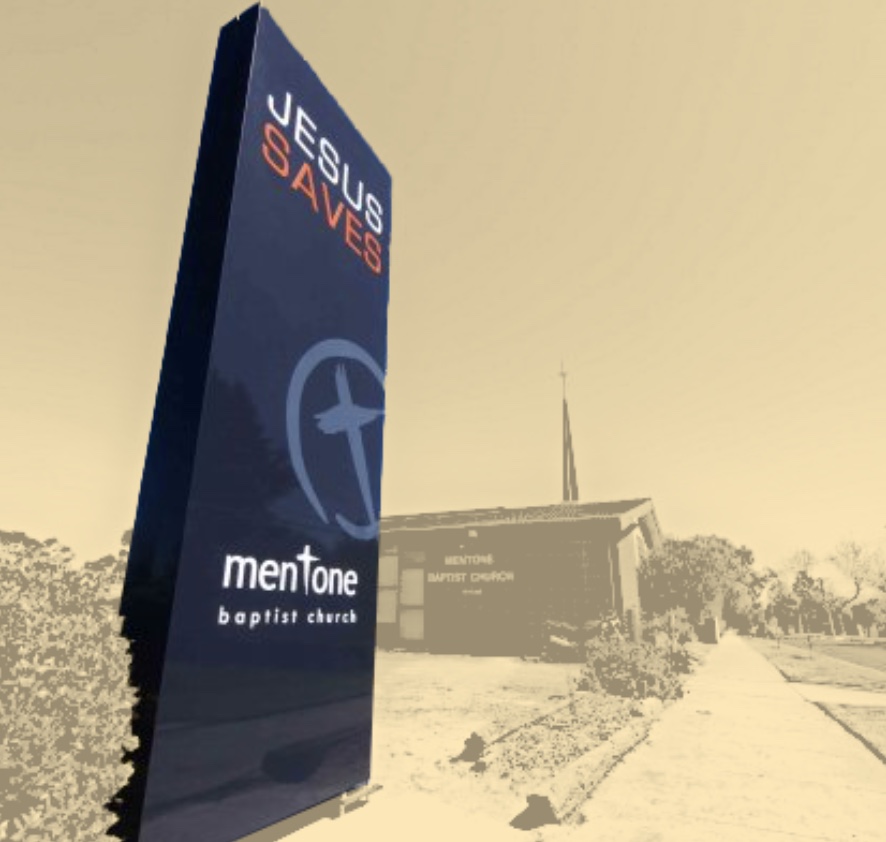
20 years ago today I was inducted as Pastor of Mentone Baptist Church. I won’t lie, it feels like 20 years! Our 3 children have literally grown up in the church. Prior to 2005, Susan and I had spent several years preparing for this scenario. I had always loved serving in my local church, although I had zero desire to move into pastoral ministry. It turned out that God had other plans. My pastor at Camberwell Baps was gracious enough to give me opportunities to teach the Bible; that idea of speaking and sharing God’s words with people got my heart pumping. But an immature 19 year old, is just that, an immature 19 year old! After finishing uni and getting married, Susan and I moved to London and then to Sydney, for training and gaining experience in churches, so that we could return to Melbourne and serve Christ here.
We returned to Melbourne from our place of exile and started at Mentone Baptist Church on February 6 2005.
I’ve wrestled with this for the past week, should I say something about the 20 years or not. I guess it is an anniversary of sorts. As some readers will be aware, I’m someone who writes more than a few words. Through this blog and writing for both Christian and secular publications, I enjoy talking about the gospel and trying to help others think through issues from the lens of scripture. I also love talking about music and cricket, and sharing with friends what my kids are up to and all their latest adventures. Talking about myself, isn’t something I generally do (leaving aside the compulsory self-effacing sermon jokes). I am conscious about not making Murray Campbell the topic of somethingness. It’s hard enough to see Jesus clearly, without my oddities standing in the way!
It was only this morning, as I read my Bible and read those verses in 1 Corinthians 3, that I decided, maybe I’ll put a few thoughts together. Maybe there is something I have learned from serving one church for 20 years that might be helpful to pastors elsewhere. Although, the last impression I want to suggest is that pastoral ministry is about the pastor. I’m not looking for praise (or the inverse!). And serving in the same church for 20 years doesn’t make the work any more or less important than pastors who only serve a few years. I’m also aware of how every church differs in some ways, and that means my particular experiences aren’t identical to a pastor who is serving in Mildura or Maroochydore. Then again, every minister of the Gospel shares the same Bible, the same mission and message, so perhaps similarities and parallels are not so few and far apart.
Here are 20 lessons that I have learned over 20 years of serving at Mentone Baptist Church. It’s not as though I didn’t believe or was unaware of many of these lessons prior to coming to Mentone. And it’s not as though I’ve reached the apex for these 20 themes. Most things in the Christian life are repetitive and a day by day process of sanctification. I’m not planning to provide detailed explanations and examples for these 20 lessons, but rather to note them in passing.
1. I still have much to learn.
I am often amazed at how little I know and how little I understand of the Scriptures and I’m excited at the prospect of continuing to dig deeper and discover more wonders of God in his word.
I’m still learning how to Shepherd a local church. Our Elders are currently reading Andrew Heard’s provocative book, Growth and Change, and am enjoying discussing penetrating questions about ministry and mission. It’s great. I love how the elders (and church) want to keep moving forward in the Gospel and to be more effective in seeing God’s Kingdom growing.
2. God answers prayer.
He really does. When the church has prayed, we have seen God work. Which begs the question, why do we pray so little?
3. God’s Gospel is powerful.
Just last year, our church heard testimonies and witnessed baptisms where the reality of Jesus Christ compelled and changed people’s lives. We have more planned in the early part of 2025. It is so strange to me to hear of churches smudging or avoiding clear and faithful presentation of the Gospel, as though that’s the best strategy for faithfulness and growth. So weird.
4. I’m still learning patience.
I like to run fast but there’s little point sprinting if the church isn’t ready. Sometimes though, I could probably encourage our leaders and members to walk a little faster!
5. God’s word really is beautiful and true and complete.
At Mentone, we use the Bible lots and we want to present God’s words in a way that reflects the treasure that it is. How amazing it is that God has given us a living word that speaks truth and grace today. That’s why we have 2 bible readings every Sunday morning and why we make sure our ministries, from Sunday school to youth group and 1-1 discipleship involve opening, reading and living out his word
6. People will hurt you (and at times you’re no saint either)
Learning to process hurt isn’t quick or easy. Having trusted and godly leaders is really important for working through these times.
7. I’m more convinced about the value of having a plurality of leaders.
The eldership hear me talking about this all the time. We want to grow the number of elders. A church needs a plurality of leaders: from pastors and elders, to deacons, and all kinds of lay ministry leaders. Paul didn’t lay out a paradigm in Ephesians 4 for us to ignore!
8. Make sure the eldership consists of godly men who share a broad breadth of personality, experience and skills.
A church requires greater wisdom than that of one pastor. However, we insist that there is profound and convinced agreement and unity on the church’s doctrine and direction.
9. Trying to set an example for others is hard.
The Bible says that pastors ought to set an example of life and godliness for the believers. It’s a balancing act, trying to share and show how I live outside the pulpit and yet doing so without handing out an autobiography each week.
10. Don’t do everything.
Set early and clear expectations and boundaries and be okay with saying ‘no’. Teach your congregation to be okay in hearing, ‘no’.
11. Membership really is important.
I believed this 20 years ago, and as the years have progressed I’ve become more convinced. Expressive individuals is a scourge on churches and hamstrings Gospel witness and effectiveness. Jesus meant every word when he said, “Love one another. As I have loved you, so you must love one another. By this everyone will know that you are my disciples, if you love one another.” Want to impact the world for Jesus? Then join a church and love the saints.
12. I will make mistakes and that’s ok.
13. The fear of losing people is common, but not dealing with problems generally makes the situation worse.
14. Technology is a curse.
Ok, not entirely. Tech is both good and bad, a useful servant and a terrible master. As technology changes, churches will often adopt and adapt and yet we also need to be wise in its use. Too often churches begin paying a cost without first thinking through behavioural changes that come about through smart phones or AI. Hey, even schools are now recognising these dangers!
I remember Carl Trueman suggesting once that the invention of the car changed people’s behaviours in ways that negatively impacted the local church. Cars are great, what a blessing it is to be able to move about easily and speedily. Cars give people more freedom and as Trueman explains, people started taking long weekends and pursuing more activities, and this turn impacted church attendance and participation. In other words, the car impacted the ministry and mission of the local church and does so even today.
15. We still need to cultivate a better culture of disciple making.
We talk about it and preach on it and we practice it in all kinds of ways, but I think we are yet to be convinced of how important discipleship is to the health and maturity of church.
16. Repetition is key to cultural change (thinking of point 14).
I’m learning that I need to say the same thing over and over again, and when I’ve done that, I need to repeat it again. I’m also trying to encourage our leaders to press repeat so that messages sink in and therefore lead to changed expectations or behaviours or whatever it is we’re trying to move forward.
Part of the issue isn’t reluctance from people, but leaders remembering that people live busy lives and their heads aren’t in the church 24//7 as mine is.
17. Church history is amazing and it matters.
I don’t need to be sold on history. I’ve always enjoyed reading history books and watching documentaries, even as a 3-year-old kid. I studied history at Melbourne University.
Many years later, I am more persuaded that churches should appreciate and understand that who we are today is the result of the sacrifices, thinking, preaching and lives of the saints from old. Churches make mistakes, take wrong turns, and lean into theological mess because we haven’t learned the lessons of church history.
We ran a course last year on Reformation history and this year we are talking about the Council of Nicaea.
18. Protecting my day off was a great idea.
Pastoral ministry isn’t just a job, it is a way of life. Family is family and church is also family. This makes setting boundaries often murky and imprecise. Susan and I have always wanted our children to view church as a family, and yet we never wanted to sacrifice them at the altar of ministry. I’m thankful for the clear and flexible boundaries that Susan and I set together and which the church embraced.
19. Theological liberalism is an easy gospel enemy to spot, but there is an emerging conservatism that we need to be aware of and keep away from the church.
Christian Nationalism which conflates common grace with the Gospel, and Church with State, is a growing concern not only in the United States but also in segments of Australian Churches.
This isn’t a biggy at Mentone Baps, but knowing this flavoured heresy is gaining popularity in some circles, I have already begun talking about these issues in sermons and discipleship (and of course on this blog). The Gospel is neither left nor right. Our mission isn’t defined by a side of politics, but by the Lordship of Christ and his Gospel that brings the forgiveness of sins.
20. There is so much work do to.
When all is said and done, the most pressing issue today remains the eternal state of people in light of the coming judgement of God. How many millions of people in Melbourne may know their left hand and right but are oblivious to Christ the judge and Christ the redeemer?
Pastoral ministry is the worst job in the world. Pastoral ministry is the best job in the world. I get to see and be part of people’s highest and lowest moments of life, to share their joys and sorrows. Pastors have the terrifying responsibility to preach the full counsel of God and dare suggest, see my life and follow my pattern of living. And we do, knowing that God will hold us to account for how we have shepherded his people. It really is a work that people should avoid and embrace.
I don’t spend a lot of time looking back over the years. To be honest, if you asked me for particular highlights in any given previous year, I may not be able to tell you with any precision. When I do reflect on the 20 years, I do so with some embarrassment and also much thankfulness: for Susan and my children, for a church that was patient and kind and who looks after the staff so well, and for God who never lets us down.
Mentone’s current associate pastor, Mike Veith has now been with us for 14 years in this role (and as a student pastor for 2 years before then), so that’s a milestone for which I am thankful.
I realise that 20 years in one church sounds a little bit unusual, but I know pastors who have served their churches for a great deal many more years. I think of Philip Calman from whom I learned so much during my 4 years at Chatswood Baptist as a student. He has been serving as their senior pastor for 28 years and counting. Praise God!
These are 20 of the lessons I’m learning from my 20 years at Mentone Baptist Church. There are many others, but perhaps among this this 20 there is something that might strike a note or encourage another pastor in their work for the Lord.
Sola Deo Gloria
President Trump and Bishop Mariann Edgar Budde have run into each other for a second time. The first occasion was outside St John’s church in Washington DC, this time it is inside the National Cathedral.
In 2020, Donald Trump stood outside St John’s building following an arson attack the previous night. He held a Bible aloft. The bishop criticised Trump for standing on church property and organising a photo op.
I suggested at the time…
“A friend of mine noted the irony of this chosen site for politico-religious vanity. Outside St John’s, the cameras took photos of a President who does not believe the Scriptures nor does he practice what they teach. Inside St John’s Church, there are clergy who also do not believe or practice the Scriptures. St John’s Church and the presiding bishop of Washington are known for their errant views about Christianity. Both inside and out, they treat the Bible with disdain.”
Yesterday, at the Inauguration Prayer Service in Washington DC, the Episcopalian Bishop of Washington delivered a 15 minute sermon in front of and toward President Donald Trump.
Bishop Mariann Edgar Budde spoke of national unity, prayer and action.

The sermon has gone viral and become headline news around the world, as the Bishop no doubt knew would be the case when speaking truth to power. Had the Bishop spoken of support for the President, few would have been interested, but standing up to Donald Trump is global news!
The lines that grabbed attention were the bishop’s call for mercy and compassion toward illegal immigrants and LGBT children.
Unsurprisingly the reception of her sermon is divided largely between the political divide (which is probably a clue that there is something amiss in the sermon). There are also many Christians lauding her address. Might I suggest that we stop and pause and consider a few things first.
I don’t have a problem with preachers calling for compassion and mercy. How can we not when we have understood God’s exquisite compassion and mercy toward us in Christ. The problem I have with the sermon is that while Bishop Mariann Edgar Budde uses some Bible language and invokes God’s name, what she means by these words is often quite different from what the Bible is saying. If a pastor’s sermon fits neatly into a political convention (regardless of political side), I want to suggest that there is possibly something skewed.
I have listened to her sermon in its entirety. The bishop communicates well and clearly (and quite differently from the viral videos of her deriding the President on other occasions). Yes, she uses Christian language and some Bible categories. But even within this sermon, there are giveaway signs of the troubling theology that underpins her views. For example, she makes the claim that all religions believe in the inherent dignity and worth of all people (which is not the case) and then suggests these many religions somehow represent and find origin in ‘our one God’. Really? And then, where was the Gospel? A bishop chooses to speak ‘truth’ to power and leaves out the Gospel?
As listeners we’ve all done it; we hear a Christian word spoken and our brains translate it in the way we understand the language and therefore we assume they are saying what we believe. That’s not always the case. Let’s not be ignorant and assume that this particular cleric means by these words what the Bible explains. That is not the case. This is made obvious by one example that she gives in her sermon in regard to LGBT people.
Christians ought (indeed, necessarily) to show kindness and love to people regardless of their sexuality and gender. I’m not mocking the idea of mercy, we need more mercy. Railing against contemporary sexual ethics, Christians can sometimes neglect to speak and exhibit Christ-like kindness. But is it compassionate to affirm or call good what God calls sinful? Is it compassionate to reject a creational paradigm and pretend that gender is fluid and that men can be women and vice versa?
A slightly different question, although relevant to the situation at hand, can we separate Donald Trump from the idea that there are only two genders? Yes, we can. His Presidency does not own the definition of gender however it is repudiating an immoral and harmful notion that’s become normalised in the academy and in pop culture, and that is, gender is fluid and cascading with options and possibilities.. Both Bible and biology communicate that we are made male or female. This is a wonderful blessing and common good, and distorting this is producing all kinds of problems, and incredible harm, especially among children.
It is possible and indeed biblical to both affirm 2 genders and show compassion. Affirming the two genders should not diminish the fact that there are also boys and girls, men and women who find themselves in a distressing place where they are not comfortable within their biological body; they do require compassion. Is this what the Bishop means? Previous teachings and statements by the bishop points in a different direction, and that what she means is the full affirmation of current sexual ethics, as though current gender theories are moral goods and even Christian-like. That’s a problem.
The heart of the Gospel of compassion and mercy is Christ’s substitutionary death on the cross. The Bishop could have taken the President there, but I note, this is something Bishop Mariann Edgar Budde repudiates. She says of penal substitutionary atonement, that it is “justifiably offensive”. That’s a big problem because God’s rich mercy toward us centres on Christ who bore the punishment for our sins in our place. That’s the good news of the Gospel: God forgives and reconciles and treats us not as our sins deserve because of the atonement.
Not only this, but God’s mercy toward us in Christ does not leave us in our sins but transforms us in the power of the Holy Spirit.
This story of the Bishop Curry so-called ‘love’ sermon at Prince Harry’s and Meghan Markle’s wedding several years ago. Christians were enthralled by the smiling Bishop who spoke of love. But his message had very little to do with God’s love but preaching a Hollywood version of love and grinning while persecuting churches in his diocese for holding onto the Bible. It’s probably of no coincidence that Bishop Curry wrote the forward for Bishop Mariann Edgar Budde’s recent book, ‘Receiving Jesus: The Way of Love’!
Christian, please don’t praise this Episcopalian Bishop as though her speech represents the Christian message. She may use Bible language at times but what she means is often quite different to what the Bible means. That doesn’t mean we are siding with Donald Trump or affirming Republican or Democrat. That’s part of the problem that we’re buying into in this fractious age.
The thing is, we don’t have to choose between President Donald Trump or Bishop Mariann Edgar Budde. I sense that sometimes we are choosing sides based more on our political preferences or social leanings rather than being guided by Scripture and the Gospel. This is happening among both left and right leaning Christians, and it’s a problem. We need to recognise that as sojourners and aliens, the Christian will often not sit comfortably at the table of power or public discourse. Sometimes we are going to be left on the bench, not choosing either side but instead taking a less popular and more lonely position. Why? Because both doctrine and life require us to take that harder route.
There is often little gospel advancement when Christians jump into bed with any political party. We may find favour with one group and then leave everyone else the impression that to be Christian is to be left or to be right, Republican or Democrat, Liberal or Labour. That’s not to suggest that all politicians are equal or that every policy is good for society or that we Christians don’t speak truth to power.
Christians will and can disagree over many Government policies. Read Prof Sarah Irving StoneBraker’s excellent new volume, Priests of History. Even when it comes to immigration (an ideal that I value and thank God for), public safety and social cohesion do matter as do compassion and mercy. It’s one reason why we need to pray for our political leaders, for their task isn’t easy.
My point here though is not to dissect American policies but caution Christians against buying into this political and cultural partisanship that has become normalised in places like America and Australia. President Trump is not the Messiah and the Bishop is not representing God; both such notions are folly. Whether you are an evangelical praising Trump’s ascendancy or an Episcopalian disguising progressive politics behind Christian language, are we presenting the beauty and goodness and power of the gospel or simply adding to the confusion? At stake is not an election cycle or the West Wing, but the judgment seat of God and eternity.
Additional Note (January 24):
A few people have asked, how do we know that the bishop was using Bible words in non Bible ways. In the article I’ve already cited some examples, but here are more,
The Cathedral service included prayers offered by other religions, including a Muslim call to prayer. Such things are anathema to a Christian Church.
Lest we think this is a one-off, in 2021 the National Cathedral invited Max Lucado to preach. Washington Episcopalians went into meltdown. Read what the Dean of the Cathedral, Randolph Marshall Hollerith, said,
“When we only engage with those with whom we agree on every issue, we find ourselves in a dangerous (and lonely) place…That means this cathedral, and this pulpit, are big enough and strong enough to welcome pastors, rabbis, imams, clergy of every faith.”
Hollerith then apologised to angry Anglicans, ‘In my straight privilege I failed to see and fully understand the pain he has caused. I failed to appreciate the depth of injury his words have had on many in the LGBTQ community. I failed to see the pain I was continuing. I was wrong.”
Bishop Mariann Budde also apologised, saying, ‘”I made you feel at risk and unwelcome in your spiritual home.’
There it is, Budde believes that a Bible believing preacher is a danger to her Diocese, while a Muslim Iman in the pulpit is not.
I realise some Christians maintain that Mariann Budde is offering a prophetic voice, but seriously? She is no more prophetic than the prophets of Jeremiah ch6 who were effectively conning God’s people with their ‘Bible’ words,
“They dress the wound of my people
as though it were not serious.
‘Peace, peace,’ they say,
when there is no peace.”
I was saddened to learn last night that Michael Leunig has died at the age of 79. It’s as though a little part of Australia has died with him.
Leunig’s family announced his death with these befitting words,
“The pen has run dry, its ink no longer flowing – yet Mr Curly and his ducks will remain etched in our hearts, cherished and eternal.”
25 years ago, Susan and I were enjoying dinner at a friend’s home when I saw it hanging on the wall above the dining table. It was a drawing of a man sitting at a grand piano. The man had a particularly large rounded nose, which I had seen before. There was little colour on the canvas. Like Matisse, the artist conveyed all he needed with two or was it perhaps three tones.
The etching was simple and clean, almost like a cartoon. It conveyed something of the simple pleasures accompanying the piano. As someone who had until that time spent virtually his entire entirety life learning to play this magisterial instrument, I was immediately drawn to his work by Michael Leunig; it made sense to me.
Leunig’s cartoons, drawings and paintings communicate life and provoke us to question and consider the Divine design behind the canvas.
Life is beautiful. Whether it’s the inquisitive duck or his vibrant trees or musicians, Leunig painted a beautiful life. Life is precious and is a wondrous gift. Acknowledging God who gives life, is both an obligation and a joy.
Imagine their existing a masterful painting on the wall at home and never stopping to gaze upon it, to understand and enjoy it. How often do we walk about and consume and enjoy the world without stopping to give thanks to the one who designed and enables us to live and participate?
Leunig was renowned for his use of subtle humour to elucidate critical thinking and moral evaluation. It reminds me a little of Jesus who added humorous, almost silly liners while teaching things of great import,
“You blind guides! You strain out a gnat but swallow a camel”
“It is easier for a camel to go through the eye of a needle than for someone who is rich to enter the kingdom of God.”
One of Leunig’s better-known drawings is this betrayal of Jesus’s crucifixion. In a mood faithful to the original crowd who mocked Jesus on the cross, Leunig paints a soldier calling out,
“Look at that? Brilliant! You kill the leader and you nip the whole movement in the bud”.

The joke is on us. The cross makes us fools. The cross turns our power into ineptitude. Indeed, the joke is on us, filled with intellectual hubris and moral certainty, as we turn down the only redemption available.
Leunig’s work pushes us to say ‘no’ to ambivalence. It is a gentle and humorous rebuke toward an Australian culture that even today wishes to paint over the most pivotal moment in history.
I know next to nothing about Leunig’s personal life. Whether in concert or in contradiction, his work conveyed a bright message that is being overshadowed by a compounding grey.
Today Michael Leunig no longer needs his paintbrush, for he gets to see his Creator, the One who crafted with his word every colour and shape and mountain range, every ocean and even the stars. And the pinnacle of his creativity, making us, his image bearers.
Again life is beautiful. And life is too easily cut short even at 79 years of age. Life ebbs away, and the blotch of tragedy, sadness, and yes also, evil marks every home. How much do we need a story where such things are overcome.
“I don’t know what Christmas is but Christmas time is here.”
Did you know Guardians of the Galaxy is more than a sci-fi Marvel franchise: they have a Christmas Special!
Peter Quill is missing Christmas on earth. His friends have noticed his despondent face and decide to cheer him up by kidnapping Quill’s hero, Kevin Bacon, and wrapping him up like a slice of prosciutto for Christmas.
And because rock music apparently exists on other planets, an alien band is playing a tribute song to Christmas: ‘Bzermikitokolok and the Knowheremen’.

The lead singer is chatting to Peter Quill about, “one of your earth traditions…”
This alien rock star (despite an uncanny similarity, not to be confused with your typically aged rock star), explains to Peter Quill that he’s done his homework,
“Everything I know about Christmas I learned from rocket who learned it from Cosmo who learned it from Kraglin, who learned from you… so I thought I would take it back to the source and make sure I understand this all correctly. This is after all a historical document.”
So far, so good.
The band then starts playing their intergalactic carol,
Out on the third planet closest to the sun
There’s a special celebration
And it sounds quite fun
A jolly old fellow brings toys to everyone
On a holiday they call Christmas
Now I’m not gonna lie
It makes no sense to me
But here’s what Earthlings told me
About this Christmas mystery
Santa is a furry freak
With epic super powers
He flies to every human home
In under fourteen hours
He’s a master burglar
A pro at picking locks
If you don’t leave milk and cookies out
He will put dung in your socks
Ho, ho, ho, ho, ho
Earthlings are so weird
I don’t know what Christmas is
But Christmastime is here
Or maybe it’s there
Or it’s somewhere
I don’t know, I don’t know
It’s funny. The words are obviously confusing and conflating different ideas surrounding Christmas. It’s as though in outer space, 2 turtle doves and 5 gold rings equals larceny and arson!
Why quote this space Christmas pop song? Because the joke is closer to reality than we might think. Allow me to explain.
With Christmas, we throw all kinds of things into the mix. We have this conception of Christmas that is like a gigantic tinselled blender where we get to toss in a hundred ideas and traditions and somehow together it all tastes amazing.

Let’s leave Turkey and Christmas trees aside, and should we eat Christmas pudding (the answer to that one is obviously, ‘eek’). We can even leave aside December 25 because we don’t know the exact date when Jesus was born and there is no Bible rule about having to celebrate December 25.
Many of our Christmas traditions are like garnishes; nice, but not the essence.
“I don’t know what Christmas is but Christmas time is here.”
I suspect this sentiment is more earthbound than the interplanetary travellers realise.
‘Bzermikitokolok and the Knowheremen’ get one thing right; go back to the source. It makes sense, doesn’t it? Why float around with third-hand notions and rumours when we can open up the original and best source for what Christmas is about?
The Bible gives us the original and superlative story. It is the one indispensable message. For example, in Luke’s account of the birth of Jesus, we read,
“The angel said to the Shepherds, “Do not be afraid. I bring you good news that will cause great joy for all the people. Today in the town of David a Savior has been born to you; he is the Messiah, the Lord. This will be a sign to you: You will find a baby wrapped in cloths and lying in a manger.”
With a few words, the world changed forever:
God isn’t silent: here is a message is from God
God is no grinch-like character: his message is good news that brings great joy.
The message is about a Saviour. The Saviour’s name is Jesus, and he is ascribed the titles ‘Messiah’ and ‘Lord’. Far from vague and ambiguous meanings, God’s good news message points to a humble birth with huge God given credentials. As we read from other parts of the Bible, these credentials are tied up with ancient God given promises to bring salvation to a world that is broken and filled with wickedness.
As much as I enjoy roast Turkey and the smell of pine trees, these don’t come close to the magnitude of this Divine word for the world.
A new French restaurant opened in Melbourne recently, Maison Bâtard. The menu is mouth-watering. A host of celebrities were invited to a special gala opening event and were the first to taste the menu. If you’re a famous Melbournian, wealthy or have the right connections, you may have made the cut. Perhaps you were invited!
That’s not how God chooses. When we visit the sources and uncover the message that gave birth to Christmas, we discover something wonderfully subversive and counter-cultural. God’s message is of incalculable importance and God chose to announce his good news, not to the famous and important, but to a group of underpaid, uneducated and probably unlikeable Shepherds. This speaks volumes about theGod who exists.
God doesn’t work according to who’s popular, who’s powerful, or who’s likeable. God acts according to his own character. That God announced his good news to the Shepherds signals grace and mercy. That means, God’s message can be for me.
On that holy night, there was no confusion, no myths, or hearsay. This is a clear announcement from God about his Son Jesus who came to save.
We know from the sources that as Jesus grew and later began his public ministry, a lot of people pushed against on his message. Some people thought he was a joke. Some people thought Jesus was evil. Others again, dismissed Jesus as though he’s not for me.
These are traditions we continue to this very day.
This raises a pertinent question, if not Jesus, where do we turn for good news? Where are turning for news that brings about forgiveness, hope, and peace? Where will we uncover substantive and reliable good news that will overcome the sorrow, fear and wickedness we see around in society and also see in ourselves?
There is a serious message revealed that night in Bethlehem. Whether we are living in Eastern Europe or in the Middle East or Eastern Australia, we need good news that will overcome the darkest night and deepest fears.
As we explore the original sources, we learn that God doesn’t just make bold promises, he keeps them. This same Jesus born in the manger, lived out the promise of salvation, even though it meant death on a cross, and from the grave to resurrection life.
“I don’t know what Christmas is but Christmas time is here.”
Except we can know. People celebrate Christmas for all kinds of reasons, and that’s ok. It is possible to distinguish between the add-ons and garnishes and uncover the truth and power in the historical document. The Shepherds responded to the good news announcement by visiting Bethlehem and investigating for themselves. Perhaps now is the season for us to do the same.

“Gifts for the naughty and the nice. Share the Joy”
Has Myer rediscovered the evangelistic drive of its founder, Sidney Myer?
Most Australians may be unaware, but 104 years ago, Sidney Myer became a Christian. Myer was an upcoming Melbourne entrepreneur and businessman. Despite growing success, he had made some rather poor choices in life, one of which resulted in his first marriage ending.
One day, another Melbourne businessman named Lee Neil, had his company bought out by Sidney Myer. Neil then went to work for Myer. Neil was a Christian and over time he shared with Myer his most precious possession, God’s good news of Jesus.
Sidney Myer could not buy or afford this news of Divine forgiveness. As the Apostle Paul once explained,
‘it is by grace you have been saved, through faith—and this is not from yourselves, it is the gift of God’
Once Myer realised this message, this gift of God transformed the way he did business. Generosity was part of the parcel of his success. Myer included his employees in the benefits of a growing company and he shared his profits among those who had little. He even celebrated Christmas by organising lunches for 100s of people. Today, Sidney Myer remains one of Australia’s great success stories, but few are aware of the Divine gift that prompted his philanthropy. Indeed, he rarely made mention of it during his lifetime, apart from a few occasions when he was encouraging others to join a charitable cause.
Has Myer recaptured Sidney Myer’s greatest vision?
Perhaps? I suspect not. The furry creature who features on the billboard is named, ‘humbug’, and apparently you can buy your very own soft and cuddly humbug in Myer. From doing a little research today, I’ve learned that humbug represents the annoyance and grrr most of us feel at some point around Christmas (sound familiar?). Whatever the marketing intention, the statement is true: “Gifts for the naughty and the nice. Share the Joy”.
In fact, I reckon Myer’s marketing department has underestimated how true their slogan is. Consider these amazing words from the Bible,
“She will give birth to a son, and you are to give him the name Jesus, because he will save his people from their sins.”” (Matt 1:21)
“Here is a trustworthy saying that deserves full acceptance: Christ Jesus came into the world to save sinners—of whom I am the worst” (1 Timothy 2:15)
If anything, humbug underestimates the seismic problem of the human condition that Christmas exposes, just as the red-suited man from the North Pole gets it wrong. We are more than a little grumpy, and unlike jolly Mr Claus who keeps his studious eyes on 2 very different lists, the God of Christmas delivers a very different message. It’s not the righteous who find blessing and the sinners get lumps of coal; everyone sits on the same page.
Here lays the cutting edge of Christianity, which makes the Gospel unlike every other story, philosophy and religion. God doesn’t choose between the naughty and nice. He says, ‘Christ died for the ungodly…God demonstrates his own love for us in this: While we were still sinners, Christ died for us… the gift is not like the trespass. For if the many died by the trespass of the one man, how much more did God’s grace and the gift that came by the grace of the one man, Jesus Christ, overflow to the many! (Romans 5)
The message of the Christ is one of overflowing love and mercy toward those who are undeserving and unable. Imagine a God who gives gifts unmerited! Imagine God whose only Son sacrificed himself to deliver us from every iniquity, even death? Imagine if the real message of Christmas isn’t ‘be nice not naughty’ but, you are forgiven; come home to God. Of course, we don’t have to imagine. Look at that night in Bethlehem. Check out the infant Jesus and his life, words and deeds. Above all, come to terms with why the only good man chose to die on a Roman cross.
Thank you Myer for your Christmas message this year. I for one, will ‘share the joy’. Jesus really is good news, God’s “Gift for the naughty and the nice.”
Coldplay is in town. It seems like every second friend has bought tickets and is joining in the chorus of ‘Yellow’ and singing, ‘I used to rule the world’
The last time Coldplay performed in Melbourne was in 2016, and I took my 2 boys to the concert. The eldest, who was 11 at the time, had aspirations to be a drummer like Will Champion. The night was a kaleidoscope of colour and light and memorable tunes.
Coldplay is back in Melbourne and singing a prayer.
By prayer, I’m not referring to fans hoping to see Guy Berryman after illness forced him to miss out on performing with the quartet for the first time in their 27 year history (I believe he returned last night for their second Melbourne concert). Coldplay’s latest hit song is called, ‘We pray’.
‘We pray’ was written by lead singer, Chris Martin, in conjunction with a group of musicians from around the world, and it explores his personal journey in spirituality and understanding the human condition.
The song itself is a congregational invocation to prayer. The lyrics are deliberately vague for no particular god is addressed and his character and personality are unknown. The song is about the human longing for help, hope and forgiveness.

‘We pray’ is clever because people can fill in the gaps however the wish, but is that point of prayer? The word grabs onto some vague and universalist notion of the Divine: unnamed and unknown.
It’s hoping without knowing, it’s needing and not possessing.
Take a look at some of the lyrics,
Pray that I don’t give up
Pray that I do my best
Pray that I can lift up
Pray my brother is blessed
Praying for enough
Pray Virgilio wins
Pray I – I – I
Judge nobody and forgive me my sins
I pray we make it
Pray my friend will pull through
Pray as I take it
Unto others I do
Praying on your love
We pray with every breath
Though I – I – I’m in the valley of the shadow of death
Pray that we make it to the end of the day
And so We Pray
I know somewhere that heaven is waiting
And so We Pray
I know somewhere there’s something amazing
And so We Pray
I know somewhere we’ll feel no pain
Until we make it to the end of the day
Coldplay is, of course, singing a similar tune to one that is all over our streets and suburbs today.
Human beings are deeply spiritual. The sum of who we are cannot be reduced to skin, bones, blood, and organs. This is one reason why the new atheism was always doomed to be little more than a cultural fad. The materialist world cannot sustain or explain the needs and hopes found in the human soul. But neither are we left in the realm of guessing and taking a stab in the dark.
New Atheism is dead. In places like Australia and the UK, neo-paganism is gaining traction, Eastern religions are growing (largely through migration), and people are dabbling in alternative spiritualities in volumes I’ve not seen before. Why? The soul needs peace. We need hope.
‘We pray’ is a descriptor of the human condition but it doesn’t give any substantive answer.
Prayer isn’t a magical amulet that I rub and repeat. Prayer without relationship with the actual living, listening and loving God is little more than a placebo. What if real prayer was possible?
Coldplay’s idea of prayer isn’t original. The city of Athens was renowned in ancient times for its religious pluralism. In fact on the day the Apostle Paul walked through that great city, he noticed a statue to the Unknown God. The citizens of Athens erected a monument to a God with no name, just in case the pantheon of gods had missed one and so people could pray and pay homage to this unknown divinity, hoping to find blessing and help.
Paul, this early Christian leader, made a commentary about this Athenian spirituality, when the leading intellectuals invited the him to address the famous Areopagus, “May we know what this new teaching is that you are presenting? You are bringing some strange ideas to our ears, and we would like to know what they mean.”
What follows is one of the great speeches of history. The words of this address, both astonished and intrigued people in what was the equivalent of Oxford in the day, and I suspect there is good reason for the people of Melbourne to be similarly astonished and intrigued today.
“People of Athens! I see that in every way you are very religious. 23 For as I walked around and looked carefully at your objects of worship, I even found an altar with this inscription: to an unknown god. So you are ignorant of the very thing you worship—and this is what I am going to proclaim to you.
“The God who made the world and everything in it is the Lord of heaven and earth and does not live in temples built by human hands. 25 And he is not served by human hands, as if he needed anything. Rather, he himself gives everyone life and breath and everything else. 26 From one man he made all the nations, that they should inhabit the whole earth; and he marked out their appointed times in history and the boundaries of their lands. 27 God did this so that they would seek him and perhaps reach out for him and find him, though he is not far from any one of us. 28 ‘For in him we live and move and have our being.’ As some of your own poets have said, ‘We are his offspring.’
29 “Therefore since we are God’s offspring, we should not think that the divine being is like gold or silver or stone—an image made by human design and skill. 30 In the past God overlooked such ignorance, but now he commands all people everywhere to repent. 31 For he has set a day when he will judge the world with justice by the man he has appointed. He has given proof of this to everyone by raising him from the dead.” (Acts 17)
In summary, he explains:
Understand, these points are but the introduction to all that Paul had to say, but straight away he eliminates vagueness and universality. There is God and he is this God. It’s not guesswork and speculation, but the resurrection of Jesus is proof.
Does it matter to whom we pray? Is the efficacious nature of prayer found in the activity itself or in the one to whom we address?
Why does it matter which God we pray to, if the spiritual and psychological benefit lies in the activity?
By way of illustration, would it matter if I spoke to any individual and in any way, assuming or hoping that they were my spouse? Would it be appropriate to pour out my heart in a married kind of way with any random person who happened to hear me talking out loud on the street?
Apart from the fact that they have no duty to listen or respond to my words, how belittling and insulting it is to the person who actually is my spouse!
To whom we pray does matter.
On one occasion Jesus speaks about lostness. This being lost is a way of describing our natural state; being disconnected from God and the forgiveness and life that can be found in him. We wander about and test and experiment, looking for a way to leave behind this state of hopelessness and uncertainty. Jesus says, he is the way. He is the One who came to seek and save the lost.
Don’t believe me? You don’t have to take my word, check out the resurrection of Jesus.
I love this prayer that Jesus taught. It is to God who is named, known, who is just, who forgives, and in whom we can depend,
Our Father in heaven,
hallowed be your name,
your kingdom come,
your will be done,
on earth as it is in heaven.
Give us today our daily bread.
And forgive us our debts,
as we also have forgiven our debtors.
And lead us not into temptation,
but deliver us from the evil one
 MurrayCampbell.net