Cate Blanchett, Easter is for you

I appreciate that the title may sound a little presumptuous, but hear me out.

Cate Blanchett is one of the world’s finest actors…and she hails from Melbourne!

The first movie I recall watching that starred Cate Blanchett was Elizabeth. My wife and I were living in London at the time, the very city where Queen Elizabeth 1 had lived, reigned and died. I already loved historical movies, but watching the film while immersed in Elizabeth’s city brought about a visceral connection. It’s a great movie.

As we enjoyed Elizabeth, Susan commented, ‘Murray, I went to school with Cate.’

I looked at Susan, and with my eyes pressed for more information. 

Susan, typically downplaying such things, added only a few words,

“We weren’t friends. Cate was a few years ahead of me.” 

That was it. That’s all Susan said. I suspect there was a little more to it, after all, Susan had clear memories of Cate being at the same school with her. But today I learnt something new about Cate Blanchett, albeit from the newspaper and it’s about those school years.

At the age of 10, Cate’s father suffered a heart attack and died. To lose a parent at any age is difficult, but at such a young age, one can only imagine the pain, grief, and disorientation created by such a sudden loss. 

Speaking with a journalist while filming a new movie near her old suburban home and school, Cate reflected on how her Dad’s death caused her to turn away from both Church and God.

 “As a child I wanted a religion. I wanted the strong hand of God to put a hand on my childish shoulders to say, ‘Your father is with me. He’s having fun. You’ll see him in 60 years. 

“But that didn’t happen. And so as a ten-year-old I fled from the church and moved down to the river and spent my childhood propelled into nature”. 

“If I’d stayed inside the Methodist church I’d have a lot of bad guitar playing, but instead I rode my bike, thinking I was Nancy Drew, down by the Yarra River. I remember that as profoundly as I remember the hymns”. 

She was asked whether she left religion because it didn’t give her what she wanted,

“It was not so much about what I wanted…more what I was hoping for. Also, I was ten. 

“But religion contains a sense of hope and also a sense of community. And, in a way, that desire for something greater than myself never left me”. 

First of all, I agree with Blanchett’s fears of bad guitar playing. As a former classical musician, many a time have I cringed and groaned at the sounds wafting over a congregation. But fear not, it is also possible to find excellent guitar playing in churches today.

Music aside, I am reminded of something Timothy Keller wrote years ago as he borrowed from C.S Lewis,

“Horrendous, inexplicable suffering, though it cannot disprove God, is nonetheless a problem for the believer in the Bible. However, it is perhaps an even greater problem for nonbelievers. C. S. Lewis described how he had originally rejected the idea of God because of the cruelty of life. Then he came to realize that evil was even more problematic for his new atheism. In the end, he realized that suffering provided a better argument for God’s existence than one against it…

My argument against God was that the universe seemed so cruel and unjust. But how had I got this idea of “just” and “unjust”?… What was I comparing this universe with when I called it unjust?… Of course I could have given up my idea of justice by saying it was nothing but a private idea of my own. But if I did that, then my argument against God collapsed too— for the argument depended on saying that the world was really unjust, not simply that it did not happen to please my private fancies…. Consequently atheism turns out to be too simple.”

Let’s take as an example,  John Lennon’s ‘Imagine’. Imagine doesn’t articulate the highest intellectual efforts to sustain unbelief in God but it does represent popular sentiment. Indeed, Imagine has become something of an international anthem in recent years. For a moment, let’s play out the song’s logic of imagining a world without God, without religion, and without heaven and hell:

Imagine there is no ultimate meaning or goal toward which our lives are headed.

Imagine there is no overarching design and no inherent significance. 

Imagine if our lives were reduced to the potluck outcome of billions of years of impersonal atoms and molecules running around hitting and missing, making and destroying.

Imagine a world where the reality of conscience and moral choice has no grounding in a purpose beyond that of group survival in the evolutionary race to the top.

Imagine human affections are ultimately an illusion, a cruel joke orchestrated by the impersonal rules of physics.

Imagine all the people living for today, for tomorrow is the end.

This view offers no consolation to a gravely ill person. Nothing to help grieving families who have just witnessed a loved one being ripped from their lives.

It offers no hope to someone who is a victim of injustice, for there is no judgment and vindication to come.

In fact, the song collapses in on its own irrationality, like a sandcastle overrun by the incoming tide.  Lennon imagines ‘living life in peace’, and there being no “greed or hunger”. We affirm this sentiment but peace requires a common purpose between people and demands reason and design in the world beyond us. A universe without God does not allow for the idea of universal peace.

As Cate Blanchett shares her personal testimony from God to nonGod, she admits, 

“desire for something greater than myself never left me”.

It is as though a Divinely given conscience keeps poking and prodding at us despite our cognitive and emotional rescripting of life. 

None of us comprehend all of the events we experience or see in this life. To have that kind of knowledge is to be omniscient, and not the brightest or most prophetic have the kind of understanding. But Easter reminds us that there is One who has gone before us and for us. Hope is not defined by my ability to create or sustain it, but by trusting the one who can gift it. Even faith, fragile and compounded by tragic loss, is given assurance through the Easter event.

As a father, I appreciate the limited capacity of my children to grasp concepts both significant and small. It’s not that a child is necessarily wrong, but like adults, our beliefs and commitments are trialled and formed by many kinds of circumstances, inquiries and tests. This is one reason why the message of Easter is so compelling and continues to offer consolation. The death and resurrection of Jesus Christ took place inside history and is thus subject to our scrutiny, but it also punches through time and into eternity and therefore offer timeless hope and assurance.

Last Sunday I preached on Hebrews 5:1-10. The text provides one of the wonderful explanations of why and how Jesus today serves as our faithful representative before God in heaven. There is a tangible and sustainable connection point between our world and heaven, between humanity and God; the God Man Jesus Christ. 

The text explains, 

“During the days of Jesus’ life on earth, he offered up prayers and petitions with fervent cries and tears to the one who could save him from death, and he was heard because of his reverent submission. Son though he was, he learned obedience from what he suffered and, once made perfect, he became the source of eternal salvation for all who obey him”.

Never think the cross was easy for Jesus. We should never conclude that suffering didn’t impact Jesus. He is utter love and light and goodness. He did not deserve to suffer even a scratch. And yet he committed himself to his father’s will to endure the greatest evil ever perpetrated. 

No story ends before it begins. No movie is shown at the cinema before it is first written, shot, and produced. In the moment by moment, God is valuing the world and each person who lives. More than that, God didn’t press fast forward to the end of the story, but his Son pressed in every moment and every day, for it is through his suffering and atoning death that God brings about forgiveness and life. Not only does Easter declare an ultimate hope over tragedy but Easter proves that we have an empathetic High Priest in Jesus. 

Cate Blanchett’s impulse as a 10-year-old is relatable for many, and so is her constant companion who reminds her that there must be something more, something better.  Several members of my church have suffered loss in recent months, the death of a parent or child. Death is horrible. Death is, to quote the Bible, the last enemy.

Easter is for the unbeliever, it is for the doubter and for the lifelong transgressor. Easter is for those who know death and suffering.  This confidence lies outside ourselves in the only one who can claim to outdo death. As these beautiful words from Hebrews 4 tell us, 

“Therefore, since we have a great high priest who has ascended into heaven, Jesus the Son of God, let us hold firmly to the faith we profess. 15 For we do not have a high priest who is unable to empathize with our weaknesses, but we have one who has been tempted in every way, just as we are—yet he did not sin. 16 Let us then approach God’s throne of grace with confidence, so that we may receive mercy and find grace to help us in our time of need.” 

Donald Trump isn’t the Messiah

Donald Trump is being compared to Jesus Christ this week. Suffering and crucifixion analogies have been thrown around during Passion Week as President Donald Trump prepared to learn of the charges against him and then presented himself to the authorities in New York State.

Representative Marjorie Taylor Greene, protested in Manhattan,

“Jesus was arrested and murdered by the Roman government,” she said. “There have been many people throughout history that have been arrested and persecuted by radical corrupt governments, and it’s beginning today in New York City.”

As the President left the Course house and boarded his plane to Florida,  he joined in a ‘prayer call’, comprising an eclectic group of religious Trump followers.

I have seen footage of and tweets all week that make comparisons between Donald Trump’s trial and that of Jesus.  None of this is new. Adopting and hijacking the person and work of Jesus for political and social agendas is more common than we might realise. People have been doing so since Jesus’ actual trial and crucifixion. Constantine tried it at Milivian Bridge, David’s ‘The Death of Marat’ and 1000 other paintings that superimpose Christ’s sufferings,  the Confederacy and the KKK, the Taiping Rebellion, Horst Wessel,  some anti-vax campaigners, and more. 

Political agendas from both right and left have a long history of misappropriating the person and mission of Jesus Christ. I recall an incident only two years ago; a representative of the Victorian government informed a group of Melbourne church leaders what Jesus’ views on gender would be today, and then told us that contravening this thinking may lead to criminal charges. In case you’re wondering, this person was not even close to reflecting Jesus’ teaching. 

Sadly, there are times when members of Christian communities and leaders of Churches get swept up by these false narratives. That doesn’t mean that there is never any validity to the concerns they raise, but that it is bad theology and even blasphemous to equate their situation with that of Jesus’ suffering. 

Notice the religious language that President Trump chose for his speech following his court appearance?

 “America is going to hell”

Well, yes, that is a theological truism. It also accurately describes people in every nation, but it has nothing to do with allegiance to Donald Trump or some other political leader, but whether we can find atonement before God for our own sinfulness.

It is of course possible to think that the charges against President Trump are politically motivated and also believe that Trump has little moral compass. After all, behind the 34 felony charges of falsifying financial records are allegations of adultery and sexual immorality. There is no semblance of Jesus in this story. That is not to suggest for a moment that the political alternatives are morally or spiritually better. As a Christian leader, my responsibility isn’t to navigate political left or right but to follow Jesus and faithfully point people to him, a course that is altogether different.

Let it be said again, lest anyone is unclear, there is no comparison between President Donald Trump and Jesus Christ. One is a deeply sinful human being, the other the innocent Son of God. The former President carries with him a lifetime of transgressions, Jesus went to the cross taking our sins onto himself.

It is intriguing to see how again our society never moves far from the cross of Jesus Christ. All of history pivots on those three days: from the cross to the grave and to resurrection. And despite our best attempts to rid the culture of Christianity’s DNA, people from all walks of life and with all kinds of agendas, still think it is advantageous to attach themselves to the image of the suffering and dying Christ. 

What if, instead of identifying with the crucified One, we understand what the Easter story really does tell us, and that is, we all stand against Him. Rather than seeing ourselves close to Jesus, we are more like Peter who disowns, Judas who betrays, the Pharisees who denounce, and the crowds who mock.

Donald Trump is no Messiah figure. He is not an innocent lamb laying down his life to save a nation. He may or may not be innocent of these particular charges. But neither Trump nor President Biden and any political leader comes remotely close to the one who had written above his head on the cross, ‘the king’.

Regardless of where we find ourselves on the political spectrum, it’s nonetheless intuitive for us to find a hero in the story. We walk through life searching for someone who triumphs over adversity and overcomes iniquity and who can bring about the new Jerusalem.

Sometimes we put ourselves in that position as the hero, but when the hubris dissipates we are left with despair.  Sometimes we elevate our favourite celebrity or politician, but none of them qualifies to carry the burden. There is only one hero and Easter reveals him, and what a hero Jesus is,

“Father, forgive them, for they do not know what they are doing.”

Bill Shorten said it right.

Since the 1960s societies like our own have pursued a moral outlook whereby the rules of life are thrown out in favour of personal autonomy and self-expression. The sentiment has existed far longer, but the sexual revolution provided the catalyst to make possible in public what was often lived out in private. However far from creating a hedonistic dreamland, we are turning the landscape into an unforgiving wasteland. 

The promises of sexual and social freedoms are now being met with education classes and workplace policies because we do not trust each other to act appropriately. Public figures who do or say something that even gives the appearance of impropriety are readily cancelled and publicly shamed. We have become expert fault finders, putting to shame the Puritans of old with our rules and public executions. 

Every word and gesture from our political leaders is noted and recorded and reported to the public in an instant whirlwind of media hysteria and political cannonading.

Yesterday it was the turn of Federal Labor leader Anthony Albanese. On the very first morning of the election campaign, Mr Albanese was asked two questions: what is the current unemployment rate and what is the cash rate? He was unable to answer either.  

Bill Shorten, who led Labor at the last Federal election, was asked this morning to comment on his leader’s error. Mr Shorten said,

“The last person who never made a mistake – we are celebrating Easter – was 2,000 years ago”.

I’ll leave the pundits to do their work in assessing the merits of Mr Shorten’s response. My interest here isn’t to speak to the politics. I wish to observe that Mr Shorten’s words are true, and even more astonishing than perhaps he realises. 

The last person who never made a mistake is Jesus Christ. Jesus lived in Judea 2,000 years ago. It was a period of tremendous political and social upheaval. Poverty abounded and social freedoms were anathema for most people. Life for populations living under Roman rule was hard and harsh. Into this world, came Jesus. 

Jesus’ life, his words and deeds consistently and unerringly testify to his human nature being without any sin. Instead, the historical records reveal how Jesus is the most selfless and compassionate, gentle, truthful and holy person ever to walk this earth. He always spoke the truth, even at great personal cost. He loved the loveless and showed kindness toward the discredited and despised in the community. He exercised Divine authority and power over every manner of evil and ill. As he journeyed to Jerusalem, questions over Jesus’ identity and mission heightened, who is this man? 

In so many ways Jesus was just like us: he ate and slept and worked and became tired, he expressed happiness and humour and he felt sadness and anger.  And yet, his character is blameless. People tried to find fault with him, especially the religious leaders of the day, and yet none could be found.

The Roman Governor, Pontius Pilate, oversaw Jesus’ trial. Upon examining Jesus, he could find no wrong in him. Pilate appealed to Jesus’ accusers, 

““I find no basis for a charge against him.”

The most remarkable fact about Jesus is not his sinless nature, although that is truly outstanding, it is that this innocent one chose a path of betrayal, suffering, and death.  The incredible fact of that first Easter is how the man without guilt resolved to die the death of the guilty. 

Why would a man of such promise, and possessing the character of God, choose to enter this world and embrace suffering, humiliation, and willingly face the most public and excruciating death that the Romans could devise? Was it a mistake?

Jesus didn’t die for our moral platitudes, platforms, and self-justifications, he died in the place of those who deserve to be cancelled by God.  On the third day, he rose from the grave, promising new life to everyone who believe.

“For Christ also suffered once for sins, the righteous for the unrighteous, to bring you to God. He was put to death in the body but made alive in the Spirit.” (1 Peter 3:18)

As important as political elections are, this week we are approaching the weekend where we remember the definitive act of a loving God to redeem people with great fault.

There is far greater wonder and glory at Easter than we probably ever imagine, even for those who annually attend Easter church services. Our society rightly commemorates and thanks those who sacrifice their lives for the good of others. We even quote Jesus who said, “”Greater love hath no man than this, that a man lay down his life for his friends” (John 15:13)”. On the cross, Jesus went even further, 

“You see, at just the right time, when we were still powerless, Christ died for the ungodly. Very rarely will anyone die for a righteous person, though for a good person someone might possibly dare to die. But God demonstrates his own love for us in this: While we were still sinners, Christ died for us.”

This sublime world in which we live today with such advanced knowledge and ability has once again exposed our frailty and even culpability. Our uncertain world has been shaken by a pandemic and once again we are contemplating the possibility of global armed conflict. At home in Australia, we are wrestling with political disappointments and considerable social concerns. How much do we need a saviour who doesn’t make mistakes? 

A game more fierce than Rugby

The Israel Folau controversy is highlighting a battleground more fierce than any game of rugby.

folau

Peter FitzSimons is leading the tackle count again Izzy Folau. In his latest burst, Fitzy attempts to make the point that the only issue here is one of Israel Folau breaking his contract.

“If you cock your ear to the west, you can right now hear the thundering of keyboards, as columnist after columnist, shock jock after shock jock form up thundering rants about how this whole thing is a matter of freedom of speech, and religious freedom.

Oh yes. Despite the demonstrable damage done by Folau last year by putting up homophobic posts – and if saying gays are going to burn in hell isn’t homophobic, pray tell, what does it take? – their genuine position is he should be able to do exactly the same, ad infinitum, until the game and its finances are a smoking ruin.

Because it is about freedom of speech, and freedom of religion!

I repeat, it is no such thing.”

There are some flaws in Fitzy’s game plan, as well one strong mode of attack. Let me explain.

First, Fitz is espousing the same illogic that has come to pass as irrefutable truth in modern Australia.

“Folau can believe whatever he damn well pleases, including the illogical and offensive absurdity that the same omnipotent Lord who made some of his creations attracted to their own gender will also have them burn in the pits of hell for all eternity, for their trouble.

Yes, he can believe that. But when he proselytises those views and puts it in the public domain, despite knowing the hurt it engenders, the damage it does to his employers, and the fact that he is specifically breaching commitments he has made not to do any such thing, then he does not have a legal leg to stand on.”

Fitz is saying that Australians like Israel Folau have the right to hold religious views but they must not proselytise (evangelise) or express them in public. The first reason Fitz gives for this is, “it hurts”. Folau’s message isn’t one that embraces the current sexual milieu but is likely to offend people, and therefore it is immoral for him to share his views. Isn’t that precisely what Fitz is doing? Peter FitzSimons is attempting more than outlining an opinion to his readership, he is trying to persuade us of a point of view, one which many Aussies don’t subscribe to. Fitz is proselytising as much any religious preacher, as is Rugby Australia with its current definition of inclusion.

This is part of the complexity and shortcoming with much public discourse in Australia today. There is a dishonest bent that is postured and now often assumed by those wielding influence in the public square. Peter FitzSimons is a classic example of this, but he is by no means alone in playing this game. The public battleground is not neutral and objective Peter FitzSimons and co. over and against the biased religious.  As Jonathan Leeman was argued,

The “public square” isn’t neutral, but a battleground of gods.”

“Secular liberalism isn’t neutral, it steps into the public space with a ‘covert religion’, perhaps even as liberal authoritarianism. it depends on beliefs without conclusive evidence.”

Until those who speak in the public domain admit their own religious and moral presuppositions and agendas, whether they are social commentators, politicians, or sporting associations, it is near impossible to have an honest and constructive conversation.

Second, if Folau has breached his contract, even if his contract is unjust, he is nonetheless answerable for his actions. On this point, I share partial agreement with  FitzSimons.

This question is yet to have a conclusive answer. There is reasonable doubt as to whether Folau has breached his contract. If by breaking his contract, it is alleged that Folau contravened the code of conduct, this is far from certain. The code of conduct language is subjective and depends more on one’s pre-set worldview rather than with objective facts.

Rugby officials allege that Israel Folau shared material on social media that “condemns, vilifies or discriminates against people on the basis of their sexuality.”

Is that the case? If you believe that anything other than a complete affirmation of LGBT rights is bigotry and phobic, then Folau is guilty. If however, you believe that it’s possible to disagree with some sexual lifestyles for good reasons, then the answer is no. Jesus is a famous example of someone who certainly didn’t support every sexual lifestyle in First Century Judea, and yet would we argue that he was a hate-filled preacher (Ironically, that is precisely what the Pharisees thought and we know what their game plan turned out to be)?

Was Israel Folau insensitive and lacking grace in his comments? Probably. Is that vilifying? No, again unless you think that sportsmen must fully embrace every aspect of LGBT identity discourse.

The problem is, many of Australia’s cultural powerbrokers are not prepared to admit that disagreement on sexuality issues is not necessarily hateful. Disagreement does not always equate with bigotry. But admitting this concession opens the door for conversation and persuasion and alternate views and that’s not a road which many our notable and influential secularists wish to travel.

Third, while Fitz is attempting to make the issue solely one of Folau breaking his contract, I remember only two years ago, the same Peter FitzSimons insisting that a part of  Australian Law was immoral and wrong and needed to be amended. Was he (and others) content to say, well, the Australian Marriage Act is what it is, and we need to respect that? Far from it. The Marriage Act didn’t fit with Fitz’s worldview and so he joined with others to decry the ‘code of conduct’ and demand its change.

You see, despite Fitz’s protestations, this issue is about religious freedom. It is about the gods of this age vying for influence. It is about a national sporting code (and its chief sponsor) dictating to its players what religious speech is and isn’t permissible. Whether they understand this or not, their code of conduct is a religious manual; there is written intent to influence and control the type of religious beliefs they want to see proclaimed.

Perhaps Izzy did break his word to Rugby Australia, and if so, he ought to apologise. This remains to be seen. But let’s not fool ourselves into accepting the spin that this story has nothing to do with the toleration and intoleration of Christian beliefs. Underlying the presenting case is the broader and deeper questions of whether it is right for a football code to restrict its associates from expressing their personal religious views.

One thing I do know, and it is this,  neither Rugby Australia or an SMH op-ed writer can silence or break the good news message that is about Jesus Christ. Christians will always find a way to share the most astonishing news that can convert the hardest atheist and the most committed activist for sexual progressivism. Indeed, the paradox of Easter is that it is for the very people who oppose its message.

Tomorrow is Good Friday. It is a day when we remember the One who said he is God and who came into a world that was breaking all his rules; he loved them and he laid down his life for them. Jesus’ code of conduct is more difficult, more beautiful, more imposing and more extravagant,

“at just the right time, when we were still powerless, Christ died for the ungodly.  Very rarely will anyone die for a righteous person, though for a good person someone might possibly dare to die. But God demonstrates his own love for us in this: While we were still sinners, Christ died for us.” (Romans 5:6-8)

It’s not cricket: “Crucify him”

In the wake of one of the most controversial weeks in Australian sporting history, Shane Warne was out in the press today and bowling this delivery,

“You shouldn’t crucify someone unless they deserve to be crucified.”

By this, Shane Warne is suggesting that the punishment being hand out to the guilty players is excessive.

“We are all so hurt and angry and maybe we weren’t so sure how to react. We’d just never seen it before.

But the jump to hysteria is something that has elevated the offence beyond what they actually did, and maybe we’re at a point where the punishment just might not fit the crime.”

I actually think Warnie has written a thoughtful piece. He doesn’t minimise the actions of Steve Smith, David Warner and Cameron Bancroft, and he is asking for Australians not to over react.

“I am still trying to wrestle with what I think the punishment should be. They have to be harsh, but if they are rubbed out for a year, the punishment does not fit the crime.

Let’s take the emotion out of it. We are all feeling angry and embarrassed. But you need a level head and you shouldn’t destroy someone unless they deserve to be destroyed.

Their actions were indefendable, and they need to be severely punished. But I don’t think a one-year ban is the answer.

My punishment would have been to miss the fourth Test match, a huge fine, and be sacked as captain and vice-captain.”

smith


It seems though that Shane Warne has a thing for the word, ‘crucified’. In the lead up to the 2013 Ashes series he called for English batsman, Joe Root, to be crucified,

“They could be crucifying him”.

I’m pretty sure Joe Root wasn’t guilt of ball tampering. In fact, Warnie was simply doing what Aussie cricketers have a habit of doing, and that is, tossing a googly into the head of an opposition player: If I suggest that Root is vulnerable to our fast bowlers, then he might begin to think it also.

Warnie’s analogy couldn’t be more fitting, because this weekend happens to be Easter. On the very same day, on the Thursday, crowds had gathered at a courtroom in Jerusalem, and there they denounced an innocent man, and called for his crucifixion. The Roman Governor acknowledged the man’s innocence, and he tried to bargain with the mob.

15 Now it was the governor’s custom at the festival to release a prisoner chosen by the crowd. 16 At that time they had a well-known prisoner whose name was Jesus Barabbas. 17 So when the crowd had gathered, Pilate asked them, “Which one do you want me to release to you: Jesus Barabbas, or Jesus who is called the Messiah?” 18 For he knew it was out of self-interest that they had handed Jesus over to him.”

The plan backfired and Pontius Pilate was forced to release Barabbas and instead sentence the innocent man to death on a cross.

21 “Which of the two do you want me to release to you?” asked the governor.

“Barabbas,” they answered.

22 “What shall I do, then, with Jesus who is called the Messiah?” Pilate asked.

They all answered, “Crucify him!”

23 “Why? What crime has he committed?” asked Pilate.

But they shouted all the louder, “Crucify him!”

24 When Pilate saw that he was getting nowhere, but that instead an uproar was starting, he took water and washed his hands in front of the crowd. “I am innocent of this man’s blood,” he said. “It is your responsibility!”

25 All the people answered, “His blood is on us and on our children!”

26 Then he released Barabbas to them. But he had Jesus flogged, and handed him over to be crucified.” (Matthew 27)

When we Australians found out what our nation’s cricketers had done, we were angry and disappointed. They had not only broken the rules of our national game, they had failed us as a country, and made Australian sport a mockery around the globe. I’ve also noticed how this sad affair has driven to the fore of the nation’s consciousness the fact that there is a thing called right and wrong, and that right and wrong matters, and such a distinction exists even on the cricket pitch.

Easter is all about the innocent been crucified in the place of the guilty. What is right? No, and yes. The crowds persuaded Pilate to kill Jesus because they were vindictive and couldn’t tolerate what Jesus stood for. The idea that Jesus claimed to be God gave them an insatiable desire for blood. At the same time, God ordained the cross because he is loving and merciful. For you see, God made the world with purpose and design. There are rules, and everyday we break them. Should there not be consequences?

Easter demonstrated to the world that there is consequence and it is weightier than a 12 month suspension. But the God who exists is not only utterly holy and hates those who bend and break the rules, he also loves the very same people.

For Christ also suffered once for sins, the righteous for the unrighteous, to bring you to God. He was put to death in the body but made alive in the Spirit”. (1 Peter 3:18)

Shane Warne was right, we shouldn’t crucify someone who is undeserving, and yet that is exactly what Jesus volunteered to do.  Next time we talk about crucifying someone, perhaps we should also remember the One who was crucified for us.

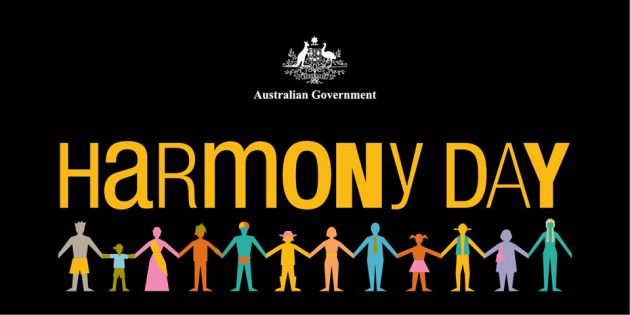
Harmony Day

The national diary appears to be heading on a collision course with the Gregorian calendar, as we squeeze more and more special days into the week. It’s like every other day we are being encouraged to wear a ribbon or a coloured item of clothing, to hashtag a slogan and make another speech.

This Wednesday is Harmony Day, not that I would have known except that I read about it in last week’s school newsletter. What is Harmony Day, you ask? According to the official website,

“Our diversity makes Australia a great place to live. Harmony Day is a celebration of our cultural diversity – a day of cultural respect for everyone who calls Australia home.

Held every year on 21 March. The Day coincides with the United Nations International Day for the Elimination of Racial Discrimination.

The message of Harmony Day is ‘everyone belongs’, the Day aims to engage people to participate in their community, respect cultural and religious diversity and foster sense of belonging for everyone.

Since 1999, more than 70,000 Harmony Day events have been held in childcare centres, schools, community groups, churches, businesses and federal, state and local government agencies across Australia.”

As a way of celebrating Harmony Day, people are encouraged to wear the colour orange. Leaving aside the fact that orange also represents a fruit, a cleaning detergent, one of the world’s most exclusive fashion labels, Hermes, and most ironic of all, a sectarian Protestant movement in Northern Ireland…other than these orange icons, apparently the colour “traditionally…signifies social communication and meaningful conversations.” Clearly someone forget to pass on that message to Northern Ireland!


harmony-day-e1462756915237

It’s refreshing to find a ‘day’ that I can happily support, and where I don’t need to sit down and have one of those “this is why we don’t celebrate xyz” conversations with my children.  Perhaps there is some deeper and not so positive agenda behind Harmony Day, but from what I know, it sounds like Wednesday should be orange day (that is, if I had anything orange to wear!).

The cultural experiences in Australia are not the norm across the world. There are few places on earth that have witnessed more positive cultural assimilation and multi-ethnic embracement.Our children’s school has students from many different countries and ethnic backgrounds, and our surrounding suburbs are home to thousands of migrants from all over the world.

This is not to say that racism is only an historical problem in Australia, its ugliness remains with us in 2018, and is probably more prevalent than many would like to admit. Racism is abhorrent. To undermine or deny a person’s humanity and dignity because of their skin colour or language is beyond reprehensible. I do think though that some societal discord is less about racism and is more about the fear of the unknown and the sense of losing cultural norms and habits; the political correctness police can be too quick to judge. It is also important that we can freely note and criticise another culture’s moral sins and shortcomings, so long as we understand the many transgressions marking our own society today.

Harmony Day is a day that I can say to my children, “this is worthwhile celebrating”. It not only reflects an Australian value that is good, it also intimates a significance beyond a nation’s identity.

In 2018, at Mentone Baptist we are preaching through the book of Acts. In this account of Christianity’s growth in the First Century AD, one of the book’s chief concerns is to demonstrate that not only did the Gospel of Jesus Christ penetrate different cultures and people groups, this new born unifying agent was of Divine purpose. Following Jesus’ resurrection from the dead, he commissioned his disciples to be his witnesses to the ends of the earth. God is concerned for the nations, and his good news message is for people from all nations and races and places.

Throughout Acts we read about thousands of Jewish people become followers of Jesus Christ, and also of Samaritans, an Ethiopian, Greeks and Romans, and many others throughout the world. The Gospel not only found home across ethnicities and languages, but it cut across cultural barriers among rich and poor, men and women, leaders and servants, all now worshiping God together and living out of love for each other. The Gospel call is higher than toleration, it even exceeds the idea of friendship; the Gospel unites otherwise disparate people together in Christ, and creates relationships as close as family. 2,000 years on, this story is continuing, even in Australia.

This year Harmony Day falls one week before another public celebratory day, Good Friday. Good Friday is a day when Christians remember the extent of God’s love for the world,

“For God so loved the world that he gave his one and only Son, that whoever believes in him shall not perish but have eternal life.” (John 3:16)

That day Jesus didn’t wear the colour orange, his accusers dressed him in a purple robe and imbedded a crown of thorns into his head. He carried a wooden cross to a place called Golgotha, where nails were driven through his hands and feet, and where he was hung  until death. This was the cost Jesus bore so that God might reconcile the nations to himself.

Good Friday creates Churches and communities of such depth and peace and love that it makes the United Nations’ best attempts seem rickety and faint. At Mentone Baptist we don’t celebrate Harmony Day, because we are living it every day; perhaps not perfectly but certainly with genuine joy and gratitude. Like thousands of Churches all over the country, we are a big family made up of many different nationalities and cultures: from Uganda and the United Kingdom, to Russia and Malaysia, from Brazil and the USA, to China, India and the Middle East.

The Coptic Church bombings, the Aussie Easter, and the Christian Hope

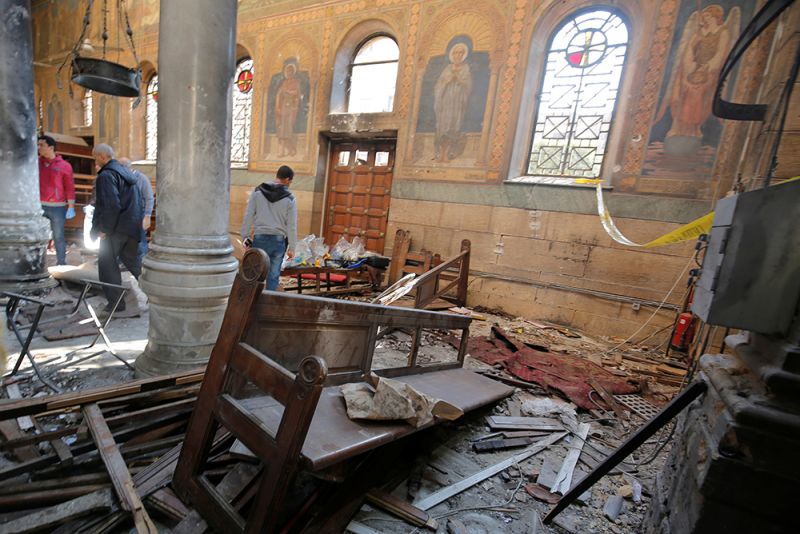
Yesterday morning we awoke to news of two Coptic Churches in Egypt that had been attacked by members of Islamic State, leaving more than 40 people including children dead, and many dozens injured.

There are groups prepared to take the lives of innocent people, self-acclaimed martyrs. They are of course nothing more than nefarious murderers following their view distorted of God. Martyrdom however is not an abhorrent idea in every circumstance. Martyrdom is the giving of one’s life to the idea that most captivates our hearts, usually with a religious connotation. There are, for examples martyrs who die for their faith in God, not through committing violence but for living in response to the love of God. In this case, the Coptic Churches in Tanta and Alexandria are now stained with the blood of 47 dead who had gathered to worship and praise the Son of God. It was Palm Sunday, the day Christians remember the Lord Jesus entering Jerusalem, his own city, where he would in a few short days be put on trial and crucified. It was the 26th attack of Coptic Christians this year.

egypt-coptic-church-bombing

Christian Post

These stories are no longer unusual occurrences, and only very few of these attacks make the news in Australia. From Turkey to Pakistan, from Egypt to North Korea, and Nigeria to Burma, literally millions of Christians face the prospect of social exclusion, imprisonment, and sometimes death.

Killing Christians is an act of evil futility because God’s love for his people cannot be broken. Death is not to be scoffed at, for it separates us from family and friends. Death is the great divider, and yet God has overcome it by the events of that first Easter.

In an extraordinary moment recorded in the Scriptures, John the disciple is given a glimpse of the reality of heaven, and there he is shown those who have suffered and died in their love for Christ:

These are they who have come out of the great tribulation; they have washed their robes and made them white in the blood of the Lamb.  Therefore,

“they are before the throne of God

    and serve him day and night in his temple;

and he who sits on the throne

    will shelter them with his presence.

‘Never again will they hunger;

    never again will they thirst.

The sun will not beat down on them,’

    nor any scorching heat.

For the Lamb at the center of the throne

    will be their shepherd;

‘he will lead them to springs of living water.’

    ‘And God will wipe away every tear from their eyes.’” (Revelation 7)

My prayer this week for my Coptic brothers and sisters is that they, in the midst of unspeakable grief, might know this promise of the certainty of God’s love in Christ.

Christ Jesus who died—more than that, who was raised to life—is at the right hand of God and is also interceding for us. Who shall separate us from the love of Christ? Shall trouble or hardship or persecution or famine or nakedness or danger or sword?  As it is written:

“For your sake we face death all day long;

    we are considered as sheep to be slaughtered.”

No, in all these things we are more than conquerors through him who loved us. For I am convinced that neither death nor life, neither angels nor demons, neither the present nor the future, nor any powers, neither height nor depth, nor anything else in all creation, will be able to separate us from the love of God that is in Christ Jesus our Lord.” (Romans 8:34-39)

The Apostle Paul who wrote these words was not immune to religious zealots chasing after him and wanting his death. Tradition has it that Paul, following an imprisonment in Rome, was one of the multitude of Christians who were put to death during Nero’s reign of terror.

While Egypt, Syria, and a hundred other places are scrubbing the blood from their floors, Aussie homes are vacuuming little scraps of metallic paper used to wrap easter eggs. To the majority of Australians Easter is now little more than a festival of chocolate and a 4 day long-weekend. It is an excuse for a camping trip, perhaps with a little religion sprinkled into the mix. Of course, both the chocolate and the weekend are pretty irrelevant (enjoyable but inconsequential), but the historic events that formed Good Friday to Easter Sunday are not.

Many Western societies are turning our backs on Christianity, to our spiritual, moral, and intellectual detriment. After centuries of economic, political, technological and military progress we have gained the world, but lost our souls.

It is true that Christians like we in Australia, are sometimes known for beating up the persecution drum. We mustn’t overstate the case of our own experiences: it’s not a broken leg, it’s a mild sprain. It’s not a heart attack, it’s indigestion. It’s not nothing, but neither is it what many Christians around the world are experiencing. The absence of physical violence doesn’t mean however that we are not witnessing significant cultural and theological shifts; it may be not Islamic terrorism, it is post-Christian authoritarian secularism, and these changes are not inconsequential for those who are and will be affected. For example,

  • we no longer have free speech, but costly speech. If you speak up in the public square it will come at a cost
  • Many Christian families are feeling pressured to take their children out of public schools.
  • In the work place employees may be forced to subscribe to particular views on marriage and sexuality.
  • workers may be forced to choose between employment or association with the Christian organisation of which they are members.
  • Businesses that support a biblical view of marriage will suffer financial loss, and be targeted for abuse.

It is not only the mass killing of Christians that has captured international attention this the past week, a few days earlier almost 100 Syrians were killed in a chemical attack, by their own Government. The New York Times reported the story of a Father who buried his wife and two young children, whose had their lives suffocated. There are no words to describe the distressing photographs which show this man embracing his dead children.

The world needs Divine retribution and Divine forgiveness. But how can we have both? Justice and mercy, judgement and grace? In all the history of the world, and among all the ideas and actions of this world, it is the event of Easter that promises the impossible.

To understand the world in which we live, we need a hermeneutic grid that is trustworthy and good; the cross of Jesus Christ is that interpretation. The cross reveals human depravation and hope more than any event in history, and the cross also reveals the character and purpose of God like no other.

Easter has become many things to many different people, but one thing it is not, and that is, trivial. While we in the West play games with fluffy bunnies, egg hunts, and another long weekend, the world is bleeding. The real Easter does not offer banal or token offerings to confirm of individualistic pursuits, but instead reveals God who ‘so loved the world that he gave his one and only son that whoever believes in him will not perish but have everlasting life’ (John 3:16).

God showed love not by changing a few coloured light bulbs on a national monument or by trending a hashtag on twitter; the depth of this love of God was the substitutionary death of his only Son. God came into his own, the incarnation. He paid the penalty for human insurrection, the cross. He triumphed over the grave, thus vindicating his claim of Divinity and the efficacy of his salvific power, the resurrection.

The extent of this love of God is for the world. John 3:16 does not suggest a universal salvation, for the text makes clear that faith in Jesus is necessary and rejecting Jesus Christ results in judgement. Nonetheless, in Christ, God has expressed extraordinary love for the world. He is not of or for the West, he is not English speaking or the God of the middle class, his concern is global. The Bible describes this God in ways unparalleled in any religion and in ways more tangible, and with a good news message that is changing hearts and lives in every nation on earth.

Penal Substitution is the heart of the Gospel

 “In Christ alone, Who took on flesh,

Fullness of God in helpless babe!

This gift of love and righteousness,

Scorned by the ones He came to save.

Till on that cross as Jesus died,

The wrath of God was satisfied;

For ev’ry sin on Him was laid—

Here in the death of Christ I live.”

As we approach Easter there is always someone stirring the theological pot and throwing doubts over Jesus’ death on the cross and his resurrection from the dead. On this occasion, the thesis isn’t penned by an atheist, agnostic, or nominal Christian, but a pastor of a church.

Over the last few days, an article has been appearing on Facebook feeds, and one concerned colleague brought it to my attention.

Chuck Queen is Senior Pastor of Immanuel Baptist Church, Frankfort, Kentucky, and he has written a piece denouncing the ‘heretical’ doctrine of penal substitution, It’s time to end the hands-off attitude to substitutionary atonement.

He is not the first person to cast aspersions over penal substitution and he will not be the last. In every generation, there are ‘Christian’ leaders who explain away core teachings of the faith.

In what is one of the most important volumes on the atonement written in our generation, Steve Jeffery, Mike Ovey, and Andrew Sach open Pierced for our Transgressions with this summary of penal substitutionary atonement,

“The doctrine of penal substitution states that God gave himself in the person of his Son to suffer instead of us the death, punishment and curse due to fallen humanity as the penalty for sin.

This understanding of the cross of Christ stands at the very heart of the gospel. There is a captivating beauty in the sacrificial love of a God who gave himself for his people. It is this that first draws many believers to the Lord Jesus Christ and this that will draw us to him when he returns on the last day to vindicate his name and welcome his people into his eternal kingdom. That the Lord Jesus Christ died for us – a shameful death, bearing our curse, enduring our pain, suffering the wrath of his own Father in our place – has been the wellspring of the hope of countless Christians throughout the ages.”

It is this doctrine that Chuck Queen wants to be repudiated and removed from Christian pulpits. This will take some doing, for PSA is deeply held by hundreds of millions of Christians world-wide, and one can’t ignore the fact that many of history’s most notable Christian thinkers affirmed PSA with love and wonder, including Justin Martyr, Athanasius, Augustine, Thomas Aquinas, John Calvin, John Bunyan, John Owen, John Stott, John Piper, Tim Keller, and on and on. Ultimately though, truth is not a popularity contest, but it is determined by God who reveals truth in his word.

lamb

I don’t intend to speak to every argument in It’s time to end the hands-off attitude to substitutionary atonement, for many words can be written, however, something needs saying given the popularity of his piece.

Queens comments,

“In the church I pastor we omit certain verses of hymns because of allusions and references to Jesus’ death as a substitution.”

“Bad Christian theology leads to bad Christian living. If one has any doubt about that just consider the voting record of evangelicals in the last election. Eighty per cent voted for Trump.”

“Perhaps the first step in dethroning such a terrible doctrine”

We are left in no doubt that Chuck Queen believes penal substitution is heretical, immoral and to be expunged from Christian Churches. Notice also, Queen’s not so subtle slight of hand in associating Donald Trump with the Evangelical teaching on PSA! Such ad hominem attacks are plainly silly and achieve nothing to help us understand the atonement.

Does Jesus believe in penal substitution?

Queen claims that the presence of substitutionary atonement as deriving from ‘an ancient, primitive view of God than the view taught and embodied by Jesus of Nazareth.’

This revisionism is simply appalling. While he does not explicitly equate this ‘primitive view of God’ with the God of the Old Testament, it is difficult to see who else he is directing this remark. The Bible, however, does not make such a distinction between Jesus and the God of Abraham, Isaac, and Jacob. The God of the Old Testament is the same as the God of the New Testament, having the same being, character and purpose. Jesus Christ is the fulfilment of all the Old promises, he is word incarnate, he is the I Am, he is the paschal lamb.

PSA is a central concept to the atonement in both OT and NT. To cite 3 examples:

First, the temple was central in Israel’s life and key to ministry of the temple was the sacrificial system, and at the heart of the sacrificial system was the blood of an animal taking the place of the sinner to avert the wrath of God. Indeed, the most sacred day in the calendar was Yom Kippur. Kippur (or atonement), carries connotations of forgiveness, ransom, cleansing and averting God’s wrath, and this final aspect is clearly on view in the teaching about the day of atonement in Leviticus 16.

A second example is the Servant Song of Isaiah 53; it may only constitute a small part of this prophetic book and an even tinier part of the OT, but its significance is rarely overestimated. The Servant Song delivers more than a penal substitutionary view of the atonement, but PSA lays at the heart of its presentation of the work of God’s servant.

The four Gospels either explicitly quote or implicitly reference the Servant Song more often than any other OT passage. R.T France is correct when he talks about Jesus‘ repeated self-identification with the servant of Isaiah 53. Thus, the entire trajectory of Jesus’ earthly ministry as recorded in Scripture is an embodiment of the suffering servant whose life culminated in a cross and death, before climaxing in a resurrection:

“But he was pierced for our transgressions,

he was crushed for our iniquities;

the punishment that brought us peace was on him,

and by his wounds we are healed.

We all, like sheep, have gone astray,

each of us has turned to our own way;

and the Lord has laid on him

the iniquity of us all.”

A third example is Paul’s tome, the letter to the Romans. Paul explains that the primary human condition is sinful rebellion against a righteous God who is now revealing his wrath against us. No human effort can save us from this judgment, only the substitutionary death of Christ. The great turning point of Romans is that masterful exegesis of the gospel in 3:21-26, which spells out God’s gift of righteousness that comes through faith in Jesus Christ and by his propitiatory death on the cross. Throughout Romans Paul explores the full gamut of the atonement, in all its facets and with many of its wonderful implications, but laying at its heart is PSA.

“With the other New Testament writers, Paul always points to the death of Jesus as the atoning event, and explains the atonement in terms of representative substitution – the innocent taking the place of the guilty, in the name and for the sake of the guilty, under the axe of God’s judicial retribution” (J.I Packer, Knowing God)

God didn’t need a sacrifice?

In contrast to Queen who believes, ‘Jesus didn’t die because God needed a sacrifice. Jesus died because the powers that be had him killed,’ Scripture offers a different testimony.

Both prior to and following the events of Easter, Jesus himself said, he had to die.

‘The Son of Man must suffer many things and be rejected by the elders, the chief priests and the teachers of the law, and he must be killed and on the third day be raised to life’ (Luke 9:22).

The verb, ‘must’, functions as a Divine imperative, reinforcing the notion that in God’s wisdom he ordained for his Son to enter the world and to die on the cross.

On the day Pentecost Peter explained that while human beings plotted Jesus’ death, it was also of God’s design and plan. Not only this, Peter makes explicit links between Jesus’ death and resurrection with Old Testament promises.

“Fellow Israelites, listen to this: Jesus of Nazareth was a man accredited by God to you by miracles, wonders and signs, which God did among you through him, as you yourselves know. This man was handed over to you by God’s deliberate plan and foreknowledge; and you, with the help of wicked men, put him to death by nailing him to the cross. But God raised him from the dead, freeing him from the agony of death, because it was impossible for death to keep its hold on him…Therefore let all Israel be assured of this: God has made this Jesus, whom you crucified, both Lord and Messiah.”

To an audience in Jerusalem who had only weeks earlier witnessed the crucifixion of Jesus, Peter both affirms human culpability and Divine intent.

Is Penal Substitution language merely metaphoric?

In another attempt to explain away PSA, Queen asserts that it is being used in a non-literal way, “Perhaps the first step in dethroning such a terrible doctrine is to help Christians realize that the  sacrificial language utilized in the New Testament are symbols and metaphor, not to be taken in any literal sense.”

In one of the rare examples where he uses the Bible, Queen cites Matthew 20:28  in order to prove his case, “Just as the Son of Man did not come to be served, but to serve, and to give his life as a ransom for many.”

It is important to understand how Queen is arguing his point. He begins by asking us to doubt that these words were ever spoken by Jesus. But just in case they are genuine (although now we’re told to believe they’re probably not), he then adds another layer of doubt by suggesting scholars no longer believe ransom means ‘ransom’. (However, see Leon Morris’ seminal work, The Apostolic preaching of the Cross, for a clear explanation of ransom).

I agree with Queen, in that Jesus is presenting his disciples with a model of servanthood, but there is more at stake here.

For Queen, the phrase, ‘ransom for many’ is metaphoric, but the accompanying infinitive phrase, ‘to serve’ is not a metaphor. Grammatically, it is implausible that of two co-joining infinitival phrases, one is literal and the other metaphoric. Jesus is not speaking of himself as metaphorically serving, but actual serving and he is not speaking of dying as a ransom metaphorically, but literally.

Queen carefully chooses a Scriptural example that can be used in part to highlight the exemplar model of the atonement, but what of the multitude of other references to penal substitution that are scattered throughout the entire Bible? How does he exegete Roman 3:21-16, Romans 4:25, Galatians 3:10-13, 1 Peter 2:21-25 and 3:18, and many other passages?

Is atonement language merely metaphorical? The answer is, no. “Facet” or “aspect” are better ways to describe such language, for in speaking of the atonement we are dealing with historical events which are given Divine interpretation in Scripture. The cross carries more than symbolism, but effects actual judicious judgment, brought upon the Son in the place of sinful human beings. We can no more speak of the cross as metaphor and symbol, as we would of the Federal Court of Australia sentencing a guilty person to prison. There may be symbolism and metaphor to be found, but the atonement cannot be reduced to those categories; it is an actuality.

Did Constantine change the Christian message?

Queen offers a strange rewrite of history when suggesting that PSA was given prominence post-Constantine, while other and more important idea such as Jesus’ life and teaching, found a diminished role in Churches catechisms. While it is possible to site examples on both sides Constantine’s rule where Christians play various doctrines over others, the historical record demonstrates the penal substitution was treated as foundational prior to Constantine, not only by the New Testament authors, but among the Early Church Fathers.

For example, Justin Martyr who lived almost two centuries before Constantine wrote,

“If, the, the Father of all wished His Christ for the whole human family to take upon Him the curses of all, knowing that, after He has been crucified and was dead, He would raise him up, why do you argue about Him, who submitted to suffer these things according to the Father’s will, as if he were accursed, and do not rather bewail yourselves?”

Penal Substitution and Christian living

Another contention for Chuck Queen is the apparent powerlessness of PSA to cultivate Christian living. He says,

“Another problem with substitutionary atonement is that it reduces salvation to a legal transaction that has nothing to do with the actual transformation of the individual…In such a Christian system the actual life and teachings of Jesus have little bearing on what it means to be a Christian.”

To bushwhack both history and contemporary Christianity in this way is simply disgraceful.

Flowing from the preaching of Charles Spurgeon, who taught  the centrality of penal substitution, were many organisations caring for the poorest of Londoners, including orphanages.

Tim Keller has been used of God to plant and grow Churches across New York City, and accompanying Redeemer Presbyterian Church is Hope for New York, a mercy and justice outreach to the city providing volunteer and financial resources to more than 40 nonprofit organizations serving poor or marginalized populations in New York City.

The man who wrote perhaps the most famous defence of penal substitution in the 20th Century was John Stott. Stott was responsible for the global Lausanne movement and was known for calling Christians to engage in social justice ministries. John Stott famously did not serve in the armed forces during the Second World War, largely due to his convictions about violence, and yet he defended and articulated the case for penal substitutionary atonement. Belief in a righteous God who is angry against sinful people and who judges rightly does not lead to angry judgemental Christians (well, it ought not) but rather it produces men and women who are loving and passionate and keen to see their neighbours also know this righteous God who saves.

In short, it appears as though any time Queen doesn’t approve of way the Bible speaks of God, sin, and humanity, he explains it away by arguing, “this isn’t the god I believe in”, or “it’s a metaphor”, or “we can explain it away because culture of Rome isn’t ours”.

We are left wondering, how does Chuck Queen view the significance of Jesus’ death on the cross? He suggests,

Jesus bore our sins on the cross in the sense that he, as the Son of Man, as the representative human being, bore the hate and animosity of the world in his service to God. He became a scapegoat to end scapegoating, to expose the folly and evil of scapegoating any human being. He became the lightning rod where the pent up oppositional energy of the powers that be (the world) became focused. In bearing the sin — the hate, evil and animosity of the world — he exposed it and exhausted it, thus overcoming it. The resurrection served as God’s vindication, God’s “yes” to Jesus’ sacrificial life and death.

No need for a sacrificial victim.”

Does Chuck Queen realise that the scape goat of Leviticus ch.16 was in fact a substitute for the sins of Israel?

According to Queen’s view, God absorbs the world’s hate, like a lightning rod. There is no punishment for sin, no one will account for their own sins before a righteous God for he simply sucked it all in. For clergy who rape children, for totalitarian regimes who oppress and murder their own people, for the 10,000s of victims of Islamic State, there is no day of reckoning, no God who is angry and punishes with hell.

The biggest problem with Queen’s thesis

At the end of the day, as Queen admits, penal substitution doesn’t reflect his view of God, and that is precisely his problem.

“The major problem with substitutionary atonement is the way it imagines God. This interpretation of Jesus’ death makes God the source of redemptive violence. God required/demanded a violent death for atonement to be made. God required the death of an innocent victim in order to satisfy God’s offended sense of honor or pay off a penalty that God imposed. What kind of justice or God is this? Would a loving parent make forgiveness for the child conditioned upon a violent act?”

The nonviolent God of Jesus, however, is incompatible with a God who makes a horrendous act of violence a divinely required act of atonement.

Queen doesn’t begin with Scripture and allow God’s self-revelation to inform, shape, correct our own understanding of God; he begins with a pre-conceived view of God, that (s)he is a non-violent god, and from that belief he then attempts to bend, re-shape and even remove any part of the Bible that doesn’t conform to his portrait. In the end Queen is left with an image of his own making whom he worships and calls God. His nonviolent god does not account for Jesus’ actions in the temple where he physically drove out local businessmen and bankers. His nonviolent god ignores the God of war in the Old Testament. His nonviolent god does not permit Paul to write to Christians, ‘Do not take revenge, my dear friends, but leave room for God’s wrath, for it is written: “It is mine to avenge; I will repay,” says the Lord.’

The world needs a powerful and good God who punishes wrong and who can show mercy to wrongdoers.

4 basic positions on Penal Substitution

Two years ago I wrote a post in which I outlined 4 basic positions on the penal substitutionary atonement (PSA). I appreciate that these are generalisations, and the accusation of straw men might be apt, apart from the fact that I know people who fit into each of these groups. For all the dangers when making generalisations, they nonetheless have warrant and therefore they offer some clarity to the discourse.

First, those who deny PSA. There are two basic groups of people who fall under this category: those who reject the idea that PSA is affirmed in the New Testament, and those who believe it is taught but have decided to reject that part of the Bible. There are of course further subgroups, those who have issue with the concept of substitution and those who only discredit the adjective penal.

Second, Those who accept the Bible’s teaching on PSA, and believe it is necessary but not the centre. They understand it to be one aspect of the atonement they dismiss the notion that it is the necessary central concept of the atonement.

Third, those who accept the Bible’s teaching on PSA and who believe it is central, but who believe that other aspects of the atonement have been downplayed and need to rediscovered and given proper emphasis. To explore other dimensions of the atonement at length is not too deny PSA, but it is restoring the beauty of these facets that are sometimes hidden. Of course, there is also more to the ministry of Christ than the atonement: there is his pre-incarnate work, his incarnation, life, resurrection, ascension, reign, intercession, return and Kingly judgement.

Fourth, those who accept the Bible’s teaching on PSA but downplay other aspects of the atonement.

It is difficult to see how the first position is tenable within Christian orthodoxy, for PSA is intricately tied to too many Christian doctrines. Chuck Queen is an example in point, his view of the god whom he worships would not and cannot permit penal substitution. Rejection PSA follows adherence to an imaged God who is not that God and Father of the Lord Jesus Christ.

The second position is problematic because the Bible does view PSA as critical and foundational. There are many Gospel presentations found in Scripture that do not explicitly speak of either substitution or penal, but of course, no Gospel outline ever says everything. And yet, there is a clear weightedness given to substitutionary nature of Jesus’ death which appeases the righteous wrath of a righteous God.

When it comes to things like apologetics and evangelism, we would rarely begin with PSA, although there may be conversations where this is possible. When eating an apple you don’t begin with the core, but with the skin and flesh, and eventually, you reach the core. Depending on ones’ context different aspects of the Gospel will connect with our engagers more readily than others. For example, reconciliation may make more sense to people in our community than ransom or Christus Victor, and yet, regardless of where we begin, we will need at some stage to unpack this thunderous doctrine of PSA.

I wonder whether the problem lies not with PSA but with Christian thinkers not working hard enough to demonstrate how it connects to all the facets of life and society and the world (I’m thinking of my own ministry as much as anything).

The fourth position is understandable when ministering in a context where PSA is being attacked, however in defending the truth of one doctrine we must be careful not to neglect other important biblical notions of the cross.

The fourth position can end up becoming a reduced gospel. If we only ever preach on the penal aspect of the cross, we will be missing out on the full wonder of the atonement, and we will also be guilty of executing Scripture poorly. If we never speak about PSA then we are guilty of misrepresenting God’s message, and if we neglect those other facets then we are starving our churches and cutting bridges with people where we should be building them. If Chuck Queen’s criticism was of those who represent this fourth view, there would be some validity to his concerns, however he is reaching well beyond, and steadfastly places himself in the first category.

The third position is where we ought to find ourselves. Penal Substitution is at the heart of the atonement, and therefore the Gospel of Jesus Christ, and yet there are other aspects that are beautifully and powerfully affirmed in Scripture and need to be presented at length so that we can properly engage with people and encourage our churches. I want to argue that preaching all the aspects of the atonement, as they arise in Scripture, we will make us better preachers. This requires substantive thinking, both in the text and in our culture, and while some parts of our theology are more easily communicable to our culture than others, we will begin where we begin and we will endeavour to take people into the wonders of God in Christ who died for us, in our place, that we might have our sins forgiven, reconciled to God, and adopted as his children.

Conclusion

The question is quite simple, does the Bible teach and affirm penal substitutionary atonement? The answer, in both Old Testament and New Testament is, yes. Penal substitution language, imagery, and actions are found at key junctions in both Testaments, and especially in the death of Jesus Christ on the cross. The second question is also simple, do we believe and trust God’s explanation of salvation?

Chuck Queen’s theological cut-and-paste job characterises the stench of death that is theological liberalism, which continues to plague and destroy churches across the Western world. He is committing violence on the word of God and stripping the good news of Jesus Christ of its power. It is unsurprising to learn that elsewhere Queen describes himself a ‘universalist’. Those who reject penal substitutionary atonement do so against the face of the Biblical testimony, and so it is inevitable that other Christian teachings are also thrown into the bin.

At the end, Christianity becomes another moralist religion, where we must do. Rather, the good news that is Christ’s death for us is that God has done.

This Easter at Mentone Baptist Church, we will be singing all the verses of ‘In Christ Alone’, and with joy, we’ll be thanking God for the incarnation, life, atoning death, resurrection, and the promised return of the Lord Jesus.

“For Christ also suffered once for sins, the righteous for the unrighteous, to bring you to God.” (1 Peter 3:18)