End of an era? The King and the Pope Pray Together

King Charles flew to Rome to pray with Pope Leo. As reporters are headlining, this is big news. 

The BBC is making a splash, 

“King and Pope make history by praying side by side

King Charles and Pope Leo made history in the Sistine Chapel by praying side by side – a first for the leaders of the Church of England and the Catholic Church.

Under the scrutinising eyes of Michelangelo’s Last Judgment, when Pope Leo said “let us pray”, it meant everyone, including the King, closing a gap that stretched back to the Reformation in the 16th Century.”

SBS,

‘Healing of history’: King Charles and Pope Leo pray together in 500-year first’.
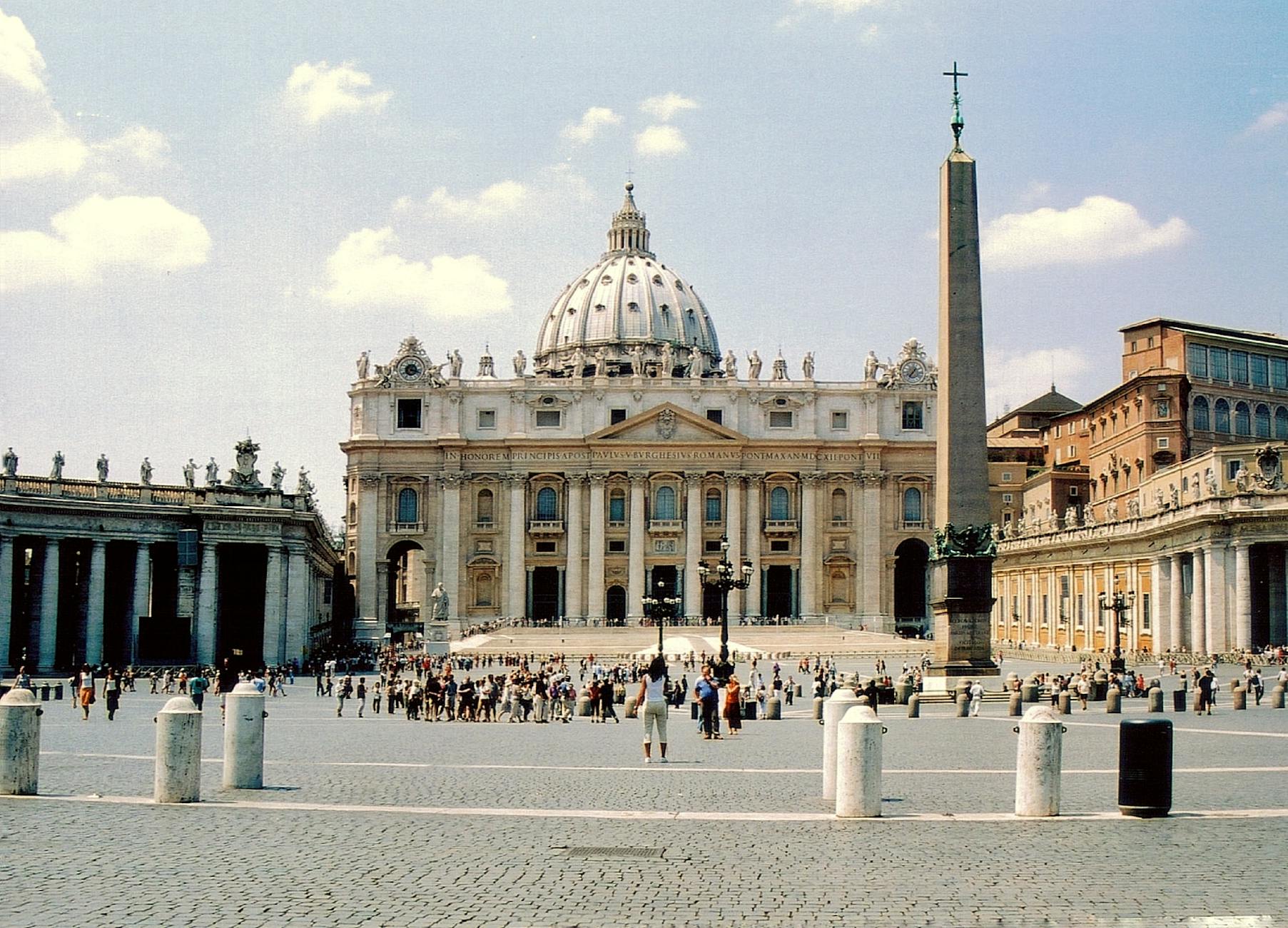
Photo by Ryszard Zaleski on Pexels.com

This is the first occasion in 500 years that an English monarch has so publicly aligned with a Pope. The public prayer meeting hasn’t been lost on the media or by Christians worldwide. Despite the historic nature of this meeting, it’s unsurprising, given that the ecumenical King is married to Queen Camilla (who has strong familial links with Roman Catholicism), a step that itself moves history a little closer to its medieval past. 

You may be wondering, why is a Baptist interested in this affair? Fair enough. Good question. We live in a global community, and I belong to a Christian denomination and am a child of the Reformation. No doubt many readers are pondering the significance of this public display by the King and Pope, and so sometimes the ‘outside’ voice has more liberty to make observations than those close to the crown and zucchetto. The King of England praying with the Pope is news, even if it has zero impact on what happens this Sunday at church.  It may do little to change what happens on Sunday, but the step has symbolic power.  Symbols have a habit of punching the air and giving credence to ideas. Should the Church of England one day return to Rome? Will the divorce be followed by a wedding?

Whatever this union symbolises, the King and the Pope praying is paradoxical for 2 obvious reasons:  the historical theological divide and the new theological divide.

A history of irreconcilable difference. 

The very doctrines and spiritual abuses that led to the Reformation, from Germany to England, haven’t been relinquished by Rome. Indulgences remain widely practised.  Rome continues to believe in 7 sacraments. The view that salvation and forgiveness of sins require effort and merit on behalf of the sinner is a hamstring injury that persists to this day. 

Over the 500 years since the reformers sought to purify the church in teaching and life, the Roman Catholic Church has doubled down and expanded in its theologising. For example, 1964’s Second Vatican Council, Lumen Gentium 16, states that salvation is given to the anonymous Christian, the person who doesn’t believe in Jesus the Son of God and yet is redeemed. This teaching was upheld by Pope Francis. 

It would be a wonderful sight to one day see Rome throwing off the magisterium and for genuine spiritual unity to be found in the one Lord of the church and by his Spirit. After all, the Apostle Paul spells it out for us in Ephesians ch.4,

‘There is one body and one Spirit, just as you were called to one hope when you were called; one Lord, one faith, one baptism; one God and Father of all, who is over all and through all and in all’.

And yet, this is not the situation before us today. The differences between Rome and Canterbury are substantial and primary.  Sure, there is also common ground, but does this denude the division over how sinful human beings can be redeemed and given assurance of right standing before God?

So what is the King of England trying to achieve by visiting the Vatican and coming together with the Pope in prayer?

What political statement is being made? 

What kind of theological statement are the two heads suggesting?

It is a strange sight. 

I imagine Thomas Cranmer rolling in his grave in search of a flame to thrust in his right hand, if he were there, and Ridley sighing with frustration. Hugh Latimer’s dream became a reality, and we can dream again, ‘Be of good comfort, and play the man, Master Ridley; we shall this day light such a candle, by God’s grace, in England, as I trust shall never be put out.’

Maybe this is the point, albeit unbeknownst to the orchestrators of the King’s visit. The candle has not gone out: the UK is witnessing a resurgence of Christian interest and London churches are growing…except where the Church of England who with decision and pageantry, blew out the candle in Canterbury.

The timing of King Charles’ visit to the Vatican to pray with Pope Leo is perhaps perfect. Within weeks of the Church of England giving up on the Christian faith (thanks to the appointment of the new Archbishop of Canterbury), the head of the Church of England flies to Rome. 

Old divisions remain formally and substantially, and there is a new divide.

A new divide

Before I point out the enormous elephant standing next to the King and the Pope in the Cistine Chapel, let me clarify, I love my Roman Catholic friends. There are many Roman Catholic brothers and sisters around the world who believe the Gospel and love Jesus, and with whom we may pray and share in common. Rome in the 16th Century may have designated the Reformers as heretics, but the likes of Martin Luther and Jean Calvin saw Rome as a genuine but very sick church. 

Also this, when it comes to the Church of England, there are many faithful and amazing Parishes across the UK, and many, many faithful Anglican churches around the globe, including Australia and here in Melbourne; praise God. The Anglican Communion has, however, shifted. The seat of Canterbury is broken thanks to the ‘Living in Love and Faith’ offering and appointing one of its chief architects, Sarah Mullally, to be the new Archbishop.

It is with this issue that a new chasm between Rome and the CHurch of England has opened up. On this matter of human sexuality and marriage,  there is a fundamental disagreement between Rome and the Church of England. Canterbury has bent the knee to the cultural zeitgeist. Indeed, on this and many ethical subjects, Rome has proven more resilient than those Protestant denominations that continue to perform to the crowds, hoping for appeal and applause. Let the lesson be learned: if our theological preferences change according to seasonal cultural winds, it is only a matter of time before your church blows down!

I suspect this is one reason why young people in the West are as likely to be drawn to finding a home with Rome as they are in the local Church factory or Saint Bob Anglican.

In the last 5 years, the tissue-thin screen veiling the new atheism has been removed, and the Wizard of Oz is nothing more than a scrawny man holding a megaphone and shouting, ‘There is no God’. 50-year-old middle-class Melbourne may be stuck on this Spotify playlist, but younger generations know better. People know instinctively that there is something real and important beyond this material world.  We need it to be, because God knows, life gets pretty miserable without Divine forgiveness and hope. Take away God, and we have 8 billion people pretending there is commonality and trying to figure out a reason why brute power shouldn’t win the day. 

Of course, in the search for God, one of the mistakes we can make is to think that if it looks and smells old, it must be the real thing. I say, don’t judge a church by its smell! The Reformers were right. Does a church believe, read and teach the Bible? Do they worship the Triune God? Do they believe in the sufficiency of Christ’s substitutionary atonement death? Do they affirm the physical resurrection of Jesus? Are they denying or adding to the One Gospel? If we can tick these boxes, then they are the real church where God dwell by His Spirit. 

Part of the search for God is the persistent and right need for security and substance. We see an aged wineskin and assume its contents are priceless. As a Christian minister, I want to argue that true security and substance is found in Christ and his sufficient Gospel. This idea isn’t new and novel; the Reformation rediscovered these precious truths: justification by grace alone through faith alone in Christ alone. It is, in fact, a Bible idea. If you’re looking for new old, go to the Scriptures!

Two great errors can be committed by a Church. One is to take away from the gospel in the search for relevance, and the other is to add to the gospel. In my view, the Church of England has chosen the former, and Rome, for too long, is persisting with the latter. 

Religion can be bewitching. When we catch a whiff of permission giving, we feel liberated to mould God into our own image. At the other spectrum, rules and traditions provide a temporary ballast, and yet both miss the point of Jesus. That makes this meeting between King Charles and Pope Leo both fascinating and superfluous. The power of the Gospel is found in towns throughout Nigeria and in house churches across China, and in the cities of Brazil and the suburbs of Sydney and Melbourne.

Our Bible text this Sunday is a really helpful explainer. It’s not a short read, but if you’re interested in what the Apostolic testimony has to say, it’s worth following the Apostles’ logic from beginning to end. Have a read,

“Who has bewitched you? Before your very eyes Jesus Christ was clearly portrayed as crucified. I would like to learn just one thing from you: Did you receive the Spirit by the works of the law, or by believing what you heard? Are you so foolish? After beginning by means of the Spirit, are you now trying to finish by means of the flesh? Have you experienced so much in vain—if it really was in vain? So again I ask, does God give you his Spirit and work miracles among you by the works of the law, or by your believing what you heard? So also Abraham “believed God, and it was credited to him as righteousness.”

Understand, then, that those who have faith are children of Abraham. Scripture foresaw that God would justify the Gentiles by faith, and announced the gospel in advance to Abraham: “All nations will be blessed through you.”So those who rely on faith are blessed along with Abraham, the man of faith.

10 For all who rely on the works of the law are under a curse, as it is written: “Cursed is everyone who does not continue to do everything written in the Book of the Law.” 11 Clearly no one who relies on the law is justified before God, because “the righteous will live by faith.”12 The law is not based on faith; on the contrary, it says, “The person who does these things will live by them.” 13 Christ redeemed us from the curse of the law by becoming a curse for us, for it is written: “Cursed is everyone who is hung on a pole.” 14 He redeemed us in order that the blessing given to Abraham might come to the Gentiles through Christ Jesus, so that by faith we might receive the promise of the Spirit.”


Correction: The original suggested that Queen Camilla is Roman Catholic. That is not the case. What is the case is that Her Majesty’s first marriage was to a Roman Catholic, and her children are Roman Catholic.

The search for irrelevance: The British public is asked to suggest who should be the next Archbishop of Canterbury

My teenage daughter has an eye for noting desperation. She perceptively sees through attempts by adults to make Christianity cool, relevant and whatever adjectives are now used among Gen Z. Whether it is the band playing like U2 or the preacher dressing like he’s vying for Vogue, my daughter is able to spot a try-hard attempt from a mile away.

It turns out that the Church of England is turning to the British public for assistance in choosing the next Archbishop of Canterbury. The BBC reports,

“The public is being invited to suggest candidates for the next Archbishop of Canterbury following Justin Welby’s resignation…The Church said the consultation, which runs until 28 March, was “an opportunity to gather the views of a wide range of people from across England and the Anglican Communion on the gifts, qualities and skills needed” for the role.”

How does it look when the British public is asked who’d they like as the next Archbishop of Canterbury? I wouldn’t be surprised if they nominated a man named Rowan (no, not the former Arch Druid, I’m referring to Atkinson). After all Rowan Atkinson has played the role of the archbishop before on stage.

To preempt what some readers are thinking, yes, there are already issues with the traditional process where the Government and King are involved. But this latest attempt takes ‘try hard’ to a new level.

Is the Archbishop of Canterbury a popularity contest? Is this one of those pop idol shows where you send in a text and vote for your favourite? 

Does the public even know what the biblical requirements are for Church leadership? Is the public familiar with Christian doctrine? Does the average Brit prefer to have church leaders who believe and can teach such doctrine? Can you imagine the everyday Britt wanting to uphold Christian ethics and where there’s an Archbishop who believes in marriage and godliness in sexuality? Yeah, neither can I.

Either the establishment cannot find a suitable candidate (which wouldn’t surprise anyone given the current college of bishops) or some marketing guru thought, ‘I know what will make the Anglican Church great again, let’s run a popularity contest’. Populism might work in the political world but it’s a certain path to irrelevance for a church. Character really does matter. Believing the Bible and holding to classical Christian teaching really does matter.

Of course, if choosing church leaders is akin to who has the biggest Instagram following, then Jesus would have zero chance. Remember, what happened when God the Son came to earth? People conspired against him and had been crucified. 

Even a quick read through the Bible will tell us that it is the responsibility of the church to appoint from their own, a man who is qualified. The Church, not subbing out to politicians and everyone stuck in the London tube during peakhour.

The Apostle Paul on one occasion gave Titus instructions to appoint elders (same as bishop or pastor) in local churches. Here’s what he had to say, 

 An elder must be blameless, faithful to his wife, a man whose children believe and are not open to the charge of being wild and disobedient.  Since an overseer manages God’s household, he must be blameless—not overbearing, not quick-tempered, not given to drunkenness, not violent, not pursuing dishonest gain.  Rather, he must be hospitable, one who loves what is good, who is self-controlled, upright, holy and disciplined.  He must hold firmly to the trustworthy message as it has been taught so that he can encourage others by sound doctrine and refute those who oppose it.”

Can such a man be found in all of England? Yes, there are many, and likely members of non-establishment churches. There are also, like in the days of Elijah, within local Church of England parishes, men and women of character and who will defend the truths of the faith. I know of many, although they’ll never get a look in. Why?  The Bishops have set their course and an unbelieving public will have little interest in nominating anyone other than a prophet who preaches their own preferences. And that, of course, only reinforces why the public is disinterested and the pews are emptying. Why bother with church when I can hear the same hopeless message at uni or at this week’s Grammys? 

May God have mercy on the Church of England. May he bring repentance and raise up a leader whom they do not deserve and yet desperately need. At stake is a lampstand, let the reader understand. 

——————-

4th October Postscript:  Dame Sarah Mullally has been appointed as the 106th Archbishop of Canterbury. Her service in the public health sector is widely recognised. Her spiritual and theological commitments follow the current trajectory of the Church of England. Rather than being an appointment that can bring healing and restoration of the Gospel and faithfulness to the word of God, Mullaly’s views on Scripture, Church and human sexuality will only exacerbate the divide. May the Lord have mercy.

The Church of England chooses de facto relationship rather than marriage to the lamb

The Church of England, like many Christian denominations, has faced trials and temptations down the centuries, from both outside in the culture and from within. Its beginnings were turbulent and yet the grace of God started what became a global witness for Christ, albeit a shaky one.

The Church of England is famed throughout the world, for its connections to King Henry VIII through to Westminster Abbey and the village church and is quintessentially English. More than that, the Church of England was once a beacon of light, preaching the Gospel of Jesus Christ and gathering men and women into Christ’s Church, producing theologians and pastors and missionaries who stood firm on sound doctrine and who loved the church. Sometimes this came at a great cost. 

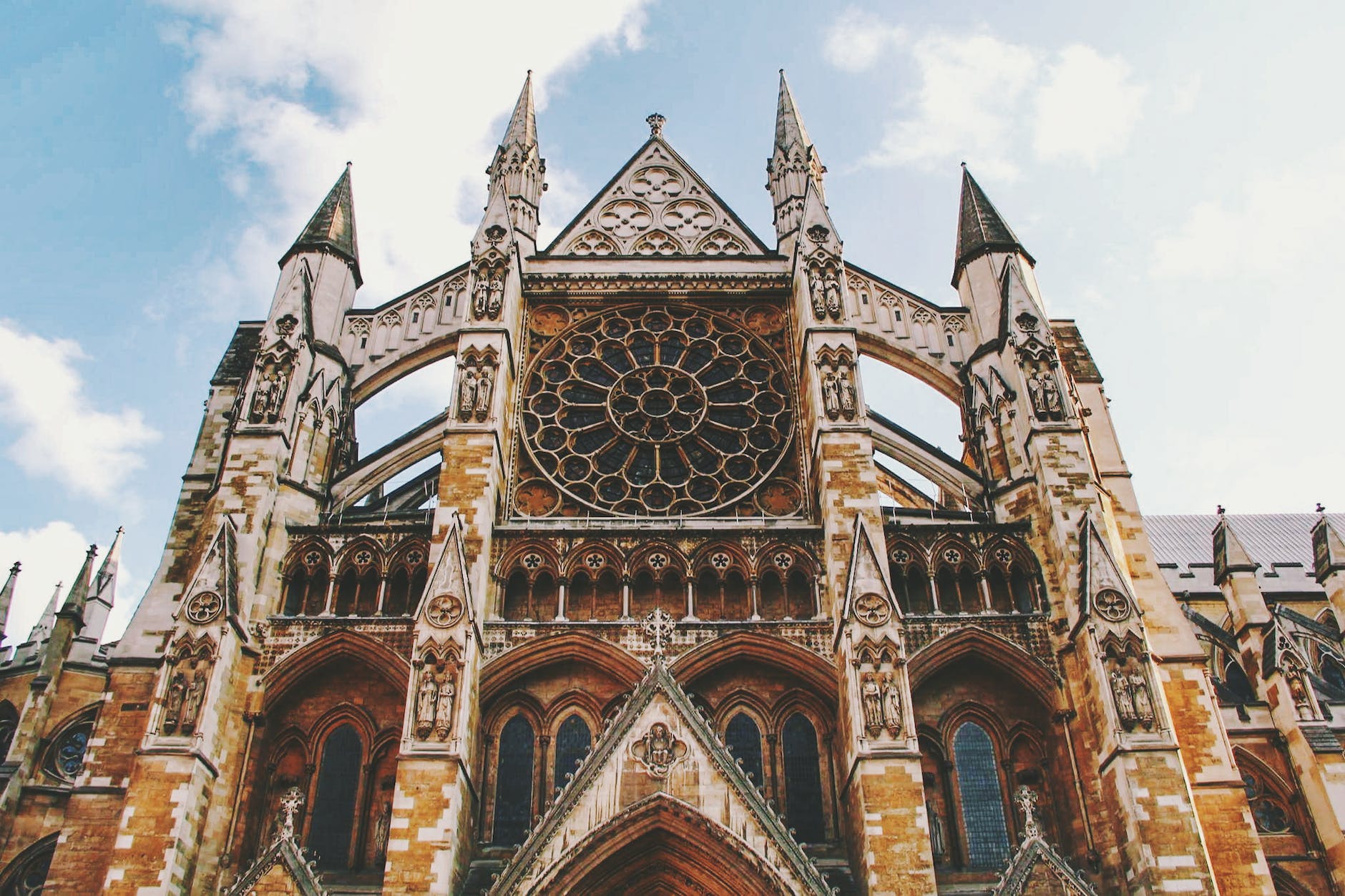
Photo by Dominika Greguu0161ovu00e1 on Pexels.com

The Church of England establishment had an unhealthy dating program with the State and wanderings back into a religion of form and with cassock and golden crosses. At times it was the Common Book of Prayer with the readings of Scripture that kept a light flickering within ageing stone walls of St Mark’s and St Mary’s. Other churches grew and were centres of faithful Gospel proclamation. Indeed, when my wife and I lived in England 20 years ago, we visited and were so encouraged by numerous parishes who’d invited me to preach. Young and old, married and single, were united together by the Spirit of God and were hungry to feed from Scripture. It is of no surprise that the healthiest and largest Anglican Churches in England are mostly evangelical parishes, that hold to and teach the faith once for all delivered. 

Indeed, at the General Synod this week, their voices were heard and their impassioned warnings and love for the church resonated around the meeting place In London. To their shame, all 3 Houses voted in support of the Bishops’ recommendations in the report, ‘Living in Love and Faith. 

Everyone agreed with aspects of the report. There have been times when Christians have not loved others as we ought. We have treated people with disdain, not love, with fear not welcome. We ought to repent when we look upon others in a way that contradicts the Lord Jesus. Other aspects of the report, including the Bishops call to introduce same sex blessing services, are untenable to Anglicans who uphold the teaching of the Church of England. 

Today, in London, the Church of England entered into what is essentially a de facto relationship with the Devil. 

The Church of England’s press release today states, 

“The Church of England’s General Synod has called on the bishops to take the next step to issue prayers which would enable same-sex couples to come to church after a civil marriage or civil partnership to give thanks, dedicate their relationship to God and receive God’s blessing.”

This is effectively a de facto relationship with the Devil. They haven’t (as yet) redefined marriage, but they have determined to however call holy, that which God calls sin. It is only a matter of time before the divorce is formalised and the new marriage arranged.

This is a historical moment. This is the undoing of centuries of agreed and believed doctrine for the sake of fitting in with a culture that is proud of its sex without borders ethics. The self is King and no one is to object or disagree with the sexual preferences of anyone. And as numerous MPs have said over the past week, the Church of England must embrace same sex marriage or be cast aside. 

There are many parishes scattered around England that have declared their faithfulness to the Lord of the Church over and above an errant English Church. How they proceed now will require much wisdom and strength and courage. May the Lord honour their faithfulness to Jesus. 

Without repentance, there is no saving the Church of England. Without a return to doctrinal orthodoxy and practice, the Church of England will be little more than an English version of Thyatira. 

God is love. God is truth. His word is loving and true. The Gospel of Jesus Christ is good news for everyone who believes. It is not as though the Bible is unclear about matters concerning human sexuality, marriage, and life fulfilment. Churches for millennia and the majority of Christian Churches around the world today affirm the same theological understandings. Jesus never said that following him would be easy. Sometimes the world offers everything, if only we fudge His world a little, if only we excise that chapter or that verse and include a sentence from the hymnbook of today’s culture. 

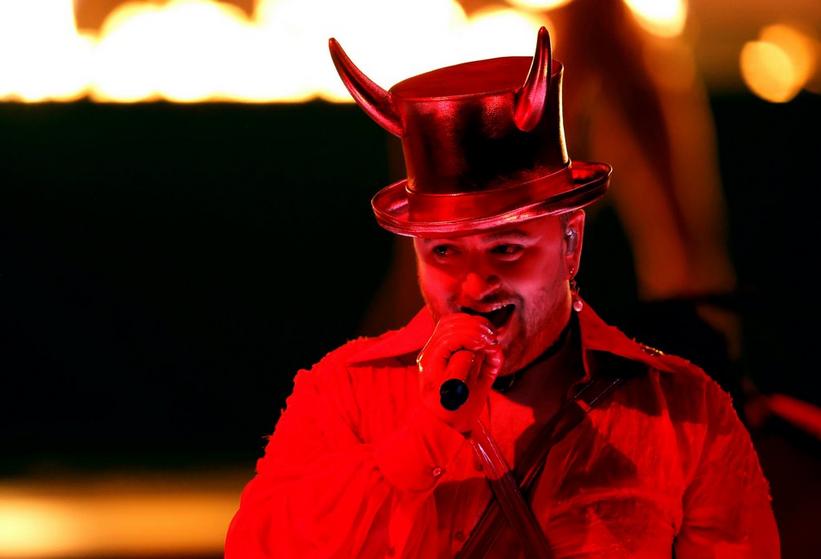
The Church of England’s song sheet is certainly sounding more like Sam Smith’s ‘unholy’ than it is God’s beautiful, gracious and life giving word. 

One does not need to be a member of the Church of England today to feel a sense of loss, anger and great sadness. A small part of every Protestant believer has been betrayed. All our churches may come under greater social scrutiny and derision if we do not follow the now lost Church of England. 

Today, as we did yesterday, and as we must tomorrow, take hold of the message of Jude, 

“Dear friends, although I was very eager to write to you about the salvation we share, I felt compelled to write and urge you to contend for the faith that was once for all entrusted to God’s holy people. For certain individuals whose condemnation was written about long ago have secretly slipped in among you. They are ungodly people, who pervert the grace of our God into a license for immorality and deny Jesus Christ our only Sovereign and Lord.

17 But, dear friends, remember what the apostles of our Lord Jesus Christ foretold. 18 They said to you, “In the last times there will be scoffers who will follow their own ungodly desires.” 19 These are the people who divide you, who follow mere natural instincts and do not have the Spirit.

20 But you, dear friends, by building yourselves up in your most holy faith and praying in the Holy Spirit, 21 keep yourselves in God’s love as you wait for the mercy of our Lord Jesus Christ to bring you to eternal life.

22 Be merciful to those who doubt; 23 save others by snatching them from the fire; to others show mercy, mixed with fear—hating even the clothing stained by corrupted flesh.

24 To him who is able to keep you from stumbling and to present you before his glorious presence without fault and with great joy— 25 to the only God our Savior be glory, majesty, power and authority, through Jesus Christ our Lord, before all ages, now and forevermore! Amen”

The Church of England faces a huge week

One thing worse than Sam Smith’s performance at the Grammys is the revisionist Bishops in the Church of England who are this week gaslighting both the sheep under their care and deceiving the general public.

Presumably, Sam Smith thinks that dressing up in a satan costume and performing a song called ‘unholy’ is making some kind of loud and shocking creative statement. Perhaps someone could tell him, he’s doing nothing more than copying a longish line of musicians. It is all rather boorish, except that mimicking the very personification of evil isn’t a particularly bright idea. 

Over in old England land, ecclesiastical leaders have taken up that ancient inquisition of the Devil, by suggesting, “Did God really say?” 

What have they done?

The Bishops in the Church of England wrote and issued a paper whereby they intend to introduce same-sex blessings services. They are not proposing same-sex weddings (at this stage), but wantng same sex blessing ceremonies. In other words, this change amounts to formally recognising same-sex relationships as a moral and God accepted good and that churches ought to offer services of prayer and blessing for these couples. Not every bishop agrees with the document, but clearly, there is sufficient consensus for its publication and presentation to General Synod for serious consideration. 

In what can only be described as a dishonest riff, some Anglican leaders are insisting that the church’s doctrine on marriage isn’t changing…quite literally as they call for changes to the church’s understanding of sex and marriage.  The same hypocrisy is being offered up by The Australian Law Reform Commission, albeit a legal entourage rather than a church one. Their recent submission to the Federal Government calls for religious schools to lose their freedom to practice traditional views of sexuality. For example, they are recommending legislation that allows  Christian schools to teach a Christian view of sex and marriage, but they may also be required to teach alternate views. They will lose the right to employ staff on the basis of religious convictions. In other words, we’ll tolerate your religion so long as you tell and permit today’s sexology.  That’s not compromise, it’s forced capitulation. That’s not co-existing with two unbridgeable views, that’s crossing over and demanding change. 

This General Synod is happening on the other side of the world and in a Christian denomination that is different to my own, so why take interest in this debate? This particular case is important for several reasons: 1. I have many friends who pastor or who are members of churches in the Church of England. 2. The very public stature of this denomination (part through age and part through connections to the State) will garner significant media and public attention. 3. The Church of England is part of the worldwide Anglican communion which accounts for 10s million of believers, including Australia. 4. The same revisionist agenda playing out in the Church of England is present here in Australia, including among Baptists. 

The flavour of the month is self-expression. In every sphere of life we are told that autonomy and self determination is an absolute, and questioning this ‘reality’ is the gravest of sins. From TikTok to the Bishop of York, the sermon proclaims that an individual’s sexual preferences and gender identity is the most fundamental aspect of reality…with a dash of God apparently giving approval. While this religious message will arouse a clap from the culture’s elites, notice how it doesn’t bring people to the cross or persuade them to follow Jesus and join a local church. What’s the point of Christianity if it does little more than mirror the culture’s messaging? 

Numerous British MPs have responded to the House of Bishops’ recommendations and are demanding even more change.  The Guardian reports,

“The repeal of a century-old act of parliament that allows the Church of England to govern itself is among options being considered by MPs frustrated at the church’s continued refusal to offer marriage equality to same-sex couples.”

…“If synod does not make greater progress than is contained in the bishops’ recommendations, I think parliament would take this matter very seriously,” said Ben Bradshaw, the Labour MP and former cabinet minister.

…On Thursday, Bryant asked Penny Mordaunt, leader of the Commons, to “allow time for legislation to push the Church of England into allowing same-sex marriages to be conducted by parishes and clergy who want to do so, if synod does not act.” Equality campaigners suggested that Mordaunt’s reply – “I know this is an issue that many members of this house will wish to pursue” – left the door open for legislative action.

While the Archbishop of Canterbury, Justin Welby, has come out and said that he keeping the unity of the church is more important than remaining as the establishment church, he risks losing both. 

Tim Keller recently wrote in The Atlantic,

“A church must conserve historic Christian teaching. If a church simply adopts the beliefs of the culture, it will die, because it has nothing unique to offer.”

That is true for churches in America and England and Australia  

The irony of the revisionist message is that assimilation with the dominant culture’s doctrine doesn’t grow the church. The Churches less likely to decline and most likely to grow are those that hold to classical (yes, evangelical) beliefs, including on human sexuality and marriage. As one recent study found, in the Church of England the largest churches with the most young people are those that teach the traditional view of marriage.

There is something quite perturbing at work among the Bishops of England. I understand the nature of love and wanting to love others, and I even get how we might make the misstep of thinking that love requires acceptance. Of course, that isn’t true. Love requires disagreement at times. There are occasions when true love is required to say no. 

As I have noted many times in recent years, the people who often most struggle through these conversations are godly men and women who talk about their own personal experiences with same-sex attraction or gender dysphoria, and who believe and are committed to God’s vision. They believe that a person’s deepest identity, whether single or married, is found in Jesus Christ. They are convinced that sex outside marriage is sinful. They hold that the most profound security and joy and contentment comes from knowing Jesus. They are right!  When the church or its leaders cave into the sexual molasses of the day, we are mistreating and betraying these brothers and sisters.

Should the Church of England lose its official status in the land it will not have lost anything. Of course, you would say that Murray, you are Baptist after all! That is true, but any church that wants to get into bed with State rather than remaining Facebook friends is likely to wake up one morning with a hangover. Take a look at the orthodox church in Russia or the way some churches embed themselves in the United States with the Republican party or the Democrat party.

Like the insatiable appetite of Henry VIII, our cultural overlords will as quickly court you one day and send you to the Tower the next. To quote Jesus, you ‘lose your soul’ and society still thinks you’re an irrelevant silly group of people who dress up in funny clothes. 

Few in churches are demanding an unchangeable sterile presence, as though wooden pews and particular clothes and the KJV is the way to do church today. We may consider our style and sense of presentation. After all, we want to communicate unchanging truths in understandable ways. However,  one of the Bible’s basic and consistent messages is that biblical orthodoxy doesn’t make Christianity irrelevant to Melbourne or Sydney, London and Durham. To paraphrase from the Bible passage that I’m preaching this coming Sunday. It’s like a light shining into a dark place.

When the Apostle Paul told a young Timothy, ‘Watch your life and doctrine closely. Persevere in them, because if you do, you will save both yourself and your hearers’, he didn’t mean, adapt and change Christian teaching and life according to what is socially acceptable.  The Bible’s vision for human sexuality was radical and counter cultural in the First Century and it remains so in the 21st Century. The Gospel offers what we need and cannot find in all the mountains and rivers and cities of the world: forgiveness, redemption and hope.

The light that appeared in the world 2000 years ago is described by John the disciple of Jesus as ‘grace and truth’. If the Lord Jesus is grace and truth, and we believe him, then his church will become a community of people who are defined by and filled with this grace and truth. Not choosing one or the other, not preferencing one or the other, but holding onto both because grace and truth belong together and cannot exist without the other. Sadly, there are some churches that think holding to truth means bashing people into submission; they are also in the wrong and need to repent. But we don’t fix one issue (finding grace) by removing the other critical component, truth. There is nothing loving about a church that blesses sexual unions outside monogamous marriage between a man and a woman.

We living in Australia, should take note of how this Synod plays out and learn important lessons about how we should and should not proceed in our denominations. More importantly, we Christians living in Australia might like to pray for this Synod and ask the Father for his mercy, for repentance and for churches to uphold sound doctrine and godliness, for the sake of the people of England and the glory of God. 

Lord’s Prayer Banned

The Lord’s prayer is more wonderful and more dangerous than you think.

A 60 second advert produced by the Church of England has been banned by some of Britain’s cinema chains.

The advert features various individuals and smalls groups taking turn in reciting lines from the Lord’s prayer, and the advert ends with this call, ‘Prayer is for everyone. #justpray’

IMG_3856

The pray itself doesn’t belong to the Church of England, the words originate with Jesus himself, and they form part of his broader teaching on prayer to his disciples, which one can read in Matthew’s Gospel.

Digital Cinema Media (who own many of the cinemas), have explained that they have a policy of not accepting political or religious advertisements, in the case that they might cause offence. Leave aside the fact that many movies are an insult to art and to our intelligence, if Digital Cinema Media were so concerned about offending people should they not show care in their choice of movies being screened? How many films offend peoples religions (including Muslim people)?

Speaking to the Guardian, outspoken atheist, Richard Dawkins said, “My immediate response was to tweet that it was a violation of freedom of speech. But I deleted it when respondents convinced me that it was a matter of commercial judgment on the part of the cinemas, not so much a free speech issue. I still strongly object to suppressing the ads on the grounds that they might ‘offend’ people. If anybody is ‘offended’ by something so trivial as a prayer, they deserve to be offended.”

Watch the advert and decide for yourself, but I find myself leaning toward Dr Dawkins (and he says miracles can’t happen!).

While I believe Digital Cinema Media’s decision is silly, I also think the advert’s producers have made some errors.

For example,

#justpray is misleading because it could be easily misconstrued as, just pray to whoever; the details don’t really matter. I realise that’s not the intent, which of course makes the hashtag all the more unhelpful.

A more significant concern is the invitation to call God, Father. This is an incredibly wonderful idea, and it is unique to Christianity. To know God as Father suggests that he is not an impersonal being, but he is relational and personal. What a remarkable concept Jesus is teaching.

But he is not everyone’s Father, and therefore it is imprudent to call him such. The Bible shows us that we only have the privilege of knowing God as Father through faith in his Son. It is inappropriate for any child to call me dad, only my children can do that. Similarly, only God’s children can truly address him as Father. One of the great truths of Christianity however is that we can come to know him as Father.

‘In love he predestined us for adoption to sonship through Jesus Christ’ (Ephesians 1:4-5). The Bible teaches us that we can know God as Father, but it is through Jesus. By trusting in his death and resurrection, we are no longer separated from God, but are included into his people and brought into a personal relationship with God.

Finally, when we pray, ‘your kingdom come’, we are asking for God to not only save, but also to judge this sinful world. It is calling for God to rid the world of every evil and injustice, including our own. Should we encourage people to ask God for this, especially if they themselves don’t believe in Jesus Christ?

I would love to hear more people praying the Lord’s prayer, but it is ill-advised to invite people to pray what they do not believe or understand.

My suggestion is, amend the unhelpful hashtag, and perhaps add a warning about praying without understanding.

Having offered the above criticisms, overall, I really liked the advert. The line which particularly struck me this morning was, ‘Forgive us our sins as we forgive those who sin against us.’ What a powerful testimony this could be in light of the dreadful acts that are being enacted around the world. Jesus is pointing us to God who can forgive sins.

Pray with understanding:

Our Father in heaven,

hallowed be your name,

your kingdom come,

your will be done,

on earth as in heaven.

Give us today our daily bread.

Forgive us our sins

as we forgive those who sin against us.

Lead us not into temptation

but deliver us from evil.

For the kingdom, the power,

and the glory are yours

now and for ever.

Amen.