Charlie Kirk’s Memorial Service: an event with 2 narratives

One of the largest memorial services in American history has just concluded. 

Whether we approve or not, whether we are invested in the story or not, the assassination of Charlie Kirk has dominated the news cycle and continues to do so today, with his memorial service taking place in Glendale, Arizona. 

The papers and social media are speaking about very little else. It’s not that this is the only thing that matters today, but there are moments in history that capture the public imagination in ways that coinciding events do not. 

It’s clear that there were two narratives running through the memorial service, and we mustn’t confuse them as being the same or necessarily belonging together. I want to pull apart the politics that were present and the gospel that was also present.

Several members of the Trump administration spoke, including the President. Donald Trump gave a speech in which this line has already gone viral, 

“He  [Charlie Kirk] didn’t hate his opponents. He wanted the best for them – that’s where I disagreed with Charlie. I HATE my opponent and I DON’T want the best for them.

I suspect the President said these words with a certain tongue in cheek. He was bringing a moment’s levity to what was a very sombre occasion. At the same time, that does seem to be his modus operandi. But of course, Trump’s words are not his alone; this is the norm and assumed posture across religions and ideologies and politics. Whether it is fascist or anti-fascists or left or right, and most of the middle, we think ill of those who disagree with us. That the President is saying so with knowledge of the truth isn’t laughable, it’s woeful. Doubling down on hate doesn’t resolve the growing friction and factions that are disintegrating our societies. That leaves us with a game of power where the loudest, fastest and strongest aim to take charge and impose their will on the rest of us.

Trump, the ever populist and pragmatist, may well use whatever movement that helps maintain momentum. That’s a problem, as it was when previous American presidents co-opted Christian language and concepts to promote their own ethics and agendas. 

On Saturday, I gave a lecture at the Reformed Theological College, where I outlined 3 principles for doing public theology:

  • Don’t conflate Church and state.
  • Don’t confuse common grace with particular grace.
  • Understand both the common good and the eternal good.

Christian pundits, commentators and pastors would do well and serve our congregations and the unbelieving public  by recognising and practising those distinctions. Of course, the differences are not always perfectly clear and it is true that the gospel of Jesus changes every part of us, but nonetheless, we will do well to avoid those trappings. Why? In part, because the gospel is too important to be confused or co-opted by red or blue or green. 

Merging the Christian faith with politics is fraught with dangers, and that’s true across the political spectrum. If you think that your particular position is exempt from that rule, that only exemplifies the very problem. It doesn’t mean every political ideology is equally true or good or respectable. Of course not. How we value the unborn really does matter. How we view migrants and the poor matters. And many other topics.
As I said earlier,  two narratives were present in the memorial service, and it is the second one that I hope shines the most. 

Charlie Kirk’s pastor, Rob McCoy, gave a clear presentation of the good news of Jesus. He said.

“Charlie knew … at an early age … he entrusted his life to the Savior of the World.  . Jesus came to this earth, was tempted in all ways, yet was without sin, was crucified upon the cross…”

“His blood was poured out because blood must be shed for the remission of sins…And His death upon that cross was sufficient for all the world’s sins, but only efficient for those who, like Charlie, would receive Him as their Savior.”

Can we say an Amen to those words?

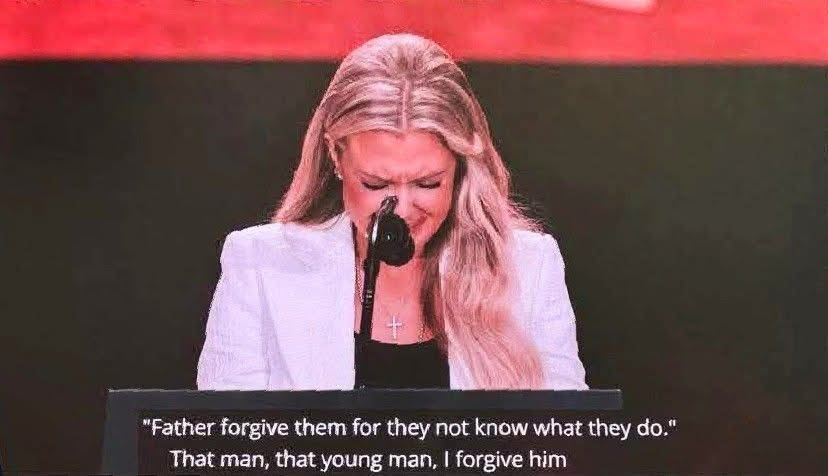
Erika Kirk  then addressed the crowds and uttered the impossible word,

“I forgive him…I forgive him because it was what Christ did, and it is what Charlie would do.”

“The answer to hate is not hate,” she said. “The answer we know from the gospel is love and always love – love for our enemies and love for those who persecute us.”

This is the message our polarised world needs to hear. I thank God that God has not judged me according to every word I have said and every thought I have entertained. I am eternally thankful to God that he forgives sinners such as me. And grasping this gospel does something to us, where Trump’s words disappear and where love and forgiveness take shape.

What is so sad and troubling is that I know our culture well enough to see how this is going to play out in the media and social media: most people will simply double down on their prior commitments and attitudes. People are so entrenched in their ideological preferences that we will read the room as our glasses are glued onto our faces, and we are unable to see any other perspective. MAGA supporting Aussie conservatives will criticise me for my posture here and progressive Aussies will criticise me for not damning Charlie Kirk to hell alongside the President. 

Reality is almost always more complicated and nuanced. One does not need to elevate Charlie Kirk to the status of Stephen (Acts 6) or label him ‘ult right’. The Christian truth is that sinners are saved by grace alone on account of the perfect sacrifice of Jesus alone. Anything else is hubris.

Here is a thought: regardless of our political leanings, if God uses the gospel preached at Charlie Kirk’s funeral to convince some people of God’s saving news through Jesus, will we rejoice or will we resent & grumble like Jonah in Ninevah?
Can 2020 get any worse?

Can 2020 get any worse? Of course, no one yet knows the answer to this question, but an announcement made by the Prime Minister today is certainly ominous. The ABC headlined the news with “If Morrison’s defence strategy sounds like war talk, that’s because it is

There hasn’t been a year like it since the 1940s.

In Australia, we started the year with the worse bushfire season on record and with much talk about Climate Change. These were soon laid aside as the reality of COVID-19 became a worldwide pandemic. This virus soon created another plague, that of economic uncertainty, the staggering accumulation of rapid national debt, and a million jobs gone. No one knows when this pandemic will end and what the final toll will be, the human, social, and economic costs.

As the country begins to loosen restrictions, Victoria has experienced a sudden surge in COVID-19 cases, with Premier Andrews forced to shut down 10 postcodes in Melbourne. Other State Premiers have warned their people to stay away from Victoria and borders are being closed to keep Victorians away.

One month ago, in response to the shocking murder of George Floyd in Minneapolis, protests erupted across the United States, and even here in Australia. While much progress has been made since the days of old when the White Australia policy was in place, and since the horrific treatment toward Indigenous Australians when they were excluded from citizenship, when families were ripped apart, and the silent screams of aborigines who were massacred throughout the 19th Century. Much work toward reconciliation has taken place, but we have been reminded that racism has not been fully defeated. These stories continue to make the news each day.

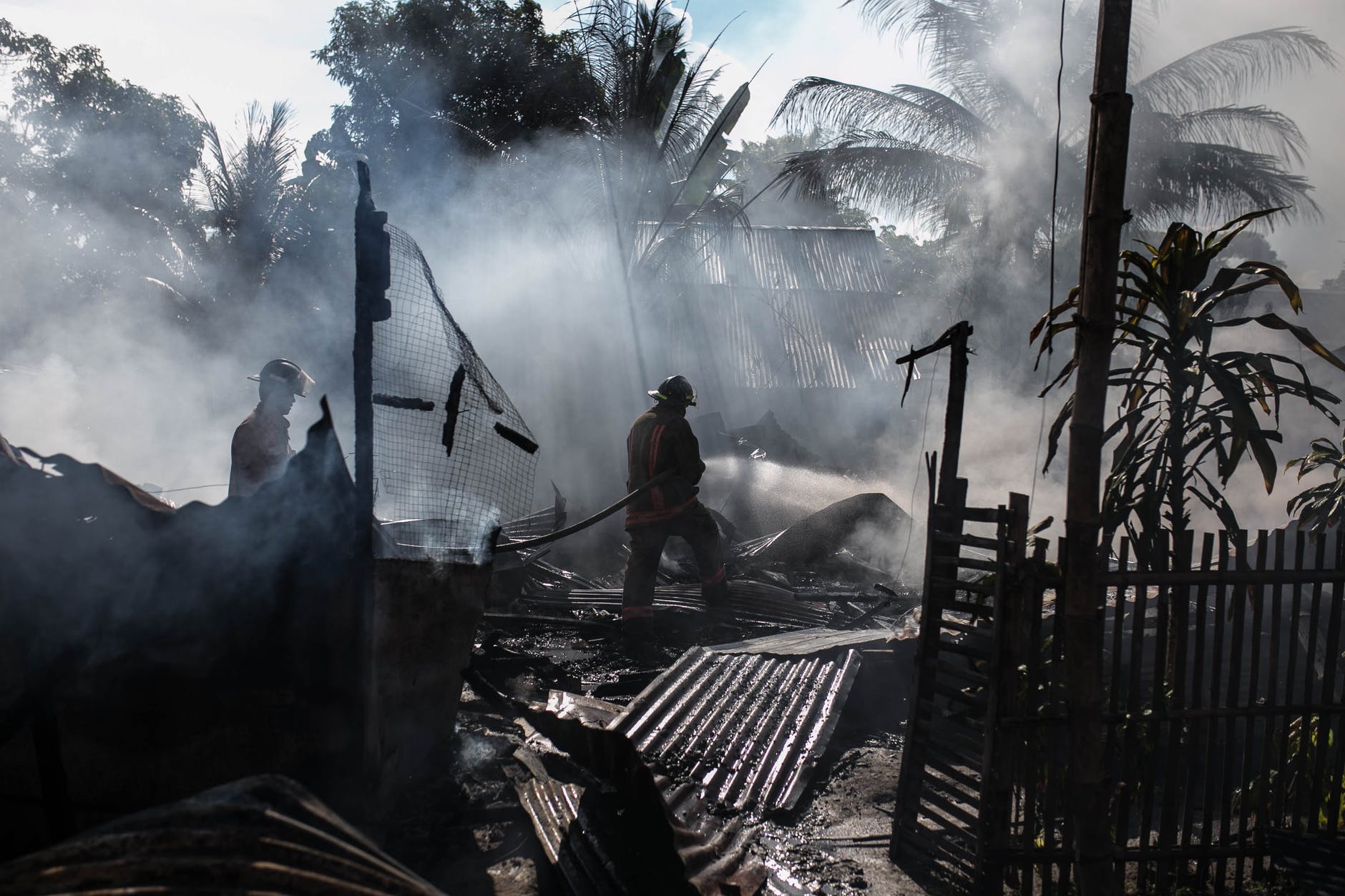
silhouette of fireman holding hose

Photo by Denniz Futalan on Pexels.com

Somewhat caught behind these news items, but still present and making news, is each new chapter of the rapidly changing sexual revolution. In particular, the transgender movement which is requiring total allegiance and the automatic cancelling of anyone daring to question their dogma.

Today, July 1st marks the halfway point of this unforgettable year. On this day our Prime Minister, Scott Morrison, made a major announcement regarding an issue that is still not receiving the public attention that it requires. The PM gave a rare and important address regarding the Defence of the country. Last week he informed Australians about a significant cyber attack on Government departments and Australian businesses by a foreign State. He has increased funding for cyber defence by $100s millions. Today he announced  a$270 billion investment for our military, including long-range missiles. This is a direct response to the growing geopolitical threat posed by China.

I’m not surprised. For some time, Defence experts have been warning the Government of the growing danger of Communist China. A defence white paper was given to the Prime Minister of the time, Malcolm Turnbull, outlining strategic necessities for Australian defence against China. Peter Jennings, who is the Executive Director of the Australian Strategic Policy Institute in Canberra, has repeated warnings about Australia’s lacking defensive capabilities and unpreparedness for a China who is hungry for power.

Several weeks ago I wrote a piece detailing 6 ways the world may change as a result of COVID-19. My third point was about China. It’s worth revisiting some of the details. I suggested,

“China’s role in covering up the true extent of the Corona Virus and their influence over the World Health Organisation (WHO) is far from the worst of it. 1 million Uyghurs remain locked away in ‘education’ camps in northwestern China, Christian Churches are continually oppressed and Christians arrested, and there is China’s growing interference in Hong Kong and their military expansion in the South China Sea.”

Since then, China’s Communist Government has taken further measures to take control of Hong Kong.

Niall Ferguson is the Senior Fellow at the Hoover Institution at Stanford University. In December of 2019, he argued that a new Cold War had begun

“Something [else] changed in 2019. What had started out as a trade war — a tit for tat over tariffs while the two sides argued about the American trade deficit and Chinese intellectual property theft — rapidly metamorphosed into a cluster of other conflicts.

In short order, the United States and China found themselves engaged in a technology war over the global dominance of the Chinese company Huawei in 5G network telecommunications and an ideological confrontation in response to the abuses of Uighur Muslim minorities in China’s Xinjiang region, as well as a classic superpower competition for primacy in science and technology. The threat also loomed of a currency war over the exchange rate for the Chinese yuan, which the People’s Bank of China has allowed to weaken against the dollar…”

The Prime Minister’s announcement today will probably send shivers down the spine of many Aussies and create an audible backlash from others; I think the decision is a sensible one. This significant increase in defence spending doesn’t heighten the dangers around the Indo-Pacific, rather it highlights the already alarming situation. The reality is, “we are not witnessing the awakening of a sleeping giant panda, but a dragon.” 

“For the most part, Australia has, alongside many countries, tried to benefit from and also feed a China hungry for economic and political expansion.

You don’t placate a bully, you stand up to them”.

When history books are written in 50 years time, of the myriad of issues faced this year, it probably won’t be the bushfires or race protests or transgenderism, or even the pandemic that will feature; the story will be China.

If a new cold war hasn’t already descended, it should be clear by the falling autumn leaves and the dropping temperature that winter is coming. These next few years will be pivotal in determining how cold or how hot this economic and geopolitical standoff will become.

As we enter the second half of this strangest of years, I’m praying that Australians will wake up and understand that what we assumed was normal and secure isn’t so certain and reliable. We need to anchor life and hope in something better than the health and prosperity that we’ve been gorging on for so many decades.

“Is not life more than food, and the body more than clothes?” (Matthew 6:25) 

At the same time, as a Christian, I’m comforted by the words of Jesus,

 You will hear of wars and rumors of wars, but see to it that you are not alarmed. Such things must happen, but the end is still to come. 7 Nation will rise against nation, and kingdom against kingdom. There will be famines and earthquakes in various places. 8 All these are the beginning of birth pains. (Matthew 24:6-7)

These words don’t diminish the existential realisation of such events. But God is not surprised. For 2,000 years Jesus’ words have been accessible but not always believed, read but not always grasped. We should not be alarmed or surprised by events that take hold of people, nations, and the natural world. We can be appalled and grieve these sharp reminders of a world that is cursed and cannot redeem itself. Alarmism, however, isn’t befitting for the one who trusts in a God who is Sovereign.

What we are experiencing in 2020 is a massive doss of what millions of people around the world regularly experience, and what many past generations have also lived through. What is new, is perhaps the legion of major issues now facing us and perhaps also the lack of political and social will to deal with some of them.

Jesus adds, during this eschatological season, the Church has a mission and it remains unchanged,

“And this gospel of the kingdom will be preached in the whole world as a testimony to all nations, and then the end will come.” (v.14)

The hope of the nations is this Gospel of Jesus Christ, the one who died and was raised to life. I wonder, do our churches still believe this? No Government or superpower has a weapon of such power in their arsenal, such that the dead can be raised to eternal life. Churches, be clear about the Gospel. Be committed to preaching this Gospel, because nothing else can save us from hell to come.

Racism, Protests, and our faith in Christ: a letter to my church

“Turn from evil and do good;

    seek peace and pursue it” (Psalm 34:14)


Screen Shot 2020-06-05 at 2.41.20 pm

Dear Church,

I have never written an email of this nature to you before. I do so out of love for you all and also love for our neighbours.

I understand that among us there will be different reactions to the events transpiring in America this week, and there will be varied thoughts about how to respond.

As a church, we, of course, hold substantial agreement on account of our union with Christ. We confess Jesus is Lord. He is the One Saviour of the world. Together we affirm all human beings are made in the image of God and all are therefore equal before him and have inherent worth. We affirm that racism is anti-Christian, anti-God, and is destructive to society.

This week we are being reminded of how highly charged and partisan our societies have become. In the name of ‘love’ and ‘truth’ too many people have given up love and truth and instead turned on one another. Sadly, cultural movements often have the effect of dividing rather than uniting. We need to resist those temptations and false binaries, both in the church and as we live in the community.

There is a mass protest being organised in Melbourne city this Saturday, to support ‘Black Lives Matter’.

As your pastor, while recognising our freedom both in Christ and in the State to voice our concerns, I want to draw your attention to the following important points:

  1. In the State of Victoria, there remain strict laws enforcing social distancing and limiting meeting in large numbers, both indoors and outdoors. COVID-19 remains a health issue in our society. Both the Federal and State Governments, and the State Police are urging Victorians not to attend because of the COVID-19 situation
  2. Authorities have issued a warning, informing the public that there are protesters planning to incite violence and disorder.
  3. The organising group behind this particular city protest (Warriors of the Aboriginal Resistance) does not recognise Australia’s legal system and has called for the dismantling of Australia.

I’m not arguing against the principle of public protest, nor am I telling anyone what they should or should not decide. I personally don’t think protests and marches are the best way to argue a point. But I acknowledge that there can be value for this kind of social action. I have friends who have participated in different protests in the United States in recent days, and many who have not and yet they are very much grieved by the events in Minneapolis last week. It is incumbent upon each of us to make decisions that are appropriate and reflect love for neighbour and that don’t dishonour the Lord Jesus in any way. 

To anyone planning to protest this week, know why you protest and understand your aim. If you are joining with others, know why they are protesting and what they are aiming to achieve.

We can stand against racism and not join this particular protest at this time. You might like to post a statement or prayer on social media to express our belief in the dignity of Indigenous Australians or call for greater measures to tackle the terrible numbers of Aboriginal people who have died in custody since 1991. You could post appropriate Bible verses.

When restrictions are lifted then perhaps organise an appropriate event: a prayer vigil, or prayer walk, as I’ve seen Christians doing in the US this week.

I’ve just heard Mike preach on Psalm 34, which was recorded for this Sunday. I encourage you all to listen on Sunday; it is a good and timely word. We want to be focused on God, we want his word to direct our motives and attitudes and thoughts. Even as a church where we agree racism is evil, we may want to respond in different ways. Be gracious to one another when we talk and share. Be prayerful. Find ways to love your neighbour: welcome them into your home, speak a kind word, ask them how are they doing.

We want to avoid the danger of falling into popular narratives from the left and from the right. Instead, our identity and our lives are now defined by the Gospel of Christ; this is what it means to be Christian. Therefore, let our motivations, words, and actions promote this good news. Doing so doesn’t make our voice weaker, it is more powerful and attractive.  It allows us to grieve with those who grieve,  to express anger for those who are trodden on, to forgive, and to know God will do right. 

“The eyes of the Lord are on the righteous,

    and his ears are attentive to their cry;

but the face of the Lord is against those who do evil,

    to blot out their name from the earth”. (Psalm 34:15-16)

The Paradox of the Cross

This headline appearing in The Age caught my attention, ‘Bad weather in Victoria is a “blessing” for social distancing’.

“Victoria’s Deputy Health Officer Dr Annaliese van Diemen called the bad weather over the Easter Weekend a “great blessing” in keeping people at home.

She said there were only four reasons people should be going out: food and supplies, medical care and care giving, exercise and work or education and that police would be out in force issuing fines.

“Chocolate can be considered a food and can be sold in supermarkets, people are allowed to leave home to get food and essential supplies,” she said.”

Leaving aside the apparent argument over whether chocolate should be considered a food, there’s little disputing the fact that the weather in Melbourne has deteriorated over the Easter weekend. It’s been raining, the wind is blowing, and the Autumn cool has arrived.

MentoneBaptist Church easter

It wasn’t the predictability of Melbourne’s unpredictable weather that grabbed my attention, but the intentional paradox made by Victoria’s Deputy health officer: our “bad” weather is a “blessing”.

This partnering of bad and blessing, and especially the bad being the cause of something positive, cuts against the logic of how we usually think of life. We readily assume that bad is the opposite of blessing, and with good reason.

However, Dr van Diemen’s words are a timely illustration of the paradox that belongs to Easter. The days leading up to and including Good Friday can be aptly described as bad. Indeed, it was truly horrendous. Jesus was innocent of all wrongdoing. The judge at the trial, Pontius Pilate, declared the Nazarene’s innocence. It was said that Jesus was the Son of God, a claim that Jesus himself attested to throughout his life, and yet he was now being ridiculed as a heretic and as an enemy of the State.

Good Friday was truly awful: the crucified one was the one without sin, the one who offered perfect love, kindness, and compassion, the one who didn’t play games with the rich and influential but who sought out the poor and the weak and welcomed them. The most holy man to have ever walked the earth was put to death in the most gruesome way imagined, slowly, deliberately, and to cheers and applause of those looking on.

It was bad and yet it was also a blessing because the Bible explains that Jesus’ death was not him losing, rather it was God bringing about a decisive win over death and evil. The cross recognises the naked reality of human corruption and enduring love of God who was paying the penalty in our stead. The Old Testament speaks of anyone hanging on a tree as being cursed by God. As Jesus announced in his cry of dereliction, Jesus willingly endured that curse on the cross so that we might experience the undeserved blessing of God.

Peter, one of Jesus’ disciples, summaries this paradox in this way,

“He himself bore our sins” in his body on the cross, so that we might die to sins and live for righteousness; “by his wounds you have been healed” (1 Peter 2:24).

In his death, Jesus was taking the justice of God that is aimed at all the injustice in the world. The blessing or good news of Jesus’ death is that it means guilty people are forgiven, broken people can be healed.

The world cries out for the paradox: for justice and for mercy, to punish wrongdoing and yet also to forgive.

As Melbourne theologian, Dr. Michael Bird suggests,

“The proclamation of the cross sounds like folly to many, when in fact it is God’s wisdom.

What looks like powerlessness is God’s power.

What sounds like a tragedy is stunning victory. The death that looks so shameful has established God’s honor.

What appears as a cause to mourn is a cause for inexpressible joy.

God has triumphed in the cross of Jesus, and we share the triumph with him.”

Easter is the most significant of all Christian celebrations, for it marks the beginning of all Christian hope. The cross and resurrection of Jesus Christ is God’s answer to the greatest paradoxes, tensions, and hopes that we share. It is why the good news message of Jesus remains compelling and why it is cherished by so many millions of people to this day.  It is not a message however for those who think highly of themselves and who count their morality or spirituality as wise and strong. This is a message for people who grasp their unworthiness before a holy God and yet who become convinced that, through that weekend in Jerusalem almost 2,000 years ago, God is more forgiving than we can possibly imagine.

As we remain indoors this Easter weekend, perhaps we can take time to ponder this most astonishing of paradoxes.