The new Archbishop of Canterbury, Sarah Mullally, gave her first sermon in the new role.
How was it? Were there glarring omissions?
Click on the link…
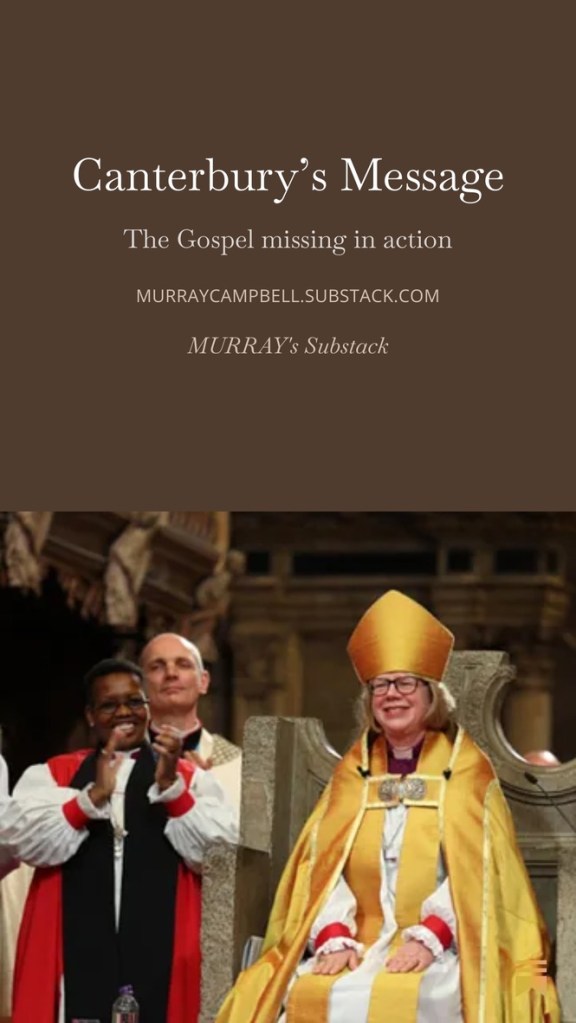
The new Archbishop of Canterbury, Sarah Mullally, gave her first sermon in the new role.
How was it? Were there glarring omissions?
Click on the link…
A pilgrimage to Canterbury or the ‘Pilgrim’s Progress’.
Click below for my latest substack
King Charles flew to Rome to pray with Pope Leo. As reporters are headlining, this is big news.
The BBC is making a splash,
“King and Pope make history by praying side by side
King Charles and Pope Leo made history in the Sistine Chapel by praying side by side – a first for the leaders of the Church of England and the Catholic Church.
Under the scrutinising eyes of Michelangelo’s Last Judgment, when Pope Leo said “let us pray”, it meant everyone, including the King, closing a gap that stretched back to the Reformation in the 16th Century.”
SBS,
‘Healing of history’: King Charles and Pope Leo pray together in 500-year first’.
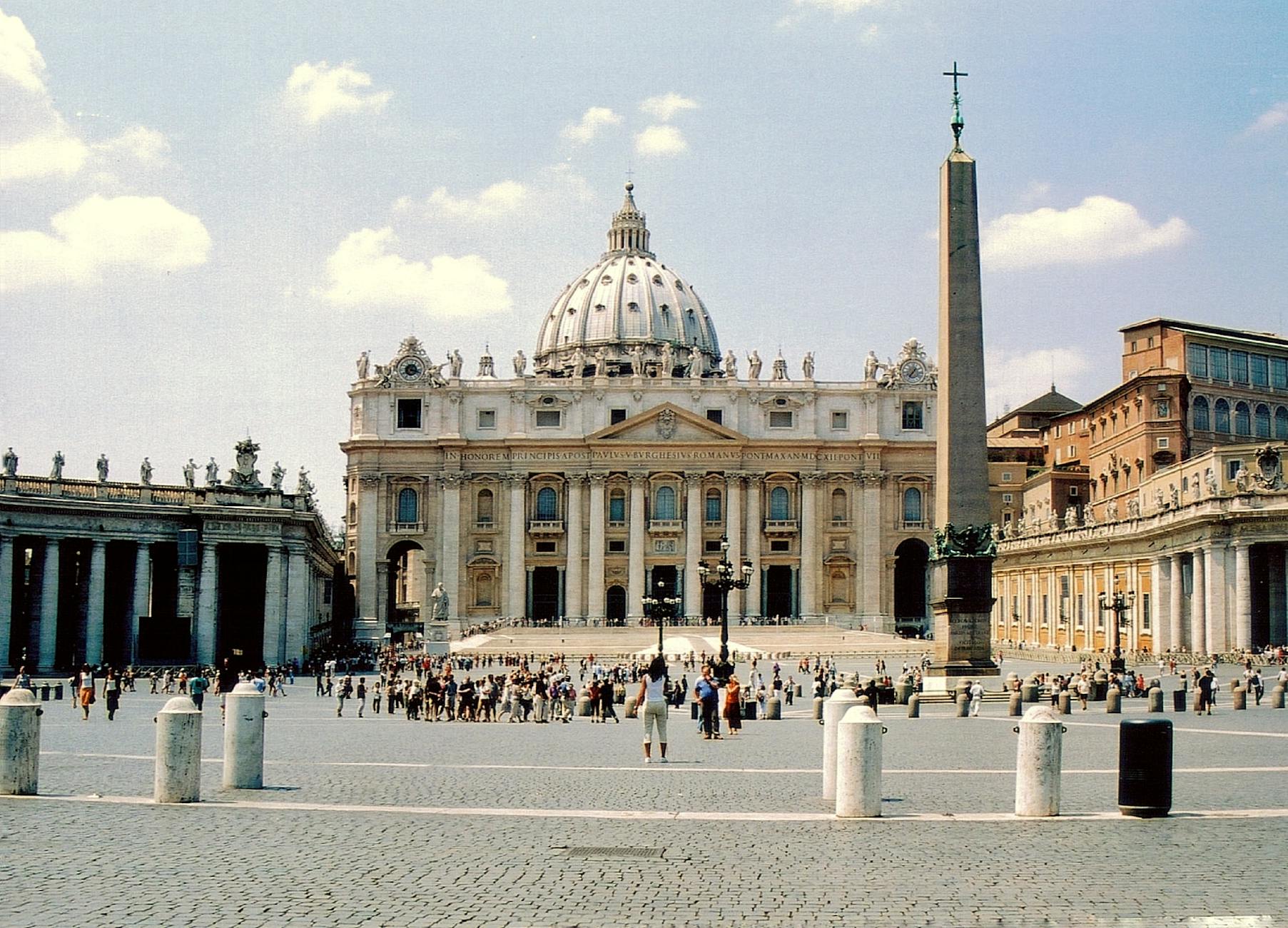
This is the first occasion in 500 years that an English monarch has so publicly aligned with a Pope. The public prayer meeting hasn’t been lost on the media or by Christians worldwide. Despite the historic nature of this meeting, it’s unsurprising, given that the ecumenical King is married to Queen Camilla (who has strong familial links with Roman Catholicism), a step that itself moves history a little closer to its medieval past.
You may be wondering, why is a Baptist interested in this affair? Fair enough. Good question. We live in a global community, and I belong to a Christian denomination and am a child of the Reformation. No doubt many readers are pondering the significance of this public display by the King and Pope, and so sometimes the ‘outside’ voice has more liberty to make observations than those close to the crown and zucchetto. The King of England praying with the Pope is news, even if it has zero impact on what happens this Sunday at church. It may do little to change what happens on Sunday, but the step has symbolic power. Symbols have a habit of punching the air and giving credence to ideas. Should the Church of England one day return to Rome? Will the divorce be followed by a wedding?
Whatever this union symbolises, the King and the Pope praying is paradoxical for 2 obvious reasons: the historical theological divide and the new theological divide.
A history of irreconcilable difference.
The very doctrines and spiritual abuses that led to the Reformation, from Germany to England, haven’t been relinquished by Rome. Indulgences remain widely practised. Rome continues to believe in 7 sacraments. The view that salvation and forgiveness of sins require effort and merit on behalf of the sinner is a hamstring injury that persists to this day.
Over the 500 years since the reformers sought to purify the church in teaching and life, the Roman Catholic Church has doubled down and expanded in its theologising. For example, 1964’s Second Vatican Council, Lumen Gentium 16, states that salvation is given to the anonymous Christian, the person who doesn’t believe in Jesus the Son of God and yet is redeemed. This teaching was upheld by Pope Francis.
It would be a wonderful sight to one day see Rome throwing off the magisterium and for genuine spiritual unity to be found in the one Lord of the church and by his Spirit. After all, the Apostle Paul spells it out for us in Ephesians ch.4,
‘There is one body and one Spirit, just as you were called to one hope when you were called; one Lord, one faith, one baptism; one God and Father of all, who is over all and through all and in all’.
And yet, this is not the situation before us today. The differences between Rome and Canterbury are substantial and primary. Sure, there is also common ground, but does this denude the division over how sinful human beings can be redeemed and given assurance of right standing before God?
So what is the King of England trying to achieve by visiting the Vatican and coming together with the Pope in prayer?
What political statement is being made?
What kind of theological statement are the two heads suggesting?
It is a strange sight.
I imagine Thomas Cranmer rolling in his grave in search of a flame to thrust in his right hand, if he were there, and Ridley sighing with frustration. Hugh Latimer’s dream became a reality, and we can dream again, ‘Be of good comfort, and play the man, Master Ridley; we shall this day light such a candle, by God’s grace, in England, as I trust shall never be put out.’
Maybe this is the point, albeit unbeknownst to the orchestrators of the King’s visit. The candle has not gone out: the UK is witnessing a resurgence of Christian interest and London churches are growing…except where the Church of England who with decision and pageantry, blew out the candle in Canterbury.
The timing of King Charles’ visit to the Vatican to pray with Pope Leo is perhaps perfect. Within weeks of the Church of England giving up on the Christian faith (thanks to the appointment of the new Archbishop of Canterbury), the head of the Church of England flies to Rome.
Old divisions remain formally and substantially, and there is a new divide.
A new divide
Before I point out the enormous elephant standing next to the King and the Pope in the Cistine Chapel, let me clarify, I love my Roman Catholic friends. There are many Roman Catholic brothers and sisters around the world who believe the Gospel and love Jesus, and with whom we may pray and share in common. Rome in the 16th Century may have designated the Reformers as heretics, but the likes of Martin Luther and Jean Calvin saw Rome as a genuine but very sick church.
Also this, when it comes to the Church of England, there are many faithful and amazing Parishes across the UK, and many, many faithful Anglican churches around the globe, including Australia and here in Melbourne; praise God. The Anglican Communion has, however, shifted. The seat of Canterbury is broken thanks to the ‘Living in Love and Faith’ offering and appointing one of its chief architects, Sarah Mullally, to be the new Archbishop.
It is with this issue that a new chasm between Rome and the CHurch of England has opened up. On this matter of human sexuality and marriage, there is a fundamental disagreement between Rome and the Church of England. Canterbury has bent the knee to the cultural zeitgeist. Indeed, on this and many ethical subjects, Rome has proven more resilient than those Protestant denominations that continue to perform to the crowds, hoping for appeal and applause. Let the lesson be learned: if our theological preferences change according to seasonal cultural winds, it is only a matter of time before your church blows down!
I suspect this is one reason why young people in the West are as likely to be drawn to finding a home with Rome as they are in the local Church factory or Saint Bob Anglican.
In the last 5 years, the tissue-thin screen veiling the new atheism has been removed, and the Wizard of Oz is nothing more than a scrawny man holding a megaphone and shouting, ‘There is no God’. 50-year-old middle-class Melbourne may be stuck on this Spotify playlist, but younger generations know better. People know instinctively that there is something real and important beyond this material world. We need it to be, because God knows, life gets pretty miserable without Divine forgiveness and hope. Take away God, and we have 8 billion people pretending there is commonality and trying to figure out a reason why brute power shouldn’t win the day.
Of course, in the search for God, one of the mistakes we can make is to think that if it looks and smells old, it must be the real thing. I say, don’t judge a church by its smell! The Reformers were right. Does a church believe, read and teach the Bible? Do they worship the Triune God? Do they believe in the sufficiency of Christ’s substitutionary atonement death? Do they affirm the physical resurrection of Jesus? Are they denying or adding to the One Gospel? If we can tick these boxes, then they are the real church where God dwell by His Spirit.
Part of the search for God is the persistent and right need for security and substance. We see an aged wineskin and assume its contents are priceless. As a Christian minister, I want to argue that true security and substance is found in Christ and his sufficient Gospel. This idea isn’t new and novel; the Reformation rediscovered these precious truths: justification by grace alone through faith alone in Christ alone. It is, in fact, a Bible idea. If you’re looking for new old, go to the Scriptures!
Two great errors can be committed by a Church. One is to take away from the gospel in the search for relevance, and the other is to add to the gospel. In my view, the Church of England has chosen the former, and Rome, for too long, is persisting with the latter.
Religion can be bewitching. When we catch a whiff of permission giving, we feel liberated to mould God into our own image. At the other spectrum, rules and traditions provide a temporary ballast, and yet both miss the point of Jesus. That makes this meeting between King Charles and Pope Leo both fascinating and superfluous. The power of the Gospel is found in towns throughout Nigeria and in house churches across China, and in the cities of Brazil and the suburbs of Sydney and Melbourne.
Our Bible text this Sunday is a really helpful explainer. It’s not a short read, but if you’re interested in what the Apostolic testimony has to say, it’s worth following the Apostles’ logic from beginning to end. Have a read,
“Who has bewitched you? Before your very eyes Jesus Christ was clearly portrayed as crucified. 2 I would like to learn just one thing from you: Did you receive the Spirit by the works of the law, or by believing what you heard? 3 Are you so foolish? After beginning by means of the Spirit, are you now trying to finish by means of the flesh? 4 Have you experienced so much in vain—if it really was in vain? 5 So again I ask, does God give you his Spirit and work miracles among you by the works of the law, or by your believing what you heard? 6 So also Abraham “believed God, and it was credited to him as righteousness.”
7 Understand, then, that those who have faith are children of Abraham. 8 Scripture foresaw that God would justify the Gentiles by faith, and announced the gospel in advance to Abraham: “All nations will be blessed through you.”9 So those who rely on faith are blessed along with Abraham, the man of faith.
10 For all who rely on the works of the law are under a curse, as it is written: “Cursed is everyone who does not continue to do everything written in the Book of the Law.” 11 Clearly no one who relies on the law is justified before God, because “the righteous will live by faith.”12 The law is not based on faith; on the contrary, it says, “The person who does these things will live by them.” 13 Christ redeemed us from the curse of the law by becoming a curse for us, for it is written: “Cursed is everyone who is hung on a pole.” 14 He redeemed us in order that the blessing given to Abraham might come to the Gentiles through Christ Jesus, so that by faith we might receive the promise of the Spirit.”
Correction: The original suggested that Queen Camilla is Roman Catholic. That is not the case. What is the case is that Her Majesty’s first marriage was to a Roman Catholic, and her children are Roman Catholic.
My teenage daughter has an eye for noting desperation. She perceptively sees through attempts by adults to make Christianity cool, relevant and whatever adjectives are now used among Gen Z. Whether it is the band playing like U2 or the preacher dressing like he’s vying for Vogue, my daughter is able to spot a try-hard attempt from a mile away.
It turns out that the Church of England is turning to the British public for assistance in choosing the next Archbishop of Canterbury. The BBC reports,
“The public is being invited to suggest candidates for the next Archbishop of Canterbury following Justin Welby’s resignation…The Church said the consultation, which runs until 28 March, was “an opportunity to gather the views of a wide range of people from across England and the Anglican Communion on the gifts, qualities and skills needed” for the role.”
How does it look when the British public is asked who’d they like as the next Archbishop of Canterbury? I wouldn’t be surprised if they nominated a man named Rowan (no, not the former Arch Druid, I’m referring to Atkinson). After all Rowan Atkinson has played the role of the archbishop before on stage.

To preempt what some readers are thinking, yes, there are already issues with the traditional process where the Government and King are involved. But this latest attempt takes ‘try hard’ to a new level.
Is the Archbishop of Canterbury a popularity contest? Is this one of those pop idol shows where you send in a text and vote for your favourite?
Does the public even know what the biblical requirements are for Church leadership? Is the public familiar with Christian doctrine? Does the average Brit prefer to have church leaders who believe and can teach such doctrine? Can you imagine the everyday Britt wanting to uphold Christian ethics and where there’s an Archbishop who believes in marriage and godliness in sexuality? Yeah, neither can I.
Either the establishment cannot find a suitable candidate (which wouldn’t surprise anyone given the current college of bishops) or some marketing guru thought, ‘I know what will make the Anglican Church great again, let’s run a popularity contest’. Populism might work in the political world but it’s a certain path to irrelevance for a church. Character really does matter. Believing the Bible and holding to classical Christian teaching really does matter.
Of course, if choosing church leaders is akin to who has the biggest Instagram following, then Jesus would have zero chance. Remember, what happened when God the Son came to earth? People conspired against him and had been crucified.
Even a quick read through the Bible will tell us that it is the responsibility of the church to appoint from their own, a man who is qualified. The Church, not subbing out to politicians and everyone stuck in the London tube during peakhour.
The Apostle Paul on one occasion gave Titus instructions to appoint elders (same as bishop or pastor) in local churches. Here’s what he had to say,
An elder must be blameless, faithful to his wife, a man whose children believe and are not open to the charge of being wild and disobedient. Since an overseer manages God’s household, he must be blameless—not overbearing, not quick-tempered, not given to drunkenness, not violent, not pursuing dishonest gain. Rather, he must be hospitable, one who loves what is good, who is self-controlled, upright, holy and disciplined. He must hold firmly to the trustworthy message as it has been taught so that he can encourage others by sound doctrine and refute those who oppose it.”
Can such a man be found in all of England? Yes, there are many, and likely members of non-establishment churches. There are also, like in the days of Elijah, within local Church of England parishes, men and women of character and who will defend the truths of the faith. I know of many, although they’ll never get a look in. Why? The Bishops have set their course and an unbelieving public will have little interest in nominating anyone other than a prophet who preaches their own preferences. And that, of course, only reinforces why the public is disinterested and the pews are emptying. Why bother with church when I can hear the same hopeless message at uni or at this week’s Grammys?
May God have mercy on the Church of England. May he bring repentance and raise up a leader whom they do not deserve and yet desperately need. At stake is a lampstand, let the reader understand.
——————-
4th October Postscript: Dame Sarah Mullally has been appointed as the 106th Archbishop of Canterbury. Her service in the public health sector is widely recognised. Her spiritual and theological commitments follow the current trajectory of the Church of England. Rather than being an appointment that can bring healing and restoration of the Gospel and faithfulness to the word of God, Mullaly’s views on Scripture, Church and human sexuality will only exacerbate the divide. May the Lord have mercy.
Westminster Abbey is England’s storyteller, and indeed, perhaps that of 1000 years of Western Civilisation. The stone floors and walls, her columns and stained glass windows are filled with the memory of the world’s timeline since that of Edward the Confessor. Every corner of the naive from floor to wall, is covered in the markers, statues and tombs of Britain’s greatest. There are Kings and Queens, soldiers and poets, scientists and Prime Ministers honoured and remembered.
The Abbey is an extraordinary place to visit, especially when the crowds are absent. I recall one evening I was there to attend a concert. Afterwards, people left hurriedly while I gave myself a few moments to look up and gaze upon this giant memorial to the past. I found myself able to then walk down the Abbey without people brushing passed and interrupting the silence with nagging little chatter. There is something weird and wonderful about walking on stone and marble where Edwards and Elizabeths, Richards and Henrys once trode.
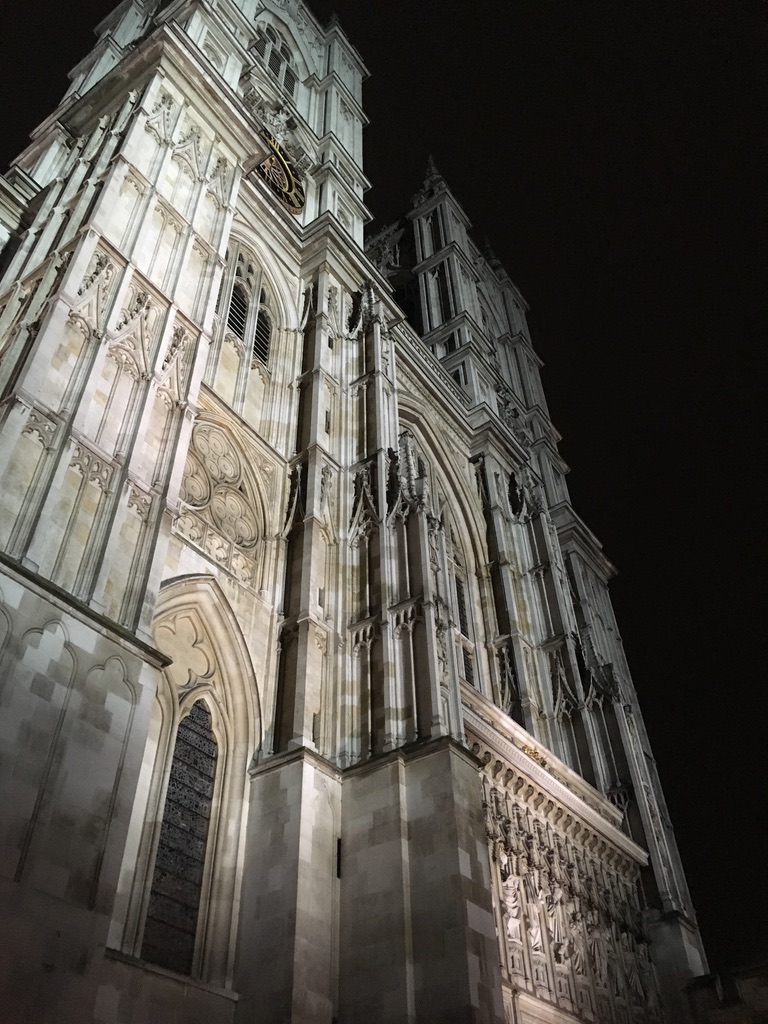
The coronation of a British monarch isn’t an everyday event. It has been 70 years since the last British monarch received the sceptre and crown at Westminster Abbey. The coronation of a King may no longer carry the political and cultural weight of centuries past, but the event remains to impress, inspire and unify.
There is a tinge of sadness tied to today’s coronation, for the new King reminds us of the death of the great woman, Queen Elizabeth II. Her death may well turn out to mark the end of an era; not only the divorce with the 20th Century and the end of the Empire (with all the ills and goods associated), but also the age of Western Christianity.
There is something awe-inspiring about pomp and circumstance. No doubt, there are republicans and complainers across Australia, and even inside the United Kingdom criticising the pageantry and tradition that will fill the coronation service of King Charles III.
While changes have been made to reflect multi-faith realities of 21st-century Britain, the service remains deeply Christian. For example, the coronation service takes place in a Christian Abbey, the very same place where English Kings and Queens have been crowned for nearly 1000 years. The Scripture readings and the prayers and the oaths are Christian in words and meaning. While there are some theological question marks over connections made between an English monarch and that of Kings David and Solomon, there is a right link established between God, the Lord Jesus Christ, and the rule of the new monarch. The King serves under God and serves the people under his watch.
There is something weirdly wonderful about this ceremony: from the music and liturgy to the symbols of State and the oaths, and the seriousness and awe that will envelop each moment. This service pushes our hearts and spirit beyond the ceiling and sky and makes us ponder heavenly realities.
In a rush to eradicate the centuries of police and traditions, we can lose something that is important for the present and our future selves. The paucity of the materialist frame is exposed and filled with the light of prayers and defining words of God and accountability to the One who rules from heaven.
“Therefore, you kings, be wise;
be warned, you rulers of the earth.
11
Serve the Lord with fear
and celebrate his rule with trembling.
12
Kiss his son, or he will be angry
and your way will lead to your destruction,
for his wrath can flare up in a moment.
Blessed are all who take refuge in him.” (Psalm 2:10-12)
I remember Stephen Mcalpine writing a piece some years ago, explaining why millennials are turning to more traditional forms of Christian worship. In the race to be contemporary and relevant, we too readily disconnect ourselves from the past and become the boat that’s lost its mooring. We need to place our souls and something in a schema that is bigger than just me.
Nick Cave is one of a few select Australians invited to attend the coronation. When news broke that Cave had accepted the invitation, some of his fans were bewildered and annoyed. They couldn’t understand why this super cool non-conforming rock star would attend what is about as traditional and conservative an event that will probably take place this year.
Nick Cave responded in an open letter,
This “will more than likely be the most important historical event in the UK of our age. Not just the most important, but the strangest, the weirdest”
I hold an inexplicable emotional attachment to the Royals – the strangeness of them, the deeply eccentric nature of the whole affair that so perfectly reflects the unique weirdness of Britain itself. I’m just drawn to that kind of thing – the bizarre, the uncanny, the stupefyingly spectacular, the awe-inspiring.
And as for what the young Nick Cave would have thought – well, the young Nick Cave was, in all due respect to the young Nick Cave, young, and like many young people, mostly demented, so I’m a little cautious around using him as a benchmark for what I should or should not do. He was cute though, I’ll give him that. Deranged, but cute.
So, with all that in mind, I am looking forward to going the Coronation. I think I’ll wear a suit.
Love, Nick
The true weirdness isn’t in the crowning of a man named Charles, but in the words of the Bible about The representative man to whom all Kings and Queens and people owe their allegiance. Strangeness meets realness in the man who was crucified and raised from the dead.
The true significance of King Charles’ coronation may well be found elsewhere, in Africa. In what is even more strange (in an amazing way) are the events that took place in Kigali Rwanda, only 3 weeks ago. The meeting place may have lacked the splendour of Westminster Abbey, and there were few monarchs, presidents and celebrities in attendance. However, that meeting will do more to reach the heavens and the earth, than the enthronement of King Charles III. While world media ignored this meeting of global Anglicans, with time I suspect it will have greater influence in the shaping of things to come. 1400 Anglican leaders, representing around 85% of worldwide Anglicans, declared that the Archbishop of Canterbury had lost his spiritual authority over the church. Indeed, all 4 instruments of communion were declared broken.
It is difficult to think of another event in the past 500 years that carries such importance in the Anglican Communion as the recent GAFCON meeting.
William Taylor of St Helen’s Bishopsgate (London) said,
“Canterbury has walked away”
Rico Tice from All Souls Langham Place stated,
“We really are serious…we are serious because this is a first-order salvation issue”.
During the ceremony, the King will be asked this question by the Archbishop of Canterbury,
“the Church established by law, whose settlement you will swear to
maintain, is committed to the true profession of the Gospel, and, in so
doing, will seek to foster an environment in which people of all faiths and
beliefs may live freely. The Coronation Oath has stood for centuries and is
enshrined in law.
Are you willing to take the Oath?”
The King:
“I am willing.”
His Majesty will take an oath to a church, that while is established in law, has divorced herself from the true profession of the Gospel on account of her bishops and their wayward teaching. Sadly, the Church of England has abandoned the faith once for all delivered, and the vast majority of global Anglicans no longer see themselves in communion with Canterbury.
But why mention such a contentious issue on a day like this? First of all, this is truly historic. Second, we are witnessing a shift of in the world but we mustn’t conflate the failure of Westminster with the demise of Christianity. I suggested last year that with the death of Queen Elizabeth, we are perhaps marking the end of an era in the beginning of something new. With her passing, we are probably witnessing the closure of the 20th century and British imperialism (with all the bad and good that came). More so, Her Majesty’s death may serve as a bookmark, signalling the shift from West to the 2/3s World, and with this, a work of the Holy Spirit that sees Christ’s Church ground firmly in the soils of Africa and grassland and jungles of East Asia.
The coronation of King Charles III will pound with echoes of eternal truths, but living faith in the living Christ is more likely found in unlikely places: in Kigali and Lagos, in house churches across China and Iran, and in the favelas of Brazil. And yes, even in the ordinary suburbs of Melbourne, Australia. To break the materialist glass ceiling and grasp. To find mystery and awe that meets real life, visit a local church and hear the greatest story.
A pandemic is not the time to begin showing love for fellow humanity, it is an important time for us to continue loving and caring and demonstrating solidarity. A pandemic, however, is not an occasion for lowering the bar on theological conversation and for confusing or conflating essential understandings of God.
Justin Welby yesterday tweeted something that no Anglican Archbishop or Christian leader should ever tweet. He has given us an example of how not to exercise religious ecumenicalism. He said,
“Pope Francis has called for a day of prayer for an end to the pandemic on 14th May, and a day of good works. People of all faiths are seeking God’s intervention at this time. Let us pray for God’s mercy, in the name of the Father, the Son, and the Holy Spirit. #PrayForHumanity“
I’m sure the tweet will go down like a treat among religious progressives who have already given up almost every distinctive aspect of Christianity.
I’m sure it’ll also be a hit among some irreligious types who think it’s fantastic that the religions of the world are leaving behind differences and are working together.
However, beneath this appealing facade is something dishonest and dishonouring to God. The Archbishop of Canterbury’s tweet was unnecessary, unhelpful, and untrue.

The problem isn’t to do with prayer or encouraging Christians from around to pray about the COVID-19 pandemic. Many millions of Christians around the world have been praying through this pandemic and will continue to pray. It is entirely right to pray, for God remains Sovereign over the world today. There is no event in the world, significant or small, that escapes his attention and concern. He is the God of whom the Lord Jesus said, “ Look at the birds of the air; they do not sow or reap or store away in barns, and yet your heavenly Father feeds them. Are you not much more valuable than they?”
The Archbishop of Canterbury’s tweet is going considerably further than encouraging Christians to pray to God. He appears to be adopting the position established by the Second Vatican Council toward world religions when as an Anglican (and Christian) leader he ought not. There are two key problems here: first, what are we suggesting by calling people from different faiths to pray together, and second, are people of all faiths praying to God?
My question is, what does the Archbishop of Canterbury’s message communicate to people about God? The fact that he ends the tweet with, “Let us pray for God’s mercy, in the name of the Father, the Son, and the Holy Spirit”, doesn’t make up for what he says earlier in the tweet. It’s almost as though he’s trying to appease Christians, hey this is what I mean by God: the Father, the Son and the Holy, while at the same time offering what is a best a murky statement about other religions and how they view God.
To begin with, what is Welby (and Pope Francis) communicating by the ecumenical call to prayer? When I invite someone to pray with me, I am signalling that there exists some spiritual commonality between us and that this union is adequate for us to share in this activity together. I am implying a spiritual union with the other person as we together address God. Justin Welby is calling for and therefore implying that we (regardless of faith) can share in the some spiritual activity together as though we are united in this task. However, do Christians share spiritual union with other faiths?
“Do not be yoked together with unbelievers. For what do righteousness and wickedness have in common? Or what fellowship can light have with darkness? 15 What harmony is there between Christ and Belial? Or what does a believer have in common with an unbeliever? 16 What agreement is there between the temple of God and idols? For we are the temple of the living God” (1 Corinthians 6:14-16)
People of different faiths have (or should have) freedom to exercise their views about prayer and to pray on any day they choose. But a Christian leader inviting and encouraging global prayer between religions suggests an alignment that is clearly discouraged in the Bible, and even forbidden.
Justin Welby has also suggested that “People of all faiths are seeking God’s intervention at this time.” By using the upper case for God it implies that all these religions are praying to a true and real God. That Welby uses the noun in the singular, suggests that we are all ultimately praying to the same God.
Does a man say to his wife, “well, so that I don’t make all these other people feel left out and call me mean words like ‘exclusionary’ and ‘bigot’, let’s have everyone join us in bed tonight”. By the way, that is one of Bible’s metaphor’s to describe how awful it is when we betray God.
Do people from other religions pray to the same God as Christians, or do their own version of god have merit such that these prayers are efficacious?
“Half of the wood he burns in the fire;
over it he prepares his meal,
he roasts his meat and eats his fill.
He also warms himself and says,
“Ah! I am warm; I see the fire.”
17 From the rest he makes a god, his idol;
he bows down to it and worships.
He prays to it and says,
“Save me! You are my god!”
18 They know nothing, they understand nothing;
their eyes are plastered over so they cannot see,
and their minds closed so they cannot understand.” (Isaiah 44:16-18)
I am not trying to establish the case here that the God of the Bible is real and living (although I am convinced he is), but that the Bible makes a sharp distinction between God and the rest. The teaching of the Second Vatican Council may give room for thinking all religions are somehow drawing toward the same God (it is from this Council that arises the current Pope’s predications toward religious pluralism and syncretism). However, neither the Christian Bible nor basic human reasoning can support this thesis. For example, Hindus believe there are millions of different gods, while such thinking is abhorrent to Muslims, Jews, and Christians who are monotheists. The Bible reveals one God who is Trinity: the Father, the Son, and the Holy Spirit. Both Muslims and Jewish people find this objectionable and irreconcilable. Indeed this is the case.
God was pretty clear when he announced the first two of the 10 Commandments,
“You shall have no other gods before me.
“You shall not make for yourself an image in the form of anything in heaven above or on the earth beneath or in the waters below. 5 You shall not bow down to them or worship them; for I, the Lord your God, am a jealous God, punishing the children for the sin of the parents to the third and fourth generation of those who hate me, 6 but showing love to a thousand generations of those who love me and keep my commandments. (Exodus 20)
God’s insistence on there being only one God continues throughout both the Old and New Testaments.
“I am the Lord, and there is no other;
apart from me there is no God.
I will strengthen you,
though you have not acknowledged me,
6 so that from the rising of the sun
to the place of its setting
people may know there is none besides me.
I am the Lord, and there is no other.
7 I form the light and create darkness,
I bring prosperity and create disaster;
I, the Lord, do all these things.” (Isaiah 45:5-7)
“For this is what the Lord says—
he who created the heavens,
he is God;
he who fashioned and made the earth,
he founded it;
he did not create it to be empty,
but formed it to be inhabited—
he says:
“I am the Lord,
and there is no other.” Isaiah 45:18
And it is Jesus Christ who has revealed God to us,
“All things have been committed to me by my Father. No one knows who the Son is except the Father, and no one knows who the Father is except the Son and those to whom the Son chooses to reveal him.” (Luke 10:22)
“No one has ever seen God, but the one and only Son, who is himself God and is in closest relationship with the Father, has made him known”. (John 1:18)
Not only does the Bible describe there existing only one living God, but his person, nature and attributes are unlike the many deities that have been suggested and worshipped through the millennia. For example, while some religions claim that their god(s) loves, only the Bible speaks of ‘God is love’.
I doubt if Justin Welby believes that all religions worship the same God or that other gods are capable of answering prayer. I suspect the Archbishop is simply trying to be careful with his words, and so avoid offending anyone. However, that is the problem. It’s one of the chief issues confounding Christianity in Western nations. We aim to be unclear on any Biblical doctrine that causes offence and we’re super keen to use catchwords that find common ascent and praise in the culture. We shouldn’t do theology in this manner and we certainly shouldn’t exercise prayer and religious activity in this way. Why add to peoples’ confusion about God? Why turn beautiful and vital Christian beliefs into sludge?
We love our neighbours and friends from other religions by treating them with respect and kindness, not by conflating their god with God, or pretending that we are somehow engaged in the same activity. We affirm to the death our shared humanity and imago dei, and we engage in gentle but robust conversation to persuade people about the truth and goodness and grace of Jesus Christ, but we do not play the game of ‘we’re all in the same family’. More importantly, we love God by honouring his name and nature and character as he reveals himself to be, not by cavorting with a religious version of illogical identity politics; that road ends in denying God’s unique being and qualities. If I wouldn’t treat my friends in such a way, why do we think it is okay to do with God?
 MurrayCampbell.net