Making too much and too little of the Federal Election: a Christian’s perspective

Today millions of Australians will wake up enthused and celebrating the outcome of yesterday’s Federal election. Many others will be despondent and even angry as the candidates of their preferred party lost.  To be honest, I suspect millions more Australians are waking up today with a degree of political indifference as they carry on making breakfast and figuring out how to pay their bills and care for their families and wondering how Carlton’s season ended up this way! A plethora of responses are understandable. For the Christian, who may also empathise with and see themselves at some place along this spectrum, there is one constancy. Psalm 146 famously says,

“Do not put your trust in princes,

    in human beings, who cannot save.

When their spirit departs, they return to the ground;

    on that very day their plans come to nothing.

Blessed are those whose help is the God of Jacob,

    whose hope is in the Lord their God.”

These words remain true, before and after the votes had been cast and counted.

 I understand that in quoting Psalm 146, some people might be a little annoyed and perhaps a tad angry,  especially among voters disappointed by the election result. I certainly don’t mean to sound unfeeling or facile, as though the election was unimportant. I happen to believe elections do matter because government plays a significant role in the life of society; controlling much power and influence. After all, Government is a legitimate institution that falls under the banner of God’s common grace. It may not be the main game, but government nonetheless plays an important supporting role. 

It is also the case that Government has less influence in setting the direction for society as it is about providing the legal, economic, and social mechanisms by which society moves in the direction that it is already preferencing. The old adage about politics being downstream of culture is complicated but still true.
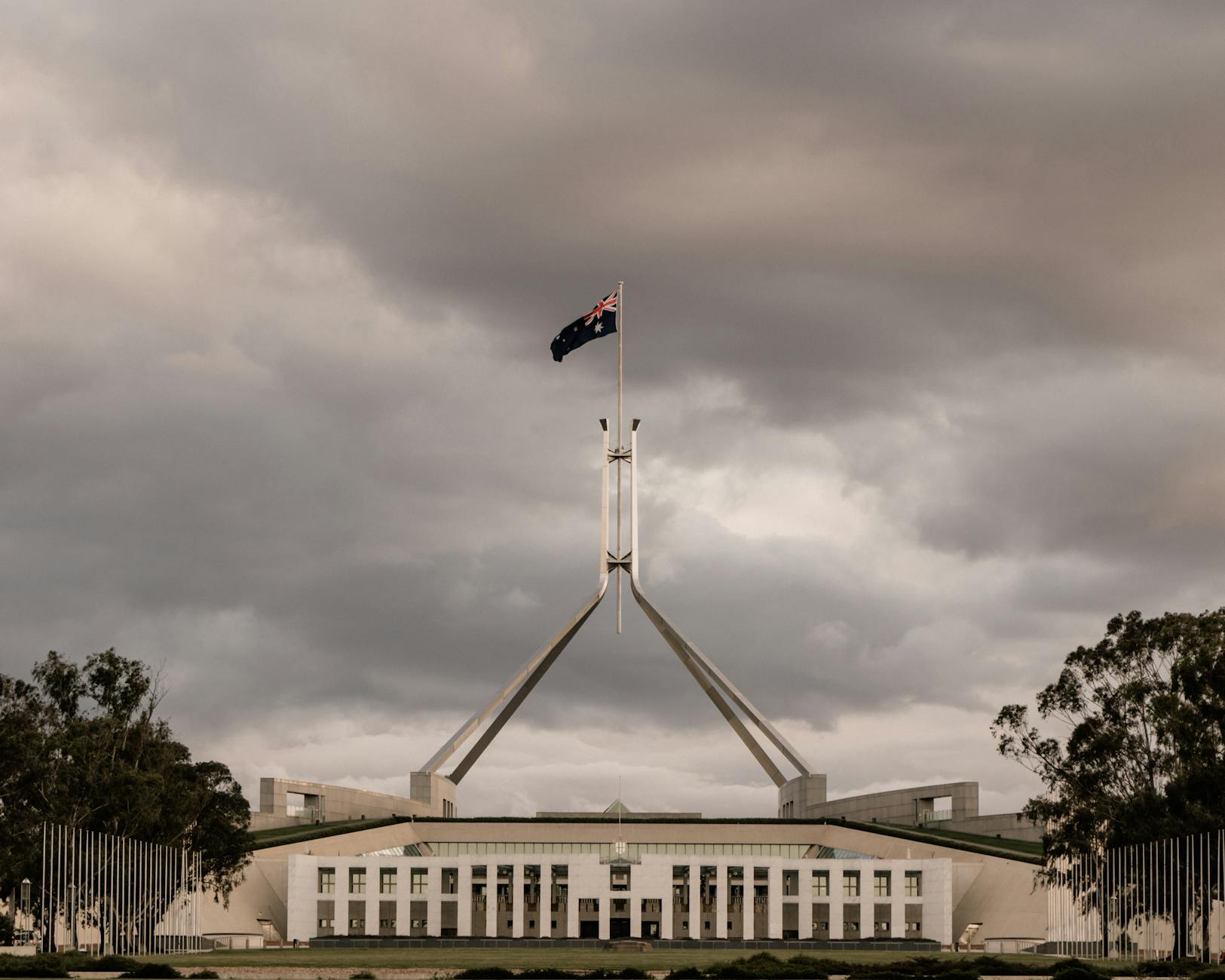
Photo by Josh Withers on Pexels.com

The reason behind sharing the Psalm 146 quotation is that I’m wondering if we are attaching too much responsibility on Government for fixing social ills and rectifying economic currents. This is true for both the left and the right of politics. Have we become too dependent upon Parliaments and MPs for addressing what was once the prevue of churches, synagogues, media, and an array of social organisations? If we have lost trust in those civil and religious institutions (which seems to be the case), faith in our governments is also in sharp decline. There lies perhaps some of our misplaced faith and therefore frustration and despair at the political scene. We are not meant to burden Government with all our hopes and demands and needs. A healthy society needs to spread that load. Indeed, a truly healthy society would not require government to create what we have in Australia: a society wrapped in red tape and wads of laws and rules stickier than gaffer tape.

There are better governments and worse; it’s rarely a zero-sum game.  I suspect there is also a deep suspicion of and discontent toward political parties across the spectrum. Sometimes it’s a case of choosing the least bad option available, or at least that’s how many voters are feeling: I don’t like this candidate, but at least they’re not the other candidates! 

How did we respond to the election at church today? This morning my church prayed for the new state government, as we do regularly for whoever is in charge at Spring Street and in Canberra. And we also prayed for our local representatives in Parliament. That’s what Christians do. It’s one of the few constancies in the unpredictable world of politics; churches pray for those in authority. To the reluctant among us, let’s consider it this way, if the Apostle Paul could pray for the Roman Emperor, then I think we can pray for our governments. 

We should pray for our political representatives because they carry significant responsibility. Given the platform that we build for our leaders (or scaffold as it may be), praying is the right thing to do. Of course, government isn’t the big game in town, but its role impacts life at every level and therefore great wisdom, patience, integrity and compassion are necessary.  

Without some kind of cultural reorientation, I suspect Governments will become bigger and bolder. It is interesting to see how Australians, or at least Victorians, have become more comfortable with authoritarian personality and politically styled governing. The myth of the convict, bushranger, and nonchalant Aussie digger may still exist in local sporting clubs, but as a people group, we are quite accepting of big government and monocratic-styled leadership. I’m not arguing a case either way here but simply noting the public trend.

Of course, my eyesight is myopic and so looking at the next 3 years is an imprecise art. There are, after all, no more prophets! My guess is that in the name of freedom, more laws and regulations will be introduced, and in the name of economic prosperity, more debt-inducing spending will occur, and we will remain desperately ill-prepared for the geo-political challenges that lie ahead. If we follow the now predominant current, I anticipate that we’ll see tighter controls on social behaviour, fewer parental rights and a more pronounced religion-socio education drive. In part, we’re recognising a fragmentation in society and so looking for answers is only natural and desirable (depending of course upon the solutions offered).

So I go back to the verse I began with, Christians should not look to government to be the saviour of society. Don’t put your trust in princes and prime ministers. Honour them and pray for them, but let’s not expect government to rescue society from the deepest and darkest of places.

This is one of the flaws present in much of politics today; people believe and expect Government is the answer.  Big government has devotees on both the left and the right. Hence it’s no surprise to see legislative agendas enveloping society around a new moral religion. It’s interesting to see how churches have become more visible as politicians vie for attention and votes. ‘Social cohesion’ is one of the buzz words. God is optional in the new religion, and where he is worshipped, he somehow always supports the popular moral zeitgeist! 

Among some Christians, there are more strident and public voices. Christians, be careful of voices that speak more about politics than they do the Great Commission and use more words of outrage than they do words of compassion and mercy. By all means, as a commitment to common grace and out of love for your neighbour, keep government accountable. Christians might join a political party and stand for Parliament, but even the most Christian of political leaders and most Christian of political agendas isn’t going to redeem society. That kind of thinking ignores the testimony of Scripture, namely that the gospel is God’s power of salvation and the church is God’s big game in town. Our churches are more likely today to sit on the sideline of culture and be ignored by many,  but nonetheless, the church is the centrepiece of God’s work. Therefore, whatever you do in the name of political inspiration, aspiration or disappointment, don’t confuse it with the Gospel, don’t conflate common grace with saving grace, and don’t fuse the church with the state. 

The best way we can love our fellow country people is by serving your church and being clear on the gospel. Today at church, pray for government and for those in authority, and give thanks for free and safe elections. And be clear on the gospel.  If we love the Lord our God with all our heart, mind, and strength we will also love our neighbours, and that will have real and positive outcomes for our society. That kind of humble constant Christ-like hope hope-filled living may have a greater effect for the good of society than even an election.
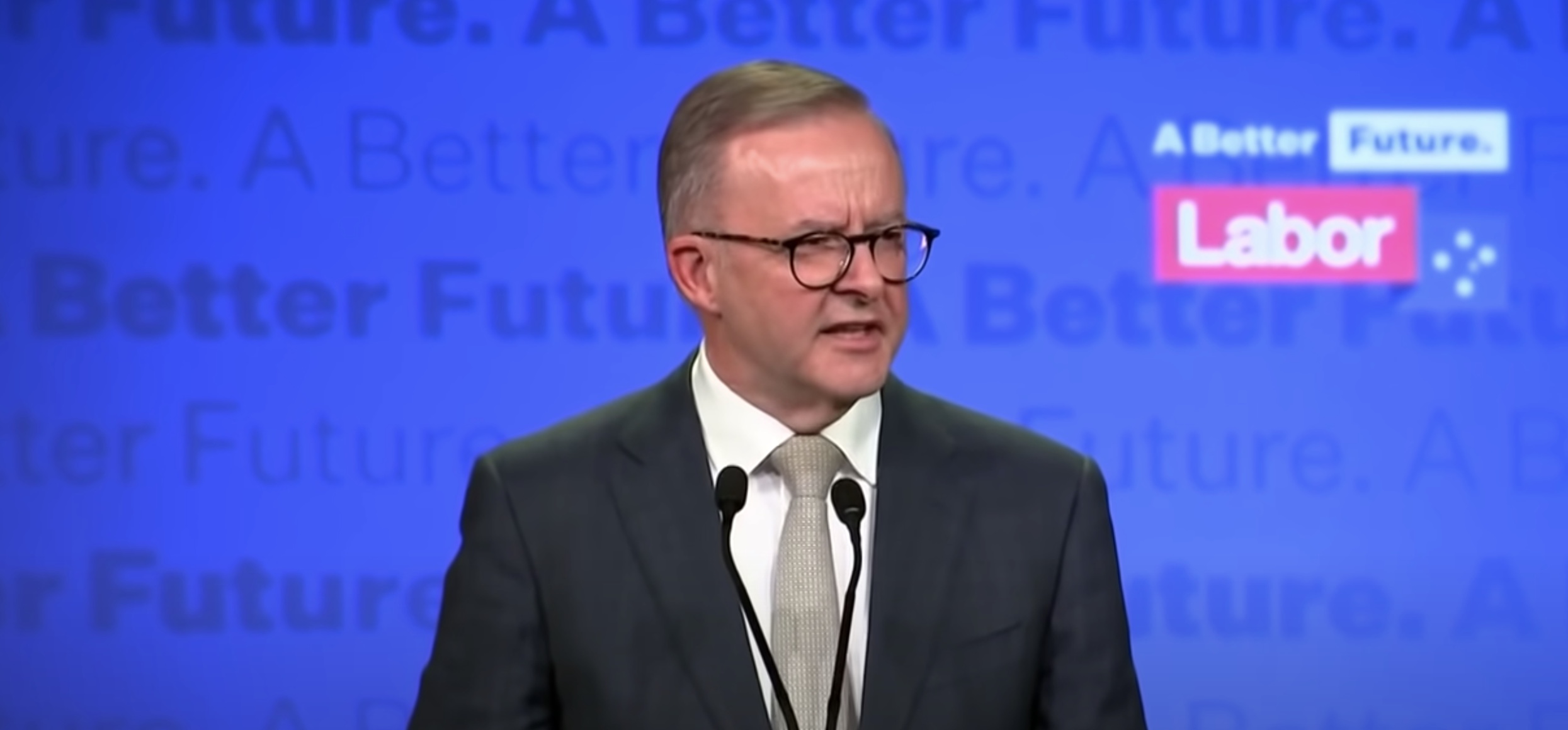
How this Christian is responding to the Federal Election

“The weapons we fight with are not the weapons of the world.” (2 Corinthians 10:4)

Australia has a new Prime Minister and a new Federal Government.

Millions of Australians are happy and excited by what may come about as the result of Saturday’s Federal election. Millions of other Australians are disappointed and even angry and concerned by the political shift. A large number of more Australians, probably in the millions also, are despondent with politics in general. Christians will also be found across this political spectrum. Christians may or may not be less favourably disposed toward the new Government. It is certainly the case that no Government will fully align with or be supportive of every issue that is concerns Christians. Indeed, we should not expect this to be the case, for it is the church that is God’s centrepiece, not a human Government, and hope is found in Christ, not in any political system or party. Theonomy is a dangerous and anti-Christian notion, as much as hardline secularism opposes healthy pluralism and democracy. 

I am not intending to dig into my own political preferences, nor to offer here any sociological insights into what the election may or may not mean for Australia’s future. Such analysis is outside the scope of my interest here. The point I wish to make is a simple one. The observation ought to be an uncontroversial one, but knowing how polarised and tribal our communities are becoming, I think it is worth reminding ourselves of a basic Biblical imperative.

Regardless of how one may feel about the election result and who your local MP is or isn’t, there is a Scripture that remains compulsory for all Christians. And it is this,

“I urge, then, first of all, that petitions, prayers, intercession and thanksgiving be made for all people— for kings and all those in authority, that we may live peaceful and quiet lives in all godliness and holiness. This is good, and pleases God our Savior, who wants all people to be saved and to come to a knowledge of the truth.” (1 Timothy 2:1-4)

I was reminded of this timeless word by Justin Moffatt, the Senior Minister at Church Hill in Sydney. He said,

“One of the things I like about the prayers in the Anglican Prayer Book is that we always pray for the government of the day, and we pray the same thing no matter who governs.

It moves effortlessly from one to the next, as though the problem of the world isn’t government, and the hope of the world were found elsewhere.”

Whatever our reaction to the election, Justin is right. This Christian imperative doesn’t necessarily legitimise or remove how we are feeling about the election outcome, but it ought to remind us of the bigger picture and it rightly reorients us to what is eternal and ultimately important. There ought to be a certain constancy, evenness, and repetition that is evident in our churches as we note the changing political landscape. 

Because we have the habit of assuming that we live in the worst of times (or the best) it’s good to remember the plasticity of that view. The Apostle Paul wrote his words at a time when the Roman Empire was expanding and where there was no political freedom and where opposition to Christianity was emboldened. This was not an easy time to confess Jesus is Lord and to belong to a local church. One of the Emperors during Paul’s ministry was Nero! Nonetheless, the Apostle commands the church in Ephesus to pray for those in authority. 

The duty of Christians around Australia has not changed. And yes, the language of duty is appropriate. There is a new Prime Minister in the new Government and with that will come all kinds of policies and decisions impacting the economic and social landscape of the country. Anthony Albanese and his team are taking the helm following a very difficult season in our nation’s country and I suspect the more difficult place ahead, especially in regard to the question of China. 

Prayer like 1 Timothy 2:1-4 can circumvent Christians from overly aligning with any single political movement, and over eschatologising hope in political agendas, rather than in the Gospel of Christ and God’s mission into the world. 

It is very easy to be swept up in the political narratives that are preached around the country. As Christians, we need to resist these (or at the very least, temper them) by instead reminding each other of the lordship of Christ and the purposes of God that are found in the gospel. I am not suggesting that followers of Jesus ignore the political process and not participate; not at all. We, as with all citizens, have the opportunity and responsibility to serve the common good of our nation, and this includes political discourse. ‘Love your neighbour’ remains a word for us today. However, the prayer in 1 Timothy 2 frees us from both the jubilation and the despair that accompanies political change. 

Of course, with any change of government, there will always be questions about the good and bad in changing policy and direction. Neither am I suggesting that Christians shouldn’t engage with these issues and offer advice and opinion. When choosing to do so, we must however be clear about God’s mission and his character and not be dragged into compromising the gospel for the sake of political expediency. A new government may bring about significant change and re-ordering of social policy and moral direction; it’s naive to suggest otherwise. Nonetheless, as the Apostle Paul reminds Timothy in Ephesus, we know and pray to God who is sovereign over all things including governments and the nations. Our responsibility and opportunity as Christians remain the same: commit to God in prayer those in authority.

The duty of Christians in Australia has not changed. Pray for the new government and our political representatives. Live quiet and peaceful lives with all holiness. Keep the Gospel front and centre in both our hearts and lives and words, because God longs for people to be reconciled to him and come to a knowledge of the truth. Let us not allow our emotions and words to inhibit, disguise, or confuse this good news of God in Jesus Christ.

Bill Shorten said it right.

Since the 1960s societies like our own have pursued a moral outlook whereby the rules of life are thrown out in favour of personal autonomy and self-expression. The sentiment has existed far longer, but the sexual revolution provided the catalyst to make possible in public what was often lived out in private. However far from creating a hedonistic dreamland, we are turning the landscape into an unforgiving wasteland. 

The promises of sexual and social freedoms are now being met with education classes and workplace policies because we do not trust each other to act appropriately. Public figures who do or say something that even gives the appearance of impropriety are readily cancelled and publicly shamed. We have become expert fault finders, putting to shame the Puritans of old with our rules and public executions. 

Every word and gesture from our political leaders is noted and recorded and reported to the public in an instant whirlwind of media hysteria and political cannonading.

Yesterday it was the turn of Federal Labor leader Anthony Albanese. On the very first morning of the election campaign, Mr Albanese was asked two questions: what is the current unemployment rate and what is the cash rate? He was unable to answer either.  

Bill Shorten, who led Labor at the last Federal election, was asked this morning to comment on his leader’s error. Mr Shorten said,

“The last person who never made a mistake – we are celebrating Easter – was 2,000 years ago”.

I’ll leave the pundits to do their work in assessing the merits of Mr Shorten’s response. My interest here isn’t to speak to the politics. I wish to observe that Mr Shorten’s words are true, and even more astonishing than perhaps he realises. 

The last person who never made a mistake is Jesus Christ. Jesus lived in Judea 2,000 years ago. It was a period of tremendous political and social upheaval. Poverty abounded and social freedoms were anathema for most people. Life for populations living under Roman rule was hard and harsh. Into this world, came Jesus. 

Jesus’ life, his words and deeds consistently and unerringly testify to his human nature being without any sin. Instead, the historical records reveal how Jesus is the most selfless and compassionate, gentle, truthful and holy person ever to walk this earth. He always spoke the truth, even at great personal cost. He loved the loveless and showed kindness toward the discredited and despised in the community. He exercised Divine authority and power over every manner of evil and ill. As he journeyed to Jerusalem, questions over Jesus’ identity and mission heightened, who is this man? 

In so many ways Jesus was just like us: he ate and slept and worked and became tired, he expressed happiness and humour and he felt sadness and anger.  And yet, his character is blameless. People tried to find fault with him, especially the religious leaders of the day, and yet none could be found.

The Roman Governor, Pontius Pilate, oversaw Jesus’ trial. Upon examining Jesus, he could find no wrong in him. Pilate appealed to Jesus’ accusers, 

““I find no basis for a charge against him.”

The most remarkable fact about Jesus is not his sinless nature, although that is truly outstanding, it is that this innocent one chose a path of betrayal, suffering, and death.  The incredible fact of that first Easter is how the man without guilt resolved to die the death of the guilty. 

Why would a man of such promise, and possessing the character of God, choose to enter this world and embrace suffering, humiliation, and willingly face the most public and excruciating death that the Romans could devise? Was it a mistake?

Jesus didn’t die for our moral platitudes, platforms, and self-justifications, he died in the place of those who deserve to be cancelled by God.  On the third day, he rose from the grave, promising new life to everyone who believe.

“For Christ also suffered once for sins, the righteous for the unrighteous, to bring you to God. He was put to death in the body but made alive in the Spirit.” (1 Peter 3:18)

As important as political elections are, this week we are approaching the weekend where we remember the definitive act of a loving God to redeem people with great fault.

There is far greater wonder and glory at Easter than we probably ever imagine, even for those who annually attend Easter church services. Our society rightly commemorates and thanks those who sacrifice their lives for the good of others. We even quote Jesus who said, “”Greater love hath no man than this, that a man lay down his life for his friends” (John 15:13)”. On the cross, Jesus went even further, 

“You see, at just the right time, when we were still powerless, Christ died for the ungodly. Very rarely will anyone die for a righteous person, though for a good person someone might possibly dare to die. But God demonstrates his own love for us in this: While we were still sinners, Christ died for us.”

This sublime world in which we live today with such advanced knowledge and ability has once again exposed our frailty and even culpability. Our uncertain world has been shaken by a pandemic and once again we are contemplating the possibility of global armed conflict. At home in Australia, we are wrestling with political disappointments and considerable social concerns. How much do we need a saviour who doesn’t make mistakes?