‘be prepared to die for God’: Misleading headline of the year award

In my opinion, The Australian newspaper has resorted to the worse kind of sensationalised journalism in the piece, ‘Be prepared to die for God’, kids told in state school classes (October 17th).

It is worth mentioning that the story pursued by The Australian was discussed in the media several months ago, and the issues raised were then adequately dealt with by the NSW Government and the providers of SRE.

you_an_introduction_michael_jensen

And by issues, it should be noted that there was no fire (perhaps a really small candle), just a lot of smoke being blown north by a group of angry Victorians (FIRIS). Unfortunately, while reasonable minds did address the expressed concerns, FIRIS have continued to blow smoke into NSW. Having scorched Victoria of rational and gracious discourse, I guess they need a new land to conquer. But my question here is, why did The Australian choose to regurgitate a non-story from months ago?

Following the dreadful murder of Curtis Cheng by schoolboy Farhad Jabar, the media has been right to report issues relating to the radicalisation of young Muslims. These are genuine concerns for Australia, but sadly there are Australians who are distastefully seizing upon this issue and using it to try and remove Christian teaching and presence from schools in NSW (disappointingly, the Victorian Government has already succumbed to this obtuse fear mongering). And it seems as though The Australian correspondent, Natasha Bita, has jumped onto this bandwagon. Look at the headline, ‘be prepared to die for God’, kids told in state school classes. Obviously, these Christians are training young children to commit murder in our streets and schools. There must be hate filled speeches and promises of virgins in heaven for any willing martyrs! But of course, the headline is misleading, and the article itself falls flat in its attempt to make SRE appear dangerous, “harmful” and “damaging”.

All of the extreme ideas cited by Natasha Bita, are of course nothing of the sort. Michael Jensen’s book, You: An Introduction, is designed to start a conversation. It certainly holds a view of God who is holy and love, and of a world that is simultaneously amazing and broken, joy giving and painful, but all this fit perfectly within orthodox Christianity. Yes, it uses the word sin to explain what has gone wrong in the world, but only a fool would argue that there is no evil in the world. In fact, the concept of sin is one of the most self-evident ideas of the Bible.

And far from being dangerous, read further and you’ll find that is no inciting to anger and hate, but there is much encouragement to love and respect, and to think deeply about life and biggest questions of the cosmos.

And in response to the criticism given to a letter that was written by Bronwyn Chin, who died of pancreatic cancer in 2013, is it not appropriate to share stories of hope in the midst of suffering, or should our teenage children only have access to stories where the narrative is hopeless and meaning allusive?

It is pretty shabby that The Australian decided to run this piece. Not just Christians, but Australians in general understand that aligning Christianity with Islamic extremism is absurd and bordering on slander.

It is fine to not like SRE, and it is also fine to not like the fact that it remains in NSW State schools, and it is fine to argue for its removal, but it is not fine to harness public fears about real issues and to suggest that SRE is somehow akin to or might lead to the kinds of evil ISIS are perpetrating around the globe.

Finally, it is important for readers to understand these two basic points that Natasha Bita fails to mention in her article:

1. Along with John Dickson’s book, ‘A Sneaking Suspicion’, You: An Introduction, was temporarily banned from NSW schools earlier in the year, but they were quickly re-introduced once the Education Minister was made aware of the situation and no issue found with them.

2. These SRE classes are not compulsory. No parent is forced to have their children attend the classes. These classes are for families who want their children participating, and clearly there are significant numbers of families who do want these classes.

Are Sydney Anglicans really so dangerous? FIRIS believe so, but really? No one is forced to believe the views they present or to even attend the classes, and yet these are ideas that have profoundly aided our nation for two centuries, and even if we disagree with them, is it not valuable for our children to have the opportunity to at least read and engage with these ideas for themselves?

Music and Abortion

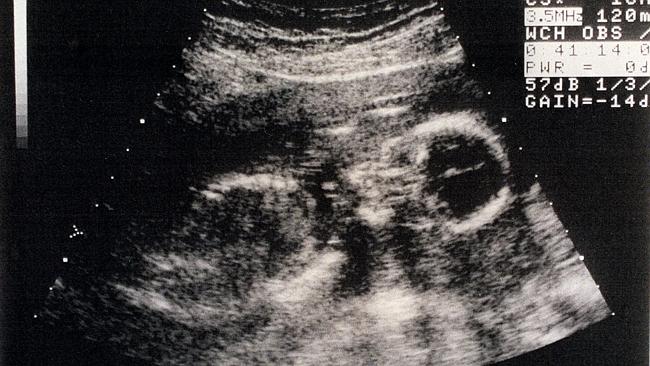
Scientists have discovered that babies in the womb, as young as 16 weeks, respond to music by ‘dancing’.

“The foetuses responded to the music by moving their mouths or their tongues as if they wanted to speak or sing,” said one of the researchers, Marisa Lopez-Teijon. The research has been published in journal of the British Medical Ultrasound Society, Ultrasound.

417592-8b82b764-6d5e-11e5-a21c-437ddd761843

What this means is that babies’ cognitive faculties, creative faculties, and listening and communication skills are more highly developed at 16 weeks than previously thought.

The more scientists study human beings in the womb, the more wonder, beauty and complexity we discover. As scientific research advances, the findings increasingly demonstrate that embryos are not less human but fully human, and from the very earliest stages.

I am reminded of the words spoken by one excited mum, ‘As soon as the sound of your greeting reached my ears, the baby in my womb leaped for joy’ (Luke 1:44).

It was interesting to note that the article in The Australian, while sometimes referring to embryos, also addresses them as babies. The days when scientists and proabortionists justified abortion by claiming embryos were not human has long gone.

This latest research makes the reality of abortions even more appalling. It is a dreadful paradox of our society, that a child who enjoys listening to music in the womb can, on the same day, be killed in the womb.

How can we justify killing a child who in their first weeks of life is being moved by the sounds of Mozart and Bach? Not that responding to music defines their humanity but it further proves their humanity. He or she is not potential life, but is life with a mind and body that is active and alert.

Science is showing us the ignominy of our attitudes toward the unborn, but will we listen? We have longed turned deaf to the Bible’s pleas about the sanctity of life, and I suspect that we will also turn a blind eye to these amazing revelations that are being proven through empirical research.

Through music, science is affirming an ancient theological truth, embryos are people like us. But will we listen?

If you are reading this post as someone who struggles with a past decision to undergo an abortion, I want you to know that the good news of Jesus Christ means that real forgiveness and healing is promised through him. Abortion is wrong, but it is not the unforgivable sin. Again, please contact our church counsellor. If you don’t live near Mentone but are keen to find out more, please contact us and we’ll try to find a suitable church near where you live. 

Grand Final hype and Christian passion

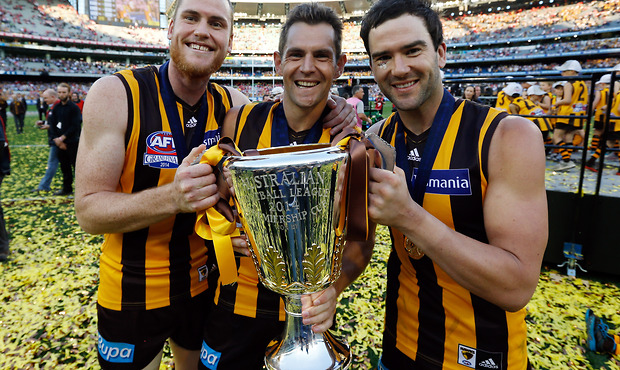
Only once have I missed the Grand Final, and that was in 1999. I was living in London at the time, but even then, I woke up at 4 in the morning to read the then minute by minute updates that were being published on the internet (yes, this was before the days of live-streaming).

351432-tlsnewslandscape

It doesn’t matter whether my team is playing on Grand Final day or not, it’s un-Melbourne like to not watch the game.

Tomorrow there will be 100,00 people filling the MCG and living out their love for football, with millions more watching on television at home or at the pub.

We took our children into the city yesterday and had fun at the Foxtel Footy Festival next to the MCG. Everywhere you looked there were men, women and children wearing footy jumpers and scarves (more West Coast colours than anything!). Football fans are not hard to spot: they are committed to supporting their team, they’re enthusiastic, they attend matches and if they can’t they will watch it on tv, they talk about footy at work, there are footballs lying around the house to hold and caress.

Grand Final day is so important to Melbourne that we now celebrate a public holiday on the day before Grand Final!

For the three Melbournians who doesn’t love footy, there will be something else that you’re passionate about – art, music, gardening, cooking, technology,  spending time with friends, travel.

To prove that I’m not just another nodular barely-civilised football fan (can’t think why Freemantle comes to mind!), remember that famous balcony scene in Romeo and Juliet where Juliet is standing outside in the night sky and Romeo sees her, and is smitten and starts talking to himself, 

‘See how she leans her cheek upon her hand. O that I were a glove upon that hand, That I might touch that cheek.’

Romeo would be satisfied to be a glove on her hand so that he could touch her cheek. It’s all very romantic, but that’s what happens with passions and desires. Whatever the heart most desires, we think and talk and dream about it.

Football, music and poetry are among the many good things we enjoy under a good God, but Grand Final week makes me wonder why Christians don’t exhibit similar enthusiasm for the Gospel of Jesus Christ?

I think of Paul who wrote,

“I speak the truth in Christ—I am not lying, my conscience confirms it through the Holy Spirit— 2 I have great sorrow and unceasing anguish in my heart. 3 For I could wish that I myself were cursed and cut off from Christ for the sake of my people, those of my own race”.

I think of Jesus who as he approached Jerusalem, wept, and said,

‘“If you, even you, had only known on this day what would bring you peace’

Where is this Gospel driven passion today? Where is the deep-heart-convinced desire to tell Melbournians the Gospel? We are passionate about many things and yet the purposes of God in Christ is rarely one of them.

Imagine if Christians preferenced time with Church over lazy weekends and sporting events?

Imagine if Christians gave just a portion of their football fanaticism to the Great Commission instead?

Charles Spurgeon once remarked, ‘‘Have you no wish for others to be saved? Then you’re not saved yourself, be sure of that!”

The thing is, while we may give intellectual assent to Surgeon’s question, what we truly desire is evident by what we give our energies too and the decisions we make in life.

Imagine, if Christians put first in their lives, God’s mission into the world?

Like everyone, I have limited time and energy, and so I need be wise and ensure that how I live is being driven by the reality that I am persuaded is of greatest value. Friends, make it the Gospel.

FYI Hawks by 48 points!

New Sermon Series on Romans 9-11

JoiningGodsMission

What is God’s mission into the world?

What is our role in God’s work?

What is the relationship between God’s Gospel at the people of Melbourne?

At Mentone Baptist we will be working through Romans 9-11 (Sept 28-Dec 13). It will be exciting. It will be challenging. It will be hard. It will life changing.

New evidence suggests that the closure of SRI was a mistake

It appears as though Daniel Andrews and the Victorian Government have unnecessarily pulled the plug on Religious Instruction in schools (SRI).

In August this year Education Minister, James Merlino, announced that religious instruction classes would be removed from Victorian schools from 2016. It should be mentioned that religious groups may be permitted outside class time, however the parameters for running these lunch-time groups remains unclear and uncertain.

apple

Why am I suggesting that the Government has made a mistake? In the last 24 hours the ABC has published two articles that warrant a re-examination of SRI’s closure.

First of all, it has been demonstrated that the policy shift derives from a faulty understanding of secularism (see Michael Bird’s piece on ABC Religion and Ethics). Dr Bird refers to the ‘New Atheists’ who have redefined secularism, “no longer as the freedom of the individual in religion, but as the scrubbing of religion from all public spheres.” It is this fallacious thinking that has been pushed by groups such as FIRIS, and would seem has also been adopted by the Andrews’ Government.

One of the adverse effects of this view of secularism is that we are creating a new wave of sectarianism, where thousands of families are now faced with the dilemma of either keeping their children in a State school environment where religious toleration is dissipating, or moving their children to independent schools. Far from creating more inclusive schools, we are in danger of returning to the ugly days of sectarian divides, except this time it is not Protestant/Catholic, but religious/non-religious.

As a parent who has three children attending a State school, I value the education they receive; the teachers are excellent and the pastoral care is first rate. It is worrying though, that faulty Government policy may unnecessarily drive a wedge in many school communities, where none has existed previously.

Secondly, Michael Jensen has written a piece overviewing findings from recent academic studies, that demonstrate the positive benefits of our children learning about God and engaging with ideas found in religion.

He says,

“Here’s the bottom line. There’s been a lot of alarmist stuff written recently about the potential detrimental effects of religious teaching on young people. What the hard data says is otherwise: an active religious faith is much to be desired in young people, and the benefits of such a faith persist into old age.”

Dr John Dickson has also helpfully summarised the findings  from one set of research that has been published in The Oxford Handbook of Religion and Health (Oxford University Press, 2012):

* ‘Well-being’: 78% of over 300 studies report a significant positive relationship between religion/spirituality and well-being.

* ‘Hope’: 73% of 40 studies find that religion/spirituality is related to greater hope.

* ‘Optimism’: 81% of 32 studies indicate that optimism is more common among those who are religious/spiritual.

* ‘Meaning and purpose’: 93% of 45 studies find that religion/spirituality is related to greater purpose and meaning.

* ‘Social support’: 82% of 74 studies report significant links between religion/spirituality and a person’s social support.

* ‘Self-esteem’: 61% of 69 studies report a positive link between religion/spirituality and self-esteem.

* ‘Depression’: 61% of 413 studies found lower rates of depression or faster recovery from depression in individuals who are more religious.

* ‘Suicide’: 75% of 141 studies found that greater religiosity/spirituality is associated with less suicidal ideation, fewer suicidal attempts, or fewer completed suicides.

* ‘Social capital’ (i.e., an individual’s community participation, volunteerism, social trust, involvement in civic life): 79% of 14 studies report significantly positive associations between religious involvement and social capital.

While I would add certain caveats and qualifications about these findings, they nonetheless communicate that there are significantly positive social and mental benefits that derive from belief in God.

It is interesting to note that the Victorian Department of Education understand that ‘Health and wellbeing are essential for quality of life and are fundamental preconditions for learning and development’. One of the identified aspects of wellbeing is what they refer to as ‘spiritual wellbeing’. And yet the Government is truncating this very principle by taking away from students the freedom and opportunity to engage with these very things.

Dr Bird and Dr Jensen are not saying anything new, but they offer timely refutations to the popular memes about religion, children and education. Given the weight of their arguments, I believe it is reasonable for Mr Merlino and Mr Andrews to reconsider their decision about SRI in 2016.

A letter to Adam Goodes

Adam Goodes of the Swans in action during the AFL 2nd Qualifying Final match between the Adelaide Crows and the Sydney Swans at AAMI Stadium, Adelaide. (Photo: Michael Willson/AFL Media)

(Photo: Michael Willson/AFL Media)

Dear Adam Goodes,

We met briefly a few years ago and you graciously allowed me to take a photo of yourself with my two young boys. They were only aged 7 and 6 at the time, but they remember the occasion still. 

Like many other Australians, I would like to see you participating on Grand Final day at the MCG. As a footballer, you have achieved success at a level that very few players will ever reach, and for that reason alone it is fitting for you to be recognised on that day.

Whether you decide to participate or not, I will not judge you. I believe it is too easy for non Aboriginal people (like myself) to arrive at conclusions as to how Indigenous Australians should or should not think and feel about their roles in Australia today.

I am sorry that you have been treated with such disdain on account of your race. I am offended for you. It must surely concern Australians that issues of race persist in 2015. While many prejudices and stereotypes have been taken away, it is clear that we have not yet arrived at where we need to be.

As a Christian I accept the Bible’s picture of what heaven will be like, and as part of its canvass the Bible describes how the nations will be present. The word that is used for nations has less to do with geo-political boundaries and is more about people groups. Race is not diminished, and no race is exalted over another, but on account on Jesus Christ peoples from every language and tribe are welcomed and received. While I am confident of where history will end, it is right to pursue this heavenly vision in our present time. To this end, we need to hear the stories of Aboriginal people, to learn, and for Australians to repent of past and present sins against the First Australians.

I wish to extend my congratulations to you on a great football career, and should you decide to take part on Grand Final day, I would hope that you receive a worthy applause.

Yours Sincerely,

Murray Campbell

Creative city

OLYMPUS DIGITAL CAMERA

Before dawn the air outside imitates my fridge inside,

Cold.

Morning light appears contesting the fog that had swallowed every street and house.

Soon the sun has won and is beaming with ostentatious pride,

Throwing down its heat and making all of us sweat under.

Jumper is thrown off.

T-shirt and shorts only now.

Changing my order at St Ali from a flat white to cold-press.

The kids are about to cry out for the fifth time, “I’m hot”,

When sweeping over the horizon like Carlton’s midfield on a good day,

Come the cumulonimbus,

Testing every man and woman’s canopy of nylon taffeta.

Rain descends by the tram full and steam rises off the bitchumen road back to heaven.

Beaded sweat morphs into droplets of rain.

The scent of wet hair, wet clothes, wet everything follows us home.

The meteorological combat is over as the cooling breeze

Overwhelms the furnace like air.

Weatherman is dumbfounded again.

Tourists confused.

Melbournians amused.

Another day in paradise comes to an end.

20 Guidelines for engaging in social media

Social media is not your best friend and neither is it the bastion of everything evil. Platforms like facebook and twitter are tools that can be used for good, for non- good, and for the plumb-inexplicably weird. And whatever the motive, every post and tweet is like throwing a paper airplane outside in the wind, you might throw it in one direction but you have no control over where it will end up.like-us-on-facebook-337256

My use of social media has had its shares of successes and derailments, there have been moments of punching the air with elation and wanting punch someone up close, of feeling like I’ve done something and disappointment at the fact that no one has noticed how smart and whimsical I’ve just been.

Hence, I’m writing a post about how to participate in social media. This is as much a personal guide as anything. Many of these points may be useful for anybody, and others are specifically for Christians, for Christians can be particularly constructive on social media as well as rather embarrassing.

retweet_symbol

Here are my 20 principles for participating in social media:

1. Facebook or Twitter? Both, either or none. They are useful tools but life will go on quite happily without them. Twitter is useful for gathering and promoting information about events, news stories, hot issues. Facebook is great for connecting with people, and sharing more personal moments (although don’t ever think that facebook is truly private).

2. Before you post/tweet/comment, ask yourself, will this adorn the Gospel, confuse the Gospel or betray the Gospel?

3. Ask yourself, how will people interpret this tweet/post? How will non Christian read it, as well as Christians, and friends. For example, if you decide to skip church in order to enjoy a Sunday morning sleep in, is it helpful to tell Facebook? What are you communicating to your unbelieving friends? What are communicating to your church family?

4. Be careful about engaging in hashtag. People love getting on the bandwagon, but sometimes we do it without knowing the facts.

5. Don’t say something if you’re not prepared for commentary, both positive and negative, and the unexpected.

6. Be truthful. Titus 2:8 talks about, ‘soundness of speech that cannot be condemned, so that those who oppose you may be ashamed because they have nothing bad to say about us.’

7. Not everything we read on social media is true!

8. Be gentle and kind, especially toward people who disagree with you. ‘A gentle answer turns away wrath, but a harsh word stirs up anger.’ (Prov 15:1)

9. In an attempt to be ooze normalness, some Christians think that we should avoid quoting Bible verses and offering Gospel thoughts. Don’t be awkward or artificial, but don’t hide the wonders and beauty of the good news of Jesus Christ. We have something to say.

10. Don’t be one dimensional. You’re not always chipper. We’re not always angry. We’re not always talking about football or church or what the kids have achieved this week

11. Regularly check your security settings

12.Be careful about posting photos, especially of your kids.

13. It’s ok to block someone or to decline a friendship invitation.

14. appreciate that issues are almost always more nuanced and complex than 140 characters will allow.

15. Social media is meant to be spontaneous, but it doesn’t hurt to think before you tweet

16. Don’t read everything literalistically; rhetorical devices such as hyperbole, irony, sarcasm, are not only found in books.

17. If you’re really mad at something, it is generally a really good idea to cool off before pressing enter on your over the top vent.

18. If you think you’ll regret it tomorrow, don’t say it today

19. Don’t be a single issues person: exception to this with the accounts that are used for a business or special interest group.

20. Stop trying to be a prophet. Aussies don’t like tall-poppies and you’ll end up frustrated at the fact that Australia isn’t listening to you.

What would you add to this list?

We are better than this!

…apparently not.

Five Prime Ministers in seven years.

Last night’s shenanigans in Canberra was a eureka moment for Australian media, and I confess that I was stuck to my television and to twitter like that final strand of spaghetti that you can never scrape off the bottom of the saucepan.photo (2)

The second by second drama being played out on the ABC was dripping with more bolognese sauce than you can find in all Italy. We have officially lost all rights to mock the Italian political system, as comic as it has been for many years. We used to laugh at them, but now we are laughing at ourselves, and we must because otherwise we would hear our groans as we grow increasingly exasperated at our national leaders.

I share the view of many Australians, and that removing a sitting Prime Minister is imprudent and unsavoury; it may be within the rules of political warfare but as history has shown us, it is counter-productive.

586300-turnbull

Our recent history of political hits may belong to the script of a Spaghetti Western, and it also reflects our society’s heart more closely than is comfortable. Yes, we want our leaders to stop following opinion polls and  instead lead, and yet we demand them to do our bidding. We want a vision for our nation’s future, but we are too greedy to wait or to sacrifice for the good of our children. A society that demands solutions now and without personal cost has not learned the meaning of community. And so it should not surprise us to see that our Governments turn to expediency in both policy and people. That leaves me wanting to urge our Governments to govern well, and it also leaves me with a greater anticipation for the perfect Government that is God’s.

Government is an expression of God’s grace and provision for the common good of society; it is a God given means to create order, peace and justice (Romans ch.13). But even the best functioning Government is only a tiny impression of what God promises us in Christ:

“For to us a child is born, to us a son is given, and the government will be on his shoulders.

And he will be called Wonderful Counselor, Mighty God, Everlasting Father, Prince of Peace.

Of the greatness of his government and peace there will be no end. He will reign on David’s throne and over his kingdom, establishing and upholding it with justice and righteousness from that time on and forever. The zeal of the Lord Almighty will accomplish this.” (Isaiah 7)

One day our political system will become redundant, but in the mean time we Christians want to take seriously both Romans ch.13 and 1 Timothy ch. 2. This morning I have begun by putting into practice these words written by the Apostle Paul,

‘I urge, then, first of all, that petitions, prayers, intercession and thanksgiving be made for all people—  for kings and all those in authority, that we may live peaceful and quiet lives in all godliness and holiness. This is good, and pleases God our Savior…’