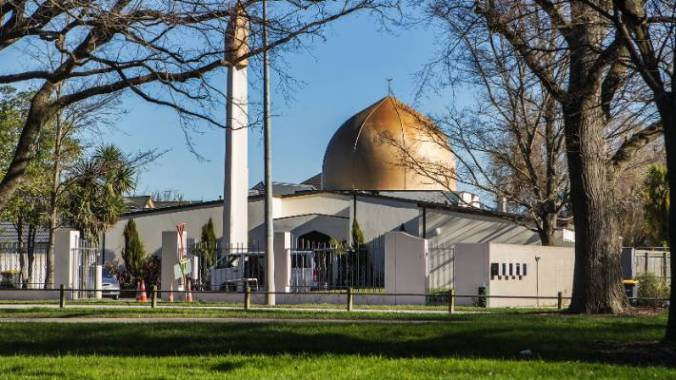
I had just finished writing my sermon for Sunday when I saw the news breaking out of New Zealand. Unfolding during the course of the afternoon, gunmen attacked 2 Mosques in Christchurch, killing at yet unknown number of people and injuring many more. News outlets have confirmed what already seemed obvious, that the intent was to kill Muslims while at their Friday prayers.
The Bible text that I’m preaching this Sunday is Matthew 15:21-28. It retells an occasion when Jesus was traveling through a region outside Galilee and Judea. As he traversed between Tyre and Sidon, two cities that were populated with followers of various religions (views of God that differed greatly from Judaism), a woman identified as a Canaanite pleads with Jesus for help.
The disciples on this occasion react with disdain and bigotry. The Canaanites were traditional enemies of Israel, and even in the First Century AD, cultural differences existed as well as irreconcilable religious differences. The disciples’ response to the woman wasn’t uncommon. Jesus, however, repudiated their hatred and acted contrary to what the disciples were asking. Instead of pushing her away, Jesus engaged with her, affirmed her cries for help and restored her troubled daughter.
“So his disciples came to him and urged him, “Send her away, for she keeps crying out after us.”
He answered, “I was sent only to the lost sheep of Israel.”
The woman came and knelt before him. “Lord, help me!” she said.
He replied, “It is not right to take the children’s bread and toss it to the dogs.”
“Yes it is, Lord,” she said. “Even the dogs eat the crumbs that fall from their master’s table.”
Then Jesus said to her, “Woman, you have great faith! Your request is granted.”And her daughter was healed at that moment.”
Jesus’ first words might appear harsh at first, even with a tone of disdain, almost as though he is mimicking the disciples; which of course he is. Jesus was repeating the disciples’ attitudes back to them while also drawing out the genuineness of the woman’s faith in him.
The lesson Jesus was teaching the disciples remains one that we cannot afford to lose today in our age of outrage and the at times, appalling acts of evil. There is a time for anger. There is a time for hate – to hate evil and those who perpetrate evil. But how does Jesus respond to difference here? What we see in Jesus is him entering a territory where the God of Israel was not worshiped and where the law of God was not esteemed. He doesn’t respond to the woman with bigotry and exclusion, but with compassion and inclusion. She calls out to Jesus to save her daughter, and he did.
Surely Christians must respond to others as did Jesus. Not because we are playing silly theological games of ‘all religions are the same’, but because we all share the imago dei and because we have come to know the beautiful grace of God and desire others to know this freedom and life.
We can love Muslim neighbours by praying for those injured and for the many who are now mourning incredible losses. Prayer is not wasted breath, but the extraordinary invitation of loving God who is Father.
We can love our Muslim neighbours by showing kindness to them. On the street, offer a smile. Take a few minutes to chat and offer some kinds words of encouragement. If we don’t have any Muslims in our circle of friends, why not? What can we do to change this omission?
We can love not only by renouncing the hateful speech of those who oppose Christianity on the left, but also publicly repudiate those on the extreme right who support, urge, and carry out malicious attacks on Muslims, on Jews, and others.
Too many tears are being shed in Christchurch tonight, and they will flow for many days to come. Let us sit down and weep with them.
Christchurch is a city name that evokes the most righteous and good, loving and kind man who has ever walked the earth; yes even God himself. He rebuked hate and he loved. Let us learn to become more like Jesus.
Jane Caro and John Dickson have been exchanging thought tweets over the past couple of weeks. It has been an interesting and helpful dialogue. I think it’s important for us to listen to each other in order to understand what makes each person ticks and to find out why we believe what we believe.
Over the weekend Jane Caro made a comment which appears (Jane can correct me if I’m wrong) to have been written as a way of closing down this conversation. Caro said,
“Dear right-to-life men, if u have sex without wearing a condom u have no right 2stand on any kind of moral high ground & compel a woman 2carry your stray sperm 2fruition. In fact, if u ever have sex without being fully prepared to raise any child who may result u are a fraud”.
John Dickson noted the pro-life position that Caro has unwittingly outlined, not only for men but also for women. He said,
“I agree with this. But I wonder if you do! You wrote: “In fact, if u ever have sex without being fully prepared to raise any child who may result u are a fraud.” Does that apply to women, too?”
He later responded to someone who objected to his question by saying,
“All of that is true. None of it negates the question: Shouldn’t both sexes be willing to take full responsibility for any life that is created by having sex? I say: yes! Is it really plausible to suggest this principle only applies to men?”
Again, it’s a fair question.
I’ve noticed amidst recent commentary on abortion that there’s another piece of logic and ethics that has, in my opinion, gone astray. The logic goes like this,
Leading up to and during sex, a man needs to take responsibility for his actions.
If the woman falls pregnant, it is her decision alone whether she keeps or aborts the child
Upon giving the birth the man ought to share responsibility for raising and supporting the child
I suspect almost everyone agrees with points 1 and 3. We need to acknowledge that there are some men who fail miserably on points 1 and or 3. The Proverb is true of them,
“Like a city whose walls are broken through is a person who lacks self-control.” (Proverbs 25:28)”.
While I have met such men, I know many more who behave very differently, and with great love, care, and responsibility. Notice, however, that this chain of responsibility has been cut in the middle?
Last week I was reminded in very adamant terms that men shouldn’t talk to the topic of abortion. The argument presented was that men don’t experience pregnancy and so they should simply shut up. The baby is nor forming inside the man, and so his views are not required….except for those men who publicly and without qualification support the course of abortion! Yes, men do not and cannot understand what it is like to be pregnant, with all its joys and fears, expectations and uncertainties, but that does not mean that most men do not care and that we have no sense of responsibility to protect and nurture young life. I began to wonder, should the ALP present their newly announced abortion platform to the Parliament, will male MPs be asked to sit out of any debate on abortion and will they be asked to refrain from voting? Will men who work on hospital boards be requested to abstain from commenting should the Labor position become law? What of male doctors and nurses who are faced with the ethical dilemma of abortion? What about the fathers of these children?
Let me repeat, along with John Dickson, that I agree with Jane Caro’s comment. In fact, I suspect there is broad consensus in the community that men must take responsibility for points 1 and 3.However, the logic that is today commonly espoused in our culture excises men during stage 2. Again, I appreciate that mothers have a peculiar relationship with their child in the womb that no man can fully understand. It is also true that fathers share a special bond with their children, even while the infant is growing inside the womb. To insist upon responsibility at the start and at the end, but not in the middle, is surely a moral mistake? This is not about men demanding anything, but it is a couple who have committed to the good of each other, giving and receiving in love.
I would take it one step further and suggest that point 2 shouldn’t exist at all. The very notion that we are discussing whether to kill a baby or not is morally insane. But for argument sake, let’s assume the moral posture that Australian culture has adopted, can we not still see the problem with premise no.2?
It’s almost as though the very nature of sex communicates that it is not suited for the uncommitted and unloving. It is not a casual transaction. It is not without design and purpose. Sex is of such intimate and personal giving of oneself to another human being that it requires deep commitment and trust; dare I suggest, sex needs marriage. Yes, marriages can breakdown. Both men and women can fail in keeping their covenantal promises of marriage. Sadly, some marriages become like hell. But have the alternatives done better? We are suffering from myopia if we fail to acknowledge that when marriage is working (which it most often does), it offers the best framework to resolve the tensions and mistrust and fears that are involved in these issues surrounding raising children.
Jane Caro has made an important point. She hasn’t gone far enough, but it is a start. Men take responsibility for your actions. If you are unable to commit to raising a family and to do so with the character and longevity that is required, it is better for everyone that you practice some good old fashioned and virtuous self-control.
“Do not be like the horse or the mule, which have no understanding but must be controlled by bit and bridle or they will not come to you.”(Psalm 32:9)
but in the end it leads to death.” (Proverbs 14:12)
This week, Tanya Plibersek announced Labor’s plan to further support the widespread practice of abortion in this country. TheALP is proposing that abortions should be more easily available, funded by the taxpayer, and that this should include late-term abortions, and that Federal funding to hospitals will depend on them providing abortion services.
By Thennicke – Own work, CC BY-SA 4.0
The media is reporting support for this policy initiative from across the country, but many other Australian women and men are saddened that our society is so determined to dehumanise the most vulnerable.
What is remarkable about this announcement is that it follows the recent dreadful revelations that have been made public in the United State regarding abortion. Different State legislatures have proposed Bills that make it easier for babies to be aborted up to birth, and now, even post birth.
In January, a stomach-churning video went viral. In the State of Virginia, House Democrats were advocating a Bill that would legalise late-term abortion, just days after New York State adopted similar legislation. Kathy Tran, a Democrat delegate, responded to questions by admitting that the Bill will permit abortion even as late as when a woman has entered labor.
Kathy Tran: “My bill would allow abortion up to 40 weeks.”
Todd Gilbert: “Where it’s obvious a woman is about to give birth…would that be a point at which she could still request an abortion?”
Kathy Tran: “My bill would allow that, yes”.
Virginia Governor, Ralph Northam, later added at a media conference that the life of a newborn child can be legitimately ended if that is the wish of the mother and attending physician.
“If a mother is in labor…the infant would be delivered. The infant would be kept comfortable. The infant would be resuscitated if that’s what the mother and the family desired, and then a discussion would ensue between the physicians & mother”.
Within days, the US Senate debated a Bill to ban infanticide and thus require medical practitioners to provide medical care for infants born alive post a botched abortion. Yes, this happens, and yes, the Bill was blocked.
Labor’s policy would include public funding to cover late-term abortions, as exercised by some Australian States. Over the weekend I once again heard the suggestion that late-term abortions only occur when the mother’s life is at risk or in cases where the babies’ health is severely compromised. Let us be clear, this is not the argument used by legislators in the United States this year. The argument is, it is the mother’s right to choose abortion, even at the point of giving birth; nothing about baby or mother suffering from physical or psychological trauma.
Moreso, the data doesn’t support the hypothesis that late-term abortions are restricted to life-threatening situations. In my home State of Victoria, the Government’s own data states that 14.9% of all perinatal deaths in Victoria were accounted by abortions for “maternal psychosocial indications” (children aborted prior to 20 weeks are not included in the data). 40.32% of all late-term abortions (from 20 weeks) are for “psychosocial” reasons, meaning there is nothing wrong with the baby or physical health of the mother.Please note, these numbers include terminations that occurred in hospitals and does not include abortions that take place in clinics (which is where the majority of abortions happen).
On January 29th I wrote,
“What makes our society even more culpable than past societies is that we are committing the same sins but with greater knowledge and with greater ability. Modern knowledge reveals truths about how babies are formed in the womb, things that were once believed but could not be seen until the invention of ultrasounds. We can see the heartbeat of a baby in the earliest weeks. We can delight at a child’s fingers and toes growing at 6 weeks. We now know that babies can hear and respond to music by 16 weeks; the next Mozart is already learning to feel and marvel at the beauty of sound.
Medical advancements give us unparalleled ability to care for both mother and child, to even perform surgery on a baby while it is in the womb. When these little ones surprise us by coming into the world early we have the know-how to save the lives of these children as young as 22 weeks.
This is a grotesque reality in which we live: despite superior knowledge of human life in the womb and superior medical technology to save life, our commitment to destroying life has also increased.
I suspect some readers will respond with partial agreement; you dislike late-term abortions, but you don’t have a problem with ending a pregnancy during the first trimester. This is not an uncommon position to hold.
May I respond by asking you this question, at what point can we draw an absolute moral line? At what point can we justify the moral shift from being okay with killing the child to believing it is not okay?Is the moral threshold when the baby begins to feel pain? Is it the moment cognitive awareness starts? Is it the week when their limbs have formed? Is it the moment the heart begins to beat? There is no ontological moment during a pregnancy at which we can argue, at this stage, it is okay to abort a child.”
Instead of the news from the United States making Australian politicians reluctant, one of Australia’s major political parties announces that they will to push ahead with liberalising abortion. Indeed, the ALP is going so far as to tie funding for hospitals to abortion. Are we as a society now prepared to blackmail medical institutions into contravening conscience and to performing a procedure that is specifically aimed at killing a human life? Where else in a civilised society does a Government compel another body or institution to take the life of a human being? Is it not ethically dubious to the say least?
I have no interest in the politicising of this issue; when should a human life be determined by a vote in Parliament? I urge Tanya Plibersek and the Australian Labor Party to reconsider this policy. Included in the platform is money to support women who wish to have readier access to contraceptive methods. Great. There are viable and ethically sound alternatives to abortion. There are organisations who exist to help mums struggling with pregnancy. There are communities willing and able to assist. There is no sound reason to pursue the current course, except in the extremely rare circumstance where the mother’s life is genuinely at risk. What a messed up society we’re creating. Scientific truth and biological facts are shunned in order to promote social agendas. We can openly and freely refuse a person’s humanity. We can end human life in the name of autonomy and personal liberation. We justify killing a generation of children in the name of genetic purification. It is truly insidious. It is all the more topsy-turvy as public policy undermines itself because it refuses to see the hypocrisy in its own sloganeering. A society cannot truly claim to believe in the equality of women while persisting in a practice that leads to the deaths of 1000s of young girls each year. The Federal Parliament has recently moved to begin a Royal Commission into the abuse of disabled people, but will they front the ideology responsible for killing 1000s of disabled Australians every year?
“Death and Destruction are never satisfied, and neither are human eyes.” (Proverbs 27:20)
Should the day come and we realise the ignominious nature of this dehumanisation project, we will look for a God who might dare forgive us, and remove the guilt that we cannot rid ourselves. The Bible speaks of such a merciful God. He is compassionate and patient, but his patience is not without end.
“Seek the Lord while he may be found; call on him while he is near ” (Isaiah 55:6)
According to reporting in The Age tonight (March 7th 7pm), Labor has reevaluated one of its major points and will now no longer expect Catholic hospitals to comply with legislation that requires all public hospitals to become providers of abortion. If correct, this is positive news but it doesn’t overturn other significant concerns
I’m sitting down at the dining table, listening to Shostakovich’s 12th Symphony as I chew on some feedback that I’ve received from an article I posted this week.
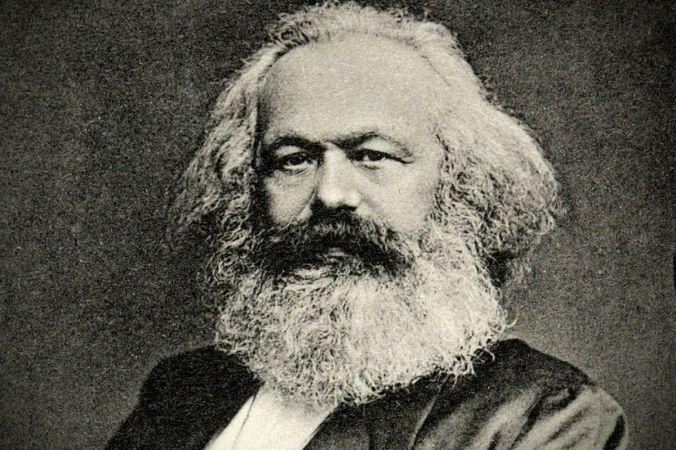
I had critiqued a claim made by Van Badham on last Monday’s episode of QandA. In answering the question, “Do you believe in God”, Van Badham asserted that she is a Marxist and a Christian.
I questioned this synthesis by citing Karl Marx’s himself, who opposed religion and belief in God in the strongest terms. I then set forth a series of propositions which demonstrate a great moral, social, and theological divide separating Marxism and Christianity, one that cannot be easily joined. Some readers have agreed with my conclusions while others have not. One or two readers have made helpful comments which has encouraged me to think further.
Are Marxism and Christianity consonant with one another, or at the very least, adaptable so that they can be held together? The proof of compatibility does not lay in someone making the claim or in the event of someone attempting to join the two together. People make all kinds of outlandish suggestions: “I am a Christian and a Buddhist” or “I am a Christian and I don’t believe in hell”. The question is, does it work logically and theologically? Can Marxism and Christianity be held together and affirmed?
I didn’t address the question of other political and economic theories, as these were not the issue at hand. It is, of course, true that any political system will need modifying if Christians are to make use of them. The reason is straightforward, Christianity does not sit synonymously with any particular political system, for Christian thinking, practice and vision are set by the Gospel of Jesus Christ. It is a terrible misstep to stamp ‘Christian’ on any of them. All these are creations stemming from the minds of men and women who are shaped by a worldview which ultimately springs from a view of God. Christians will face questions and challenges in any political system, but some are a better fit than others. Not all political theories are equal. Not all forms of Government can be equally celebrated and obliged by Christians. Some political ideologies have found inspiration via Christian thinking, while others have been established without reference to God of the Bible, and others again have been deliberate creations in opposition to religion, and especially to Christianity.
There are several possible ways Christians may respond to a particular political system:
Christian can live under a political system that they do not support or affirm. They have no opportunity to speak and question the moral value of the system. Christianity can, of course, exist under any political regime but that does not mean that system is good or in any way compatible with the Christian faith. Take, for example, Christians in Iran and Saudi Arabia, and Christians in North Korea and China.
Christians can live under an openly oppressive political system without challenging it or by finding ways to challenge without losing the values of God’s Kingdom. It is worth noting that in a totalitarian context (communism being but one example) to challenge comes at a great personal cost, and under more liberal systems there is greater freedom for demonstration and appeal for change
Christians may have sympathy with the ambitions raised in particular political ideologies and affirm important questions that are being asked.
Christians may often participate in a political system, but there will always be some degree of tension between serving Christ and serving the State, and between holding onto the message of the Gospel and enacting Governmental policy.
The primary trouble with Marxism is not its atheism but that it is a total life program. It is designed to define all aspects of life, from the State to society, culture, family, and yes even religion. Marxism preaches a totalitarian paradigm, materialist and closed in nature. It allows no room for competing worldviews, especially belief in God. In this sense, Marxism is an attempt to blur politics and religion by offering the State in the place of God, and party members as its priests and high priest. Why do we think Muslim minorities and Christian minorities are suppressed in China? Why have Christians especially (and other religious people broadly) been subject to brutal persecution and oppression in communist nations?
Here are two possible reasons for the pushback that I’ve received for writing the previous article, “Can I be a Christian and a Marxist?” One, people are defining Marxism purely in terms of political theory and suggesting that it one among many. The reality is, Marxism is more than an approach to politics and economics, again it is a total system, including its own insistent view of religion 2. Conflating socialism with Marxism. Marxism is a type of socialism, but socialism is broader and existed well before Das Kapital. If it is a case of being passionate about addressing poverty and other injustice in a society, such ambition can find compatibility with Christianity, and one can pursue these things quite easily without identifying with Marxism.
As someone duly noted on a Facebook thread, there have been attempts made by a few Christians to synthesise Christianity with Marxism. The most famous example is that of liberation theology. Their example, however,is telling because it is a case of God disappearing. Liberation theology has found expression in a few places but it was most prominent in Central America among a small circle ofRoman Catholic priests and theologians during the late 1960s. It often resulted in God migrating into the world of tribal deities, or without name altogether. Jonathan Leeman summarises the case of liberation theology’s most famous proponent Gustavo Gutierrez, the assent to God becomes no longer required, “God might say, “You are my people,” but there is no requirement for the people to say, “You are our God.”Ironically, the movement had all but dissipated by the time the Berlin Wall came down.
Leeman has also noted this telling observation made by theologian John Milbank. Milbank talks about people doing “Christian theology on heretical or Neopagan foundations”. “Case in point: “the main proponents of ‘political theology’ in Germany, and ‘liberation theology’ in Latin America…remain…trapped within the terms of ‘secular reason’ and its unwarranted foundationalist presuppositions.” Specifically, these political and liberation theologies embrace Marxism “as a discourse which supposedly discloses the ‘essence’ of human beings and a ‘fundamental’ level of human historical becoming.”
There are many movements from history that have been demonstrably wrong and evil, and yet leave behind certain progress which impresses and benefits us living today. Soviet Russia gave the world Dmitri Shostakovich. Also important,I argued in the first article, all manner of ideologies can highlight real and important issues and point to them saying, we need this fixed. This, however, does not mean that the solutions offered are of benefit or can be embraced by those professing the Lordship of Christ.
The question is, can Marxism be uprooted from its anti-theist foundations and become a political tool for Christians to advocate, such that one says, “I am a Marxist and I am a Christian”?
My view is that the answer remains, no. Put it another way, can a Christian in China be a member of the Communist Party? Has any true Marxist State ever encouraged healthy pluralism and religious freedom? Would Marx agree?
A friend suggested to me that an equivalent to Marxism and Christianity is Evolution vs Christianity. I beg to differ, a more suited analogy is,Scientism vs Christianity.
I am interested to hear how this conversation continues. I certainly appreciate learning from others in the process.
I haven’t watched Q&A for some time. The predicable lineup of guests, questions, and interventions by Tony Jones has made the program rather dull. But given the interest that the ABC was generating with Jordan Peterson’s invitation onto the panel, I thought perhaps it was time for a revisit. Not that I’m a Peterson devotee, but at least he speaks his mind and is not afraid to challenge newly adopted cultural norms.
Did the show live up to the hype? Probably not. I suspect the tone of conversation was more civilised than producers were hoping for—even to a fanciful extent, when Terri Butler MP, insisted that no one in Australia is shut down or squeezed-out for speaking their mind. Had she forgotten what happened when Tim Wilson and Andrew Hastie sat down with a Coopers beer and started a friendly conversation about gay marriage? Has no one shared with Ms. Butler how difficult it is for cultural conservatives (especially Christians) to retain faculty teaching positions in Australian universities today? Could someone at least share with her the stories of families who are being forced out of the public school system because of the social engineering programs that are being forced fed on our children?
Leaving that aside, I was interested in what each of the panelists said when answering one of the final questions for the evening: “do you believe in God?”
What a great question. I listened to each of the responses. With responses ranging from agnosticism to deism, it was a reminder that hardline atheism is not as prevalent as some would make it out to be. Even politicians, psychologists, and transgender women, wrestle the notion of God. This is a question that won’t go away.
I was particularly struck by Catherine McGregor’s comment about being without a spiritual home. Catherine acknowledged the reason for this. Catherine, if you’re reading this, I would love to meet up with you over a coffee next time you’re in Melbourne. In fact, I would be keen to sit down with any of the panelists to listen to their questions and thoughts about God and to open the Bible with them and explore the Gospel together. There is no greater inquiry than this, who is God and can he be known?
Now I’m zooming in on the particular issue that I wish to comment on in this post. Tony Jones brought Van Badham into the conversation by revealing what he must have thought was a revolutionary marriage: Marxism and Christianity.
Van Badham nodded and explained that she is a Christian and a Marxist, “both at the same time … I absolutely believe in God”.
Alex Hawke, retorted, “I’m not sure you can be a Christian and a Marxist … they are mutually exclusive”.
Marxist Christianity?
Who is right? Can we hold Christianity together with Marxism? Hawke would go on to repeat the unhelpful and untrue idea that religion is a private affair, so I’m not suggesting that he is espousing a better view of God.
The question this raises is not as silly as we might think. For example, socialism is once again finding appeal among young Australians. So when Roz Ward wrote the curriculum for Safe Schools, she announced that its purpose was to expose children to Marxist ideology.
Is Van Badham right to say that we can hold Marxism and Christianity together? I think we are right to be a little suspicious of anyone who juxtaposes Christianity with a set political ideology. It doesn’t matter whether the political views are representative of left or right, progressive or conservative, it is entirely appropriate to tread with caution.
It was Jesus who said,
“Give back to Caesar what is Caesar’s and to God what is God’s.” (Mark 12:17)
Jesus was not arguing for a complete separation of religion and state and of the temporal and eternal. Jesus elsewhere taught that, “The time has come … The kingdom of God has come near. Repent and believe the good news!” Also, the Great Commission doesn’t ignore nationhood and systems of Governance, but rather insists that Christ, as Lord, has the right to issue a gospel summons to the nations:
“All authority in heaven and on earth has been given to me. 19 Therefore go and make disciples of all nations, baptizing them in the name of the Father and of the Son and of the Holy Spirit, 20 and teaching them to obey everything I have commanded you. And surely I am with you always, to the very end of the age.” (Matthew 28:20)
It is important to see that, while different groups tried to box in Jesus politically and socially, he would not allow it. His political ideology is the Gospel and the Kingdom of God, not liberalism or socialism. It is prudent for Christians to step with care, for if Jesus wouldn’t permit his character and work to be defined in socio-political categories, should we? It may be argued, that aspects of Christ’s teaching can be adopted by political minds. We might find tiny pieces of Jesus’ethics at work across the political spectrum in all kinds of legislative agendas. However, we ought to express great reticence at matchmaking the message of Christianity with any political structure and ambition.
Having said that, what about the example offered by Van Badham? I suspect Karl Marx would disagree with her synthesis.
Karl Marx argued:
“The foundation of irreligious criticism is: Man makes religion, religion does not make man. Religion is, indeed, the self-consciousness and self-esteem of man who has either not yet won through to himself, or has already lost himself again. But man is no abstract being squatting outside the world. Man is the world of man – state, society. This state and this society produce religion, which is an inverted consciousness of the world, because they are an inverted world. Religion is the general theory of this world, its encyclopaedic compendium, its logic in popular form, its spiritual point d’honneur, its enthusiasm, its moral sanction, its solemn complement, and its universal basis of consolation and justification. It is the fantastic realization of the human essence since the human essence has not acquired any true reality. The struggle against religion is, therefore, indirectly the struggle against that world whose spiritual aroma is religion.
Religious suffering is, at one and the same time, the expression of real suffering and a protest against real suffering. Religion is the sigh of the oppressed creature, the heart of a heartless world, and the soul of soulless conditions. It is the opium of the people.
The abolition of religion as the illusory happiness of the people is the demand for their real happiness. To call on them to give up their illusions about their condition is to call on them to give up a condition that requires illusions. The criticism of religion is, therefore, in embryo, the criticism of that vale of tears of which religion is the halo.”
Take for example the following comparisons:
Karl Marx
Christianity
Was an atheist
Jesus believes in God and he claims to be God
Taught that belief in God is the invention of people
God is eternal and we exist because of him and for him
Claimed religion is a drug given to dull peoples senses as well as comfort them in their poverty
The Gospel is real good news of salvation that brings forgiveness and freedom and reconciliation to the living God
Christianity is dangerous
Christianity is good
The religion of revolution, with the masses toppling those in authority.
Christianity grows through preaching and prayer, loving our neighbours as ourselves
The State controls total life: commerce, education, art, sport, religion
Governments have a role to play but they are not God.
Has led to totalitarian regimes who have oppressed and murdered 10s million of people
Christianity is largely responsible for the political and religious freedoms exercised in the Western Hemisphere today. The principle of persuasion not coercion is antithetical to Marxism and foundational to the Christian Gospel.
The goal is a classless society, achieved by the masses.
The goal is the exaltation of Jesus Christ, the redemption of sinful men and women, right judgment on the world, and the bringing in of the new creation, accomplished by God alone through Christ.
Christ and the Collective Saviour
These differences are hard to reconcile. The subject has added complexity if, as some philosophers suggest, Marxism is its own religion. Raymond Aron is among many who note that communism, (the natural outworking of Marxist thought), is a “secular religion” whereby “Marxist eschatology attributes to the proletariat the role of a collective saviour”. There is no synthesis to be had between Marxism and Christianity.
Marxism, like other ’isms, asks important questions and highlights real issues that face real people. However, whether it we define it according to Marx’s own teaching, or by the embodiment of those original ideas in 130 years of history, it is pretty hard to marry Marxism with Christianity. Marxism is driven by an a-theology, soteriology, and eschatology that rejects almost every single Christian premise. There has not been a single country that has fully embraced Marxism and has also encouraged religious freedom and freedom of thought. The sum total Marxist States that support Christianity is zero. It is true that Christianity often expanded in these contexts, but this was despite Governmental oppression, not because of it.
It was a great question for Q&A, and some interesting answers were offered. I hope it might encourage other Australians to ask and seek and find God. He is better than we imagine. He may counter our expectations and agendas and supplant them with a greater love and meaning and challenge than we can imagine.
“Seek the Lord while he may be found; call on him while he is near.” (Isaiah 55:6)
Laura Fitzpatrick of the Telegraph has written a revealing article exploring a change in the way people are using and quoting Bible texts.
I’m excited to read about people who are reading the Bible. I pray that every Australian would open a Bible and begin reading it; it is a treasure of truth and love, and justice and mercy. However, the shift Fitzpatrick describes requires pastoral attention and correction.
Fitzpatrick notes that, whereas Bible passages focusing on Christ’s sacrificial love were once central and most popularly quoted, millennials are more likely to share verses that talk about hope and prosperity.
“People don’t want to put a verse about Jesus’s death upon the cross on social media. It’s a bit heavy.” The passage, which reads: “For God so loved the world that He gave His one and only Son, that whoever believes in Him shall not perish but have eternal life,” has been eclipsed in the UK by the offer of hope and prosperity in Jeremiah 29:11, according to YouVersion, a digital Bible provider with more than 350 million users.
It reads: “‘For I know the plans I have for you,’ declares the Lord, ‘plans to prosper you and not to harm you, plans to give you hope and a future.’” Jeremiah 29:11 is also the favourite in nine other countries, including Canada and Australia.”
Dr Phillips, whose book Bible, Digital Culture and Social Media will be published later this year, said: “We find that millennials tend to share therapeutic messages—it’s far more about their own identity and how faith can help them in their future. The result is a shift in public display of the Bible.”
Surely this trend isn’t a new as the article suggests. Don’t we remember the days of ‘Christian’ calendars and bookmarks, with those same Bible verses printed on them?
Nevertheless, new or not, this (mis)use of the Bible is problematic.
THE BIBLE ISN’T ABOUT US
First of all, the Bible isn’t about you or me. The Bible is the greatest work of anthropology, history, and psychology ever written, and yet it is foremost not about us. The Bible is primarily written to reveal the person and work of Jesus Christ. The Old Testament prepares for, and points to, the coming Messiah. The New Testament unpacks his life, death and resurrection; explaining why his coming is good news for us.
So if the research is correct, and the most beloved verses are no longer about Jesus and his atoning death on the cross—but rather those that sound therapeutic and less harsh, then what we have uncovered is a case of idolatry. When the message we get out of the Bible centres on me and the wonderful life I believe God has for me, we have ignored the Bible’s own revelation of Christianity and created a religion that is foreign to its pages.
Jesus spent considerable time explaining to his disciples and crowds alike that the Scriptures were about him:
Do not think that I have come to abolish the Law or the Prophets; I have not come to abolish them but to fulfil them (Matt 5:17)
He said to them, “This is what I told you while I was still with you: Everything must be fulfilled that is written about me in the Law of Moses, the Prophets and the Psalms.”Then he opened their minds so they could understand the Scriptures (Luke 24:44-45)
The Apostles were also at pains to make clear that the Christian message is about Jesus Christ,
Now to him who is able to establish you in accordance with my gospel, the message I proclaim about Jesus Christ, in keeping with the revelation of the mystery hidden for long ages past, but now revealed and made known through the prophetic writings by the command of the eternal God, so that all the Gentiles might come to the obedience that comes from faith”(Romans 16:24-26)
Sadly, the verses that people used to share take us closer to the heart of the Christian faith:
For God so loved the world that he gave his one and only Son, that whoever believes in him shall not perish but have eternal life. (John 3:16)
RIGHT AND WRONG WAYS TO READ THE BIBLE
Second, there is a right way and wrong way to read and apply the Bible. Let’s take as an example, the Bible verse that is apparently the most popular in Australia today:
“For I know the plans I have for you,” declares the Lord, “plans to prosper you and not to harm you, plans to give you hope and a future.” (Jeremiah 29:11)
It is certainly a wonderful part of Scripture. We shouldn’t refrain from reading and delighting in it. But what does it mean? Is it a blank cheque that I can fill in with any notion of “prosperity” that I imagine or desire? Of course not. The promise wasn’t given to Australian Christians in 2019 but to people who lived six centuries before Christ—to a generation of Israelites who had been enslaved and exiled to Babylon. The promise related to a future generation of Jewish people returning to the land of Judah. This is a word of mercy spoken to a people experiencing God’s judgment. He was giving assurance that Judah’s future would not end in the ancient sands of Iraq.
Christians are not in exile in the same sense as 6th-century Jewish people living in Babylon. Christ has redeemed us from the wrath of God and we are perfectly safe and at home with him. Where there is a sense, that we are “foreigners and exiles” (c.f. 1 Peter 2:11) it’s because home for the Christian is not found in the here and now, but in the Kingdom of God; the new creation.
CHURCHES, TEACH YOUR CONGREGATIONS HOW TO READ THE BIBLE
Churches, Sunday schools, youth groups, and theological colleges, have a responsibility to teach the Bible accurately; not just to make true statements about God and about Jesus Christ but to show people how to read the Bible. Pastors and teachers must explain why context matters. They need to show the Bible’s interpretive framework and how it relates to Jesus Christ. They have to be ready to talk about history, genre, and literary device.
The Bible has a simple message but it is not a simple book. Ripping out verses and applying them without due consideration for the context in which these words were written, is as dangerous as reading the word paracetamol and proceeding to self-medicate without any regard for the instructions on the side of the packet; or getting behind the wheel of a car without allowing the road rules to inform how you drive.
No one likes to be quoted out of context. Using God’s words for purposes other than for which they were spoken, is intellectual and moral sloppiness at best, and just as likely, it is slanderous. Do politicians appreciate the media quoting a sentence out of context? Do journalists publish articles in the hope that readers will misread and misuse their words? Why should our approach to reading Bible verses by any different? Even non-Christians have a duty to read the Bible properly; how much more should the principle apply to Christians who believe that the Bible is the very word of God!
Paul once exhorted a young man by the name of Timothy, “Do your best to present yourself to God as one approved, a worker who does not need to be ashamed and who correctly handles the word of truth.” (1 Timothy 2:15).
We would do well to remember it next time we hit share, tweet or post.
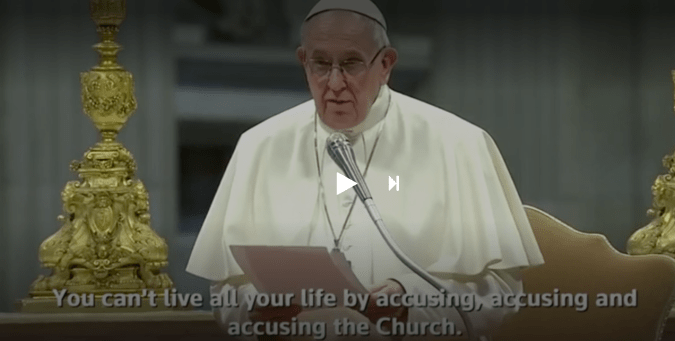
Pope Francis has accused thousands of victims and their families who have been abused by Roman Catholic priests of being related to the Devil.
Yesterday during an address given to pilgrims in southern Italy, Pope Francis said,
“You can’t live all your life by accusing, accusing,and accusing the church. Who is the accuser? Who in the Bible is called the Great Accuser? Who is it? …The Devil.
Those who spend their lives accusing, accusing, accusing, are not the devil’s children because the devil has none. Friends, cousins and relatives of the devil and this is wrong. Mistakes should be reported to be corrected. When mistakes are reported, when flaws are denounced, the church is loved”.
Despite Pope Francis opening a summit for Rome’s Bishops to address these issue of abuse, where he has acknowledged that they must fight the “enemy within” almost every element in this statement by the Pope is appalling. Mistakes? Which mistakes is he talking about? Is Pope Francis referring to thousands of priests slipping their hands into little boys genitals and asking children into having sex with them? Is he talking about the shoddy processes responsible for mishandling sex abuse allegations, or of the deliberate protection offered to perpetrators of these crimes? Even the word, ‘accusing’, which the Pope has chosen to emphasise, is a poor choice of language, for it suggests that there may be reason to doubt the claims being made and even that the person making the allegations is a troublemaker.
This is not the first time that Pope Francis has insulted the victims of abuse. In September 2018 he suggested,
“With people who do not have good will, with people who seek only scandal, who seek only division, who seek only destruction, even within families,” the answer is “silence. And prayer.”
“May the Lord give us the grace to discern when we must speak and when we must be silent. And [to do] in all of life: in work, at home, in society…” to become more closely imitators of Jesus Christ
As it says in the day’s Gospel, the people “rose up, drove [Jesus] out of the town, and led him to the brow of the hill… to hurl him down headlong. But he passed through the midst of them and went away.”
Those who drove Jesus out of the city were not people, but “a pack of wild dogs,” …They shouted instead of using reason, and in the face of this, Jesus’ response was to remain silent.”
“I certainly hope Pope Francis wasn’t inferring that he is behaving like Jesus and that those asking for clarification of the allegations are not like ‘a pack of wild dogs.’”
“In these times, it seems like the ‘Great Accuser’ has been unchained and is attacking bishops. True, we are all sinners, we bishops. He tries to uncover the sins, so they are visible in order to scandalize the people. The ‘Great Accuser’, as he himself says to God in the first chapter of the Book of Job, ‘roams the earth looking for someone to accuse’. A bishop’s strength against the ‘Great Accuser’ is prayer, that of Jesus and his own, and the humility of being chosen and remaining close to the people of God, without seeking an aristocratic life that removes this unction. Let us pray, today, for our bishops: for me, for those who are here, and for all the bishops throughout the world.”
The Pope’s remarks about the Devil and abuse victims is disgusting. I cannot work out why he would continue to articulate such insensitive and even untrue statements. By them, he is accentuating the pain that is already carried by so many thousands of Catholics, and his comments make a mockery of the message that is the good news of Jesus Christ, which marks out what a Church is about.
I feel compelled to speak up because the Pope’s commentary is wrong and Christian leaders need to respond and correct his galling words. Calling for justice and for repentance is not the work of the Devil. The Devil’s work lays with those evil priests who have abused innocence, and with the bishops and cardinals who have covered over the bloody stains of these heinous acts of betrayal. Surely, demands for the Vatican to change her ways is more in line with the Lord of the Church, Jesus Christ.
What does Jesus say? “You belong to your father, the devil, and you want to carry out your father’s desires. He was a murderer from the beginning, not holding to the truth, for there is no truth in him. When he lies, he speaks his native language, for he is a liar and the father of lies.” (John 8:44)
Christ’s message to any church who uncovers sinful activity in her midst is repentance and discipline. Churches that either enable sexual abuse or protect guilty persons are not representing Jesus Christ but are defaming his name.
Have we forgotten what happened to the Church in Pergamum? Of this church Jesus said,
12 “To the angel of the church in Pergamum write:
These are the words of him who has the sharp, double-edged sword. 13 I know where you live—where Satan has his throne. Yet you remain true to my name. You did not renounce your faith in me, not even in the days of Antipas, my faithful witness, who was put to death in your city—where Satan lives.
14 Nevertheless, I have a few things against you: There are some among you who hold to the teaching of Balaam, who taught Balak to entice the Israelites to sin so that they ate food sacrificed to idols and committed sexual immorality.15 Likewise, you also have those who hold to the teaching of the Nicolaitans.16 Repent therefore! Otherwise, I will soon come to you and will fight against them with the sword of my mouth. (Revelation 2:12-16)
500 years ago there was a God-given opportunity for Rome to repent and to reform. Many Christians throughout Europe listened to God’s gracious call and they found new life and forgiveness and Churches began to flourish and through them, entire cities and regions were transformed. All the while Rome instead chose to dig in her heels. Today, once again the cries are great, and the frustration is telling.
While the Vatican persists with upholding doctrine that contradicts the beauty and truth of the Gospel, it is should not surprise us to see her continue to obfuscate issues of holiness and morality. The problems are deep, not only legal and material but also spiritual and theological. In once sense Pope Francis has rightly identified an underlying cause in Rome’s current crisis: the Devil is playing his game. But sadly and dreadfully, he is laying fault at the feet of the wrong group of people.
By means of preface, I will be refraining from naming any of the persons involved in the story and from entering into particulars of the case, as this is an ongoing police investigation and because this concerns real people. My heart goes out to the family of the victim. I cannot imagine their pain and grief, and I pray that in the midst of tremendous loss they might find some solace.While I will try to avoid personalising commentary for the above reasons, we must not forget that we are talking about real faces and names and lives; it is because of such that the issue being raised in the New York Post is all the more saddening and needs telling.
One of the most fundamental notions of being human is that murder is wrong. There are many dreadful things that human beings do to each other, but the most serious and base sin is surely murder.
Over the weekend a New York man murdered his girlfriend and her baby (she was 5 months pregnant). He was initially charged with 2 counts of murder, but the second charge has since been dropped by the police. A spokesman for the District Attorney told the New York Post that the abortion charge ‘was repealed by the Legislature, and this is the law as it exists today.’
While the murder charge remains against the man for killing his girlfriend, New York State’s new and controversial Reproductive Health Act has now come into effect and thus protects the accused from being charged with killing the 5-month-old unborn child.
How is killing an unborn child defined by the State as murder one day, and okay the next day? Like flicking off a light switch, one moment it was illegal to take the life of the child, but now, even while acknowledging the gruesome way both mum and child died,the perpetrator has nothing to answer, at least in relation to this young one. The situation is even more morally absurd given the new abortion laws rely on permission being given by the mother and a doctor.
According to the Daily Mail, Queens District Attorney Richard A. Brown says that the man showed “no mercy and no regard for human life.”
New York State coast of arms
When murder is no longer considered murder, what have we become? When a man can stab another human being to death and then have a charge dropped because the law no longer considers the act unjust, what have we become?
There is an obvious disjunction here. It is as clear as last week’s comments that were made by Virginia’s Governor Ralph Northam, who advocated a position for infanticide. And yet society is forced to close its ears and suppress the conscience in order to maintain and the unfettered and indefensible mantra of a ‘woman’s right to choose’.
Let the reader understand, this program of dehumanisation is far from finishing its course. Not only is infanticide now on the table, but murder charges can be expunged when society deems a person outside the protection of the law. The evolving sitz im leben in New York State is one example of a movement that is taking hold across many Western societies where it is no longer possible to even assume let alone uphold the basic laws that gave rise to the very notion of justice and righteousness.
In the Sermon on the Mount, Jesus taught,
“You have heard that it was said to the people long ago, ‘You shall not murder, and anyone who murders will be subject to judgment.’But I tell you that anyone who is angry with a brother or sister will be subject to judgment. Again, anyone who says to a brother or sister, ‘Raca,’ is answerable to the court. And anyone who says, ‘You fool!’ will be in danger of the fire of hell.”
The Apostle Paul reinforces Jesus’ point,
“The commandments, “You shall not commit adultery,” “You shall not murder,” “You shall not steal,” “You shall not covet,” and whatever other command there may be, are summed up in this one command: “Love your neighbor as yourself.” (Romans 13:9)
Our modern sins, like those in the ancient world, are a matter of failing to love our neighbour. The wonder and attractiveness of sacrifice and giving for the sake of another is losing traction as the new morality stamps out opposition with newly fashioned laws and with civil intolerance.
We desperately need to return to the message Jesus Christ preached, to hear both the mercy of God and the righteousness of God. Love is not killing our neighbour, or slandering them or cheating them, but rejoicing in inconvenience, preferencing generosity over greed, protecting unexpected life, and valuing those who are sometimes more challenging because they carry with them disease or disability. Recent days have given us great insight into the direction Western cultures are heading, and the question must be asked, do we like what we see? Is this where we wish to be directed?
One of the most talked about issues in the United States for the past two weeks has been late-term abortions.
New York State passed a law to make it easier to perform abortions up until birth, the State of Virginia came within a single vote of doing so, the Virginian Governor proposed a position in support of infanticide, and the US Senate blocked a Bill aimed at protecting unborn children who can feel pain from 5 months.
Australians are captivated by American politics and culture. Every day and every night our major news outlets are reporting the latest stories coming out of America. Almost without exception, Australian media will rehash and talk about any controversial political story that is churning about America’s political washing machine. Viral video clips are splashed on the 6pm news. Tweets are relayed and commented upon, even those which might be innocent but sound juicy if we put an evil spin on them.
The past two weeks have witnessed some of the most embarrassing and detestable suggestions that have reached the floor of American State and Federal Governments in recent decades, and almost zero words have been dedicated to reporting this in Australia.
Australian media have no issue reporting the growing list of Senior Virginian politicians who been caught up in racist or sexual scandals; even local regional newspapers are talking about it. There is however almost no comment on the horrifying position Governor Ralph Northam has articulated in relation to infanticide (which by the way, is the issue which led to the revelations about the photograph in his college yearbook),
“If a mother is in labor…the infant would be delivered. The infant would be kept comfortable. The infant would be resuscitated if that’s what the mother and the family desired, and then a discussion would ensue between the physicians & mother”
There is no media discussion over Virginian Delegate, Kathy Tran’s, admission,
Kathy Tran: “My bill would allow abortion up to 40 weeks.”
Todd Gilbert: “Where it’s obvious a woman is about to give birth…would that be a point at which she could still request an abortion?”
Kathy Tran: “My bill would allow that, yes”
This raises a question in my mind, why is Australian media, who are known for their obsession with American politics, ignoring what is one of the biggest political stories of 2019 thus far? Why are they not showing the gruesome revelations made by Virginian Delegate, Kathy Tan? Why are Governor Ralph Northam’s comments supporting infanticide not being discussed?
The issue of late-term abortion has such currency in the United States that it was addressed in the State of the Union. Australian media are this week, as always,reporting and comment on the State of the Union, but apart from a couple of passing and innocuous sentences that push the abortion debate into the arena of a local American issue, Australians would be surprised to hear that this is
The President stated,
New York cheered with delight upon the passage of legislation that would allow a baby to be ripped from the mother’s womb moments before birth.
“These are living, feeling, beautiful babies who will never get the chance to share their love and dreams with the world. And then, we had the case of the governor of Virginia where he stated he would execute a baby after birth. To defend the dignity of every person, I am asking Congress to pass legislation to prohibit the late-term abortion of children who can feel pain in the mother’s womb.”
While the story continues to unfold across the Pacific Ocean, during the same period of time in Australia, we have been reading stories about a fish saved from a sticky end and then driven 100kms to new and safer waters. There is a ‘new’ report telling us about the immorality of eating meat. Apparently, bees are intelligent. Two penguins enjoyed a holiday in Western Australia and are now traveling back to Antartica. A fish has changed its sex at the Melbourne Aquarium. Endangered Owls are being saved by a “vomit-sniffing dog”. These and many more stories about animals and protecting animals have managed to find space in our Aussie news. Of course, some of these stories are interesting and a few are even important and deserve public attention. Hey, there was even room to share another “snake in the toilet” story!
Defend animals! Save animals! Stop murdering animals! But killing healthy babies in the womb, and now even post birth?
I wonder, could it be the case that reporting this growing American story is too close to home? Perhaps the Pacific Ocean is not such a great divide. Maybe, the reality is that quoting these American lawmakers might expose uncomfortable truths about practices that are permitted and even praised in Australia today? It is not difficult to see the moral dissonance. We are being told to express moral outrage when animals are mistreated or are endangered; fair enough. What about killing a healthy baby at 40 weeks if the mother so chooses? What about giving a mother the right to let her healthy child die after he or she is born? Are Australian journalists so afraid of reporting the awful reality of abortion?Are they so committed to protecting this insanely evil practice, that one of the biggest stories in America is blanketed by silence?
We have many fine journalists in Australia, working locally and all over the world, covering all kinds of weighty and relevant stories.Who will speak for the unborn?
“They shed innocent blood, the blood of their sons and daughters, whom they sacrificed to the idols of Canaan, and the land was desecrated by their blood”. (Psalm 106:38)
“Speak up for those who cannot speak for themselves.” (Proverbs 31:8)
A stomach-churning video has gone viral over the last 24 hours. In the State of Virginia, House Democrats are pushing a Bill that will legalise late-term abortion, just days after New York State adopted similar legislation. Kathy Tran, a Democrat delegate, responded to questions by admitting that the Bill will permit abortion even as late as when a woman has entered labor.
Kathy Tran: “My bill would allow abortion up to 40 weeks.”
Todd Gilbert: “Where it’s obvious a woman is about to give birth…would that be a point at which she could still request an abortion?”
Kathy Tran: “My bill would allow that, yes”
You can watch the video here:
I am again writing about this issue, less because of what is unfolding in the USA, but because I’m reminded of what is already practiced and accepted in my home State of Victoria.
In 2016, then member of the Victorian Legislative Council, Rachel Carling-Jenkins, presented a Bill hoping to overturn a 2008 law which legalised late-term abortions.
The law allows women in Victoria to have an abortion after 24 weeks of pregnancy, right up until the time of birth. All that is required is for two doctors to give approval.
The Abortion Law Reform Act 2008 stipulates that late-term abortions are permissible so long as two medical practitioners “reasonably believe that the abortion is appropriate in all the circumstances”. “Circumstances” is defined as the medical practitioner having regard to
“(a) all relevant medical circumstances; and
(b) the woman’s current and future physical, psychological and social circumstances.”
The Bill was defeated 27 votes to 11.
At the time I did not engage in the conversation. Perhaps I was busy. Maybe I was focusing on other matters of importance. I remember a debate taking place in Parliament but to my shame, it wasn’t on my radar as it ought.
If there is one thing I have learned over the past few years is that evil doesn’t slow down its agenda simply because we are paying attention or not paying attention. No one can address every act of immorality and speak to every grave issue facing the world; we need an omnipotent and loving God. However, when we can speak, should we not give voice to those who cannot speak for themselves?
Societal shift on abortion has been swift. In the space of three years, we’ve witnessed the culture move from justifying abortion to celebrating abortion, from permitting the practice during the early weeks of pregnancy to licensing third-trimester abortions, even when these very same infants could survive and live outside the womb.
Understand, these laws are not about saving the life of the mother, for, in such rare and terrifying circumstances, the life of the mother is surely and already prioritised. The aim in those rare situations is not to kill the child but to save the life of the mother. This is far from where the abortion argument now finds itself. The newly adopted law in New York State, the proposed Bill in Virginia, and the current practice in Victoria where I live do not require the mother’s life to be at risk. The grounds are,can she persuade a doctor (in Victoria the law requires 2 Drs) that she no longer wishes to keep the pregnancy. As the harrowing video reveals, this decision can be made as late as during labor.
According to the Victorian State Government’s health website, in 2016, 14.9% of all perinatal deaths in Victoria were accounted by abortions for “maternal psychosocial indications”. 40.32% of all late-term abortions (from 20 weeks) are for “psychosocial” reasons, meaning there is nothing wrong with the baby or physical health of the mother.Please note, my understanding is that these numbers include terminations that occurred in hospitals and does not include abortions that take place in clinics.
If the pronouncements of these lawmakers aren’t enough to turn the stomach, Virginia Governor, Ralph Northam, today suggested that the life of a newborn child can be legitimately ended if that is the wish of the mother and attending physician.
“If a mother is in labor…the infant would be delivered. The infant would be kept comfortable. The infant would be resuscitated if that’s what the mother and the family desired, and then a discussion would ensue between the physicians & mother”
This is not a slippery slope, this is the natural outworking of an ethic without God. This is the world of Peter Singer. 20 years ago many people sneered at some of Singer’s views and found them repugnant. Today, much of his thinking has become the norm in Western countries. His utilitarian thinking supports the killing of lesser human beings, those who are disabled and are considered less than fully functioning. Singer’s arguments supporting infanticide are now finding their way into mainstream politics and legislative agendas. Have we not learned from history? Are not past stories of the mass killing of innocence enough to steer us from ever going there again? The answer is, no. Our civilised and progressive societies are eager to venture into those dark hellish places once again.
What makes our society even more culpable than past societies is that we are committing the same sins but with greater knowledge and with greater ability. Modern knowledge reveals truths about how babies are formed in the womb, things that were once believed but could not be seen until the invention of ultrasounds. We can see the heartbeat of a baby in the earliest weeks. We can delight at a child’s fingers and toes growing at 6 weeks. We now know that babies can hear and respond to music by 16 weeks; the next Mozart is already learning to feel and marvel at the beauty of sound.
Medical advancements give us unparalleled ability to care for both mother and child, to even perform surgery on a baby while it is in the womb. When these little ones surprise us by coming into the world early we have the know-how to save the lives of these children as young as 22 weeks.
This is a grotesque reality in which we live: despite superior knowledge of human life in the womb and superior medical technology to save life, our commitment to destroying life has also increased.
I suspect some readers will respond with partial agreement; you dislike late-term abortions, but you don’t have a problem with ending a pregnancy during the first trimester. This is not an uncommon position to hold.
May I respond by asking you this question, at what point can we draw an absolute moral line? At what point can we justify the moral shift from being okay with killing the child to believing it is not okay?Is the moral threshold when the baby begins to feel pain? Is it the moment cognitive awareness starts? Is it the week when their limbs have formed? Is it the moment the heart begins to beat? There is no ontological moment during a pregnancy at which we can argue, at this stage, it is okay to abort a child.
This needs to stop.
I understand that this issue is very real and personal for many women in our society. I don’t want to ignore the pain and guilt thousands of women experience following an abortion. To them, I say, there is hope of forgiveness and renewal for those who seek it.
How different is the answer that we find with the God of the Bible. The Bible insists that every human being, from the moment of conception, is precious and made in the image of God. Gender, age, health, mental faculties, physical appearance, do not detract from a person’s inestimable worth.
Jesus loved the unwanted. Throughout his three years of ministry, Jesus was known for befriending and caring for those whom society thought little and had often neglected. No one was too insignificant for him to take interest in and show love.
On one occasion we are told,
“A man with leprosy came and knelt before him and said, “Lord, if you are willing, you can make me clean.”
Jesus reached out his hand and touched the man. “I am willing,” he said. “Be clean!” Immediately he was cleansed of his leprosy.” (Matthew 8:2-3)
Jesus didn’t stop there, the extent of love that God demonstrated was found on a Roman cross, where the Son of God sacrificed his life for the salvation of others.





 MurrayCampbell.net