The Victorian people need greater clarity from the Government for pandemic objectives

Throughout this pandemic I have encouraged my fellow Victorians to follow government restrictions and the official health advice from the Department of Health and Human Services. Not understanding an issue or not agreeing with a policy is not sufficient reason for ignoring the rules. As a Christian the Bible tells us to honour those in authority and to follow the law, this is something I take seriously. It is also the case that in our system of Government we are able to participate and to ask questions and to be informed about reasons for public policy. 

I can only imagine how difficult this year has been for our decision-makers. This is not only the first pandemic in a century to hit Australia but this disease is new and scientists still know very little about how it works. 

Governments around the world have approached COVID-19 in different ways and these varied approaches don’t always conform to a set pattern or align with success ratios of other countries that are following a similar set of rules and guidelines. This is not a criticism of any single approach but simply noting that when it comes to tackling COVID-19, certainty is elusive and only with hindsight will we really know what was the most sensible strategy.

Many have made the crucial point that in the pandemic there are competing issues and concerns. I agree, it would be derelict of us to focus on just one aspect of the pandemic at the neglect of others.

To repeat, I don’t envy those who have responsibility for making these decisions. One thing I am continually doing (as is my church and many others too) is praying that those in authority will have wisdom and understanding, and choose the best path forward. Indeed, we are doing more than pray, for this is a time to assist our fellow Victorian in all manner of practical ways. 

In my role as a Melbourne church pastor, I listen to people who are struggling and finding life difficult.

I am concerned for the mental health of many Victorians.

I am concerned for school students and their education this year, and for their mental, social, and physical well being.

I am concerned about the economy and 100,000s of Victorians who have lost their jobs. Losing $1 billion per week from the Victorian economy is not about the money, it is about peoples jobs and livelihoods. I am also concerned about the staggering debt we are accumulating which our children and their children will have to pay back one day.

I am concerned for thousands of Victorians who are too afraid to visit their GP or to receive the medical treatments that they require.
Victoria’s State of Emergency powers is set to expire after being in place for 6 months. On Sunday, the Premier announced that he wants a 4 week extension. There is also the State of Disaster powers which were brought into play at the beginning of August and will continue until September 2nd. Such powers are rightly limited in duration because under normal circumstances, it is inappropriate and immoral for the State to limit the rights of citizens to work, travel, and participate in everyday activities.

From my perspective, before any such extensions are given, it is incumbent upon the Victorian Government to explain their objectives and to be clear about the details with the Victorian people. It is not healthy for any Government to keep Victorians in the dark. 

At this stage, Melbourne will remain under Stage 4 until September 13th. We have not been told under what conditions these restrictions be relaxed, nor when we will return to Stage 2, which is the point where most Melbournians can return to work, restaurants opening, and with schools and sport resuming. Under Stage 2, only the smallest of churches can recommence normal services.

It may be the case that the Department of Health and Human Services and the Premier have not decided what numbers are required before loosening the restrictions. It is apparent from various medical doctors who are publicising their views, that there is wide and varied opinion about what the aims should be in fighting COVID-19.  This is unsurprising, given the nature of this disease. When medical doctors and scientists voice their opinions in the public square (which they are entitled to do), it is not always helpful and sometimes it exacerbates public confusion. For example, are they simply expressing their opinion or are they trying to influence government directives? Are we aiming to lower the curve or to reach elimination? Is the aim of the lockdowns to have zero community transmission? Are Governments planning to suppress social freedoms until there is vaccine? 

While many are hopeful that a vaccine will be soon discovered and made available, no one yet has any idea what length of time we’re talking about. The Prime Minister has this week indicated there are positive signs about a vaccine coming from Oxford University, which sounds promising. At the moment estimations for having a vaccine in our hands range from 6 months to 12 and 18 months time. This is assuming that a suitable vaccine is found.

I am not advocating for a Swedish method or for a China style lockdown or anything in between. There are enough arm chair experts in our community without me becoming another annoying one. All I am saying is that we are now 6 months into this pandemic and there is uncertainty in our community about what the objectives are, both for the short term and the longer term. 

The request is simple and it’s important, the Victorian people deserve greater clarity about what the goal is for September 13th, and what the Government’s goals are for each following stages on the path to recovery. This information will not only assist compliance with rules, but also help business, schools, churches, and community groups to begin planning for the future. 

Rest assured, I continue to pray for our Federal and State Governments, and for our Health officials as they tackle this pandemic. 


Since writing this piece I have learned that the Oxford Vaccine “makes use of a cell line cultured from an electively aborted human foetus.” This raises important ethical questions about its use here in Australia. See https://www.eternitynews.com.au/world/covid-vaccine-protest-by-three-archbishops/

Outrage or empathy? A President’s brother dies

President Trump’s younger brother died today. As the news broke on Twitter, the phrase ‘The wrong Trump’ started trending. This was among the less ghastly things being said about the Trump family this afternoon. Take for example The Washington Post who chose this headline for the obituary, “Robert Trump, younger brother of President Trump who filed lawsuit against niece, dies at 71”.

As Jesus once said, “For the mouth speaks what the heart is full of.” (Luke 6:32)

Let’s be honest, we live in a world filled with hate. Twitter is a dumping ground for all manner of human bile. Twitter has become a place where people go to vent and speak the words they dare not speak to another in person. It’s a verbal firing range, often committed in anonymity. 

It is one thing to affirm and speak kindly of people you like and who agree with you, but what about people with whom you share less in common? What about people with whom you disagree on religious issues or political matters? How hard it is to find kindness and understanding across the political divide. 

The Bible, as it is so often, turns the world the right way round and flattens human wisdom and ego. The Scriptures say, ‘mourn with those who mourn’. 

“Bless those who persecute you; bless and do not curse. 15 Rejoice with those who rejoice; mourn with those who mourn. 16 Live in harmony with one another. Do not be proud, but be willing to associate with people of low position.Do not be conceited.” (Romans 12:14-16)

Granted, these words are written to Christians (and I hope they take them seriously), but they’re not a bad set of suggestions for anyone.  

In our polarised age, it’s evident that many people no longer even pretend to express sympathy. In the game of cultural power play showing niceness to ‘opponents’ is a sign of weakness. The cultural clappers want outrage and fighting words, and anger and verbal diarrhoea aimed at all those social heretics. 

The world is returning to a fragmented past where tribalism is triumphing. We’re jumping into Lord of the Flies and instead of being repelled we’re enthralled. The President of the United States’ brother dies and it is too much for to simply offer a word of sympathy. Instead, it is an excuse to pile on a family because of political dislike. This shouldn’t be about politics. This isn’t about approving of Donald Trump’s character or his polices. It’s about treating fellow human beings with a degree of respect. If we are unable to choose a word of empathy to a family who have lost a brother, we have lost one of the most basic aspects of our humanity and become truly pathetic. 

Yes, President Trump’s behaviour has often added to the social mess in which we are squelching and churning, but the origins of our situation are far older and deeper. Both Twitter and the real world need more kindness. We need grace and mercy to cut through the vitriol that is consuming and destroying societies before our very eyes.

Imagine if God treated us the way we deserved? He didn’t wait for us to treat with with honour. Instead, he pursued us in love even while we were sinners. This God of the Bible is patient and longs to demonstrate grace and kindness, even toward the wicked, and even for you and me. 

“ ‘As surely as I live, declares the Sovereign Lord, I take no pleasure in the death of the wicked, but rather that they turn from their ways and live.” (Ezekiel 33:11).

Learning to Face Death

“Death lies on her like an untimely frost
Upon the sweetest flower of all the field.”
(Act IV, Scene V, Line 33)


Over the past 24 hours, 19 Victorians died as a result of COVID-19. In light of the volume of new cases that we are seeing, many more Victorians will die from this terrible virus over the coming days and weeks. Each and every single one of these people is a life to be mourned.

Victoria averages between 3000-4000 deaths per month, from all kinds of causes. That’s over 300 people dying every day in our State. Each of them is a loss to our community and is cause for grief.

Julie Power, writing for the Sydney Morning Herald (‘Even in a pandemic, most people shun talk about death and dying’, August 11), has highlighted how Australians are “reluctant to think about death or make plans for how they want to go.”

According to a recent survey conducted among 1,100 people in NSW, 70% of Australians prefer to avoid addressing the issue of death.

Power’s suggests that “The deaths of older Australians alone and isolated from friends and families during the pandemic highlights the need to talk about what constitutes a good death.”

I agree, we need to talk. We appreciate that such conversations are difficult at the best of times. Who among us is keen to discuss our final days and to make decisions about funerals? Contemplating death is altogether horrible, even more, when we are considering people we know and love. Death is, to quote the Bible, ‘the last enemy’.

photo-1579255971754-8c6b1385a2b5

Unlike most cultures for much of history, we have managed to sanitise death with our modern medicines, clean white sheets and closed doors. We have successfully delayed death through vast improvements in medicine and technology, with greater standards of livings, by educating people about health, and through legislating thousands of laws guarding public and workplace safety. Despite all this, we cannot account for the unexpected accident, a natural disaster, or the coming of a pandemic. Even when we evade such tragedy, our bodies have been in motion since birth, taking the road of gradual deterioration and decline.

One thing this pandemic has proven is how much we wish to rage against the dying light, to fight and resist it with all our might. Death is not a friend, it is an enemy to struggle against.

It is one thing to have discussions about dying well, as Julie Power is urging, but it is quite another to die with or without hope. Hope doesn’t evade death, and neither does it remove painful grief, but it makes all the difference in the world.

A young mum whom I knew, died from ovarian cancer on August 1st. She grew up with an atheistic worldview, but when confronted with cancer and receiving a poor prognosis, she began asking questions and searching for hope. Suffering didn’t reinforce her atheism, it led her to seek out God. In learning about the person and work of Jesus Christ, she didn’t feel repulsed or angry at God for her cancer, rather her life was transformed by the beauty and warmth of Jesus. This wasn’t Christianity offering her a placebo in the face of death, but her becoming convinced about the reality, goodness, and certainty of the Christian Gospel.

“he will swallow up death forever.

The Sovereign Lord will wipe away the tears

    from all faces;” (Isaiah 25:8)

There is never a good time to talk about death. Conversations about funeral arrangements and taking care of those who remain behind are important. These are difficult discussions we need to have with close family members; not because death is imminent for most of us, but because we do not know when the hour will come.

As a Pastor of a Church, it is my great privilege to spend time with people who are facing their final days on the earth and to sit with grieving families in their homes and to stand with them at the graveside. The question of hope is rarely left alone as people grapple with the reality of the grave.

On one occasion Jesus arrived at the home of his friend Lazarus, who had died some four days earlier. Visiting the tomb of his friend, we read what is the shortest sentence in the entire Bible,  “Jesus wept”. Mingled with grief, Jesus also spoke confidently of hope, not only for Lazarus but for all who look to him.

“I am the resurrection and the life. The one who believes in me will live, even though they die; and whoever lives by believing in me will never die. Do you believe this?”

Vatican aiding China with Sinicization

China is pursuing its policy of Sinicization, reshaping Christianity into the image of the Chinese Communist Party.

The Australian newspaper is reporting that Beijing is to extend its deal with the Vatican, despite high ranking Catholic officials protesting, including Hong Kong’s Cardinal Joseph Zen.

“The two-year provisional agreement will expire next month.

Bishop Sorondo, a close friend of Pope Francis, is on record as claiming the ­Chinese state exemplifies Catholic social justice teaching, a claim dismissed as “absurd’’ by Vatican-based US cardinal Raymond Burke.

Renewal of the deal, which has given the Chinese state control over the appointment of bishops in China, would spark outrage across the church and cause deep sadness among persecuted Catholics in China and Hong Kong.

Renewal would come as religious persecutions are being stepped up in China, which is increasingly flexing its military might in the Indo-Pacific region.”

photo-1522460676881-83490b51a873

While the Vatican is refusing to release all the particulars of the arrangement, it is widely believed that it will allow the Vatican to have greater say in appointing future Bishops in China (but not full control). This is contingent upon Pope Francis formally recognising seven Catholics Bishops who have already been appointed by the Chinese Government.

The New York Times reported in 2018,

“The ruling Communist Party sees the compromise with the Vatican as a step toward eliminating the underground churches where Chinese Catholics who refuse to recognize the party’s authority have worshiped for generations. With the pope now recognizing all bishops and clergy members in the official Catholic churches approved and controlled by the party, the underground church may have no reason to exist.

The move is part of a broader push by the government to clamp down on all aspects of society since Xi Jinping took power as the party’s leader in 2012.”

For the most part, in history, Church and State have been duly recognised as separate entities, concerned with different spheres of responsibility, jurisdiction, and authority. That is not to suggest that there is no overlap. The Scriptures themselves testify to this in places such as Romans 13:1-7. Indeed, the Apostle Paul on one occasion appealed to Caesar without any sense of overstepping the line.

At their best and when the dynamics are suitably valued and practised, the State and Church serve society in a healthy partnership, understanding their distinct roles and appreciating the other. It’s not as the State is void of religious content; Christians and non Christians alike, and people of other faiths, are welcomed into Parliament and can contribute ideas that have been formed by their convictions and worldview. We don’t live in an a-theistic state, but a pluralistic culture.

At worst, the State has intruded and sought to control or disrupt churches and even to work for their destruction. And Churches, in a vain attempt to retain some semblance of relevance or to keep their institutions alive, have become complicit with immoral and anti-Christian agendas.  We have seen this happen with Christian denominations capitulating on the marriage issue. This has happened amongst evangelicals in the United States as they conflate the cause of Christ with the Republican Party. Indeed, the Vatican’s deal with Xi Jinping is reminiscent of former days when Rome (and also some Protestant denominations) was found to collaborate with Nazism in the 1930s-40s. The idea was, if you keep our doors open, we’ll give you our support. We’ll betray your cultural heretics and cede some of our independence so long as you let us be.

The Lord of the Church once said, “What good is it for someone to gain the whole world, yet forfeit their soul? Or what can anyone give in exchange for their soul?”  Apparently, some ecclesiastical minds are of the opinion that one can do both.

When I wrote about this story two years ago, I suggested Daniel ch.3 as an analogy. President Xi Jinping is sounding like King Nebuchadnezzar, while Pope Francis is appearing as one of his astrologers who betrays Shadrach, Meshach and Abednego. Since then, more fuel has been added to the fire, and this new blast of oxygen from St Peter’s isn’t going to dampen the growing threat posed to Christians and religious minorities in China. It is one thing for the secular citizen to sell their the soul to a dominant regime, but for the overseers of a Church to throw into Nebuchadnezzar’s furnace the people under their care, they themselves are in danger of another fire where no angel will tread and save.

Communist China is an evil regime that has little regard for religious freedom, let alone political and social freedoms. The world has evidence of 1 million Uighurs, a Muslim minority group, being forced into concentration camps. For decades churches have been closed, destroyed, pastors imprisoned, and families threatened because they profess faith in Christ. Millions of Chinese Christians cannot meet to worship God in public or read the Bible. The threat of discrimination is a constant one. For the Vatican and Pope Francis to make a deal with the Devil is a grave misjudgment.

This is a timely reminder to thank God for the religious freedoms we enjoy in Australia, and not to take them for granted. There are sometimes tensions, but not every disagreement amounts to discrimination against Churches or religion in general. Nonetheless, this should also serve as a warning to Australian Churches and Governments alike.

When this deal with first agreed upon in 2018, I suggested,

“We are a long way from the politico-religious scene of our northern neighbour, and yet it is not irrational to suggest that should some Australian political parties and notable social commentators have their way, we would be aiming toward an Australian Sinicization, conforming Christianity into the likeness of Australian humanistic secularism.”

This threat remains. And no, I am not referring to current Governmental rules for religious organisations in the midst of the COVID-19 pandemic.

Writing for ABC’s The Conversation last week, Professor Nicholas Aroney spoke of new research that has found that government-based religious discrimination is on the rise around the world. While much of the attention is duly on other countries, he notes that “the threat in Australia is real”.

We are far from the situation found in Communist China, but we do have, for example, a State Government that has previously attempted to interfere with basic religious freedoms and is currently drafting legislation that may soon see parts of the Bible banned, classical teaching on marriage prohibited, and prayers for sexual sanctification outlawed. I am of course referring to the Victorian Government’s plan to introduce legislation in 2020 to ban conversion practices.

We need to guard our own backyard while also speaking up against religious suppression that is taking place across the seas.

Melbourne: State of Disaster

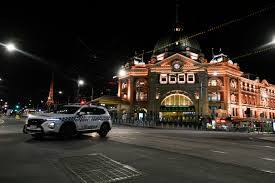
The world’s most liveable city is now largely deserted. Her 4.9 million residents are now required to stay in their homes, apart from a few limited and important reasons.

Victorian Premier Daniel Andrews yesterday afternoon declared a State of Disaster. The streets are now largely empty, office blocks abandoned, schools and universities closed, and the roads eerily quiet. There was no slow procession of peak hour traffic outside my home this morning.

The trams are running empty of passengers and our sporting stadiums have turned into relics to a yesterday that we long to return.

As of last night, there is now a curfew in place. No one is allowed to drive, walk or cycle, in their suburbs from 8pm until 5am. The curfew along Level 4 restrictions will continue until at least September 13th.
 

melbourne


The last 5 months have been challenging and I expect the next 6 weeks will be even more difficult. Many Melbournians are already tired and anxious. Any prolonged disruption to ‘normal life’ brings with it stresses; how much more when even the basic elements are put on hold. I feel for the 100,000s plus students trying to study for their VCE during this lockdown. The economic uncertainties are real and not going to be easily fixed. The Victorian economy is losing $1 billion each week and with thousands more losing their jobs.

Melbourne is my home. I was born here, went to school and studied at university here. Susan and I married in Camberwell. After 4 years of exile (in Sydney) we returned and have since lived, worked, and raised our children in Mentone.

The experience is new to almost all of Melbourne’s residents. It is certainly my first time to live in a city with a curfew and where leaving ones home may result in a visit from the police. Thousands are defence force personnel are also patrolling our suburbs and checking on residents. It is a strange and dystopian view.

I don’t want to exaggerate; while no one wants to be in this position many people seem to be doing ok. Life is different, and at times annoying but overall they’re doing pretty well. I also appreciate that many other Melbournians are becoming frustrated and even angry. I have noted how even our  ‘progressive’ leaning media outlets are now turning on the State Government. I’m not going to pretend that the pandemic has been handled perfectly by Governments or the people alike. Isn’t that part of the reality of facing new and extraordinary times? Our fallibilities our exposed, our best efforts fall short, and the stubbornness of others intrudes to the detriment of others.

I am though urging my fellow Melbournians to adhere to the new rules. This isn’t about asserting personal rights, listening to idiotic theories, or playing political games. Most of us recognise that mistakes have been made. Had people done the right thing and had authorities better-equipped personnel during hotel quarantine we may not be in the position we are now facing. There is a time for those conversations, but now, we need to focus on following the law and looking out for the vulnerable, the anxious, and the lonely.

Our Church is praying regularly our Prime Minister Scott Morrison and his Cabinet, for Premier Daniel Andrews and his Cabinet, and for those health officials giving advice each day. This is important.

This pandemic has already taken lives. It has forced many thousands to reconfigure their lives because of illness or financial hardship. Stories coming out of age care homes are horrific. The mental and social toll is near impossible to measure. Dare I suggest, not as a pessimist but as a realist, more difficult days lay ahead. Once Level 4 restrictions are lifted there were will be 4.9 million sighs of relief. The audible heave, however, won’t blow away other restrictions that will remain for some time. The economic toll for thousands of businesses will be devastating, and we don’t yet know the cost that is being born by our children.

We’re not fighting to rid ourselves of COVID-19, but to control it; according to the Victorian Government we are trying to uncover the source for 100s of mystery cases and to control (or eliminate?) community transmissions. Melbourne will come through to the other side, bruised and changed, but we will make it. But even as we stagger to our feet there is an even greater threat looming over our shoulders, namely that of an authoritarian and hungry red dragon. Could this dystopian season be but the first chapter of more to come?

The Australian Strategic Policy Institute advises the Federal Government and also informs the Australian public about the rapidly growing issue of Communist China. In an interview last week, Michael Shoebridge noted that Government military and strategic plans for the 2030s are being fast tracked for employment now. There is growing consensus that conflict in the region within months is not only possible but is now “credible”.

Melbourne has enjoyed a long summer: 75 years of tremendous progress, pleasure, and safety. There have been interruptions, but nothing like this.

Ecclesiastes ch.3 reminds us that there are many times in life. Not every season continues into perpetuity.

“There is a time for everything,
and a season for every activity under the heavens:

   a time to be born and a time to die,
a time to plant and a time to uproot,

  a time to kill and a time to heal,
a time to tear down and a time to build,

  a time to weep and a time to laugh,
a time to mourn and a time to dance,

  a time to scatter stones and a time to gather them,
a time to embrace and a time to refrain from embracing,

 a time to search and a time to give up,
a time to keep and a time to throw away,

   a time to tear and a time to mend,
a time to be silent and a time to speak,

    a time to love and a time to hate,
a time for war and a time for peace.”


Melbournians, for the most part, have grown up with the belief that we deserve our choice of the above times, and that those other experiences are what happens to people in other parts of the world. We are now learning that not even the world’s most liveable city is exempt.

Only a few sentences later the writer of Ecclesiastes says, “He has also set eternity in the human heart”.

Each new day is preparation for eternity; Melbourne has too often failed the test. We’ve been caught out. We can’t rely upon our prosperity, security, and health, to see us through; they are unreliable gods. This is a time where our deepest desires and most earnest hopes are being tested. If the world’s most liveable place cannot make certain our hopes and security, where must we look?

Psalm 62 takes us to one whom Melbourne believed was no longer necessary. And yet, this God remains the one firm foundation we have:

“Truly my soul finds rest in God;
my salvation comes from him.

Truly he is my rock and my salvation;
he is my fortress, I will never be shaken.

How long will you assault me?
Would all of you throw me down—
this leaning wall, this tottering fence?

Surely they intend to topple me
from my lofty place;
they take delight in lies.
With their mouths they bless,
but in their hearts they curse.

Yes, my soul, find rest in God;
my hope comes from him.

Truly he is my rock and my salvation;
he is my fortress, I will not be shaken.

My salvation and my honor depend on God;
he is my mighty rock, my refuge.

Trust in him at all times, you people;
pour out your hearts to him,
for God is our refuge.

Surely the lowborn are but a breath,
the highborn are but a lie.
If weighed on a balance, they are nothing;
together they are only a breath.

10 Do not trust in extortion
or put vain hope in stolen goods;
though your riches increase,
do not set your heart on them.

11 One thing God has spoken,
two things I have heard:
“Power belongs to you, God,

12     and with you, Lord, is unfailing love”;
and, “You reward everyone
according to what they have done.” (Psalm 62)


A young Victorian mum has died and is now with Christ

A young Chinese woman with a little girl started attending Mentone Baptist Church three years ago. She was battling cancer and had decided that she needed answers. It is one thing to understand a medical diagnosis, but accompanying such devastating news are other and even bigger questions. Why me? What is life meant to be about? Is there a God who is interested and cares?

backlit cemetery christianity clouds

Christine grew up in a family and culture that was atheistic, and she assumed that this was the way to view the world. A highly intelligent and capable woman, being informed that she had terminal cancer broke apart what she believed to be true about the world

Suffering didn’t reinforce her atheism, it led her to seek out God. In learning about the person and work of Jesus Christ, she didn’t feel repulsed or angry at God for her cancer, rather her life was transformed by the beauty and warmth of Jesus.

Christine quickly made friends with several of the women at church and started attending a Bible study group.

In early 2019 it was evident that the cancer would take her life. She battled on while recognising the awful and difficult path she was taking.

In Christine’s own words,

With the time I spent more with bible group, i started to be more curious about Jesus Christ. As I said before, I used to live that hard and trying that much to prove myself and now I had cancer. My whole life was ruined. If there is a God, could Jesus give me a new life.

Just at that time, my cancer was coming back again, only 1 and half year time after the operation and chemo. I was shocked and felt lost. The doctor told me that  I had no chance to be cured. I was too tired, I had been tried that hard to stand up. I just got the chance to see the light of new life.

Different from last time, I thought of Jesus Christ almost immediately. I remembered in the Luke, Jesus replied, “What is impossible with men is possible with God” That probably was my first real pray from the bottom of my heart, I kept asking Jesus Christ to save me and hoped he could guide me and change me if I had done anything bad and wrong. I realized no one could help me now except Jesus Christ.”

Her young body was failing. There were days when getting out of bed was impossible. Although her body was terribly weakened by the cancer, she wanted to publicly profess her faith in Christ through baptism. With a couple of Christine’s friends from church, it was my great joy and privilege to sit with her in her home: listening and sharing, hearing her story and encouraging her with the Scriptures. It was clear that she was convinced about the Gospel and now knew and loved Jesus.

We spoke about baptising her in her home, but she wanted to show the world the difference Jesus made. Even the night before we were unsure whether Christine would be well enough to leave her house and come to the church.

That Sunday morning in April 2019, Christine stood in front of the church and spoke about what the Lord Jesus had done for her, and how despite her suffering, she was safe in him.

She shared,

“I now believe and trust Jesus as my Lord and Saviour, knowing that even though I denied him for past 30 years, he died on the cross for my sins and is willing to forgive me. I know that God has accepted me as his daughter and loves me.

I am still in the middle of treatment, reading God’s words every day is motivating me to continue to trust him and rely on him. I still feel scared and worry about my cancer sometimes. The difference is I have God to rely on and he is willing to take my worry. More exciting is I find my life is changing slowly, I am spending more time with my friends and family. I am not willing to spend time being angry anymore, because I appreciate every single day God gives to me.

I am so weak and little in this world, and I used to be  a terrible person, but God loves me and I now love him and I can trust him for the future.”

Christine then stood in the pool with me. I asked the same two questions that we ask everyone who is getting baptised,

“Do you believe Jesus is God’s Son who died on the cross for your sins and who was raised to life to give you new life?”

“Have you repented of your sins and are trusting Jesus for salvation, and with His help will you follow him all the days of your life?”

With a confident yes to both questions, Christine went through waters of baptism, signalling to family, friends, and the church, Jesus had redeemed her and gifted her eternal hope.

It was one of those moments a pastor never forgets. I suspect no one present that morning will ever forget.

Not long after, she needed to move to another part of the city and so connected with another church, although she was never well enough to attend. They have supported in her final months. Her mum and dad have since both become Christians and have stayed by her side throughout this entire journey. Christine also remained close friends with several people at Mentone, who have supported her right through to the end.

In the early hours of this morning, Christine lost her fight against cancer and but with Christ, she has triumphed over death. The Apostle Paul’s belief, “to be away from the body is to be with the Lord”, is right now her experience. She no longer lives by faith but with sight.

“Where, O death, is your victory?
Where, O death, is your sting?”

 The sting of death is sin, and the power of sin is the law.  But thanks be to God! He gives us the victory through our Lord Jesus Christ.” (1 Corinthians 15:55-57)

Christine’s name and life won’t be mentioned in the news today, and that’s ok. Deaths resulting from COVID-19 are understandably making news each day.  Death is however always with us, even when it is taking place away from the public gaze. She was one of many Victorians who today have died from cancer or from other afflictions. Yet, her life and story have impacted the people who knew her. Her testimony will remain with us at Mentone Baptist Church, and encouraging us to place our hope in the only Saviour there is.

Christine has finished her race and has received from her Lord and God the crown of righteousness. For those who are left behind the grief is palpable. It is intense, and I can only imagine the difficult days that lay ahead for Christine’s daughter especially, and also for her parents and closest friends. One thing I do know, we don’t grieve as those without hope. “For we believe that Jesus died and rose again, and so we believe that God will bring with Jesus those who have fallen asleep in him.” (1 Thessalonians 4:14)

Jesus once asked Martha,

“I am the resurrection and the life. The one who believes in me will live, even though they die; and whoever lives by believing in me will never die. Do you believe this?”

Christine’s answer was, ‘yes’.

I wonder, where are other Victorians are placing their hope?

Original Sin, COVID-19, and Personal Accountability

Two Christian doctrines of humanity that often create controversy are original sin and total depravity. I understand, these concepts cause us discomfort because of what they suggest about humanity in general, and me personally. However, this Biblical understanding of what went wrong in the world is part of our story and it’s vital if we are to understand ourselves and the world around us today. Indeed, just as a doctor needs to diagnosis the illness before treating it successfully, we need a detailed and accurate diagnosis of the human condition.

Interestingly, in this second wave of COVID-19 that is responsible for locking down my city of Melbourne, we are seeing an analogy of these doctrines. The analogy isn’t perfect but nonetheless, I think it is a poignant illustration. I’ll come to this analogy shortly.

coronavirus

Photo by CDC on Pexels.com

It is worth noting that the phrase, ‘original sin’ has reappeared in our vocabulary over recent months. Original sin is now employed to help explain the current issue of racism in both Australia and in the United States, and to find its connection with historical slavery. There is some warrant for using this category in a sociological and historical manner, but theologically it comes unstuck. Europeans didn’t introduce sin to these shores,  although we have urged it on, being living representations of the Christian doctrine of total depravity.

The Biblical notion of original sin begins in Genesis ch.3 where Adam and Eve doubted the truthfulness and goodness of God’s word by disobeying his clear instruction. The Apostle Paul traces every sinful thought, attitude, word and action back to this cataclysmic moment in the garden.

“Therefore, just as sin entered the world through one man, and death through sin, and in this way death came to all people, because all sinned” (Romans 5:12)

One of the resistances to the Biblical idea is the argument of justice. How can I be made responsible for the sin of another? Why should I pay the price for what someone else did thousands of years ago?

Just as the Bible explains sin’s origins in the one act of disobedience, it also explains how every human being chooses this path for themselves. Jesus responded to the Pharisees and teachers of the law in his day who argued for external adherence to religious laws by uncovering the heart of the issue,

“Don’t you see that nothing that enters a person from the outside can defile them? 19 For it doesn’t go into their heart but into their stomach, and then out of the body.” (In saying this, Jesus declared all foods clean.)

20 He went on: “What comes out of a person is what defiles them. 21 For it is from within, out of a person’s heart, that evil thoughts come—sexual immorality, theft, murder, 22 adultery, greed, malice, deceit, lewdness, envy, slander, arrogance and folly. 23 All these evils come from inside and defile a person.” (Mark 18-23)

In other words, we are responsible for our own hearts and the motives and lives that follow.

We may inherit the condition put in motion in Genesis ch.3, but we also embrace them. This doctrine of total depravity isn’t suggesting that we only transgress but that we are inclined to reject God and his righteousness and instead to create and justify our own moral truths, often with disastrous consequences. As God’s image bearers, we carry hints of the glory of God and exquisite glimmers of his purposes. That there is love among us is reflective of the fact that God is love. And yet, this image bearing is broken and we often take pride in this fracturing.

The Apostle Paul concludes his gut wrenching exposition of God’s justification for judging the world by saying,

“There is no one righteous, not even one;

there is no one who understands;

    there is no one who seeks God.

All have turned away…” (Romans 3:10-12)

Let’s now turn to the analogy. It is believed that Melbourne’s second wave of COVID-19 began with a single source, connected with security guards working in hotel quarantine. One transgression has led to thousands of people contracting COVID-19 and a growing number now dying. The analogy that I want to draw your attention to isn’t so much virus but the chain of social disobediences that has ensued.

Every day there are dozens of people caught and fined for breaching the rules of the lockdown. Yesterday one Melbourne woman was arrested by police for flaunting the rules and posting her defiance on social media in front of police. Others, echoing that ancient serpent, “did God really say,” have insisted that they don’t need to follow the restrictions because they think the pandemic is a hoax.

The single actions of hotel security guards has led to the situation where we are in a serious medical and social situation. Can the Bunnings Karens blame these guards for their own actions? Should those refusing to wear masks or continuing to gather illegally in groups defer responsibility to those guards? Despite those original actions that has produced the crises in which we find ourselves, is not every Victorian responsible for their own actions? Of course.

The analogy does break down at this point: many Victorians (most) are complying with the restrictions, whereas the Bible explains how every person is sinful and breaks God’s intention for us, by nature and by choice. As I said at the beginning, the illustration isn’t perfect, but it shows how one action produces an environment where others do what is wrong. The former created the situation but the latter cannot use this as a defence for their own actions.

It is also true that while we are responsible for our own sins, we can also be victims of other peoples wilful and selfish behaviour. This is evident for everyone to see in this pandemic. Thousands of Victorians are now ill because some decided that following rules didn’t apply to them. Even yesterday, as police and ADF members visited the homes of Melbournians who’ve been diagnosed with COVID-19, some of these people couldn’t be found because they had decided to return to work.

We may disagree with original sin, but the world around us and even our own lives bear testimony to it.

There is, of course, good news. The problem of sin has an answer, but it’s not found from within but from an outside source. The God who responded to original sin by cursing creation also offered his own life as an atoning sacrifice for our sins,

Christ redeemed us from the curse of the law by becoming a curse for us, for it is written: “Cursed is everyone who is hung on a pole.” “(Galatians 3:13)

“For just as through the disobedience of the one man the many were made sinners, so also through the obedience of the one man the many will be made righteous”. (Romans 5:19)

Christians Avoiding the Pitfalls of Political Polarisation

I get it, our society isn’t just polarised, it’s being torn apart by tribalism, divisions, and unbending ideologues. It’s hard enough being an average Aussie let alone one who believes Jesus is Lord. What are we meant to do when we disagree with the Government? How should we respond when we don’t like what a Government says or decides?

Thankfully God hasn’t left us walking in the darkness. In his wisdom, God gives us clear instructions and principles in his word. Just like me who can feel heated by some of the political debates going on and therefore needs to be reminded of these words, I suspect many of us do.

I’m not intending to pull out every nugget in every verse that I quote below. My aim is simply to draw our attention to the main imperative or principle that is mentioned in each of these Bible passages.


photo-1555848962-6e79363ec58f

Pray

Take, for example, 1 Timothy 2:1-3

”I urge, then, first of all, that petitions, prayers, intercession and thanksgiving be made for all people— for kings and all those in authority, that we may live peaceful and quiet lives in all godliness and holiness. This is good, and pleases God our Savior, who wants all people to be saved and to come to a knowledge of the truth.” (1 Timothy 2:1-3)

We are commanded to pray for those in authority. The imperative isn’t conditioned by our political preferences or by the decisions made in our favour. Keep in mind that Paul was writing at a time where there were no democratic societies and where there was little toleration of Christians.

We pray for our Governments and political representatives, not because we always agree with them, but they have a God given responsibility for society.

Indeed, Governments, politicians, and bureaucrats need our prayers. Not every authority is conscious of this or a would accept this proposition. They nonetheless carry significant responsibility and work long stressful and often thankless hours.  When I’ve messaged an MP and asked how I can pray for them, the response has rarely been, “no, don’t pray for me”.

Listen to what verse 3 says, “this is good and pleases God our Savior”.


Be subject to

What about Romans 13?

”Let everyone be subject to the governing authorities, for there is no authority except that which God has established. The authorities that exist have been established by God. Consequently, whoever rebels against the authority is rebelling against what God has instituted, and those who do so will bring judgment on themselves. For rulers hold no terror for those who do right, but for those who do wrong. Do you want to be free from fear of the one in authority? Then do what is right and you will be commended.” (Romans 13:1-3)

We are not only to pray for governing authorities but also to submit to and obey those in authority. Why? These authorities have been established by God, for the good order of society and to punish wrongdoing.

Submit

13 Submit yourselves for the Lord’s sake to every human authority: whether to the emperor, as the supreme authority, 14 or to governors, who are sent by him to punish those who do wrong and to commend those who do right. 15 For it is God’s will that by doing good you should silence the ignorant talk of foolish people”. (1 Peter 2:13-15)

Listening to, honouring, and obeying the Government is God’s will for every Christian. It is one of the ways we do good and it serves to silence some of the ridiculous criticisms aimed at Christians. I am surprised (perhaps not) at how our readiness to adhere to Governments often depends on who is in power. It is amazing to see how much our political preferences shape our rhetoric and responses to a Government.

Also this, it is sometimes assumed that we will make a clearer statement for the Gospel by standing apart from the authorities, but that isn’t the argument given here in 1 Peter nor in Romans 13. We can bear faithful witness to Christ by submitting to authority.

Another issue relates to trust. Do we trust the words and decisions being made by those in Spring St and in Canberra? I understand the trust issues as much as any Australian. It may also be the case that those making decisions have a fuller perspective and better understanding of the issue than I. I’m not a medical doctor or a lawyer or an economist, and so I want to tread very carefully when issues relate to those subjects and countless others. I’m blessed to have members at my church and among my friendship networks who are professionals in these areas and whom I can go to with my questions and seek understanding. My point is, submitting to authorities is not only right, following expert advice is usually the wise course of action.


Appeal

In Acts ch.25 the Apostle Paul, having been arrested,  is interrogated by the Roman Governor of Judea.

Paul made his defense: “I have done nothing wrong against the Jewish law or against the temple or against Caesar.”

Festus, wishing to do the Jews a favor, said to Paul, “Are you willing to go up to Jerusalem and stand trial before me there on these charges?”

10 Paul answered: “I am now standing before Caesar’s court, where I ought to be tried. I have not done any wrong to the Jews, as you yourself know very well. 11 If, however, I am guilty of doing anything deserving death, I do not refuse to die. But if the charges brought against me by these Jews are not true, no one has the right to hand me over to them. I appeal to Caesar!”

12 After Festus had conferred with his council, he declared: “You have appealed to Caesar. To Caesar you will go!”

On this occasion, Paul uses his right as a citizen to appeal to Caesar. During his ministry, Paul was arrested and imprisoned on multiple occasions and he didn’t always make this legal case in his defence. He does however on this occasion.

When we disagree or hold a legitimate concern, we ought to follow due process. Not every citizen in every society has the opportunity or even the political right to address concerns to their governing authorities. One of God’s graces to us is that we do have this kind of freedom in Australia. We can write to our local MP. We can arrange meetings and even present our positions to Ministers of the Government. If that fails, every few years we have the democrat privilege of voting for (or against) our political representatives.

Christians have a choice, we can join in the fray and take sides on every single issue, and so add to the anger and cultural fragmentation. Or, we can choose the more difficult path. We can watch our tone carefully. We can choose to keep our words to ourselves.  When we open our mouths we should begin with prayer for those in authority. When we speak we can find good things to affirm and not only criticise the contemptible.

We don’t all have to be John Knox all the time and in every situation. Not every issue is a Martin Luther, ‘Here I stand’ moment. Life is far more complex. Even among Bible-believing Christians, we will sometimes come to different conclusions about the gravity of a subject and how Christians ought to respond.

I can’t help but wonder whether some of our Christian voice stems from a mistaken eschatology. In our protestations are we trying to make heaven out of earth? Do we conflate the nation state with the kingdom of God? Or, in speaking up are we appealing to the common good and love for neighbour, and upholding the tradition of religious toleration, defending for all people freedom of conscience and freedom of speech and religion?

There are times for civil disobedience but those occasions ought to be rare and for extraordinary reasons. There are first order issues and situations where a Christian must say no because it would be paramount to sinning against God, but that is not every matter. I can foresee a time where churches in Victoria will be forced to choose between Christ and the State, especially on issues surrounding sexuality. We may be pushed into the insane position of deciding whether we will teach God’s view on human sexuality or comply with Government regulation. When that day comes, the stand we take will look feeble and sound reminiscent of the boy who cried wolf. We need to be careful about using up all our capital now on lesser matters.

This is a good time for Christians to press closer to what God says in his word about Church and State. Begin with prayer, assume submission and obedience, do good, and choose our battles carefully. “This is good and pleases God”.


Let the reader note, in this piece I’m not addressing specific stories that have come out this week, but  I am thinking more generally.

Giving Jesus a bad name

“There is a time to be silent and a time to speak”


It’s hard enough persuading Aussies about the wonder, truth and goodness of Jesus Christ without Christians mucking it up. We can have a hundred churches faithfully and lovingly speaking and living out His Gospel, but the foolishness of a few can quickly undo much good.

Let me begin by reminding ourselves, Jesus wasn’t exactly a popular guy in the first century AD. Crowds were drawn to him because of his memorable speeches and because of his miraculous deeds, but scarcely did they love him. In fact, the culture’s leaders conspired to have Jesus arrested, put him on trial in a kangaroo court and then killed in the most gruesome and public manner ever invented by humanity. As they did this, the crowds cheered on Jesus’ crucifixion.

Down the centuries and in every culture that has had contact with Christianity, Jesus Christ has been controversial. To many, he has been recognised as the Son of God, the resurrected Lord, and the only Saviour of the world. Through faith, this Jesus has destroyed great evil, removed personal sin and guilt, and has gifted new lives, new communities, and transformed cultures in ways that we continue to benefit from today. Much of what we have today is the result of this Jesus who changes beliefs, attitudes, and lives.

Screen Shot 2020-07-28 at 12.25.22 pm

Jesus Christ remains a controversial figure in the world of 2020. Many people allege a liking for Jesus…until they read and understand things like the cross, God’s justice, and his claims of Lordship. In other words, a Jesus that we mould into our own image is likeable. This kind of Jesus is given special mention in our ripostes against organised religion and in our sermons that espouse the latest moral dictums.

But as Jesus himself said,

“If the world hates you, keep in mind that it hated me first. 19 If you belonged to the world, it would love you as its own. As it is, you do not belong to the world, but I have chosen you out of the world. That is why the world hates you. 20 Remember what I told you: ‘A servant is not greater than his master.’ If they persecuted me, they will persecute you also. If they obeyed my teaching, they will obey yours also. 21 They will treat you this way because of my name, for they do not know the one who sent me. 22 If I had not come and spoken to them, they would not be guilty of sin; but now they have no excuse for their sin. 23 Whoever hates me hates my Father as well. 24 If I had not done among them the works no one else did, they would not be guilty of sin. As it is, they have seen, and yet they have hated both me and my Father. 25 But this is to fulfill what is written in their Law: ‘They hated me without reason.’ (John 17:18-25)

People will often accept a God who conforms to their own heart’s desires, but without Divine grace, they will find the God and Father of Jesus Christ repellent. As Jesus explains the world’s response to him, he includes a word for those who follow him; the world will hate them.

This idea of societal suspicion and even rejection of Christianity and Christian people is one of the regular reminders in the New Testament. Christians shouldn’t be surprised when there is backlash for believing the Gospel and for affirming God’s ways as good and true. This reaction is quite normal.

However, not all opposition to Churches and Christians is because of the Gospel or because we are doing what is right. Sometimes Christians are called out publicly because we are acting in foolish ways and even sinful ways. It can be difficult to always distinguish between foolishness and sin, partly because we are not privy to peoples’ hearts. Actions and words are however powerful communicators, and they can usually adorn the Gospel or confuse the Gospel.

Like in every crisis, the COVID-19 pandemic is not only witnessing the best and worst of humanity, but we are also seeing the best and the not so good of Christians.

Take, for example, Grace Community Church in California. Thousands of Christians from all over the world look up to this church and to their Senior Pastor, John MacArthur. His many decades of ministry has been a source of encouragment for significant numbers of Christian men and women, including here in Australia. Last week, the Elders of Grace Community Church decided to defy local Government orders and return to their normal Sunday services.

Before casting stones it is important to read the statement by the Elders at Grace Community, and also to read this response published on 9Marks.org by Jonathan Leeman. I concur with Leeman’s reflections, which in summary includes a general agreement with the theological convictions of Grace Community but disagreement over how they have applied these beliefs. For example, Lehman suggests,

“I personally wonder if defying government orders for the sake of a pandemic is the most judicious opportunity to exercise those muscles.” 

There are serious threats to religious freedom in our societies. With an increasingly secularised and polarised culture, there are reasons for believing life will become more difficult for Christians exercising their belief and practices. Is this pandemic really one of those issues?

Leeman again,

“Right now, the guidelines restricting churches also restricts restaurants, movie theaters, museum, gyms, funeral homes, non-essential offices, shopping malls, barbershops, and more. As those restaurant and gym owners cast a glance over at our churches, will our refusal to abide by the same restrictions which are causing them financial distress help the witness of the gospel, especially if we could find other ways to comply, such as meeting outdoors?”

Leeman also suggested,

“What’s implied in MacArthur’s statement is that his elders don’t believe there is a real threat with Covid-19.”

This is correct. Indeed photographs of their ‘triumphal’ return to Church last Sunday reinforces this message that COVID-19 is not the serious disease medical experts and Government authorities are communicating. Whether this was intended or not, this was the effect.

Was it necessary for Grace Community Church to recommence their services at this time? Does their decision show love to their neighbours?

Let’s take an example closer to home. A Christian school in Melbourne has today made the news for what was a stupid and unnecessary reason: they are demanding students to only wear face masks that match their school uniform and school colours. I think SBS is throwing a cheap shot at the school; this is hardly worthy of national news, and yet it now is.  A Christian school has made a needless decision that adds to the pointless growing number of examples of Christians making an unnecessary stand.

In addition, throughout the different stage of lockdown, there have been examples of churches flaunting the rules. The number of cases is tiny, but we already know that the media love to name and shame a Church when possible. Why give them a reason?

More serious are Christians who repeat and give oxygen to conspiracy theories surrounding COVID-19. Stop it, repent, and stop taking the Lord’ name in vain. The pandemic is difficult enough with medical experts trying to understand the nature of this terrible virus and how to best combat it, without armchair experts encouraging rumours, gossip, slander, and other sinful speech. I understand how some Government messaging is confusing and how medical opinion has at times conflicted. I appreciate that these serious restrictions are uncomfortable and difficult. But as a Christian, I am to honour and obey those in authority, even when I disagree with them. I am to love my neighbours, and I am not to create stumbling blocks for people. Aussies are already resistant to the Gospel of Christ without me building extra walls blocking out the beauty and glory of God that shines in the face of Christ.

Some of the examples I’ve cited above are not necessarily Christian behaving sinfully, but they are unwise. They may not represent many Christians but it does mirror far too many.

In this year of grave uncertainty and instability, of growing anxiety and fear, we as Christians have the greatest message of hope to offer our neighbours. Let it not get lost in the midst of needless biases, prejudices, and preferences.

As the Apostle said to the Colossians, “Be wise in the way you act toward outsiders; make the most of every opportunity.  Let your conversation be always full of grace, seasoned with salt, so that you may know how to answer everyone.”

Australians don’t need to hear every thought and every theory that is gurgling around in our stomachs. They don’t need us to insist upon every tertiary preference. They need us to be wise, full of grace and adding salt (which is the Gospel not our speculative thoughts on immunology).


Here is an interview on Fox news with John MacArthur explaining their decision

A new course exploring Christianity

Making Sense of Christianity is a new course designed to present and explain the message of Christianity.

It’s starting in 6 days time (July 28th, 7:3pm)

The 4 week course examines some of the biggest questions of life:

  1. God and the universe
  2. Humanity, sin, and death
  3. Jesus Christ
  4. Christians and the church

The material is written by a Melbournian (me) and for Melbournians

To register, email Murray at pastor@mentonebaptist.com.au

Make sure you include your name, contact details, name of church (if you attend one), and why you’re interested in doing the course.

Check out the intro video