I’d never heard of Reuben Kaye until yesterday, but the shock value of Kaye’s ‘joke’ clearly fell flat across the country. The comment was more like a drunken Uncle misbehaving at a wedding reception: unpleasant, not funny, and kind of embarrassing.
I missed the great offence as I’m not a viewer of Channel 10’s The Project. I’ve since gone back and watched the 15 seconds of stinging jocularity. Yes, it was pretty offensive and yes, it was pretty unoriginal.
I’ve grown in an Australia where snide remarks and jokes at the expense of Christians are a common pastime. A lot of the comments may lack the deliberate bite that Kaye offered, but our political representatives regularly deride Christian beliefs, and so do teachers and university lecturers, and our mates on the sporting grounds. Christians have long been easy pickings for public insult. After all, what does it cost someone to crack a joke about Jesus or the church? Nothing If anything, you’re likely to win more adulation than less.
Let’s admit, there are some Christians whose behaviour probably deserves a few words of humour.
And yet, on this occasion, it seems as though people realised that there exists a line and Reuben Kaye had crossed it. I’m sure that the same joke will garner claps and cheers in the local comedy clubs, but there was something about adding sexual innuendo to Jesus’ death on a national television program that didn’t sit well.
Are we experiencing a conflict of conscience? Australians want to mock Christianity and yet we’re also taught to respect alternate views. After all, the media steers well away from mocking certain religions, so why should targeting Christians be allowed?
I’ve gone back and watched the clip in question, and yes, Reuben Kaye’s attempt to put down Christianity yet again, fell flat. I wonder why?
Insulting Christians is as original as crucifixion and as old as the Bible. That’s the sad irony about mocking the death of Jesus. Far from standing over the Christian faith with comedic judgment, you’re simply following the crowd who were present that day and jeering Jesus as he died. It wasn’t comedy, it was spite.
Luke’s Gospel records the so-called comedic hour at the crucifixion of Jesus,
“Jesus said, “Father, forgive them, for they do not know what they are doing.”And they divided up his clothes by casting lots.
The people stood watching, and the rulers even sneered at him. They said, “He saved others; let him save himself if he is God’s Messiah, the Chosen One.”
The soldiers also came up and mocked him. They offered him wine vinegar and said, “If you are the king of the Jews, save yourself.”
There was a written notice above him, which read: this is the king of the jews.
One of the criminals who hung there hurled insults at him: “Aren’t you the Messiah? Save yourself and us!”But the other criminal rebuked him. “Don’t you fear God,” he said, “since you are under the same sentence? We are punished justly, for we are getting what our deeds deserve. But this man has done nothing wrong.”
Attacking the cross is little more than a pale copy of what the Romans did. The first Christian knew it was a symbol of shame and disgust. The Greek intellectuals happily pointed out how absurd it was to consider the cross as an act of Divine love and redemption. But this foolishness turned out to be the answer that the world so desperately needs.
The attempted humour was offensive but that’s par of the course. It is important for the 6 Christians who watch The Project, and for the rest of us, to respond in a manner that matches how Jesus turned insult into grace. Don’t get fired up. Don’t write angry emails to Channel 10. Avoid spitting on your iPhone as you send that tweet.
Jesus says,
“Blessed are meek…Blessed are the merciful…Blessed are you when people insult you, persecute you and falsely say all kinds of evil against you because of me”
Jesus says,
Love your enemies, do good to those who hate you,
The Apostle Paul writes,
“Bless those who persecute you; bless and do not curse.” (Romans 12:14)
The Project co-presenters, Waleed Aly and Sarah Harris, have since offered a public apology. While never watching The Project I often read Waleed’s opinion pieces in the newspaper. His writing is thoughtful and worth consideration. I have no reason to doubt the genuineness of their apology. Thank you. We accept.
So if anyone is thinking about protesting outside Channel 10 today, maybe give it a miss and instead take a few minutes to share with someone why this cross of jokes is in fact more remarkable than they realise.
The Church of England, like many Christian denominations, has faced trials and temptations down the centuries, from both outside in the culture and from within. Its beginnings were turbulent and yet the grace of God started what became a global witness for Christ, albeit a shaky one.
The Church of England is famed throughout the world, for its connections to King Henry VIII through to Westminster Abbey and the village church and is quintessentially English. More than that, the Church of England was once a beacon of light, preaching the Gospel of Jesus Christ and gathering men and women into Christ’s Church, producing theologians and pastors and missionaries who stood firm on sound doctrine and who loved the church. Sometimes this came at a great cost.
The Church of England establishment had an unhealthy dating program with the State and wanderings back into a religion of form and with cassock and golden crosses. At times it was the Common Book of Prayer with the readings of Scripture that kept a light flickering within ageing stone walls of St Mark’s and St Mary’s. Other churches grew and were centres of faithful Gospel proclamation. Indeed, when my wife and I lived in England 20 years ago, we visited and were so encouraged by numerous parishes who’d invited me to preach. Young and old, married and single, were united together by the Spirit of God and were hungry to feed from Scripture. It is of no surprise that the healthiest and largest Anglican Churches in England are mostly evangelical parishes, that hold to and teach the faith once for all delivered.
Indeed, at the General Synod this week, their voices were heard and their impassioned warnings and love for the church resonated around the meeting place In London. To their shame, all 3 Houses voted in support of the Bishops’ recommendations in the report, ‘Living in Love and Faith.
Everyone agreed with aspects of the report. There have been times when Christians have not loved others as we ought. We have treated people with disdain, not love, with fear not welcome. We ought to repent when we look upon others in a way that contradicts the Lord Jesus. Other aspects of the report, including the Bishops call to introduce same sex blessing services, are untenable to Anglicans who uphold the teaching of the Church of England.
Today, in London, the Church of England entered into what is essentially a de facto relationship with the Devil.
The Church of England’s press release today states,
“The Church of England’s General Synod has called on the bishops to take the next step to issue prayers which would enable same-sex couples to come to church after a civil marriage or civil partnership to give thanks, dedicate their relationship to God and receive God’s blessing.”
This is effectively a de facto relationship with the Devil. They haven’t (as yet) redefined marriage, but they have determined to however call holy, that which God calls sin. It is only a matter of time before the divorce is formalised and the new marriage arranged.
This is a historical moment. This is the undoing of centuries of agreed and believed doctrine for the sake of fitting in with a culture that is proud of its sex without borders ethics. The self is King and no one is to object or disagree with the sexual preferences of anyone. And as numerous MPs have said over the past week, the Church of England must embrace same sex marriage or be cast aside.
There are many parishes scattered around England that have declared their faithfulness to the Lord of the Church over and above an errant English Church. How they proceed now will require much wisdom and strength and courage. May the Lord honour their faithfulness to Jesus.
Without repentance, there is no saving the Church of England. Without a return to doctrinal orthodoxy and practice, the Church of England will be little more than an English version of Thyatira.
God is love. God is truth. His word is loving and true. The Gospel of Jesus Christ is good news for everyone who believes. It is not as though the Bible is unclear about matters concerning human sexuality, marriage, and life fulfilment. Churches for millennia and the majority of Christian Churches around the world today affirm the same theological understandings. Jesus never said that following him would be easy. Sometimes the world offers everything, if only we fudge His world a little, if only we excise that chapter or that verse and include a sentence from the hymnbook of today’s culture.
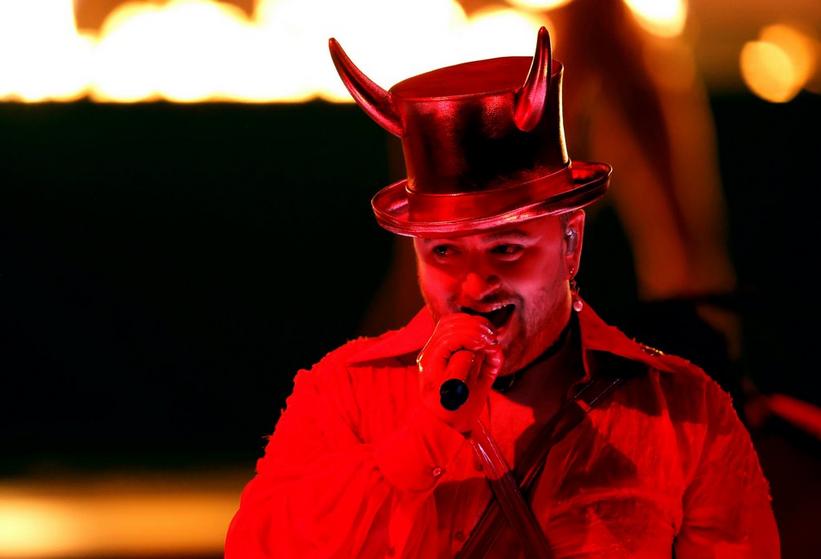
The Church of England’s song sheet is certainly sounding more like Sam Smith’s ‘unholy’ than it is God’s beautiful, gracious and life giving word.
One does not need to be a member of the Church of England today to feel a sense of loss, anger and great sadness. A small part of every Protestant believer has been betrayed. All our churches may come under greater social scrutiny and derision if we do not follow the now lost Church of England.
Today, as we did yesterday, and as we must tomorrow, take hold of the message of Jude,
“Dear friends, although I was very eager to write to you about the salvation we share, I felt compelled to write and urge you to contend for the faith that was once for all entrusted to God’s holy people. 4 For certain individuals whose condemnation was written about long ago have secretly slipped in among you. They are ungodly people, who pervert the grace of our God into a license for immorality and deny Jesus Christ our only Sovereign and Lord.
17 But, dear friends, remember what the apostles of our Lord Jesus Christ foretold. 18 They said to you, “In the last times there will be scoffers who will follow their own ungodly desires.” 19 These are the people who divide you, who follow mere natural instincts and do not have the Spirit.
20 But you, dear friends, by building yourselves up in your most holy faith and praying in the Holy Spirit, 21 keep yourselves in God’s love as you wait for the mercy of our Lord Jesus Christ to bring you to eternal life.
22 Be merciful to those who doubt; 23 save others by snatching them from the fire; to others show mercy, mixed with fear—hating even the clothing stained by corrupted flesh.
24 To him who is able to keep you from stumbling and to present you before his glorious presence without fault and with great joy— 25 to the only God our Savior be glory, majesty, power and authority, through Jesus Christ our Lord, before all ages, now and forevermore! Amen”
One thing worse than Sam Smith’s performance at the Grammys is the revisionist Bishops in the Church of England who are this week gaslighting both the sheep under their care and deceiving the general public.
Presumably, Sam Smith thinks that dressing up in a satan costume and performing a song called ‘unholy’ is making some kind of loud and shocking creative statement. Perhaps someone could tell him, he’s doing nothing more than copying a longish line of musicians. It is all rather boorish, except that mimicking the very personification of evil isn’t a particularly bright idea.
Over in old England land, ecclesiastical leaders have taken up that ancient inquisition of the Devil, by suggesting, “Did God really say?”
What have they done?
The Bishops in the Church of England wrote and issued a paper whereby they intend to introduce same-sex blessings services. They are not proposing same-sex weddings (at this stage), but wantng same sex blessing ceremonies. In other words, this change amounts to formally recognising same-sex relationships as a moral and God accepted good and that churches ought to offer services of prayer and blessing for these couples. Not every bishop agrees with the document, but clearly, there is sufficient consensus for its publication and presentation to General Synod for serious consideration.
In what can only be described as a dishonest riff, some Anglican leaders are insisting that the church’s doctrine on marriage isn’t changing…quite literally as they call for changes to the church’s understanding of sex and marriage. The same hypocrisy is being offered up by The Australian Law Reform Commission, albeit a legal entourage rather than a church one. Their recent submission to the Federal Government calls for religious schools to lose their freedom to practice traditional views of sexuality. For example, they are recommending legislation that allows Christian schools to teach a Christian view of sex and marriage, but they may also be required to teach alternate views. They will lose the right to employ staff on the basis of religious convictions. In other words, we’ll tolerate your religion so long as you tell and permit today’s sexology. That’s not compromise, it’s forced capitulation. That’s not co-existing with two unbridgeable views, that’s crossing over and demanding change.
This General Synod is happening on the other side of the world and in a Christian denomination that is different to my own, so why take interest in this debate? This particular case is important for several reasons: 1. I have many friends who pastor or who are members of churches in the Church of England. 2. The very public stature of this denomination (part through age and part through connections to the State) will garner significant media and public attention. 3. The Church of England is part of the worldwide Anglican communion which accounts for 10s million of believers, including Australia. 4. The same revisionist agenda playing out in the Church of England is present here in Australia, including among Baptists.
The flavour of the month is self-expression. In every sphere of life we are told that autonomy and self determination is an absolute, and questioning this ‘reality’ is the gravest of sins. From TikTok to the Bishop of York, the sermon proclaims that an individual’s sexual preferences and gender identity is the most fundamental aspect of reality…with a dash of God apparently giving approval. While this religious message will arouse a clap from the culture’s elites, notice how it doesn’t bring people to the cross or persuade them to follow Jesus and join a local church. What’s the point of Christianity if it does little more than mirror the culture’s messaging?
Numerous British MPs have responded to the House of Bishops’ recommendations and are demanding even more change. The Guardian reports,
“The repeal of a century-old act of parliament that allows the Church of England to govern itself is among options being considered by MPs frustrated at the church’s continued refusal to offer marriage equality to same-sex couples.”
…“If synod does not make greater progress than is contained in the bishops’ recommendations, I think parliament would take this matter very seriously,” said Ben Bradshaw, the Labour MP and former cabinet minister.
…On Thursday, Bryant asked Penny Mordaunt, leader of the Commons, to “allow time for legislation to push the Church of England into allowing same-sex marriages to be conducted by parishes and clergy who want to do so, if synod does not act.” Equality campaigners suggested that Mordaunt’s reply – “I know this is an issue that many members of this house will wish to pursue” – left the door open for legislative action.
While the Archbishop of Canterbury, Justin Welby, has come out and said that he keeping the unity of the church is more important than remaining as the establishment church, he risks losing both.
“A church must conserve historic Christian teaching. If a church simply adopts the beliefs of the culture, it will die, because it has nothing unique to offer.”
That is true for churches in America and England and Australia
The irony of the revisionist message is that assimilation with the dominant culture’s doctrine doesn’t grow the church. The Churches less likely to decline and most likely to grow are those that hold to classical (yes, evangelical) beliefs, including on human sexuality and marriage. As one recent study found, in the Church of England the largest churches with the most young people are those that teach the traditional view of marriage.
There is something quite perturbing at work among the Bishops of England. I understand the nature of love and wanting to love others, and I even get how we might make the misstep of thinking that love requires acceptance. Of course, that isn’t true. Love requires disagreement at times. There are occasions when true love is required to say no.
As I have noted many times in recent years, the people who often most struggle through these conversations are godly men and women who talk about their own personal experiences with same-sex attraction or gender dysphoria, and who believe and are committed to God’s vision. They believe that a person’s deepest identity, whether single or married, is found in Jesus Christ. They are convinced that sex outside marriage is sinful. They hold that the most profound security and joy and contentment comes from knowing Jesus. They are right! When the church or its leaders cave into the sexual molasses of the day, we are mistreating and betraying these brothers and sisters.
Should the Church of England lose its official status in the land it will not have lost anything. Of course, you would say that Murray, you are Baptist after all! That is true, but any church that wants to get into bed with State rather than remaining Facebook friends is likely to wake up one morning with a hangover. Take a look at the orthodox church in Russia or the way some churches embed themselves in the United States with the Republican party or the Democrat party.
Like the insatiable appetite of Henry VIII, our cultural overlords will as quickly court you one day and send you to the Tower the next. To quote Jesus, you ‘lose your soul’ and society still thinks you’re an irrelevant silly group of people who dress up in funny clothes.
Few in churches are demanding an unchangeable sterile presence, as though wooden pews and particular clothes and the KJV is the way to do church today. We may consider our style and sense of presentation. After all, we want to communicate unchanging truths in understandable ways. However, one of the Bible’s basic and consistent messages is that biblical orthodoxy doesn’t make Christianity irrelevant to Melbourne or Sydney, London and Durham. To paraphrase from the Bible passage that I’m preaching this coming Sunday. It’s like a light shining into a dark place.
When the Apostle Paul told a young Timothy, ‘Watch your life and doctrine closely. Persevere in them, because if you do, you will save both yourself and your hearers’, he didn’t mean, adapt and change Christian teaching and life according to what is socially acceptable. The Bible’s vision for human sexuality was radical and counter cultural in the First Century and it remains so in the 21st Century. The Gospel offers what we need and cannot find in all the mountains and rivers and cities of the world: forgiveness, redemption and hope.
The light that appeared in the world 2000 years ago is described by John the disciple of Jesus as ‘grace and truth’. If the Lord Jesus is grace and truth, and we believe him, then his church will become a community of people who are defined by and filled with this grace and truth. Not choosing one or the other, not preferencing one or the other, but holding onto both because grace and truth belong together and cannot exist without the other. Sadly, there are some churches that think holding to truth means bashing people into submission; they are also in the wrong and need to repent. But we don’t fix one issue (finding grace) by removing the other critical component, truth. There is nothing loving about a church that blesses sexual unions outside monogamous marriage between a man and a woman.
We living in Australia, should take note of how this Synod plays out and learn important lessons about how we should and should not proceed in our denominations. More importantly, we Christians living in Australia might like to pray for this Synod and ask the Father for his mercy, for repentance and for churches to uphold sound doctrine and godliness, for the sake of the people of England and the glory of God.
Australian of the year 2023, Taryn Brumfitt, is a worthy winner who is fighting an issue that is literally aimed at saving the lives of children. Brumfitt came to prominence through her relentless work to fight for children who grow up hating their bodies.
“”We really need to help our kids across Australia and the world because the rates of suicide, eating disorders, anxiety, depression, steroid use, all on the increase related to body dissatisfaction.”
She argues that this relationship with our bodies results from ‘learned behaviour’. Key to her message is that “we weren’t born into the world hating our body”. In other words, our society is teaching and influencing our children to have negative thoughts about their bodies, which of course can lead to serious consequences.
Brumfitt’s mission is to influence and encourage children to embrace their physicality, and not be defined by social influencers and so called culturally perfect images.
Any parent with a daughter (and sons for that matter) is committed to the well-being of our children. Sadly, this isn’t always the case but it is true 98% of the time. I imagine millions of parents, and Aussies more generally, resonate with and applaud the message from our new Australian of the year. We may or may not have first hand experience with body image disorders, but it is clear to most of us that Brumfitt is alerting us to a real problem that is capturing our young people. As Brumfitt testifies, it’s not only teenage girls who experience harmful views of their physical selves, but boys as well, and it is also present among young children,
“It’s getting younger and younger I have to say, I only spoke to a six-year-old recently who was dieting”.
There is something right and beautiful about Taryn Brumfitt affirming the goodness of the human body.
Australia has an uncomfortable relationship with the human body. As I heard the news of our new Australian of the year, it’s hard not to notice a massive disconnect, not in what Brumfitt said in her Australia Day speech but in the broader narrative in our society. You see, there exists a sizeable disjunction between the message Brumfitt is advocating and what is now mainstream thinking about the human body.
I don’t know Brumfitt’s views about transgenderism and how she makes sense of this new and sudden wave of bodily denial, but one thing is for certain, her calls to embrace our physical body is at odds with the ideology that is now sweeping our society and being forcibly taught and embraced from GP rooms to school classrooms and TikTok ‘programs’.
Our culture has adopted a modern day Gnosticism, where the ‘truest’ self is divorced from the physical. We are taught that the real you isn’t the physical body you inhabit but the immaterial desire and feelings that one experiences in the mind. Gender has been divorced from sex and personal identity cut away from physicality. We can’t of course reduce our humanness to physicality for we are spiritual and social beings and thinking and feeling beings. We are more than flesh and blood and DNA but we are not less than those things.
We are witnessing a generation of young people who no longer feel comfortable in their own skin, but are now taught from school to TikTok that their physical bodies betray them, and they may well be living in denial of their true selves.
The result is that 34% of 18-24 now no longer believe they are heterosexual, embodied beings attracted to the opposite sex, but rather they are spread across an imprecise and growing spectrum of self-defining and often bodily denying sexuality and gender.
Many girls and boys now undertake psychological and medical pathways to transition away from their physical sex. The number of young people beginning hormonal medications, psychological treatments, and eventual surgical mutilation of the body, is skyrocketing. We are talking about an increase in gender dysphoria by 1000% in just the space of a few years. Call me, Wiliam of Ockham but this drastic and sudden increase cannot be explained by natural selection. There is something else in the water. Indeed, the iceberg that looms beneath the surface is rightly scary and we’re ill equipped to do little more than chip away at it.
While gender related rejection of the body is deeply personal and impacts the individual, the worldview attached is fast becoming compulsory across all spheres of life. For instance, in the United Kingdom, women are having to fight the government to prevent male rapists from being sent to women’s prisons because the man wishes to identify as female. The World Athletics body has agreed to let transgender women compete against women. The next women’s soccer world cup will be open to men competing (those who say they are women). And when women speak up, they are ridiculed, ostracised and at times threatened. Take note of how the disgusting treatment toward JK Rowling.
Do we see the confusion? Here I say confusion because one wants to think the best of people‘s intentions. Parents who see their children in torment will do anything to find relief. And so if a doctor or counsellor says transition, then I understand them trusting the advice of the professionals. But surely there is also an ear of hypocrisy as well. How can we preach on the one hand, be comfortable in your body, and then insist on the other, reject your body and have it mutilated and permanently damaged in the name of this Gnosticism?
In her book Irreversible Damage: The Transgender Craze Seducing Our Daughters, journalist Abigail Shreier explores the transgender phenomenon. She blames an ideology that has captured the heart of western cultures. It’s what Carl Truman refers to as ‘expressive individualism. Gender expression has become the trend, and because it’s now described in terms of human rights, no one is allowed to question, doubt or help adjust a child’s sense of identity.
In today’s Australia even questioning a child’s ‘felt’ gender is paramount to the worse kind of blasphemy. In Victoria, parents, teachers, pastors, and pretty much anyone can find themselves charged by the police and imprisoned should they not fully affirm and support a person’s preferred gender identity. We are now forcibly required to ignore the physical body and appearance.
Leaving aside the elephant in the room, it is a good thing when our Australians of the year highlight important social issues that impact the lives of real people. It’s one of the gains in recent years that has been awarded to us through this prestigious accolade.
Those living with discomfort and disconnect with their bodies need our care, not hatred, our kindness not our complicity with a dehumanising project. As much as awareness of these issues helps and as much as positive thinking and imaging may benefit youth as they learn to live in their body, I think Christianity has something to add. The Bible gives us what I believe is an even better message, one that is more secure. The ultimate resolution doesn’t lay in the self, for the self is existentially unstable. If the best of me can fail and disappoint, what about the rest of me? If this was not the case, we wouldn’t have a generation of Australians journeying down this dangerous and harmful pathway to physical destruction and mental anx. The Bible gives us a better story and greater hope.
Psalm 139 exclaims,
“For you created my inmost being;
you knit me together in my mother’s womb.
I praise you because I am fearfully and wonderfully made;
your works are wonderful,
I know that full well.
My frame was not hidden from you
when I was made in the secret place,
when I was woven together in the depths of the earth.
Your eyes saw my unformed body;
all the days ordained for me were written in your book
before one of them came to be.”
Grounding our personhood in the knowledge that we are wonderfully made by God, is liberating and securing. The Bible’s story doesn’t end there. The Scriptures also acknowledge ways we often hide from ourselves (and from God). The Bible points out the realities of the darkness in the world and in our own hearts. The story however doesn’t end with darkness and despair, for the Scriptures move us to the culmination of the story,
“Since the children have flesh and blood, he too shared in their humanity so that by his death he might break the power of him who holds the power of death—that is, the devil— and free those who all their lives were held in slavery by their fear of death. For surely it is not angels he helps, but Abraham’s descendants. For this reason, he had to be made like them, fully human in every way, in order that he might become a merciful and faithful high priest in service to God, and that he might make atonement for the sins of the people. Because he himself suffered when he was tempted, he is able to help those who are being tempted.” (Hebrews 2:14-18)
There is a constancy in our world of body image flaws and troubles. There is an anchor for all the spiritual and material wants and sins. This Jesus, the eternal Son of God, didn’t abandon the body; he became human for us. He entered the physical and spiritual turmoil that fills the world, taking its sins and shame in order to bring redemption and life. He understands. He makes atonement. He helps. That is a good news message for Australians today.
Before clicking play on Netflix to watch Harry & Meghan or purchasing a copy of Spare, consider how doing so will add to the sordid affair.
Unless you’re still sailing to Hobart from Sydney with a broken mast and no satellite dish, you’re hearing the names of Harry, Meghan, William and Kate every few hours. With the launch of the Netflix series, and now with Harry’s memoir released and a series of television interviews ready to play, everyone is talking about Britain’s Royal family and offering their thoughts, opinions, and evaluations. It’s as though we’re all the butler with eyes on the inside of the Winsdors’ hearts.
Harry and Meghan are everywhere. As much as I’m trying to avoid them, the latest revelations are headline news for newspapers and the late-night news on tv. I’ve taken to wearing noise-cancelling headphones everywhere I walk (metaphorically speaking) as I way to block out the latest stories of who did what to whom. And because repeating them here makes me an accessory to gossip I have no intention to repeat the stories here. Although, I am tempted to make one comment about the scary headline of ‘brother fights brother’. Have there ever been 2 brothers who’ve never punched, kicked, or wrestled each other? Beating up my baby brother was familial routine…until he outgrew me!
Leaving aside my own family history, I’m not writing to offer a commentary about the Royal family or to take sides. Doing so would shred the very point that I wish to make. I want to offer a short word to everyone who is quick to read, watch, and repeat opinions about what really is a sad state of affairs. Let’s not do those things.
There is wisdom in the book of Proverbs,
A gossip betrays a confidence, but a trustworthy person keeps a secret. (11:13)
A perverse person stirs up conflict, and a gossip separates close friends. (16:28)
Without wood a fire goes out; without a gossip a quarrel dies down. (26:2)
Participating in the mob may give us a certain degree of justification and even moral uprightness. It allows us to feel part of the crowd. We’ll have something to say at work while everyone lines up to grab another cup of stale coffee. The reality is, all we are doing is gossiping.
Gossip is one of the oldest sins and for some odd reason, it is too often treated as an acceptable one.
We all know that sharing another person’s secrets is a no go zone. We all know that breaking trust and retelling personal details can rip apart a friendship, and yet most of us a guilty of doing so…even at church as though faux concern legitimises the action! Whether the subject of gossip is the Royal family or my neighbour or best friend, take note of this Proverb,
The words of a gossip are like choice morsels; they go down to the inmost parts. (18:8)
The age of the internet accelerates the pace of rumour spreading from the old school gossip magazines and water coolers. Twitter and Netflix are the latest machines for globalising gossip. My secret today can be the topic of public scrutiny tomorrow.
The thing is, by watching and reading and gossiping, we’re leaping into a carefully managed trap. We’re suckers for a good juicy story about a family imploding. And what’s bigger than that family being our King and Princes? Far from satisfying our own grubby hearts, we’re falling for the very thing publishers and marketers are dreaming of. They’re gambling on our ability to read and repeat another person’s private life. The reality is, we’re adding just a little more oxygen to build the bonfire no one needs out bush in the middle of summer.
I’m not .suggesting who is right and who is wrong, or who in the Royal family has said or done what to whom. Not at all. Does the Harry-Meghan saga boil down to money? Is it a case of old fashion greed or revenge or is it about a man defending his wife against torrents of abuse? One thing we do know is this, I don’t know the truth and neither do you. The public outing of private lives is certainly unsanitary and our public gaze is guilty of participating and even egging it on. I won’t bet my crown on it, but I’m pretty sure the Windsors can do without my psychoanalysing.
I hope that with time and humility and eventual public boredom, these two brothers and their families are able to find whatever repentance and forgiveness are required in their hearts and be reconciled. For our part, perhaps the wisest thing to do is remember that gossiping isn’t a virtue. It really is quite ugly and unhelpful. So let’s keep our eyes, ears and noises out of this story.
Carols by Candle Light at the Myer Music Bowl in Melbourne is an annual pilgrimage for thousands of Melbournians. For many more, the 3-hour Christmas extravaganza provides background Christmas mood music on tv and radio for families madly wrapping Christmas and preparing food for the big day.
Perhaps it’s my grinch-like tendencies, but my enthusiasm for watching what is essentially a pentecostal styled pop concert (or Wiggles for grown-ups!) doesn’t appeal to my musical sensibilities. It’s hard not to notice the jarring vibrato of Australian artists singing the most sublime truths known to the world while disbelieving them in their hearts and lives.
Half of my readers are probably letting out a quiet nod of agreement (and the other half now have confirmation that Murray is the grinch). With that confession (or rather a criticism) out of the way, I want to share something that did strike me even as the show played on in the background of my home.
One of our nephews was performing and so we had instructions from the family to keep an eye (and ear) open for him. The band played on through our television when two quite wonderful performances came on stage, one after the other, both causing me to pause eating Christmas lunch ahead of schedule.
Silvie Paladino sang the not so Christmas carol, ‘How great thou art’, and then the Central Australian Aboriginal Women’s Choir sang an old German carol in their own native tongue, Western Arrernte and Pitjantjatjara language. This 19th century carol arrived in central Australia when Lutheran missionaries came to share the good news of Jesus. Generations later, these songs about Jesus have formed part of the local culture and are now been sung beautifully in aboriginal languages. The choral performance was indeed a special moment.
Anyone who watches Candles by Candlelight will know that the music is mishmash of secular and sacred songs. Rudolph with his red nose and Santa Claus coming are intermingled with ‘The First Noel’, and without any sense of distinguishing between fiction and fact. The entire evening is a jumble of feel good old time tradition.
Silvie Paladino’s song choice, at least for me, interrupted the show in the same way a lit candle intrudes on a darkened room.
She sang,
“And when I think that God, His Son not sparing
Sent Him to die, I scarce can take it in
That on the cross, my burden gladly bearing
He bled and died to take away my sin
Then sings my soul, my Savior God to Thee
How great Thou art, how great Thou art”.
These words reflect the heart of the Christian message. Christmas is about preparing for and pointing to that cross.
I don’t know about you, but when I heard those words, something good stirred inside. We’ve done a fine job sanitising the birth of Jesus, washing over many of the particulars that make the incarnation so extraordinary and thwart with danger and awe. However, it’s not so easy to give a PG rating to that bloodstained cross. 2,000 years on and that cross remains the most ignominious moment in history. We like the Christmas part of the story, but the death part? No one has lived as pure and innocent a life as Jesus, and yet he willingly walked the road to crucifixion and experienced the worst of evil. The cross is both the world’s greatest horror and the world’s greatest hope. The cross stupefies human power trips and intellectual exercises. The cross exposes human hubris, the reality of evil, the holiness of God, and the nature of true Divine love.
It’s hard enough convincing Aussies today of the reality of Jesus’ birth, let alone the death absorbing and life giving hope through Jesus’ death and resurrection. And yet, as Silvie Paladino sang, ‘That on the cross, my burden gladly bearing, he bled and died to take away my sin’.
As I read my Bible, I read something about the death of Jesus every week. Each Sunday as I have the privilege and responsibility to preach at church, I have the opportunity to explain this ancient story that continues and will forever define every generation and part of the world. At Christmas, I want to hear about the cross. The Bible tells us, that Jesus’ birth is designed to prepare for that cross and to miss it is to keep wonders from peoples’ minds and hearts.
Stan Grant wrote a moving piece on ABC about the Nick Cave concert he recently attended.
“But I sensed a space between the religion that Nick Cave speaks of and the desire of many in the audience for some connection.
They wanted the personal touch of Nick Cave the rock star. But did they want the touch of God?
Some, perhaps many, just like me, no doubt would have. But I could not help but think that many – if not most – in the audience would have been more comfortable with a spiritual experience.
This was a secular audience. How many of those with their hands outreaching would likely be found in the pews of church?”
Stan Grant points out, as does Nick Cave, the expressive individualism that dominates our current cultural sensibilities isn’t producing the freedom and life that we are looking for. Rather, it agitates and further debilitates the human longing. Stan Grant reflects on his indigenous heritage and points us to the same saviour whom the Central Australian Aboriginal Women’s Choir sang about and whom Silvie Paladino sought to highlight on Christmas Eve
“In times of grief, catastrophe or tragedy, do the secular shibboleths of reason or science or law or rights fill the God-shaped hole?
Cave says the modern faiths of politics or identity don’t answer those questions for him.
Religion matters, church matters to Nick Cave. It is where he draws closer to the crucified Christ.”
If this is the real thing, then the hymn writer is right to exclaim,
“Then sings my soul, my Savior God to Thee
How great Thou art, how great Thou art”
How much better is the story that God is there and he is greater and better than we ever imagined. It is more satisfying and exciting to consider this Jesus story than to carry around the baggage of self-hope and self fulfilment and self defining reality.
The Apostle Paul explains it this way,
“You see, at just the right time, when we were still powerless, Christ died for the ungodly. Very rarely will anyone die for a righteous person, though for a good person someone might possibly dare to die. But God demonstrates his own love for us in this: While we were still sinners, Christ died for us. (Romans 5:6-8)
Here’s my final word for 2022, don’t dismiss the songs we sang on Christmas day. Don’t disregard the message we heard as we visited Church over Christmas. Instead, consider, that maybe, just perhaps we ought to take another look at this message of the Christ.
Religious freedom received an early Christmas present this year with Essendon Football Club today issuing an apology to Andrew Thorburn.
The forced resignation of Andrew Thorburn in October, following less than 24 hours in the job as Essendon’s new CEO, was one of the biggest stories in Victoria for 2022. After journalists dug into his church’s website, they found sermons where both homosexual practices and abortion were referred to as sinful.
It was a classic case of cut and paste; find something controversial and ignore the rest. There was one insensitive analogy contained in one of the quoted sermons, but otherwise, the views expressed by Thorburn’s church are what you will find in any Christian Church across Australia. City on a Hill, is a mainstream Anglican Church that preaches the sermon Gospel that is common around Australia and which is deeply embedded in historic Christianity. In today’s age of tolerance and diversity, classical Christian views are considered today’s heresy and worthy of public humiliation and even loss of employment. Thorburn’s sin was that he attends COAH and until recently served as Chair of the Council.
The Essendon board clearly thought that were acting with the backing of the new moral majority. Certainly, there was plenty of outrage found in printed media and Premier Daniel Andrews was quick to grab the footy and run with it. Perhaps the more accurate metaphor was that Andrews tackled the man without the ball! He said,
“those views are absolutely appalling.”
“I don’t support those views, that kind of intolerance, that kind of hatred, bigotry, is just wrong.
“Those sort of attitudes are simply wrong and to dress that up as anything other than bigotry is just obviously false.”
Business columnist for The Age, Elizabeth Knight, argued that the Thorburn case is proof that religion and business don’t mix and Christians holding to, you know, Christian things, should be excluded from the business world.
“Business doesn’t mix with religion in the same way it doesn’t mix with pleasure. Some would argue that AFL is a religion among its legion of fans, but first and foremost it’s a business. Andrew Thorburn and Essendon’s management that stupidly appointed him as the chief executive should have understood this.”
“A decade or two ago, corporations and their stakeholders may have tolerated Thorburn’s association with a church with strong views on the homosexuality and abortion. But not today.
Whether Thorburn personally holds those extreme opinions is irrelevant, Essendon is a valuable and highly recognised brand, and it cannot afford to be tarnished by any proximity to views that are deemed offensive by a big chunk of its fan base and the broader community.”
At the time, Andrew Thorburn released a statement in which he fairly summed up the situation,
“ today it became clear to me that my personal Christian faith is not tolerated or permitted in the public square.”
While Essendon FC initially responded in tune with the public cheer squad, they almost certainly acted outside the law. Legal experts have for months suggested that Thorburn has a case against the football club for unlawful religious discrimination.
Andrew Thorburn engaged with lawyers and has now engaged with Essendon. Today, the football club has formally apologised to him and donated an undisclosed sum to an ethics institute. Thorburn has agreed to drop all legal action against the club.
Will others follow suit and apologise for their role in this unnecessary saga?
This is a welcome outcome. One, it communicates to the business world that you can’t push out Christians (and people of other faiths) from the workforce on account of their religious associations or beliefs. More importantly, as someone who has been watching at some distance, I am thankful for the way Andrew Thorburn has responded throughout. I didn’t read or hear any vindictive words or slanderous retorts, as did fill much of the discourse surrounding the story. Rather, he approached the club and offered to help on a volunteer basis. He didn’t demand financial recompense as he might have done, instead, the agreed sum is going to a charity.
The Bible verse that comes to mind as I learn of how Andrew Thorburn has behaved is 1 Peter 3:9.
“Do not repay evil with evil or insult with insult. On the contrary, repay evil with blessing, because to this you were called so that you may inherit a blessing.”
While the law may have come to Thorburn’s defence in this instance, Victorians are very much aware of how religious freedoms have diminished somewhat in recent years. And given the Government and current cultural preferences, these freedoms are likely to further narrow in times ahead. So while we were shocked by the appalling treatment Thorburn received by Essendon, our Premier and others, I’m grateful for the gracious way Thorburn has responded, and it’s one that we may do well to consider for ourselves when that day arrives.
You see, Christians can hold to Jesus’ teaching about marriage and about life, and treat others with kindness and grace. Accepting the Bible’s vision for human life and human sexuality doesn’t breed bigotry, but a profound desires for the best for others. Holding these things together may be anathema to our zealous culture, but they can and do belong. Christians don’t choose between truth and love, or between grace and goodness. Indeed, this is one of the wonders of the Christmas message.
When it comes to Christmas, once we’ve unwrapped all the pageantry, presents, and tinsel, we find the message of God come to earth. The infant born in Bethlehem was the universe’s maker, true God from true God. God didn’t leave heaven to experience the most ordinary of beginnings because his view of the human condition is one of a premiership winning footy team. God saw helpless, hopeless, sinful people breaking all the rules of the game and thumbing their noses at the umpire. Knowing this, God determined, in love I want to redeem them.
The Bible text for my Christmas Day sermon puts it this way,
“ we do see Jesus, who was made lower than the angels for a little while, now crowned with glory and honor because he suffered death, so that by the grace of God he might taste death for everyone.” (Hebrews 2:9)
Today is a good day for Victoria. Christmas Day points us to an even better day that can be known every day regardless of how the wind is blowing in old Melbourne town.
Who am I? Who are we? How can we even begin to navigate these questions?
I don’t know who needs to read these words, but I pray that they will reach many who are finding life distressing, overwhelming, and as though they are fighting a hopeless battle against despair.
This week I’ve been meditating on a prayer, Psalm 139. It is both poetry and prayer, communicating extraordinary truths about both God and us. It will be my privilege to teach Psalm 139 at Mentone Baptist Church on the first Sunday of 2023. But I thought I would preempt this upcoming sermon and share some reflections on this Psalm of David here on the blog.
I am hearing so many stories of people struggling with mental health issues, men and women trying to understand questions about personal identity and worth, and families trying to keep everything together in the midst of financial hardship.
Today, The Age headlined this story, ‘Mental health disorders increase among children as young as 18 months’. Yesterday, the media reported the dire situation facing families trying to access mental health care for their children.
There is also much anger and distrust being vented in society; much of it is justified, while some is misplaced. Far from communities becoming closer together, we are becoming more fractious.
Just as lurking behind the excitement and successes of the Football World Cup are terrible injustices and abuses, underneath the veneer of Australia’s prosperity are millions of Aussies feeling lost and searching for meaning and hope.
This is where Psalm 139 offers us insights into God and ourselves that are wonderful and necessary, poignant and so refreshing. My aim here isn’t to offer a detailed explanation of every word or sentence, but hopefully to say something of use that will encourage you the reader to ponder the words of Psalm 139 yourself, and even to share it with others.
The author of this prayer is David, the famous King of Israel. Despite his position ruling over a nation, he addresses God in a personal way. For David, God isn’t a remote or abstract Divine Being who is somewhere responsible for everything. He calls God, ‘Lord’, which is God’s special name given to his covenant people for them to address Him. To know God as Lord is to enjoy a personal connection and relationship with Him.
The Psalm consists of 4 stanzas. I’ll quote each stanza in turn, and offer a brief comment about each one.
1. God knows us intimately
1 You have searched me, Lord, and you know me.
2 You know when I sit and when I rise; you perceive my thoughts from afar.
3 You discern my going out and my lying down; you are familiar with all my ways.
4 Before a word is on my tongue you, Lord, know it completely.
5 You hem me in behind and before, and you lay your hand upon me.
6 Such knowledge is too wonderful for me, too lofty for me to attain.
This is a message that’s worth us getting our heads around: We are not unknown to God. In fact, David recognises how the Lord knows him better than David knows himself. We all have someone idea about our deepest convictions, desires, fears, and joys. We have some ability to hide aspects of our personality and ambitions from others. We might even successfully block out aspects of hearts from our own consciousness.
God however sees everything. He wouldn’t be much of a God if he doesn’t. David talks about how God peers into our minds and knows our thoughts. He knows what I’m going say before the words leave my tongue. This isn’t some spooky kind of trolling, but a picture of God who both understands us and who cares for us. For example, the metaphor in verse 5 of, ‘you lay your hand upon me, speaks of a gentleness and love that is active in God toward us.
I love David’s reaction in verse 6.
Such knowledge is too wonderful for me, too lofty for me to attain.
He isn’t just saying that this is an intellectual absurdity and therefore cannot be true. David’s point is, ‘God, you blow my mind’. God is above him in wisdom and comprehension. Einstein and Mozart are like simpletons, compared to the mind of God. This knowledge is formidable but not scary because this personal knowing is from the God who cares for us. This knowledge brings David comfort and assurance; God understands me.
2. We can’t hide from God.
7 Where can I go from your Spirit? Where can I flee from your presence?
8 If I go up to the heavens, you are there; if I make my bed in the depths, you are there.
9
If I rise on the wings of the dawn, if I settle on the far side of the sea,
10 even there your hand will guide me, your right hand will hold me fast.
11 If I say, “Surely the darkness will hide me and the light become night around me,”
12 even the darkness will not be dark to you; the night will shine like the day, for darkness is as light to you.
Jonah famously tried to do a runner and escape God, as though we can outstride or out-think God. As David exclaims, where can we hide from the God who made the universe? In our bedroom? In the desert? Under the ocean? What if I close my mind to God and eat the key?
Running away from God is futile and David knows it. As he considers the God of the Bible, he doesn’t want to remove God but instead rest in Him. Because God is truly God, we are safe in Him.
3. You made me
13 For you created my inmost being; you knit me together in my mother’s womb.
14 I praise you because I am fearfully and wonderfully made; your works are wonderful, I know that full well.
15 My frame was not hidden from you when I was made in the secret place, when I was woven together in the depths of the earth.
16 Your eyes saw my unformed body; all the days ordained for me were written in your book before one of them came to be.
These verses are replete with exquisite images that fill life with meaning and awe. Take for example, the stunning metaphor in verse 13, ‘God knitted us together in the womb.’
No wonder, David’s mind is again blown away,
17 How precious to me are your thoughts, God! How vast is the sum of them!
18 Were I to count them, they would outnumber the grains of sand— when I awake, I am still with you.
These words are true not only for David but also for every human being. This testimony has profound meaning and implications for how we view other people and also ourselves.
As the artist is devoted to his/her work and as a composer imprints their own glory in the music, so each and every human being has intrinsic value, glory and worth. Monet’s Water Lilies were no mistake and Schumann’s Piano Concerto was no misstep or blunder. You are not a gaffe or error. You are not a waste. You are not insignificant. We are profoundly known and loved by our creator God.
4. God, change me
19 If only you, God, would slay the wicked! Away from me, you who are bloodthirsty!
20 They speak of you with evil intent; your adversaries misuse your name.
21 Do I not hate those who hate you, Lord, and abhor those who are in rebellion against you?
22 I have nothing but hatred for them; I count them my enemies.
I appreciate how these verses may make some of us cringe or feel a little uncomfortable. Aren’t we meant to forgive everyone? Should we not look for the best in people?
There are a number of threads appearing in this final stanza, which are each true and somehow need to be held together despite apparent tensions or even contradictions with other parts of the Bible.
David is expressing to God how he is feeling as he reacts to enemies who are seeing his demise.
It’s okay to long for justice and for God to punish evil. We don’t want evil to win out in the end, but for wrongdoing to be punished, whether the perpetrators are individuals or corporations or institutions. Asking God to bring justice and to judge wickedness is an entirely right and good prayer. Christians may not stop at that point, for we also long for mercy and forgiveness, but we also believe in and trust in God who is righteous and who will hold the world account.
David’s enemies were often political, whether rebels attempting to usurp his throne or competing nations who waged war against Israel. David’s prayer reflects the system of government that existed and set the boundaries of God’s people at that particular time. This isn’t our situation today. The Church isn’t a nation-state or system of government. As we discover in the New Testament, our King is the true David, Jesus Christ. When churches are oppressed, our answer isn’t to go to war or to hunt down assassins, but “Bless those who persecute you; bless and do not curse” (Romans 12:14) and “Love your enemies, do good to those who hate you” Luke 6:27).
It is important to continue reading as the Psalm doesn’t end at verse 22, but with verses 23-24. David doesn’t end on a note of vengeance but with a plea for God to examine his (my) own heart.
23 Search me, God, and know my heart; test me and know my anxious thoughts.
24 See if there is any offensive way in me, and lead me in the way everlasting.
It seems as though David’s aware that strong emotions can be misleading, and mixed up, and that he himself might have sin lurking about in his own life. David is praying, Lord is, sift through my prayer because you know what’s true and what’s not true, and where I’m right and where I’m wrong. You are able to do this because you know me well. Where and if there’s anything offensive in me, lead away from it and to the way everlasting.
David isn’t self-righteous or strident or judgmental. His prayer is, Lord, change me. This is of course a far cry from our cultural sermons which defines change as heterodox. Our prayers today are less, ‘Lord, change me, they are more often, ‘God affirm everything about me’. Our 21st Century prayers often finish at verse 22, judge my oppressors and justify me.
No wonder our streets and suburbs are filling with growing vexation, anxiety, and melancholy. The burden we are placing on ourselves is too great.
This Psalm can speak both of wonderment and of wrong. Wonderment in God who made us and wrong in what others do and even what I have done. Our culture can’t sustain this tension. The Bible is able to both speak of immense value and worth of every human being and also remind us of profound sinfulness. Any time when we hold onto one of these truths and not the other, we are only a short journey away from an identity crisis and social catastrophe. David was conscious of both and he found resolution and peace in the fact that hope isn’t found in himself, but in a God who can be trusted.
The ultimate and final fulfilment of this Psalm is found in that little child born in Bethlehem whom millions around Australia will soon be singing about as Christmas approaches.
The book of Hebrews reminds us,
“we do see Jesus, who was made lower than the angels for a little while, now crowned with glory and honor because he suffered death, so that by the grace of God he might taste death for everyone.
10 In bringing many sons and daughters to glory, it was fitting that God, for whom and through whom everything exists, should make the pioneer of their salvation perfect through what he suffered. 11 Both the one who makes people holy and those who are made holy are of the same family. So Jesus is not ashamed to call them brothers and sisters” (Hebrews 2:9-11)
On Saturday morning before going to vote at the Victorian State election, I sent out this tweet, quoting Psalm 146,
“Do not put your trust in princes,
in human beings, who cannot save.
When their spirit departs, they return to the ground;
on that very day their plans come to nothing.
Blessed are those whose help is the God of Jacob,
whose hope is in the Lord their God.”
This morning, the day after the election, I retweeted these Bible verses. The reason being, the words of the Psalm remain true, before and after the votes had been cast and counted.
I understand that in quoting Psalm 146, some people might be a little annoyed and perhaps a tad angry, especially among voters disappointed by the election result. I certainly don’t mean to sound unfeeling or facile, as though the election was unimportant. I happen to believe elections do matter because government plays a significant role in the life of society; controlling much power and influence. After all, Government is a legitimate institution that falls under the banner of God’s common grace. It may not be the main game, but government nonetheless plays an important supporting role.
It is also the case that Government has less influence in setting the direction for society as it is about providing the legal, economic, and social mechanisms by which society moves in the direction that it is already preferencing. The old adage about politics being downstream of culture is complicated but still true.
The reason behind sharing the Psalm 146 quotation is that I’m wondering if we are attaching too much responsibility on Government for fixing social ills and rectifying economic currents. This is true for both the left and the right of politics. Have we become too dependent upon Parliaments and MPs for addressing what was once the prevue of churches, synagogues, media, and an array of social organisations? If we have lost trust in those civil and religious institutions (which seems to be the case), faith in our governments is also in sharp decline. There lies perhaps some of our misplaced faith and therefore frustration and despair at the political scene. We are not meant to burden Government with all our hopes and demands and needs. A healthy society needs to spread that load. Indeed, a truly healthy society would not require government to create what we have in Australia: a society wrapped in red tape and wads of laws and rules stickier than gaffer tape.
There are better governments and worse; it’s rarely a zero-sum game. More Victorians than not prefer the given election outcome over the alternatives. After all, that is what the votes indicate. Many Victorians are pleased with the outcome, with many others perplexed or angered, and more than a few are underwhelmed by the choice of candidates that were on offer. I suspect there is also a deep suspicion of and discontent toward political parties across the spectrum. Sometimes it’s a case of choosing the least bad option available, or at least that’s how many voters are feeling: I don’t like this candidate, but at least they’re not the other candidates!
How did we respond to the election at church today? This morning my church prayed for the new state government, as we do regularly for whoever is in charge at Spring Street and in Canberra. And we also prayed for our local representatives in Parliament. That’s what Christians do. It’s one of the few constancies in the unpredictable world of politics; churches pray for those in authority. To the reluctant among us, let’s consider it this way, if the Apostle Paul could pray for the Roman Emperor, then we ought to pray for our governments.
We should pray for our political representatives because they carry significant responsibility. Given the platform that we build for our leaders (or scaffold as it may be), praying is the right thing to do. Of course, government isn’t the big game in town, but its role impacts life at every level and therefore great wisdom, patience, integrity and compassion are necessary.
Without some kind of cultural reorientation, I suspect Governments will become bigger and bolder. It is interesting to see how Australians, or at least Victorians, have become more comfortable with authoritarian personality and political styled governing. The myth of the convict, bushranger, and nonchalant Aussie digger may still exist in local sporting clubs, but as a people group, we are quite accepting of big government and monocratic-styled leadership. I’m not arguing a case either way here but simply noting the public trend.
Of course, my eyesight is myopic and so looking at the next 4 years is an imprecise art. There are, after all, no more prophets! My guess is that in the name of freedom, more laws and regulations will be introduced, and in the name of economic prosperity, more debt inducing spending will occur. If we follow the now predominant current, I anticipate that we’ll see tighter controls on social behaviour, fewer parental rights and a more pronounced religion-socio education drive.
I would not be surprised if we see religious freedoms further eroded during this next term of government. That’s no scare campaign, I’m simply noting the growing list of legislative changes that have been enacted in Victoria in recent years: from removing freedoms from religious organisations and schools to employ people of faith, to banning some religious conversations and prayers with threats of criminal charges and prison time, and now to Premiers interfering with workplace appointments because a football club appointed a Christian man who also serves on the council at his local church. I’d be surprised if the cultural vultures do not require more blood to be taken.
Of course, what Victoria is experiencing is simply a few steps ahead of the rest of the country and it’s indicative of an entire part of the world that has not only lost its moorings but is consciously tearing them apart and doing so without realising that without these foundations, we are left to be smashed about by the wind and waves.
So I go back to the verse in which I began, Christians should not look to government to be the saviour of society. Don’t put your trust in princes and premiers. Honour them and pray for them, but let’s not expect government to rescue society from the deepest and darkest of places.
This is one of the flaws present in left-leaning politics; it believes Government is the answer. Hence it’s no surprise to see legislative agendas enveloping society around a new moral religion. God is optional in the new religion, but the worship of the sexualised individual is compulsory. Anyone thinking otherwise just isn’t listening to Daniel Andrews and Victoria’s Human Rights Commissioner and a hundred other bureaucrats working with the Government.
There is a counterpoint emerging on the right side of politics that is also deeply concerning, and perhaps more so. Daniel Andrews may talk about how his catholicism influences his life, but people can see through the disconnection. Christian nationalism, on the other hand, has started to captivate some pew sitters and pastors and therefore it is more likely to create issues for Gospel ministry in Victoria. This theorem is thankfully marginal and I pray it doesn’t take hold as it is doing in parts of the United States, but nonetheless, I don’t wait for 100 mosquitoes to enter my house before dealing with the first one.
Christians, be careful of voices that speak more about politics than they do the Great Commission and use more words of anger than they do words of compassion and mercy. By all means, as commitment to common grace and out of love for your neighbour, keep government accountable. Christians might join a political party and stand for Parliament, but even the most Christian of political leaders and most Christian of political agendas isn’t going to redeem society. That kind of thinking ignores the testimony of Scripture, namely that the gospel is God’s power of salvation and the church is God’s big game in town. Our churches are more likely today to sit on the sideline of culture and be ignored by many, but nonetheless, the church is the centrepiece of God’s work. Therefore, whatever you do in the name of political inspiration, aspiration or disappointment, don’t confuse it with the Gospel, don’t conflate common grace with saving grace, and don’t fuse the church with the state.
The best way we can love our fellow Victorians is by serving your church and being clear on the gospel.
I’ll finish up here with one final word about misplacing hope and faith in political elections. During the Premier Daniel Andrews victory speech last night, he said, “Friends. Hope always defeats hate.”
The statement is true, although one might like to fill the word hope with some content and also define hate as something more than an imprecise aspersion on your opponents.
Also, the irony of this comment was not lost. The election campaign was about as spiteful and negative a campaign as I’ve seen, and it was true across the major parties. And yes, our Premier’s chosen rhetoric can at times be described as hateful. In fact, I can think of few political leaders excising as much hateful language as Mr Andrews, especially as he describes people of faith in Victoria. His verbal attacks are often little more than vicious mischaracterisations of people (think Andrew Thorburn), but verbal attacks of this kind garner wide support in Victoria because it fits the religious narrative that now dominates the horizon.
Daniel Andrews is not only an advocate but a victim of a worldview that sees all other views as anathema and a danger to society. The new dogma that he seems to preach demands that we either agree and follow the new moral absolutes or we belong to the devil. Love means full acceptance and tolerance means public affirmation, and any diverging from the narrow path is justification for public humiliation by our Premier and others. It’s a tricky path though because the definition of acceptance and tolerance are continually changing, like the staircases at Hogwarts. Orthodoxy one week is heresy the next, as public figures are finding out once they’re cancelled.
I am forever grateful to Jesus who didn’t affirm everything about me, and who didn’t accept some of the desires of my heart. God did something far greater and more loving. God disagreed and even called out my living as sin. The Bible even says it’s worthy of death, and yet God loved disagreeable people and his only Son gave his life on the cross. So yes, hope has defeated hate.
Last night in Melbourne, Christopher Watkin’s new book, Biblical Critical Theory: How the Bible’s Unfolding Story Makes Sense, was launched. There will be further launch events in Sydney, UK and the USA over the coming days.
The room at RTC (Reformed Theological College) was filled with many uni students, academics, pastors in attendance, and many others from various works of life. The food, wine, and conversations kept flowing late into the night (in the end I had to ask people to go home!). Each one of the 4 speeches last night was impressive and interesting, reflecting on the content of Chris’ writing (of course!) and the value this book may bring to the world of thought, university, church, and society.
The only downside of the evening was that we couldn’t get our hands on enough copies of the book. The first print was sold out even prior to its formal release date. People took a number and we swirled those little pieces of paper in a large bowl and then picked out numbers. 12 very excited persons (think of the atmosphere for a winning auction bid), then purchased a signed copy of Biblical Critical Theory.
I cannot recommend this book highly enough. As a reviewer recently said of Biblical Critical Theory, all the hype really isn’t exaggerated, and each of the addresses last night, given by Dr Sarah Irving-Stonebroker, Mr Barney Zwartz, and Dr Andrew Moody, testified to this. I am hoping that these talks may become available on The Gospel Coalition Australia website in days to come.
Allow me to share what I said at the beginning of the evening and the prayer in which I closed the event.
“Good evening and welcome. On behalf of The Gospel Coalition Australia, it is wonderful to see you all this evening for this special event.
My name is Murray Campbell. I serve on the National Council and State committee for The Gospel Coalition and I serve as the Senior Pastor at Mentone Baptist church. It is a joy to call Chris a friend and brother. I’ve had the privilege to know Chris and Ali for the past 9 years and have followed his work and writing with great eagerness and interest and benefit.
We are here to launch Christopher Watkin’s new book, Biblical Critical Theory: How the Bible’s Unfolding Story Makes Sense
The author of the monumental work the City of God, Augustine, lived during the turbulent times of the Roman Empire crumbling.
Augustine wasn’t from the City of Rome, although he would visit during the course of his life. He was born in the small provincial North African town of Thagaste. He would later live in Carthage. Yet, Augustine’s influence reached Rome and throughout the Empire, and indeed even throughout the world today.
Perhaps Yorkshire is a bit like Thagaste, and Melbourne is a modern-day Carthage.
Biblical Critical Theory: How the Bible’s Unfolding Story Makes Sense offers readers a comprehensive view of the world through the lens of the Bible.
Chris’ writing is clear, irenic, and profound. Chris understands the complexity of both the Bible and our culture. The work is deeply biblical and culturally masterful.
Time will tell how important this work will become, but I suggest that this is a significant body of thought that we will do well to read slowly and carefully and consider with seriousness.
Tonight we have 3 guest speakers with us who are each going to give a short address speaking to the book.
Dr Sarah Irving Stonebraker is a Senior Lecturer in Modern European History at the University of Western Sydney.
Barney Zwartz is Senior Fellow at the Centre for Public Christianity and was the Religions Editor at the The Age for many years
Dr Andrew Moody is a Melbourne-based theologian and Editorial Director for The Gospel Coalition Australia.
I’d like to invite Dr Christopher Watkin forward and hand over to him.”
“Our Father in heaven, we thank you for the mind and understanding you have given Chris. We thank you for this book written to help us understand your world and life in it. We pray that you will use Chris’ writing to give people confidence in the Bible, to see that it is a fountain of knowledge and wisdom and goodness, and a lens through which we can understand the world.
May it be read widely and deeply and be part of that chain of Christian thought that echoes through the generations, to point people to your Son.