Marat’s Assassination on QandA

I’m not an anti-ABC Aussie, but sometimes I suspect they are trying to convert me.

One program I gave up on long ago is Monday night’s QandA. I wouldn’t have known about last night’s program except The Age’s Neil McMahon was praising it, and there was this one segment from the program that kept appearing and reappearing on my twitter feed all day, like a fly buzzing around the dining table in summer.

Screen Shot 2019-11-05 at 8.10.03 pm.png

An audience member by the name of Murray (not this Murray!) asked the question,

“When trying to bring about significant change, when is aggression and violence a better option than assertiveness, strong arguments and modelling the behaviour you expect of others?”

Among the 5 female panellists, there was no-one suggesting that we turn the other cheek or love our enemies. There wasn’t any air of justice either, just simple revenge-seeking, fear-mongering and hate.

Mona Eltahawy said,

“I have an answer for this that a lot of people do not like. I want patriarchy to fear feminism. And there is a chapter in my book on violence. There is a chapter in my book about white women who voted for Trump and white women who accept crumbs from patriarchy because they allow their whiteness to trump their gender. I’m fully aware of this. But at the end of the day, even those white women have to recognise that nothing protects them from patriarchy.

Nothing. For me, as a feminist the most important thing is to destroy patriarchy. And all of this talk about how, if you talk about violence, you’re just becoming like the men. So, your question is a really important one but I’m going to answer it with another question. How long must we wait for men and boys to stop murdering us, to stop beating us and to stop raping us? How many rapists must we kill? Not the state, because I disagree with the death penalty and I want to get rid of incarceration and I’m with you on the police. So I want women themselves… As a woman I’m asking, how many rapists must we kill until men stop raping us?”

Fran Kelly then asked Murray what he thought of the answer. Murray (who sounds way too sensible for this program) suggested,

“if you think about bullying, bullying begets bullies, so, violence begets violence is what I’m seeing.”

Jess Hill then joined the growing chorus,

“Well, you know, it’s interesting. I think if anyone is shocked by what Mona is suggesting, you just have to look back to history and a certain faction of the suffragettes in the earlier 20th century. They used violence. They thought what they were fighting was a civil war between the sexes. They smashed windows. One suffragette actually went up to a young Winston Churchill in 1909 and whipped him with a horse whip at a railway station”. 

Reminiscent of the knitting ladies watching the guillotine in Paris during the French Revolution,  not one of the 5 women on the panel came out in opposition, instead, there was broad support for the use of mob like violence. Apparently, it is okay to assault people if you don’t like their moral or political views. In fact, it is even okay to murder them. Yep, their words are astonishing and incredibly reckless, but that’s the game of social politics today.

For a few moments, I did wonder, perhaps one or more of the panellists have experienced personal violence against them or against their family at some point. If that is the case, one can understand and even sympathise with some of the anger. I even understand the notion of self defence. But these were not just angry words, this speech was advocating violence.

In all the spittle that was landing on the studio floor last night, none of it bared any semblance of originality of thought or constructive commentary. It just sounded like the kind of neo-Trotskyism that has captivated so many parts of the Western world at this time. It has very little to do with justice and righteousness, and a lot to do self-aggrandisement.  It is a brand of social speech that’s turned into a competition to out shock your opponents. Over the last 2 years ‘cancel culture’ has become a thing: if you disagree with someone you destroy their reputation. These women have decided that cancel culture doesn’t go far enough. In the fine tradition of both the extreme left and right groups, to achieve goals we need to commit acts of violence. It’s pretty daft and it’s also dangerous.

Imagine if a male panellist advocated for violence on the program last night? It doesn’t require much imagination to know what the reaction would be if a conservative had even vaguely implied the possibility of non-State-sanctioned violence. After all, QandA’s history is littered with reasonable men and women supported ideas that even 10 years ago were considered commonsense, but today it’s considered heresy, and so they have been on the receiving end of grotesques verbal reprisals.

To justify the use of violence and murder, Mona Eltahawy claimed that,

“It’s throughout history, no-one has ever gotten their right or their freedom by appealing to the moral sense of their oppressor.”

No one? It didn’t take me long to think of someone. As I cringed through the 5 minutes clip from QandA, I remembered another video I watched, only a couple of weeks ago. It featured a young man speaking in a courtroom and addressing the woman who had murdered his older brother. Brandt Jean looked at Amber Guyger and told her that he loved her. He spoke of a God who forgives. He then asked the Judge if he could approach Guyger and give her a hug.

Which message is better? Which message is more likely to bring about a beneficial and positive outcome? What message gives hope to both the oppressed and the oppressor? The answer is pretty obvious.

The one to whom Brandt Jean pointed Amber Guyger, was the man called Christ. The records show that he was brutalised and murdered by the cancel culture crowd of first-century Judea. The astonishing thing is,  he had the position and power to avoid that outcome but he chose to undergo this ignominious suffering for the sake of those who hated him. It is, what the Bible calls, propitiation (Romans 3:25). For God so loved those who did not love him nor treat him as we ought. Perhaps next time on QandA we can have panellists sharing and advocating that kind of good news message.


Churches need to be more like the world?

I’ve just read Nikki Gemmell’s latest contribution to The Weekend Australian, “Why the Anglican church must evolve or die”. At first, I assumed this must be satire, for the essence of her argument is that for Churches to succeed they need to become more like majority culture!

“the majority of Australians do support same-sex marriage. It feels like the archbishop is damaging his church and Jesus’s teachings of tolerance, gentleness and inclusivity. “

“The church has been on the wrong side of public opinion recently on abortion as well as same-sex marriage. It’s slowly killing itself by refusing to open its heart to others.”

gndwebprofile_thumb


Without question, Gemmell’s call to the Anglican Church sounds almost identical to what Jesus says, in a dysutopian Hitchhiker’s Guide to the Galaxy kind of way.

“If the world hates you, keep in mind that it hated me first” (John 15:18)

“If you belonged to the world, it would love you as its own. As it is, you do not belong to the world, but I have chosen you out of the world. That is why the world hates you.” (John 15:19)

“When he comes, he will prove the world to be in the wrong about sin and righteousness and judgment” (John 16:8)

“What good is it for someone to gain the whole world, yet forfeit their soul?” (Mark 8:36)

It’s almost as though Jesus is saying the precise opposite of Nikki Gemmell. Jesus doesn’t think the world is always the best measure for what is good and true. Indeed, it’s pretty obvious that Jesus is telling us that the world’s understanding of life is frequently at odds with God.

The wonderful paradox that is Christianity is that while the world’s beliefs oppose those of God in his word, and while God stands in judgment over a world that subverts his creational purposes, God still loves. “For God so loved the world”. This love is not a sign of moral alignment with our culture, far from it.

“For God so loved the world that he gave his one and only Son, that whoever believes in him shall not perish but have eternal life. 17 For God did not send his Son into the world to condemn the world, but to save the world through him. 18 Whoever believes in him is not condemned, but whoever does not believe stands condemned already because they have not believed in the name of God’s one and only Son. 19 This is the verdict: Light has come into the world, but people loved darkness instead of light because their deeds were evil”. (John 3:16-19)

To be like Jesus isn’t to support same-sex marriage, abortion,  and a myriad of other popular moral messaging, but it does involve loving those who are different and to desire their good despite vehement disagreement.

Gemmell’s offering is such a silly argument. Only the majority are ever naive enough to believe that majority equals right. Majority opinion or minority opinion doesn’t establish a position as right or wrong, just popular or unpopular. In addition, being in opposition to majority opinion doesn’t make one’s own position any more correct. It could be the case that both groups are advocating stupid ideas. What makes Christian belief, well, Christian, is that it conforms to the Christian Bible, as rightly understood through the lens of Jesus Christ. In the case of Glenn Davies’ recent comments to Anglican Bishops, they may be uncomfortable and even sound intolerant, but Jesus and the Apostles also used pretty strong language toward leaders who attempted to subvert his Church with erring ideas. That’s the point, the Sydney Anglican Archbishop was calling out fellow bishops who have abandoned Christian doctrine in favour of popular culture.

Not only does Gemmell equate Church success with supporting what the majority of Australians believe, but she also makes another blunder by lumping everything she doesn’t like about Churches under the same umbrella of ‘bigotry’.  This is poor theology and it is misleading sociology. For example, the Sydney Anglican Diocese believes strongly in mandatory reporting, whereas the Catholic Church does not support it.  However, the former is an expression of Christian concern that arises from biblical principles, the latter is the result of longstanding tradition but not Biblical principles. Apples and Pineapples may share the same name but they are hardly the same fruit. As an Anglican, Gemmell should know better.

To be sure, Christians sometimes espouse Christianity with a distasteful tone. That is disappointing and dishonours the good news that is our message.

Nikki, Gemmell is correct about one point, and that is when she notes how Australians are confused about Churches and Christianity.

“The public image: a riven and confused church that doesn’t quite know what it stands for but is pushing people away in the process. Not only members of the congregation but non-churchgoing parents with children in Anglican schools.”

Yes, there is confusion. The average Aussie is confused because there are Churches leaders taking her advice and diluting the Christian message with the dominant moral posturing of Aussies. They are confused because there are ‘Christians’ redefining Jesus into their own image in order to support all manner of popular sexual revisionism. The answer, however, isn’t for Churches to give up Biblical Christianity and to adopt more of society’s moral inclinations. We need our Churches to be more biblical, not less. We need our Churches to be more like the Lord Jesus, not less.  For what have we offer Australian society if all we are doing is preaching the society’s values back to itself? Could it not be the case, that Christian Churches are convinced that God’s design for human life is better and more satisfying than some of the alternatives that have currently captured the imagination of pop culture?

To quote one famous Anglican Bishop, who facing the unpopularity of 16th Century England, stood firm and found himself in a public firestorm, “Be of good comfort, and play the man, Master Ridley; we shall this day light such a candle, by God’s grace, in England, as I trust shall never be put out.” 

The major problem with Gemmell’s presentation is that she equates Christian gentleness and tolerance with agreement of current cultural norms. For Gemmell, to be the Church of Jesus Christ is to say yes to what the majority of Australian want in regard to sexuality and abortion. What a puerile thing to say.

Does she not realise from history that Churches who align with the values of majority culture are those most likely to witness decline? While Churches who believe, teach, and practice good old fashioned Christianity are more likely to experience growth. It is a demonstrable fact of history that people have been persuaded by the truth and goodness of Jesus Christ because Churches have stood out as distinct from the surrounding culture.

I’m still not convinced that Nikki Gemmell’s piece isn’t satire. If it is,  I’m just slow to see the humour, then I apologise for my sluggishness; it is Saturday morning after all.

Anger at Archbishop Glenn Davies for saying Anglicans should believe what Anglicans believe

Outrage is one of the few certainties of our age. At times there is a good reason for anger, sometimes it’s misguided, and sometimes it’s a rhetorical weapon used for avoiding sensible discourse and argument. And yes, for third parties watching on it can be difficult to discern what is what.

Predictable parts of the media and progressive Christians are today fuming at Sydney’s Anglican Archbishop because he believes Anglicans should be Anglican.

The line that has particularly infuriated people is this,

“My own view is that if people wish to change the doctrine of our church, they should start a new church or join a church more aligned to their views – but do not ruin the Anglican Church by abandoning the plain teaching of Scripture. Please leave us.

“We have far too much work to do in evangelising Australia to be distracted by the constant pressure to change our doctrine in order to satisfy the lusts and pleasures of the world.”

gndwebprofile_thumb

Robyn Whitaker of Pilgrim Theological College tweeted in response,

There’s a redefinition of “Anglican” here that is terrifying and must be utterly rejected. Christianity has always tolerated a range of views. What is being advocated by @abpdavies is a fundamentalist cult.

First of all, Glenn Davies hasn’t redefined Anglican. He is doing what he’s supposed to do, namely upholding Anglican doctrine and practice, and calling out those who are creating fracture by introducing unAnglican ideas. Indeed, it is worth noting that at the very same event where Archbishop Davies gave this address, the Synod prayed for Jay Behan, a newly appointed Bishop over a new group of churches in New Zealand who have been forced to leave the Anglican Church of NZ because it has turned away from Anglican doctrine.

Whitaker’s use of language here is designed to paint Sydney Anglicans into a religious box where all fanatics and right-wing dangerous religious people belong. The reality is very different. Sydney Anglicans belong to mainstream and historic Christian faith which is practised by many other denominations in this country and across the world. You may not like or agree with the Sydney Anglican Diocese but calling them a cult is intellectually and morally disingenuous.  Whitaker suggests “Christianity has always tolerated a range of views.”. No, and yes. Christians throughout history have agreed on some things being tertiary, but many other beliefs and practices are primary, and agreement on these is necessary for continued unity and fellowship. Despite her implication, Anglicanism (as with Christianity) isn’t an endless spectrum of alternate theologies, as though I can believe whatever I want about God and call myself Anglican. Anglicanism consists of concrete beliefs and practices, which include the 39 Articles, and more important, beliefs and practices that are grounded in the Bible. As Melbourne’s Ridley College (an Anglican college) recently, stated,

“We are convinced that the biblical vision for human sexuality is clear. We also believe that it is beautiful, and that God’s commands are for our good as well as for his glory. The traditional path may be a hard one to travel, but it is the one we are called to take.”

It is interesting to note in light of her tweet that Whitaker’s own denomination (the Uniting Church), is squeezing out evangelicals who hold to the classical view of marriage. An example of this was reported in The Australian last week.

Jarrod McKenna also tweeted,

“It’s Jesus’ church. You don’t get to ask those you disagree with to leave”

Yes, it is Jesus’ Church, and that’s the point. The Lord Jesus Christ establishes and defines the Church, not us. So when people come along and declare that they no longer agree with Jesus, it is incumbent upon Churches to point this out and call them to repent. Should they decline and persist in holding to erring ideas, they ought to leave. Glenn Davies is simply acknowledging the Bible’s own processes on this matter, and it also makes sense. I should add, there is a difference between someone wrestling with the Bible’s teaching and someone who rejects the Bible’s teaching. There is an important distinction between someone struggling with doubt as they come to terms with biblical ethics and someone with knowledge deciding to say no. There is a difference between a person who is exploring the faith and a leader who has decided that no longer adhere to church doctrine.*

For example, if a member of a sporting club decides that they no longer hold to the values of the club, it is a matter of integrity that they move elsewhere. If a member of a cricket club insists that they no longer want to play cricket, but instead want to redefine the club as a lacrosse society, the right thing to do is for them to move to a sporting club that plays lacrosse.

Last month I wrote about the growing schism in the Anglican Communion and argued at the time, “Of what use is a doctrinal statement if churches can freely ignore or reject articles without consequence? Of what benefit is a definition of marriage if churches and pastors can circumvent the rules and pursue alternate avenues without disciplinary procedures both defined and enacted? These clergy and churches have either broken fellowship or they have not.”

The Anglican Archbishop of Sydney is acting with pastoral awareness of the churches and is using common sense.

If an Anglican no longer holds to Anglican beliefs and practices, they can no longer be described as Anglican in any meaningful way and so it’s a matter of integrity that one stops pretending to be so. If a football player changes clubs, it is inappropriate for them to wear the jumper of their previous club. Be honest about it and go support the team you’re now playing for.

I understand why some people don’t like what Glenn Davies has said. Some people may not agree with his views, but he is being consistent with the teaching and practice of Anglicanism (and indeed with that of Christian denominations around the world). As a leader of that Diocese, he has the responsibility under God to “encourage others by sound doctrine and refute those who oppose it.” (Titus 1:9), “to contend for the faith” (Jude 3), and “to keep watch over the flock” (Acts 20).

What especially grieves me amidst this ongoing issue is not only the way progressives publicly misconstrue the true nature of mainstream Christian Churches but the fact that they also misconstrue to everyday Aussies the good news of Jesus Christ. The Gospel doesn’t affirm 21st Century sexual ethics, it offers something better, more astonishing and good.

If I may defer to Ridley College once more,

“We acknowledge that homosexuality is a difficult topic to discuss. This is not because the Bible’s teaching on marriage and sexuality is especially unclear, but because its implications are so deeply personal. We are Bible scholars, but we are also people. All of us have wrestled with God’s teaching on marriage on a personal level as it relates to those we love –  our children, our friends, those we pastor  –  and indeed to our own lives.

“We rejoice with the many gay, lesbian and same-sex attracted men and women in our churches who love Jesus and are quietly committed to following him on this path, trusting him with their whole lives even, and perhaps especially, with their sex lives. The church as a whole can learn much from their example about what following Jesus looks like as we await his return. Jesus calls us to give up our lives, take up our cross, and follow him no matter the cost. If, for some of us, life has become a little too comfortable, a little too much like the world, incurring too little a cost, then we might look to these celibate gay, lesbian and same-sex attracted saints whose lives can serve as a living, breathing sermon, an example to follow, and a reminder not only of the cost of following Jesus but also that he is worth giving up anything to follow.“


*It should be noted that the Archbishop’s comments were directed toward bishops and clergy of the Anglican Church. This is a distinction that the media is overlooking

Ridley College explains its position on marriage

A good news story has come out of Melbourne evangelicalism this week. In what may be a first, an Australian theological College has produced a formal statement about their position on marriage.


download.png

Ridley College in Melbourne has released a letter in which they affirm the biblical (or ‘traditional’) understanding of marriage. They explain the reason behind the decision to articulate the College’s position,

“Our purpose in writing this brief letter is to support our fellow Anglicans in wrestling with this issue by offering a summary of the scholarly discussion over what the Bible teaches on homosexuality, and an explanation for why we believe the traditional path on marriage and sexuality is the one that Christ is calling us to take.”

Ridley’s influence extends beyond the Anglican communion, touching denominations across Melbourne and indeed around Australia. Accordingly, this letter is an encouragement not only to Anglicans, but also to Baptists, Charismatics, Presbyterians, and others.

The document goes onto outline 3 primary views on marriage that are held by various people under the Christian umbrella. They explain why Ridley College rejects both the revisionist and the progressive view on marriage, and instead why they affirm the belief that “Bible teaches that sex is designed for marriage between a man and a woman, and that we should do what the Bible says”.

You can read the full letter here:

Two weeks ago I wrote about the mounting pressure on Christian organisations to either capitulate or accommodate to the current sexual morality. Many other denominations and leaders have chosen to defer or kick the can down the street, so to speak, as though avoiding the issue is dealing with the issue. Ridley College has chosen the third and only proper Christian option, faithfulness.

As the letter makes clear, Gospel fidelity doesn’t stand in opposition to love and grace, rather it is a rightly ordered expression of these virtues. Adhering to the classical understanding of marriage doesn’t diminish the beauty of the Gospel, but is a God-given reflection of the good news of Jesus Christ.

“We are convinced that the biblical vision for human sexuality is clear. We also believe that it is beautiful, and that God’s commands are for our good as well as for his glory.”

The letter opens by acknowledging that this no mere academic exercise for these scholars,

“We acknowledge that homosexuality is a difficult topic to discuss. This is not because the Bible’s teaching on marriage and sexuality is especially unclear, but because its implications are so deeply personal. We are Bible scholars, but we are also people. All of us have wrestled with God’s teaching on marriage on a personal level as it relates to those we love –  our children, our friends, those we pastor  –  and indeed to our own lives.”

The letter also rightly points out the wonderful example in our churches of same sex attracted believers, who have chosen fidelity and godliness over and above the narrative that is being fed to us in almost every part of the culture, and which is sadly becoming normalised within some of our churches and institutions. 

As I read this sentence, “The traditional path may be a hard one to travel, but it is the one we are called to take”, I was reminded of the College’s namesake, Bishop Nicholas Ridley. Almost 500 years ago, Nicholas Ridley taught against erring doctrine and practised what he believed was in line with Biblical Christianity. He did so in the face of severe opposition, which ultimately cost him his life. His famous example reminds the Churches that holding onto biblical truths rarely garners popular adulation, but it does prepare the soil for a Gospel harvest.

God honours faithfulness. I suspect that there will be some backlash as a result of this letter but isn’t that what the Lord Jesus taught us to expect as we follow him in this world? Faithfulness is almost always hard, and it may create some difficulties for us in the days ahead, but faithfulness never fails in the end.

 It gave me great joy when some believers came and testified about your faithfulness to the truth, telling how you continue to walk in it. I have no greater joy than to hear that my children are walking in the truth.” (3 John 3-4)

I am thankful to God for Ridley College’s public testimony in this letter. We can pray that other Christian colleges and institutions have the courage to follow suit.

Composers according to the month

Obviously, this is for life in the Southern Hemisphere!

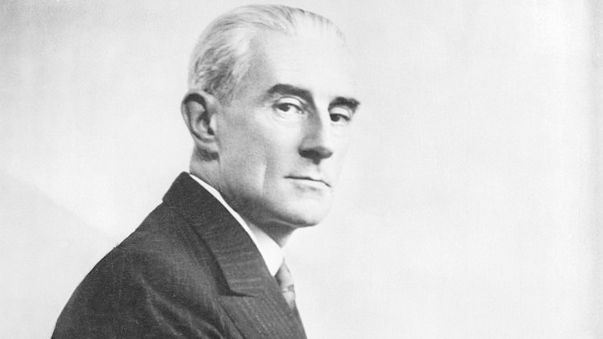
maurice_ravel.jpg

Composer of the month


January: Debussy

The height of summer requires La Mer and La fille aux cheveux de lin. What better way to relax on a hot afternoon than to sit outside with a cool drink, a book, and with Prélude à l’après-midi d’un faune playing in the air.

February: Tchaikovsky

The month for outdoor concerts and that means big sounds and large orchestras

March: Mozart

Serious music to engage the mind for serious work and to spur on imagination and creativity

April: J.S Bach.

Easter. From heaven and looking back to the heavens

May: Rachmaninoff

The Russian steppe always looks wintery. Rachmaninoff’s melancholy prepares the bones for the winter ahead

June: Bach again

A Well Tempered Clavier and 200 Cantatas defrost the brain, like a decent cup of coffee

July: Shostakovich

If Shostakovich can write astonishing music in the middle of a Soviet winter, then there’s hope for us all

August: Beethoven

Angry at winter? Listen to a Beethoven sonata. Fed up with the white noise of twitter? Choose a Symphony and turn up the volume

September: Ravel

Spring is here and Ravel unleashes a warm hope

October: Stravinksy

Who doesn’t want to dance in October? (metaphorically of course!)

November:  Chopin

One upon a time November meant music exams, hence, lots of Chopin. These days Chopin is for reminiscing, looking to the past and looking forward to holidays

December: Christmas Carols of course!

Proposed Victorian Bill is likely to harm not help women

The State of Victoria wishes to be at the vanguard of the sexual devolution. Sadly, Victoria is already becoming an unsafe place for vulnerable children who struggle with gender dysphoria. Just as with the recent passing of euthanasia laws, concerns expressed by the medical fraternity were overlooked in favour of radical political and gender theorists from institutions such as Latrobe University.


img_9452

It is not only children who will suffer from these radical and non-scientific agendas but also women. I know of one situation where a young woman was forced to play football (AFL) against a male who identified as a female. She feared for her safety which is understandable given the physical difference between the average male and female. As a growing number of women are now indicating if the transgender agenda continues it is likely that women’s sport may cease to exist in a few years time. 

A story emerged from the United Kingdom this week concerning a group of less than impressed boys. In an age when we are recognising how big the issue of pornography is among boys, a not so smart teacher decided to take a group of school boys on an art exhibition to see ‘feminist art’. The boys weren’t so much exposed to art as they were to bare-breasted middle-aged women! In normal circumstances, authorities would be called and the adults charged with sex offences, but apparently, this is ok.

We live in astonishing times.

In their latest effort, the Victorian Government has decided that transgender women are being discriminated against under current laws. At the moment if anyone wishes to change the gender on their birth certificate, sex reassignment surgery is required. According to the Attorney General, Jill Hennessy,

“Everyone deserves to live their life as they choose, and that includes having a birth certificate that reflects their true identity.”

 The proposed legislation will eliminate the need for women to have vaginas and so forth, and men (sorry, women) with penises can be legally recognised as women. You can imagine the social problems that will arise from such a decision.

In a piece in the Weekend Australian, Ms Rayner, a former state and federal human rights commissioner and University of Melbourne philosopher Holly Lawford-Smith, express grave concerns over the Bill and are asking for it to be rejected.

“Sex should not be a matter of belief…If progressives want to disincentivise sex-reassignment surgery, they should protect gender expression, or gender identity, or trans status, separately — rather than trying to shoehorn it into sex.” Dr Lawford-Smith said.

They have likened the Bill to last week’s story coming out of Canada where a transgender woman is taking a woman to court for refusing to wax his testicles.  That’s right. Once again, in a normal world when a man demands a woman to touch his privates she is entitled to say no and to be protected by law, but in today’s Canada, he is the victim and she the perpetrator. Indeed, should the Victorian Bill be adopted, we can expect to see all manner of confusion and also litigation against religious groups who insist upon recognising biological gender rather than one’s self-assuming gender. Indeed, it is not only religious organisations that may find themselves in trouble with the law but also sporting clubs and schools and secular organsations. It is telling that Dr. Lawford-Smith, a self-identifying lesbian, is calling for the Bill to be rejected.

This isn’t about justice, this is about redefining the fundamental nature of women and men. It is the insane devolution of humanity at its most basic form. Biology no longer determines what is a man and what is a woman. Chromosomes, hormones, reproductive parts and sexual appendages now have no bearing on what constitutes male and female. The only factor that matters is how the self defines themselves. As Ben Shapiro astutely remarked last week, is female a set of stereotypes or is it biological? We are being told that it cannot be biological because a woman can have a penis just as men can give birth to children. Therefore,  femaleness must be definable by social stereotypes, a criteria of observable non-physical differences from males. But of course, the dilemma is that we are not permitted to suggest that men and women have any differences beyond the biological. So which is it, is a woman defined by biology or by stereotypes?

I write this as a leader in the Victorian community. I also understand that because I’m a Christian, my concerns will be automatically binned by some; I appreciate why.  Churches have lost almost all their moral impetus after facing scandal after scandal. The sexual sins uncovered inside some churches and religious organisations is beyond evil, if that is at all possible. And yet, how can one stand by and be silent in the face of such unhealthy legislation.

This is profoundly sad and harmful, both for Victorians wanting to change their gender and for people around them. I have had the opportunity to speak to the issue of gender dysphoria before, not as a medical expert, but as a community leader who values all people and who is deeply concerned about the radical and unscientific approach being adopted by our political leaders. Victorians struggling with gender dysphoria deserve our care and loving support, but as most clinical psychologists will explain, the majority of people wrestling with dysphoria will return to and be content with their biological sex. Those who continue to identify with the opposite gender need our affirmation of their dignity, but not a confirmation of their self-misconceptions. We don’t tell people with other disorders that their feelings are right and true. Do we agree with teenage girls suffering from eating disorders that they are overweight? It would be cruel to do so.

The sexual revolution knows no boundaries. It is one steep descent with nothing but jagged rocks at the bottom. From time to time, the next redefinition and social regression slows down because of hairpin corners (i.e. commonsense, scientific fact, or moral integrity), and then it’s off at speed again until the next hairpin. But what is left? There are few turns left on this destructive road. 

“There is a way that appears to be right, but in the end it leads to death.” (Proverbs 14:12)

I trust that common sense will prevail, but in Victoria, we have little hope of that. In the midst of growing mistakes, the good news of God offers hurting and confused Victorians are better hope than the misleading efforts of our moral deconstructionists. The years ahead are going to create such confusion about what it means to be human. We need an example to show people, we need a Saviour who is good enough and loves us enough to redeem and restore. Thank God there is one better than ourselves to whom we can point our fellow Victorians: “For there is one God and one mediator between God and mankind, the man Christ Jesus” (1 Timothy 2:5)


(I made a small edit on July 29th)


New Victorian sex law a gender headache

by Bernad Lane

A law put up by Victoria’s Andrews government could expose women offering intimate services such as pubic waxing or underwear fitting to discrimination complaints if they reject trans women customers who still have penises, veteran human rights lawyer Moira Rayner has warned.


The new law would allow self-declared trans women, who possess a penis and have not undergone any sex-reassignment treatment, to change the sex that appears on their birth certificate, giving them access as women to equal opportunity protection.

Ms Rayner, a former state and federal human rights commissioner, said that, if enacted, the legislation could allow a Down Under version of Canada’s Jessica Yaniv case, in which a trans woman has lodged anti-discrimination complaints against 16 beauticians who did not want to handle her penis and testicles in order to grant her wish for a brazilian wax…

Seven Statements about the Israel Folau Church revelations

An exclusive report has been published in today’s Sydney Morning Herald, providing ‘new’ information about Israel Folau and his church, suggesting their theology is extreme and out of touch with mainstream Christianity. The article seems to be aimed further pushing wedges between Israel Folau and those who have been supporting him (which is partly odd given there are many non-Christians supporting him)


FOLAU_PV3_1280x560-1

1. We mustn’t ignore credible information, even if it may be uncomfortable. Should it be accurate, Christians will be concerned.

2. Some of the reported information is yet to be confirmed. Given much of the SMH reporting on Israel Folau, it is unsurprising that readers receive this new article with some suspicion. An example would be John Tait’s attempt to deconstruct Folau’s use of the Bible in the offending post, Did Israel Folau actually misquote the Bible? Hell, yes (read my response to this inaccurate piece here  ).

3. Some of the information isn’t new and hasn’t been hidden by Christians. For example, Folau’s view on the Trinity. On April 11th, 2019 I wrote,

“More important, someone has brought to my attention that Folau seems, at the very least, to be confused by the Christian teaching of the Trinity. His comments on the Trinity that have been shared with me are troubling, to say the least. This doesn’t negate the 5 points made in this post, but it may cause us to reevaluate Folau’s understanding of Christianity.  I suspect that many Christians, in explaining God, fall into one Trinitarian heresy or another, simply because they haven’t been taught the Scriptures well. Perhaps he needs a Christian brother to get alongside him and disciple him with a Bible in hand (don’t we all?). The doctrine of the Trinity, however, is too important, too central to the Christian faith, for us to ignore.”

4. Most Protestant Christians have serious concerns over some key Roman Catholic doctrines and many Christians also share concerns over the teaching and practices at Hillsong. There is nothing exceptional in this

5. Orthodox Christian doctrine matters more to Christians than politics and law.

6. Current Christian advocacy for religious freedom has not only been about Christians but about sustaining a positive social pluralism in Australia for all Australians.

7. Even if Israel Folau’s theology is heterodox, that does not diminish the issue of his wrongful sacking by Rugby Australia. Should only mainstream Christianity be protected by commonsense and law?


I will add an eighth: two things can be true at the same time: Folau’s post was close to the mark (in terms of reflecting classical Christian teaching) and his views on the Trinity and some other matters is wide of the mark (not reflecting classical Christian teaching). The latter doesn’t preclude the former from being accurate.

A response to John Tait’s critique of Izzy’s use of the Bible

Like many other people, I reached peak Izzy some weeks ago. While Israel Folau isn’t making headlines every day now, different aspects of the story are still being discussed in the media.  The Sydney Morning Herald has today published an opinion piece which aims to shed light on Folau’s use of the Bible (or should that be misuse?). However, some of the arguments are misleading, even grossly incorrect, and therefore a response is required.

The author of the article,  John Tait, describes himself as, “an agnostic, lapsed Catholic, Master of Theology, former Charismatic Christian”. He feels a compulsion to bring truth and clarity to the question of Israel Folau and the Bible.  How successful is Tait?  Not so good. He gets a couple of things right,  and he fudges a few facts and he completely ignores the most obvious and relevant fact.


Screen Shot 2019-04-11 at 9.30.10 am

John Tait opens by sending out a somewhat disparaging remark toward Australian theologians, “I have been waiting for a theologian or biblical scholar to come forward and address Folau’s misuse of scripture in his controversial post”. I can think of several Christian leaders who have offered commentary about Folau’s use of the Bible. Perhaps what Tait means is that he hasn’t yet found a theologian who entirely agrees with his exegesis.

He also asks why no one is investigating Folau’s Church. Perhaps he doesn’t remember those journalists who have been trolling the church’s facebook group and then cutting and pasting excerpts from Folau’s preaching. Tait attempts to offer a description, 

“All that I can gather is that he is a member of an evangelical congregation somewhere in Sydney’s north-western suburbs.”

Perhaps we should assume that Tait is using ‘evangelical’ in its original and positive sense, rather than the derogative way it is most often applied in the media today.

Bible Translations

First of all, when Tait dismisses the King James Version of the Bible, he is partially correct when he suggests that modern versions better reflect the original text. Textual criticism is an informed science which involves the study of early Bible manuscripts, and it is incredibly fruitful for Bible translating. Scholars conclude with great confidence that the Bible translations we have today are incredibly reliable and can be said to be true versions of the original. The King James Version is still considered by biblical experts as a faithful translation, even though there are few small places where it appears that the KJV translators made a wrong judgment call. If we take the example at hand, Galatians 5:9-11, the similarities between the KJV and newer translations are striking. The only notable difference is that the KJV includes murder in the list. This was done because some ancient manuscripts mention murder, while modern translations leave it out on account that the earliest and best manuscripts do not include it.

“19 The acts of the flesh are obvious: sexual immorality, impurity and debauchery;20 idolatry and witchcraft; hatred, discord, jealousy, fits of rage, selfish ambition, dissensions, factions 21 and envy; drunkenness, orgies, and the like. I warn you, as I did before, that those who live like this will not inherit the kingdom of God.” (NIV)

“19 Now the works of the flesh are manifest, which are these; Adultery, fornication, uncleanness, lasciviousness,20 Idolatry, witchcraft, hatred, variance, emulations, wrath, strife, seditions, heresies,21 envyings, murders, drunkenness, revellings, and such like: of the which I tell you before, as I have also told you in time past, that they which do such things shall not inherit the kingdom of God.” (KJV)

These are not Jesus’ words. So what?

Second, Tait says of Galatians 5:19-21, “They are not the words of Jesus. They are the words of Saint Paul”. So what? Tait seems to be implying that these bible verses are less ‘divine’ or less important because they are uttered by Paul and not by Jesus. That’s not how the Bible works. All Scripture is God-breathed, meaning that it is all authored by God whether those words are the Old Testament, the Gospels, or the New Testament letters. Indeed, Jesus himself identifies all of Scripture as being about him, and he directly gave the Apostles authority to speak and teach his Gospel to others. The Apostolic testimony is the reliable and Christ given word about Jesus to the Church and the world. Tait denigrating the place of Paul’s words is not a Christian explanation of how the Bible works or of how to read the Bible. Galatians 5:19-21 is as authoritative to Christians as is Matthew ch.5.

Nothing about hell

Third, the Kingdom of God is related to the theme of heaven and hell.

Taits argues,

“You will also notice that there is nothing in the passage from Galatians about these sinners going to hell. The early Christians were expecting the imminent arrival of the resurrected Jesus to usher in the Kingdom of God. To be part of that you needed to repent and believe. This was urgent business. They believed that the world as they knew it was coming to an end. Many evangelical Christians still cling on to the same vain hope.

…This expectation of the Kingdom of God has nothing to do with going to heaven or hell when you die. It is about the end of the world. The concept of ‘hell’ that Folau is talking about was developed later in church history.”

With an air of intellectual snobbery over those dumb and intellectually prosaic Christians, Tait can’t resist throwing out another snide remark, “Many evangelical Christians still cling on to the same vain hope”. We’ll let the keeper take that one while I instead respond to his argument about hell.

1. He is correct when saying that the Galatians passage does not mention hell (not explicitly anyway).

2. He is right in suggesting that we shouldn’t view the kingdom of God as a synonym for heaven and hell. He is however misleading readers into thinking that the two concepts are poles apart; that is not the case. Kingdom of God is a broader concept than heaven and hell, but it is one that includes the idea of eternity and of a new heaven and new earth. Even hell is not outside the rule of God, but it is a place of punishment in contrast to the place of life.

3. He is incorrect to insist there is no relationship between Kingdom of God and hell. Galatians 5:21 speaks directly of exclusion from the kingdom of God on account of living in unrepentant sin. What does it mean to be excluded from the Kingdom? Where do these people exist if they are not part of God’s Kingdom? Exclusion is not without location.

In the Sermon on the Mount, Jesus speaks of the character of life among those who belong to God’s Kingdom, and he contrasts this with the character of those who are in danger of hell. Jesus depicts two very different lifestyles which represent two very different allegiances and domains, the Kingdom of Heaven and a place which Jesus calls hell. Folau speaking of hell is entirely consistent with the meaning of Galatians ch.5 and 1 Corinthians ch.6.

4. He is incorrect to say that Folau’s view of hell was developed later in church history. A quick survey of the Bible testifies against Tait’s theory. Jesus’ own words demonstrate that Tait is mistaken:

“And do not fear those who kill the body but cannot kill the soul. Rather fear him who can destroy both soul and body in hell.” (Matt 10:28)

“And if your eye causes you to sin, tear it out and throw it away. It is better for you to enter life with one eye than with two eyes to be thrown into the hell of fire.” (Matt 18:9)

The Bible describes heaven and hell as places created by and belonging to God, as much as this universe is made by the same God. Biblical authors may at times borrow language from other places to help readers understand what heaven and hell are about (of much greater influence on the New Testament is a heavy dependence on the Old Testament), but to imply that the Biblical teaching should be traced to another religious milieu is both unnecessary and counters the Scriptures themselves (i.e. Acts 17:16-31).


Is homosexuality absent?

Fourth, Tait’s most glaring sin is the fact that he completely overlooks 1 Corinthians 6 in relation to Folau’s mention of homosexuality. Tait wants us to believe that Folau has included homosexuality for ‘bias’ reasons, over and against what the Bible says.

“Note however, that Galatians 5:19-21 does not, in any translation, mention homosexuals. Folau and whoever wrote the original post have projected homosexuality into the promiscuous category. That is their bias.”

Tait is right to say  Galatians 5:19-21 doesn’t mention homosexuality, but the graphic displayed on Folau’s post isn’t summarising Galatians 5:19-21 but another Bible passage, 1 Corinthians 6:9-10. In the 1 Corinthians 6:9-10 list, homosexuality is mentioned explicitly.

To be sure, the paraphrase is not entirely reflective of 1 Corinthians 6:9-10, for atheists, are not mentioned by Paul here, while the greedy and revilers are in the biblical text and missing from the graphic. However, does this mean that the graphic misrepresents Bible messaging? Atheists may not be included in 1 Corinthians but they are referred to elsewhere in the Bible and I’m pretty sure no atheist wants to be included in the Kingdom of God; it would be kinda awkward for them!

If there is a due criticism, it is this, the post says ‘homosexuality’, rather than the more accurate ‘those who practice homosexuality’. It is not a sin to be same-sex attracted. Christians and Churches do not believe that men and women who are attracted to the same sex are condemned to hell.  Our churches have many wonderful men and women who love Jesus and accept the Bible’s teaching on sexuality and who are living whole and meaningful lives without entering into sexual relationships outside heterosexual marriage, even though they admit to having same-sex attraction. The text in Corinthians refers to those who practice or engage in homosexual activity, just as though two heterosexual people engage in a sexual relationship that is not within the covenant of marriage. The whys and meaning of all this is important, but the discussion point here concerns Tait’s indefensible omission regarding Folau’s use of 1 Corinthians 6 which explicitly mentions homosexuality.


We don’t require a Bible Scholar to comment on Folau’s use of the Bible, for the Scriptures are available for any and all to read. Perhaps we should read this book which has done more to shape human thinking and our culture than any other. Even from the standpoint of curiosity and wanting to understand Australian culture, we would do well to open the pages of the Bible, and in doing so we might be surprised by what we find. John Tait has made some attempt, but he has made numerous basic errors and one glaring omission which I still cannot fathom.

The biggest shame about Izzy’s post is that he didn’t say more and point his followers to  verse 11 of Corinthians ch.6 and to the contrast Paul makes in Galatians 5:22-23. While the Bible is deeply concerned about what is wrong in the world, the wonder of Christianity is that God sees us and yet lovingly offers an alternative, one that we don’t deserve.

“9 Or do you not know that the unrighteous will not inherit the kingdom of God? Do not be deceived: neither the sexually immoral, nor idolaters, nor adulterers, nor men who practice homosexuality,10 nor thieves, nor the greedy, nor drunkards, nor revilers, nor swindlers will inherit the kingdom of God. 11 And such were some of you. But you were washed, you were sanctified, you were justified in the name of the Lord Jesus Christ and by the Spirit of our God.” (1 Corinthians 5:9-11)

“22 But the fruit of the Spirit is love, joy, peace, patience, kindness, goodness, faithfulness, 23 gentleness, self-control; against such things there is no law. 24 And those who belong to Christ Jesus have crucified the flesh with its passions and desires.” (Galatians 5:22-24)

The Uniting Church of Victoria/Tasmania votes to use Euthanasia

The Uniting Church has been chasing after the culture ever since its creation in 1977. While there are evangelical churches and ministers within Australia’s 3rd largest Protestant denomination, they are relatively few, and these have been engaging in formal discussions to review their association within the denomination. If the final nail in the coffin hadn’t already been laid, surely it has after today’s proceedings.

Today, the Uniting Church (Synod of Victoria and Tasmania), voted in support of motions to allow euthanasia in their agencies.

UC_lp

In a statement released on their website we read,

“Key points from the resolution included:

There was a range of faithful Christian responses to voluntary assisted dying.

Exploring, accessing and conscientiously objecting to voluntary assisted dying were all within the range of faithful Christian responses to the Victorian Voluntary Assisted Dying Act 2017.

To give permission within Victoria to UCA institutions (Uniting Vic.Tas and Uniting AgeWell) and the UCA-affiliated hospital group Epworth HealthCare to make voluntary assisted dying allowable within the context of their facilities and services for their patients, clients and residents.

Moderator Rev Denise Liersch said afterwards: “The decision was made after a long period of careful consideration, discussion, and prayer.

“As followers of Jesus, we affirm that all human life is precious and has God-given dignity.

“We believe allowing voluntary assisted dying in our agencies, under the constraints of the legislation, is consistent with this belief.

“The Synod will prepare pastoral responses and resources that reflect the Synod’s decision.

“The Synod acknowledged that exploring, accessing, and conscientiously objecting to voluntary assisted dying was within the range of faithful Christian responses to the Victorian Voluntary Assisted Dying Act 2017.

“As outlined in the legislation, any individual in our agencies or Church members may act in accordance with their own conscience in this matter.

“I was impressed with the way in which the Synod members grappled with this issue openly, honestly and faithfully with its theological and practical implications.”


Let’s get our heads around the moderator’s assertion, “in the name of Jesus…voluntary assisted dying in our agencies, under the constraints of the legislation, is consistent with this belief”.

‘In the name of Jesus’, we support the killing of terminally ill human beings?! What a disgrace to attach Christ’s name to such an ignominious and evil practice. 

It doesn’t matter how much they couch the decision in terms of careful discussions or extended times of prayer and thought, or listening to ‘expert’ panels, a wrong decision is still a wrong decision. This is not the first controversial decision to be made by the Uniting Church. In 2018 the Uniting Church (Synod of Victoria and Tasmania) adopted same-sex marriage. With an unsurprising congruity, a denomination known for its ‘liberal theology’ is quickly falling into line with mainstream positions on many social issues, including calling for the decriminalisation of illicit drugs, and vocal support of abortion among some of its leaders, including the Victorian Synod’s bioethics committee. The very trajectory designed to make their churches more inclusive is, in fact, making them redundant. Why become Christian and join a Church if Christianity simply mirrors the worldview I already hold? According to the 2016 Census, the Uniting Church is one of the fastest declining denominations in the country, losing around 22% members since 2011 (almost 200,000 people). There is little doubt that the direction will continue.

The Uniting Church has already littered the landscape with graves where there were once churches, and now they are giving consent for their health agencies to sanction euthanasia. It is one thing for a Government to legalise euthanasia, but for an association of Christian churches to stand together and vote in favour of their own agencies to allow this practice? And then have the audacity to attach the name of Jesus to this?

As I pastor I am not immune to the terrible suffering people experience, including among some who have a terminal illness. As a member of the community, I’m not blind to awful suffering experienced by friends and family. No one wants people suffering, and yet there is a line we ought not to cross, namely sanctioning the killing of human beings because they are ill. Hundreds of medical professionals urged the Victorian Parliament not to accept this legislation, but instead provide proper funding to palliative care. Sadly their concerns and appeals were ignored. 

This is State sanctioned suicide which has now become Church approved suicide. When Churches decide that handing out lethal pills to patients is in accord with the Christian faith, it is clear that they have long deserted the faith and are now following a very different religion to the one taught in the Scriptures. The fruit of today’s decision may lead to the deaths of vulnerable people who are using Uniting Church health facilities. It is hard to grasp how such fruit can ever be equated with the work of the Holy Spirit or with a Christian Church. The careful use of doublespeak, i.e. giving employees freedom of conscience on this issue, does not remove the force of the Synod’s decision. The same tactic was employed in last year’s marriage debate. 

No doubt there will be Christians within the Uniting Church of Victoria/Tasmania who are tonight grieving this decision. These brothers and sisters need our prayers as they discern what to do.  Many other Christians share their grief tonight and we ask for God’s mercy. 


Update July 15: A few people have responded to the article, saying that the Uniting Church has not accepted euthanasia, but rather VAD (voluntary assisted dying). First of all, euthanasia is the big umbrella term, with VAD being one form of euthanasia. Second, voluntary assisted dying is a disingenuous term that seeks to cover the reality, which is, it is voluntary assisted suicide. I believe it is important for churches to have integrity and to name things accurately.

Help Australians to understand the Bible

It has been reported today that Raelene Castle, the Chief Executive Officer of Rugby Australia, would still have sacked Israel Folau had he only posted Bible verses stated in the hearing against Israel Folau that she would have sacked him, even if the only thing he did was to post

Miranda Devine writes,

“Raelene ­Castle effectively damned the Bible as hate speech in astonishing unreported testimony at Israel Folau’s code of conduct hearing in May.

She declared it is the Bible itself which is offensive when she testified before a panel of three judges who went on to find Folau guilty of a “high level breach” for posting a biblical quote calling on “drunks, homosexuals, adulterers, liars, fornicators, thieves, atheists and idolaters” to repent or face hell.

Castle told panel chairman John West, QC, that some biblical passages are unacceptable, and that even if Folau had posted a photocopy of a Bible page, he still would have been sacked.

West asked Castle: “What if Mr Folau had photocopied passages from the Bible and simply posted that on his ­social media pages, would that have caused a problem for you?”

Castle replied: “I think it depends on which ones — which pages he photocopied.”

West asked: “If he’d photocopied the passages that are referred to in the posts would that have caused a problem for you?”

Castle, “Yes it would have.” 

img_9500

Bible in the Victorian Parliamentary Library

The Bible itself is apparently offensive and to be defined as hate speech.  Today’s revelations are not the first instance of throwing the Bible onto the bonfire of popular opinion. Gregory Callaghan suggested in The Age yesterday that,

“If we continued to take every biblical injunction seriously, slavery, the subjugation of women, stoning, cutting off hands, and being barred from wearing clothes woven of two kinds of fabric would be still in force.”

We have an issue in Australia with widespread biblical illiteracy and ignorance. It is a self-fulfilling prophecy that shouldn’t surprise anyone, given the deliberate fashion in which we have turned our backs on Christianity over a period of decades.  Some people fear what they do not understand and others dislike what they do understand and cannot accept.

Is the Bible really to be considered hate speech? Are we really at the place in Australian society where quoting the Bible can be used as material evidence against an individual?

This isn’t the first in history where the broad society has misunderstood and misrepresented what Christians believe. This is an ancient problem.  Remember the good old days in the Roman Empire? Pliny the Younger, the Roman Governor of Bithynia et Pontus, assumed that the Christian practice of the Lord’s Supper consisted of Christians eating the flesh and drinking the blood of fellow human beings. He also believed that all that Christian talk about brothers and sisters involved some sexual appetite for incest. What happened to the Christians in Bithynia? Filled with a fountain of misinformation and insisting that they also adhere to the cult of the Emperor, he began to have them systematically imprisoned and executed.

Thank God that we don’t live in one of the many countries that still practice this kind of punishment on Christians (and other minorities). What is new today is that the West (including Australia) has had centuries of Christian teaching, access to the Bible, and freedom to read, study and explore the meaning of the Scriptures. We are not living in first century Rome. At yet basic Bible knowledge and grasping that the  Bible is to be understood in light of the person and work of Jesus Christ escapes the attention of many.

We have a Bible comprehension problem. Churches are not always helpful on this front, as many sell their soul for an esteemed role in the marketplace and for public congratulations. How can outsiders understand the Bible if Christian preachers carry a pair of scissors in their pocket, and cutting out any teaching that contravenes society’s dogma?  If Churches are not reading and teaching the Bible faithfully how can we expect anyone else to be getting it right?

Jesus documented a similar issue in his day,

“Even after Jesus had performed so many signs in their presence, they still would not believe in him. This was to fulfill the word of Isaiah the prophet:

“Lord, who has believed our message
and to whom has the arm of the Lord been revealed?”

 For this reason they could not believe, because, as Isaiah says elsewhere:

“He has blinded their eyes
and hardened their hearts,
so they can neither see with their eyes,
nor understand with their hearts,
nor turn—and I would heal them.”

 Isaiah said this because he saw Jesus’ glory and spoke about him.

 Yet at the same time many even among the leaders believed in him. But because of the Pharisees they would not openly acknowledge their faith for fear they would be put out of the synagogue; for they loved human praise more than praise from God.” (John 12)


My advice to Christians is this:

  1. Make sure that the public reading and preaching of the Bible is front and centre at all your Church services. Why wouldn’t it be?
  2. Make the reading and teaching of the Bible foundational to all your Church ministries. If it’s not, why not?
  3. Find ways to help your broader community engage with the Bible. Ask your friends, have they ever read the Bible and would they be interested to do so with you? Could you start up a group for interested people in a local school or community hall? Show people how to read and interpret the Bible. Share with people why the Bible informs and it transforms for good.

Raelene Castle has launched into a world familiar to many people of faith who have escaped oppressive nations, but this is unusual for Australia. To call out in a formal disciplinary tribunal that the Bible amounts to hate speech is extraordinary. This is an extraordinary step in the latest of a series of ridiculous cultural malpractice. Don’t be fooled,  she will find substantial support among our cultural elites. But is she on to something? Does the Bible never disagree with our moral inclinations? Do the Scriptures never cause discomfort? While the Bible is never hate speech, it is a dangerous book. Entire nations have changed on account of the Bible. Cultures have shifted toward enlightenment and progress on account of the Bible. Fairer societies have been built, slavery outlawed, fair working conditions for the poor, homes for orphans and the elderly, and in fact, much of the fruit we enjoy today finds its roots in ideas stemming from Biblical revelation.

“For the word of God is alive and active. Sharper than any double-edged sword, it penetrates even to dividing soul and spirit, joints and marrow; it judges the thoughts and attitudes of the heart.” (Hebrews 4:12)