Christians must not contend as the world fights

Tim Keller sent out this tweet on Saturday, 

“the demonization and dehumanization of the other side must stop. When professing Christians do it, it is triply wrong.”

The statement shouldn’t be controversial for Christians, but in today’s America (and to a lesser degree, Australia), it was outrageous for Tim Keller to make this suggestion.

Despite many people appreciating his comment (and others that he has recently made on social media), there has been a lot of backlash and complaints. For example, 

“Another comical and tone deaf statement by Keller. It’s triply wrong when Christians do it because we expect non-Christians to be awful people that do crappy things.”

Photo by Andrea Piacquadio on Pexels.com

Tim Keller is observing a very real and concerning problem in our societies. Public debate no longer has room for grace, kindness, and patience.  Genuine conversations are hard to find and even more difficult to start because of the cacophony of stereotypes, insults, and shouts that now dominate public space. The force of political diatribe is sweeping aside nuance and fairness and patience. There is little toleration for paving a new path in this age in intolerance. Keller is rightly noting how it is all too easy for Christians to slide into the assumed poles that are being defined by left and right, progressive and conservative.

Today’s posture is the opposite of Proverbs 18:13 which says, 

“To answer before listening— that is folly and shame.”

The reality is, Christians may agree with a moral principle but we may believe that there are different ways to approach the issue and we might feel more or less passionately about the issue than the next Christian. Among these matters are abortion, racism, refugees, and climate change. We can agree that these are important ethical issues. We grieve over how our culture buys into and even celebrates theories and policies that dehumanise our fellow human beings. It is quite possible, indeed it is inevitable, that while concurring that a certain belief or action is wrong, there is often diverse opinion about how to best approach the issue. It may be unpopular to suggest this, but these disparate positions often have less to do with shared theological convictions and more to do with political philosophy (ie. what is the role of Government?) and personal experience. Instead of recognising the way we form our views, we have wrongly purchased the arrogant absolutism that is now pervading our society. 

I have seen this happening even in Australia as the nation deals with the latest manifestations of the sexual revolution, with a bushfire emergency and now with the COVID-19 pandemic. A person may rightly identify an important issue, but if we respond to evil with more sin, how have we contributed in any constructive way? If we only react according to our sense of ‘righteous indignation’, are we not in danger of relying upon rhetorical power to fend off terrible things rather than ‘grace seasoned with salt’? 

If I need to resort to slander, gossip, and caricature, in order present my case, I have already lost.  

As I casual onlooker of American culture and someone who lives inside Australian culture, it is clear that we have foot-faulted and we’ve convinced ourselves that because others are getting away with it, so can we. One of the consequences is that instead of adorning the Gospel, we attached a pugnacious moralism.

The harder path is the road less trod. A myopic culture may not see much benefit in taking this road but as Christians we are surely looking ahead toward eternity, not just the next social schism or election. 

Another response to Keller’s tweet said this, 

“Are we implying Christians have NO BATTLE to fight? Demolishing arguments and exposing unbiblical ideologies ≠ attacking individuals. Let’s not forfeit the battle to “the powers of this dark world and the spiritual forces of evil in the heavenly realms”

The comment is quite revealing, for it makes the very mistake that Tim Keller is urging Christians to avoid. There is a battle, but we do not fight as the world fights. We don’t resort to the same tactics that are employed by Government and corporations, by Hollywood and by social media platforms. The Bible is clear, we take our stand with truth and faith and righteousness. Our feet are readied with the ‘gospel of peace’. Notice this, Paul describes God’s good news about Jesus Christ as the gospel of peace. The staggering truth is, this is inauguration of peace for those who are not at peace with God. This is a peace for people who are not at rest but who are struggling against God and even ourselves. In this way, the Christian path in our secular age is to proclaim reconciliation and forgiveness through Christ.

When our political and social commitments speak louder than our Gospel convictions we inevitably begin to mirror the culture and not the Church of Jesus Christ. The cross is not a weapon to beat down opponents, it is God’s amazing news of salvation for sinners, of whom I am the worst. 

This is the place to begin each day and every conversation, 

“Here is a trustworthy saying that deserves full acceptance: Christ Jesus came into the world to save sinners—of whom I am the worst.” (1 Timothy 1:15)

When we view ourselves in light of the cross, it changes the ways we understand ourselves and the way we view others. We can mourn the days in which we live (and there is much reason for mourning). There are sometimes godly reasons for anger. But the cross will surely recompose our attitudes and ambitions and avenues.

As the Lord Jesus hung on the cross, he said, “Father, forgive them, for they do not know what they are doing.”

How can a Christian live and speak and act without seeing that it was my sin that held him there?

“It was my sin that held Him there

Until it was accomplished

His dying breath has brought me life

I know that it is finished

I will not boast in anything

No gifts, no power, no wisdom

But I will boast in Jesus Christ

His death and resurrection

Why should I gain from His reward?

I cannot give an answer

But this I know with all my heart

His wounds have paid my ransom”

COVID anger, frustration, and recalibrating our hearts

Earlier this week a young woman was refused permission to attend her own father’s funeral in Queensland. The daughter lives in Canberra where there have been zero COVID-19 cases for two months. There are not 5 active cases or even 1. For 60 days there has been 0 cases. The Queensland Government initially gave the woman permission to travel to Queensland to visit her dying father, but only after she was quarantined for 14 days. During that time her father died. When she asked for permission to attend the funeral she was refused, and even informed that she should no longer be in the State? Why? Because her stated reason for travelling to Queensland was to visit a dying parent, it was not for attending his funeral.

The story gets worse because the Prime Minister contacted Queensland’s Premier, Annastacia Palaszczuk, asking for special dispensation for the young woman to attend the funeral with her family. The response was for the Premier to take aim at Scott Morrison in public and in the Queensland Parliament by accusing him of ‘bullying’. She then suggested that the decision was not hers to make but that of Queensland’s Chief health officer Jeanette Young.

Speaking of which, last night, Dr Young explained why Queensland is giving exemptions to some people. She said, “I’ve given exemptions for people in entertainment and film because that’s bringing a lot of money into this state.”

The double standards are pretty gross. I understand that no approach to the pandemic is going to be always clean, clear, and consistent. There are competing issues and needs, but in trying to protect human life we are in danger of dehumanising real people. This is not a zero-sum game. There are genuine and vital competing issues that require attention and balancing. When grieving families cannot be together, when a couple cannot marry, and when mental health issues are considered a lesser problem, we as a society are skirting a dangerous path. I fear that as politicians make decisions, hubris take control and that the science and advice from the breadth of the community takes a back seat.

Take another example from this week. I don’t agree with the Roman Catholic practice of the ‘last rites’ but I know how important it is for Roman Catholics. In Victoria, priests are not permitted to give the last rites to dying parishioners. This is a startling infringement on religious freedom. Governments should not exist to strangle the freedoms of their citizens but to protect and preserve them.*

I am not having a go at any single Government. It is all too easy for people to politicise the pandemic. I appreciate that Governments and their advisors are under are extraordinary stress and they are facing daily and often competing issues. This is one of the reasons my church is regularly praying for them. But of what value is it in preserving a State if the very means of salvation requires the demolition of communities? The question is not without warrant, what if the cure is worse than the disease?

It is okay to be angry at the decisions made in Queensland and of their woeful follow up defence about profiting from Hollywood. However, do not sin in your anger. Instead, “mourn with those who mourn” (Rom 12:15). Indeed Romans ch.12 gives the Christian much practical wisdom for dealing with difficult times. I find that when I’m being swept up in the emotion of people’s stories and the news that frustrates and disappoints, I need to turn my eyes back to the Bible. Scripture has this powerful effect of recalibrating the heart and adjusting the lens through which I measure hope and the ways I ought to see people. I encourage you to do the same.

“Love must be sincere. Hate what is evil; cling to what is good. 10 Be devoted to one another in love. Honor one another above yourselves. 11 Never be lacking in zeal, but keep your spiritual fervor, serving the Lord. 12 Be joyful in hope, patient in affliction, faithful in prayer. 13 Share with the Lord’s people who are in need. Practice hospitality.

14 Bless those who persecute you; bless and do not curse. 15 Rejoice with those who rejoice; mourn with those who mourn. 16 Live in harmony with one another. Do not be proud, but be willing to associate with people of low position. Do not be conceited.

17 Do not repay anyone evil for evil. Be careful to do what is right in the eyes of everyone. 18 If it is possible, as far as it depends on you, live at peace with everyone. 19 Do not take revenge, my dear friends, but leave room for God’s wrath, for it is written: “It is mine to avenge; I will repay,” says the Lord. 20 On the contrary:

“If your enemy is hungry, feed him;
    if he is thirsty, give him something to drink.
In doing this, you will heap burning coals on his head.”

21 Do not be overcome by evil, but overcome evil with good.”  (Romans 12:9-21)

We can long for Governments to behave in such a way, but as Christians, we must, and we ought to begin living this out without waiting for others to first treat us well. Remember God, he didn’t wait for us to act rightly before showing us grace and compassion; it is because he first loved us.

“You see, at just the right time, when we were still powerless, Christ died for the ungodly. Very rarely will anyone die for a righteous person, though for a good person someone might possibly dare to die. But God demonstrates his own love for us in this: While we were still sinners, Christ died for us.” (Romans 6:-8)

—————————————————————————-

*The Victorian Premier has just announced that he will rectify the issue over performing the last rites in Victoria


China Gaslighting Australia

Gaslighting is the art of manipulating someone into doubting what is true and even to question their own sanity.

Unfortunately gaslighting has become a popular device in much political discourse and in some quarters of the media. The Communist Government of China are also exponents of gaslighting.

The Age is reporting today that, “China’s Foreign Ministry spokeswoman Hua Chunying said Australia had been “infected with fear, conjecture and paranoia”.”

What is this paranoia that Australia is suffering? One of our citizens, TV anchor, Cheng Lei, has been arrested in China without charge. She is now imprisoned at an undisclosed location and the Chinese Government is refusing to inform the Australian Government as to the reason. They can detain Cheng Lai for 6 months without charge. 

This doesn’t sound an “infection of fear or paranoia”. Indeed, this is far from the first time China has acted in this way toward foreign citizens. While this story is unfolding, China has added to a growing series of sanctions fixed against Australian exporters, yesterday suspending barley trade from Australia’s largest grain exporter. 

According to the story in The Age, China has spent the past year actively reorienting its trade partnerships, moving away from Australia and increasing trade with countries like Argentina, Russia, and France.

Why is this a problem? Contrary to Beijing’s gaslighting, there are genuine reasons for Australia to be concerned about the rise of Communist China. 1.4 billion people are subjected to this authoritarian rule. This totalitarian regime has an extended history of persecuting minorities. Churches continue to be closed and pastors imprisoned. Churches that remain open are usually required to adopt a corrupt version of the Bible (all the awkward passages are removed and red book friendly sayings inserted). Around 1 million Uyghurs have been forced into ‘education’ camps. Hong Kong is losing her freedoms, military bases are being established in disputed areas in the South China Sea, and Taiwan’s democratic freedoms remains under threat.

In the meantime, China has been selling sugary treats all over the world to buy supporters and strategic gain, making foreign Governments dependent upon her for economic stability.  The One belt, one road scheme, which my State of Victoria has signed up to, is part of the Peoples’ Republic’s foreign policy and economic strategy.

Australia has experienced significant issues in 2020, from raging bushfires to a global pandemic and what is now the worse economic crisis since the Great Depression. Let’s not be mistaken, the fall out from these issues will not be quickly or easily resolved. On top of this, over the past 3 months the Federal Government has raised awareness over the posing complexity of Australia’s relationship with China. This has resulted in the urgent and immediate injection of $100 millions into military defence upgrades and cyber defence.  The Australian Strategic Policy Institute is also speaking more directly to the geopolitical issues arising in our region.

During this time, Europe is barely a shell of its former glory, and United Kingdom has chosen to drink the poison chalice of identity politics and the sexual revolution. The United States is genuinely reeling from its own growing internal troubles, all which require enormous political attention and which have the affect of draining people from having the mental and emotional energy for tackling other (and possibly bigger) issues that are on the horizon. The sun is setting on the West.

The point is simple, Communist China is thirsty for power and prestige. China appears to be growing in confidence and has already taken bold steps to increase her influence this year. Do they perceive that the West has become either too distracted politically or too depleted emotionally to respond with any real semblance of  fortitude?

25 years ago I listened D.A Carson expound the book of Ezekiel and heard him make the startling suggestion (which it was at the time) that the United States, like every superpower before her, would one day collapse. Sometimes Empires fall rapidly like a sudden avalanche. More often the demise takes places over many years (if not decades) like a slow moving glacier. The history of the world offers an array of geo-political, economic, and military reasons for the rise and fall of nations, but lurking behind collapse is a usual suspect; hubris. Hatred is another reason, and so is boredom.

Rome didn’t fall in a day. Through centuries of infighting, plagues, famines, and external threats, her power diminished. In 410Ad Rome was sacked by the Visigoths. With a flair harkening back to Nero and mirroring our own culture today, the Christians were to blame.  Rome was rebuilt, but only as a much weaker and vulnerable city with an ever shrinking influence.

There is more than one way to oversee the demise of a nation. One can buy influence or choose to bully your opponents. And if those methods fall short, there are always military options. So far, China has proven successful in both buying and bullying, but what will happen when others stand up to her?

History demonstrates that appeasement rarely satisfies a hungry dragon. It may delay action but only for so long.

I’ve been suggesting this for some months, but as we move deeper into this difficult year I am more convinced that the events thus far may pale into smallness in comparison with the growing threat to our north. It is time for us to get our houses into order.

Thankfully God doesn’t succumb to gaslighting. What he does do is tell us the honest truth about the world and about ourselves. Sometimes the truth is hard to swallow and so we prefer to create these imaginary bubbles where life is secure, the world is basically okay, and we deserve nothing but goodness. This may work in the short term, but as 2020 is revealing, eventually reality bursts the bubble.

2020 reminds me of how important prayer is as a Christian response to crises and threats.

I am also reminded of Psalm 146:6 which tells us, “Do not put your trust in princes,  in human beings, who cannot save.”

I am reminded of Jesus’ words to ‘Seek first the Kingdom of God and his righteousness”.

I am reminded of the imperative to teach my children the ways they should go and in whom they can put their trust.

I am reminded of Jesus’ words, “You will hear of wars and rumors of wars, but see to it that you are not alarmed. Such things must happen, but the end is still to come. Nation will rise against nation, and kingdom against kingdom. There will be famines and earthquakes in various places.  All these are the beginning of birth pains.” Into such a time as this, Jesus reminds his disciples of the priority of the Gospel, “ this gospel of the kingdom will be preached in the whole world as a testimony to all nations, and then the end will come.”

I am reminded that a pastor’s role includes preparing and equipping the church for tomorrow.

This year is a once in a generation time to reassess what are our ultimate hopes and deepest desires. This year may also prove to be a trial run for more dangerous times ahead should China insist on her agenda and should the West continue to destroy itself in a myriad of culture wars.

“Blessed are those whose help is the God of Jacob, whose hope is in the Lord their God.” (Psalm 146:5)

Australia: Healthy Pluralism or Dogmatic Secularism?

Australians are understandably focused on combating COVID-19 right now. We are also beginning to highlight the threat Communist China is posing to geopolitical stability around the globe. Indeed, perhaps because of the issue of Communist China’s ambitions it is important for Australians to understand and appreciate the values of our democratic system.

I’m not sure if it’s deliberate or if it stems from a failure in our university education, but it’s clear that there is an abundance of confusion regarding religion’s relationship with Australian public life. Indeed, this remains one of the key issues facing Australia, as evidenced by the same sex marriage debate in 2017 and ongoing discussions over the proposed Religious Discrimination Bill.

Take for example, these tweets by Jane Caro last night. Jane Caro is a well known social commentator here in Australia. She said, 

“I fiercely believe in separation of church and state and that religious beliefs should not be privileged (tax free status anyone) over any other beliefs. Theocracies are deadly dangerous, particularly to women and LGBTQI people. I don’t want to ban them, or privilege them.”

First of all, pretty much no one wants or believes in theocracies.  Is there a movement in Australia to turn our democracy into a theocracy?  This line of argument is a red herring. Supporters of theocracies are negligible, and it is certainly not what Christian Churches in Australia posit. 

Second, Christians strongly believe in the separation of church and state. It is after all, an historic Christian view. It was Jesus who said, 

“Give back to Caesar what is Caesar’s and to God what is God’s.”

Jesus wasn’t arguing for the exclusion of religious ideas from the political sphere and neither was he fusing them together. Similarly, the Australia Constitution doesn’t advocate for a secularism without religious ideas and contributions, but rather that Government will not be controlled by any single religious organisation.

It is important to realise that the social pluralism we enjoy today is deeply embedded in Judeo-Christian beliefs. Indeed, Australia’s political and social pluralism  is one of the byproducts of Christian theism. If, as some hardline secularists want, that we rid our culture of all public vestiges of Judeo-Christianity, we will in fact destroy the underpinnings for a healthy pluralistic society and instead create one that is far more authoritarian and far less tolerant. Do we want to take that road?

No one disputes that there have been alternative views over 2,000 years of history, but our nation’s position on Church and State is the result of centuries of Christian influence and ideas. Christian’s aren’t wanting to diminish these distinctions.

Third, Caro’s real position is not in fact the separation of church and state, but the separation of religion and state. These are two quite different philosophical views. Caro’s public record demonstrates that she believes religious ideas should be squeezed out of the public square and receive no benefit of existence from Government.

To be fair, in last night’s Twitter exchange she later tried to backtrack a little, “Nope. As far as I am concerned you can keep your beliefs, proselytise them all you want, run & finance your schools & hospitals, exercise your right to vote, stand for office, pay your taxes & live according to your own values, just all the rest of us – no more & no less.”

In other words, tax benefits should only be given to organisations that represent a secular (which is now commonly although erroneously understood as atheistic) contribution to public life. The problem is, that’s not social pluralism.  

Earlier this year, Caro complained when the Prime Minister offered a prayer. She said, 

“Praying is fine, dedicating Australia – a secular, pluralistic democracy – to his god is not. It’s not his country to dedicate to anyone, and 30% of us have no faith & many that do – worship a different god from his. That was my issue.”

“As I responded at the time, the problem with Caro’s argument is that it falls flat no matter what the Prime Minister believes. If he was a Hindu and prayed to one of the thousands of Hindu gods, he would be out of sync with the majority of Australians. If the PM was an atheist and in principle refused to prayer, he would be out of step with the many millions of Australians who are praying during this crisis.

The Prime Minister praying for our nation doesn’t undermine our pluralism, it is a shining example of it.” 

Dr Michael Bird notes in the 2016 article, Whose Religion? Which Secularism? Australia Has a Serious Religious Literacy Problem, the parameters of secularism have been redefined, “no longer as the freedom of the individual in religion, but as the scrubbing of religion from all public spheres.”

A pluralist society allows difference whereas authoritarian secularism demands sameness. Which offers a better understanding of equality? 

At the end of the day, hardline secularists are not aiming for equality but for conformity. Behind this is either an intellectual laziness or dishonesty. The assumption is, secularism is morally superior and morally neutral. This doesn’t stack up on even a superficial level. Everyone brings to the table their own theological and moral commitments, which are always religious in some shape and form.

As Jonathan Leeman observes in his book on political theology, 

“secular liberalism isn’t neutral, it steps into the public space with a ‘covert religion’, perhaps as liberal authoritarianism…the public realm is nothing less than the battle ground of gods, each vying to push the levers of power in its favour’.

My point in writing today is this, the conversation about the role of religion in society isn’t going away soon. It’s not even on pause, the issue is simply gurgling quietly behind the scenes. Twitter is probably not the most useful way for challenging popular misconceptions about the partnership between religion and state, but conversations need to be had. 

Should the Victorian Government extend the State of Emergency until late 2021?

Throughout the COVID-19 pandemic, I have been an advocate for Victorians doing the right thing & respecting the rules in place. That doesn’t mean agreeing every decision or that implementation of rules is always easy,  but we have nonetheless accepted that there are experts working hard to give their best advice to the Government. 

It won’t surprise anyone to note that there are always some Victorians who will do the wrong thing, no matter the social or legal compulsion. However, the overwhelming majority of the people are adhering to the rules, despite the significant costs. 

Photo by Anna Shvets on Pexels.com

As the months progress I fear that what is already a difficult year is becoming a greater burden for huge numbers of Victorians. I am not making light of COVID-19 and the detriment it is to peoples’s lives; it is a serious disease. It is important to also highlight that a pandemic is never one dimensional; it impacts lives and communities in multi-dimensional ways. These costs are mounting: 100,000s of Victorians are unemployed, suicides related to the lockdown have been reported, mental health services are struggling, the economic picture is becoming more bleak with each passing week. On top of this, after 6 months of living under tight restrictions, the general wellbeing of people has been tested. 

For those have secure jobs and whose physical and mental health is unaffected, it is relatively easy to go along with any and every decision coming from Spring St. Not everyone is facing such a comfortable position. Indeed, eventually their costs will become ours.

Premier Daniel Andrews yesterday announced that he is requesting a 12 month extension to the State of Emergency, which will give the Government ongoing control over the everyday and personal lives of 4.9 million Melbournians, and a further 1 million Victorians who live in regional areas. This doesn’t mean that the Government will enforce all these powers for the full duration of time, but it does mean that they can do so at any time.

The announcement is a clear indication that the Government doesn’t trust the people to do what right. I understand the logic behind the thinking but I believe there is an alternative to extending this extraordinary set of powers: we trust the Victorian people to continue behaving in safe and appropriate ways. Victorians have had several months of practicing social distancing and learning to wear masks. The Government can provide detailed guidelines for businesses, schools, churches, and for outdoor activities. The Department of health and human services can provide regularly updates and inform the public of outbreaks and concerns. It remains in everyone’s interest to keep acting responsibly. Those who don’t are, for the most part, probably the very same individuals who are currently flouting the rules. 

If after 6 months the people of Victoria are facing staggering costs, how much more are we prepared to pay should another 12 months be added? Some are suggesting a compromise, perhaps allowing for a 3 month extension; the proposal has warrant. Let’s be clear, the issue isn’t only about public health and safety, nor can it be reduced to economics, but there is an issue here that drives to the very heart of democratic government. Should the people relinquish their civic freedoms and responsibilities and hand it all to the Government and to unelected officials? This may not feel like an urgent matter right now, but it rarely does. Isn’t that the point? The strength of societal freedoms and responsibilities are most tested during a trial such as this. It is a dangerous precedent that we would do well to avoid.

It is no small thing for millions of citizens to give up their democratic and social freedoms to a tiny few. No Government in Australian history has ever assumed such power. No Government in modern history, outside authoritarian regimes, has taken it upon themselves to exercise this kind of absolutist rule. Keep in mind, this includes two World Wars and the Great Depression.

At yesterday’s conference Premier Daniel Andrews made the following admissions:

  1. If there is no vaccine available in 12 months time he will consider extending the emergency powers for another year. That would make a total of 2.5 years, ending in September 2022.
  2. Should a vaccine be found, it will take considerable time before it is available for the public to use.
  3. Should a vaccine be found and made available, no one knows how effective it will be and whether it require subsequent tops ups.

I appreciated the Premier’s candour on this occasion. I’ve noticed in recent days that the Government has taken on board some criticisms and requests that are coming from various quarters of the State. For example, more information is now being provided at daily press briefings and Government websites are about to include more detailed data and information. I’ve also appreciated my local MP who is regularly keeping his constituents informed about COVId-19 related issues. I hope that the Government will now listen to these concerns.

The Victorian people need greater clarity from the Government for pandemic objectives

Throughout this pandemic I have encouraged my fellow Victorians to follow government restrictions and the official health advice from the Department of Health and Human Services. Not understanding an issue or not agreeing with a policy is not sufficient reason for ignoring the rules. As a Christian the Bible tells us to honour those in authority and to follow the law, this is something I take seriously. It is also the case that in our system of Government we are able to participate and to ask questions and to be informed about reasons for public policy. 

I can only imagine how difficult this year has been for our decision-makers. This is not only the first pandemic in a century to hit Australia but this disease is new and scientists still know very little about how it works. 

Governments around the world have approached COVID-19 in different ways and these varied approaches don’t always conform to a set pattern or align with success ratios of other countries that are following a similar set of rules and guidelines. This is not a criticism of any single approach but simply noting that when it comes to tackling COVID-19, certainty is elusive and only with hindsight will we really know what was the most sensible strategy.

Many have made the crucial point that in the pandemic there are competing issues and concerns. I agree, it would be derelict of us to focus on just one aspect of the pandemic at the neglect of others.

To repeat, I don’t envy those who have responsibility for making these decisions. One thing I am continually doing (as is my church and many others too) is praying that those in authority will have wisdom and understanding, and choose the best path forward. Indeed, we are doing more than pray, for this is a time to assist our fellow Victorian in all manner of practical ways. 

In my role as a Melbourne church pastor, I listen to people who are struggling and finding life difficult.

I am concerned for the mental health of many Victorians.

I am concerned for school students and their education this year, and for their mental, social, and physical well being.

I am concerned about the economy and 100,000s of Victorians who have lost their jobs. Losing $1 billion per week from the Victorian economy is not about the money, it is about peoples jobs and livelihoods. I am also concerned about the staggering debt we are accumulating which our children and their children will have to pay back one day.

I am concerned for thousands of Victorians who are too afraid to visit their GP or to receive the medical treatments that they require.
Victoria’s State of Emergency powers is set to expire after being in place for 6 months. On Sunday, the Premier announced that he wants a 4 week extension. There is also the State of Disaster powers which were brought into play at the beginning of August and will continue until September 2nd. Such powers are rightly limited in duration because under normal circumstances, it is inappropriate and immoral for the State to limit the rights of citizens to work, travel, and participate in everyday activities.

From my perspective, before any such extensions are given, it is incumbent upon the Victorian Government to explain their objectives and to be clear about the details with the Victorian people. It is not healthy for any Government to keep Victorians in the dark. 

At this stage, Melbourne will remain under Stage 4 until September 13th. We have not been told under what conditions these restrictions be relaxed, nor when we will return to Stage 2, which is the point where most Melbournians can return to work, restaurants opening, and with schools and sport resuming. Under Stage 2, only the smallest of churches can recommence normal services.

It may be the case that the Department of Health and Human Services and the Premier have not decided what numbers are required before loosening the restrictions. It is apparent from various medical doctors who are publicising their views, that there is wide and varied opinion about what the aims should be in fighting COVID-19.  This is unsurprising, given the nature of this disease. When medical doctors and scientists voice their opinions in the public square (which they are entitled to do), it is not always helpful and sometimes it exacerbates public confusion. For example, are they simply expressing their opinion or are they trying to influence government directives? Are we aiming to lower the curve or to reach elimination? Is the aim of the lockdowns to have zero community transmission? Are Governments planning to suppress social freedoms until there is vaccine? 

While many are hopeful that a vaccine will be soon discovered and made available, no one yet has any idea what length of time we’re talking about. The Prime Minister has this week indicated there are positive signs about a vaccine coming from Oxford University, which sounds promising. At the moment estimations for having a vaccine in our hands range from 6 months to 12 and 18 months time. This is assuming that a suitable vaccine is found.

I am not advocating for a Swedish method or for a China style lockdown or anything in between. There are enough arm chair experts in our community without me becoming another annoying one. All I am saying is that we are now 6 months into this pandemic and there is uncertainty in our community about what the objectives are, both for the short term and the longer term. 

The request is simple and it’s important, the Victorian people deserve greater clarity about what the goal is for September 13th, and what the Government’s goals are for each following stages on the path to recovery. This information will not only assist compliance with rules, but also help business, schools, churches, and community groups to begin planning for the future. 

Rest assured, I continue to pray for our Federal and State Governments, and for our Health officials as they tackle this pandemic. 


Since writing this piece I have learned that the Oxford Vaccine “makes use of a cell line cultured from an electively aborted human foetus.” This raises important ethical questions about its use here in Australia. See https://www.eternitynews.com.au/world/covid-vaccine-protest-by-three-archbishops/

Vatican aiding China with Sinicization

China is pursuing its policy of Sinicization, reshaping Christianity into the image of the Chinese Communist Party.

The Australian newspaper is reporting that Beijing is to extend its deal with the Vatican, despite high ranking Catholic officials protesting, including Hong Kong’s Cardinal Joseph Zen.

“The two-year provisional agreement will expire next month.

Bishop Sorondo, a close friend of Pope Francis, is on record as claiming the ­Chinese state exemplifies Catholic social justice teaching, a claim dismissed as “absurd’’ by Vatican-based US cardinal Raymond Burke.

Renewal of the deal, which has given the Chinese state control over the appointment of bishops in China, would spark outrage across the church and cause deep sadness among persecuted Catholics in China and Hong Kong.

Renewal would come as religious persecutions are being stepped up in China, which is increasingly flexing its military might in the Indo-Pacific region.”

photo-1522460676881-83490b51a873

While the Vatican is refusing to release all the particulars of the arrangement, it is widely believed that it will allow the Vatican to have greater say in appointing future Bishops in China (but not full control). This is contingent upon Pope Francis formally recognising seven Catholics Bishops who have already been appointed by the Chinese Government.

The New York Times reported in 2018,

“The ruling Communist Party sees the compromise with the Vatican as a step toward eliminating the underground churches where Chinese Catholics who refuse to recognize the party’s authority have worshiped for generations. With the pope now recognizing all bishops and clergy members in the official Catholic churches approved and controlled by the party, the underground church may have no reason to exist.

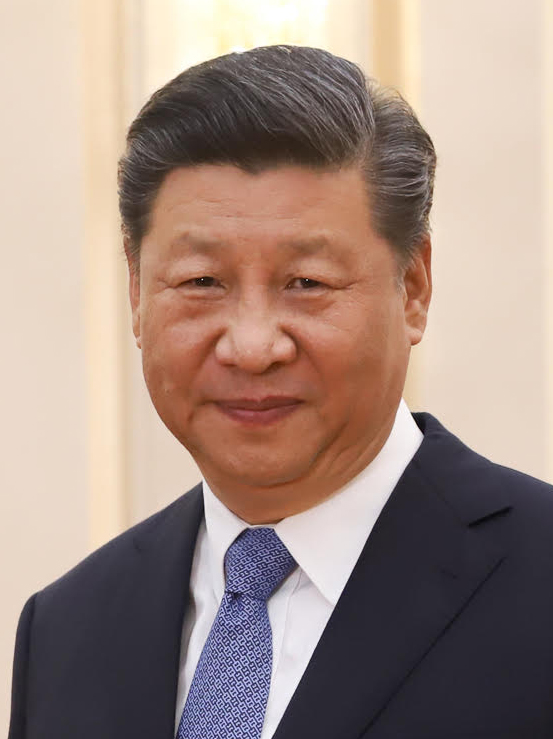
The move is part of a broader push by the government to clamp down on all aspects of society since Xi Jinping took power as the party’s leader in 2012.”

For the most part, in history, Church and State have been duly recognised as separate entities, concerned with different spheres of responsibility, jurisdiction, and authority. That is not to suggest that there is no overlap. The Scriptures themselves testify to this in places such as Romans 13:1-7. Indeed, the Apostle Paul on one occasion appealed to Caesar without any sense of overstepping the line.

At their best and when the dynamics are suitably valued and practised, the State and Church serve society in a healthy partnership, understanding their distinct roles and appreciating the other. It’s not as the State is void of religious content; Christians and non Christians alike, and people of other faiths, are welcomed into Parliament and can contribute ideas that have been formed by their convictions and worldview. We don’t live in an a-theistic state, but a pluralistic culture.

At worst, the State has intruded and sought to control or disrupt churches and even to work for their destruction. And Churches, in a vain attempt to retain some semblance of relevance or to keep their institutions alive, have become complicit with immoral and anti-Christian agendas.  We have seen this happen with Christian denominations capitulating on the marriage issue. This has happened amongst evangelicals in the United States as they conflate the cause of Christ with the Republican Party. Indeed, the Vatican’s deal with Xi Jinping is reminiscent of former days when Rome (and also some Protestant denominations) was found to collaborate with Nazism in the 1930s-40s. The idea was, if you keep our doors open, we’ll give you our support. We’ll betray your cultural heretics and cede some of our independence so long as you let us be.

The Lord of the Church once said, “What good is it for someone to gain the whole world, yet forfeit their soul? Or what can anyone give in exchange for their soul?”  Apparently, some ecclesiastical minds are of the opinion that one can do both.

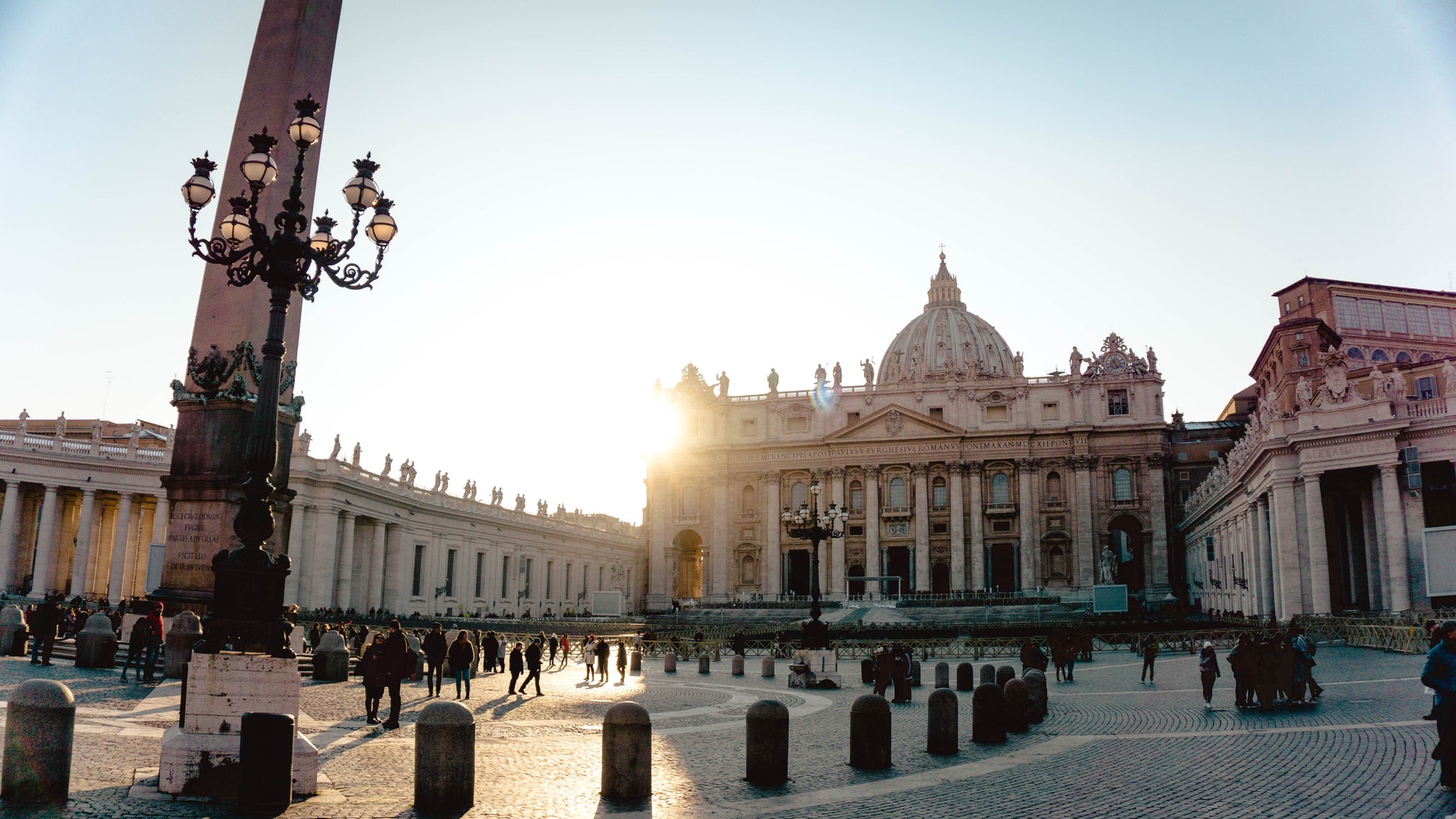
When I wrote about this story two years ago, I suggested Daniel ch.3 as an analogy. President Xi Jinping is sounding like King Nebuchadnezzar, while Pope Francis is appearing as one of his astrologers who betrays Shadrach, Meshach and Abednego. Since then, more fuel has been added to the fire, and this new blast of oxygen from St Peter’s isn’t going to dampen the growing threat posed to Christians and religious minorities in China. It is one thing for the secular citizen to sell their the soul to a dominant regime, but for the overseers of a Church to throw into Nebuchadnezzar’s furnace the people under their care, they themselves are in danger of another fire where no angel will tread and save.

Communist China is an evil regime that has little regard for religious freedom, let alone political and social freedoms. The world has evidence of 1 million Uighurs, a Muslim minority group, being forced into concentration camps. For decades churches have been closed, destroyed, pastors imprisoned, and families threatened because they profess faith in Christ. Millions of Chinese Christians cannot meet to worship God in public or read the Bible. The threat of discrimination is a constant one. For the Vatican and Pope Francis to make a deal with the Devil is a grave misjudgment.

This is a timely reminder to thank God for the religious freedoms we enjoy in Australia, and not to take them for granted. There are sometimes tensions, but not every disagreement amounts to discrimination against Churches or religion in general. Nonetheless, this should also serve as a warning to Australian Churches and Governments alike.

When this deal with first agreed upon in 2018, I suggested,

“We are a long way from the politico-religious scene of our northern neighbour, and yet it is not irrational to suggest that should some Australian political parties and notable social commentators have their way, we would be aiming toward an Australian Sinicization, conforming Christianity into the likeness of Australian humanistic secularism.”

This threat remains. And no, I am not referring to current Governmental rules for religious organisations in the midst of the COVID-19 pandemic.

Writing for ABC’s The Conversation last week, Professor Nicholas Aroney spoke of new research that has found that government-based religious discrimination is on the rise around the world. While much of the attention is duly on other countries, he notes that “the threat in Australia is real”.

We are far from the situation found in Communist China, but we do have, for example, a State Government that has previously attempted to interfere with basic religious freedoms and is currently drafting legislation that may soon see parts of the Bible banned, classical teaching on marriage prohibited, and prayers for sexual sanctification outlawed. I am of course referring to the Victorian Government’s plan to introduce legislation in 2020 to ban conversion practices.

We need to guard our own backyard while also speaking up against religious suppression that is taking place across the seas.

Christians Avoiding the Pitfalls of Political Polarisation

I get it, our society isn’t just polarised, it’s being torn apart by tribalism, divisions, and unbending ideologues. It’s hard enough being an average Aussie let alone one who believes Jesus is Lord. What are we meant to do when we disagree with the Government? How should we respond when we don’t like what a Government says or decides?

Thankfully God hasn’t left us walking in the darkness. In his wisdom, God gives us clear instructions and principles in his word. Just like me who can feel heated by some of the political debates going on and therefore needs to be reminded of these words, I suspect many of us do.

I’m not intending to pull out every nugget in every verse that I quote below. My aim is simply to draw our attention to the main imperative or principle that is mentioned in each of these Bible passages.


photo-1555848962-6e79363ec58f

Pray

Take, for example, 1 Timothy 2:1-3

”I urge, then, first of all, that petitions, prayers, intercession and thanksgiving be made for all people— for kings and all those in authority, that we may live peaceful and quiet lives in all godliness and holiness. This is good, and pleases God our Savior, who wants all people to be saved and to come to a knowledge of the truth.” (1 Timothy 2:1-3)

We are commanded to pray for those in authority. The imperative isn’t conditioned by our political preferences or by the decisions made in our favour. Keep in mind that Paul was writing at a time where there were no democratic societies and where there was little toleration of Christians.

We pray for our Governments and political representatives, not because we always agree with them, but they have a God given responsibility for society.

Indeed, Governments, politicians, and bureaucrats need our prayers. Not every authority is conscious of this or a would accept this proposition. They nonetheless carry significant responsibility and work long stressful and often thankless hours.  When I’ve messaged an MP and asked how I can pray for them, the response has rarely been, “no, don’t pray for me”.

Listen to what verse 3 says, “this is good and pleases God our Savior”.


Be subject to

What about Romans 13?

”Let everyone be subject to the governing authorities, for there is no authority except that which God has established. The authorities that exist have been established by God. Consequently, whoever rebels against the authority is rebelling against what God has instituted, and those who do so will bring judgment on themselves. For rulers hold no terror for those who do right, but for those who do wrong. Do you want to be free from fear of the one in authority? Then do what is right and you will be commended.” (Romans 13:1-3)

We are not only to pray for governing authorities but also to submit to and obey those in authority. Why? These authorities have been established by God, for the good order of society and to punish wrongdoing.

Submit

13 Submit yourselves for the Lord’s sake to every human authority: whether to the emperor, as the supreme authority, 14 or to governors, who are sent by him to punish those who do wrong and to commend those who do right. 15 For it is God’s will that by doing good you should silence the ignorant talk of foolish people”. (1 Peter 2:13-15)

Listening to, honouring, and obeying the Government is God’s will for every Christian. It is one of the ways we do good and it serves to silence some of the ridiculous criticisms aimed at Christians. I am surprised (perhaps not) at how our readiness to adhere to Governments often depends on who is in power. It is amazing to see how much our political preferences shape our rhetoric and responses to a Government.

Also this, it is sometimes assumed that we will make a clearer statement for the Gospel by standing apart from the authorities, but that isn’t the argument given here in 1 Peter nor in Romans 13. We can bear faithful witness to Christ by submitting to authority.

Another issue relates to trust. Do we trust the words and decisions being made by those in Spring St and in Canberra? I understand the trust issues as much as any Australian. It may also be the case that those making decisions have a fuller perspective and better understanding of the issue than I. I’m not a medical doctor or a lawyer or an economist, and so I want to tread very carefully when issues relate to those subjects and countless others. I’m blessed to have members at my church and among my friendship networks who are professionals in these areas and whom I can go to with my questions and seek understanding. My point is, submitting to authorities is not only right, following expert advice is usually the wise course of action.


Appeal

In Acts ch.25 the Apostle Paul, having been arrested,  is interrogated by the Roman Governor of Judea.

Paul made his defense: “I have done nothing wrong against the Jewish law or against the temple or against Caesar.”

Festus, wishing to do the Jews a favor, said to Paul, “Are you willing to go up to Jerusalem and stand trial before me there on these charges?”

10 Paul answered: “I am now standing before Caesar’s court, where I ought to be tried. I have not done any wrong to the Jews, as you yourself know very well. 11 If, however, I am guilty of doing anything deserving death, I do not refuse to die. But if the charges brought against me by these Jews are not true, no one has the right to hand me over to them. I appeal to Caesar!”

12 After Festus had conferred with his council, he declared: “You have appealed to Caesar. To Caesar you will go!”

On this occasion, Paul uses his right as a citizen to appeal to Caesar. During his ministry, Paul was arrested and imprisoned on multiple occasions and he didn’t always make this legal case in his defence. He does however on this occasion.

When we disagree or hold a legitimate concern, we ought to follow due process. Not every citizen in every society has the opportunity or even the political right to address concerns to their governing authorities. One of God’s graces to us is that we do have this kind of freedom in Australia. We can write to our local MP. We can arrange meetings and even present our positions to Ministers of the Government. If that fails, every few years we have the democrat privilege of voting for (or against) our political representatives.

Christians have a choice, we can join in the fray and take sides on every single issue, and so add to the anger and cultural fragmentation. Or, we can choose the more difficult path. We can watch our tone carefully. We can choose to keep our words to ourselves.  When we open our mouths we should begin with prayer for those in authority. When we speak we can find good things to affirm and not only criticise the contemptible.

We don’t all have to be John Knox all the time and in every situation. Not every issue is a Martin Luther, ‘Here I stand’ moment. Life is far more complex. Even among Bible-believing Christians, we will sometimes come to different conclusions about the gravity of a subject and how Christians ought to respond.

I can’t help but wonder whether some of our Christian voice stems from a mistaken eschatology. In our protestations are we trying to make heaven out of earth? Do we conflate the nation state with the kingdom of God? Or, in speaking up are we appealing to the common good and love for neighbour, and upholding the tradition of religious toleration, defending for all people freedom of conscience and freedom of speech and religion?

There are times for civil disobedience but those occasions ought to be rare and for extraordinary reasons. There are first order issues and situations where a Christian must say no because it would be paramount to sinning against God, but that is not every matter. I can foresee a time where churches in Victoria will be forced to choose between Christ and the State, especially on issues surrounding sexuality. We may be pushed into the insane position of deciding whether we will teach God’s view on human sexuality or comply with Government regulation. When that day comes, the stand we take will look feeble and sound reminiscent of the boy who cried wolf. We need to be careful about using up all our capital now on lesser matters.

This is a good time for Christians to press closer to what God says in his word about Church and State. Begin with prayer, assume submission and obedience, do good, and choose our battles carefully. “This is good and pleases God”.


Let the reader note, in this piece I’m not addressing specific stories that have come out this week, but  I am thinking more generally.

Banning Books in Hong Kong and more

“As a young person, to already have the courage to face the pitiless glare, to overcome the fear of death, and to regain respect for death – this is the task of this young generation. And thus you do well in this midnight hour to commit to the flames the evil spirit of the past. This is a strong, great and symbolic deed – a deed which should document the following for the world to know”.

The above words formed part of a speech which was aimed at calling people to a return to morality and social decency. This address given to university students was of course delivered by Joseph Goebbels directly before one of the most infamous book burning scenes in history.

During the rise of Nazism in the 1930s, purging the population of dissenting ideas was seen as an essential step. The Säuberung or cleansing included destroying religious and political texts that didn’t conform to the new normal. 

The destruction of books is as old as literature. Hate is a strong motivator, as is fear. To be honest, there are plenty of books that I believe are dangerous, and I’m happy to warn people about their messages. There is a vast difference though between informing people about a book’s content and removing those same volume’s from libraries and blowing their ashes into the wind. 

The Age is tonight reporting, 

“Books by prominent Hong Kong pro-democracy figures have become unavailable in the Chinese-ruled city’s public libraries, days after Beijing introduced sweeping national security legislation, according to online records and one activist.”

A search for books by young activist Joshua Wong or pro-democracy politician Tanya Chan on the public libraries website showed the books, including Unfree Speech, co-authored by Wong, either unavailable or under review.

“The national security law … imposes a mainland-style censorship regime upon this international financial city,” Wong tweeted on Saturday, adding his titles “are now prone to book censorship.”

…It is unclear how many books are under review. Two titles by Chinese Nobel Peace Prize-winning political dissident Liu Xiaobo were still available, according to the online”

This isn’t the first attempt by the Chinese Government to eradicate writings that don’t support the State’s unbending ideologies.

In 2018, the Government began work on a new version of the Bible, to ensure that the Bible affirms ‘socialism’ and doesn’t contain ideas that might subvert the Government. One can imagine how distorted the Holy Scriptures will become once this atheistic, militant, and totalitarian, regime has finished their rewriting project. In many regions of China it is already difficult to own and read a Bible, let alone teach this book in a semi-public setting. Preaching ‘Jesus is Lord’ is likely to end in arrest and possible imprisonment.  

without the permission of the authorities, you can’t organize a Bible study. And if you do get permission, you’d better hold it in a Party-approved religious venue, at a Party-approved time, with a Party-approved leader and using the new Party-approved Bible, which contains quotations from Confucius and, of course, Xi Jinping.”

Not even Christians are permitted to change the words of Scripture, let alone a Government who wishes to change and control its message.

“For truly I tell you, until heaven and earth disappear, not the smallest letter, not the least stroke of a pen, will by any means disappear from the Law until everything is accomplished.” (Matthew 5:18)

“All people are like grass, and all their glory is like the flowers of the field; the grass withers and the flowers fall, but the word of the Lord endures forever.”  (1 Peter 1:24-25)

Let’s shine the camera on ourselves. 2020 is the year of cancelling. We might look at China with disgust and growing wariness of their geo-political agenda, but our own background is a growing mound of buried careers, reputations, and lives. We have long lost the will to disagree with other, even with passion. The mob demands destruction of any idea that is not representative of new morality and decency.

Let’s not forget, even the beautiful State of Victoria has faced the Government’s axe. In 2016, Christian programs were removed from State schools in light of many Christian ideas being deemed inappropriate. The same Government has recently reaffirmed its commitment to ban conversion practices (which under their current definition will probably include Christian teachings on sexuality. This includes normal Christian teaching and prayer that takes place in Churches). It would be silly to equate this situation with China, for the two are not the same. The point is simply, our own societies are not entirely blameless.

The Chinese Government is afraid of the Bible, and so are we. Perhaps we ought, for it is no small thing to contest the Sovereign God who made the universe and whose word says he will judge all the living and the dead.

Hong Kong libraries are beginning to experience what is commonplace in China and what religious groups have been forced to do for generations, hide their precious books under the bed because the bookshelf isn’t safe.

No society should take their literature for granted, especially the words that give eternal life.

Put away the matches, because as cancel culture is demonstrating, once it starts, it very easily burns out of control. Perhaps we, who want to preserve the freedom to read and teach our texts, ought to show a little humility toward those who prefer and magnify a different set of books. Let’s argue with words not by deleting them. 


Correction: I originally said ABC when it should have read The Age

Can 2020 get any worse?

Can 2020 get any worse? Of course, no one yet knows the answer to this question, but an announcement made by the Prime Minister today is certainly ominous. The ABC headlined the news with “If Morrison’s defence strategy sounds like war talk, that’s because it is

There hasn’t been a year like it since the 1940s.

In Australia, we started the year with the worse bushfire season on record and with much talk about Climate Change. These were soon laid aside as the reality of COVID-19 became a worldwide pandemic. This virus soon created another plague, that of economic uncertainty, the staggering accumulation of rapid national debt, and a million jobs gone. No one knows when this pandemic will end and what the final toll will be, the human, social, and economic costs.

As the country begins to loosen restrictions, Victoria has experienced a sudden surge in COVID-19 cases, with Premier Andrews forced to shut down 10 postcodes in Melbourne. Other State Premiers have warned their people to stay away from Victoria and borders are being closed to keep Victorians away.

One month ago, in response to the shocking murder of George Floyd in Minneapolis, protests erupted across the United States, and even here in Australia. While much progress has been made since the days of old when the White Australia policy was in place, and since the horrific treatment toward Indigenous Australians when they were excluded from citizenship, when families were ripped apart, and the silent screams of aborigines who were massacred throughout the 19th Century. Much work toward reconciliation has taken place, but we have been reminded that racism has not been fully defeated. These stories continue to make the news each day.

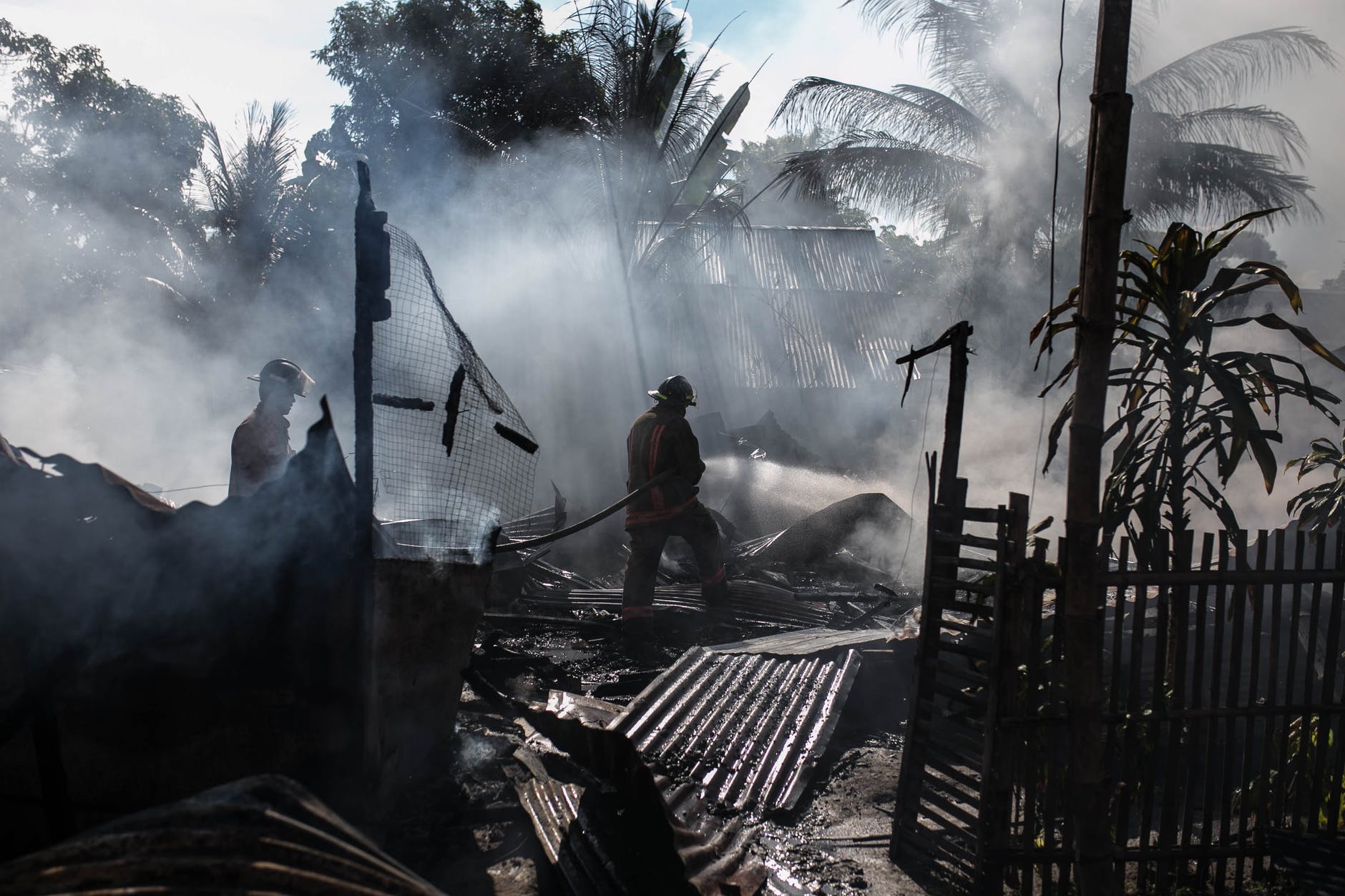
silhouette of fireman holding hose

Photo by Denniz Futalan on Pexels.com

Somewhat caught behind these news items, but still present and making news, is each new chapter of the rapidly changing sexual revolution. In particular, the transgender movement which is requiring total allegiance and the automatic cancelling of anyone daring to question their dogma.

Today, July 1st marks the halfway point of this unforgettable year. On this day our Prime Minister, Scott Morrison, made a major announcement regarding an issue that is still not receiving the public attention that it requires. The PM gave a rare and important address regarding the Defence of the country. Last week he informed Australians about a significant cyber attack on Government departments and Australian businesses by a foreign State. He has increased funding for cyber defence by $100s millions. Today he announced  a$270 billion investment for our military, including long-range missiles. This is a direct response to the growing geopolitical threat posed by China.

I’m not surprised. For some time, Defence experts have been warning the Government of the growing danger of Communist China. A defence white paper was given to the Prime Minister of the time, Malcolm Turnbull, outlining strategic necessities for Australian defence against China. Peter Jennings, who is the Executive Director of the Australian Strategic Policy Institute in Canberra, has repeated warnings about Australia’s lacking defensive capabilities and unpreparedness for a China who is hungry for power.

Several weeks ago I wrote a piece detailing 6 ways the world may change as a result of COVID-19. My third point was about China. It’s worth revisiting some of the details. I suggested,

“China’s role in covering up the true extent of the Corona Virus and their influence over the World Health Organisation (WHO) is far from the worst of it. 1 million Uyghurs remain locked away in ‘education’ camps in northwestern China, Christian Churches are continually oppressed and Christians arrested, and there is China’s growing interference in Hong Kong and their military expansion in the South China Sea.”

Since then, China’s Communist Government has taken further measures to take control of Hong Kong.

Niall Ferguson is the Senior Fellow at the Hoover Institution at Stanford University. In December of 2019, he argued that a new Cold War had begun

“Something [else] changed in 2019. What had started out as a trade war — a tit for tat over tariffs while the two sides argued about the American trade deficit and Chinese intellectual property theft — rapidly metamorphosed into a cluster of other conflicts.

In short order, the United States and China found themselves engaged in a technology war over the global dominance of the Chinese company Huawei in 5G network telecommunications and an ideological confrontation in response to the abuses of Uighur Muslim minorities in China’s Xinjiang region, as well as a classic superpower competition for primacy in science and technology. The threat also loomed of a currency war over the exchange rate for the Chinese yuan, which the People’s Bank of China has allowed to weaken against the dollar…”

The Prime Minister’s announcement today will probably send shivers down the spine of many Aussies and create an audible backlash from others; I think the decision is a sensible one. This significant increase in defence spending doesn’t heighten the dangers around the Indo-Pacific, rather it highlights the already alarming situation. The reality is, “we are not witnessing the awakening of a sleeping giant panda, but a dragon.” 

“For the most part, Australia has, alongside many countries, tried to benefit from and also feed a China hungry for economic and political expansion.

You don’t placate a bully, you stand up to them”.

When history books are written in 50 years time, of the myriad of issues faced this year, it probably won’t be the bushfires or race protests or transgenderism, or even the pandemic that will feature; the story will be China.

If a new cold war hasn’t already descended, it should be clear by the falling autumn leaves and the dropping temperature that winter is coming. These next few years will be pivotal in determining how cold or how hot this economic and geopolitical standoff will become.

As we enter the second half of this strangest of years, I’m praying that Australians will wake up and understand that what we assumed was normal and secure isn’t so certain and reliable. We need to anchor life and hope in something better than the health and prosperity that we’ve been gorging on for so many decades.

“Is not life more than food, and the body more than clothes?” (Matthew 6:25) 

At the same time, as a Christian, I’m comforted by the words of Jesus,

 You will hear of wars and rumors of wars, but see to it that you are not alarmed. Such things must happen, but the end is still to come. 7 Nation will rise against nation, and kingdom against kingdom. There will be famines and earthquakes in various places. 8 All these are the beginning of birth pains. (Matthew 24:6-7)

These words don’t diminish the existential realisation of such events. But God is not surprised. For 2,000 years Jesus’ words have been accessible but not always believed, read but not always grasped. We should not be alarmed or surprised by events that take hold of people, nations, and the natural world. We can be appalled and grieve these sharp reminders of a world that is cursed and cannot redeem itself. Alarmism, however, isn’t befitting for the one who trusts in a God who is Sovereign.

What we are experiencing in 2020 is a massive doss of what millions of people around the world regularly experience, and what many past generations have also lived through. What is new, is perhaps the legion of major issues now facing us and perhaps also the lack of political and social will to deal with some of them.

Jesus adds, during this eschatological season, the Church has a mission and it remains unchanged,

“And this gospel of the kingdom will be preached in the whole world as a testimony to all nations, and then the end will come.” (v.14)

The hope of the nations is this Gospel of Jesus Christ, the one who died and was raised to life. I wonder, do our churches still believe this? No Government or superpower has a weapon of such power in their arsenal, such that the dead can be raised to eternal life. Churches, be clear about the Gospel. Be committed to preaching this Gospel, because nothing else can save us from hell to come.