Queensland Education Department is afraid of Jesus?

In the school playground, children talk about everything and anything: what they watch on television, who is eating what for lunch, their favourite sporting players and what bands they’re listening too, and what they’re hoping to do on the weekend. But if the Queensland Education Department have their way, the one topic children will not be allowed to speak about is Jesus.

In our click bait media culture, it is sometimes hard to discern real stories from the dubious, but sure enough, this story is legitimate.

The Queensland Education Department have undertaken to inform schools that children are not to discuss Christianity outside formal Religious Instruction classes.

To quote from the Departmental report that has been given to schools,

“While not explicitly prohibited by the EGPA or EGPR, nor referenced in the RI policy statement, the Department expects schools to take appropriate action if aware that students participating in RI are evangelising to students who do not  participate in their RI class, given this could adversely affect the school’s ability to provide a safe, supportive and inclusive environment for all students.”

What is extraordinary about this memorandum is that the Department admits that this prohibition falls outside the parameters of any formal policy and guidelines, but they are nevertheless insisting schools take action.

Evangelism is defined by the Department as “preaching or advocating a cause or religion with the object of making converts to Christianity”.

The problem with their definition of evangelism is that in effectively prohibits any conversation that involves God, Jesus, and Church. Inviting a friend to a Christmas service might be interpreted as evangelism. Sharing what you learned about God could be taken as evangelism. It is only natural for children to talk about and share things that are important to them and that they enjoy; for many children this includes belief in Jesus and being part of a church.

Is the education department really wanting to squash children’s freedom to talk about issues beyond homework, sport, music, and latest i-pad apps?

Is inviting a friend to a church event really going to undermine pluralism and respect? Is a group of student engaging in the big questions of life so unacceptable?

 

QLDjpg

Associate Professor of Law, Neil Foster, has written an important response to this QLD report, pointing out that it fails several important tests. It is worth taking the time to read. In summary, he notes that,

1. This “expectation” is not supported by legislation

2. This “expectation” is probably illegal as discriminatory

3. The “expectation” is illegal as contradicting the head legislation

4. The “expectation” undermines free speech of pupils

5. The “expectation” undermines religious freedom for pupils


These points alone amount to checkmate, but there is more.

First, the prohibition fails the test of what is sensible.

Remembering what it’s like to be a child at school, and having 3 children at school, I can imagine the kinds of conversations that will happening today. During lunch there will be 10 year old students inviting their friends to the movies this weekend: Do you want to come with me and watch the new Transformers  movie or Planet of the Apes film? Watching age inappropriate movies is fine, but Church is too dangerous. Birthday cards will be handed out, but please avoid Christmas cards. Have a giggle over dirty jokes, but let’s be clear, no one can mention the Bible.

I realise Queensland is the sunny state, but one can have too much sun. This Departmental imposition really is as silly as it sounds, and it will in fact achieve the opposite of their intention, which is to ‘provide a safe, supportive and inclusive environment for all students.’ 

In recent years we have laughed at schools who have banned balls from the  playground, because they are a threat to children’s safety. Now, we have to remove Jesus talk because it will undermine social cohesion in schools?  Do we really not trust that our kids can have reasonable conversations about religion? It is all the more ironic, because the very principles that these bureaucrats  want to see in school, that of respect and inclusion, are based on Christian beliefs?

Second, the QLD Education Department wrongly assumes that non-God talk in the playground is somehow morally and spiritual neutral, as though children can chat about any topic in a theologically neutral way. This is not true secularism, it’s imposed atheism. It is anti-pluralism. If the only permitted discourse is void of language deferring to God and religion, then what we will have is exclusive and intolerant atheism. Is that the kind of school environment we want for our children?

As I was reading about this story this morning, my mind turned to the book of Acts in the Bible and to chapter 4 where the city’s leadership arrested Peter and John for talking about Jesus with people. They warned the disciples, ‘do not speak or teach in the name Jesus’. Peter and John replied, ‘we can’t help it’.  One can only assume that these education officials haven’t ready a Bible nor studied history, because demanding that people stop talking about Jesus usually has the opposite affect.

I trust that sane heads will prevail and that the Queensland Education Department will retract this injunction.


Update:

The QLD Education Minister has released a statement this afternoon denying there’s any ban on students sharing their faith with other students. Ms Jones said, ‘No one is telling a child what they can and can’t say in the playground.”

This is welcome news. However it doesn’t explain the Department’s report which she accepted, a report which urges schools not to permit God-talk by students outside of Scripture Classes. This report falls under the official policy section of the Education Department, titled, ‘Religious instruction policy statement’.

On this page there is a section marked ‘Reviews’ which is introduced with this statement,

“The purpose of the reviews is to provide guidance to state schools as to whether the program complies with departmental policies, procedures and applicable law.”

This ban is official guidance for schools.

In other words, the Minister’s statement is at odds with her own Department’s position. 

We encourage Ms Jones to follow through with today’s positive announcement and ensure that those statements about evangelism are removed altogether.
Victorian Greens banning the conscience

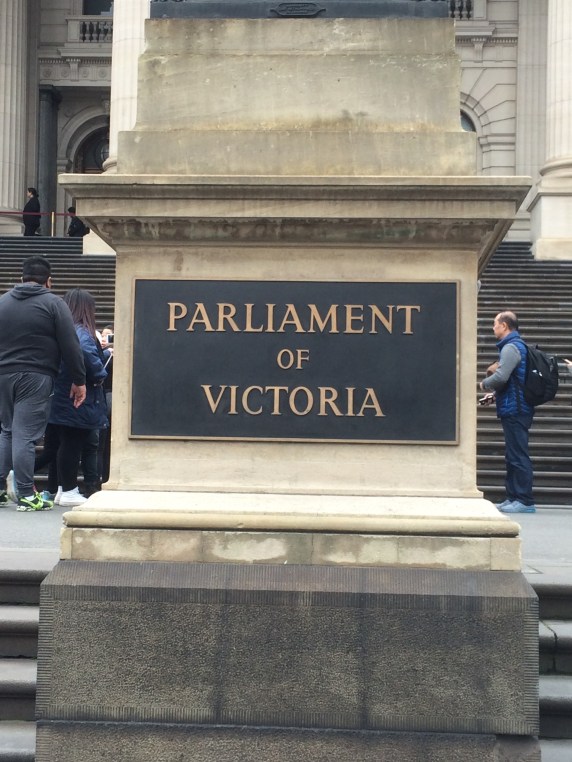
The Victorian Parliament is expected to commence debate on an assisted-suicide Bill next week, although the conversation has been taking place for many months already.

Two of the main issues that I have heard expressed concern the ethics of killing human beings, and the question of safeguards. In regard to the latter issue, Peter Singer (who is one the most notable global pro-euthanasia voices) recently admitted in a Melbourne meeting,

“Euthanasia without patient consent does happen in Europe. Don’t worry it happens here too.”


img_9452

This week, however, another important area of debate has been brought to the fore by the Victorian Greens.

St Vincent’s Health Australia has made it clear that should euthanasia be legalised in Victoria, they will not be offering this ‘procedure’, given that killing human life contradicts their values. In response, Victorian Greens have asked the Government to review public funding of St Vincent’s if clinicians are banned from administering assisted suicide. How extraordinary that a political party would remove funding from a major health care provider on account that they refuse to assist patient suicide. Imagine living in a State where hospitals were forced to participate in killing patients; welcome to Victoria. In all probability, it is unlikely that the Parliament would support such measures, but this is yet another example of how far our society has moved in the dehumanisation project.

A Greens spokesperson then had the audacity to attack St Vincent’s hospital, accusing them of lacking compassion for the terminally ill and “condemning people to pain.” One can imagine what the doctors and nurses at the hospital think of such a repugnant comment.

I am a strong supporter of the Greens policy to ban Greyhound racing because of the appalling statistics of these dogs being euthanised. We own a greyhound rescue dog, and he’s a much loved member of our family. How ironic that the same political party not only support proposed legislation to encourage assisted suicide of human beings, they would also threaten health providers who find such action unconscionable.

Turkey, Anzac Day, and Disappearing Religious Freedom

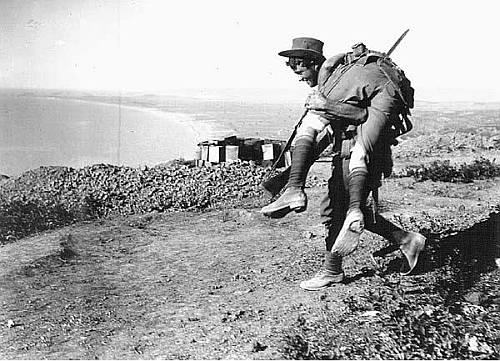
While Australia prepares to once again remember the Gallipoli landings, the very same day, April 25th 1915, brought Mustafa Kemal Atatürk to national prominence in Turkey. As the Australians troops waded ashore and clambered up the bluffs overlooking what would become Anzac Cove, the few Turkish defenders were gradually pushed inland, until reinforcements arrived led by Mustafa Kemal.

“I am not ordering you to attack. I am ordering you to die.”

With this extraordinary command, Kemal prevented the Australians from advancing further, and the two sides began digging into the ancient soil for what would become 9 months of death and horror.

1361173126_anzac_gallipoli

Mustafa Kemal survived the war, entered politics, and in 1923 he closed the final chapter on the 600 year old Ottoman Empire, giving birth to a new and secular democracy.  It would be a misjudgment of history to ignore the social and religious tensions that Turkey has balanced over that century, especially when it comes to minority ethnic groups in the Eastern regions of the country, and yet Turkey has avoided much of the turmoil and bloodshed that almost every other Middle Eastern nation has experienced over the same period.

As Australia commemorates Anzac Day, Turkey is on the edge of democratic suicide, as her people vote on a referendum that will introduce sweeping changes to their constitution.

Since the failed coup d’état in July last year, President Recep Tayyip Erdogan has tightened his control over the country. Many thousands of people have been imprisoned, journalists arrested, and Christian missionaries deported. Five months following the attempted coup, President Erdogan announced a referendum, proposing 18 changes to the nation’s constitution. In short, a yes vote (which appears to have won the day) will give the President new powers over judicial appointments, cabinet appointments, calling and dissolving Parliament, setting the nation’s budget, and all without need of Parliamentary approval. Opponents are concerned that genuine democratic freedoms are already slipping from the populace and should these constitutional amendments become law, Turkey will in effect become an autocratic state. Many people also fear that Turkey is transitioning from being a secular state with a Muslim majority, to an Islamic State with a non Muslim minority.

Prior to 1915, most Australians thought of Turkey as a far away land, filled with ancient history and splendour. From April 25th our history became enmeshed with theirs, and our blood mingled with their blood. Today, Turkey doesn’t feel so remote, and yet we may not automatically see the relevance of this week’s decision.

We would do well to remember that the tide of history has often set its course from this land where East and West intertwine. For six centuries prior to the Dardenelles campaign of 1915, the Ottoman Empire ruled over much of the Middle East and North Africa, serving as both a thorn and flower to Europe. For nearly a thousand years before the Ottomans, the grand Byzantine Empire flourished, a child of the Christianised Roman Empire. This clash between East and West is an ancient one, with Alexander the Great defeating Darius across Turkey, first at Grancius and then at Issus. A thousand years earlier, the shores of Turkey were the setting of Homeric poems and the tales of Troy.

As the sun sets over the Bospherus, we would be mistaken to think that Turkey’s situation is an isolated one, for all over the world we are seeing the expulsion of pluralist societies in favour of authoritarian secularism and religious monocronism. Both are absolutist and exclusivist, with the latter however showing transparency about their religious commitments and the former hiding them behind thin sheets of quasi intellectual and moral neutrality.

Jonathan Leeman is right when he asserts, “secular liberalism isn’t neutral, it steps into the public space with a ‘covert religion’, perhaps even as liberal authoritarianism. it depends on beliefs without conclusive evidence.”

At the beginning of the year I began using the phrase authoritarian secularism, as a way of making distinction between true secularism and what we now see being practiced in Australia.  When our nation adopted the language of secular, as in Section 116 of the Constitution, the intent was that the State would not create or be controlled by any given religious persuasion. Today, the language has been hijacked by popularists who allege religion has no place in the public square, whether in politics or education and even in the workplace. Such a position is not derivative of constitutional law or of reason, but the sheer and persistent belief in unbelief.

My own state of Victoria is the sharp edge of progressive politics in Australia, and it is so because authoritarian secularism has substantial sway culturally.

What is happening is this: society has begun limiting free speech in order to push out beliefs that don’t fit the current cultural milieu, and the intent is to fill that space with the agenda of the sexual revolution. What is true of Victoria is true for most other parts of Australia, and is happening across much of the Western world. The tensions are not ours alone, but with no greater zeal in Australia than what we are witnessing in Victoria.

Christians are among those feeling these cultural shifts acutely because the movement is away from cultural Christian. This is not to be confused with Gospel Christianity for the two are not synonymous. Neither, however are they impervious of the other.

It is not as though the current Victorian Government is entirely anti-religion; rather, it wants a sanitised religion and for it remain outside public discourse. In other words, progressive politics wants religion controlled. There is clear evidence of this intent, as demonstrated, for example, by the proposed amendment to the Equal Opportunity Act last year. The ‘inherent requirement test’ would have required all religious organisations, including churches, to justify before a Government organised tribunal, reasons why it is necessary for employees to subscribe to the particular religious beliefs of the organisation. In other words, a Church could be held to account for refusing employment to a Hindu, and a Mosque find itself on the wrong side should they refuse employment to a Christian. Thankfully, the Bill was unsuccessful in the Legislative Council, being defeated by a single vote!

A pluralist society, which Australia is, only continues so long as those in authority allow alternative views to be expressed publicly. The fact is that a State Government, and a number of mainstream political parties across the nation, are not only questioning freedom of religious practice, but have begun issuing policies to quell views and practices that don’t conform to the new morality.

To the surprise of many, the global movement in the early 21st Century is not away from religion to irreligion or from faith to reason, but away from philosophical pluralism to both religious and secular authoritarianism.  We are a long way from where things could lead, but we are no longer standing from the sideline and pontificating the possibilities. As Sherlock Holmes would say, ‘the game is afoot’. This should be of concern to global communities, not because pluralism is god, and not because we are moral and spiritual relativists, but because we believe that the State should not dictate religious belief.

As a Christian, I believe in persuasion not coercion. I believe in religious freedom for all, for if not for all it is not freedom at all. It is true though, Christianity can function and flourish in the midst of even ignominious regimes, because the Christian hope does not ultimately depend upon particular political structures, constitutions, and dictates. Our hope rests in the resurrection of Jesus Christ from the dead. This victory-over-death hope gives us freedom to submit to a harsh Government, and freedom to dissent when they do wrong to a neighbour.

The people of Turkey are in my prayers this week. As we take note of this history turning land, we should not be ignorant of our own proclivities. Religious freedom is being contained and controlled from Canada to Cairo, and from Russia to Riyadh, and similar intent is now being verbalised politically and socially on our own shores.  I am not arguing for freedom of religion as some ultimate axiom, but as scaffolding on which a healthy society may grow, by enabling debate and disagreement, and the contest of ideas.

NSW is removing Safe Schools. Could Victoria follow?

It was announced today that the NSW Government is scrapping the controversial school curriculum, Safe Schools. From July, not only is the Federal Government stopping its funding of Safe Schools, but the NSW Education Department will introduce an alternative program. The content of this new program is yet to be released, but early indications suggest that it will be a broader and more inclusive program, and one that does not depend on the now debunked gender theory.

Safe Schools is presented as an anti-bullying curriculum, and is designed to teach children acceptance of other children who are different to them. The emphasis however is on sexuality, and teaching a flawed view of sexuality and encouraging young children to explore these alternative sexualities for themselves.

Safe schools was originally an opt-in program, but it is now compulsory in all secondary schools across Victoria. Many primary schools have also signed up.

One of the chief authors of Safe Schools, Roz Ward, defined the curriculum’s intent as follows: 

“Programs like the Safe Schools Coalition are making some difference but we’re still a long way from liberation,’’ she said. “Marxism offers the hope and the strategy needed to create a world where human sexuality, gender and how we relate to our bodies can blossom in extraordinarily new and amazing ways that we can only try to imagine today.”

It would be wrong to suggest everyone who supports the program views Safe Schools as does Roz Ward, but it is telling that one of the chief architects has admitted that Safe Schools is less about anti-bullying, and is designed to educate and influence a new generation of children to the values of marxism and to its accompanying sexual ideology.

img_9452

One year ago, the Federal Government made numerous changes to the curriculum, following widespread concerns regarding the appropriateness of material and the promotion of third party websites whose content could not be approved.

The Victorian Education Minister responded by saying,  Canberra was caving in to the bigots, and announced Victoria would not implement any of the amendments.

At the start of this year, the NSW Government introduced even more overhauls, including that gender fluid theory could no longer be taught in schools.

Only Victoria has made Safe Schools compulsory for schools. Each school can decide how much of the curriculum they wish to use, but the material to be used must be that which is set by the education department. This makes sense, except that Safe Schools is, to quote Professor Patrick Parkinson from the University of Sydney, ‘dubious’, ‘misleading’, and ‘containing exaggerated claims’.

Concerns over Safe Schools has received some bipartisan support in NSW, with Labour MP, Greg Donnolly saying,

“Politicians in one state do not generally take kindly to colleagues in another state giving them advice. There can be exceptions but the unwritten rule is that if you stick your head out and give advice across the border, you are likely to get it knocked-off. With that said, let me now give some advice to my Labor colleagues in Victoria.

The Safe Schools program that the Victorian Government is imposing on public schools in that state is political poison. While it may be just starting to show up in focus groups and other polling activities undertaken by the Labor Party, do not underestimate its malignancy. When it fully manifests, it will be like a fully laden freight train that you will not be able to stop.

The problem for the Premier and the Minister for Education is that the Safe Schools program from the get-go was never about anti-bullying. It was about inculcating into school children hard edged sexuality and gender ideologies. The same ideologies that are examined and debated when undertaking Gender Studies units at university. The same units that such students elect to do by choice; no compulsion or requirement. Not only are these ideologies being presented to school children as a matter of fact i.e. sexuality and gender are not to be understood in any other way, but parents are being kept completely in the dark about what is being presented to their children and by who.”

As it stands, there are children in Victorian schools currently transitioning on account of what is being taught, despite best medical practice stating that most children with gender dysphoria will grow out of it by adulthood and will happily conform to their birth gender. Many Victorian families are being pressured because they cannot subscribe to the curriculum, and feeling  pushed out of the public system. Children who believe heterosexuality is normative are labelled  as sexist, and the program is built to reframe their thinking until they believe that all sexual preferences and practices are legitimate human expression, and perhaps they might wish to explore these for themselves.

Being a Victorian, I understand our reluctance to listen to our northern neighbours. After all, has anything good ever come out of Sydney? I totally get why Victorians build rhetorical walls to keep out this colony of convicts. Listening to a New South Welshman may sound like a Banshee singing Justin Bieber, but on this occasion we Victorians are fools to ignore such sage advice.

Mr Andrews and Mr Merlino, as a Victorian and parent of 3 children, I strongly urge you to re-examine your position on Safe Schools, and the unscientific and harmful gender theories now being forced upon our children. It’s ok to once in a while  redress mistakes and poor policy; humility is in fact a virtue that we value in our political leaders.  In winding back ‘Safe Schools’ and aspects of the ‘Respectful Relationships’ program, we do not have to wind back the clock on caring for children who may be working through issues of their own sexuality. We want to see them safe and flourishing, and this is achievable without having to promote ideology that is demonstrably skewed and unsuitable for the classroom.

Should Victoria introduce laws permitting doctor assisted suicide?

Who can live and not see death,  or who can escape the power of the grave? (Psalm 89)

Pastoral ministry is one of the few professions where you get to  travel with people from birth through to death. It is a privilege to minister to people who are facing their final weeks and days. Sometimes it is a brief period of illness, other times it is an elongated time of suffering. I have known people in their final days who were keen, not to die, but to see their suffering come to an end and to see their hope in Jesus Christ realised. It is an extraordinary privilege to sit beside a person who in approaching death is joyful and at peace. I have also witnessed people wrestling with their own mortality and doubts of what lies beyond death. A pastor’s care in such circumstances also extends to a spouse, to children and friends. Indeed, for many pastors, these relationships are not merely ‘professional’, for those whom we serve are much loved, and they are our friends and family.

Several members of my family work in the medical field, including my wife who worked as a nurse for 10 years, spending much of that time caring for patients with terminal and chronic illnesses. On more than a few occasions she would come home after a shift in tears, having witnessed a patient die.

I wanted to begin by mentioning the above contexts because it would be wrong to assume I am writing from a distance. Indeed, I appreciate that there are many personal stories, from people who hold to various views on euthanasia, and while these stories are all important, stories alone are not suffice for creating law.

OLYMPUS DIGITAL CAMERA

If there is common ground to be found in the debate on euthanasia, albeit a rather morbid commonality, it is agreement that death is a terrible reality in the human experience.

It is no small thing for the State to legalise killing another human being

It is of paramount importance that we recognise that the State exists not only to protect life but to enable human flourishing. Similarly, our health system exists to save human life and to bring healing of body and mind. Introducing a law that permits taking a human life is no small thing.

Physician assisted suicide not only contravenes the very purpose of our health system, it would require medical professionals to discard both the Hippocratic oath and the Declaration of Geneva.  Such a law would introduce to society the morality of taking human life, legislating that our society condones the killing of another human being. Again, this is no small and insignificant line in the sand.

Dr Michael Bird recently made the astute observation that Victoria could potentially have two hotlines: one for suicide prevention, and the other, suicide permission. The conflict is clear for everyone to see.

Palliative Care as a better option

I am not unsympathetic toward those who wish to end their lives; I hate human suffering and long for the day when it will desist forever.  I do not, however, believe that euthanasia is either morally right nor is it the only option available for terminally ill Victorians. We have been led to believe that the only choices available are either ongoing treatment or euthanasia, but there is a third option, and one that avoids unnecessarily prolonging a patient’s life and avoids actively killing them, palliative care.

Palliative care is designed to provide the greatest possible comfort for patients, without undue intervention and causing protracted suffering.

Dr Megan Best is a senior lecturer at the University of Sydney Medical Faculty and works as a palliative care physician in Sydney. In a recent article, Dr Best has argued that a better way forward is to provide adequate resources for palliative care. She says,

“While services such as palliative care and hospice can do much to relieve the distress dying people experience, many still do not have access to it. We must do better.”

It is a travesty that many Victorians cannot currently access proper care that they deserve and need at such an urgent time.

Similarly, Dr. Ian Haines is a medical oncologist, and he believes, 

“Like Andrew Denton and others who have observed unbearable suffering in loved ones and the terrible failures of modern medicine in the past, I had once believed that euthanasia was the only humane solution.

I no longer believe that.

The experiences of countless patients and families should be the inspiration for continuing to improve palliative care, for general introduction of advanced care plans and not for euthanasia with its openness to misuse.”

In other words, our Government would do better to invest properly into palliative care, providing the kind of support patients and their families need at such a time.

Unsafe safeguards

The model of euthanasia being considered in Victoria is that which is currently practiced in Oregon, USA. The process involves a Doctor prescribing a lethal capsule to a patient who has been diagnosed with a terminal illness that will lead to death within six months.

In a report recently published by the Health Department in Oregon, are a series of startling revelations regarding doctor assisted suicide in Oregon: First, 49% of patients state as a major reason for taking their own life, the belief that they are being a burden to their family. Second, once the doctor has prescribed the capsule containing secobarbital or pentobarbital, there is no guaranteed follow up in patient’s home where most are said to take their life, with no safeguards to ensure only the patient can consume the lethal dose. Third, patients with non-terminal illnesses have been given access to these lethal drugs and taken their own life.

Both Dr Megan Best and Dr Ian Haines, are among numerous medical professionals who believe the introduction of euthanasia will lead to abuses and even to amendments and extensions down the track.

Dr Best explains,

‘It upsets healthcare providers when their patients are distressed. Don’t tempt them. You can’t rely on the rules. It is not possible to write a law that can’t be abused. That’s why euthanasia bills get defeated in parliament. Because, even though we ache for those who are suffering and desire to die, we feel responsible to protect the vulnerable who would be at risk of dying under the legislation if it were to pass. Surely the worth of a society lies in how it treats those who can’t care for themselves.’

Does this not at least raise questions in our minds, if not grave concern? If medical professionals working in palliative care are already communicating that the rules will be broken, we ought to take notice.

And for to those who allege slippery slopes are mythical, have they not looked to Northern Europe, and seen how euthanasia laws are now regularly broken and expanded, to include killing children, killing people with mental illness and dementia and even gender dysphoria?

Behind the debates on many ethical issues including euthanasia, is what is known as utilitarian thinking, most notably advocated by Professor Peter Singer. Utilitarian ethics ditches belief in the inherent value of every human life, and instead determines moral good by what the greater number of persons believe will maximise their happiness. In other words, for example, killing unborn children is a moral good when the mother believes the child will not add to her own happiness. This is one of the chief reasons why the number of children with Downs Syndrome has decreased significantly in Western societies because the vast majority are now killed in the womb.

There are Parliamentary members across the spectrum who are expressing support of a Bill legalising assisted suicide, and similarly, across the parties are members who disagree and are concerned. We have all heard heartfelt stories being told from different viewpoints, but we must judge what is right. There is an overarching principle with which the State of Victoria must decide, is it the role and right of Government to introduce law that permits the killing of human life? If so, what promises will be given that no further legislative changes will be made in the future?

When society cuts our humanity away from the imago dei, we always slide down a path toward dehumanisation. Bringing the two together again requires humility and more. It requires the loving actions of God to restore and heal this broken image. Is this not the wonder of the Easter event?

If the moral compass of our State is utilitarian ethics, which certainly appears to be the case, then further expansion of euthanasia laws is almost inevitable, as is happening across many countries who’ve already taken the pledge to kill. Indeed, I have already been informed, on sound advice, that the Bill shortly to be presented to the Victorian Parliament will be in the first place be a conservative pro-euthanasia Bill, but the intent will be to extend it 3 to 5 years down the track.

When we begin defining the value of human life by the kind of utilitarianism pursued by Peter Singer and others, we should not be surprised to find ourselves in a few short years permitting and even pressuring the expungement of all manner of people whom society deems a burden. I realise all this sounds rather Stalinesque and outrageously impossible; we would never traverse such dreadful ground. But look to Belgium and the Netherlands, and consider how our own society has already deemed moral, killing unborn children, and possibly now, those who are at the end of their days.

Have you journeyed to the springs of the sea

    or walked in the recesses of the deep?

 Have the gates of death been shown to you?

    Have you seen the gates of the deepest darkness?

 Have you comprehended the vast expanses of the earth?

    Tell me, if you know all this.” (Job 38:16-18)

Are we prepared to cross the line, or instead, can we do better by providing improved and greater resources in palliative care?

Two Misnomers about Free Speech, Coopers, Qantas, and Gay Marriage

After a day or two, most news items have disappeared into Google’s search engine, which is telling, because the furore over the Bible Society and Coopers Brewery is still being reported, 1 week on. For anyone still thinking this story is a bit of froth, think again.

As with any contentious issue, emotions are high, misinformation is blended with facts, and various sides argue against caricatures, create straw men, and second guess peoples’ motives.

I have already offered an analysis of these events, and how Christians can respond, but two misnomers abound and need correcting. The first concerns the way some Christians are reading the situation, and the second relate to society more generally.

The first mistake concerns conflating a shift in the nature of public speech with progress of the Gospel or the future of Christianity. The two are not the same, and latter does not depend on the former, although they can work well together.

If Australians wish to be a pluralist society, which we are, then it is important that Australians pursue keeping this space open and available. Sadly, the events of the past week have demonstrated that this is no longer the case. There is free speech for some, but if you don’t fall into line with particular secularist agendas, watch out, because speaking up comes with a cost. The cost is nothing like it is for citizens in many other nations (think North Korea, Russia, Saudi Arabia, etc), but neither is it diminutive, and this week have shown that the stakes are increasing. How many people feel comfortable to share their belief in heterosexual only marriage in the workplace? How many Australian companies will sense the liberty next week to publicly align with classical marriage? The pressure to say nothing or to conform with the self-determined moral elite has increased several degrees over the past 7 days.

Let’s be clear, a pluralist society is not the be all and end all, and neither is free speech. It does however offer a societal paradigm for respecting not only those with whom you agree but also those with whom you disagree. Christians have an interest in upholding this privilege, in part because we have somethin to say, but also because one cannot force a person to become of follower of Jesus Christ. We persuade and urge people by articulating, teaching, and reasoning with the words of God. Freedom of speech makes sense to us because honest conversation matters, truth matters, life matters, and we want people to believe for themselves, not because of compulsion.

History however demonstrates that the Gospel can advance regardless of the contemporary socio-politico milieu. Did not the Gospel grow rapidly in the first centuries when Christianity was held with suspicion and even banned for seasons? And where does the Bible ever promise that Christianity will be perennially embraced by a society? The hope of the world is not liberal democracy and our own Areopaguses, but Jesus Christ.

OLYMPUS DIGITAL CAMERA

A second misnomer has appeared over the last 48 hours, and while it is not immediately connected to the Bible Society video, its relevance is clear enough.

The Australian newspaper has detailed a letter that is being prepared for the Prime Minister, Malcolm Turnbull. 20 CEOs of some of Australia’s largest businesses have written a letter to the Prime Minister. They are trying to pressure the Prime Minister into breaking his election promise, which is to hold a plebiscite on marriage.

The issue is not that these 20 CEOs have expressed a view, or that they have written this letter to Mr Turnbull. Should they not be free to do so, despite the protestations of some? Indeed, it could be seen as hypocritical for one to defend the Bible Society and Coopers, and not these corporate leaders.

There are two qualifications worth considering first of all:

First, the CEOs letter is trying to accomplish a different goal to that  set out in the Bible Society video. The videoed dialogue between Tim Wilson and Andrew Hastie was demonstrating how Australians can speak civilly about same sex marriage while disagreeing, whereas this letter is pushing a specific position on marriage, namely advocating for the law to change.

The Australian reports, “The same-sex marriage lobby hit back, saying all Australians should be free to voice their views and lobby politicians, including business leaders.

National campaigner for just.equal, Ivan Hinton-Teoh said many CEOs recognised the importance of equality for their employees and customers and had a right to represent that to law-makers.

“It’s not appropriate for a government minister to attempt to shut down views he doesn’t agree with,” he said.

In other words, it would be immoral for anyone to shut down these business people as they agitate for same-sex marriage.

Second, notice the irony. Unintended I’m sure, but these words drip with more irony than an upside down jar of honey oozing all over the floor, “Australians should be free to voice their views and lobby politicians, including business leaders”? Clearly someone has been flying in transit all week, because one Australian company, Coopers Brewery, were subject to a torrent of abuse, and so was the Bible Society, not because they were arguing the classic definition of marriage but because they were seen to sponsor a conversation where two politicians civilly disagreed with each other about marriage. Where were these executives defending Coopers Brewery? Did any speak up for them?

It was soon clarified that the brewery was not sponsoring the video, but that was not enough to end the abuse. Only when they completely distanced themselves from the Bible Society and break their agreement with them,  and signed on the dotted line to the same sex-marriage campaign, was all forgiven and people once again happy to drink Coopers beer.

I haven’t heard anyone calling to boycott Qantas, CBA, or ANZ, nor have I read any bitter herbs being tossed around on social media. There is a Government minister making some unusual comments (it appears as though there is politics at play between the Government and these organisations which I am not across. Nonetheless, I did find Mr Dutton’s comments odd).

There is an ethical question relating to the role of a company CEO speaking to moral issues when their name is attached to a company. For each of the signatories, does the coinciding Board affirm their view? Do their shareholders share and support the position with which the company name is now attached? Are employees permitted to dissent with this view? The same questions can of course be asked of Coopers.

These are questions, not answers, and none points to these CEOs keeping their views on marriage quiet; Except in the case where speaking directly contradicts the values of the company, I  would have thought executives can speak publicly as with any citizen of the country. The trouble is, one company did speak out (well, everyone thought that had for a few hours) and they were condemned in the strongest language, obscene language, and with smashed bottles and pubs boycotting.  Before the dust has settled 20 corporate executives have publicly aligned themselves with same-sex marriage, and the same vitriolic public are now applauding with tremendous approval.

Let’s be clear, I am not criticising these executives for speaking out, but our social hypocrisy reeks.

A Qantas spokesman today said on the ABC,

“The freedom to discuss issues of public concern is a freedom we all hold dear.”

This is true…so long as one doesn’t subscribe to the heresy of believing marriage is only between a man and woman. So yes, the nature of public speech has changed in Australia. It’s ok to be saddened by this, because our nation is losing a cherished ideal, but we do not despair for as the Apostle Paul wrote,

‘We do not lose heart. 2 Rather, we have renounced secret and shameful ways; we do not use deception, nor do we distort the word of God. On the contrary, by setting forth the truth plainly we commend ourselves to everyone’s conscience in the sight of God. 3 And even if our gospel is veiled, it is veiled to those who are perishing. 4 The god of this age has blinded the minds of unbelievers, so that they cannot see the light of the gospel that displays the glory of Christ, who is the image of God. 5 For what we preach is not ourselves, but Jesus Christ as Lord, and ourselves as your servants for Jesus’ sake. 6 For God, who said, “Let light shine out of darkness,” made his light shine in our hearts to give us the light of the knowledge of God’s glory displayed in the face of Christ.

7 But we have this treasure in jars of clay to show that this all-surpassing power is from God and not from us. 8 We are hard pressed on every side, but not crushed; perplexed, but not in despair; 9 persecuted, but not abandoned; struck down, but not destroyed. 10 We always carry around in our body the death of Jesus, so that the life of Jesus may also be revealed in our body. 11 For we who are alive are always being given over to death for Jesus’ sake, so that his life may also be revealed in our mortal body. 12 So then, death is at work in us, but life is at work in you.’ (2 Corinthians 4:1-12)

In the Coopers wash up, let’s revisit the Beatitudes

In the sticky wash up that has come about from the flood of broken beer bottles, I wish to offer one more comment. In some ways it is to clarify and build on where I wish to take Christian conversation in the public square.

Two days ago I said that with a new morning we’ll see that not everything has changed,  although in the public realm something has altered.  The outrage over the Bible Society’s video is not entirely new, but it does signal with with its greatest yet clarity, that public speech in our society won’t come without a cost.

My purpose is not to repeat things from the previous post, rather, I would like to explore in a little more detail the portion of Scripture to which I turned in my conclusion: the Beatitudes (Matthew 5:1-12).

“Blessed are the poor in spirit,

    for theirs is the kingdom of heaven.

4 Blessed are those who mourn,

    for they will be comforted.

5 Blessed are the meek,

    for they will inherit the earth.

6 Blessed are those who hunger and thirst for righteousness,

    for they will be filled.

7 Blessed are the merciful,

    for they will be shown mercy.

8 Blessed are the pure in heart,

    for they will see God.

9 Blessed are the peacemakers,

    for they will be called children of God.

10 Blessed are those who are persecuted because of righteousness,

    for theirs is the kingdom of heaven.

11 “Blessed are you when people insult you, persecute you and falsely say all kinds of evil against you because of me. 12 Rejoice and be glad, because great is your reward in heaven, for in the same way they persecuted the prophets who were before you.”

The Beatitudes don’t detail how may enters the Kingdom of heaven, but the life of those who belong to this Kingdom, and are in some ways pre-empting the final manifestation of the Kingdom by exhibiting its qualities in the here and now; to use Jonathan Leeman’s analogy, it’s much like an embassy in a foreign country.

Some Christians hold to some of the Beatitudes, and play loose with others. Some of us focus on peace-making while sacrifice righteousness in order to achieve this goal. Some grab hold of righteousness with clenched fists, while ignoring how Jesus begins, with confession and contrition of our own sins. It is important to see how the Lord Jesus ties them together in an unbreakable bond.  All 8 Beatitudes belong together and work together to build godly character and a life that imitates, albeit imperfectly, the Lord Jesus.

Jesus leads us to begin with confession and contrition, acknowledging our complete dependence on God’s grace, which is his loving gift to us through the atoning death of Christ. The more we grasp the astonishing nature of God’s grace we can no longer look at other Aussies with any disdain or wanting anything other than their good.  In light of the last few days, we can be asking ourselves, how can be better love and serve our gay and lesbian friends. If we don’t have any gay and lesbians, why not?

I suspect some of my Christian friends believe that if we follow the first 7 Beatitudes, the outcome will be peace and happy relationships with everyone, but that’s not where Jesus lead us. He says, ‘Blessed are those who are persecuted because of righteousness for theirs is the kingdom of heaven.’

It is true, we can be shouted down because we’ve said stupid things, hurtful things, and saying the right things wrongly; I know I’m guilty of all the above.  Nonetheless, Jesus indicates that living the Beatitudes and being concerned for God’s righteousness may still result in people being offended and not liking us and attempting to silence us. For Christians to think we can escape verses 10-12 is understandable but somewhat naive.

coopers-bible-society-video-2017-source-vimeo-671x377

Bible Society

The steady but sure retreat by Cooper’s Brewery was disappointing to see. Whatever the connection between Cooper’s and the video (which appears to be an informal one at most), there was nonetheless a real partnership on a different stage, and for them to cut ties feels announcing on Facebook that you’re getting a divorce. Instead of throwing out our Cooper’s beer, which would make us somewhat hypocritical, we ought to pray for them and be gentle. One can only imagine that the pressure they were submitted to would have sunk the heaviest of beers.

The way of Jesus is not capitulation or watery compromise. Our posture should not be silent defeat or angry defensiveness, but always truth in love, clarity and conviction. Expressing our Gospel convictions is longer an easy option, but we should not give up speaking truth with grace because that is how God has treated us, and his love and joy is too good not to share with others. We won’t persuade everyone, but you’ll discover that someone is intrigued and away from cacophony of public noise, they will ask about this Jesus of whom we speak so passionately.

Remember how Paul’s sermon in Athens ended,

“When they heard about the resurrection of the dead, some of them sneered, but others said, “We want to hear you again on this subject.” At that, Paul left the Council. Some of the people became followers of Paul and believed. Among them was Dionysius, a member of the Areopagus, also a woman named Damaris, and a number of others.”

If we want to speak in public, or anywhere anytime, more than ever we must not only believe the Beatitudes, but with the help of the Holy Spirit,  practice them. I love this Ernest Hemmingway quote that one Facebook friend quote this morning,

“Courage is grace under pressure.” Ministers will face inordinate pressure. The challenge is to fight this stress with God’s grace and not by our own strength, coercion, manipulation, or self-medicating manners. We walk in grace by keeping the gospel’s story of a suffering Savior at the center of our thoughts.

The Phoney War is Over

The days of free speech in Australia have come to an end. From today, public speech comes with a cost.

For several decades Australia has experienced a pseudo-peace. Since the 1960s the sexual revolution has been gaining momentum and slowly dynamiting deeply held views about God, humanity, sex, and family. We have noted these changes, and sometimes with protest, but mostly we just get on with life and pretend that things are not so bad. The last 3 years has seen an acceleration in social and moral change, and just maybe we are rubbing the sleep from our eyes and beginning to wonder, what’s going on? Gender is fluid, and it’s compulsory for my kids to be taught this in school? Marriage can be for 2 people of the same gender?

For several years I have tried to speak to all kind of issues in the public square, with a measure of success and also with some mistakes. Today, I’m calling it, the days of free speech have come to an end. The end though won’t be the end because the appetite of the sexual revolution is insatiable, and we are fools if we think that the conquest will end should Australia adopt same-sex marriage. Changing the law will simply escalate the efforts of those who would love to see Christianity pushed into Southern Ocean.

The catalyst for this cultural epitaph was a video produced by the Bible Society. Understand what people are so angrily protesting about:

The video does not present a hate filled preacher spitting out vitriol.

The video does not present a Christian leader carefully and winsomely articulating the Bible’s view on marriage.

The video shows a gay man who supports same-sex marriage and a heterosexual man who does not, and they are engaging in a respectful conversation about marriage while enjoying a beer.

What is so reprehensible about this video? Nothing, of course, but in the eyes of the self-determined moral judges of our age, this video debunks the myth they have spun, that civil speech and questioning same sex marriage cannot go together. From Canberra to Spring St, from SBS to The Age, we have been told that unless we support same sex marriage without qualification, we are bigots and homophobes. The problem is, this video dismantles that myth. But instead of engaging with it, there has been outrage because there is no forgiveness for those who dare denude the same-sex marriage narrative. 

The Hastie/Wilson conversation (and there are many other examples that could be mentioned) reminds us that there are still people of good will, Australians of different persuasions who believe in giving everyone a say on these important topics. What we are seeing however, are vocal and powerful people overreaching and drowning out these discussions.

To be fair, some people have also argued that the same-sex marriage is a human right, and to even question marriage change is therefore undermining their rights. I can see the point of view, but this is also a myth and needs challenging: marriage is not a human right…for anyone. It is a gift and a privilege but not a right. More than that, the onus lays with marriage change advocates to demonstrate the logic of their definition for marriage. How can any reasonable society redefine its societal foundation without first having reasoned, rigorous, and respectful discourse?

Let the reader understand, anyone, any organisation or person who allies themselves with civil discourse will not be immune for public shaming. Add God or the Bible to the mix, and the response will be even stronger.

OLYMPUS DIGITAL CAMERA

It’s also important for us to realise from today that opponents to free speech are not prepared to end with name calling. Despite not being a sponsor of the video, Cooper’s Brewery has been branded homophobic and could well suffer financial loss as a result. The lesson is, if you associate too closely with Christians and they happen to say anything about marriage, be prepared to take a financial hit.

It is somewhat ironic, and indeed Biblical, that this watershed day centres on an organisation that exists to bring the word of God to Australians. It’s not totally unlike when Hamlet mistakingly kills Polonius with his sword.

Waving his sword around, Hamlet shouts, ‘How now, a rat? Dead for a ducat, dead!’ He then plunges his sword into a wall carpet and kills Polonius who is hiding behind.His mother cries, ‘what hast thou done?’ , to which Hamlet responds, ‘dunno’.

I wonder, have we understood our actions and the consequences that will flow from them?

I’ve had Christian friends suggest to me today, if only the Bible Society had stayed away from same-sex marriage, as though that would keep everybody happy. Respectfully, do we not realise that that is in itself a concession, and is simply buying into the rhetoric of those who wish to outlaw dissenting speech and belief from society?

In some formal sense, free speech will exist tomorrow morning, but  in practice, a cacophonous minority have succeeded in shouting down reasoned and respectful speech. I remember one year ago referring to freedom of speech as the gordian knot of our time; well, today the sword has been taken out of its sheath and cut right through the ropes.

Free speech is gone and what we have left is costly speech. To speak truth will cost. To suggest an alternative narrative, will have you branded as bigot, and more.

Again understand, this is not about what is right and fair, or about what is reasonable and respectful, it is about conforming to the program of what Stephen McAlpine has termed, the sexual fundamentalists.

What now?

For many Australians life will go on as usual, until the shrapnel finally crashes through their own lounge-room window.

The self-determined moral elite will celebrate with a pint  of anything-but-Coopers-Beer. 

Today may well mark the end of cost-free speech in this country, but it doesn’t mark the end of the Gospel and the relevance of the Church. The reality is, we could lose all our political and civic freedoms, and yet we will not cease to love Christ and to love and serve our neighbours.

What I am praying is that sleepy Christians will wake up, alert Christians will be humble, and compromising Christians will repent.

“Wake up! Strengthen what remains and is about to die, for I have found your deeds unfinished in the sight of my God. Remember, therefore, what you have received and heard; hold it fast, and repent. But if you do not wake up, I will come like a thief, and you will not know at what time I will come to you.” (Revelation 3:2-3)

Christians in this country have to often and wrongly believed that we can have our Christianity and  it won’t cost us anything. Sure, we recite those verses that talk about talking up our cross, and we nod in agreement, but our lives betray this flimsy assent to Jesus. We have believed the prophets of our time who calmly reassure us that there is peace, when in fact there is no peace. We work and play and make love, and believe the world is ok. We have turned to our false prophets who keep scratching where we itch and assuring us that all is well. But the phoney war has ended, and too many of us have been caught unprepared. We love our hedonistic lifestyle, and I fear many will be unable to let it go in order to follow Christ into this new Australia.

We need to wake up.

This is no time to leave behind Biblical convictions and godly character. We must resist any temptation to run away or to change teams. The one thing we can no longer afford to do is keep pretending everything is ok: I’ve got my family, and my job, and Church is there when I need it. She’ll be right, ain’t right!

If we (I’m speaking to Christians here) are serious about staying true to that which we have become persuaded of, namely the Gospel of Jesus Christ, then we can no longer afford to live in isolation from other Christians. Christians without a Church don’t survive. We need one another for encouragement, support, care, correction, and courage. Roll out of bed and commit to a local church. Forget about the materialist and ultimately self-centred Aussie dream, drop the beach days every other weekend, and instead commit  to learning from and supporting your brothers and sisters in Christ.

We also need to listen to the Bible more closely than we have ever done before. Take for example, the Beatitudes. The Beatitudes have been misrepresented a fair bit lately. They are not cushy and likeable sentiments, they are vital words teaching us how to live in a fallen world.

Indeed the Beatitudes give us perhaps the greatest template for speaking and living in an environment that is eager for us to disappear. It is worth every moment to read and consider the Beatitudes. Be encouraged, be challenged, be rebuked, be changed:

“Blessed are the poor in spirit,

    for theirs is the kingdom of heaven.

4 Blessed are those who mourn,

    for they will be comforted.

5 Blessed are the meek,

    for they will inherit the earth.

6 Blessed are those who hunger and thirst for righteousness,

    for they will be filled.

7 Blessed are the merciful,

    for they will be shown mercy.

8 Blessed are the pure in heart,

    for they will see God.

9 Blessed are the peacemakers,

    for they will be called children of God.

10 Blessed are those who are persecuted because of righteousness,

    for theirs is the kingdom of heaven.

11 “Blessed are you when people insult you, persecute you and falsely say all kinds of evil against you because of me. 12 Rejoice and be glad, because great is your reward in heaven, for in the same way they persecuted the prophets who were before you.


If you have read this article, I’d also encourage you to read this follow up piece (published March 15th) – https://murraycampbell.net/2017/03/15/in-the-coopers-wash-up-lets-revisit-the-beatitudes/

Beer, Bible, and a Baptist?

Ok, let me clear my glass from the outset, I don’t drink beer. And no, it has nothing to do with being a Baptist. To my episcopalian skeptics I will retort by pointing out that for some years we had a group of  ‘underground’ beer brewers at our Church!

Leaving my personal drinking preferences aside, connecting the Bible and beer isn’t that novel an approach. After all, according to Martin Luther the Reformers held a Bible in one hand and a beer in the other,

“I simply taught, preached, and wrote God’s Word; otherwise I did nothing.  And then, while I slept, or drank Wittenberg beer with my Philip and my Amsdorf, the Word so greatly weakened the papacy that never a prince or emperor did such damage to it.  I did nothing.  The Word did it all.”

In what is possibly a first though, the Bible Society has joined arms with Coopers Brewery, with Coopers tagging 10,000 cartons of their light beer with a Bible verse, and with links to the Bible Society’s 200th anniversary. While Coopers may or may not benefit financially from this partnership is, I suspect, beside the point. One Aussie company is celebrating our nation’s oldest continuing organisation. There is nothing new about this; Aussie companies have noted and branded all kinds of Australian symbols and celebrations over the years, and this is just another…until one checks their twitter feed!

As part of the Bible Society’s anniversary, they have produced a series of short videos featuring Aussies discussing current topics. The first video was released this week with Federal MPs Tim Wilson and Andrew Hastie talking about same-sex marriage. Unlike the Bible versed cartons, Coopers Brewery has not sponsored the videos.

Yes, the video is light hearted

Yes, it’s promoting the Bible. Is that so wrong?

Yes, it is staged, but that doesn’t make the two politicians any less genuine with their comments. I don’t know Andrew Hastie, but I have met Tim Wilson, and I found him to be a decent Aussie bloke, who is clear about what he believes and who is also willing to let others express their views.

I’m sure a lot of Aussies will appreciate the video for what it is, a nonchalant signal that Australians can still sit down and talk about real issues, without name calling and speaking down to the other. However, it was clear from my Sunday afternoon twitter feed that not everyone is so happy.

One Melbourne politician and LBGTI advocate tweeted, ‘Nothing ‘civil’ about homophobia, and that’s what opposition to LGBTI equality is. Boycott @coopersbrewery’

Christine Milne is calling for Aussies to boycott Coopers! It’s okay Christine, I never have.

Screen Shot 2017-03-12 at 2.15.58 pm

Apparently we should never buy Coopers beer again, and the video reeks of homophobia. I’m not quite sure how that works given that Tim is openly gay and an advocate changing the marriage act.

It is sad to see how our society has reached the point where notable public figures have self-determined that civil discourse is no longer permissible unless it conforms with their particular brand of secular humanism.

I am not sure whether peoples grievance is over the fact that the Bible Society is behind the campaign or because two politicians have dared demonstrate a courteous disagreement about marriage. Either way, this short video breaks the narrative that social progressives would have the public believe, and for them, this is unforgivable. 

When society no longer permits the dissenting voice, as reasonable and gracious as that voice may be, we have abandoned any true sense of the phrase ‘liberal democracy’, and we have entered a very dark and dangerous pathway to authoritarianism. I do hope that we can see the light and steer away from such a direction.

I am reminded of when Christianity first arose in Jerusalem and then spread to neighbouring regions, and eventually throughout the Roman Empire. The Acts of the Apostles records how the apostles and first Christians won over people with persuasion and reason, with impassioned argument and kindness. There may or may not have been a beer in hand, but there was often a Bible, and that is ok. Should we hide the reasons for our beliefs and values? Is not owning up to them a more honest and ultimately more productive approach to public discourse and dialogue? And who knows, maybe next time we’ll drink coffee instead!