Click on the pic to read my latest substack

Click on the pic to read my latest substack
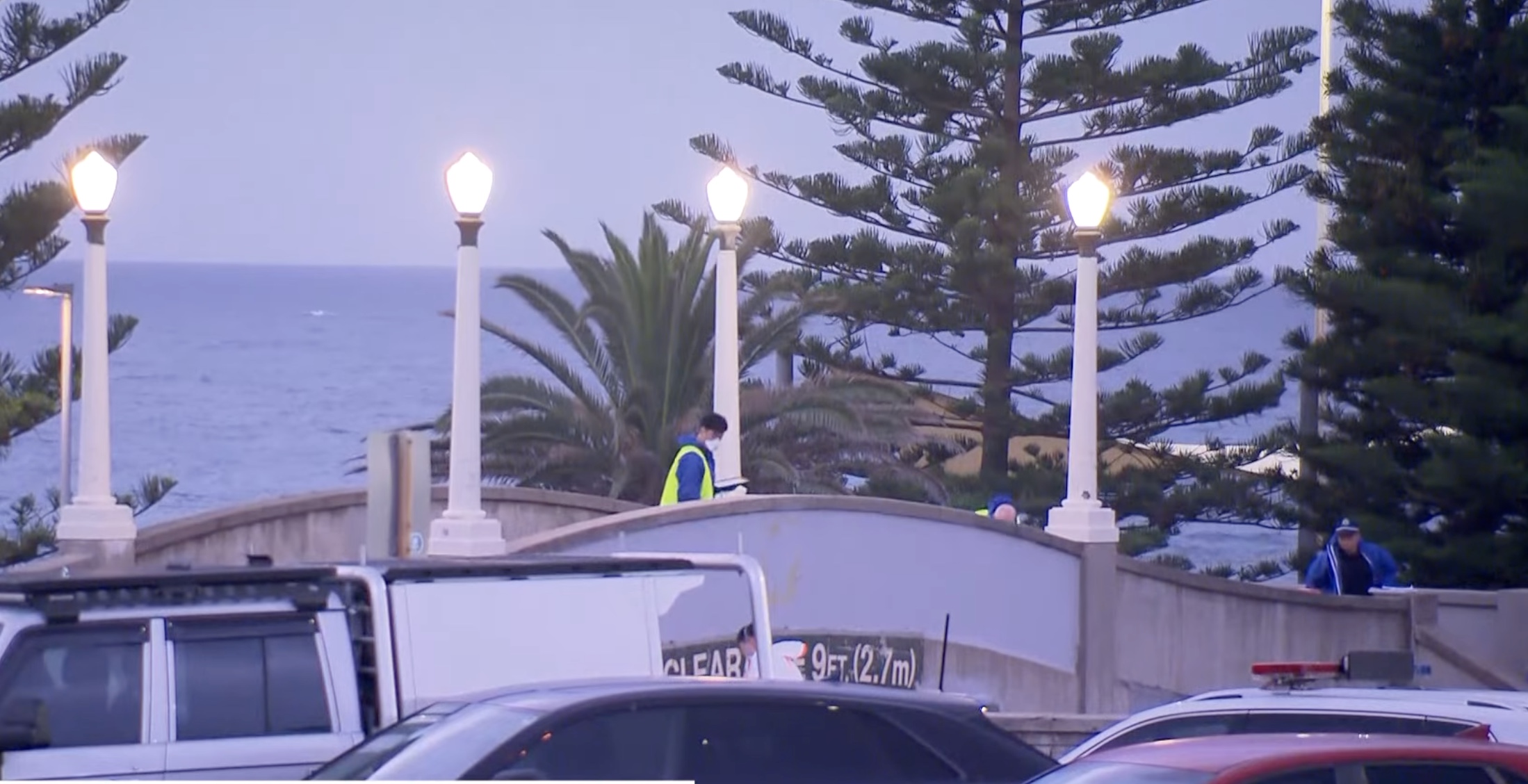
Josh Frydenberg addressed the media and onlookers at Bondi Beach yesterday. The former Federal Treasurer is a Jewish Australian, and one who has been raising the alarm over anti-semitism these past two years. Yesterday, he delivered a must-watch speech. I wouldn’t be surprised if Mr Frydenberg’s words are remembered in 100 years, either as a catalyst for change or as the warning that went unheeded. It wasn’t political grandstanding. There was pain in his voice, as well as anger and frustration. He gave a clarion call for Australia to rid herself of this ancient evil: antisemitism.
“Prime Minister, can’t say those words, Islamist ideology, if you can’t speak them, you can’t solve them.”
The gaslighting and bullying over the last 2 years have been staggering. Even as the blood congeals at Bondi voices are casting doubts and questions. When Dr John Dickson made a comment expressing anger at the persistent ‘tradition of violent jihad’, one prominent Sydney religious leader suggested he shouldn’t make such a link. On Tuesday, ABC’s Laura Tingle had the gall to suggest that the attack was not motivated by religion, even though the terrorists made that claim themselves with an ISIS flag draped over their car, and with Federal investigators confirming links with Islamic hate preachers in Western Sydney.

There is one word our Prime Minister has used, and it is being uttered by many politicians, religious leaders, and ordinary Australians alike is, ‘evil’.
It is evil. Name it. The targeted slaughter of Jewish men and women at Bondi Beach was an act of evil. There are many evils in our streets and suburbs, and yes in every human heart. There is something particularly abhorrent about what took place on the evening of 14th December. It is an ancient and wicked sin, and one that the world has yet to put to death. Even the murder of 5 million Jews in the holocaust was not enough to end this vile.
I would like to address the concept of evil. Why do we turn to this word, and what do we mean by it?
Calling out certain attitudes and actions as evil is more than a gut reaction. Evil is a moral category. It requires there to be a standard of goodness and righteousness. Indeed, for evil to be anything more than a sociological label that is used to explain how we feel about bad events, evil requires there to be a good God who defines what is right and true.
I grew up in Melbourne of the 1990s, and then in Sydney and Melbourne in the 2000s. In the society in which I walked, learned and worked, there was an underlying quiet, yet smug insistence from people too smart for themselves who alleged evil doesn’t really exist. I recall an article published by the ABC during the pandemic by a Zen Buddhist psychologist who argued that while death is not very pleasant but it’s little more than part of nature’s cycle.
Geoff Dawson asserted,
“If one’s view of the world is based on science, we are not special, we were not placed here by a God to be the custodians of the Earth (and if we were, we have let the Almighty down big time!) and like all other species, we will have our place in the sun.
We will die out, and other, more adaptable, life forms will take our place.
The myth that we are somehow special and will continue to live forever as a dominant species is based on a deluded human-centric form of existential narcissism.
We may wring our hands and our hearts may ache at the rapid destruction of wildlife that is happening right now before our eyes, but we never seem to seriously consider that we may go the same way.”
I guess Geoff Dawson is trying to be consistent. I quote him because his philosophical consistency is both revealing and repugnant. If all that exists in the universe is matter and mathematics, and there is no God, it is difficult to suppose there is ultimate right and wrong. At most, what we have are little rights and wrongs, where we agree some things are unacceptable, but only because there is a group consensus, not because there is a universal truth.
And yet we know that cannot be the case. Evil isn’t defined by a poll. Evil isn’t just a label adopted to soften the blow of what are uncomfortable but ultimately meaningless events. But to maintain the objective and universality of evil, we need a counterpoint of objective and universal truth. In other words, we need God. And not only God, but a God of utmost righteousness and goodness.
The Philosopher Alvin Plantinga explains,
”Could there really be any such thing as horrifying wickedness [if there were no God and we just evolved]? I don’t see how. There can be such a thing only if there is a way that rational creatures are supposed to live, obliged to live … A [secular] way of looking at the world has no place for genuine moral obligation of any sort … and thus no way to say there is such a thing as genuine and appalling wickedness. Accordingly, if you think there really is such a thing as horrifying wickedness (.. and not just and illusion of some sort), then you have a powerful … argument [for the reality of God.]
Without God, notions such as love, compassion and grace also lose their moorings and essential status. Without Divine orchestration, what is kindness and compassion other than an evolutionary product to help us survive as a species? They aren’t inherently good and necessary; they’re cosmic luck. They’re chromosomal, chemical and cultural byproducts of evolutionary processes.
Again, we know that such thinking is nonsense. It’s not only cognitive dissonance, but moral and existential dissonance. We know justice and compassion are more than ways of describing our preferences, just as we know evil isn’t simply a way of categorising things we hate or are afraid of.
Our world requires a God who is above us and outside the universe: A Divine Being who defines right and evil, justice and compassion and who has shaped the universe to have and need these things.
We can categorically say Islamic Jihadism is evil. We can confidently say NeoNazism is evil. Why? Because existing outside ourselves and yet imprinted into the image dei is the God of love and goodness.
Like Sydney, Melbourne enjoys a large Jewish population. Melbourne is home to more Holocaust survivors than any other place in the world, other than Israel. Between my home and the city stand many Jewish schools and synagogues. My kids regularly played sports with and against local Jewish schools, such is the vibrant Jewish community in this part of Melbourne.
But Melbourne, and perhaps this is also true of Sydney, has relied upon hubris and false piety for far too long. How different we are today from William Cooper. A Christian man and Aboriginal leader, William Cooper stood in solidarity with the oppressed. With foresight, Cooper understood the unfolding evils in Germany and spoke up when most world leaders remained silent. On December 6 1938, William Cooper led a march in Melbourne to the German Consultant, in response to the infamous Kristallnacht, and condemned the “cruel persecution of the Jewish people by the Nazi government in German.”
For all our pseudo-sophistry and boasting in our cosmopolitan and cultural greatness, travelling in our DNA are the same iniquities that have tainted all nations of old, including what was once considered the most ingenious and advanced culture in the world: Germany. We Aussies love to sing our own praises, with this gleeful myopia that sometimes shares more in common with Nero than with William Cooper.
This week, I am reminded of one of the books that both Christians and Jews hold as Holy Scripture, the book of Jeremiah. The prophet spoke in a time of immense upheaval and uncertainty.
‘We hoped for peace
but no good has come,
for a time of healing
but there is only terror.
You who are my Comforter in sorrow,
my heart is faint within me.
Listen to the cry of my people
from a land far away:
“Is the Lord not in Zion?
Is her King no longer there?”
“The harvest is past,
the summer has ended,
and we are not saved.”
Since my people are crushed, I am crushed;
I mourn, and horror grips me.
Is there no balm in Gilead?
Is there no physician there?
Why then is there no healing
for the wound of my people?’
(Jeremiah 8:15, 18-22)
Months ago, I reflected on the growing expressions of hatred echoing around Melbourne,
“The sad reality is, I don’t know if our fragile cultural cladding is able to resist the kinds of attacks on Jewish people we are now seeing. I think the jury is out, and that should cause us great concern for the future.”
Today, Jewish families around Australia are less certain about tomorrow. They are less confident and free. Their warnings and fears have become reality. That ought to bring great sadness to our land and shout a loud warning.
And yet there remains an unwillingness to learn the lessons of history. We struggle to use the right words or even understand them, because for so long we have stripped the world of ultimate realities and truths in exchange for personal preferences.
Sunday, 14th December, saw evil in its brutal force; religious beliefs fuelling hatred and mass murder. Whether it is the result of ignorance or fear or complicity, we have failed the Jewish community in Australia.
The words of Jeremiah resound loudly today, and yet that doesn’t have to be the end. 600 years after Jeremiah’s day, an elderly Jewish man lived in Jerusalem. We are told,
“Now there was a man in Jerusalem called Simeon, who was righteous and devout. He was waiting for the consolation of Israel, and the Holy Spirit was on him”
His eyes saw Jesus and he exclaimed,
“Sovereign Lord, as you have promised,
you may now dismiss your servant in peace.
For my eyes have seen your salvation,
which you have prepared in the sight of all nations:
a light for revelation to the Gentiles,
and the glory of your people Israel.”
One thing I do know is this: if Simeon’s assessment is true, Divine consolation can be found. As much as we need evil to be more than a gut-wrenching sensation, we need a consolation that can plumb the depths of despair and pain and bring healing. He is who I am thanking God for at Christmas. And I pray my fellow Australians, even those who disagree with me, will also come to know this Divine consolation.
Last night our church building was packed with people, gathered to celebrate the birth of Jesus. While our evening was filled with laughter and joy and praise, what we didn’t know at the time was that a massacre was unfolding at Bondi Beach in Sydney.
Thousands of Jewish Sydneysiders gathered at Bondi Beach to celebrate the first night of Hanukkah. As they welcomed the festival of light, darkness descended as two men dressed in black opened fire.
15 people are now dead, with dozens injured, including 2 police. One of the gunmen is also dead, and his accomplice is critically injured. Police and the NSW Government were quick to announce this as an attack on Jewish people and an act of terrorism.
I am shaken. I am profoundly saddened. What has become of this nation?
I am angry, really angry. Damn those men to hell. Damn those who cultivate and stir hatred toward Jewish people, and those who excuse growing anti-Semitism in Australia.
Can we say that Australia is safe for Jewish people? If the answer wasn’t already tenuous, after last night’s terror, it is difficult to say yes.
Melbourne this year has borne witness to Neo-Nazis leading marches through our city streets. A prominent Neo-Nazi has addressed crowds in public. Arson at Melbourne’s Addas Israel Synagogue saw the building severely damaged 12 months ago. Jewish Aussies are regularly subjected to anti-semitic graffiti and verbal attacks on the streets.
To suggest Australia is safe for Jews rings hollow. It is too our shame.
Stories of heroics are slowly emerging. It needs to be said, given the likely identity of the gunmen, that one hero who emerged last night was a Muslim man who ran and tackled one of the gunmen, almost certainly preventing further loss of life. He in turn was shot twice and is now in hospital.
As hundreds of people came together at Mentone Baptist Church last night, we focused on the God who came. I talked about how hurt and harm naturally produce friction and distance. God knows how deeply divided our cities and suburbs have become. Something counterintuitive happened with Jesus; God determined to come closer. When God saw all the evil in this world and all odious motives and words and deeds, instead of walking away as he had every right to do, he came to us. He came in the most miraculous and vulnerable of ways. The Son of God didn’t come to take away life, but to lay down his own life so that we might gain eternal life.
The birth of Jesus was accompanied by such bright light, and the scene was also interrupted by a wave of evil and darkness. The Gospel of Matthew records the massacre of the innocents, when Herod chose violence and murdered the young of Bethlehem in his hunt to rid the world of the prophesied one.
Matthew turned to these Scriptures to echo the horror,
“A voice is heard in Ramah,
weeping and great mourning,
Rachel weeping for her children
and refusing to be comforted,
because they are no more.”
Today, there is weeping and great mourning in Sydney. This should not be. Why are we not surprised? We are shocked, and yet who is surprised by the blood soaking into the sands of Bondi Beach? Perhaps the location took us by surprise, but our fractured society is losing coherence as we struggle to find something that keeps us together.
Politicians, stop pandering to groups who advocate this bile.
Religious groups, expose and expel religious preachers who teach this evil.
How long must we watch city streets clogged with protesters shouting obscenities and anti-semitic slurs, all in the name of ‘freedom’.
This isn’t a left or right issue, for the hatred has its horns on both ends. It is a religious issue. It is an ideological issue. It is a heart issue, and evidence suggests we are not equipped to respond. Violence isn’t the solution. Vile social media posts won’t bring about peace and healing.
The Gospel of John records Jesus attending Hanukkah. While not one of the Festivals instituted in the Bible, this commemoration of the Second Temple’s restoration in the 2nd Century BC, had quickly found a home in the Jewish calendar. It is unsurprising that Jesus, a Jewish man, participated in this Festival of Light (John 10:22).
A light was snuffed out last night at Bondi Beach, and the light has grown dim around Australia.
Where will we find light to overcome the darkness? Political muscle and social goodwill have some but limited influence. Who can gaze into the soul? Who can outdo evil?
“I am the light of the world. Whoever follows me will never walk in darkness, but will have the light of life.”
Pray for the injured. Pray for the hundreds of victims who were present and witnessed last night’s evil. Pray for our emergency services who today continue to work and protect our streets, investigating last night, and attending to the wounded, both the physically and mentally hurt. Pray for our Jewish friends and neighbours. Check in on them. Assure them of our friendship. Pray for them.
As Hanukkah continues and Christmas approaches, my hope rests in the One about whom it is written,
“The light shines in the darkness, and the darkness has not overcome it.”
Lord, have mercy. Maranatha
The ABC is reporting that new Guidelines for NSW Health will crack down on hospital management who try to prevent abortions.
“Hospital managers and executives would be barred from blocking abortions because of personal beliefs, under new guidelines proposed for public health services across New South Wales.
A draft copy of the “termination of pregnancy policy directive”, obtained by the ABC, includes a new section that specifically deals with conscientious objection among those managing and administering health and hospital services.
The policy has been under review for more than a year and lays out requirements for individuals and institutions providing or assisting with abortion care.”
The ABCs language of choice is ‘abortion care’. While ‘care’ is also used in the Government Guidelines, the reporter can’t help but repeat ‘care’ more than 20 times in the article, as though saying it over and over again must make it true. But the hypnosis doesn’t work.
It doesn’t take a genius to see that ‘abortion care’ is an oxymoron of epic proportions. Care means to provide love and kindness, whereas abortion by definition requires the taking of human life.
Of course, ‘abortion care’, like its sister slogan ‘reproductive health care’, has become difficult to keep together as science reveals more about the little ones whose lives are removed during the early weeks and months of pregnancy.

The old argument, ‘it’s a clump of cells and not a human being’, is rarely used nowadays. The proof is in the womb. The more science reveals about life in the womb, the more we have to admit that the Biblical testimony is spot on,
‘For you created my inmost being;
you knit me together in my mother’s womb.
I praise you because I am fearfully and wonderfully made;
your works are wonderful,
I know that full well.
My frame was not hidden from you
when I was made in the secret place,
when I was woven together in the depths of the earth.
Your eyes saw my unformed body;
all the days ordained for me were written in your book
before one of them came to be’
(Psalm 139:13-17)
And yet, the commitment to uncreating this wonderful frame persists to this day. So much so that NSW Health want to force hospital employees to act against their good conscience. Can you imagine the State forcing organisations to take a life against their conscience?
The ABC goes on to quote NSW Greens MP Amanda Cohn. Listen to the dishonest rhetoric.
“I’ve heard about instances of conscientious objection provisions being weaponised by department managers or hospital executives to then cause a whole department or a whole hospital not to provide a service,” Dr Cohn explained.
Weaponised? Let’s get this straight. According to Amanda Cohn, those who seek to save lives are ‘weaponising’ while those who wish to take a life are offering a service? It’s as though we’re now living in the Upside Down. It’s less George Orwell and more Aldruous Huxley. We’ve swallowed the soma. Of course my career and dreams, and lifestyle are more valuable than an unexpected baby! And we thought Molech was a demanding god!
Are we okay with the State forcing individuals to sanction the taking of human life under their care?
Meanwhile, in Victoria, pressure is mounting to expand the laws surrounding euthanasia. Sorry, ‘voluntary assisted dying’! What a surprise. Once the scent of death is caught, the bloodhounds and sharks won’t relent. In October of this year, the Victorian Parliament removed the ‘gag clause’, now giving Doctors permission to initiate conversations with patients about using euthanasia as an option for them.
From life at its beginning and at its end, our society has snatched the key of death and now claim the right to lock and unlock.
Stranger Things may have its Vecna, who appears as kind Henry to steal the children away. We have our own Henrys, and strangely, we not only protect but praise them.
Thank God the story doesn’t end here. The way to overcome the Upside Down is staggering and the perfect salve. I’m not looking to Houses of Parliament and to street marches. Christmas, of all thing,s points us in the right direction.
Christmas is less than 2 weeks away, the most poignant celebratory day in our Calendar. On Christmas, we celebrate the birth of a child, the child, the Son of God. We know that he was an unwanted child, so much so that the State interfered and try to have him disposed of.
God kept this little one alive. His mum and earthly dad also cared for him. Before his birth, while Mary was heavily pregnant, a Divine announcement came that shook the world and echoes with clarion goodness even today,
“Joseph son of David, do not be afraid to take Mary home as your wife, because what is conceived in her is from the Holy Spirit.She will give birth to a son, and you are to give him the name Jesus, because he will save his people from their sins.”
People tried to take Jesus’ life. In the end, he laid down his life for the sins of the world. That not only means the God calls out insidious laws for what they are, it means the God of grace and truth can do what our society cannot. Whatever our modern Henrys allege about life and death, the reality is, the scarring and guilt stick. Bad choices remain bad, and no dose of soma pills can change what the heart ultimately knows. But Jesus can.
Many a church will read John’s Prologue over Christmas, as will we at Mentone Baptist Church. The word has not lost its necessity and grace, no matter how much our culture may wish to have God dead and buried. Think it over,
“The light shines in the darkness, and the darkness has not overcome.
The true light that gives light to everyone was coming into the world.He was in the world, and though the world was made through him, the world did not recognize him.He came to that which was his own, but his own did not receive him. Yet to all who did receive him, to those who believed in his name, he gave the right to become children of God— children born not of natural descent, nor of human decision or a husband’s will, but born of God.”
This weekend, I am having a mini break, which means it’s an opportunity to visit another church.
I love the church where I am a member and belong, but annual leave is an opportunity to visit other churches and be encouraged by what God is doing elsewhere.
We had originally thought that we would visit one of the churches in Melbourne CBD, but knowing police are overstretched and multiple protests were being organised, we thought it best not to go. Why add to the business? And who knows how long we’d be stuck in the city while protesters blocked intersections around the CBD.

So we visited Mentone’s daughter church, Regeneration Church in Clayton. It was lovely to catch up with old friends and encouraging to meet around God’s word and see how the church has grown since I last visited. It was a beautiful sight: a room filled with mostly 25-year-olds and representing so many different ethnicities, from all over the world and yet with one voice praising God and enjoying a deep sense of unity in Christ. I said to the pastor afterwards, ‘here [the church] is the answer to all of the friction and suspicion and anger in our community’.
It’s true, if you want to see a glimpse of what God is doing around the world today, go to your local church. If you wish to have a little taste of what life in eternity will be like, drop into your local church next Sunday and see where disconnected men and women from all backgrounds, jobs, education, ethnicity are finding joy and peace and love and life together through Jesus Christ.
Sometimes the music is happening, sometimes it’s out of tune. Sometimes the coffee is proper Melbourne, most of the time it isn’t. Sometimes the kids are noisy; often they are. The building’s architecture may be plain or striking, the preacher a great storyteller or simple words explaining the Scriptures. In these many different settings, from Clayton to Camberwell, from Pakenham to Preston, and from Mentone to Melton, church is like a breath of fresh air compared to the anx and rage filling our streets.
What a contrast with the clashing protests in Melbourne city today, where protests met with counter-protests, one volume of insult matched with further insult and even assault. Yes, many are probably marching for a myriad reasons, concerns over housing and cost of living, and fear of the unknown. But with the surprise element of boiling water burning you, these protests were already marked with signs of what they were about. When a protest is arranged under the banner, ‘stop mass immigration’, and then days out it’s described as defending ‘white heritage’ and denouncing Chinese and Indians in our country, of course, the march was going to go off the rails. So when a known neo-nazi is given a microphone and addresses the crowd from the steps of Parliament House, to the cheers of people below, what were you expecting to see?
A few days ago, Victorian Police expressed concerns that to deal with these protests, they were forced to take away resources from their search to apprehend a man who murdered two of their own and seriously wounded another only 5 days ago. Why would we create further strain on our police after the shocking week they have endured? And then, at the protest in Adelaide, a poster appeared, supporting the alleged police murderer.
Melbourne’s new Lord Mayor wants to claim the title of the ‘optimistic city’, but Melbourne is anything but optimistic or happy. Melbourne has turned into the nation’s protest capital, with weekly interruptions by protests and marches, often promoting the most insidious of causes. Our city is experiencing tumultuous divisions and doubts and fears. One solution often produces another misstep and further erodes public confidence and our social cohesion is increasingly tenuous. We are no longer the city we once were.
Jesus once warned,
“There will be signs in the sun, moon and stars. On the earth, nations will be in anguish and perplexity at the roaring and tossing of the sea. People will faint from terror, apprehensive of what is coming on the world, for the heavenly bodies will be shaken.” (Luke 21)
Tired of bad news? Exhausted by the negativity and fear? There is someone to whom we can turn. I’ve said it before, and I will keep on saying it: there is good news. There is really good news, and it can already be seen and experienced in Melbourne. There is something beautiful and good and happy taking place across our city where people from all manner of backgrounds are finding not a feeling of optimism but a happy and certain hope. To be sure, it won’t make the newspapers of 6pm news; good news stories don’t sell. But boy, do we need a better story than the ones filling every breaking news. As Jesus explained, what we get to see in our churches is tasted and seen in a million different cities and towns around the world and in a thousand languages and on a billion faces,
“This is what is written: The Messiah will suffer and rise from the dead on the third day, and repentance for the forgiveness of sins will be preached in his name to all nations, beginning at Jerusalem.”
Will Donald Trump be welcomed into heaven?
I didn’t expect that question to be going viral this week! But then again, we are all living Alice’s Wonderland of the late Roman Empire.
This week, during an interview on Fox & Friends, President Trump was speaking of the negotiations between Ukraine and Russia. As he spoke of the hopes for the war coming to an end and for some kind of peace to be established, he mentioned his hope for heaven.
“I wanna end it. You know, we’re not losing American lives … we’re losing Russian and Ukrainian mostly soldiers…I wanna try and get to heaven if possible. I’m hearing I’m not doing well. I am really at the bottom of the totem pole. But if I can get to heaven, this will be one of the reasons.”

Whatever one might think of the sitting American president, he has a sense of humour, and even these remarks contain a touch of jocularity. Part of the problem when writing about President Trump is that people are so entrenched in their opinions, any thought bubble not fitting prior judgments of the man simply blows away. No doubt, Trumpites are trumpeting his sainthood and have already assumed he is the 13th Apostle. Others are equally convinced Donald Trump is the Devil incarnate and worse than Hitler!
Later on, White House Press Secretary Karoline Leavitt was asked if the President was “partially seeking peace in order to get to heaven. Was he joking or is there spiritual motivation?”
She answered,
“I think the President was serious. I think the President wants to get to heaven as I hope we all do in this room”.
I’m not God (obvious), and so I don’t have access to the President’s heart. He certainly has a public record that spells out danger. If, however, there is something to the rumours circulating since the first attempt on his life one year ago, President Trump has, at the very least, been forced to examine the question of mortality.
The question of heaven is one that almost every single person on the planet will ask. Even the most ‘true blue’ naturalist and atheist is likely to ponder whether the God who doesn’t exist will let them into the heaven they believe is fiction. When confronted with death, the word from Ecclesiastes proves true, ‘He has also set eternity in the human heart’ (3:11). We ask. We even long for an answer in the affirmative.
What must I do to gain entry into heaven? Who must I be or become to find welcome into God’s home?
Before we get to the answer given by Jesus, let’s consider the President’s plan.
Whether his comment was said in jest or with a doss of honesty, Donald Trump signals that he’s near the bottom of the pile. His working assumption is that getting to heaven is about moral conduct and or spiritual aptitude. It’s a totem pole or ladder we climb. If the President can bring to a close what is the worst war in Europe since 1945, surely that counts as a big leg up in God’s eyes.
In effect, the President is relying on the same view of God and heaven that is shared among most of the world’s religions (including distorted views of Christianity): Heaven is reward for the holy, and we achieve this status through self-improvement and helping others, whether it is a volume of good works or spiritual exercises.
The problem with this assumption is that it doesn’t work. It places too much confidence in our ability to create personal righteousness, it belittles our record of personal transgressions, and it thinks too lowly of God’s holiness and too little of God’s grace. Let me explain.
The Gospel of Luke famously retells two encounters where an individual asks the question of Jesus,
“what must I do to inherit eternal life?’”
It’s essentially the same question Donald Trump is asking.
The first man to approach Jesus was a religious academic. The second man is described as a ruler. He was a local official of some description who also had significant wealth. One can read about the religious leader in Luke 10:25-37, but let’s focus on the second inquisitor.
A local ruler asks Jesus, ‘What must I do to inherit eternal life?’ Jesus turns and asks a question about the requirements in God’s law: Don’t murder, don’t commit adultery, and so on.
The ruler recites the laws, and, whether he’s being honest or dishonest or delusional, he informs Jesus that he has judiciously followed God’s precepts since boyhood. Sounds good so far. But then Jesus went where the man did not want to go: his heart.
“You still lack one thing. Sell everything you have and give to the poor, and you will have treasure in heaven. Then come, follow me.”
“When he heard this, he became very sad, because he was very wealthy. Jesus looked at him and said, “How hard it is for the rich to enter the kingdom of God! Indeed, it is easier for a camel to go through the eye of a needle than for someone who is rich to enter the kingdom of God.”
The point is not that one can enter God’s Kingdom if our godliness measures up; the point is, no one does.
If Jesus’ assessment isn’t explosive enough, when the disciples follow up with this question, ‘who then can be saved?’, Jesus states the obvious:
“What is impossible with man is possible with God.”
We can’t con God. The bloke who is paying for his kids’ school fees while having an affair is still behaving reprehensibly, no matter how much the school fees are costing him. The President who secures a peace deal (as good as that is, and we pray that he will succeed), does not remove or justify or excuse a lifetime of dishonouring the God who exists and mistreating others.
In what can only be described as a devastating analysis of human hubris and religious zeal, the Apostle Paul exposes the notion that human beings can ascend to where God is,
“You, therefore, have no excuse, you who pass judgment on someone else, for at whatever point you judge another, you are condemning yourself, because you who pass judgment do the same things. Now we know that God’s judgment against those who do such things is based on truth. So when you, a mere human being, pass judgment on them and yet do the same things, do you think you will escape God’s judgment? Or do you show contempt for the riches of his kindness, forbearance and patience, not realizing that God’s kindness is intended to lead you to repentance?
But because of your stubbornness and your unrepentant heart, you are storing up wrath against yourself for the day of God’s wrath, when his righteous judgment will be revealed.” (Romans 2:1-5)
These words jar and clash with our sensibilities, but thank God someone is honest with us. Paul continues,
“There is no one righteous, not even one;
there is no one who understands;
there is no one who seeks God.
All have turned away,”
We might even mutter an ‘Amen’ to these words as we consider the American President, but the thing is Paul is also speaking of us.
This is one of the key ideas of Christianity that unsettled the world in those early centuries AD, and again in the 16th Century and still today in many parts of the world. Christianity is not a religion of merit, but of grace. It’s not about reward, but repentance. It’s not forging a golden staircase to heaven but receiving forgiveness brought about by a bloody cross.
Another American President once preached, ‘ask not what your country can do for you — ask what you can do for your country.’
Jesus preached a very different message. He came down from heaven and announced, ‘what’s impossible for you is possible for God’: salvation is not what we do for God, it is what God has accomplished for us. He then laid down his life to pay for the sins of many.
Heaven isn’t a reward for the best of humanity; it is the gift of God to the worst.
Once we realise God’s peace plan, it changes us inside out. It requires humility and confession. This grace changes your outlook and ambition; it reorients how we view the people around us.
So, will Donald Trump make it to heaven? According to Jesus, the answer is no, not if he believes in himself and thinks that his ‘good’ conduct is going to impress the God of the universe. If, like anyone who is convinced by Jesus, and so repents and believes God’s gracious gift, then the answer is yes, Donald Trump will be welcomed by God.
That answer will probably grate on the many who see the American President as an existential threat to whatever it is you value, and it might bring a smile to those who adore Donald Trump. But both those responses fail to appreciate the nature of grace. Presidents and Prime Ministers, billionaires and the poor, company executives and employees, everyone without exception will meet God and be held to account. That prospect ought to terrify even the most self-confident.
Should God…can God… open his heart and home to the moral incalcitrant and spiritually vacuous? For us, it’s impossible, but with the God of grace through Jesus, it is certain.
The cat is out of the hat! A prominent Australian newspaper is reporting a story about Doug Wilson and Christian Nationalism. The Age yesterday published this AP piece, ‘Hegseth reposts video of pastors saying women shouldn’t be allowed to vote’.
The reporter’s focus is on US Defence Secretary Peter Hegseth and his association with CREC (a new church association in the United States headed up by Doug Wilson). If it were not for Mr Hegseth reposting a video on X about Doug Wilson, Wilson and his Moscow movement might have remained in the cold, as far as Australian media is concerned.
The word is now out, and no doubt a large number of Australians are scratching their heads and wondering, what on earth is going on here? Is Doug Wilson a legit Christian voice? Do his views reflect what Australian Churches are teaching and practising?
Let me bring assurance and a note of caution. First up, no, Melbourne isn’t Moscow, but like a cold Russian winter, the chill can cross borders.

Doug Wilson and Christian Nationalism are not anonymous in the Aussie Christian scene. Thankfully, they are only a tiny voice, and yet it is more prominent than it was 5 years ago. There are now conferences and websites and some churches that regularly appeal to Wilson and Moscow, and invite speakers from their broad tribe to Australia.
As a quick aside, the Doug Wilson who was preaching and teaching some useful and valuable ideas a decade ago is quite different from the problematic man and his movement today. Whether he always held the positions he is now propagating and kept them quiet, or whether he’s shifted over the decade, I don’t know which is the case. Either way, the Moscow vibe, as I call it (Wilson lives in Moscow, Idaho) brings a chill that we do not need in our churches or country.
The presenting story that led to the AP piece is a view promoted by Wilson’s church, whereby women should lose the right to vote. I wasn’t shocked to read this, as it fits into their view of men and family life. In the last week, I have also heard the scenario where some (a tiny, tiny number) of Christians now advocate that women should not have voting privileges in a church! The idea is preposterous as it conflicts with one of the Bible’s wonderful teachings: the priesthood of all believers, and therefore the value of all members of the church and their contributions. And what of single women? In the world of Moscow, single women are frowned upon and offered and often derided. More of this in a moment.
It doesn’t need saying (although perhaps it does) that Christianity never fits neatly into any culture; for the Christian message is transcultural. This is one of the stunning truths of Christianity, that whether Korean or Ugandan or Bolivian, the Bible and the Christ of Scripture cross time and place and ethnicity. Part of that means, though, that there will always be some element of pushback, disagreement, and confusion as to how people understand and respond to Christianity. After all, if Christianity was nothing more than a mirror to Australia 2025, there would be little incentive and reason for anyone to become a follower of Jesus Christ and join a local church. And yet, not every idea preached by every religious leader is an accurate reflection of the Christian Gospel, and hence, when the unbelieving public are perplexed by and even finds a view repellent, they are right to do so.
There are evangelical leaders in the United States expressing concern over the normalisation of ‘Christian nationalism’ in some circles. Similarly, in Australia, there are voices raising concerns about Doug Wilson and his Moscow crowd.
Stephen McAlpine and myself are among a number of Australian pastors who have been sending up flares to warn Aussie Christians about the rise of Christian Nationalism. Again, while their influence is small, the Moscow flu is catching on in some more conservative churches in Australia, and it’s an ailment that inevitably makes people sick. Symptoms include public rage, thinking ‘normal’ evangelical churches and leaders have lost the gospel, one-sided politically, anti-authority, and demeaning toward various minority groups.
Let me observe 2 examples here, one in relation to how women are viewed and one that articulates concerns about Christian Nationalism.
Christian Nationalists love to talk tough love. Their men are vocal and grow long beards and know how to skin a beaver with their bare hands. These blokey males also have a way of using their strength to demean women.
A few years ago, Sydney theologian, Dani Treweek challenged Doug Wilson and another American pastor, Michael Foster, for how they speak about single women in churches.
Treweek said,
“Wilson and Foster embark on a shared lament about the impending crisis facing churches whose pews are soon to be filled with lonely, unlikeable, tubby spinsters who have nothing in their lives and so spend their days endlessly seeking the benevolent attention of their ever-patient but extremely busy and very important senior pastor.”
She sums up Foster and Wilson’s views on single women as:
With the surprise of an AFL team beating the local u12 boys team, they responded with a tirade of personal attacks on Dani Treweek’s singleness and theological credentials!.
Then there is this issue with ‘Christian Nationalism’, which readers of The Age may be wondering about. At this point, allow me to repeat a few paragraphs from an article I wrote on the subject in 2023, following up a series of pieces written by Stephen McAlpine as he reviewed Stephen Wolfe’s ‘The Case For Christian Nationalism’. McAlpine eventually gave up reading Wolfe after several bouts of diarrhoea!
“The tectonic plates of belief and hope are moving and causing major disruptions to every sphere of life. One of the answers being proposed by Christians (in some circles) is one gaining some traction in some areas of American and European Christianity, and it’s finding its way onto Australian shores as well: Christian Nationalism.
It’s not as though Christian Nationalism is brand new; iterations have existed at different points in history, often with long-term disappointment, bloodshed, and Gospel compromise.
I understand why Christians across the United States are concerned and even angry at some of the values and views that have captured hearts. I appreciate why Aussie believers are troubled by various moral agendas that have been normalised in our political and educational institutions. However, frustration and concern with politicians and the political process is not a reason for reactionary theology and poor exegesis.
We don’t fix one problem by adding another one; that way, we end up with a bigger mess!
Christian Nationalism ends up making the State into the church and the church into a political party and turning the Gospel of grace into a weapon to beat down political opponents. Instead of being God’s message of reconciliation, it distorts the gospel into a message of social conservatism and one that sees political progressivism as the great Satan. Social and moral conservatism can be as dangerous to spiritual health in its intentions to create new forms of legalism and allegiances.
I’m not saying that Christians in Australia walk away from the public square and sit tight on uncomfortable pews behind stained glass windows. It’s not that Christians shouldn’t participate in the political process. It’s not that we should ignore social issues and cultural debates. Such things are part of common grace and ways we can love our neighbours. Christianity influencing the public square isn’t Christian Nationalism, it is a wonderful byproduct of the goodness and sensibility of Christianity.”
Australia is one of numerous countries where governments are getting bigger, and the people are looking increasingly to government to be the saviour of all their issues and hopes and fears. This has the unfortunate effect of giving more authority and responsibility to the State and, negatively, it diminishes the role of the community to take responsibility. That critique aside, in the eyes of Scripture, the State is not the main game, but it is the church. In this sense, Christian Nationalism makes a similar error to other heresies, like the prosperity gospel and social justice gospel. They all aim at changing society (and controlling society) through policy and behaviour.
The problem with that mindset is that it contradicts the nature of the Gospel and the purpose of the church (aka Ephesians ch.2). The halls of Parliament and legislative offices are not the places where God is working out his redemptive plans. It is in the church and by the Gospel of Christ that God is achieving his purposes.
Christian Nationalists may well identify some sins of America (or Australia), and yet the answer according to Scripture isn’t to make America great again or Australia, but to present the Gospel of Christ and make disciples of all nations. Christianity is international and multi ethnic, and any attempt to contract the gospel to a particular nation-state is enormously problematic.
Make Christianity weird again, not make Christianity skewed again! The message of Jesus Christ has this remarkable ability to weave and connect through every fabric of society. Christianity eventually revolutionised how the Roman Empire viewed women, babies, slaves, and more. Our modern equality sensibilities didn’t arrive by chance, but through Christianity. And yet it wasn’t through some militant takeover bid fueled with rage and demeaning the downtrodden, but with sacrifice and through persuasion, and the God of grace bringing forgiveness and newness of life.
If there is a ‘sin of empathy’ (yes, Moscow is also responsible for the ‘sin of empathy’ vibe), it is to show empathy with this movement blowing its cold weather in a westerly direction over the Pacific Ocean. My advice, avoid it like the plague. Instead, be captured by the Apostle Paul’s vision for the Christian Church in Ephesus. In that ancient metropolis of commercial and religious influence, Paul reminds the local church of God’s message of peace and being God’s people of peace. I’m convinced, we (churches) will do well to keep working hard at this:
He came and preached peace to you who were far away and peace to those who were near. 18 For through him we both have access to the Father by one Spirit.
19 Consequently, you are no longer foreigners and strangers, but fellow citizens with God’s people and also members of his household, 20 built on the foundation of the apostles and prophets, with Christ Jesus himself as the chief cornerstone. 21 In him the whole building is joined together and rises to become a holy temple in the Lord. 22 And in him you too are being built together to become a dwelling in which God lives by his Spirit. (Ephesians 2:17-22)
For anyone who wishes to read further on Christian Nationalism, 9Marks published a journal on the subject which contains excellent and easy to read articles and reviews – https://www.9marks.org/journal/a-new-christian-authoritarianism/
Kaeley Triller Harms has written this recent summary piece of disclosed issues with the Moscow movement https://kaeleytrillerharms.substack.com/p/doug-wilsonjust-the-facts-maam
Mike Bird has written a series of helpful articles about Christian Nationalism, including reviewing Wiliam Wolfe’s book, ‘The Case for Christian Nationalism
Coming soon…a podcast for and about Melbourne, engaging in the big issues through the lens of the Christian faith

Today millions of Australians will wake up enthused and celebrating the outcome of yesterday’s Federal election. Many others will be despondent and even angry as the candidates of their preferred party lost. To be honest, I suspect millions more Australians are waking up today with a degree of political indifference as they carry on making breakfast and figuring out how to pay their bills and care for their families and wondering how Carlton’s season ended up this way! A plethora of responses are understandable. For the Christian, who may also empathise with and see themselves at some place along this spectrum, there is one constancy. Psalm 146 famously says,
“Do not put your trust in princes,
in human beings, who cannot save.
When their spirit departs, they return to the ground;
on that very day their plans come to nothing.
Blessed are those whose help is the God of Jacob,
whose hope is in the Lord their God.”
These words remain true, before and after the votes had been cast and counted.
I understand that in quoting Psalm 146, some people might be a little annoyed and perhaps a tad angry, especially among voters disappointed by the election result. I certainly don’t mean to sound unfeeling or facile, as though the election was unimportant. I happen to believe elections do matter because government plays a significant role in the life of society; controlling much power and influence. After all, Government is a legitimate institution that falls under the banner of God’s common grace. It may not be the main game, but government nonetheless plays an important supporting role.
It is also the case that Government has less influence in setting the direction for society as it is about providing the legal, economic, and social mechanisms by which society moves in the direction that it is already preferencing. The old adage about politics being downstream of culture is complicated but still true.
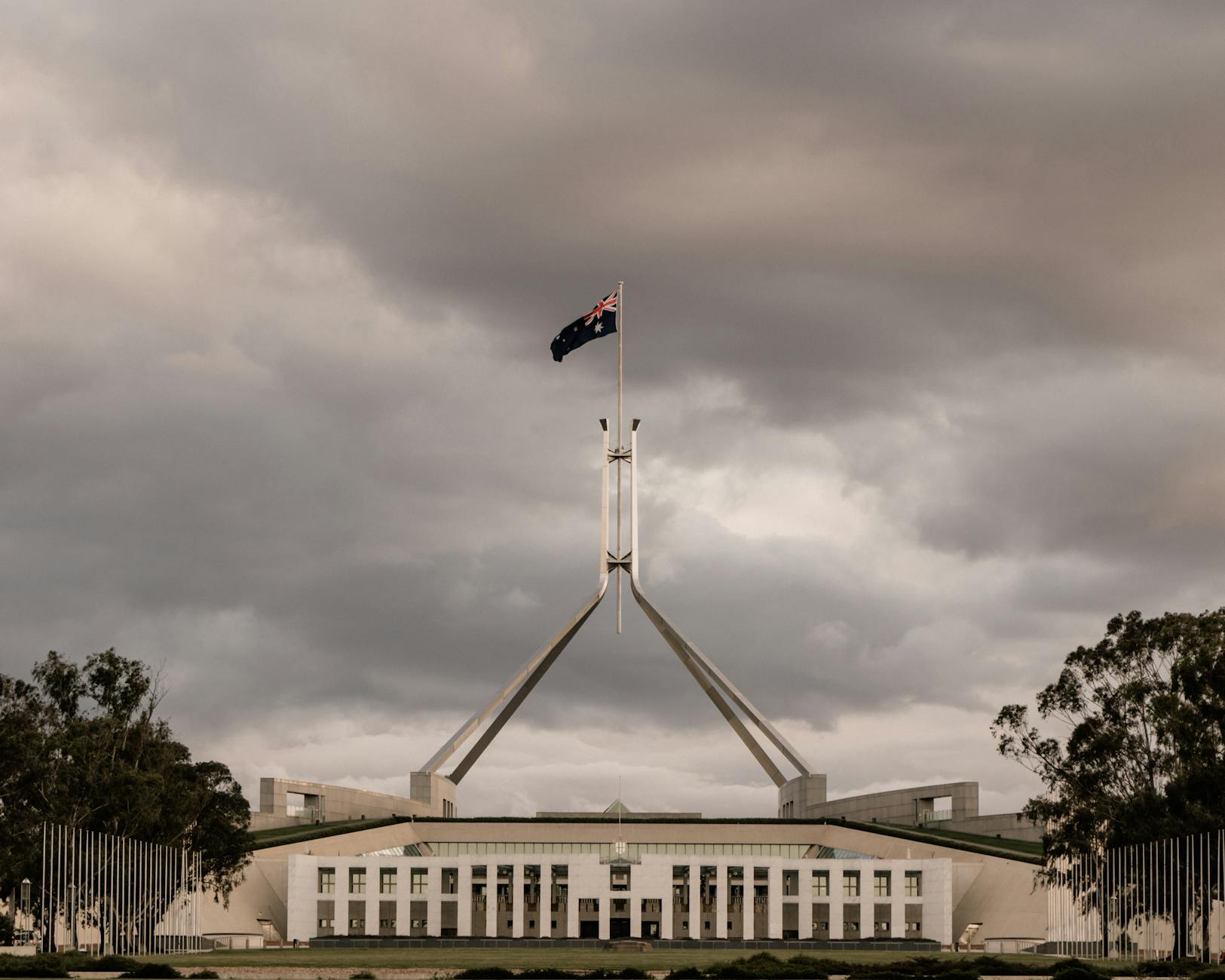
The reason behind sharing the Psalm 146 quotation is that I’m wondering if we are attaching too much responsibility on Government for fixing social ills and rectifying economic currents. This is true for both the left and the right of politics. Have we become too dependent upon Parliaments and MPs for addressing what was once the prevue of churches, synagogues, media, and an array of social organisations? If we have lost trust in those civil and religious institutions (which seems to be the case), faith in our governments is also in sharp decline. There lies perhaps some of our misplaced faith and therefore frustration and despair at the political scene. We are not meant to burden Government with all our hopes and demands and needs. A healthy society needs to spread that load. Indeed, a truly healthy society would not require government to create what we have in Australia: a society wrapped in red tape and wads of laws and rules stickier than gaffer tape.
There are better governments and worse; it’s rarely a zero-sum game. I suspect there is also a deep suspicion of and discontent toward political parties across the spectrum. Sometimes it’s a case of choosing the least bad option available, or at least that’s how many voters are feeling: I don’t like this candidate, but at least they’re not the other candidates!
How did we respond to the election at church today? This morning my church prayed for the new state government, as we do regularly for whoever is in charge at Spring Street and in Canberra. And we also prayed for our local representatives in Parliament. That’s what Christians do. It’s one of the few constancies in the unpredictable world of politics; churches pray for those in authority. To the reluctant among us, let’s consider it this way, if the Apostle Paul could pray for the Roman Emperor, then I think we can pray for our governments.
We should pray for our political representatives because they carry significant responsibility. Given the platform that we build for our leaders (or scaffold as it may be), praying is the right thing to do. Of course, government isn’t the big game in town, but its role impacts life at every level and therefore great wisdom, patience, integrity and compassion are necessary.
Without some kind of cultural reorientation, I suspect Governments will become bigger and bolder. It is interesting to see how Australians, or at least Victorians, have become more comfortable with authoritarian personality and politically styled governing. The myth of the convict, bushranger, and nonchalant Aussie digger may still exist in local sporting clubs, but as a people group, we are quite accepting of big government and monocratic-styled leadership. I’m not arguing a case either way here but simply noting the public trend.
Of course, my eyesight is myopic and so looking at the next 3 years is an imprecise art. There are, after all, no more prophets! My guess is that in the name of freedom, more laws and regulations will be introduced, and in the name of economic prosperity, more debt-inducing spending will occur, and we will remain desperately ill-prepared for the geo-political challenges that lie ahead. If we follow the now predominant current, I anticipate that we’ll see tighter controls on social behaviour, fewer parental rights and a more pronounced religion-socio education drive. In part, we’re recognising a fragmentation in society and so looking for answers is only natural and desirable (depending of course upon the solutions offered).
So I go back to the verse I began with, Christians should not look to government to be the saviour of society. Don’t put your trust in princes and prime ministers. Honour them and pray for them, but let’s not expect government to rescue society from the deepest and darkest of places.
This is one of the flaws present in much of politics today; people believe and expect Government is the answer. Big government has devotees on both the left and the right. Hence it’s no surprise to see legislative agendas enveloping society around a new moral religion. It’s interesting to see how churches have become more visible as politicians vie for attention and votes. ‘Social cohesion’ is one of the buzz words. God is optional in the new religion, and where he is worshipped, he somehow always supports the popular moral zeitgeist!
Among some Christians, there are more strident and public voices. Christians, be careful of voices that speak more about politics than they do the Great Commission and use more words of outrage than they do words of compassion and mercy. By all means, as a commitment to common grace and out of love for your neighbour, keep government accountable. Christians might join a political party and stand for Parliament, but even the most Christian of political leaders and most Christian of political agendas isn’t going to redeem society. That kind of thinking ignores the testimony of Scripture, namely that the gospel is God’s power of salvation and the church is God’s big game in town. Our churches are more likely today to sit on the sideline of culture and be ignored by many, but nonetheless, the church is the centrepiece of God’s work. Therefore, whatever you do in the name of political inspiration, aspiration or disappointment, don’t confuse it with the Gospel, don’t conflate common grace with saving grace, and don’t fuse the church with the state.
The best way we can love our fellow country people is by serving your church and being clear on the gospel. Today at church, pray for government and for those in authority, and give thanks for free and safe elections. And be clear on the gospel. If we love the Lord our God with all our heart, mind, and strength we will also love our neighbours, and that will have real and positive outcomes for our society. That kind of humble constant Christ-like hope hope-filled living may have a greater effect for the good of society than even an election.
 MurrayCampbell.net