Grand Final hype and Christian passion

Only once have I missed the Grand Final, and that was in 1999. I was living in London at the time, but even then, I woke up at 4 in the morning to read the then minute by minute updates that were being published on the internet (yes, this was before the days of live-streaming).
351432-tlsnewslandscape

It doesn’t matter whether my team is playing on Grand Final day or not, it’s un-Melbourne like to not watch the game.

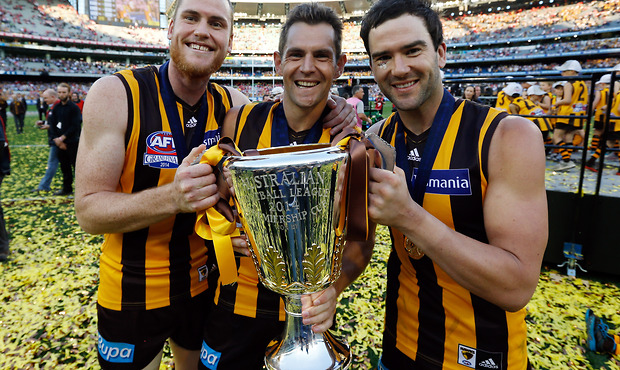
Tomorrow there will be 100,00 people filling the MCG and living out their love for football, with millions more watching on television at home or at the pub.

We took our children into the city yesterday and had fun at the Foxtel Footy Festival next to the MCG. Everywhere you looked there were men, women and children wearing footy jumpers and scarves (more West Coast colours than anything!). Football fans are not hard to spot: they are committed to supporting their team, they’re enthusiastic, they attend matches and if they can’t they will watch it on tv, they talk about footy at work, there are footballs lying around the house to hold and caress.

Grand Final day is so important to Melbourne that we now celebrate a public holiday on the day before Grand Final!

For the three Melbournians who doesn’t love footy, there will be something else that you’re passionate about – art, music, gardening, cooking, technology,  spending time with friends, travel.

To prove that I’m not just another nodular barely-civilised football fan (can’t think why Freemantle comes to mind!), remember that famous balcony scene in Romeo and Juliet where Juliet is standing outside in the night sky and Romeo sees her, and is smitten and starts talking to himself, 

‘See how she leans her cheek upon her hand. O that I were a glove upon that hand, That I might touch that cheek.’

Romeo would be satisfied to be a glove on her hand so that he could touch her cheek. It’s all very romantic, but that’s what happens with passions and desires. Whatever the heart most desires, we think and talk and dream about it.

Football, music and poetry are among the many good things we enjoy under a good God, but Grand Final week makes me wonder why Christians don’t exhibit similar enthusiasm for the Gospel of Jesus Christ?

I think of Paul who wrote,

“I speak the truth in Christ—I am not lying, my conscience confirms it through the Holy Spirit— 2 I have great sorrow and unceasing anguish in my heart. 3 For I could wish that I myself were cursed and cut off from Christ for the sake of my people, those of my own race”.

I think of Jesus who as he approached Jerusalem, wept, and said,

‘“If you, even you, had only known on this day what would bring you peace’

Where is this Gospel driven passion today? Where is the deep-heart-convinced desire to tell Melbournians the Gospel? We are passionate about many things and yet the purposes of God in Christ is rarely one of them.

Imagine if Christians preferenced time with Church over lazy weekends and sporting events?

Imagine if Christians gave just a portion of their football fanaticism to the Great Commission instead?

Charles Spurgeon once remarked, ‘‘Have you no wish for others to be saved? Then you’re not saved yourself, be sure of that!”

The thing is, while we may give intellectual assent to Surgeon’s question, what we truly desire is evident by what we give our energies too and the decisions we make in life.

Imagine, if Christians put first in their lives, God’s mission into the world?

Like everyone, I have limited time and energy, and so I need be wise and ensure that how I live is being driven by the reality that I am persuaded is of greatest value. Friends, make it the Gospel.

FYI Hawks by 48 points!

A letter to Adam Goodes

Adam Goodes of the Swans in action during the AFL 2nd Qualifying Final match between the Adelaide Crows and the Sydney Swans at AAMI Stadium, Adelaide. (Photo: Michael Willson/AFL Media)

(Photo: Michael Willson/AFL Media)

Dear Adam Goodes,

We met briefly a few years ago and you graciously allowed me to take a photo of yourself with my two young boys. They were only aged 7 and 6 at the time, but they remember the occasion still. 

Like many other Australians, I would like to see you participating on Grand Final day at the MCG. As a footballer, you have achieved success at a level that very few players will ever reach, and for that reason alone it is fitting for you to be recognised on that day.

Whether you decide to participate or not, I will not judge you. I believe it is too easy for non Aboriginal people (like myself) to arrive at conclusions as to how Indigenous Australians should or should not think and feel about their roles in Australia today.

I am sorry that you have been treated with such disdain on account of your race. I am offended for you. It must surely concern Australians that issues of race persist in 2015. While many prejudices and stereotypes have been taken away, it is clear that we have not yet arrived at where we need to be.

As a Christian I accept the Bible’s picture of what heaven will be like, and as part of its canvass the Bible describes how the nations will be present. The word that is used for nations has less to do with geo-political boundaries and is more about people groups. Race is not diminished, and no race is exalted over another, but on account on Jesus Christ peoples from every language and tribe are welcomed and received. While I am confident of where history will end, it is right to pursue this heavenly vision in our present time. To this end, we need to hear the stories of Aboriginal people, to learn, and for Australians to repent of past and present sins against the First Australians.

I wish to extend my congratulations to you on a great football career, and should you decide to take part on Grand Final day, I would hope that you receive a worthy applause.

Yours Sincerely,

Murray Campbell

Creative city

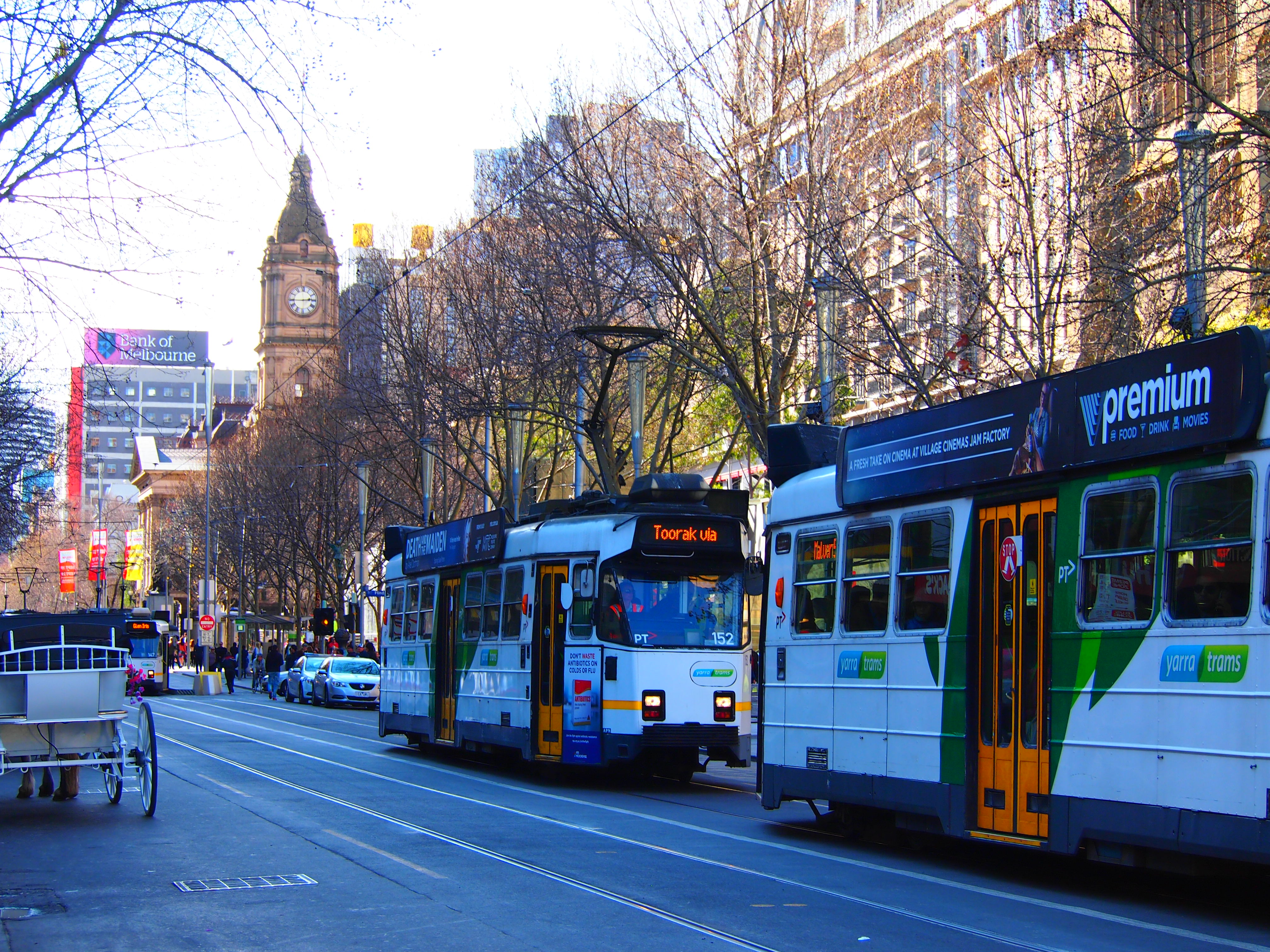
OLYMPUS DIGITAL CAMERA

Before dawn the air outside imitates my fridge inside,

Cold.

Morning light appears contesting the fog that had swallowed every street and house.

Soon the sun has won and is beaming with ostentatious pride,

Throwing down its heat and making all of us sweat under.

Jumper is thrown off.

T-shirt and shorts only now.

Changing my order at St Ali from a flat white to cold-press.

The kids are about to cry out for the fifth time, “I’m hot”,

When sweeping over the horizon like Carlton’s midfield on a good day,

Come the cumulonimbus,

Testing every man and woman’s canopy of nylon taffeta.

Rain descends by the tram full and steam rises off the bitchumen road back to heaven.

Beaded sweat morphs into droplets of rain.

The scent of wet hair, wet clothes, wet everything follows us home.

The meteorological combat is over as the cooling breeze

Overwhelms the furnace like air.

Weatherman is dumbfounded again.

Tourists confused.

Melbournians amused.

Another day in paradise comes to an end.

Melbourne—Gaining the World, Yet Losing its Soul?

I once saw a man run across the road and was hit by a car. He landed heavily on the bitumen, and when I reached him I saw that he was injured and blood was pouring from his arm. When someone is bleeding you apply emergency first aid. The underlying issue may require greater medical expertise, but you don’t let the person bleed out because it’s too hard.


Melbourne is once again the world’s most liveable city. Melbournians like to boast about our “most liveable city” status, especially because we rank above Sydney, but also Adelaide and Perth, who also made it into the top ten. But what makes the “most liveable city” and are we assessing our greatness by the best criteria?

This annual study conducted by the Economist Intelligence Unit, measures the quality of life in global cities by looking at healthcare, culture, environment, infrastructure and education. I suspect that the award is ignored by most of the world cities, including those truly great cities like London and New York, but like the people of Punxsutawney in the movie Groundhog Day, every year we Aussies cheer the surprising announcement of Melbourne’s spot at the top of the world.

But what about qualities like justice, kindness, and generosity? Not so much in the structures of Government, the police force, and the judiciary. We have a low crime rates, a good legal system, and a relatively good welfare system. But what about the qualities of justice, generosity, and kindness in the hearts of the general population?

I am thankful for the city where I live and am raising my family. There is much to enjoy and experience: our parks, schools, food, sport, and general standard of living are truly exceptional. One might argue that the culture is as diverse and interesting as our weather (that’s a positive, incase you’re wondering!).


While Melbournians were celebrating this accolade and lighting up twitter with pictures of our city, on the other side of the world, nations like Germany and Sweden were opening their doors to tens of thousands of refugees fleeing from Syria and Iraq. Of course, Germany and Sweden are countries and not cities, and yet the reality is that the majority of refugees will be housed in cities, as they are in Australian cities.

Australia’s commitment in 2015 is 6,000 refugees spread throughout the entire country, compared with Germany’s 800,000 and Sweden’s 100,000. Lest we argue that Germany’s population is 3 ½ times the size of Australia, Sweden’s is less than half ours, and these two countries together only share an area equivalent to that of NSW!

When the Bible describes cities of worth, the scope extends beyond prosperity, and includes vital qualities such as peace, righteousness, and refuge. Which raises the question of whether there is a fatal flaw in our ethos.

We are proud about our prosperity. But are we generous with it? We are super keen for the world to admire our splendour, and even for the world to experience Melbourne should they come and visit. But what about sharing and sacrificing for the good of those who face extraordinary suffering across our globe?  We alone cannot end global poverty and persecution. But if nations less prosperous than us can welcome people in their thousands, why can’t we?

I am reminded of these words of Jesus, “What good is it for someone to gain the whole world, yet forfeit their soul?” (Mark 8:36). Sure, we may offer an occasional donation to ease the conscience, but ideas such as lowering our living standards for the sake of others seems absurd to us. Of course, Jesus didn’t just talk about sacrifice, he lived it. He willingly laid aside a glory that we cannot even imagine in order that the poor in spirit might be healed and restored.

What do we want the defining marks of Melbourne to be?

Do we wish to be a city known for greed or for generosity? Could we not give from our superabundance to those who have lost everything? Could we not ask the Federal Government to welcome more refugees? Does it not say something about our own hearts that the Federal Government thinks it too politically toxic to increase our Refugee intake dramatically?

We know the issues of displaced peoples are complex and solutions are difficult. Sacrifice isn’t easy:

“Whoever loves money never has enough; whoever loves wealth is never satisfied with their income.This too is meaningless. As goods increase, so do those who consume them. And what benefit are they to the owners except to feast their eyes on them?” (Ecclesiastes 5:11-12)

Behaviour modification isn’t enough. ‘Try harder’ will only motivate a few and for a short period. Neither can sacrificial generosity be enforced. It must come from a heart that has been wooed by a better way. 

We might think it is an impossible task to shift the entire mindset of a populace. But it is possible. Centuries before the birth of Jesus Christ, the city of Nineveh was the most celebrated city on earth. Other than a few references in history books, Nineveh has crumbled into antiquity, although in its place now stands the remains of Mosul, one of the cities where so many people have died or have fled seeking asylum. In the 8th Century Nineveh was the envy of the world; it was also prosperous and proud. During that period a prophet by the name of Jonah was sent to the city by God. He didn’t want to go, because he knew how undeserving the Ninevites were. Eventually Jonah went, and when he spoke God’s words, the citizens listened, believed, repented, and mourned. They changed their ways. 

Too much of the world is bleeding, and it is anti-human for us to stand by and not do more to help. The world’s most liveable city has opportunity to open its doors to some of the world’s most vulnerable. Yes, this is largely a Federal Government policy decision, but the people can speak up and demand that we can exercise the freedom to welcome people. Again issues are complex and solutions not straightforward, but there is a basic principle in being human: If you can help, do so. Otherwise we are not so different from Nero who plucked his harp and sang while Rome burned. We are living in a perennial happy hour while millions of people flee their homes. 

————

A new home for a popular blog

IMG_5206

After blogging on Mentone Baptist’s website for the last 3 years, I’m moving here to murraycampbell.net. The Mentone Blog has been a great platform for public discourse, with 10,000s of people using it each year. While we will continue to publish articles on the church website, we are giving it a fresh focus, and so we’ve decided to begin this blog as a new home for exploring how the Gospel of Jesus Christ intersects with and can even transform Melbourne culture and churches.

This change will also alleviate the pains endure by tea-drinking Richmond supporters at Mentone Baptist who have long been thought of as coffee-drinking Carlton fans!