For the sake of the children, we must offer a better way

The forecast for Victoria is a wintry cold and damp. There will be moments of sunshine and blue skies, but thunder is already rumbling in the distance, preempting a storm of gigantic proportions. 

Living in Melbourne, predicting the weather each day is near impossible, let alone knowing what it’ll be like from one hour to the next. But the spiritual climate of the once ‘Garden State’  is in perilous shape. There is a storm approaching and I’m unsure if Victoria is prepared. 

Australian media are beginning to wake up to the fact that not all is well on the gender front. Something dangerous is taking place inside medical clinics and school classrooms, such that insurers and courts are now being warned to take stock and reconsider their policies and approaches. 

While the issue of gender dysphoria is nationwide, in 2021 Victoria introduced the world’s strictest and harshest laws against persons who fail to support gender transitioning. For example, parents must affirm their children who are questioning their gender and proceed with a gender transitioning plan. Failing to do so can see the parents charged with abuse. Also, if an individual struggling with their sexual orientation or gender identity asks for prayer, the person praying will have broken the law and can face a term in prison. If a Christian shares the Christian view on human sexuality with an individual, they can face criminal charges. On top of all this, the Andrews Government has recently reaffirmed its commitment to expand anti-discrimination laws in order to stamp out speech that doesn’t fit ‘accepted’ views on sexuality and gender. As one member of Victoria’s Legislative Council recently pondered, will it become illegal to state there are only two genders?

Photo by Tim Mossholder on Pexels.com

Activists, HR Departments, and politicians have successfully stifled debate on this vital area of concern. Anyone who dares raise their hand to ask a question, let alone, offer a differing perspective, is quickly shouted down with an endless line of derogatory name calling. Let’s be honest though, there is some hateful speech. There are some truly awful words said by persons across the political spectrum and we don’t want to encourage or support those. But signalling concern over current gender thinking isn’t inherently hateful, and suggesting so is intellectually dishonest and morally lazy.  

Professor Patrick Parkinson is among the growing number of voices who are trying to bring common sense to the discussion. One need not agree with everything he says, but he is rightly pointing out that we need a better way to discuss what is happening to our young people. He writes, 

“The transgender movement has been based on one truth and a thousand lies.” 

“the notion that there are not just two sexes, or that it is actually possible to change sex or be “non-binary”, or the idea that every child has an innate gender identity that awaits discovery. Most people know these things to be nonsense, but in polite society we have been asked to pretend otherwise….activists aren’t able to agree on whether gender identity is fixed and innate, fluid or socially constructed. Fashionable ideas about sex and gender do not matter too much if no harm is done, but the medicalisation of vulnerable children and adolescents, with lifelong adverse consequences, deserves the most careful scrutiny”

Children who are wrestling with their identity and struggling to reconcile feelings with their physical bodies deserve our compassion and care. The speed at which young children are now encouraged to question and reject their gender is scary. In some circles, this is believed to be morally good. I think of one young woman who is socially ostracised because she isn’t experimenting with gender fluidity. To be heterosexual is thought of as repressive and uninteresting. More than that, once a child suggests discomfort, the social and legal funnel leads children down a path to hormonal treatments and eventual surgical removal of breasts and penises; this needs to be challenged.

The issue doesn’t end with gender; I am hearing stories of transpecism among children, where children no longer identify as human, but as cats and dogs and even trees. Most of these children may not be taking it overly seriously but in the pursuit of self actualisation, more glass ceilings need smashing. The current framework surrounding gender will struggle to attend to these children because if our truest self is what we feel inside, how can we deny their chosen reality? 

This year’s Australian of the Year is Taryn Brumfitt, a woman who is fighting to help children accept their bodies.  Brumfiit is highlighting a massive societal issue where children’s mental state is conflicting with their physical bodies.

”We really need to help our kids across Australia and the world because the rates of suicide, eating disorders, anxiety, depression, steroid use, all on the increase related to body dissatisfaction.”

Brumfitt argues that this relationship with our bodies results from ‘learned behaviour’. Key to her message is that “we weren’t born into the world hating our body”. In other words, our society is teaching and influencing our children to have negative thoughts about their bodies, which of course can lead to serious consequences. 

Australia has an uncomfortable relationship with the human body. There exists a sizeable disjunction between the message Brumfitt is advocating and what is now mainstream thinking about the human body. 

I don’t know Brumfitt’s views about transgenderism and how she makes sense of this new and sudden wave of bodily denial, but one thing is for certain, her calls to embrace our physical body is at odds with the ideology that is now sweeping our society and being forcibly taught and embraced from GP rooms to school classrooms and TikTok ‘programs’.

Our culture has adopted a modern day gnosticism, where the ‘truest’ self is divorced from the physical. We are taught that the real you isn’t the physical body you inhabit but the immaterial desire and feelings that one experiences in the mind.  Gender has been divorced from sex and personal identity cut away from physicality. We can’t of course reduce our humanness to physicality for we are spiritual and social beings and thinking and feeling beings. We are more than flesh and blood and DNA but we are not less than those things. 

We are witnessing a generation of young people who no longer feel comfortable in their own skin, but are now taught from school to TikTok that their physical bodies betray them, and they may well be living in denial of their true selves.

The result is that a significant percentage of 18-24s (some studies suggest it’s as high as 30%) no longer believe they are heterosexual (embodied beings attracted to the opposite sex), but rather they are spread across an imprecise and growing spectrum of self-defining and often bodily denying sexuality and gender. 

Many girls and boys now undertake psychological and medical pathways to transition away from their physical sex. The number of young people beginning hormonal medications, psychological treatments, and eventual surgical mutilation of the body, is skyrocketing. We are talking about an increase in gender dysphoria by 1000% in just the space of a few years. Call me, Wiliam of Ockham but this drastic and sudden increase cannot be explained by natural selection. There is something else in the water. Indeed, the iceberg that looms beneath the surface is rightly scary and we are ill equipped to do little more than chip away at it. 

Do we see the confusion? Here I say confusion because one wants to think the best of people‘s intentions. Parents who see their children in torment will do anything to find relief. And so if a doctor or counsellor says transition, then I understand them trusting the advice of the professionals. But surely there is also an ear of hypocrisy as well. How can we preach on the one hand, ‘be comfortable in your body’, and then insist on the other,  ‘you can reject your body and have it mutilated and permanently altered’ in the name of this gnosticism?

In her book Irreversible Damage: The Transgender Craze Seducing Our Daughters, journalist Abigail Shreier explores the transgender phenomenon. She blames an ideology that has captured the heart of Western cultures. It’s what Carl Trueman refers to as ‘expressive individualism. Gender expression has become the trend, and because it’s now described in terms of human rights,  no one is allowed to question, doubt or help adjust a child’s sense of identity. 

Those living with discomfort and disconnect with their bodies need our care, not hatred, our kindness not our complicity with a dehumanising project. As much as awareness of these issues helps and as much as positive thinking and imaging may benefit youth as they learn to live in their body, I think Christianity has something to add.  The Bible gives us what I believe is an even better message, one that is more secure. The ultimate resolution doesn’t lay in the self, for the self is existentially unstable. If the best of me can fail and disappoint, what about the rest of me? If this was not the case, we wouldn’t have a generation of Australians journeying down this dangerous and harmful pathway to physical destruction and mental anx. The Bible gives us a better story and greater hope. 

Psalm 139 exclaims, 

“For you created my inmost being;

    you knit me together in my mother’s womb.

I praise you because I am fearfully and wonderfully made;

    your works are wonderful,

    I know that full well.

My frame was not hidden from you

    when I was made in the secret place,

    when I was woven together in the depths of the earth.

Your eyes saw my unformed body;

    all the days ordained for me were written in your book

    before one of them came to be.”

Grounding our personhood in the knowledge that we are wonderfully made by God, is liberating and securing. But the Bible’s story doesn’t end there. The Scriptures also acknowledge ways we often hide from ourselves (and from God). The Bible points out the realities of the darkness in the world and in our own hearts. The story however doesn’t end with darkness and despair, for the Scriptures move us to the culmination of the story, 

“Since the children have flesh and blood, he too shared in their humanity so that by his death he might break the power of him who holds the power of death—that is, the devil—  and free those who all their lives were held in slavery by their fear of death. For surely it is not angels he helps, but Abraham’s descendants. For this reason, he had to be made like them, fully human in every way, in order that he might become a merciful and faithful high priest in service to God, and that he might make atonement for the sins of the people. Because he himself suffered when he was tempted, he is able to help those who are being tempted.” (Hebrews 2:14-18)

There is a constancy in our world of body image flaws and troubles. There is an anchor for all the spiritual and material wants and sins. This Jesus, the eternal Son of God, didn’t abandon the body; he became human for us. He entered the physical and spiritual turmoil that fills the world, taking its sins and shame in order to bring redemption and life. He understands. He makes atonement. He helps. That is a good news message for Australians today. 

My encouragement to those in the halls of power in Victoria, is this, for the sake of the children, pause the aggressive divorce that is being forced between mental health and physical appearance. Even now,  some of these kids and their parents are realising that while they were promised much they have been betrayed in the most egregious way. It is no wonder that insurance companies and legal minds are ducking for cover as the storm clouds approach. But is there the political humility and moral will to admit wrongdoing and change course? 


Part of this article is originally published earlier this year, ‘why Australia has a body image issue”

The true significance of King Charles’ Coronation

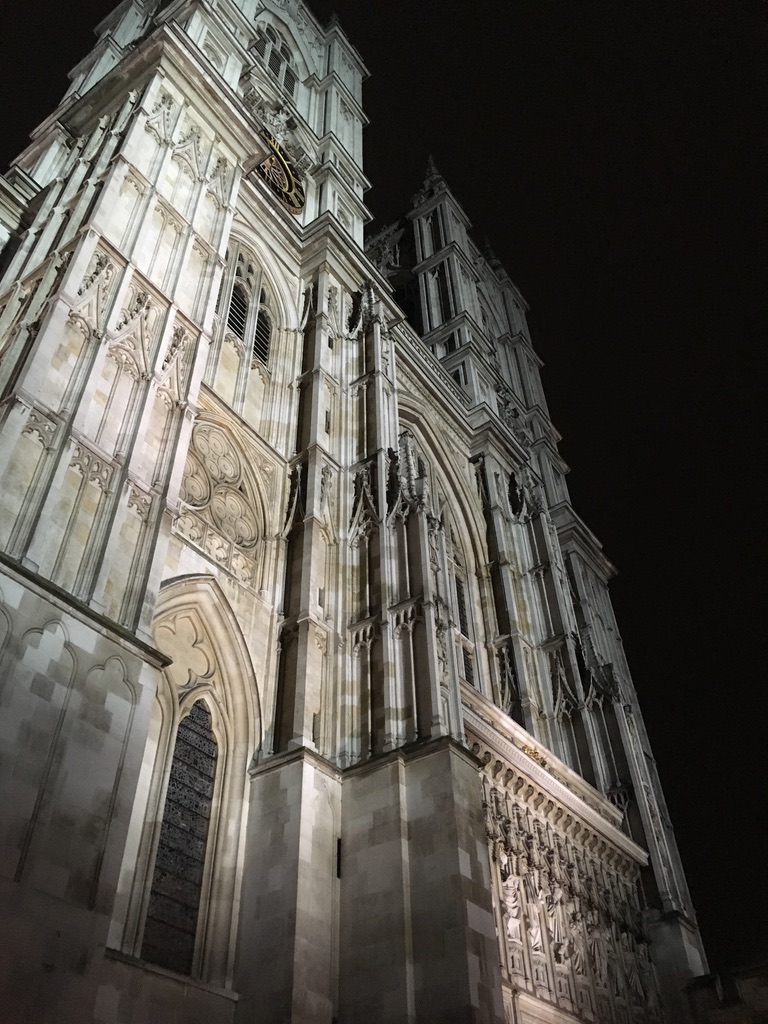
Westminster Abbey is England’s storyteller, and indeed, perhaps that of 1000 years of Western Civilisation. The stone floors and walls, her columns and stained glass windows are filled with the memory of the world’s timeline since that of Edward the Confessor. Every corner of the naive from floor to wall, is covered in the markers, statues and tombs of Britain’s greatest. There are Kings and Queens, soldiers and poets, scientists and Prime Ministers honoured and remembered.

The Abbey is an extraordinary place to visit, especially when the crowds are absent. I recall one evening I was there to attend a concert. Afterwards, people left hurriedly while I gave myself a few moments to look up and gaze upon this giant memorial to the past. I found myself able to then walk down the Abbey without people brushing passed and interrupting the silence with nagging little chatter. There is something weird and wonderful about walking on stone and marble where Edwards and Elizabeths, Richards and Henrys once trode.

The coronation of a British monarch isn’t an everyday event. It has been 70 years since the last British monarch received the sceptre and crown at Westminster Abbey. The coronation of a King may no longer carry the political and cultural weight of centuries past, but the event remains to impress, inspire and unify.  

There is a tinge of sadness tied to today’s coronation, for the new King reminds us of the death of the great woman, Queen Elizabeth II. Her death may well turn out to mark the end of an era; not only the divorce with the 20th Century and the end of the Empire (with all the ills and goods associated), but also the age of Western Christianity. 

There is something awe-inspiring about pomp and circumstance. No doubt, there are republicans and complainers across Australia, and even inside the United Kingdom criticising the pageantry and tradition that will fill the coronation service of King Charles III. 

While changes have been made to reflect multi-faith realities of 21st-century Britain, the service remains deeply Christian. For example, the coronation service takes place in a Christian Abbey, the very same place where English Kings and Queens have been crowned for nearly 1000 years. The Scripture readings and the prayers and the oaths are Christian in words and meaning. While there are some theological question marks over connections made between an English monarch and that of Kings David and Solomon, there is a right link established between God, the Lord Jesus Christ, and the rule of the new monarch. The King serves under God and serves the people under his watch.

There is something weirdly wonderful about this ceremony: from the music and liturgy to the symbols of State and the oaths, and the seriousness and awe that will envelop each moment. This service pushes our hearts and spirit beyond the ceiling and sky and makes us ponder heavenly realities. 

In a rush to eradicate the centuries of police and traditions, we can lose something that is important for the present and our future selves. The paucity of the materialist frame is exposed and filled with the light of prayers and defining words of God and accountability to the One who rules from heaven.

“Therefore, you kings, be wise;

    be warned, you rulers of the earth.

11 

Serve the Lord with fear

    and celebrate his rule with trembling.

12 

Kiss his son, or he will be angry

    and your way will lead to your destruction,

for his wrath can flare up in a moment.

    Blessed are all who take refuge in him.” (Psalm 2:10-12)

I remember Stephen Mcalpine writing a piece some years ago, explaining why millennials are turning to more traditional forms of Christian worship. In the race to be contemporary and relevant, we too readily disconnect ourselves from the past and become the boat that’s lost its mooring. We need to place our souls and something in a schema that is bigger than just me.

Nick Cave is one of a few select Australians invited to attend the coronation. When news broke that Cave had accepted the invitation, some of his fans were bewildered and annoyed. They couldn’t understand why this super cool non-conforming rock star would attend what is about as traditional and conservative an event that will probably take place this year. 

Nick Cave responded in an open letter

This “will more than likely be the most important historical event in the UK of our age. Not just the most important, but the strangest, the weirdest”

I hold an inexplicable emotional attachment to the Royals – the strangeness of them, the deeply eccentric nature of the whole affair that so perfectly reflects the unique weirdness of Britain itself. I’m just drawn to that kind of thing – the bizarre, the uncanny, the stupefyingly spectacular, the awe-inspiring.

And as for what the young Nick Cave would have thought – well, the young Nick Cave was, in all due respect to the young Nick Cave, young, and like many young people, mostly demented, so I’m a little cautious around using him as a benchmark for what I should or should not do. He was cute though, I’ll give him that. Deranged, but cute.

So, with all that in mind, I am looking forward to going the Coronation. I think I’ll wear a suit.

Love, Nick

The true weirdness isn’t in the crowning of a man named Charles, but in the words of the Bible about The representative man to whom all Kings and Queens and people owe their allegiance. Strangeness meets realness in the man who was crucified and raised from the dead.

The true significance of King Charles’ coronation may well be found elsewhere, in Africa. In what is even more strange (in an amazing way) are the events that took place in Kigali Rwanda, only 3 weeks ago. The meeting place may have lacked the splendour of Westminster Abbey, and there were few monarchs, presidents and celebrities in attendance. However, that meeting will do more to reach the heavens and the earth, than the enthronement of King Charles III. While world media ignored this meeting of global Anglicans, with time I suspect it will have greater influence in the shaping of things to come. 1400 Anglican leaders, representing around 85% of worldwide Anglicans, declared that the Archbishop of Canterbury had lost his spiritual authority over the church. Indeed, all 4 instruments of communion were declared broken.

It is difficult to think of another event in the past 500 years that carries such importance in the Anglican Communion as the recent GAFCON meeting.

William Taylor of St Helen’s Bishopsgate (London) said, 

“Canterbury has walked away”

Rico Tice from All Souls Langham Place stated, 

“We really are serious…we are serious because this is a first-order salvation issue”.

During the ceremony, the King will be asked this question by the Archbishop of Canterbury, 

“the Church established by law, whose settlement you will swear to

maintain, is committed to the true profession of the Gospel, and, in so

doing, will seek to foster an environment in which people of all faiths and

beliefs may live freely. The Coronation Oath has stood for centuries and is

enshrined in law.

Are you willing to take the Oath?”

The King:

“I am willing.” 

His Majesty will take an oath to a church, that while is established in law, has divorced herself from the true profession of the Gospel on account of her bishops and their wayward teaching. Sadly, the Church of England has abandoned the faith once for all delivered, and the vast majority of global Anglicans no longer see themselves in communion with Canterbury.

But why mention such a contentious issue on a day like this? First of all, this is truly historic. Second, we are witnessing a shift of in the world but we mustn’t conflate the failure of Westminster with the demise of Christianity.  I suggested last year that with the death of Queen Elizabeth, we are perhaps marking the end of an era in the beginning of something new. With her passing, we are probably witnessing the closure of the 20th century and British imperialism (with all the bad and good that came). More so, Her Majesty’s death may serve as a bookmark, signalling the shift from West to the 2/3s World, and with this, a work of the Holy Spirit that sees Christ’s Church ground firmly in the soils of Africa and grassland and jungles of East Asia. 

The coronation of King Charles III will pound with echoes of eternal truths, but living faith in the living Christ is more likely found in unlikely places: in Kigali and Lagos, in house churches across China and Iran, and in the favelas of Brazil. And yes, even in the ordinary suburbs of Melbourne, Australia. To break the materialist glass ceiling and grasp. To find mystery and awe that meets real life, visit a local church and hear the greatest story.

Peter Hollingworth keeps his ‘holy orders’ and victims are understandably angered

I have to confess, I was shocked to read that Peter Hollingworth has kept his holy orders. I was also surprised to learn that he hadn’t been removed from ministry years ago. 

Peter Hollingworth served as the Anglican Archbishop of Brisbane from 1989-2001 when he was appointed the Governor General of Australia. He was also made the Australia of the Year in 1995. Two years into his role as the Queen’s representative in Australia, Hollingworth resigned due to serious allegations made against him for covering up pedophile priests. Calls for Peter Hollingworth to be stripped of his ‘holy orders’ led to an inquiry which has this week determined that he is fit for ministry. While the Professional Standards Board of the Anglican Church recognised Peter Hollingworth’s failures and has limited the type of ministry he can now engage in, he will remain a priest of the Anglican Church and able to conduct weddings, funerals and baptisms. 

Our society often gets it wrong when it comes to evaluating churches and church leaders, but sometimes they are right. And it’s frustrating when churches cannot even meet that low standard. The standard for churches is not the same as society at large. It is far higher, or at least it ought to be. 

I want to be clear and make the important distinction between the bar for someone becoming a Christian and the bar for those wanting to serve as Christian pastors. The bar for becoming a Christian is in one sense, very low: the Son of God died for sinners. Repentance is necessary and trust in Christ, but God justifies and forgives on account of the perfect sacrifice of Jesus, not by any resume or sense of holiness that we might attribute to ourselves. That’s good news because I’m not redeemed by religiosity or spiritual intensity, but simply by saying yes to the one crucified and raised from the dead. By definition Churches are not made up of the self-righteous but those who realise we are not. But of course, that kind of life-saving work turns life around and begins to change affections, attitudes, and actions.

However, for those who desire to serve as ministers, the bar is set high. Take a look at this one example passage from the New Testament, 

“Here is a trustworthy saying: Whoever aspires to be an overseer desires a noble task. Now the overseer is to be above reproach, faithful to his wife, temperate, self-controlled, respectable, hospitable, able to teach, not given to drunkenness, not violent but gentle, not quarrelsome, not a lover of money. He must manage his own family well and see that his children obey him, and he must do so in a manner worthy of full respect. (If anyone does not know how to manage his own family, how can he take care of God’s church?) He must not be a recent convert, or he may become conceited and fall under the same judgment as the devil. He must also have a good reputation with outsiders, so that he will not fall into disgrace and into the devil’s trap.”

The role and responsibilities attached to being a shepherd of Christ’s church are so important that the qualifications are set high. Hence, I appreciate why many people are not only scratching their heads this morning, but are feeling sick at hearing the news that the Anglican Church believes Peter Hollingworth is fit for duty.

The Professional Standards Board of the Anglican Church is perhaps privy to information that the public is not. Although, Peter Hollingworth has admitted fault. I acknowledge that I am not across this story as fully as others, but the optics look bad. More than public perception, there is a serious question here about doing what is right in the eyes of God and for the sake of victims of horrendous evil. 

It shouldn’t surprise us to see that where denominations or dioceses play loose with the Bible’s teaching on sexuality and where orthodoxy is treated as optional, morality and godliness is also found wanting. Where doctrine falls it only takes a few steps for godliness to fail. Indeed, it often works the other way around; we change our doctrine to fit our desired morality.  Of course, there are other reasons for excusing or covering up child sexual abuse: complicity, fear,  power, and an array of unbecoming qualities for any who has the responsibility to care for Christ’s Church.

I think it is also the case that even 20 years ago,  we were unaware of the extent to which such evil was taking place in some ecclesial quarters. Churches and Christian denominations have certainly upped their game in recent years.  There are healthy and rigorous processes in place, not only for those seeking ordained ministry but in order to keep their qualifications. That is a good thing. But that’s what makes this decision so baffling and understandably survivors of sexual abuse are angered, confused and losing even the tenuous hopes they had in churches doing the right now. 

If you are baffled by the decision made by the Professional Standards Board of the Anglican Church, so am I. At the very least, greater clarity needs to be provided as to why Peter Hollingworth is fit to keep his ‘holy orders. In the meantime, I grieve the repeated failures of our churches. I know most are unlike the villains portrayed in the media, but can we blame our secular friends for finding it difficult to see the difference?

These words from the book of Ezekiel are formidable. The religious leaders in Ezekiel’s day weren’t taking the responsibilities seriously, both in terms of what they taught and how they lived. God gave a damming assessment, and it’s one that perhaps ecclesiastical leaders need to once again read and tremble before, 

“Son of man, prophesy against the shepherds of Israel; prophesy and say to them: ‘This is what the Sovereign Lord says: Woe to you shepherds of Israel who only take care of yourselves! Should not shepherds take care of the flock? You eat the curds, clothe yourselves with the wool and slaughter the choice animals, but you do not take care of the flock. You have not strengthened the weak or healed the sick or bound up the injured. You have not brought back the strays or searched for the lost. You have ruled them harshly and brutally. So they were scattered because there was no shepherd, and when they were scattered they became food for all the wild animals. My sheep wandered over all the mountains and on every high hill. They were scattered over the whole earth, and no one searched or looked for them.”

Thank God He provides a Shepherd who never fails or falls short, the Good Shepherd, 

“This is what the Sovereign Lord says: I am against the shepherds and will hold them accountable for my flock. I will remove them from tending the flock so that the shepherds can no longer feed themselves. I will rescue my flock from their mouths, and it will no longer be food for them.

11 “‘For this is what the Sovereign Lord says: I myself will search for my sheep and look after them. 12 As a shepherd looks after his scattered flock when he is with them, so will I look after my sheep. I will rescue them from all the places where they were scattered on a day of clouds and darkness.” 

QandA Episode raises questions about religion in Australia

Last night’s episode of QandA on the ABC featured a discussion about God in Australian life, culture and politics. Questions and conversations were wide ranging, and like in the real world, God’s talk wasn’t far away, although I suspect Easter had something to do with it. 

The program conducted an online poll, asking, ‘Should politicians still say the Lord’s Prayer at the start of each sitting day?’

Of course, conducting a poll on ABC today is like surveying AFL supporters and asking whether they prefer to watch AFL or lawn bowls?

The surprise wasn’t the 83.5% who said no to the Lord’s Prayer but the 13.6% who said yes. By the way,   if you’re interested to read what is a typical Christian view on this topic, take a look at this article. You may find the answer surprising.

Conversations among the guests were cordial and void of the spite that is sometimes present.  It’s not as though they were unified in political or religious agreement, but the Anglican Archbishop, Muslim Labor Senator, the Indigenous Academic, the young liberal, and the British journalist, went about it with a tone of respect and humility.

The online world is of course a different place. It’s like navigating the Australian bush,  with sharp teeth and claws ready to devour any dislikable opinion. Throughout the show, tweets were displayed on our television screens, selected by the producers. These pithy opinions played out a regular pattern: religion should stay out of politics, Churches should stay silent on the Voice to Parliament, and others citing with certainty what Jesus would do today! In contrast, panellist Anne Pattel-Gray and an Indigenous woman from the audience both called on Churches to be more proactive in speaking about the proposed Constitutional changes.

I want to address one question in particular which became the focus of the final minutes of the program.

The question came from audience member, Oliver Damian. He asked,

“According to the 2021 Australian census, those declaring that they have “no religion”, the nones, increased to almost 40 per cent second only to Christianity. David Foster Wallace said “There is no such thing as not worshipping. Everybody worships. The only choice we get is what to worship.” Do you think these “nones” really ditched religion or have they just shifted to worshipping things that are much worse? And what does this mean for the soul of our nation?”

Andrew Neil answered, “Of course. Reality television, worshipping themselves, validating things they believe in…”

People took offence at Neil’s suggestion and defended their non-religiosity. 

I threw my hat in the ring and tweeted this,

“There are no religious free people. We are worshippers at our core”.

People were similarly offended. But should the nones take offence? It’s worthwhile exploring this phenomenon and further explaining the thesis that everyone worships.

First, we can’t escape religion.

Andrew O Neil observed on QandA how Christianity is declining in Western nations, including France and his own United Kingdom. Australia can be added to that list. While we can’t deny the trend, there are also counter trends. For example, the number of practising Christians living in London is increasing, and the number of evangelical Christians in France is also growing, with around 745,000 adherent today in contrast to around 50,000 in 1950. Then, of course, Christianity is growing at phenomenal rates in many other parts of the world today. What we view as dangerous, millions of people in Africa, Asia, and South America are discovering is good news. 

Australia’s nones may claim neutrality as though there exists a pure secularist mindset freed from any religious entanglements. Such a posture is framed by self-righteousness and it’s one that is already beginning to fray and lose its shape. 

We can’t escape religion. Built from a narrow bend in the Enlightenment road, we Westerners love to mock belief in God. Our hubris convinces us that the world no longer needs notions of heavenly realities and life to come. This world is all there is and there is no overarching design or purpose beyond that which we determine for ourselves.

The British historian, Tom Holland has demonstrated in his book Dominion that our culture is not the only indebted to Christianity, but Christian ideas remain t deeply embedded in our subconsciousness, such that they continue to direct and influence our moral categories and judgements today.

“If secular humanism derives not from reason or from science, but from the distinctive course of Christianity’s evolution—a course that, in the opinion of growing numbers in Europe and America, has left God dead—then how are its values anything more than the shadow of a corpse? What are the foundations of its morality, if not a myth?” 

In cities like Melbourne, we are creating drought like conditions for the garden. That is, we are trying hard to remove theological language and spiritual concepts from the public space, but killing off every blade of grass and every root is harder than we might imagine.

As the book of Ecclesiastes puts it, 

“God has also set eternity in the human heart; yet no one can fathom what God has done from beginning to end.” 

We are wired to believe in God. Searching for meaning and hope beyond blood and brain, and behind the molecular and physics is instinctive. 

While the amassing nones like to claim autonomy, and a sense of epistemic and moral maturity, in blowing off God, they are, in fact, still relying upon posits or values instilled in us via the Christian God. Hence what we have today is not less worship, but rather a distorted worship.

Indeed, to rid ourselves of Christianity is to uproot basic societal goods such as notions of equality, forgiveness, and tolerance. All these things and more find their origins in the God of the Bible.  That is not to say that the atheist doesn’t have a moral framework, of course, she does. But these ethics have a Christian vein running through them and even when they don’t,  they are ethics created in opposition to the Christian God. 

Second, everyone worships.

Everyone worships. Worship does not necessitate a higher being or god of some description. Worship isn’t limited to temples, churches, prayers and choral music. Worship is about giving oneself to a person, object or idea. Worship means giving credence to and sacrificing for the cause that your heart most desires.

The Bible itself doesn’t reduce worship to acts of prayer and song that are contained within a religious ceremony and building. While there is a particular emphasis on communal worship (whether it is at the Temple or church), the language of worship extends to all of life. For example, Romans 12:1

“Therefore, I urge you, brothers and sisters, in view of God’s mercy, to offer your bodies as a living sacrifice, holy and pleasing to God—this is your true and proper worship”.

As both the law and Jesus teach, 

‘Love the Lord your God with all your heart and with all your soul and with all your strength and with all your mind’; and, ‘Love your neighbor as yourself.’” (Luke 10:27)

Not only is worship an all-of-life attitude, but it is also often centring on areas of life that might surprise. Timothy  Keller has made this powerful and somewhat disturbing observation about American politics in recent years,

 “They have put the kind of hope in their political leaders and policies that once was reserved for God and the work of the gospel. When their political leaders are out of power, they experience a death “

As philosopher Dr Christopher Watkin notes in his best selling book, ‘Biblical Critical Theory (an idol is a Bible way of describing substitutes for God), 

“Any idol engenders this sort of dogmatic totalitarianism because it becomes, within creation, the ulti-mate measure of what is good, drawing a line down the middle of the created order and classifying some of its objects, impulses, and values as unmitigatedly good and others as unrelentingly evil. This is the lot of those who “have sup- posed that the Final Good and Evil are to be found in this life” and so “with wondrous vanity . . . have wished to be happy here and now, and to achieve bless- edness by their own efforts.”

The only way to escape this totalitarianism is to have an object of worship that is outside the created order. Any idol on the creature side of the creator- creature distinction will lead to a situation in which some thing or things in the world are pursued in an unqualified and undiscerning way, and other things (whatever gets in the way of or stands opposed to the chosen idol) will be denounced or loathed in a similarly dogmatic way” 

The convinced naturalist or materialist isn’t without gods and idols, they simply take on a different form. Dr Watkin again, 

“These idols have their own cultic rituals, argues Richard Bauckham, namely the advertising that mediates to us their values and desires. Adverts are not sell- ing objects; they are selling us ourselves, repackaged and dependent on the aura of this or that product to graft onto us a borrowed identity”.

Worship is an act and attitude of thankfulness, adoration, and love. It’s something we all do from the Internet to work, from the shopping centre and to the church. The only question is, who or what are we worshipping? Who or what are we giving our lives to?

Indeed, the ancient gods of Molech and Artemis may have changed their names, but their insatiable desires remain with us. We label them with sociological terms such as self determination and expressive individualism. 

The worship of gods can be oppressive and problematic. The worship of self is arduous, stifling, and egocentric, for it means that everyone else and everything exists to serve me. We can’t deny the fact that religion is responsible for all kinds of heinous activities throughout history, both as a distortion of religions and sometimes as a result of faithful adherence to religious beliefs.  It is also the case that our godless counterparts have been proud participants in what is called sin and evil.

Australia may be trying to move away from Christianity, but we can’t easily distance ourselves from the cross: that symbol of Divine love, justice and mercy. We do, after all, acknowledge Good Friday as a national public holiday. 

For all our advancements and developments, we haven’t found a substitute for the cross of Jesus Christ, and neither do we need one. If Jesus should die for my sins and then defeat death on the third day with his resurrection, surely that should at least cause us to consider, does my religion or lack thereof, offering this kind of freedom and new life?

An evening with Dr Christopher Watkin

Mentone Baptist Church recently organised a special event for our local community with Dr Christopher Watkin.

Knowing ourselves is one of the great questions. 

Christopher Watkin is an Associate Professor of European Languages (French) at Monash University, Melbourne. His books include Difficult Atheism (2011), French Philosophy Today (2016) and Biblical Critical Theory (2022).

Chris is emerging as an important intellectual figure in Australia today and he has a rare gift for explaining profundity and complexity with great clarity. Even more than his academic contributions, I value his epistemic humility and the gracious way he interacts with other people and ideas, and his servant’s heart.

His latest book, Biblical Critical Theory, has been likened to a 21st-century version of Augustine’s City of God. If you are able to find and purchase a copy, it is indeed well worth one’s time.

Both Chris’ presentation and QandA are recorded in the video below. Enjoy.

Email admin@mentonebaptist.com.au if you are interested to learn more about the subject matter raised in this presentation.

Melbourne is filled with rage and it should grieve us

We are living in an age of outrage. No matter where we find ourselves on the political spectrum and no matter where we land on a myriad of moral issues, navigating anger and abuse is becoming normalised. This indictment on our society isn’t a sign of progress but an alarm signalling that we have deep-rooted problems. The issue isn’t just that people disagree on important matters, and do so strongly, but that people feel unable to disagree for fear of retribution. 

Last weekend Melbourne witnessed scenes that shocked us. Neo Nazis standing our the steps of the Victorian Parliament House, saluting their vile gestures and shouting obscenities. As aghast as Melbournians were by this sight, there were a multiplicity of reactions and stances made around the broader events on that Saturday in Melbourne city. The organised women’s protest has since gone to other Australian and New Zealand cities, this time without interfering fascists but with even more vitriol and violence conducted by counter protests

Despite the insistence of some of our political leaders and media personalities, it is possible to believe several things are true all at once. Indeed, I’d argue that it’s sensible and necessary. For example, all of the following are possible:

  1. One may not support the women’s march (for a variety of reasons) and yet support concerns raised by women attending the march.
  2. One opposes neoNazism with every fibre in one’s body.
  3. One disagrees with the Premier and Opposition Leader who wrongfully (and slanderously) labelled the women protesting with Nazism (the Nazis were the group of men who hijacked Spring Street from the women protesting).
  4. One opposes popular gender theories on scientific, moral, and theological grounds
  5. One wants good for Victorians who don’t see themselves comfortable in their biological bodies.

I think very few people want our city of Melbourne marred with violence and ugly protests. We’ve seen them in the past and sadly such events will appear again in our streets; it’s human nature. However, the one sight that filled the news and left us groaning was the group of around 20 men parading outside Parliament House in balaclavas, with Nazi salutes and shouting unrepeatable things at other protesters. Why the Government allowed this group to protest at all, and at the same time and location where two other (opposing) protests were taking place, boggles the mind. 

I understand that the original plan was for a women’s protest on the steps of Parliament House. A rally was organised in support of women’s rights, and this then met with a counter protest in support of trans activism. The already tense scene was then crashed by what was a crude gang of thugs, who were either pretending to be or actually representing Nazism. 

My understanding is that the women’s protest was alerting people to the fact that many women are feeling increasingly marginalised and under threat by a new ideology that is sweeping the Western world. A hundred years of progress for women seems to be taking a sharp decline, leaving many women feeling vulnerable and maligned. 

Can one imagine 10 years ago, women protesting in our cities against the mistreatment of women, only for counter-protests to shame them and for political leaders to condemn them? It is quite staggering. The writing has been on the wall for some years, however. The sexual revolution has been underway for 70 years and it continues to follow its natural course of undermining sex and gender and removing anything that gets in the way of self-actualisation. A movement that achieved some good is bearing much fruit that is harming women. In that sense, the latest chapter of the sexual revolution has feminist roots. And so we have reached the point where it’s near impossible to answer the question, ‘what is a man and what is a woman?’ Indeed, even asking the question is often deemed offensive and will have you hauled before the HR department at work.

Professor Richard Dawkins believes that what is a man and what is a woman are basic and incontrovertible facts. In a recent interview with Piers Morgan the world-renowned microbiologist said, 

“As a biologist, there are two sexes and that’s all there is to it.”

“Sex really is binary”.

Richard Dawkins is able to get away with defending this brand new ‘heresy’, but most women (and men) cannot. As Premier Daniel Andrews has demonstrated on numerous occasions, if you transgress the latest gendered religion, he will call you the meanest and worst names he can think of and get away with in public.

It’s not only issues of sex and gender, but there is a gamut of important social issues today where finding rigorous discussion and respectful discourse near impossible to find.  We are living in a polarised world and fault lines are appearing everywhere. If you want to be on the ‘right side of history’ (which is code for keeping your job and reputation), without pausing one has to employ the strongest rebuke at social dissenter, and failure to do so may cause us to doubt your moral credentials. 

It’s becoming the norm for all kinds of community and business groups to expect total affirmation and support, and failure to do so means one thing: you are a hate-filled and anti-everything nazi loving awful human being! Of course, that may be the case, but most likely, the labels are untrue. But what is truth? Mud sticks. 

Slinging mud at people you disagree with and don’t like is easy. Anyone can do that. And sadly, sometimes that mud stains, stinks, and stays. 

The Bible has some fairly strong things to say about our words, For example, Proverbs 10:18 says, 

“Whoever conceals hatred with lying lips and  spreads slander is a fool.”

Psalms 15 says,

“Lord, who may dwell in your sacred tent?
    Who may live on your holy mountain?

The one whose walk is blameless,
    who does what is righteous,
    who speaks the truth from their heart;

whose tongue utters no slander,
    who does no wrong to a neighbor,
    and casts no slur on others;

who despises a vile person
    but honors those who fear the Lord”

Using words liberally and losing isn’t something God treats lightly. The Apostle Paul cautions against responding to verbal insults with more of the same kind,

“when we are slandered, we answer kindly. We have become the scum of the earth, the garbage of the world—right up to this moment” (1 Corthinians 4:13). 

Paul was a regular target for insult and assault. He didn’t enjoy the mischaracterisation that he regularly experienced, and he fought hard to not respond in kind. Rather,  it caused him to lean more heavily on God and to respond as the Lord Jesus responded to his critics and crucifiers. 

The right to protest is engrained in Western liberalism and it is an important freedom, albeit one that I choose not to exercise (with one exception many years ago). I personally think there are better ways to communicate concerns but I also recognise there can be power and persuasion through the force of numbers. Then again, pro-life marches in Australia often outnumber other protests and yet they rarely make the news. 

Leaving aside the question of whether protests are helpful or not, last weekend’s protests and the response since are yet another example of how our culture has turned into the ouroboros.  We are chasing our own tail and trying to bite it off! We are slowly destroying ourselves as we deny essential realities about the world and about ourselves. And we have lost the ability to communicate hard issues with grace, gentleness, and respect. It’s as though some bright spark read Romans 1:18-32 and thought to himself/herself, what a brilliant pathway to progress! But this isn’t progress, it is a dangerous game of power and bullying and it is hurting real people who are struggling with real issues.

Jesus once asked a group of intellectuals, “Haven’t you read…that at the beginning the Creator ‘made them male and female…”

Can you imagine Jesus standing in Melbourne City and saying these words today? He was willing to say the unpopular thing. Jesus was also known for his great compassion. He didn’t renege on truth or on grace.

Above all, our city of Melbourne needs to relearn how to listen to the One who came from heaven and who was crucified out of love for us. But giving up hubris and putting on humility isn’t an easy path to take, but it is a necessary one if we have any chance of finding redemption. Shouting and demeaning is easy. Listening, speaking well and showing grace is hard. Until such time that we recover these Christian graces, I suspect we are going to face more trying times ahead.

And so for my final plea, Christians of Melbourne, don’t buy into the rage. Resist it with all the strength God gives and offer a better pattern. Perhaps no one will listen for now. But eventually, a day may come when the road of rage ends its course and people no longer know where to turn. So be that presence where people can turn. But they probably won’t turn up to our churches or ask those deep questions of us if we’ve already signed up to angry and spiteful mobs that are controlling our public discourse today.  

Are we Triggered by Jesus?

I guess I belong to the podcast generation. At the moment I have something like 15 different podcasts on my phone. From history to politics and to theology, and with Aussies, Americans and Brits, I tend to cycle through various shows, ducking in and out of episodes that grab my eye.

The point of listening to podcasts isn’t to reaffirm my existing convictions, although that’s not a bad exercise, it’s to engage with a variety of voices and learn interesting things about the world and how people think and form their beliefs.

One podcast that I’ve been listening to a little is TRIGGERnometry. TRIGGERnometry is a political/social podcast show hosted by two British comedians: Konstantin Kisin and Francis Foster. On the train home just now I was listening to their recent episode which is an interview with actor Lawrence Fox. Fox is well known for the Detective series, ‘Lewis’ and for his roles in films including ‘Elizabeth: The Golden Age’.

The conversation revolves around Fox’s interests and recent political engagements on issues especially surrounding freedom of speech and cultural shifts that are taking hold across Western societies. 

My interest here isn’t the podcast or the talking points raised during the episode. There was a line of thought that arose late in the episode and which stood out to me (around the 58-minute mark). 

Lawrence Fox was speaking about loving those who are different to ourselves when Francis Foster turned the conversation to these words of Jesus. He said, 

“It comes back to Christ on the cross. ‘Forgive them Lord for they know not what they do”.

Lawrence responded,

“Even if you don’t believe in God (don’t have faith), it’s not a bad manual for living…It’s not a bad thing, this idea that someone else has died so that you can be a b***ard to everybody…It’s this modern infection, I meet a lot of people who think, “I’m just a really good person”, and I’m thinking you’re f***en deluded if you think you’re a good person. If I started spouting half the sh** that goes on in my head you know you’re not a good person. That’s why you’ve got to talk all the time and express and connect with other people and find how you can become a better person…being the lovely made in the image of Christ person you are but the fundamental sinfully creature you are”

Unsurprisingly (for those who know me), these comments grabbed my attention and they did so for a couple of reasons.

First of all, it reminds me how our culture still doesn’t travel far from the person of Jesus. We are living 2000 years later and 1000s km from Nazareth, and yet our culture hasn’t been able to let go of Jesus of Nazareth. His words and deeds and even his cross remain deeply embedded in the way we view the world today and even ourselves.

Now, I have no idea what Fox and Foster believe about God in general and Christianity in particular. Their use of language and some of their comments throughout the episode doesn’t give me the impression that they are closely following Jesus, but clearly, though, they are impressed with Christ and they think there is something about him for which it is worth anchoring life. 

Second, in his own way, Lawrence Fox has offered a more accurate biography of human nature than what most people, even Christians, are willing to admit. In theological terms, it’s called ‘total depravity’. This doesn’t mean that we are all as terrible as we can be, but that sin permeates every part of us and we cannot change the status quo. 

As the Apostle Paul explains, 

“for all have sinned and fall short of the glory of God” (Romans 3:23)

In another letter, Ephesians, Paul elaborates, 

“As for you, you were dead in your transgressions and sins,in which you used to live when you followed the ways of this world and of the ruler of the kingdom of the air, the spirit who is now at work in those who are disobedient. All of us also lived among them at one time, gratifying the cravings of our flesh and following its desires and thoughts. Like the rest, we were by nature deserving of wrath.” (Ephesians 2:1-3)

Just think how shocking these words sound to our ears. Are we offended? Maybe not, until we realise these words are talking about us as well. And yet Fox kind of agrees with Paul.

When Fox admits the kinds of thoughts that enter his own head, he’s entering the same kind of space Jesus speaks about when he says, Nothing outside a person can defile them by going into them. Rather, it is what comes out of a person that defiles them.”

It only requires an honest person to see that everything’s not ok inside us. Even as Lawrence Fox gave an expose on his inner attitudes, I began nodding, ‘yeah, that’s me as well’. It’s hard to sustain the argument that people are basically good when confronted with the kinds of things we often think and desire. This is one reason why we rarely share the secret things of our hearts.

The Bible’s analysis of the human condition may be triggering, but so also is the Bible’s solution. It’s one thing to diagnose the human condition but it requires humility to accept the answer given to us by Jesus.

Lawrence Fox indicates what sounds like his answer, it’s a course of dialectical improvement that results from meeting and listening and learning with others. However, I’m unconvinced, and given the guys at TRIGGERnometry involved Jesus in the conversation, let’s turn to the words of Jesus. 

At the moment my mind is living in one of the most famous conversations ever had: Nicodemus and Jesus (found in John ch.3). In podcast terms, this would have to be one of the most influential interviews ever recorded. Millions of people are still reading this interview every year and millions of lives changed demonstrably as a result.

In short, Nicodemus was a respected and influential political and religious leader. He’s a member of the governing council. He’s heard about Jesus. He’s intrigued and so he visits him one night (just in case his friends find out that Jesus is on his playlist). Nicodemus is introduced and shows respect to Jesus, but Jesus doesn’t buy it. You see, behind Nicodemus’ words is attached a certain hubris. He’s the expert and he’s come to learn and assess whether Jesus fits his criteria for what he’s looking for in God. 

Jesus pushes back on Nicodemus. Jesus is fully aware that education and influence and personal improvement aren’t the basis on which we can overcome the basic human problem which is, as Lawrence Fox highlights, called sin. 

Jesus explains to this man of erudition and position, 

“Very truly I tell you, no one can see the kingdom of God unless they are born again.”

It takes Nicodemus a while before he understands what Jesus means, but Jesus graciously sticks with him and helps him grasp this basic truth about humanity: we cannot redeem ourselves. We may hide our nature or we may affirm our nature or celebrate our nature but digging ourselves out of the sin hole is beyond us. If you don’t believe me, then take a look at the history of the world. 

Jesus says that we need a new birth. We need to be born again. When we heard that phase we need to unlearn the parody of the American evangelist wearing a shiny suit and southern drawl. “Born again” is Jesus’ phase and his idea. What he means is that people need a new beginning from the inside out, and only someone outside of ourselves who loves us enough can do that of messy impossible work. It takes someone as big as God and as merciful as God to want to love and redeem us. That’s the point, says Jesus.

For God so loved the world that he gave his one and only Son, that whoever believes in him shall not perish but have eternal life.”

As I listen and converse with people today I hear a fair amount of negativity and even anger aimed at Jesus, and yet we still hope that what Jesus stands for and stands on can provide some kind of restitution and way forward for the world today. 

If you’re someone who thinks there is still something interesting and even important about the person of Jesus, I recommend listening to his words and wrestling with his message. He triggers us because he is good and has something to say to us. He stings but then he heals. He confronts but then he reconciles. He disagrees with us but only because he loves us. 

In case we’re unclear about what Jesus thinks, in the same discourse between Jesus and Nicodemus we are given a verdict,

“This is the verdict: Light has come into the world, but people loved darkness instead of light because their deeds were evil. Everyone who does evil hates the light, and will not come into the light for fear that their deeds will be exposed. But whoever lives by the truth comes into the light, so that it may be seen plainly that what they have done has been done in the sight of God.”

The Age says no to the Lord’s Prayer. What does this Christian minister say?

The near-annual call to remove the Lord’s Prayer from the Victorian halls of power has reemerged in the media.  Boroondara Council has suspended the recitation of the Lord’s prayer, after being directed by a ‘legal letter’ alleging that the practice is unlawful.

In 2021,  Former MP Fiona Patten of the Sex Party (now Reason Party) introduced legislation to have the Lord’s Prayer removed from the Victorian Parliament. The motion failed, but the Attorney General indicated that the Government would reconsider legislation in the new Parliament. 

The Age newspaper has tonight reaffirmed its push to ban the Lord’s Prayer from our political institutions. An Editorial was published, arguing that today’s multi faith society and a decline in Christianity demonstrate that this Christian prayer no longer has a place in our political institutions. 

“In the 2021 census, barely 44 per cent of respondents said they were of Christian affiliation. New migrants, meanwhile, were more likely to practise a different religion (40.7 per cent of those arriving from 2017 to 2021) or no religion at all (28.5 per cent) compared with those affiliated with Christianity (28.4 per cent)…These trends are likely to continue. According to the census, while older generations are still more likely to practise a Christian faith, more than 60 per cent of Millennials either follow a different religion or none at all. This necessarily has implications for those public institutions that still incorporate the Christian faith into their procedures, among them many of Victoria’s local councils.”

As a Christian minister living and serving in Victoria, I have some thoughts about this perennial debate. I have shared them previously and I’ll repeat them here for the sake of public information and discussion.

The Age Editorial makes a point (as did Fiona Patten back in 2021) and it’s not without some merit, but it’s not without a reasonable refutation. 

First, this is an audible reminder to Victorians of the fact that Australia has been profoundly and positively shaped by Christianity. The prayer offers both a historical and cultural connection to the worldview that has provided vital and foundational influence on Australian life. The Lord’s Prayer serves as one of the few remaining signals in Parliament to our nation’s Christian past. This is a past that many wish to have erased although doing so will also remove the very foundations upon which our society depends for stability, tolerance, and viability. 

Second, the Lord’s Prayer is a salient reminder of our humanity and our dependence on God who is Sovereign and good. We ultimately need a God of Biblical proportions to give us wisdom and understanding as we lead, serve and live. 

However, again missing in this conversation is this key question: What is the Lord’s Prayer about? What are we praying?

This prayer which brings great comfort is also dangerous to pray. The words Jesus taught are not vague spiritual notions; nice and innocuous. If anything, the Lord’s Prayer should probably come with a warning sign or some kind of disclosure before reading. Indeed, there are bigger and better reasons for avoiding this prayer (and for praying it). Let me explain.

The prayer begins with Jesus addressing,

“‘Our Father in heaven,”

Jesus invites us to call God, Father. This is an incredibly wonderful idea and it’s one that’s unique to Christianity. To know God as Father suggests that he is not an impersonal being, but he is relational and personal. What a remarkable concept Jesus is teaching!

However, God is not everyone’s Father and it’s imprudent to call him such. It is inappropriate for any child to call me dad, only my children can do that. Similarly, only God’s children can truly address him as Father. It is exclusive and yet it is also wonderfully inclusive, for no one is born Christian but we are adopted by grace, a gift from God. The Bible shows us that the privilege of knowing God as Father comes through faith in his Son. This is one of the great possibilities that’s opened in Christianity, we can come to know God as Father.

It is either a bold or very foolish politician who addresses God as Father if they have not first put their faith in his Son. 

Notice also how the Lord’s Prayer petitions God to end this fallen world and to judge wrongdoing,

“your kingdom come,
your will be done,
    on earth as it is in heaven.”

This prayer is asking  God to bring an end to all sin, evil, and death, and to judge the guilty. It is also an appeal for God to unveil his rule publicly and universally so that we might live under and enjoy eternity with him in the new creation. Are we ready to pray for Divine judgment on the Victorian Parliament, and all our attitudes and actions? 

The Lord’s Prayer recognises God who provides our daily provisions and who is able to do the harder work, of forgiving us our sins: “forgive us our sins as we forgive those who sin against us.” Such a petition is humbling, requires honesty, and it provides a stunning possibility; Divine forgiveness. There is hypocrisy and hubris to ask God for forgiveness and to speak words that depend on a crucified and risen Christ without intellectual and heart assent to them. 

If we’re being honest, prayer can act like a placebo, serving to trick my consciousness into believing everything will work out. Prayers, even in many churches, have become about upholding tradition rather than the intended purpose which is about knowing and delighting in God. However, one cannot read this prayer with understanding and come to those conclusions.

I understand why some Christians (and even unbelievers) are keen for the Lord’s Prayer to remain in the Parliamentary (and Council) program and I’ve above outlined two reasons above. At the same time, I am not keen to see our political and council representatives heaping more coals on their heads by speaking words that condemn them before an authority who stands above their own station.

Removing the Lord’s Prayer is another indication of a culture turning its back on the very beliefs upon which the very best of society is built. However, its continuation is not a sign of living faith but of hypocrisy and dead religion. While there is great sadness in seeing my State of Victoria walk away from the God who exists, lives, and saves, the answer is not found in the local Council or in the State Parliament but in the local church. Christians should take care in how we argue, for we are mistaken if we conflate civil society with the Kingdom of God. The Kingdom of God and the cause of Jesus Christ isn’t extended through such cultural nodding toward Christianity. The Lord’s Prayer belongs to the Church. The Gospel is advanced when Christians believe, pray, and live out what Jesus taught us to pray.

This prayer provides comfort to millions of Christians and is far more weighty and formidable than I suspect many assume. My advice to the Victorian Parliament today is to pause and read it very carefully and to ponder the theological statements Jesus is making.

How to respond to comedian who mocks Jesus on national television

I’d never heard of Reuben Kaye until yesterday, but the shock value of Kaye’s ‘joke’ clearly fell flat across the country. The comment was more like a drunken Uncle misbehaving at a wedding reception: unpleasant, not funny, and kind of embarrassing. 

I missed the great offence as I’m not a viewer of Channel 10’s The Project. I’ve since gone back and watched the 15 seconds of stinging jocularity. Yes, it was pretty offensive and yes, it was pretty unoriginal. 

I’ve grown in an Australia where snide remarks and jokes at the expense of Christians are a common pastime. A lot of the comments may lack the deliberate bite that Kaye offered, but our political representatives regularly deride Christian beliefs, and so do teachers and university lecturers, and our mates on the sporting grounds. Christians have long been easy pickings for public insult. After all, what does it cost someone to crack a joke about Jesus or the church? Nothing If anything, you’re likely to win more adulation than less.

Let’s admit, there are some Christians whose behaviour probably deserves a few words of humour. 

And yet, on this occasion, it seems as though people realised that there exists a line and Reuben Kaye had crossed it. I’m sure that the same joke will garner claps and cheers in the local comedy clubs, but there was something about adding sexual innuendo to Jesus’ death on a national television program that didn’t sit well. 

Are we experiencing a conflict of conscience? Australians want to mock Christianity and yet we’re also taught to respect alternate views. After all, the media steers well away from mocking certain religions, so why should targeting Christians be allowed?

I’ve gone back and watched the clip in question, and yes, Reuben Kaye’s attempt to put down Christianity yet again, fell flat. I wonder why? 

Insulting Christians is as original as crucifixion and as old as the Bible. That’s the sad irony about mocking the death of Jesus. Far from standing over the Christian faith with comedic judgment, you’re simply following the crowd who were present that day and jeering Jesus as he died. It wasn’t comedy, it was spite.

Luke’s Gospel records the so-called comedic hour at the crucifixion of Jesus, 

“Jesus said, “Father, forgive them, for they do not know what they are doing.”And they divided up his clothes by casting lots.

The people stood watching, and the rulers even sneered at him. They said, “He saved others; let him save himself if he is God’s Messiah, the Chosen One.”

 The soldiers also came up and mocked him. They offered him wine vinegar  and said, “If you are the king of the Jews, save yourself.”

There was a written notice above him, which read: this is the king of the jews.

 One of the criminals who hung there hurled insults at him: “Aren’t you the Messiah? Save yourself and us!” But the other criminal rebuked him. “Don’t you fear God,” he said, “since you are under the same sentence?  We are punished justly, for we are getting what our deeds deserve. But this man has done nothing wrong.”

Attacking the cross is little more than a pale copy of what the Romans did. The first Christian knew it was a symbol of shame and disgust. The Greek intellectuals happily pointed out how absurd it was to consider the cross as an act of Divine love and redemption. But this foolishness turned out to be the answer that the world so desperately needs.

The attempted humour was offensive but that’s par of the course.  It is important for the 6 Christians who watch The Project, and for the rest of us, to respond in a manner that matches how Jesus turned insult into grace.  Don’t get fired up. Don’t write angry emails to Channel 10. Avoid spitting on your iPhone as you send that tweet. 

Jesus says, 

“Blessed are meek…Blessed are the merciful…Blessed are you when people insult you, persecute you and falsely say all kinds of evil against you because of me”

Jesus says, 

Love your enemies, do good to those who hate you,

The Apostle Paul writes, 

“Bless those who persecute you; bless and do not curse.” (Romans 12:14)

The Project co-presenters, Waleed Aly and Sarah Harris, have since offered a public apology. While never watching The Project I often read Waleed’s opinion pieces in the newspaper. His writing is thoughtful and worth consideration.  I have no reason to doubt the genuineness of their apology. Thank you. We accept.

So if anyone is thinking about protesting outside Channel 10 today, maybe give it a miss and instead take a few minutes to share with someone why this cross of jokes is in fact more remarkable than they realise.  

The Church of England faces a huge week

One thing worse than Sam Smith’s performance at the Grammys is the revisionist Bishops in the Church of England who are this week gaslighting both the sheep under their care and deceiving the general public.

Presumably, Sam Smith thinks that dressing up in a satan costume and performing a song called ‘unholy’ is making some kind of loud and shocking creative statement. Perhaps someone could tell him, he’s doing nothing more than copying a longish line of musicians. It is all rather boorish, except that mimicking the very personification of evil isn’t a particularly bright idea. 

Over in old England land, ecclesiastical leaders have taken up that ancient inquisition of the Devil, by suggesting, “Did God really say?” 

What have they done?

The Bishops in the Church of England wrote and issued a paper whereby they intend to introduce same-sex blessings services. They are not proposing same-sex weddings (at this stage), but wantng same sex blessing ceremonies. In other words, this change amounts to formally recognising same-sex relationships as a moral and God accepted good and that churches ought to offer services of prayer and blessing for these couples. Not every bishop agrees with the document, but clearly, there is sufficient consensus for its publication and presentation to General Synod for serious consideration. 

In what can only be described as a dishonest riff, some Anglican leaders are insisting that the church’s doctrine on marriage isn’t changing…quite literally as they call for changes to the church’s understanding of sex and marriage.  The same hypocrisy is being offered up by The Australian Law Reform Commission, albeit a legal entourage rather than a church one. Their recent submission to the Federal Government calls for religious schools to lose their freedom to practice traditional views of sexuality. For example, they are recommending legislation that allows  Christian schools to teach a Christian view of sex and marriage, but they may also be required to teach alternate views. They will lose the right to employ staff on the basis of religious convictions. In other words, we’ll tolerate your religion so long as you tell and permit today’s sexology.  That’s not compromise, it’s forced capitulation. That’s not co-existing with two unbridgeable views, that’s crossing over and demanding change. 

This General Synod is happening on the other side of the world and in a Christian denomination that is different to my own, so why take interest in this debate? This particular case is important for several reasons: 1. I have many friends who pastor or who are members of churches in the Church of England. 2. The very public stature of this denomination (part through age and part through connections to the State) will garner significant media and public attention. 3. The Church of England is part of the worldwide Anglican communion which accounts for 10s million of believers, including Australia. 4. The same revisionist agenda playing out in the Church of England is present here in Australia, including among Baptists. 

The flavour of the month is self-expression. In every sphere of life we are told that autonomy and self determination is an absolute, and questioning this ‘reality’ is the gravest of sins. From TikTok to the Bishop of York, the sermon proclaims that an individual’s sexual preferences and gender identity is the most fundamental aspect of reality…with a dash of God apparently giving approval. While this religious message will arouse a clap from the culture’s elites, notice how it doesn’t bring people to the cross or persuade them to follow Jesus and join a local church. What’s the point of Christianity if it does little more than mirror the culture’s messaging? 

Numerous British MPs have responded to the House of Bishops’ recommendations and are demanding even more change.  The Guardian reports,

“The repeal of a century-old act of parliament that allows the Church of England to govern itself is among options being considered by MPs frustrated at the church’s continued refusal to offer marriage equality to same-sex couples.”

…“If synod does not make greater progress than is contained in the bishops’ recommendations, I think parliament would take this matter very seriously,” said Ben Bradshaw, the Labour MP and former cabinet minister.

…On Thursday, Bryant asked Penny Mordaunt, leader of the Commons, to “allow time for legislation to push the Church of England into allowing same-sex marriages to be conducted by parishes and clergy who want to do so, if synod does not act.” Equality campaigners suggested that Mordaunt’s reply – “I know this is an issue that many members of this house will wish to pursue” – left the door open for legislative action.

While the Archbishop of Canterbury, Justin Welby, has come out and said that he keeping the unity of the church is more important than remaining as the establishment church, he risks losing both. 

Tim Keller recently wrote in The Atlantic,

“A church must conserve historic Christian teaching. If a church simply adopts the beliefs of the culture, it will die, because it has nothing unique to offer.”

That is true for churches in America and England and Australia  

The irony of the revisionist message is that assimilation with the dominant culture’s doctrine doesn’t grow the church. The Churches less likely to decline and most likely to grow are those that hold to classical (yes, evangelical) beliefs, including on human sexuality and marriage. As one recent study found, in the Church of England the largest churches with the most young people are those that teach the traditional view of marriage.

There is something quite perturbing at work among the Bishops of England. I understand the nature of love and wanting to love others, and I even get how we might make the misstep of thinking that love requires acceptance. Of course, that isn’t true. Love requires disagreement at times. There are occasions when true love is required to say no. 

As I have noted many times in recent years, the people who often most struggle through these conversations are godly men and women who talk about their own personal experiences with same-sex attraction or gender dysphoria, and who believe and are committed to God’s vision. They believe that a person’s deepest identity, whether single or married, is found in Jesus Christ. They are convinced that sex outside marriage is sinful. They hold that the most profound security and joy and contentment comes from knowing Jesus. They are right!  When the church or its leaders cave into the sexual molasses of the day, we are mistreating and betraying these brothers and sisters.

Should the Church of England lose its official status in the land it will not have lost anything. Of course, you would say that Murray, you are Baptist after all! That is true, but any church that wants to get into bed with State rather than remaining Facebook friends is likely to wake up one morning with a hangover. Take a look at the orthodox church in Russia or the way some churches embed themselves in the United States with the Republican party or the Democrat party.

Like the insatiable appetite of Henry VIII, our cultural overlords will as quickly court you one day and send you to the Tower the next. To quote Jesus, you ‘lose your soul’ and society still thinks you’re an irrelevant silly group of people who dress up in funny clothes. 

Few in churches are demanding an unchangeable sterile presence, as though wooden pews and particular clothes and the KJV is the way to do church today. We may consider our style and sense of presentation. After all, we want to communicate unchanging truths in understandable ways. However,  one of the Bible’s basic and consistent messages is that biblical orthodoxy doesn’t make Christianity irrelevant to Melbourne or Sydney, London and Durham. To paraphrase from the Bible passage that I’m preaching this coming Sunday. It’s like a light shining into a dark place.

When the Apostle Paul told a young Timothy, ‘Watch your life and doctrine closely. Persevere in them, because if you do, you will save both yourself and your hearers’, he didn’t mean, adapt and change Christian teaching and life according to what is socially acceptable.  The Bible’s vision for human sexuality was radical and counter cultural in the First Century and it remains so in the 21st Century. The Gospel offers what we need and cannot find in all the mountains and rivers and cities of the world: forgiveness, redemption and hope.

The light that appeared in the world 2000 years ago is described by John the disciple of Jesus as ‘grace and truth’. If the Lord Jesus is grace and truth, and we believe him, then his church will become a community of people who are defined by and filled with this grace and truth. Not choosing one or the other, not preferencing one or the other, but holding onto both because grace and truth belong together and cannot exist without the other. Sadly, there are some churches that think holding to truth means bashing people into submission; they are also in the wrong and need to repent. But we don’t fix one issue (finding grace) by removing the other critical component, truth. There is nothing loving about a church that blesses sexual unions outside monogamous marriage between a man and a woman.

We living in Australia, should take note of how this Synod plays out and learn important lessons about how we should and should not proceed in our denominations. More importantly, we Christians living in Australia might like to pray for this Synod and ask the Father for his mercy, for repentance and for churches to uphold sound doctrine and godliness, for the sake of the people of England and the glory of God.