I’ve written a book!

I’ve written a little book, ‘Symphony from the Great War’.

In ‘Symphony from the Great War’ an Australian takes his family to northern Europe to retrace the steps of his Great-grandfather during the First World War on the Western Front. As they visit famed places like Plugstreet, Messines, and Villers-Bretonneux, Murray Campbell offers theological insights into the nature of warfare and the human condition.

History records moments of courage, genius, and creativity. Not everyone who participated in the dramas of the past is afforded such roles. William Campbell fought on the Western Front but he was no Ajax or Achilles. This is the story of an ordinary Australian who survived the Great War without fame or note.

If you are interested in Australian history, the First World War, and some theology sprinkled into the mix, you might like to buy, own, and read ‘Symphony from the Great War’. Available now on Kindle

click on the graphic below for the link

Australia: Healthy Pluralism or Dogmatic Secularism?

Australians are understandably focused on combating COVID-19 right now. We are also beginning to highlight the threat Communist China is posing to geopolitical stability around the globe. Indeed, perhaps because of the issue of Communist China’s ambitions it is important for Australians to understand and appreciate the values of our democratic system.

I’m not sure if it’s deliberate or if it stems from a failure in our university education, but it’s clear that there is an abundance of confusion regarding religion’s relationship with Australian public life. Indeed, this remains one of the key issues facing Australia, as evidenced by the same sex marriage debate in 2017 and ongoing discussions over the proposed Religious Discrimination Bill.

Take for example, these tweets by Jane Caro last night. Jane Caro is a well known social commentator here in Australia. She said, 

“I fiercely believe in separation of church and state and that religious beliefs should not be privileged (tax free status anyone) over any other beliefs. Theocracies are deadly dangerous, particularly to women and LGBTQI people. I don’t want to ban them, or privilege them.”

First of all, pretty much no one wants or believes in theocracies.  Is there a movement in Australia to turn our democracy into a theocracy?  This line of argument is a red herring. Supporters of theocracies are negligible, and it is certainly not what Christian Churches in Australia posit. 

Second, Christians strongly believe in the separation of church and state. It is after all, an historic Christian view. It was Jesus who said, 

“Give back to Caesar what is Caesar’s and to God what is God’s.”

Jesus wasn’t arguing for the exclusion of religious ideas from the political sphere and neither was he fusing them together. Similarly, the Australia Constitution doesn’t advocate for a secularism without religious ideas and contributions, but rather that Government will not be controlled by any single religious organisation.

It is important to realise that the social pluralism we enjoy today is deeply embedded in Judeo-Christian beliefs. Indeed, Australia’s political and social pluralism  is one of the byproducts of Christian theism. If, as some hardline secularists want, that we rid our culture of all public vestiges of Judeo-Christianity, we will in fact destroy the underpinnings for a healthy pluralistic society and instead create one that is far more authoritarian and far less tolerant. Do we want to take that road?

No one disputes that there have been alternative views over 2,000 years of history, but our nation’s position on Church and State is the result of centuries of Christian influence and ideas. Christian’s aren’t wanting to diminish these distinctions.

Third, Caro’s real position is not in fact the separation of church and state, but the separation of religion and state. These are two quite different philosophical views. Caro’s public record demonstrates that she believes religious ideas should be squeezed out of the public square and receive no benefit of existence from Government.

To be fair, in last night’s Twitter exchange she later tried to backtrack a little, “Nope. As far as I am concerned you can keep your beliefs, proselytise them all you want, run & finance your schools & hospitals, exercise your right to vote, stand for office, pay your taxes & live according to your own values, just all the rest of us – no more & no less.”

In other words, tax benefits should only be given to organisations that represent a secular (which is now commonly although erroneously understood as atheistic) contribution to public life. The problem is, that’s not social pluralism.  

Earlier this year, Caro complained when the Prime Minister offered a prayer. She said, 

“Praying is fine, dedicating Australia – a secular, pluralistic democracy – to his god is not. It’s not his country to dedicate to anyone, and 30% of us have no faith & many that do – worship a different god from his. That was my issue.”

“As I responded at the time, the problem with Caro’s argument is that it falls flat no matter what the Prime Minister believes. If he was a Hindu and prayed to one of the thousands of Hindu gods, he would be out of sync with the majority of Australians. If the PM was an atheist and in principle refused to prayer, he would be out of step with the many millions of Australians who are praying during this crisis.

The Prime Minister praying for our nation doesn’t undermine our pluralism, it is a shining example of it.” 

Dr Michael Bird notes in the 2016 article, Whose Religion? Which Secularism? Australia Has a Serious Religious Literacy Problem, the parameters of secularism have been redefined, “no longer as the freedom of the individual in religion, but as the scrubbing of religion from all public spheres.”

A pluralist society allows difference whereas authoritarian secularism demands sameness. Which offers a better understanding of equality? 

At the end of the day, hardline secularists are not aiming for equality but for conformity. Behind this is either an intellectual laziness or dishonesty. The assumption is, secularism is morally superior and morally neutral. This doesn’t stack up on even a superficial level. Everyone brings to the table their own theological and moral commitments, which are always religious in some shape and form.

As Jonathan Leeman observes in his book on political theology, 

“secular liberalism isn’t neutral, it steps into the public space with a ‘covert religion’, perhaps as liberal authoritarianism…the public realm is nothing less than the battle ground of gods, each vying to push the levers of power in its favour’.

My point in writing today is this, the conversation about the role of religion in society isn’t going away soon. It’s not even on pause, the issue is simply gurgling quietly behind the scenes. Twitter is probably not the most useful way for challenging popular misconceptions about the partnership between religion and state, but conversations need to be had. 

Should the Victorian Government extend the State of Emergency until late 2021?

Throughout the COVID-19 pandemic, I have been an advocate for Victorians doing the right thing & respecting the rules in place. That doesn’t mean agreeing every decision or that implementation of rules is always easy,  but we have nonetheless accepted that there are experts working hard to give their best advice to the Government. 

It won’t surprise anyone to note that there are always some Victorians who will do the wrong thing, no matter the social or legal compulsion. However, the overwhelming majority of the people are adhering to the rules, despite the significant costs. 

Photo by Anna Shvets on Pexels.com

As the months progress I fear that what is already a difficult year is becoming a greater burden for huge numbers of Victorians. I am not making light of COVID-19 and the detriment it is to peoples’s lives; it is a serious disease. It is important to also highlight that a pandemic is never one dimensional; it impacts lives and communities in multi-dimensional ways. These costs are mounting: 100,000s of Victorians are unemployed, suicides related to the lockdown have been reported, mental health services are struggling, the economic picture is becoming more bleak with each passing week. On top of this, after 6 months of living under tight restrictions, the general wellbeing of people has been tested. 

For those have secure jobs and whose physical and mental health is unaffected, it is relatively easy to go along with any and every decision coming from Spring St. Not everyone is facing such a comfortable position. Indeed, eventually their costs will become ours.

Premier Daniel Andrews yesterday announced that he is requesting a 12 month extension to the State of Emergency, which will give the Government ongoing control over the everyday and personal lives of 4.9 million Melbournians, and a further 1 million Victorians who live in regional areas. This doesn’t mean that the Government will enforce all these powers for the full duration of time, but it does mean that they can do so at any time.

The announcement is a clear indication that the Government doesn’t trust the people to do what right. I understand the logic behind the thinking but I believe there is an alternative to extending this extraordinary set of powers: we trust the Victorian people to continue behaving in safe and appropriate ways. Victorians have had several months of practicing social distancing and learning to wear masks. The Government can provide detailed guidelines for businesses, schools, churches, and for outdoor activities. The Department of health and human services can provide regularly updates and inform the public of outbreaks and concerns. It remains in everyone’s interest to keep acting responsibly. Those who don’t are, for the most part, probably the very same individuals who are currently flouting the rules. 

If after 6 months the people of Victoria are facing staggering costs, how much more are we prepared to pay should another 12 months be added? Some are suggesting a compromise, perhaps allowing for a 3 month extension; the proposal has warrant. Let’s be clear, the issue isn’t only about public health and safety, nor can it be reduced to economics, but there is an issue here that drives to the very heart of democratic government. Should the people relinquish their civic freedoms and responsibilities and hand it all to the Government and to unelected officials? This may not feel like an urgent matter right now, but it rarely does. Isn’t that the point? The strength of societal freedoms and responsibilities are most tested during a trial such as this. It is a dangerous precedent that we would do well to avoid.

It is no small thing for millions of citizens to give up their democratic and social freedoms to a tiny few. No Government in Australian history has ever assumed such power. No Government in modern history, outside authoritarian regimes, has taken it upon themselves to exercise this kind of absolutist rule. Keep in mind, this includes two World Wars and the Great Depression.

At yesterday’s conference Premier Daniel Andrews made the following admissions:

  1. If there is no vaccine available in 12 months time he will consider extending the emergency powers for another year. That would make a total of 2.5 years, ending in September 2022.
  2. Should a vaccine be found, it will take considerable time before it is available for the public to use.
  3. Should a vaccine be found and made available, no one knows how effective it will be and whether it require subsequent tops ups.

I appreciated the Premier’s candour on this occasion. I’ve noticed in recent days that the Government has taken on board some criticisms and requests that are coming from various quarters of the State. For example, more information is now being provided at daily press briefings and Government websites are about to include more detailed data and information. I’ve also appreciated my local MP who is regularly keeping his constituents informed about COVId-19 related issues. I hope that the Government will now listen to these concerns.

Outrage or empathy? A President’s brother dies

President Trump’s younger brother died today. As the news broke on Twitter, the phrase ‘The wrong Trump’ started trending. This was among the less ghastly things being said about the Trump family this afternoon. Take for example The Washington Post who chose this headline for the obituary, “Robert Trump, younger brother of President Trump who filed lawsuit against niece, dies at 71”.

As Jesus once said, “For the mouth speaks what the heart is full of.” (Luke 6:32)

Let’s be honest, we live in a world filled with hate. Twitter is a dumping ground for all manner of human bile. Twitter has become a place where people go to vent and speak the words they dare not speak to another in person. It’s a verbal firing range, often committed in anonymity. 

It is one thing to affirm and speak kindly of people you like and who agree with you, but what about people with whom you share less in common? What about people with whom you disagree on religious issues or political matters? How hard it is to find kindness and understanding across the political divide. 

The Bible, as it is so often, turns the world the right way round and flattens human wisdom and ego. The Scriptures say, ‘mourn with those who mourn’. 

“Bless those who persecute you; bless and do not curse. 15 Rejoice with those who rejoice; mourn with those who mourn. 16 Live in harmony with one another. Do not be proud, but be willing to associate with people of low position.Do not be conceited.” (Romans 12:14-16)

Granted, these words are written to Christians (and I hope they take them seriously), but they’re not a bad set of suggestions for anyone.  

In our polarised age, it’s evident that many people no longer even pretend to express sympathy. In the game of cultural power play showing niceness to ‘opponents’ is a sign of weakness. The cultural clappers want outrage and fighting words, and anger and verbal diarrhoea aimed at all those social heretics. 

The world is returning to a fragmented past where tribalism is triumphing. We’re jumping into Lord of the Flies and instead of being repelled we’re enthralled. The President of the United States’ brother dies and it is too much for to simply offer a word of sympathy. Instead, it is an excuse to pile on a family because of political dislike. This shouldn’t be about politics. This isn’t about approving of Donald Trump’s character or his polices. It’s about treating fellow human beings with a degree of respect. If we are unable to choose a word of empathy to a family who have lost a brother, we have lost one of the most basic aspects of our humanity and become truly pathetic. 

Yes, President Trump’s behaviour has often added to the social mess in which we are squelching and churning, but the origins of our situation are far older and deeper. Both Twitter and the real world need more kindness. We need grace and mercy to cut through the vitriol that is consuming and destroying societies before our very eyes.

Imagine if God treated us the way we deserved? He didn’t wait for us to treat with with honour. Instead, he pursued us in love even while we were sinners. This God of the Bible is patient and longs to demonstrate grace and kindness, even toward the wicked, and even for you and me. 

“ ‘As surely as I live, declares the Sovereign Lord, I take no pleasure in the death of the wicked, but rather that they turn from their ways and live.” (Ezekiel 33:11).

Melbourne: State of Disaster

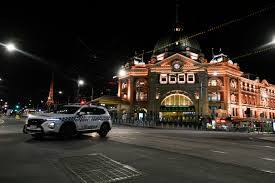
The world’s most liveable city is now largely deserted. Her 4.9 million residents are now required to stay in their homes, apart from a few limited and important reasons.

Victorian Premier Daniel Andrews yesterday afternoon declared a State of Disaster. The streets are now largely empty, office blocks abandoned, schools and universities closed, and the roads eerily quiet. There was no slow procession of peak hour traffic outside my home this morning.

The trams are running empty of passengers and our sporting stadiums have turned into relics to a yesterday that we long to return.

As of last night, there is now a curfew in place. No one is allowed to drive, walk or cycle, in their suburbs from 8pm until 5am. The curfew along Level 4 restrictions will continue until at least September 13th.


melbourne


The last 5 months have been challenging and I expect the next 6 weeks will be even more difficult. Many Melbournians are already tired and anxious. Any prolonged disruption to ‘normal life’ brings with it stresses; how much more when even the basic elements are put on hold. I feel for the 100,000s plus students trying to study for their VCE during this lockdown. The economic uncertainties are real and not going to be easily fixed. The Victorian economy is losing $1 billion each week and with thousands more losing their jobs.

Melbourne is my home. I was born here, went to school and studied at university here. Susan and I married in Camberwell. After 4 years of exile (in Sydney) we returned and have since lived, worked, and raised our children in Mentone.

The experience is new to almost all of Melbourne’s residents. It is certainly my first time to live in a city with a curfew and where leaving ones home may result in a visit from the police. Thousands are defence force personnel are also patrolling our suburbs and checking on residents. It is a strange and dystopian view.

I don’t want to exaggerate; while no one wants to be in this position many people seem to be doing ok. Life is different, and at times annoying but overall they’re doing pretty well. I also appreciate that many other Melbournians are becoming frustrated and even angry. I have noted how even our  ‘progressive’ leaning media outlets are now turning on the State Government. I’m not going to pretend that the pandemic has been handled perfectly by Governments or the people alike. Isn’t that part of the reality of facing new and extraordinary times? Our fallibilities our exposed, our best efforts fall short, and the stubbornness of others intrudes to the detriment of others.

I am though urging my fellow Melbournians to adhere to the new rules. This isn’t about asserting personal rights, listening to idiotic theories, or playing political games. Most of us recognise that mistakes have been made. Had people done the right thing and had authorities better-equipped personnel during hotel quarantine we may not be in the position we are now facing. There is a time for those conversations, but now, we need to focus on following the law and looking out for the vulnerable, the anxious, and the lonely.

Our Church is praying regularly our Prime Minister Scott Morrison and his Cabinet, for Premier Daniel Andrews and his Cabinet, and for those health officials giving advice each day. This is important.

This pandemic has already taken lives. It has forced many thousands to reconfigure their lives because of illness or financial hardship. Stories coming out of age care homes are horrific. The mental and social toll is near impossible to measure. Dare I suggest, not as a pessimist but as a realist, more difficult days lay ahead. Once Level 4 restrictions are lifted there were will be 4.9 million sighs of relief. The audible heave, however, won’t blow away other restrictions that will remain for some time. The economic toll for thousands of businesses will be devastating, and we don’t yet know the cost that is being born by our children.

We’re not fighting to rid ourselves of COVID-19, but to control it; according to the Victorian Government we are trying to uncover the source for 100s of mystery cases and to control (or eliminate?) community transmissions. Melbourne will come through to the other side, bruised and changed, but we will make it. But even as we stagger to our feet there is an even greater threat looming over our shoulders, namely that of an authoritarian and hungry red dragon. Could this dystopian season be but the first chapter of more to come?

The Australian Strategic Policy Institute advises the Federal Government and also informs the Australian public about the rapidly growing issue of Communist China. In an interview last week, Michael Shoebridge noted that Government military and strategic plans for the 2030s are being fast tracked for employment now. There is growing consensus that conflict in the region within months is not only possible but is now “credible”.

Melbourne has enjoyed a long summer: 75 years of tremendous progress, pleasure, and safety. There have been interruptions, but nothing like this.

Ecclesiastes ch.3 reminds us that there are many times in life. Not every season continues into perpetuity.

“There is a time for everything,
and a season for every activity under the heavens:

   a time to be born and a time to die,
a time to plant and a time to uproot,

  a time to kill and a time to heal,
a time to tear down and a time to build,

  a time to weep and a time to laugh,
a time to mourn and a time to dance,

  a time to scatter stones and a time to gather them,
a time to embrace and a time to refrain from embracing,

 a time to search and a time to give up,
a time to keep and a time to throw away,

   a time to tear and a time to mend,
a time to be silent and a time to speak,

    a time to love and a time to hate,
a time for war and a time for peace.”


Melbournians, for the most part, have grown up with the belief that we deserve our choice of the above times, and that those other experiences are what happens to people in other parts of the world. We are now learning that not even the world’s most liveable city is exempt.

Only a few sentences later the writer of Ecclesiastes says, “He has also set eternity in the human heart”.

Each new day is preparation for eternity; Melbourne has too often failed the test. We’ve been caught out. We can’t rely upon our prosperity, security, and health, to see us through; they are unreliable gods. This is a time where our deepest desires and most earnest hopes are being tested. If the world’s most liveable place cannot make certain our hopes and security, where must we look?

Psalm 62 takes us to one whom Melbourne believed was no longer necessary. And yet, this God remains the one firm foundation we have:

“Truly my soul finds rest in God;
my salvation comes from him.

Truly he is my rock and my salvation;
he is my fortress, I will never be shaken.

How long will you assault me?
Would all of you throw me down—
this leaning wall, this tottering fence?

Surely they intend to topple me
from my lofty place;
they take delight in lies.
With their mouths they bless,
but in their hearts they curse.

Yes, my soul, find rest in God;
my hope comes from him.

Truly he is my rock and my salvation;
he is my fortress, I will not be shaken.

My salvation and my honor depend on God;
he is my mighty rock, my refuge.

Trust in him at all times, you people;
pour out your hearts to him,
for God is our refuge.

Surely the lowborn are but a breath,
the highborn are but a lie.
If weighed on a balance, they are nothing;
together they are only a breath.

10 Do not trust in extortion
or put vain hope in stolen goods;
though your riches increase,
do not set your heart on them.

11 One thing God has spoken,
two things I have heard:
“Power belongs to you, God,

12     and with you, Lord, is unfailing love”;
and, “You reward everyone
according to what they have done.” (Psalm 62)

Original Sin, COVID-19, and Personal Accountability

Two Christian doctrines of humanity that often create controversy are original sin and total depravity. I understand, these concepts cause us discomfort because of what they suggest about humanity in general, and me personally. However, this Biblical understanding of what went wrong in the world is part of our story and it’s vital if we are to understand ourselves and the world around us today. Indeed, just as a doctor needs to diagnosis the illness before treating it successfully, we need a detailed and accurate diagnosis of the human condition.

Interestingly, in this second wave of COVID-19 that is responsible for locking down my city of Melbourne, we are seeing an analogy of these doctrines. The analogy isn’t perfect but nonetheless, I think it is a poignant illustration. I’ll come to this analogy shortly.

coronavirus

Photo by CDC on Pexels.com

It is worth noting that the phrase, ‘original sin’ has reappeared in our vocabulary over recent months. Original sin is now employed to help explain the current issue of racism in both Australia and in the United States, and to find its connection with historical slavery. There is some warrant for using this category in a sociological and historical manner, but theologically it comes unstuck. Europeans didn’t introduce sin to these shores,  although we have urged it on, being living representations of the Christian doctrine of total depravity.

The Biblical notion of original sin begins in Genesis ch.3 where Adam and Eve doubted the truthfulness and goodness of God’s word by disobeying his clear instruction. The Apostle Paul traces every sinful thought, attitude, word and action back to this cataclysmic moment in the garden.

“Therefore, just as sin entered the world through one man, and death through sin, and in this way death came to all people, because all sinned” (Romans 5:12)

One of the resistances to the Biblical idea is the argument of justice. How can I be made responsible for the sin of another? Why should I pay the price for what someone else did thousands of years ago?

Just as the Bible explains sin’s origins in the one act of disobedience, it also explains how every human being chooses this path for themselves. Jesus responded to the Pharisees and teachers of the law in his day who argued for external adherence to religious laws by uncovering the heart of the issue,

“Don’t you see that nothing that enters a person from the outside can defile them? 19 For it doesn’t go into their heart but into their stomach, and then out of the body.” (In saying this, Jesus declared all foods clean.)

20 He went on: “What comes out of a person is what defiles them. 21 For it is from within, out of a person’s heart, that evil thoughts come—sexual immorality, theft, murder, 22 adultery, greed, malice, deceit, lewdness, envy, slander, arrogance and folly. 23 All these evils come from inside and defile a person.” (Mark 18-23)

In other words, we are responsible for our own hearts and the motives and lives that follow.

We may inherit the condition put in motion in Genesis ch.3, but we also embrace them. This doctrine of total depravity isn’t suggesting that we only transgress but that we are inclined to reject God and his righteousness and instead to create and justify our own moral truths, often with disastrous consequences. As God’s image bearers, we carry hints of the glory of God and exquisite glimmers of his purposes. That there is love among us is reflective of the fact that God is love. And yet, this image bearing is broken and we often take pride in this fracturing.

The Apostle Paul concludes his gut wrenching exposition of God’s justification for judging the world by saying,

“There is no one righteous, not even one;

there is no one who understands;

    there is no one who seeks God.

All have turned away…” (Romans 3:10-12)

Let’s now turn to the analogy. It is believed that Melbourne’s second wave of COVID-19 began with a single source, connected with security guards working in hotel quarantine. One transgression has led to thousands of people contracting COVID-19 and a growing number now dying. The analogy that I want to draw your attention to isn’t so much virus but the chain of social disobediences that has ensued.

Every day there are dozens of people caught and fined for breaching the rules of the lockdown. Yesterday one Melbourne woman was arrested by police for flaunting the rules and posting her defiance on social media in front of police. Others, echoing that ancient serpent, “did God really say,” have insisted that they don’t need to follow the restrictions because they think the pandemic is a hoax.

The single actions of hotel security guards has led to the situation where we are in a serious medical and social situation. Can the Bunnings Karens blame these guards for their own actions? Should those refusing to wear masks or continuing to gather illegally in groups defer responsibility to those guards? Despite those original actions that has produced the crises in which we find ourselves, is not every Victorian responsible for their own actions? Of course.

The analogy does break down at this point: many Victorians (most) are complying with the restrictions, whereas the Bible explains how every person is sinful and breaks God’s intention for us, by nature and by choice. As I said at the beginning, the illustration isn’t perfect, but it shows how one action produces an environment where others do what is wrong. The former created the situation but the latter cannot use this as a defence for their own actions.

It is also true that while we are responsible for our own sins, we can also be victims of other peoples wilful and selfish behaviour. This is evident for everyone to see in this pandemic. Thousands of Victorians are now ill because some decided that following rules didn’t apply to them. Even yesterday, as police and ADF members visited the homes of Melbournians who’ve been diagnosed with COVID-19, some of these people couldn’t be found because they had decided to return to work.

We may disagree with original sin, but the world around us and even our own lives bear testimony to it.

There is, of course, good news. The problem of sin has an answer, but it’s not found from within but from an outside source. The God who responded to original sin by cursing creation also offered his own life as an atoning sacrifice for our sins,

Christ redeemed us from the curse of the law by becoming a curse for us, for it is written: “Cursed is everyone who is hung on a pole.” “(Galatians 3:13)

“For just as through the disobedience of the one man the many were made sinners, so also through the obedience of the one man the many will be made righteous”. (Romans 5:19)

Christians Avoiding the Pitfalls of Political Polarisation

I get it, our society isn’t just polarised, it’s being torn apart by tribalism, divisions, and unbending ideologues. It’s hard enough being an average Aussie let alone one who believes Jesus is Lord. What are we meant to do when we disagree with the Government? How should we respond when we don’t like what a Government says or decides?

Thankfully God hasn’t left us walking in the darkness. In his wisdom, God gives us clear instructions and principles in his word. Just like me who can feel heated by some of the political debates going on and therefore needs to be reminded of these words, I suspect many of us do.

I’m not intending to pull out every nugget in every verse that I quote below. My aim is simply to draw our attention to the main imperative or principle that is mentioned in each of these Bible passages.


photo-1555848962-6e79363ec58f

Pray

Take, for example, 1 Timothy 2:1-3

”I urge, then, first of all, that petitions, prayers, intercession and thanksgiving be made for all people— for kings and all those in authority, that we may live peaceful and quiet lives in all godliness and holiness. This is good, and pleases God our Savior, who wants all people to be saved and to come to a knowledge of the truth.” (1 Timothy 2:1-3)

We are commanded to pray for those in authority. The imperative isn’t conditioned by our political preferences or by the decisions made in our favour. Keep in mind that Paul was writing at a time where there were no democratic societies and where there was little toleration of Christians.

We pray for our Governments and political representatives, not because we always agree with them, but they have a God given responsibility for society.

Indeed, Governments, politicians, and bureaucrats need our prayers. Not every authority is conscious of this or a would accept this proposition. They nonetheless carry significant responsibility and work long stressful and often thankless hours.  When I’ve messaged an MP and asked how I can pray for them, the response has rarely been, “no, don’t pray for me”.

Listen to what verse 3 says, “this is good and pleases God our Savior”.


Be subject to

What about Romans 13?

”Let everyone be subject to the governing authorities, for there is no authority except that which God has established. The authorities that exist have been established by God. Consequently, whoever rebels against the authority is rebelling against what God has instituted, and those who do so will bring judgment on themselves. For rulers hold no terror for those who do right, but for those who do wrong. Do you want to be free from fear of the one in authority? Then do what is right and you will be commended.” (Romans 13:1-3)

We are not only to pray for governing authorities but also to submit to and obey those in authority. Why? These authorities have been established by God, for the good order of society and to punish wrongdoing.

Submit

13 Submit yourselves for the Lord’s sake to every human authority: whether to the emperor, as the supreme authority, 14 or to governors, who are sent by him to punish those who do wrong and to commend those who do right. 15 For it is God’s will that by doing good you should silence the ignorant talk of foolish people”. (1 Peter 2:13-15)

Listening to, honouring, and obeying the Government is God’s will for every Christian. It is one of the ways we do good and it serves to silence some of the ridiculous criticisms aimed at Christians. I am surprised (perhaps not) at how our readiness to adhere to Governments often depends on who is in power. It is amazing to see how much our political preferences shape our rhetoric and responses to a Government.

Also this, it is sometimes assumed that we will make a clearer statement for the Gospel by standing apart from the authorities, but that isn’t the argument given here in 1 Peter nor in Romans 13. We can bear faithful witness to Christ by submitting to authority.

Another issue relates to trust. Do we trust the words and decisions being made by those in Spring St and in Canberra? I understand the trust issues as much as any Australian. It may also be the case that those making decisions have a fuller perspective and better understanding of the issue than I. I’m not a medical doctor or a lawyer or an economist, and so I want to tread very carefully when issues relate to those subjects and countless others. I’m blessed to have members at my church and among my friendship networks who are professionals in these areas and whom I can go to with my questions and seek understanding. My point is, submitting to authorities is not only right, following expert advice is usually the wise course of action.


Appeal

In Acts ch.25 the Apostle Paul, having been arrested,  is interrogated by the Roman Governor of Judea.

Paul made his defense: “I have done nothing wrong against the Jewish law or against the temple or against Caesar.”

Festus, wishing to do the Jews a favor, said to Paul, “Are you willing to go up to Jerusalem and stand trial before me there on these charges?”

10 Paul answered: “I am now standing before Caesar’s court, where I ought to be tried. I have not done any wrong to the Jews, as you yourself know very well. 11 If, however, I am guilty of doing anything deserving death, I do not refuse to die. But if the charges brought against me by these Jews are not true, no one has the right to hand me over to them. I appeal to Caesar!”

12 After Festus had conferred with his council, he declared: “You have appealed to Caesar. To Caesar you will go!”

On this occasion, Paul uses his right as a citizen to appeal to Caesar. During his ministry, Paul was arrested and imprisoned on multiple occasions and he didn’t always make this legal case in his defence. He does however on this occasion.

When we disagree or hold a legitimate concern, we ought to follow due process. Not every citizen in every society has the opportunity or even the political right to address concerns to their governing authorities. One of God’s graces to us is that we do have this kind of freedom in Australia. We can write to our local MP. We can arrange meetings and even present our positions to Ministers of the Government. If that fails, every few years we have the democrat privilege of voting for (or against) our political representatives.

Christians have a choice, we can join in the fray and take sides on every single issue, and so add to the anger and cultural fragmentation. Or, we can choose the more difficult path. We can watch our tone carefully. We can choose to keep our words to ourselves.  When we open our mouths we should begin with prayer for those in authority. When we speak we can find good things to affirm and not only criticise the contemptible.

We don’t all have to be John Knox all the time and in every situation. Not every issue is a Martin Luther, ‘Here I stand’ moment. Life is far more complex. Even among Bible-believing Christians, we will sometimes come to different conclusions about the gravity of a subject and how Christians ought to respond.

I can’t help but wonder whether some of our Christian voice stems from a mistaken eschatology. In our protestations are we trying to make heaven out of earth? Do we conflate the nation state with the kingdom of God? Or, in speaking up are we appealing to the common good and love for neighbour, and upholding the tradition of religious toleration, defending for all people freedom of conscience and freedom of speech and religion?

There are times for civil disobedience but those occasions ought to be rare and for extraordinary reasons. There are first order issues and situations where a Christian must say no because it would be paramount to sinning against God, but that is not every matter. I can foresee a time where churches in Victoria will be forced to choose between Christ and the State, especially on issues surrounding sexuality. We may be pushed into the insane position of deciding whether we will teach God’s view on human sexuality or comply with Government regulation. When that day comes, the stand we take will look feeble and sound reminiscent of the boy who cried wolf. We need to be careful about using up all our capital now on lesser matters.

This is a good time for Christians to press closer to what God says in his word about Church and State. Begin with prayer, assume submission and obedience, do good, and choose our battles carefully. “This is good and pleases God”.


Let the reader note, in this piece I’m not addressing specific stories that have come out this week, but  I am thinking more generally.

A Disgraced Newspaper

The New York Times was once looked upon with great respect by journalists and readers alike. This newspaper is read all over the world and was seen as one of the premier sources for accurate reporting and erudite opinion writing.  Some would argue that the writing has been on the wall for sometime. Yesterday many of those niggles and even a few prophetic words were confirmed. 

One of the New York Times senior journalists, Bari Weiss, has resigned. On her departure, she wrote an open letter explaining the reasons for her resignation. Weiss’ story is a damning exposure of a culture that includes intimidation, anti-semitism, and heavily biased reporting.

She explains,

“Twitter is not on the masthead of The New York Times. But Twitter has become its ultimate editor. As the ethics and mores of that platform have become those of the paper, the paper itself has increasingly become a kind of performance space. Stories are chosen and told in a way to satisfy the narrowest of audiences, rather than to allow a curious public to read about the world and then draw their own conclusions.I was always taught that journalists were charged with writing the first rough draft of history. Now, history itself is one more ephemeral thing molded to fit the needs of a predetermined narrative.”

…What rules that remain at The Times are applied with extreme selectivity. If a person’s ideology is in keeping with the new orthodoxy, they and their work remain unscrutinized. Everyone else lives in fear of the digital thunderdome. Online venom is excused so long as it is directed at the proper targets. 

Op-eds that would have easily been published just two years ago would now get an editor or a writer in serious trouble, if not fired. If a piece is perceived as likely to inspire backlash internally or on social media, the editor or writer avoids pitching it. If she feels strongly enough to suggest it, she is quickly steered to safer ground. And if, every now and then, she succeeds in getting a piece published that does not explicitly promote progressive causes, it happens only after every line is carefully massaged, negotiated and caveated.”

The shock waves of these revelations are still bouncing around the globe, and they ought. One of the world’s greatest newspapers has been exposed as a puppet of the twitter mob. This will likely go down in history as a glaring example of the intolerance and oppressive group think that now dominates so much of Western culture.

In an age when people are increasingly looking for confirmation bias, it is paramount that we can trust the culture’s reputable news outlets. Sadly, the kind of objective and truthful reporting that we need is becoming hard to find. Both the left and the right can be guilty of bending truth to a predetermined agenda. If that’s your spin, don’t pretend to be an objective newsroom.

I recall one journalist at a major Australian newspaper telling me that I shouldn’t expect fair reporting on Christianity because 1. most journalists have almost no understanding of religion, and 2. The majority don’t like religion (especially Christianity).

That’s part of the travesty here. The Times’ zealous commitment to woke culture has thrown journalism into the toilet. Thankfully I do know journalists who are well credentialed to handle religious stories and who have great integrity in reporting any story fairly and objectively. Indeed, Bari Weiss speaks of fine journalists who are remaining at the Times, but they appear to be either swimming against or drowning in the tide.

Don’t expect any sign of remorse or repentance. There are a few journalists sticking their heads over the parapet to express disappointment over how Bari Weiss has been treated, but will her words really changing the times? I suspect not. Why not? Because in the West truth no longer matters and fairness is an optional extra. These once upon a time virtues come at too high a cost for those wanting to hold onto careers, power, and success. Truth is uncomfortable and often betrays mainstream ethics and politics. Reporting on cultural heretics with a tone of respect and fairness is unacceptable. Any hint of digression from the new moral agenda is spat out with unreserved fury; not only Twitter, but also inside the New York Times, 

Bari Weiss shares, 

“My own forays into Wrongthink have made me the subject of constant bullying by colleagues who disagree with my views. They have called me a Nazi and a racist; I have learned to brush off comments about how I’m “writing about the Jews again.” Several colleagues perceived to be friendly with me were badgered by coworkers. My work and my character are openly demeaned on company-wide Slack channels where masthead editors regularly weigh in. There, some coworkers insist I need to be rooted out if this company is to be a truly “inclusive” one, while others post ax emojis next to my name. Still other New York Times employees publicly smear me as a liar and a bigot on Twitter with no fear that harassing me will be met with appropriate action. They never are.”

These revelations are extraordinary, and yet they are sadly predictable. 

I also find it telling that this global story is being ignored by most of Australia’s mainstream media outlets. I wonder, why? The Australian has published a piece, but what of the other major papers?

Truth telling is a precious commodity. The world needs more of it, not less.

I hope Bari Weiss’ courage serves as a catalyst for change within the New York Times and that other media institutions take note. I suspect though that real reform is unlikely; the culture is shifting quickly and so long as we continually erase Christian ideas and foundations from every part of life we will inevitably steer further away from the very virtues we need. The New York Times has caught wind of the change and their blowing full steam ahead.

We need more journalists standing against the wind, losing careers and reputations for the sake of the truth and fair reporting. The culture may cancel you, but the culture may in fact need your words. Since when has truth been popular? Didn’t they crucify the Son of God for speaking God’s truth to the world? 

In the meantime, the rest of us can take a word from the Bible, 

“test everything; hold fast what is good”. 

A Season for Conspiracy Theories: 1 Timothy 4

Conspiracy theories are to truth and life what arsonists are to a hot and dry summer in Australia.

Back in May I wrote a piece about the dangers of conspiracy theories and why it is the duty of Christians to not only avoid them, but also to refute them. At the time I was preaching through Colossians (and we still are!), and we made note of the warnings given by God about entertaining myths. As Colossians highlights, in the church “such things promote controversial speculations rather than advancing God’s work”.

At the time I tweeted what should have been a fairly innocuous statement, “In light of the growing proliferation of nutty conspiracy theories, I’m pleased that we’re currently studying Colossians at Church. Colossians presents a clear repudiation of gnosis. Christians are to be people of reason not speculation, love not fear.”

I was wrong; this was a highly controversial thing to say. 

In particular, I addressed the growing issue of QAnon, which is a political conspiracy theory nest that has recently morphed into a pseudo-christian and cult like religion. In the United States the FBI now consider some QAnon members a domestic terrorist threat. 

You can find the original article here (with links to several important investigative pieces from the Atlantic and the ABC).

Photo by Anna Shvets on Pexels.com

In the last few weeks I’ve had a number of conversations with people in the community who are hearing more of these conspiracy theories. For example, one friend today copied a text message that is being sent to people. The message claims that you have been in contact with someone who has COVID-19 and you must not self isolate. This scam is signed by “COVID-19anon”.

Such messages are foolish, needless, and potentially life threatening.

Other friends are sharing stories of peoples who are convinced that COVID-19 is a hoax orchestrated by the Government. It is interesting to note that those who are thinking this way also tend to believe in other conspiracy theories as well. 

The alternative position to conspiracy theories isn’t to lock your brain away in the freezer and glibly accept everything Governments say as gospel truth. Most of us understand that our political leaders are fallible and that they sometimes massage truth for the sake of political point scoring. There is however a massive gap between grasping political biases and believing in Government led hoaxes. 

Over the weekend, one of the Pastors at Mentone led a group discussion on 1 Timothy ch.4. While unintended, the words couldn’t come at a more pertinent time. 

1 Timothy 4:6 says, “Have nothing to do with godless myths and old wives’ tales; rather, train yourself to be godly”. This chapter of Scripture is helpful for Christians in guarding themselves against conspiracy theories. Here are 7 salient points: 

  1. Paul assumes such ideas will appear and grab hold of peoples imaginations.

2. Paul assumes some of these theories will filter into churches.

3. Paul believes these myths have demonic origins; they are not from God.

4. In verses 3-4 he gives examples, which refer to teachings that deny creational order and good.

“They forbid people to marry and order them to abstain from certain foods, which God created to be received with thanksgiving by those who believe and who know the truth.For everything God created is good, and nothing is to be rejected if it is received with thanksgiving,”

5. Paul tells Timothy that he has a responsibility to publicly repudiate these matters (vv. 6;11).

6. These ‘godless myths’ compete with and contradict the “truths of the faith” upon which Christians ought to be ‘nourished’ and “follow”. 

7. Whereas what is true and good produces godliness and life, these speculations drive a wedge into ones faith in Christ and are destructive in all kinds ways.

In addition (as I pointed out in my previous article on the issue), conspiracy theories often lead to gossiping, slandering, and to divisive behaviour. All such behaviour is sinful and contrary to how Christians are to speak and act. One of the sad ironies is that when someone leaves a church because they believe COVID-19 is a hoax, they are in fact proving Paul’s point in 1 Timothy 4 and Colossians 3. 

The sad reality is, it is very difficult to persuade people who believe conspiracy theories that they are mistaken. Conspiracy theories succeed because they play into pre-existing assumptions, and they justify irrational political and religious beliefs. Conspiracy theories don’t depend on evidence but on capturing those seeds of doubt or inquisitiveness that otherwise may lay dormant in the consciousness. Conspiracy theories can be refuted with reasoned argument and with actual experts but this unlikely to convince the skeptics. 

I understand that people have some warrant for being suspicious of media and of politicians; many (not all) are prone to exaggeration, fear mongering, and sometimes they espouse straight out falsehoods. In treating truth this way, they encourage doubters and feed the skepticism that may have otherwise lay dormant among the population. And yet, throwing babies out with the bathwater is a really dangerous way to live.

Last week Andrew MacDonald (who is the associate director of the Wheaton College Billy Graham Center Institute), made this important statement about Christians and the media, 

“Having acknowledged the failures in journalism, it is critical that Christians resist the temptation to reject mainstream reporting altogether. This is a critical mistake that leads us down the pathway to isolation whereby we invalidate any news article we find unfavorable.

Moreover, there are good journalists in major outlets, even religion journalists who strive to understand and report on evangelicalism in all fairness. At times, this leads them to our failures, but in other cases they want to detail the nuance and complexity within the movement. I might not always agree with them, but I respect their integrity and desire to report honestly.

This all-or-nothing mentality also suggests a poor understanding of Christian engagement. Our goal should be a maturity to engage the new reporting of our time with a critical eye rather than to shout bias upon seeing the outlet logo. We need to read critically across a wide range, accepting hard truths that are well supported rather than if they support our political or cultural narrative. We need to resist our temptations to echo chambers; a temptation that is common to many other subcultures across the globe.”

This crazy year has another 5½ months to go. When there are crucial issues facing society, conspiracy theories are not far behind intruding with their secret knowledge and special insights. Handling the real issues is difficult enough for most of us without having also to put out these needless spot-fires. 

Ed Stetzer is right when he says to Christians, 

“Long story short, you’re ultimately bringing harm to yourself and your community. You may make yourself feel like you’re making a difference when you are not.

Most importantly, we damage our witness and that of your church when you focus on unproven theories and speculation more than the good news we’ve been commanded by our Lord to proclaim.”

The Hagia Sophia Marks History

The Hagia Sophia is one of the world’s most recognised and beautiful buildings. It is deservedly a Unesco World Heritage site.

I have yet to visit the truly extraordinary city of Istanbul and to walk inside this magnificent architecture along the narrows of the Bosphorus.  I have dreamed of wandering along its marble floors, admiring the mosaics and being entranced by the dome above. This Museum is no more.

Turkey’s President, Recep Tayyip Erdogan, has decided to change the Hagia Sophia. A Turkish Court has given the green light for annulling the Hagia Sophia’s status as a museum and to turning it once more into a Mosque. The Hagia Sophia has been a museum for nearly a century. Beforehand it was a Mosque. The Ottoman conquest of the city in 1453 saw the building converted from a church into a Mosque. Prior to the Ottoman invasion, the Hagia Sophia stood as a Christian Church for almost 1,000 years. 

President Erdogan has signalled that “Like all our mosques, the doors of Hagia Sophia will be wide open to locals and foreigners, Muslims and non-Muslims”. 

The first Muslim prayers will return to the Hagia Sophia on July 24th.

To be clear, I am not arguing against museums being transformed into mosques. There is another and more significant point to highlight about this historic decision. The return of the Hagia Sophia to a mosque illustrates the shifting cultural confidence around the world in 2020.

For 3,000 years Istanbul has stood at the world’s crossroads; it is where East meets West. For millennia this ancient city has witnessed civilisations rise and fall. While Turkey is no longer considered one of the world’s great powers, its geographical location remains significant. More so, the Hagia Sophia is symbolic of the global fault lines between East and West, and between Islam and cultural Christianity. 

Turkey is but one of a growing number of States who are observing a fractured, disillusioned, and weakened West. The United States, Europe, the United Kingdom, and even Australia, are pre occupied with internal culture wars that are quite literally tearing societies apart. Our politics is becoming increasingly divided and schismatic, our public figures are running fast to the extremities of left and right, and cancel culture is ready to devour any who cross the wrong line. What makes this venture more problematic is how the line continually moves. No one knows from one week to the next what the accept orthodoxy is, and yet everyone understands that stepping over this chalk line amounts to reputational suicide. In public discourse there exists little good will and common ground is rare to find. In the space of a few short years, western nations have dismantled their societies more successfully than two World Wars.

Unsurprisingly, this growing tribalism is creating disillusionment with mainstream politics, corporate identity games, and with the higher education sector. When we add a serious pandemic to the equation and the question of Climate Change, it is no wonder people are becoming anxious, depressed, and even despairing of hope itself. Internal fighting doesn’t build strong communities and resilient nations. But like the final days of Rome, the distraction and exhaustion gives others licence to take action.

There is an audible crescendoing confidence to despise Western culture. After all, when the West is itself setting fire to its past, this hardly discourages the rest of the world to embrace Western ideals. It is unlikely that China would be acting so confidently in Hong Kong had this not been the case. And for President Erdogan, the time is ripe for him to reinforce his Islamic credentials and to turn away from the fruits of Europe, which Turkey temporality found itself wanting to enjoy.

Of course, over here in the West the left will blame the right and the right will throw insults at the left. The reality is, in different ways both are responsible. When we pursue wealth at the cost of character, should we be surprised that people eventually object? When sexual identity becomes the primary definition of self worth, should we be shocked when the basic units of community are crushed?

20 years ago the United States was esteemed by most people around the world. Today, many of her own citizens despite her and want her institutions and constitution dismantled. Australia has not faired as negatively as our important ally, but we are not far behind. Our lackadaisical attitude and geographical remoteness has probably saved us from some of the sharpest barbs thus far, but these ‘qualities’ are no long term strategy for survival and prosperity.

I don’t think we can downplay the significance of President Erdogan’s decision.  History has turned on the changing Hagia Sophia and may well do so again.

It must be said though, lest we mess up Christian theology and witness, the church is not its building. The Church is the people, the body of Christ who are covenanted to one another and who congregate in the same space for mutual edification, discipleship, and love. A Church can just as successfully meet in a Cathedral as it can in a community hall or family lounge room. 

Gospel witness will not suffer as a result of returning this once church building back into a mosque. It does however serve as a reminder for churches to not take for granted the time we have to live and serve and to preach Jesus Christ as Lord.

For Christian Churches, whether in Turkey, Tulsa, Tottenham, or Templestowe, we must reform our ways, putting out trust in Christ and our hope in his Gospel. Churches desperately need Gospel conviction, clarity, and courage. This is not about slowing the rot in the West, but pointing people to the only certain hope there is. 

Churches are too often complicate in cultural syncretism and spiritual apostasy. When Churches find themselves too close to the halls of power, the temptation to accommodate is strong. Other churches are desperate to find their place and so will sacrifice almost anything for acceptance. 

The historian Tom Holland, who isn’t a Christian, has made this interesting observation about English churches (and the same could be said of Churches here in Australia),

“I see no point in bishops or preachers or Christian evangelists just recycling the kind of stuff you can get from any kind of soft left liberal because everyone is giving that…if they’ve got views on original sin I would be very interested to hear that”.

Whether it is claiming that President Trump is God’s ordained man or suggesting he is the antiChrist, whether it’s worshipping unfettered capitalism or preaching the gospel of  progressivism, too often Churches have sold their soul, betrayed Christ, and become the weakling and insipid shells that they are today. Much repentance is required. And praise God for the many churches who remain faithful in word and deed; they are precious to God and are wonderful outposts to eternal things.

Kingdoms come and go. Superpowers are made and they fade or are destroyed. It has always been the case. Buildings are created and they too eventually decay and crumble. According to Jesus Christ, the one entity that will last is his Church. 

“ I will build my church, and the gates of Hades will not overcome it.” (Matthew 16:18).

It is sad to see the Hagia Sophia morph once again. Knowing what this decision embodies mustn’t be missed. In all this, one thing is certain, 

“my brothers and sisters, make every effort to confirm your calling and election. For if you do these things, you will never stumble, 11 and you will receive a rich welcome into the eternal kingdom of our Lord and Savior Jesus Christ.” (2 Peter 1:10-11)