A Christian response to bullying

Michael Jensen (Rector of St Mark’s Darling Point, Sydney) has written this helpful piece about bullying and what a Christian response should include. I have published it with his permission:

P1017915.JPG

That people are bullied, victimised, and even assaulted because of their sexuality in contemporary Australia is completely unacceptable.

For me, this is a simple corollary of the teaching of Jesus Christ. And as a Christian, and particularly as a Christian minister, I am compelled to stand against those who would advocate or participate in such treatment of GLBTIQ people, or anyone else for that matter.

It has to begin at school. The school playground can be a tough and even brutal place.

I had a great experience at the private boys’ school I went to. I was tall for my age, played sport, I was white, I didn’t have anything foreign on my sandwiches, and I wasn’t gay.

But even then, I do remember episodes when my mettle was tested by the crowd. I was teased for being a minister’s son, or for having ideas beyond my station, or for having pimples – ‘Pizza Face!’ being the taunt.

This was nothing. I brushed it off, because I had all the advantages.

The bullying was noisiest for the Asians, who of course couldn’t pretend they weren’t who they were. Their difference was obvious, and they were teased because they inspired envy – many of them took the top spots on the merit list each year.

But there was one boy, smaller than the others, who was always at sea. From the beginning of Year 7, he was singled out as the ‘poofter’. It was determined that he was gay, and that too great an interest in him or too deep a friendship with him, would render one’s own sexuality suspect.

I don’t recall the victimizing of him ever becoming physical (though of course he might tell a different story). But I can only imagine that school was as isolating and lonely for him as it was exciting and encouraging for me – and I shudder at the imbalance of it.
Recently I met his father at a reunion. Without betraying confidences, all I can say is that my classmate’s life has not turned out well.

Later when I became a teacher, I often heard students call each ‘gay’ as a term of abuse. To be gay was, in teen-speak, to be despised. I knew that there were students who would identify as gay, or who were at least questioning their orientation. The menace to them of this language was obvious. And it seemed obvious that this language, and the attitude that generated it, needed to be challenged. It was simply unchristian.

The Christian faith has bequeathed to our culture a great gift: the teaching that we are all made in the image of God. That concept permeates even apparently secular documents like the US Declaration of Independence. It coaches us to see humanity in the face of the other. It was this conviction that held good against the social Darwinians of the late nineteenth century, who would rather have placed people of different races on the lesser rungs of the human ladder.

Add to that the experience of Jesus Christ: rejected by his own, abandoned by his friends, convicted by a corrupt and lazy government, tortured, tormented, and killed. At the heart of the Christian faith is the sign of the cross, which calls us to remember what we human beings are capable of as well as to recall what God offers us.

How could a person who worships a victim of bullying turn away from those who are being victimized and bullied?

The Gospel Coalition Australia: Victoria

Around 50 church leaders from across Melbourne met yesterday (Feb 17) to pray for our city.

The Gospel Coalition Australia (TGCA) launched in Brisbane last year, and a Victorian Chapter of TGCA is starting this year.

12715405_1117430541613973_7239837344654408155_n

Photo courtesy of Shebu John

I appreciated the thoughtful approach taken in organising this first public gathering:  there was no mass advertising beforehand, no elaborate staging with a ‘worship’ band belting out Christian anthems and celebrity preachers taking the stage. I’m not criticising doing any of those things, but to begin by saying, ‘hey, come and join us so that we can listen to God’s word and pray for Melbourne together’, communicated something beautiful about the tone and purpose of the event.

A few years ago a small group of pastors began meeting to pray for Melbourne and to discuss how evangelicals can more effectively work together in order to see the Gospel grow; not that God is constrained by our prayers and unity, but Scripture teaches us that these things are desirable and useful. Yesterday, was the first of gatherings, purposed to encourage Victorian Christians with the Gospel, and to find ways for working together for the sake of the Gospel.

The morning began with a exposition from Romans 1:1-17, ‘what is the Gospel?’ Andrew Reid (of Holy Trinity, Doncaster) exhorted us to be clear about the Gospel, and to remember that God’s power to save is in this Gospel of Jesus Christ, and not in our methods and personalities. Such a message may be Christianity 101, but it is always good to hear it again, and was particularly relevant given the nature of yesterday’s gathering. If the Apostle Paul felt the need to remind his readers of the Gospel multiple times in every letter, I think we would do well to remind each other when we meet.

Peter Adam then gave a brief and insightful history of Christianity in Melbourne. It was encouraging to be reminded of how God has graciously worked throughout our history, and to consider, if God has worked through his Gospel in the past, can he not also do so today?

For much of the morning we prayed together, for Melbourne itself, for God to grow his Gospel throughout Melbourne, and for each other’s local ministries. It was a rare although enthralling yet ordinary scene, seeing 45-50 Melbourne leaders from many denominations, churches, and organisations, expressing our unity in Christ, and a common desire to see men and women coming to faith in Jesus.

TGCA Victoria will meet again in June/July for another morning of prayer, and there is a more formal event being organised for November with William Taylor (of St Helen’s Bishopsgate).

For details email admin@tgcavic.org

A letter for the community of Mentone

OLYMPUS DIGITAL CAMERA

Como Parade, Mentone

Dear community of Mentone,

I am writing to address an issue that is impacting our local community.

Last week a member of the community spoke to me about a story regarding a local Catholic priest in Mentone, which is being reported in the media. Both the Herald Sun and The Age have run update stories today (Feb 10).

As many people will be aware, I live in the local area of Mentone/Parkdale, and I am a father of 3 children who attend a Mentone school (not the two schools mentioned in the media), and I Pastor a Church in Mentone. To hear any story of abuse in the community concerns me because I am a parent, and because I am a Pastor, and because Mentone is my home.

I ought to preface the statement with these two points:

i. Apart from media reports, I am not privy to the particulars of what has taken place with the accusations levelled against John Walshe.

ii. Even though I am a Minister in Mentone, I don’t know John Walshe (Priest at St Patrick’s, Mentone), and have only spoken to him once, about 9 years ago, albeit briefly on the phone in relation to a school Christmas event.

The issue concerns an incident that took place in 1982, when Walshe allegedly abused a seminarian, shortly after Walshe had been ordained. News of this incident has caused concern and outrage amongst many parents at the two schools under the jurisdiction of St Patrick’s parish, St Patrick’s School in Mentone and St John Vianney’s School in Parkdale. It should be added, there are other parents expressing support for John Walshe, and both school councils have indicated ‘unanimous support’ according to The Age.

In reading the media’s report, parental concerns become clearer because of a contradiction between what John Walshe says took place, and what the ArchDiocese of Melbourne determined.

According to an ABC report, John Walshe, said “while his conduct was contrary to his religious beliefs, the encounter with X was completely consensual.”

The Catholic ArchDiocese of Melbourne however concluded that the victim was sexually abused and gave him compensation. Given that this is the case, it does appear incongruous that Walshe is permitted to remain in the ministry.

First of all, I want to ensure Mentone (Baptist) that we hold extremely highly the qualifications set out in Scripture for church leaders.

As I said before, I am not privy to all the information regarding the alleged abuse case, however I know that at Mentone Baptist Church, should a pastor (or any one at the church for that matter) sexually abuse anyone, their tenure would be terminated, and the authorities contacted. And should any of the Church’s leaders engage in sexual immorality (having sex with a person to whom they are not married), they would also be required to step down.

Sadly, I understand how many people have become suspicious of ecclesial organisations,  given the lack of transparency that exists among some. Many are not like this, an example of humble transparency and honesty is that of Peter Jensen, the Former Anglican Archbishop of Sydney, who gave testimony at the Royal Commission last week. But the offering of silence, as seems to be the case here, when there are legitimate concerns, is as helpful as clanging cymbals being hit half a beat behind rest of the band (1 Corinthians 13:1-2).

Second, I have lots of empathy for the concerned families of these schools. After all, this is my community where my family and I live, and it grieves me to see this situation unfolding over the neighbours fence, so to speak.

I am happy to meet with concerned parents, should they think it helpful (email is pastor@mentonebaptist.com.au)

Finally, we are praying for all concerned. As we pray, we do so trusting that godly resolution will come soon.

I don’t know John Walshe’s heart, and it is not for me to doubt the sincerity of his apology. I understand that the event took place over 30 years ago, and following the incident he sought counselling. But I also know that time doesn’t equal repentance, and time doesn’t heal all wounds.

I am reminded of the words of Jesus, who said,

“Come to me, all you who are weary and burdened, and I will give you rest. Take my yoke upon you and learn from me, for I am gentle and humble in heart, and you will find rest for your souls.”

And

“Do not be afraid of those who kill the body but cannot kill the soul. Rather, be afraid of the One who can destroy both soul and body in hell.”

In other words, Jesus both judges and comforts, he brings justice and he exercises mercy. Jesus Christ does not offer cheap formulaic remedies like we find in the self-help section of a book-store, but these are words of the God who became man and took onto himself all the pain and sin of the world in order to bring healing and peace. The cross is a picture of ugliness and suffering, and for that very reason it is also a story of forgiveness and hope.

Moral failure in leaders disappoints, hurts and can lead to a hundred questions and doubts. It is not wrong to set the bar high for those who would oversee a church or ministry, but even with that justified high standard we must rest our hope in Jesus, not in people, for only in Him will we find what we most need.

A Hard Day’s Work: why we work

a-hard-days-night

In the words of the little known group, The Beatles,

“It’s been a hard day’s night, and I’d been working like a dog

It’s been a hard day’s night, I should be sleeping like a log”

Why do we work?

Some people have an altruistic view of work, motivated by the belief that they are contributing to the benefit of society. Others see working as a necessary evil; it’s what we have to do in order to provide for my family. Many Christians have been taught that the value of work doesn’t extend much beyond earning an income to support family and church, and giving opportunities for evangelism. While both these reasons are true (and incredibly important), in the Bible we find a far richer and broader picture of work.

Here are 11 reasons why our work matters

1. We are made to work

“God blessed them and said to them, “Be fruitful and increase in number; fill the earth and subdue it. Rule over the fish in the sea and the birds in the sky and over every living creature that moves on the ground.” (Genesis 1:26)

In the beginning work was not considered a curse, but God’s blessing. Work is tied to God’s purpose for humanity. This creation mandate has been assuaged with trouble ever since the fall, but it has not been overturned.

In fact the Bible has a negative view of people who don’t work:

“As a door turns on its hinges, so a sluggard turns on his bed.” (Proverbs 26:14)

The lazy are selfish, unproductive, and are exemplars of foolish living.

By work, I am not thinking only of paid vocations (neither does the Bible), but any and all work, including home duties, volunteer work, and study. The shape of work will change as life’s circumstances alter, but we must be careful not to denigrate another person’s work (or our own). Having said that, some work ought to be avoided, any work that is considered sinful or that is done in a sinful manner is unfitting for a Christian (and anyone for that matter).

2. Creation matters:  We don’t dismiss this world as unimportant, or just a highway to heaven. Why? First of all, God made this world, therefore it has intrinsic value. Second, the incarnation affirms the significance of this world. Third, the resurrection of Jesus confirms the redemption of the physical, the the promise of a new creation.

3. Caring: Work enables us to care for and love our neighbour by providing services, produce, ideas, things that are useful to people and that improve the quality of life.

Work also enables us to care for animals, the oceans, mountains, and everything in between.

Parenting is held with incredible esteem in Scripture. To have and raise children is a joy and privilege, and an enormous responsibility. Parenting is hard work, and probably the most important work one will ever do.

4. Providing: Much work is not accompanied with income, and for that we must not negate its importance, but earning an income is considered important in Scripture so that we can avoid depending on others’ generosity, so that we provide for our family, to pay taxes, to aid the poor, and to give generously to Gospel ministry.

5. Constructing: Our work ought to be part of building a society that is safe, healthy, advancing, and improving.

6. Creating: Music, architecture, and poetry are among the many activities that are esteemed in Scripture. These are God given gifts for our enjoyment, pleasure, value, and amelioration.

7. Confronting: Police, law, medicine, armed forces, medical science, psychologists are among the many who work to confront those things that would do us harm.

8. Our work displays the character of God. We have opportunity to show people what God is like when we work by in truth, with grace, kindness, uprightness, generosity, and so on. What a wonderful way to think of our work. By the way a teacher instructs their students they can show what God is like. An electrician wiring a house can by their work ethic show people what God is like.

9. Our work testifies to the Gospel. In our work opportunities arise where we can explain the Gospel. Of course, our whole lives ought to reflect the Gospel, and speaking the Gospel remains vital today. We should avoid doing evangelism when we are supposed to be pulling teeth or auditing a company’s accounts, but opportunities to speak the good news of Christ will arise if by our lives we are walking with Christ.

Work is good but it is not enough; speaking the Gospel of Christ is God’s way of bringing redemption and reconciliation to all who believe Him.

10. Our work anticipates the new creation.

I don’t know what kind of jobs there will be in the new heavens and new earth, but when we work in love  and with integrity, and serving for the good of others, we are showing people what heaven will be like.

11. Our work glorifies God.

“And whatever you do, whether in word or deed, do it all in the name of the Lord Jesus, giving thanks to God the Father through him.” (Colossians 3:17)

“Whatever you do, work at it with all your heart, as working for the Lord, not for human masters” (Colossians 3:23)

As we return to work for a new year I want to encourage our workers at Mentone Baptist (and anyone else reading the blog) to consider prayerfully, joyfully, and expectantly, the opportunities we have in our work to honour God and to love those whom we interact with in any and all of our work.

Sermon on the Mount

sermonontheMount

In this tumultuous world where following Jesus Christ means growing opposition and cost, what better words to meditate on than Jesus’ Sermon on the Mount.

In 2016, at Mentone Baptist,  I will be preaching on Matthew chs. 5-7, starting January 31.

Check out our promo


Christmas Greeting

IMG_3692

Enjoy Christmas Day

Eat Turkey

Eat a prawn

Sip some eggnog

Avoid Christmas pudding…yuck

Smell the Christmas tree

Be patient with excited children

Don’t forget the hurting, the lonely, and the poor

Sing,  ‘I’m dreaming of a white Christmas’, because if you live in Australia that’s as much snow as we’re going to experience

Tonight, watch Carols by Candlight at the Myer Music Bowl. Yes, I know it’s lame but it is our lame Melbourne tradition.

Remember, Christ has been born. The eternal God, God the Son, took on flesh and made his dwelling among us

Remember, Christ died for our sins

Remember, God raised this Jesus to life on the third

Remember, the hope of the world is now seated at the right hand of God the Father

Remind your children, your friends, and your family, that in Christ there is a joy that will outlast everything you may enjoy on December 25th.

Come Boxing Day, remember that every truth about Jesus Christ on Christmas Day, remains true

Christmas Carols with Chill/i

So it’s a stinking hot morning in Melbourne today. 34º degrees by 7:30am. I reckon that must be close to a record for a Melbourne morning.

News is, the cool change is heading our way and will be sweeping across the Bay by 1-2pm. That’s great news for emergency services and home owners out bush and in outlining parts of Melbourne. It’s also great news for everyone who love Christmas Carols.

Even if the heat persists Mentone Baptist can keep make the auditorium as cold as Montreal on Christmas Eve, and we can even add in the snow…maybe not.

ChristmasWeb

For Christmas singing, lights, something for the kids, fun, BBQ, and a message about the joy God can give, join us for this wonderful  Christmas tradition.


Starts 6pm and will finish around 7pm

Everyone around Mentone, the Bayside and beyond are very welcome

The Creeds, Wheaton College, and the same God theory

Last week a Professor at Wheaton College tweeted, “I stand in religious solidarity with Muslims because they, like me, a Christian, are people of the book”, and “And as Pope Francis stated last week, we worship the same God.”

The College has since suspended Dr. Larycia Hawkins. News of the suspension has caused a bush fire of controversy among American Christians, and the debate has also spilled over into Australia.

IMG_3322

Islam and Christianity share with Judaism a heritage from Abraham, and all three are monotheistic religions, but the similarities don’t extend much beyond.

Dr Hawkins is rightly seeking to express Christian love toward Muslim people. At this troubled time in world history, it is vital and godly for Christians to show love, grace, and hospitality to our Muslim neighbours and friends, including welcoming Muslim Refugees from Syria. But stretching commonalities in theology doesn’t help anyone, let alone glorifying God.

Miroslav Volf is a notable Christian scholar whom I’ve benefited from in my own thinking on other issues. He has weighed in on this debate in a significant way, arguing while Muslims and Christians hold different views of God,  ultimately the same God is worshiped. That doesn’t mean there is not crucial disagreement about God, however. It is worth reading Volf with his own words.

As I read an update of this story this morning, I was reminded of the Creeds. The historic creeds give articulation to the Christian understanding of God, as is found in the Bible. Do they help us in grappling with this question as to whether Muslims and Christians believe in the same God? How would a Muslim respond, for example, to the Nicene Creed?

“We believe in one God, the Father, the Almighty, maker of heaven and earth, of all that is, seen and unseen.

We believe in one Lord, Jesus Christ, the only Son of God, eternally begotten of the Father, God from God, Light from Light, true God from true God, begotten, not made, of one Being with the Father. Through him all things were made. For us men and for our salvation he came down from heaven: by the power of the Holy Spirit he was incarnate of the Virgin Mary, and became man. For our sake he was crucified under Pontius Pilate; he suffered death and was buried. On the third day he rose again in accordance with the Scriptures; he ascended into heaven and is seated at the right hand of the Father. He will come again in glory to judge the living and the dead, and his kingdom will have no end.

We believe in the Holy Spirit, the Lord, the giver of life, who proceeds from the Father and the Son. With the Father and the Son he is worshipped and glorified. He has spoken through the Prophets. We believe in one holy catholic and apostolic Church. We acknowledge one baptism for the forgiveness of Sins. We look for the resurrection of the dead, and the life of the world to come. Amen.”

My point is simple, we mustn’t neglect the Creeds as we consider God.

It’s an opportune time of the year to consider who is God, for at Christmas the invisible God took on flesh, in order to take and die for our sins.

This Christmas we will sing, among other carols, ‘O Come all ye Faithful’ which has these words remarkable words about the incarnation of the eternal God, God the Son,

“True God of true God, Light from Light Eternal,
lo, he shuns not the Virgin’s womb;
Son of the Father, begotten not created;”

——-

Ed Stetzer has also weighed in on the controversy. As usual he makes a lot of sense.                                       http://www.christianitytoday.com/edstetzer/2015/december/my-daughter-wheaton-college-protests-and-why-we-are-more-in.html

Al Mohler has written this importance response to the issue – http://www.albertmohler.com/2015/12/18/do-christians-and-muslims-worship-the-same-god/

Kevin De Young has written a useful piece on The Gospel Coalition website

Christians are to blame for Climate Change Inaction

paris

Michael Pascoe wants to throw much of the blame for Australia’s apathy on climate change at the feet of those who believe in God. I share his frustration at the lack of action Australia has taken, but his account of the Christian view carries with it the flair of a Donald Trump argument, vociferous but empty.

No one doubts there are climate change skeptics among theists, but evidence suggests that they are few.

Let’s leave aside the cascade of “Christian” figures whom Pascoe names and shames (none of whom are practicing evangelicals, and seriously, would Alan Jones or Andrew Bolt consider themselves anything more than agnostic?), does the evidence stack up? Is the Christian ‘right’ somehow to blame? Does Australia even have a Christian ‘right’?

Long before Paris 2015, and prior to Copenhagen, Poznan, and Bali, Churches in Australia were vocal advocates for taking Climate Change Science seriously.

In 2006, the Baptist Union of Victoria called the Federal Government to take more action on Climate Change. Included in the resolution was the following:

“Commit to a target of 60% reduction in greenhouse gas emissions by 2050, and develop policies towards this goal, such as:

  • Funding significant research and development in renewable energy sources;
  • Introducing a carbon-trading scheme in which reduced carbon emissions are rewarded financially;
  • Promoting much greater use of public transport and fuel-efficient vehicles”

Similarly, in 2007 the Anglican Diocese of Sydney accepted the emerging scientific consensus and called for action from both Governments and from Diocesan parishes.

The reality is, Christian leaders and denominations have readily accepted scientific consensus and have been calling Government to account for a decade or longer. If anything, the issue is that no one has been listening.

Perhaps though these Christians are acting despite their biblical convictions, preferring the light of science rather than the darkened halls of faith. After all, science and faith oppose each other like the positive and negative forces of magnets. Michael Pascoe adopts this now popular myth when he says,

“Religious faith, by definition, is a matter of faith – not evidence.” 

This may be true for some religions, but it certainly not true of Christianity, which is the group Pascoe targets.

Faith is not the exercise of belief where evidence is absent; the word used in the Bible means belief or trust. What (in)validates faith is the object in which the person puts their trust. Reason is an aspect of faith, as are ethos and pathos, as was notably argued by Aristotle. What forms our beliefs is a combination of truth, social and ethical influences, and desire.

I accept the science of climate change, not because I am a qualified scientist who grasps all the data, but because I am trusting the scientific community of whom the vast majority  have reached consensus (having a climate change scientist in my church hasn’t hurt either!). Unless Michael Pascoe is himself a scientific expert, he too is trusting the information being presented, and with warrant. Christianity is not dissimilar in that demands scrutiny, it anticipates verifiability. The Apostle Paul wrote of the resurrection of Jesus Christ,

“if Christ has not been raised, our preaching is useless and so is your faith.  More than that, we are then found to be false witnesses about God, for we have testified about God that he raised Christ from the dead…if Christ has not been raised, your faith is futile; you are still in your sins.”

Perhaps then, the problem is the Bible itself. Far from inciting rubbishing the environment, the Bible reference that Michael Pascoe quotes, Genesis 1:28, is in fact about responsibility. When read in its context, this is an important verse that calls for humanity to care for creation.

“God blessed them and said to them, “Be fruitful and increase in number; fill the earth and subdue it. Rule over the fish in the sea and the birds in the sky and over every living creature that moves on the ground” (Genesis 1:28)

I suspect this is a case of reading meaning into the text, which is somewhat understandable given how the language of ‘subdue’ and ‘rule’ hold negative connotations in our minds. But if one allows the text to speak for itself, we discover that the responsibility to oversee creation is given a framework; humanity was to rule in a manner similar to God himself. Genesis ch.1 demonstrates a God who blessed the cosmos through his creative and caring power. So too, humanity was to rule under God by looking after the world he had made. The positive language of blessing, being fruitful and increasing, suggests this, and it is further demonstrated by the following chapter of Genesis where man and woman cultivate the garden, giving names to the animals, and bringing order and beauty to this astonishing world. Perhaps the closest analogy we can have is that of a gardener. In the same way a gardener works his garden, she/he does not destroy or harm it, but cultivates it so that it grows in its beauty. That is the mandate given in Genesis 1:28, but sadly we have failed miserably.

Michael Pascoe, you may lay blame at the feet of the Republicans, an absent Cardinal, Tony Abbott, Aussie shock jocks, and poor biblical exegesis, but your hypothesis is evidence light.

If there is a difference between Christians and other members of the community on this issue, it is not about agreeing with the science or with proposed action, but with the question of hope. For the God-skeptic this world is all there is, and so it makes sense that they would invest so much effort into minimising rising temperatures. Christians on the other hand, while valuing creation and seeking to obey the mandate of Genesis 1:28, believe with reason that the one day there will be a new creation; the resurrection of Jesus Christ being the guarantor of this event. Christian hope does not diminish the responsibility that lays before us, but it offers a perspective that humanity needs. Imagine a world without pain and suffering, without disaster and death? For all our science and genius, we have not achieved these things, and most often we lack the resolve to do so. It is wise to take action on climate change, but it is foolish to bank all our hope in the endeavour.

Jesus, the Son of God?

In the lead up to Christmas and Easter, Jesus deniers and antagonists reappear on the media circuit espousing their speculations. They are entitled to express their opinions but it would be nice if they occasionally observed the evidence, rather than hanging their theories on innuendo and cockeyed imaginations.

On Late Night Live with Phillip Adams (November 25), author and Academy award winning screenwriter, Frederic Raphael, was being interviewed on the topics of anti-semitism and screen-writing. What was an otherwise intriguing conversation about cinema and anti-semitism, was interrupted by  some odd ahistorical claims, including that Jesus never said he was the Son of God, “…the Jews who would not accept that Jesus was the Son of God, nor of course did Jesus…but what does he know about it”.

Raphael’s argument isn’t that Jesus and his followers were wrong in believing that he was the Son of God, but that Jesus himself did not believe that he was Son of God.

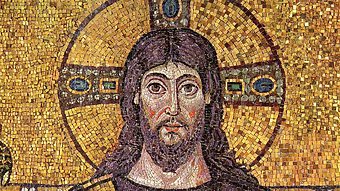
Presumably, however, the same sources that Raphael depends on for  historical figure of Jesus Christ, are also the very same the sources that insist upon the idea of Jesus’ Divinity. It is one thing to reject that Jesus is the Son of God, but it simply impossible to escape the fact that Jesus identified himself as God the Son. The only way one can arrive at his conclusion is if we were to erase the historical record.
r975057_10612042

Here are some examples (and please note that these are only samples) from the historical record indicating Jesus’ self-belief in his Divine nature. The documents I am quoting are also considered by academics as the most reliable and earliest sources for the words and life of Jesus.  It is therefore incongruous to consider Jesus without them.

Jesus’ words

“If you are the Son of God,” he said, “throw yourself down. For it is written: “‘He will command his angels concerning you, and they will lift you up in their hands, so that you will not strike your foot against a stone.” Jesus answered him, “It is also written: ‘Do not put the Lord your God to the test.’” (Matthew 4:6-7)

‘I am the God of Abraham, the God of Isaac, and the God of Jacob’? He is not the God of the dead but of the living.” (Matthew 22:32)

“It is written in the Prophets: ‘They will all be taught by God.’ Everyone who has heard the Father and learned from him comes to me. 46 No one has seen the Father except the one who is from God; only he has seen the Father.  Very truly I tell you, the one who believes has eternal life”.  (John 6:45-47)

“Very truly I tell you, a time is coming and has now come when the dead will hear the voice of the Son of God and those who hear will live”. (John 5:25)

“Very truly I tell you,” Jesus answered, “before Abraham was born, I am!” (John 8:58)¹

Jesus replied, “If I glorify myself, my glory means nothing. My Father, whom you claim as your God, is the one who glorifies me. (John 8:54)

“I and the Father are one” (John 10:30)

“Why then do you accuse me of blasphemy because I said, ‘I am God’s Son’? Do not believe me unless I do the works of my Father.  But if I do them, even though you do not believe me, believe the works, that you may know and understand that the Father is in me, and I in the Father.” (John 10:36-38)

“When he heard this, Jesus said, “This sickness will not end in death. No, it is for God’s glory so that God’s Son may be glorified through it.” (John 11:4)

“How can you say, ‘Show us the Father’? Don’t you believe that I am in the Father, and that the Father is in me? The words I say to you I do not speak on my own authority. Rather, it is the Father, living in me, who is doing his work” (John 14:9b-10)

“For God so loved the world that he gave his one and only Son, that whoever believes in him shall not perish but have eternal life.  For God did not send his Son into the world to condemn the world, but to save the world through him.  Whoever believes in him is not condemned, but whoever does not believe stands condemned already because they have not believed in the name of God’s one and only Son.”(John 3:16-18)²

The many ‘I AM’ sayings of Jesus in John’s Gospel are less about English grammar and is the holy name of Israel’s God, revealed to Moses at the burning bush. The religious intelligentsia rightly understood Jesus’ use of the phrase as calling himself the God of Abraham, Isaac and Jacob. 

In addition, Jesus’ most frequently used title was ‘Son of Man. While it’s meaning was somewhat enigmatic, Jesus spoke and acted in ways that accorded with the Old Testament and therefore it is difficult to conclude that Jesus viewed the title, ‘Son of Man’, in a way that differed from its use in Daniel chapter 7, where the ‘Son of Man’ is described as one who is given the authority and power of God, and is worshiped accordingly.

Words from others that Jesus did not repudiate

“The tempter came to him and said, “If you are the Son of God, tell these stones to become bread.” ((Matthew 4:3)

“What do you want with us, Son of God?” they shouted. “Have you come here to torture us before the appointed time?” (Matthew 8:29)

“Then those who were in the boat worshiped him, saying, “Truly you are the Son of God.” (Matthew 14:33)

“Simon Peter answered, “You are the Messiah, the Son of the living God.” (Matthew 16:16)

“Some of the Pharisees said, “This man is not from God, for he does not keep the Sabbath.” But others asked, “How can a sinner perform such signs?” So they were divided. Then they turned again to the blind man, “What have you to say about him? It was your eyes he opened.” (John 9:16-17)³

“When Jesus saw their faith, he said, “Friend, your sins are forgiven.” The Pharisees and the teachers of the law began thinking to themselves, “Who is this fellow who speaks blasphemy? Who can forgive sins but God alone?” (Luke 5:20-21)

“Again his Jewish opponents picked up stones to stone him, but Jesus said to them, “I have shown you many good works from the Father. For which of these do you stone me?” “We are not stoning you for any good work,” they replied, “but for blasphemy, because you, a mere man, claim to be God.” (John 10:31-33)

“Yes, Lord,” she replied, “I believe that you are the Messiah, the Son of God, who is to come into the world.” (John 11:27)

“Thomas said to him, “My Lord and my God!” (John 20:28)

The reason for Jesus’ crucifixion

“For this reason they tried all the more to kill him; not only was he breaking the Sabbath, but he was even calling God his own Father, making himself equal with God”. (John 5:18)

“The Jewish leaders insisted, “We have a law, and according to that law he must die, because he claimed to be the Son of God.” (John 19:7)

Conclusion

The conclusion is simply inescapable, Jesus believed he was the Son of God. The volume of statements spoken by Jesus about his Divinity is significant, and is perhaps greater than the number of recorded words spoken by President Obama whereby he addresses himself as the President of the United States! In addition to the words of Jesus, when considering whether Jesus is the Son of God, one must also attest to his character and works, all which draw us to the same conclusion. We may question the conclusion, but it is poor form to excise parts of the historical record simply because it doesn’t fit your agenda.

To summarise the evidence:

  • On numerous occasions Jesus indicated that he is God’s Son.
  • Jesus’ opponents believed that Jesus was claiming to be God, and for the said reason they had him killed.
  • Many people believed that Jesus was God and Jesus did not correct them
  • Jesus’ life, character, works, miracles, death and resurrection are unique in the entire history of the world, and each adds weight to his claim of Divinity, not detracts.
  • The first Christians, many of whom were eye-witnesses to the life of Jesus and others were at one time opponents, were prepared to suffer imprisonment and even death for the confession, Jesus is Lord.

“These are written that you may believe that Jesus is the Messiah, the Son of God, and that by believing you may have life in his name” (John 20:31)

————-

  1. Jesus is suggesting more than that he was living prior to Abraham’s birth (at least 1600 years earlier!)
  2. There is debate over whether these words were spoken by Jesus or are a commentary on Jesus’ words to Nicodemus by John. Either way, the understanding is clear.

  3. This debate between Pharisees implies that some people indeed believed Jesus was God