A Christian QandA: But where was the Gospel?

Tonight’s ABC’s QandA program was purposed to examine the role of Christianity in Australian society today.

Interestingly, two hours prior to the show, I tweeted a question to which many of my Christian friends responded, ‘no, they would not be watching the program’. It seems as though lots of people are dubious about QandA’s capacity to present a fair and reasonable picture of Christianity, which is perhaps has some warrant based on previous programs.  I guess I include myself among the sceptics, but overall such doubts were given the boot. The show was presented well, and the rudeness scale from some previous episodes dropped off significantly.

Cg2v2IVUYAAHq7C

The program though didn’t quite start of the right footing, with Julia Baird exclaiming, “Everyone on the panel is a Christian.” Hmmm, really? There were some pretty dubious theologies up there tonight. But then I remembered how Julia recently referred to the Jehovah’s Witnesses, a cult who reject Christianity, as ‘conservative Christian’. That aside, Julia Baird did a fine job at facilitating the proceedings.

The Panel

On the panel was John Haldane (a Scottish Catholic who is a Papal advisor to the Vatican), Julie McCrossin (radio & tv personality, and gay rights activist), Ray Minniecon (Pastor & Chairperson of the Sydney Anglican Indigenous People’s Committee), Tiffany Sparks (Anglican minister in Brisbane), and Lyle Shelton (Director of ACL).

Given the program’s topic, one would have thought the ABC would invite Australia’s most notable Christian voices: where was Peter Adam, Peter Jensen, Brian Rosner, John Dickson, Michael Jensen, Justine Toh, and many others? I understand why Lyle Shelton was chosen, and Ray Minniecon, but the other panelists? McCrossin and Sparks represent what is at best a fringe and frayed interpretation of Christianity. John Haldane is from out of town and struggled to comment on Australian cultural particulars, although he did add a sense of intellectual gravitas that was otherwise missing at times.

Having said that, QandA is not (nor is it meant to be) an orthodox Christian program, and the producers no doubt have pressures on them to diversify the panel and encourage as many sparks as possible.

The Questions:

The most interesting part of the show was seeing what questions people were asking:

  • When a 16yo is arrested for terrorism is it time for us to consider if we have failed to nurture our sons?
  • Do the churches share responsibility for failing to articulate the Christian principles of a ‘just war’?
  • There was a question about Eric Metaxas and his alleged comparison between Nazi Germany and debates over sexuality.
  • Why are churches in Australia so silent when it comes to climate change?
  • What role should our churches be playing for true reconciliation in our nation today?Do Church leaders recognise the role that patriarchal hierarchies & theologies play in DV?
  • Is what the Bible describes a more realistic view of our world or have the secularists got it right?

Apart from the final question, no one asked about the veracity of Christian beliefs (is it true or not), rather, people wanted to know whether Christianity is good (good being defined in a variety of ways). That is worth reflecting on from an apologetic and evangelistic perspective. But also, for many of the questions, including the climate change and indigenous recognition, Christians have been actively speaking on these issues, and yet it seems as though the public hasn’t listened (ABC viewers at least!). This raises an important question for Christians as we seek to speak into society: why are we not being heard? How can we work better at clearly presenting our views?

The Conversation:

It is best to watch the program for answers to the specific questions, for here I only wish to offer one comment, which to me sums up the program:

Where was the Baptist tonight? Yes, that’s tongue in cheek…sort of. Baptists are in fact one of the few Christian denominations growing across Australia, and yet there was no room for one? Leaving the facetious aside,

Why was an entire episode of a ‘Christian’ Qanda without any mention of the crux of the Christian faith, the Gospel of Jesus Christ?

I remember an episode with Peter Jensen and one with John Dickson, where both sought to explain the Gospel and give a reason for the hope they have. Tonight, the entire program was addressing matters from a Christian perspective and yet where was a faithful and clear articulation of the Gospel, even in a single sentence? The closest we came was when Lyle Shelton made passing reference to Christ laying down his life, and when Ray Minniecon called Australians to ‘repentance’. 

Of course, television programs (and the media in general), have little interest in the actual message of Christianity;  it is easier and more contentious to focus on moral questions. These questions are important, and as a Christian I believe the Bible gives us answers, but Christianity is not moralism. This is one of the potential dangers for groups like the Australian Christian Lobby. While I agree with many of their statements, they can be guilty of presenting a Christianity that is defined by a set of moral values, but that is a faulty view of Christianity. This is not questioning their orthodoxy, but the only message we have is  is the good news message of Jesus Christ, the Son of God, who died on a cross and rose from the dead for the salvation of everyone who believes in Him.

‘God made him who had no sin to be sin for us, so that in him we might become the righteousness of God.’ (2 Corinthians 5:21)

‘I consider everything a loss because of the surpassing worth of knowing Christ Jesus my Lord’ (Philippians 3:8)

As Julia Baird summed up the final question, she gave the panel every opportunity. She asked, ‘is it down to God’s grace or human endeavour?’ There I sat, pleading, would some one please explain the good news of Jesus Christ? Would someone at least say, ‘yes, it’s God’s grace’. What an opportunity to articulate the truth and beauty and power of God’s grace, but no. I was saddened to hear no minister of the Gospel say yes to God’s grace.

I was saddened. I was not surprised to hear Julie McCrossin and Tiffany Sparks contradicting Biblical truths; that’s what ‘progressives’ do; they throw away those things in the Bible that contravene their liberal views. But still, as Australians listened tonight to Christian leaders expound their beliefs, they will go to sleep none the wiser, yes, hearing some Christian ideas and thoughts, but almost nothing about the message which is Christianity. 

What I heard tonight was, Christians have opinions about lots of issues, just like everyone else. I heard, Christians disagree a lot. I heard, people have the capacity to change.

This ‘Christian’ QandA ended up sounding more like a Jane Austen novel set in Victorian England, acknowledging some things Christian, but with very little appeal to the Christ of Christianity and to the grace of God which Christians do trust, rejoice in, and want other Australians to know.


Julia Baird defends John Dickson…sort of

“It is easy to believe in freedom of speech for those with whom we agree.” (Leo McKern)

Like an episode of ‘Rumpole of the Bailey’, Julia Baird yesterday came to the defence of John Dickson, although in a somewhat less convincing performance.

John-Dickson.jpg,q1414797734.pagespeed.ce.xwQMht8rl1

One week ago Rev Dr John Dickson raised a question on his personal Facebook page, concerning the manner in which the same sex marriage debate is being conducted in Australia. Within hours the post was taken down by Facebook, and then reinstated one day later with a somewhat fuzzy apology attached.

In yesterday’s The Age, Julia Baird came out swinging, first of all using testimony from Prince and then proceeding to argue, ‘Dickson’s questioning should not be slammed but aired, and he is right to argue conservative viewpoints should not be so rapidly shut down or dismissed as hate. It was very odd of Facebook to delete this post.’

At the same time, Baird didn’t hold back in offering her own view on Dickson’s comments,

‘This is a massive, inadvertently inflammatory call and one I do not agree with. Surely acceptance, tolerance and absence of judgment about difference would make LGBTI youth feel better. But, isn’t it up to them, to say what makes them feel better? It is also highly provocative to accuse those who either belong to, or are allies of the LGBTI+ community of augmenting the very hatred they have spent their lives trying to fight and diminish.’

The fact that a journalist in Australia has freedom to speak her mind and to disagree with another Australian, and to do so in the most direct manner, is a sign of a healthy society. Would we want our sitz im leben to be less than this? 

In her closing statement, rather than reiterating Dickson’s right to offer an opinion, it seems as though Baird crossed the floor to the prosecutor’s table, and it is these remarks that I find most odd.

Baird finishes by quoting another Facebook post, that of Sydney Chaplain, Garry Lee Lindsay,

I can’t see how this helps anything. Please don’t try to convince me that it is intellectual debate or you are approaching the subject with an open mind and a loving heart. You might be, but why do you have to say it? And why is it so important to make comment about other people’s lifestyle or culture on Facebook? Just go out and make friends with people because they are people, made in the image of the Creator, inseparable from God’s love.

“What about calling people to prayer for those poor people in Japan and Ecuador that lost their lives and family in the earthquakes? To start with!!! What about we stop writing posts like this one, make some soup and sandwiches, go and hand it out to the hundreds of rough sleepers on our streets every night and give them some company? Why don’t I? Because I’d rather whinge about the terrible people that aren’t like me, don’t think like me, don’t live like me. And do it from a distance, because then at least I know I’m OK. What a wretched man I am? Who will save me? Thanks be to God.”

First of all, Lee-Lindsay (and presumably Baird, given she is appealing to the quote) dismisses the importance of people offering comments about lifestyle and culture matters on Facebook. Although I wonder, does  Lee-Lindsay realise that he is guilty of the very thing he is accusing of others of doing? ‘Others mustn’t use Facebook to express opinions about sexuality issues, like I am doing right now…!’

Do Lee-Lindsay and Baird not realise that these issues of marriage and of transgenderism are very much public issues? Marriage may be a personal relationship, but it is also a societal one. If it were not, why are wedding ceremonies held in the presence of witnesses, and why does Government have a role and why do we have a national marriage registry?  Similarly, recent discussions on transgenderism demonstrates it is not merely a private issue: should boys be allowed to use girls toilets in schools? How is society to relate to people who don’t wish to identify with their biological sex? It is incongruous to suggest these issues cannot be discussed in public forums; these matters effect families, schools, communities and Governments. And if they are discussed, are only agreeable voices to be allowed?

Second, the quote implies that Christians such as John Dickson are whinging as they make public statements about SSM, when what they should be doing is ‘making friends with people’ and helping people where they are at. This is not only a very smug caricature of Christians, it is hugely presumptuous. How do they know we are not providing food for the hungry, and not praying for victims of those earthquakes?

Can we not do both? John Newton was a preacher and an anti-slavery campaigner. John Wesley preached more sermons than most and he started orphanages. Jesus preached, taught and addressed all manner of social and spiritual issues, and even daring to question the political realms, and he cared for the poor and broken. Christians I know are committed both to speaking and sharing, preaching and praying, and I have no doubt John Dickson does likewise.

Despite initially supporting John Dickson’s right to post on Facebook, Baird lands on what is becoming an all to common place; while John Dickson technically has the right to freedom of speech, he really shouldn’t say anything unless he is offering unqualified support for those who wish to pursue non-heterosexual lifestyles. In fact, Christians should stick to helping people and leave public discourse to others.

Ultimately, Julia Baird falls for the false antithesis: disagreement equals hate. Why is Baird propagating such poor logic? The latter may be an expression of the former, but not necessarily. For example, as a parent there are occasions when I disagree with my children’s choices, and yet I still love them. Indeed, love necessitates that I sometimes disagree with them. More than that, Jesus Christ lived and spoke constant love, and yet this love sometimes manifested itself by offering correction to people, even rebuke.

If Christians are to be anything like Jesus we will continue to trust and graciously speak his words, the gospel, and seek to love others as Christ has loved us. As far as John Dickson has tried to emulate his Lord and Saviour, he given us a worthwhile example to follow. It is clearly unpopular, but popularity is often a poor test for what is truly good and right.

What did John Dickson say? Facebook outrage

What was so shocking about a John Dickson post that Facebook found it necessary to delete it? What vindictive or vilifying comment did Rev Dr John Dickson make? What disgusting accusation did he write?

John-Dickson.jpg,q1414797734.pagespeed.ce.xwQMht8rl1

mug shot of the accused

Here is the full gross hate-filled speech that has caused Facebook to act with swift justice, resurrected from the hidden vaults of a computer’s history:

“I might be wrong, but I think I detect a pattern of argumentation over same-sex marriage that potentially harms LGBTI youth and, yet, is partly the fault of those advocating for gay marriage.

It is true that demeaning insults were once part of the stock language against the LGBTI community in the public square. I can only imagine the damage that did to young (and old) people wrestling with their sexuality. It is a terrible part of our recent history. God, forgive us!

But I haven’t seen many demeaning insults directed at the LGBTI community in the public square in the last few years. Whether on The Project or ABC’s Q&A, it seems that all or most of the intemperate language and spiteful tone comes from advocates of gay marriage, while defenders of classical marriage—even if they are wrong and loopy—seem to have learned to engage in this contest of ideas with respect and civility.

But here is the thing that intrigues me most. At the climax of many of these public debates, as advocates of gay marriage raise their voices and deliver their insults, they frequently declare with unnoticed irony something like, “And this is precisely why we shouldn’t have a national Plebiscite on gay marriage: the discussion is so negative and hate-filled, and it can only reinforce feelings of rejection among LGBTI youth.” They sometimes cite a recent surge in calls to LGBTI helplines to prove it.

But my fear is that by heightening the tone of the debate and reiterating the hatred which classical marriage advocates allegedly have for the LGBTI community, it is advocates of gay marriage themselves who are unwittingly entrenching in young gay and lesbian men and women the sense that there is something wrong with them, that there is a whole segment of Australian society that despises them and sees them as second-class citizens. In short, isn’t it possible that the LGBTI community’s frequent claims of being a despised minority are exacerbating feelings of being hated among LGBTI youth?

But imagine an alternative scenario. If gay marriage advocates chose tomorrow to emphasise in public debate that it’s entirely possible to disagree with same-sex marriage and be deeply respectful of LGBTI people, isn’t it possible that young gays and lesbians listening in would be spared some of the harm this debate could cause? If calm and civil discussion was the order of the day, instead of tribalism and slurs, wouldn’t LGBTI youth feel better about who they are and less ‘under attack’ from other segments of society?

I realise I see all this through the lenses of classical Christian convictions and centuries of social power. I have tried to assess my motives and look at it from the perspective of others. But I am left wondering if gay marriage advocates bear as much responsibility as traditional marriage advocates for ensuring that LGBTI youth are not harmed in the lead up to the Plebiscite.”

The offence is as easy to spot as a Facebook algorithm…well, no, it’s not.

Facebook stipulates that,

“We remove content, disable accounts and work with law enforcement when we believe that there is a genuine risk of physical harm or direct threats to public safety. Learn more about how Facebook handles abusive content.”

Fair enough, but where are any of those things in John’s post? Perhaps someone wrote a comment in the thread, so appalling that it required the entire discussion to be erased? Unfortunately the entire discussion has been deleted and so we cannot verify, although I did read many of the comments while the thread was still available and I only read civil dialogue, even when disagreement was proffered.

No one is surprised by the fact that Facebook contains millions of appalling groups, pages, comments, and images; things that are truly sickening and derogatory, toward all kinds of peoples. If Facebook was genuinely concerned with bullish, defamatory and hateful speech, perhaps they might consider visiting the pages of some football clubs, or ABC’s QandA, or The Age newspaper (I’m referring to comments posted by members of the public).

Let us be clear, John has raised a reasonable question, one based on valid observations about current conversations on LGBT issues. He was not preaching a message; he offered an opinion and then asked what other people thought. He was respectful, and called for  ‘calm and civil discussion’. He made it clear (at the end of his original post) that he would delete any harmful comments. As anyone can see for themselves, John expresses concern for LGBT people, and bemoans the fact that too often debate on SSM resorts to insults.

And yet, Facebook determined to have this respectful conversation taken down. Why? At this point in time Facebook have not responded to John’s enquiry, nor that of others who have written and asked questions.

The famous American Chef, Anthony Bourdain once said, “I don’t have to agree with you to like you or respect you.”

It appears as though Facebook is joining the league of those who haven’t read Bourdain’s recipe!

Disallowing serious and legitimate discourse is not a sign of a mature society, but of a regressive culture that has become enslaved to an absolutist and oppressive ideolog. This is increasingly the case in Western societies as we see politicians,  media personalities, and entertainers insist the population adhere to their self-defined and unprovable moral truths. The fact that their definitions frequently change doesn’t get in the way of them demanding unquestionable allegiance. Under such a system it is irrelevant whether one speaks with compassion and clarity, and with evidence and grace; it is enough that the secularist’s sexual proclivity has been questioned.

We are somewhat stunned by Facebook’s actions, but let’s remember, this is nothing new. During his life Athanasius found himself exiled 5 times for speaking his views. William Tyndale was burnt alive for giving the English people the Bible in their own language, and John Bunyan had freedom of speech snatched from him and a prison cell given instead. This is not the first time in history when sensible speech has been censored, and it won’t be the last. Yes, it is irrational and intolerant, but such was the experience of the gentlest, most loving, rational, gracious man to have ever walked the earth, Jesus Christ.  The full beauty of glory of God dwells in Him, and yet the world disdained his talk of peace and love, and people despised the fact that he showed grace toward people, even those with him he strongly disagreed.

With perspective, last night’s actions by Facebook are pretty small, but they are certainly symptomatic of a broader issue that ought to concern not only Christians but all people who believe in fair, truth-seeking, and respectful debate.

News about ‘Evangelical Union’ at Sydney University

The University of Sydney Union has been applying pressure to ‘Evangelical Union’ in recent years to remove certain statements of faith from their constitution. This issue has reached a crucial stage over the past month, with threats being made concerning EU’s future at the university.   As we spoke about this matter at Church a couple of weeks ago, here are 2 new pieces worthwhile reading as follow up:

http://australia.thegospelcoalition.org/article/some-observations-on-the-sydney-eu-affair

http://australia.thegospelcoalition.org/article/an-interview-with-sydney-eu-student-president

Answers to Difficult Questions

This Sunday at Mentone Baptist Church we are beginning a 3 week apologetic series, examining 3 hot topics:

1. Should Christians object to same-sex marriage? (April 3rd)

2. What is a Christian response to refugees? (April 10th)

3. Is the a reason for suffering (April 17)

Everyone is welcome to join us. Following each service there will be a QandA session to explore in further detail questions relating to these topics

ApologeticsforWeb


I am Pakistan?


7278816-3x2-940x627

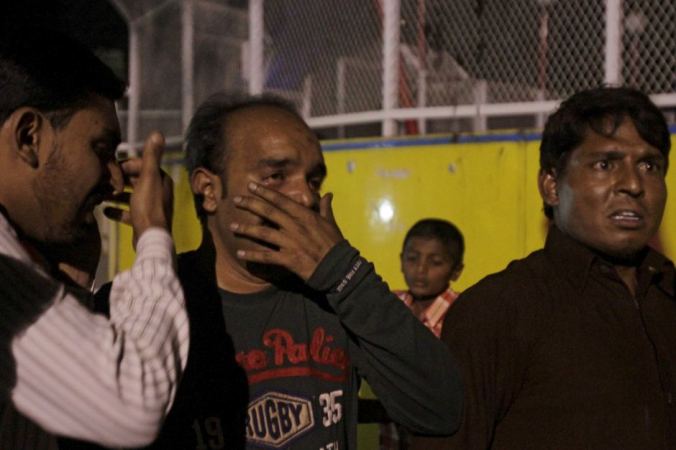
Today, 70 people in Lahore Pakistan were murdered as they celebrated Easter. The majority of the dead are children and women. Hundreds more people have been injured by the suicide bombing, which has been claimed by the Taliban.

The Taliban chose their time and place carefully, deliberately targeting Christians. This is a far too common story in the Middle East and subsaharan Africa. Persecution against Christians and other minority groups has persisted in many of these countries for decades, and sporadically over centuries. But they are not the only victims; as we have seen in Syria, Iraq and Turkey, Muslim people are readily targeted, and in Brussels and Paris the attacks were levelled at secular societies.

Yesterday in Baghdad while people gathered to enjoy a soccer match, a man blew himself up killing 41 people, mostly children.

Last week, 31 people were blown up in Brussels, with Islamic State taking responsibility.

The week before, at least 37 people were killed in one of Ankara’s busiest streets, when a car packed with explosives was detonated;  a Kurdish group has claimed to be behind the bombing.

As with Paris last year, following the dreadful carnage in Belgium social media was taken captive to hashtag Belgium, and people overlaid their Facebook profiles with the colours of the Belgian flag. National leaders took to their pulpits to cry solidarity with our friends and allies. Perhaps somewhat symbolic of Western ignorance, the One World Trade Centre lit up the Manhattan skyline in the Belgian colours: red, white and blue? But where was the public support for the Turkish people last week? Where was the twitter outrage and the clarion calls from our politicians when a Baghdadi soccer field turned red with the blood of children? In light of the Lahore massacre will we tomorrow light  the spiral of the Victorian Arts Centre in Pakistan’s green and white?

Our humanity has constraints; limitation is after all a characteristic common to all people. We do not therefore have the emotional capacity to mourn all who die in this world and to scream at all the wickedness that weaves so deeply through every culture. But while  our tears are reserved for Western nations, the rest of the world is right to be suspicious of us

There is an episode of The West Wing where President Bartlett is troubled by a genocide unfolding in a African nation. During a conversation with a staffer he asks, “Why is a Kuhndunese life worth less to me than an American life?” To which the advisor answered, ‘I don’t know, Sir, but it is.’

Why is it, we feel the grief and anger from Paris and Brussels, and not of Africa, Pakistan, and Turkey?

Until we can say ‘I am Turkey’ and ‘I am Pakistan’, we again prove the prejudice of our humanity. And  yet can we even dare to speak such seemingly supercilious words to those who have suffered so much?

Last year I made the observation that where the cultural and historical links are closer, there is often a greater outpouring of responses. Perhaps we should not be surprised therefore that more attention is given to our European friends than to others. Then again, perhaps our compassion stems from a vulnerability which emerges from seeing in those Western cities a mirror into our own way of life.

In other words, we empathise with those who are most like us. In contrast, consider the way Easter defines God’s condescension toward humanity. The explosion that has killed so many people in Lahore will one day be silenced by the Easter message which those people had gathered to celebrate. Easter reminds us of God who ‘so loved the world that he gave his one and only son that whoever believes in him will not perish but have everlasting life’ (John 3:16)

God showed love not by changing a few coloured light bulbs or by trending a hashtag on twitter; the depth of this love of God was the substitutionary death of his only Son. God came into his own, the incarnation. He paid the penalty for human insurrection, the cross. He triumphed over the grave, thus vindicating his claim of Divinity and the efficacy of his salvific power, the resurrection.

The extent of this love of God is for the world. John 3:16 does not suggest a universal salvation, for the text makes clear that faith in Jesus is necessary and rejecting Jesus Christ results in judgement. Nonetheless, in Christ, God has expressed extraordinary love for the world. He is not of or for the West, he is not English speaking or the God of the middle class, his concern is global. The Bible describes this God in ways unparalleled in any religion and in ways more tangible, and with a good news message that is changing hearts and lives in every nation on earth:

In that day you will say: “Give praise to the Lord, proclaim his name; make known among the nations what he has done, and proclaim that his name is exalted. (Isaiah 12:4)

“He will judge between the nations and will settle disputes for many peoples. They will beat their swords into plowshares and their spears into pruning hooks. Nation will not take up sword against nation, nor will they train for war anymore.” (Isaiah 2:4)

Many Western societies, including our own, are turning our backs on Christianity; to our spiritual, moral, and intellectual detriment. After centuries of economic, political, technological and military progress we have gained the world, but lost our souls. But in many of these very nations who are witnessing such horrific slaughter, Christianity is growing. In these lands the reality of Easter resonates louder and more true than the wimpish silence of the West who either do not share the desire or have the capacity to be one with them and for them.

’16 For God so loved the world that he gave his one and only Son, that whoever believes in him shall not perish but have eternal life. 17 For God did not send his Son into the world to condemn the world, but to save the world through him. 18 Whoever believes in him is not condemned, but whoever does not believe stands condemned already because they have not believed in the name of God’s one and only Son. 19 This is the verdict: Light has come into the world, but people loved darkness instead of light because their deeds were evil. 20 Everyone who does evil hates the light, and will not come into the light for fear that their deeds will be exposed. 21 But whoever lives by the truth comes into the light, so that it may be seen plainly that what they have done has been done in the sight of God.’ (John 3:16-21)

Earth Hour and Resurrection Sunday

This year, Earth Hour shares the same day as Easter Sunday. Coincidence? Yes. Timely? Perhaps so.

Earth Hour began in 2007 in one of Australia’s colloquial towns, Sydney. A year later Melbourne joined with hundreds of global cities to participate in Earth Hour. According to the Earth Hour website, there are now over 7000 cities and towns participating worldwide.

It is hard for my wife and I to forget Earth Hour, given it coincides with our wedding anniversary. Nothing makes for a romantic dinner than having the power turned off for an hour!

OLYMPUS DIGITAL CAMERA

Earth hour is a one hour ‘lights off’ event. Between 7:30-8:30pm homes, businesses, and public places are encouraged to switch off their lights as a way of communicating the threat of global warming and showing consensus that we need to do more to limit its consequences.

To quote, we “show their support a low pollution, clean energy future, one in which we can continue to enjoy the best of nature and our great Aussie outdoor lifestyle.”

Earth hour is symbolic, a gesture indicating a concern and call for responsible living in this world.

This year, Earth Hour synchronises with Easter Sunday, or Resurrection Sunday as it is also known. This is a day when Christians celebrate the resurrection of Jesus Christ from the dead.

Far from being symbolic, Jesus’ death and resurrection is historic, literal, and real. We may turn the lights off for an hour, Jesus experienced the darkness of death.

His work changed the world. While the resurrection of Jesus certainly has a future looking fulfilment, it is has the power to change the human heart even in the present. And far from ditching this current world, the physical nature of Jesus’ resurrection affirms the value of creation. We are not left disregarding the world and neither are we left pinning the hopes of the world on ourselves.

Earth Hour reminds us of the fallenness of this world, and indeed how complicit we are in this; the resurrection of Jesus proclaims the redemption. We need a God-sized solution to our world’s problems, whether it is global warming or a thousand of other insurmountable issues that weigh down humanity and stifle life, truth and love.

As the Apostle Paul wrote,

’We know that the whole creation has been groaning as in the pains of childbirth right up to the present time. Not only so, but we ourselves, who have the firstfruits of the Spirit, groan inwardly as we wait eagerly for our adoption to sonship, the redemption of our bodies. For in this hope we were saved. But hope that is seen is no hope at all. Who hopes for what they already have?  But if we hope for what we do not yet have, we wait for it patiently. (Romans 8:22-25)

The ultimate answer to Earth hour is Resurrection Sunday.

As we turn off our lights for one hour and commiserate the global sized problems before us, why not also reflect on the tangible hope offered us in the person and work of Jesus Christ?

The Autumn of Tolerance

The weeks leading up to Easter have witnessed some of the worst mud slinging Australians have thrown at each other for quite some time. Just a few short years ago tolerance was lauded as a national virtue. Showing respect to another person with whom there was disagreement was part of the course of conversation. There was space not only to express an opinion, but freedom to persuade others of that view. After all, is this not a basic tenet of a democratic society?

Recently however, it appears as though tolerance has been given the flick, and a neo-Orwellian temperament has come to the fore, especially in Victoria.

Education Minister, James Merlino, is among a number of politicians labelling people ‘bigots’, simply for raising concerns about Safe Schools. And despite proven flaws with the Safe Schools material and agenda, the Victorian Government insist that it will be mandatory for schools. There has even been backlash at the Federal Government’s decision to give parents information about the program, and the right to opt-out their children should they choose. When the State wishes to take from parents their responsibility to make decisions for the good of their children there is a fundamental problem in Spring Street.

The message being communicated by the Government is that Victorians must adhere to the current social milieu or be branded as haters; agree with us or shut up.

This however is counter productive. Changing a culture of fear cannot be achieved by the State bullying its own citizens and stifling disagreement, indeed it only further polarise people. No one wants children self-harming. No one wants children bullied. And many believe with fair reason that Safe Schools is not the answer. It is one thing for a Government to disagree with these concerns, it is quite another for them to call the same public bigoted and insist their children attend these classes against parental permission. Have they not become guilty of the very hostility they are alleging needs stamping out?

Perhaps all of us need to look afresh at Easter,  and be reminded of that most radical idea which continues to turn inside out haters from all sides.

There is a story in John’s Gospel where Jesus broke with the cultural expectations of his day to speak with a Samaritan woman. At that time Samaritans were considered social outcasts, and they were often discriminated against. Jesus’ conversation was all the more outrageous because the person before him was a woman, and a woman was then living with a man to whom she was not married.  In our minds this may not sound particularly shocking, but at that time this woman was guilty of triple-headed social evil. However, it didn’t stop Jesus.

John tells the reader how Jesus understood her heart and her past, and yet he struck up a conversation with her. He showed her kindness, and even offered this astonishing word, “whoever drinks the water I give them will never thirst. Indeed, the water I give them will become in them a spring of water welling up to eternal life.”

In other words, Jesus did not agree with her lifestyle and yet he loved her and he dismantled cultural barriers to express kindness to her.

This account is one of many that preempt the supreme act of love that Jesus would express, that which we remember at Easter; the cross and resurrection.

Both the religious and political establishment were convinced that Jesus’ views could not be tolerated, and therefore must be silenced. And yet without his volition they could not have enacted their plan. It is one of the extraordinary juxtapositions we see in the cross: people conspired Jesus’ death and he himself chose that path. He responded to hate not with hate but laying down his life for the good of those who ridiculed and mocked him.

We are losing the art of disagreement and because of this, true respect and reconciliation becomes evasive. Indeed it appears as though we are entering the Autumn of tolerance, and winter is on the horizon. It is only fair to ask, is this a sign of how dissent will be treated in the future?

EasterforWeb

The message of Easter is one all of us need to hear afresh. At its heart, Easter is God reconciling to himself those who disagree with him and he with them. The cross demonstrates disagreement and love, grace and truth. Jesus did not choose the path of the self-acclaimed intelligentsia, or the self-righteous. He sided with the oppressed and unpopular, not because he agreed with their values but because he loved them

Miroslav Volf put it like this, “I don’t think we need to agree with anyone in order to love the person. The command for Christians to love the other person, to be benevolent and beneficent toward them, is independent of what the other believes.”