Responding to the situation in Israel: thoughts from a Christian

“Esther again pleaded with the king, falling at his feet and weeping. She begged him to put an end to the evil plan of Haman the Agagite, which he had devised against the Jews.” (Esther 8:3)

Shock. Horrified. Anger. Weeping. 

The world is reeling at the sights and stories flooding our screens and phones from Israel.

The attacks on Israel over the weekend by Hamas is the most serious threat to the security of that nation in 50 years. It is no coincidence that the attacks were orchestrated while Israelis enjoyed a public day to celebrate the Feast of Tabernacles. As families gathered and IDF members relaxed at home, thousands of rockets were fired into Israel and 100s of armed militants crashed through border fences and began killing and kidnapping. 

It was 50 years to the day since the Yom Kippur War when Egypt and Syria launched a surprise invasion of Israel. As though like a blood-filled reminder and yet ironically oblivious to the outcome of that war,  Hamas struck with terrifying assault on civilians and soldiers alike. 

More than 1000 people are known to be dead and 1000s injured, and the situation is far from over.

“For three sins of Gaza,

    even for four, I will not relent.

Because she took captive whole communities

    and sold them to Edom,

I will send fire on the walls of Gaza

    that will consume her fortresses. (Amos 1:6-7)

What is happening in Israel right now is of Biblical proportions. The last 2-3 days have witnessed the greatest number of Jewish deaths since the Holocaust. That is a terrible statistic to hear. 

Across the globe and around Australia, there is widespread support for Israel. The Australian Prime Minister Anthony Albanese is among international leaders affirming Israel’s right to defend herself and condemn the insidious violence and brutality being carried out by Hamas. As the Scriptures remind us, the State has the power and responsibility to wield the sword. It is a heavy burden and duty and requires great wisdom, patience and righteousness, and yet a State has that right to protect herself against armed aggression. 

While cities across the world light the night sky in the blue and white of Israel, as will my own city of Melbourne tonight, there are however some groups lifting their voices in support of Hamas. News outlets are now saying that Iran was involved behind the attack. A notable Imam in Sydney was on the streets last night, proclaiming to a crowd that this was a day of victory and celebration. 

Hours earlier, The Victorian Socialists tweeted support for the terrorists, 

‘Solidarity to the Palestinian resistance’.

Such a posture is disgusting and shameful.

I even saw a message from a Melbourne Anglican Minister supporting Palestine against Israel, as though the violence is somehow justified. It beggars belief.

In Sydney tonight, police have warned Jewish people to stay away from public spaces such as the famed Opera House because they are concerned for their safety. It is no wonder that Jewish people are fearful and many people are tonight wondering what on earth is going on?

I suspect (I pray), that those voices are like a scattering of drunken individuals at the MCG on non-game day. Their opinions are loud and carry across the G with force, but they are relatively few in number. 

What is more common, although still a minority from what I have gauged, are journalists and political leaders trying to dance around the issues and employ whataboutism. As though, yes Hamas is bad, and so is Israel, and there goes the merry round. When tragedy or evil strikes, whataboutism is about as kind to victims as Job’s friends. 

We don’t have to agree with all Israeli policy and affirm every past action of the Israeli Government. That’s not the point Eliphaz, Bildad, and Zophar! There is no justification for hating on Jews and for murdering and raping and kidnapping women and children.  There is no moral equivalence here.

As much as the world moves on its axis and highlights different conflicts, movements, and moments, we rarely shift far from Jerusalem. That ancient city continues to perplex, amaze, and tilt global events, even today as the world watches on.

It’s not that we (Christians) equate the modern State of Israel with Israel of the Bible. Such equivalences fail to take into account Biblical theology and how Christ is the telos of God’s ancient promises.  As the Apostle Paul describes,

remember that at that time you were separate from Christ, excluded from citizenship in Israel and foreigners to the covenants of the promise, without hope and without God in the world. 13 But now in Christ Jesus you who once were far away have been brought near by the blood of Christ.

14 For he himself is our peace, who has made the two groups one and has destroyed the barrier, the dividing wall of hostility, 15 by setting aside in his flesh the law with its commands and regulations. His purpose was to create in himself one new humanity out of the two, thus making peace, 16 and in one body to reconcile both of them to God through the cross, by which he put to death their hostility” (Ephesians 2:12-16)

As Christians, we understand the foundational role Jewish people have played in God’s unfolding plan of redemption. Abraham, Moses, and David are vital characters of both history and key to the shaping of what will become Christianity. Of course, the earliest disciples were all Jewish and Jesus was a Jew.

Gentile believers like myself appreciate our place in God’s gracious redemptive purposes. It is to be grafted by grace, as new branches into a very ancient tree, ‘You do not support the root, but the root supports you.’

How Christians can respond

How might Christians respond to the events in Israel of the past 48 hours? Here are 3 suggestions: pray, mourn, and press close to Christ.

There is something every Christian can do today. We can pray. We should pray. There is, after all, Biblical warrant for praying.

“Pray for the peace of Jerusalem:

    “May those who love you be secure.

May there be peace within your walls

    and security within your citadels.”

For the sake of my family and friends,

    I will say, “Peace be within you.”

For the sake of the house of the Lord our God,

    I will seek your prosperity. (Psalm 122:7-9)

We pray for peace. We pray for justice. And we pray for mercy.

We both pray as members who have been grafted into that tree and we pray for Israel as we would another nation who have been terrifyingly attacked by men who doing evil.

Our prayers begin with Israel but they do not end with Israel, but extend to the Palestinian people as well. Hamas may control Gaza, but they do not represent all Palestinians. Indeed, thousands of Palestinians are Christian and no doubt many Muslim Palestinians are vehemently opposed to Hamas. 

Second, the Scriptures teach us to ‘mourn with those who mourn.’

This is why the ‘wisdom’ of Job’s friends is so unkind. For a few days, maybe avoid whataboutism and instead sit with someone or at least show empathy to someone who is in profound grief and trauma. This includes thousands of grieving Israeli families and countless Palestinian families who are caught up by Hamas’s vile political and religious games. 

When expressing anger at Hamas and showing support for Israel,  let us be careful and not conflate all of Gaza with Hamas. I think of a Palestinian family whom I know. They have family living in the Gaza Strip and over the years members have died and others faced terrible conditions. In 2017 he shared on my blog what life is like for many people in Gaza including Palestinian Christians of which there are many.

“In Australia and much of the west it is very easy to take essential provisions for granted.  Food, water, warmth, basic amenities, and the freedom to worship as a Church or body of Christian believers.  Such rights as voting, police protection, medical and health cover, or a simple roof over your head do not exist to many in Palestine.  Freedom to move around from suburb to suburb within the nation do not exist.  There is no right to external travel, and no right of return. …Uncertainty and persecution is everywhere.  Many fall in despair and suggest God is only a God of the Jews, and hater of the Palestinians.  They consider God hated Ishmael – whereas instead God saved him in the wilderness, and blessed him bringing into his line 12 princes.  The pain distorts their view on God’s true love and equitable justice.  God is not the racist they often time feel He is portrayed as.”

Jerusalem was built on an ancient promise. Through millennia of blood and life, grief and joy,  the very stones waited. The world is crying for ultimate justice and for ultimate hope. I am reminded of the One who warned us of wars and rumours of war, for he is the one who was crucified. He wept over Jerusalem and then entered the city as a King and then he gave his life as a ransom for many. 

Today is a day where action and justice is required, to punish evildoers and to save life. It is also a day for mourning. A time will come and we pray soon, ‘Come, Lord Jesus’. Pray that God will awaken the conscience and spirit, to see that the tomb outside Jerusalem is today empty and that Jerusalem’s hope, the world’s only hope, is Yeshua. 


Since writing yesterday afternoon, there have been so many additional reports and comments online that I fear that the anti-Semitic voice is larger than I suggested. And I say that with a heavy heart and one that makes me long even more for the Prince of Peace.

Every generation needs reform: 5 Lessons about Reform from 2 Chronicles

Church must change! Bring on the great reset! Make Church great again!

Sloganeering can sound like a clarion call or like cringe. This self-absorbed need for redefining, refreshing and relevance has captured the attention of many strands of Christian thought and Church growth networks. It may sound new, fresh and revitalising, but there is rarely anything new under the sun. While Churches diagnose the issues with as much concurrence as a circus of entrepreneurs, evangelists and the local university student union,  and while answers are equally disparate, there is a semblance of agreement that in Australia our churches have taken some missteps, while others have leapt over the precipice and into the void.

We’ve had several visitors to church recently who are struck by the fact as a church we read the Bible and preach through the Bible, and we pray. Apparently ,many Melbourne churches don’t see the need to do this. My question for Melbourne churches is this, what are you doing? Who are you listening to? What are you teaching?

As a Church, we’re currently preaching through 1 and 2 Chronicles. After 18 years at Mentone Baptist Church, we were yet to explore this 2 volume work. I decided that 2023 is the year to do so. As I read, prepared, and preached I noticed that one of the recurring themes in Chronicles is this topic of reformation. While aspects of reform are to fore in many of the sermons, we gave it special attention for 2 weeks as we examined the life and times of one of the key reformers in Judah’s history, King Jehoshaphat.

Other than King Solomon, more chapters are dedicated to Jehoshaphat’s reign than any other King in 2 Chronicles. That fact alone caused me to take a good look at his rule and the events that took place under him. 

Jehoshaphat was a reformer. There are principles and lessons about his reforms that are useful as we consider what it means to reform the church today.  As you’ll see, these characteristics are not unique to Jehoshaphat, these features are found consistently throughout the Bible and yet they find vivid expression in this Old Testament period. 

The word ‘reform’ is used in politics and economics and law and education. When reform is announced, it means there’s something wrong, the system is broken or out of date and needs reforming. It requires fixing or renewing. 

Reform is famously used to describe one of the great Christian movements of history to which we owe so much today, the Reformation: with Martin Luther, John Calvin, Thomas Cranmer, and best of all, the Baptists! What happened is that throughout the 16th Century, Christians living in different cities and speaking different languages were convicted by God’s word that some of the official teachings and morals of Rome were in error and out of step with the Bible. Across Europe, people went back to the Bible, ad fontes, and God began to reform and renew thinking, theology, education, civics, ethics and more. The Bible again changed the world. 

This notion of reform didn’t however first appear in 16th Century Europe. We find reforms taking place in the Bible, and the reign of Jehoshaphat is one such example.

1. Every new generation needs reform

Jehoshaphat is among many Kings of Israel and Judah who understood that each new generation need reforming. While he doesn’t initiate his reforms as quickly as someone like Hezekiah, he nonetheless commits to returning Judah to God’s covenantal promises. This is set in stark contrast to his northern contemporary, King Ahab, who flew the flag of progress and change.

17:3 The Lord was with Jehoshaphat because he followed the ways of his father David before him. He did not consult the Baals 4 but sought the God of his father and followed his commands rather than the practices of Israel. 5 The Lord established the kingdom under his control; and all Judah brought gifts to Jehoshaphat, so that he had great wealth and honor. 6 His heart was devoted to the ways of the Lord; furthermore, he removed the high places and the Asherah poles from Judah.

Jehoshaphat might be King but he understands God is God and his role under God is to serve and obey him. So begins the process of removing errant practices and ideas and returning the people to God’s revealed will in his word. 

Reform isn’t about maintaining dead religion or resisting the future or pining for the glory days of film noir or art deco. The Chronicler explains reformation is about devotion to God and a heart for His people. We read how Jehoshaphat’s heart was devoted to God’s commands. There is no distinction for Jehoshaphat between seeking God with his heart and following God’s words. Heart and mind, attitude and action, belong together and move in unison when we love God. We don’t choose between loving God and obeying the Bible. We don’t choose to be a heart Christian or a mind Christian.  

In loving God, Jehoshaphat leads Judah in reformation in these important ways:

  1. He sought God and followed God’s commands
  2. He removes idols
  3. He raises up teachers to teach God’s words to the people of God
  4. He appoints judges for the towns and regions

Jehoshaphat’s reforms include an aspect of the negative, saying no to false worship and removing practices and objects that distorted or altogether replaced the true worship of God. His reforms are also positive, sending out teachers and judges who will bring the people back to God’s words and cause them to live under the covenant.

In the third year of his reign he sent his officials … 9 They taught throughout Judah, taking with them the Book of the Law of the Lord; they went around to all the towns of Judah and taught the people. (17:7,9)

He appointed judges in the land, in each of the fortified cities of Judah. He told them, “Consider carefully what you do, because you are not judging for mere mortals but for the Lord, who is with you whenever you give a verdict. Now let the fear of the Lord be on you. Judge carefully, for with the Lord our God there is no injustice or partiality or bribery.” (19:5-7)

2. We move forward by going back to God’s word

Jehoshaphat leads the people not forward and away from God, but forward with God by going back to the word. He is a word-centred leader which is evidenced by him sending out teachers to all the cities and towns of Judah, men who took the Scriptures with them and taught the people.

One of the myths embedded in some missiology and church planting manuals is that to reach people today we need to find new ways and innovations. If I collected $10 for every time I hear talks and blogs and books advocating fresh, relevant and powerful ideas for churches, I’d soon be in a position to buy the Vatican! 

Of course, not everything new in the world and not every innovation is bad and wrong; that would be silly. Mission and Church have a language. I don’t simply mean linguistic and verbal language, but there are communicative signs and symbols in the way we do music and the way we organise church meeting places and the way we connect the gospel with people’s lives and cultural moments. But attached to many plans and dreams for the future, is a hubris and misstep that believes reaching people for Christ today requires new methods and new messages.

New is superior. New is more interesting. New is more authentic.

Of course, this vibe runs deep through many facets of our culture: think art,  music, movies, and even ethics. Ethics today is like experimental art. In places like Melbourne, what’s noticed and praised are new expressions and new definitions for those big questions of life,  ‘who am I’ and ‘what’s life about’. He old old story lacks gravitas, it doesn’t sell tickets, or so we assume.

This thinking is of course myopic. Plenty of new ideas are also disturbing and dangerous. Think of the subject of the movie Oppenheimer: the atomic bomb!

In fact, ecclesial commitment to innovation often creates new problems rather than fixing old ones. The consumer bent model of church that provides a cinematic experience or the moshe pit frenzy, the slick preaching that feels like a Netflix special, or the stripped back lounge church where we don’t preach or sing or do Bible because that creates awkward conversation.

Neither am I not arguing for traditionalism or conservatism. We don’t need to clean out the organ pipes and take classes to understand thee and thou. The tie is not more faithful than the t-shirt, or jeans over the dress. It’s not that one hour on Sunday is holier than 2, or a 50-minute exposition more faithful than 20. Within God’s given shape for church, there is great flexibility and freedom. And yet Jehoshaphat understood that faith has particular content and contour which shapes all of life. 

The shape and trajectory of the local church is far less glamorous and sounds way less cool and exciting and all the other adjectives we use to appeal to our congregation’s hearts, time and money.  And yet, it is far more substantial.

In the case of Jehoshaphat, his reforms produce something far more interesting and engaging and serious than what had previously captured Judah’s attention. In what we might consider rather mundane detail, in commissioning teachers to go to the towns and people with an open Bible, this King was shepherding the people wisely and lovingly. 

Going back to the Bible isn’t a static process or a regressive move. Accepting all those profound ideas about the Trinity and atonement and the incarnation are treasures to wonder and share, not hide away in the too-hard drawer. The Bible’s teaching about sin and salvation, men and women, sex and gender, are to be embraced with thankfulness, not written out of the church. The Bible itself gives us directives as to how to read, understand and interpret the Scriptures. We don’t dismiss any verse or chapter as untrue or irrelevant, but we read appreciating its significance in that salvific moment and in the trajectory of salvation history, which of course finds climax in the person and work of Christ. 

Big dreams and vision setting is fine, and even inspiring, so long as it’s driven by the biblical view of the gospel and grounded and shaped by God’s words in the Bible. The Bible is, after all, God’s loving word for the church. And yet how often is Scripture little more than background noise in our plans and moves and ideas and implementations.

Relevance is a mean master and pursuing it is often a sign that we’ve already lost our way. Many of the Kings of Israel and Judah had that attitude and found prophets to proffer that kind of message. Jehoshaphat doesn’t try to change or update God’s words with the latest trends coming out of Philistia and Ninevah. Instead, he raises up teachers who call the people back to God’s word. 

This word is, as Psalm 19 declares, perfect. One can’t improve a Mozart Piano Concerto. One doesn’t add fresh brushstrokes onto a Rothko canvas. Some things are perfect and complete. 

Jehoshaphat isn’t alone in grasping the need to reform a generation by going back to the word. Jesus holds the Scriptures in the highest regard and he was at pains to explain that not one dot or stroke will disappear. 

As we read the Apostles’ letters, they stress how Christian leaders and church congregations alike must not manipulate the text. We must not change the text or try to reinvent the Scriptures, but faithfully pass them on from one generation to the next. 

It’s what Paul says to Timothy. 

And the things you have heard me say in the presence of many witnesses entrust to reliable people who will also be qualified to teach others. (2 Timothy 2:2)

Timothy is to pass on to the next generation of teachers the same body of teaching given to him from the Apostle who in turn received it from Jesus.

Paul elaborates on his point later on,

But as for you, continue in what you have learned and have become convinced of, because you know those from whom you learned it, 15 and how from infancy you have known the Holy Scriptures, which are able to make you wise for salvation through faith in Christ Jesus. 16 All Scripture is God-breathed and is useful for teaching, rebuking, correcting and training in righteousness, 17 so that the servant of God may be thoroughly equipped for every good work.

Preach the word; be prepared in season and out of season; correct, rebuke and encourage—with great patience and careful instruction.

In this age of expressive individualism and disconnection and disappointment, in this age of social media and AI, viruses and geopolitical tremors, God has already shown churches the way. The way forward for our churches is to keep going back to the Bible. That means our gatherings need lots of Bible: reading the Bible out loud in Church and preaching from and through the Bible, and ensuring our songs and prayers are soaked in Scripture. It means our small groups spend time in the word. It means discipleship is more than sharing life and coffee but is teaching them to obey everything Jesus commanded the Apostles (Jesus did say this in the Great Commission). It means structuring our churches and ministries by the word and making sure our mission ventures are about explaining and exhorting the gospel word.

That’s not irrelevance or dullness, it’s captivating. I don’t know what your favourite song is but whatever it is I suspect you have listened to that song 100s of times and you still love it and enjoy listening and singing along.

When Australian and English cricketers were interviewed during the recent Ashes series, they spoke about their love for the game. These cricketers have played hundreds of games and every week they practice in the nets for hours, hitting ball after ball after ball. These world-class athletes share how they are always trying to improve their game. There’s always something new that they can learn about cricket: a shot or ball position they can improve.  The game is still the same game and rules and aims remain the same, but this doesn’t diminish their love of cricket. 

The Bible is so big and deep and rich, that we do not need to alter it or go searching for a new word. By going back to the Bible and believing God, we’re not drinking out-of-date milk gone sour, this is life-giving, drink and food. This word is new every day.

Jehoshaphat’s reforms produce some rather interesting responses

3. Reform made the nations take notice of Judah

Jehoshaphat’s reforms and his renewed focus on God’s words were noticed by surrounding nations, and it caused them to take interest and even to fear the Lord.

Only twice in all of Chronicles do we find this phrase, the fear of the Lord fell on the nations. Both occasions happen during Jehoshaphat’s reign. 

The first instance is ch17, early in his reign.

They taught throughout Judah, taking with them the Book of the Law of the Lord; they went around to all the towns of Judah and taught the people.

10 The fear of the Lord fell on all the kingdoms of the lands surrounding Judah, so that they did not go to war against Jehoshaphat. 

I understand that this might feel counterintuitive. To be relevant don’t we need to embrace all the new trends and fads? The reforming church isn’t chasing relevance or neither are we stuck in the mud with rude and angry characters who bemoan everything that is happening in society.

A church in the word will stand out: different, surprising, disagreeable and yet also appealing, objectionable but yet good.

As Tom Holland famously called out English bishops,

‘“I see no point in bishops or preachers or Christian evangelists just recycling the kind of stuff you can get from any kind of soft left liberal because everyone is giving that…if they’ve got views on original sin I would be very interested to hear that”.’

There lies the lie. For Churches to have a future in Australia don’t we need to adapt and change our colours and contours, even our doctrine? The reign of Jehoshaphat says otherwise.

4. Not every prophet is a true prophet

One of the famous incidents during Jehoshaphat’s reign involves what is described as a foolish and even sinful alliance with King Ahab of Israel. There are important lessons to learn about the nature of Christian unity and when it is wise to partner with others and when it is not, but I want to observe the one thing Jehoshaphat does faithfully here: he distinguishes between false words from God and the true word. 

“But Jehoshaphat asked, “Is there no longer a prophet of the Lord here whom we can inquire of?

Ahab has 400 prophets who in unison present what Ahab wants to hear. Their word is popular and soothing, it suggests an air of authenticity and persuasiveness, after all, it’s 400 to 1! Their message plays into Ahab’s a priori commitments and desires. However, as Micaiah spells out, behind these prophets is a lying spirit.

“So now the Lord has put a deceiving spirit in the mouths of these prophets of yours. The Lord has decreed disaster for you.”

Some of our ideas have good intentions but the timing is wrong or they are poorly executed. Sometimes our dreams for mission and church are noble but unwise. There are also messages, sermons and words offered that have demonic origins. Watch out for those sophist explanations of why the atonement isn’t the atonement or why the resurrection of Christ is spiritual but not physical or the appeals to new spirit insights as to why God’s sexual ethics has changed. 

Paul argues similarly, 

“The Spirit clearly says that in later times some will abandon the faith and follow deceiving spirits and things taught by demons. Such teachings come through hypocritical liars, whose consciences have been seared as with a hot iron. They forbid people to marry and order them to abstain from certain foods, which God created to be received with thanksgiving by those who believe and who know the truth.” (1 Timothy 4:1-4)

Reform isn’t moving away from the Bible and searching for new truths or new words from the Spirit. That’s the kind of attitude that gets Churches into trouble in the first place. In the case of Ahab and his prophets, the word of the Lord was proven true and the prophets false, but only when it was too late.

Micaiah declared, “If you ever return safely, the Lord has not spoken through me.” Then he added, “Mark my words, all you people!” (v.27)

In other words, you’ll know when it happens! You’ll learn God’s words are true when it’s too late.  There is a reason why liberal denominations tend to sink faster and their buildings serve as tombs for spiritual corpses. They promise the gospel of the world and as Jesus says, take it and forfeit your soul.  

5. Reform is fraught with failures and shortcomings.

Jehoshaphat’s reforms made positive impact on those outside Judah, but inside we are told God’s people didn’t want to change.

The end of Jehoshaphat’s life and reign is recorded with these words, 32 He followed the ways of his father Asa and did not stray from them; he did what was right in the eyes of the Lord. 33 The high places, however, were not removed, and the people still had not set their hearts on the God of their ancestors. (20:31-33)

By the end of his life, Jehoshaphat’s reforms were incomplete. At times he compromised and he was inconsistent. After 20 years of teaching and instructing the people, the people still had not set their heart on God. 

The Chronicler doesn’t suggest that Jehoshaphat’s reforms were an error of judgment or built on false assumptions about God and the Bible. Rather, this illustrates the nature of human hearts. There is a warning here, that we can sit under the Bible for years and all that does is bring judgement on yourself because we will not take this gracious word to heart.

It also serves to remind us how normal Christian ministry, that is, ministry of prayer and word, is most often slow and arduous. We thank God when we see lives changed and we grieve when people’s hearts remain unchanged or indifferent. This doesn’t mean God’s method is no longer working. It’s the reality of the human condition. Keep praying and keep teaching.

The famous Reformation of Luther and Calvin made profound changes from which we continue to eat the fruit today: both in our churches and even our secular society. Among the myriad of writers and thinkers and activists, there were some hairy moments, saints behaved like sinners, and whacky enthusiasts and bullish thugs all did their bit to try and manoeuvre reform down all kinds of dangerous roads. Where the true church is, there is always someone with a false passport lurking nearby. 

I recently learned that Martin Luther King’s famous ‘I have a dream speech’ didn’t convert anyone that day or in the days that followed. Today, it’s known as one of the greatest speeches of the 20th Century, but at the time, some of his closest advisors thought that it wasn’t very helpful. They read the manuscript and urged him to leave out those parts which with time proved to be the most memorable. Historian Dominic Sandbrook describes the speech as a slow burner. With time this speech on the steps of the Washington Monument became a hallmark of the civil rights movement.

Paul famously shows us that the word of the cross is foolishness to those who are perishing. The Gospel is stupid, silly, immoral, untrue, irrational, we’ve all heard the objections. And yet the same word is the power of God and the wisdom of God that brings salvation to all who believe. Reforming any church or organisation, even our own hearts, can be painful and cause anger, frustration and more. And yet God’s mission and method is as true and good today as it was in Germany 1517 and Carthage in 410, in London 1854 and Shanghai in 2019.

Do you love the church? Do you love the Gospel? Do you long to see God’s Kingdom growing around Australia? 

There is wisdom in Jehoshaphat’s example. The Gospel is engaging and enthralling. The Bible is stunning and shocking. A reforming Church is Spirit-filled, word-centred and life-giving,  joyful and sober-minded, intentional and creative, firm in belief and gracious and kind toward those who yet do not believe. 

The future for churches in Australia doesn’t lay in coveting ourselves with the latest cacophony of trend words and theories, but in pressing ever closer to Christ and letting his word shape our message and method. 

The question isn’t whether churches need changing, but are we being changed and sanctified by the word? If we’re not, then we will be as useful to the Kingdom of God as Ahab’s prophets. If we are, then we can trust God will accomplish his saving purposes and see Jesus keep his promise, “I will build my church”.

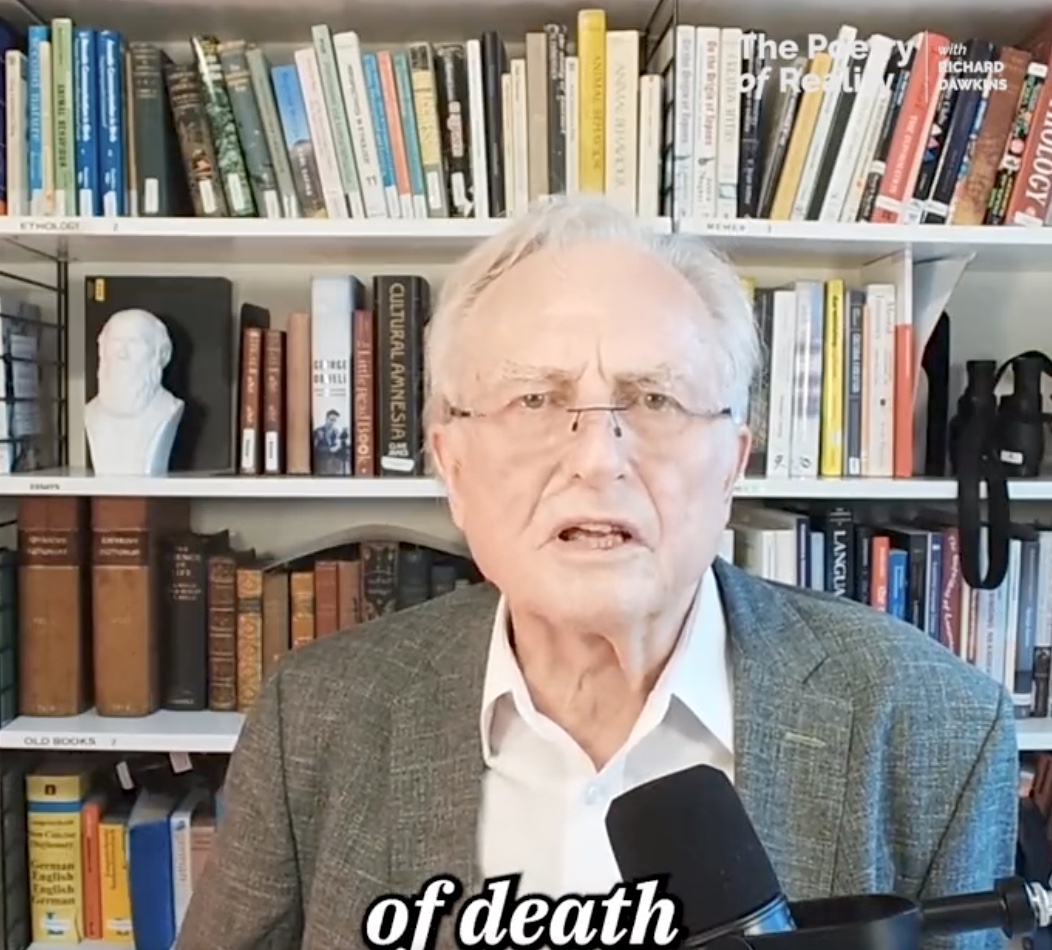
Richard Dawkins asks an important question and here is my answer

I can imagine Richard Dawkins sitting in the back row at the Areopagus, stern-faced and shaking head, and leading a small chorus of sceptics.

Richard Dawkins is continuing his mission to evangelise people out of Christianity (and religion altogether) and to secure his message of a world without hope. 

Today in a video message, he asks, ‘Do you want to be comforted by a falsehood?’

It’s a good question and an important one. Does anyone want to find consolation in a fabrication? Does anyone want to pour all their hopes into a dead end? For Professor Dawkins death is of course the dead end, with nothing beyond and no light to give hope to either the dead or those who are left behind. 

“When your brain decays there is absolutely no reason to suppose your consciousness will continue, so the grounds of plausibility, the balance of plausibility is heavily in favour or there been no survival after death and that is something and that is something we need to live with. It’s not all that horrifying a prospect when you think about it because we think as Mark Twain said, ‘I’ve been dead for billions of years before I was born and never suffered the smallest inconvenience.” 

I suspect that Dawkins’ answer will arouse applause and retweets from fans and devotees, and with a satisfied Amen. Leaving aside for a moment the question of whether he’s right or not, his answer isn’t particularly consoling. Dawkins says that he finds solace in the finality of being no more, but I suspect most people including a lot of atheists are not so convinced. Our intellectual commitments (whether theistic or atheistic) come under a sudden assault when death approaches and when a loved one is lowered into the grave. There is a longing for death not to win. There is palpable hope that life may continue and love to beat any final breath. 

Why divorce cognitive processes from heart filled yearnings? Of course, the two can be in conflict and they can also partner together as a harmonious duet, as we find in Christian theism.

Dawkins (and fellow atheists) believes that once our final breath expires and we are buried, the totality of what we were begins to rot and we cease to be. All that is left is the box in the ground holding our biological material and the memories that people have of you. Again, some readers may find that a satisfying end of the story, but most of us don’t. Whether we find it satisfying or not isn’t evidence of what is ultimately true.

The thing about the Christian view of resurrection is not one of lacking commitment to the intellectual process but appreciating that there is more going on. It is not wrong to appeal to deep heart filled longings, for those emotional impulses are part of who we are as human beings. We are more than those heart desires, not less.

I believe, along with Oxford and Cambridge Dons, scientists, poets, plumbers and children, that the Christian explanation of resurrection is both intellectually satisfying and emotionally, psychologically, spiritually liberating and consoling.

Something happened that day just outside Jerusalem that changed the world. Women and men saw something that didn’t compute. The evidence defied their prior assumptions and challenged their emotional state. They saw and heard and touched Jesus raised from the dead. 

Before we line up the Biblical accounts with ancient mythology, we mustn’t assume that resurrection was a commonly held view in the ancient world, for that is not the case. Many ancient religions believed in some kind of life after death, although not all (including many Athenians in the First Century AD).  The Christian notion of resurrection is altogether different 

As Dr Chrisopher Watkin summarises in his new volume, Biblical Critical Theory

“The nature of the resurrection is very different to the ancient notion of rising gods known as apotheosis. The bodily nature of resurrection sets the Christian claim apart from other superficially similar narrative patterns in the ancient world. The Romans, for example, were familiar with the idea that a mortal person could undergo an apotheosis to become a god, but apotheoses were spiritual, not bodily, and the deified mortal would not be expected to tread the streets of Jerusalem for forty days before ascending to heaven. Apotheosis was also a privilege reserved for the rich and mighty, not for the common artisan and certainly not for the crucified criminal. Christ’s resurrection was also different from the myths of dying and rising agricultural gods in other pagan religions. N. T. Wright, author of the 740-page The Resurrection of the Son of God insists that “even supposing Jesus’s very Jewish followers knew any traditions like those pagan ones—nobody in those religions ever supposed it actually happened to individual humans.”

Richard Dawkins talks about plausibility, as does the Apostle Paul at the Areopagus. He insists, let’s examine the evidence. At that centre of Athenian learning and thought, Paul argues for the resurrection of Jesus Christ from the dead. He began, 

“He  [God] has given proof of this to everyone by raising him from the dead.”

Proof? I can hear Dawkins of Athens reproving! What proof? Dead people stay dead. Their brains, blood, muscles and organs decay and become a manure in a box. 

Of course, Paul, like Jesus and like Christians everywhere, knew that dead people don’t rise. That’s the point and the resurrection testifies to our wrong assumptions about God and life and death. 

What I found interesting in Dawkins’s tweet is how he relies heavily on Bible reasoning in order to muster an argument against God and the notion of life beyond death.  Take, for example, this paragraph from Paul’s First Letter to the Corinthians, 

But if it is preached that Christ has been raised from the dead, how can some of you say that there is no resurrection of the dead? 13 If there is no resurrection of the dead, then not even Christ has been raised. 14 And if Christ has not been raised, our preaching is useless and so is your faith. 15 More than that, we are then found to be false witnesses about God, for we have testified about God that he raised Christ from the dead. But he did not raise him if in fact the dead are not raised. 16 For if the dead are not raised, then Christ has not been raised either. 17 And if Christ has not been raised, your faith is futile; you are still in your sins. 18 Then those also who have fallen asleep in Christ are lost. 19 If only for this life we have hope in Christ, we are of all people most to be pitied.

20 But Christ has indeed been raised from the dead, the firstfruits of those who have fallen asleep. ” (1 Corinthians 15:12-18)

The Apostle, and subsequently Christian theologians, scientists, and believers in general, all understand the implausibility of resurrection and understand that single event of history that dumbfounds the Sadducees and Epicureans of every age. 

It is worth noting that Paul’s words were written within 20 years of the events that surrounded Jesus’ death in Jerusalem. He even says to his readers, that many eyewitnesses are still alive so go and talk to them. His are not the words of someone covering up evidence and trying to commit fraud on the public. The resurrection is a public event that is open to investigation. 

For Dawkins, as brilliant a scientist as he is, he believes in a closed universe and so it’s unlikely that he’ll accept any compelling evidence that punctures his system. Even Jesus was aware of how our a priori commitments block us. He famously said, “‘If they do not listen to Moses and the Prophets, they will not be convinced even if someone rises from the dead.’”

Why? Because there is more going on in our minds and hearts than just intellectual questions and the pursuit of what happened.

Richard Dawkins may have made up his mind, but death will continue to haunt us. The grave is the one appointment we hope to avoid and yet will come. To take consolation in Christ is not fake or feeble, but reason finding hope. 

If you are interested, below is a short summary of the evidence outlined in the New Testament as well as a summary of some of the more popular objections to the resurrection.

The facts:

1. Weeks out from his death on the cross Jesus predicted with startling accuracy what would happen.

 “Jesus began to explain to his disciples that he must go to Jerusalem and suffer many things at the hands of the elders, the chief priests and the teachers of the law, and that he must be killed and on the third day be raised to life”. (Matt 16:21)

2. Jesus genuinely died and his death was verified by the executing authorities (Matt 27:50-54)

3. After Jesus’ death had been verified, Pilate released the body to Joseph of Arimathea who buried it in his own new tomb, carved out of rock in a garden near the place of the crucifixion (Matt 27:57-60).

4. The tomb was sealed and was guarded by Roman soldiers (Matt 27:62-66).

5. A number of women witnessed the burial and presumably the posting of the guard (Matt 27:61)

6. On the Sunday following the crucifixion the body was no longer in the tomb (Matt 28:1-7).

7. That same day, and over the next 40 days, Jesus met with his original disciples and others (later Saul). During this period the commission to be his witnesses, first to the Jews and then to the nations, was given by Jesus himself (Matt 28:1-20)

8. After 40 days Jesus was taken up into heaven, a cloud hiding him from sight (Acts 1:9-11)

Some arguments against the resurrection:

TheoryChief exponentsSome suggested responses
Intentional fraud by the disciplesJewish High Priests; H.S Reimarus (1787)How could it be done despite the guard and the suspicion of the authorities? How could the lie be sustained for the rest of their lives and in the face of fierce persecution?
Swoon TheoryPaulus (1833) Huxley (1896) Thiering (1992)His death was verified by experts when Pilate raised questions. If he did revive in the cool of the tomb, how did he roll away the stone, get past the guard, and walk all the way to Emmaus with those wounds?
The women went to the wrong tombLake (1907)The women were nearby as Jesus was buried. Joseph of Arimathea would certainly know which tomb was his. The guards and the seal would have made the tomb rather conspicuous. The authorities could have just gone to the right tomb and produced the body.
Jesus was never actually crucified (someone was)The KoranIt is inconceivable that the Jewish authorities would have stood by whilst the Romans crucified the wrong man. Surely this argument would have been used by the Jews to combat the apostle’s preaching if it was true (and even if it wasn’t but was credible)
The resurrection is an allegory not a factWoolston (1728)There is no evidence in the Gospels that this part of the narrative is allegorical as opposed to the rest.
HallucinationStrauss (1835) Spong (1993)The number and variety of people, times, and types of appearances tell against this theory. This attitude of the disciples was either fearful or aggressively opposed (Saul) at the time of the appearances. Fear and aggression are not the usual preconditions for a hallucination of an unprecedented event.
Spiritual resurrection and/ or divine vision evoking faith in the disciplesKeim (1883) Lampe (1966) Carnley (1987)Jesus himself goes to great lengths to demonstrate he is not a ghost or a vision. The empty tomb is unnecessary and the arguments of Paul do not make sense if the resurrection does not involve the crucified body of Jesus. What happened to the body?

Hope from grief in Korumburra

The small Victorian towns of Korumburra and Leongatha are reeling at the deaths of 3 much loved members of the community and their local Baptist pastor who remains in seriously ill.

The case of the mushroom poisonings has captured national interest and curiosity, perhaps in part because of the number of victims and much more because of the ongoing mystery surrounding what actually happened. The story continues to make front-page news across Australia after two weeks. Journalists are feeding papers and television screens with any minuscule update, and sometimes with a splash of speculation and suspicion.

This isn’t just a story akin to an Agatha Christie whodunnit, this is impacting real people in very real ways and in the most horrible of circumstances. Media intrigue is understandable, although some reporting is unhelpful by whipping up public attention and innuendo, making it more difficult for grieving families and friends to process the unspeakable.

The situation is far from over; Ian Wilkinson remains in critical condition although he is improving and police investigations are ongoing. Respecting privacy and process remains paramount.

There are times when we feel the pain experienced by a stranger, how much more the grief of friends. Korumburra Baptist Church shares the same Baptist heritage and association as the church where I serve.

I would like to draw attention to a single note that has become clear through what has been a horrific couple of weeks for the Patterson and Wilkinson families. This note that has sung above all the discordant sounds is that of faith in God. Journalists have repeatedly highlighted ‘the faith’ shared by Heather and Ian Wilkinson and Don and Gail Patterson, and the faith that is also evident among members of Korumburra Baptist Church. 

This faith, of course, has an object. This faith is not in faith itself nor is it grounded in an uncertain immaterial subject matter or hopeful imagination, but in a real person who died a real death and really rose from the dead and confirmed to be the son of God.

They talk about faith in a person most trusted. There is great consolation found in Jesus Christ. For in him we find there is God who understands, who cares, and who offers stunning hope. Suffering and death are not foreign to him. Indeed, the most awful of circumstances hasn’t diminished trust in Jesus but finds assurance in such moments.

The Psalms, for example, explore the highest and lowest moments of human experience, the deepest joys and greatest sorrows. Psalm 23 famously describes the harrowing journey through the darkest chapter of life, The Psalmist retells the experience in stark terms, not downplaying the horror but also filling it with comfort. There is something peculiar and substantive about this Christian hope in the face of terror and darkness.

“Even though I walk through the valley of the shadow of death,

    I will fear no evil,

for you are with me;

    your rod and your staff,

    they comfort me.”

This Psalm serves as encouragement, that even through the darkest descent, God isn’t absent. Indeed, the Bible shows us how Jesus has walked that treacherous path in advance of us. The Lord Jesus trod that darkest path and did so through to the very end. He walked through ahead of us, that he might see us through. The Psalmist exclaims that life wins; through death comes eternal dwelling in the house of the Lord forever.

Consider these words, to which the Psalmist is shadowing, 

 “Praise be to the God and Father of our Lord Jesus Christ, the Father of compassion and the God of all comfort, who comforts us in all our troubles, so that we can comfort those in any trouble with the comfort we ourselves receive from God. For just as we share abundantly in the sufferings of Christ, so also our comfort abounds through Christ. If we are distressed, it is for your comfort and salvation; if we are comforted, it is for your comfort, which produces in you patient endurance of the same sufferings we suffer. And our hope for you is firm, because we know that just as you share in our sufferings, so also you share in our comfort.” (2 Corinthians 1:3-7)

This Jesus punches through history, like the dawning of the sun providing warmth and light and giving life. In a world where there is so much darkness, we hear daily reminders of suffering and evil, and yes that ultimate enemy, death. Faith in the risen Lord Jesus sources a hope that doesn’t disappoint or fade. While we may feel weak and unable to face the times, His resurrection speaks a stronger word than the strongest opposition.

From two tiny Victorian towns that few Aussies knew existed, Australians are hearing a note of exquisite hope in the midst of terrible pain. When you next hear of the ‘faith’ that sustains the Pattersons, Wilkinsons, and people of Korumburra, I recommend leaning in closer to see who it is that offers such peace that passes understanding.

Life is short. It is precious, temporary and with an undisclosed due date. Except there is more to the story. The Jesus story has exposed the nihilist agenda, for he died and then rose from the dead. The resurrection of Jesus is a permanent sign inscribed in history that evidences hope is sound. It is this solid hope that sustains grieving families.

Come, Lord Jesus

Christian Nationalism is part of the problem, not the solution

We live in an age of schisms and divisions, suspicions and attributing the worst of motives on those with whom we disagree. Kindness and gentleness are beyond the pale, and considered conversation is slammed as a betrayal to the pursuit of truth and justice. 

Christians and non-Christians alike across the social and political spectrum are frustrated. We see a culture dumping Christian thought and ideals as though it’s nuclear waste.  Many feel the need to lob rhetorical grenades across the trenches and snipers sit at the ready to shoot any messenger who dares motion into no man’s land. 

Photo by Nothing Ahead on Pexels.com

Of course, I’m using hyperbolic language…but only just. The tectonic plates of belief and hope are moving and causing major disruptions to every sphere of life. Of the answers being proposed by Christians (in some circles) is one gaining some traction in some areas of American and European Christianity, and it’s finding its way onto Australian shores as well: Christian Nationalism. 

It’s not as though Christian Nationalism is brand new; iterations have existed at different points in history, often with long-term disappointment, bloodshed, and Gospel compromise.

I understand why Christians across the United States are concerned and even angry at the some of values and views that have captured hearts. I appreciate why Aussie believers are troubled by various moral agendas that have been normalised in our political and educational institutions. However,  frustration and concern with politicians and the political process is not a reason for reactionary theology and poor exegesis.

We don’t fix one problem by adding another one; that way we end up with a bigger mess!

Stephen Mcalpine has begun a series of articles examining, Stephen Wolfe’s The Case For Christian Nationalism’. It’s not that McAlpine is itching to read Wolfe, but he notes how ideas like Wolfe’s are crying loud in both America and Australia, and a sizeable pack of mostly younger Aussies are hearing and repeating these ideas.

I encourage people to read McAlpine on this.

One of the standard bearers of Christian Nationalism in America is a pastor by the name of Doug Wilson. He serves at a church in Moscow (Idaho) and he offers a politico-religious rhetoric that could almost find a home in that other Moscow.

This week a 2021 video with Douglas Wilson has been doing the rounds again on social media. As Wilson exhorts an audience to pray for family and country, he says, 

“When God raises up the right stand bearer…now is the time, don’t take the bait, wait until God’s deliverance arrives, and when that happens we will know”

Who is this deliverer Wilson is waiting to arrive and to deliver America from what? 

To quote one friend, “Errmmmm. Pretty sure God’s deliverance already arrived about 2000 years ago?”

Grabbing Biblical words may appear strong and compelling but fusing Christological promises and categories with political identities is one bad technique.  There is only one Saviour of the world, and his name isn’t Donald Trump or Joe Biden or any world leader. There is one ultimate deliverer, the one whom the Israelites in Egypt waited and for whom the Exiles prayed and who finally came and is revealed in the person of Jesus Christ. 

This is what happens when we grab OT language and remove it from its context and ignore how the Bible’s own logic tells us that OT promises are pointing to and fulfilled in Jesus Christ. American theology too often falls down on account of weak Biblical Theology. Whether it’s prosperity teaching, Christian nationalism, or even sexual ethics, ignoring the Bible’s big storyline leads to misusing words and categories, and that leads to all manner of problems. Thanks to theologians like Graeme Goldsworthy, Barry Webb, and many others, we ought to know better here in Australia. It’s not that Biblical theology is a new idea, just read Paul in Romans 9-11 for a masterclass in biblical theology. The story of redemption and how the various threads and themes of the Old Testament come to their climax and fulfilment in Christ is all there on the pages of the New Testament. But like its cousin prosperity teaching, Christian Nationalism has the bad habit of taking Old Covenant promises to Israel and misapplying them straight into modern day political systems, as though America is the new Israel (or Australia).

The topic of Christian Nationalism is on my radar this week as I’m preaching tomorrow on 2 Chronicles ch.7. It is a sublime passage that features the Temple and sacrifice and the presence of God. It is a chapter that gives both a word of warning and blessing to Israel. 2 Chronicles 7 contains a verse that is often used (or rather misused) as a call to a nation to abide by. 2 Chronicles 7:14 says,

“if my people, who are called by my name, will humble themselves and pray and seek my face and turn from their wicked ways, then I will hear from heaven, and I will forgive their sin and will heal their land.”

Russell Moore notes how this verse is sometimes torn from its intended purpose and used by American Nationalists to claim Divine blessing should America wear more Jesus t-shirts and grow bigger beards, 

“But the fact is 2 Chronicles 7:14 isn’t talking about America or national identity or some generic sense of “revival.” To apply the verse this way is, whatever one’s political ideology, theological liberalism.”

He’s right. This verse was addressed to God’s covenantal people, Israel. The fulfilment of God’s promises to Israel is found in Christ. The people of God in the new covenant aren’t any given nation, but the church and the church is international. The fulfilment of God’s promises to Israel no longer carries physical terrain and border and a nation’s sovereign political and judicial system. Citizenship is about belonging to the church. 

The book of Hebrews wonderfully explores how these themes in 2 Chronicles 7 are made perfect and permanent in Christ.  In another place, the Apostle Paul explains what the Gospel accomplishes in redeeming a people for God. The Gospel bursts barriers and borders and builds a church, 

For he himself is our peace, who has made the two groups one and has destroyed the barrier, the dividing wall of hostility, 15 by setting aside in his flesh the law with its commands and regulations. His purpose was to create in himself one new humanity out of the two, thus making peace, 16 and in one body to reconcile both of them to God through the cross, by which he put to death their hostility. 17 He came and preached peace to you who were far away and peace to those who were near. 18 For through him we both have access to the Father by one Spirit.

19 Consequently, you are no longer foreigners and strangers, but fellow citizens with God’s people and also members of his household, 20 built on the foundation of the apostles and prophets, with Christ Jesus himself as the chief cornerstone. 21 In him the whole building is joined together and rises to become a holy temple in the Lord. 22 And in him you too are being built together to become a dwelling in which God lives by his Spirit.”

We may grieve how people in our suburbs and streets are turning their backs on God, but how amazing is it that the Gospel is booming in places like Nigeria and Iran and Korea and Brazil and China. The Gospel’s flavour is multi-ethnic and international and bursts through political barriers and national borders. Praise God!

I’m not saying that Christians in Australia walk away from the public square and sit tight on uncomfortable pews behind stained glasses windows. It’s not that Christians shouldn’t participate in the political process. It’s not that we should ignore social issues and cultural debates. Such things are part of common grace and ways we can love our neighbours. It’s not however the main game. The halls of Parliament and legislative offices are not the places where God is working out his redemptive plans. It’s not just Christian Nationalists who are making that grave mistake, but some of our (theological) liberal friends who see Governmental involvement as the way to tear down sinful structures and build the Kingdom of God. In that sense, both left and right can be guilty of rubbishing due diligence with biblical theology and therefore distorting the gospel itself.

Christian Nationalism is a scourge and it will serve no good for the future of God’s Kingdom. Christian Nationalism ends up making the State into the Church and the church into a political party and turning the Gospel of grace into a weapon to beat down political opponents. Instead of being God’s message of reconciliation, it distorts the gospel into a message of social conservatism and one that sees political progressivism as the great Satan. Social and moral conservatism can be as dangerous to spiritual health in its intentions to create new forms of legalism and allegiances.  

The Apostle Paul engaged with the Gospel Governors and doorman, soldiers and businesswomen,  intellectuals and slaves. Where he preached, small communities sprung up, called churches. These communities, filled with men and people transformed by God’s gracious gospel,  lifted up something beautiful and good, making people envious to see the beauty and grace and goodness of God,

“You will know how people ought to conduct themselves in God’s household, which is the church of the living God, the pillar and foundation of the truth. 16 Beyond all question, the mystery from which true godliness springs is great:

He appeared in the flesh,
    was vindicated by the Spirit,
was seen by angels,
    was preached among the nations,
was believed on in the world,
    was taken up in glory.” (1 Timothy 3:15-17)

If you want to impact society, believe the Gospel, serve your local church, and love your neighbour.

When we fail to learn from the story of Ananias and Sapphira

He’s done it again!

Last week I wrote about a local pastor who has come out and publicly rejected penal substitutionary atonement (PSA). I explained how his argument fails on several fronts: 1. It fails because the Bible repeatedly and consistently affirms PSA and that it is central to the atonement, 2. It fails in that PSA has been taught and believed by Christians throughout church history, 3. By rejecting PSA, he strips people of the only hope we have for the forgiveness of sins and new life. 

In my article, I also observed that there is a connection between rejecting PSA and rejecting the Bible’s teaching on human sexuality and sin. Those who follow the new sexual narrative eventually end up redefining the gospel and the heart of the atonement. Rob Buckingham of Bayside Church is simply the latest of a litany of pastors and churches that are following that trajectory. 

Calling out local pastors isn’t something I like to do, hence why I have rarely done so. I’m thankful to God for the local pastors who are preaching the gospel and faithfully upholding God’s word and ways. Praise God for them! This instance is somewhat different because Rob Buckingham is a notable figure around Melbourne and there are 10,000s of people living in the area where he teaches (and where I also serve). It’s one thing for the average secular Steve and Lucy to cast aspersions on the Bible, but it’s a very different game when a church representative encourages people to doubt and disbelieve God.

It turns out, it’s not only the atonement and sexual ethics where Buckingham does a rewiring of the Bible. Buckingham believes other bits of the Bible aren’t true either. 

Acts 5:1-11 is historical

In his latest article, Buckingham explores the story of Ananias and Sapphira from Acts ch.5. The story is, as Buckingham admits, disturbing. However, rather than accepting the story as true and historical (as we are meant to read it), Buckingham wants us to think the story is almost certainly not real. Why? Because as he explains, the God presented in Acts 5 isn’t the kind of God he wants to worship, therefore the story is probably untrue. 

“A literal understanding of this story troubles me because it doesn’t appear to reflect God’s nature of unfailing love and forgiveness.”

I’ll come back to this thesis later on. But let’s notice the idea that weaves throughout Buckingham’s presentation of Acts 5, 

‘The story may be a parable rather than a literal historical event.’

“what KIND of truth is found in Acts 5? Is it factual, or is it symbolic, a parable designed to teach truth while itself not being a true story?”

“People sometimes get hung up on facts rather than truth.”

He then raises doubts in readers’ minds, suggesting that maybe Peter got it wrong,

“Peter pronounced the sentence, possibly operating a gift of the Holy Spirit. Was he a novice in using these powers? Did he learn from this?”

We’re not meant to imitate Bultmann

It’s like Buckingham heard someone mention Rudolf Bultmann and decided, ‘demythologisation is the way to go!’ For those who are unaware, Bultmann was a 20th Century theologian who thought the Bible was largely unbelievable and so he stripped the pages of much of its history and instead tried to find metaphorical and moral meaning in the text. Just as Buckingham has found a moral nugget for his readers to keep. Apparently, Acts 5 is there to teach us, ‘Honesty is the best policy’! 

In contrast to the ifs and maybes and couldn’t be’s that Buckingham proposes for Acts 5, the reality is, the author of Acts was a skilled historian who wrote down with great care the things he heard and saw and knew. In his first Volume, the Gospel of Luke, Luke explains his process for writing, 

“Many have undertaken to draw up an account of the things that have been fulfilled among us, just as they were handed down to us by those who from the first were eyewitnesses and servants of the word. With this in mind, since I myself have carefully investigated everything from the beginning, I too decided to write an orderly account for you, most excellent Theophilus, so that you may know the certainty of the things you have been taught.” (Luke 1:1-4)

Luke then begins volume 2 with this introduction,

“In my former book, Theophilus, I wrote about all that Jesus began to do and to teach until the day he was taken up to heaven, after giving instructions through the Holy Spirit to the apostles he had chosen.”

There is no sense in which Luke wants us to think the stories are mere parables or fiction with a moral attached. This is history. This is the history of the now risen Christ empowering his people by the Holy Spirit to preach his word to the ends of the earth.

The one thing Buckingham seems to be confident about is this, 

“If Ananias and Sapphira were real people, they were a part of the church and Christians. They would have been considered “saved.” There is no pronouncement that they were “lost”. I hope they’re in heaven.”

In other words, the story probably isn’t true but if it is, this couple would be saved and in heaven today. Buckingham may ‘hope’, but his hope has no warrant in the text which argues against him. It’s quite the example of how to bend and manipulate a Bible text against its’ own given meaning. The Bible text gives us no indication that Ananias and Sapphira were genuine born again believers who are now in heaven with God. Peter’s pronouncement on them and the fact that they died immediately, suggests quite the opposite:  The text suggests that this married couple were not real Christians and were not saved. Whatever their involvement and interest in the Church and their apparent ‘generosity’, with Apostolic authority Peter says,

“how is it that Satan has so filled your heart that you have lied to the Holy Spirit and have kept for yourself some of the money you received for the land? Didn’t it belong to you before it was sold? And after it was sold, wasn’t the money at your disposal? What made you think of doing such a thing? You have not lied just to human beings but to God.”

There’s the warning. This Bible story isn’t offering us a platitude about honesty being the best policy. It is raw and real in warning those who think we can con God. We can’t fool God. We can play Christian and play the role of church but God knows our hearts. And of course, that’s the sticking point for Buckingham. He doesn’t believe God would judge this married couple, let alone them not being in heaven.

What happens when the Bible clashes with our view of God?

Returning to the reason why Buckingham encourages readers to doubt the historicity of Acts 5, according to Buckingham’s view of God, He loves and forgives but he doesn’t seem to judge or punish. 

The Bible does beautifully tell us that God is love and that God forgives. The Lord Jesus came to save sinners. The Gospel is God’s word of redemption to all who believe. 

Numbers 14:18 reminds us that God’s heart to forgive isn’t just a New Testament idea but one that comes from and is patterned in the Old Testament. After all, the God of the Old Testament is the same God of the New Testament.

“‘The Lord is slow to anger, abounding in love and forgiving sin and rebellion. Yet he does not leave the guilty unpunished; he punishes the children for the sin of the parents to the third and fourth generation.’” (Numbers 14:18)

The same Scriptures also teach us that God opposes sin and he judges sin. Indeed, God’s opposition to sin and God judging is an aspect of his love. Did Jesus never condemn? Did Jesus never judge? It’s not hatred that drives God to speak and act against peoples’ lying and stealing and murdering and raping. It is love for people and love for righteousness that leads God to oppose and punish evil. After all, do we really want to believe in and worship a God who isn’t angry about sin?

The godfather of Melbourne evangelicalism, Peter Adam, wrote these words in 2018,

“What is true? Is God loving or is God wrathful?

The answer is that both are true. We find God’s love and God’s wrath in the Old Testament…We find God’s love and God’s wrath in the teachings of Christ…We find God’s love together with his God’s wrath in the rest of the New Testament too.”

Adam rightly summarises, ‘We should fear God as judge and trust him as Father. God is both just and loving: God judges those who turn from him, and he cares for those who turn to him.’

It is Jesus who said, 

“And if your eye causes you to stumble, gouge it out and throw it away. It is better for you to enter life with one eye than to have two eyes and be thrown into the fire of hell” (Matthew 18:9)

“But I will show you whom you should fear: Fear him who, after your body has been killed, has authority to throw you into hell. Yes, I tell you, fear him” (Luke 12:5)

As we read Acts 5, the Apostle Peter exposes the depth of evil lurking behind Ananias and Sapphira’s decision to deceive God and the Church. Buckingham, on the other hand, downplays their action to the point where he suggests the punishment is excessive and maybe Peter is playing the hypocrite

“The punishment doesn’t appear to fit the crime. Far worse sins are recorded in the New Testament Scriptures without death as the punishment. Consider the case of a young man committing incest with his stepmother and Peter’s rank hypocrisy that Paul condemns to Peter’s face. But Peter doesn’t drop dead as a result.

If this is a literal historical event, my only thought is that the apostles wanted to protect the baby church. Such protection wasn’t needed as the church matured.”

Who should we believe? Peter the Apostle (who was present) or Rob?

Does it matter whether this story is true or not? Yes, because Acts is recording history not myth. Yes, because like the rest of Acts, chapter 5 is showing us the real God who really saves and who really judges. 

We can’t con God


One of the responsibilities of pastors is to give people confidence in the Bible and that we can trust that the Bible is God’s true, good and sufficient words. Let the Bible speak for itself. Let God through his word, encourage and correct and rebuke us. Not us moulding God into our own image and justifying our own moral preferences, but God renewing our hearts and minds.

No wonder unbelievers have little interest in the Bible and little confidence in God; because there are Christian leaders leading the charge to create disbelief in the Bible and the God of the Bible.

We know what happened following this incident because Luke tells us,

First of all,  “Great fear seized the whole church and all who heard about these events.”

Second, the Apostles continued their ministry and the church continued to meet in public. Some people didn’t dare join while ‘more and more men and women believed in the Lord and were added to their number’. 

While Buckingham wants readers to think the story isn’t true and that it doesn’t reflect his god, in real life this incident caused people to take God seriously, many believed the Gospel, the church grew and many others were blessed by the work of the Apostles. You see, we don’t need to take Buckingham’s path in order for the Gospel to work today and for churches to remain relevant. Instead, let God surprise us and shock us. Let his word create intrigue and challenge us. Let his holiness cause us to fear and to sorrow. And may his Gospel of grace cause us to confess our sins and to find eternal consolation in His Son. 

Penal Substitution Evidences the Godness of God

“Bearing shame and scoffing rude,

in my place condemned he stood,

sealed my pardon with his blood:

Hallelujah, what a Savior!”

Man of Sorrows is a much-loved hymn that meditates on the wonder of Christ’s death for us. Like so many Christian songs that churches sing with conviction and praise, we are reminded of the intense beauty and grace of God’s sacrifice on behalf of sinners.

What happens though when a pastor decides to tell his congregation that the heart of the gospel is not only not the heart of the gospel, but is objectionable and not believed by him?  

A Facebook comment appeared on my feed yesterday that caught my attention, and so, in a moment of mimicking my greyhound chasing the rabbit. I followed. 

Now, I am friends with some of the local pastors and there are others whom I have never met or don’t know personally. What I discovered yesterday though made me profoundly sad. I love my local community and long for people to hear the good news of Jesus Christ, and grieves me when pastors and preachers espouse alternative gospels. In this particular case, a local pastor who is well known across Melbourne recently presented a series of sermons and blog posts on the atonement. The first message in the series was dedicated to debunking penal substitutionary atonement.

Photo by Pixabay on Pexels.com

I’m sure Rob Buckingham thinks he is doing churches a service, but I found his commentary disappointing and misleading, and again sad. Sad, because the Gospel is good news and I fear Buckingham has turned it into bad news that needs changing. The message of the cross is considered shameful to many, but as the Apostle exclaimed, it is the power of God and the wisdom of God.  The significance of Jesus’ death on the cross centres on atonement. The Bible shows us many facets or aspects of the atonement: Christus Victor, reconciliation, example, and redemption are all aspects of the atonement, and yet at the heart of the cross is penal substitutionary atonement (PSA). This, Buckingham admits, he no longer believes belongs to the Gospel.

I will explain how this is the case shortly, but let’s first visit Rob Buckingham’s argument against PSA.

Dr Jones and how sexual ethics can change the cross

Buckingham’s opening question is this, ‘Did God kill Jesus?’, a line he borrows from Tony Jones. Buckingham explains how his own thinking has been influenced by Jones’ representations of the atonement. For those who don’t know the name Tony Jones (no, not the former ABC presenter), he’s a theologian who was part of the Emergent Church scene in the late 90s and early 2000s. The emerging Emergents saw the dust collecting in many churches and decided to make church relevant again. Sadly, we’re still paying the price today. Many of Emergent’s notable figures, including Jones, ended up seeing Christian orthodoxy as the problem and began dumping doctrine and ethics overboard faster than a hot air balloon throwing off passengers in order to gain more altitude. Jones, for example, came out in 2008 in support of same-sex marriage, long before Obama and Joe Biden realised the shifting pendulum. In 2012 Jones wrote a book, ‘A Better Atonement: Beyond the Depraved Doctrine of Original Sin’, outlining why he rejects not only original sin but also penal substitutionary Atonement. It is this material that Buckingham leans heavily upon.

I wanted to pause and mention Jones here because he’s emblematic of holding that two-barrelled deadly combination. This combination of rejecting PSA and affirming the new sexual ethics is commonplace.  If I was given $100 for every time I hear of another pastor/church supporting the new sexual milieu and later learning that they no longer hold to other Christian doctrines, especially PSA, I could retire next year! I don’t think it’s a coincidence. Indeed, my understanding is that Buckingham’s theology of sexual ethics has also changed and moved to closely align with current secular sexual ethics. There is a connection between what churches believe and teach on human sexuality and how they view the cross, and that means we can’t play that disingenuous game of ‘what we have in common is greater than any disagreement’ and ‘we share the same Spirit and body despite these differences’. 

If you doubt the connection, last month Buckingham wrote a separate piece where he explains, ‘How the Bible works’ and there he claims,

“This progression of truth is called the Arc of Scripture. Over time, the Bible shifts from the revenge mentality to a better way. The Bible’s arc shows how people’s view of, and relationship with, God has matured over time…. gender diversity, LGBTIQA+ rights, and dozens of other examples demonstrating that the Bible is not a static book.”

Back to his argument against PSA, Buckingham alleges it’s the Holy Spirit who’s told him!

“In recent years I have sensed the gentle nudging of the Holy Spirit to find out if this really is an accurate representation of the Gospel, the good news of Jesus, and I don’t believe it is”

While Buckingham suggests that it is the Holy Spirit who has changed his thinking, I think it’s best for Christians to stick with what the Holy Spirit has written. The Spirit of God doesn’t give mixed messages or contradict the Scriptures. After all, he is the author of all the Bible! The formula is as old as Eden, ‘did God really say?’

Penal Substitution is older than the Reformation

Buckingham introduces PSA with a reference to the Reformation. He suggests that PSA was ‘popularised during the Reformation’. He then later returns to discount another aspect of the atonement that he finds deeply immeshed in the Reformation. Maybe I’m misreading him here,  but it’s almost as though Buckingham uses Reformation as a byword to represent ideas Christians should avoid today. First of all, every Protestant denomination owes its existence to the Reformation. We are children of the reformation whether we like it or not. Second, Buckingham’s brief reference doesn’t do justice to church history. PSA has been taught and affirmed in Christian churches since the earliest days, indeed in the Scriptures itself. This single point is important because Buckingham is trying to build a case that conflicts with Christian churches extending from the book of Acts right through to today.

A thousand years before the Reformation, the Early Church Fathers taught, affirmed and wrote about PSA. Here are a few examples, 

“If the Father of all wished His Christ for the whole human family to take upon Him the curses of all, knowing that, after He has been crucified and was dead, He would raise him up, why do you argue about Him, who submitted to suffer these things according to the Father’s will, as if he were accursed, and do not rather bewail yourselves?” (Justin Martyr)

“Thus, taking a body like our own, because all our bodies were liable to the corruption of death, He surrendered His body to death instead of all, and offered it to the Father. This He did out of sheer love for us, so that in His death all might die, and the law of death thereby be abolished because, having fulfilled in His body that for which it was appointed, it was thereafter voided of its power for men. This He did that He might turn again to incorruption men who had turned back to corruption, and make them alive through death by the appropriation of His body and by .the grace of His resurrection. Thus He would make death to disappear from them as utterly as straw from fire.” (Athanasius)

“But as Christ endured death as man, and for man; so also, Son of God as He was, ever living in His own righteousness, but dying for our offences, He submitted as man, and for man, to bear the curse which accompanies death.  And as He died in the flesh which He took in bearing our punishment, so also, while ever blessed in His own righteousness, He was cursed for our offences, in the death which He suffered in bearing our punishment.  And these words “everyone” are intended to check the ignorant officiousness which would deny the reference of the curse to Christ, and so, because the curse goes along with death, would lead to the denial of the true death of Christ.” (Augustine)

Not only did the early church affirm and explain PSA, but so did Christian theologians throughout the early and high middle ages, the Reformers, and Evangelicals from the 18th through to the 21st Century. Thomas Aquinas, John Calvin, John Bunyan, John Owen, Martyn Lloyd Jones,  John Stott, and Tim Keller are but a few of the countless names who preached and believed that Christ died in the place of sinners and satisfied the righteous anger of God.

Definitions matter

Of course, in understanding what someone believes it’s useful to listen to their own words, because definitions and meanings can differ depending on the person. Buckingham suggests this definition of PSA:

“God loves you but is also angry with you because of your sin. Because God is just, he cannot simply forgive you. God’s justice must be satisfied. And so, because he loves you, he punished his Son instead of you. Jesus’ death on the cross appeased God’s wrath. You no longer need to bear God’s wrath if you believe this. If you reject this, you must take the punishment of God’s anger both now and forever. In summary, God killed Jesus for your benefit.

There are several flaws in this description, not least the final phrase that Buckingham puts in bold. There is this glaring omission in this summary:  the Son is also God. This qualification matters immensely as I’ll explain below.  At this point, Buckingham seems to buy into the same fallacious view of the atonement that Steve Chalke and others have thrown around in recent years, suggesting that PSA is a form of ‘cosmic child abuse’.  Buckingham pulls up short of repeating that allegation, but he does say this, 

“What loving parent would punish their own child for the wrongdoing of another?”

We may not, but God did and in doing so the Son wasn’t thrust onto the cross against his own volition and desire, he willingly went to the cross. 

In what is one of the most important volumes written on the atonement, Steve Jeffery, Mike Ovey, and Andrew Sach open Pierced for our Transgressions with this summary of penal substitutionary atonement and notice how it differs from Buckingham in tone and substance, 

“The doctrine of penal substitution states that God gave himself in the person of his Son to suffer instead of us the death, punishment and curse due to fallen humanity as the penalty for sin.

This understanding of the cross of Christ stands at the very heart of the gospel. There is a captivating beauty in the sacrificial love of a God who gave himself for his people. It is this that first draws many believers to the Lord Jesus Christ and this that will draw us to him when he returns on the last day to vindicate his name and welcome his people into his eternal kingdom. That the Lord Jesus Christ died for us – a shameful death, bearing our curse, enduring our pain, suffering the wrath of his own Father in our place – has been the wellspring of the hope of countless Christians throughout the ages.”

Buckingham overlooks the vital piece of the puzzle, ‘God gave himself in the person of his Son’. The Triune God was acting in perfect unity and will on that cross. God himself is bearing the penalty for sin, out of love for sinful human beings. As true as it is that the Father gave his only Son, it is true that God is offering himself. As Donald Mcleod wrote, ‘God surrenders himself to the worst that man can do and bears the whole cost of saving the world.’

Does forgiveness require sacrifice?

Buckingham proceeds to argue that God can forgive sin without sacrifice. He says, ’“The cross was not needed for God to forgive people” (I think he’s pointing to life before the New Testament as an example of this). The problem here is that the claim isn’t true. Throughout Old Testament, God made provision for blood sacrifices to be offered for the sins of his people. Those sacrifices, as Jesus indicates at the Last Supper and as Hebrews explains, were a shadow pointing to the real and sufficient sacrifice for sin: the cross. 

Hebrews 9:22 states, 

“without the shedding of blood there is no forgiveness”.

Both prior to and following the events of Easter, Jesus himself said, he had to die.

‘The Son of Man must suffer many things and be rejected by the elders, the chief priests and the teachers of the law, and he must be killed and on the third day be raised to life’ (Luke 9:22).

The verb, ‘must’, functions as a Divine imperative, reinforcing the notion that in God’s wisdom, he ordained for his Son to enter the world and to die on the cross.

PSA affirms the Godness of God

Rob Buckingham has a gift of clarity and he’s upfront in explaining why he can’t accept PSA. There are two reasons and in my view, both trip the alarm. I’ve already mentioned the first, his imagining that the Spirit of God has changed his min, and this doozy,

“This theory makes God somehow less than God. God loves you and wants to save you, but he can’t until his justice is satisfied. See the problem? It makes justice greater than God. Justice is in charge here, and God becomes its servant.”

There we have it. Penal Substitution clashes with Buckingham’s view of God. He has a certain view of God, and that means reinterpreting the Bible to fit that self-made portrait. He shares how God is good and gives good gifts to his children. Yes, he is and God does. But why must we choose between the two? Is God not both? Does God not demonstrate both anger and kindness, grace and judgement? The cross is the superlative example of where God exercises his justice and mercy, his love and wrath. 

Why divorce justice from God? Buckingham’s argument fails in this way: for example, according to Buckingham’s logic, the concepts of love and holiness and righteousness and truthfulness are also greater than God and therefore make God somehow less than God. Love isn’t hovering somehow above God. No God is love. God’s righteousness and holiness are not external entities that attach themselves to the eternal One. Does God contradict God? Can God act outside of his own character? Of course not. He is the God of justice and he acts in accordance with his righteousness. This is one of the sublime truths of the cross: 

“God presented Christ as a sacrifice of atonement, through the shedding of his blood—to be received by faith. He did this to demonstrate his righteousness, because in his forbearance he had left the sins committed beforehand unpunished— he did it to demonstrate his righteousness at the present time, so as to be just and the one who justifies those who have faith in Jesus.” (Romans 3:25-26)

Does the Bible teach and affirm penal substitutionary atonement?

The answer is yes. Both Old and New Testaments teach that PSA is central to atonement and they do so by their employment of specific language (ie propitiation) and in the many symbols, metaphors, and images that are sprinkled across the pages of the Bible.

If I may  cite 3 examples here:

First, the temple was central in Israel’s life and key to ministry of the temple was the sacrificial system, and at the heart of the sacrificial system was the blood of an animal taking the place of the sinner to avert the wrath of God. Indeed, the most sacred day in the calendar was Yom Kippur. Kippur (or atonement), carries connotations of forgiveness, ransom, cleansing and averting God’s wrath, and this final aspect is clearly on view in the teaching about the day of atonement in Leviticus 16.

A second example is the Servant Song of Isaiah 53; it may only constitute a small part of this prophetic book and an even tinier part of the OT, but its significance is rarely overestimated. The Servant Song delivers more than a penal substitutionary view of the atonement, but PSA lays at the heart of its presentation of the work of God’s servant.

The four Gospels either explicitly quote or implicitly reference the Servant Song more often than any other OT passage. R.T France is correct when he talks about Jesus‘ repeated self-identification with the servant of Isaiah 53. Thus, the entire trajectory of Jesus’ earthly ministry as recorded in Scripture is an embodiment of the suffering servant whose life culminated in a cross and death, before climaxing in a resurrection:

“But he was pierced for our transgressions,

he was crushed for our iniquities;

the punishment that brought us peace was on him,

and by his wounds we are healed.

We all, like sheep, have gone astray,

each of us has turned to our own way;

and the Lord has laid on him

the iniquity of us all.”

A third example is Paul’s tome, the letter to the Romans. Paul explains that the primary human condition is sinful rebellion against a righteous God who is now revealing his wrath against us. No human effort can save us from this judgment, only the substitutionary death of Christ. The great turning point of Romans is that masterful exegesis of the gospel in 3:21-26, which spells out God’s gift of righteousness that comes through faith in Jesus Christ and by his propitiatory death on the cross. Throughout Romans, Paul explores the full gamut of the atonement, in all its facets and with many of its wonderful implications, but laying at its heart is PSA.

“With the other New Testament writers, Paul always points to the death of Jesus as the atoning event, and explains the atonement in terms of representative substitution – the innocent taking the place of the guilty, in the name and for the sake of the guilty, under the axe of God’s judicial retribution” (J.I Packer, Knowing God)

There is one point where I found agreement with Buckingham, and that there is no single dimension to the Bible’s presentation of the atonement. The Bible offers us richness in the significance of Christ’s death on the cross: from Christus Victor to example, and indeed penal substitution. Buckingham (and do some theologians) calls these ‘theories’. The weakness of the word theory (and metaphor for that matter) is that it can imply a disjunction between theory and reality.  This is why I prefer to use the language of facet and aspect to describe the different parts of the atonement. I think this matters because the cross carries more than symbolism, it affects actual judicious judgment, brought upon the Son in the place of sinful human beings. The cross brings real salvation and genuine reconciliation. We can no more speak of the cross as metaphor and symbol, as we would of the Federal Court of Australia sentencing a guilty person to prison. There may be symbolism and metaphor to be found, but the atonement cannot be reduced to those categories; it is an actuality.

The old rugged cross

Much more can be said, but I hope this is enough to help readers grasp what’s at stake with the atonement. I imagine Buckingham wants to give people confidence in the message of the cross, but denuding the cross of its power and refusing the Bible’s own testimony doesn’t build confidence. It strips people of the Christian hope. The world needs a God who judges and a God of mercy: that God should take onto himself in his Son my sin and its penalty, this is the kind of good news that saves lives and secures hope for the future. Of course, it’s controversial. The cross creates shame and embarrassment and disagreement, but the way forward isn’t to reframe the cross so that it fits more neatly with the wisdom of the Greeks and the morals of the Romans, Instead, let us cling ever tighter to the old rugged cross.

The symbol of shame is removed from Calvary Hospital

On Sunday afternoon as the sun shone in Canberra, a shadow emerged as the cross was removed from Calvary Hospital. The blue cross that hung on the building front and centre, was taken down as the ACT Government prepares to take control of the Hospital Monday morning.

Calvary Hospital is (was) owned and run by the Catholic Church, along with the ACT”s only inpatient palliative care home, Clare Holland House. As of Monday, both will. be under the control of the Government, a government that is also preparing to introduce legislation allowing 14 year old children access to euthanasia. 

Whether it’s the youngest or the terminally ill, Catholic hospitals are renowned for believing in the sanctity of life. We don’t take the life of the unborn and we don’t assist the terminally ill to take their own life. As we sit fit to turn our backs on the God of the Bible, Western cultures are turning to ideas and practices that so often belittle the vulnerable, and in the name of ‘kindness’ or ‘choice’, we invite and protect their killing. 

Christian Churches have long been associated with hospitals and hospices. Indeed, Australia continues to rely upon these healthcare providers to carry the weight of caring for the sick, the injured, and the dying. Aussie society may be turning its back on Churches, but whether it’s education, social work, and medical care, we require the organisations that our churches have started and support.  Monday morning will see a hospital and hospice join the ranks of our post-Christian culture that perceives the message of the cross as objectionable and interfering with our preferred ethics of life and death, truth and lie. 

Calvary is a Bible word, describing the location outside Jerusalem where Jesus was crucified. The symbol of shame has been removed from Calvary Hospital by the Government. I’m not one for displaying religious images, icons, and crosses. We are a people of the word not iron illuminated icons. But leaving aside the question of physical representations of the faith, the sight of a government taking down the Christian cross is telling. It’s as though through the blindness or perhaps sheer arrogance of government officials, they think that removing the cross is a mark of progress. Far from it! 

The cross, now so familiar to the world, carries with it disdain and misunderstanding. For some, it is a fashion item to wear around the neck imbedded with jewels. For others, the cross represents an era of human history that we will do well to move on from. 

The cross has caused offence for millennia. The Romans understood the ignominy and shame attached to this cruel machine of torture and execution. More recently, ISIS crucified Christians in Syria and Iraq as an attempt to terrorise populations into submission. Philosophers and comedians alike continue to ridicule the cross, as though it’s worthy of a public mocking. 

The early Christians were aware of both the political and personal shame attached to the figure of the cross, as was Jesus. The Apostle Paul famously picked up on this theme of shame in his letter to the sex crazed city of Corinth. Writing to the Christians of Corinth, he said, 

“For the message of the cross is foolishness to those who are perishing, but to us who are being saved it is the power of God.  For it is written:

“I will destroy the wisdom of the wise;
    the intelligence of the intelligent I will frustrate.”

Where is the wise person? Where is the teacher of the law? Where is the philosopher of this age? Has not God made foolish the wisdom of the world?  For since in the wisdom of God the world through its wisdom did not know him, God was pleased through the foolishness of what was preached to save those who believe. Jews demand signs and Greeks look for wisdom,  but we preach Christ crucified: a stumbling block to Jews and foolishness to Gentiles,  but to those whom God has called, both Jews and Greeks, Christ the power of God and the wisdom of God.  For the foolishness of God is wiser than human wisdom, and the weakness of God is stronger than human strength.”

The cross is the ultimate emblem of suffering and shame. The cross is also the symbol of salvation and life. For in that single death, our shame was taken by the one without, and he died the death that sinners deserve. The cross also confuses and collides and will not allow us to ignore it: we either embrace its message or push against it.

Perhaps there are internal politics going on between the government and calvary care that we are not privy to. But from the information that has been published and made public, it’s difficult not to conclude that there is something hideous about a government punishing an organisation for not welcoming death for young and old alike. There is no sophistry in denigrating the cross. There is no wisdom or pride found in removing Christian freedoms and stamping the authority of the State on religious institutions. What you call the stench of death, the believer finds the aroma of life, for in the crucified and risen Christ is the greatest stimulus for love for neighbour and care for society’s most vulnerable.

To build an ethic of medicine and care while rejecting the Lord of life is doomed to failure. But the long and dark road is likely to be littered with the bodies of the unwanted and the inconvenient. My mother died recently, following a long illness, and the care she received in both hospital and hospice was excellent and ensured her pain was managed. If hospitals are in short supply of effective pain management for the terminally ill, then we would do well to better finance and equip doctors and nurses for such essential care. 

As Jesus hung on the cross, gasping for breath, muscles contorted, and with blood, running down his fastened body, he cried out these words which have echoed through the generations, 

 “Father, forgive them, for they do not know what they are doing.”


Subsequent to public statements made including by Archbishop Christopher Prowse who explained,

“The very first thing a totalitarian government does, when it seizes Christian assets, the very first thing they all do … they take down the crucifix…When the religious cage is shaken by a wolf, when the cross … is taken down, we realise how important our religion is, when it’s under attack’,

The ACT Government and Hospital Board have each produced a statement, saying that it was the Hosptial who took down the cross and not the Government (https://www.abc.net.au/news/2023-07-03/former-calvary-hospital-becomes-north-canberra-hospital/102554384). The distinction in this case is little. It’s a case of semantics as the Govt has taken control of the hospital (despite Calvary appealing to the Federal Court to stop the take over). The removal of the cross is symbolic of this forcible snatching and bringing Calvary health under the control of the ACT.

As one friend has suggested, given the Government wasn’t behind the removal, are they now prepared to reinstate it?


The Grudge Match

There are plenty of grudge matches fought out on football fields, cricket pitches, and tennis courts. There are teams we love to hate and athletes who infuriate us. To win, athletes and spectators alike need a certain intensity and killer instinct. However, once the final ball is bowled and when the siren blasts, you shake hands, give respect, and even renew friendship. 

Last night Channel 9 televised ‘The Longest Feud: Ian Chappell v Ian Botham“.

Ian Chappell and Ian Botham are two of cricket’s greats. As a young boy, I remember spending summer hours watching cricket on television. I’m old enough to have seen both of these cricket legends play. In 1977 (I’m not so old that I remember this incident!) At the Hilton Hotel in Melbourne, something happened which spurned a dislike between these men that continues even today. 

The original incident is very much a ‘he said’ and he said’ scenario, and I suspect we’ll never know the truth unless one Chappell or Botham fesses up. I’m in the same boat as everyone else. We weren’t present when the alleged ground zero event took place which has led to this nearly 50-year feud. As the documentary traced their history and interviewed them today,  the animosity between Chappell and Botham sounds and feel quite real. I, and presumably other viewers, anticipated that the documentary is one of those ‘bad to good’ stories, where hating parties find reconciliation. The program climaxed with the two men meeting in person to discuss their grievances. Everything was set for a manly heart-to-heart and where some semblance of common ground is found. That was not to be the case. 

When pushed to say something positive about the other man, Ian Botham managed to speak well of Chappell cricketing and captaincy prowess, whereas Chappell could offer nothing other than further insult. There was no agreement, no acknowledgement of wrongdoing and the verbal sparring was as heated as ever. 

One friend suggested, “Chappell is awful. Implacably so. From the earliest days. Botham is just laddish.” The summary resonates, although none of us really knows. While I suspect many viewers were left shaking their heads and thinking, seriously, makeup, shake hands and share a beer, in the real world the Chappell and Botham story isn’t so unusual. Fueds and grudges are about as ancient as history itself.

Genesis tells two stories of persons holding a grudge. 

There is Esau who held a grudge against his brother Jacob for wronging him.

Later there is Joseph whose brothers sold him into slavery. Years later, when their father died, they thought that their younger brother would take advantage of the moment to, ‘What if Joseph holds a grudge against us and pays us back for all the wrongs we did to him?”

The grudge isn’t a friend. It’s a form of anger (that may or may not have justified causation) that evolves and twists, creating excessive and unjust feelings and wanted responses. The grudge doesn’t want, ‘an eye for an eye’, but a head for an eyelash or foot for a toenail. The grudge is a form of bitterness whose taste sticks and refuses to let us go.

It takes a man to admit fault and to ask for forgiveness. It takes a man to offer forgiveness. Time can sometimes soften hearts and create space for healing and reconciliation. It can also the true that time calcifies the heart and makes us unwilling to budge and extend a hand of friendship. There are some offences so impactful and hurtful that reconciliation isn’t possible and without repentance, forgiveness isn’t possible. There are other pains caused by harmful words and actions that may dissipate with time and we can overlook them. Not every offence is a sin. Some sins against us are forgiven but the relationship is so broken that normalised relations can’t be rebuilt, although there is civility and an aspect of peace now lived. 

This is one of the staggering truths about Jesus; we caused him offence beyond measure, such that an eternity of hell is the fitting end. And yet, in insurmountable love and mercy, he grabbed all our offences and bore our punishment on the cross. Jesus was prepared to die for his enemies so that we might become his friends. That’s the kind of story ending we long to see. The world needs a super saviour with such integrity that he doesn’t compromise on righteousness and yet is able to restore us to peace.

Of course, this requires humility on our behalf. Not a weak or insipid capitulation to social pressure, but a strength that owns our own sins and says yes, to that blood-soaked cross where Divine mercy is given.

The Botham vs Chappell feud wasn’t good television. It was sad. The rawness of these men’s pride is all too common. If there’s any message coming from the program it is this, don’t carry a grudge to the grave. Seek peace while we may. This may be something to act upon in the immediate, and for other circumstances, this may take years. Yes, because we live in a world that’s screwed up, we may not find that place where forgiveness and peace are renewed; where and when we can’t, leave it with God. 

Esau’s grudge against Jacob continued, and the schism continues to this day.

 In the case of Joseph’s brothers, they asked for forgiveness. Joseph listened to their words and wept. He then said,

“Don’t be afraid. Am I in the place of God? You intended to harm me, but God intended it for good to accomplish what is now being done, the saving of many lives. So then, don’t be afraid. I will provide for you and your children.” And he reassured them and spoke kindly to them.”

How much more has Jesus offered this message to us. 

For the sake of the children, we must offer a better way

The forecast for Victoria is a wintry cold and damp. There will be moments of sunshine and blue skies, but thunder is already rumbling in the distance, preempting a storm of gigantic proportions. 

Living in Melbourne, predicting the weather each day is near impossible, let alone knowing what it’ll be like from one hour to the next. But the spiritual climate of the once ‘Garden State’  is in perilous shape. There is a storm approaching and I’m unsure if Victoria is prepared. 

Australian media are beginning to wake up to the fact that not all is well on the gender front. Something dangerous is taking place inside medical clinics and school classrooms, such that insurers and courts are now being warned to take stock and reconsider their policies and approaches. 

While the issue of gender dysphoria is nationwide, in 2021 Victoria introduced the world’s strictest and harshest laws against persons who fail to support gender transitioning. For example, parents must affirm their children who are questioning their gender and proceed with a gender transitioning plan. Failing to do so can see the parents charged with abuse. Also, if an individual struggling with their sexual orientation or gender identity asks for prayer, the person praying will have broken the law and can face a term in prison. If a Christian shares the Christian view on human sexuality with an individual, they can face criminal charges. On top of all this, the Andrews Government has recently reaffirmed its commitment to expand anti-discrimination laws in order to stamp out speech that doesn’t fit ‘accepted’ views on sexuality and gender. As one member of Victoria’s Legislative Council recently pondered, will it become illegal to state there are only two genders?

Photo by Tim Mossholder on Pexels.com

Activists, HR Departments, and politicians have successfully stifled debate on this vital area of concern. Anyone who dares raise their hand to ask a question, let alone, offer a differing perspective, is quickly shouted down with an endless line of derogatory name calling. Let’s be honest though, there is some hateful speech. There are some truly awful words said by persons across the political spectrum and we don’t want to encourage or support those. But signalling concern over current gender thinking isn’t inherently hateful, and suggesting so is intellectually dishonest and morally lazy.  

Professor Patrick Parkinson is among the growing number of voices who are trying to bring common sense to the discussion. One need not agree with everything he says, but he is rightly pointing out that we need a better way to discuss what is happening to our young people. He writes, 

“The transgender movement has been based on one truth and a thousand lies.” 

“the notion that there are not just two sexes, or that it is actually possible to change sex or be “non-binary”, or the idea that every child has an innate gender identity that awaits discovery. Most people know these things to be nonsense, but in polite society we have been asked to pretend otherwise….activists aren’t able to agree on whether gender identity is fixed and innate, fluid or socially constructed. Fashionable ideas about sex and gender do not matter too much if no harm is done, but the medicalisation of vulnerable children and adolescents, with lifelong adverse consequences, deserves the most careful scrutiny”

Children who are wrestling with their identity and struggling to reconcile feelings with their physical bodies deserve our compassion and care. The speed at which young children are now encouraged to question and reject their gender is scary. In some circles, this is believed to be morally good. I think of one young woman who is socially ostracised because she isn’t experimenting with gender fluidity. To be heterosexual is thought of as repressive and uninteresting. More than that, once a child suggests discomfort, the social and legal funnel leads children down a path to hormonal treatments and eventual surgical removal of breasts and penises; this needs to be challenged.

The issue doesn’t end with gender; I am hearing stories of transpecism among children, where children no longer identify as human, but as cats and dogs and even trees. Most of these children may not be taking it overly seriously but in the pursuit of self actualisation, more glass ceilings need smashing. The current framework surrounding gender will struggle to attend to these children because if our truest self is what we feel inside, how can we deny their chosen reality? 

This year’s Australian of the Year is Taryn Brumfitt, a woman who is fighting to help children accept their bodies.  Brumfiit is highlighting a massive societal issue where children’s mental state is conflicting with their physical bodies.

”We really need to help our kids across Australia and the world because the rates of suicide, eating disorders, anxiety, depression, steroid use, all on the increase related to body dissatisfaction.”

Brumfitt argues that this relationship with our bodies results from ‘learned behaviour’. Key to her message is that “we weren’t born into the world hating our body”. In other words, our society is teaching and influencing our children to have negative thoughts about their bodies, which of course can lead to serious consequences. 

Australia has an uncomfortable relationship with the human body. There exists a sizeable disjunction between the message Brumfitt is advocating and what is now mainstream thinking about the human body. 

I don’t know Brumfitt’s views about transgenderism and how she makes sense of this new and sudden wave of bodily denial, but one thing is for certain, her calls to embrace our physical body is at odds with the ideology that is now sweeping our society and being forcibly taught and embraced from GP rooms to school classrooms and TikTok ‘programs’.

Our culture has adopted a modern day gnosticism, where the ‘truest’ self is divorced from the physical. We are taught that the real you isn’t the physical body you inhabit but the immaterial desire and feelings that one experiences in the mind.  Gender has been divorced from sex and personal identity cut away from physicality. We can’t of course reduce our humanness to physicality for we are spiritual and social beings and thinking and feeling beings. We are more than flesh and blood and DNA but we are not less than those things. 

We are witnessing a generation of young people who no longer feel comfortable in their own skin, but are now taught from school to TikTok that their physical bodies betray them, and they may well be living in denial of their true selves.

The result is that a significant percentage of 18-24s (some studies suggest it’s as high as 30%) no longer believe they are heterosexual (embodied beings attracted to the opposite sex), but rather they are spread across an imprecise and growing spectrum of self-defining and often bodily denying sexuality and gender. 

Many girls and boys now undertake psychological and medical pathways to transition away from their physical sex. The number of young people beginning hormonal medications, psychological treatments, and eventual surgical mutilation of the body, is skyrocketing. We are talking about an increase in gender dysphoria by 1000% in just the space of a few years. Call me, Wiliam of Ockham but this drastic and sudden increase cannot be explained by natural selection. There is something else in the water. Indeed, the iceberg that looms beneath the surface is rightly scary and we are ill equipped to do little more than chip away at it. 

Do we see the confusion? Here I say confusion because one wants to think the best of people‘s intentions. Parents who see their children in torment will do anything to find relief. And so if a doctor or counsellor says transition, then I understand them trusting the advice of the professionals. But surely there is also an ear of hypocrisy as well. How can we preach on the one hand, ‘be comfortable in your body’, and then insist on the other,  ‘you can reject your body and have it mutilated and permanently altered’ in the name of this gnosticism?

In her book Irreversible Damage: The Transgender Craze Seducing Our Daughters, journalist Abigail Shreier explores the transgender phenomenon. She blames an ideology that has captured the heart of Western cultures. It’s what Carl Trueman refers to as ‘expressive individualism. Gender expression has become the trend, and because it’s now described in terms of human rights,  no one is allowed to question, doubt or help adjust a child’s sense of identity. 

Those living with discomfort and disconnect with their bodies need our care, not hatred, our kindness not our complicity with a dehumanising project. As much as awareness of these issues helps and as much as positive thinking and imaging may benefit youth as they learn to live in their body, I think Christianity has something to add.  The Bible gives us what I believe is an even better message, one that is more secure. The ultimate resolution doesn’t lay in the self, for the self is existentially unstable. If the best of me can fail and disappoint, what about the rest of me? If this was not the case, we wouldn’t have a generation of Australians journeying down this dangerous and harmful pathway to physical destruction and mental anx. The Bible gives us a better story and greater hope. 

Psalm 139 exclaims, 

“For you created my inmost being;

    you knit me together in my mother’s womb.

I praise you because I am fearfully and wonderfully made;

    your works are wonderful,

    I know that full well.

My frame was not hidden from you

    when I was made in the secret place,

    when I was woven together in the depths of the earth.

Your eyes saw my unformed body;

    all the days ordained for me were written in your book

    before one of them came to be.”

Grounding our personhood in the knowledge that we are wonderfully made by God, is liberating and securing. But the Bible’s story doesn’t end there. The Scriptures also acknowledge ways we often hide from ourselves (and from God). The Bible points out the realities of the darkness in the world and in our own hearts. The story however doesn’t end with darkness and despair, for the Scriptures move us to the culmination of the story, 

“Since the children have flesh and blood, he too shared in their humanity so that by his death he might break the power of him who holds the power of death—that is, the devil—  and free those who all their lives were held in slavery by their fear of death. For surely it is not angels he helps, but Abraham’s descendants. For this reason, he had to be made like them, fully human in every way, in order that he might become a merciful and faithful high priest in service to God, and that he might make atonement for the sins of the people. Because he himself suffered when he was tempted, he is able to help those who are being tempted.” (Hebrews 2:14-18)

There is a constancy in our world of body image flaws and troubles. There is an anchor for all the spiritual and material wants and sins. This Jesus, the eternal Son of God, didn’t abandon the body; he became human for us. He entered the physical and spiritual turmoil that fills the world, taking its sins and shame in order to bring redemption and life. He understands. He makes atonement. He helps. That is a good news message for Australians today. 

My encouragement to those in the halls of power in Victoria, is this, for the sake of the children, pause the aggressive divorce that is being forced between mental health and physical appearance. Even now,  some of these kids and their parents are realising that while they were promised much they have been betrayed in the most egregious way. It is no wonder that insurance companies and legal minds are ducking for cover as the storm clouds approach. But is there the political humility and moral will to admit wrongdoing and change course? 


Part of this article is originally published earlier this year, ‘why Australia has a body image issue”