In 2026 my blog is migrating to a new platform. Hopefully it will be fresh and better than ever. So you don’t miss out on articles, feel free to subscribe here https://murraycampbell.substack.com
Most of the older articles will remain here for the time being, but for all my new material, please join over at the new substack page
The Baptist Union of Victoria (BUV) and Whitley College are going to the Supreme Court.
It is a sad state of affairs. This isn’t anything to gloat about or take joy in. After all, the Scriptures warn us about taking fellow Christians to court.
“If any of you has a dispute with another, do you dare to take it before the ungodly for judgment instead of before the Lord’s people? 2 Or do you not know that the Lord’s people will judge the world? And if you are to judge the world, are you not competent to judge trivial cases? 3 Do you not know that we will judge angels? How much more the things of this life! 4 Therefore, if you have disputes about such matters, do you ask for a ruling from those whose way of life is scorned in the church? 5 I say this to shame you. Is it possible that there is nobody among you wise enough to judge a dispute between believers? 6 But instead, one brother takes another to court—and this in front of unbelievers!
The very fact that you have lawsuits among you means you have been completely defeated already.” (1 Corinthians 6:1-7)
The fact that the parties are heading to the Supreme Court after a 9-year process signals the nature of the breakdown.
from the Whitley Residential College FB group
The issue relates to the sale of property used by Whitley College. The College Council sold the residential college (known as the Doughnut) and subsequently held the proceeds of the sale (and began using?). The BUV Council challenged both the sale and requested that the proceeds be turned over to the BUV in line with trust arrangements.
Questions were raised as early as 2016 when, to people’s surprise, the property was sold without informing the BUV. For the most part, discussions have taken place quietly in meetings and privately in boardrooms (which is appropriate for initial resolution seeking). When Union delegates have raised questions at various junctions, answers have either been missing or vague. When a report was given to the Baptist Gathering last year, the matter was addressed in such convoluted legal fashion that few had any idea what was being said.
But now, several years down the track since the property sale, the closed doors have been opened. The issue has been on the public record in the courts for some time, and more so now, through recent correspondence issued by the BUV Council and then from Whitley College Council. It is only a matter of time before the story is circulated even further.
On Wednesday, 24 September, the BUV Council sent a letter explaining that the matter is now going before the Supreme Court of Victoria. In the letter, they state,
“Although the property was held in the name of the Baptist Union of Victoria at the time it was sold, the charitable purposes for which the property was held were unclear, as no Trust Deed had been written setting out the terms. Being the named owner of the property, the BUV operated in good faith assuming charitable trustee responsibilities.
When the property was sold in 2016, the funds remained part of a charitable trust that the BUV must oversee. However, upon settlement of the $24.1 million, funds were directed away from the BUV as owner of the property and were not returned when requested.”
A few days (2nd October), Whitley College Chair and Principal issued a statement disputing the BUV Council’s interpretation of the situation,
“Whitley College has considered its position diligently, and has concluded that Whitley College has and continues to be the steward of these trust funds, faithfully applying them to the purposes of theological education and ministerial formation in line with the intent of those who contributed to the properties and its legacy.
While the BUV has presented a different interpretation, we are confident that the documentation demonstrates Whitley’s consistent and proper role as the steward of these resources. We believe that active involvement in the proceedings, including putting to the court an alternative position to the BUV, is the appropriate way to preserve Whitley’s access to funds, vital to its continued operations.”
I’m not here to take sides, but rather hoping to find answers. While murmurings about the dispute have been dripping in the background for years, the fact is, most BUV members have been left in the dark, and even now, remain unaware of the issues and processes that have led to Supreme Court proceedings. We have woken to learn that we are (essentially) suing ourselves. To say that many Victorian Baptists are stunned, angered, and perplexed this week is putting it mildly; most remain unaware. Hopefully they will become aware before some journalist reports the story. Indeed, we pray that it is resolved before this happens.
I appreciate that there are legal complexities here that require lawyers and legal process. However, the parties have reached the Supreme Court stage, while the churches and delegates have had near-zero prior knowledge of the situation. That’s a problem. The Churches aren’t a third party in this dispute, but very much involved. We (the churches) are the BUV (not the Council or the College), so how can it be that things have progressed to this stage (or rather, degressed) without thorough consultation, prayer, and conversation with the churches?
Earlier this year, I learned that the BUV has already paid more than $1 million in legal fees. I now believe the figure is $2 million. In addition, Whitley College has paid a vast sum for its own legal fees. Both amounts matter because the money belongs to the Baptist family. Indeed, the land, the sale proceeds and the legal costs belong to us.
I have no doubt that all sides involved are troubled by what has transpired, but the lack of transparency is significant; the BUV is taking itself to court and only informing the family at the 11th hour.
The presenting issue is a legal one, but it is also a spiritual and moral one. Both parties are expressing concern; however, this doesn’t mitigate the situation before us. Who will be held to account? Think of what our churches could do with $2.5+ million for mission and ministry?
This is just one of many issues that need resolution.
Last year, the BUV caught attention amongst the major Victorian Christian denominations with its controversial ‘Guide for the Baptist Union of Victoria’, a document produced by the Victorian Government to inform our churches how to deal with questions of sexuality and gender in our churches. On top of that, a breakaway Baptist group calling themselves the ‘Open Baptists’ are setting up an alternative association in NSW and ACT (who formed as a response to Baptists holding a biblical view on marriage and human sexuality). In Victoria, a small group of churches wanting to remain within the BUV are also joining the progressive ‘Open Baptists’.
Whitley College has been a bone of contention among BUV churches for decades. While the College receives students from some quarters, many churches prefer to send students to evangelical colleges for training. Of note, as of this year, NSW’s Morling College has begun teaching units in Melbourne.
Is it time to clarify the role and place of the college?
Should questions be raised about Whitley’s association with the University of Divinity?
How is the Whitley Council accountable to the BUV (the churches) for its financial management?
Is it time to rethink property trust arrangements?
Many of these questions are not new, but are rooted in historical and theological disagreements that go back decades. In attempting to exist as an association with a theological tent as broad as the Pacific Ocean, it is a case about money and property that has taken us to court against ourselves.
Again, such a thing brings sadness. As someone who loves being a Baptist in Victoria and who longs for our churches faithful and growing in the gospel, something has gone seriously wrong, and now it’s out in the open. We rejoice in good things God is doing but the churches require full transparency and accountability from our agencies and councils.
One thing I am confident about is that our BUV needs and appreciates the prayers of God’s people.
There seem to be 3 misnomers circulating regarding Baptist belief and practice, in light of the decision to remove 2 churches from the NSW/ACT Baptist Association:
Freedom of conscience
Freedom of association.
It’s a matter of interpretation
I have written about these topics at length on other occasions, so I won’t repeat everything here. Nonetheless, it is worthwhile pointing out that while these 3 points are being used to criticise the Baptists’ decision, these very points in fact support the decisions that were made.
Of course, freedom of conscience, and its cousin, freedom of association, are important Baptist principles. These are ideals for which I am thankful. They do not exist however without context, form or boundary.
Speaking to the ABC, Belinda Groves (Senior Minister Canberra Baptist), suggested,
‘Baptist churches are not like the Anglicans or the Catholics – it’s not very hierarchical. We have what’s called local, you know, congregational autonomy. And when we gather together as an association, it’s recognising that our real governance happens in our local churches and that that association is really just a recognition of connection between us and a common commitment to do things together that take a bit more than just a small individual church.’
That’s mostly true. Groves doesn’t explain what this Baptist connection is and means (I sense she’s downplaying it), which is fine given it’s a short television interview, but when we begin asking the question, what is the glue that makes us baptists together, the answer given is often that being Baptist is primarily about freedom: freedom of conscience and freedom of association. Again, while these are cherished ideals, they can’t exist without definition and boundaries, otherwise, they become meaningless terms.
When I hear some voices declare that Saturday’s decisions cut against our Baptist distinctive (some of these voices are by non baptists), I want to respond by saying, you’re being historically myopic and theologically incorrect.
Baptists can rightly defend a person’s right to believe and practice their religion freely AND believe that freedom of association requires common agreement among those desiring to associate together. The fact that we have doctrinal bases demonstrates that there are commonly aligned theological convictions: the Trinity, penal substitution, faith in Christ, the bodily resurrection of Jesus and more. When it comes to contemporary issues surrounding sexual practices, these were not disputed in former days, but now through what Carl Trueman describes as ‘expressive individualism’, matters like same-sex marriage have come about and therefore churches are required to form a view.
In 2009, theologian Hefin Jones wrote a paper for NSW Baptists where he offered an important historical survey of different strands of Baptist thought. While he is surveying NSW Baptists, the same groupings are found among Baptists worldwide. Jones demonstrates that when it comes to confessions and statements of association, there are broadly 3 Baptist groups: Anti-Creedalism, Non-Creedal Confessionalism, and Confessionalism.
That’s important for understanding those who are decrying the decision made by 2/3s of Baptist delegates last Saturday. When they argue that NSW is becoming anti-baptist and authoritarian, they are representing one line of historic Baptist thought, not the entirety.
Of NSW, Jones notes,
“Were Anti- or Non-Creedalism intrinsic to Baptist identity then NSW Baptists as a denomination have never been true to it…from the beginning of the NSW Baptist Union in 1868 it has been Confessional, the real question being, how Confessional? Unlike the associational rules of 1858 the 1868 constitution included a doctrinal basis.”
It’s interesting to discover that both freedom of conscience and freedom of association are linked historically to Baptists speaking against Governmental intrusion in religious matters or controlling the local church. More recently these have become an argument for Baptists to promote all kinds of ideas and practices. This, in my view, can lead to misrepresenting Baptist ideals.
It’s also the case that Baptists have always had mechanisms for removing pastors and churches. That our Unions have rarely resorted to these is a good thing but sadly sometimes it is necessary for the sake of Gospel clarity, unity and mission.
As much as some Baptists are crying ‘freedom’, we understand that the conscience isn’t infallible, nor is it the Lord of the Church. And Christian association, for it to be truly Christian, requires common ascent to the Gospel, and indeed to things like the Apostles Creed and Nicaea Creed. Baptists get along and disagree on many tertiary matters, but same-sex marriage isn’t one of them, and when we’re told that it is, I suspect progressives are ignoring their own clarion calls for justice and what they understand the gospel to be about.
This leads to the biggest misnomer of all, namely that same-sex marriage is merely a matter of interpretation and therefore not one that’s serious enough for breaking fellowship.
Bible interpretation is indeed a factor and there’s a whole discussion that can be had about hermeneutics, but is the Bible’s teaching on sexuality vague and contestable? The argument, ‘it’s just about interpretation’ serves more like a poor cover version of today’s sexual milieu. It’s an effective tool for muddying the waters, but little more. I suspect when progressive churches are transparent about their convictions (as I’ve heard some pastors argue behind the scenes), they believe sexuality issues are a love of God issue and a justice issue. Far from speaking about same-sex marriage as a second-tier belief, they often frame their position as crucial to understanding the Gospel and the character of Christ. If they are to be consistent, surely they appreciate and agree that the issue at hand isn’t one where we can all agree to disagree. It’s either a primary justice and love of God matter or it isn’t.
Same-sex marriage is a primary Baptist issue for 2 clear reasons: Jesus says sex outside heterosexual marriage is a sin and the Apostle Paul refers to exclusion from God’s Kingdom and what contradicts sound doctrine and the gospel. How can we embrace that which God says excludes? That’s not God’s hate language, this is God’s loving word who desires people to have life in His name.
The ABC presenter noted the banner that was positioned behind where Belinda Groves was speaking. It says, ‘Everyone’s welcome here’.
Yes, we want our churches to be welcoming and loving and kind. Please God, may they be a community where people from any background can come and be welcomed and hear the gospel. For the most part, our churches are. However, welcoming everyone into our churches, as Baptists do, does not mean embracing every belief and practice that walks in the door. No Christian Church can function that way; indeed no sporting club, school, or political party can function according to that principle. It’s the very fact that God’s love yet profoundly disagrees with us that shook the world and led to the cross and gives hope. I sinned, and yet he loved me. I rebuffed God’s ways, and yet he leads us to repentance and new life by his Son.
If Baptists choose to say no to the orthodox view of marriage, they are free to do so, but in doing so they have made a choice to tear themselves from this Baptist fabric. It’s not what anyone wishes, but God’s gospel of love and forgiveness and reconciliation matters so much that it’s incumbent upon churches to guard the faith once for all delivered.
The process undertaken by the New South Wales/ACT Association took longer than many of the key Church Councils throughout church history. I can’t think of how many meetings and conversations and Assemblies were held over the past 10 years that finally led to Saturday’s decision. People may or may not like the process, but one thing is certain, it was pretty exhaustive and exhausting, and rightly followed Baptist principles of the churches making decisions together for the sake of the gospel and gospel unity, health and mission.
I don’t know of anyone rejoicing over Saturday’s decision to remove the 2 churches. It was a sad day. It’s appropriate to grieve the loss of these churches and be thankful that a clear majority of churches chose to stick with Scripture and the good of future Christian witness. As the media take hold of the issue, it’s pretty obvious how the game will be played and who will be painted as the bad guys. So I reckon the Apostle Peter offers a timely word, ‘don’t be afraid’.
“Live such good lives among the pagans that, though they accuse you of doing wrong, they may see your good deeds and glorify God on the day he visits us…Who is going to harm you if you are eager to do good? But even if you should suffer for what is right, you are blessed. “Do not fear their threats; do not be frightened.” But in your hearts revere Christ as Lord. Always be prepared to give an answer to everyone who asks you to give the reason for the hope that you have. (1 Peter 2:12; 3:13-15)
The NSW/ACT Association today and removed the 2 churches for holding errant views (see below).
It is a day for mourning and we can pray that these churches will turn around.
Also thankful that the Association made the right decision for the sake of the gospel. This matters for Christian unity and gospel witness. May the Lord honour the faithfulness of his churches in NSW.
The NSW and ACT Baptist Association will vote next week to expel 2 churches who don’t subscribe to the Baptist (and Christian) view of marriage.
“Motions to remove Hamilton and Canberra Baptist churches from the NSW/ACT Baptist Association have been reccomended by the Assembly (church parliament) Council. The Baptists’ Assembly will meet to vote on May 2 and 3, voting on the Saturday as Australia also conducts a poll.
“Over the last few years we have moved through a discernment process as an Association surrounding Affiliation, Baptist Values and Marriage,” according to an Assembly Council statement: “This culminated in decisions taken at our 2024 Annual Assembly. That Assembly approved (by an 84% majority) a process for engaging with churches who appear not to support the Association’s position statement on marriage.
“This decision was the outworking of significant thought, prayer and discussion across our movement.”
I believe there are a further small number of churches who may face removal at a later date.
I’m not based in NSW. I lived in Sydney for 4 years many years ago and loved my time serving in and belonging to a baptist church there. I remain friends with many NSW Baptists, and where NSW Baptists go, has interest for Baptists across Australia.
This week as people gear up for the NSW/ACT Assembly, there are a small number of voices murmuring that this motion is unbaptist-like. Former NSW Baptist pastor and now Uniting Church minister, Rod Benson, goes further and suggests,
‘It saddens me to see a whole movement of otherwise healthy churches intentionally forsaking the way of Jesus just so a few bullies can feel good about themselves.’
No, this is not the case. It is reasonable to believe that NSW Baptists are following Jesus in taking this course and remaining very much Baptist in the process.
At the time when NSW Baptists were discussing the topic in 2022,, Erin Martine Sessions wrote a piece for the ABC, accusing baptists of ‘selling their soul over same-sex marriage’ and claiming that the position went against baptist principles. Far from it, a baptist association coming to a common mind on important doctrinal matters is very much baptist; it’s what an association does. Was a thorough process followed? Yes. Indeed, the process for reaching agreement on why and how a biblical view of marriage matters to a fellowship of churches took several years and multiple Assembly meetings. In the end, an overwhelming majority of NSW/ACT Baptists were in agreement.
It is theologically odd and historically shallow to allege baptists never or shouldn’t require agreement on a set of beliefs or expectations. Historically, many Baptistshave written and affirmed doctrinal statements and positions when the need arose. There is a popular view today among Baptists that we are anti-creedal and that we don’t want or need statements of faith to join together. The saying, ‘no creed but Christ’ may sound appealing, but it’s neither historically true nor wise. Sure, some baptists subscribe to this narrow view, but many more baptists have not and do not. Throughout 400 years of Baptist history, Baptist fellowships have written confessions and statements of doctrine and required assent to them. One of the little-known facts about baptists is that we have more doctrinal statements than probably every other protestant denomination! The desire among NSW baptist churches to stand on the Christian view of marriage (and more) isn’t less than baptist, it is in keeping with many baptists historically (including those in Australia).
The next question is, and the one being tested next week, will the churches apply their agreed upon principles?
This is not a difficult question. It is certainly a sad one, for no one wishes to see Churches turning away from God’s words and ways. It is also a weighty decision, for no one should ever consider removing a church lightly. But discerning the right course of action isn’t particularly murky in this situation
There are some baptists who hold that freedom of conscience reigns supreme and that freedom of association is our highest value. As important as these ideals are to baptists, they are not the Lord of the Church.
Baptists believe in the freedom of conscience, but when the conscience contradicts Scripture we are obliged to point that out. The human conscience isn’t infallible and when it strays, it is appropriate in the Christian setting for that individual or church to be called to repentance and submit to Scripture. This is basic to normal and biblical patterns of church discipline.
Baptists also believe in freedom of association. Churches can uphold their sense of autonomy and follow what they believe is right, but when it comes to being in association, the association needs to have a sufficient common basis. Being Christian, this commonality or unity needs to be properly gospel oriented and faithful to the Scriptures.
By definition, an association must have common ground among its constituents, otherwise it’s little more than porous hole in the ground or Dear Liza’s bucket of holes.
Do we need common agreement in the Gospel? What if a teaching or practice contradicts the gospel? What if a church is teaching an idea that causes people to sit outside God’s Kingdom?
The understanding of marriage that Baptists articulate (not only in NSW but also Victoria and across Australia) fits with the Genesis paradigm and with Jesus’ teaching about marriage and sex. Jesus was pretty clear, sexual behaviour outside marriage between a man and woman is considered ‘porneia’ (immoral). In light of Jesus, it’s difficult to square same sex marriage as negotiable or a tertiary matter.
The Apostle Paul didn’t leave the churches in doubt or treating marriage and sexual holiness with murkiness or broad validation. 1 Corinthians 6 talks about ‘wrongdoers will not inherit the kingdom of God?’ and 1 Timothy mentions practices that contradict ‘sound doctrine’ and the ‘gospel’. Both lists specify sexual relations outside heterosexual marriage.
When a church encourages practices that keep people outside the Kingdom of God, let the reader understand, we are not quibbling over tertiary matters. If we are taking Matthew 19, 1 Corinthians 6 and 1 Timothy 1 seriously, it is difficult to conclude that marriage and sexual holiness is one of those areas where Christians can agree to disagree.
To return to the holey bucket analogy, by removing churches that no longer affirm a Christian view of marriage, NSW Baptists are plugging a hole and that can only be beneficial for Gospel unity and witness.
Christian unity is beautiful and precious and holy. We are not going to agree on everything, and that’s ok, but the issues at stake here matter because they go to the heart of why Christ died and of the life God calls his people too.
Not for a moment do I want to underestimate the significance of the motions before NSW Baptists. We know that God doesn’t promise growing popularity and acceptance in the culture should we choose faithfulness, but honest and humble faithfulness is the way to advance the gospel. We are hearing more and more reports of young people being dissatisfied with the empty and failing promises our society is churning out. Young adults are looking for something more substantial and better. The dream of finding your own truth is turning into a nightmare, and Gen Zers are asking for a good news story that has guts and beauty, truth and goodness. They need clarity not cloudiness.
We don’t love our neighbours by capitulating to the sexual zeitgeist. We won’t win them to Jesus if the message we are advocating looks identical to what is already found in Hollywood and along King street Newtown.
The Christian Gospel is freeing and life giving. The Christian view of marriage is an eschatological pointer to Christ and his bride, the church. And that is why this decision on May 2nd matters.
As NSW Baptists meet next week, it is a time for mourning. Pray that these erring churches will turn around. We can also be thankful for these motions and pray that New South Wales Baptists, for sake of the Gospel and love for our neighbours, stick with Jesus.
‘after all, is Apollos? And what is Paul? Only servants, through whom you came to believe—as the Lord has assigned to each his task. I planted the seed, Apollos watered it, but God has been making it grow.’
20 years ago today I was inducted as Pastor of Mentone Baptist Church. I won’t lie, it feels like 20 years! Our 3 children have literally grown up in the church. Prior to 2005, Susan and I had spent several years preparing for this scenario. I had always loved serving in my local church, although I had zero desire to move into pastoral ministry. It turned out that God had other plans. My pastor at Camberwell Baps was gracious enough to give me opportunities to teach the Bible; that idea of speaking and sharing God’s words with people got my heart pumping. But an immature 19 year old, is just that, an immature 19 year old! After finishing uni and getting married, Susan and I moved to London and then to Sydney, for training and gaining experience in churches, so that we could return to Melbourne and serve Christ here.
We returned to Melbourne from our place of exile and started at Mentone Baptist Church on February 6 2005.
I’ve wrestled with this for the past week, should I say something about the 20 years or not. I guess it is an anniversary of sorts. As some readers will be aware, I’m someone who writes more than a few words. Through this blog and writing for both Christian and secular publications, I enjoy talking about the gospel and trying to help others think through issues from the lens of scripture. I also love talking about music and cricket, and sharing with friends what my kids are up to and all their latest adventures. Talking about myself, isn’t something I generally do (leaving aside the compulsory self-effacing sermon jokes). I am conscious about not making Murray Campbell the topic of somethingness. It’s hard enough to see Jesus clearly, without my oddities standing in the way!
It was only this morning, as I read my Bible and read those verses in 1 Corinthians 3, that I decided, maybe I’ll put a few thoughts together. Maybe there is something I have learned from serving one church for 20 years that might be helpful to pastors elsewhere. Although, the last impression I want to suggest is that pastoral ministry is about the pastor. I’m not looking for praise (or the inverse!). And serving in the same church for 20 years doesn’t make the work any more or less important than pastors who only serve a few years. I’m also aware of how every church differs in some ways, and that means my particular experiences aren’t identical to a pastor who is serving in Mildura or Maroochydore. Then again, every minister of the Gospel shares the same Bible, the same mission and message, so perhaps similarities and parallels are not so few and far apart.
Here are 20 lessons that I have learned over 20 years of serving at Mentone Baptist Church. It’s not as though I didn’t believe or was unaware of many of these lessons prior to coming to Mentone. And it’s not as though I’ve reached the apex for these 20 themes. Most things in the Christian life are repetitive and a day by day process of sanctification. I’m not planning to provide detailed explanations and examples for these 20 lessons, but rather to note them in passing.
1. I still have much to learn.
I am often amazed at how little I know and how little I understand of the Scriptures and I’m excited at the prospect of continuing to dig deeper and discover more wonders of God in his word.
I’m still learning how to Shepherd a local church. Our Elders are currently reading Andrew Heard’s provocative book, Growth and Change, and am enjoying discussing penetrating questions about ministry and mission. It’s great. I love how the elders (and church) want to keep moving forward in the Gospel and to be more effective in seeing God’s Kingdom growing.
2. God answers prayer.
He really does. When the church has prayed, we have seen God work. Which begs the question, why do we pray so little?
3. God’s Gospel is powerful.
Just last year, our church heard testimonies and witnessed baptisms where the reality of Jesus Christ compelled and changed people’s lives. We have more planned in the early part of 2025. It is so strange to me to hear of churches smudging or avoiding clear and faithful presentation of the Gospel, as though that’s the best strategy for faithfulness and growth. So weird.
4. I’m still learning patience.
I like to run fast but there’s little point sprinting if the church isn’t ready. Sometimes though, I could probably encourage our leaders and members to walk a little faster!
5. God’s word really is beautiful and true and complete.
At Mentone, we use the Bible lots and we want to present God’s words in a way that reflects the treasure that it is. How amazing it is that God has given us a living word that speaks truth and grace today. That’s why we have 2 bible readings every Sunday morning and why we make sure our ministries, from Sunday school to youth group and 1-1 discipleship involve opening, reading and living out his word
6. People will hurt you (and at times you’re no saint either)
Learning to process hurt isn’t quick or easy. Having trusted and godly leaders is really important for working through these times.
7. I’m more convinced about the value of having a plurality of leaders.
The eldership hear me talking about this all the time. We want to grow the number of elders. A church needs a plurality of leaders: from pastors and elders, to deacons, and all kinds of lay ministry leaders. Paul didn’t lay out a paradigm in Ephesians 4 for us to ignore!
8. Make sure the eldership consists of godly men who share a broad breadth of personality, experience and skills.
A church requires greater wisdom than that of one pastor. However, we insist that there is profound and convinced agreement and unity on the church’s doctrine and direction.
9. Trying to set an example for others is hard.
The Bible says that pastors ought to set an example of life and godliness for the believers. It’s a balancing act, trying to share and show how I live outside the pulpit and yet doing so without handing out an autobiography each week.
10. Don’t do everything.
Set early and clear expectations and boundaries and be okay with saying ‘no’. Teach your congregation to be okay in hearing, ‘no’.
11. Membership really is important.
I believed this 20 years ago, and as the years have progressed I’ve become more convinced. Expressive individuals is a scourge on churches and hamstrings Gospel witness and effectiveness. Jesus meant every word when he said, “Love one another. As I have loved you, so you must love one another. By this everyone will know that you are my disciples, if you love one another.” Want to impact the world for Jesus? Then join a church and love the saints.
12. I will make mistakes and that’s ok.
13. The fear of losing people is common, but not dealing with problems generally makes the situation worse.
14. Technology is a curse.
Ok, not entirely. Tech is both good and bad, a useful servant and a terrible master. As technology changes, churches will often adopt and adapt and yet we also need to be wise in its use. Too often churches begin paying a cost without first thinking through behavioural changes that come about through smart phones or AI. Hey, even schools are now recognising these dangers!
I remember Carl Trueman suggesting once that the invention of the car changed people’s behaviours in ways that negatively impacted the local church. Cars are great, what a blessing it is to be able to move about easily and speedily. Cars give people more freedom and as Trueman explains, people started taking long weekends and pursuing more activities, and this turn impacted church attendance and participation. In other words, the car impacted the ministry and mission of the local church and does so even today.
15. We still need to cultivate a better culture of disciple making.
We talk about it and preach on it and we practice it in all kinds of ways, but I think we are yet to be convinced of how important discipleship is to the health and maturity of church.
16. Repetition is key to cultural change (thinking of point 14).
I’m learning that I need to say the same thing over and over again, and when I’ve done that, I need to repeat it again. I’m also trying to encourage our leaders to press repeat so that messages sink in and therefore lead to changed expectations or behaviours or whatever it is we’re trying to move forward.
Part of the issue isn’t reluctance from people, but leaders remembering that people live busy lives and their heads aren’t in the church 24//7 as mine is.
17. Church history is amazing and it matters.
I don’t need to be sold on history. I’ve always enjoyed reading history books and watching documentaries, even as a 3-year-old kid. I studied history at Melbourne University.
Many years later, I am more persuaded that churches should appreciate and understand that who we are today is the result of the sacrifices, thinking, preaching and lives of the saints from old. Churches make mistakes, take wrong turns, and lean into theological mess because we haven’t learned the lessons of church history.
We ran a course last year on Reformation history and this year we are talking about the Council of Nicaea.
18. Protecting my day off was a great idea.
Pastoral ministry isn’t just a job, it is a way of life. Family is family and church is also family. This makes setting boundaries often murky and imprecise. Susan and I have always wanted our children to view church as a family, and yet we never wanted to sacrifice them at the altar of ministry. I’m thankful for the clear and flexible boundaries that Susan and I set together and which the church embraced.
19. Theological liberalism is an easy gospel enemy to spot, but there is an emerging conservatism that we need to be aware of and keep away from the church.
Christian Nationalism which conflates common grace with the Gospel, and Church with State, is a growing concern not only in the United States but also in segments of Australian Churches.
This isn’t a biggy at Mentone Baps, but knowing this flavoured heresy is gaining popularity in some circles, I have already begun talking about these issues in sermons and discipleship (and of course on this blog). The Gospel is neither left nor right. Our mission isn’t defined by a side of politics, but by the Lordship of Christ and his Gospel that brings the forgiveness of sins.
20. There is so much work do to.
When all is said and done, the most pressing issue today remains the eternal state of people in light of the coming judgement of God. How many millions of people in Melbourne may know their left hand and right but are oblivious to Christ the judge and Christ the redeemer?
Pastoral ministry is the worst job in the world. Pastoral ministry is the best job in the world. I get to see and be part of people’s highest and lowest moments of life, to share their joys and sorrows. Pastors have the terrifying responsibility to preach the full counsel of God and dare suggest, see my life and follow my pattern of living. And we do, knowing that God will hold us to account for how we have shepherded his people. It really is a work that people should avoid and embrace.
I don’t spend a lot of time looking back over the years. To be honest, if you asked me for particular highlights in any given previous year, I may not be able to tell you with any precision. When I do reflect on the 20 years, I do so with some embarrassment and also much thankfulness: for Susan and my children, for a church that was patient and kind and who looks after the staff so well, and for God who never lets us down.
Mentone’s current associate pastor, Mike Veith has now been with us for 14 years in this role (and as a student pastor for 2 years before then), so that’s a milestone for which I am thankful.
I realise that 20 years in one church sounds a little bit unusual, but I know pastors who have served their churches for a great deal many more years. I think of Philip Calman from whom I learned so much during my 4 years at Chatswood Baptist as a student. He has been serving as their senior pastor for 28 years and counting. Praise God!
These are 20 of the lessons I’m learning from my 20 years at Mentone Baptist Church. There are many others, but perhaps among this this 20 there is something that might strike a note or encourage another pastor in their work for the Lord.
People enjoy a big celebration. Whether it is a family birthday, school anniversary or national holiday, people swing into the mood and remember significant milestones: often with food, music and fireworks.
This year, Christians worldwide are commemorating the 1700th Anniversary of one of Christianity’s pivotal moments: the Council of Nicaea. I’m not anticipating fireworks, but this is an anniversary worth celebrating.
I get it, 1700 years sounds and feels like an awful long time ago; that’s because it is! But this length of time doesn’t mean that Nicaea is irrelevant or unhelpful to us today. At Mentone Baptist this year, we’ll be joining with churches from Edinburgh to Egypt, as we affirm the Nicene Creed together and find helpful ways to reflect upon this historic event.
Some people love history, and others not so much. That’s ok. Not every Christian needs to read up on Athanasius and Basil, but neither is if sound or safe for churches to divorce themselves from the hard work these early theologians fought and affirmed, for the benefit of Christ’s mission in the world.
One of the basic rules of life is that who we are today is shaped by what has happened in the past. If we want to understand today, learn history. If we want to secure our churches in something more concrete than the latest weather predictions for Melbourne, ground our people and ministries in the deep truths of the faith, revealed by the Holy Spirit in Scripture, and helpfully posited in these documents known as Creeds.
To this day, churches around the world affirm four Creeds, all 4 were written in the first centuries AD. The Creeds don’t hold the same authority as the Bible, but they are nonetheless accepted as faithful and authoritative documents for churches, whether Anglican or Baptist, Charismatic, Orthodox or Catholic. Creeds are not the only theological statements that churches value. In addition to Creeds, down the centuries churches have produced Confessions; these were predominately written during the Reformation and post-Reformation centuries. It may surprise some readers to learn that it’s not the Presys who stood at the front of this queue, it is the Baptists who produced more Confessions than anyone! Confessions don’t sit in opposition to the Creeds nor do they claim similar standing, but they often provide further details on not only central doctrines but also secondary matters (including church polity). On a third and more local tier, denominations and Christian organisations normally have their own statement of faith, which marks out basic requirements for joining.
There are some church traditions today that still value the Creeds and where discipling new believers includes at least recognition of the Creeds. For many other churches, Creeds have largely fallen behind the pew and are collecting dust. What I want to do here is suggest 3 reasons why we should shake off the dust, copy and paste into PowerPoint and declare as churches ‘what we believe’.
1. Creeds are a way to summarise key Christian beliefs.
Creeds are not essays or sermons, they are a set of short and carefully worded statements that summarise foundational Christian beliefs, especially in regard to the nature of our Triune God.
It shouldn’t surprise most readers that I’m a sola Scriptura kind of guy. I wholeheartedly affirm the complete truthfulness and sufficiency of the Bible. I believe that the Bible is the final authority for matters pertaining to life and doctrine. But as theologians will rightly note, the reformation principle isn’t solo Scriptura, as though we only carry a Bible around with us and ignore the law or medical textbooks or systematic theologies.
When a visitor comes to church and asks what Mentone Baptist Church believes, I could simply hand them a Bible without uttering a word. We love giving away Bibles to people, to the joy of the office who are constantly replenishing our supplies. A visitor might ask, what do we believe about the incarnation or about the Holy Spirit? Straight away, as I speak, I am offering an explanation in using words and summarising the Bible’s teaching on that topic. I am synthesising in a pithy way (or convoluted as can be the case) what the Bible teaches. I’m already systematising and trying to explain our church’s beliefs. One of the benefits of Creeds (and statements of faith) is that they lay out in short form, what we mean by particular important doctrines. There are wiser heads than me who have done the hard work and created these useful summaries.
2. Creeds are a way to guard churches against false doctrine and the misuse of Bible words.
As one of the leaders at my church said recently, Creeds are useful for exposing cults and making clear distinctions between Christianity and other religions. For example, we are Trinitarians, not Muslims or Jehovah’s Witnesses.
How often have I heard someone say, ‘I believe in the Bible’ but when we’ve unpacked their ideas, I discover that they are misusing Bible verses and words.
Reciting a Creed as a church communicates something important to a visitor and it reminds church members of what we do believe. It’s easy for us to forget or even subconsciously drift from sound teaching. Creeds can serve as a useful reminder and correction.
The Creeds function not only to guard against what is false, they are primarily positive documents of what we affirm. For this end, they are helpful catechising tools and encouraging congregational reminders.
The Nicene Creed, for example, addresses particular theological issues that were being debated at the time. Nicaea didn’t create Christian beliefs about the Trinity and Jesus’ nature, rather they articulated and affirmed the Scriptures. Nicaea was important for drawing a line between Christian faith and Arius and his buddies (who were denying key aspects of Jesus Being and of the Trinity). This time situation doesn’t make Nicaea culture and time-bound like a Cyndi Lauper song. The Nicene Creed was universally adopted and quickly became a key document for churches to spell out what we believe.
Any quick read of the Creeds and we notice there are important issues not addressed. For example, not much is made of what has become today a massive issue: anthropology; what does it mean to be a man and a woman? No one says that the Creeds are saying everything important or that the only definition for who’s in and who’s out are the Creeds. Although I suspect, where Christians drift from the Bible on anthropology, they have probably already fallen away from Nicaea at some pivotal junction.
3. Creeds are a way to avoid cultish tendencies and express unity with churches across time and space.
In other words, we are not claiming special knowledge or being the only faithful church. We are not making up what we believe or deviating from the Christian faith, but are in line with historic and orthodox Christianity.
Carl Truman makes the interesting observation, that today’s expressive individualism is one reason why Christians are uncomfortable with Creeds and Confessions. The idea that there is a standard to which Christians should conform and shape their lives, is anathema to a culture that values ‘my truth’ over truth. This is one of the mistakes that some Baptists make when they place personal liberty and freedom of conscience as the highest value. Freedom of conscience is important, but it should not reign above God or be used to justify explaining away what God has spoken. Freedom of conscience for the Christian necessarily sits under the authority of Scripture.
I find it amusing that some who suggest, ‘no Creed but the Bible’, often don’t believe their own 5 word confession. Such anti-creedalists can often be found arguing for the Holy Spirit speaking new words outside of and beyond the Bible. How often have I heard the ‘no Creed but the Bible’ crowd argue for changing doctrine because of human experience and using current ethical theories as the key interpretive grid for reading and even removing parts of the Bible.
At the other end of the spectrum, are neo-fundamentalists, who with their KJVs (not knocking the translation, just the ‘KJV alone’ fan club), claim to be among the few remaining faithful believers on the planet. Creeds protect churches from cultish tendencies, like a road that keeps cars from swerving into houses and rivers and other obstacles.
There is something Gospel-minded and positive about recognising and giving thanks for Christ’s Churches scattered around our cities and countries, and throughout history. We are not the only holders of the truth. We stand with and stand on millions of churches and saints who have gone before us. Being a follower of Jesus can be isolating and lonely (join a church!). By declaring the Creeds we are reminding one another that we are not alone, but there is a great chorus heard even in heaven, of millions upon millions affirming the wonders of God and his salvation. Of course, we can do all this without Creeds, but these historic documents of the living faith will certainly add to this universal and joyful union.
Have you considered talking about and even reciting the Nicene Creed at your church this year?
A new declaration, ‘The Australian Creed for Sexual Integrity,’ was launched late last year. I hadn’t heard of this Sex Creed until a friend on Facebook made a comment before Christmas, and another friend messaged me about it. Since then, I’ve read the website and asked for friends’ opinions. One question that immediately came to mind is, do we need another Creed?
I love and appreciate a good Creed. Indeed, to this day, the universal church subscribes to four formal Creeds: The Apostles, The Nicene, The Athanasian, and Chalcedon.
Despite the rumours, Baptists affirm the ancient Creeds. To be sure, some baptists insist upon the mantra, ‘no creed but the bible’, but they do so ignoring much of Baptist history and overlooking the Creedal material found in the Bible itself. Leaving aside that in-house debate, what do I think of the ‘The Australian Creed for Sexual Integrity’?
First, I want to commend the idea of addressing biblical anthropology. There is merit (if not necessity) for churches, denominations, and paragroups to clarify and confess a Christian understanding of sex, gender, and the Gospel. What it means to be human is one of the biggest issues of our time. It is one reason why theologians like Brian Rosner and Carl Trueman are writing important volumes on the subject. Scholars like Dani Treweek and Christian apologists including Rebecca McLaughlin are speaking to vital questions surrounding human sexuality and being. It isn’t hyperbole to say that our society is confused about what it means to be a man and a woman. Even more basic, we live in an age that is increasingly unclear about what it means to be human. This haze easily hovers over and influences Christians in the pew. It is not easy to be a Christian in the workplace or at school and believe what the Bible affirms about marriage and sex.
It is the role of pastors to preach the full council of God, and with grace and gentleness teach the Bible’s vision for human sexuality and gender. It is incumbent upon denominational heads and Christian organisations to ensure we are guarding the faith and protecting the people under our care by providing sufficient affirmation of and clarity on these topics.
Churches need greater clarity and conviction on the Bible’s teaching on humanity, not less. We need better discipling in our churches to help people think in a Bible and Gospel way about what it means to be human. Accompanying truth, we need oceans of grace, kindness and patience. How we draw lines in the sand matters.
So what about the, ‘The Australian Creed for Sexual Integrity’?
There are a number of church and parachurch leaders who have signed the document, although that number remains tiny in comparison to the actual number of denominational and church leaders across the country. Several notable evangelical leaders have signed, as well as a number of friends of mine, men for whom I have great respect and personal friendship.
(As a quick aside, I was amazed as I read the list to note how many Christian organisations exist in Australia. I had never heard of some of the organisations. It feels as though every Bob, Jane, and pet dog has its own registered ministry organisation, which all sounds very significant and important! The list also includes Roman Catholics, secular professionals, and a few from overseas.)
At this stage, I have 4 questions/observations, which I have asked of others and haven’t yet found adequate answers.
First, who wrote the Creed? The authors’ names are not published anywhere. From what I have gleaned after asking a friend who signed the Creed, a group called the Canberra Declaration is behind it. Apparently, there are so many people involved, that they didn’t wish to identify specific authors. That doesn’t quite wash given that if 100 people were involved, there would yet only be a small handful of people editing and finalising the end product. Knowing who is behind the document is important.
Second, while there is good theology contained in the statements (for which I’m thankful), where is the Gospel? The final article mentions forgiveness, but for a document that is supposed to summarise the Christian view on sexuality and gender, there is little weight given to the Gospel of grace and no attention offered to the eschatological vision for human sexuality and gender. In these two ways, the statement is lacking.
Third, I find the language of ‘Creed’ problematic. A Creed by definition is authoritative and formal and is universally recognised. This is one reason why in the history of the Church, the number of recognised Creeds is incredibly small: fourto be exact. Throughout history, other types of important documents have been written. For example, there are Confessions of Faith, which are more numerous than Creeds, and which hold weight for Christians within particular denominations or movements. Creeds, however, are considered more weighty. Even during the Reformation, which produced countless Confessions and Statements, the Reformers didn’t propose further Creeds. In the waves of 20th Century liberalism, where almost every Christian doctrine has been attacked or undermined by progressivism, Churches have not written a new Creed.
According to their website, the category of Creed is deliberate. On more than one occasion they refer to the Nicene Creed and assume a similar position for ‘The Australian Creed for Sexual Integrity’.
“Every era has its particular heresies. In the 21st century, heresies abound in the area of human sexuality. The church has not been immune to these errors. We believe the time has come for a new creed that affirms the timeless teachings of the church regarding sexual integrity, and that articulates God’s glorious design for sex and marriage as revealed in Holy Scripture.
Our hope and prayer is that the Australian Creed for Sexual Integrity will gain global approval from biblically orthodox leaders in the Catholic Church, the Anglican/Episcopalian Church, the Lutheran Church, the Presbyterian Church, the Orthodox Church, Evangelical and Pentecostal churches, and many more besides. We also welcome the support of Christian schools, charities, para-church ministries and missionary organisations.”
Lest anyone think that this Murray Campbell is hiding behind his laptop and unable to affirm a biblical anthropology, the record shows that I have been more vocal on these issues than many. In 2021 I featured on the front page of The Age newspaper for standing up to the Victorian Government which introduced dreadful laws that stifle Christian speech and practice about sexuality. Several years earlier, I received numerous lovely fan letters for advocating the classical view of marriage on the ABC. So, no, I’m not one of these compromising or complicit chaps. I do, however, disagree with using the category of ‘Creed’ for such a statement.
I note this 2024 conversation between Al Mohler and Carl Trueman. Trueman is no slouch when it comes to upholding Christian orthodoxy and he’s no poor student of history. He made these comments about the ascendancy of anthropology as a mark of Christian faithfulness,
“I still believe that the best way for churches to preserve the faith and to make sure it’s communicated in a stable way, both to the people in the pew today and for future generations, is to have creeds and confessions, or the equivalent thereof, in our churches functioning as a way of capturing the essence, the deposit of the faith. I think what has changed in the last couple of, well really in the last decade, the whole question of identity has become much more pressing, and that’s raised a whole host of issues that I didn’t anticipate at the time I wrote the first book, but which I think confessionalism also addresses. In addition to the stuff that I did cover, I would use an example, for example, gay marriage that popped up really. It was brewing, but it became a big thing sort of 2013 to 2015 in the United States, and I remember a lot of friends saying, “Do we need to add, say a chapter to the Westminster Confession, or the second London Baptist confession to address the issue of gay marriage?” And my answer was always, I don’t think so.
I think what we need to do is first of all use our confessions and apply them to the issues that arise today. But I also became aware in answering that question that way, that one of the things that confessions did that I think has become very, very important is precisely because they give a summary of the faith. They also show how different elements of the faith interlock and interconnect with each other, and they show the broad framework of Christian doctrine that then allows us to address, for example, questions of sexuality or identity by realizing that, well actually, we’re not looking for a Bible verse on this. We have to think in terms of holistic structure of Christian doctrine, and creeds and confessions really do help us, I think, see that sort of architectonic structure that is very, very helpful in facing the crazy stuff that we’re addressing at the moment.”
Unfortunately, by claiming ‘Creed’, the document comes across as a little pretentious, like some other recent declarations that claim to offer a prophetic voice to the Australian Church and society. I’m generally wary of such posturing.
If the aim is to be a truly national Creed, why not take proper time to work through formal processes? This comes to my fourth point,
Fourth, this document hasn’t gone through the necessary rigour and ecclesial channels to hold the weight of ‘Creed’.
Historically, Creeds were the outworking of ecumenical Councils where Church leaders attended and worked through presenting theological issues. Unless I’m mistaken or missed the invite in my inbox(!) this Creed has not undergone any such Synod or Conference.
My biggest issue with ‘The Australian Creed for Sexual Integrity’ is that it purports to be something that it is not. It’s like claiming a PhD without going to university or driving on the road without a licence simply because you know how to drive. This Creed claims too much, and it lacks a transparent and considered pathway for instituting such weighty words. Perhaps these are among the reasons why the majority of Reformed evangelical leaders have not signed it.
Others have noted certain ‘nationalistic’ overtones on the Creed’s website and explanatory notes. The website authors themselves highlight a conscious decision to incorporate the Australian flag colours in the logo and to launch the Creed on the same day as the Australian Lighthouse Charge at Beersheba. Why draw such parallels? When one realises some of the groups who are putting their names to the Creed, their reputation of signalling Christian nationalism and anti-everything is telling, and unfortunate.
I understand the pull to sign a document. Christians are looking for clarity. Christians are looking for leadership. As we feel the assault of culture that is taking one blind turn after another, and causing grief and harm to people we care about, we want to see people healed and protected and coming to know the Lord Jesus. Had we not been in the situation where many Christian leaders have been reluctant to stand on Holy Scripture*, we may not find ourselves in a place where a group of unordained individuals have grabbed the bullhorn and produced a less than satisfactory piece of writing.
I appreciate that not everyone will agree, but there are better ways forward. I’m happy to be persuaded otherwise, but at this point in time, my view is that we don’t need another Creed. Statements, yes. Updated polices, Yes. We need ongoing clarity and commitment to biblical anthropology by faithfully teaching and living out God’s words and ways, and by Christian denominations finding constructive ways to affirm what God has ordained in his word.
—————————-
*this statement needs some qualifying for there are Christians leaders who have stood firm with pastoral conviction and love)
The Victorian Equal Opportunity and Human Rights Commission has published, ‘A Guide for the Baptist Union of Victoria’. The ‘Guide’ relates to the Conversion and Suppression Laws adopted in Victoria 3 years ago.
The Guide was released 4 months ago and published on a Victorian Government website, and it is finding more public attention recently, including journalist John Sandeman reporting on it today.
This Government document is problematic and because of growing awareness, it is worth highlighting some of the issues.
The name of the Guide is confusing and highly questionable. The Baptist Union of Victoria Assembly has not discussed or agreed to such a Guide. However, the Victorian Human Rights website, states, ‘We have developed the Providing Safety for LGBTQA People of Faith guide with and for faith leaders in Baptist Union of Victoria churches”’.
On the one hand, this is not a Baptist Union of Victoria document, however, the BUV name is all over it. For example,
The title, “A Guide for the Baptist Union of Victoria’.
The Victorian Human Rights website, states, “We have developed the Providing Safety for LGBTQA People of Faith guide with and for faith leaders in Baptist Union of Victoria (BUV) churches”
The ‘Guide’ states, “The Baptist Union of Victoria (BUV) recognises that Baptist communities hold a broad range of views about matters of gender and sexuality”.
The BUV agreed for the HRC to write the “Guide”.
Multiple BUV personnel and pastors met with and provide information and ideas to the HRC.
The Guide acknowledges assistance from BUV and baptist members.
THE BUV is using and promoting the document.
The BUV is now running seminars run by HRC.
My understanding is that the HRC approached the BUV and BUV personnel gave permission for this project. They then provided ideas and information to the HRC. The HRC is now using this Guide to promote the conversion/suppression laws, and as the commissioner states, we hope other Christian denominations will follow the Baptist lead.
Ro Allen, Victorian Equal Opportunity and Human Rights Commissioner, wrote the forward which includes this explanation,
“The CSP Act does not stop anyone from holding beliefs about sexuality or gender, or having conversations with others about those beliefs – it prohibits causing harm to others by trying to impose beliefs to change someone’s gender or sexuality. This is a law to prevent harm.
Change or suppression practices are actions based on the ideology that there is something wrong or broken about being lesbian, gay, bisexual, transgender, queer or asexual (LGBTQA), which this law says isn’t true….
The BUV community has been among the first to step up and work alongside the Commission to provide clear support and guidance to its faith leaders and congregations. Over time, we hope to do the same with other Victorian faith communities.”
The Guide is confusing to the outsider and indeed to Baptists, who understandably assume that this is a Baptist document and one that Baptists affirm.
The 48 page Guide proceeds to give advice to churches and to pastors about how to respond to questions/issues surrounding a person’s sexual orientation and gender identity. At times the document acknowledges a dissonance between formal Baptist teachings/positions and the law, but then it also says things like,
“The Baptist Union of Victoria (BUV) recognises that Baptist communities hold a broad range of views about matters of gender and sexuality.”
This dissonance within the BUV now manifests itself in a Victorian Government document, and that is a problem.
The Guide affirms all the latest iterations of sexual and gender expressions, and nowhere affirms the moral goodness of Baptist and Christian views on sexuality and gender. Of course, it can’t because the very fabric of these laws aims to disqualify Christian beliefs and practices on these issues. Instead, the Christian understanding of sexuality and gender is defined in negative terms right throughout the document.
In addition, the Guide encourages churches and pastors to seek advice from affirming churches and provides a list of LGBITQ websites for churches to use.
The dissonance is aired like a screeching car brake. As John Sandeman has highlighted,
The guide outlines restrictions on Baptists and other religious leaders on discussing sexuality and gender identity with LGBTQA persons imposed by the Change or Suppression (Conversion) Practices Prohibition Act 2021 (CSP Act). It acknowledges that the BUV takes the position that “Marriage is the union between a man and a woman to the exclusion of all others, voluntarily entered into for life.” and that “BUV shall not ordain persons who engage in homosexual practice.” The guide says that these statements of belief, and others can be made generally or in sermons and Bible studies, but not when “not targeted at an individual to change or suppress their gender identity or sexual orientation.”
There we have an example of where Baptist practice contradicts the intent behind Victorian Law.
For Christians, sex is a beautiful gift from God and that is to be enjoyed within the constraints of marriage between a man and a woman. The Guide explains that while a church or pastor is free to explain formal doctrine in a theoretical sense, they are not permitted to address it to any individual or to insist upon it for any church member. Even praying with an individual who requests prayer, is illegal.
I don’t want to repeat everything I’ve said in the past about these laws. There are aspects that I affirm and others that I cannot, because I’m a Christian. Readers can find those comments easily enough. I will say because it is important and you may not want to read older articles (fair enough): Christians following Jesus (is there any other kind?) will love others and seek their wellbeing. The only message we have is the one we have received and that is of the righteous and loving God whose Son gave his life as ransom for many. God doesn’t pick the do-gooders, he loves those who realise they are deeply flawed. Sometimes, churches forget this. At the time when these controversial laws were being debated, I was among other Christian leaders who acknowledged there have been examples of dreadful attitudes and behaviour toward people who don’t identify as heterosexual. These may not be commonplace, but some people have been terribly mistreated. For that, churches ought to repent. Around 2019, I learned from a journalist how a few fringe religious groups practised ‘conversion techniques’, which were often adopted from mid-20th Century psychiatry, not from the Bible. The Victorian Laws go well beyond prohibiting such awful and dangerous behaviour; prayer is banned and talking with an individual about sex and gender is prohibited, unless the content of your message conforms with whatever is the latest iteration of sexual ethics from LaTrobe. That is staggering, and it’s all the more astonishing given the worldwide exposure of the abuse toward minors with gender dysphoria by State sponsored institutions.
Don’t misunderstand, there is merit in explaining the law, however, this Guide does much more. It contains ideas and advice that is contrary to Scripture and our pastoral responsibility. It is targeting Baptist Churches and for some reason, the BUV thought it wise to give them ammunition and the target. Baptists used to believe in the separation of church and state! This is a Government produced document designed to shape how our Baptist churches think about sexuality and gender issues. Arguing otherwise is simply not believing the authors’ words.
The thing about the Christian Gospel is that it is about conversion. By definition, Christianity is a conversion religion. Jesus calls people to ‘repent and believe the good news’. Of course, it doesn’t mean someone who is same-sex attracted all of a sudden wants to marry someone of the opposite sex; that’s not the Christian goal. As many same sex attracted Christians testify, the desire and aim is to be godly, and that includes honouring God with our bodies and relationships. Sure, that may not be a common view in our culture, but in an age where we are beginning to realise that ‘you do you’ isn’t always good and it doesn’t really satisfy, there is something new and intriguing about the old time Bible vision for human flourishing.
In contrast to NSW Baptists who have taken positive action in recent years to confirm Christian belief and practice, imprecision and trying to mimic the Archbishop of Canterbury has an adverse effect on Gospel unity and mission success in Victoria. That ought to grieve our churches.
It is unfortunate, to say the least, that there is now a public document confusing people about where Baptists stand and what we believe. I have already had a member of another Christian denomination contact me because s they were perplexed and couldn’t understand why the BUV would participate in such a project. Not only is this Guide confusing people (both outside and inside baptist churches), it’s almost like handing over a noose for Baptists to hang themselves.
To be clear once again, this Guide is not our guide. It is not a Baptist Union of Victoria document. It is the unfortunate result of a few well-meaning Baptists taking the bait from the HRC.
It is my hope that we Victorian Baptists serve and love our neighbours well, always holding out the Gospel of life, and clarify and confirm that this is not our Guide.
David Devine from the BUV Office has spoken with John Sandeman and offered a perspective on the Baptist Union’s role in the publication of the Human Rights Commission’s ‘Guide for the Baptist Union of Victoria’.
David is a brother in Christ.
His comments confirm what I have written above and underscore the important issues I have raised.
A new Baptist network in Australia has been announced. Rumours have been circulating for some time as disenchanted Baptist pastors meet to discuss the future. They are concerned by signs that State Baptist Unions may be reforming. By reformation, I don’t mean ‘Reformed’ but rather an evident desire among Baptists to affirm foundational beliefs, including around marriage and human sexuality. Whether we like it or not, views on marriage, sex and gender have become a point of orthodoxy in our secular culture. Given the Scriptures are already clear and as Christians, we are people of the word, it makes sense for our churches and denominations to build clarity on these matters.
The Open Baptists are open for business, but the question is, open to what and to whom?
The name kinda gives the game away. They are open to new expressions of sexuality and closed to Jesus’ teaching on marriage They are open to new ways of reading the Bible and closed to the Bible’s own hermeneutic. They want our Baptist associations to be open to all manner of theological convictions and ideas, as though the only way to be Baptist is to accept everything and stand for almost nothing.
In part (a large part), these Open Baptists are responding to NSW and ACT Baptists who have undertaken the faithful steps to insist that churches and pastors adhere to the “basic doctrines, objects and values of the Association”. Part of this includes affirming the Christian definition of marriage, in contrast to the recent redefinition of marriage under Australian Federal law. Churches that fail to do so, may be removed from association and pastors lose their accreditation.
Of course, there isn’t anything outrageous about the step undertaken by the NSW and ACT Association. Indeed it is a positive one for it is signalling that Baptists believe what God says and we trust his good word. But not everyone is happy, indeed some Baptists are fuming and others are saddened.
On their website, the Open Baptists state,
‘We are a group/network of Baptists and Baptist churches across Australia and beyond, committed to acknowledging Jesus Christ as the head of the church, the priesthood of all believers, freedom of conscience and the autonomy of the local church. We partner together, aware of our differences, in mutual support and mission to see the good news of Jesus made known.’
That paragraph sounds pretty awesome and every Baptist could probably say a loud Amen. The problem is, they have filled these principles with meanings that Baptists don’t subscribe to, and while highlighting these Baptist distinctives they are ignoring others.
Let’s not be confused by calls to historic Baptist convictions; this is only part of the story. Baptist associations have always established parameters for fellowship, and this includes statements of faith and affirmation of theological priorities. This doesn’t lead to uniformity but supports genuine Gospel unity, from which flows mission, theological education, and ministry partnerships.
The website later admits that issues related to marriage and sexuality ‘have been particular points of concern for some’. Well, that’s an understatement! It is this very issue that has led to this moment.
To be fair, some of the Baptists who are interested in this new network are not embracing same-sex marriage (and other current notions around sexuality and gender identity) but they so value the autonomy of the local church that they hold that all the churches should coexist.
Baptists are right to cherish autonomy and freedom of conscience, but these are not an open door to justify any kind of errant ideas and views. A Baptist association is a group of autonomous churches in fellowship together, through agreement with core theological and spiritual truths as defined by God in his word. When churches break these, it is only appropriate that they are called to repentance and should they persist, then they are shown the door.
Surely we recognise that Christians have a higher responsibility; namely faithfulness to God and obedience to his word. Autonomy and conscience don’t serve us particularly well when we’ve cut ourselves loose from the Gospel. That’s the issue facing Baptists today in Australia. Where churches and pastors hold errant views on crucial matters, is it appropriate for them to remain in fellowship with the wider association? Doesn’t Jesus call out religious leaders when they espouse wrong teachings and ethics? Don’t the Apostolic writings urge churches to dismiss those who abandon the faith and teach aberrant ideas?
If Open Baptists believe Jesus Christ is the head of the church, then surely they would believe what Jesus teaches about human sexuality and submit to him in teaching and practice. That’s the thing, ‘open Baptists’ are closed to what Jesus teaches about marriage and human sexuality. For example, in Matthew 19 Jesus says,
Haven’t you read,” he replied, “that at the beginning the Creator ‘made them male and female,’ 5 and said, ‘For this reason a man will leave his father and mother and be united to his wife, and the two will become one flesh’? 6 So they are no longer two, but one flesh. Therefore what God has joined together, let no one separate.”
In a single statement, Jesus repudiates the sexual progressivism of the Pharisees of his day, he insists upon the Genesis paradigm for marriage, and he defines all other sexual activity as porneia, meaning sexual immorality. That’s not what at least some Open Baptists say and do.
The Open Baptists are holding a conference next month to discern the nature of their network and what kind of relationship, if any, they will have with State Baptist associations.
The keynote speaker at this conference is a current lecturer at Whitley College and former pastor of Collins Street Baptist, where she campaigned for same sex marriage, despite the agreed position of the Baptist Union of Victoria.
Canberra Baptist is hosting the event, and so presumably is supportive of Open Baptists. It is well known that Canberra is among a number of churches railing against the Baptist Union affirming classical marriage and refusing to embrace alternative views.
Lest we think that this is all about sex, this is but a presenting issue. Dig a little deeper and I suspect we’ll uncover other doctrines that open Baptists either dilute or altogether try to extinguish. It is no secret that among some of these progressive voices are Baptist pastors and theologians who advocate universalism, who reject penal substitution atonement, and who diminish Fatherhood language for God, and much more.
The real issue isn’t even sexuality but the authority of the Bible and the trustworthiness of God who speaks through his written word. Once all the hermeneutical gymnastics and eisegetical smoke machines are cleared, the Bible really is clear on marriage. The subject matters so much to Jesus that when he addresses the church in Thyatira, he is adamant that the church must not tolerate teaching that leads to sexual immorality. Doing so isn’t loving or kind or useful to either the church or to unbelievers in the community.
The current pastor of Canberra Baptist Church recently stated her disagreement with NSW and ACT Baptists, and did so by expressing this view,
I also hold as incredibly precious that we continue to interpret Scripture; that our understanding of the world, our contemporary learning about gender and identity and attraction is shaped by what we know of the love of God and the dignity and worth of every human being.
And, finally, based on that understanding of being church and reading Scripture, I hold as incredibly precious our seeking to be a community that welcomes LGBTIQ+ people and recognises their call as followers of Jesus; that honours those in faithful committed relationships and those who are single; that invites everyone to live out God’s intentions for us as God’s people.
This is a very different expression of Christian belief and practice from what we find in the Scriptures. In sharp contrast, Paul beautifully outlines the power of God to wash and sanctify and justify in Christ. As though preempting open baptists, he emphasises that sinful sexual practices are a shut door on the Kingdom of God, but there is a door open filled with grace and forgiveness to everyone who enters through repentance,
Or do you not know that wrongdoers will not inherit the kingdom of God? Do not be deceived: Neither the sexually immoral nor idolaters nor adulterers nor men who have sex with men 10 nor thieves nor the greedy nor drunkards nor slanderers nor swindlers will inherit the kingdom of God. 11 And that is what some of you were. But you were washed, you were sanctified, you were justified in the name of the Lord Jesus Christ and by the Spirit of our God.
When God has so wonderfully opened the door to eternal life, why would any Christian church choose to close it. Where is the love of neighbour in that? Why would other churches think it’s good to partner with these door shutters? If anything shouldn’t we be guarding our churches against gatecrashers?
Time will tell whether these Open Baptists will try to remain in fellowship with existing Baptist unions or depart to begin their own association. One thing seems to be clear and that is, in NSW and ACT, baptists have resolved that faithfulness to the Gospel does matter and that it is no longer possible to partner with churches or pastors who have moved away and embraced errant teachings and practices. Let them go. NSW has removed the sticky question of property, allowing these churches to keep their properties as part of the trust while no longer being in association. This arrangement should work both ways. Hopefully, other State Unions will follow suit.
There is a stark difference between this organisation and new networks that are setting up in other denominations such as the Anglicans. While groups like GAFCON and the Diocese of the Southern Cross are rallying around Christian orthodoxy in settings where their denomination has become hostile toward Gospel orthodoxy, Open Baptists have emerged as an anti-reform voice.
‘Open Baptist’ is a clever name but also quite misleading. It’s a descriptor of those embracing today’s spiritual zeitgeist and shutting the door on God’s Gospel and keeping people from seeing the glory of God in the face of Jesus Christ. Baptists are a big family and we need to be big enough to say no, when the head of the church, Jesus Christ, says no.
Perhaps Jesus’ parable is more pertinent than we realise,
13 “Enter through the narrow gate. For wide is the gate and broad is the road that leads to destruction, and many enter through it. 14 But small is the gate and narrow the road that leads to life, and only a few find it.
October 5 – The unfolding story of Andy Stanley and his teaching and pastoral approach has some parallels to issues explored in the above piece. Sam Allberry’s response on Christianity Today is worth reading, not only as Sam refutes Stanley’s approach but as a man who is same sex attracted, these issues are personal. I appreciate the way Sam neither dilutes Gospel clarity nor Gospel compassion, doctrinal truth or pastoral grace. https://www.christianitytoday.com/ct/2023/october-web-only/andy-stanley-unconditional-conference-theology-lgbt.html
The small Victorian towns of Korumburra and Leongatha are reeling at the deaths of 3 much loved members of the community and their local Baptist pastor who remains in seriously ill.
The case of the mushroom poisonings has captured national interest and curiosity, perhaps in part because of the number of victims and much more because of the ongoing mystery surrounding what actually happened. The story continues to make front-page news across Australia after two weeks. Journalists are feeding papers and television screens with any minuscule update, and sometimes with a splash of speculation and suspicion.
This isn’t just a story akin to an Agatha Christie whodunnit, this is impacting real people in very real ways and in the most horrible of circumstances. Media intrigue is understandable, although some reporting is unhelpful by whipping up public attention and innuendo, making it more difficult for grieving families and friends to process the unspeakable.
The situation is far from over; Ian Wilkinson remains in critical condition although he is improving and police investigations are ongoing. Respecting privacy and process remains paramount.
There are times when we feel the pain experienced by a stranger, how much more the grief of friends. Korumburra Baptist Church shares the same Baptist heritage and association as the church where I serve.
I would like to draw attention to a single note that has become clear through what has been a horrific couple of weeks for the Patterson and Wilkinson families. This note that has sung above all the discordant sounds is that of faith in God. Journalists have repeatedly highlighted ‘the faith’ shared by Heather and Ian Wilkinson and Don and Gail Patterson, and the faith that is also evident among members of Korumburra Baptist Church.
This faith, of course, has an object. This faith is not in faith itself nor is it grounded in an uncertain immaterial subject matter or hopeful imagination, but in a real person who died a real death and really rose from the dead and confirmed to be the son of God.
They talk about faith in a person most trusted. There is great consolation found in Jesus Christ. For in him we find there is God who understands, who cares, and who offers stunning hope. Suffering and death are not foreign to him. Indeed, the most awful of circumstances hasn’t diminished trust in Jesus but finds assurance in such moments.
The Psalms, for example, explore the highest and lowest moments of human experience, the deepest joys and greatest sorrows. Psalm 23 famously describes the harrowing journey through the darkest chapter of life, The Psalmist retells the experience in stark terms, not downplaying the horror but also filling it with comfort. There is something peculiar and substantive about this Christian hope in the face of terror and darkness.
“Even though I walk through the valley of the shadow of death,
I will fear no evil,
for you are with me;
your rod and your staff,
they comfort me.”
This Psalm serves as encouragement, that even through the darkest descent, God isn’t absent. Indeed, the Bible shows us how Jesus has walked that treacherous path in advance of us. The Lord Jesus trod that darkest path and did so through to the very end. He walked through ahead of us, that he might see us through. The Psalmist exclaims that life wins; through death comes eternal dwelling in the house of the Lord forever.
Consider these words, to which the Psalmist is shadowing,
“Praise be to the God and Father of our Lord Jesus Christ, the Father of compassion and the God of all comfort, 4 who comforts us in all our troubles, so that we can comfort those in any trouble with the comfort we ourselves receive from God. 5 For just as we share abundantly in the sufferings of Christ, so also our comfort abounds through Christ. 6 If we are distressed, it is for your comfort and salvation; if we are comforted, it is for your comfort, which produces in you patient endurance of the same sufferings we suffer. 7 And our hope for you is firm, because we know that just as you share in our sufferings, so also you share in our comfort.” (2 Corinthians 1:3-7)
This Jesus punches through history, like the dawning of the sun providing warmth and light and giving life. In a world where there is so much darkness, we hear daily reminders of suffering and evil, and yes that ultimate enemy, death. Faith in the risen Lord Jesus sources a hope that doesn’t disappoint or fade. While we may feel weak and unable to face the times, His resurrection speaks a stronger word than the strongest opposition.
From two tiny Victorian towns that few Aussies knew existed, Australians are hearing a note of exquisite hope in the midst of terrible pain. When you next hear of the ‘faith’ that sustains the Pattersons, Wilkinsons, and people of Korumburra, I recommend leaning in closer to see who it is that offers such peace that passes understanding.
Life is short. It is precious, temporary and with an undisclosed due date. Except there is more to the story. The Jesus story has exposed the nihilist agenda, for he died and then rose from the dead. The resurrection of Jesus is a permanent sign inscribed in history that evidences hope is sound. It is this solid hope that sustains grieving families.


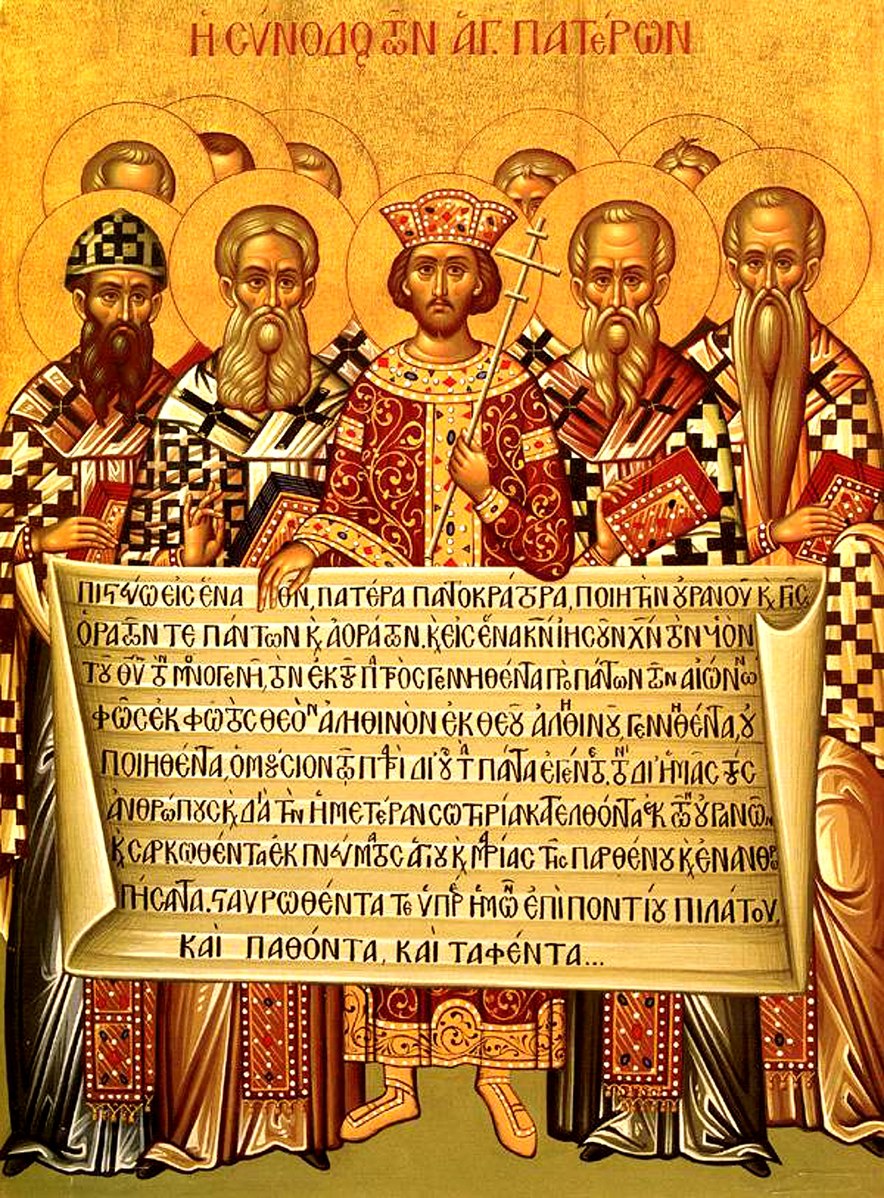



 MurrayCampbell.net