Can 2020 get any worse?

Can 2020 get any worse? Of course, no one yet knows the answer to this question, but an announcement made by the Prime Minister today is certainly ominous. The ABC headlined the news with “If Morrison’s defence strategy sounds like war talk, that’s because it is

There hasn’t been a year like it since the 1940s.

In Australia, we started the year with the worse bushfire season on record and with much talk about Climate Change. These were soon laid aside as the reality of COVID-19 became a worldwide pandemic. This virus soon created another plague, that of economic uncertainty, the staggering accumulation of rapid national debt, and a million jobs gone. No one knows when this pandemic will end and what the final toll will be, the human, social, and economic costs.

As the country begins to loosen restrictions, Victoria has experienced a sudden surge in COVID-19 cases, with Premier Andrews forced to shut down 10 postcodes in Melbourne. Other State Premiers have warned their people to stay away from Victoria and borders are being closed to keep Victorians away.

One month ago, in response to the shocking murder of George Floyd in Minneapolis, protests erupted across the United States, and even here in Australia. While much progress has been made since the days of old when the White Australia policy was in place, and since the horrific treatment toward Indigenous Australians when they were excluded from citizenship, when families were ripped apart, and the silent screams of aborigines who were massacred throughout the 19th Century. Much work toward reconciliation has taken place, but we have been reminded that racism has not been fully defeated. These stories continue to make the news each day.

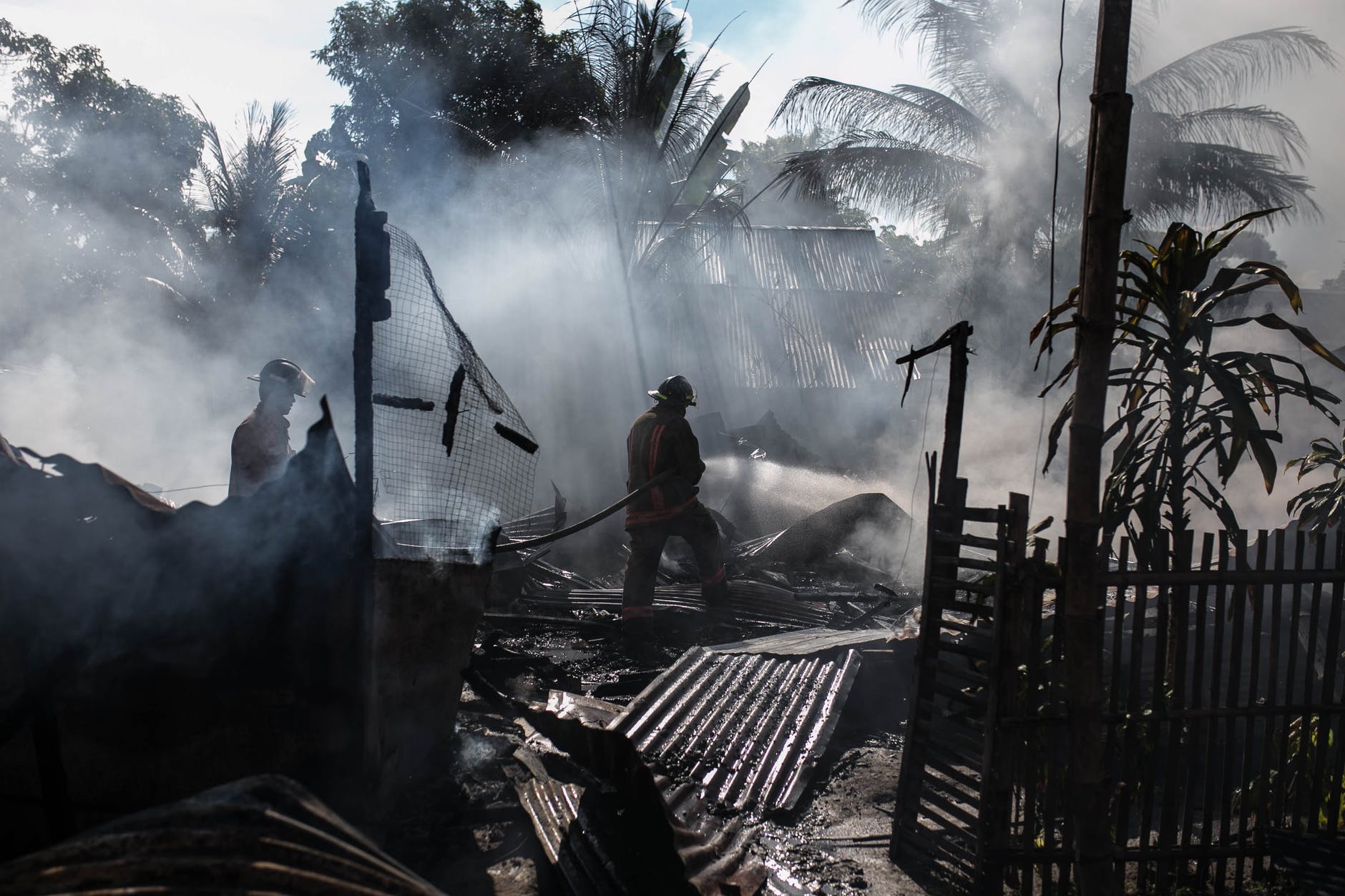
silhouette of fireman holding hose

Photo by Denniz Futalan on Pexels.com

Somewhat caught behind these news items, but still present and making news, is each new chapter of the rapidly changing sexual revolution. In particular, the transgender movement which is requiring total allegiance and the automatic cancelling of anyone daring to question their dogma.

Today, July 1st marks the halfway point of this unforgettable year. On this day our Prime Minister, Scott Morrison, made a major announcement regarding an issue that is still not receiving the public attention that it requires. The PM gave a rare and important address regarding the Defence of the country. Last week he informed Australians about a significant cyber attack on Government departments and Australian businesses by a foreign State. He has increased funding for cyber defence by $100s millions. Today he announced  a$270 billion investment for our military, including long-range missiles. This is a direct response to the growing geopolitical threat posed by China.

I’m not surprised. For some time, Defence experts have been warning the Government of the growing danger of Communist China. A defence white paper was given to the Prime Minister of the time, Malcolm Turnbull, outlining strategic necessities for Australian defence against China. Peter Jennings, who is the Executive Director of the Australian Strategic Policy Institute in Canberra, has repeated warnings about Australia’s lacking defensive capabilities and unpreparedness for a China who is hungry for power.

Several weeks ago I wrote a piece detailing 6 ways the world may change as a result of COVID-19. My third point was about China. It’s worth revisiting some of the details. I suggested,

“China’s role in covering up the true extent of the Corona Virus and their influence over the World Health Organisation (WHO) is far from the worst of it. 1 million Uyghurs remain locked away in ‘education’ camps in northwestern China, Christian Churches are continually oppressed and Christians arrested, and there is China’s growing interference in Hong Kong and their military expansion in the South China Sea.”

Since then, China’s Communist Government has taken further measures to take control of Hong Kong.

Niall Ferguson is the Senior Fellow at the Hoover Institution at Stanford University. In December of 2019, he argued that a new Cold War had begun

“Something [else] changed in 2019. What had started out as a trade war — a tit for tat over tariffs while the two sides argued about the American trade deficit and Chinese intellectual property theft — rapidly metamorphosed into a cluster of other conflicts.

In short order, the United States and China found themselves engaged in a technology war over the global dominance of the Chinese company Huawei in 5G network telecommunications and an ideological confrontation in response to the abuses of Uighur Muslim minorities in China’s Xinjiang region, as well as a classic superpower competition for primacy in science and technology. The threat also loomed of a currency war over the exchange rate for the Chinese yuan, which the People’s Bank of China has allowed to weaken against the dollar…”

The Prime Minister’s announcement today will probably send shivers down the spine of many Aussies and create an audible backlash from others; I think the decision is a sensible one. This significant increase in defence spending doesn’t heighten the dangers around the Indo-Pacific, rather it highlights the already alarming situation. The reality is, “we are not witnessing the awakening of a sleeping giant panda, but a dragon.” 

“For the most part, Australia has, alongside many countries, tried to benefit from and also feed a China hungry for economic and political expansion.

You don’t placate a bully, you stand up to them”.

When history books are written in 50 years time, of the myriad of issues faced this year, it probably won’t be the bushfires or race protests or transgenderism, or even the pandemic that will feature; the story will be China.

If a new cold war hasn’t already descended, it should be clear by the falling autumn leaves and the dropping temperature that winter is coming. These next few years will be pivotal in determining how cold or how hot this economic and geopolitical standoff will become.

As we enter the second half of this strangest of years, I’m praying that Australians will wake up and understand that what we assumed was normal and secure isn’t so certain and reliable. We need to anchor life and hope in something better than the health and prosperity that we’ve been gorging on for so many decades.

“Is not life more than food, and the body more than clothes?” (Matthew 6:25) 

At the same time, as a Christian, I’m comforted by the words of Jesus,

 You will hear of wars and rumors of wars, but see to it that you are not alarmed. Such things must happen, but the end is still to come. 7 Nation will rise against nation, and kingdom against kingdom. There will be famines and earthquakes in various places. 8 All these are the beginning of birth pains. (Matthew 24:6-7)

These words don’t diminish the existential realisation of such events. But God is not surprised. For 2,000 years Jesus’ words have been accessible but not always believed, read but not always grasped. We should not be alarmed or surprised by events that take hold of people, nations, and the natural world. We can be appalled and grieve these sharp reminders of a world that is cursed and cannot redeem itself. Alarmism, however, isn’t befitting for the one who trusts in a God who is Sovereign.

What we are experiencing in 2020 is a massive doss of what millions of people around the world regularly experience, and what many past generations have also lived through. What is new, is perhaps the legion of major issues now facing us and perhaps also the lack of political and social will to deal with some of them.

Jesus adds, during this eschatological season, the Church has a mission and it remains unchanged,

“And this gospel of the kingdom will be preached in the whole world as a testimony to all nations, and then the end will come.” (v.14)

The hope of the nations is this Gospel of Jesus Christ, the one who died and was raised to life. I wonder, do our churches still believe this? No Government or superpower has a weapon of such power in their arsenal, such that the dead can be raised to eternal life. Churches, be clear about the Gospel. Be committed to preaching this Gospel, because nothing else can save us from hell to come.

No, Jehovah’s Witnesses are not Christian

Jehovah’s Witnesses have come into the media spotlight once again due to their reluctance to sign up to the National Redress Scheme.

The Scheme was introduced as a result of the findings from the Royal Commission into Child Sexual Abuse.  The Royal Commission uncovered many hundreds of cases of child sexual abuse within the Jehovah’s Witnesses and the organisation’s complicity in covering up these cases. With the announcement of the National Redress Scheme, there was wide recognition among Christian Churches of its importance, and most denominations signed up quickly. According to last night’s report on Channel 10s The Project, the Jehovah’s Witnesses “will not join the scheme”.

Screen Shot 2020-06-22 at 10.39.53 am

In the Federal Parliament,  Prime Minister Scott Morrison has said of institutions that are not joining the scheme is that they are “doubling down on the crimes and doubling down on the hurt”.

First of all, it is quite staggering to hear that a religious institution is refusing to join the scheme. I hope this changes before the cut off date of June 30th.

Second, I made the mistake of sending a tweet.  Twitter is designed for tweets and for twits, and I was one last night.

The Project repeatedly referred to Jehovah’s Witnesses as a Church. The word association is unhelpful and confusing because Jehovah’s Witnesses are not a Christian Church. They are a religious group but not a Christian Church, and the distinction matters.

I said, “BTW Jehovah’s Witnesses are not a church. They have nothing to do with Christianity & neither do they describe their communities as a church”.

What I said is accurate. Jehovah’s Witnesses call their communities ‘Kingdom Halls’ not Churches. It’s also true that they have nothing to do with Christianity. Responses came flooding in, correcting my ignorance of Christianity, with people declaring Jehovah’s Witnesses as Christian and as a church. 

Some people insisted upon the Christian credentials of Jehovah’s Witnesses, simply on the grounds that some Jehovah’s Witnesses now call themselves Christian. One person linked to a piece on the BBC as definitive proof that Jehovah’s Witnesses are a Christian Church. Do people even stop to think and realise that the BBC is a media outlet, not an academic institution let alone a school of theology? If I’m wanting medical advice I visit my GP, I don’t ask the BBC. If I’m wanting an expert opinion on Constitutional Law, I don’t google a television station, nor do I treat a quick Wikipedia search as Gospel truth.

As it happens, I am a Pastor of a Christian Church who holds a degree in theology and who writes regularly on theological matters. None of this necessarily makes me an expert (and I’m not an expert in cults), however, I have a fair understanding of what beliefs accord with Christianity and those which do not.

We are living in strange times when a basic point can be demonstrably proven, and yet washed over as an irrelevance. One person suggested that it doesn’t matter if Jehovah’s Witnesses don’t believe in the Trinity, they still qualify as Christian. That’s like saying you can be a vegan and enjoy eating steak every night. Another person admitted that Jehovah’s Witnesses don’t seem to have a high view of Jesus, but because they believe in ‘God’ they still count as Christian. Perhaps the word Christian is a little confusing! Based on this flimsy argument Muslims and Hindus are also Christian!

Twitter has become its very own version of the famed Monty Python Sketch, The Argument Clinic.

Both historically and theologically, Jehovah’s Witnesses is rightly considered a separate religion, which at most is an aberrant form of Christianity. Theologically, they belong to the category referred to in the Bible as ‘false teaching’. Why? Because they reject almost every core belief of the Bible regarding the person of God, the person of Jesus Christ, the resurrection, and the means by which people can be redeemed.

Christianity can be traced back to the person and work of Jesus Christ, some 2,000 years ago. The Bible details, as does Jesus himself, that Christianity is the fulfilment of God’s ancient promises that were written about in the Old Testament. In this way, Christianity is directly linked to Judaism. Christian Churches today base their teachings on these Scriptures and they worship this Jesus as God.

In contrast, Jehovah’s Witnesses came into existence in the late 19th Century, in the Pennsylvanian town of Allegheny. Their founder, Charles Taze Russell, began as a Seventh Day Adventist but he came to disagree with how Adventists were predicting the Second Coming of Christ. He claimed that Jesus had already returned in 1874 and would consummate his reign in 1914. From there, groups formed across America, and eventually internationally. There is something like 70,000 Jehovah’s Witnesses in Australia today. The Jehovah’s Witnesses is an American made religion. Their origins are not even directly connected with a Christian Church, but they jumped off from another American sect/cult.

To my knowledge, no Christian denomination, historically or present, has ever accepted Jehovah’s Witnesses as a legitimate and authentic Christian Church or denomination. Rather, they are rightly defined as a separate religion, if not a cult. In fact, until very recent, Jehovah’s Witnesses have been referred to as a cult, given the stern control the religion’s leaders have on their followers. This authoritarian and bullish control over people is well documented and this point was also noted last night’s segment on The Project.

Jehovah’s Witnesses adhere to almost no basic and essential Christian belief. In almost every area of Christian belief and thought, their views openly contradict the Bible and well established and historic Christian teaching. Their beliefs can no more be aligned with Christianity than calling an egg a type of fruit or, believing cows milk comes from the artichoke.

It’s not as though Jehovah’s Witnesses beliefs are locked away in some hidden vault and can’t be accessed for reading. It only requires a short visit to their own websites to discover how open Jehovah’s Witnesses are about rejecting basic Christian beliefs. In fact, I conclude that the only reason they ever use the term ‘Christian’ is in order to fool the public into thinking they are somehow a legitimate religion and not a cult. It’s like a Collingwood supporter trying to invite themselves into the Carlton coaching box, while wearing a Collingwood jumper, carrying their Collingwood membership card, and singing “Good Old Collingwood Forever”, as a duet with Eddy Maguire (apologies to Collingwood and Carlton fans alike)!


9 Beliefs that are inconsistent with Christianity

Here are 9 facts about Jehovah’s Witnesses that make this religion irreconcilable with Christianity:

1. The Bible used by Jehovah’s Witnesses (‘The New World’ translation) is a corrupted version that changes words and meaning of the Bible to fit with their beliefs. A classic example of this deliberate manipulation of the texts is John 1:1. The New World states that “the word was a god”. The actual text says, ‘the word was God”. The insertion of the indefinite particle completely changes the meaning of the verse, and indeed it changes the identity of Jesus (which is, of course, the intent).

To my knowledge, no reputable Bible scholar in the world accepts the ‘The New World’ translation as a legitimate and faithful rendering of the Bible.

2. They reject the Christian teaching that Jesus Christ is eternally God. Instead, they believe that Jesus is a created being and prior to being on earth Jesus was the archangel, Michael. Jesus is a lesser God to Jehovah, whereas the Bible teaches that Jesus is equally and fully God, as is God the Father and God the Holy Spirit.

3. They reject the Trinity, that there is one God in three persons: the Father, the Son, and the Holy Spirit.  

4. They reject the bodily resurrection of Jesus. Instead, they claim Jesus returned to his pre-existent spiritual state.

5. They don’t believe that the Holy Spirit is the third person of the Trinity. Rather the Holy Spirit is an impersonal force working for Jehovah.

6. Salvation is by good works, not by grace, and you can lose your salvation. Salvation is based upon adherence to religious practice, especially missionary success.

7. They don’t believe that hell is final and eternal. Rather everyone who goes there will come back and hell will be made redundant. Some people, though, are so evil that even hell is too good a place. They end up in a place called Gehenna (which they believe is different to hell).

8. They believe that God’s Kingdom came to earth in 1914 and the Battle of Armageddon has been predicted numerous times…although each date was predictably wrong!

9. Only 144,000 people will be saved (based on a misinterpretation of Revelation ch.7). This has caused consternation for the several million members of the Jehovah’s Witnesses around the world today. To accommodate the overflow of members, while only 144,000 members will be welcomed into heaven, others can now be sent back to earth for what’s being coined, a b-grade eternal reward!

A Challenge for Churches

What struck me last night is the ease in which people are prepared to call an organisation by a certain name, on the basis that they have heard someone else use that word in association with the group. In one sense this shouldn’t surprise because, in today’s Western Culture, self-identification has become the only plumb line for truth. If I identify as such, I am, and no one has the right to question the validity of my self-expression. If I say that I’m a Christian, I am regardless of what I believe or how I live. Such blind acceptance is notably ridiculous, and it’s also dangerous.

What about facts and reasons and looking at evidence? Part of the issue is that the average Aussie doesn’t know what Christians believe and so they are ill equipped to assess what beliefs are and are not Christian. This poses an enormous problem. The general population may hold certain assumptions about Christianity which are often completely disconnected from Christianity, or at best, are vaguely true. It shouldn’t surprise us therefore that we have such frail and diluted understandings of the faith.

This means Christian Churches have a responsibility and opportunity to be clear about what we believe and to provide useful teaching in the public square to aid our neighbours in coming to grips with these good and life changing truths. Instead of preferencing vague and sloppy theology in the name of connecting with people, we ought to be catechising our churches and referencing clarity and conviction in our presentations to the broad community.

What is Mentone Baptist Church doing to combat this community fuzziness toward Christianity? Apart from this blog which aims to present a Christian view of the world, we have almost finished writing a new course exploring the big questions of Christianity. It’s called ‘Making Sense of Christianity’. Anyone interested in joining the 4 week study can register by emailing pastor@mentonebaptist.com.au.

My initial frustration last night has turned to sadness.  It is insane that a religious institution is prepared to double down on the pain of victims to child sexual abuse, and it is terribly sad to once again hear that knowledge of Christianity is so nebulous in our society, that we can’t distinguish basic and logical truth from error.  Christian Churches have a lot of work to do. Are we ready for the task?

——————–

Jehovah’s Witnesses finally signed up to the scheme in March 2021

Making Sense of Christianity

A new course exploring Christianity is coming to Melbourne.

‘Making Sense of Christianity’ is written by a Melbournian and for Melbournians. In each episode, Murray explores some of the big questions of life:

1. God and the universe

2. Humanity, Sin, and death

3. Jesus Christ

4. Christians and the Church

For further details and to register, please email pastor@mentonebaptist.com.au


Racism, Protests, and our faith in Christ: a letter to my church

“Turn from evil and do good;

    seek peace and pursue it” (Psalm 34:14)


Screen Shot 2020-06-05 at 2.41.20 pm

Dear Church,

I have never written an email of this nature to you before. I do so out of love for you all and also love for our neighbours.

I understand that among us there will be different reactions to the events transpiring in America this week, and there will be varied thoughts about how to respond.

As a church, we, of course, hold substantial agreement on account of our union with Christ. We confess Jesus is Lord. He is the One Saviour of the world. Together we affirm all human beings are made in the image of God and all are therefore equal before him and have inherent worth. We affirm that racism is anti-Christian, anti-God, and is destructive to society.

This week we are being reminded of how highly charged and partisan our societies have become. In the name of ‘love’ and ‘truth’ too many people have given up love and truth and instead turned on one another. Sadly, cultural movements often have the effect of dividing rather than uniting. We need to resist those temptations and false binaries, both in the church and as we live in the community.

There is a mass protest being organised in Melbourne city this Saturday, to support ‘Black Lives Matter’.

As your pastor, while recognising our freedom both in Christ and in the State to voice our concerns, I want to draw your attention to the following important points:

  1. In the State of Victoria, there remain strict laws enforcing social distancing and limiting meeting in large numbers, both indoors and outdoors. COVID-19 remains a health issue in our society. Both the Federal and State Governments, and the State Police are urging Victorians not to attend because of the COVID-19 situation
  2. Authorities have issued a warning, informing the public that there are protesters planning to incite violence and disorder.
  3. The organising group behind this particular city protest (Warriors of the Aboriginal Resistance) does not recognise Australia’s legal system and has called for the dismantling of Australia.

I’m not arguing against the principle of public protest, nor am I telling anyone what they should or should not decide. I personally don’t think protests and marches are the best way to argue a point. But I acknowledge that there can be value for this kind of social action. I have friends who have participated in different protests in the United States in recent days, and many who have not and yet they are very much grieved by the events in Minneapolis last week. It is incumbent upon each of us to make decisions that are appropriate and reflect love for neighbour and that don’t dishonour the Lord Jesus in any way. 

To anyone planning to protest this week, know why you protest and understand your aim. If you are joining with others, know why they are protesting and what they are aiming to achieve.

We can stand against racism and not join this particular protest at this time. You might like to post a statement or prayer on social media to express our belief in the dignity of Indigenous Australians or call for greater measures to tackle the terrible numbers of Aboriginal people who have died in custody since 1991. You could post appropriate Bible verses.

When restrictions are lifted then perhaps organise an appropriate event: a prayer vigil, or prayer walk, as I’ve seen Christians doing in the US this week.

I’ve just heard Mike preach on Psalm 34, which was recorded for this Sunday. I encourage you all to listen on Sunday; it is a good and timely word. We want to be focused on God, we want his word to direct our motives and attitudes and thoughts. Even as a church where we agree racism is evil, we may want to respond in different ways. Be gracious to one another when we talk and share. Be prayerful. Find ways to love your neighbour: welcome them into your home, speak a kind word, ask them how are they doing.

We want to avoid the danger of falling into popular narratives from the left and from the right. Instead, our identity and our lives are now defined by the Gospel of Christ; this is what it means to be Christian. Therefore, let our motivations, words, and actions promote this good news. Doing so doesn’t make our voice weaker, it is more powerful and attractive.  It allows us to grieve with those who grieve,  to express anger for those who are trodden on, to forgive, and to know God will do right. 

“The eyes of the Lord are on the righteous,

    and his ears are attentive to their cry;

but the face of the Lord is against those who do evil,

    to blot out their name from the earth”. (Psalm 34:15-16)

How will COVID-19 change the world?

Last week I wrote a piece noting 7 (possible) trends for Churches that are emerging through the COVID-19 pandemic. In this piece, I am thinking more broadly about culture and society, rather than specifically about Churches. In regard to the future of Christianity in Australia post-COVID-19, I am circumspect, trusting the Sovereignty of God and the power of His Gospel, but also noting limitations of people’s ability or willingness to change.

Without the Holy Spirit sanctifying minds and hearts, we are even less likely to choose positive change. Of course, I believe in God’s common grace that he pours out onto the world and which is received by believers and unbelievers alike. Where human progress and good achieved, we should be thankful for the evidence of this grace. As political analysts, economists, and social academics, begin to theorise about ‘what next’, what should we be thinking? Will the world change or not?

For the sake of avoiding a public stoning or being held up as a prophet of sorts, let me be clear: I don’t know what Australia will look like in 2021, let alone in July 2020. There are more variables at play here than in predicting what the weather will be like in Melbourne on any given day.

For example, no one knows what this virus will do next. Will it dissipate with time or with a change of season? Will it morph into new and more deadly strains? Indeed, there is a growing suggestion that we may not transition into a post-COVID-19 world, but rather, we may have to learn to live with COVID-19.

It is also unclear what Governments are aiming to achieve. Two months ago the objective was to flatten the curve so that our health system wouldn’t be overwhelmed. This didn’t mean more people wouldn’t catch COVID-19 but that we would slow the spread. However, toward the end of April, the rhetoric began to change, suggesting that we might eradicate COVID-19 from Australia. From my humble perspective, surely this requires either 1. long term social restrictions (including keeping national border closer indefinitely), or 2. reaching herd immunity, or 3. finding a vaccine. Depending on which immunologist or epidemiologist we listen to, a vaccine may be available as early as late this year, others suggest sometime 2021/2022, while other experts are more circumspect and are raising the possibility that an effective vaccine may never be found. It is important for Governments to be transparent with the people about what their objectives are as they look to the future.

There are two obvious conclusions that we can draw thus far. First, even the experts have little idea where we will be in 6 months time,  in terms of fighting the disease, social health, and global and local economics. Second, built into this pandemic, including responses made by Governments across the world, are some long term changes to society.

COVID-19


The new will be like the old

Predicting the future is a dangerous task and usually ends with inflations, conflations and misinterpretations. Looking forward is however an important step for making decisions today. We want to avoid crazy conspiracy theories like the plague, but are there indications of what tomorrow may look like?

As a Christian, I believe in listening to the experts. Scientists, economists, and psychologists are important voices to be listened to in this crisis, along with our political representatives. No one is suggesting they won’t make mistakes or that their agendas are pure as snow, but it is nonsense to ignore professional advice. As a Christian, I am also guided by Scripture, which sets our expectations for life and teaches us how to live in the midst of life’s myriad seasons.  For example, in Jesus’ famous apocalyptic sermon in Matthew ch.24, he describes life in the world between his first and second comings. He says,

“Watch out that no one deceives you. For many will come in my name, claiming, ‘I am the Messiah,’ and will deceive many. You will hear of wars and rumors of wars, but see to it that you are not alarmed. Such things must happen, but the end is still to come. Nation will rise against nation, and kingdom against kingdom. There will be famines and earthquakes in various places. All these are the beginning of birth pains.”

If you think that these words are like the world today, as well as the world 6 months ago or 20 years ago and 200 years ago, you would be correct. Wars and natural disasters are not signs of the imminent return of Christ, but a description of the pattern of life that will be experienced until He returns. That means, events like a pandemic are not fuel for conspiracy theories and they are unlikely to be the great catalyst that fundamentally changes the world. This is an extraordinary time for us living through COVID-19 but it is not so out of place in the broad sweep of history. Such events have happened before and will reappear in the future. Whether it is disease or economic disaster or armed conflict, these things remind us that we live in a fallen world, filled with uncertainty and sin and death.

It is worth noting that in his apocalyptic sermon, Jesus tells us not to be alarmed by such events. God hasn’t been taken by surprise. He hasn’t let go of his Sovereign hand over the universe.


The new will also be different.

I suspect many people would like to see a return to the old normal; it is familiar and safe. Others are preaching that this is the time for radically reorienting society. For example, Leader of the Australian Labor Party Anthony Albanese this week announced a “Vision Statement on Australia Beyond the Coronavirus”. He has said that this is a ‘once in a life time opportunity’ to redefine and redirect Australian society. Which will it be? A return to normal or will a radically different Australia energy from COVID-19?


Here are 5 aspects of life that are likely to change due to COVID-19.

1. Socialising

While many people are eager to return to face to face relationships, others are reluctant about entering someone’s home let alone offering a hug or handshake. It is quite possible for two opposing trends to coexist and I suspect we’ll see both these attitudes running juxtaposed.

Given the 3 Stage plan to recovery that the Federal Government announced (and note that Stage 3 is far from what we can describe as normal) any return to usual socialising will take longer than many wish. We are not talking weeks or even months, but perhaps a couple of years. This will take a toll on people’s wellbeing, and it will seriously aggravate mental health issues. On May 15th the Federal Government have recognised this and so announced a $48 million Mental Health package to help with this endemic emerging in our suburbs and streets.

Human being are social beings. We need interpersonal contact and relationship for our mental health and for community strength. We should be patient and understanding with friends who are slow to take up invitations to meet in person. We also need to encourage a return to in-person relationships.

There is a cost attached to letting people congregate together and there is a cost for keeping people apart.


2. Unprecedented Government spending and debt.

State and Federal Governments are spending and handing out staggerings sums of money. In the space of two months, $100s billions have been committed to keeping the economy afloat during the pandemic. The forced closures of businesses and schools and communities have required Governments to step in with financial assistance, but it all comes at a cost.

There are already voices calling for some of these initiatives to remain permanently, including paid child care and the job seeker allowance (which has been doubled temporarily). This leads to deeper questions about how we want society to be structured and the role of Government.

The day is coming when we will have to pay off this debt, either with higher taxes or with austerity measures, or a combination of both. We are blindsiding ourselves if we don’t appreciate that this is likely to have long term and significant impact on employment levels, housing affordability, investments, household spending, and the viability of many thousands of businesses, community groups, sporting clubs, and churches.


3. Our dependence on China must change.

China isn’t an ally, she is a trading partner and a geopolitical competitor. The rise of China has been a gift to Australia and also a danger. There are enormous trade and economic benefits from the relationship, but have we been ignoring the costs?

I think the Australian Government is right to be asking serious questions of China’s role in the Corona Virus pandemic and to demand transparency. China’s evasiveness throughout the pandemic has once again demonstrated that this Communist State should not be trusted. Let me be emphatic, I am not talking about Chinese people, but the Government of China, which is a totalitarian and oppressive regime with a long record of dishonesty and human rights abuse.

China’s role in covering up the true extent of the Corona Virus and their influence over the World Health Organisation (WHO) is far from the worst of it. 1 million Uyghurs remain locked away in ‘education’ camps in northwestern China, Christian Churches are continually oppressed and Christians arrested, and there is China’s growing interference in Hong Kong and their military expansion in the South China Sea.

For the most part, Australia has, alongside many countries, tried to benefit from and also feed a China hungry for economic and political expansion.

You don’t placate a bully, you stand up to them.

I first came across Peter Jennings in an interview with John Anderson last year. Peter Jennings is the Executive Director of the Australian Strategic Policy Institute. In a recent article, he warns against China’s bullish tactics and their interference in the accurate transmission of information and application of international standards,

“As Beijing hardens its position on what it considers to be acceptable applications of the One China policy it is reacting badly to international judgments that Taiwan very effectively suppressed the spread of Covid-19 without resorting to the punitive measures we saw in Wuhan.

This week China’s ambassador to New Zealand sharply rebuked Wellington for backing a growing international call to make Taiwan an observer at the WHA meeting. The foreign ministry spokesman, Zhao Lijian, said New Zealand should “immediately stop making wrong statements on Taiwan, to avoid damaging our bilateral relationship”.

China’s ever more strident and stringent demands for countries to publicly acquiesce to Beijing’s political agenda is seemingly having the opposite reaction.”

Latika Bourke reported last Friday that Australia’s dependence on China places us in a vulnerable position. For example,

“An international study of essential supply lines has found that Australia relies on China for critical medical technology more than any other ‘Five Eyes’ nation.”

China’s behaviour is also creating unusual alliances. In what is a remarkable statement, The Australian Worker’s Union last week joined forces with Australia’s conservative Federal Government in calling China to account,

“Free trade must be fair.

Australia must stand up to China and protect our national sovereignty and local jobs.

The Chinese Government is threatening massive trade tariffs on Australian barley, beef and other products in response to our demands for a COVID-19 investigation and action taken against the illegal dumping of products by China.

Dumping of imported goods, by selling products like steel and aluminium below cost, is a trade violation which aims to destroy Australia’s industries and make us more reliant on foreign supply.

We have the right to stop cheap, low quality steel and aluminium from reaching our shores, jeopardising tens of thousands of Australian jobs. Every other country does this.

Threatening crippling tariffs against Australia’s world leading agriculture industry is a bullying tactic.

The AWU is calling on Scott Morrison and the Federal Government to stand up to China’s bullying, protect Australian sovereignty and jobs, and declare its intentions to work with nations that support fair, free trade.”

When it comes to China, we are not witnessing the awakening of a sleeping giant panda, but a dragon. In December 2019 Niall Ferguson argued that a new Cold War had begun.

“Something [else] changed in 2019. What had started out as a trade war — a tit for tat over tariffs while the two sides argued about the American trade deficit and Chinese intellectual property theft — rapidly metamorphosed into a cluster of other conflicts.

In short order, the United States and China found themselves engaged in a technology war over the global dominance of the Chinese company Huawei in 5G network telecommunications and an ideological confrontation in response to the abuses of Uighur Muslim minorities in China’s Xinjiang region, as well as a classic superpower competition for primacy in science and technology. The threat also loomed of a currency war over the exchange rate for the Chinese yuan, which the People’s Bank of China has allowed to weaken against the dollar…”

If a new cold war hasn’t descended, it should be clear by the falling autumn leaves and the dropping temperature that winter is coming. These next few years will be pivotal in determining how cold or how hot this economic and geopolitical standoff will become.


4. Time to rebuild traditional models of University

University education in Australia is huge. Never before has there been such a large menu of courses to choose from and so many students and so much money to be made. Education is Australia’s 3rd largest export industry, worth $10s of billions annually.

In 2017, there were almost 800,000 international students enrolled in education programs in Australia, including 350,000 studying in universities. With the arrival of COVID-19, huge numbers of students are unable to travel to Australia and many others have been forced to leave and return to their home country.

According to Peter Hurley of the Mitchell Institute,

“The university sector faces cumulative losses of up to A$19 billion over the next three years due to lost international student revenue.

Modelling from the Mitchell Institute shows the next big hit will come mid-year when $2 billion in annual tuition fees is wiped from the sector as international students are unable to travel to Australia to start their courses for second semester.

Such losses are not just a university problem. ABS data show for every $1 lost in university tuition fees, there is another $1.15 lost in the broader economy due to international student spending.

This means the Australian economy could lose more than $40 billion by 2023 because of reduced numbers of higher education international students.”

This should not be taken as a negative word toward international students. Far from it, my personal encounters with students from China, Malaysia, Brazil, and Uganda, and from across the world, has been incredibly positive. In many respects, I am glad that they have an opportunity to study here and I have valued the friendships I have formed with many students. Indeed some of these students make Australia their home, and they are welcomed and vital members of the community. The issue isn’t international students, it’s the model of education that looks more like a $ sign than actual education.

A related issue is the indulgence of our higher learning institutions to provide courses and degrees that lead to nowhere. The breadth of inane and dead-end tertiary courses is truly ridiculous.

For example, my eldest child is reaching the stage in high school where students are exploring what type of vocation interests them and therefore what university course they should consider undertaking. As part of this conversation, we have spoken with several people who work in a field that he’s interested in and who teach this area in our universities. The overwhelming feedback that we received was that it is nearly impossible to make a career in this area and to even get a job. Apparently, only two graduates for every 80 end up successfully working in this industry.

Could the massive loss in income force our tertiary institutions to recalibrate and return to traditional models of education and research? Might our universities rid themselves of the shackles of profit-making and rediscover learning? Instead of offering useless degrees that cost students $10,000s and with no job at the end, can we rewrite the young people’s ‘success manual’ and create pathways from school into careers without the ‘middle man’?

5. The social engineering project of authoritarian secularism.

This includes the latest chapters in the sexual revolution, identity politics, and religious freedom issues.

Socio-political agendas that existed prior to COVID-19 will remain afterwards. The sexual revolution may have been forced into hibernation for the time being (at the very least the media is currently distracted by other issues), but as life returns to some sense of normalcy, we can expect these social threads to be taken up once again.

There is a question mark over how successful or popular these agendas will be once we have adjusted to COVID-19. Will a few months of breathing space help us to regain our senses and to starve these already vacuous ideologies of their droplets of oxygen? Perhaps, but then again,  a survey of the 20th Century demonstrates that two World Wars, the Nuclear threat, and Vietnam, didn’t subtract from the evolving abandonment sex’s natural paradigm. The sexual revolution with its demand for moral allegiance is far from over. However, like the French Revolution, this is a movement that eats its own. Feminists, lesbians, gays, are being publicly cancelled as they don’t pay full homage to the latest theories on gender and sex. I anticipate that the West will continue to dismantle itself in the attempt to follow Romans 1:18-32 word for word. The rest of the world will look on and laugh at our foolishness.


Conclusion

Evidence suggests that COVID-19 will change the world, but it is not yet possible to see the extent to which these new normals will impact the average Aussie. Old attitudes and dreams will continue but newly laid roads will redirect our paths. The rush for a return to the old normal will be strong and understandable but there are socio-economic factors and geopolitical manoeuvrings that will likely stifle this revival.

Even as we are surprised and even shocked by some of the changes, none of this takes God by surprise. I am reminded of the Lord Jesus’ declaration, “I am the Alpha and the Omega, the First and the Last, the Beginning and the End.”

Life in this world sometimes appears like sailing with a gentle breeze and at other times, the sea is rough and turbulent and we are knocked about and fear for life itself. There is however one old message that will stand the test of time. The One who stilled the storm rose from the dead and His word of life has outlasted the greatest cultural changes of history. His Gospel is cosmic in scope and personal in efficacious power.

At Mentone Baptist Church today I gave an exposition on Colossians 1:15-23, and I think it’s a worthy place on which to conclude these reflections on COVID-19,

The Son is the image of the invisible God, the firstborn over all creation. 16 For in him all things were created: things in heaven and on earth, visible and invisible, whether thrones or powers or rulers or authorities; all things have been created through him and for him. 17 He is before all things, and in him all things hold together. 18 And he is the head of the body, the church; he is the beginning and the firstborn from among the dead, so that in everything he might have the supremacy. 19 For God was pleased to have all his fullness dwell in him, 20 and through him to reconcile to himself all things, whether things on earth or things in heaven, by making peace through his blood, shed on the cross.

21 Once you were alienated from God and were enemies in your minds because of[g] your evil behavior. 22 But now he has reconciled you by Christ’s physical body through death to present you holy in his sight, without blemish and free from accusation— 23 if you continue in your faith, established and firm, and do not move from the hope held out in the gospel. This is the gospel that you heard and that has been proclaimed to every creature under heaven, and of which I, Paul, have become a servant.”

7 (possible) Church trends emerging from COVID-19

The COVID-19 pandemic is affecting almost all parts of society. The impact is minimal in some areas of life, and in others, the change is significant and life altering. Churches are not immune from the broader tremors that are shaking core social and economic foundations.

Today is our seventh Sunday without Church. Each week I am preaching a sermon which is then posted online for our congregation. On Sunday mornings many of our people join on zoom to listen to the sermon and then spend time catching up and prayer together. But it’s not church. During the week small groups once again meet on zoom for Bible study and prayer, and there are numerous other interactions taking place every day.

While the current arrangements are far from ideal, we understand them. Life has required Australians to make adjustments, some which cause grief and uncertainty. Most Churches I suspect are still adapting and finding a rhythm to manage society’s new pace, let alone thinking of what the status quo will be like in six or twelve months time.

It is now 3rd May 2020. No one knows how long the pandemic will continue and what the long term repercussions will be. Most States across Australia are beginning to relax restrictions. Although in  Victoria, Stage 3 restrictions remain, but even here I anticipate that small groups will be allowed to start meeting again from later this month. Large gatherings, however (including church services) are probably months away.

OLYMPUS DIGITAL CAMERA


As we approach two months of COVID-19 restrictions, I have noticed a number of trends beginning to emerge among Australian Churches. These indications are based on my own experience and the many conversations I am having with pastors across the country. Also, standing behind the observations are these 3 theological premises:

  1. God remains Sovereign over the world today.
  2. Human nature doesn’t change. The Bible’s doctrine of total depravity remains the status quo.
  3. The Gospel of Jesus Christ remains good, true, and powerful today.


1. A godly hunger.

Not only at Mentone, but as I speak with pastors and Christians from around the country, I am seeing and hearing countless stories of service and kindness. People are making an effort to serve others practically, in prayer, and in word. This eagerness to love the body of Christ is accompanied by a growing hunger for being together again as a church. Praise God!

At Mentone, we are not trying to replicate church on Sundays or to pretend that what we’re doing is church. We consciously avoid using the language of ‘church’ or ‘service’, and we have made deliberate choices not to include every element that would be present on a Sunday service. For example, we are not commemorating the Lord’s Supper while we are apart. Doing this, being clear about what we are and are not doing during this season, is not only theologically responsible but it is creating a godly hunger among our people to be together again in person, to see one another face to face, and to worship God as church, and to partake of the Lord’s Supper again.

If these weeks of isolation create a hunger in God’s people to love the church and long to be together as a church, then that is a sign of God’s grace.

“Recalling your tears, I long to see you, so that I may be filled with joy.” (2 Timothy 1:4)

“But, brothers and sisters, when we were orphaned by being separated from you for a short time (in person, not in thought), out of our intense longing we made every effort to see you. 18 For we wanted to come to you—certainly I, Paul, did, again and again—but Satan blocked our way. 19 For what is our hope, our joy, or the crown in which we will glory in the presence of our Lord Jesus when he comes? Is it not you? 20 Indeed, you are our glory and joy”. (1 Thess 2:17-19)

2. An ungodly separation

While many members of our churches are using this season to draw closer to Christ and to his church, others will sadly use the situation to create distance.

Without regular face to face church, it is easier for people to walk away. Churches will lose people during this pandemic. These people were probably already drifting prior to the restrictions, but without the accountability of regular and public gatherings, the cover of forced separation is their justification for leaving your church and perhaps Christ also.

I shared these verses from 1 Peter with Mentone during the week, to help us combat this temptation,

Cast all your anxiety on him because he cares for you.

Be alert and of sober mind. Your enemy the devil prowls around like a roaring lion looking for someone to devour. 9Resist him, standing firm in the faith, because you know that the family of believers throughout the world is undergoing the same kind of sufferings.”


3. The shift from fast to fatigue and then to rest

Adapting to the new environment has required an immense amount of time and energy. The ministry and mission of a local church don’t fundamentally change, but the immediate and drastic constraints forced upon us have necessitated rapid learning, quick responses, high energy mixed with headaches and new anxieties. It’s a classic recipe for fatigue.

Speaking personally, after running at a sprint for the first 5 weeks, I needed to take 3 days rest last week; I was toasted, baked, and grilled, all in one. Rest is important. Indeed, our doctrine of God becomes real to us. If he remains Sovereign over the world and if Christ is still Lord of his church, then we can rest in Him and trust that he has everything under his loving care. It’s okay to turn off the laptop. It’s okay to produce a sermon that’s not quite finished. It’s okay for online presentations to be a little rough. It’s okay if you didn’t manage to call everyone you had on your list for that week.

Government restrictions are likely to continue for some months, even if the tightest limitations begin to loosen during May. Therefore pace ourselves, set realistic goals for each week, be content with less efficiency and lower productivity. In this, we can rediscover the grace of resting in Christ and practising our doctrine of God.


4. Breaking the back of Christian consumerism?

My expectation is that apart from the grace of God our bad habits will continue on the other side of COVID-19.  This fourth observation is, however, a call for change. The example I have in mind here is the consumerism and obstinate individualism that is deeply ingrained in Australian culture and which is also pervasive in Christian attitudes toward the Church. Consumerism works against discipleship and long term committed members and instead creates short term attendees and parasitic Christians. The Church’s manual becomes some poor religious version of Vogue or Netflix when it should be the word of God and church covenants.

The pandemic is a great opportunity to go simple and return to Bible basics. Do we need a professional band in order to worship God acceptably and to lift our hearts? Do we really need stand up comics in our pulpits? Are academy award winning visuals necessary for weekly announcements? 

I’m not saying that aiming low is somehow more sanctified. Let’s be clear, the quality of production is not a measure of faithfulness, whether it is created by a television crew or by a 6-year-old helping out Dad to press record on his iPhone.

A likely scenario is that Churches with high production value online will most likely attract the greater number of visitors once the crisis ends. This is great news if it is the Gospel drawing people. My question is, are our online ‘services’ reinforcing the consumer mindset or can we break the culture by doing things differently? By different, again I’m not arguing for anti-excellence, but rather I’m calling for simple faithfulness that is driven by core Gospel principles. These include making disciples, the centrality of reading and preaching the Word, preaching the whole counsel of God, permeating everything with prayer, and letting the congregation be heard when singing.

5. Churches may become more local and smaller

This point may seem to contradict the above suggestion, but not necessarily. Culture normally shifts in multiple directions and so it’s quite possible for two different paths to be true at the same time.

Are the days of mega-churches over? I doubt it (and this isn’t a criticism of large churches), but the longer restrictions remain in place for large gatherings there may be a turning toward people joining local and smaller churches. For example, the ABC last week reported that large crowds may not be permitted to meet until a vaccine is available; that means 2021 or even beyond.

With restrictions on large gatherings and with people driving less and staying closer to their own community, we may see a transition toward local church. I do think such a shift will benefit Gospel work. Of course there is is no ‘right’ size for a church. Every size and location has peculiar strengths, but there is something compelling about belonging to a church that’s found in your local community. It enables closer and deeper Gospel community and it created more evangelistic opportunities. Is it easier to invite a friend living 5 minutes drive away or 50 minutes?

6. Financial loss and ministry recalibration 

Churches are very much part of society. When the community is hurt or impacted, so are Churches, and that is not a bad thing. Many Australians have lost jobs in the past month, and many more are now working reduced hours with less income. Given that most churches rely solely upon the generosity of God’s people, it’s inevitable that churches will face financial reduced giving.

There are options available for assistance from both Federal and State Governments, which may alleviate some of the financial pressures (there are pros and cons for churches joining these programs). The reality is, as a result of long term restrictions and economic downturn, some churches will close permanently, others will need to reduce staff, and the way churches conduct ministry may need to change.

To repeat my earlier contention, what we believed prior to this crisis is what we will carry with us through to the other side. Hence, for many declining churches the fundamental problem is not the pandemic but years of poor teaching and bad theology that has left congregations destitute and spiritually dry. Churches who sold their soul to the culture will simply advertise the fact when they put the ‘for sale’ sign outside their front doors. There is also grief for small and faithful churches who will struggle to remain open into 2021. We can do without faithless churches but Australia doesn’t need fewer faithful churches.

Given the huge numbers of people who are losing jobs, the extraordinary debts now being accumulated by Governments and businesses, economic constraints are likely to continue for a very long time. This acute situation may also serve as grace to force churches to reconfigure their mission and ministry priorities. It is a time to be asking, what is the church? What is the mission? How can be best arrange Gospel priorities in our budget?


7. People looking for hope

“now is the time of God’s favor, now is the day of salvation.” (2 Corinthians 6:2)

I think it is true to say that many Australians are nervous and even fearful of the future. There is an audible note of despair and reassessing life values. Whether this results in people turning to Christ or not, we’ll learn over the coming months.

Time will tell whether this pandemic is the watershed moment that’ll bring about revival or further wash Christianity into the culture’s sewers. My sense is that we are unlikely to witness either. History shows that significant social events rarely create the ground for revival or great influx of people returning to church. If two World Wars, the Great Depression, the threat of nuclear war, September 11, and the 2008 Stockmarket crash, didn’t cause societal attitudes toward Christianity to improve, why do we think this most current crisis will be any different? 

Jesus teaches that such things have always been and will continue to be experienced,

“You will hear of wars and rumors of wars, but see to it that you are not alarmed. Such things must happen, but the end is still to come.  Nation will rise against nation, and kingdom against kingdom. There will be famines and earthquakes in various places. All these are the beginning of birth pains.”

Accompanying world events, Jesus also explains,

“And this gospel of the kingdom will be preached in the whole world as a testimony to all nations, and then the end will come”.

While I’m reticent to place confidence in a ‘changing’ world, the Bible tells us that “today is the day of salvation”.  God remains Sovereign and the Gospel remains good, true and powerful. Therefore God is perfectly able to grow his Kingdom beyond our expectations and prayers. God is not bound by my glass half empty views.

If people are asking questions, let’s offer the good news of Jesus Christ. If people are fearful, let’s offer His comfort. If people are looking for hope, let’s present the secure hope of Christ.

Devote yourselves to prayer, being watchful and thankful. And pray for us, too, that God may open a door for our message, so that we may proclaim the mystery of Christ, for which I am in chains. Pray that I may proclaim it clearly, as I should. Be wise in the way you act toward outsiders; make the most of every opportunity. Let your conversation be always full of grace, seasoned with salt, so that you may know how to answer everyone. (Colossians 4)


I’ve written (May 17) a follow up piece, but this time examining potential changes to the culture at large – https://murraycampbell.net/2020/05/17/how-will-covid-19-change-the-world/

The Paradox of the Cross

This headline appearing in The Age caught my attention, ‘Bad weather in Victoria is a “blessing” for social distancing’.

“Victoria’s Deputy Health Officer Dr Annaliese van Diemen called the bad weather over the Easter Weekend a “great blessing” in keeping people at home.

She said there were only four reasons people should be going out: food and supplies, medical care and care giving, exercise and work or education and that police would be out in force issuing fines.

“Chocolate can be considered a food and can be sold in supermarkets, people are allowed to leave home to get food and essential supplies,” she said.”

Leaving aside the apparent argument over whether chocolate should be considered a food, there’s little disputing the fact that the weather in Melbourne has deteriorated over the Easter weekend. It’s been raining, the wind is blowing, and the Autumn cool has arrived.

MentoneBaptist Church easter

It wasn’t the predictability of Melbourne’s unpredictable weather that grabbed my attention, but the intentional paradox made by Victoria’s Deputy health officer: our “bad” weather is a “blessing”.

This partnering of bad and blessing, and especially the bad being the cause of something positive, cuts against the logic of how we usually think of life. We readily assume that bad is the opposite of blessing, and with good reason.

However, Dr van Diemen’s words are a timely illustration of the paradox that belongs to Easter. The days leading up to and including Good Friday can be aptly described as bad. Indeed, it was truly horrendous. Jesus was innocent of all wrongdoing. The judge at the trial, Pontius Pilate, declared the Nazarene’s innocence. It was said that Jesus was the Son of God, a claim that Jesus himself attested to throughout his life, and yet he was now being ridiculed as a heretic and as an enemy of the State.

Good Friday was truly awful: the crucified one was the one without sin, the one who offered perfect love, kindness, and compassion, the one who didn’t play games with the rich and influential but who sought out the poor and the weak and welcomed them. The most holy man to have ever walked the earth was put to death in the most gruesome way imagined, slowly, deliberately, and to cheers and applause of those looking on.

It was bad and yet it was also a blessing because the Bible explains that Jesus’ death was not him losing, rather it was God bringing about a decisive win over death and evil. The cross recognises the naked reality of human corruption and enduring love of God who was paying the penalty in our stead. The Old Testament speaks of anyone hanging on a tree as being cursed by God. As Jesus announced in his cry of dereliction, Jesus willingly endured that curse on the cross so that we might experience the undeserved blessing of God.

Peter, one of Jesus’ disciples, summaries this paradox in this way,

“He himself bore our sins” in his body on the cross, so that we might die to sins and live for righteousness; “by his wounds you have been healed” (1 Peter 2:24).

In his death, Jesus was taking the justice of God that is aimed at all the injustice in the world. The blessing or good news of Jesus’ death is that it means guilty people are forgiven, broken people can be healed.

The world cries out for the paradox: for justice and for mercy, to punish wrongdoing and yet also to forgive.

As Melbourne theologian, Dr. Michael Bird suggests,

“The proclamation of the cross sounds like folly to many, when in fact it is God’s wisdom.

What looks like powerlessness is God’s power.

What sounds like a tragedy is stunning victory. The death that looks so shameful has established God’s honor.

What appears as a cause to mourn is a cause for inexpressible joy.

God has triumphed in the cross of Jesus, and we share the triumph with him.”

Easter is the most significant of all Christian celebrations, for it marks the beginning of all Christian hope. The cross and resurrection of Jesus Christ is God’s answer to the greatest paradoxes, tensions, and hopes that we share. It is why the good news message of Jesus remains compelling and why it is cherished by so many millions of people to this day.  It is not a message however for those who think highly of themselves and who count their morality or spirituality as wise and strong. This is a message for people who grasp their unworthiness before a holy God and yet who become convinced that, through that weekend in Jerusalem almost 2,000 years ago, God is more forgiving than we can possibly imagine.

As we remain indoors this Easter weekend, perhaps we can take time to ponder this most astonishing of paradoxes.