To read my latest on substack, click on the pic,
To read my latest on substack, click on the pic,
My latest over at substack.
What the tale of Kyle Sandliands and Jackie O can teach us about ourselves and our words.
Click on the pic to read the article

Last month I launched new substack about Melbourne by a Melbournian, helping us to think through the big issues through the lens of the Gospel. Subscribing means you’ll be alerted to all new articles. And it’s free! Come over and join
https://murraycampbell.substack.com
And I agree with him
Check out the article on my substack by clicking on the image below.
Please subscribe, follow or ignore!

In 2026 my blog is migrating to a new platform.
Hopefully it will be fresh and better than ever.
So you don’t miss out on articles, feel free to subscribe here https://murraycampbell.substack.com
Most of the older articles will remain here for the time being, but for all my new material, please join over at the new substack page
Can’t we just get along?
In the 1970 film ‘Waterloo’, a British soldier’s cries are heard over the din of battle, ‘how can we kill one another…how can we? Why do we? Why? Why?…”
Why can’t Australians all get along?
Hatred and discord are woven into the human condition. The original imago dei didn’t contain such stains, but ever since the Great Fall, humanity has carried and desired personal gain through demeaning the other and yes, even through bloodletting. The history of the world is less peace interrupted by violent moments, as it is, continued iniquity that finds momentary rest by the grace of God.
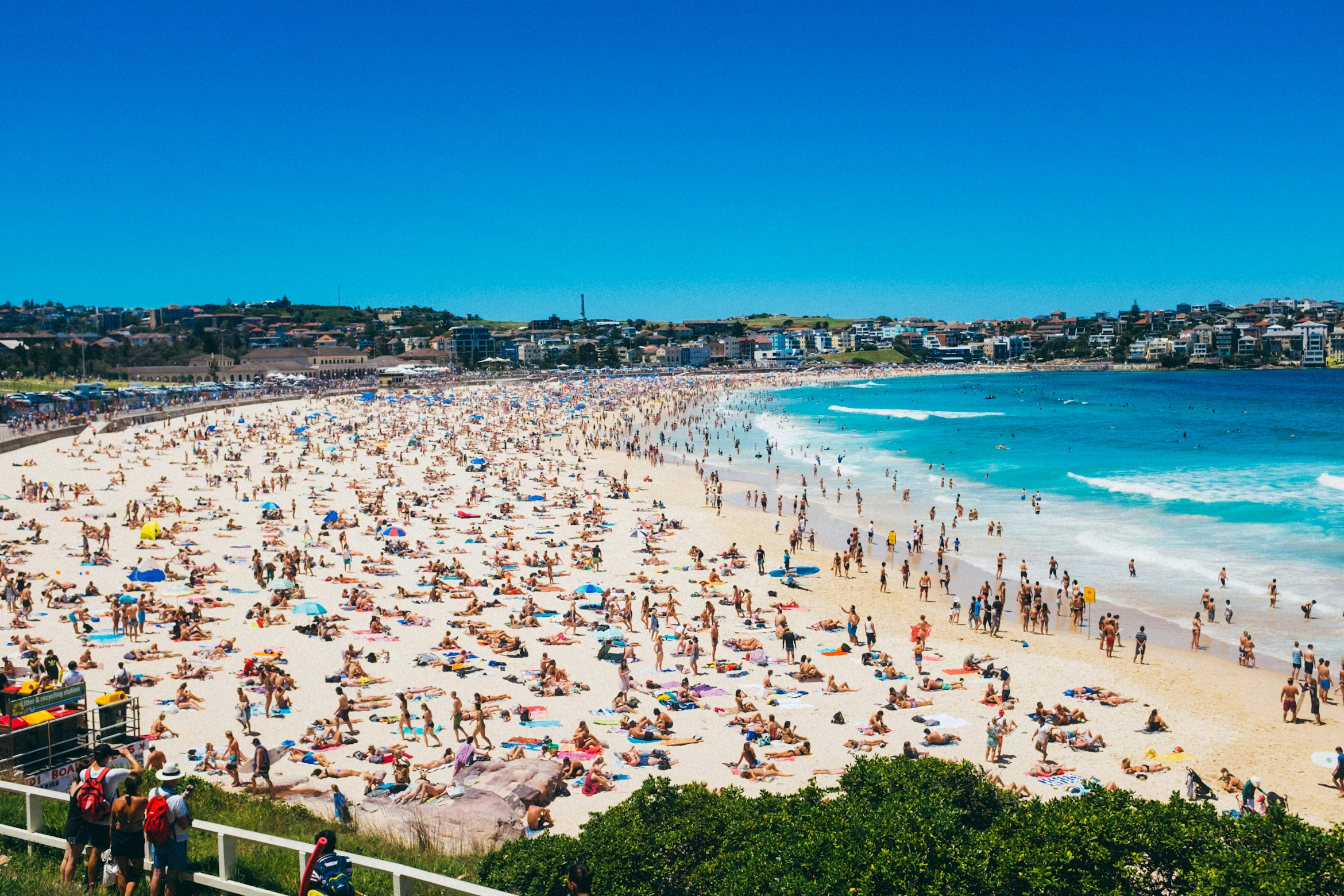
Almost everyone is talking about the State of Australia. The massacre of Jews at Bondi Beach on December 14th has forced us to ask questions that most Aussies are ill equipped to even frame, let alone answer with resolve. There is widespread shock, there is tremendous grief, along with anger, fear and yes, and still with much gaslighting.
Can’t we as a society just get along?
Clearly the answer is no. It should be yes, and I imagine the average Aussie longs for the answer to be yes, but we are falling far short of this thing called, ‘social cohesion.’
There are three simple observations that I wish to make here. They are not new or novel. Others are far better qualified than myself to speak to this topic. And even here, many of my words are ones that I’ve previously offered up in public discourse.
The 3 points that I wish weave together are these:
One year ago and a week before Christmas, the Victorian State Government proposed ‘social cohesion’ laws. A watered down version of the Bill was adopted by Parliament in April 2025. At the time I suggested that ‘social cohesion’ when it’s attached to government and to laws has a touch of the Machiavellian about it. One doesn’t know whether to think it’s more like George Orwell or Monty Python!
No doubt this is a testing time for any government. There are pressures applied from all kinds of directions, and at times this leads to inaction or delayed resolve. As we have seen for more than 2 years now, this has given more oxygen to antisocial, and especially, antisemitic voices and violence. Antisemitism is an indignant on the moral and spiritual state of Australia.
Australia has never been heaven. We have never been ther perfect country, but we have witnessed developments over the past decade that are injurious and bring grief to many. We are less peaceful than we were. We are less inclusive and kind. There is more personal and social distress and with little sign of a turnaround. This is evident across the country, but Melbourne is Australia’s protest capital (not a title to boast about). Ever since 2020, when the government turned a blind eye to certain marches while slamming others, every Jane, Nguyen, and Bob has seen fit to grind city streets to a halt. Not a week goes by without banners and angry faces blocking traffic.
According to the Bible, from which we owe the fundamental notions of civil society, governments have a responsibility to protect its citizens and to punish evil doers (Romans 13:1-6). This requires the careful and just creation of laws and their reasonable enforcement. It’s not a coincidence that the Apostolic framing of Government responsibilities is accompanied with an injunction for citizens to pay taxes. The purpose of taxation is largely tied to enabling government to do this double edged sword duty of protecting and punishing effectively.
Government inaction is no longer an option. Thankfully NSW’s Premier, Chris Minns, seems to realise this and is moving beyond empty rhetoric and thin pieces of legislation. Even a Muslim Mayor in Western Sydney has taken decisive action to close a hate factory where one of the gunmen was fed his lies about Jewish people.
We have too long sacrificed cohesion at the altar of diversity. Diversity, properly defined is a beautiful thing which adorns a healthy society. I thank God for the tapestry of multi-ethnicism that has given strength and flavour and wonder to Australia. But as we have deconstructed big T Truth and other axioms, we have lost the ability to acknowledge that some ideas are counter productive and even dangerous. We can practice pluralism while recognising not every worldview is equally valid or good.
If we think that our society is beyond and above 1928 Germany, we are suffering from a greater dose of egomania than I thought.
How can the Federal Government not call for a Royal Commission to investigate the terrorist attack at Bondi Beach on December 14? This wasn’t an isolated event, but the culmination of more than two years of government sitting on their hands while Jewish Australians were attacked in their synagogues and cafes and homes. And while genuine hatred was proclaimed and promoted on our city streets every week. As Stephen Mcalpine has noted, there is a directed line from the Sydney Opera House to Bondi Beach.
Even the slaughter of 15 Jews at Bondi Beach hasn’t been enough to completely silence the keffiyeh wearing mafia. So much whataboutism and justifying and excusing continues even before the bodies of the slain were laid to rest. Of course, their right handed sibling, neo nazism with men in black, is equally a scourge on our society.
While Governments must taken action against anti-semitism, Government action is not suffice. I’m not suggesting some kind of community vigilanteism; please no. But everyday Aussies are responsibile for their own words and actions and setting an example to others and demonstrating the power of kindness and grace and generosity over hatred and intolerance and selfishness. Of course we must be intolerant towards views that breed hatred toward Jewish people and views that dehumanise the other. That we need laws to demand ‘decent behaviour’ communicates how far our society has strayed. Churches need to take a lead in this, by teaching and practicing what is in accord with the Christian faith. I still cannot fathom how one Melbourne Anglican Minister in 2023 excused Hamas’ slaughter in Israel. Such disgusting commentary should be held to account.
As the Victorian Government proposed their ‘social cohesion’ laws last Christmas, I expressed discomfort at the language of ‘social cohesion’, and I remain uncomfortable. I get it; they are ‘trying’ to address a specific problem without naming the elephant in the room. Why not call it ‘Rules for Safe Protests’ or something like that?
The reason why I’m uncomfortable about the Government’s language of ‘social cohesion’ is because the task of social cohesion doesn’t belong to the government, but to the people. When government sees itself as the answer to every social ill and when the people demand government to fix every crisis, we are obfuscating personal responsibility and creating systems of governance that cannot bear the weight of such responsibility.
This is one area where the work of Dr Christopher Watkin is worthy of consideration. Monash University’s Dr Watkin articulates a positive and important work on contract theory. He says,
“Civil society is sometimes the neglected dimension of the social contract, the “missing middle” as it has been called. We have a tendency to jump straight from government and law to the individual.
These civil society relationships across different visions of the good are a glue that holds our social contract together.”
From his book, Biblical Critical Theory,
‘the vague and sporadic measures taken by contemporary governments to shore up the social contract with well-meaning but half-hearted attempts at “civic edu- cation” have little effect, when all the while billions of advertising dollars and a destructive paradigm of competition in all areas of society expertly catechize individual consumers to be little predisposed to the civic duties a strong social contract requires. No rewriting of the social contract can be complete without giving serious attention to its cultural and liturgical infrastructure.’
We will do well to engage with Dr Watkin’s material closely and carefully. There is much goodness and valuable ideas to be found. Here is one lecture he gave recently on the subject.
No Government is up for the job, and it’s not designed to be. Part of the problem embedded in any Government setting the rules for social cohesion is that this is never a natural space. This is one of the heresies attached to secularism. Secular is certainly preferable to Sharia Law and to Christian Nationalism, but it is no more epistemologically and morally neutral. Secular is the sum of the worldviews present in and controlling the moral impulses of the day.
There are wonderful pockets of social cohesion is found in all kinds of places and communities across our State. There are sporting clubs and men’s sheds, and there are temples and synagogues. It is certainly experienced in local churches.
Churches are frequently more culturally diverse than the communities surrounding them. Where I have the privilege of serving and belonging, we have people from China and Uganda, families from Vietnam and India, Nigeria and Columbia. Young and old mix together, single and married are friends and serve one another. Of course, Churches have their failings and blindspots, (after all, the very point of Christianity is that there is only one perfect saviour and we’re not him!), and yet there is profound togetherness and other person-centredness.
The Victorian Government accompanied its Social Cohesion directives with expanding anti-vilification laws. Religious groups were understandably concerned such new laws will tighten the noose of faith groups from teaching and practising in accordance with their convictions; history is a strong indicator. It’s amazing how often over the last 10 years Victoria has assumed the bishopric role when Christian praxis hasn’t supported their social agendas. There is a mine of irony in Victoria where Government identifies a growing social disorder and yet clamps down on one of the few societal groups who are truly exhibiting positive social health and life. If we are interested in civil society, maybe we ought to return to the worldview that created the ideas and values from which this vision derives: Christianity.
Not every religion is equal. Not every idea is equally valid, and assuming so will only give licence to the kind of behaviour that is all to common now in our city streets. And yet we must delver deeper than legislative reforms. No, I don’t support the idea of a State religion. Religious freedoms and pluralism is a Christian idea for Christianity isn’t something to be gained via Government guidelines and laws. Christianity is grounded grace not law. Without irony however, it is the Christian message that cdreates the space and gives air to the art of persuasion and serving others through disagreement. It is, for example, because Christians believe Jesus is the only way to God that we don’t want Governments legislating religious doctrines. There are however religious and irreligious teachings which contradict basic ideas of social freedom and respect of life and dignity of fellow Australians.
This is one reason why we are losing something precious by running away from the Bible and the God the of the Bible. It’s not something for Government to oversee, this is something the people have largely lost and would do well to come home to. The Scriptures that Jews and Christians alike believe, teach that we must love God with all our being and love our neighbour. Jesus insisted,
“Hear, O Israel: The Lord our God, the Lord is one.Love the Lord your God with all your heart and with all your soul and with all your mind and with all your strength.’The second is this: ‘Love your neighbor as yourself.’There is no commandment greater than these.” (Mark 12:29-31)
We must love our neighbours. We ought respect and reach out to our Jewish neighbours. We should show kindness to our Muslim neighbours. Law and legislation is a necessary weapon, but the bigger antidote to seeing real and heart transformation requires something more.
Two days ago we celebrated Christmas, the ultimate day of truce-making, although that first holy night was filled with peril. Nonetheless, the hope born that night in Bethlehem really is the only hope we have today. Come, check out a local church and see that hope in action. Let me leave you with the great Messianic promise of Isaiah for he is breathtaking,
‘The people walking in darkness
have seen a great light;
on those living in the land of deep darkness
a light has dawned.
You have enlarged the nation
and increased their joy;
they rejoice before you
as people rejoice at the harvest,
as warriors rejoice
when dividing the plunder.
For as in the day of Midian’s defeat,
you have shattered
the yoke that burdens them,
the bar across their shoulders,
the rod of their oppressor.
Every warrior’s boot used in battle
and every garment rolled in blood
will be destined for burning,
will be fuel for the fire.
For to us a child is born,
to us a son is given,
and the government will be on his shoulders.
And he will be called
Wonderful Counselor, Mighty God,
Everlasting Father, Prince of Peace.
Of the greatness of his government and peace
there will be no end.
He will reign on David’s throne
and over his kingdom,
establishing and upholding it
with justice and righteousness
from that time on and forever.
The zeal of the Lord Almighty
will accomplish this.’
Josh Frydenberg addressed the media and onlookers at Bondi Beach yesterday. The former Federal Treasurer is a Jewish Australian, and one who has been raising the alarm over anti-semitism these past two years. Yesterday, he delivered a must-watch speech. I wouldn’t be surprised if Mr Frydenberg’s words are remembered in 100 years, either as a catalyst for change or as the warning that went unheeded. It wasn’t political grandstanding. There was pain in his voice, as well as anger and frustration. He gave a clarion call for Australia to rid herself of this ancient evil: antisemitism.
“Prime Minister, can’t say those words, Islamist ideology, if you can’t speak them, you can’t solve them.”
The gaslighting and bullying over the last 2 years have been staggering. Even as the blood congeals at Bondi voices are casting doubts and questions. When Dr John Dickson made a comment expressing anger at the persistent ‘tradition of violent jihad’, one prominent Sydney religious leader suggested he shouldn’t make such a link. On Tuesday, ABC’s Laura Tingle had the gall to suggest that the attack was not motivated by religion, even though the terrorists made that claim themselves with an ISIS flag draped over their car, and with Federal investigators confirming links with Islamic hate preachers in Western Sydney.

There is one word our Prime Minister has used, and it is being uttered by many politicians, religious leaders, and ordinary Australians alike is, ‘evil’.
It is evil. Name it. The targeted slaughter of Jewish men and women at Bondi Beach was an act of evil. There are many evils in our streets and suburbs, and yes in every human heart. There is something particularly abhorrent about what took place on the evening of 14th December. It is an ancient and wicked sin, and one that the world has yet to put to death. Even the murder of 5 million Jews in the holocaust was not enough to end this vile.
I would like to address the concept of evil. Why do we turn to this word, and what do we mean by it?
Calling out certain attitudes and actions as evil is more than a gut reaction. Evil is a moral category. It requires there to be a standard of goodness and righteousness. Indeed, for evil to be anything more than a sociological label that is used to explain how we feel about bad events, evil requires there to be a good God who defines what is right and true.
I grew up in Melbourne of the 1990s, and then in Sydney and Melbourne in the 2000s. In the society in which I walked, learned and worked, there was an underlying quiet, yet smug insistence from people too smart for themselves who alleged evil doesn’t really exist. I recall an article published by the ABC during the pandemic by a Zen Buddhist psychologist who argued that while death is not very pleasant but it’s little more than part of nature’s cycle.
Geoff Dawson asserted,
“If one’s view of the world is based on science, we are not special, we were not placed here by a God to be the custodians of the Earth (and if we were, we have let the Almighty down big time!) and like all other species, we will have our place in the sun.
We will die out, and other, more adaptable, life forms will take our place.
The myth that we are somehow special and will continue to live forever as a dominant species is based on a deluded human-centric form of existential narcissism.
We may wring our hands and our hearts may ache at the rapid destruction of wildlife that is happening right now before our eyes, but we never seem to seriously consider that we may go the same way.”
I guess Geoff Dawson is trying to be consistent. I quote him because his philosophical consistency is both revealing and repugnant. If all that exists in the universe is matter and mathematics, and there is no God, it is difficult to suppose there is ultimate right and wrong. At most, what we have are little rights and wrongs, where we agree some things are unacceptable, but only because there is a group consensus, not because there is a universal truth.
And yet we know that cannot be the case. Evil isn’t defined by a poll. Evil isn’t just a label adopted to soften the blow of what are uncomfortable but ultimately meaningless events. But to maintain the objective and universality of evil, we need a counterpoint of objective and universal truth. In other words, we need God. And not only God, but a God of utmost righteousness and goodness.
The Philosopher Alvin Plantinga explains,
”Could there really be any such thing as horrifying wickedness [if there were no God and we just evolved]? I don’t see how. There can be such a thing only if there is a way that rational creatures are supposed to live, obliged to live … A [secular] way of looking at the world has no place for genuine moral obligation of any sort … and thus no way to say there is such a thing as genuine and appalling wickedness. Accordingly, if you think there really is such a thing as horrifying wickedness (.. and not just and illusion of some sort), then you have a powerful … argument [for the reality of God.]
Without God, notions such as love, compassion and grace also lose their moorings and essential status. Without Divine orchestration, what is kindness and compassion other than an evolutionary product to help us survive as a species? They aren’t inherently good and necessary; they’re cosmic luck. They’re chromosomal, chemical and cultural byproducts of evolutionary processes.
Again, we know that such thinking is nonsense. It’s not only cognitive dissonance, but moral and existential dissonance. We know justice and compassion are more than ways of describing our preferences, just as we know evil isn’t simply a way of categorising things we hate or are afraid of.
Our world requires a God who is above us and outside the universe: A Divine Being who defines right and evil, justice and compassion and who has shaped the universe to have and need these things.
We can categorically say Islamic Jihadism is evil. We can confidently say NeoNazism is evil. Why? Because existing outside ourselves and yet imprinted into the image dei is the God of love and goodness.
Like Sydney, Melbourne enjoys a large Jewish population. Melbourne is home to more Holocaust survivors than any other place in the world, other than Israel. Between my home and the city stand many Jewish schools and synagogues. My kids regularly played sports with and against local Jewish schools, such is the vibrant Jewish community in this part of Melbourne.
But Melbourne, and perhaps this is also true of Sydney, has relied upon hubris and false piety for far too long. How different we are today from William Cooper. A Christian man and Aboriginal leader, William Cooper stood in solidarity with the oppressed. With foresight, Cooper understood the unfolding evils in Germany and spoke up when most world leaders remained silent. On December 6 1938, William Cooper led a march in Melbourne to the German Consultant, in response to the infamous Kristallnacht, and condemned the “cruel persecution of the Jewish people by the Nazi government in German.”
For all our pseudo-sophistry and boasting in our cosmopolitan and cultural greatness, travelling in our DNA are the same iniquities that have tainted all nations of old, including what was once considered the most ingenious and advanced culture in the world: Germany. We Aussies love to sing our own praises, with this gleeful myopia that sometimes shares more in common with Nero than with William Cooper.
This week, I am reminded of one of the books that both Christians and Jews hold as Holy Scripture, the book of Jeremiah. The prophet spoke in a time of immense upheaval and uncertainty.
‘We hoped for peace
but no good has come,
for a time of healing
but there is only terror.
You who are my Comforter in sorrow,
my heart is faint within me.
Listen to the cry of my people
from a land far away:
“Is the Lord not in Zion?
Is her King no longer there?”
“The harvest is past,
the summer has ended,
and we are not saved.”
Since my people are crushed, I am crushed;
I mourn, and horror grips me.
Is there no balm in Gilead?
Is there no physician there?
Why then is there no healing
for the wound of my people?’
(Jeremiah 8:15, 18-22)
Months ago, I reflected on the growing expressions of hatred echoing around Melbourne,
“The sad reality is, I don’t know if our fragile cultural cladding is able to resist the kinds of attacks on Jewish people we are now seeing. I think the jury is out, and that should cause us great concern for the future.”
Today, Jewish families around Australia are less certain about tomorrow. They are less confident and free. Their warnings and fears have become reality. That ought to bring great sadness to our land and shout a loud warning.
And yet there remains an unwillingness to learn the lessons of history. We struggle to use the right words or even understand them, because for so long we have stripped the world of ultimate realities and truths in exchange for personal preferences.
Sunday, 14th December, saw evil in its brutal force; religious beliefs fuelling hatred and mass murder. Whether it is the result of ignorance or fear or complicity, we have failed the Jewish community in Australia.
The words of Jeremiah resound loudly today, and yet that doesn’t have to be the end. 600 years after Jeremiah’s day, an elderly Jewish man lived in Jerusalem. We are told,
“Now there was a man in Jerusalem called Simeon, who was righteous and devout. He was waiting for the consolation of Israel, and the Holy Spirit was on him”
His eyes saw Jesus and he exclaimed,
“Sovereign Lord, as you have promised,
you may now dismiss your servant in peace.
For my eyes have seen your salvation,
which you have prepared in the sight of all nations:
a light for revelation to the Gentiles,
and the glory of your people Israel.”
One thing I do know is this: if Simeon’s assessment is true, Divine consolation can be found. As much as we need evil to be more than a gut-wrenching sensation, we need a consolation that can plumb the depths of despair and pain and bring healing. He is who I am thanking God for at Christmas. And I pray my fellow Australians, even those who disagree with me, will also come to know this Divine consolation.
Last night our church building was packed with people, gathered to celebrate the birth of Jesus. While our evening was filled with laughter and joy and praise, what we didn’t know at the time was that a massacre was unfolding at Bondi Beach in Sydney.
Thousands of Jewish Sydneysiders gathered at Bondi Beach to celebrate the first night of Hanukkah. As they welcomed the festival of light, darkness descended as two men dressed in black opened fire.
15 people are now dead, with dozens injured, including 2 police. One of the gunmen is also dead, and his accomplice is critically injured. Police and the NSW Government were quick to announce this as an attack on Jewish people and an act of terrorism.
I am shaken. I am profoundly saddened. What has become of this nation?
I am angry, really angry. Damn those men to hell. Damn those who cultivate and stir hatred toward Jewish people, and those who excuse growing anti-Semitism in Australia.
Can we say that Australia is safe for Jewish people? If the answer wasn’t already tenuous, after last night’s terror, it is difficult to say yes.
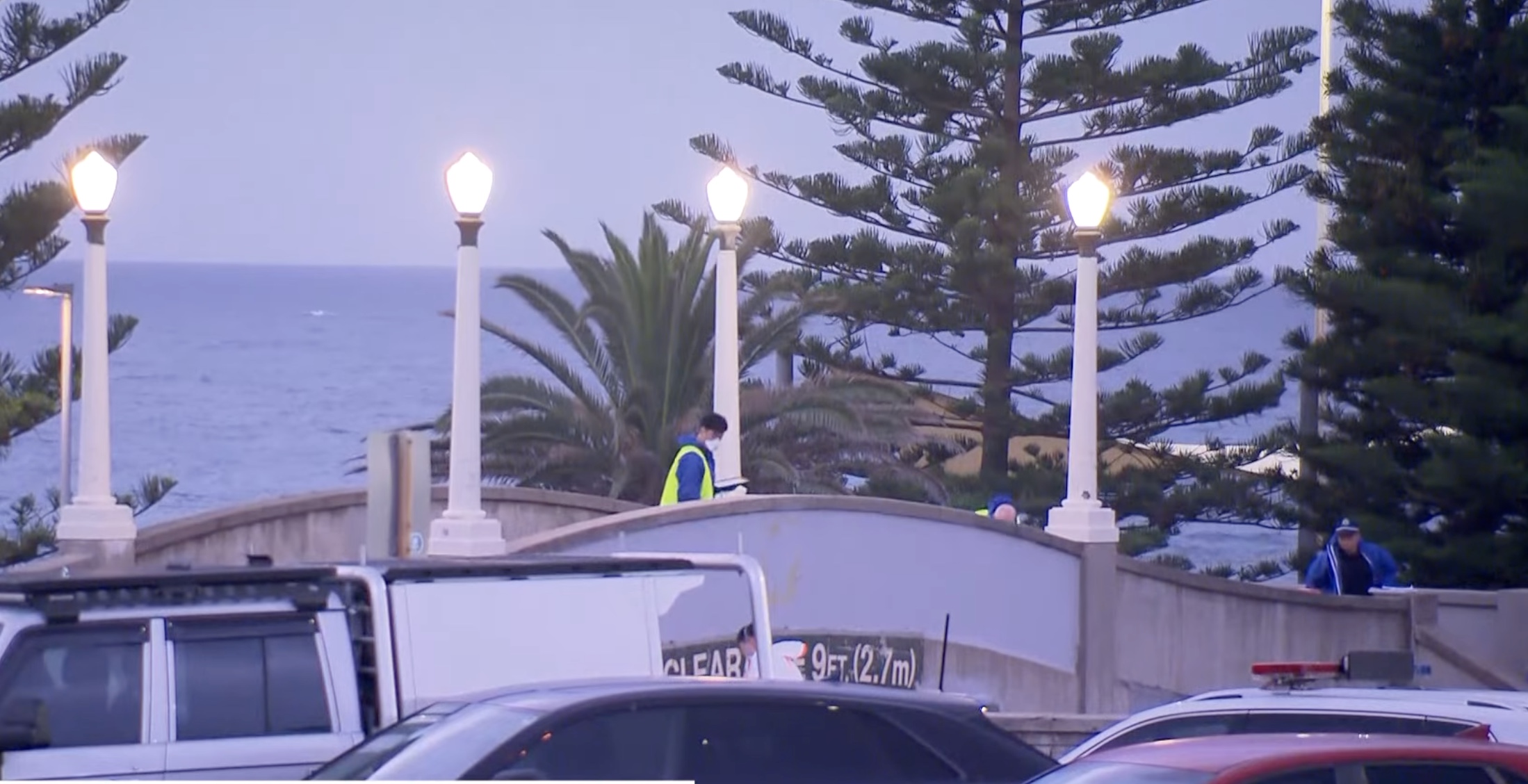
Melbourne this year has borne witness to Neo-Nazis leading marches through our city streets. A prominent Neo-Nazi has addressed crowds in public. Arson at Melbourne’s Addas Israel Synagogue saw the building severely damaged 12 months ago. Jewish Aussies are regularly subjected to anti-semitic graffiti and verbal attacks on the streets.
To suggest Australia is safe for Jews rings hollow. It is too our shame.
Stories of heroics are slowly emerging. It needs to be said, given the likely identity of the gunmen, that one hero who emerged last night was a Muslim man who ran and tackled one of the gunmen, almost certainly preventing further loss of life. He in turn was shot twice and is now in hospital.
As hundreds of people came together at Mentone Baptist Church last night, we focused on the God who came. I talked about how hurt and harm naturally produce friction and distance. God knows how deeply divided our cities and suburbs have become. Something counterintuitive happened with Jesus; God determined to come closer. When God saw all the evil in this world and all odious motives and words and deeds, instead of walking away as he had every right to do, he came to us. He came in the most miraculous and vulnerable of ways. The Son of God didn’t come to take away life, but to lay down his own life so that we might gain eternal life.
The birth of Jesus was accompanied by such bright light, and the scene was also interrupted by a wave of evil and darkness. The Gospel of Matthew records the massacre of the innocents, when Herod chose violence and murdered the young of Bethlehem in his hunt to rid the world of the prophesied one.
Matthew turned to these Scriptures to echo the horror,
“A voice is heard in Ramah,
weeping and great mourning,
Rachel weeping for her children
and refusing to be comforted,
because they are no more.”
Today, there is weeping and great mourning in Sydney. This should not be. Why are we not surprised? We are shocked, and yet who is surprised by the blood soaking into the sands of Bondi Beach? Perhaps the location took us by surprise, but our fractured society is losing coherence as we struggle to find something that keeps us together.
Politicians, stop pandering to groups who advocate this bile.
Religious groups, expose and expel religious preachers who teach this evil.
How long must we watch city streets clogged with protesters shouting obscenities and anti-semitic slurs, all in the name of ‘freedom’.
This isn’t a left or right issue, for the hatred has its horns on both ends. It is a religious issue. It is an ideological issue. It is a heart issue, and evidence suggests we are not equipped to respond. Violence isn’t the solution. Vile social media posts won’t bring about peace and healing.
The Gospel of John records Jesus attending Hanukkah. While not one of the Festivals instituted in the Bible, this commemoration of the Second Temple’s restoration in the 2nd Century BC, had quickly found a home in the Jewish calendar. It is unsurprising that Jesus, a Jewish man, participated in this Festival of Light (John 10:22).
A light was snuffed out last night at Bondi Beach, and the light has grown dim around Australia.
Where will we find light to overcome the darkness? Political muscle and social goodwill have some but limited influence. Who can gaze into the soul? Who can outdo evil?
“I am the light of the world. Whoever follows me will never walk in darkness, but will have the light of life.”
Pray for the injured. Pray for the hundreds of victims who were present and witnessed last night’s evil. Pray for our emergency services who today continue to work and protect our streets, investigating last night, and attending to the wounded, both the physically and mentally hurt. Pray for our Jewish friends and neighbours. Check in on them. Assure them of our friendship. Pray for them.
As Hanukkah continues and Christmas approaches, my hope rests in the One about whom it is written,
“The light shines in the darkness, and the darkness has not overcome it.”
Lord, have mercy. Maranatha
The ABC is reporting that new Guidelines for NSW Health will crack down on hospital management who try to prevent abortions.
“Hospital managers and executives would be barred from blocking abortions because of personal beliefs, under new guidelines proposed for public health services across New South Wales.
A draft copy of the “termination of pregnancy policy directive”, obtained by the ABC, includes a new section that specifically deals with conscientious objection among those managing and administering health and hospital services.
The policy has been under review for more than a year and lays out requirements for individuals and institutions providing or assisting with abortion care.”
The ABCs language of choice is ‘abortion care’. While ‘care’ is also used in the Government Guidelines, the reporter can’t help but repeat ‘care’ more than 20 times in the article, as though saying it over and over again must make it true. But the hypnosis doesn’t work.
It doesn’t take a genius to see that ‘abortion care’ is an oxymoron of epic proportions. Care means to provide love and kindness, whereas abortion by definition requires the taking of human life.
Of course, ‘abortion care’, like its sister slogan ‘reproductive health care’, has become difficult to keep together as science reveals more about the little ones whose lives are removed during the early weeks and months of pregnancy.

The old argument, ‘it’s a clump of cells and not a human being’, is rarely used nowadays. The proof is in the womb. The more science reveals about life in the womb, the more we have to admit that the Biblical testimony is spot on,
‘For you created my inmost being;
you knit me together in my mother’s womb.
I praise you because I am fearfully and wonderfully made;
your works are wonderful,
I know that full well.
My frame was not hidden from you
when I was made in the secret place,
when I was woven together in the depths of the earth.
Your eyes saw my unformed body;
all the days ordained for me were written in your book
before one of them came to be’
(Psalm 139:13-17)
And yet, the commitment to uncreating this wonderful frame persists to this day. So much so that NSW Health want to force hospital employees to act against their good conscience. Can you imagine the State forcing organisations to take a life against their conscience?
The ABC goes on to quote NSW Greens MP Amanda Cohn. Listen to the dishonest rhetoric.
“I’ve heard about instances of conscientious objection provisions being weaponised by department managers or hospital executives to then cause a whole department or a whole hospital not to provide a service,” Dr Cohn explained.
Weaponised? Let’s get this straight. According to Amanda Cohn, those who seek to save lives are ‘weaponising’ while those who wish to take a life are offering a service? It’s as though we’re now living in the Upside Down. It’s less George Orwell and more Aldruous Huxley. We’ve swallowed the soma. Of course my career and dreams, and lifestyle are more valuable than an unexpected baby! And we thought Molech was a demanding god!
Are we okay with the State forcing individuals to sanction the taking of human life under their care?
Meanwhile, in Victoria, pressure is mounting to expand the laws surrounding euthanasia. Sorry, ‘voluntary assisted dying’! What a surprise. Once the scent of death is caught, the bloodhounds and sharks won’t relent. In October of this year, the Victorian Parliament removed the ‘gag clause’, now giving Doctors permission to initiate conversations with patients about using euthanasia as an option for them.
From life at its beginning and at its end, our society has snatched the key of death and now claim the right to lock and unlock.
Stranger Things may have its Vecna, who appears as kind Henry to steal the children away. We have our own Henrys, and strangely, we not only protect but praise them.
Thank God the story doesn’t end here. The way to overcome the Upside Down is staggering and the perfect salve. I’m not looking to Houses of Parliament and to street marches. Christmas, of all thing,s points us in the right direction.
Christmas is less than 2 weeks away, the most poignant celebratory day in our Calendar. On Christmas, we celebrate the birth of a child, the child, the Son of God. We know that he was an unwanted child, so much so that the State interfered and try to have him disposed of.
God kept this little one alive. His mum and earthly dad also cared for him. Before his birth, while Mary was heavily pregnant, a Divine announcement came that shook the world and echoes with clarion goodness even today,
“Joseph son of David, do not be afraid to take Mary home as your wife, because what is conceived in her is from the Holy Spirit.She will give birth to a son, and you are to give him the name Jesus, because he will save his people from their sins.”
People tried to take Jesus’ life. In the end, he laid down his life for the sins of the world. That not only means the God calls out insidious laws for what they are, it means the God of grace and truth can do what our society cannot. Whatever our modern Henrys allege about life and death, the reality is, the scarring and guilt stick. Bad choices remain bad, and no dose of soma pills can change what the heart ultimately knows. But Jesus can.
Many a church will read John’s Prologue over Christmas, as will we at Mentone Baptist Church. The word has not lost its necessity and grace, no matter how much our culture may wish to have God dead and buried. Think it over,
“The light shines in the darkness, and the darkness has not overcome.
The true light that gives light to everyone was coming into the world.He was in the world, and though the world was made through him, the world did not recognize him.He came to that which was his own, but his own did not receive him. Yet to all who did receive him, to those who believed in his name, he gave the right to become children of God— children born not of natural descent, nor of human decision or a husband’s will, but born of God.”
How many Reformed Evangelicals does it take to change a light bulb?
I’ll let others decide on the answer, but in June this year, a relatively rare (although becoming less rare) sight was spotted in Newtown, Sydney. Reformed Evangelical leaders from across Australia gathered to talk, listen, dream and pray.
Under an invitation from The Gospel Coalition Australia, a coalition of Gospel minded leaders met for a Summit. That winter’s day was the second year we met, with hearts burdened and captivated.
So what, you might ask? What’s so unusual about that? Well, anyone who has tried will appreciate how hard it is to convince busy Christian leaders to give up time and travel to a strange place for a meeting where finding any tangible outcome is far from certain. It is also tricky to get Christian leaders in the same room where there is trust, theological clarity, and gospel generosity and grace.
The Gospel Coalition Australia is providing such a ballast, not so heavy and not so light. Not for a second, however, did the leaders who gathered think that other Christian groups are not doing essential Gospel ministry and mission. We recognise and praise God for the many different churches and organisations that are built on the Gospel of the Lord Jesus Christ and proclaiming Christ, and seeing people becoming Christians and joining His Church.
Gospel Unity
At the same time, folk like Rory Shiner and Andrew Heard are noting a peculiar season for Reformed Evangelicals, and making the most of every opportunity is surely wise and good.
Such a Summit probably wouldn’t have taken off 20 years ago. The day in June reflects a beautiful shift among evangelicalism where some of the old tribalism and differences are being replaced with greater Gospel charity and desire to work together. Sure, we disagree on some matters, and there were certainly robust conversations. And yet, what is an Anglican or Baptist, or Turramurra and Townsville? We are not playing golf or tennis. This is cricket, and in this team we aim to play, work, and serve together.
This kind of visible unity is now found in numerous places. I think of the Reach Australia Conference, where 1400 pastors, planters, and ministry workers converge on the NSW Central Coast from around the nation. Or the growing number of TGCA local chapters that are becoming hubs where Gospel workers across denominations meet, pray and are nourished. And there are para-church groups like AFES that are Gospel centred hubs of mission on university campuses.
From my small corner of the country, I am seeing there is greater Gospel solidarity across the country, and what’s extraordinary is that it’s happening at a time where our society is becoming increasingly fractured, and where Christian denominations are also splintering.
The Summit resolved to create a statement that reflects what the 40+ women and men in attendance affirmed. After an initial drafting, the statement was sharpened by a small group, returned to the larger group, and is now finally released.
A prayer for Australia
Here is the statement. Rory Shiner rightly refers to it as a prayer. This is our prayer, that under Almighty God, he will do wonderful things through his gospel for the salvation of many Australians.
“We acknowledge God works out all things according to the counsel of his will and in his mercy saves his people through the faithful preaching of the gospel of our Lord Jesus Christ.
For the glory of God, as a movement of Reformed Evangelicals in Australia, we commit to pray for and work toward a doubling (at least) of the number of gospel-centred Christians in our country over the next fifteen years.
We will pray for and work toward:
What do you think?
Politicians are well known for leaking. Sometimes, news is so exciting and audacious that it can’t be contained. I reckon this TGCA prayer has become one of the worst-kept not-so-secret secrets of 2025!
The 5% vision and its accompanying points have been the subject of at least 2 episodes on the Pastor’s Heart podcast, REACH Australia is already beating the drum, and both FIEC and the Sydney Anglican Diocese have adopted the goals. All this before we announced the final statement!
People have been talking about the 5% vision for several months now. Some have come out in strong support, while others are criticising. But now we can all read it for ourselves.
One of the positives coming from these pre-emptive discussions and announcements, and no doubt, all the conversations that are yet to take place, is that people are talking about reaching Australians with the Gospel. What a great thing to talk about! Even better, what can be more important for our prayers and hearts and imaginations and ministries than wanting people to come to know the Lord Jesus?
This prayer isn’t a one-size-fits-all approach. It comes from an awareness of growing gospel collegiability about reformed evangelicals and a conviction that we need to press on to reach Australians with the Gospel.
Archbishop Kanishka Raffel said in his recent address to the Sydney Anglican Synod,
“The 5% number arises from a national conversation that has been initiated by The Gospel Coalition Australia across like-minded denominations. It is not a way of telling God what to do, it is a way of making every local church ask, what may we do?”
Gospel Urgency
Amen Kanishka! Evangelism and the Great Commission is surely what we are about as churches. Everyone’s an evangelist. We live in an age of conversion: competing ideas and passions are trying to win over people all the time. We are not living in a neutral space where there is no convictions and calls to repentance and faith. Whether it is prominent religions, sects or cults, or one of the various iterations of secular humanism, we live in a marketplace of ideas where groups sell their vision for the good life. Is it a market or a temple? Is it the Agora in Ephesus or Artemis? all the above!
There are signs that in Australia, we are witnessing a rise in neopaganism and exotic spiritualities, Islam and Hinduism are growing (mostly through immigration), and there is a quiet opening of the door toward Christianity. As much as secular humanism us promised utopia without God, reality struck a blow; we can’t live without God. We need God. We are desperately praying there is a God.
The prayerful goal for 5% annual conversion growth in our churches may feel overwhelming for some; I get it. To others, it may appear modest, but even modest goals will buck the trend in Australia. Over 15 years, 5% growth will mean a doubling in the size of our churches. That’s exciting.
This prayer, with its Gospel goals, is as much about reminding us of the urgency of mission. Without faith in the risen Lord Jesus, God’s image bearers remain dead in their sin and facing a wrathful God. The vision sets our priorities and does so in a way that reminds us we’re not doing this alone. There may be meaningful ways in which we can support and encourage one another.
In the New Testament, we find early glimpses of how churches may serve the broader body of Christ:
There is something thoroughly Christian about Christians recognising one another and seeing each other as fellow workers rather than competitors at either end of a tennis court.
During the Summit, there was recognition of our reformed evangelical shortcomings, and there was a desire to do better. Overall, the tone of the day, which is reflected in the prayer, is one of humble confidence in God and his Gospel and stimulating conversations together.
Gospel Confidence
We’d love to encourage others to pray this prayer. Maybe your church or group would like adopt it. We are praying this prayer because we know God is Sovereign, we are convinced Jesus loves his church and we know the Gospel is powerful to save everyone who believes.
Jesus promised, ‘I will build my church and the gates of Hades will not overcome it’. We believe him. No single local church or denomination or ministry or preacher can reach every part of the Great Southland. Maybe there are ways we spur one another on in evangelism.
There are always dangers and challenges facing our churches, and most of these come from within, not outside. We probably can’t control or influence what a State Government might do and decide around religious freedom, but we can work to ensure our churches remain true to sound doctrine and focused on the Great Commission. We will need to teach and push against strands like Christian nationalism and old school deathly liberalism. We also need to guard our hearts against materialism and gnosticism. And be enthralled by the Gospel, and hearts captured to see our church doubling over the next 15 years. Many won’t and many will, and some will grow much more. But let’s not aim for nothing and pray for nothing.
There may not be a quiet revival in Australia, but the spiritual temperature has changed a little bit. More people are asking questions, and more people are no longer satisfied with the hopelessness offered up by life without God. People are remembering that God has placed eternity in the heart.
What are we waiting for? Would you like to join us in this prayer? Let’s get on with the Lord’s work and see what great things he can do.
The heading comes from a survey conducted by TGCA earlier this year, where we invited Christians from around the country to share their ideas and dreams.
Here is the link to Rory Shiner’s TGCA encouragement to Australian Churches to join in this prayer together – https://au.thegospelcoalition.org/article/a-prayer-for-australia/
 MurrayCampbell.net