The non-controversial controversial program in our pre-schools

In August this year the Daniel Andrews Government banned SRI classes from Victorian Schools. Despite the fact that this has been a valued program for many decades, and that many schools are still keen to give space for this 1/2 hour weekly lesson, the Government caved into pressure from various lobby groups. Replacing this opt-in program will be a compulsory ethics/well-being/religious curriculum. Whilst announcing that this program will run from the start 2016,  the Government is yet to provide any details of its content and who will teach it. Indeed, schools remain in the dark as to what is happening.

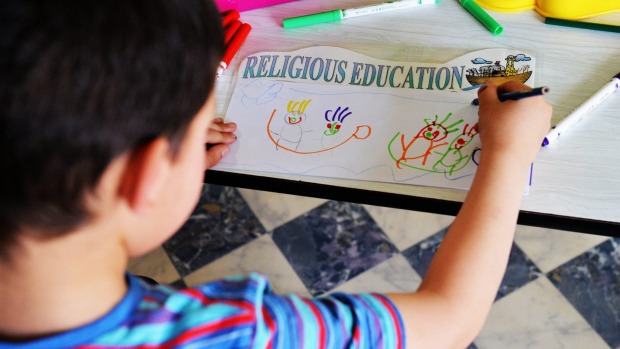
Today, The Age has reported that ACCESS Ministries are now offering a program in Victorian pre-schools, called Explore Christianity.

FIRIS have notified their supporters on facebook, saying

“SPECIAL RELIGIOUS INSTRUCTION – COMING TO A KINDERGARTEN AND CHILDCARE CENTRE NEAR YOU!

ACCESS have now discovered a new mission field – they have transferred their proselytizing to a softer market.

They are like the Gecko, who loses its tail, only to grow another one back again. They have reinvented themselves and found another way to get to the children.

FIRIS has known about this for some time, and the VIC government was first notified about this from us back in May.

It appears that now very young children will be segregated by religion and parents who object to their children being indoctrinated while at child care will need to accept this segregation as the norm, or find another centre.

The government has been taken offguard by ACCESS’ metamorphosis and will have to either choose to deal with it – or look the other way.

The obvious concerns are:

* Proselytising

* Treats offered as an incentive to children

* Religious segregation of very young children

* The opt out nature of the program

  • Adequate informed consent being provided to parents”

I agree that any program must have transparency, and provide adequate information for parents, and it should have  either an opt-in or opt-out clause. These things are sensible and appear to be in place already.

But even if all of these  ‘concerns’ were fully met, history gives reason to suspect that FIRIS will keep pressing for this program to be shut down.

Given that, let’s look at these important facts that The Age reported today:

  1. Parents asked the Emmanuel Early Learning Centre to introduce this program and the Centre management agreed.
  2. The overwhelming majority of families are participating. After receiving consent forms, only 3 families chose to opt-out their children.
  3. The program teaches, “Christian values and beliefs, in addition to stories from the Bible.” In other words, it is teaching they very things that a program about Christianity should teach.
  4. Volunteers who run the program are accredited by ACCESS Ministries, in accord with strict requirements that have been set by the Education Department for SRI teachers in schools.

Pre-empting any call to close down the program, Minister for Families and Children Jenny Mikakos said to the The Age that, early childhood services operated independently, and any “decision on offering religious education as part of a service provider’s program is a decision for each individual provider and parents of children attending the service”.

It will be interesting to see what and if any pressure that the Government will try to apply to these early childhood centres. As it stands, they are providing a program within the law, based on parental interest and request, and with substantial by-in from both the Centre and its families.

Where is the controversy?

—————-

Photo from The Age (Nov 10): Joe Armao

Religion Makes us Meaner

I agree.

Like sharks smelling a drop of blood, the media is swarming around the latest ‘religion is bad’ news story. This time, it comes in the form of a report that has been published in the journal Current ­Biology, by a group of researchers at Chicago University.

OLYMPUS DIGITAL CAMERA

Research leader, Dr Jean Decety, has said, “Together, these results reveal the similarity across countries in how religion negatively influences children’s altruism. They challenge the view that religiosity facilitates prosocial behavior, and call into question whether religion is vital for moral development—suggesting the secularization of moral discourse does not reduce human kindness. In fact, it does just the opposite,”¹

That is one gargantuan call to make, and with significant implications should the assertion be true.

The Australian newspaper offered this helpful summary of the study (Nov 6):

“In the study, more than 1100 kids aged between five and 12 were asked to share stickers with anonymous schoolmates. The subjects lived in North America, the Middle East, South Africa and China, and included Christians, Muslims, Jews, Buddhists and Hindus.

Those from agnostic and atheist households consistently proved less likely to keep the best stickers to themselves. “The more religious the parents, the less altruistic the children, irrespective of the religion,” Dr Decety told The Australian.

He attributed the findings to a phenomenon dubbed “moral licensing”, where people’s perceptions that they were doing good — in this case, practising religion — exempted them from the obligation to perform other worthy deeds. “Apparently, doing something that helps strengthen our positive self-image also makes us less worried about the consequences of immoral behaviour,” he said.

The study also found that when the children were shown videos of “mundane” affronts, such as people bumping and pushing each other, religious kids were more inclined to decide harsh punishment was warranted. Dr Decety said this supported previous findings that organised religion promoted intolerance and punitiveness.”

I agree…in part.

I affirm the idea that religion can make people meaner and more selfish. This idea is hardly new, Christians have understood this since its earliest days, and it conforms to what the Bible has been saying since it was first written, millennia ago.

As Tim Keller put it in The Reason for God, “Those who believe they have pleased God by the quality of their devotion and moral goodness naturally feel that they and their group deserve deference and power over others. The God of Jesus and the prophets, however, saves completely by grace. He cannot be manipulated by religious and moral performance–he can only be reached through repentance, through the giving up of power. If we are saved by sheer grace we can only become grateful, willing servants of God and of everyone around us.”

According to Roman ch.1 religion stems from suppressing what is true, and creating and then depending upon things that are not true for meaning and salvation.

Subsequently, it is unsurprising to learn that religion is largely about self-justification; it is the human attempt to persuade God and others of one’s worthiness and goodness. Religion is about doing things and saying things in order to win God’s favour. Even acts of kindness can be a cover for gaining approval and for feeling better or happier about oneself. In other words, we shouldn’t be surprised to find that religion can make people, even children, mean.

The study doesn’t only suggest that religion makes children mean, it would have us believe that atheism makes children kind. Does unbelief enhance out potential for true altruism? A survey of non Government welfare agencies and charities will be hard pressed to find more than a handful that don’t have their foundations and funding in organised religion, especially Christianity. How many atheistic organisations can you think of that are working in our local communities and across the world to care for the poor and needy?

The average Australian gives away less than $200 each year, whereas Christians give on average, 5-9% of their annual income, and many give considerably more².

While I know some very friendly atheists, atheists are also among the most intolerant people in our society; listen to how many journalists, politicians, and social commentators now address Christians. For not subscribing to the secular agenda, Christians are labelled stupid and bigots, and Christian programs are being shutdown across the country.

History and contemporary society demonstrate that both religion and atheism are a problem. Should we debate who is worse, ISIS or Stalin? Surely evil is evil, whether it is perpetrated by the religious or irreligious.

How then, do we explain the findings of this outcome?

While I’m not dismissing the research, there are problems. For example,

1. In my opinion the study does not adequately differentiate between nominal religious believers and those who actually practice their religion. In particular, I am thinking of the distinction between Gospel (or Evangelical) Christianity and cultural Christianity. The use of the Duke Religiosity Questionaire may be useful as a sociology calculator but it is a poor theological and spiritual one.

2. The findings don’t properly differentiate between various religions. Islam and Christianity are at times lumped together, while other religions didn’t receive a large enough sample size to warrant analysis.

3. The research is making strong claims based upon limited research. Children completed a game and parents filled out a questionnaire, and from this we can now confirm that non religious families exude greater kindness than religious families? I think we call that, overreach.   

4. “Children from religious households favored stronger punishments for anti-social behavior and judged such behavior more harshly than non-religious children”. Why is this deemed a negative? It is quite possible that children from religious families have a stronger moral compass and therefore a greater sense of justice.

5. The study involved children from 6 countries: Canada, China, Jordan, South Africa, Turkey and the United States. To what extent have the researchers accounted for cultural differences, and how these affect the way children behave? The way that culture and religion relate in Jordan is different from China and indeed the USA.

In my view, there are simply too many questions for people to be jumping on the bandwagon. Remember, this is one study, and it is worth noting that its findings conflict with other research that has been conducted in recent times, which have found that belief in God makes people happier and more community oriented (https://murraycampbell.net/2015/09/24/new-evidence-suggests-that-the-closure-of-sri-was-a-mistake/).

Dr Decety and the team from Chicago University have driven us to an all to familiar dead end street: we want to maintain that religion and irreligion are our only options, but there is a third way. That is why the message of Christianity is so subversive and why it does not fit with the dimensions of human expectations.

Christianity teaches that everyone is sinful, yes, even children. Isn’t it ironic that when Christians make this suggestion it is called ‘child abuse’, and when secular academics make the same observation it is called science! We shouldn’t be surprised to learn that young children exhibit selfish and judgemental traits; it is human nature. Sometimes we clothe it in God-speech and promises of eternal reward, and other times we simply call upon humanitarianism.

Altruism is unattainable because we simply cannot do it. Both religious and non religious people are capable of love and acts of kindness, but inconsistently, partially, and often for self-seeking reasons. The history of the world is our autobiography, and we are seriously kidding ourselves if we think that we have climbed up the evolutionary tree: domestic violence in 1 in 3 Australian homes, over 80,000 unborn children killed each year, the revelations on Ashley Madison, cruel Asylum Seeker policies, ka-ching and the masterminds behind the pokies industry, and on and on.

But in Jesus Christ we see perfect love, selfless service and sacrifice for the good of others; he is uncompromising in holiness and generous in mercy:

“This is love: not that we loved God, but that he loved us and sent his Son as an atoning sacrifice for our sins”. (1 John 4:10)

This is the essence of Christianity:

“The gospel is this: We are more sinful and flawed in ourselves than we ever dared believe, yet at the very same time we are more loved and accepted in Jesus Christ than we ever dared hope.” (Tim Keller)

When a person comes to know this declaration of God’s love, they are changed, forgiven and liberated to truly love God with our whole being and to love our neighbour. It changes us to give without expectation of return, and to sacrifice for the good of those who despite us. Religion and irreligion are proven dead ends, but the Gospel of Jesus Christ promises a light that changes how we see everything.

——————

  1. http://news.uchicago.edu/article/2015/11/05/religious-upbringing-associated-less-altruism-study-finds
  2. See NCLS research for information regarding giving habits of Australian Christians. A summary of broader Australian giving can be found here – http://www.businessinsider.com.au/here-are-the-top-20-most-generous-suburbs-in-australia-2014-5
Dr Paul Ehrlich accusing Scripture classes of child abuse on QandA

Last night on QandA, guest panelist, Dr Paul Ehrlich (Professor of Biological studies at Stanford University), made an astonishing allegation regarding religious instruction in schools.

“We did, but we didn’t have child abuse required in those days. We didn’t have any religious instructions in the schools,” Dr Ehrlich said.

“Did you just say religious instruction is child abuse,” Jones asked the outspoken panellist.

“That’s what Richard Dawkins and lots of other people have said; that you teach people details about non-existent supernatural monsters and then behave in reaction to what you think they are telling you.”

“That’s child abuse. You don’t raise your kids that way,” Dr Ehrlich said.

Audience members then responded with applause.

I have heard similar comments before, made by angry and uninformed persons, but not by an intellectual and person of public standing. We have come to expect these types of accusations by supporters of FIRIS and others, but do the allegations have warrant? If this is a case of name calling, it is truly bad taste and Dr Ehrlich should apologise. If, however, the allegation is serious, action must be taken by both Government and police, for child abuse is rightly deemed appalling and never acceptable.

According to the Department of Human Services (DHS) child abuse is defined in the following ways:

“Child abuse is an act by parents or caregivers which endangers a child or young person’s physical or emotional health or development. Child abuse can be a single incident, but usually takes place over time.

In Victoria, under the Children Youth and Families Act 2005 a child or young person is a person under eighteen years of age.

Physical abuse

Physical abuse occurs when a child suffers or is likely to suffer significant harm from an injury inflicted by a child’s parent or caregiver. The injury may be inflicted intentionally or may be the inadvertent consequence of physical punishment or physically aggressive treatment of a child. The injury may take the form of bruises, cuts, burns or fractures.

Sexual abuse

Sexual abuse occurs when a person uses power or authority over a child to involve the child in sexual activity and the child’s parent or caregiver has not protected the child. Physical force is sometimes involved. Child sexual abuse involves a wide range of sexual activity. It includes fondling of the child’s genitals, masturbation, oral sex, vaginal or anal penetration by a penis, finger or other object, or exposure of the child to pornography.

Emotional abuse

Emotional Abuse occurs when a child’s parent or caregiver repeatedly rejects the child or uses threats to frighten the child. This may involve name calling, put downs or continual coldness from the parent or caregiver, to the extent that it significantly damages the child’s physical, social, intellectual or emotional development.

Neglect

Neglect is the failure to provide the child with the basic necessities of life such as food, clothing, shelter, medical attention or supervision, to the extent that the child’s health and development is, or is likely to be, significantly harmed.”

Do Scripture classes fall into any of these categories? What are the facts?

-Scripture classes are voluntary, with parents having the choice to opt-in their children or not.

-In the case of Christian SRI, these classes teach students basic Christian beliefs by reading and thinking about the Bible.

-Students are free to explore and ask questions.

-No one is compelled or forced to believe the ideas that are communicated, although students are encouraged to use their minds and hearts as they consider the big questions of life.

– The worldview taught in SRI is about truth, love, hope and kindness. Everything that child abuse is, is opposed by these programs.

The reality is, there is no substance to Dr Ehrlich’s allegations; certainly not in the case of Christian instruction classes. I cannot speak on behalf of other religions as I don’t have experience there, but no doubt they will respond for themselves.

Such a misuse of language may garner rapturous cheers from anti-religious supporters, but it contributes nothing to wise and constructive discourse.  In fact, Dr Ehrlich’s comments are incredibly irresponsible, and no doubt victims of child abuse would be justified for being hurt and outraged by them. 

Imagine the public outcry if a Christian panelist on QandA said that refusing children the opportunity to explore theism was akin to child abuse? What would Dr Ehrlich think if a person on national television accused him of child abuse? My point is, his comments are not mere rhetoric, they are allegations of utmost seriousness, and Dr Ehrlich, if he has any intellectual and moral integrity, should withdraw them.

A True Halloween Story

One of my children came home last week and told us that he had to come up with an idea for a Halloween story, which he was to write in class the following day. I asked him if he would like to tell a true story. He said, ‘no’. So I thought I’d tell you instead!

OLYMPUS DIGITAL CAMERA

First of all, let me premise the story by saying that I like to think of myself as a rational and sane person, perhaps slightly quirky on the edges, but nothing too weird. I have a very high view of things like human reason and science. But I also know that these things sometimes fail us, and they don’t answer every question there is.

Also, I don’t belong to the anti-halloween club, although I’m sympathetic toward them. My children read/watch Harry Potter and Narnia, and so do I! And, yesterday we went trick or treating.

The story took place over a couple of weeks while I was still living in the family home and studying at university. I was 19 or 20 years of age at the time.

One afternoon my Dad came downstairs and walked into the living room.  As he turned, he bumped into someone. This wouldn’t normally be odd, given that there were 5 adults living in the house. The problem was, no one was there. He then saw a group of shadow-like figures walk through the house and then disappear.

A few days later, one evening my sister and I were watching television with my parents when someone behind us began talking. We all turned around and no one was there (no, we didn’t have surround sound!).

The following night I was getting ready for bed when I noticed a person walking outside my room along the balcony. I opened the door and stepped outside, but no one was there.

I can appreciate that some people will be sceptical, and that’s fine. But keep in mind that there were 3 separate incidents and there were 4 witnesses.

To this day, I don’t know what or who these figures were, and why they were showing themselves to my family at that time. It is believed that the house was built on a site where a church and cemetery once existed, but I don’t know that for certain, and should that matter? I am pretty sure that these ‘persons’ were not from God, because the incidents don’t shape up with what the Bible teaches us about how God works and ministers to his people. Even angels, whom I believe do exist,  appear to people in the Bible,  carrying with them the words of God, and speaking these words to the people to whom they appear (the word angel means messenger).

Perhaps the founders of Halloween, the Celts, were closer to the truth than we realise when they believed that the spirits of the departed returned to their homes at that time to visit loved ones. There is, after all,  some sort of precedent in 1 Samuel ch.28, which tells the account of when King Saul used a medium to call Samuel from the dead. While I am curious, I am also ok with the idea that I probably won’t understand these events until I reach heaven. I’m reminded of the book of Job and how Job was unaware of the Devil’s involvement in his sufferings, but his lack of knowledge didn’t deter him from trusting God and from being proven right in placing his faith in God. 

Here are 4 things to consider about the spiritual world:

1. There is a spiritual world. There are too many personal stories, from history and from today, from different cultures, ages, etc. I too have seen and heard first hand. More than that, the Bible speaks of such a reality, and if you believe in God you do believe in a spiritual realm.

2. Personal experiences (whatever they are) need to be interpreted in light of God’s word. The Bible is the definitive guide to all things spiritual. Don’t guess, and don’t turn to Hollywood or Harry Potter to work out what is what (you’ll be surprised how many people do this). The Bible is God’s true revelation for understanding things spiritual, as well as material things.

3. The incarnation is the definitive expression of God meeting man. God is Spirit, and this eternal Sovereign God, in the second person of the Trinity,  “became flesh and made his dwelling among us. We have seen his glory, the glory of the one and only Son, who came from the Father, full of grace and truth.” In the person of Jesus Christ we see God; fully man and fully God.

4. The cross is the definitive answer to destroying false spirituality and to granting true and lasting spirituality:

“See to it that no one takes you captive through hollow and deceptive philosophy, which depends on human tradition and the elemental spiritual forces of this world rather than on Christ.” (Col 2:8)

“And having disarmed the powers and authorities, he made a public spectacle of them, triumphing over them by the cross.” (Col 2:15)

Children dressing up in costumes for Halloween is about fun and games; and just like spiderman and minions, scary goblins and most ghost-like creatures are inventions of our human imagination. While some people might naively attribute everything with a spiritual explanation, others are naive by attributing everything spiritual to the world of imagination.

I suspect one of the reasons why we have become largely ignorant of spiritual realities is that we are blinded by the arrogance of our materialist beliefs and practices. We look to science for most of our explanations and we look to material comforts for all our satisfactions. Most of us are probably not intellectual materialists, but we are functional materialists, living as though all there is to have and enjoy exists in and for this world. The Bible warns us against such a reductionist worldview.

So this is my true Halloween story. It didn’t actually take place around Halloween, but it is a living reminder to me that the Bible is again true. The Devil’s greatest trick is perhaps to convince us that he is not real, and indeed, that the only real is that which pertains to the universe. And we entreat him by obliging his whim. We can also entertain the Devil by making too much of him and listening to strange teaching on the subject. As Christians know and we need to remember that Jesus is victorious, and we stand firm “against the authorities, against the powers of this dark world and against the spiritual forces of evil in the heavenly realms”, by holding onto the truth of the Gospel (Eph 6:10-20).

——

The photo is of a really big pumpkin that we saw in Seattle on Halloween in 2013

Is it a donkey? Is it a lion? What has happened to freedom of speech?

“You think freedom means doing what you like. Well, you’re wrong. That isn’t true freedom. True freedom means doing what I tell you.” (Shift, in The Last Battle)

I can’t remember many times when I have found myself agreeing with Germaine Greer, but on this occasion I am at least sympathetic with her situation. A petition with over 800 signatories is pushing to ban Germaine Greer from giving a lecture at Cardiff University, on account of her views about sexuality. That’s right, one the world’s most outspoken voices on women’s rights and sexual liberties is apparently too orthodox for these students.

1445718397585The author of the petition commented, ”Greer has demonstrated time and time again her misogynistic views towards trans women, including continually misgendering trans women and denying the existence of transphobia altogether.”

“While debate in a university should be encouraged, hosting a speaker with such problematic and hateful views towards marginalised and vulnerable groups is dangerous. Allowing Greer a platform endorses her views, and by extension, the transmisogyny which she continues to perpetuate.” (quoted in The Age October 25, Petition calls for university to ban Germaine Greer from event over ‘hateful’ transgender views)

Based on this explanation it sounds as though Germaine Greer must hold some very distasteful views about transgender people. However, when I listened to Greer’s views, it appears that the accusations are false. The point that so riled these Welsh students is that Greer believes that surgical and hormonal treatment does not make a man into a woman. In fact, Greer does little more than state a biological fact. Listen to this interview by the BBC (language warning):

The allegations are so ridiculous; I feel like I need to rub my eyes to make sure that I’m not living in some fantasy land. But no, this isn’t Narnia or Animal Farm.

The allegation of transmisogyny maybe unfounded, but that doesn’t matter because the accusation itself is an effective way to silence opposing views.  It may not have worked in the case of Germain Greer, not but not everyone is boisterous and thick skinned.

These students from Cardiff University have used a tool of debate that is becoming all to common:

  • Silence your opponents by accusing them of hate.
  • Silence your opponents by insisting that their views will lead to abuses.

No one is doubting that homosexual and transgender people have suffered abuses, and speaking out about such treatment is only right. The issue here, however, is not about protecting transgender people from hate and abuse, it is about denying people the freedom to discuss and disagree with the current sexual milieu. What makes this whole approach particularly ugly is that it is using people’s vulnerabilities and fears as a smoke screen for social engineering.

Germaine Greer is not the first victim of these Calormene-like speech police, this is the growing experience for many groups in the UK, Canada, Germany and the USA; especially Christian groups.

Sadly, this change of climate is also moving over Australian society, and a cold winter is gradually freezing out free speech. Take for example, Bill Shorten’s op-ed piece for Fairfax on the issue of the plebiscite for same-sex marriage:

“But I don’t think enough attention has been paid to the biggest risk a plebiscite brings – the danger and the damage of unleashing a divisive, drawn-­out debate.

A plebiscite could act as a lightning rod for the very worst of the prejudice so many LGBTI Australians endure. A platform for people to attack, abuse and demean Australians on the basis of who they love.”

In other words, we should by-pass public opinion because public views may not necessarily conform to the progressive agenda.

“You thought! As if anyone could call what goes on in your head thinking.” Just as Shift challenged the Bear who dared question him, we seem to be  moving toward a democratic totalitarianism, where society permits us to support same-sex marriage and sexual fluidity, but we are no longer free to offer a dissenting voice. Nowhere is this more evident than perhaps in Victoria where the Daniel Andrews’ Government is introducing policies that deliberately target the removal of Christian ideas and values from the public arena.

Deitrich Bonheoffer observed how the Reichstag Fire Decree of 1933 changed the public space in Germany. He wrote,

“Restrictions on personal liberty, on the right of free expression of opinion, including freedom of the press, on the rights of the assembly and association, and violations of the privacy of postal, telegraphic and telephonic communications, and warrants for house searches, orders for confiscations as well as restrictions on property, are also permissible beyond the legal limits otherwise prescribed.”

We have begun down this insane path, and if the media and certain political parties are anything to go by, the journey is just beginning.

In light of this, I offer these 3 suggestions:

1. Don’t accept the premise behind the case for marriage change. Disagreement and disapproval does not equal hate. The Bill Shorten’s and Cardiff students of this world would have us believe that there are only two roads to travel, either total acceptance or hate and fear. Both options are untenable. Christians know that the Gospel of Jesus Christ offers us a third way, that of loving and reasonable disagreement.

2. Don’t yield to the pressure and remain silent. It is important for the plurality of Australian voices to be heard in the public space.

3. Speaking up is no longer free; it will come at a cost. Our situation is unusual in light of world history; we have enjoyed social freedoms that people in many other parts of the world have never experienced. It has been possible to speak openly without any genuine sacrifice, perhaps a few crude comments thrown our way but nothing more. We need to wake up to the fact that Australia has changed, and for Christians, Jesus’ words about taking up our cross may become more than just words.

A donkey dressed up as a lion is still a donkey, no matter how much a monkey tells you otherwise. That old Narnian like Bear, Germaine Greer, has spotted a fraud in public discourse and we Aussies’ would be wise to also question the course that national conversation is now taking.

Puzzleaslan

Why we send our people to Ridley College

I am often asked what I think of different Theological Colleges in Australia, and where we send our people to study. There are certainly many colleges across the country; Melbourne alone has no fewer than 9 Protestant Bible Colleges.

RidleyCollege_RGB_Screen_Small_FullCol

I thought I would take an opportunity to talk about where we have been encouraging our people to study.

For sometime our preference has been to send students to Ridley College. This does not mean that there are not other suitable colleges, and this doesn’t mean that we agree with everything that takes place at Ridley, but it does mean that we have a confidence in the college to help equip our people for Gospel ministry.

Here are 8 reasons why we choose Ridley College (I appreciate that some of these points are true for others college as well):

  1. Ridley is an Evangelical College in the Reformed tradition. Sending people to liberal colleges is a poor investment and will likely cause them spiritual harm.  Sending students to colleges where theology and Bible subjects are not core is also a poor choice. It is exciting to hear students wanting to learn about ministry, but without proper theological foundations they’ll practice poor ministry.
  2. Ridley is located in Melbourne (we want to encourage local training, and we are conscious of the fact that students need to develop local networks with other like-minded Gospel workers).
  3. I need to trust the Principal. Principals have the unenviable job of leading the college through all manner of changes and challenges. The Principal needs to be a godly man with deep evangelical convictions and Gospel vision. I have a high regard for the Principal, Dr Brian Rosner, as I have for his predecessor, Peter Adam, who worked tirelessly in growing the college.
  4. Baptists are welcomed. Ridley College has trained baptist pastors for many years and will continue to do so in the future.
  5. Not only are baptists welcome, but students of a reformed and complementarian persuasion are also made welcome and respected.
  6. They exercise Gospel generosity. Several faculty have given their time and skills to help us at Mentone in different ways and times.
  7. Ridley has an excellent online Correspondence Course that can serve local churches well in training lay people.
  8. Ridley offers useful academic and pastoral courses for pastors seeking to continue their education beyond their basic degree.

There is no perfect institution for theological training, and any college doing its job  is one working closely with the local churches. We value the relationship we have with Ridley College, and we commend the college to others who are considering training for Gospel ministry.

‘be prepared to die for God’: Misleading headline of the year award

In my opinion, The Australian newspaper has resorted to the worse kind of sensationalised journalism in the piece, ‘Be prepared to die for God’, kids told in state school classes (October 17th).

It is worth mentioning that the story pursued by The Australian was discussed in the media several months ago, and the issues raised were then adequately dealt with by the NSW Government and the providers of SRE.

you_an_introduction_michael_jensen

And by issues, it should be noted that there was no fire (perhaps a really small candle), just a lot of smoke being blown north by a group of angry Victorians (FIRIS). Unfortunately, while reasonable minds did address the expressed concerns, FIRIS have continued to blow smoke into NSW. Having scorched Victoria of rational and gracious discourse, I guess they need a new land to conquer. But my question here is, why did The Australian choose to regurgitate a non-story from months ago?

Following the dreadful murder of Curtis Cheng by schoolboy Farhad Jabar, the media has been right to report issues relating to the radicalisation of young Muslims. These are genuine concerns for Australia, but sadly there are Australians who are distastefully seizing upon this issue and using it to try and remove Christian teaching and presence from schools in NSW (disappointingly, the Victorian Government has already succumbed to this obtuse fear mongering). And it seems as though The Australian correspondent, Natasha Bita, has jumped onto this bandwagon. Look at the headline, ‘be prepared to die for God’, kids told in state school classes. Obviously, these Christians are training young children to commit murder in our streets and schools. There must be hate filled speeches and promises of virgins in heaven for any willing martyrs! But of course, the headline is misleading, and the article itself falls flat in its attempt to make SRE appear dangerous, “harmful” and “damaging”.

All of the extreme ideas cited by Natasha Bita, are of course nothing of the sort. Michael Jensen’s book, You: An Introduction, is designed to start a conversation. It certainly holds a view of God who is holy and love, and of a world that is simultaneously amazing and broken, joy giving and painful, but all this fit perfectly within orthodox Christianity. Yes, it uses the word sin to explain what has gone wrong in the world, but only a fool would argue that there is no evil in the world. In fact, the concept of sin is one of the most self-evident ideas of the Bible.

And far from being dangerous, read further and you’ll find that is no inciting to anger and hate, but there is much encouragement to love and respect, and to think deeply about life and biggest questions of the cosmos.

And in response to the criticism given to a letter that was written by Bronwyn Chin, who died of pancreatic cancer in 2013, is it not appropriate to share stories of hope in the midst of suffering, or should our teenage children only have access to stories where the narrative is hopeless and meaning allusive?

It is pretty shabby that The Australian decided to run this piece. Not just Christians, but Australians in general understand that aligning Christianity with Islamic extremism is absurd and bordering on slander.

It is fine to not like SRE, and it is also fine to not like the fact that it remains in NSW State schools, and it is fine to argue for its removal, but it is not fine to harness public fears about real issues and to suggest that SRE is somehow akin to or might lead to the kinds of evil ISIS are perpetrating around the globe.

Finally, it is important for readers to understand these two basic points that Natasha Bita fails to mention in her article:

1. Along with John Dickson’s book, ‘A Sneaking Suspicion’, You: An Introduction, was temporarily banned from NSW schools earlier in the year, but they were quickly re-introduced once the Education Minister was made aware of the situation and no issue found with them.

2. These SRE classes are not compulsory. No parent is forced to have their children attend the classes. These classes are for families who want their children participating, and clearly there are significant numbers of families who do want these classes.

Are Sydney Anglicans really so dangerous? FIRIS believe so, but really? No one is forced to believe the views they present or to even attend the classes, and yet these are ideas that have profoundly aided our nation for two centuries, and even if we disagree with them, is it not valuable for our children to have the opportunity to at least read and engage with these ideas for themselves?

Music and Abortion

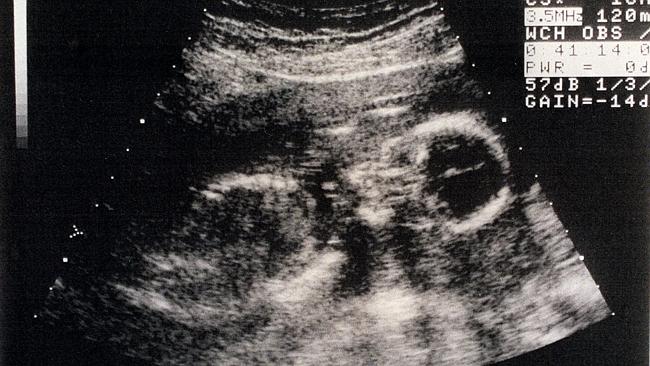
Scientists have discovered that babies in the womb, as young as 16 weeks, respond to music by ‘dancing’.

“The foetuses responded to the music by moving their mouths or their tongues as if they wanted to speak or sing,” said one of the researchers, Marisa Lopez-Teijon. The research has been published in journal of the British Medical Ultrasound Society, Ultrasound.

417592-8b82b764-6d5e-11e5-a21c-437ddd761843

What this means is that babies’ cognitive faculties, creative faculties, and listening and communication skills are more highly developed at 16 weeks than previously thought.

The more scientists study human beings in the womb, the more wonder, beauty and complexity we discover. As scientific research advances, the findings increasingly demonstrate that embryos are not less human but fully human, and from the very earliest stages.

I am reminded of the words spoken by one excited mum, ‘As soon as the sound of your greeting reached my ears, the baby in my womb leaped for joy’ (Luke 1:44).

It was interesting to note that the article in The Australian, while sometimes referring to embryos, also addresses them as babies. The days when scientists and proabortionists justified abortion by claiming embryos were not human has long gone.

This latest research makes the reality of abortions even more appalling. It is a dreadful paradox of our society, that a child who enjoys listening to music in the womb can, on the same day, be killed in the womb.

How can we justify killing a child who in their first weeks of life is being moved by the sounds of Mozart and Bach? Not that responding to music defines their humanity but it further proves their humanity. He or she is not potential life, but is life with a mind and body that is active and alert.

Science is showing us the ignominy of our attitudes toward the unborn, but will we listen? We have longed turned deaf to the Bible’s pleas about the sanctity of life, and I suspect that we will also turn a blind eye to these amazing revelations that are being proven through empirical research.

Through music, science is affirming an ancient theological truth, embryos are people like us. But will we listen?

If you are reading this post as someone who struggles with a past decision to undergo an abortion, I want you to know that the good news of Jesus Christ means that real forgiveness and healing is promised through him. Abortion is wrong, but it is not the unforgivable sin. Again, please contact our church counsellor. If you don’t live near Mentone but are keen to find out more, please contact us and we’ll try to find a suitable church near where you live. 

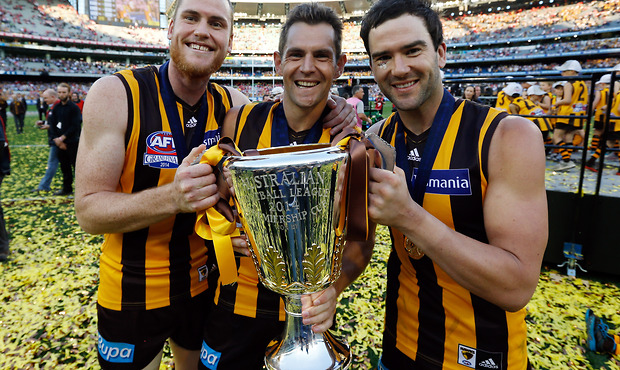
Grand Final hype and Christian passion

Only once have I missed the Grand Final, and that was in 1999. I was living in London at the time, but even then, I woke up at 4 in the morning to read the then minute by minute updates that were being published on the internet (yes, this was before the days of live-streaming).

351432-tlsnewslandscape

It doesn’t matter whether my team is playing on Grand Final day or not, it’s un-Melbourne like to not watch the game.

Tomorrow there will be 100,00 people filling the MCG and living out their love for football, with millions more watching on television at home or at the pub.

We took our children into the city yesterday and had fun at the Foxtel Footy Festival next to the MCG. Everywhere you looked there were men, women and children wearing footy jumpers and scarves (more West Coast colours than anything!). Football fans are not hard to spot: they are committed to supporting their team, they’re enthusiastic, they attend matches and if they can’t they will watch it on tv, they talk about footy at work, there are footballs lying around the house to hold and caress.

Grand Final day is so important to Melbourne that we now celebrate a public holiday on the day before Grand Final!

For the three Melbournians who doesn’t love footy, there will be something else that you’re passionate about – art, music, gardening, cooking, technology,  spending time with friends, travel.

To prove that I’m not just another nodular barely-civilised football fan (can’t think why Freemantle comes to mind!), remember that famous balcony scene in Romeo and Juliet where Juliet is standing outside in the night sky and Romeo sees her, and is smitten and starts talking to himself, 

‘See how she leans her cheek upon her hand. O that I were a glove upon that hand, That I might touch that cheek.’

Romeo would be satisfied to be a glove on her hand so that he could touch her cheek. It’s all very romantic, but that’s what happens with passions and desires. Whatever the heart most desires, we think and talk and dream about it.

Football, music and poetry are among the many good things we enjoy under a good God, but Grand Final week makes me wonder why Christians don’t exhibit similar enthusiasm for the Gospel of Jesus Christ?

I think of Paul who wrote,

“I speak the truth in Christ—I am not lying, my conscience confirms it through the Holy Spirit— 2 I have great sorrow and unceasing anguish in my heart. 3 For I could wish that I myself were cursed and cut off from Christ for the sake of my people, those of my own race”.

I think of Jesus who as he approached Jerusalem, wept, and said,

‘“If you, even you, had only known on this day what would bring you peace’

Where is this Gospel driven passion today? Where is the deep-heart-convinced desire to tell Melbournians the Gospel? We are passionate about many things and yet the purposes of God in Christ is rarely one of them.

Imagine if Christians preferenced time with Church over lazy weekends and sporting events?

Imagine if Christians gave just a portion of their football fanaticism to the Great Commission instead?

Charles Spurgeon once remarked, ‘‘Have you no wish for others to be saved? Then you’re not saved yourself, be sure of that!”

The thing is, while we may give intellectual assent to Surgeon’s question, what we truly desire is evident by what we give our energies too and the decisions we make in life.

Imagine, if Christians put first in their lives, God’s mission into the world?

Like everyone, I have limited time and energy, and so I need be wise and ensure that how I live is being driven by the reality that I am persuaded is of greatest value. Friends, make it the Gospel.

FYI Hawks by 48 points!

New Sermon Series on Romans 9-11

JoiningGodsMission

What is God’s mission into the world?

What is our role in God’s work?

What is the relationship between God’s Gospel at the people of Melbourne?

At Mentone Baptist we will be working through Romans 9-11 (Sept 28-Dec 13). It will be exciting. It will be challenging. It will be hard. It will life changing.