When a theologian bemoans Christians speaking of God as Father

 ‘Our Father in Heaven…’

A colleague asked me yesterday whether I had read the outgoing reflections from Whitley College’s Principal, Frank Rees. I have now, and it offers interesting insight into the life of a Bible College Principal. I wish Frank all the best with his retirement, but I trust some of his cautions will not be adopted into the future.

I have decided to leave aside Frank’s series of uncritical criticisms levelled at ‘critics’ of Whitley College, because those words are Lilliputian compared to one statement he makes. In fact, this assertion only adds weight to the concerns for the college which many Evangelicals have expressed over the years.
god-creates-adam

He writes,

“We have gone backwards on gender inclusive language in many of our official events. These elements include a resurgence of emphasis on God as Father, without any balancing awareness of other ways of naming God.”

It is interesting to hear that Frank has identified a ‘resurgence’ of Baptists speaking of God as Father, although he makes it clear that he thinks this is not a good thing. For him, it represents a ‘growing narrowness’ among Victorian Baptists.I would be very happy for Frank to respond and clarify his views on the subject.

His comment is set within a paragraph that relates to gender equality in churches. ‘Gender inequality’ is a now popular and fairly unhelpful phrase, which is sometimes less about genuine equality between the genders and is more about gender blurring. Real gender inequality is wrong and is a denial of the imago dei and our union with Christ (Galatians 3:28). Our Churches ought to be communities where women and men may flourish in the faith and be received as crucial partners in the Gospel. Unfortunately, the language of gender equality often carries with it a false premise, where women and men are not only considered equal but the same, and thus losing God given distinctiveness of the sexes.

Much more can be said about that point, but my chief concern here is the way Frank Rees publicly laments Christians addressing God as Father. It is quite strange, theologically perilous, and somewhat reminiscent of that literary wonder, The Shack.

To be clear, Frank is not saying that we cannot speak of God as Father or that we should not, but he’s arguing that by preferencing Father we are being ‘narrow’, ‘going backwards’, and the language is responsible for breeding gender inequality. Not only this, he is implying, although he refrains from spelling it out on this occasion, we ought to use feminine names for God (i.e. God as mother).

The concept of motherhood is biblical and beautiful and to be honoured. But no where are we encouraged to call God mother or any feminine name. There are 4 similes used in the Old Testament, where God is ‘likened’ to a mother, but as J.B Torrance has argued, similes and metaphors are not to be confused, and they are certainly not to be considered analogous to biblical statements  that declare God’s personal names and being.

For example, someone says to me, ‘Murray you’re as slow as a snail.’ Such a statement is not intending to convey something ontologically true about me, as though I am a snail, but that my walking habits remind them of this slumberous creature.

We are not free to ascribe to God names or ideas that have not been given to us by God in Scripture; doing so is treading in very dangerous water, and I so trust Victorian Baptists won’t heed his caution.

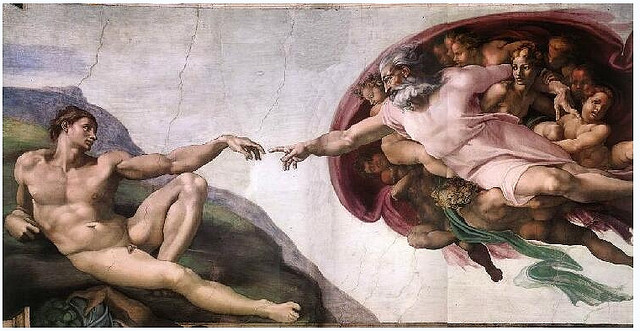
In the Bible God does not reveal himself to be  like a father, but he is God the Father.  The one who reveals the Triune God is Jesus Christ, the second person of the Trinity. What did Jesus teach us? Did he speak of God in feminine ways? Did he suggest that we address God as mother? No.

‘Jesus answered: “Don’t you know me, Philip, even after I have been among you such a long time? Anyone who has seen me has seen the Father. How can you say, ‘Show us the Father’? Don’t you believe that I am in the Father, and that the Father is in me? The words I say to you I do not speak on my own authority. Rather, it is the Father, living in me, who is doing his work. Believe me when I say that I am in the Father and the Father is in me; or at least believe on the evidence of the works themselves’. (John 14:9-11)

So Jesus said, “When you have lifted up the Son of Man, then you will know that I am he and that I do nothing on my own but speak just what the Father has taught me’. (John 8:28)

‘Therefore go and make disciples of all nations, baptizing them in the name of the Father and of the Son and of the Holy Spirit’ (Matthew 28:19)

‘This, then, is how you should pray: “‘Our Father in heaven’ (Matthew 5:9)

If Frank Rees is right and there is a movement among Victorian Baptists returning to the biblical language of God as Father, we should not bemoan the fact, but thank God for his grace in causing us prodigal children to return to him.

We should not be ashamed of calling God Father, but wonder in his grace to us in Jesus that invites us to know him as Father.

The Fatherhood of God is not a doctrine to be deconstructed by the imposition of current sociological expressions of femininity, just as we must resist defining God by the masculinity of previous ages. Contrary to Frank’s comments, true knowledge of God as Father does not lead to demeaning attitudes toward women, it causes us to repent of such ideas.

For a Bible College Principal to express disappointment over Christians calling God Father is extraordinary, and has the unhelpful consequence of unhinging real conversation surrounding the topic of women in ministry. When Christians address God as Father we are doing what Jesus tells us to do;  that may be ‘narrow’ to some, but it is better for us to narrowly trust God at his word than to be broad and lost in our speculative imaginations and inclinations.

‘I will be a Father to you,

and you will be my sons and daughters,

says the Lord Almighty

(2 Corinthians 6:18)

Is my local Church my joy and crown?

This morning in my Bible reading I was stopped by this verse from Paul’s letter to the Philippian Church,

‘Therefore, my brothers and sisters, you whom I love and long for, my joy and crown, stand firm in the Lord in this way, dear friends!’ (4:1)

I was struck by Paul’s affection for the local church in Philippi. He not only loves the people and wants to be with them, he speaks of them as being his joy and crown. This made me pause and ask myself, what words do I use to describe Mentone Baptist Church? How do I view this family to whom I belong in Christ?

Joy is one of the main themes that threads through the entire letter; it speaks of a deep wonderment and excitement of knowing these people are God’s and were partnering alongside Paul in the Gospel of Jesus Christ.

Crown refers to the wreath awarded to an athlete who had trained hard and seen success. As Paul surveys his life and ministry, his prized achievement and great happiness is a local church, and this accomplishment is all God’s doing. From what we know of the Philippian Church there was nothing remarkable about them, but in their ordinariness they lived the Gospel of Christ. Paul’s joy was not rooted in the Church’s power ministries, or in some captured à la mode vibe, but in the genuineness of their Gospel partnership.

We will better understand Paul’s affection for the Church by  reading what he says prior to and following 4:1:

In the latter part of chapter 3 Paul has exposed a group of people, who though probably connected to the Church, were not genuine believers. He refers to their appetite for ‘earthly things’. These people lived for now and the pleasures that can be had in the present, whilst ignoring greater and more important realities. In contrast, Paul reminds us of  an identity and home that is in heaven, and we set our minds on this hope.

‘Join together in following my example, brothers and sisters, and just as you have us as a model, keep your eyes on those who live as we do. 18 For, as I have often told you before and now tell you again even with tears, many live as enemies of the cross of Christ. 19 Their destiny is destruction, their god is their stomach, and their glory is in their shame. Their mind is set on earthly things. 20 But our citizenship is in heaven. And we eagerly await a Savior from there, the Lord Jesus Christ, 21 who, by the power that enables him to bring everything under his control, will transform our lowly bodies so that they will be like his glorious body.

Immediately following 4:1, Paul mentions an argument that is occurring within the church between two godly and Gospel-centred women, Euodia and Syntche.

‘I plead with Euodia and I plead with Syntyche to be of the same mind in the Lord.  Yes, and I ask you, my true companion, help these women since they have contended at my side in the cause of the gospel, along with Clement and the rest of my co-workers, whose names are in the book of life.’

Paul can both speak wonderfully of this Church and also recognise there are issues needing to be addressed.

The two women whom Paul is talking about are not enemies of the Gospel, they are mature and faithful workers who have found themselves clashing. We don’t know the nature of their disagreement, but it is clear the issue needs resolving. In verses 2-3 we see that Paul is not harsh with them, he does not tell them to leave or remove them from ministry, but rather he organises counselling for them in order to restore the relationship.

P1018405.JPG

As I meditated on God’s words today, these 3 points came to mind:

Firstly, Philippians 4:1-3 encourages me because even healthy churches have disagreements. It is inevitable but it need not diminish our affection for one another; indeed we can and ought to work through these quarrels and arguments because of our Gospel partnership.

Secondly, an appetite for ‘earthly things’ is a constant danger and is a destroyer of genuine Christian fellowship and joy. If our affection for the local church diminishes, it is worth asking ourselves the question, what are we hungry for? What are we filling up on in order to feel satisfied?

Third and foremost, when we sense our passion and love for our local church dissipating, return to the Scriptures and listen afresh to how God describes these communities of brothers and sisters in Christ.  The Bible is a great antidote to our modern individualism and sense of autonomous living, which sadly impacts the growth of so many of our Churches.

I confess, there are moments when my own Church doesn’t feel like it’s my joy and crown, and I suspect the sentiment is at times reciprocated! That is a great reason for reading Philippians 4:1 and many other passages like it. We often forget how extraordinary the local church is in the sight of God, and how wonderful it is to be called by God to belong to a local gathering of his people.

Is our local Church a people whom we love and long to spend time with? Do we see the local church to whom we belong as our joy and crown?

Let’s speak about, not shout about abortion

“Heaven is filled with boys and girls, who though unwanted by their earthly parents, have been welcomed by a Father who is committed to their eternal good and joy.”

Every year in Australia 10,000s of children are aborted, a practice that is not only supported by the law in some states, but it is something celebrated by many Australians.

Over the weekend Jane Caro has come out to defend and publicise abortion. Caro begins by sharing her own story of having an abortion, and then calls on other women to shun the guilt associated with abortion.

She writes,

“Abortion and the fear of unwanted pregnancy, frankly, is a normal — if not very pleasant — part of many women’s lives.”

“Shout out about your abortion any way you see fit — if the subject comes up in conversation, perhaps, or there is a story about it in the news.”

“If you have had an abortion, do not be ashamed of it. You are in good company. Shout it out and help lift the shame for all the other women who have also decided that every child should be a wanted child.”

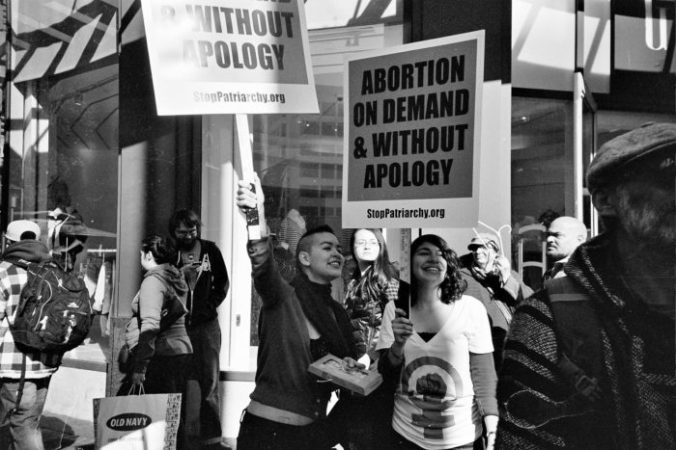
I may need to clear the air in relation to one obvious point, which in the eyes of some readers will automatically preclude me from having anything to say on the issue. Yes, I am a male, and because of this anatomical and psychological fact, I understand some women will straightaway invalidate any comment I wish to make. We are all familiar with the mantras, ‘it’s the woman’s right to choose’, and, ‘women have the right to control their body’.

I suspect though, many on the pro-abortion side would be quite happy to have men speaking in support of abortion. Indeed, only a few short months ago Queensland MP, Rob Pyne, introduced legislation to relax abortion laws in that State; we didn’t hear many women protesting his public voice.

Not only that, it is a simple point of biology that men are involved in the process of women becoming pregnant. Should a father be involved only in the act of procreation, and be excluded from happens next? This is not about being controlling or patriarchal, it is about being a responsible parent and participating in an relationship. Sadly though, many men are irresponsible and uncaring, a problem which continues to cause frightful harm in so many of our homes.

abortion2-flickr

Morten Liebach, Steenaire (inset); flickr

While abortion has remained a hot political issue in the United States, in Australia it had largely shifted out of public discourse, becoming a forgotten shadow twisting through our cities, towns, and homes. But now, all of a sudden, partly due to the recent American Presidential election and also because of a Queensland Parliamentary vote, abortion is being talked about once more.

Jane Caro is writing though in response to last week’s announcement by Pope Francis, who has given priests ‘permission’ to forgive Roman Catholic women for having an abortion,

“I henceforth grant to all priests, in virtue of their ministry, the faculty to absolve those who have committed the sin of procured abortion.”

Caro responds,

“Given the Catholic Church’s attitude to contraception and its behaviour towards vulnerable children the world over, I simply cannot take anything this institution has to say about sex and reproduction seriously.”

Her criticism has some warrant, and I certainly understand her blanket mistrust of Roman Catholicism in light of its dreadful  history of sexual abuse. I am also critical of the Pope, for it is not the Pope’s place, nor the role of any priest to forgive anyone their sins. Priests may find permission in a papal edict and in their Church dogmatics, but such authority is not found in the the Bible, and as Christians that’s what counts. Priests are imperfect men who need their own sins forgiven by God, and as the Bible affirms, 

“there is one God and one mediator between God and mankind, the man Christ Jesus,” (1 Tim 2:5)

One of the reasons for writing today is because of a sadness that overcame me when I read Caro’s call to view abortion as ‘normal’. It is not normal. Abortion is never something to be celebrated or normalised. On rare occasions, when a mother’s life is genuinely at risk, I understand it is permissible, but to consider killing unborn children as okay is not okay.

A society that sanctions, and even celebrates the killing of unborn children is one denying its own humanity.

If one surveys global societies that have embraced a culture of abortion, one notes China with its population suppression policy. There are also numerous religious cultures who denigrate women and frequently force abortions when the baby is female.  And there is our western secularism with its excessive commitment to individualism. When we value the self above the good of others, we create an atmosphere of self-indulgence and not sacrifice, of self-worship rather than selflessness.

The very nature of loving community is that it requires the unexpected and difficult, and rather than eliminating those surprises, we alter our life expectations in order to to see their lives flourish.

Jesus once said, ‘Greater love has no one than this: to lay down one’s life for one’s friends’. Indeed, how great a love it is to sacrifice our hopes and plans for children who enter our lives unplanned.

In my role as a Christian Minister, over the years women have shared with me their stories of having an abortion, and without exception there is a shame attached. Reasons are multifarious: when a woman is raped,the fear of giving birth to children with a disability, when the mother’s life is at risk, and when the child is unwanted due to the mum not feeling ready or not wanting the responsibility or wanting children to impact their lifestyle or career. The reality is, only a tiny portion of abortions occur on medical grounds that the mother’s life is in danger. Many more abortions occur because of the child’s gender, or because the child may carry a disability, and many other children are killed because of lifestyle choices. For many many women this decision has left a wound that has not healed.

As much as Jane Caro wishes women to wash away their shame for having abortions, many women cannot, and no Pope or priest can achieve that either. But in the person of Jesus Christ we find a God who is willing and able, and who is more merciful and wonderful than any of us can ever imagine.

As distressing a topic as abortion is, it is good to hear people talking once again. I don’t want to silence women who have had an abortion. Claire Smith has last week written an article encouraging people to speak more about abortion, and I wish to echo her words. And to a certain extent I also repeat Jane Caro’s words, that of urging women not to keep silent. But the speech we need is different, words that don’t speak affirming  destroying young life, but words that enable conversation, and ears that will listen to these stories.

Post-Truth is not so new

Post-truth has been declared word of the year, by the Oxford Dictionary.

I have to confess, I can’t recall ever hearing of the word prior to the announcement, but rarely have I been confused with owning hip, cool, and trendy oratory. I have no doubt though, our cultural frontline linguists know what they are talking about!

The Dons of the Oxford Dictionary define post-truth as, ‘an adjective defined as ‘relating to or denoting circumstances in which objective facts are less influential in shaping public opinion than appeals to emotion and personal belief’.’

8032076-3x4-700x933

Oxford Dictionary website

There is a drop of irony here, post-truth’s rise to the top coincided with Donald Trump’s victory in the Presidential election. Apparently, the  Presidential campaigns were responsible for a spike in world-wide usage of post-truth, as was the Brexit campaign earlier in the year.

According to the official website, post-truth first appeared in 1992, in an essay written by the late Serbian-American playwright Steve Tesich. In 2016 there has been an observed 2000% increase in its usage, thus warranting the title of Oxford Dictionaries’ word of the year.

The word may be new, but the concept has had a long run through history.

In the 4th Century BC Aristotle pre-empted post-truth when he spoke of the tripartite art of persuasion: ethos, logos, and pathos.

Jesus Christ spoke of post-truth. In the parable Lazarus and the Rich Man, Jesus makes the point, that should a man rise from dead, people will not believe the evidence if they are not also prepared to believe God at his word. In other words, empirical demonstration is important but it is not suffice to persuade a person of what is true and good.

Accordingly, the Bible adds a fourth category to Aristotle’s tripartite art of persuasion: pnevmatikós (or spiritual). Ardent rationalists may scoff at this notion, but perhaps it is the case that their post-truth commitment to naturalism denies them the reasonable conclusion of accepting the reality of Christ, including the overwhelming evidence of his resurrection from the dead.

Post-truth is a word that carries with it an air of elitism and superiority. It is used to denigrate those whom we deem are less rational and intelligent.

In a documentary series marking a trip across the United States, Stephen Fry visited Los Alamos, the place where the first hydrogen bomb was developed. While exploring this once secret location, Fry made this remark,

“some people would think this is a grizzly place, a place of death, but to me I see nothing but optimism, and that’s because I believe in science. Many people today don’t.”

Stephen Fry is an example of a generation who credit science and rationalism as being security for human progress. Indeed, in the recent election a wave political experts and pollsters proclaimed the moral high ground on the basis of their education and they decried the uneducated who followed Donald Trump.

Whether we believe ourselves intelligent or not, and whether we have letters running after our name or not, we have always been post-truth, at least part-time.

The reality is we all need facts and truth to live well, and we adhere to these when these thing conform to our likes and wants. But rarely, are our ethical positions and personal decisions determined solely or even primarily because of what is true.

Today I was reminded of a classic post-truth moment in Victoria this year. Roz Ward has found herself in the media’s eye once again, with a photograph capturing the Safe Schools architect bullying a bystander during an anti-Trump demonstration in Melbourne yesterday. As I saw the photograph I was reminded of Roz Ward’s now infamous declaration, that the Safe Schools program is not primarily about creating Safe Schools but is designed to teach children Marxist values. Despite the repeated admission by this key designer of the curriculum, many politicians and social commentators have glued blue tac to their ears, and pretended the truth had never been leaked. Why? Political and social ideology trumps a confession.

Post-truth is not a 2016 problem, it is a human problem. Our word of the year communicates something about the proclivity of the human heart. Searching for truth is a noble task; as Jesus himself said, ‘the truth will set you free’. But knowing what is true and listening to it requires more than simple assent to objective facts. It requires a posture of humility, whereby we allow truth, especially God’s truth, to penetrate and challenge and restore.

Saying No to a Registry for Muslims

According to media reports, political advisors close to Donald Trump are exploring the establishment of a registry for Muslim immigrants to the United States. The policy may extend as far as requiring all Muslim Americans to be signed up to a Government register.

No doubt such a decision will find many supporters, even among some Australians. It is likely that Trump policies may give greater voice to certain groups in Australia, and so as a way of pre-empting such conversations here, let me give 4 reasons why a Muslim registry is a really bad idea.

1. Lessons from history

When a Government decides to impose itself on a religious minority, hatred and intolerance is incited and people suffer. Is this not one of the plagues of the Islamic State? Indeed, in many Islamic nations non-muslim citizens are marked out and carry the burden of having to pay the Jizya.

Some commentators have already raised the example of Nazi Germany. On the one hand, I find it somewhat duplicitous  that ‘left’ leaning journalists are outraged when conservative commentators cite the example of Nazism, and yet they seem to have little qualm in using the analogy when it suits them. In this instance though, while being careful not to overdo the comparison, the question is not completely absurd.

2. Most Muslims are not terrorists

It would be foolish to deny a connection between Islamic beliefs and current terrorist activity across the globe. Whether it is IS, Al Qaeda, Boko Haram, and many others, one of the common threads is Islamic religion.

It is also the case that many nation states adhere to strict forms of Islam, and while we exchange trade and business with these countries, internally they impose a religion on their citizens that is often harsh, and where women are mistreated and non believers denied rights.

Without ignoring real ideological issues that are often found in cultures where Islam is dominant, this does not mean that the populations living in those countries are content with the status quo, or that they are potential insurgents laying in waiting. The reality is, millions of people are fleeing these countries in order to find a new life, a  better life.

Muslim people have been living in Australia since the 19th Century, and for the most part they are hard working contributors to our country. They are friendly, kind, and are important members of our diverse and pluralist society.

Should the many suffer indignity because of a few? Indeed, those few persons who are of concern to the Government, are they not already highlighted? If so, what is the point of another register which will require all Muslim people to be participants?

3. The hypocrisy

There is a hidden hypocrisy at work here, both in the political and religious arenas.

Over the last decade across Western Governments we have witnessed increased intolerance towards people whose religious convictions don’t conform to the secular humanist worldview, especially when it comes to the issues of sexuality and marriage. This has been evident both in the USA and Canada, and my own State of Victoria is among the leading examples of this Erastian movement. Those who have been working to remove Christian ethics in the public square may well cry foul over this proposed registry, but they do so from a position of illegitimacy.

This works both ways. So when Christians speak up and seek to defend their freedom of religious thought, speech and life, do we deny it for others?

It will be of no surprise to readers that I disagree with Islam, mormonism, atheism, and many other belief systems. These theologies hold a view of God that contradicts the person and teaching of Jesus Christ, and yet nation states are not Churches, they are (in our modern history) secular and pluralist institutions. As such, a functioning and maturity society will find ways for this diversity to cohere, and encourage public spaces for people to disagree and to debate with fervour and respect.

4. Threats of a registry creates fear and makes people vulnerable.

Would I like my own family to live in fear and with uncertainty, not knowing how the Government may act toward us, given our race or religion?

I know for a fact, many Victorian Christians have felt apprehension as our Government continues to pressure our children out of public schools, and we are experiencing uncertainty as legislation is introduced to control Christian Churches and organisations. Would we wish that on another minority group?

One American Muslim has written this,

“This is what it feels like to me now that the republican nominee is now the president elect.

He is the abuser. We are trapped. We are circling the wagons, trying to mitigate the damage by finding allies and waiting for the abusive behavior that we know is coming. We are sharing strategies on how to parent our children now that our president elect has taught them that being a racist, sexist, fear mongering, money hungry bully will get you the highest office in the nation.

We are trying to find the way to rebuild the inroads amongst ourselves while finding the strength and power to strategize how we can get free.

This is a far different place than I thought our nation would be today. I saw hope, I saw people of color being treated fairly. I saw refugees and immigrants being embraced for their unique potential; I envisioned a path towards unity. I live and breathe the mantra, Stronger Together every day.

Now I look out my door and wonder, which one of my neighbors thought it was a good idea to elect a president who wants to implement a Muslim registry. A database of anyone who practices Islam, so they can be watched and rounded up whenever he believes we need to be put in check.”

OLYMPUS DIGITAL CAMERA

Christians must speak up for our Muslim neighbours, not because we agree with their religion, but because they should not be discriminated against for their religious beliefs. They are citizens of our countries, and they are human beings who ought to be treated with dignity and kindness.

There is no doubt, Donald Trump’s ascent to the Presidency has sent many social progressives into cardiac arrest. What many thought was an inevitable social engineering quest from the left has become not so assured. Perhaps the rise of Trump will only prove to be a temporary swing of the pendulum, but for now, the shift is real and no one yet knows how far it will move.

Many Christians will be thankful that they may find some reprieve after years of pushing and shoving from social progressives, but I don’t believe we should be rejoicing at the prospect of a Trump Presidency.

As calls are made for a Muslim registry, Christians would do well to remember people like Naaman, the Samaritan woman, and the jailor in Philippi. Ask ourselves, how do we love our neighbours? Should we cause them to fear, or should we protect them? I reckon we would do well to reread Jesus’ parable of the Good Samaritan,

“A man was going down from Jerusalem to Jericho, when he was attacked by robbers. They stripped him of his clothes, beat him and went away, leaving him half dead. A priest happened to be going down the same road, and when he saw the man, he passed by on the other side. So too, a Levite, when he came to the place and saw him, passed by on the other side. But a Samaritan, as he traveled, came where the man was; and when he saw him, he took pity on him. He went to him and bandaged his wounds, pouring on oil and wine. Then he put the man on his own donkey, brought him to an inn and took care of him. The next day he took out two denarii and gave them to the innkeeper. ‘Look after him,’ he said, ‘and when I return, I will reimburse you for any extra expense you may have.’

“Which of these three do you think was a neighbor to the man who fell into the hands of robbers?”

The expert in the law replied, “The one who had mercy on him.”

Jesus told him, “Go and do likewise.”

(Luke 10:25-37)

American Evangelicals have harmed Evangelicalism

“Therefore, you kings, be wise; be warned, you rulers of the earth.” (Psalm 2:7)

160128212624-fox-january-gop-debate-trump-rally-780x439

Eleven months ago a good friend sat on the lounge in my home and told me that the Presidential race would be between Hillary Clinton and Donald Trump…and that Trump would win!

I looked at him as though he had had a lobotomy. But over the course of the year my friend’s projection has been rattling in the deep recesses of my mind where I try to leave all the crazy thoughts.

Like the majority of Australians I feel as though I’m floating in a hypnagogic state. How many of us really thought that Trump would trump America?!

According to the latest figures, it appears the main reason for Hillary Clinton’s loss is because Democrats stayed home: 5 million fewer democrats voted yesterday than in 2012; that’s a lot of people. The Republican turn out was also slightly down, which is unsurprising given the candidate.

I have no doubt that there are numerous reasons behind Trump’s win, and I am no expert to decode all these, and neither is it my purpose to explore them here.

After surveying this morning’s twitter sphere, it revealed though how mainstream media, Hollywood, and the self acclaimed intelligentsia still don’t get it; the progressive moral and social agenda is repugnant to many Americans, and also to many Australians.

More concerning, American “evangelicals” don’t get it. I am hearing reports suggesting that as many as 85% of “evangelicals” voted for Donald Trump. Whatever the actual number, it will be a substantial percentage. I appreciate why Christians could not vote for Hillary Clinton; for example, her position toward unborn children is paramount to evil, but so is Trump’s posture toward women and refugees.

I want to reiterate a concern that I have raised in recent weeks, and that is how the evangelical cause will be weakened as a result of a Trump Presidency. The reason is obvious, “evangelicals” have so closely aligned themselves with Donald Trump that in the public eye the two have been aligned.

While there were multiple groups investing in the campaign, “evangelicals” are at least partly responsible for Donald Trump’s ascendancy to the American Presidency. That’s right, without their endorsements, the Republican nominee may well have been a Jed Bush or Marco Rubio.

You will notice my proclivity to use the inverted comma when referring to evangelicals, and that’s because the word has been regularly misappropriated by not only political pundits but also by Americans themselves. True evangelicalism has little to do with the political aspirations of right wing America, and everything to do with the Gospel of the Lord Jesus Christ. Authentic evangelicalism is defined by this Gospel as presented in the Bible, not by the political right or left, not with Democrats or Republicans, and for the Australian context, neither Liberal nor Labor.

While never wishing for a Clinton victory, I do think that scenario would have at least given “evangelicals” an opportunity to break with Donald Trump and start afresh, to repent of foolish associations and  to rethink how Christians should engage in the political space. Unfortunately, “evangelical” America supported the winner, and have been tarnished for doing so. I cannot see how this association will advance the cause of Jesus Christ. If anything, the word may become irretrievably immeshed in a cause that is not the Gospel.

I am thankful for the many evangelicals who have stood up to Donald Trump and have copped flack for doing so: Ed Stetzer, Russell Moore, and Al Mohler among them. In Australia, the general public will not be informed of these voices, and instead Australians will time and time again hear how “evangelicals” assisted Donald Trump to the White House. At least in the Australian public square, the 2016 Presidential election will tarnish Christian witness and further perpetrate myths about Christianity. It is for this reason I am calling on my American friends to return to their evangelical roots and think carefully about political associations.

It is one thing to be part of a Presidential win, but it is quite another to one day stand before the Judge of the earth and give an account for how our lives have adorned or maligned the Gospel of Christ.

This final point is not only true for American Christians but also Australian Christians. When will Christians learn not to place undue hope in Government? The election has exposed a messed up eschatology and misplaced soteriology, which will not only disappoint, but will prevent people from seeing Christ. However Donald Trump decides to build his wall along the Mexican border, it is nothing compared to the wall evangelicals have built in this election which will block out the wonder of the Gospel. How will true evangelicals work to dismantle this false gospel? What will we do publicly and in our Churches to redress the damage caused by this political misalignment?

We need much prayer. We need much repentance.

As the political shape of America turns, may Christians return to our true hope:

“For to us a child is born,

    to us a son is given,

    and the government will be on his shoulders.

And he will be called

    Wonderful Counselor, Mighty God,

    Everlasting Father, Prince of Peace.

 Of the greatness of his government and peace

    there will be no end.

He will reign on David’s throne

    and over his kingdom,

establishing and upholding it

    with justice and righteousness

    from that time on and forever.

The zeal of the Lord Almighty

    will accomplish this.”

(Isaiah 9:5-7)

Our Rubicon River

Should a cricket club have freedom to appoint persons who share the values of their club?

Should a political party have liberty to pre-select individuals who support and will promote their policies?

Should not a corporation employ professionals who will abide by the values and vision of that institution?

For most of our nation’s history Churches and Governments have enjoyed a mutually beneficial relationship; understanding their distinct roles while together serving for the good of society. Both have had their failings as well as making enormous contributions to building our society, but Australians have always been careful not to confuse the two.  Tomorrow (Tuesday 8th November) this judicious relationship may come to an end as the Victorian Government proposes a hostile takeover of all religious organisations.

The Victorian Legislative Council will tomorrow debate and vote on the proposed Inherent Requirements test. The purpose of this amendment to the Equal Opportunity Act is to require religious organisations to demonstrate that their employees must necessarily subscribe to the beliefs and values of that church, school, or charity. 

Religious organisations currently have freedom to employ persons who affirm the beliefs and practices shared by that organisation; this is only sensible. Should this legislation pass, a tribunal will be appointed by the Government who will determine what constitutes inherent requirements for all religions across the State. In other words, the Government is posturing itself as a teacher and arbiter of theology, with power to inform Churches, Synagogues, and religious schools whom they are to employ.

The Government has presented the amendment as a natural extension in the fight for equality, but the reality is quite different. Labor wants sameness not equality. This Bill will inevitably work against a pluralist and diverse society, and instead demand that Victorians fall into line with a rigid and historically dubious view of secularism.

Dr Michael Bird was right when he called out the inherent requirement test as an example of Secularized Erastianism, a philosophy which asserts that the State shapes and controls religious belief and practice.

I can imagine some secularists will be ecstatic at hearing the Government’s plan to further diminish religious freedom in Victoria, but is there not an air of hypocrisy in all this? Do atheistic humanists really want the Government functioning as bishops over churches, religious schools, and charities? Do nonbelievers genuinely think they have the academic credentials, expertise, and the right to define the theological parameters for synagogues and churches, explicating what is inherently required of that religion or not?

As Dr Bird notes, the problem is that “demonstrate a necessary connection” between beliefs and roles is notoriously subjective. There are no objective criteria here since beliefs and roles will vary from religion to religion and from organization to organization. So who is going to decide when a “necessary connection” exists between beliefs and roles and exactly how they will decide?’

The ‘inherent requirement’ test is all the more ironic, given how the Andrews’ Government has spent the last two years introducing several policies designed to push out Christian involvement from the public square, and now they are intent on invading religious spaces.

I cannot speak for all religious organisations, but when it comes to Christian Churches they are, for the most part, welcoming of anyone from any cultural, religious, sexual orientation background. I am not denying that there are appropriate rules and requirements for those who would serve in a formal capacity, and neither am I ignoring that associations can sometimes get it wrong. But the Christian Gospel is all about welcoming men and women who have no rights on God, no inherent claims on him, and yet in Jesus Christ we are lovingly forgiven and welcomed. This conviction has forged a tradition throughout the world of Christians starting not only churches, but also schools and hospitals and aged-care facilities, without which both our Government and society would collapse.

OLYMPUS DIGITAL CAMERA

Former Victorian Crown Counsel, Mark Sneddon, recently offered this caution against the Bill,

“The proposed bill amending the Equal Opportunity Act will not encourage Victorians to get along with each other. It won’t enable Victorians to live and let live. In fact, it is more likely to exacerbate division by creating legal weapons for forcing some voluntary associations to host or endorse views with which they deeply disagree.

Deep differences of moral vision will not be resolved by trying to legislate one view to supremacy and squashing others. Rather, we should accept that there are different views, and defend each other’s rights to hold and live out different views. Importantly, we should also commit to respectful communication so we can understand each other and agree how to live together peacefully with our differences.”

All the good that this Government may achieve is being swallowed up by their rigid and aggressive social agenda. This legislation is not only nonsensical, it is dangerous; they have reached the Rubicon and are intent on crossing it, and Victorians have no assurances that the Government will stop there.

As our representatives vote, I trust common sense will prevail and that freedom of association and religion will remain after November 8.

Interview on Evangelicals & the Presidential Election

How are Australian evangelicals reading the American election, Donald Trump, and the way American evangelicals are engaging in politics?

Check out my interview on Carmen Fowler La Berge’s radio show, The Reconnect

screen-shot-2016-11-05-at-12-51-52-pm

Banned Sex Book to be taught in Victorian Schools

A book that has been banned in parts of the UK, USA, and by the Singapore Government is being introduced into Victorian schools, to teach radical sex theory to our children, children as young as 5 years old.

And Tango makes Three, is an example of material that our young children will be exposed to in order to re-shape their thinking about sexuality. Who would dare complain about children’s story book, with beautifully drawn pictures? Surely that is taking things too far. The book was written to deconstruct believes among children about sexual relationships, by normalising same-sex parenting.

tangopenguin

It is important to note that the book has been deemed inappropriate by Government and school boards across the world, and yet the Victorian Government is ensuring primary aged children will be taught from it.  Does that not at least raise questions?

Today in the Herald Sun, Victorian school teacher, Moira Deeming, has shown courage to speak publicly about her concerns over the program. She says,

“I feel that this program is bullying male students and stigmatising and stereotyping them — the absolute opposite to what it is supposed to do,”

“It really does build up stereotypes. It doesn’t tear them down.

“If I was asked to teach it, I couldn’t let it out of my mouth. I’d have to be fired.”

There are growing concerns over the Respectful Relationships curriculum, but in a series of recent rebuffs, Education Minister, James Merlino, has not offered any response to the actual concerns, he brushes them aside, accusing concerned parents and professionals for playing politics with domestic violence.  I’m sure there is a political dimension for some people, but what of many people who are not associated with any political party? And even for those who have a political interest, are their concerns automatically erroneous?

Prof Patrick Parkinson (University of Sydney) recently published a paper, which examines the Safe Schools curriculum. His findings state that Safe Schools is “dubious, ‘misleading’, and ‘containing exaggerated claims’. We know that the Victorian Government has chosen to ignore this report, amongst others submitted concerns. Respectful Relationships depends on similar research, including that of La Trobe university who have been at the centre of the Safe Schools debacle. Victorians have lost faith in the Government to write fair and accurate curriculum for our children.

Were parents consulted by the Government whether we want our children taught that they have may sex as young as 12 years of age? Were community consultations organised to see whether families were happy for their 11 year olds to write advertisements, anticipating what they would want out of a sexual partner? Was a broad section of the medical and academic community properly consulted about the particular gender theory which will be taught, while others ignored?

What is happening in Victoria right now is a Government actively taking responsibility away from parents to raise their children, and they are filling these students with theoretical views which will confuse their identity and introduce them to sexual ideologies and practices that is not age appropriate. This book is only one many examples that have been found in recent months from both the Safe Schools and Respectful Relationships material.

Parents, are you okay for the Government to insist your children be taught erroneous sex education under the guise of domestic violence? What a gross mishandling of one our nation’s most horrendous social evils. As a community leader I am aware of this issue and I have seen the damage caused by unsafe relationships. Domestic abuse is appalling and never acceptable. The Government is right to say enough is enough, but trying to fix one problem by introducing another, doesn’t help anyone. Imagine if the Government introduced curriculum encouraging sexual abstinence amongst school aged children; there would be an public outcry from some quarters, and yet we are content to allow our children to be taught Respectful Relationships?

From the top of his sandcastle, James Merlino may hold that his political ideologies are beyond reproach, but the tide always returns. My concern is for the 10,000s of children who will made susceptible as they are forced to learn material that is at times unfit and untrue.

I would urge all parents and school communities to read the material for themselves. I strongly encourage the Government to listen to these valid concerns from the community.

Victorian Government and Birth Certificates

History cannot be changed.

This axiom used to be true, until now with the Victorian Government introducing a Bill, giving people freedom to alter their birth certificates, as much as once a year, should they feel the need.

Would you like to change your birth certificate? Perhaps the year in which you were born? What about the place of your birth? We are not yet able to make these changes, but you will be able to change the identity of your gender, should you decide that your preference no longer matches your birth gender.

Birth certificates were once sacrosanct, treated as definitive legal documents. What was once subject to facts surrounding the birth of a child, can now be repeatedly changed according to how individuals wish to reconstruct their sexual identity.

I want a pause for a moment and recognise that gender dysphoria is real, although rare. I am not without personal knowledge of Victorians who are genuinely struggling and suffering due to gender confusion, and they seek resolution and acceptance (which does not always mean being identified in ways contrary to their biological sex). I want to affirm their dignity and humanity, and would pray that they would come to know the God who loves and gives us the greatest and most fulfilling identity, of being in Christ and knowing him.

My intent is not to cause people greater consternation, but to explain that this Bill does not provide answers.

img_9452

The Bill’s scope includes transgender, gender diverse, and intersex persons.  Transgender for example, is not identical with gender dysphoria, although it’s inclusive of; trans covers a broad range of sexual expressions. The category of gender diverse technically means, well, almost anything. The point is, the Bill’s parameters are so broad as to include persons who are not suffering medically diagnosed sexual dysphoria, but include people who for many reasons wish to change their legal status.

The Government website summarises the Bill as follows:

The Victorian Government will remove barriers for trans, gender diverse and intersex Victorians seeking new birth certificates.

Delivering on another equality agenda election commitment, the Births, Deaths and Marriages Registration Amendment Bill 2016 to be introduced in Parliament today removes the need for applicants to have undergone sex affirmation surgery before being able to apply for a new birth certificate.

Importantly, the Bill also ensures couples will no longer be forced to divorce if one partner wishes to apply to change the sex recorded on their birth registration.

Adults will be able to apply to alter the sex recorded on their Victorian birth registration and birth certificate.

Under the changes, an applicant will be able to nominate the sex descriptor in their birth registration as male, female or specify a gender diverse or non-binary descriptor.

The Registrar of Births, Deaths and Marriages will be able to refuse to register an amendment descriptor that is obscene or offensive, or if it is not reasonably established as a sex descriptor.

The Bill will also introduce a new process enabling parents or a guardian to apply to alter the sex recorded on their child’s birth registration.

The process will require the child’s consent. The application must be accompanied by a supporting statement from a doctor or registered psychologist confirming the child has capacity to consent, and that the change is in the best interests of the child. Children over the age of 16 will be assumed to have capacity to consent.

Why is this Bill problematic?

The social, familial, educational, and legal implications are enormous. For example,

1. Persons will be permitted to change their birth certificate every 12 months (according to the amended Section 30A). This is not an abstract over-the-top never-going-to-happen eventuality, for why would the Government provide this known loop hole if it is not designed to be used? And why, given the significance of this point, has it not been delineated by the Government in their press releases?

2. Apart from the legal and social confusion arising from persons changing their identified gender, perhaps annually, the Government has created a back door for same sex marriage:

A married man can choose to now identify as a women on his birth certificate, without having to divorce his wife. Or a unmarried woman may change her birth certificate to male and therefore be legally free to marry a woman, and should they choose 12 months later, change back to female without needing to divorce.

3. Gender confusion exists among a small but significant number of children. Research has demonstrated that as children mature their psychology will conform to their biology, and thus grow out of their confusion. For a tiny percentage, dysphoria continues into adulthood, but this is not the norm.

It is therefore not difficult to see the problems arising when young children and parents, due to misinformation being now taught in our schools about sexuality, are told that their little boy is in fact a girl and should identify as such (there are numerous examples of this happening in Victorian primary schools at the moment). What will happen is that children will have their birth certificates altered, and be treated as a different gender, only to realise in adolescence that they are in fact what their biology says. This will result in all manner of social, legal, and personal disorientation for these children and their families.

We need to appreciate how incredibly dangerous this Bill is to the health and well being of young Victorians.

4. Biologically, even with sex-change surgery, one cannot change their gender. Changing one’s birth certificate does not alter one’s identity, and thus it will create a dissonance between one’s legal status and one’s nature.

The births, Deaths and Marriages Registration Amendment Bill 2016 is the latest step in a social engineering agenda that has been moving in the background for many years and is now being championed by Daniel Andrews.

There are many difficult and pastoral issues surrounding these issues, but the fact is, the now many legal and social changes that have been forced upon Victorians by the current Government will not relieve and lay aside issues surrounding sexuality, but will only heighten sexual confusion in our society.

Teaching boys and girls that are not boys and girls, and that they can choose and change their sexual identities, depending on how they are feeling for the day, is frightening and irresponsible; this is not education, and it is not responsible lawmaking.

The Bill was due for final consideration and vote in the Legislative Council earlier this month, but the Government has delayed the vote due to a lack of support by members.

Perhaps it would be helpful if the Government paused and considered the due concerns of their Parliamentary colleagues and of the broader public whom they are here to represent and serve.