Melbourne has been rocked this week with 2 men charged with abusing little children. 1200 children are now required to be checked for STDs. Imagine the horror for these families? How do people begin to process what has happened?
In this episode of my new podcast, I want to address the question of evil, and needing a God who judges and who hates evil even more than us.
The ABC recently held a poll to discover the top 100 piano works. Thousands of music lovers, listeners, the bourgeois of Launceston, voted to see their most loved piano tunes strikes a chord near the top of the repertoire. I didn’t participate in voting but as someone who spent much of life with my fingers exercising on the keys, I took a tiny interest.
The ABC’s ‘Countdown’ list included many wonderful works for the piano, as well as the rather dull and uninspired, and then there’s piano music written for the movies! Like all pianists, I’m confident that my preferences are the genuine article and other opinions can swim around in the murky pond of lesser opinions! (this is also known as musician’s hubris!). So to redeem the piano from the Hungry Jacks of music, I’ve decided to put together the definitive list of the 10 greatest compositions for solo piano and the 10 finest piano concerti. Chamber works written for piano are a third category and one is left for another time.
Where there’s an *, it indicates that I’ve played or performed the work (or at least part of what belongs to a book or suite).
10 Greatest Works for Solo Piano
Well Tempered Clavier – J.S Bach*
Without Das wohltemperierte Klavier there would be no piano music, no Mozart or Chopin. Both books are the ultimate keyboard music, from which all the great composers look bad for education and inspiration.
2. Ballades – Chopin*
The high point of 19th Century Romanticism. Listen to Philippe Entremont’s recording; possibly my favourite music recording.
3. Piano Sonata No.29, ‘Hammerklavier’ – Beethoven.
The ultimate sonata. Turmoil on the keys!
4. Piano Sonata No. 8 in A minor, K. 310 – Mozart.
The sound of Mozart is pure and perfect.
5. Preludes – Debussy*
The soundtrack of nature with all its aromas and visuals played out on the piano
6. Goldberg Variations – J.S Bach
Simplicity and complexity weaved into perfect harmony
7. Etudes – Chopin*
Ferocious, brilliant, and sonorous
8. Sonata no.14 in C# Minor (“Moonlight”) – Beethoven *
A predictable choice but there is something about the opening movement
9. Années de pèlerinage II (Italie) S. 161: V Sonnette 104 del Petrarch – Liszt
Sparkling virtuosity
10 Preludes – Rachmaninoff *
The anti-revolutionary Russian longing for home (excluding Op23. No 5 which my teacher at the Con rightly thinks is pompous)
10 Greatest Piano Concertos
Piano Concerto no.3 in D minor, Op. 30 – Rachmaninoff
This is the ultimate pianist’s challenge.
2. Piano Concerto no.2 in C Minor, Opus 18 – Rachmaninoff
3. Piano Concerto no.20 in D Minor, KV 466 – Mozart
4. Piano Concerto No. 2 in F major, Op. 102 – Shostakovich
5. Piano Concerto no.5 Op.73 – Beethoven
it may not be the King of Concertos but it is the Emperor!
6. Piano Concerto no.3 in C major, Op. 26 – Prokofiev
A Kaleidoscope
7. Rhapsody on a Theme of Paganini, Op.43 – Rachmaninoff
Technically not a concerto, but who cares!
8. The Piano Concerto No. 1 in B♭ minor, Op. 23 – Tchaikovsky
Glorious opening minutes which become somewhat convoluted and meandering, but you never forget the power of those first pages. I remember being 4 or 5 and stopping a game of backyard cricket because the Tchaikovsky came on the radio.
9. Piano Concerto no.1 in Eb Major – Liszt
10. Piano Concerto no.1 in E Minor – Chopin
The lyricism outweighs Chopin’s inability to write orchestral parts!
There is an astonishing offering of piano music on these two lists. But perhaps I should confess, the definitive list doesn’t exist, not even for me. How does one choose between Bach, Mozart and Debussy? How is compiling a list even possible? They each bring genius of sound and thought to the mightiest of instruments. Nonetheless, on this wintery Melbourne day, this is my offering, and I suspect there would little change on a different day. The Mozart Sonata might change to another, and another 20th Century Concerto might squeeze out Liszt’s, but that’s about it.
If you’re keen to get a taste of the piano, these are my recommendations. Enjoy!
Melbourne was an exciting place to be over the weekend.
No, I’m not referring to the footy. Carlton, what are you doing to me?!
Hundreds of men attended the Belgrave Heights Men’s Convention and sat under the word with Sam Allberry and Stephen McAlpine. Lots of Churches around the city and suburbs preached Christ and believers were encouraged and non Christians were intrigued. I was at the Baptist BBQ while the Melbourne Anglican Diocese met to decide who would become the next Archbishop.
For decades the tide has been going out as the force of secularism and scepticism has claimed moral victory after intellectual triumph. And yet, left behind on the sandy shores around Port Phillip Bay isn’t the kind of happiness and freedom and contentment that we were promised. Instead, our streets and suburbs are floundering under the pressure of what is perhaps the worst mental crisis in our history, and growing social, economic, and relationship strain. My generation and my parents’ generation persist in closing the windows, locking the doors and telling the kids that there’s nothing outside; there is no God worth looking to let alone trusting for life. Not everyone is buying that script any longer. The emptying tide has left behind millions of people and exposed layers of rubbish on the sand produced by the materialist ideal.
We are not happier. We are not safer. We are not more content.
Is it surprising that we are hearing reports and stories of a gentle tide coming into shore in the UK and parts of the United States? In some parts of Asia and South America, it is a high tide with huge numbers of people, including Gen Z and younger who are becoming Christians and joining Churches and discovering that the God of the Bible is God today.
We are not seeing a fast-moving incoming tide in Melbourne, but something is happening. I know there are recent reports of baptismal floods, but I suspect some at least are spurious. Nonetheless, there is something happening. Government and academic institutions are continuing to double down on sexual ethics and religious freedom issues, progressive Churches continue to play those songs on their playlist, and yet there is a gentle counter voice that can be heard.
Anecdotally, across various Baptist churches and Anglican, in University Christian groups, and among our Orthodox and Roman Catholic friends, young adults are experiencing Christianity for the first time. They are ignoring the warning signs that my generation posted on every street corner. There is a curiosity emerging, an interest in Jesus, and an intrigue to discover the meaning of the world’s most important book: the Bible.
I wonder, if the Anglican Archbishop election is another small sign of a changing tide toward evangelical Christianity. 4 candidates were nominated for Anglican Archbishop of Melbourne; all 4 are evangelical Christians: Wei Han Kuan, Tim Johnson, Megan Curlis-Gibson, and Ric Thorpe. Someone may correct me, but this is rare and possibly the first time in many decades that all candidates are evangelical. This alone is significant and a result for which we should be thankful.
Ric Thorpe was elected on Saturday afternoon and will be installed as the new Archbishop later this year. Bishop Ric Thorpe is an Englishman with a pedigree from Holy Trinity Brompton and training at Wycliffe Hall, Oxford. He is one of the few Church of England Bishops to uphold a Christian understanding of marriage and human sexuality. He is passionate about evangelism and church planting. These are all great indicators.
Melbourne needs more churches. Melbourne needs 100s more Christ-centred, Gospel-believing and preaching, people-loving churches.
I’m not an Anglican so feel free to take my observations with the same volume of water found in a baptismal font (bad joke). My Melbourne Anglican friends are overwhelmingly encouraged and thankful for all candidates and the outcome, even as the Diocese looks over troubled waters. Like all our Christian denominations, much deep work of theological and spiritual reform needs to take place. Theological liberalism and moral progressivism is like sand in the car after a day at the beach; the granules find their way into different spots and crevices and lingers long afterwards with distraction and annoyance. The fact is, most of our churches (across denominations) are in decline, and biblical literacy and cultural understanding are shallow. That can lead to desperate pragmatism or compromise. But mission with fraudulent theology won’t save anybody, just as sound doctrine without love gives people a spiritual migraine. Church planting without the Gospel is the devil’s strategy. Who would want to be in Christian leadership today?
And yet Christ is on the throne. Evangelism and church planting and revitalisation isn’t God’s Plan B. It’s always been Plan A and there is no plan B. The Gospel remains God’s power to save. The Church is the bride and centrepiece of God’s redeeming purposes. Let’s be thankful for Christian leaders who are convinced of this and who in love can navigate our churches in the shallows and deep.
It may be that as the cultural tide withdraws, small rock pools and large ones will be left behind, and they will become safe places for people to splash and swim and come to know the God who saves. Gospel Churches may be easier to spot and more inviting for those who need rest.
I sense a quiet excitement mixed with soberness as we see the landscape before us. Did we see a glimpse of things to come this past weekend? May it drive God’s people to prayer and eagerness.
Almost as important, someone needs to nudge Ric Thorpe toward the right footy club (Carlton) and teach him how to make a decent coffee and double-check that his visa includes a condition on who to support in the Ashes later this year.
A Melbourne influencer has created a public controversy this week following her announcement on Instagram that she spent $45,000 on gender selection treatment in the United States.
Nine News reported,
“A Melbourne influencer has publicly defended her decision to go public with her choice to fly to the US to select her baby’s sex.
Caitlyn Bailey, who has two boys and a girl, flew to the US and paid $45,000 to ensure her next pregnancy, conceived through IVF, would be another girl.
The single mum has a following of more than 60,000 users on Instagram and uses her platform to promote her lifestyle and parenting journey.
‘”I chose to share my story and my journey purely because I thought if there’s people out there that it could potentially help and not feel so alone, that’s why I shared it.’
“I didn’t share it to start online arguments or have you know troll conversations, it’s just, it makes me feel sick to my stomach to think about the negative side of things, I’m all about positivity.”’
What are we to make of this woman’s choice? If there is no moral dilemma, then why has her personal decision created such public consternation?
To say that our society is confused about the unborn is an understatement. A child in the womb at 8 weeks brings excitement and joy to one mother and despondency or disappointment to another, and a child’s life is measured by the woman’s inclination and decision. Gender selection is illegal in Australia, and yet if the mother waits a matter of weeks, the child can be aborted; delayed gender selection.
We know more about pregnancy today than ever. Through science and technology, our knowledge of little ones and from the earliest moments of life is staggering. Whether it is seeing the first heartbeat at 6 weeks or the baby moving to music at 16 weeks; the old trope that he or she is nothing more than a ‘clump of cells’ can no longer be sustained. And yet, the fight for abortion rights is as loud as it has ever been.
While our society is confused about the value of the unborn, this Melbourne influencer is at least trying to be consistent. If carrying through with a pregnancy is the woman’s choice, why is it unethical for her to have that choice taken from her so early in the process and not later on? Is there something about the gender of a child that is outside the woman’s authority? I happen to think this mother’s actions are appalling, but is she not simply following through with the logic routinely applied to how we view the unborn? Yes she is, and yet her choice sits uncomfortably; we know intuitively that choosing the gender of your child is unethical and unloving and more.
Sometimes this is known as ‘designer babies’. Let’s use the older word, eugenics. And that word should cause us to shudder. And maybe that’s one reason why the consciences of many Melbournians has been pricked by this particular news story.
One reason why gender selection is outlawed in many countries is because it would lead to the mass killing of girls. Prejudice against females is as modern an issue as it was an ancient one. Modern technology gives license to patriarchal societies to eliminate unwanted girls and to preference boys as the eldest or only child. The method may have changed, but there is little moral distinction between these practices and what the Ancient Romans did when unwanted girls were born.
One of the facts that the influencer doesn’t speak to is what happens to all the embryos that don’t fit her preferred child. The typical IVF process creates multiple embryos (it doesn’t have to be done this way), and those that are male are either discarded straight away or are frozen and probably discarded later on. It’s not just a matter of choosing the gender of your child, but letting die those with the wrong gender.
The incongruity of our view of the unborn is further displayed in that this IVF procedure is known as ‘gender selection’. But aren’t we told with absolute authority that gender is not determined by biology but is about personal preference and social conditioning? It’s interesting to see how language shifts when it suits. Of course, divorcing gender from sex is a furphy and just occasionally, like today, we are reminded that this is the case.
The larger point that this case has exposed is that the argument, ‘it’s the ‘mother’s choice’ doesn’t wash when it comes to gender selection. This point is important because we are admitting that even as an embryo this life has a dignity and value already separate to that of the mother.
There are a range of emotions and expectations surrounding pregnancy: joy and fear, love and nerves. The child however is not the sum of these emotions and expectations. Every baby is a gift, whether they are a boy or a girl. Should it so matter to parents that they can assume a right to choose or dispose of a child because of their gender? Gender selection is immoral and I’m grateful it’s illegal in Australia. This law is one of those little reminders that pierce through our incongruous age.
Every child is a little miracle and deserves every chance at life and to be loved. A parent may forget, although I suspect many do not when their conscience kicks into gear, but these little ones are not forgotten by God. They are loved and welcomed by God.
We have become rather effective at playing God with children. How different does the ancient Psalm depict the worth of the child, those who are wanted and those unwanted,
“For you created my inmost being;
you knit me together in my mother’s womb.
I praise you because I am fearfully and wonderfully made;
your works are wonderful,
I know that full well.
My frame was not hidden from you
when I was made in the secret place,
when I was woven together in the depths of the earth.” (Psalm 139:13-16)
I’m aware that any time I write about an issue such as this, there will be readers who have in the past made decisions regarding their unborn child that they know were wrong and to this day the decision haunts them. The God of the Bible shows us that he can outdo with good our worst decisions. Our wrong choices, don’t curb God’s commitment to see life win. And as the Gospel of Jesus shows us, His grace and mercy is able to forgive and heal the deepest shame and guilt. That’s the thing with our society’s doublespeak, we need to be told that we’ve done nothing wrong and yet there’s a part of us that knows otherwise.
One final word, the woman has expressed her fears of trolls. Trolling is not acceptable. Trolling masquerades as righteousness but it’s a little more a cowards way of venting and causing others to fear. It’s not the way to respond to this story or to any. Don’t be a tool. Offer a comment or critique and sign your real name to it.
For most people, 8th May 2025, will be little more than another ordinary day like yesterday and tomorrow. However, there was nothing normal about 8th May 1945.
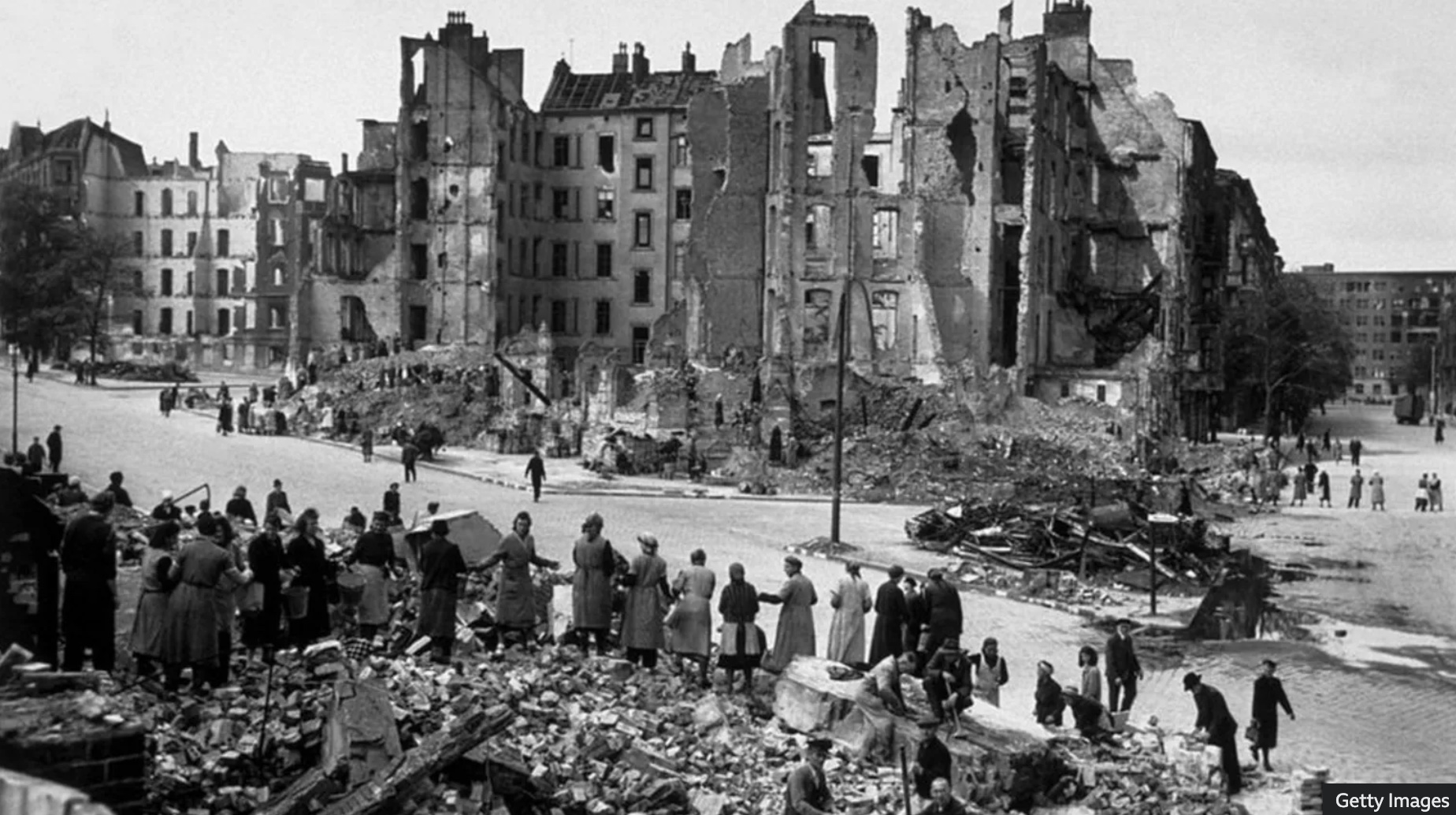
8th May 1945 was VE Day: Victory in Europe. On that day, the Second World War in Europe came to an end. Hitler had killed himself several days earlier, and Nazism had fallen. The reign of terror that was the Third Reich had been smashed, as will all evil either in this life or at the Judgment.
The streets of Berlin were covered in rubble and the blood had not yet time to congealed. In London, Paris, and New York and in towns and villages across Europe millions experienced euphoria as the six of the most violent years in history came to a close. 60 million human beings dead; in fact, no one knows the final count. As the biggest party burst into life, many other civilians and soldiers sighed with exhausted relief. Others were caught in a state of numbness, for how can we cheer when news of the dead continued to be announced. And what of the war in the East? Japan was fighting the most bloody of retreats, island by island, and with the most costly battle yet to be fought. And no one yet knew of the atomic bomb that would dropped, not once but twice on Japanese cities. Even as the champagne flowed at Trafalgar Square and the dust settled on the road to Berlin, there was anxiety and uncertainty as Soviet Forces met their Allies.
Dr Sarah Irving-Stonebraker argues in her 2024 book, ‘Priests Of History: Stewarding The Past In An Ahistoric Age, we are unclear about tomorrow because we don’t read history. Few people are reading history and interested in the past, and few look to history in order to understand where we are today. This is to our detriment because mistakes forgotten are ones we are likely to repeat.
This week as the news reports on elections, youth crime and the footy results, the 80th anniversary of VE Day barely makes a passing remark. In parts of the United Kingdom, Europe, and elsewhere, commemoration services are being held. It is a day worth marking. No doubt speeches will be delivered and words uttered, praying that we will never see such days ever again. Few are alive today to remind us of those years and most of us already have enough stresses and dreams in life without giving recourse to what sent the world hurtling into global war. And why stare down human nature when popping another ‘soma’ does the trick!
Oppenheimer is just a movie; isn’t it?
There is once again war in Europe. Nations like Poland and Finland moving quickly to protect themselves. Peace in South East and East Asia is fragile. India and Pakistan are exchanging missiles at the moment, and Gaza remains a hellscape. The new administration in the United States is pushing buttons and creating geological earth tremors as though Dr Strange Love is decent foreign policy. Nazism is no longer silent.
Remember Thucydides.
History classes should be filling up, and schools and universities eager to learn. Read Thucydides, Caesar and Churchill. More essential, read what remains the world’s most important history book, namely the Bible. This book of history and theology and psychology and sociology provides us with a solid framework for understanding both conflict and peace, the human condition and where ultimately hope for peace is located. Perhaps the Bible is too raw in its truth-telling and too humbling for us to take it seriously.
C.S Lewis was a student. Take this quotation, for example. It shocks. It doesn’t fit the storyline we so often feed on, and yet he is closer to the truth,
“War creates no absolutely new situation: it simply aggravates the permanent human situation so that we can no longer ignore it. Human life has always been lived on the edge of a precipice.”
Rather than spilling new words to get my point across, allow me to repeat this reflection from 2021. The words are about the First World War and of my Great GrandFather who fought in France, but I suggest there are salient for what took place in 1939-45 and toward the future.
“The paradox of the human condition bewilders such inexplicable worth and wonder and yet constant and repeated reproach. The height of creative prodigy with the ability to love and show kindness, and yet in our DNA are traits that stick like the mud of Flanders, and which no degree of education or scientific treatment can excise. At the best of times, we contain and suppress such things, and in others, they explode into a public and violent confrontation. The First World War wasn’t human madness, it was calculated depravity. It was genius used in the employment of destruction. This was a betrayal of Divine duty. I am not suggesting that this war was fought without any degree of moral integrity, for should we not defend the vulnerable?
When an emerging global war sends signals of intent to its neighbours, to what point must we remain on the sideline and permit bullying and harassment? At what juncture do allies speak up as a buttress for justice but do not support words with deeds? How much politicising is mere virtual signalling?
As I consider the events surrounding William Campbell’s war, the temptation is to conclude that lessons have been learned and today we move forward with inevitable evolution. While the superficial has progressed enormously, that is with scientific, medical, and technological breakthroughs, and with cultures building bridges and better understanding differences. And yet, we mustn’t make the error in thinking that today we are somehow better suited to the task of humanity. This is an anthropological fallacy of cosmic repercussions. The bloodletting has not subsided, it’s just that we exercise our barbarity with clinical precision or behind closed doors. We continue to postulate and protect all manner of ignominious attitudes and actions, but these are often sanctioned by popular demand and therefore excused.
The world sees the doctrine of total depravity but cannot accept the veracity of this diagnosis because doing so would be leaving our children destitute, without hope for a better tomorrow. Surely wisdom causes us to look outside ourselves and beyond our institutions and authorities to find a cure that ails every past and future generation?
It does not take a prophet to understand that the world will once again serve as the canvas for a gigantic bloodstain. There will be wars and rumours of war. There will be small localised conflicts and globalisation will inevitably produce further large scale violence, perhaps outweighing the experiences of the first two world wars. We may see and even learn from the past, but we project a fools’ paradise when we envision the human capacity to finally overcome evil. Religion is often no better a repose than the honest diatribes of Nietzsche and his philosophical descendants. Religion, “in the name of God”, is often complicit with death making and at times it missing from the task of peacemaking, while other efforts are much like stacking sandbags against a flash flood.
Theologian Oliver O’ Donovan refers to the “nascent warrior culture” in the days of Israel, some fourteen Centuries before the coming of the Christ. This culture is no longer emerging but is now long tried and tested among the nations. Does war intrude upon peace? Perhaps it is more accurate to say that war is interrupted by periods of relative peace and at times by ugly appeasement. Soon enough another ideologue and another authority tests the socio-political temperature and attempts to scale the ethereal stairs of Babel.
The human predicament is perhaps a grotesque complement to the rising philosophical concerns of the late 19th Century. Karl Marx and Friedrich Nietzsche began dismantling the imago dei with new and devastating honesty. Far from discovering superior freedoms, they justified authoritarian systems of Government and the mass sterilisation of ‘lesser’ human beings. To strip humanity of its origins is to leave us destitute and blind, but admitting this truth demands an epistemic and moral humility that few are willing to accept. Nietzsche was right, at least as far as his logic is concerned, that “the masses blink and say ‘We are all equal – Man is but man, before God – we are equal.’ Before God! But now this God has died.” A contemporary of Nietsche, Anatole France retorted without regret,
“It is almost impossible systematically to constitute a natural moral law. Nature has no principles. She furnishes us with no reason to believe that human life is to be respected. Nature, in her indifference, makes no distinction between good and evil.”
If optimism seems out of place and if pessimism is a crushing and untenable alternative, where does the future lie? The lush green cemeteries of the Western Front with their gleaming white headstones convey a respectful and yet somewhat misleading definition of war. This halcyon scene covers over a land that was torn open and exposed the capacity of man to destroy. Perhaps, as a concession, the dead have received a quiet bed until the end of time, but the serenity of this sight mustn’t be misconstrued in any way to deify war or to minimise the sheer horror that befell so many. In part, we want to learn and so avoid repeating history, and yet history shouts to us a message that we don’t wish to accept.
There is an ancient wisdom that stands tall amid time. These words demand closer inspection by those seeking to exegete the past and consider an alternate tomorrow. Every step removed signals further hubris that we can ill afford, but epistemic humility and confession may well reorient toward the compass that offers peace instead of war, life instead of death, and love instead of hate.”
“Why do the nations conspire and the peoples plot in vain?
The kings of the earth rise up and the rulers band together against the Lord and against his anointed, saying,
“Let us break their chains and throw off their shackles.”
The One enthroned in heaven laughs; the Lord scoffs at them.
He rebukes them in his anger and terrifies them in his wrath, saying,
“I have installed my king on Zion, my holy mountain.”
I will proclaim the Lord’s decree:
He said to me, “You are my son; today I have become your father.
Ask me, and I will make the nations your inheritance, the ends of the earth your possession.
You will break them with a rod of iron; you will dash them to pieces like pottery.”
Therefore, you kings, be wise; be warned, you rulers of the earth.
Serve the Lord with fear and celebrate his rule with trembling.
Kiss his son, or he will be angry and your way will lead to your destruction, for his wrath can flare up in a moment. Blessed are all who take refuge in him.” (Psalm 2)
There seem to be 3 misnomers circulating regarding Baptist belief and practice, in light of the decision to remove 2 churches from the NSW/ACT Baptist Association:
Freedom of conscience
Freedom of association.
It’s a matter of interpretation
I have written about these topics at length on other occasions, so I won’t repeat everything here. Nonetheless, it is worthwhile pointing out that while these 3 points are being used to criticise the Baptists’ decision, these very points in fact support the decisions that were made.
Of course, freedom of conscience, and its cousin, freedom of association, are important Baptist principles. These are ideals for which I am thankful. They do not exist however without context, form or boundary.
Speaking to the ABC, Belinda Groves (Senior Minister Canberra Baptist), suggested,
‘Baptist churches are not like the Anglicans or the Catholics – it’s not very hierarchical. We have what’s called local, you know, congregational autonomy. And when we gather together as an association, it’s recognising that our real governance happens in our local churches and that that association is really just a recognition of connection between us and a common commitment to do things together that take a bit more than just a small individual church.’
That’s mostly true. Groves doesn’t explain what this Baptist connection is and means (I sense she’s downplaying it), which is fine given it’s a short television interview, but when we begin asking the question, what is the glue that makes us baptists together, the answer given is often that being Baptist is primarily about freedom: freedom of conscience and freedom of association. Again, while these are cherished ideals, they can’t exist without definition and boundaries, otherwise, they become meaningless terms.
When I hear some voices declare that Saturday’s decisions cut against our Baptist distinctive (some of these voices are by non baptists), I want to respond by saying, you’re being historically myopic and theologically incorrect.
Baptists can rightly defend a person’s right to believe and practice their religion freely AND believe that freedom of association requires common agreement among those desiring to associate together. The fact that we have doctrinal bases demonstrates that there are commonly aligned theological convictions: the Trinity, penal substitution, faith in Christ, the bodily resurrection of Jesus and more. When it comes to contemporary issues surrounding sexual practices, these were not disputed in former days, but now through what Carl Trueman describes as ‘expressive individualism’, matters like same-sex marriage have come about and therefore churches are required to form a view.
In 2009, theologian Hefin Jones wrote a paper for NSW Baptists where he offered an important historical survey of different strands of Baptist thought. While he is surveying NSW Baptists, the same groupings are found among Baptists worldwide. Jones demonstrates that when it comes to confessions and statements of association, there are broadly 3 Baptist groups: Anti-Creedalism, Non-Creedal Confessionalism, and Confessionalism.
That’s important for understanding those who are decrying the decision made by 2/3s of Baptist delegates last Saturday. When they argue that NSW is becoming anti-baptist and authoritarian, they are representing one line of historic Baptist thought, not the entirety.
Of NSW, Jones notes,
“Were Anti- or Non-Creedalism intrinsic to Baptist identity then NSW Baptists as a denomination have never been true to it…from the beginning of the NSW Baptist Union in 1868 it has been Confessional, the real question being, how Confessional? Unlike the associational rules of 1858 the 1868 constitution included a doctrinal basis.”
It’s interesting to discover that both freedom of conscience and freedom of association are linked historically to Baptists speaking against Governmental intrusion in religious matters or controlling the local church. More recently these have become an argument for Baptists to promote all kinds of ideas and practices. This, in my view, can lead to misrepresenting Baptist ideals.
It’s also the case that Baptists have always had mechanisms for removing pastors and churches. That our Unions have rarely resorted to these is a good thing but sadly sometimes it is necessary for the sake of Gospel clarity, unity and mission.
As much as some Baptists are crying ‘freedom’, we understand that the conscience isn’t infallible, nor is it the Lord of the Church. And Christian association, for it to be truly Christian, requires common ascent to the Gospel, and indeed to things like the Apostles Creed and Nicaea Creed. Baptists get along and disagree on many tertiary matters, but same-sex marriage isn’t one of them, and when we’re told that it is, I suspect progressives are ignoring their own clarion calls for justice and what they understand the gospel to be about.
This leads to the biggest misnomer of all, namely that same-sex marriage is merely a matter of interpretation and therefore not one that’s serious enough for breaking fellowship.
Bible interpretation is indeed a factor and there’s a whole discussion that can be had about hermeneutics, but is the Bible’s teaching on sexuality vague and contestable? The argument, ‘it’s just about interpretation’ serves more like a poor cover version of today’s sexual milieu. It’s an effective tool for muddying the waters, but little more. I suspect when progressive churches are transparent about their convictions (as I’ve heard some pastors argue behind the scenes), they believe sexuality issues are a love of God issue and a justice issue. Far from speaking about same-sex marriage as a second-tier belief, they often frame their position as crucial to understanding the Gospel and the character of Christ. If they are to be consistent, surely they appreciate and agree that the issue at hand isn’t one where we can all agree to disagree. It’s either a primary justice and love of God matter or it isn’t.
Same-sex marriage is a primary Baptist issue for 2 clear reasons: Jesus says sex outside heterosexual marriage is a sin and the Apostle Paul refers to exclusion from God’s Kingdom and what contradicts sound doctrine and the gospel. How can we embrace that which God says excludes? That’s not God’s hate language, this is God’s loving word who desires people to have life in His name.
The ABC presenter noted the banner that was positioned behind where Belinda Groves was speaking. It says, ‘Everyone’s welcome here’.
Yes, we want our churches to be welcoming and loving and kind. Please God, may they be a community where people from any background can come and be welcomed and hear the gospel. For the most part, our churches are. However, welcoming everyone into our churches, as Baptists do, does not mean embracing every belief and practice that walks in the door. No Christian Church can function that way; indeed no sporting club, school, or political party can function according to that principle. It’s the very fact that God’s love yet profoundly disagrees with us that shook the world and led to the cross and gives hope. I sinned, and yet he loved me. I rebuffed God’s ways, and yet he leads us to repentance and new life by his Son.
If Baptists choose to say no to the orthodox view of marriage, they are free to do so, but in doing so they have made a choice to tear themselves from this Baptist fabric. It’s not what anyone wishes, but God’s gospel of love and forgiveness and reconciliation matters so much that it’s incumbent upon churches to guard the faith once for all delivered.
The process undertaken by the New South Wales/ACT Association took longer than many of the key Church Councils throughout church history. I can’t think of how many meetings and conversations and Assemblies were held over the past 10 years that finally led to Saturday’s decision. People may or may not like the process, but one thing is certain, it was pretty exhaustive and exhausting, and rightly followed Baptist principles of the churches making decisions together for the sake of the gospel and gospel unity, health and mission.
I don’t know of anyone rejoicing over Saturday’s decision to remove the 2 churches. It was a sad day. It’s appropriate to grieve the loss of these churches and be thankful that a clear majority of churches chose to stick with Scripture and the good of future Christian witness. As the media take hold of the issue, it’s pretty obvious how the game will be played and who will be painted as the bad guys. So I reckon the Apostle Peter offers a timely word, ‘don’t be afraid’.
“Live such good lives among the pagans that, though they accuse you of doing wrong, they may see your good deeds and glorify God on the day he visits us…Who is going to harm you if you are eager to do good? But even if you should suffer for what is right, you are blessed. “Do not fear their threats; do not be frightened.” But in your hearts revere Christ as Lord. Always be prepared to give an answer to everyone who asks you to give the reason for the hope that you have. (1 Peter 2:12; 3:13-15)
Jeremy Clarkson is a funny man. At times he’s crude and sometimes refreshingly honest in a nonconformist way. His latest opinion piece forThe Timesis pitching against French restaurants ripping off tourists, ‘These scams aren’t enough if you ask me. Gullible tourists are being sold cheap wine but why stop there‘. The piece is the work of an imaginative mind and with humorous analogies and a serious point as well. As he pokes the bear on scamming and the human ability to be conned, he throws out images like this one,
‘I could substitute the steak in the pie with chlorinated bear meat from Lithuania and no one would know.’
That’s funny. And depending on where you find yourself on the epistemic spectrum, you’ll either roll with Clarkson’s final jab or take offence. Or perhaps, like myself, you find yourself in a third space, namely, that was a rather naive take, Jeremy Clarkson.
He suggests (no doubt with a drop tongue in cheek),
‘Go big. That’s my message if you are considering becoming a celebrated conman. Take a lesson from the biggest fraudster of them all: Jesus. I can walk on water. My mum was a virgin and my dad’s God. And I’m going to start an industry selling this guff that will last for 2,000 years. Top man.’
There are plenty of classic and famous examples of scamming. The problem with Clarkson’s crescendo piece is that it’s plain simple wrong. A scam is a lie designed to steal from those who are conned. Jesus didn’t take, he gave his life. Also this, the believers in Jesus Christ don’t lose, they gain; not some cheap substitute but something more valuable than any bottle of vintage French wine.
If the whole Jesus episode is a scam, it’s not a very clever one. Think about it; if you’re required to die a gruesome death in order for your scam to succeed, then you won’t get to see your success. And that makes you either really stupid or certifiable. Unless of course, you rose from the dead, in which case the entire scam theory is dismantled.
I came late to Top Gear, but I’ve now watched many episodes, and I follow The Grand Tour and will soon watch Clarkson’s latest season of his farming show; it’s all great television. My knowledge of cars could fit Inside the boot of a matchbox car, but who cares. The shows are hilarious, captivating, and often stunning viewing, and a tiny bit educational. So I’m not coming from the angle of an anti-Clarkson. As the world knows, Jeremy Clarkson loves to throw verbal hand grenades. Some ignite while others like this one are a dud.
The idea that Christians are victims of the world’s greatest con job is a little bit laughable. Christians aren’t ignoramuses. I guess maybe some are and that’s okay because God isn’t only interested in the intelligent. But you have to be an eyeless and earless underground mole to actually believe Christians are not aware of the extraordinary nature of Jesus’ claims and character. That’s the entire point of Christianity. People don’t stop storms with a word and provide 5000 instant meals, but Jesus did. Dead people stay dead, but Jesus didn’t.
There are two forms of scepticism that are prevalent today. There is an old-school type of scepticism, one which Jeremy Clarkson is repeating, and there is a newer and more formidable scepticism taking hold, especially among Gen Zers.
Old fashioned scepticism was cool and trending. The 4 horsemen of the new (now gone) atheism presented a confident and brash unbelief. Scepticism was viewed as a sign of the mature mind. The more I doubt, the smarter and wiser I am!
There is a shift taking place as to how and why scepticism continues to be a prominent theme. The old age of scepticism was about assertiveness and confidence in ourselves and our ability to know what is true. That kind of scepticism is still around (alla Jeremy Clarkson), but a new type of scepticism has emerged and it’s based on fear. We are sceptical because we are unsure who to trust. Which ideas and words are reliable?
We live in an age of misinformation and disinformation and so we often have reason to be a little suspicious (which is a point Clarkson is making). Scepticism has become a protective mechanism because it’s hard to know who to believe. A dose of scepticism can be healthy. Asking questions and investigating is sensible. However, at some point, you need to put your faith somewhere. Scepticism can’t be the default for everything in life, otherwise, we are left believing in nothing It’s like stripping a building of its bricks one brick at a time soon enough there’s no building left.
We can’t disbelieve everything, and neither is it safe or sensible to believe anything and everything. So what are we meant to do with Jesus and his claims?
I suspect that Clarkson’s objection to Jesus isn’t foremost an intellectual one, but something else, a moral or personal objection. For that’s how scepticism often works. As Aristotle famously laid out, our beliefs are formed by a combination of logos (reason), pathos (desire) and ethos (personal resonance).
To use a car illustration, on both Top Gear and The Grand Tour, Clarkson, Hammond and May presented and evaluated 100s if not 1000s of different cars and vehicles. Did they make their choices of favoured cars based on the vehicles’ engineering and performance, and understanding every bolt, shaft and drop of oil? How often were cars judged, enjoyed or derided, based on appearance and personality? And for viewers, how often were we persuaded and believe their critiques based on ethos? Eat the fool, because we rarely commit ourselves to something big simply because of the engineering.
There’s a story at the end of John’s Gospel where one of Jesus’ friends suggests that the resurrection of Jesus is a hoax. The other disciples had seen Jesus in the flesh and spoken with him, but Thomas assumed better.
Thomas explained that unless he could see Jesus in the flesh and touch where the nails were driven into the body, he wouldn’t believe that Jesus was now alive. Shock, and horror, one week later, Jesus appeared in front of Thomas and he could no longer doubt.
The issue for Thomas wasn’t primarily a scientific or intellectual one, but one of envy. Was he jealous because he was present when Jesus showed himself to his mates?
Jesus’ response to Thomas is fascinating,
“Because you have seen me, you have believed; blessed are those who have not seen and yet have believed.”
Jesus isn’t saying that facts don’t matter. Jesus isn’t saying, it doesn’t matter whether I’m alive or not. It matters because objective reality matters. It matters because if God can’t defeat death no one can. If God can’t dismantle sin and evil, then what hope have we? Rather, Jesus was outlining how people come to a true, reliable, and personal relationship with God.
Jesus doesn’t have to repeat the resurrection. It’s a one-off and one that has been clearly attested to by multiple witnesses whose lives were so transformed by this Jesus that greed turned to generosity, and hate to love and hopelessness to confident hope. Jesus was telling Thomas, believe what I’ve told you. Accept the reliable testimony of those who have the crucified one now alive. As we know from the historical record, literally 100s of people saw him in the weeks following that first Easter.
A question is, why does Jeremy Clarkson choose not to believe? I don’t know. He’s certainly an intelligent man, but perhaps he hasn’t taken the Bible texts seriously and read them with care. I don’t know.
The Australian historian, Dr John Dickson once set a challenge. He said that he’d eat a page from the Bible if someone could find a reputable ancient historian who seriously doubted the existence of Jesus Christ. To this day, no one has stepped forward.
Indeed, Professor Bart Ehrman, who is no friend of Christianity, has this to say about those who doubt the historic existence of Jesus –
“There is a lot of evidence. There is so much evidence that …this is not even an issue for scholars of antiquity. There is no one teaching in a college or university in the Western World, teaching ancient studies who holds that Jesus did not exist.”
The point is, it’s not difficult to refute Jeremy Clarkson’s quip about Jesus and scams. The evidence for Jesus’ historicity, including his death and resurrection is substantial and throwing words around like ‘scam’ is intellectually lazy. It delivers a certain punch line akin to someone drunk on too much cheap Parisian wine.
World-renowned British historian Tom Holland, in his volume Dominion, explores from the perspective of an agnostic, the way in which the message of Jesus turned the world.
“To be a Christian is to believe that God became man and suffered a death as terrible as any mortal has ever suffered. This is why the cross, that ancient implement of torture, remains what it has always been: the fitting symbol of the Christian revolution. It is the audacity of it—the audacity of finding in a twisted and defeated corpse the glory of the creator of the universe—that serves to explain, more surely than anything else, the sheer strangeness of Christianity, and of the civilization to which it gave birth. Today, the power of this strangeness remains as alive as it has ever been. It is manifest in the great surge of conversions that has swept Africa and Asia over the past century; in the conviction of millions upon millions that the breath of the Spirit, like a living fire, still blows upon the world; and, in Europe and North America, in the assumptions of many more millions who would never think to describe themselves as Christian. All are heirs to the same revolution: a revolution that has, at its molten heart, the image of a god dead on a cross.”
Something happened in those years around Galilee and Judea, such that we measure history and hope according to the Galilean.
The Bible authors are so confident that the Apostle Paul wrote to an entire church, if you doubt the resurrection, go and talk to the eyewitnesses. And this,
“if Christ has not been raised, your faith is futile; you are still in your sins. Then those also who have fallen asleep in Christ are lost. If only for this life we have hope in Christ, we are to be pitied more than all men. But Christ has indeed been raised from the dead.”
Is Jesus the biggest scam of all? If so, it is certainly an audacious one and I’ve been sucked in.
The best way to find out is to read the accounts for yourself. If Jesus is the great fraudster, then either he didn’t think through his plan of being crucified very well… or perhaps his foresight is somewhat better than ours. Wherever you land, this one thing is certain, if God exists and his Son died for the sin of the world and then rose from the dead, this suggestion is too big to ignore.
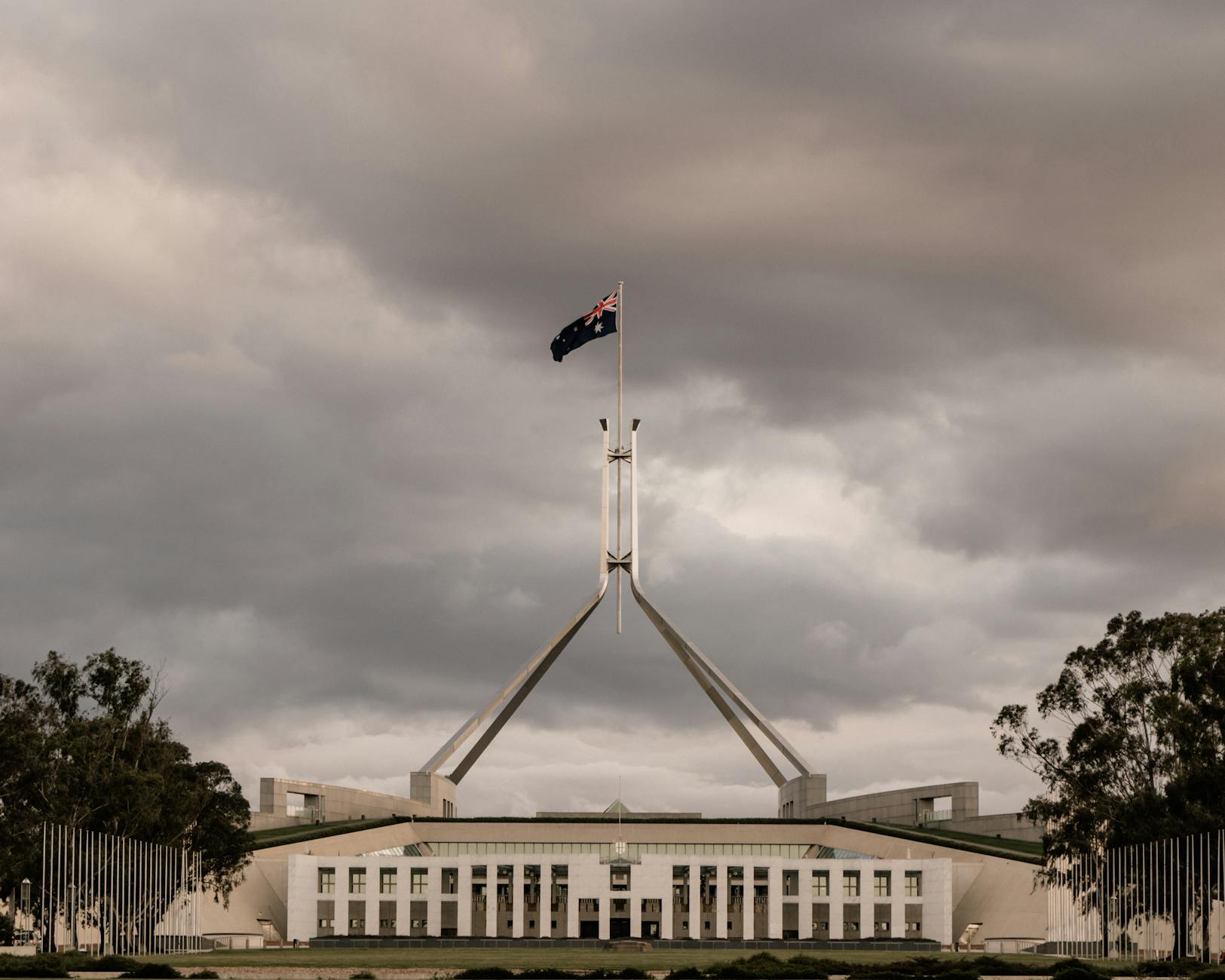
Today millions of Australians will wake up enthused and celebrating the outcome of yesterday’s Federal election. Many others will be despondent and even angry as the candidates of their preferred party lost. To be honest, I suspect millions more Australians are waking up today with a degree of political indifference as they carry on making breakfast and figuring out how to pay their bills and care for their families and wondering how Carlton’s season ended up this way! A plethora of responses are understandable. For the Christian, who may also empathise with and see themselves at some place along this spectrum, there is one constancy. Psalm 146 famously says,
“Do not put your trust in princes,
in human beings, who cannot save.
When their spirit departs, they return to the ground;
on that very day their plans come to nothing.
Blessed are those whose help is the God of Jacob,
whose hope is in the Lord their God.”
These words remain true, before and after the votes had been cast and counted.
I understand that in quoting Psalm 146, some people might be a little annoyed and perhaps a tad angry, especially among voters disappointed by the election result. I certainly don’t mean to sound unfeeling or facile, as though the election was unimportant. I happen to believe elections do matter because government plays a significant role in the life of society; controlling much power and influence. After all, Government is a legitimate institution that falls under the banner of God’s common grace. It may not be the main game, but government nonetheless plays an important supporting role.
It is also the case that Government has less influence in setting the direction for society as it is about providing the legal, economic, and social mechanisms by which society moves in the direction that it is already preferencing. The old adage about politics being downstream of culture is complicated but still true.
The reason behind sharing the Psalm 146 quotation is that I’m wondering if we are attaching too much responsibility on Government for fixing social ills and rectifying economic currents. This is true for both the left and the right of politics. Have we become too dependent upon Parliaments and MPs for addressing what was once the prevue of churches, synagogues, media, and an array of social organisations? If we have lost trust in those civil and religious institutions (which seems to be the case), faith in our governments is also in sharp decline. There lies perhaps some of our misplaced faith and therefore frustration and despair at the political scene. We are not meant to burden Government with all our hopes and demands and needs. A healthy society needs to spread that load. Indeed, a truly healthy society would not require government to create what we have in Australia: a society wrapped in red tape and wads of laws and rules stickier than gaffer tape.
There are better governments and worse; it’s rarely a zero-sum game. I suspect there is also a deep suspicion of and discontent toward political parties across the spectrum. Sometimes it’s a case of choosing the least bad option available, or at least that’s how many voters are feeling: I don’t like this candidate, but at least they’re not the other candidates!
How did we respond to the election at church today? This morning my church prayed for the new state government, as we do regularly for whoever is in charge at Spring Street and in Canberra. And we also prayed for our local representatives in Parliament. That’s what Christians do. It’s one of the few constancies in the unpredictable world of politics; churches pray for those in authority. To the reluctant among us, let’s consider it this way, if the Apostle Paul could pray for the Roman Emperor, then I think we can pray for our governments.
We should pray for our political representatives because they carry significant responsibility. Given the platform that we build for our leaders (or scaffold as it may be), praying is the right thing to do. Of course, government isn’t the big game in town, but its role impacts life at every level and therefore great wisdom, patience, integrity and compassion are necessary.
Without some kind of cultural reorientation, I suspect Governments will become bigger and bolder. It is interesting to see how Australians, or at least Victorians, have become more comfortable with authoritarian personality and politically styled governing. The myth of the convict, bushranger, and nonchalant Aussie digger may still exist in local sporting clubs, but as a people group, we are quite accepting of big government and monocratic-styled leadership. I’m not arguing a case either way here but simply noting the public trend.
Of course, my eyesight is myopic and so looking at the next 3 years is an imprecise art. There are, after all, no more prophets! My guess is that in the name of freedom, more laws and regulations will be introduced, and in the name of economic prosperity, more debt-inducing spending will occur, and we will remain desperately ill-prepared for the geo-political challenges that lie ahead. If we follow the now predominant current, I anticipate that we’ll see tighter controls on social behaviour, fewer parental rights and a more pronounced religion-socio education drive. In part, we’re recognising a fragmentation in society and so looking for answers is only natural and desirable (depending of course upon the solutions offered).
So I go back to the verse I began with, Christians should not look to government to be the saviour of society. Don’t put your trust in princes and prime ministers. Honour them and pray for them, but let’s not expect government to rescue society from the deepest and darkest of places.
This is one of the flaws present in much of politics today; people believe and expect Government is the answer. Big government has devotees on both the left and the right. Hence it’s no surprise to see legislative agendas enveloping society around a new moral religion. It’s interesting to see how churches have become more visible as politicians vie for attention and votes. ‘Social cohesion’ is one of the buzz words. God is optional in the new religion, and where he is worshipped, he somehow always supports the popular moral zeitgeist!
Among some Christians, there are more strident and public voices. Christians, be careful of voices that speak more about politics than they do the Great Commission and use more words of outrage than they do words of compassion and mercy. By all means, as a commitment to common grace and out of love for your neighbour, keep government accountable. Christians might join a political party and stand for Parliament, but even the most Christian of political leaders and most Christian of political agendas isn’t going to redeem society. That kind of thinking ignores the testimony of Scripture, namely that the gospel is God’s power of salvation and the church is God’s big game in town. Our churches are more likely today to sit on the sideline of culture and be ignored by many, but nonetheless, the church is the centrepiece of God’s work. Therefore, whatever you do in the name of political inspiration, aspiration or disappointment, don’t confuse it with the Gospel, don’t conflate common grace with saving grace, and don’t fuse the church with the state.
The best way we can love our fellow country people is by serving your church and being clear on the gospel. Today at church, pray for government and for those in authority, and give thanks for free and safe elections. And be clear on the gospel. If we love the Lord our God with all our heart, mind, and strength we will also love our neighbours, and that will have real and positive outcomes for our society. That kind of humble constant Christ-like hope hope-filled living may have a greater effect for the good of society than even an election.




 MurrayCampbell.net