People enjoy a big celebration. Whether it is a family birthday, school anniversary or national holiday, people swing into the mood and remember significant milestones: often with food, music and fireworks.
This year, Christians worldwide are commemorating the 1700th Anniversary of one of Christianity’s pivotal moments: the Council of Nicaea. I’m not anticipating fireworks, but this is an anniversary worth celebrating.
I get it, 1700 years sounds and feels like an awful long time ago; that’s because it is! But this length of time doesn’t mean that Nicaea is irrelevant or unhelpful to us today. At Mentone Baptist this year, we’ll be joining with churches from Edinburgh to Egypt, as we affirm the Nicene Creed together and find helpful ways to reflect upon this historic event.
Some people love history, and others not so much. That’s ok. Not every Christian needs to read up on Athanasius and Basil, but neither is if sound or safe for churches to divorce themselves from the hard work these early theologians fought and affirmed, for the benefit of Christ’s mission in the world.
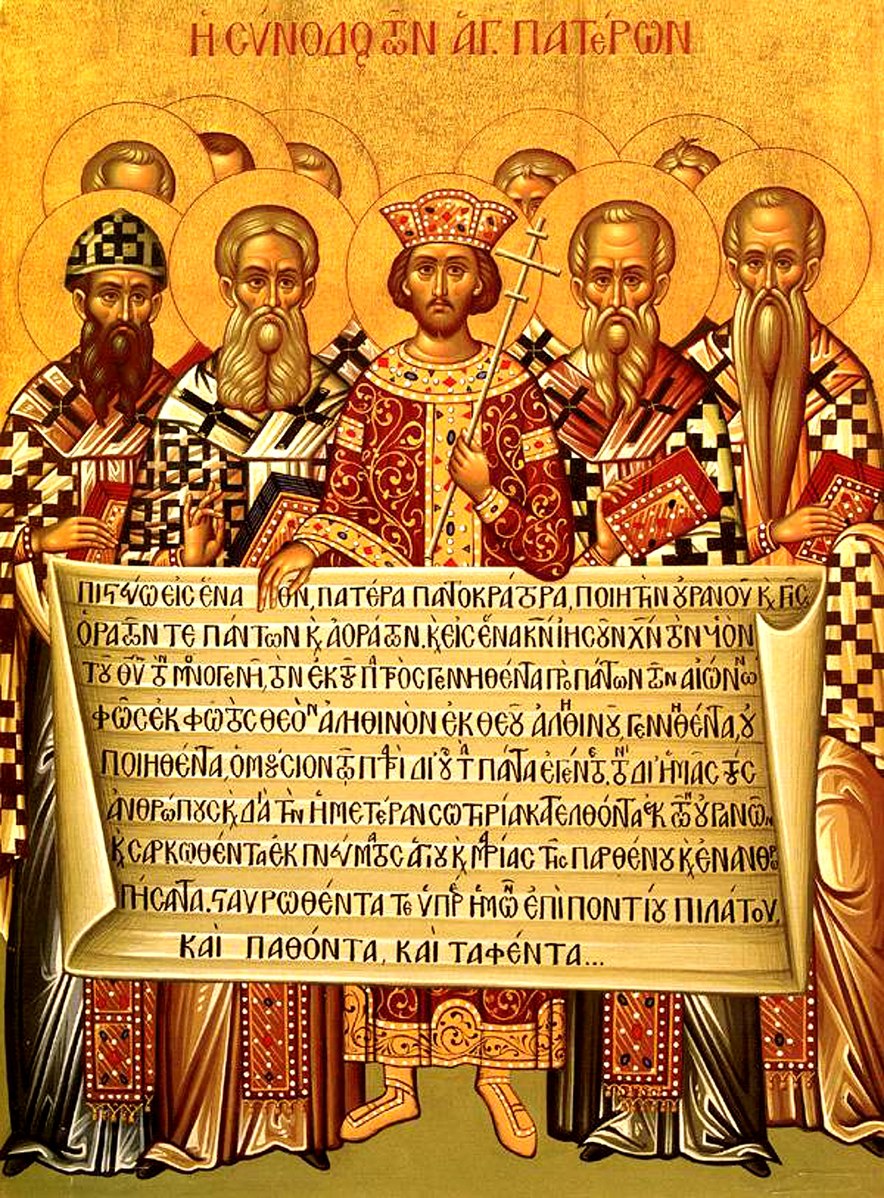
One of the basic rules of life is that who we are today is shaped by what has happened in the past. If we want to understand today, learn history. If we want to secure our churches in something more concrete than the latest weather predictions for Melbourne, ground our people and ministries in the deep truths of the faith, revealed by the Holy Spirit in Scripture, and helpfully posited in these documents known as Creeds.
To this day, churches around the world affirm four Creeds, all 4 were written in the first centuries AD. The Creeds don’t hold the same authority as the Bible, but they are nonetheless accepted as faithful and authoritative documents for churches, whether Anglican or Baptist, Charismatic, Orthodox or Catholic. Creeds are not the only theological statements that churches value. In addition to Creeds, down the centuries churches have produced Confessions; these were predominately written during the Reformation and post-Reformation centuries. It may surprise some readers to learn that it’s not the Presys who stood at the front of this queue, it is the Baptists who produced more Confessions than anyone! Confessions don’t sit in opposition to the Creeds nor do they claim similar standing, but they often provide further details on not only central doctrines but also secondary matters (including church polity). On a third and more local tier, denominations and Christian organisations normally have their own statement of faith, which marks out basic requirements for joining.
There are some church traditions today that still value the Creeds and where discipling new believers includes at least recognition of the Creeds. For many other churches, Creeds have largely fallen behind the pew and are collecting dust. What I want to do here is suggest 3 reasons why we should shake off the dust, copy and paste into PowerPoint and declare as churches ‘what we believe’.
1. Creeds are a way to summarise key Christian beliefs.
Creeds are not essays or sermons, they are a set of short and carefully worded statements that summarise foundational Christian beliefs, especially in regard to the nature of our Triune God.
It shouldn’t surprise most readers that I’m a sola Scriptura kind of guy. I wholeheartedly affirm the complete truthfulness and sufficiency of the Bible. I believe that the Bible is the final authority for matters pertaining to life and doctrine. But as theologians will rightly note, the reformation principle isn’t solo Scriptura, as though we only carry a Bible around with us and ignore the law or medical textbooks or systematic theologies.
When a visitor comes to church and asks what Mentone Baptist Church believes, I could simply hand them a Bible without uttering a word. We love giving away Bibles to people, to the joy of the office who are constantly replenishing our supplies. A visitor might ask, what do we believe about the incarnation or about the Holy Spirit? Straight away, as I speak, I am offering an explanation in using words and summarising the Bible’s teaching on that topic. I am synthesising in a pithy way (or convoluted as can be the case) what the Bible teaches. I’m already systematising and trying to explain our church’s beliefs. One of the benefits of Creeds (and statements of faith) is that they lay out in short form, what we mean by particular important doctrines. There are wiser heads than me who have done the hard work and created these useful summaries.
2. Creeds are a way to guard churches against false doctrine and the misuse of Bible words.
As one of the leaders at my church said recently, Creeds are useful for exposing cults and making clear distinctions between Christianity and other religions. For example, we are Trinitarians, not Muslims or Jehovah’s Witnesses.
How often have I heard someone say, ‘I believe in the Bible’ but when we’ve unpacked their ideas, I discover that they are misusing Bible verses and words.
Reciting a Creed as a church communicates something important to a visitor and it reminds church members of what we do believe. It’s easy for us to forget or even subconsciously drift from sound teaching. Creeds can serve as a useful reminder and correction.
The Creeds function not only to guard against what is false, they are primarily positive documents of what we affirm. For this end, they are helpful catechising tools and encouraging congregational reminders.
The Nicene Creed, for example, addresses particular theological issues that were being debated at the time. Nicaea didn’t create Christian beliefs about the Trinity and Jesus’ nature, rather they articulated and affirmed the Scriptures. Nicaea was important for drawing a line between Christian faith and Arius and his buddies (who were denying key aspects of Jesus Being and of the Trinity). This time situation doesn’t make Nicaea culture and time-bound like a Cyndi Lauper song. The Nicene Creed was universally adopted and quickly became a key document for churches to spell out what we believe.
Any quick read of the Creeds and we notice there are important issues not addressed. For example, not much is made of what has become today a massive issue: anthropology; what does it mean to be a man and a woman? No one says that the Creeds are saying everything important or that the only definition for who’s in and who’s out are the Creeds. Although I suspect, where Christians drift from the Bible on anthropology, they have probably already fallen away from Nicaea at some pivotal junction.
3. Creeds are a way to avoid cultish tendencies and express unity with churches across time and space.
In other words, we are not claiming special knowledge or being the only faithful church. We are not making up what we believe or deviating from the Christian faith, but are in line with historic and orthodox Christianity.
Carl Truman makes the interesting observation, that today’s expressive individualism is one reason why Christians are uncomfortable with Creeds and Confessions. The idea that there is a standard to which Christians should conform and shape their lives, is anathema to a culture that values ‘my truth’ over truth. This is one of the mistakes that some Baptists make when they place personal liberty and freedom of conscience as the highest value. Freedom of conscience is important, but it should not reign above God or be used to justify explaining away what God has spoken. Freedom of conscience for the Christian necessarily sits under the authority of Scripture.
I find it amusing that some who suggest, ‘no Creed but the Bible’, often don’t believe their own 5 word confession. Such anti-creedalists can often be found arguing for the Holy Spirit speaking new words outside of and beyond the Bible. How often have I heard the ‘no Creed but the Bible’ crowd argue for changing doctrine because of human experience and using current ethical theories as the key interpretive grid for reading and even removing parts of the Bible.
At the other end of the spectrum, are neo-fundamentalists, who with their KJVs (not knocking the translation, just the ‘KJV alone’ fan club), claim to be among the few remaining faithful believers on the planet. Creeds protect churches from cultish tendencies, like a road that keeps cars from swerving into houses and rivers and other obstacles.
There is something Gospel-minded and positive about recognising and giving thanks for Christ’s Churches scattered around our cities and countries, and throughout history. We are not the only holders of the truth. We stand with and stand on millions of churches and saints who have gone before us. Being a follower of Jesus can be isolating and lonely (join a church!). By declaring the Creeds we are reminding one another that we are not alone, but there is a great chorus heard even in heaven, of millions upon millions affirming the wonders of God and his salvation. Of course, we can do all this without Creeds, but these historic documents of the living faith will certainly add to this universal and joyful union.
Have you considered talking about and even reciting the Nicene Creed at your church this year?
 MurrayCampbell.net